Category: Fashion

Retail News Asia is committed to providing both local and global retailers with the latest Fashion news throughout the Asian market. This on a daily base.

  • The evolution of fashion week with see now and buy direct approach

    The evolution of fashion week with see now and buy direct approach

    The fashion industry loves a bandwagon, and the see-now-buy-now one keeps rolling along. A murderer’s row of major brands, from Burberry and Ralph Lauren to Tommy Hilfiger and Moschino, has incorporated at least some element of instant gratification into their recent collections. Burberry and Lauren presented immediately shoppable runway shows, with the latter inviting attendees straight into the store after his spring 2017 show.

    Hilfiger made his Tommy x Gigi collaboration available to buy fresh off the runway, and Moschino’s Jeremy Scott has been offering capsules of his most poppy, instantly recognizable pieces — like this season’s slogan sweatshirts and trash-can bag. But it’s been tough, from an outside perspective, to see how they stack up — when a collection is trumpeted as “sold out,” it’s rarely revealed how many pieces were even available, or how long that process took.

    In recent weeks, see-now-buy-now’s image as the silver-bullet savior of fashion has taken a hit. Designer Thakoon Panichgul, who had completely overhauled his business to focus on seasonless dressing and e-commerce, announced he was putting his brand on “pause” to rethink the concept. And Tom Ford, who tried out see-now-buy-now for one season, decided it wasn’t for him, telling Women’s Wear Daily, “The store shipping schedule doesn’t align with the fashion show schedule … you can’t have a show with clothes that have been on the selling floor for a month.”

    Fashion has been bullish on instant shopping for several years now, with the conventional wisdom claiming that our immediate-gratification culture has spurred a Veruca Salt customer. (“Don’t care how, I want it now.”) And for people who follow fashion religiously, that is definitely the case. When I interviewed Jeremy Scott several years ago, he told me that his young customer was impatient for fashion: “I live in a world of Instagram fans who ‘like’ things,” he said, “and don’t understand when they’re ‘liking’ it, why it’s basically not coming out of that phone right there for them.”

    But as Cathy Horyn pointed out after Lauren’s show, the strategy may work better for mid-price labels than it does for luxury ones. Contemporary brands like Rebecca Minkoff have been demonstrably successful at leveraging the possibilities of instant shopping — CEO Uri Minkoff tells the Cut that the brand’s sales were up 64 percent year after year, after adopting see-now-buy-now. “When we create an experience, the format is not as relevant as ‘What is the experience, who is involved?’” he says.

    For example, their show last month at the Grove in L.A. was open to consumers and was stocked with influencers whose combined following totals over 20 million on Instagram alone, including Chiara Ferragni and Aimee Song. Some pieces were available to buy right after the show, while others dropped 30-45 days later, and Minkoff said that both sold “way better than normal,” with even the dress the designer wore for her bow selling out briskly online. Still, says Minkoff, “That’s what works for us. I’m not saying that everyone should do it. In a luxury sense, having a longer-term relationship and a romanticizing of something over a period of time, that’s great.” Minkoff’s brand operates at what he calls “a more spontaneous purchase level.”

    To bridge that gap between romance and spontaneity, some high-end designers have waded into instant shopping by offering small see-now-buy-now capsules and continuing to show the rest of their collection as before. But according to Ken Downing of Neiman Marcus, “I don’t feel like doing just a capsule is the only way to attack this, because I actually think it confuses the consumer even more.” Downing is a strong advocate of see-now-buy-now as an overall approach – he mentions customers who come with photos of a runway model or a celebrity in something they just wore. “If they can’t find what they’re looking for that’s all about that moment, I’m sure they’re finding it in fast-fashion stores,” he says.

    Elizabeth von der Goltz of Bergdorf Goodman echoes this line of thinking. “When people have these see-now-buy-now capsules that they put enough marketing and social media behind, they work extremely well,” she says. “But you need to come up with a full strategy that’s not about this one shot. How do you continue driving your business through the season, versus this one time?”

    One surprising discovery that emerges is that this new world of immediate shopping has some old-school aspects to it. (Maybe not that surprising — if you think about it, the old-school couture fitting and trunk show was the original see-now-buy-now.) Stores are putting their muscle into experiences. Von der Goltz points to recent events Bergdorf has done with Kith, Nike, and Fenty, as well as what she calls its “right off the runway” events, where customers can meet designers, see and touch the clothes, and place preorders. Downing, who was on his way to a customer event in Houston when we spoke, says, “they’re actually very successful events because it’s an experience. You’re interacting with a fashion authority who can give them ideas on how to put clothes together. It’s making the clothes that they’ve seen for some time look new by the way that we’re styling it.”

    While its roll may have slowed slightly, everyone I spoke to agreed that see-now-buy-now is not going anywhere, even if a few brands have soured on it. Fashion consultant Julie Gilhart said she thought it would just become more commonplace, predicting that “many of the up-and-coming brands will just build this see-now-buy-now concept into their initial business start-up.” Minkoff even imagines consumer fashion shows becoming a draw in themselves. “Wouldn’t it be fun for consumers to be able to come to New York,” he muses, “and see three or four fashion shows rather than saying, ‘I’m going to see a Broadway show?’ He thinks that a few seasons from now, that could be the reality. “I don’t think the world is slowing down,” he says. “We are betting the ranch on this model.”

  • Topshop, Topman join Asos’ stable of brands

    Topshop, Topman join Asos’ stable of brands

    Topshop’s ‘disgusted’ staff today revealed they were officially told they’d lost their jobs two hours after Asos announced its £330million takeover on Twitter – as Sir Phillip Green’s family is ‘set for £50m’ from the sale.

    The outraged workers, numbering around 2,500, ripped into the online retailer as it was revealed that their former boss Sir Philip Green and his family are expected to gain £50million from the fire sale as experts told MailOnline that the Topshop, Topman, Miss Selfridge and HIIT brands and their warehouses full of stock had been flogged ‘on the cheap’.

    ASOS reveled in the deal after winning a battle with rival Boohoo to grab the crown jewels of Sir Philip’s Arcadia empire after its collapse last year. It said on Twitter: ‘The rumours are true… @Topshop & @Topman are now part of the ASOS family’.

    But one Arcadia employee said minutes later: ‘Nice way to find out I’ve lost my job, ASOS, great move for the people.’ Another added: ‘Thanks for informing me I’ve lost my job, after 10 years. Very compassionate.’ And a third said: ‘It’s actually disgusting. I’ve worked for Topshop for two years and my own manager found out through Sky News as the administrators didn’t inform us.’

    ASOS hopes the deal will help it grow in the US. The sale will see 300 shops shut down and 2,500 store staff lose their jobs. But it will ‘look at’ saving Topshop’s flagship Oxford Street store, which would be its first and probably only high street shop, meaning the deal announced to the stock market this morning will leave more ‘big holes’ in UK’s ailing high streets as fast fashion companies hoover up collapsed retail brands.

    Sir Philip Green’s family will reportedly pocket £50million from the sale of Topshop – yet the shop’s 1,000 suppliers are expected to get less than 1 percent of any cash owed to them, it has emerged. Sir Philip is still worth an estimated £930million despite the disintegration of his retail empire.

    Green’s Aldsworth Equity, which is incorporated in the British Virgin Islands and controlled by his wife Lady Tina, is owed £50million due to an interest-free loan made to Arcadia in 2019. This will be paid back to the Greens before cash is handed to any suppliers, landlords, and HMRC.

    ASOS, run by Scotland’s richest man Anders Holch Povlsen, worth £6.1billion, has bought the Topshop, Topman, Miss Selfridge, and HIIT brands from administrators for £265million. They also paid another £65million for current and pre-ordered stock.

    Topshop’s sale came after an extraordinary collapse of a brand that was the biggest fashion chain on the high street just a decade ago. The brand had showstopping collaborations with designers including supermodel Kate Moss who was pictured holding hands with Sir Philip when she helped open its New York branch in 2009 – Topshop’s first in the US. Thousands camped overnight outside stores to buy Kate’s designer clothes.

    In 2012 Arcadia Group was delisted from the London Stock Exchange when it was bought by Green’s Taveta Investments group for £850million. Its success contributed to him getting a knighthood and earning the nickname: ‘King of the High Street. Now Arcadia’s crown jewels have been sold for £330million including all its clothes and accessories.

    Guy Elliott, retail analyst at consultancy Publicis Sapient, told MailOnline today: ‘Asos’ acquisition of Arcadia brands Topshop, Topman, and Miss Selfridge is a quick move to acquire some valuable consumers and brand assets ‘on the cheap’.  I think it is disappointing and somewhat short-sighted that they are not keeping any of the brand stores. That to me feels like a bad longer-term decision’.

  • Exclusive Playboy nears deal to buy sexual wellness chain Lovers

    Exclusive Playboy nears deal to buy sexual wellness chain Lovers

    Playboy Enterprises Inc is nearing a deal to acquire the parent company of sexual wellness chain Lovers as it seeks to grow its lifestyle brand following the shuttering of its eponymous magazine, people familiar with the matter said on Sunday.

    The acquisition marks Playboy’s latest effort to leverage its famous rabbit silhouette logo to expand in the consumer products arena. It already capitalizes on its brand by selling everything from apparel to art.

    The deal would value Lovers-parent company TLA Acquisition Corp at around $25 million and could be announced as early as Monday, the sources said, requesting anonymity as the details were not yet public.

    In October, Playboy agreed to go public by merging with blank-check acquisition company Mountain Crest Acquisition Corp in a deal that values Playboy at $413 million, including debt.

    Upon closing of the deal, which is expected in February, Playboy will become a publicly-traded company again, having been taken private in 2011 in a $207 million deal led by its late founder, Hugh Hefner, and private equity firm Rizvi Traverse Management.

    Lovers operate online as well as across 41 stores in five U.S. states, selling sexual wellness and health goods including lingerie and intimacy products.

    Playboy last year ceased publication of its magazine, ending a nearly seven-decade run on newsstands that began in 1953 with a debut issue featuring Marilyn Monroe.

  • Pomelo, Senreve explain how to maximise sales conversions via social media

    Pomelo, Senreve explain how to maximise sales conversions via social media

    Online retailers who follow their consumers along the customer journey can see where buyers trail off without completing a purchase. Worldwide, the online shopping abandoned cart rate is about 70%—representing a key challenge and opportunity for marketers. At leading fashion eCommerce brand Pomelo Fashion, which produces a range of stylish, affordable clothes for the digitally native female consumer, finding a way to meet that challenge was a major marketing priority, one they decided to address by leveraging Braze.

    Founded in 2013 in Bangkok, Pomelo Fashion has disrupted the fast fashion industry by providing a seamless shopping experience both online and offline. Pomelo has a strong presence in Asia, with over 4 million monthly visits to their website and a 60 million monthly reach on their social media pages. As a result of being a leading fashion brand in the region, styles frequently run out of stock as customers race to buy their favorite items.

    Customers take advantage of the purchase options Pomelo Fashion gives them, such as the ability to buy from specific store inventory and the ability to buy online and pick up in-store. Buying online and picking up in-store is so popular amongst customers that Pomelo has multiple pick-up only locations amongst its rapidly expanding retail portfolio. As a customer-centric company, Pomelo wanted to give customers a heads up when items they’re interested in are running low on stock. 90% of sales come from the Pomelo Fashion app, so communicating with push notifications and News Feed cards made the most sense.

    You’re reading Perspectives magazine, our new monthly hub for industry-shaking news and strategy—plus interactive experiences and refreshers to make the most of our platform. Want to see the whole story?

    At Pomelo Fashion, they knew that speaking to their customers as individuals was the key to encouraging users to re-engage after abandoning a cart. Pomelo Fashion utilized Canvas—the Braze lifecycle engagement tool—to target consumers based on their personal preferences and recently viewed items, as well as where they stopped along their purchase journey. The “Browsed Category” level and the “Added Item to Cart” level were the two stages where users were targeted for follow-up communications.

    At the “Browsed Category” level, the goal was to encourage users to return to the category and view a product. Push notifications and News Feed Cards mentioned the category of clothing that a user viewed, focusing on the scarcity of products within that category. This campaign saw a 5% increase in sessions, an 84% increase in conversion rate, and a 235% increase in revenue when compared to users who didn’t receive targeted messages.

    The campaign that targeted app users at the “Added Item to Cart” level also saw very successful results. The goal of this campaign was to nudge users to come back to the app to complete their order. Pomelo Fashion tested generic push notifications against hyper-personalized push that included a user’s name and an image of the low stock item that a customer had recently viewed, which was pulled into the message using the Braze platform’s Connected Connect dynamic personalization feature. This campaign drove a 126% increase in sessions and a 66% increase in conversions when compared to their generic push notifications.

    A user’s News Feed on the Pomelo Fashion app was leveraged by the brand to showcase relevant promotional content for each individual. By segmenting users based on whether they were new customers, existing customers or lapsing users, Pomelo was able to display different coupon codes in the News Feed based on user type, supporting a more targeted experience.

    Geo-triggered push notifications were also used by Pomelo to send out promotional messages. When target customers were close to brick-and-mortar locations, they received notifications triggered using Braze Geofence support. These notifications highlighted new collections and offers in stores that were relevant to users based on their preferences. Other notifications alerted users about items they had recently viewed in the app and items on users’ wishlists. By leveraging Braze APIs and Connected Content, Pomelo Fashion’s notifications were able to notify users when items were newly available in a given user’s size.

    Pomelo Fashion tackled one of the most entrenched problems ecommerce retailers face—namely, customers failing to complete a purchase after beginning the process. By skillfully utilizing data highlighting product scarcity, Pomelo sent out targeted notifications based on an app user’s viewed items that moved the needle for their engagement efforts. The success of these personalized push notifications and News Feed Cards shows how powerful testing campaigns against a control group can be.

  • H&M’s full year profit slides despite positive growth in online sales

    H&M’s full year profit slides despite positive growth in online sales

    Hennes & Mauritz released stronger-than-expected fourth-quarter results on Friday but flagged ongoing challenges in trading conditions, with more than 1,000 stores temporarily closed.

    “The ongoing restrictions along with the many temporary store closures will have a substantial negative impact on the first quarter,” said chief executive officer Helena Helmersson, speaking on a phone call with analysts to discuss the company’s full-year performance.

    The company said 36 percent of its sprawling retail network is temporarily closed, or 1,800 stores. Sales in the Dec. 1 to Jan. 27 period were down 23 percent in local currencies compared with the same period last year.

    The company posted a profit of 2.48 billion Swedish kronor, or $300 million, in the fourth quarter, from Sept. 1 to Nov. 30, and executives touted a strong financial position at the end of the year.

    “With strong, profitable online growth and good cost control we succeeded in ending the year in profit and with a strong financial position,” Helmersson said.

    Analysts said fourth-quarter results were better than expected thanks to lower operational expenditure than forecast but noted the sales update was weaker than expected.

    “Recent trading is in line with our fairly cautious estimate,” said Richard Chamberlain of RBC, noting the outlook was “tough.”

  • Arket bound to open its first retail store in China this autumn

    Arket bound to open its first retail store in China this autumn

    H&M-owned Arket has announced plans to open its first physical store in China this autumn.

    The flagship store will be located in Beijing and will stock a mix of the Stockholm-based brand’s wardrobe staples and seasonal fashion drops for both women and men.

    The store will also feature an Arket cafe and stock an assortment of beauty and home items.

    “We are incredibly happy to announce our upcoming opening in Beijing and we are looking forward to finally meeting our many Chinese customers in person,” said Arket managing director Pernilla Wohlfahrt in a statement.

    “The new store gives us an opportunity to welcome people into our world and invite them to experience the rich diversity of our collections – from beautifully-made fabrics and fashion designs to nature-inspired interiors, sustainable childrenswear and contemporary Swedish cuisine.”

    The physical store is the latest step of the Nordic band’s expansion into Asia. The company made its debut into the Chinese market in August with the launch of its digital flagship store on Alibaba Group’s B2C e-commerce platform Tmall.

    In late 2020 the brand also announced plans to open its first store in South Korea early this year.

  • Boohoo and Asos are acquiring collapsed retail brands

    Boohoo and Asos are acquiring collapsed retail brands

    British online fashion retailers Boohoo and ASOS made major expansion moves on Monday, with the former buying the Debenhams brand and the latter in talks to buy the key brands of Philip Green’s collapsed Arcadia group.

    The moves underline how online players have gained the upper hand over traditional bricks and mortar clothing retailers, a trend accelerated by the Covid-19 pandemic.

    Boohoo said it had acquired all of the intellectual property assets, including customer data, related business information and selected contracts of Debenhams from its administrators for 55 million pounds ($75.4 million).

    It will not take on Debenhams’ stores or its staff.

    Debenhams’ administrators said last month it was starting a liquidation process, putting 12,000 jobs at risk.

    Meanwhile, ASOS said it was in exclusive talks with the administrators of Green’s collapsed Arcadia group over the acquisition of the Topshop, Topman, Miss Selfridge and HIIT brands.

    “The board believes this would represent a compelling opportunity to acquire strong brands that resonate well with its customer base,” ASOS said, adding that any deal would be funded from cash reserves.

    However, it cautioned there was no certainty a deal will be sealed.

    Arcadia collapsed into administration in November, putting over 13,000 jobs at risk.

  • Prada CEO sees massive revenue growth during next years

    Prada CEO sees massive revenue growth during next years

    Italian luxury group Prada sees revenues rising to 5 billion euros ($6.1 billion) in four to five years, its chief executive said on Thursday.

    “We will reach five billion euros in a matter of four to five years. COVID-19 has given a strong shock to the whole system, we will see a strong acceleration when it will be over,” Patrizio Bertelli said in an interview with Italian daily Il Sole 24 Ore.

    “We have not grown as much as we would have liked so far, but we are the group that has best maintained its identity,” he added.

    The Hong-Kong listed group said it would close 2020 with an operating profit. Net revenues in 2019 were 3.226 billion euros.

    The fallout from the COVID-19 crisis triggered a 40% decline in Prada’s revenues in the first half of last year, leading to a 196 million euros operating loss.

    In the interview, Bertelli said there could be positive signs for the luxury sector as a whole from March, when lockdowns in many European countries may end.

    The executive, founder of the brand with wife Miuccia, said the company was not interested in acquiring other brands but would press ahead with buying production plants instead, investing 100 million euros per year in sites and shops in coming years.

    “Made in Italy’ production will be more and more important,” he said, noting 80% of Prada’s current production is based in Italy.

  • Swatch launches art-themed Macau pop up

    Swatch launches art-themed Macau pop up

    Swiss watch giant Swatch Group said Thursday it suffered a net loss of 53 million Swiss frances (49 million euros) last year as the coronavirus ravaged the global economy.

    Sales were down more than 32 percent at 5.5 billion Swiss francs, short of analyst forecasts compiled by the AWP agency for 5.8 billion Swiss francs.

    In 2019, the company, famous for its trendy multi-color plastic watches, had posted a profit of 748 million Swiss francs.

    Swatch said the pandemic slashed sales by more than 43 percent in the first quarter last year as the authorities imposed a sharp lockdown to try and curb the spread of the virus.

    As restrictions were subsequently eased, sales picked up again but remained well below normal levels, with business in tourist hotspots and airports hit badly.

    Swatch said it closed 384 outlets over the course of the year, with Hong Kong especially hard hit, falling from 92 in 2019 to 38 last year.

    For this year, the company said it hopes sales will recover to close to 2019 levels as the economy stabilises, citing China’s example.

  • Levi Strauss forecast disappoints as pandemic resurgence shutters stores

    Levi Strauss forecast disappoints as pandemic resurgence shutters stores

    Levi Strauss & Co on Wednesday forecast first-quarter results below analysts’ estimates as the resurgence of COVID-19 shutters the denim maker’s stores in major markets, sending its shares 9% lower in extended trading.

    The spike in coronavirus cases from late last year has led to lower traffic at stores and fresh capacity restrictions for shopping centers in key regions such as California, denting retailers’ sales during the crucial holiday shopping season.

    Levi said 17% of its stores globally were still closed, with a new wave of lockdowns in Europe shuttering 40% of the company’s footprint there.

    The San Francisco-based company said it expects those stores to remain closed for the rest of the current quarter, resulting in a 10 cents to 12 cents hit to its earnings per share.

    Including that impact, Levi forecast first-quarter adjusted earnings per share of 20 cents to 24 cents, below expectations of 33 cents per share, according to Refinitiv IBES data.

    The company said it expects quarterly revenue to be down by a high-teens percentage in constant currency, more than estimates of an 11.9% drop.

    However, the company could return to pre-pandemic revenue levels by the end of 2021 if conditions do not worsen, Chief Financial Officer Harmit Singh said.

    Levi also beat estimates for the fourth quarter ended Nov. 29 as online sales soared.

    Total revenue in the quarter fell about 12% to $1.39 billion but beat expectations of $1.34 billion.

    Levi earned 20 cents per share on an adjusted basis, beating estimates of 15 cents per share.

    The company also reinstated its quarterly dividend at 4 cents per share.

  • Owndays may be sold, fetching US$300 million

    Owndays may be sold, fetching US$300 million

    L Catterton Asia Advisors, the Asian arm of the namesake consumer-focused buyout firm, is exploring a sale of Japanese eyewear retailer Owndays Inc., people with knowledge of the matter said.

    L Catterton Asia has invited investment banks to submit proposals and will soon pick an adviser, said the people, who asked not to be identified as the information is private. The private equity firm is considering divesting the asset with its partner Mitsui & Co. in a sale that could fetch about $300 million, the people said.

    Established in 1989, Tokyo-based Owndays designs and manufactures optical eyewear glasses and runs 156 stores across Japan, its website shows. It has another 206 stores abroad at locations including Hong Kong, Taiwan, Malaysia, Thailand, Singapore and Australia. The company had 2,200 employees as of last February.

    In 2018, L Catterton Asia teamed up with Mitsui and its subsidiary to invest in Owndays for an undisclosed sum, according to a press release at the time.

    Deliberations on the sale of Owndays are at an early stage, while L Catterton and its partners could decide to keep the business, the people said. Representatives for L Catterton Asia and Owndays declined to comment, while a representative for Mitsui said the company hasn’t acknowledged details on the sale of Owndays at this moment.

  • L’Occitane files for bankruptcy in US

    L’Occitane files for bankruptcy in US

    L’Occitane U.S. filed Chapter 11 bankruptcy protection in New Jersey on Tuesday, seeking to close stores. The business cited declines in brick-and-mortar sales and the ongoing coronavirus pandemic as the reasons for the filing.

    “Like most retailers in the United States, the debtor has been impacted by the COVID-19 pandemic, which has significantly limited retail operations throughout the country and suppressed consumer willingness to shop in person,” L’Occitane regional managing director Yann Tanini wrote in a declaration for the court.

    “Even prior to the pandemic, the debtor was experiencing a decline in sales revenue from its brick-and-mortar boutiques, while its e-commerce revenue has dramatically increased,” Tanini said in court papers.

    L’Occitane had already starting downsizing its real estate footprint but wants to further reduce lease obligations due to the pandemic, the company said in court papers. The company hired Hilco Real Estate as a consultant to negotiate with landlords, but they have been reluctant, which prompted the bankruptcy filing. L’Occitane intends to reject 23 leases and “right-size its brick-and-mortar footprint,” it said.

    The company is the U.S. subsidiary of L’Occitane Groupe SA which is publicly listed in Hong Kong and also owns Erborian, LimeLife, and Elemis. U.S. operations account for about 9.1 percent of total company sales, the company said in court papers.

    The U.S. operations have 166 stores in 36 states and Puerto Rico, mostly in regional malls. Net sales have declined during COVID-19, the company said. Between April and December 2020, net sales dipped 21 percent year-over-year to $111 million. Brick-and-mortar sales made up 34 percent of that total, while e-commerce sales skyrocketed.

    L’Occitane has about 1,051 U.S. employees and furloughed and laid off certain workers during the pandemic. The company said that of 325 furloughed employees, 165 have come back, and 40 have been let go.

    The company has $161 million in assets and almost $162 million in liabilities, per court papers. L’Occitane U.S.’s biggest unsecured creditor is its parent company, which is owed $26 million related to loans and $4.5 million related to inventory.

  • Thriving Louis Vuitton offsets drop in sales at luxury group LVMH

    Thriving Louis Vuitton offsets drop in sales at luxury group LVMH

    Booming sales at LVMH’s fashion brands like Louis Vuitton, particularly in China, helped to cushion the impact of the coronavirus pandemic, which has crimped revenues at the French luxury group.

    LVMH, which closed a $15.8 billion acquisition of U.S. jeweler Tiffany in the middle of the pandemic, has like rivals taken a hit as governments the world over forced retailers to close shops during lockdowns.

    Declining international travel has also deprived luxury goods companies of tourist revenues.

    But an improving backdrop in China, one of the world’s biggest markets for luxury fashions and which had eased COVID-19 measures by the second half of 2020, has helped some companies to rebound.

    LVMH’s fashion and leather goods business, home to Vuitton handbags and other brands like Christian Dior, performed better than analysts expected in the fourth quarter, with sales rising 18% year-on-year on a comparable basis. Louis Vuitton is the group’s biggest revenue driver.

    That was an improvement on the third quarter, when like-for-like sales, which strips out acquisitions and currency effects, were already up 12%.

    “The strong beat should get LVMH’s share price home and dry,” Berstein analyst Luca Solca said in a note.

    LVMH Financial Chief Jean-Jacques Guiony told a conference call that new product launches planned before the pandemic – like a Vuitton handbag named after the Pont Neuf bridge in Paris – had helped the brand.

    LVMH – which is setting the tone for luxury rivals such as Gucci-owned Kering with its earnings – has also kept up with marketing spending while some smaller peers have cut back, and holding catwalk shows in cities such as Shanghai despite the crisis had helped, Guiony said.

    “Louis Vuitton and Dior were taking the bulk of customers’ attention when nobody was talking,” he added.

    LVMH’s billionaire boss Bernard Arnault said in a statement that the group was well placed to build on a market recovery.

    Guiony said the company had no visibility, however, on the outlook for China, at a time when new restrictions to fight a resurgence of COVID-19 cases risk overshadowing Chinese New Year festivities in mid-February, usually a major shopping highlight.

    LVMH also owns spirits brands, like Hennessy cognac, and operates airport duty-free shops, which have struggled.

    The French company went ahead with its Tiffany deal during the pandemic but ended up renegotiating the price tag slightly downwards. LVMH is now betting on growing its clout in jewelry, a resilient area of the luxury goods business.

    LVMH overall group sales for the October to December period came in at 14.3 billion euros, in line with forecasts.

    For 2020 as a whole, LVMH’s revenues reached 44.65 billion euros, falling 16% from a year earlier on a like-for-like basis.

    LVMH’s net profit reached 4.7 billion euros ($5.71 billion), down 34% on a year earlier, while profits from recurring operations – or earnings before interest and tax – fell 28% but vastly exceeded analyst forecasts.

    The group said it would propose a dividend payout against 2020 results of 6 euros per share, including a 2 euros per share interim dividend paid in December.

    It had cut its dividend last year to 4.80 euros during the COVID-19 crisis.

  • Uniqlo Singapore set to open ‘Hub of the East’ store

    Uniqlo Singapore set to open ‘Hub of the East’ store

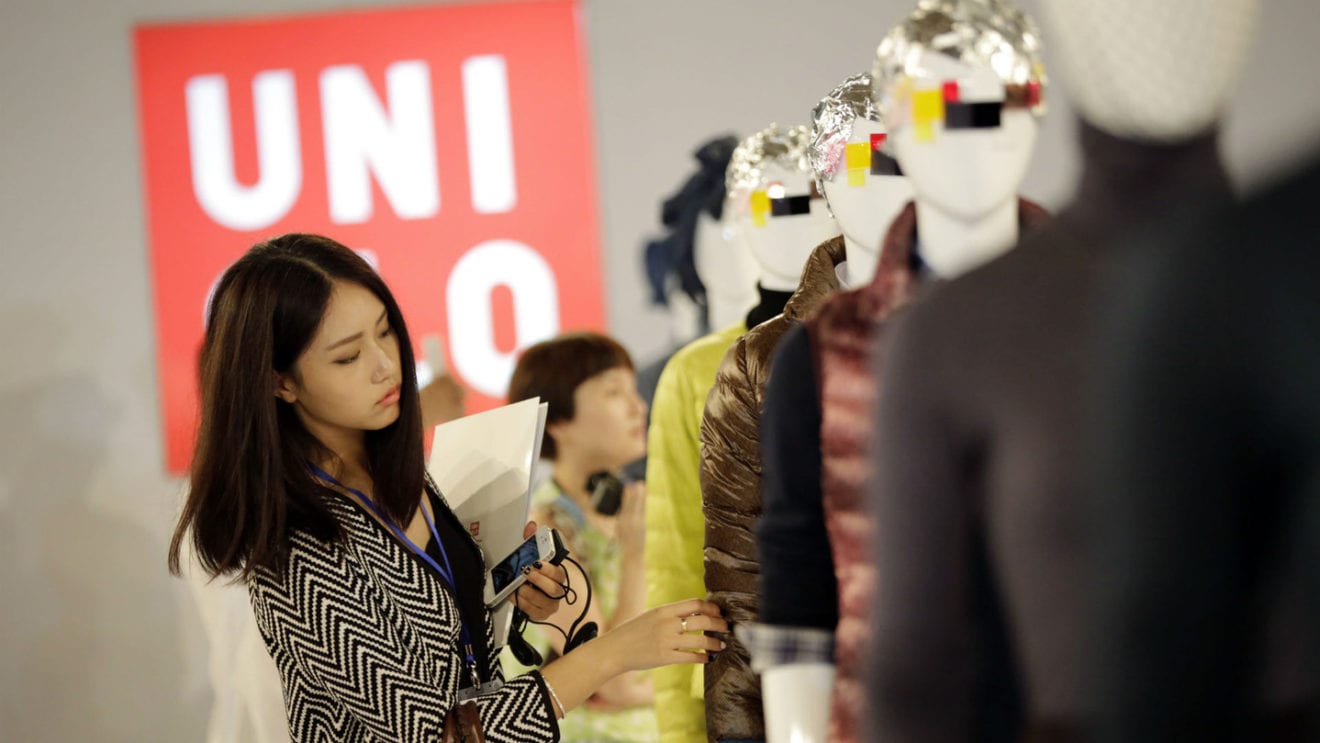
    UNIQLO today announces that it will open UNIQLO Orchard Central, its first Global Flagship Store for Southeast Asia and Singapore, on Friday, 2 September 2016. Under the concept of “U+S and The World”, the new store will showcase the brand’s full assortment of LifeWear – innovative, high-quality clothing that is universal in design and comfort, and made for anyone, anywhere – and will offer Singaporeans an exciting space to share their culture with the world. UNIQLO Orchard Central will be located in Orchard Central mall, along Orchard Road.

    “UNIQLO Orchard Central will be a unique store for the region, providing a new shopping experience for customers. With its vibrant creative scene, Singapore is the ideal location for us to showcase our LifeWear concept through the eyes of the local community. We hope that through our work with highly dedicated Singaporean individuals and groups, we will be able to turn this space into a platform where creative ideas can be expressed and shared with others,“ said Taku Morikawa, UNIQLO Southeast Asia CEO.

    UNIQLO Orchard Central spans three levels and covers 2,700 square meters in sales floor space. Fans of the brand can expect a new shopping experience, thanks to the combination of the in-store design, full product line-up and visually stunning displays. Even the elegant dark wood floors that evoke the mood of Singapore and Southeast Asia are intended to help create the proper setting for the largest product line-up anywhere in the region.

    Iconic rotating mannequins will be an integral part of UNIQLO Orchard Central, as well as close to 300 digital displays, the largest number anywhere in the UNIQLO world, and a total of 350 in-store mannequins, the latter matching the UNIQLO Ginza Global Flagship Store in Tokyo.

    “Singapore’s strategic location in Southeast Asia makes it the choice destination for UNIQLO’s first Global Flagship Store in the region. The opening of this new store marks a milestone in our highly successful eight-year joint venture collaboration.

    The Global Flagship Store will have exciting outreach programmes to engage the community. We look forward to serving our customers in this landmark store, and to inspire many creative talents to express themselves in this distinctive space with artistic works and concepts that are authentically Singaporean,” said Mrs Helen Khoo, Executive Director, Wing Tai Retail.

    A dedicated UT (UNIQLO T-shirt) corner on Level 1 will showcase exclusive UT designs drawn from the most popular collaborations such as Olympia Le-Tan and Bruno Munari. “i am OTHER”, the collection designed together with musician and style icon Pharrell Williams will also find a home on the shelves of UNIQLO Orchard Central. The new Disney Collection City Logo UTs includes a unique Singapore design featuring Mickey Mouse with the iconic Merlion, will be launched on the opening day of UNIQLO Orchard Central.

    The new store concept for UNIQLO Orchard Central, “U+S and The World” is taken from the words UNIQLO + Singapore and the company’s intention to serve as a bridge between Singapore and the World. The store is envisioned as the definitive place where UNIQLO will share the creativity, style and culture of a new Singapore with the rest of the world.

    Later this month, UNIQLO will launch “Your Stage Now Live”, the opening campaign of UNIQLO Orchard Central, by turning the hoarding around the store’s construction site into an urban canvas designed collectively by the local community. In addition, the campaign will also invite everyone to express themselves and showcase their culture to the world through a special “Your Stage Now Live” site.

    The opening of the store on 2 September will serve to kick-off a long-term collaboration with members of the local community through a broad array of programs centred on the store’s specially designed creative space, a launch pad for creativity and self-expression. Elements such as original in-store music, video content on the digital displays and curated spaces within the shop floor, as well as exclusive canvas tote bags and shopping bags, will all be co-created with the local community.

    “We warmly welcome UNIQLO’s global flagship store to Orchard Central, with its new shopping experience, innovative visual merchandising and special collections. UNIQLO will anchor Orchard Central’s appeal as a vibrant lifestyle and social hub for design conscious shoppers looking for quality affordable merchandise and a unique experience. Our mall enhancement works are also nearing completion and along with the opening of UNIQLO Orchard Central, our shoppers can look forward to a new retail experience as well as improved visibility and accessibility,’ said Ms Mavis Seow, Chief Operating Officer, Retail Business Group, Far East Organization.

  • How LVMH plans to reshape Tiffany

    How LVMH plans to reshape Tiffany

    French luxury goods group LVMH LVMH.PA plans to overhaul Tiffany & Co’s vast merchandise lineup to focus more on gold and precious gems while going more upmarket with its silver bangles after closing the $15.8 billion takeover of the U.S. jeweller this month.

    Six sources including two people with inside knowledge of Tiffany’s operations told Reuters the owner of Louis Vuitton would also likely revamp the appearance of the jeweler’s stores and boost its presence in Europe and Asia.

    More than a third of Tiffany’s 320 shops are in the United States and two sources described some of them as out-of-date, shoddy and in need of refurbishing.

    “LVMH can give Tiffany the kind of time and money needed to make some big investments in the product range and in stores worldwide, and wait for those to pay off in the medium term,” one of the sources said.

    At a town hall in New York for Tiffany’s 14,000 employees on Jan. 8 – a day after LVMH installed a new leadership team – the group’s new bosses laid out their initial plans to focus on high-end, sparkling jewelry, said one person who attended it. The group is also considering building out Tiffany’s lineup in watches, another source familiar with its thinking said.

    Unlike such rivals as Richemont-owned CFR.S Cartier and Van Cleef & Arpels, as well as fellow LVMH brand Bulgari, Tiffany’s products range from $150 silver pendants to diamond necklaces priced in the tens of millions.

    Silver jewelry has gross margins of around 90% and offers a perfect entry point for younger, less wealthy shoppers, but top industry names also need the medium- to the high range – with a price tag above $100,000 – to create an aura of exclusivity, experts say.

    In a video message to employees during the town hall, LVMH boss Bernard Arnault, who is also France’s richest man, said he wanted to elevate Tiffany’s standing, even if that took time.

    “We will also prioritize Tiffany’s long-term desirability over short-term constraints,” Arnault said, according to a person who attended. At one point brandishing one of Tiffany’s signature robin’s egg blue boxes, Arnault underscored the label could count on cash-rich LVMH’s resources.

    The world’s biggest luxury goods group, also home to Moet Chandon champagne, was shaken by the COVID-19 pandemic and sales in airport stores plunged, but its biggest labels have stayed the course.

    The mood among some of Tiffany’s workforce is anxious nonetheless.

    A senior store employee in Europe said the jeweler would benefit as a more sophisticated, exclusive brand under LVMH, but also worried about the group’s reputation as a demanding owner.

    “If a store doesn’t quite work, they just shut it down,” this person said, speaking on condition of anonymity.

    Arnault is known for dropping in on stores unexpectedly – including at a Tiffany store in Seoul after the deal was announced in late 2019, where he pointed out blips such as a cleaning product that had been left out on a stand and a pink Post-It note saying “not available” that had been put up on a product, people familiar with the group said.

    LVMH and Tiffany declined to comment. LVMH is due to report full-year 2020 results later on Tuesday.

    After a bruising court battle midway through the acquisition process, which ended with Tiffany and LVMH renegotiating the price tag slightly downwards, Arnault had soothing words for the U.S. jeweler.

    He told the town hall Tiffany’s resilience in recent months had exceeded LVMH’s expectations, one of those presents said.

    The group had previously called Tiffany’s prospects “dismal” due to poor management during the COVID-19 crisis.

    Tiffany regained some ground through online sales and in China in its last quarter. Jewelry as a whole, one of the fastest-growing luxury sectors in recent years, has resisted more than other areas during the pandemic.

    Tiffany is less exposed than rivals to Asia-Pacific – a major driver for luxury sales – which accounted for 28% of its worldwide sales of $4.4 billion in 2019. Europe stood at 11%.

    LVMH will scrutinize store performance and locations and could use its clout to get better leases or find better showcases freed up by other brands within the group.

    New York-based Tiffany, founded in 1837, achieved world fame with the 1961 movie “Breakfast at Tiffany’s” starring Audrey Hepburn, but a fresh marketing push could help the brand.

    Alexandre Arnault – one of four Arnault children with roles at LVMH and now Tiffany’s executive vice president, in charge of product and communication – told the town hall he would focus on advertising campaigns and luring young customers.

    The 28-year-old helped LVMH acquire luggage maker Rimowa and gave it a hipster edge while CEO there, through collaborations with Dior that made it sexy for the runway.

    The young Arnault will work alongside new CEO Anthony Ledru, who ran Vuitton’s global commercial activities but is also known for rolling out its high-end jewelry line and had a previous stint at Tiffany and also at Cartier.

    He takes over from Alessandro Bogliolo, who had already overseen a multi-year renovation of Tiffany’s flagship New York store on Fifth Avenue, and the purchase of an 80-carat-plus oval diamond to be set in a necklace that will become its most expensive piece of jewelry.