Category: Fashion

Retail News Asia is committed to providing both local and global retailers with the latest Fashion news throughout the Asian market. This on a daily base.

  • Designer-bag rental platform Style Theory makes great Hong Kong start

    Designer-bag rental platform Style Theory makes great Hong Kong start

    Online circular fashion platform Style Theory has expanded its network to Hong Kong, its first market outside Southeast Asia.

    Style Theory Hong Kong members now can have access to more than 2000 designer bags from luxury brands, including Hermes, Celine, Chanel, Dior and Saint Laurent, with a rental subscription starting at HK$899 (US$116 per month).

    “Hong Kong was a natural fit in our regional growth plans to lead the circular fashion revolution in Southeast Asia,” said Raena Lim, co-founder of Style Theory. “Hongkongers can be more empowered to access fashion without the guilt of trying new styles or worrying about storage and maintenance.”

    Style Theory Hong Kong will focus on rental subscription and resale services for designer bags before considering other categories.

    Founded in Singapore by Raena Lim and Chris Halim, Style Theory started as an apparel rental subscription service before expanding into luxury bags.

    Style Theory is one of Southeast Asia’s largest online circular fashion platforms with offices in Singapore and Jakarta. The brand launched its flagship brick-and-mortar store in the heart of Orchard Road, Singapore last November.

  • Prada opens a new store in Tokyo’s Shibuya district

    Prada opens a new store in Tokyo’s Shibuya district

    Italian luxury fashion house Prada has opened a new boutique in Tokyo’s Shibuya district, featuring the unique evolution of its green-themed interior design.

    Located at the Miyashita Park shopping mall, the store is designed by OMA studio, founded by Rem Koolhaas. With a floor area of about 300sqm, it displays Prada’s full range of clothing, bags, accessories, and footwear for men and women in unisex and thematic versions.

    The store also offers cotton poplin t-shirts featuring original prints exclusive for the store’s opening, including a Prada oval logo reinterpreted by OMA bearing the Prada Miyashita Park store name, and a travel tag print with TYO (Tokyo) symbols.

    The external facade features floor-to-ceiling glass, which allows a view into “a dreamlike, virtual ‘container’ against a dynamic backdrop.”

    The store interior has a black-and-white chequered floor and green walls designed in backlit “sponge” – the ‘air and matter’ hybrid material designed by OMA. A digital wall, which can be assembled and disassembled, is installed to draw attention.

    The brand uses aluminum for all displays and racks to “enhance the minimal aesthetics and contemporary feel of the interiors”.

    Coinciding with the store’s launch, Prada has announced a digital project called “My Shibuya View”, featuring personal films introducing creators and musicians’ favorite spots in Shibuya. Project participants include singer and songwriter Taichi Mukai, model Ruka and actor, model, and musician Yoshi.

  • Stussy launching new store in Japan, Nagoya

    Stussy launching new store in Japan, Nagoya

    American fashion label Stussy has opened a new store in Nagoya, its 46th outlet in Japan.

    Located in Sakae, the store was designed by WP & A and offers Stussy’s full selection of apparel, accessories and footwear, including a limited-edition collection.

    The store facade features floor-to-ceiling windows with black frames. A small sign showing the brand name is installed at the corner of the store’s front – barely noticeable in images.

    The store interior features wooden and metal shelves together with wood sculptures. The walls are painted in a half-white, half-grey style while two rows of LED lighting are installed on the ceiling. Several greenery corners balance the design.

    Stussy operates more than 60 outlets across more than 10 regions including the US, Australia, Singapore and Taiwan.

  • Textile firms survive on weekly export orders

    Textile firms survive on weekly export orders

    The textile and garment industry continues to be hurt by the Covid-19 pandemic with only weekly orders coming in due to uncertain demand. Shipments of textile and garment, Vietnam’s third-largest export earner, fell 11.6 percent year-on-year in the first eight months to $19.6 billion because of the pandemic, the Ministry of Industry and Trade said in a recent report.

    Producers receive orders by the month or even week because of the plunging global demand due to Covid-19, whereas in previous years by this time they would have received orders for the first half of the following year, the report said.

    Some producers have seen September orders drop by 40-50 percent, while orders have not been confirmed for the rest of the year and 2021, it added.

    Global demand for textile and garment products in the third quarter has not shown signs of reviving, as consumer confidence remains low in the U.S., the E.U. and Japan, three of Vietnam’s largest buyers.

    This has affected producers like Vietnam National Textile and Garment Group (Vinatex). Cao Huu Hieu, its deputy CEO, said the company forecasts a 20 percent fall in revenues this year.

    “We have barely received orders for the last quarter, which is a major challenge for our production plans. Prices of masks have dropped to just enough to cover costs.”

    Companies are doing all they can to survive. Garment 10 Corporation Jsc (Garco10) is working to get long-term orders to ensure cash flows and retain jobs, while Vinatex seeks to boost domestic sales.

    Truong Van Cam, deputy chairman of the Vietnam Textile and Apparel Association (VITAS), said the domestic market is promising amid the pandemic though revenues from it would not be high since consumers are also trying to cut down spending.

    Companies want the government to delay loan repayments to banks.

    There are around 6,800 textile and garment businesses in the country. Last year their exports were worth $32.85 billion, increasing 7.8 percent year-on-year.

  • Uniqlo piping up to open Macau’s largest store ever

    Uniqlo piping up to open Macau’s largest store ever

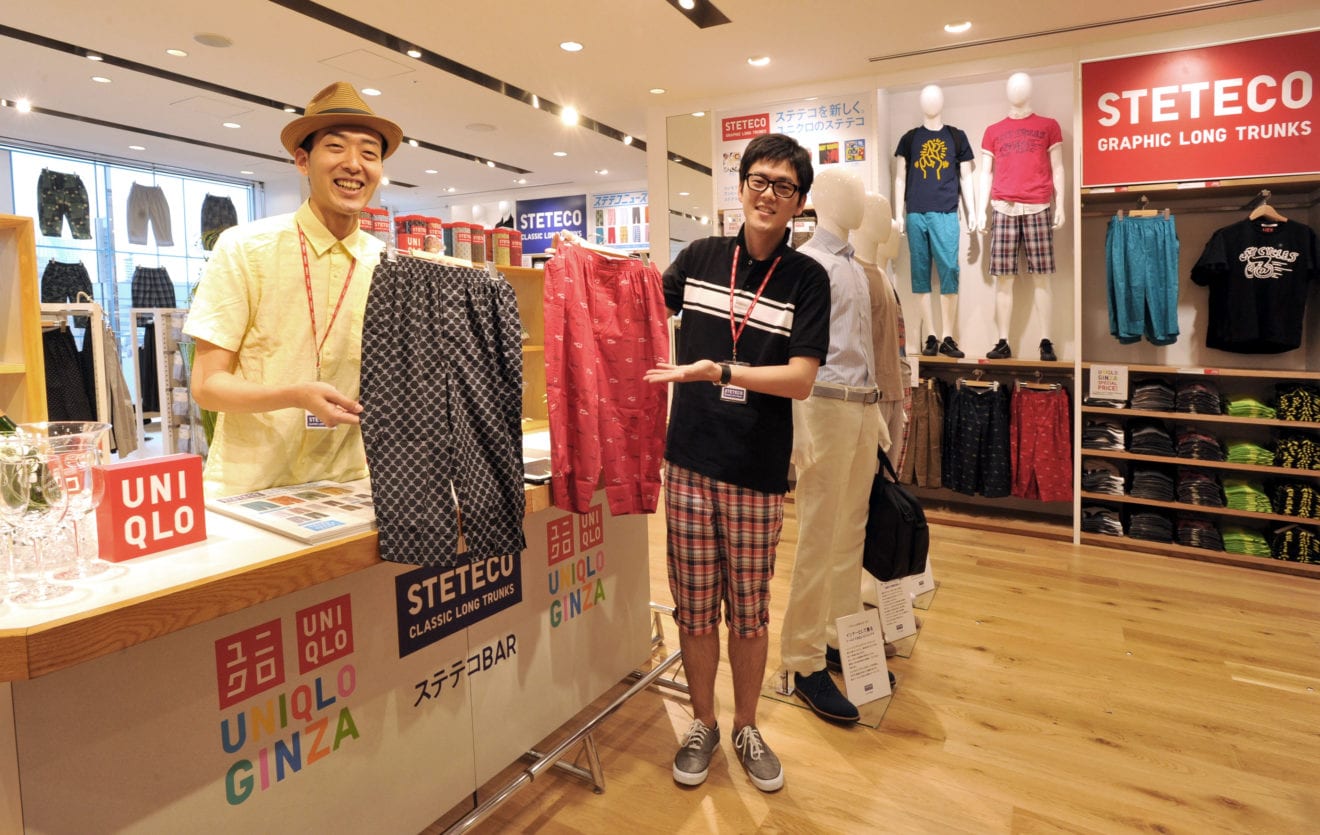
    Japanese clothing retailer Uniqlo is to open its biggest Macau outlet this month.

    Located at ‘Yellow House’ commercial building near the Ruins of St Paul’s, it is the first store in Macau to feature the UTme! design-your-own T-shirt service. The brand will collaborate with local artists to launch UTme! designs that feature local elements.

    According to the company, the new Macau store will occupy a 1772sqm area and span five stories. The store also houses an exhibition area where community events will take place.

    The Uniqlo Yellow House store is the second store in the city after the Uniqlo The Venetian store in Cotai. The new shop is scheduled to launch on September 30 after the opening was previously postponed due to the Covid-19 pandemic.

  • H&M’s Cos launches online reseller marketplace

    H&M’s Cos launches online reseller marketplace

    H&M’s subsidiary Cos has launched a pre-owned fashion platform called Resell.

    Resell allows the brand’s customers to buy and sell their used Cos pieces, “re-inventing their wardrobe in a considered and sustainable way,” according to a statement from H&M.

    The launch is part of the brand’s program of developing circular fashion and renewable solution strategies.

    “Resell reinforces Cos’ ambition and journey to becoming fully circular and renewable, developing innovative ways to continue the brand’s commitment to quality and longevity by re-imaging the lifecycle of each pre-loved piece,” the company said.

    Resell will charge a 10-per-cent commission to cover “operational costs” for every item sold on the platform. The digital platform is now available in the UK and Germany and will go global this Autumn.

    “By extending the life cycle of your Cos item, we believe we can work together to make better environmental choices,” the company said.

  • CJ Corp unveils plans to open Olive Young up for public investment

    CJ Corp unveils plans to open Olive Young up for public investment

    South Korean health-and-beauty business Olive Young is gearing up for an IPO next year, with the aim to list on the stock market in 2022.

    The business owner CJ Corp is currently recruiting for pre-IPO funders and is looking to sell around 20 to 30 percent of the owner’s family’s stake before it goes public, although CJ Group will not sell any of the 55 percent stakes it holds.

    Olive Young CEO Koo Chang-geun said the pre-IPO sale would not impact CJ Group’s management rights, and that the move would allow the business to pursue growth opportunities into the future.

    Shinhan Investment and Credit Suisse have been listed as joint advisors to the sale, and while there is some chatter that the business could be sold off as a whole, it is more likely that the IPO will be used to secure further funding to boost enterprise value.

    The business has long been one of South Korea’s largest beauty firms, seeing operating income grow 81 percent to US$74 million after $1.65 billion in sales last year.

  • Pomelo speeds up Southeast Asian retail expansion

    Pomelo speeds up Southeast Asian retail expansion

    Pomelo is speeding up its retail expansion plans across Southeast Asia as part of a multi-market retail strategy.

    The company said it will enter Indonesia and Malaysia next. Indonesia’s first store will open at Central Park mall this November, while Malaysia’s first store is expected to launch in the first quarter of next year.

    “Creating a seamless omnichannel experience has always been at the core of what we do at Pomelo, and it’s what allows us to continue expanding our retail presence at a time when other brands may be doing the opposite,” said Anders Heikenfeldt, chief retail officer at Pomelo.

    Last month, Pomelo Thailand opened two retail stores – at The Mall Ngamwongwan and Terminal 21 in Bangkok. By November, the brand will roll out three more stores in the city’s popular shopping locations, including Fashion Island and Siam Center. The company said it plans to reach 20 stores in the country by the end of this year.

    In Singapore, Pomelo will open the city’s second store at Nex mall in November.

    Pomelo’s Tap Try Buy, a rebranded iteration of the Pomelo Pick Up service, makes up almost half of Pomelo’s online orders, with this percentage continuing to increase during Covid-19.

    “With Tap Try Buy, we’ve seen a huge increase in user adoption, especially as Thailand started to ease lockdown restrictions,” said Heikenfeldt. “For us as a brand, this emphasized the importance of opening more physical touchpoints to both engage with our existing customers as well as enable new shoppers across the region to experience our unique omnichannel approach.”

  • Massive China retail sales boost for Tiffany & Co

    Massive China retail sales boost for Tiffany & Co

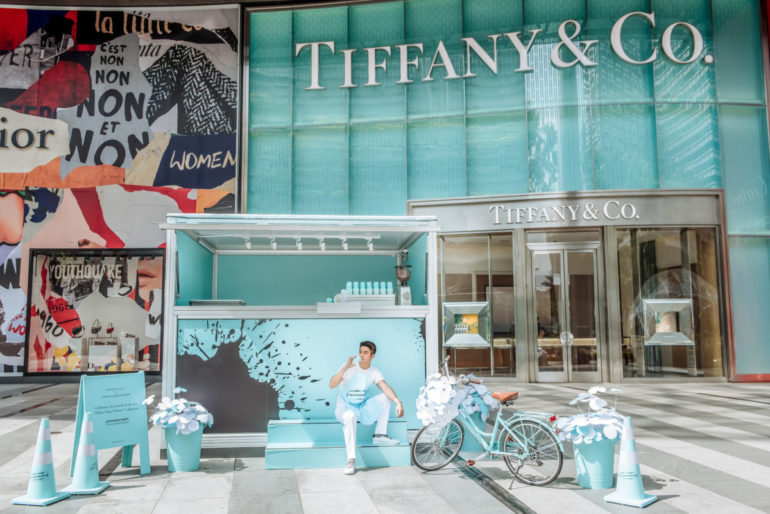
    Aided by a massive sales boost in Mainland China, luxury jewelry retailer Tiffany & Co returned to profitability in the second quarter of this year.

    “Retail sales in Mainland China began to rebound in April and continued to accelerate in the month of May, during which retail sales increased approximately 90 percent as compared to the same period in the prior year,” said CEO Alessandro Bogliolo.

    “This robust recovery continued throughout the balance of the second quarter with retail sales up approximately 80 percent for the full quarter as compared to the same period in the prior year.”

    Tiffany’s second-quarter, worldwide net sales declined 29 percent from the prior year to $747 million and comparable sales declined 24 percent from the prior year. Net earnings of $32 million were down by 77 percent against the previous year’s $136 million. But that marked a welcome return to profit after a torrid, Covid-19 hit first quarter.

    For the half-year to July 31, worldwide net sales declined 37 percent year on year to $1.3 billion and comparable sales declined 34 percent. The company reported a net loss of $33 million compared with net earnings of $262 million the prior year.

    In the Asia-Pacific region, total net sales were flat in the second quarter and decreased 24 percent in the first half, to $299 million and $473 million, respectively, which included a comparable sales increase of 17 percent in the second quarter and a decrease of 16 percent in the first half.

    Besides the stellar China performance, Tiffany said its sales in South Korea rebounded strongly, however these increases were offset by softness across other markets and a decline in wholesale travel-retail sales, all related to the Covid-19 outbreak.

    In Japan, Tiffany’s net sales decreased by 28 percent in the second quarter and 34 percent in the first half to $111 million and $197 million, respectively.

    Bogliolo said the company’s global sales strengthened in August, with preliminary month-to-date worldwide sales through to August 25 “slightly positive” compared to the same month-to-date in the prior year.

    “Our focus on effective local market messaging continued with a marketing campaign, featuring the new Tiffany T ambassador Chinese singer Jackson Yee, which generated impressive levels of social media fan growth and consumer engagement that well exceeded our expectations.”

    Meanwhile, the company’s total e-commerce revenue was up 123 percent during the second quarter, accounting for 15 percent of overall sales – significantly higher than the 6-per-cent rate of the preceding three fiscal years.

    Bogliolo is bullish about the jeweler’s future prospects, despite the Covid-19 crisis. “I firmly believe that Tiffany’s best days remain in front of us because of the team’s demonstrated agility in response to unforeseen hurdles and our stated strategies, which continue to prove sound.

    “Our second-quarter results and August trends to date, in light of these challenging times, confirm the power and resilience of this venerable brand.”

  • Clarins opens first kiosk-style store in Singapore

    Clarins opens first kiosk-style store in Singapore

    French beauty brand Clarins has opened its first kiosk-style concept store in Singapore, its fourth boutique in the city.

    Located in the heart of the Nex shopping center, the store occupies just 20sqm, but offers a wide range of products, including the Clarins hero product Double Serum and the V Shaping Facial Liftline.

    To celebrate the opening, the store introduced the brand’s Clarins Scented Collection which is made from plant ingredients and available in a series of products, including foaming gel, body lotion, home fragrance, and scented candles.

    “The new Clarins kiosk at Nex is perfect for time-strapped shoppers who appreciate the convenience of grab-and-go,” the company said in a statement.

    Clarins operates stores in more than 140 countries including Mainland China, India, Japan, and South Korea.

  • Bonjour to embrace digital technologies, live streaming used to battle profits

    Bonjour to embrace digital technologies, live streaming used to battle profits

    Bonjour, the Hong Kong-headquartered beauty retailer, says it plans to reduce its reliance on brick-and-mortar stores and focus on developing e-commerce and in-store digitalization.

    It will modify some of its existing stores adding technology that it anticipates will attract and engage customers and create a better shopping experience while also improving operational efficiency.

    The plans were revealed by the chairman and executive director Chen Jianwen along with the company’s results for the half-year to June 30, which included a loss attributable to shareholders of US$17.93 million on sales down 59.7 percent to $42.93 million. The decline was due to the borders being all but closed to foreigners due to the Covid-19 pandemic, including the ranks of mainlanders who traditionally head to the territory for shopping.

    Chen said the company has responded to the absence of tourist spending by diversifying its product portfolio to appeal more to local consumers.

    But the main focus moving forward is on transforming from a traditional retail model to New Retail, he said.

    “Digitalisation of the operating system and business model will help the group to better understand customers’ needs and wants and build a long-term relationship with the customers. Starting with training our frontline staff to broadcast product information online, the group will grasp the market opportunity and further develop the e-commerce platforms.”

    Already, frontline Bonjour staff are being trained in live-streaming skills to become influencers and interact with customers online.

    “At the same time, the group has also established its foothold at major online platforms spanning across 16 countries, including ShopShops, Tmall Global, Kaola.com, JD, Facebook, Youtube, Instagram, and Haitao.com, as well as establishing a WeChat store to connect with VIP users,” said Chen.

    In stores, the company is embracing digital transformation, backed by a new retail innovation center with a broadcast studio and testing self-service equipment, planned for launch into physical stores soon.

    In the future, customers will be able to scan the QR code of a product to learn information before they make a purchase and self-service kiosks will be installed at physical stores so that customers can check out by themselves.

    “With the rise of augmented reality and virtual reality, the group will keep an open mind to embrace new technology that helps customers to virtually try the products on which to help them to explore the most suitable products,” said Chen.

    Meanwhile, Bonjour will continue to review its store network, closing underperforming outlets and negotiating rent discounts with landlords.

  • Gap closing over 225 stores globally as sales continue to drop

    Gap closing over 225 stores globally as sales continue to drop

    Struggling US apparel retailer Gap Inc has revealed plans to shutter more than 225 stores globally this year with another batch to follow next year.

    The company has reported a second-quarter net loss of $62 million on sales down 18 percent. Sales through physical stores were down by 48 percent, offset by a meteoric 95-per-cent rise on online sales. The company gained more than 3.5 million new customers during the period.

    The company did not give any indication of where in the world its stores would close, or which banners are most affected by the plan, although its namesake Gap network and Banana Republic stores seem to be performing the worst. As at August 1, Gap Inc had 1643 stores trading under those two brands.

    The decline in sales in physical stores during the quarter was caused by enforced temporary closures due to the Covid-19 pandemic, with shops beginning to reopen from May. As of August 1, about 90 percent of its stores globally were trading again.

    Worldwide sales by the Gap brand were down 28 percent and at Banana Republic by 52 percent. Old Navy performed better, down by 5 percent overall, and aided by a 136-per-cent increase online.

    Athleta was the standout, boosted by consumers purchasing more relaxing apparel as they moved to work from home. Sales were up 6 percent overall, and online by 74 percent.

  • Daphne closing all physical retail stores

    Daphne closing all physical retail stores

    Hong Kong-listed women’s footwear label Daphne International is withdrawing its physical retail stores from Mainland China and Taiwan in the face of steep losses.

    The brand’s most recent interim financial report shows an 85-per-cent drop in turnover to US$27.35 million and a loss of $18.2 million. The loss reflects the firm’s continuing strategy of closing Daphne and Shoebox-branded sales points, as well as the impact of the coronavirus pandemic.

    The firm has had longstanding issues with its sales performance and had already shuttered 900 stores by March last year.

    Daphne reported 2208 physical stores in June last year, which had dropped to 293 by the same time this year.

  • Bata plans hundreds more stores within the next three years

    Bata plans hundreds more stores within the next three years

    Footwear brand Bata in planning to launch 100 new stores in India against the backdrop of the coronavirus pandemic.

    The openings are part of the firm’s plans to have 500 more outlets operating by 2023 in the territory above its current 1500 stores. The move is expected to improve Bata’s market penetration in semi-urban and rural areas.

    “We will open around 100 stores this year,” said Bata India chairman Ashwani Windlass, “and 80 percent of these outlets will be opened through a franchise model in tier-II and tier-III cities.”

    Stores will be selectively opened in areas that performed comparatively well economically despite the impact of the pandemic. More urban customers may be targeted with mobile shops driving into more remote regions and setting up temporarily in residential complexes.

    The firm is also boosting its efforts in e-commerce, making deliveries in more than 1300 cities. Bata management currently estimates that online sales make up 5 or 6 percent of total sales.

  • Japan’s 2nd Street to launch in Taiwan

    Japan’s 2nd Street to launch in Taiwan

    Japanese pre-owned fashion retailer 2nd Street is launching in Taiwan with its first outlet set to open in Taipei. Located in the Ximen neighborhood, the store offers some 7000 items, including clothing, handbags, shoes, and accessories from Japanese designer brands such as Comme des Garcons and Under Cover as well as luxury brands like Louis Vuitton and Chanel.

    The brand plans to open three 2nd Street shops in Taiwan by next March.

    The 2nd Street Taiwan store’s layout and service will follow that of the stores in Japan. Prior to the launch, 2nd Street opened a pop-up store in Breeze Nan Shan mall to test the potential of the brand in the country.

    “Our aim is to expand the fan base for 2nd Street with a combination of the experience developed in Japan for the re-use business and the retail management skills beloved by the people of Taiwan,” said Sadaharu Deguchi, chairman, and GM at 2nd Street.

    “I sincerely hope that 2nd Street Ximen Taipei will become an attractive location for many customers,” Deguchi said.

    Launched in 2018, 2nd Street handles the sales of pre-owned products, including clothing, furniture, and appliances.