Category: Fashion

Retail News Asia is committed to providing both local and global retailers with the latest Fashion news throughout the Asian market. This on a daily base.

  • Esprit set to post US$503 million loss

    Esprit set to post US$503 million loss

    Enfeebled clothing retailer Esprit has just advised shareholders it expects to post a loss of US$503.2 million when it releases its annual results late next month.

    With its European subsidiaries operating under a form of statutory administration and its shares trading for 12 cents each in Hong Kong today, many investors must by now be wondering if the chain has any reason to continue trading.

    The company said the loss was primarily attributable to the impact of Covid-19 which it blamed for a 24-per-cent decline in revenue from $1.66 billion last financial year to about $1.277 billion this year and another $310 million in impairments on trademarks, property, plant and equipment, provisions for store closures and severance payments.

    Falling sales and massive losses are not the company’s only worries right now. On July 8, Karen Lo of the family that founded Vitasoy called a special meeting of shareholders to vote on the immediate removal of Esprit’s CEO Anders Christian Kristiansen along with CFO and director, Dr Johannes Georg Schmidt-Schultes from the board.

    Lo’s investment vehicle North Point Talent Ltd had spent $17 million boosting its stake in the company from 4.93 percent to just under 13 percent, making it the single largest shareholder before it lodged the requisition. That was withdrawn on July 21 by which time North Point had built its stake to 20.1 percent.

    In an apparent compromise, the board appointed North Point nominees Marc Andreas Tschirner, Christin Chiu Su Yi and Wong Hung Wai as additional executive directors of the company and subsequently declared it had “strong confidence in the Group CEO and Group CFO as well as their management team”

    Earlier in July, Esprit said it would axe 1100 jobs, mostly in Europe, and close another 50 German stores under its court-protected administration process. The company had closed all its Asian by the end of June in an earlier round of cuts as it attempted to reverse years of losses driven by a long-standing inability to design clothes that appeal to its core customer base.

  • Asos upgrades sales and profit outlook as returns drop

    Asos upgrades sales and profit outlook as returns drop

    British online fashion retailer Asos forecast full-year sales and profit significantly ahead of market expectations, saying it was benefiting from stronger than anticipated underlying demand and fewer products being returned by shoppers.

    Shares in Asos surged 8.5 percent on Wednesday morning UK time, extending gains this year to 36 percent after it said revenue growth for its 2019-20 year was now expected to be between 17 and 19 percent.

    It forecast pretax profit in the region of $170-$196 million, up from $43.2 million in 2018-19.

    Several British clothing retailers, including Next and Superdry , have recently reported better-than-expected trading as Britain emerged from coronavirus lockdown.

    Asos, whose fast fashion is popular with shoppers in their twenties, said it had expected to see return levels normalize once lockdown measures eased and customers were able to ship returns and felt more comfortable doing so.

    However, it said returns were not increasing at the rate it had anticipated due to strong demand during the lockdown for activewear and a shift to more deliberate

    It said this reflected robust demand for “lockdown” categories, such as activewear, and a prolonged shift in customer behavior towards more intentional purchasing across all ranges.

    German online fashion retailer Zalando said on Tuesday it had also benefitted from a decline in returns, though it assumes the fall will be temporary

    “Looking forward, the consumer and economic outlook remains uncertain and it is unclear how long the current favorable shopping behavior will persist,” Asos said.

    Last month Asos said it would repay the money it claimed under Britain’s scheme to furlough workers during the crisis.

  • World-first Sour Patch Kids store launches in New York City

    World-first Sour Patch Kids store launches in New York City

    Soft-candy brand Sour Patch Kids has launched a world-first store in New York City selling confectionery and a raft of themed products.

    Located between New York University’s Washington Square campus and the SoHo Shopping district, Bond Street and Broadway, the Kids’ permanent home features a wide selection of the brand’s merchandise, including mugs, t-shirts, socks, and beach totes.

    “We created this new experience for our fans to engage with the Sour Patch Kids brand on a whole new level, but of course understand that these are uncertain times,” said Danielle Freid, the brand’s manager.

    “With this store as our new permanent home, we want our fans to know that the Kids aren’t going anywhere. We welcome visitors to join us for a colorful, flavourful experience whenever they’re ready to explore the city again,” he said.

    Operated by specialty candy retailer It’sugar, the store also houses a Sour Patch Kids Sweets Bar where customers can find a selection of desserts, including ice creams, smoothies, and cookies.

    The Kids’ store also features a create-your-own candy mix station and a full-size Instagrammable Yellow Cab for customers to take photos with.

    “The concept behind this store is about bringing the beloved Sour Patch Kids brand to life through exclusive products and unique experiences,” said Jeff Rubin, CEO of It’sugar.

    As New York City just begins to reopen, to ensure visitors’ safety, the Sour Patch Kids’ customers are required to follow social distancing and wear face coverings. The Sweets Bar features only a to-go menu until indoor dining is allowed.

  • H&M has created a jacket that gives the wearer a hug

    H&M has created a jacket that gives the wearer a hug

    Much has been made of the way technology has helped people stay connected since the introduction of social distancing measures and travel bans due to the global coronavirus pandemic.

    But anyone who has been separated from a loved one knows that even a video call falls short of the feeling of being together in real life. Many people have spoken about just wanting to give their friends or family members a hug.

    With a new jacket created by H&M Lab, the fast-fashion giant’s innovation hub in Berlin, they just might be able to.

    Earlier this month, the lab unveiled a new denim jacket with flexible sensors built into the shoulder areas, which gives the wearer the feeling of being hugged when the sensors are activated.

    Every jacket comes with a registration code that the user can share with their loved ones via an accompanying app. Only those with the registration code will be able to activate the sensors to let the jacket-wearer know they are thinking of them. Contacts can also create an individual touch pattern, so it’s clear who the hug has come from. The sensors are activated via the app by Bluetooth.

    The lab is calling the concept “Wearable Love”. It released a video about the invention earlier this month, but it is not yet clear when or where the jacket will be available for purchase, or how much it will cost.

    H&M is not the first apparel brand to explore the possibilities of wearable technology. Levi’s has also put sensors in a denim jacket, but they were geared towards more functional tasks, such as answering a phone call without having to take your mobile device out of your pocket. The context of the coronavirus has created an opportunity to explore new use cases for wearable tech.

    “Whether long-distance relationship or social distancing – no matter why you can’t have your loved ones around you: wearable love helps you to overcome boundaries and brings together what belongs together,” H&M Lab said on its website.

    H&M Lab created the Wearable Love jacket together with Boltware, a Berlin startup whose mission it is to turn analog garments into modern tech devices.

  • Hong Kong leads ‘drastic’ drop in sales for Giordano

    Hong Kong leads ‘drastic’ drop in sales for Giordano

    A “drastic” drop in sales has led apparel retailer Giordano International to record a US$22.6 million loss in the six months to June, of which $13.2 million alone was attributable to its Hong Kong operations.

    The company said in a stock-exchange filing that post-June 30, sales have begun to recover, but while it continues to assess the impact of the Covid-19 crisis on its operations it is too soon to project its full-year performance.

    Last year’s first half saw the company report a net profit of $20.8 million.

    Group-wide sales fell by 44.4 percent for the half-year to $182 million, with the impact of Covid-19 beginning in January in Mainland China, leading to a ban on cross-border travel from Mainland China into Hong Kong and Macau.

    Non-cash provisions relating to Hong Kong accounting laws also contributed to the loss.

    Online sales surged 93.8 percent during the six months to $17.9 million, accounting for 9.8 percent of total group turnover, nearly double the share of the same period last year.

    Giordano’s chairman and CEO Peter Lau said the group will continue to focus on third-party online platforms for future growth.

    Giordano operated 2187 stores at the end of June.

  • Christian Louboutin showcasting Hong Kong boutique

    Christian Louboutin showcasting Hong Kong boutique

    Christian Louboutin has opened a new boutique in Landmark Prince’s, at Hong Kong’s Central.

    Inspired by the brand’s first boutique in Galerie Vero Dodat, the store facade features red-tiled walls with “petroleum-blue ceramics” and a Christian Louboutin neon sign. The storefront also houses displaying areas behind large glass windows, showing the brand’s latest products.

    The boutique’s interior is decorated in two main colors – red and blue. At the heart of the store is a blue display podium, showcasing women’s footwear.

    Two large red sofas create a lounge for customers with a flower-painted backdrop designed by French artist Alexandre Poulaillon.

    Meanwhile, the men’s room features gold-stained elements together with brown and beige wallpapers, aimed at creating a masculine vibe.

    The boutique reflects the Maison’s signature visual elements while nodding to the designer’s “creativity and eclectic aesthetic,” the company said in a statement.

    The label’s new capsule collection of Cabaraparis is available only at the Landmark Prince’s boutique.

  • LA’s NYX Cosmetics closing in Hong Kong

    LA’s NYX Cosmetics closing in Hong Kong

    In an ongoing winding down of its Asian operations L’Oreal-owned NYX Cosmetics has announced in a Facebook post the pending closures of its stores across Hong Kong and Macau.

    The move follows the brand’s Malaysian exit and was described as part of a “business strategy readjustment”

    The brand entered Hong Kong three years ago and currently has six retail stores: three flagships in Sha Tin, Mong Kok and Tuen Muen, and three counters in department stores.

    The company has not given a definite date of the closures, but it advised loyal customers to redeem their membership points before September 15.

    So far, NYX does not have an online e-commerce presence in Hong Kong and Macau and it is not ranged by local marketplaces.

  • Foot Locker establish presence in Macau

    Foot Locker establish presence in Macau

    Foot Locker has made its Macau debut with two stores opening this month.

    Located in Shoppes at the Parisian Macau, the Foot Locker’s first Macau store features a wide selection of footwear and apparel collections from different global brands, including Nike, Jordan, Adidas and Puma.

    “Opening our first store in Macau marks another milestone in our journey, where we aim to engage and inspire youth culture within the local community,” said Tomas Petersson, GM and VP at Foot Locker Asia.

    According to the company, Foot Locker’s second store in Macau is scheduled to launch later this month in The Shoppes at the Venetian Macau.

    Foot Locker operates 3129 retail stores across 27 markets across North America, Asia, Europe, Australia and New Zealand.

  • H&M suspends employees over use of racial slur

    H&M suspends employees over use of racial slur

    Fashion giant H&M says it has suspended a number of employees over the use of a racial slur relating to the name of a hat to be sold at stores of its & Other Stories brand.

    CNN Business, which first reported the incident, said that the slur, in an internal H&M document, related to a hat that appeared on a list of items and accessories to be sold in the autumn/winter collection.

    “We are deeply sorry to have discovered that one of our brands, & Other Stories, used a racist slur in an internal product overview,” H&M spokeswoman Ulrika Isaksson said in a written comment to Reuters.

    “We take the use of racially offensive language extremely seriously. While internal and external investigations are taking place, we have suspended the team and managers responsible for this area of the business.”

    H&M, the world’s second-biggest fashion retailer, did not say how many employees had been suspended.

    In 2018, the Swedish company was forced to apologize for an advert that was widely perceived as using racist language and in its statement on Thursday H&M acknowledged that it had “challenges with the diversity of some of our own teams”.

    It said it would also take further measures including specific targets for boosting diversity in its major markets by the end of 2020 and the creation of an external advisory council to consult on its business direction.

    According to H&M’s website, & Other Stories has 70 stores in 17 markets in Europe, the United States and Asia.

  • Hong Kong DTC label Lane Eight launches sustainably made workout shoe

    Hong Kong DTC label Lane Eight launches sustainably made workout shoe

    Hong Kong-based DTC footwear start-up Lane Eight, has just released an all sustainable workout shoe range. Released in three colorways – Electric Neon, Cloud White and Lunar Grey – the brand’s signature AD 1 trainers have been redesigned with all-sustainable and recyclable materials comprising microfibre in replacement of suede; polyester yarn from 11 plastic bottles, and an algae-based midsole.

    With every pair of Lane Eight’s produced, 31.5 liters of freshwater are returned to the environment, and 64 cubic meters of carbon is removed from the atmosphere.

    Launched in 2017, the brand was conceived by James and Josh Shorrock, brothers with a background in Adidas product development and the Hypebeast editorial team. The digitally native brand holds a mass presence in the US and a growing following in Hong Kong, owing to its efforts in building partnerships with local fitness studios and influencers, alongside community workout events with customers.

    The omnichannel retailer currently has one physical brick-and-mortar store located on the trendy premises of Swire Properties-owned Star Street precinct in Wan Chai, its neighbors including lifestyle brands Monocle and Kapok. The store doubles as a distribution hub for online orders and a physical showroom for offline purchases.

    Highly coveted and with a long waitlist, the brand has upped its production and will be releasing new colors every month to meet the growing demand for the signature AD 1 trainers.

  • Adidas China sales goes flat but bright outlook

    Adidas China sales goes flat but bright outlook

    German sportswear firm Adidas says it expected a rebound in profits in the third quarter after it plunged to a big loss in the second quarter when the majority of its stores were closed due to coronavirus lockdowns.

    Adidas reported a second-quarter operating loss of US$396 million, worse than the $344 million expected by analysts on sales down 35 percent to $4.25 billion.

    The company said its sales were flat for the second quarter in China, however it saw double-digit growth in May and June.

    But CEO Kasper Rorsted said the company expects to benefit from more people exercising and dressing down with around three-quarters of companies planning to allow staff to continue to work from home.

    “The work environment will have changed forever,” he said, noting that sales of plastic slip-on Adilette bath sandals had tripled during the crisis.

    The loss included coronavirus-related charges of around $297 million, mainly due to an increase in inventory and bad-debt allowances, as well as the impairment of retail stores and the trademark of its struggling Reebok brand.

    Adidas expects a material improvement in third-quarter sales assuming there are no new major lockdowns, but still down on last year by a mid to high-single-digit rate.

    It sees an operating profit of between $712 million and $831 million in the period. The company declined to give an outlook for the full year.

    “We are now seeing the light at the end of the tunnel as the normalization in the physical business continues,” said Rorsted in a statement.

    E-commerce sales jumped 93 percent in the quarter and remained at a very high level even as stores started to reopen, with 92 percent already back in business, albeit with reduced opening hours.

    Rivals Nike and Puma also reported quarterly losses, while Nike saw a 75-per-cent rise in online sales.

  • AmorePacific launches selected brands on Amazon

    AmorePacific launches selected brands on Amazon

    South Korean beauty group AmorePacific has launched two key brands on Amazon’s Premium Beauty store in the US as it looks to build its online presence. The beauty firm has introduced the AmorePacific and Mamonde brands on Amazon, including skincare and makeup.

    AmorePacific’s green tea skincare essentials – the Treatment Enzyme Peeling Cleansing Powder, Vintage Single Extract Essence, and Time Response Skin Reserve Creme.< “As the leader in Korean beauty, we are thrilled to collaborate and bring Korea’s best known, performance-driven brands to Amazon customers,” said Brian Lee, head of business development at AmorePacific US. “We strive for our portfolio of brands to continue significant growth in the digital space as more and more US customers pursue the convenience of online shopping.” The skincare and makeup range launched on Amazon include the AmorePacific’s Vintage Single Extract Essence and Mamonde’s Petal Spa Oil to Foam Cleanser. “AmorePacific’s brands cater to US customers’ continued enthusiasm for premium skincare with natural ingredients, as well as their latest interest in beauty routines as a form of self-care,” the company said in a statement.

  • Ralph Lauren revenue deep in red

    Ralph Lauren revenue deep in red

    Ralph Lauren Corp said on Tuesday its quarterly revenue plunged by nearly US$1 billion, as it struggled with coronavirus-led store closures and a slowdown in demand for luxury goods across the world.

    The big drop in revenue and a larger-than-expected loss pushed shares of the New York-based fashion house down nearly 7 percent in trading before the bell.

    The company’s revenue slumped 77 percent in North America, with analysts saying demand for high-end handbags, apparel and accessories is not expected to rebound quickly as the global economy enters a recession.

    Ralph Lauren is more exposed to the health crisis than other apparel companies as its jackets, coats and dresses are designed for social or formal occasions, said Neil Saunders, managing director of research firm GlobalData Retail.

    “While some customers have been prepared to pay premium dollars for luxury apparel, many middle-income shoppers have de-prioritized their spending on clothing in favor of spending on the home – an area where Ralph Lauren does play, but not nearly as strong as it should,” Saunders said.

    Ralph Lauren’s net revenue fell 66 percent to $487.5 million, missing analysts’ average estimate of $615 million, according to IBES data from Refinitiv.

    Sales at European luxury goods giants LVMH , Kering and Hermes fell between 38 percent and 44 percent – much slower than those posted by the company.

    Ralph Lauren also reported a mere 3-per-cent rise in North American online sales, a far cry from triple-digit sales increases recorded by a number of US retailers.

    The company reported a net loss of $127.7 million in the quarter to June 27, compared with a profit of $117.1 million, or $1.47 per share, a year earlier.

  • Hugo Boss China sales up again last June

    Hugo Boss China sales up again last June

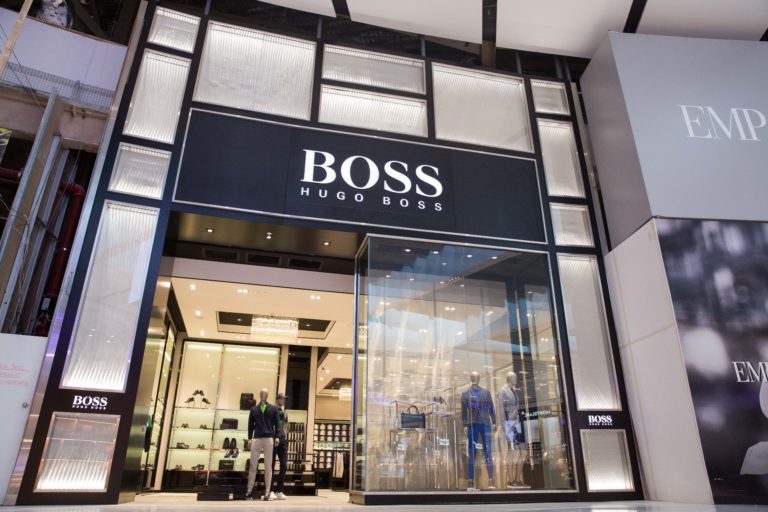
    Hugo Boss sales returned to strong growth in China in June and global online sales jumped 74 percent in the second quarter, even as the German fashion house reported an overall 59-per-cent fall in sales for the period due to lockdowns.

    Analysts at Baader Helvea noted the company was particularly exposed as people have been shifting to more casual wear during the coronavirus pandemic, cutting demand for the smart suits for which it is particularly known.

    Hugo Boss reported quarterly revenue of €275 million, missing an average analyst forecast for €288 million, while its operating loss of €124 million euros was ahead of consensus for a loss of €133 million.

    The company said it had seen a less pronounced fall in sales of casual wear and “athleisure” than in formal wear, with products like T-shirts, polo shirts, trousers and loungewear proving their resilience.

    Hugo Boss is currently led by finance chief Yves Mueller after Mark Langer stepped down as CEO. Daniel Grieder, the former CEO of Tommy Hilfiger Global & PVH Europe, is due to take over as CEO on June 1, next year.

    Hugo Boss China sales rose by 4 percent in the quarter, including double-digit growth in June, a similar trend to that reported by LVMH , the world’s biggest luxury goods group, which said last week that momentum had especially improved in China.

    By contrast, sales fell 59 percent in Europe and 82 percent in the Americas, with unrest and demonstrations in the US in May and June putting more strain on its business.

    The company expects a gradual improvement for the second half of this year, but declined to provide a full-year forecast.

  • Uniqlo same-store sales up 4 percent in July on stay-at-home demand

    Uniqlo same-store sales up 4 percent in July on stay-at-home demand

    Casual fashion brand Uniqlo’s Japanese same-store sales rose 4 percent year on year in July as consumers stocked up on comfortable “stay at home” clothes amid the novel coronavirus pandemic, its owner, Fast Retailing Co, said.

    The rise in domestic same-store sales, including online purchases, followed a 26-per-cent jump in June, which came after a three-month slump when the coronavirus outbreak kept shoppers at home and tourists away.

    “Stay at home demand” lifted July sales, with items such as stretchy jogging pants and oversized T-shirts proving popular, the company said.

    Analysts have said Uniqlo’s focus on practical, everyday clothes rather than more on-trend fashion may help it weather the coronavirus downturn better than global peers.