Category: Finance

Retail News Asia is committed to providing both local and global retailers with the latest Finance news throughout the Asian market. This on a daily base.

  • Crypto Rumbles Central Bank Sovereignty

    Crypto Rumbles Central Bank Sovereignty

    The private sector has long driven innovation on digital currencies but as fintech’s plans became more powerful, central banks sprang to attention. Their main concern? Keeping monetary policy in their purview.

    The most tantalizing tales in cryptocurrencies this year weren’t written by Libra or bitcoin, but by national or supranational projects like the digital euro. While investors raced to get in on bitcoin’s record-smashing highs, the government projects warrant a closer look.

    What central banks are trying to do is replace the storage carrier of money with a new one – cloud instead of long-play (LP), so to speak. The aim is to kill several birds with one stone.

    The first is to stave off a private sector-led attack on central bank sovereignty. The second is enabling efficiencies in the financial system, and the third is to lay a foundation for seamless oversight of monetary transactions.

    Taken in turn: a central bank ensures financial stability while overseeing systemically-relevant market infrastructure. To hand over a central instrument in its arsenal is to jeopardize its own mandate. Replacing a country’s own currency with another – which frequently happens in unstable countries, where dollars effectively become the leading currency – is a good example, or when a privately-controlled alternative takes over for reasons of efficiency.

    Admittedly, crypto is far from this scenario, but the thought experiment is a worthwhile one. We need to assume that multinational companies like Amazon or Alibaba will in future control and executive an enormous portion of private consumption: they own the value chain, from manufacturer to end consumer. They are intimately familiar with customer needs and aren’t shy about cultivating the data with the help of artificial intelligence.

    The next logical step in cementing this position is to introduce their own currency. This would dramatically simplify the purchasing process as well as create a vast common currency area spanning producer, commercial dealer, suppliers, to consumers.

    None of this is a problem as long as employees are paid in U.S. dollars, euros, or krona and use a major currency to buy a trading one. But if they are, for example, partly paid in Amazonas or Alibabas, central banks cede part of their authority to the private sector. The initial hostile official response to Libra is the logical consequence of this.

    The Swiss central bank’s «Project Helvetia» as part of the BIS’ innovation hub sidesteps the first question in favor of tackling the second, central digital revolution issue. Traditional banks are still grappling with the conversion to digital banking: continually under siege from newer upstarts without any historical baggage and far zippier organizations.

    The Swiss National Bank’s digital franc is meant to enable efficiency gains and simplify monetary transactions. This is a much more defensive strategy than other central banks have elected – notably the European Central Bank, Sweden’s Riksbank, or the People’s Bank of China – but the pragmatic approach fits the Swiss system of thinking well.

    In lockstep with infrastructure provider SIX, which belongs to the banks, genuine and measurable advances would represent a great step towards a digital future. The Swiss stock exchange operator plans to go live with its digital asset trading venue, SDX, next year. A digital Swiss franc would suit the SNB’s financial intermediaries perfectly.

    Switzerland is hardly ready for the third and conclusive step: a digital version of cash is being actively discussed elsewhere (namely in Sweden and China). Some aspects of digital money – efficiency versus cash and crucially, the traceability of transactions – are too tempting to resist.

    Of course, all types of criminals could be disrupted in their activities with such a step. But the accompanying supervision of citizens contradicts Switzerland’s understanding of government and privacy – and should be rejected. The complete replacement of cash in Europe and the U.S. isn’t on the horizon either for the same reasons, even if digital money eventually will find a niche besides paper.

    Despite the rapid advancement of the topic in recent months, we’re still at the dawn of developments. 2021 is sure to bring promising new developments, and the ECB is likely to devote considerable resources to rolling out a digital euro (or ultimately spike the project).

    In Switzerland, SDX and «Project Helvetia» are poised to take their next steps. The U.S. has been noticeably absent in the discussion, though January’s change in administration may mark a new tack in digital assets.

  • Asia is Ready for a Digital Banking Revolution

    Asia is Ready for a Digital Banking Revolution

    In the next three years, Asia will see more than fifty new digital banks that will completely change the financial services landscape. That’s just the beginning, GFT’s Christopher Ortiz says. The region will also see broader adoption of blockchain technology with new private exchanges, multi-currency e-wallets and digital assets.

    Some of the incumbent banks understand that a technological revolution is inevitable and are working on a digital reshaping of their offering, with broader cloud adoption, end-to-end digitalization of processes and a revamped user experience. What’s interesting is the focus remains predominantly on the retail offering, while the institutional and wealth businesses are trailing behind, weighed by the concept of personalized relationships.

    While this remains true for the current core client base of the top wealth managers, some wealth players are underestimating the impact of the transfer of wealth to the next generation, who despite not being digital natives have already adopted a complete digital lifestyle.

    Some of the most prestigious Swiss private banks understand the impending evolution and have already started a deep transformation of their offering and services with a digital mindset, to smoothly transition to a real personal digital experience. Asian wealth institutions are poised to start this process and revisit the impact of these new services on their current revenue streams.

    This is no longer about providing digital channels; that was the goal of the past ten years. The challenge is to reshape business models and create revenue-generating digital processes and services. It is estimated that cloud migration can help financial institutions reduce 80 percent of their mainframe costs, but this is not a short migration process it could take several years. As such, our recommendation to CIOs is to start embracing the cloud and initiate the migration as soon as possible.

    By 2025, most banking services will be completely digitalized. Multi-currency e-wallets with multiple central bank digital currencies and stable coins will replace physical currency, and the broad tokenization of investment assets and real state will be a reality, while most cross-border transactions will be booked on DLT technology. Financial intermediaries will also have reinvented themselves.

    Banks, as we know them today, are undergoing a fundamental change to become IT platforms with a banking license. However, the overall readiness of current financial services incumbents is under par. With some exceptions, the risk-aversion mindset is likely to prevail, and the lack of a transformational change mindset will stretch the profitability and long-term survival of key incumbents.

    The median age in Asia is around 30 years old, and about 70 percent of the region’s population is underbanked. The scale and challenges are unprecedented.

    In addition, If we look at the amount of unserved retail wealth in Asia, the opportunities are limitless. Yes, Asia will witness a revolution. Now it’s up to the incumbents to jump on the wagon and help drive it.

  • UBS Celebrates Singapore Anniversary with Sustainability Splash

    UBS Celebrates Singapore Anniversary with Sustainability Splash

    The Swiss major is celebrating its 50th anniversary in Singapore in 2020, with the launch of an immersive art installation and new commitments focused on sustainability.

    UBS rolled out an immersive art installation focused on sustainability at its new office outside Singapore’s central business district at 9 Penang Road.

    It features 3,600 butterflies and birds made from repurposed bottles by UBS staff and other external partners. And the bank hopes the installation can make it into the Singapore Book of Records as the «largest display of butterflies made from recycled plastic bottles.

    According to UBS, the move to launch the art display was to demonstrate its commitment to sustainability and community engagement, with efforts extending beyond just cosmetics.

    UBS Singapore will match 10 percent of the total amount raised and continue to support and collaborate with our local community partners to make a significant and lasting impact to local communities,” said Michelle Per, UBS Singapore’s community affairs lead, according to a report.

  • Stock market raises standard trading lot to 100 to cope with overload

    Stock market raises standard trading lot to 100 to cope with overload

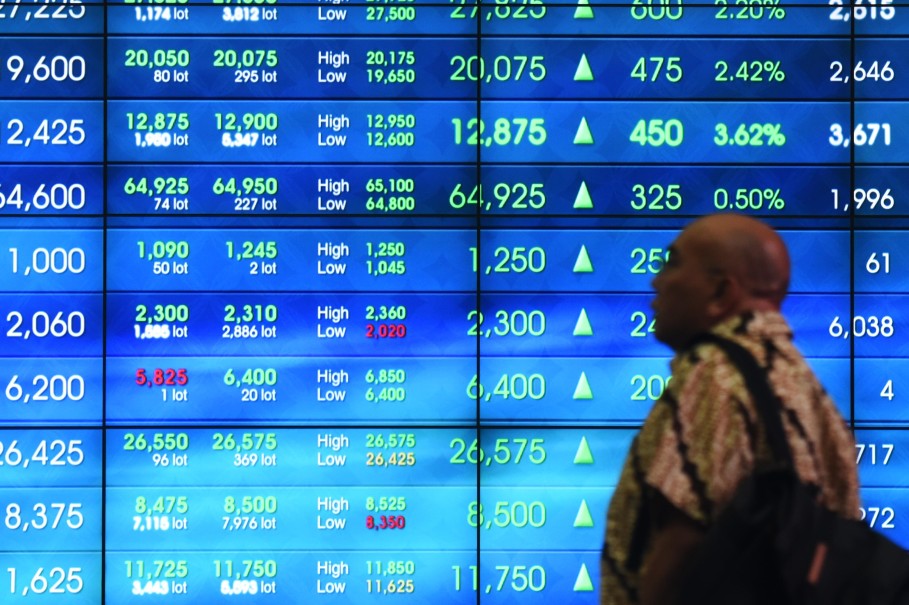
    The Ho Chi Minh Stock Exchange is set to raise the minimum number of shares that can be transacted in order from 50 to 100.

    It had planned to effect the change on January 18, but after testing and interaction with securities companies it has decided to advance it by two weeks to January 4 “if everything goes smoothly,” a bourse spokesperson said.

    Currently investors wanting to trade odd lots of 1-49 shares have to transact with securities companies instead of on the exchange.

    HoSE executives said securities companies are keen to make the switch and willing to speed it up.

    A standard lot of 100 is the norm in many countries in the neighborhood such as SET (Thailand), BM (Malaysia), and SGX (Singapore) consistent with international practices and reasonable given the current market conditions, HoSE said.

    The larger lot size is expected to reduce the load on the system at a time when market liquidity is at historic highs. Between December 17-28, the exchange had to halt trading completely for short periods of time as volumes approached VND14 trillion ($606.14 million).

    Le Hai Tra, head of its board of directors, said at a press conference last week that the exchange was receiving 3-12 times higher volume of orders than before.

    Although the system has backup capacity, it cannot cope with this sudden surge immediately, he explained.

    Before Covid-19 caused other asset classes such as property to lose their charm and redirected cash into securities, HoSE saw average daily trading of VND3-5 trillion.

    But in the last two months, it has surged to VND12-14 trillion as the benchmark VN-Index kept rising and approached the 1,000-point mark, a threshold it struggled to cross in the last two years.

    The VN-Index on Wednesday shed 0.18 percent to close at 1,097.54 points. Trading was worth VND13.5 trillion.

  • Goldman Sachs Proffers Affluent Wealth App

    Goldman Sachs Proffers Affluent Wealth App

    The U.S. investment bank plans to expand its wealth offering to affluent clients. The move represents a further departure from its Wall Street roots.

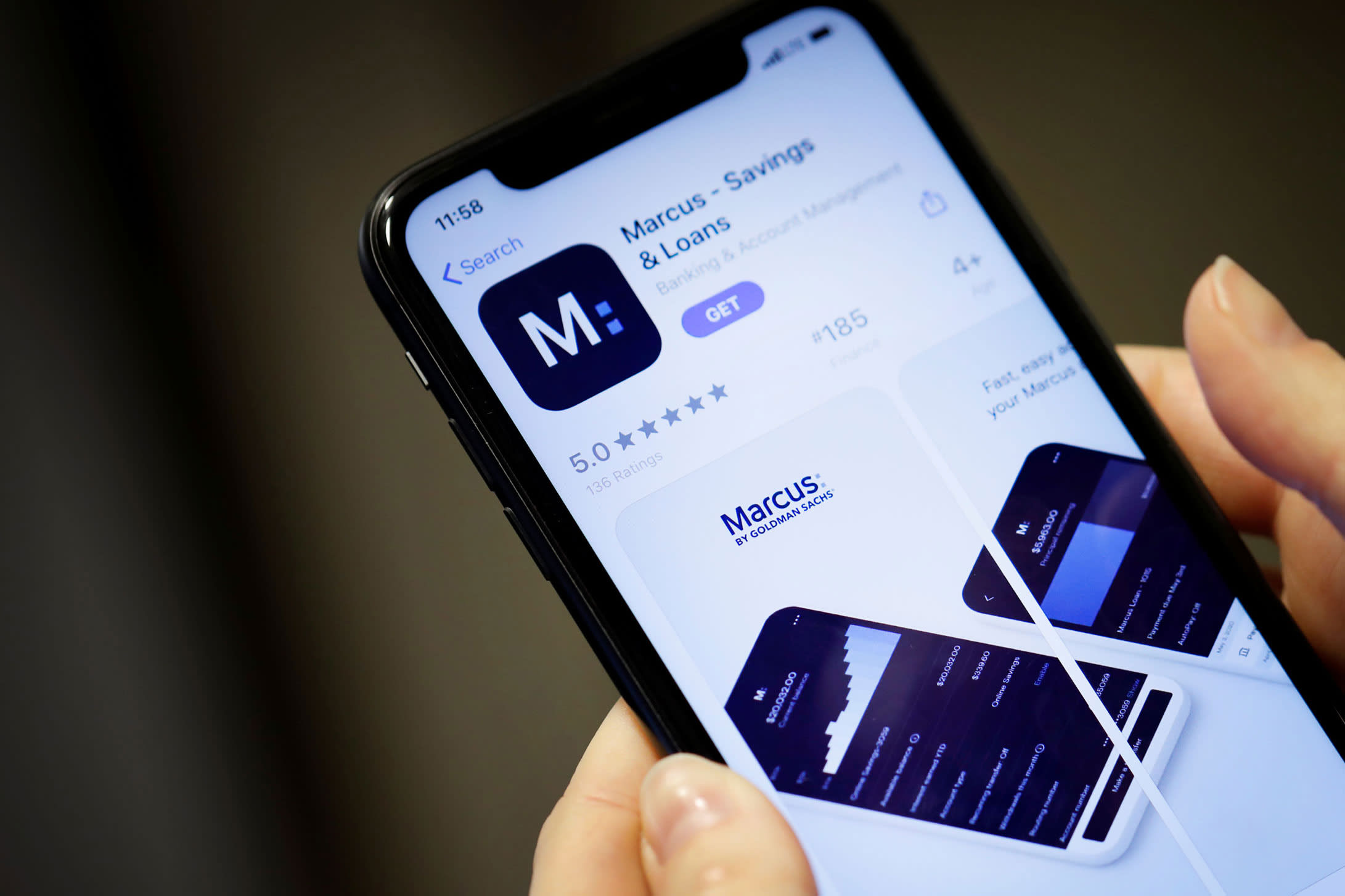
    Goldman Sachs, the best-known investment bank in the world, is pushing deeper into mass-market banking. Four years after launching Marcus for retail clients, the New York-based company is now releasing an app for affluent clients to invest, according to a report by CNBC which cites an internal memo.

    A beta version of the app – Marcus Invest – has already started and a wider launch is planned for the first quarter. Employees are the first to test Marcus Invest, which charges an annual fee of 0.15 percent of assets.

    The move is emblematic of how Goldman, known as Wall Street’s most voracious trading house, is quietly seeking a reinvention as a trusted wealth manager under CEO David Solomon. Though still minute in comparison to its investment banking activities, the wealth arm has steadily expanded in recent years – including returning to the world’s largest offshore center.

    Goldman’s entrance into the mass affluent market was foreshadowed by Marcus, which it launched in 2016 in the U.S. and expanded to the U.K. two years ago. Marcus was so successful in hoovering up British money that Goldman reportedly shut it to new clients this year. The app was meant to be launched in Germany as well, a move which was pushed back due to Brexit as well as the pandemic.

    Until recently, Goldman’s wealth managers catered only to the wealthiest of clients and those who also commanded investment banking-grade services (generally from $25 million in assets and up).

    Unlike traditional wealth managers, Goldman is making technology a backbone of its efforts to court the wealthy – plowing billions into its own development as well as into deals. It bought United Capital, a tech-backed wealth manager, last May, but has been quietly acquiring consumer banks and wealth managers since 2016.

  • Asia is Ready for a Digital Banking Revolution

    Asia is Ready for a Digital Banking Revolution

    In the next three years, Asia will see more than fifty new digital banks that will completely change the financial services landscape. That’s just the beginning, GFT’s Christopher Ortiz says. The region will also see broader adoption of blockchain technology with new private exchanges, multi-currency e-wallets and digital assets.

    Some of the incumbent banks understand that a technological revolution is inevitable and are working on a digital reshaping of their offering, with broader cloud adoption, end-to-end digitalization of processes and a revamped user experience. What’s interesting is the focus remains predominantly on the retail offering, while the institutional and wealth businesses are trailing behind, weighed by the concept of personalized relationships.

    While this remains true for the current core client base of the top wealth managers, some wealth players are underestimating the impact of the transfer of wealth to the next generation, who despite not being digital natives have already adopted a complete digital lifestyle.

    Some of the most prestigious Swiss private banks understand the impending evolution and have already started a deep transformation of their offering and services with a digital mindset, to smoothly transition to a real personal digital experience. Asian wealth institutions are poised to start this process and revisit the impact of these new services on their current revenue streams.

    This is no longer about providing digital channels; that was the goal of the past ten years. The challenge is to reshape business models and create revenue-generating digital processes and services. It is estimated that cloud migration can help financial institutions reduce 80 percent of their mainframe costs, but this is not a short migration process it could take several years. As such, our recommendation to CIOs is to start embracing the cloud and initiate the migration as soon as possible.

    By 2025, most banking services will be completely digitalized. Multi-currency e-wallets with multiple central bank digital currencies and stable coins will replace physical currency, and the broad tokenization of investment assets and real state will be a reality, while most cross-border transactions will be booked on DLT technology. Financial intermediaries will also have reinvented themselves.

    Banks, as we know them today, are undergoing a fundamental change to become IT platforms with a banking license. However, the overall readiness of current financial services incumbents is under par. With some exceptions, the risk-aversion mindset is likely to prevail, and the lack of a transformational change mindset will stretch the profitability and long-term survival of key incumbents.

    The median age in Asia is around 30 years old, and about 70 percent of the region’s population is underbanked. The scale and challenges are unprecedented.

    In addition, If we look at the amount of unserved retail wealth in Asia, the opportunities are limitless. Yes, Asia will witness a revolution. Now it’s up to the incumbents to jump on the wagon and help drive it.

  • Wirecard Seeks Buyer in Singapore

    Wirecard Seeks Buyer in Singapore

    The firm was ordered to cease payment services in the country in October, and to return all customers’ funds, amid an investigation into missing funds.

    Payments services provider Wirecard is seeking a buyer for its Singapore entity and has at least one party interested in acquiring the business, according to a report on Tuesday.

    The company has lost about one-third of its staff since it was ordered to cease its core business activities in Singapore, where it provided payment processing services to 1,900 companies, a report said.

    At its peak, Wirecard employed more than 350 people in Singapore, where it has a call center, sales deployment team, regional commercial team, and project management office. As of October, it still had 250 people, including 180 locals, on its payroll, who are working from home and supporting its businesses in Hong Kong and Indonesia.

    Wirecard is at the center of one of the region’s biggest corporate accounting scandals in recent years, having admitted that €1.9 billion ($2.25 billion) is missing from its financial accounts.

    Its parent company in Germany has filed for insolvency, and its CEO Markus Braun as well as other top executives have been arrested, while former operating chief Jan Marsalek remains missing.

    So far, one Singaporean has been indicted – a director of a local accounting firm that allegedly helped Wirecard falsify letters about the funds held in its escrow accounts.

  • HSBC Opens IAM Desk in Singapore

    HSBC Opens IAM Desk in Singapore

    The desk will cater to the needs of family offices and independent advisors managing wealth on the behalf of their clients.

    HSBC’s private banking arm has set up dedicated independent asset management (IAM) in Singapore to expand its reach into a fast-growing segment, the bank announced on Wednesday.

    In the announcement, HSBC noted rapid growth of the IAM industry in wealth management and said growing client awareness and demand for independent advisory services will continue to spur the development of specialized IAM advisors.

    Clients increasingly have more options and by establishing this desk, we are supporting them in their wealth ambition with capabilities underpinned by our international footprint and full private banking suite of capabilities at scale,» Philip Kunz, HSBC’s head of global private banking, Southeast Asia, said.

    HSBC previously said it would place a much greater focus on the family office segment in Asia, following the creation of its newly merged wealth unit in February.

    The bank’s combined wealth business has $1.4 trillion in assets under management, with half of those assets in Asia. Revenue from Asia in the wealth business rose by 12 percent to $5.7 billion last year.

  • Hong Kong’s First Licensed Crypto Platform Goes Live

    Hong Kong’s First Licensed Crypto Platform Goes Live

    Just one week after Singapore saw its first mainstream crypto foray by DBS, Hong Kong mirrors the city-state’s move by issuing a license to BC Technology Group’s OSL Digital Securities.

    The Securities and Futures Commission (SFC) has issued a Type 1 (dealing in securities) and Type 7 (automated trading services) license to OSL, according to a statement, making it the first licensed digital asset platform in the city.

    The platform will provide prime brokerage, custody, exchange and other services for Bitcoin, Ethereum and other cryptocurrencies alongside select security token offerings.

    In addition, OSL also has insured digital asset wallets and an audited digital asset trading platform aimed at institutions and professional investors.

    Following the local government’s call to ban retail investor access, Hong Kong’s crypto market will be focused on institutional and professional investors, those deemed as high net worth individuals (HNWI) with some market knowledge and experience.

    Institutional investment in Bitcoin and other digital assets has rapidly accelerated over the past several years, and has entered a new era of growth in Hong Kong with licensing,” said OSL chief executive Wayne Trench.

    Following in the footsteps of DBS, OSL has also already applied for a digital asset licensed with the Monetary Authority of Singapore under the Payment Services Act.

    Licensed entities are the future of digital assets and capital markets in the digital age and professional investors, hedge funds and family offices are now rapidly increasing portfolio allocations to digital assets such as Bitcoin,» added OSL head of distribution and prime Matt Long.

    According to the statement, the OSL digital asset platform business saw a 47 percent year-on-year revenue increase in the first six months of 2020, driven in part by record-high trading volumes of $28 billion.

  • Lender MSB expects to earn hundreds of millions from insurance deal

    Lender MSB expects to earn hundreds of millions from insurance deal

    Vietnam Maritime Commercial Joint Stock Bank is set to sign an exclusive bancassurance deal with a leading but unidentified insurer worth hundreds of millions of dollars to it.

    It will be signed next year for 15 years with one of the three biggest insurers in terms of market share in Vietnam, Nguyen Hoang Linh, CEO of the lender (MSB), said at a meeting on Wednesday.

    The country’s three biggest are Canada’s Manulife, the U.K.’s company Prudential and Japan’s Dai-ichi Life.

    Linh cited the example of Asia Commercial Bank (ACB) to indicate roughly how much MSB would receive in upfront payment for the deal.

    ACB received $370 million from Canada’s Sun Life.

    Linh said ACB has a monthly premium income of VND80 billion ($3.45 million), while that figure of MSB is VND50 billion.

    The Ho Chi Minh City Stock Exchange this month gave approval for MSB to list its shares on December 23 at a price of VND15,000, which will put its market cap at VND17.6 trillion.

    The bank has forecast a pre-tax profit of VND2.3-2.4 trillion this year, up 4.5 percent from last year.

  • Private banks drive VN-Index pull-back

    Private banks drive VN-Index pull-back

    The VN-Index gained 1.11 percent to 1,066.99 points Tuesday, after seeing one corrective session, with private banking blue chips the best performers.

    The Ho Chi Minh Stock Exchange (HoSE), on which the VN-Index is based, was a sea of green with 296 stocks gaining and 134 losings. Total trading volume abated over 10 percent compared to Monday, reaching VND11.86 trillion ($514.79 million).

    Unlike the previous few sessions, where investors were focused on mid-caps with more growth potential, blue chips were the main driving force behind gains on the market this session.

    The VN30-Index for the HoSE’s 30 largest caps soared 1.65 percent, with 13 stocks gaining and three losings, soaking up over 50 percent of the trading volume.

    TCB of private lender Techcombank topped gains with 6.9 percent, followed by VPB of VPBank, up 4.3 percent, and STB of Sacombank, with 4.1 percent.

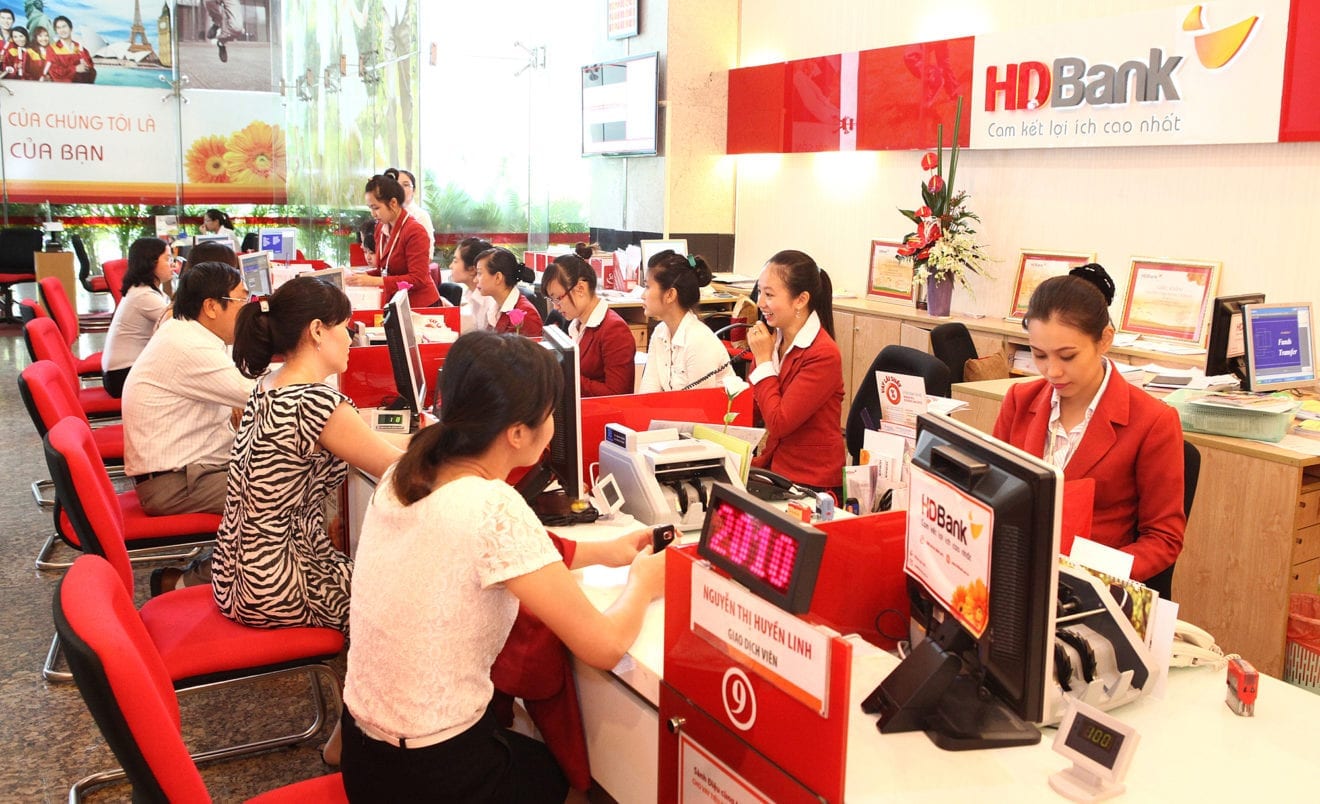
    Also in the private banking sector, HDB of HDBank added 0.7 percent, while EIB of Eximbank kept its opening price.

    State-owned banks were also some of the best performers. Of Vietnam’s three biggest lenders by assets, BID of BIDV was up 2.8 percent, VCB of Vietcombank 2.1 percent, and CTG of VietinBank, 1.1 percent. MBB of mid-sized Military Bank surged 3.5 percent.

    Another sector that outperformed this session was real estate. NVL of Novaland was up 2.4 percent, KDH of Khang Dien House 1.8 percent, ROS of FLC Faros 1.4 percent, VHM of giant Vinhomes 0.2 percent, while TCH of Hoang Huy Group was flat.

    Other major gainers, this session included VJC of budget carrier Vietjet Air with 2.5 percent, VRE of mall operator Vincom Retail with 1.3 percent, and SBT of agricultural exporter TTC-Sugar, with 1 percent.

    The only three losing stocks this session were SSI of top brokerage Saigon Securities Inc., down 1.8 percent, REE of appliances maker Refrigerated Electrical Engineering, and PLX of gasoline distributor Petrolimex, both by 0.4 percent.

    Indices for secondary main bourse Hanoi Stock Exchange (HNX), home to mid-and small-caps, and mezzanine bourse Unlisted Public Companies Market (UPCoM) rose 2.23 percent and 0.90 percent, respectively.

    Foreign investors continued to be net sellers to the tune of over 225 billion on all three bourses, with the most net offloaded stocks being HPG of steelmaker Hoa Phat Group, which gained 0.5 percent, and SSI of Saigon Securities Inc.

  • Singapore Exchange Makes Sustainability Push

    Singapore Exchange Makes Sustainability Push

    Singapore Exchange (SGX) is growing its sustainability capabilities and initiatives with a $20 million ($15 million) plan. SGX is allocating half of the budget towards new ESG-focused products, services and platforms, while the other half will be used for capacity building for the financial ecosystem, strengthening internal capabilities and increasing CSR commitments, the bourse announced in a statement on Tuesday.

    We want to and can push the sustainability agenda further. As a market operator and regulator, we can influence and drive greater commitment to sustainability and greener financial markets, Loh Boon Chye, CEO of SGX, said.

    All sustainability initiatives, which span across asset classes including fixed income, equities, commodities and indices, will be housed under SGX FIRST (Future in Reshaping Sustainability Together) – a multi-partner, multi-asset exchange-led sustainability platform.

    The platform also aims to equip investors and issuers in this region with greater ESG knowledge and provide them with better access to a wider range of ESG-related information

    Given its role in regional capital and financial markets, SGX can help facilitate collaboration within the ecosystem to catalyze change, SGX said in the statement.

    For fixed income, SGX is currently working with Nasdaq on the Sustainable Bond Network Initiative. While it currently covers more than 4,500 bonds, largely from the U.S. and Europe, SGX plans to enhance data access and transparency of sustainable bonds in Asia Pacific by bringing regional issuers onto the network.

    In terms of equities, more ESG-focused investment and risk management products will be rolled out in the next three years.

    SGX has expanded its existing indexing partnership with FTSE Russell, Morningstar Sustainalytics and MSCI to provide ESG ratings on companies listed on SGX. Over 30 of the most recognizable SGX-listed companies are initially covered, with plans to expand coverage in 2021. SGX is also expected to launch four futures contracts in partnership with FTSE Russell in January 2021, based on the FTSE Emerging Markets, FTSE Asia ex-Japan, FTSE Emerging Markets Asia and FTSE Blossom Japan ESG-themed indices.

    New sustainability benchmarks and ESG-related indices will also be layered alongside existing flagship multi-factor indices offered by SGX, including Scientific Beta and Index Edge products.  Scientific Beta will develop new solutions for institutional investors in the next 12 month for responsible investing that aligns to Paris agreement climate change goals.

  • Citi Registers Record-High Wealth Inflows in APAC

    Citi Registers Record-High Wealth Inflows in APAC

    Citi in Asia Pacific posted record-high net new money of $20 billion across its wealth management business in the region. This represents a 10 percent year-on-year increase, according to a statement from the bank, and pushes total assets under management across the wealth business to $238 billion with approximately one-third of billionaires in the region as its clients.

    The figures include the whole wealth business covering from emerging affluent to ultra-high net worth clients including Citi Priority, Citigold, Citigold Private Client, and Citi Private Bank.

    The Asia Pacific wealth market stands out in its scale and growth potential. And this is not a cyclical opportunity – it is structural, driven by the emergence of a vast middle class and the rapid development of regional capital markets, said Peter Babej, Citi’s APAC CEO. Along with macro-level asset growth, Asian customers increasingly require portfolio advice, design and allocation geared toward diversification of asset types and geographic exposures.

    Not unlike its industry competitors, Citi is also boosting investments in technology with a new mobile banking platform that boasts enhanced wealth management tools and user growth of over 1 million.

    As we grow our wealth operations, we are focused on first-rate service – and that means staying ahead in technology, Babej said.

    Clients increasingly want world-class advisory delivered on their preferred terms – online, face-to-face, or both. Our wealth centers, with world-class RMs leveraging digital wealth management solutions, are geared to delivering the customized value propositions that our clients require.

    Also not unlike others, Citi also believes that the human touch remains very much relevant in the wealth management industry despite rapid technological advancements. The bank’s relationship managers are currently trained by the Citi Wharton Global Institute, a joint executive education program launched with business school Wharton in 2015.

    We continually invest in both our people and our technology to remain at the forefront of this fast-moving business,” Babej added.

  • Citi Launches Hiring Spree in Singapore

    Citi Launches Hiring Spree in Singapore

    Citibank Singapore is set to see a vitalized drive towards expansion as the American lender shared major targets on hiring, assets and clients following the launch of its new wealth hub in Orchard.

    Citi will look to double its assets – currently with $280 billion under management – and triple the number of clients by 2025, according to a report.

    To achieve this, the bank will also look to hire over 330 relationship managers.

    Alongside the latest opening of its wealth hub – a four-floor 30,000 square feet space that can accommodate over 500 people with current restrictions and an extra 100 without – the bank is also seeking to build one or two more hubs in the city-state but no timeline was shared. It also has over 70 wealth hubs and client centers in the broader region to serve its affluent customers.

    One of the key reasons for the selection of Singapore as the hub of choice, according to Citi’s head of consumer banking for Asia Pacic and Europe, Middle East and Africa Gonzalo Luchetti, is trust.

    You have a stable, well-tested framework, under which you can operate, he said. It gives clients the trust that you really need in the business of wealth.»

    In addition, Luchetti also highlighted the geographical location, a strong economy, large amounts of local wealth and talent pool as other reasons.

    In line with the overall industry trend, Citi has benefited in digital adoption in a model Luchetti described as «light-physical, high-digital».

    Less than 1 percent of transactions in Singapore executed at branches and year-to-date, retail sales of mutual funds digitally doubled compared to the same period in 2019.

    Although the bank has reduced space occupied – 10 outlets in Singapore, down from 14 at the start of the year – it maintains that a physical presence and human touch from relationship managers will continue to matter.

    One of the bank’s key strategic approaches will be to leverage its overall network and capabilities to serve the full spectrum of wealth – from the emerging affluent to ultra-high net worth individuals – by creating closer links between the private bank and the global consumer bank, benefiting from the former’s product capabilities and the latter’s transactional capabilities.

    The ability to offer mass affluent clients the type of access to global and institutional caliber insights from the private bank sets Citi apart, Luchetti added.

    This is one of the key things that we see as our differentiators – that we can grow with our clients as their wealth journey moves forward.

  • HSBC Appoints Singapore Head of Securities Services

    HSBC Appoints Singapore Head of Securities Services

    The bank has named a longstanding executive as its head of securities services in Singapore, as part of its strategy to capitalize on Singapore’s position as a global-Asia Pacific fund gateway for institutional wealth.

    Noor Adhami, currently based in the United Arab Emirates as HSBC’s regional head of global liquidity and cash management and securities services, MENA and Turkey, will take on the new role from 1 February 2021, the bank announced on Tuesday in a statement.

    Adhami joined HSBC in 2004 and has held a variety of roles in Jordan and Dubai. In her new role, she will report to Brian Godins, Asia Pacific head of securities services and Gavin Powell, Singapore head of markets and securities services.

    Singapore is increasingly becoming a prime international wealth and investment center, Powell said, noting that Adhami’s experience will deepen the bank’s expertise in the Republic and enable it to better support its clients.

    HSBC has been progressively building out its wholesale banking capabilities in Singapore, which includes the launch of a new coverage division focusing on mid-sized non-bank financial institutions.

    In the past year, the securities services division has also launched Asia’s first digital bond issuance alongside Singapore Exchange and Temasek. It was also part of the first interest rate swap trade by an overseas institutional investor through the central counterparty clearing model in the China Interbank Market, and was a securities services provider for the first ETF launched under the Singapore Variable Capital Company structure.