Category: Finance

Retail News Asia is committed to providing both local and global retailers with the latest Finance news throughout the Asian market. This on a daily base.

  • Manulife to become VietinBank’s exclusive insurance partner with Aviva purchase

    Manulife to become VietinBank’s exclusive insurance partner with Aviva purchase

    Canadian insurer Manulife will acquire the Vietnamese business of British company Aviva and its 16-year bancassurance deal with VietinBank.

    It will take over the exclusive partnership with VietinBank when the deal is completed, Manulife and the lender agreed on Monday.

    The state-owned lender chose Manulife as its bancassurance partner because of its long-term commitment to Vietnam, deputy director of VietinBank, Nguyen Duc Thanh, said at the agreement-signing ceremony.

    He said his bank’s board expects the bancassurance business to grow by 30 percent annually and contribute 6-8 percent of the income from services.

    Manulife expects the partnership to increase its market share in the country from 20 percent to 30 percent in the coming years. It is currently the exclusive insurance partner of the country’s largest private lender, Techcombank.

    Aviva did not reveal the value of the sale but said in a statement that it expects the transaction to increase its net asset value and solvency surplus by around GBP100 million ($133.67 million).

    The company is looking to sell its operations in continental Europe and Asia to focus on Britain, Ireland and Canada.

    Vietnam had 18 life insurance companies with combined premium revenues of VND106.6 trillion ($4.6 billion) last year, up 24 percent year-on-year. In terms of new contracts, Manulife led the market for the first time last year with 17.7 percent followed by Bao Viet Holdings with 16.49 percent and Prudential Vietnam with 15.78 percent, according to the Ministry of Finance.

  • Adyen and Microsoft Launch Network Token Optimization

    Adyen and Microsoft Launch Network Token Optimization

    Adyen , the global payments platform of choice for many of the world’s leading companies, expands its collaboration with Microsoft to accelerate payments innovation for both companies with the launch of Adyen Network Token Optimization. Adyen is one of the first payment platforms to enable tokenized payments across multiple schemes and to offer automated optimization of the use of tokens to increase authorization rates. By adopting Network Token Optimization, merchants like Microsoft are able to realize significantly more revenue due to increased authorization rates.

    “Customer experience is at the center of everything we do, and when it comes to the payments process it’s about making it faster, simple and secure,” said Matt Rossmeissl, Vice President of Commerce Engineering Operations at Microsoft. “Product innovation is at the core of what we do at Microsoft and Adyen’s Network Token Optimization is a factor in driving better authorization rates and customer satisfaction.”

    Adyen and Microsoft have been working together since July 2015, starting with European acquiring. Today, Adyen processes payments for Microsoft globally, across all Microsoft products and services. Microsoft utilizes multiple Adyen products in addition to Network Token Optimization, including Real-time Account Updater to ensure a seamless consumer shopping experience by always charging the most up to date card. Adyen also supports various local payment methods in a number of countries for Microsoft, including U.S.-based debit networks, a more recent Adyen development.

    “We always build products with a focus on our merchants and their end customers, and Microsoft pushes us to help create better global solutions. We have benefited from Microsoft’s consistent desire to provide better experiences for their customers,” said Kamran Zaki, COO at Adyen. “At the forefront of innovation, the Microsoft team is always willing to act as an early adopter for many of our new products and features. We work together every day to create positive shopping experiences for Microsoft customers, and are excited to see what we will create next.”

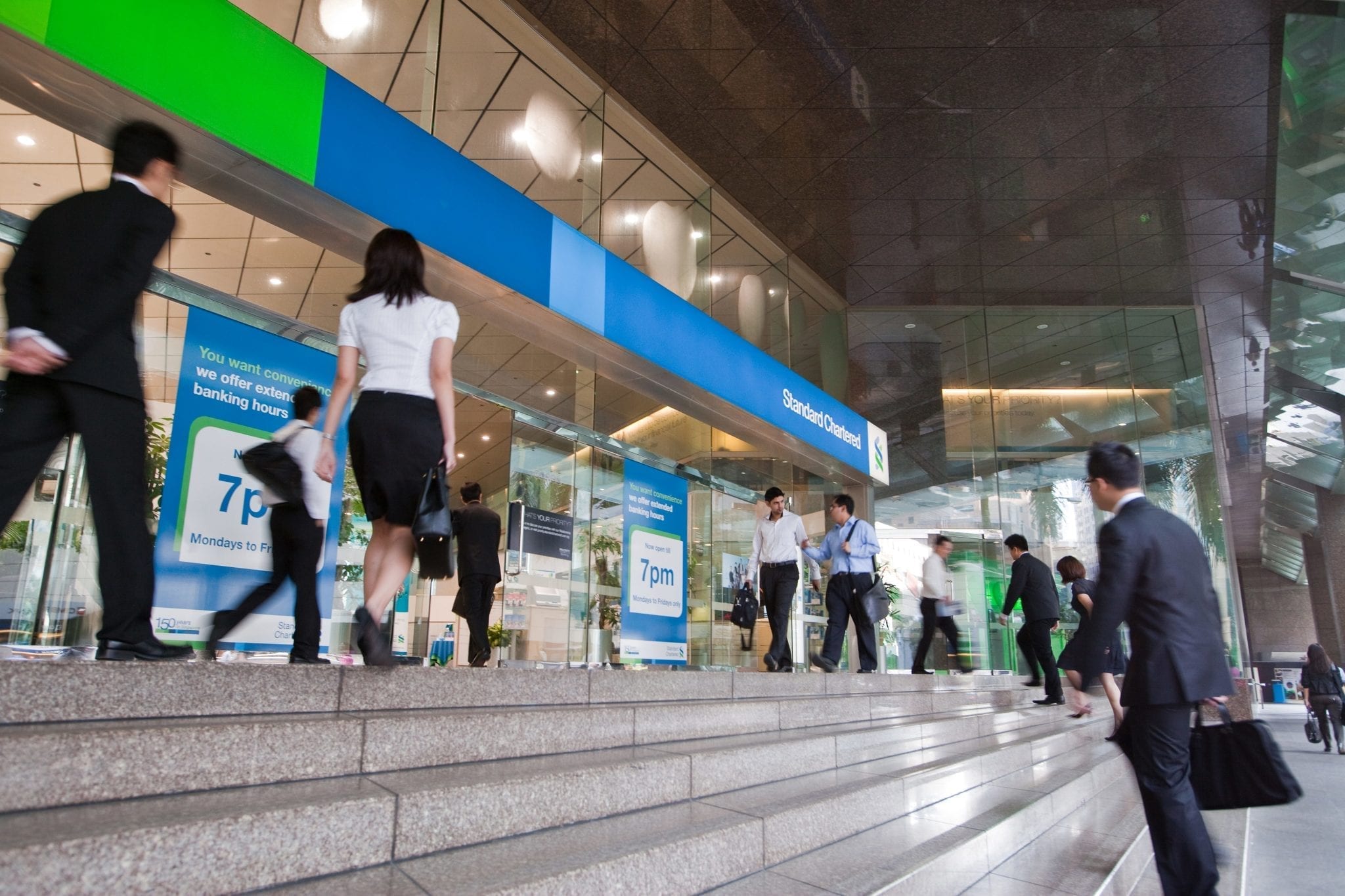
  • Standard Chartered Receives Enhanced Privileges in Singapore

    Standard Chartered Receives Enhanced Privileges in Singapore

    The recognition comes on the back of the U.K.-Singapore Free Trade Agreement, signed on Thursday.

    The Monetary Authority of Singapore (MAS) has granted Standard Chartered Bank (Singapore) enhanced Significantly Rooted Foreign Bank (SRFB) privileges, in recognition of the significantly higher degree of rootedness that exceeds the SRFB baseline criteria.

    As part of the U.K.-Singapore FTA, Standard Chartered will be entitled to additional customer service locations on top of the 50 it is entitled to as an SRFB.

    The enhanced SRFB privileges also give Standard Chartered the opportunity to secure an additional full bank license to establish a subsidiary to operate new or alternative business models such as a digital-led bank with ecosystem partners, which it has been planning as part of a joint venture with National Trade Union Congress (NTUC) Enterprise.

    Standard Chartered’s roots in Singapore trace back over 160 years when it set up its first branch in 1859 under its former name, Chartered Bank of India, Australia and China.

    Singapore is now the group’s operational hub, housing global businesses, technology and operations, and many of the bank’s leadership teams. The country is also home to SC Ventures, the bank’s innovation, ventures and fintech investments unit. The bank also plans to grow its international wealth business in Singapore and has invested S$8 million to train and upskill its workforce in the city-state.

    We have invested and grown in Singapore to be the global business and operations hub that we are today, and we look forward to playing our part in developing the country’s banking landscape, Bill Winters, Standard Chartered group chief executive, said in a statement.

  • HSBC Co-Head of Advisory and Investment Banking Exits

    HSBC Co-Head of Advisory and Investment Banking Exits

    HSBC’s co-head of advisory and investment banking coves has left the bank to pursue a senior role outside of the industry after joining two years ago.

    Peter Enns has left HSBC, after relocating to Asia from London last year where he was last the global head of financial institutions group for the bank.

    Prior to joining HSBC, Enns spent 21 years with Goldman Sachs in various roles including as the head of its Canada business.

    Enns leaves both business areas in stronger franchise positions, with improved financial performance, said Greg Guyett, co-CEO of global banking and markets in the memo. I would like to thank Peter for his contributions to HSBC.

    According to the bank, a search will be launched to replace Enns whose responsibilities in the meantime will be assumed by Adam Bashaw, the other global co-head of advisory and investment banking coverage.

    Separately, the bank is also strengthening its Asia business with the relocation of its global head of fixed income research Steven Major from London to Hong Kong.

  • UBS Private Bank Shuffles Top Executives

    UBS Private Bank Shuffles Top Executives

    The operating chief of UBS’ flagship wealth unit is leaving the job. His replacements will split oversight of the U.S. and rest of the world.

    Reto Wangler, operating chief to private bank co-heads Iqbal Khan and Tom Naratil, is leaving for a roughly year-long sabbatical from UBS, from February 1, according to a memo.

    He returns to the Swiss bank in a new role next year, the memo said. Wangler advanced to the job in 2018 through a mega-merger of its U.S.-based brokerage and wider, international private bank for the wealthy. A spokesman for UBS didn’t immediately respond to a request for comment.

    He will be replaced by Kate Newcomb as well as Wiwi Gutmannsbauer at the $2.6 trillion unit, effective February 1, according to the memo. Newcomb, who currently oversees operations at the U.S. wealth unit, will continue to do so.

    Meanwhile, Gutmannsbauer, who UBS seconded to Asia nearly three years ago to oversee operations for its regional wealth activities, will take on Switzerland and international. Gutmannsbauer will relocate to Zurich from Singapore in the second quarter of 2020.

    Both he and Newcomb have spent much of their career in operations: she began at Paine Webber, a predecessor brokerage, as an accountant in 1984 and moved to operations just before the financial crisis.

    Gutmannsbauer has held various operations roles in the private bank. With their successful track records, they are ideally suited to further strengthen our digital capabilities and front-to-back efficiency, private bank co-heads Khan and Naratil wrote in the memo to staff.

  • HSBC Securities Services Joins BlackRock’s Provider Network

    HSBC Securities Services Joins BlackRock’s Provider Network

    The move allows asset managers and asset owners to connect seamlessly with HSBC through a single platform.

    HSBC on Tuesday announced that it will offer access to its Securities Services’ products via «Aladdin» – a Blackrock-run platform that helps assets managers check risk in their portfolios, trade, manage data management, and other operational tasks, from the first half of 2021, starting in Hong Kong and Singapore.

    Aladdin – or asset, liability, debt, and derivatives investment network – was conceived by the New York-based firm in the late 1990s as an internal tool. Today, it is one of Blackrock’s most powerful tech tools that it sells to smaller rivals, in a bid to stave off pressure on its active management fund arm from cheaper index funds.

    Sebastien Danloy, HSBC Securities Services’ global head of asset owners and managers, said joining the network adds to HSBC’s capabilities to connect to its clients’ front-office platforms and to offer front-to-back solutions in an open architecture environment to the asset management community.

    Integrating HSBC’s middle office, custody, and fund administration services with Aladdin will help clients access real-time data, streamline their workflows, reduce their manual processes and improve their operational efficiencies, the bank said in the announcement.

    HSBC currently administers $500 billion in assets for 20 global asset managers who already use Aladdin.

  • UBS CEO Ralph Hamers’ Fintech Trends for 2021

    UBS CEO Ralph Hamers’ Fintech Trends for 2021

    The Singapore Fintech Festival is currently discussing the hot new trends for the fintech business in 2021. UBS Chief Executive stayed in Switzerland, but he can be trusted to know where things are heading.

    Ralph Hamers – Mister Fintech among the banking CEOs – has been in charge of Switzerland’s largest bank, UBS, for about a month. He didn’t fly out to attend the Singapore Fintech Festival in person.

    Instead, he took part at an event hosted by Switzerland Global Enterprise, which on Monday had launched the information platform finance.swiss at an event billed as World Fintech Festival in Switzerland.

    He used his time to present an overview of the big trends in fintech in the coming year.

    1. Neobanking: Source of a New Business Model?

    As a CEO of a traditional bank, Hamers maintains the view that neobanks such as Revolut, Monzo, or N26 have no business model to speak of. Neobanks may be digital and mobile, but their sole characteristic from a business point of view is growth. But that’s hardly a business model to speak of.

    Hamers believes that the so-called Freemium-Model, which entails a basic free-of-charge service, won’t suffice to run a successful business. To be true, neobanks have so far defined themselves by the number of clients won as well as the number of financing rounds completed. But one day, investors will want to get a return on their investment. Hamers says time will tell how the new banks will manage to earn money.

    2. Robo-Adviser: Whereto Henceforth?

    Robo advisory seems doomed in Switzerland. They only work in connection with personal advice from a bank in a kind-of hybrid model. Hamers believes that robo advisers and algorithms have proven their ability to deliver good results. But only few people actually want to entrust their money to a robot. Therefore, the raison-d’être of robo advisers gets lost – namely the leveraging and the ensuing benefit of scale.

    To get clients to trust the robot advisory system, advisers have started offering personal consultancy services. The problem of how to scale the business remains though, Hamers says. He believes that efforts will be made to address the problem in 2021.

    3. Tokenisation: Huge Potential?

    UBS CEO Hamers pronounced himself a great supporter of tokenization and digitization of assets. He may have been obliged to say so given that the event was hosted by SIX CEO Jos Dijsselhof and Chairman Thomas Wellauer at the Convention Point. The digital exchange SDX aims to become the first regulated exchange for tokens and digital assets.

    Tokenization is a fintech trend with huge potential, Hamers said. UBS has been working on such projects for some two years. He believes that there is work to be done still to free the full potential of tokenization.

    4. Green Fintech: Two Trends Merged

    Green fintech – a no-brainer according to Hamers: fintech and sustainable investing are trends and combining the two is simply perfect. In Switzerland, green fintech is a trendsetter and has become a founding principle for the financial market strategy. In November, the government launched the green fintech network that brings to one table business, associations, risk capital, universities, consultancies, and law firms.

    One great example of what green fintech is able to is the application provided by Yova, where clients can engage in impact investing. Zurich-based Globalance Bank helps clients understand the ins and outs of green investing by displaying the emissions and energy use of a portfolio.

    5. Open Banking: Perfecting a Symbiotic Existence?

    Not a new trend, but one that might prove disruptive, according to Hamers: open banking. If banks don’t open their business to a third party, they risk disintermediation, the destruction of supply chains. If banks however choose to open their business, they can retain client access, even if the best offering for a specific service no longer is its own one. UBS is moving toward open banking, as was shown by its announcement on Monday that it will cooperate with finance platform Financescout24.

    Open banking is creating a win-win situation, says Hamers: fintech that lacks the resources to build their own customer base, receive access to an established market. And the banks get access to technology and digital services they couldn’t develop themselves.

    6. E-Identity: Key Behind It All

    The e-identity is a hotly disputed political issue, and not a trend. On March 7, 2021, Swiss voters will decide on the legal framework for a state-approved electronic identity. The contentious issue is the separation of powers between state and economy. Only the approval of a signature will remain a state prerogative, while private firms can launch an e-ID.

    Hamers understands the issue of data protection and demanded an international framework agreement on the protection of personal data when still at ING. But he equally firm in his belief that no digital economy can survive without an e-identity. It is the key to success behind any fintech trend, he said in Zurich.

    He may have read up on the fine print of Swiss direct democracy because if the electronic identity fails, many a fintech trend will founder. It would tend to take another two to three years before Switzerland will count on an E-ID. And that’s a long time in the digital economy.


  • Fintech Sector Shows Resilience Amid Pandemic

    Fintech Sector Shows Resilience Amid Pandemic

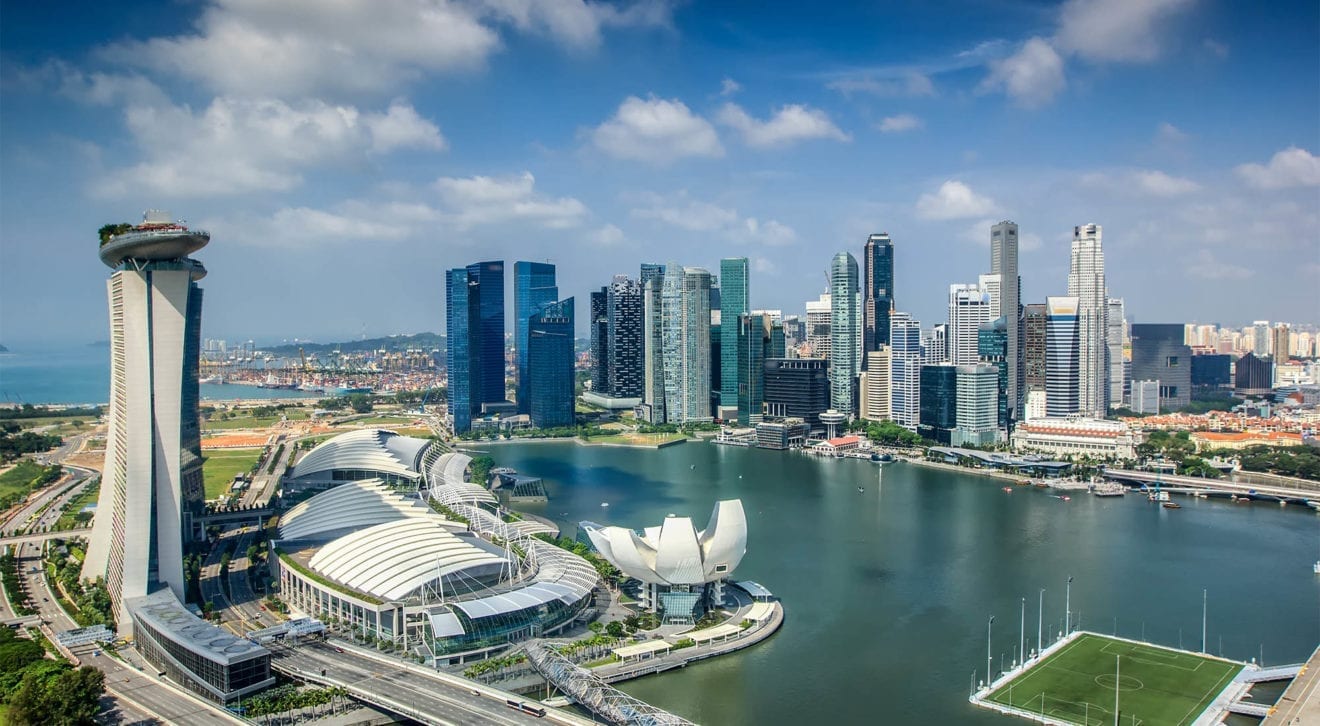
    Singapore’s fintech investments rebounded in the second quarter of 2020, with investors recognizing the opportunities existing in Southeast Asia.

    Despite an initial decline in funding (-49 percent in Q1 2020 vs. Q4 2019), fintech investments in Singapore grew more than fourfold to $278 million in the second quarter of 2020, compared to the quarter before, according to the «Singapore FinTech Landscape 2020 and Beyond» report, released on Tuesday.

    Over the past five years, the number of fintechs in the city-state has grown from less than 100 to over 1,000, with the number of employees growing from about 1,100 to more than 10,000, the report said.

    The report, published by the Singapore Fintech Association (SFA) and Oliver Wyman, highlights Singapore’s evolution as a fintech innovation center over the past five years and forecasts the trends expected in the next five years.

    Singapore is Asia’s highest-ranking fintech city, according to Findexable’s «Global FinTech Index 2020,» with more than 40 percent of Southeast Asian fintech’s based in the republic.

    The key enablers that have contributed to Singapore’s success include innovation-focused investors, a close-knit network of corporates, banks and partners, as well as progressive government and industry associations, the report said.

    Looking ahead, the report recommended several themes to ensure the republic remains attractive for fintech firms: continue to keep regulation current, further open up financial services infrastructure, and work towards harmonizing standards.

  • Goldman Sachs MENA Head Retires

    Goldman Sachs MENA Head Retires

    Wassim Younan will retire from his position after nearly three decades with the bank and seeing its Middle Eastern expansion up close.

    Younan, 58, will retire by year-end, according to a report, and his role thereafter will be replaced by co-chief executive officers Fadi Abuali and Zaid Khaldi. The two will continue to retain their existing responsibilities in asset management and investment banking, respectively.

    Khaldi will relocate to Dubai and Abuali will stay based in London and split time with the bank’s MENA offices.

    Younan’s time with Goldman Sachs saw its expansion in the region since 2006 which included various milestones including the establishment of offices in Dubai, Doha and Riyadh as well as the achievement of key deals such as Saudi Aramco’s record $29.3 billion IPO earlier this year.

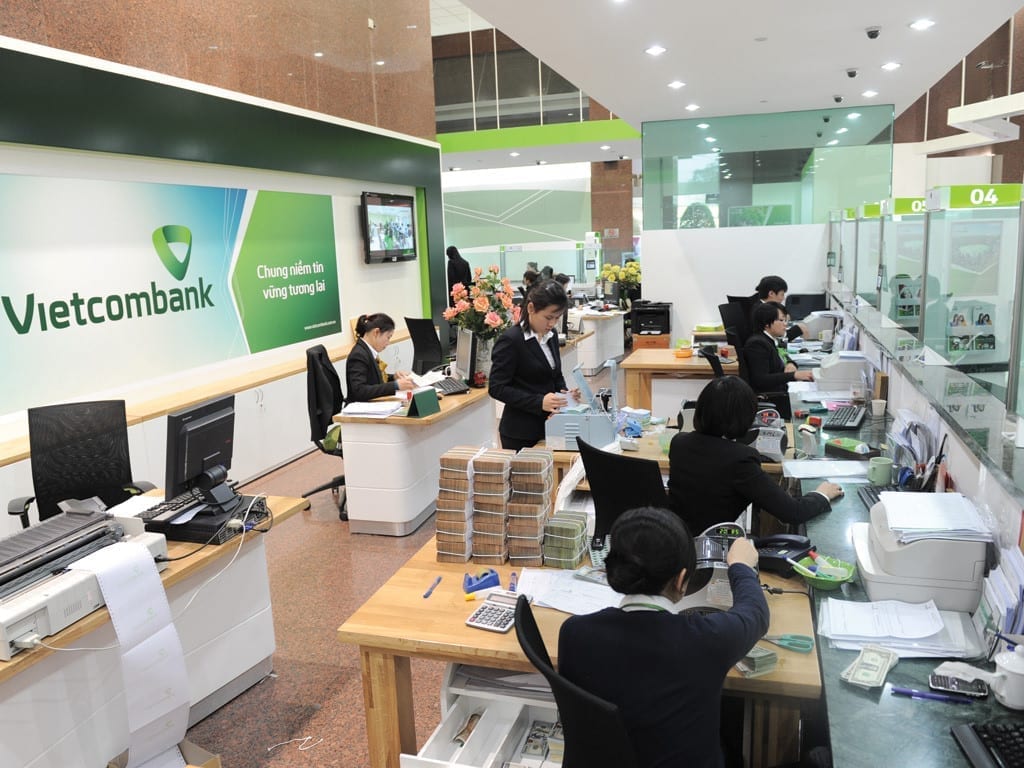
  • Vietcombank set for lower profit as lending slows

    Vietcombank set for lower profit as lending slows

    Vietcombank’s profits are set to decline for the first time since 2013 due to slower credit growth amid the Covid-19 pandemic, a brokerage forecast.

    The country’s most profitable lender’s pre-tax profit could fall by 1.6 percent to VND22.75 trillion ($984 billion) this year after credit growth in the first nine months virtually halved year-on-year to 6.5 percent, RongViet Securities Corporation (VDSC) in Ho Chi Minh City said in a note.

    Provision for bad debts in the period rose 25 percent to VND6 trillion as companies suspended business.

    Its investment in securities resulted in a loss of VND14.5 billion as against a profit of VND116.5 billion last year.

    RongViet forecast 16 percent growth in pre-tax profit next year at VND26.37 trillion if the pandemic is under control by then.

    The bank signed an exclusive bancassurance deal with insurance firm FWD, which will give it $400 million in prepaid fees for the next five years.

    That will help increase the bank’s top line this quarter by 23 percent year-on-year, the brokerage said.

  • Singapore Fintechs Exceedingly Optimistic on Growth Prospects

    Singapore Fintechs Exceedingly Optimistic on Growth Prospects

    The majority of fintech companies in Singapore are bullish about their prospects over the next three to five years, as they see new opportunities emerging in the post-pandemic world.

    The majority of companies surveyed in the «Fintech Talent Report 2020» said they are planning to hire more people in the coming months to support their expansion plans, and are gradually shifting towards hiring local talent.

    Demand for talent is even higher than last year, despite the pandemic and economic situation, the report said.

    This shows that the FinTech industry is resilient and continues to be a strong source of growth in the market. In fact, the challenge is the availability of talents with the right skillset and mindset,  Wanyi Wong, fintech leader at PwC Singapore, said.

    The report, published by PwC Singapore, the Singapore FinTech Association (SFA), and the Banking and Financial Services Union (BFSU), surveyed 1,491 individuals working at fintech firms with a presence in Singapore.

    It said that the introduction of digital banks in Singapore is likely to have spillover benefits to the wider fintech community, increasing the availability of local talent across the industry.

    The combination of banking and fintech is seen as offering the best of both worlds and driving interest in people to learn the necessary skills to work in such institutions,» the report said.

  • Singapore Launches World’s First Public Digital Infrastructure

    Singapore Launches World’s First Public Digital Infrastructure

    The Monetary Authority of Singapore and the Smart Nation and Digital Government Group launched the Singapore Financial Data Exchange. This initiative will enable Singaporeans to consolidate their financial information for more effective financial planning.

    The Smart Nation and Digital Government Group (SGFinDex) is the world’s first public digital infrastructure to use a national digital identity and centrally managed online consent system. This enables individuals to access, through applications, their financial information held across different government agencies and financial institutions.

    Built on Singapore’s National Digital Identity (SingPass), SGFinDex was developed by the public sector in collaboration with The Association of Banks in Singapore and seven participating banks.

    Banks in Singapore have always been at the forefront of digital innovation, creating online products and services that serve our customers well in a seamless and convenient manner. ABS and the 7 participating banks are pleased to have participated in the world’s first public-private-partnership in building a public digital infrastructure, that is underpinned by a national digital identity and online consent framework, to help our customers manage their finances holistically. SGFinDex not only showcases Singapore banks’ digital abilities but also our financial planning capabilities,» Samuel Tsien, Chairman, ABS and Group CEO of OCBC Bank, said.

    With SGFinDex, individuals can use their SingPass to retrieve their personal financial information (such as deposits, credit cards, loans, and investments) from the participating banks and their financial information (such as HDB loans and CPF balances) from the relevant government agencies. This will help individuals better understand their overall financial health and plan their finances holistically.

    In the next phase of SGFinDex, individuals will be able to access information on their insurance policies held with insurers and their holdings of stocks at the Central Depository.

    The Ministry of Manpower and GovTech have developed a digital financial planning service, MyMoneySense, that makes use of SGFinDex to provide Singaporeans with an overview of their finances. It will offer trusted, personalised and actionable guidance for more effective and comprehensive financial planning. Members of the public can use MyMoneySense to plan their finances at www.mymoneysense.gov.sg.

    Today, our personal financial information is fragmented across multiple entities, and we often take financial decisions, like making an investment or buying a house, without a holistic view of our financial situation. SGFinDex empowers the individual to consolidate his financial information for a comprehensive view of his portfolio, and use digital tools like MyMoneySense to make better financial decisions. SGFinDex is a tangible expression of harnessing digital technology to enhance the financial well-being of Singaporeans, Ravi Menon, Managing Director, MAS, said.

  • Blockchain Ecosystem Report Lanuched

    Blockchain Ecosystem Report Lanuched

    The Singapore Blockchain Ecosystem Report 2020, launched at this year’s Singapore FinTech Festival x Singapore Week of Innovation and TeCHnology, highlights impactful developments and trends in Singapore’s blockchain ecosystem over the last year.

    The report is co-presented by OpenNodes, Temasek, IBM, PwC Singapore, EY, and SGTech, and supported by the Infocomm Media Development Authority and the Monetary Authority of Singapore. It highlights Singapore’s lively blockchain research landscape due to active contributions from both academic institutions and the private sector.

    The report also showcases how COVID-19 has accelerated the application of blockchain technology, which is being used to verify health credentials amid the pandemic.

    It features a bibliometric analysis of blockchain-related scientific publications, showcasing Singapore’s pioneering progress in driving both high quality and quantity research in the field of blockchain technology. It concludes that Singapore has produced the highest number of research publications on the subject in ASEAN, and the third-highest in the world.

    PwC Singapore conducted a survey for the Singapore Blockchain Ecosystem Report 2020 to assess the developments of blockchain-related activities in Singapore. Results showed that blockchain emerged as one of the top three technology trends in Singapore for 2021, with 70 percent of the respondents showing support for the technology. The survey also ranked Si

  • StanChart Explores Second Digital-Only Bank

    StanChart Explores Second Digital-Only Bank

    Standard Chartered said that it was considering another digital-only bank based in Singapore – similar to MOX in Hong Kong – after receiving recognition by local regulators to receive preferential treatment as a foreign lender earlier this year.

    Standard Chartered could acquire an additional Singapore banking license under the Significantly Rooted Foreign Bank (SRFB), according to a report, in a move that would mirror its Hong Kong digital-only bank, Mox.

    We are naturally interested in qualifying for the recently-announced enhanced SRFB framework to further deepen our presence here, according to a spokesperson for the bank.

    This will give us the option to explore an additional banking license. Under this construct, we would look to leverage on the technology and experience gained from MOX, our digital bank in Hong Kong, to operate a similar platform in Singapore together with a strong ecosystem partner.

    Standard Chartered was the first foreign bank to be named an SFRB in August this year and the new status gives it significant advantages such as the ability to set up a digital-only unit, lower amounts in paid-up capital and a greater number of places of businesses (POBs) allowed (from 25 to 50), of which 35 may be branches.

    We have a very robust record in digitalization and digital banking, and we will continue to invest and explore the best digital model for our clients in Singapore, the spokesperson said.

    Earlier this year, reports claimed that the bank was already considering the launch of another digital-only bank through a joint venture with the National Trade Union Congress (NTUC) Enterprise. The latest comments about the plans were made on the same day that the city-state announced the four winners of the much anticipated digital banking license race.

  • UOB Deploys AI-Powered AML Solution

    UOB Deploys AI-Powered AML Solution

    The bank’s new artificial intelligence (AI) solution was developed in collaboration with Singapore-based regulatory technology company Tookitaki, after more than two years of validation and evaluation.

    UOB has pioneered an AI solution that is highly accurate in identifying suspicious transactions and connected parties as it combats the increased sophistication in financial crime, it announced on Thursday in a statement.

    The bank’s use of AI enables it to pinpoint higher-priority cases from the 5,700+ average monthly suspicious transaction alerts flagged and to deploy the necessary resources to investigate potential money laundering attempts. The new solution can spot more sophisticated transaction patterns and is more effective at connecting data points with entities using the financial system, UOB said.

    The AI solution, which complements the traditional rules-based method, is being used to screen all customers and transactions involving Singapore-based UOB accounts and will be expanded to cover all UOB accounts globally.

    Our AI solution works concurrently on two AML risk dimensions, which is technically more difficult, but also more fruitful as it helps us to pinpoint criminals trying to pose as customers. UOB will continue to invest in advanced technology to strengthen our AML system to deal with emerging risks,» Victor Ngo, UOB’s head of group compliance, said.

    According to the bank, the new solution has proven an overall true positive prediction rate of 96 percent among high priority cases, which includes transactions and accounts that are deemed most likely to be suspicious and are therefore subject to earlier and more thorough investigations.

    Tookitaki is a graduate of UOB FinLab’s second accelerator program in 2017.

    Going live with UOB is a testament to our ability to develop and to harness the benefits of new-edge technologies such as machine learning to mitigate real-world problems of money laundering,» Abhishek Chatterjee, founder and CEO of Tookitaki, said.

    Founded in 2014, Tookitaki’s revenue growth has surpassed 300 percent over the last two years. It raised $19.2 million in Series A funding in 2019, which the startup said would be used to grow its presence across the U.S. and Asia-Pacific.