Category: Finance

Retail News Asia is committed to providing both local and global retailers with the latest Finance news throughout the Asian market. This on a daily base.

  • CIMB Restructures Singapore Business

    CIMB Restructures Singapore Business

    The Malaysian bank is letting go of three business heads in Singapore, following a review of its operations.

    Changes are afoot at CIMB Singapore, as the bank has moved to ax its consumer, commercial and corporate banking heads: Josandi Thor, Yong Jiunn Run and Lai Ven-Li, citing an internal memo viewed by the portal.

    The bank cited the poor performance brought about by the pandemic, which required it to reshape its business portfolios to drive cost efficiency across the bank. The bank said it recently adapted its Forward23 five-year growth plan, launched in 2018, in response to the pandemic.

    CIMB Singapore’s posted losses of 939 million ringgit ($229.42 million) for the first half of the year, largely due to impairments.

    However, there have been talks of restructuring since the middle of the year and the possibility of wider layoffs.

    An observer told the publication that CIMB Singapore CEO Victor Lee, who was appointed earlier this year, was looking to restructure the senior management team and bring in people he had previously worked with.

    Given the business pivots moving forward, we have carefully deliberated with group management on the optimal structure to deliver our Forward23+ strategy. This entails streamlining the leadership structure and reducing the CEO’s span of control to focus on key areas impacting the business, Lee said in the email.

  • CapitaLand Secures Green Loans in India

    CapitaLand Secures Green Loans in India

    The Singapore-based property developer has secured its first three green loans in India, from DBS and HSBC, totaling INR 17 billion ($230 million).

    CapitaLand’s first foray into sustainable finance in India will be used to finance the development of its green-certified International Tech Parks in Chennai, Gurgaon and Pune, it announced in a statement on Wednesday.

    The four-and-a-half-year INR 6.25 billion ($84 million) and three-year INR4.25 billion ($57 million) green loans provided by DBS will be used to finance the development of Phase 1 of International Tech Park Chennai, Radial Road, and Phase 1 of International Tech Park Gurgaon respectively. The four-year INR6.5 billion ($87 million) green loan provided by HSBC India will be used to finance the development of International Tech Park Pune, Kharadi.

    The securing of the first green loans in India demonstrates CapitaLand’s commitment to grow our business in a responsible manner as we create long-term value for our stakeholders, Vinamra Srivastava, CEO, Business Parks, CapitaLand India, said in the announcement.

    DBS head of institutional banking Tan Su Shan said that India is a promising market with ample opportunities to go green.

    We see immense potential for growth in Asia’s sustainable financing market as companies look to further their sustainability agenda through responsible financing practices. In becoming the first Singapore bank to finance green loans in India, we are also establishing Singapore as a regional sustainable financing hub with the expertise and experience to forge meaningful partnerships for a more sustainable Asia, Tan said in a separate announcement.

    CapitaLand owns and manages a global portfolio worth about S$133.3 billion ($99.13 billion) as at 30 September 2020. The company has a strong presence in India, with a portfolio of over 20 business and IT parks, industrial, lodging and logistics properties across seven cities – Bangalore, Chennai, Goa, Gurgaon, Hyderabad, Mumbai and Pune.

  • HSBC Allows Up to Four-Day WFH Option

    HSBC Allows Up to Four-Day WFH Option

    HSBC is the latest bank to allow extensive work-from-home options for workers as the pandemic continues to deeply uproot traditional business models.

    The British lender has changed its human resources guidelines to allow home-based remote working for as many as four days a week, according to a «Bloomberg» report, depending on an employee’s role and discussions with managers.

    This follows earlier prompting by HSBC chief financial officer Ewen Stevenson who said the bank was considering further digitization of operations and hybrid working models.

    Remote working, according to Stevenson, could help reduce expenses as part of a broader overhaul to cut $4.5 billion of costs by 2022 and ax 35,000 jobs globally.

    According to the new guidelines, a one-off allowance of up to HK$2,500 ($322) to purchase equipment will be made available for employees who commit to work at least two days per week from home for a minimum of 12 months.

    The allowance can be used for items such as ergonomic work chairs, computer monitors and desks.

    The wave of banks considering permanent work-from-home measures is growing due to continued uncertainty regarding the pandemic and growth outlook.

    Earlier this week, DBS said it would allow its 29,000-strong workforce to work from home for up to 40 percent of the time as part of broader hiring and work measures announced. Last week, UOB said it would allow the majority of its 26,000 works the option to work remotely for two days a week. Similar measures are being rolled out at Standard Chartered globally.

    But not all are convinced about the approach in the long-term with some Wall Street heavyweights underlining potential risks.

    A J.P. Morgan spokesperson said that productivity was down and that younger employees could miss out on learning opportunities. The bank’s chief executive Jamie Dimon reportedly said last month that he expected serious social and economic damage from prolonged remote working conditions.

    Separately, Blackrock CEO Larry Fink also expressed concerns about lacking productivity and collaboration.

  • Lu Launches Wealth Management Platform in Thailand

    Lu Launches Wealth Management Platform in Thailand

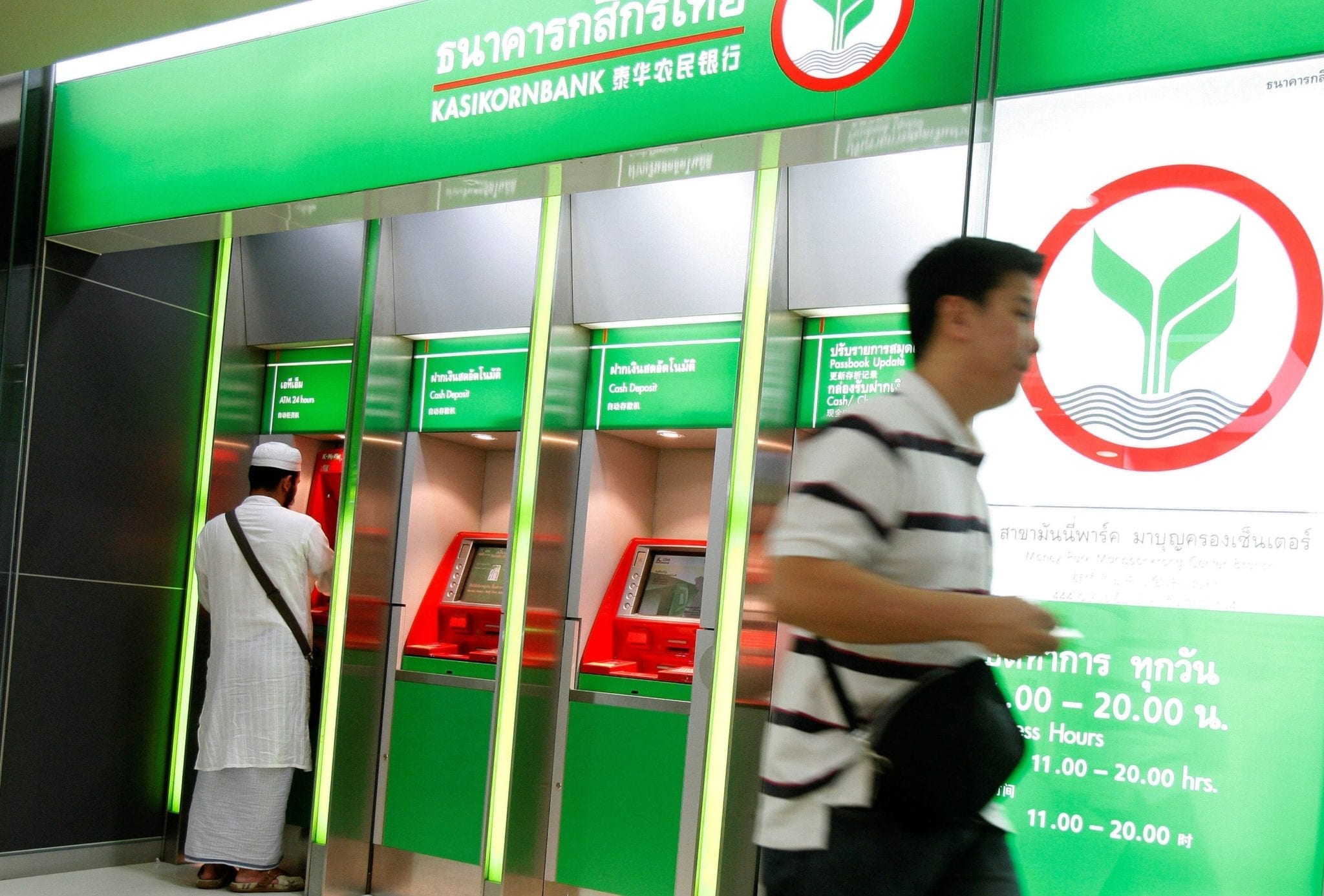
    Lu International, a Singapore-based subsidiary of leading Chinese retail fintech Lufax, is expanding its reach in the region via a strategic partnership with Kasikornbank.

    The FinVest digital investment platform aims to cater to the growing market of retail investors in Thailand by providing access to a full spectrum of onshore and offshore investment products with low minimum investment amounts and management fees, according to an announcement on Tuesday.

    The partnership was previously announced in August. The platform currently offers investors access to more than 600 funds from 15 asset management companies in Thailand, with a minimum of 1,000 baht ($35).

    Established in 1945, Kasikornbank is the fourth-largest commercial bank in Thailand, with 17.3 million customers. The bank also works closely with Geneva-based private bank Lombard Odier, which manages global investment funds on behalf of its private clients. Lombard Odier also acts as an exclusive offshore custodian for Kasikornbank clients, using Singapore as a booking center.

    Thailand is one of the fastest-growing markets in Southeast Asia and continues to see rapid wealth growth and economic development,» Greg Gibb, CEO of Lufax Holding, said in the announcement.

    Thailand’s total outstanding capital market value stands at around 44 trillion baht ($1.46 billion), of which 4.8 trillion baht, or around 10 percent, is invested in mutual funds, Kasikornbank noted.

    Of late, the younger generation has shown increasing interest in mutual funds, preferring to conduct transactions via digital channels and seeking products related to Thai and foreign equity instruments. Moreover, open-architecture investment is growing every year, Patchara Samalapa, Kasikornbank CEO, said.

  • DBS to Make Hybrid Work Arrangements Permanent

    DBS to Make Hybrid Work Arrangements Permanent

    The bank, which has a workforce of 29,000, said these measures are the result of insights gathered from research, deep-dive experiments and employee surveys conducted by a task force on the future of work, which it convened six months ago.

    DBS is transforming the way its employees will work in a post-Covid 19 world, with a number of initiatives that include implementing a permanent hybrid work model that gives employees the option to work remotely up to 40 percent of the time, flexible work arrangements, deploying more project-specific data-driven squads with members from different functions, and creating workspaces that facilitate collaboration, the bank announced on Tuesday.

    The bank will also accelerate employee upskilling, with 7,200 employees, of which 4,300 are in Singapore, to undergo training in emerging areas such as design thinking, data and analytics, artificial intelligence, machine learning and agile practices.

    The announcement follows UOB, which said last week that it would give the majority of its 26,000-strong workforce the choice to work remotely two days a week once COVID-19 restrictions are lifted. Standard Chartered is also rolling out similar measures globally.

    DBS said that over 80 percent of its employees indicated a preference for more open collaboration spaces to facilitate informal discussions and cross-team ideation, which they found difficult to do remotely. As such, the bank will transform its workspaces to enable greater collaboration and ideation, and launch a 5,000-square foot Living Lab that aims to blend the best of physical and virtual workspace configurations.

    As the way we live, bank and work continue to change dramatically, we must address the magnitude of the disruptions before us, Piyush Gupta, DBS CEO, said about the changes.

    Last week, DBS unveiled its new branch at Takashimaya, which aims to cater to customers who want quicker, socially distanced and more personalized branch services, and said it would roll out similar branches across at least one-third of its branch network over the next 12 to 18 months.

  • DBS India to Save Troubled Lakshmi Vilas Bank

    DBS India to Save Troubled Lakshmi Vilas Bank

    The Chennai-based bank, which has a 94-year history in India, with established retail and SME customer base, and a strong presence in South India, has undergone a steady decline with the bank incurring continuous losses over the last three years, eroding its net-worth.

    India’s banking regulator imposed a 30-day moratorium Tuesday on struggling Lakshmi Vilas Bank (LVB), superseded its board of directors and announced a draft scheme for the amalgamation of the bank with DBS Bank’s India subsidiary.

    The financial position of Lakshmi Vilas Bank has undergone a steady decline with the bank incurring continuous losses over the last three years, eroding its net-worth. In the absence of any viable strategic plan, declining advances and mounting non-performing assets (NPAs), the losses are expected to continue,» the Reserve Bank of India (RBI) said.

    To support the amalgamation, DBS will inject INR 2,500 crore ($345 million) into DBIL if the scheme is approved. This will be fully funded from DBS’ existing resources, the bank said.

    The proposed amalgamation will provide stability and better prospects to Lakshmi Vilas Bank’s depositors, customers, and employees following a time of uncertainty. At the same time, the proposed amalgamation will allow DBIL to scale its customer base and network, particularly in South India, which has longstanding and close business ties with Singapore, DBS said in a statement on Wednesday.

    DBS has been in India since 1994. To expand the franchise and build greater scale, DBS converted its India operations to a wholly-owned subsidiary in 2019, DBIL. The bank is now present in 24 cities across 13 states.

  • StanChart Streamlines Business in Global Restructuring

    StanChart Streamlines Business in Global Restructuring

    Standard Chartered announces a reorganization into fewer but larger units and also confirms the exit of its global wealth head.

    Effective January 1 next year, Standard Chartered will combine the private banking business with retail banking and wealth management in a new consumer, private and business banking (CPBB) unit, according to a statement. The current regional chief executive of ASEAN and South Asia, Judy Hsu, will lead the CPBB unit.

    This combined business will grow the group’s affluent client base, further develop innovative digital banking solutions for mass-market and small businesses, and deliver further efficiencies, the bank said in a statement.

    The bank also confirmed the exit of former private banking head Didier von Daeniken, whose role will be overseen by Hsu in the interim until a new permanent appointment has been made.

    Under on Daeniken’s leadership the private bank returned to profitability in 2019 and was the bank’s fastest-growing segment, the statement said.

    With substantially upgraded digital products and services and improved productivity, we have strong foundations and good momentum. We will bring together our private bank with our priority banking business under Hsu’s leadership, while retaining their separate brands and propositions, to accelerate growth and create an affluent client continuum to better serve our clients.

    The CPBB unit will be organized around two client groups and two regions. In addition to Hsu’s temporary role as the head of private and priority banking, Vishu Ramachandran will lead personal and business banking. Wealth Management will continue to be led by the newly appointed ex-Bank of Singapore executive Marc Van de Walle.

    Regionally, Samir Subberwal will lead CPBB for Asia while Kariuki Ngari will lead CPBB for Africa, the Middle East and Europe, in addition to his Kenya and East Africa CEO responsibilities, also until a permanent appointment has been made.

    In addition, Rosalind Ng will lead client experience and strategic business enablement.

    In Asia, the bank is also combining its three regional units – ASEAN, South Asia alongside Greater China and North Asia (GCNA) – into a single one led by Ben Hung, currently GCNA chief. The unit is made of cluster CEOs who will be joining the Asia management team alongside Samir Subberwal, GCNA retail banking head; Paul Skelton, global head, client coverage, commercial, corporate and institutional banking; and John Tan, global head, financial markets regions.

    In north Asia, cluster CEOs include Jerry Zhang for China and Japan; Mary Huen for Hong Kong, Taiwan and Macau; Park Jong Bok for Korea; and Anthony Lin for the Greater Bay Area.

    And in the south and southeast Asia region, the bank named as cluster CEOs Zarin Daruwala for India and South Asia Markets (Bangladesh, Nepal and Sri Lanka); Andrew Chia for Indonesia and ASEAN Markets (Australia, Brunei and the Philippines); and Patrick Lee for Singapore and ASEAN Markets (Malaysia, Vietnam, Thailand).

    CEO of Europe and Americas, Torry Bernsten, has also been named as chief of the former market and the U.K.

    Steve Cranwell will succeed Bernsten as CEO of the Americas and report to him.

  • Thai shoppers put trust in card payments when paying online during

    Thai shoppers put trust in card payments when paying online during

    As we pass the halfway point of 2020, the world today looks very different from when we started the year. The impact of the COVID-19 pandemic has affected more than our health, as our daily habits have changed, and how we use goods and services has transformed. We do more online than ever before, buying things we’d never imagined buying remotely: from shopping for groceries to ordering break-time bubble tea from our favorite shop. And not being present in the store means we have changed the way we pay too.

    In reality these changes were already in progress, but the pandemic has accelerated new customer habits. According to a recent study conducted by Visa, the global leader in digital payments, many Thai consumers turned to eCommerce for this first time, with two-thirds saying they were most likely to increase their online shopping.  Similarly, two-thirds said they intended to stick with digital payment methods, including contactless card and ecommerce, instead of reverting back to cash when the situation returns to normal. For digital payments, the new normal is here to stay.

    As more Thai consumers shop and pay with digital payments, KASIKORNBANK and Visa have been working closely to pioneer new ways and solutions to secure digital payments and eCommerce experiences during and after your payment is made.  These are some of the behind the scenes security measures we carry out that will allow you to have more peace of mind when transacting digitally, and will shine a light onto why you should never look at digital payments the same way again.

    One-time password, or OTP, may be familiar. This is most commonly used when you receive a unique password sent by SMS to your phone that you use to authorize your payment.

    EMV CHIP is the small chip you see on your plastic card, and every time you pay this chip generates a dynamic one-time use code for each transaction. Using EMV CHIP cards means we are able to provide an additional layer of security known as dynamic authentication in addition to the real-time fraud scans conducted when the transaction is authorized by the issuing financial institution.

    Visa Advanced Authorisation is a service that uses predictive analytics combined with machine learning and artificial intelligence (AI) to analyse more than 500 unique risk attributes and allocates a risk score for each transaction.  This score is then shared with KBank Credit Card so we can make an informed decision on whether to approve or decline a transaction.  On average, Visa analyses more than six billion pieces of data every day.  When data analytics is used with authentication methods like biometrics to verify the cardholder, payment security is enhanced.

    Visa Tokenization will help ensure no sensitive data is transmitted during an online transaction. It replaces sensitive account information, such as the 16-digit account number, with a unique digital identifier called a token.  This token then allows payments to be processed without exposing actual account details that could potentially be compromised.  This means your card number and expiry date is not shared and your account is kept secure.

    Although most sales transactions are processed, posted and paid for with few problems, you may see a charge on your card that is unfamiliar or incorrect. To settle any disputes, KBank Credit Card has a chargeback policy.  The purpose is to protect cardholders from fraud and unfair billing practices.  This allows cardholders to feel more confident using cards freely, knowing that they will not be held responsible for the actions of identity thieves, deceptive merchants and other fraudsters.

    You can also imagine if your wallet gets stolen with cash in it, it can be virtually impossible to replace that money, unless the wallet is retrieved.  On the other hand, with cards, the process to replace lost or stolen cards is relatively seamless.  All you have to do is contact your card-issuing bank and they will work with you to disable the card and prevent your funds from being exploited by fraudsters.


  • Mastercard Advances Multi-Rail Strategy to Modernize Business Payments

    Mastercard Advances Multi-Rail Strategy to Modernize Business Payments

    Mastercard continues to deliver on its multi-rail strategy with the addition of Account-to-Account (A2A) payments functionality to Mastercard Track™ Business Payment Service.

    This launch represents the next phase in Mastercard’s journey to modernize business payments by solving persistent pain points that Buyers and Suppliers experience today.  Building on the success of card payments within Mastercard Track Business Payment Service, businesses can now have a similar experience for A2A payments – exchanging data with greater efficiency and facilitating payments across multiple payment rails including Real Time Payments (RTP) and the Automated Clearing House (ACH) in the United States.

    The Account-to-Account payments functionality in Track Business Payment Service is now available in the U.S. and will be available in all regions by the end of 2021. Cross-border payments are also on the roadmap for next year.

    Track Business Payment Service gives businesses greater control of their payments and supports rich data exchanges and the ability to automate payments without the need to share sensitive bank account information. About 80% of mid-size and large Suppliers view the sharing of bank account data as a business risk, according to Mastercard research.1 The risk of bank account data being compromised is reduced because Suppliers no longer need to share their confidential bank account details with Buyers, nor do Buyers need to store those details.

    Today, the vast majority of B2B payments are made through bank account transfers.  Extending Mastercard Track Business Payment Service to support these transfers is a step on our way to building out the best and most secure B2B payment network in the world,” saidJames Anderson, Executive Vice President of Global Commercial and B2B Solutions at Mastercard. “Our commitment to supporting multiple payment rails has always been about helping customers operate more efficiently and effectively leveraging all the capabilities available in the market with as little change as possible. This milestone is another step in the journey away from paper-based frustration, incomplete data and manual reconciliation work and toward a fully digitized business payments process.”

    Modernizing B2B Payments Across New Geographies and Partners

    In May 2020, Mastercard announced the commercial launch of Track Business Payment Service for U.S. card payments. Today, businesses of all sizes can use this service to pay and get paid with card through new distribution partners around the world including: bzPay, Gardenia Technologies, Girasol Payment Solutions, Network International, Pendo Technologies Corp., Plastiq, Today Payments, Inc., Transcard, Ukheshe, and Yak Pay.

    Now, through Track Business Payment Service, commercial businesses have access to more control and greater simplicity in how they pay and get paid across multiple payment types.

    “B2B payments terms and delays can create debilitating negative cashflow dilemmas for business. bzPay helps with a practical way to reduce debt, accelerate payments and optimize cashflow through a single payments platform. Mastercard’s Track Business Payment Service multi-rail solution provides a New Payment Platform enablement and a scalable payment solution for our customers. By enabling payment flexibility options, Mastercard paves the way for a globally connected eCommerce solution.” – Aleks Kostadinovic, CEO bzPay Pty Ltd.

    “Our company is focused on delivering data-driven working capital solutions including advanced analytics and finance to corporates. Mastercard Track Business Payment Service offers much-improved visibility into the source-to-pay and order-to-cash processes, as well as critical insights into payments for financial products and transactional reporting.” – Rupert Schneider, Co-Founder, Gardenia Technologies

    “Payment behavior in the B2B market space is a crucial pain point in the Caribbean, mainly due to complex processes from different business cultures. As our company focuses on facilitating the business payment ecosystem with innovative technologies, it is our mission to add value to the way business payments are made. Mastercard Track Business Payment Service solution allows us to adopt global payment standards and add value by increasing transparency and providing rich reconciliation/remittance data in a secure trusted environment on both cards and A2A payment rails.” – Marwan Rozier, Chief Operating Officer, Girasol Payment Solutions

    “We are delighted to be among the first partners in the Middle East and Africa to launch the Mastercard Track Business Payment Service solution that will address long-standing pain points in the B2B payment sector by creating an innovative service that responds to the industry’s urgent need for seamless and automated collection and reconciliation. We anticipate that Track Business Payment Service will act as a game changer, providing the scale and capability that will support our clients’ business needs.” – Samer Soliman, Managing Director – Middle East, Network International

    “Pendo focuses on disruptive technologies and innovation leveraging business and technology trends to develop innovative solutions that alleviate many payments process pain points that both big corporations and small- and medium-sized enterprises encounter every day. We are delighted to partner with Mastercard Track Business Payment Service to help businesses reduce costs, increase speed, improve efficiencies and create healthier cash flow.” –  Oscar Uribe, Co-Founder & Chief Commercial Officer, Pendo Technologies Corp.

    “Businesses are in constant need to access new forms of working capital and streamline their payments. Plastiq’s ability to help businesses do more with their commercial cards is very aligned with Mastercard Track Business Payment Service’s global vision for making B2B payments frictionless. We’re excited to partner with Mastercard to help offer businesses more optimized payment solutions.” – Sameer Gulati, President & COO of Plastiq

    “Suppliers/Billers need rich data exchanges, including itemized revenue transaction data, not just batch deposit summaries afforded them via direct connect banking. Track Business Payment Service magnificently delivers this expanded data. Our Today Payments API, an award-winning software innovation, automates the process of recording the rich, complex data efficiently. We are thrilled to provide this cutting-edge solution for all B2B transactions in what I consider to be the most real-world, revolutionary enhancement to business payments with the Track Business Payments Service.” – Leigh Cook, CEO, Today Payments, Inc.

    “Traditional approaches to making and receiving B2B payments are inefficient, unnecessarily complex and risky. The combination of the Mastercard Track Business Payment Service and Transcard’s integration platform eliminates friction in B2B payments by digitally connecting buyers and sellers and facilitating touch-free real-time payments and the exchange of rich remittance information directly between trading partner ERPs and banks.” – Greg Bloh, CEO of Transcard

    “Ukheshe, a digital banking platform focused on addressing financial inclusion in Africa, demands world-class partners and solutions that can address real customer concerns. With Mastercard Track Business Payment Service, we are able to ensure the secure transmission of payment details to multiple bill presenters, giving peace of mind to all parties involved.” – Mike Smits, Co-Founder, Ukheshe

    “After seven years of processing B2B payments for thousands of our small business clients, we are on a mission to make their payments easier, faster and more secure. Yak Pay is delighted to be working with Mastercard to help achieve this, and Mastercard Track Business Payment Service is an excellent example of innovation helping small businesses operate more efficiently, profitably and securely.” – Sam Plowman, CEO of Payment Logic and Yak Pay

  • Singapore to Raise Standards for Issue Managers

    Singapore to Raise Standards for Issue Managers

    The Association of Banks in Singapore has announced revised due diligence guidelines for companies planning to list on the Singapore Exchange, with immediate effect.

    Last revised in 2016, the new set of guidelines set out expectations and recommendations on due diligence work that issue managers and full sponsors carry out during the initial public offer (IPO) / reverse takeover (RTO) and listing process.

    They were developed in close collaboration with the Singapore Exchange Regulation (SGX RegCo).

    Key updates include: An increased focus on the assessment of the adequacy and effectiveness of the issuer’s internal controls to meet its business needs and challenges as a listed company; the assessment of the sustainability and viability of the issuer’s business; and targeted guidelines for due diligence on issuers operating in specialized, restricted or niche industries, and/or in higher-risk jurisdictions.

    Ong-Ang Ai Boon, director at the Association of Banks in Singapore (ABS), said the revised guidelines are necessary to ensure they are relevant to the constantly changing economic climate.

    With the increase in issuers from more nascent sectors such as technology that are seeking equity capital, it becomes especially important for issue managers, full sponsors and their professionals to adapt due diligence practices that address the particular needs of

  • UOB to Allow Partial Remote Work Post-Covid

    UOB to Allow Partial Remote Work Post-Covid

    The bank plans to give the majority of its 26,000-strong workforce the choice to work remotely two days a week once COVID-19 restrictions are lifted.

    UOB made the announcement on Friday, following a six-month review of work patterns, workspaces and workforce technology tools, which revealed that 65 percent of the bank’s roles, all of which are non-customer facing, were suited to remote work.

    The bank also cited broader community sentiment where 80 percent of people across ASEAN said they wanted some form of flexible work arrangement from their employer.

    At the same time, UOB will accelerate its infrastructure improvement plan across the region, which enables more agile team-based work and deeper collaboration across different functions.

    Two days of remote working per week ensures «the right balance between professional fulfillment of the individual and their mental well-being, as employees need to maintain a sense of connection with colleagues and the company, UOB said in the announcement.

    We believe that the future of the workplace is a hybrid one where employees choose how to manage their work commitments based on the space and place they can be most effective. Working from home during COVID-19 has been instructive due to the speed and intensity of the change but we must look beyond the present and define a future of work that is more sustainable,»  Dean Tong, UOB’s head of group human resources, said.

    Last week, we reported that Standard Chartered is planning to permanently offer flexible work options to around 90 percent of its 85,000-strong staff by 2023, as well as near-home workspaces for staff – in addition to offices, and work-from-home arrangements

  • Avaloq Expands Cloud Service With U.S. Tie-Up

    Avaloq Expands Cloud Service With U.S. Tie-Up

    The banking software firm is adding Google to its offering of cloud services. Zurich-based Avaloq is partnering with Google Cloud, it said in a statement on Tuesday. The move means Avaloq’s bank clients can run the software on Google’s cloud computing service.

    The partnership complements an initial deal between Avaloq and IBM on a Swiss-based cloud service. The area represents an area of heated competition, with Swiss operators including Swisscom and Inventx offering solutions, in addition to foreign players like Microsoft and Cognizant as well as Google and IBM.

    Avaloq said the pandemic’s effect on digitization within firms spurred the move. «That includes financial services institutions, which are increasingly seeking to use critical IT infrastructure and platforms in a cloud-based environment,» Avaloq technology boss Thomas Beck said.

    The partnership means banks will be able to store their data close to home, the two firms said – a key factor in adhering to data requirements in Switzerland. Google notably works with Temenos, one of Avaloq’s biggest competitors. UBS and Credit Suisse works with Microsoft while rival software firm ERI Bancaire, like Avaloq, works with IBM.

  • UBS Private Equity Head Joins Fintech

    UBS Private Equity Head Joins Fintech

    The head of private equity at the wealth management of UBS is joining a Berlin-based investment platform.

    The CVs of the staff at Moonfare, a German private-equity-investment platform, include some serious heavy-weight experience: KKR, Apax Partners, J.P. Morgan, Blackrock, Amazon, Microsoft, Angellist, N26, and Google.

    Since this November, Swiss bank UBS is also part of the list of former employers of the Moonfare staff. The German startup has hired Winson Ng as its chief investment officer.

    He will work with managing director Magnus Grufman to develop the fund offering of Moonfare. The company is busy expanding the offering from private equity to new asset classes, according to a statement released on Wednesday.

    Ng will remain based in London and join the investment committee of Moonfare. He will play a key role in the positioning of the firm in digital private markets investing and growing its presence in the U.K.

    Experience From UBS and GIC

    Ng was head of the wealth management private equity team of UBS. At UBS and in senior roles at GIC, the Singapore state fund, Ng oversaw large allocations to growth, middle-market, and large-cap buyout funds as well as investments in funds focused on mezzanine capital, credit, infrastructure, and venture capital.

    A native of Hong Kong and Malaysia, Ng has an MBA from INSEAD and graduated with a medical degree from the University of London.

  • Non-performing loans surge due to pandemic

    Non-performing loans surge due to pandemic

    Most banks have seen non-performing loans rise by at least 30 percent in the first nine months as the Covid-19 pandemic hit businesses and individuals. Of 15 commercial banks that have published their third-quarter results, 14 reported a surge in non-performing loans by 30 percent or more.

    State-owned VietinBank posted the highest rise of 66 percent to VND17.95 trillion ($779.36 million), followed by TPBank at 60 percent and MB Bank, 39 percent.

    BIDV, the largest bank in Vietnam by an asset, saw non-performing loans rising 16 percent to VND22.5 trillion, the highest among all lenders.

    Bank leaders say that the rising number of low-quality debt is unavoidable amid the Covid-19 pandemic when many businesses went into financial difficulties due to social distancing measures and dwindling demand for goods and services.

    Nguyen Dinh Tung, CEO of Orient Commercial Bank (OCB), said although the value of non-performing loans has surged, the ratio of it over total debt is still under control.

    But economists say that these figures will continue to worsen next year.

    Economist Nguyen Tri Hieu said that a circular issued by the State Bank of Vietnam in March has allowed banks to lower or cut interest rates on loans to support borrowers amid the pandemic and allow them to delay their payback time.

    Although this circular has given businesses more time to recover from Covid-19 impacts, the loans they had acquired will eventually have to be paid and those unpayable will be turned into bad debts for banks, he said.

    “Banks cannot escape from losing some of their loans in the future.”

    As the global situation of Covid-19 is still intense globally, Vietnamese businesses will still have financial difficulties in this and next year, and therefore the central bank should prolong its low-interest credit program to support local companies, Hieu said.

    Banks, meanwhile, should increase their provisions for doubtful and bad debt to protect themselves from unavoidable risks in the future, he added.

  • Deloitte Ex-Partner Wants Appeal Heard

    Deloitte Ex-Partner Wants Appeal Heard

    A former star consultant of Deloitte in Switzerland is seeking to revive an appeal of his dismissal. He was let go last year amid accusations of bullying and expense irregularities.

    David Joseph, a Dutch-born forensics expert who was let go by Deloitte last year, wants a court to revive his challenge to his forced retirement, according to legal blog Law 360. A spokesman for Joseph couldn’t immediately be reached for comment.

    The case is noteworthy because it revealed the inner workings of a highly secretive, lucrative industry which has become indispensable to Swiss banks. Joseph reportedly earned Deloitte more than $200 million in fees as the point person for Credit Suisse’s efforts to cleanse itself of U.S. tax cheats from 2012 until relatively recently last year.

    Joseph was reportedly first cautioned back in 2015 for taking a belligerent attitude towards colleagues and acted entitled to expense reimbursements for top performers of his team. The consultant denied all of the accusations, arguing Deloitte had treated him unfairly and unjustly.

    He is now haggling in a British court over whether he asked Deloitte for a review of his dismissal too late. Joseph previously argued he couldn’t be physically present at the time due to illness, but had lodged a written memorandum listing his objections.