Category: Finance

Retail News Asia is committed to providing both local and global retailers with the latest Finance news throughout the Asian market. This on a daily base.

  • UnionPay Makes Waste Reduction Fashionable with Jay The Rabbit Collaboration

    UnionPay Makes Waste Reduction Fashionable with Jay The Rabbit Collaboration

    UnionPay, a global payment brand, collaborates with Jay The Rabbit, one of Thailand’s favorite cartoon characters with over 1 Million followers across social media platforms to produce re-usable bags aim at reducing one-time plastic bags usage.

    UnionPay Cardholders with a minimum spend of 1,500 Baht* can redeem a UnionPay x Jay The Rabbit canvas bag worth 899 Baht from now till 6 December 2020 at 10 participating department stores in Bangkok which include Central Chidlom, Central @ Central World, Central Ladprao, Central Bangna, Central Pinklao, Siam Paragon Department Store, The Emporium and EmQuartier, The Mall Bangkapi, and The Mall Bang Khae. There are over 4,000 bags to be redeemed. UnionPay X Jay The Rabbit on-ground activities will also take place at Central World on 14 & 15 November 2020.

    Huiming Cai, General Manager of UnionPay International Southeast Asia said, “We hope that these specially designed limited-edition re-usable bags enhance the shopping experience of consumers while raising awareness on reducing the usage of single-use plastic bags.”

    In Thailand, UnionPay partners Bangkok Bank, Bank of China, ICBC Bank, Kasikorn Bank, Kiatnakin Bank, Krungthai Bank, LH Bank and Krungthai Card Company to provide a wide array of payment products and services.


  • AEON Thailand Foundation supports the Cardiac Children Foundation of Thailand in Congenital Heart Disease project

    AEON Thailand Foundation supports the Cardiac Children Foundation of Thailand in Congenital Heart Disease project

    Ms. Suporn Wattanavekin (right), Chairman of AEON Thailand Foundation donated 500,000 Baht to the Cardiac Children Foundation of Thailand under the Royal Patronage of H.R.H. Princess Galyani Vadhana Krom Luang Naradhiwas Rajanagarindra in support of the “Children with Congenital Heart Disease Surgery Project”. The donation, received by Dr. Thanarat Layangool (left), President of The Cardiac Children Foundation of Thailand, will go towards surgeries and cardiac catheterizations outside office hours for up to 14 pediatric patients.


  • HKMA Lauds Ant’s Role Despite IPO Pullout

    HKMA Lauds Ant’s Role Despite IPO Pullout

    Despite a halted dual listing, Ant Group will continue to play an important financial role in Hong Kong, according to officials from the city’s central bank.

    The Hong Kong Monetary Authority (HKMA) expressed continued confidence in the city’s fintech industry and specifically named Ant as a firm that would remain important in the market.

    According to Nelson Chow, HKMA’s chief fintech officer, the was no reason to question Ant’s presence in Hong Kong despite the sudden pullout from an IPO.

    This is one player, but many players are in town as well, so they are competing against each other to offer better services, said Chow, according to a report.

    On the eight newly launched virtual banks which includes one operated by Ant, Chow described progress as «good», highlighting strong business models for funding small and medium-sized businesses through the use of alternative data.

    The HKMA will need some time to observe the existing players, Chow said when asked about the possibility of issuing more virtual bank licenses.

    On Hong Kong’s capital markets, Chow stressed that he believed that Ant’s IPO pullout would have no material effect on investor appetite.

    The tone is very upbeat, he said. Investors see Asia and particularly Hong Kong as one of the major places where we’ll see a lot of fintech development.

    And on mainland China’s digital yuan, Chow said that the HKMA would welcome any decision from Beijing, adding that it would «stand ready to cooperate.

  • Singapore and Indonesia Central Banks Extend Swap Arrangement

    Singapore and Indonesia Central Banks Extend Swap Arrangement

    The extension will support monetary and financial stability in both countries amid the COVID-19 pandemic, MAS said.

    Bank Indonesia (BI) and the Monetary Authority of Singapore (MAS) have agreed to extend a $10 billion bilateral financial arrangement for another year, MAS announced on Thursday.

    This is the second extension of the arrangement, which was launched in 2018 for one year. It enables the two central banks to access foreign currency liquidity from each other, if needed, to preserve monetary and financial stability.

    It comprises a local currency bilateral swap agreement that allows for the exchange of local currencies between the two central banks of up to S$9.5 billion or IDR 100 trillion ($7 billion equivalent), and an enhanced bilateral repo agreement of $3 billion that allows for repurchase transactions between the two central banks to obtain USD cash using G3 government bonds as collateral.

  • StanChart to Rollout Flexible Working Option

    StanChart to Rollout Flexible Working Option

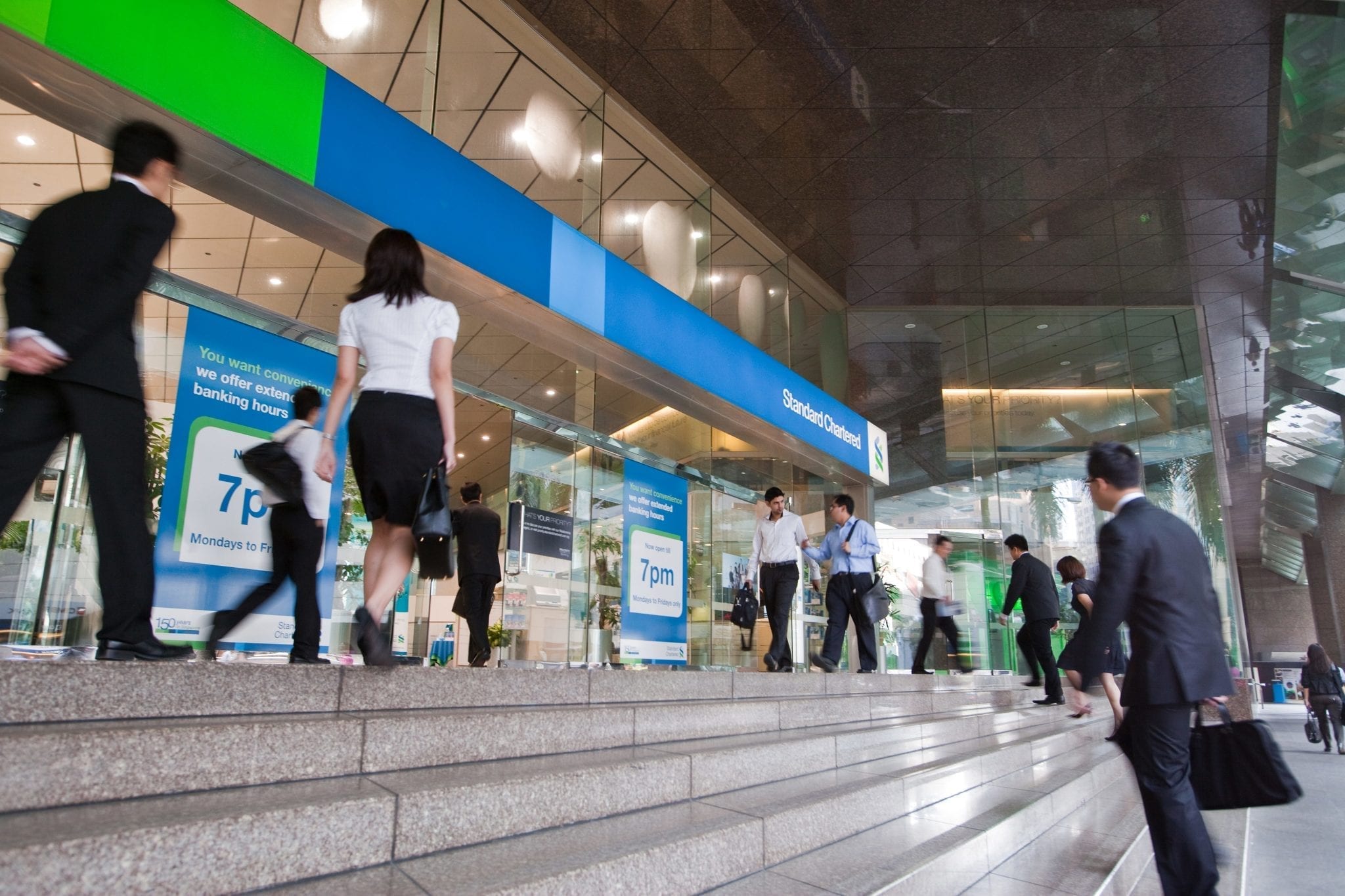
    Standard Chartered is reportedly planning to permanently offer flexible work options to around 90 percent of its 85,000-strong staff by 2023.

    Some form of hybrid work arrangement will be made available to around half of its staff from early 2021 and the program will extend to 75,000 works in 55 markets by 2023.

    While we have been thinking through the issues around the future workplace for some time, it’s inevitable that recent events provided a catalyst,» said Standard Chartered’s human resources head Tanuj Kapilashrami, according to a «Bloomberg» report citing an internal memo.

    In addition to flexible work options, the bank will also provide «near-home» workspaces for staff – in addition to offices, and work-from-home arrangements – with an unnamed third party workspace provider.

    According to Standard Chartered, hybrid work is something that has gained widespread acceptance across the bank with about two-thirds of Singapore staff favoring the option. The figures rises with respondents in western locations including 76 percent in the U.K. and 79 percent in the U.S.

    It is anticipated most employees will fall into a hybrid pattern, ie some days in the office and some days working from home, the bank said.

  • HSBC Sues Hin Leong Owners

    HSBC Sues Hin Leong Owners

    The bank, which is owed some $600 million by embattled oil trading firm Hin Leong, is the firm’s largest creditor and first to take legal action to recover losses.

    HSBC is suing Hin Leong owner Lim Oon Kuin and his two children to recover $85.3 million (S$115.8 million) of the $111.7 million they received using fake invoices and documents, according to a report last Friday.

    The bank, which is also suing Serene Seng Hui Choo, a manager of the corporate affairs department at Hin Leong, filed the suit in the High Court on October 21, a report said.

    Some 23 banks reportedly lent a total of $3.85 billion to the troubled oil trader, with HSBC reportedly believed to have the largest exposure. The oil trader overstated the value of assets by at least $3 billion by transferring money between bank accounts to create a false impression that accounts receivables were collected when no payments was actually received, according to a report.

    In September, the firm’s judicial manager PwC took action against Lim, his son Evan Lim Chee Meng and his daughter Lim Huey Ching, who are both executive directors at the company, accusing them of fraudulent trading and breaching their fiduciary duties as directors.

    According to the suit, the outstanding amount of $3.5 billion are Hin Leong’s debts, which the Lim family are personally responsible for, without limitation of liability

  • Hong Kong and Singapore Split on Crypto Future

    Hong Kong and Singapore Split on Crypto Future

    Asia’s two marquee global financial hubs have hit a fork in the road of crypto assets and they appear to be heading in different directions.

    Last year, the local chief securities watchdog, Ashley Alder, also chose the FinTech Week to reveal a so-called «opt-in» regime for crypto asset trading platforms, which allowed operators to choose whether or not they wanted to be regulated by the Securities and Futures Commission (SFC). This was due to the fact that some crypto assets cannot be strictly classified as securities.

    This is about to change, Alder said earlier this week, also during the FinTech Week.

    Today, the Government proposed a new licensing regime under the Anti-Money Laundering Ordinance for platforms that trade any type of crypto-asset, even if none are classified as securities. So if they are operating in Hong Kong, or target Hong Kong investors, they would need to apply for an SFC license. Failure to do so would be an offense.

    In addition to licensing, the proposed rules will also ban retail investors from trading crypto assets, limiting access to professional investors which includes the requirement to have a minimum of $1 million.

    Given the risks involved, the proposal is that they should offer their services to professional investors only, at least initially, Alder said.

    Simply speaking, we will require all virtual asset trading platforms to be operating transparently, like working under the sunlight, added Christopher Hui Ching-yu, Hong Kong’s secretary for financial services and the treasury.

    Meanwhile, Singapore continues to take a liberal approach to allow operators to develop more freely and organically.

    Although there were moments when the Monetary Authority of Singapore (MAS) stepped in to rein in on the market – in 2018 it returned funds to Singapore-based investors of an unnamed initial coin offering (ICO) which it considered a security – the regulator has yet to issue licenses to operators nor has it taken a strict stance, unlike Hong Kong, on crypto assets that aren’t classified as securities.

    Even major exchanges like Coinbase and Binance operate in the city-state and have been granted temporary exemptions from holding a license.

    MAS: Investor Responsibility

    On investor protection, Hong Kong authorities made the choice to decide for retail investors when or if access would be appropriate. This is an area where the MAS has also taken a decidedly different route, preferring to promote investor responsibility while encouraging more education and prudence.

    In fact, the MAS’ Capital Markets assistant managing director Lee Boon Ngiap provided a simple and straightforward warning: The public should be aware that there is no regulatory safeguard if they choose to trade on unregulated digital token exchanges or invest in digital tokens that fall outside of the remit of MAS rules.

    And under the MAS’ regulatory, Singapore has rapidly emerged as a global leader in the crypto asset industry.

    It is currently home to 234 entities involved in blockchain including Mastercard, VISA, Ant Financial, Tencent-backed WeBank, Facebook-backed Libra, and more with Ripple now shortlisting the city-state for its headquarter relocation. Even Singapore’s largest lender, DBS, is reportedly cooperating with regulators to potentially launch a cryptocurrency trading with retail access.

    The subsequent outcome has been the rapid establishment of Singapore as a global crypto market leader. Despite having a population of just 6 million, Singapore is second worldwide in the number of ICOs and ICO value ($2.5 billion), according to data from ICObench, only behind the U.S.

  • DBS Profits Fall in Third Quarter

    DBS Profits Fall in Third Quarter

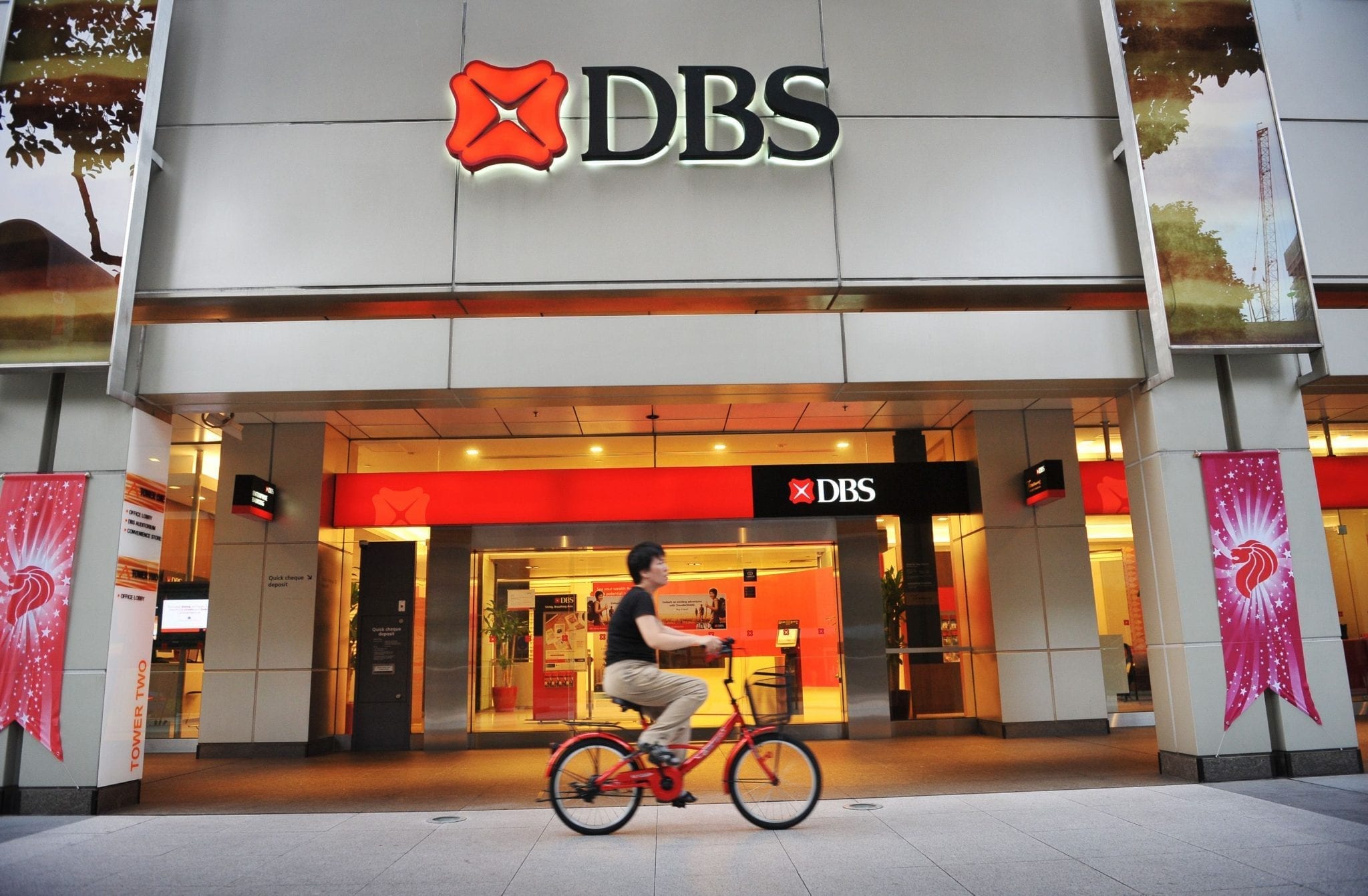
    The bank will issue an interim one-tier tax-exempt dividend of 18 cents per share, for which the scrip dividend scheme will be applicable, for the third quarter of 2020 DBS Group reported net profit of S$1.30 billion ($960 million) for third-quarter of 2020, according to financial results released on Thursday.

    This is 20 percent lower than the same period a year before (S$1.63 billion), but 4 percent up on-quarter on the back of improved business momentum. During the quarter, DBS also set aside S$554 million in allowances for potential bad loans and lower net interest income, bringing total allowances for the nine months this year to S$2.49 billion.

    The bank noted improved business momentum as fee income rebounded 17 percent to pre-Covid levels of S$798 million, led by wealth management and card fees, which softened the impact of lower interest rates as well as a decline in trading income from a high base.

    Due to the higher allowances, the bank’s net profit for the nine months declined 24 percent from the year before to S$3.71 billion.

    DBS said it expects a strong economic rebound in Asia from the current low base to support mid-single-digit loan growth and double-digit fee income growth in 2021.

    The accelerated build-up of allowances has strengthened our ability to meet the challenges of an uneven economic recovery in the coming year. In the longer term, Asia’s fundamentals remain undiminished, Piyush Gupta, chief executive, said.

  • Google Pay continues to expand in the US, nearly 90 new banks now supported

    Google Pay continues to expand in the US, nearly 90 new banks now supported

    Google Pay is pretty big in the US, and starting this week it will get even bigger. Currently, thousands of banks and financial institutions offer customers support for Google Pay, so the 89 names added this week will probably feel like a grain in the sand.

    The list of 89 banks that now support Google Pay is below, so if you didn’t find yours among the 3,000 supported banks listed on Google’s support site, you can look for it here. The list is ordered alphabetically for easier reading

    1st Trust Bank, Inc. (KY), Algonquin State Bank, Alliance Bank Central Texas (TX), Bank of Advance (MO), Bank of Herscher (IL), Bank of Newington (GA), Bank of Old Monroe (MO), Bossier Federal Credit Union (LA), Buckeye State Bank (OH), Central Valley Community Bank, Clean Energy Federal Credit Union (CO), Clearwater Credit Union, Community Partners Savings Bank (IL), Dover Federal Credit Union (DE), E-Central Credit Union, Exchange Bank of Northeast Missouri (MO), Families and Schools Together Federal Credit Union, Farmers – Merchants Bank of Illinois (IL), Farmers and Drovers Bank, Financial Horizons Credit Union, First Century Bank (TN), First Federal Savings Bank (IN), First Financial Bank, NA.

    First Nebraska Bank, FirstCapital Bank of Texas, Fort Davis State Bank Franklin Mint Federal Credit Union, Gateway Metro Federal Credit Union, Genoa Community Bank, Gowanda Area Federal Credit Union, GreenState Credit Union (IA), Greenville Heritage Federal Credit Union, Gulf Capital Bank (TX), HNB First Bank (AL), Hardin County Savings Bank (IA), Harris County Federal Credit Union (TX), Heartland Credit Union (IL), Heartland Credit Union (MI), Honolulu Fire Department FCU (HI), Hurricane Creek Federal Credit Union (AR)

    Jersey State Bank (IL), Jolt Credit Union (MI), KSW Federal Credit Union, Lakeview Federal Credit Union, Latrobe Area Hospital FCU (PA), Live Life Federal Credit Union, Magnolia Bank (KY), Martha’s Vineyard Savings Bank (MA), Millyard Bank (NH), Minnwest Bank (MN), Mountain Credit Union (NC), Mt. McKinley Bank, Needham Bank (MA), Northwest Christian Credit Union, One Community Bank (WI), One Source Federal Credit Union (TX), Partners Bank of California, Pawtucket Credit Union, People’s United Bank, National Association (CT).

    Peoples Bank & Trust Co (MO), Plains Commerce Bank Raritan Bay Federal Credit Union Rio Grande Valley Credit Union, Rollstone Bank & Trust (MA), SPE Federal Credit Union (PA), Sabine Federal Credit Union, Saco Valley Credit Union, Safra National Bank of New York (NY), San Luis Valley Federal Bank, Savings Bank of Walpole (NH), Secured Advantage, Federal Credit Union, Sentry Credit Union (WI), Southbridge Credit Union (MA).

    Springfield First Community Bank, St. Louis Bank, Susquehanna Valley Federal Credit Union, Taunton Federal Credit Union, Telcomm Credit Union (MO), Texas Regional Bank, The Bank of Salem (MO), The New Orleans Firemen’s Federal Credit Union, Treasury Department Federal Credit Union (DC), TruStar Federal Credit Union (MN), United Credit Union, Varo Bank, National Association, WESLA Federal Credit Union, WESTcoasin Credit Union (WI), Wells River Savings Bank (VT), and WestStar Bank (TX).

    Ok, 3,000 is a big number, but there’s a chance that many Google Pay users won’t find their banks on this huge list. Well, judging by the constant wave of banks and financial institutions that are getting Google Pay support each month, sooner or later we’ll be able to use the mobile payment service across all America.

  • Standard Chartered Names Regional Head of Private Banking

    Standard Chartered Names Regional Head of Private Banking

    The bank has hired a new regional head to replace its outgoing regional head, Private Banking West.

    Standard Chartered has appointed Grant Parkinson as regional head of its private banking business for Europe, Africa, and the Middle East, the bank said in a statement.

    Parkinson joins the bank from U.K. wealth manager Brewin Dolphin, where he was a chief operating officer. He was also a chief operating officer at Coutts from 2012 to 2017, and previously worked for Barclays and McKinsey. Based in London, he reports to Didier von Daeniken, global head, private banking.

    Current regional head, Private Banking West, Steve Atkinson, is stepping down from his role and will be leaving after three decades with the bank. He will work closely with Parkinson to ensure a smooth leadership transition over the next few weeks, the bank said.

    The Private Bank’s franchise in the West is an important part of its global Private Banking business, complementing its franchise in Asia to cater to the needs of a global client base,» Standard Chartered said in the statement.

    The London-headquartered private bank previously stated plans to grow its assets under management (AUM) from $65 billion currently to about $100 billion in three to five years and said it would be hiring 30-40 relationship per year over the next two to three years.

  • OCBC Earnings Drop Significantly

    OCBC Earnings Drop Significantly

    While the bank’s net interest income was impacted by lower market rates, its banking and wealth management businesses saw strong quarter-on-quarter fee-based growth, and its insurance franchise reported strong sales and new business growth.

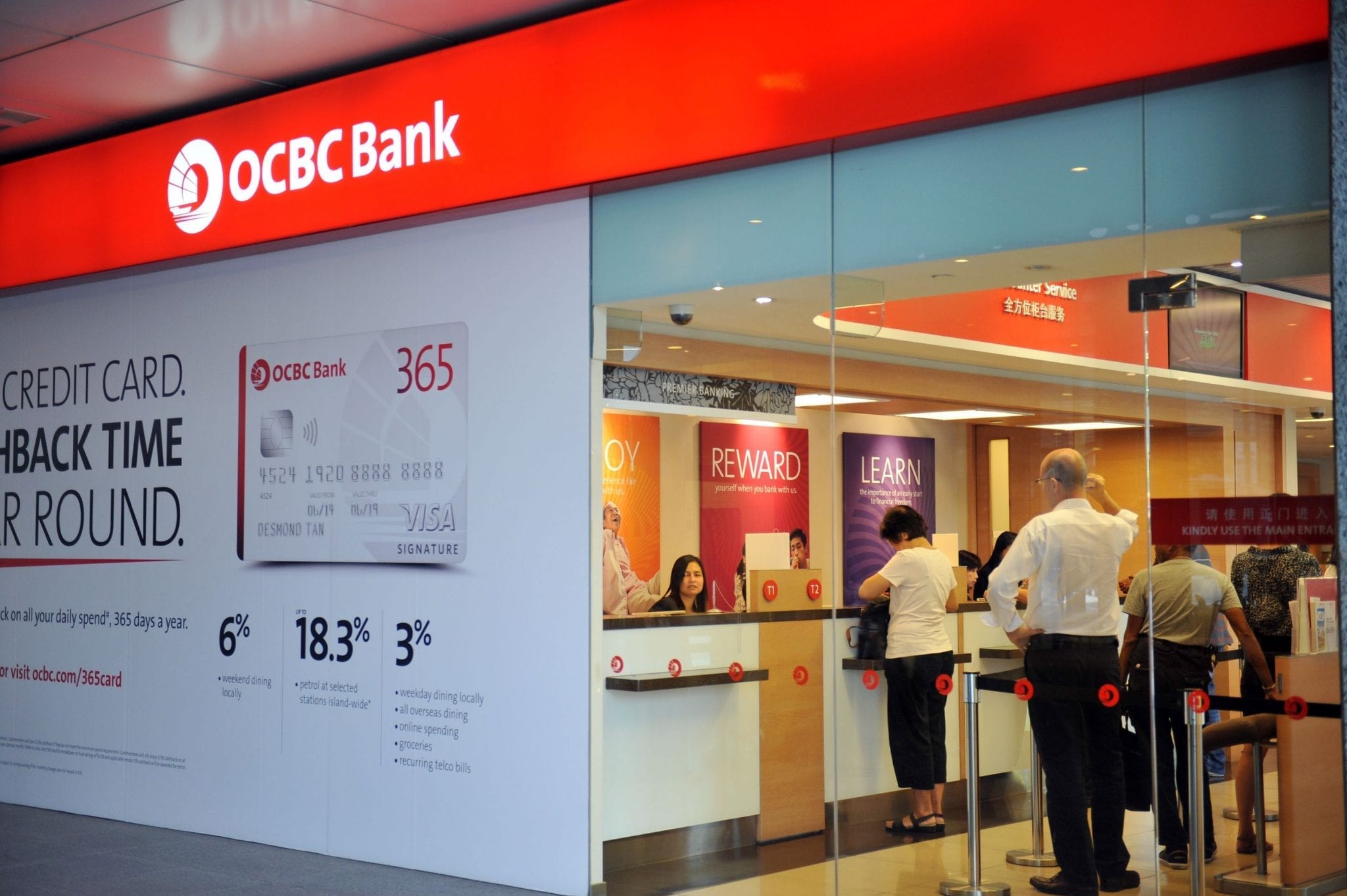
    OCBC’s net profit for the third quarter of 2020 was S$1.03 billion ($760 million), up 41 percent from the previous quarter’s S$730 million and 12 percent lower compared to a year ago, according to financial results published by the bank on Thursday.

    The growth in profit was largely a result of a fall in allowances, OCBC said. The bank set aside S$350 million in allowances during the quarter, which included a management overlay of S$150 million, compared to S$750 million in the previous quarter.

    Net interest income declined 4 percent from last quarter’s S$1.42 billion from lower rates – an 11 percent decline from the same period in 2019. At the same time, non-interest income rose 6 percent to S$1.12 billion, led by higher trading income and insurance profit.

    The bank reported growth in wealth management fees of 24 percent on-quarter and 4 percent year-on-year to S$252 million.

    Assets under management at Bank of Singapore, OCBC’s private banking subsidiary, grew 3 percent from the previous quarter and 5 percent year-on-year to $116 billion (S$159 billion), underpinned by net new money inflows and better market valuations.

    At Great Eastern, OCBC’s insurance arm, total weighted new sales rose 51 percent quarter-on-quarter to S$433 million, supported by improved sales both in Singapore and Malaysia, while New Business Embedded Value was 47 percent higher at S$160 million, while the NBEV margin was 37 percent.

    OCBC said the full extent of the lagging economic impact of the crisis will only likely have more visibility next year. However, it said it is well-positioned for recovery and is focused on driving long-term sustainable value.

    With the outlook still uncertain, it is most important that we continue to strengthen our capital and balance sheet. This will position us well for the crisis and enable us to emerge well-prepared for new opportunities when the market recovers,» Samuel Tsien, OCBC group CEO, said in a statement.

    Singapore’s two other listed banks already reported their quarterly earnings – DBS saw its profits fall by 20 percent from the same period last year to S$1.3 billion, while UOB reported a 40 percent decline to S$668 million.

  • Hong Kong fintech STATRYS secures USD $5M

    Hong Kong fintech STATRYS secures USD $5M

     Statrys, a Hong Kong-based digital payment services platform, has recently accepted a USD $5M funding round to help kick off its newest products to a rapidly growing market. This round was led via a closed-door funding arrangement with an angel investor in the region with the expectation for Statrys to carve out market share in the growing digital payment and remittance space. 

    The global digital payment and remittance market was valued at USD $2.99 billion in 2019 and is expected to continue growing at a CAGR of 27.6%. According to a recent report by MarketWatch, the global digital payments and remittance market is expected to reach USD $16.79 billion by 2025. 

    Statrys is an innovative payments solution alternative geared towards SMEs, startups, and entrepreneurs who require flexible banking and advanced Forex solutions that can enable them to grow globally. The new funding round is a part of Statry’s global growth strategy, starting with a big push into Asia to help support SMEs and entrepreneurs with business accounts, Forex needs, and other payments solutions that larger payment processors charge higher fees for, or banks simply won’t provide. 

    “After a few months of operations, our business has already reached upwards of HKD500mil remittance and HKD200mil FX dealings. This clearly validates our original assumption that there is a big demand for the services we provide at STATRYS. This new financing will help us to accelerate 

    the development of the company both in terms of products, with the addition of local currency accounts, payment card, integration with accounting software, and geographically, as we will target new markets in South-East Asia” said Bertrand Theaud, Founder & CEO of Statrys. 

    The first project the new funding has been used for was the recent September website overhaul that moved to reinforce Statrys’s branding and deliver a better user experience when it comes to site navigation and usability. 

    The main value that Statrys will bring to SMEs specifically in Asia is the ease of setting up a business account in the face of traditional Asia-based banks where creating business accounts with bootstrapped funding or light runway can oftentimes end in failure. By offering a payment platform that can operate with the same functions of a traditional bank while not actually being a bank, Statrys can fill gaps for SMEs and startups that otherwise couldn’t find themselves with a bank or with a bank that restricts smaller businesses in overall services offered. 

    Among other platform features, integrations are the next big goal post for Statrys to cross for clients with other tools at the heart of their operations. The Statrys-Xero integration which is currently in development, is one of many other integrations planned for Statrys, that will help synchronize payments to their Xero account, bridging a gap between payments and accounting software that never existed before with traditional banks. 

    Statrys’s Forex trading features offer payments and trades in 11 different currencies with plans for more to come in the future. The new funding round is intended to also expand the company’s presence, or ability to serve clients, in other ASEAN countries like Singapore, Thailand and Indonesia where competitors have less focus on solutions for SME customers, startups and entrepreneurs. 

    “Flow of business, and therefore flow of payments, between China, Hong Kong and South-East Asia is rapidly growing. We anticipate that this trend will accelerate with the combined effect of the China-US trade war and the changes in global supply chain that will result from the Covid-19 pandemic. We want to position STATRYS to answer the needs of companies present in these regions as they are looking for better solutions to deal with payments and FX. ” says Bertrand 

    Statrys will also be launching its own Statrys Debit Payment MasterCard for Hong Kong so local Hong Kong entrepreneurs can make payments from their Statrys business accounts at all MasterCard participating retailers and vendors, currently in HKD only. 

    Already quickly becoming an office-name in Hong Kong, Statrys aims to take digital payments and Forex to more SMEs globally with the same price-competitiveness. Compliance is at the heart of every transaction and trade on the Statrys platform, where SMEs can feel safe to make the payments they need around the globe in any currency Payments don’t just happen in Asia, so it’s likely that future funding rounds are around the corner with the expectation to take Statrys out of Asia and beyond. 

  • UOB deepens partnership with VMware to enable safe and effective

    UOB deepens partnership with VMware to enable safe and effective

    As the COVID-19 pandemic resulted in the majority of the workforce shifting to home-based work, United Overseas Bank (UOB), a leading bank in Asia, collaborated with VMware to enable the Bank to continue its innovation drive without disruption. UOB was one of the fastest organizations in ASEAN to deploy a secure virtual desktop – UOB DevTop – for its team of 3,000 information technology (IT) developers, having done so in just 21 days instead of the up to three months it would typically take. Designed to meet the Bank’s robust security standards and to minimize risks, UOB DevTop provides IT developers with a secure sandbox to test and to implement upgrades to UOB’s digital services and solutions. This enabled its IT developers to meet the Bank’s software development schedules without disruption or delay as they move to work from home within weeks.

    UOB developed UOB DevTop by integrating VMware’s virtual desktop solution VMware Horizon with UOB’s highly secure IT and hybrid cloud infrastructures. This infrastructure was vital to the Bank being able to accelerate the deployment of UOB DevTop as the Bank did not need to install hardware servers on its premises even as it expanded its computing capacity to meet the surge in load with 3,000 IT developers working remotely.

    Through safer and remote access to the Bank’s development environment, UOB’s team of IT developers achieved significant milestones for several software development projects this year. Within the last three months alone, UOB has launched three industry-leading innovative solutions.

    In August, UOB launched it ASEAN digital bank, TMRW, in Indonesia. In September, the Bank launched its all-in-one mobile banking app UOB Mighty in Malaysia, featuring a new user interface and features that tap artificial intelligence to help customers spend and save more wisely. In the same month, UOB also launched UOB Infinity, a new mobile app for its clients across regions that provides these businesses with intuitive features such as a customizable desktop, cash management capabilities, and trade services to meet their banking needs.

    Ms Susan Hwee, Head of Group Technology and Operations, UOB, said, “As the majority of our colleagues across the UOB Group shifted to home-based working during the pandemic, we prioritized equipping them with the right tools and resources to enable a quick and seamless transition as we continued to serve our customers without disruption.

    Tapping our technology and cloud infrastructure, coupled with VMware’s solutions, we developed and deployed a more secure virtual desktop solution at an unprecedented pace and scale. This enabled our team of 3,000 IT developers to continue to support the Bank’s business activities and innovation drive without compromising on security.”

    Mr Sanjay K. Deshmukh, Managing Director and Vice President, Southeast Asia and Korea,VMware, said, “Digital technologies have shone through during this period of uncertainty as an effective enabler for organizations to conduct business, engage employees and connect with customers. We are excited to continue our partnership with UOB, supporting their operational needs while enabling them to comply with the bank’s stringent security and data privacy requirements.

  • UOB Tie-Up to Nurture ESG Mindset Among Employees

    UOB Tie-Up to Nurture ESG Mindset Among Employees

    UOB will work with Dutch investment company Robeco to tap its expertise in environmental, social, and governance (ESG) matters and integrate sustainable thinking across its business and investment processes.

    The bank’s asset management arm is launching its Sustainability Academy in the fourth quarter of 2020, which offers development programs to deepen its employees’ understanding of sustainability principles and nurture an ESG mindset, UOB announced on Friday.

    The Robeco program comprises two modules, namely Sustainable Investing and Sustainable Development Goals (SDGs) Investing, and will cover key topics such as ESG integration, active ownership, and measuring the contribution of companies to the UN SDGs. Over 400 staff in both investment and non-investment roles across the region are expected to benefit from the training.

    The academy will launch a second training program in November 2020, to be offered by KPMG and supported by the Institute of Banking and Finance Singapore, covering topics such as sustainability reporting and regulatory expectations on ESG matters.

    The global emphasis on sustainable investing has grown tremendously in recent years, with ESG considerations now core to the investment philosophy of major asset managers around the world, Thio Boon Kiat, CEO of UOB Asset Management, said in the announcement.

    Earlier this week, UOB announced that it would integrate ESG considerations into its full suite of retail investment solutions as part of the bank’s commitment to driving growth sustainably.

    UOBAM previously worked with Robeco to launch the first bond fund focused on the UN SDGs – the United Sustainable Credit Income Fund (USCIF) – for retail investors in Singapore in March 2020. The two sides also jointly launched a

  • DBS Mulls Crypto Exchange Launch

    DBS Mulls Crypto Exchange Launch

    DBS’ plans for a digital exchange are still work in process, and have not received regulatory approvals. Until such time as approvals are in place, no further announcements will be made. DBS is planning to launch a crypto exchange that will allow four digital currencies – Bitcoin, Bitcoin Cash, Etheerum, and Ripple – to trade against the Singapore dollar, Hong Kong dollar, Japanese yen or U.S. dollar, according to a report by digital asset media firm The Block. 

    Dubbed DBS Digital Exchange, the initiative was first unveiled through a website seen by The Block which cached the now removed website.

    Regulated by the Monetary Authority of Singapore, the crypt exchange will be made accessible to institutional investors, including financial institutions and market makers. Retail investors will have access via DBS entities like their securities or private banking arm.

    While most exchanges can execute orders at any time and any day, DBS will similarly follow the same trading hours as stock exchanges, allowing for less than seven hours per day, according to the report.

    In addition to standard trading, the bank will also provide institutional-grade custody solutions for safekeeping digital assets and, in due time, conduct security token offerings to help small and medium-sized firms raise funds.

    Digital assets are poised to be the future of tomorrow’s digital economy, the website originally read.

    With DBS Digital Exchange, a bank-backed digital exchange, companies, and investors can now leverage an integrated ecosystem of solutions to tap the vast potential of private markets and digital currencies.