Category: Finance

Retail News Asia is committed to providing both local and global retailers with the latest Finance news throughout the Asian market. This on a daily base.

  • HSBC Restructures Further and Faster

    HSBC Restructures Further and Faster

    HSBC will accelerate and expand restructure, despite beating analyst forecast with $3.1 billion of profit before tax in the third quarter. Profits were down $1.8 billion (37 percent) compared to the same period last year, according to the latest earnings release, supported by reducing risky credit and continued cost management. Year-to-date, the London-headquartered bank generated $9.9 billion in profit before tax.

    These were promising results against a backdrop of the continuing impacts of COVID-19 on the global economy, said group chief executive Noel Quinn.

    I’m pleased with the significantly lower credit losses in the quarter, and we are moving at pace to adapt our business model to a protracted low-interest-rate environment.

    Moving forward, the bank will focus on three main strategic priorities: growth acceleration in Asia continued digitalization, and further restructuring.

    On the latter area, the bank is looking to speed up and expand the initiative after saving $600 million in costs this year and shedding 10,000 jobs since the third quarter last year. U.S. and Europe are also restructuring and are also on pace to meet their 2022 targets. We are accelerating the transformation of the Group, moving our focus from interest-rate sensitive business lines towards fee-generating businesses, and further reducing our operating costs, Quinn said. We also intend to increase our rate of investment in Asia, particularly in wealth, the Greater Bay Area, south Asia, trade finance, and sustainable finance.

    According to Quinn, ECL charge for 2020 is trending lower towards the $8-13 billion range but he notes that current guidance makes the assumption that further significant economic deterioration is unlikely.

    In addition, he also highlighted geopolitical risks including U.S.-China tensions as well as uncertainties linked to Brexit.

    We expect lower global interest rates to continue to put pressure on net interest income, Quinn said. Based on current interest rates, we expect further modest net interest income headwinds in 4Q20, with some stabilization as we move into 2021.

  • Rapyd launches payment capabilities in South Korea – extends its Asia Pacific footprint

    Rapyd launches payment capabilities in South Korea – extends its Asia Pacific footprint

    Rapyd, a global Fintech as a Service company, has launched its ‘all-in-one’ payment capabilities in South Korea. By partnering with leading Korean payment service providers, KCP, PayLetter and others, Rapyd now provides access to a robust and comprehensive suite of South Korean payment options across international and local cards (Hyundai Card, Shinhan Card, Samsung Card), mobile wallets (Kakao Pay, Samsung Pay, Toss, and PAYCO), bank transfers, vouchers, and carrier billing.

    According to eMarketer, South Korea is one of the world’s top five eCommerce markets by retail eCommerce Sales volume, accounting for $113 billion sales in 2019. And COVID-19 has further contributed to the rise of digital payments in the country. According to GlobalData, South Korea’s share of cash in transaction volumes is expected to decline to 37.2% by 2023, while non-cash payments will account for two-thirds of payment volumes. The pandemic has also given rise to social distancing, causing a decline in in-store purchases. These are being offset by rising e-commerce spending.

    South Koreans are also quickly moving towards new and emerging payment technologies. According to the Rapyd Asia Pacific eCommerce and Payments Guide 2020, 36% of South Koreans chose mobile wallet payments (also known in South Korea as Simple payments) as their most preferred payment method. Kakao Pay was used by 41% of respondents, followed by Samsung Pay (32%), PAYCO (21%), and Toss (21%). Local cards such as Shinhan, KB, Hyundai, and Samsung Cards are the second most preferred payment methods in the country, chosen by 30% respondents.

    Rapyd now offers the majority of the most popular Korean payments methods identified in the research. The rollout of South Korea payments capabilities will enable international companies to immediately provide localised payment experiences catered to the expectations of modern Korean consumers,  and tap into one of the largest and most advanced eCommerce populations.

    “South Korea is setting many trends in Asia Pacific, and digital payments are not an exception. This market is seeing fast adoption of mobile wallets, such as Kakao Pay, and is incredibly rich in payment services. While competition is heating up and the market is becoming more segmented, the overall pie of Korean mobile payments keeps growing. With the launch of Rapyd’s payment capabilities in South Korea, we are able to bridge the global eCommerce players to a vibrant and exciting Korean market opportunity, and create a truly native South Korean Payment experience,” said Joel Yarbrough, Vice President for Asia Pacific, Rapyd.

    Jaewook Noh, Managing Director, KCP, commented “South Korea is one of the world’s most mature payment markets in the world, and we welcome an opportunity to collaborate with Rapyd and bring Korea closer to the global eCommerce ecosystem. Our partnership is an example of ‘local going global’: it is an attestation of our commitment to building customer-centered experiences, while also supporting the growth of the global Internet economy.”

    Additionally, businesses based in South Korea will also be able to access Rapyd’s Global Payments Network and expand internationally into 100+ markets around the world by accepting payments from consumers in any of the 900 locally preferred payment methods supported by Rapyd.

    One of the first South Korean companies to access Rapyd Global Payment Network capabilities is SENTBE, a Fintech money transfer service, looking to provide easier, faster, and more convenient global remittances.

    “We are pleased to be collaborating with Rapyd, a vital partner in helping SENTBE expand globally as a total FX solution company. As we have recently acquired a Payment Gateway Licence in Korea, we are also looking forward to being a solid infrastructure partner for Rapyd in the near future,” said Alex Choi, CEO, SENTBE.

    South Korea is the sixth global market where Rapyd extends its ‘all-in-one’ payment capabilities. The expansion of the Rapyd Global Payments Network offering all-in-one payment capabilities first took place in Singapore in November 2019, followed by Brazil in March 2020, the United Kingdom in June 2020 and Mexico and India in July 2020.


  • Fintech Launches Low-Cost Customizable Portfolio

    Fintech Launches Low-Cost Customizable Portfolio

    Digital wealth manager Endowus’ new product allows investors to build customizable portfolios with direct access to a selection of low-cost funds.

    The Fund Smart platform, launched Thursday, allows investors to directly access institutional share-class and trailer-free funds using cash, CPF, and Supplementary Retirement Scheme (SRS) funds.

    The platform’s curated model portfolios include an ultra-defensive fixed income portfolio that prioritizes capital preservation, flexible cash management solutions, as well as thematic and sector-focused portfolios such as ESG environment, social, governance (ESG) or socially responsible investing (SRI) funds, Shariah-compliant funds, and thematic funds.

    People struggle with too many options – a growing array of platforms, and far too many funds to choose from with confusing fee structures,» Samuel Rhee, Endowus chairman and chief investment officer, explained in the announcement.

    According to the company, Fund Smart was developed based on a survey of more than 700 investors that focused on their preferences and behavior patterns. Some 71.6 percent of respondents indicated a desire to customize their investment portfolios, with lower incurred costs (84 percent) and the flexibility to choose funds from specific geographies or sectors (74.5 percent) as key considerations.

    We want our clients to experience the same quality of advice we have provided with our core portfolio products, but now with greater flexibility, Rhee said.

    Fund Smart has no sales fees, no transaction fees, no lock-ups, and full trailer fee rebates, along with automated rebalancing and regular savings plans capabilities.

  • Banks maintain profit growth but bad debts rise

    Banks maintain profit growth but bad debts rise

    Most banks reported profit growth in the first nine months, but bad debts posted a double-digit rise due to the impacts of the Covid-19 pandemic. VPBank saw its pre-tax profits surge by nearly 30 percent year-on-year to VND9.4 trillion ($402.75 million) as it managed to cut operating costs by nearly 6 percent. But its bad and doubtful debts rose by 15 percent to over VND10 trillion.

    Military Bank’s profits rose by nearly 7 percent to VND8.13 trillion while its bad and doubtful debts rose by 39 percent.

    ACB’s profits were up nearly 15 percent at VND6.41 trillion while bad and doubtful debts rose by 71 percent.

    But some banks also reported declines in profits.

    Vietcombank continued to be the most profitable, but its pre-tax profit fell by over 17 percent to VND15.96 trillion as revenues remained flat or declined but it had to hike provisions for bad debt by 25 percent.

    Bad and doubtful debts were up 15 percent to nearly VND7.9 trillion.

    Sacombank’s profits fell by nearly 7 percent to VND2.33 trillion as provisions for bad debts rose by nearly 70 percent.

    Financial data provider FiinGroup had said in a report in July that the financial health of businesses and their ability to repay debts have declined and people’s incomes have dropped, and these factors could affect the quality of credit in the near future.

    As lenders gradually have to increase provisions for doubtful debts, their profits in the coming quarters could slump, it added.

  • Deutsche Bank in Talks with Tata to Offload Tech Unit

    Deutsche Bank in Talks with Tata to Offload Tech Unit

    Deutsche Bank is reportedly in advanced talks to sell its technology services unit to India’s Tata Consultancy Services.

    Tata Consultancy Services – Asia’s biggest software exporter and the tech subsidiary of Indian conglomerate Tata group – could take over Deutsche Bank’s Postbank Systems, according to a «Bloomberg» report citing unnamed sources.

    There are expectations for a deal to materialize by year-end though negations are ongoing and no conclusions have been made.

    If successful, Tata Consultancy would onboard Postbank System’s 1,400 employees while Deutsche Bank would come closer to its restructuring target to reduce 18,000 jobs.

    The Bonn-based technology unit generated revenue of 533 million euros ($629 million) in 2015, the latest annual figures available.

    Bottom lines aside, the bank is currently focused on importing Postbank’s operational capabilities by merging with its technology in a move that would render Postbank System’s obsolete by 2021-end and shed 1 billion euros ($1.18 billion) of operational costs, the report added.

  • UBS’s Sergio Ermotti Lines Up Wall Street Gig

    UBS’s Sergio Ermotti Lines Up Wall Street Gig

    Sergio Ermotti is returning to his roots in high finance – cashing in on a boom in a niche style of stock-listing with potentially huge payoffs.

    The long-standing CEO of UBS, Sergio Ermotti, isn’t abandoning Wall Street altogether when he leaves the wealth manager next week: He is listed as the chairman of a so-called black-check company, which is seeking to raise $350 million, from January 1, citing U.S. securities filings.

    The 60-year-old Swiss banker is a veteran City trader who began his career in investment banking in 1987 in equity derivatives and capital markets at Merrill Lynch. Ermotti, who is withdrawing from UBS altogether after he hands over to successor Ralph Hamers next week, already took a board job at Swiss Re, where he is poised to take over as chairman in April.

    Ermotti is the latest potent financial sponsor to put his name on a Spac, which has raised eyebrows for their opaque set-up, huge fees, and tendency to attract short-term shareholders versus long-term investors. The highest-paid banker in Europe, Ermotti has realized more than 50 million francs in pay since taking the helm at UBS in 2011.

    He is also passionate about the wealth manager’s prospects and apparently still a trader at heart: nearly two years ago, he doubled down with a $13 million personal bet on his own stock – effectively, one year’s pay worth of UBS shares. Ermotti is the biggest UBS shareholder in top management (4 million shares, or 0.2 percent voting rights).

    Once relegated to a corner of Wall Street, the blank-check playbook is to create a shell company, seek a public listing for it, and then use the money raised through the listing to merge with an actual business.

    The potentially lucrative special-purpose acquisition companies, or Spacs, have emerged primarily in the U.S. equity market. That is about to change: a Spac focused on European targets raised $600 million this month.

  • Ripple Shortlists Singapore for Move

    Ripple Shortlists Singapore for Move

    The blockchain payments company could leave the U.S. over lack of regulatory clarity. San Francisco-based Ripple is considering a move out of the U.S. as authorities there remain divided on whether to treat cryptocurrencies as a commodity, currency, property or security, according to a report on Thursday.

    The firm has shortlisted Japan and Singapore as potential destinations, along with Switzerland, Britain and the United Arab Emirates. The common denominator between all of them is that their governments have created a clarity about how they would regulate different digital assets, different cryptocurrencies, chief executive Brad Garlinghouse said.

    Ripple operates a blockchain-powered real-time gross settlement system, currency exchange, and remittance network. Japan is one of its fastest-growing markets, and works with Japanese financial conglomerate SBI Holdings in a joint venture offering global payment services driven by blockchain technology.

    Southeast Asia, however, is also an important market for the firm, driven by the advent and growth of digital banking in the region. Among the firm’s customers in the region are Siam Commercial Bank in Thailand, CIMB in Malaysia, and Nium, formerly known as InstaReM, in Singapore.

    In March, the company appointed a senior executive as head of Southeast Asia operations to oversee Ripple’s expansion in the region, and spearhead efforts to drive the growth of its customer base.

    In 2019, Ripple and the National University of Singapore opened the FinTech Lab, part of the company’s $50 million University Blockchain Research Initiative.

  • Vietcombank profit plunges

    Vietcombank profit plunges

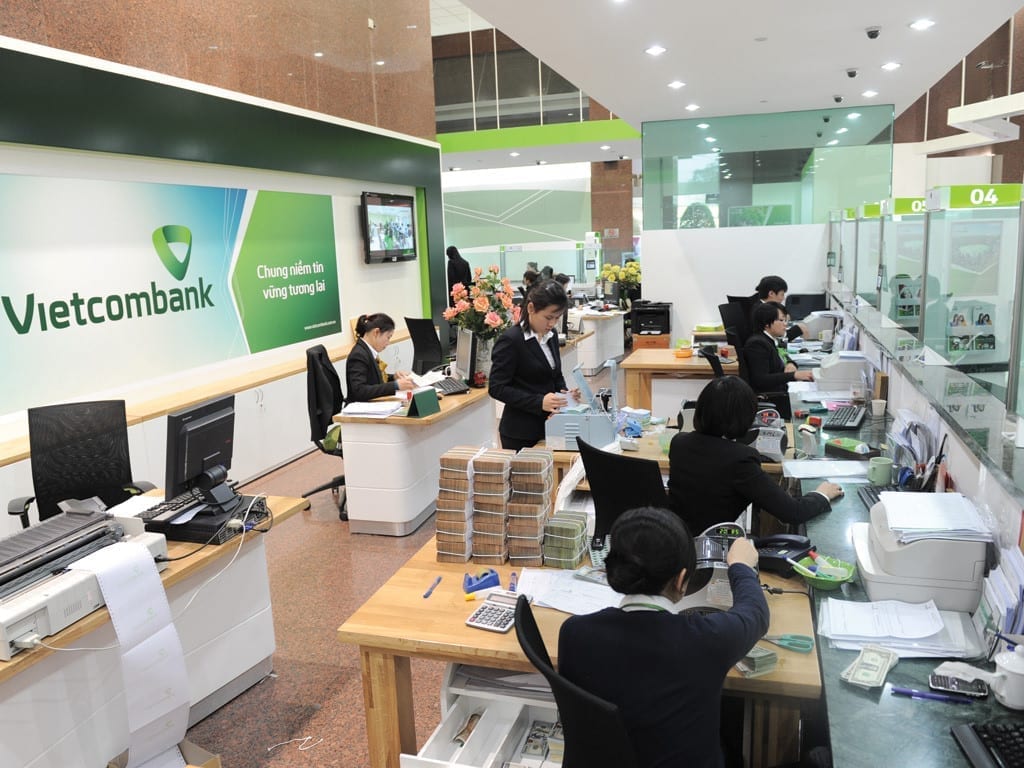
    The pretax profit of state-owned lender Vietcombank in the third quarter fell over 20 percent to VND4.9 trillion ($210.9 million) over pandemic impacts.

    The bank said that provision for bad debt, which rose 35 percent year-on-year to VND2.02 trillion, and lower net interest income were the main reasons for the profit slump.

    Although the bank remains the most profitable lender in the country, its bad debt increased 15 percent in the first nine months to nearly VND7.9 trillion.

    Rising bad debt has become a major concern for Vietnamese lenders this year as the Covid-19 pandemic crippled key industries. With businesses finding it very difficult or impossible to repay loans, banks are forced to increase their bad debt provisions.

    Banks have lowered deposit interest rates from 7 percent earlier this year to 5.8 percent after the State Bank of Vietnam cut policy rates four times, seeking to boost lending to revive the economy, which has posted decade-low growth in the second and third quarters.

    Vietcombank, the fourth-largest lender in Vietnam in terms of assets, also reported that its Q3 revenue fell to near 4 percent year-on-year to VND11.6 trillion.

    The research unit of top brokerage SSI Securities Corporation has recently forecast that the bank’s pretax profit is set to fall by over 13 percent year-on-year to VND20 trillion due to Covid-19 impacts.

    The State Bank of Vietnam in April ordered state-owned lenders to cut profits by 30-40 percent this year to lower lending rates and support economic recovery.

  • Line Launches Social Banking Platform in Thailand

    Line Launches Social Banking Platform in Thailand

    Thailand is the first market where Line has integrated banking services on its main mobile platform. Japan-based Line, which operates one of Thailand’s most popular social media platforms, has rolled out banking services in the kingdom in partnership with Kasikornbank.

    The Line BK service allows users to customers to transfer money, open savings accounts, apply for loans, and make payments directly from the messaging platform. It also promises high-interest rates for saving accounts and a range of banking services, including personal loans for freelancers and individuals without fixed incomes, according to an announcement on Tuesday.

    The company said it plans to expand banking services into other countries, including Japan, Taiwan, and Indonesia.

    The Line messaging app launched in 2011 and since then has grown into a diverse, global ecosystem that includes AI technology, fintech and more.

    In Thailand, LINE introduced its messenger service in 2012, and quickly grew into the country’s leading social media platform.

  • UBS as Training Ground for Female Executives

    UBS as Training Ground for Female Executives

    Schwyzer Kantonalbank, one of the plethora of Swiss cantonal, or state, banks, has appointed a new female CEO. She joins the bank from banking giant UBS. The switch away from the big firm is not a first. Schwyzer Kantonalbank (SZKB) is early out of the starting block and has found a replacement for outgoing CEO Peter Hilfiker. Hilfiker is handing over responsibility for the bank at the end of March 2021 and will retire.

    Susanne Thellung has been selected as his successor. She joins from UBS, where she currently heads the business management corporate and institutional clients. From 2004 through 2018 Thellung was working for UBS Switzerland, including as regional head of all customer segments for the entire central Swiss region.

    She will be the first female head of a cantonal bank. These banks, typically owned by the regional tier of the Swiss state, have some catching up to do in respect to the representation of female top managers.

    In 2018, the share of female managers at 19 such banks was 45 percent. In the middle management though the share was 17 percent and among top managers, the number dropped to a paltry 9 percent, ie less than one in ten. The executive boards had 8 percent women, while 18 percent of supervisory board members was female, with 16 percent of the chairs taken by women. The background of Thellung comes as less of a surprise. UBS has a good reputation as a training ground for female managers. But, equally so, a perceived difficulty to tie the women to the bank. For a variety of reasons, they tend to leave earlier or later.

    One such example is Laura Meyer. She is managing director and head of digital distribution and analytics at UBS Switzerland. At the end of the year, Meyer will join Hotelplan, the travel agency of Swiss retail giant Migros. The company employs 2,100 staff and has sales of 1.54 billion Swiss francs.

    Another well-known case was Dagmar Kamber Borens. She first signed at the Swiss unit of Credit Suisse as chief operating officer (COO), before later joining Quintet, the private-banking group assembled by ex-UBS executive Juerg Zeltner.

    Kamber Borens had spent 17 years with UBS, having started in its private bank after her Ph.D. At the turn of the century, Kamber Borens joined the M&A-desk in London. For another four years, from 2004 through 2008, she worked in the personal staff of the chairman, before being appointed as chief of staff of the group finance.

    And sometimes they even retrace their steps and return to the fold. Simone Westerfeld (pictured below), who had been with the bank from 2000 to 2006 had then joined the University of St. Gallen. In 2015 she be CFO at Basler Kantonalbank and later had a spell as interim CEO of the bank (2018-2019).

    She has since rejoined UBS and received the position as deputy head of corporate and institutional clients international. There, she catered to the complex world of global corporate clients. In 2020, Westerfeld became head of personal banking, taking charge of the business with private clients for the bank in its home market of Switzerland.

  • Singapore Fintech Gears Up for Global Expansion

    Singapore Fintech Gears Up for Global Expansion

    To support its global ambitions, it has appointed a veteran entrepreneur to its board. Singapore insurtech BetterTradeOff (BTO) is preparing to expand globally through partnerships with major banks and insurance companies looking to offer their customers the benefits of BTO’s life-planning tool through a white-label enterprise solution.

    In addition, BTO plans to roll out both its direct-to-consumer «Up» life planning platform and «Up Adviser» software to new markets, following successful launches in Singapore. It also appointed Jeremie Bonnin to its board of directors, who will support its growth as it launches into new markets, the startup said in a statement on Thursday.

    Bonnin was a founding member of media and telco conglomerate Altice Group, which has recorded $25 billion in revenues across Europe and the U.S. He relocated to Singapore in 2018, where he served as senior advisor to Altice’s founder and management team, while mentoring and investing in Southeast Asian startups eyeing international expansion.

    With Covid-19 negatively impacting so many people, especially the poorest, we’re looking at partnerships that will allow us to make our solution available in more countries and to millions of more people, while bringing the power of sound financial planning to those who need it most, Laurent Bertrand, BTO co-founder and chief executive, said.

    BetterTradeOff was founded in 2015 and offers a software-as-a-service life planning solution that provides financial advisers with a collaborative digital platform for visualizing financial advice and building trust through transparency. It currently operates in Hong Kong, Singapore, Philippines, UAE, and Switzerland. The firm has raised $2 million in seed funding and has 15 staff based in Singapore.

  • Singapore Open to Virtual Shareholder Meetings

    Singapore Open to Virtual Shareholder Meetings

    Currently, companies are allowed to conduct their general meetings via alternate non-physical means until June 2021.

    The Monetary Authority of Singapore (MAS) and Singapore Exchange Regulation (SGX RegCo) are open to allowing hybrid or fully virtual shareholder meetings after social distancing measures are eased, post-Covid-19, if active participation can be ensured.

    The regulatory bodies are currently closely monitoring the experiences of issuers and investors during virtual meetings, Ong Chong Tee, MAS deputy managing director, said on Monday.

    What is important is that such new meeting formats should not compromise effective shareholder engagement, allow proper verification of attendees and voters, and facilitate accurate and secure voting processes, Ong said.

    Covid-19 safe distancing measures and travel restrictions have limited the conduct of physical meetings. In April, MAS, ACRA and MinLaw worked with SGX RegCo to fast-track legislation to provide legal certainty to listed issuers so that they may implement safe distancing measures imposed by the Ministry of Health and hold virtual general meetings.

    MAS also published a checklist of measures to ensure informed and effective participation, which include requirements for a live broadcast, proxy voting, allowing shareholders to ask questions and having them addressed ahead of the meeting.

  • Chinese Regulators Add More Hiccups for Ant IPO

    Chinese Regulators Add More Hiccups for Ant IPO

    The much anticipated blockbuster listing of Chinese fintech giant Ant continues to face obstacles, this time from mainland regulators claiming a conflict of interest with its payment arm Alipay.

    The China Securities Regulatory Commission (CSRC) is looking into Alipay’s role over concerns of a potential conflict of interest, according to a «Reuters» report citing unnamed sources.

    Alipay was allegedly the only third party channel which allows access to the five Chinese mutual funds investing in the IPO.

    The efforts have proven effective as the channel has lured more than 10 million retail investors into the five mutual funds that were launched in late September, creating an alternative to traditional channels like banks and brokerage houses.

    According to the report, the probe is not expected to derail the IPO though it has delayed plans for its Shanghai listing already as Ant had hoped to obtain CSRC approval last month.

    And in Hong Kong, where Ant will conduct the other leg of its dual listing, progress was also slowed with original plans for a September 24 hearing with the local bourse’s listing committee and an official IPO after the Chinese National Day holiday that ended on October 8. Sources claim that Ant is aiming for a Hong Kong hearing in the coming days.

    Separately, Republican senator Marco Rubio called for the Trump administration to take a serious look at delaying Ant Group’s IPO, adding that it was outrageous that Wall Street is rewarding the Chinese Communist Party’s blatant crackdown on Hong Kong’s freedom and autonomy.

  • StanChart Eyes Mainland Brokerage Business

    StanChart Eyes Mainland Brokerage Business

    Standard Chartered is reportedly applying for a brokerage license in China, joining its peers in the wave of foreign entry into the mainland market.

    Mainland’s securities watchdog, the China Securities Regulatory Commission (CSRC), has accepted an application from Standard Chartered Hong Kong on October 10 to set up a securities firm in the market, according to a report from state-owned media Xinhua.

    According to Standard Chartered, the bank was looking to further develop onshore business through acquiring new licenses.

    Since Beijing made good on a trade deal signed with the U.S. to scrap foreign ownership caps on securities and mutual fund firms, foreign financial institutions from the U.S., Europe, Japan and Singapore have been rapidly seeking to establish a presence to capitalize on new opportunities. Within brokerage, Japan’s SBI was the most recent to express greater interest in the mainland’s sub-sector due in part to growing political instability in Hong Kong.

  • BNP Paribas Nabs Lombard Odier’s Head of Asian Equities

    BNP Paribas Nabs Lombard Odier’s Head of Asian Equities

    BNP Paribas Asset Management hired a trio from Lombard Odier, including a new Hong Kong-based head of Asian equities.

    The French asset manager appointed Zhikai Chen as head of Asia equities, according to a statement, replacing Arthur Kwong who will leave the firm to pursue other opportunities. Chen will report to Guy Davies, global CIO for fundamental actives equities.

    Chen is a 20-year veteran in the financial industry with a wide range of experience including the Monetary Authority of Singapore. He was most recently with Lombard Odier where he was its head of Asia ex-Japan equities since 2012.

    Asian equities is an important asset class for our clients in the region, said Steven Billiet, APAC head of BNP Paribas Asset Management. We will also continue to focus on bringing our Asian equities capabilities to our international client base which is eager to leverage on the growth dynamic of Asia.

    Joining Chen from Lombard Odier are two portfolio managers, Jinwen Ouyang and Roxy Wong.

    Ouyang has 13 years of industry experience and was a portfolio manager for Asia at Lombard Odier. Previously, she had also worked with Value Partners and Société Générale.

    Wong has 20 years of markets and technology experience and was most recently a senior portfolio manager for Asia at Lombard Odier. Previously, she held various tech research roles with Mirae Asset, RCM and Bear Stearns.