Category: Finance

Retail News Asia is committed to providing both local and global retailers with the latest Finance news throughout the Asian market. This on a daily base.

  • UBS Mulls VR-Based WFH Traders

    UBS Mulls VR-Based WFH Traders

    UBS is reportedly exploring the option for traders to work from home through simulated experiences via virtual reality headsets.

    The bank is experimenting with creating a trading floor simulation for its London-based staff, according to a report, using Microsoft’s HoloLenses.

    If people really can’t come to the office, can we create a virtual presence?» said Beatriz Martin, head of U.K. at the bank. «We are thinking about experimenting with the tools that are out there.

    The HoloLenses are a head-mounted unit that uses multiple censors, advanced optics and holographic processing that display information and images that can blend in with the real world.

    UBS’s work-from-home efforts extend beyond just its trading operations or the European region. The Swiss bank has already launched a «UBS Workspace» platform which allows employees to have mobile-based access to any files or the information in the exact same format at any time and place.

    Within Asia, 90 percent of employees are able to work from home via «UBS Workspace» with three-quarters of all staff across wealth management and investment banking already being enabled by the platform.

  • Economy VN-Index gains for fourth consecutive session

    Economy VN-Index gains for fourth consecutive session

    The VN-Index edged up 0.14 percent to 897.47 points Wednesday, with trading volume significantly down compared to the last several sessions. The Ho Chi Minh Stock Exchange (HoSE), on which the VN-Index is based, saw a fairly balanced session with 183 stocks gaining and 198 losings.

    Total trading volume fell around 20 percent compared to the previous session, to VND5.05 trillion ($217.57 million), after two weeks when daily liquidity consistently surpassed the VND6 trillion mark.

    Although the benchmark VN-Index had been in the red for most of the session, a surge in buy orders within the final 15 minutes of trading, also known as at-the-close orders, brought the index up above its opening.

    The VN30-Index for HoSE’s largest caps also rose 0.14 percent, with 11 tickers gaining and 11 losings.

    Topping gains was PLX of petroleum distributor Petrolimex, up 2.6 percent. Results in the oil and gas sector were mixed, with POW of electricity generator PetroVietnam Power keeping its opening price, while GAS of energy giant PetroVietnam Gas shed 0.4 percent.

    Of the VN30, most oil and gas stocks rose Wednesday. PVC of PetroVietnam Chemical and Services surged 7 percent, PVB of PetroVietnam Coating added 5.4 percent, OIL of PetroVietnam Oil 2.6 percent, and PVD of PetroVietnam Drilling 2.25 percent.

    Gains in this sector seem to be in line with the rise in global oil prices. The threat of a hurricane to America’s coastal refineries is causing oil prices to surge on the threat to fuel supplies. As of 5.13 p.m., U.S. benchmarks WTI Crude and Brent Crude were up 2.27 percent and 2.10 percent respectively, to $39.15 and $41.38 a barrel.

    On the VN30, the next major gainers were MWG of electronics retailer Mobile World, up 1.8 percent, PNJ of jewelry retailer Phu Nhuan Jewelry, up 1.3 percent, FPT of IT services group FPT, 1 percent, and SSI of top brokerage Saigon Securities Inc., 0.6 percent.

    VIC of private conglomerate Vingroup, the HoSE’s largest cap, added 0.5 percent this session. VHM of its real estate arm Vinhomes also gained 0.5 percent, while VRE of retail arm Vincom Retail remained flat.

    Leading losses this session was MSN of food conglomerate Masan Group, down 0.9 percent.

    Most banking tickers were in the red this session. CTG and BID of state-owned banking giants VietinBank and BIDV slipped 0.8 percent and 0.5 percent respectively.

    In the private sector, STB of Sacombank, VPB of VPBank, and HDB of HDBank dropped 0.4 percent, 0.2 percent and 0.2 percent respectively.

    Other major losers were VNM of dairy firm Vinamilk, TCH of truck dealer Hoang Huy Group, and ROS of construction firm FLC Faros, all down 0.5 percent.

    Meanwhile, the HNX-Index for the Hanoi Stock Exchange, home to mid- and small-capped stocks, fell 0.05 percent, and the UPCoM-Index for the Unlisted Public Companies Market rose 0.34 percent.

    Foreign investors were net sellers again, to the tune of VND202 billion on all three bourses. The most net sold stocks were VHM of Vinhomes and VNM of Vinamilk.

  • Barclays APAC Head of FX Trading Departs

    Barclays APAC Head of FX Trading Departs

    Barclays’ head foreign exchange trading in Asia Pacific will reportedly exit just 18 months after joining the British bank.

    Pritpal Gill, head of G10 FX and FX options trading in the region, has been let go by Barclays, according to a report citing unnamed sources, after joining its Singapore offices less than two years ago in January 2019.

    Prior to joining Barclays, Gill ran a family office and also worked with Citigroup.

    Gill’s exit is part of Barclay’s broader efforts to reduce costs by cutting 100 senior jobs mostly from its corporate and investment banking unit.

    Previous senior exits include Jonathan Kitei, Americas head of securitized product sales, and Anindya Das Gupta, India head of trading.

  • Hong Kong Customs Arrest $400 Million Money Laundering Family

    Hong Kong Customs Arrest $400 Million Money Laundering Family

    Parents, three children, and a money exchange owner were arrested by Hong Kong customs over alleged money laundering of nearly $400 million.

    Investigations first kicked off in 2018 after a tip-off from a bank and since then, the family made 6,000 «suspicious financial transactions» involving more than HK$3 billion ($387 million) through over 100 accounts from nine banks, according to Hong Kong customs authorities.

    The arrested include the parents, aged 58 and 62; the eldest son, 34; a second son, 30, who works at the money changer involved; a daughter, 25; and a 60-year old owner of the money changer. The latter suspect has been arrested and his money exchange license suspended due to suspicions over alleged transactions with the family totaling $22 million despite reporting just $3.9 million.

    According to investigators, the family had around $3.9 million in assets – half in bank accounts and another half in two properties – but a monthly income of just around $9,000.

    The assets held by this family are not commensurate with their profiles and backgrounds,» said the syndicate crimes investigation bureau’s senior superintendent Mark Woo Wai-kwan. We suspect this family has a hidden income which may be the crime proceeds from assisting money laundering.

    Woo said the funds had come from unknown sources or shell companies and the family’s assets have since been frozen.

    Investigators currently believe that the family had helped other syndicates launder crime proceeds for a cash reward.

    According to Woo, investigations about the funding source and illegal activities are still underway but there are indications that third party individuals or shell company owners involved were from mainland China.

    Money launderers in Hong Kong face a maximum penalty of 14 years in prison and a $650,000 fine.

  • UOB’s Private Equity Arm Achieves Impact Milestone

    UOB’s Private Equity Arm Achieves Impact Milestone

    The firm has also obtained verification from Ernst & Young for its Asia Impact Investment Fund’s alignment with the World Bank’s impact investing principles.

    UOB Venture Management (UOBVM) has issued its disclosure statement on the Operating Principles for Impact Management, becoming the first signatory of the Impact Principles in Southeast Asia to do so, the bank announced in a statement on Tuesday.

    UOBVM’s disclosure statement demonstrates how it upholds the Impact Principles through its impact investing strategy and approach, in particular for its Asia Impact Investment Fund (AIIF), ensuring that impact considerations are purposefully integrated into key stages of the investment process.

    Launched in 2015 together with Credit Suisse, the $55-million fund invests in high-growth companies from the education, healthcare, and agriculture sectors in Southeast Asia and China. It also focuses on investments that will help to improve financial inclusion, affordable housing, sanitation, clean energy, and water for the region’s low-income communities.

    The Impact Principles provide a clear market standard for investors looking to achieve social, economic or environmental impact alongside financial returns. With this disclosure statement and independent verification, UOBVM enters a new era of transparency for the benefit of impact investors, Nicolas Marquier, Singapore country manager of IFC, said.

    UOB has also opened its second impact fund for subscriptions. The fund has a target fund size range of $100 million and is expected to make equity investments of about $1 million to $15 million each, the announcement said.

    The need for impact investments is even more pressing now with the COVID-19 pandemic disproportionately impacting low-income communities in Asia and pushing more people below the poverty line, Seah Kian Wee, chief executive officer of UOBVM, said.

  • Crypto Finance Opens Singapore Branch

    Crypto Finance Opens Singapore Branch

    Swiss digital investment specialist Crypto Finance has opened a branch in the Lion City. The company sees itself as a provider of services to the banking industry.

    Crypto Finance’s representative office in Singapore opens this month and will be led by the head of Asia, Alisher Tashpulatov, according to a media release on Wednesday.

    Tashpulatov previously worked in the crypto fund business of the firm and was involved in getting a license from the Swiss regulator as a crypto wealth manager. He then opened its Hong Kong office. He is being backed up by the crypto finance team, which has several team members with Asian experience, for instance, CEO and founder Jan Brzezek.

    The Zurich-based group will serve the demand for digital asset products and services, and attempt to bridge the gap between traditional banks and the crypto market.

    I believe that the Singaporean and Swiss business environment and orientation share many characteristics, including respect for diverse cultures and a work ethic that values merit, excellence, self-reliance, and hard work. The two countries share a great rapport, and it is almost intuitive for us as a Swiss business to establish ourselves in a like-minded and innovative country like Singapore, Tashpulatov said.

    Having spent years conquering new frontiers and climbing new peaks within the Swiss market, I am now happy to make a transition into a new, yet familiar, land, he added.

    Crypto Finance’s current activities in Singapore are focused on the areas of business that do not require regulatory supervision, and the firm plans to launch best-fit models of its offering in other Asian business hubs in the near future.

  • Citi Promotes APAC Head of Private Banking Ops

    Citi Promotes APAC Head of Private Banking Ops

    Citi has promoted its private banking head of operations and technology in Asia Pacific to an even larger role covering the same area for the broader group.

    Stacey N. Lacy has been named as APAC head of operations and technology for Citi, effective immediately, according to a statement from the bank. In her new Singapore-based role, Lacy reports to Mike Whitaker, Citi’s global head of enterprise infrastructure, operations, and technology as well as Peter Babej, APAC chief executive.

    Her responsibilities include «delivery of client-focused initiatives, operations, and technology and shared services deployment» for the bank across the institutional clients’ group and global consumer banking businesses in the region.

    Citi’s shared service centers in the region are located in India, Singapore, Malaysia, and China.

    Lacy joined Citi in Hong Kong as a global consumer bank management associate over 23 years ago in 1996 and has since then has taken on various ops and tech roles within the bank. She was previously Citi’s ASEAN head of ops and tech for four years and China head of ops and tech and shared services for another four years.

    In her most recent role as Citi Private Bank’s head of ops and tech, she as credited with «expanding the business’ transaction capabilities, driving digital adoption by clients and revamping key operations processes and products».

    Banking accomplishments aside, the statement also highlighted Lacy’s role as a «champion» for diversity and inclusion initiatives such as active mentorship and development of global female talent internally.

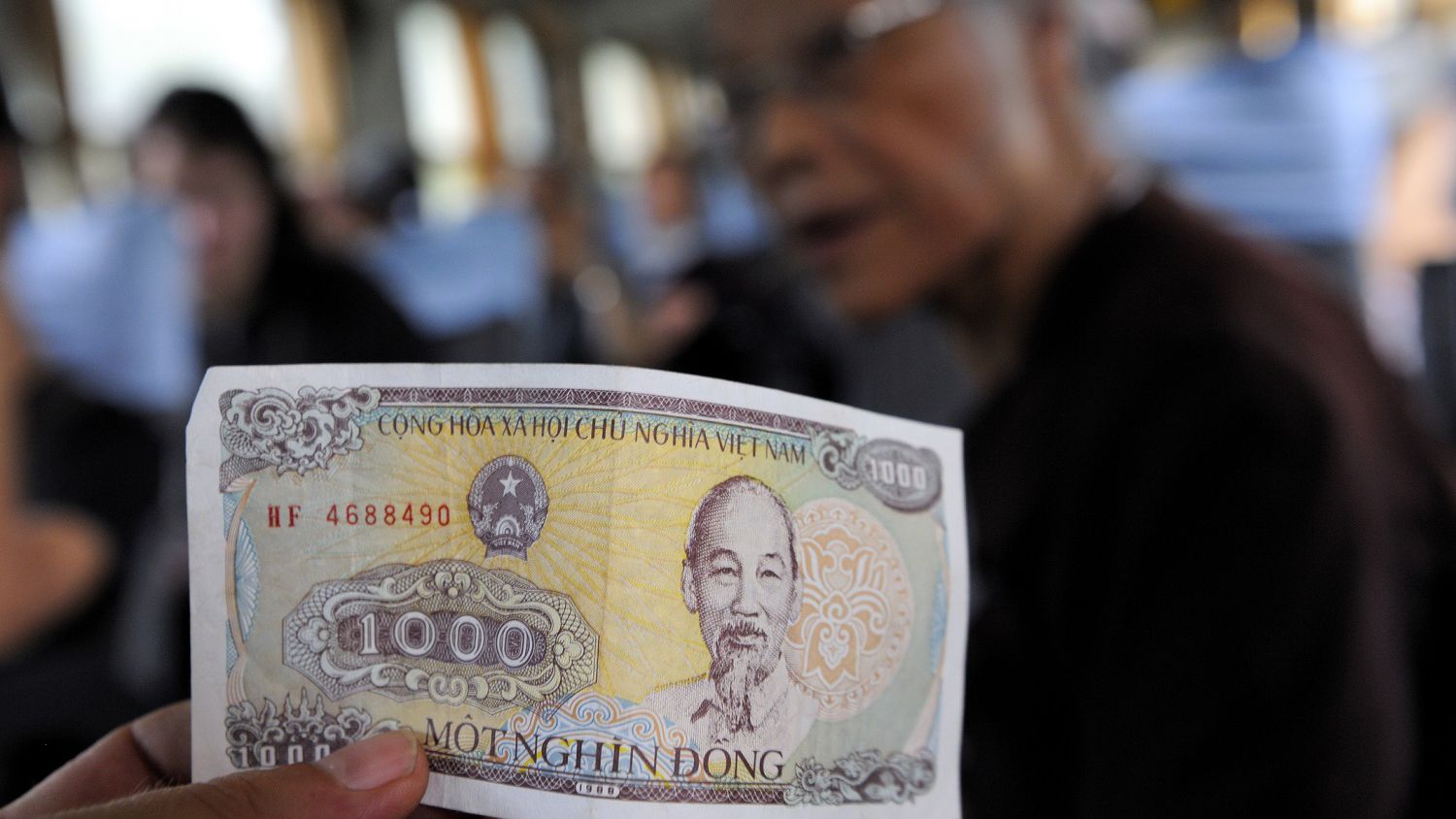
  • Vietnam currency to remain stable throughout the year

    Vietnam currency to remain stable throughout the year

    Vietnam’s currency will likely remain stable this year as the greenback weakens and foreign exchange reserves rise, experts say. The reference rate set by the State Bank of Vietnam (SBV) has remained mostly stable this year and was at VND23,205 Tuesday.

    Rates at commercial banks for the last two months have also been stable. Vietcombank was selling the dollar for VND23,270 Tuesday morning. Ngo Dang Khoa, head of global markets at HSBC Vietnam, said that the VND/USD exchange rate will remain stable for the last four months thanks to a weakened dollar, Vietnam’s record-high trade surplus in the first eight months, and the record-high currency exchange reserves of the SBV.

    A poll of 75 foreign exchange strategists showed that 45 of them, or 60 percent, said the dollar would weaken slightly over the coming year. Analysts said the U.S. Federal Reserve’s policies have been the main reason for the dollar weakening sharply over the last four or five months. The Fed announced last week that it would tolerate periods of higher inflation and focus on employment.

    “So they’ve basically slashed rates to zero, that yield differential in America over the rest of the world is compressed and that obviously helped keep the dollar at such strong levels in previous years, which is no longer the case,”  quoted currency economist Lee Hardman as saying.

    Vietnam’s trade surplus climbed to a new peak of $11.9 billion in the first eight months as imports declined due to the fallout of the novel coronavirus pandemic, according to the General Statistics Office. A trade surplus increases the country’s supply of foreign currency.

    Prime Minister Nguyen Xuan Phuc on September 4 said that Vietnam’s foreign exchange reserves were at nearly $92 billion and could reach $100 billion by the end of the year.

    However, analysts from brokerage Bao Viet Securities said the SBV could slightly weaken the dong in the upcoming months amid the U.S. watching several countries, including Vietnam, for currency manipulation, or the use of unfair currency practices to gain trade advantages.

    A Vietnamese currency expert who asked not to be identified said that although Vietnam’s currency reserves have been increasing, it was still lower than other countries.

    The government has also been working closely with American authorities to prove that Vietnam is not intentionally using currency as a tool to boost exports, he added.

    Vietnamese authorities have repeatedly affirmed that the country does not use monetary policies to unfairly compete with trading partners.

  • StanChart Fined for 2007 Takeover Blunder in India

    StanChart Fined for 2007 Takeover Blunder in India

    India’s regulator fined Standard Chartered one billion rupees over violation of foreign exchange rules during a takeover of a local bank in 2007. India’s anti-money laundering agency slapped one of the country’s largest fines on a foreign bank in history following an 8-year probe that found it in violation of the foreign exchange management act which monitors offshore financial transactions.

    According to a report citing an order from India’s enforcement agency, Standard Chartered – the country’s largest foreign bank by branches – acted as a dealmaker and custodian for the transferal of Tamilnad Mercantile Bank (TMB) shares to a group of overseas investors 13 years ago without seeking permission from the local central bank.

    Senior officials at Standard Chartered saw an investment in TMB shares as an opportunity that might ripen into eventually larger ownership for the bank,» Sushil Kumar, the enforcement agency’s special director, said in the order.

    46,862 shares were transferred to foreign investors including GHI, Swiss Re Investors, FI Investments, Cuna Group and Sub-Continental Equities, an affiliate of Standard Chartered in April 2008. The transfers were made through escrow accounts with Standard Chartered, which acted as both a transaction agent and a lender to one of the investors on the deal.

    Standard Chartered through its affiliate Subcontinental was a proposed and eventually an actual investor in TMB shares to be purchased through the escrow agreement arrangements, Kumar added.

    Separately, TMB was fined almost 170 million rupees ($2.3 million) for similar charges.

  • HSBC Life Names Duo Chiefs in Singapore

    HSBC Life Names Duo Chiefs in Singapore

    HSBC Life Singapore appointed two senior executives to further expand manufacturing and distribution activities in the city-state. HSBC Life Singapore named Philip Pang and How Chee Koon as a chief investment officer and chief product officer, respectively, according to a Business Times report.

    Pang is responsible for developing, executing, and overseeing the investment strategy of HSBC Life Singapore. He 15 years of experience in insurance and investments including eight years as the head of investments with Prudential Singapore and NTUC Income Singapore. Previously, he also worked with HSBC Global Asset Management in Hong Kong and Singapore.

    How is responsible for strategic implementation and execution of new product developments and the management of HSBC Life Singapore’s product suite. He has nearly 15 years of life insurance experience across product development, actuarial pricing and valuation, data analytics, distribution and marketing, and was most recently head of consumer marketing at AIA Singapore.

    According to HSBC, its life insurance unit in Singapore will play a key role in the broader bank’s ambitions to become a top wealth manager in Asia.

    HSBC Life Singapore’s chief executive Carlos Vazquez also underlined greater internal collaboration with the asset management and the $1.4 trillion wealth management unit – newly formed earlier this year by merging retail and private banking.

    HSBC rebranded its Singapore insurance business in May last year and has since signaled a growth drive by rolling out more products and expanding distribution to include partnerships with independent financial advisory firms.

    The British financier is not alone in expanding its insurance business in Singapore. Most recently, China Life Singapore said it would also accelerate expansion by hiring over 500 consultants by 2023 to target wealthy individuals in the city-state.

  • Digitalization of Asian Private Banking in Numbers

    Digitalization of Asian Private Banking in Numbers

    Even private banking in Asia – awash with not only the usual posh amenities but also various other characteristics that make it uniquely more high-touch – was not immune digital disruption during the pandemic.

    Within the banking sector, private banking has often been named as one of the segments most immune to digital disruption due to several common factors: larger account sizes and transaction sums that justify human resource costs; complex products and sensitive issues that are difficult to discuss while not in-person; and an older and traditionally less tech-savvy client demographic.

    This is even more amplified in Asia due to a hands-on investor culture coupled with a high share of active trading, leading to more need for manual interaction with clients. But increased market volatility and unprecedented geopolitical uncertainty, amidst an ongoing pandemic, has created an impetus for engagement regardless of method.

    We have met all our clients in their living room over the last six months, which was the first time ever, said Lombard Odier’s Asia chief executive, Vincent Magnenat, in a recent online conference. And guess what? We could have done this before Covid. We needed something like Covid to realize that we don’t need to take a flight to engage with our clients and partners.

    Many of the digital tools and capabilities being showcased during the pandemic, such as secure instant messaging or interactive virtual events, were already available to clients before the outbreak. But against the backdrop of restricted physical access, greater uncertainty and a digital option, a new factor has emerged: self-motivation.

    In the past if you wanted to share your view on macro or on markets, you basically had two ways: set up a large client event or distribute research documents and have bankers follow-up, said Omar Shokur, Asia chief executive of Indosuez Wealth Management in a previous interview. But during this crisis, we have seen bankers and clients becoming more receptive to interaction through new channels like virtual events, not to mention a much faster time to market.

  • Mastercard and Asian Development Bank build multi-stakeholder alliance to digitalize supply chains

    Mastercard and Asian Development Bank build multi-stakeholder alliance to digitalize supply chains

    Mastercard and its partners N-Frnds, SGeBIZ and Finastra have formed an alliance with the support of the Asian Development Bank (ADB) to create technology solutions to drive greater digital efficiency across the retail supply chain in Asia and increase wholesalers’ access to credit.

    “These unprecedented times underscore the importance of building an inclusive, sustainable digital economy, including through the application of technology to digitize trade, which can make it easier for small and medium-sized businesses to participate in global supply chains,” commented Michael Froman, Vice-Chairman and President, Strategic Growth for Mastercard. “Innovative partnerships like this one can support the agility and resilience of supply chains, accelerating access to finance and improving efficiency.”

    The global pandemic and accompanying economic impact have severely disrupted supply chains and trade networks, particularly for small and medium enterprises (SMEs) that account for 90% of all global businesses, employ about half of all workers and deliver more than half of GDP.

    The pandemic has also reduced control over cash flow and access to credit by SMEs. Even before COVID-19, the ADB estimated there was a $1.5 trillion funding gap in 2018, with smaller businesses most impacted. The International Chamber of Commerce estimates a potential $2 trillion to $5 trillion shortfall in trade financing through 2021 if demand returns to the global economy.

    As a result, it is vital for the public and private sectors to come together to enable a faster and more efficient shift towards digitalization for SMEs across global supply chains, trade and access to financing. Mastercard, in line with its broader commitment to bring 1 billion individuals and 50 million micro and small businesses into the digital economy, has responded by developing a collaborative market-leading solution with SGeBIZ, Finastra and N-Frnds. The program will start in Indonesia with 500 retailers and aims to build to 5,000 retailers by the end of Q1 2021.

    “COVID-19 has had an adverse impact on the global supply chain and these collaborative solutions are critical to ensuring grocery stores stay stocked, pharmacies have access to medicines and people can buy the daily goods they need,” said Safdar Khan, Divisional President, SEA Emerging Markets Mastercard. “Mastercard is proud to work with like-minded partners to integrate digital payments with the flow of commerce to deliver solutions for SMEs that help them navigate today’s environment and thrive in the future.”

    “ADB has been working closely with the Government of Indonesia in its efforts to alleviate the impact of the coronavirus disease (COVID-19) pandemic, including through the $1.5 billion financing approved in April 2020. Our partnership with Mastercard and its alliance partners in the pilot digital supply chain project will provide critical access to finance to affected MSMEs and immediate assistance to keep the food and essential goods supply chain running,” said Ahmed Saeed, Vice President for East Asia, Southeast Asia and the Pacific, Asian Development Bank.

    The results of the alliance are a technology solution that provides two key benefits:

    1. Wholesaler access to credit: Mastercard will leverage supply chain data from N-Frnds, SGeBIZ’s digital procure-2-pay platform and other sources to partner with Finastra and its Trade Bank customers to automate access to working capital finance.

    The collaboration will increase the digital data available to assess creditworthiness and create new models to evaluate it. Access to the resulting lines of credit will enable wholesalers to react more quickly to upcoming promotions, increase their inventory levels and build their businesses.

    “One of the most fundamental problems for SMEs and micro-businesses across Asia is access to finance,” said Simon Paris, CEO, Finastra. “Without credit, financially excluded businesses become caught in cycles that restrict their capacity to grow and leave them underprepared for the effects of market disruption. Technology is the enabler to tackle financial inclusion challenges. As part of this collaboration, we are able to drive change to bring positive outcomes, through digital transformation and innovative new lending pathways.”

    1. Fully digitalized marketing campaigns: Through integrating digital payments and supply chain data with promotions, FMCG trade spend can be allocated more efficiently with better visibility and inclusion of SME retailers.

    The alliance will leverage N-Frnds’ mobile solution – which optimizes logistics and operations by connecting FMCG companies with wholesalers for placing orders, coordinating deliveries and monitoring inventory levels – to better communicate upcoming promotional efforts between suppliers and wholesalers.

    “We are excited to join N-Frnds, our strategic partner for the last mile in this new initiative to digitalize and streamline trade financing and promotions in traditional markets. We believe that this new collaboration will enable us to lead the transformation of value chains in Indonesia, both by extending credit and ensuring that our promotional spend is significantly more effective and enjoyed by the four million grocery stores in Indonesia,” says Kadir Gunduz, President Director, Coca-Cola Amatil Indonesia.

  • Coronavirus made currencies go wild  – are you insured against sharp movements?

    Coronavirus made currencies go wild  – are you insured against sharp movements?

    COVID-19 has been the single biggest cause for the turbulency we have been witnessing in the markets over the past 7 months. We’ve had a catastrophic few days in March with several record-breaking day point drops, and since, we’re left with an uncertain future and difficult risk management. 

    The biggest issue is that we haven’t encountered social distancing and lockdowns in several generations, and some countries haven’t ever. Whilst most societies are finally getting to grips with controlling COVID-19, the business grants are running dry and we’re beginning to see a rise in unemployment.

    The US is a good example of the economic damage caused by COVID-19. In June, there were many reports suggesting unemployment is rising. These come at the same time that the $600 weekly supplement for jobless benefits came to an end. There were various signals pointing towards an imminent recession. Of course, it already had. In June, the US officially entered recession. 

    Whilst this was stipulated by experts to not be a normal downturn, and was a temporary issue regarding lockdown, it certainly didn’t help the US Dollar. The USD has been devaluing since May, in which it saw an accelerated drop mid-June against the Euro.

    Even in Asian countries where coronavirus has been much better contained, there are economic ramifications from social distancing. In the scenario of there being no direct recession, there’s still the matter of currency, which affects every country, and particularly the international businesses within it. This article will explore the dangers that Coronavirus is having on currency, and why it’s more than just devaluing that’s to worry about.

    Spike in retail investors causing havoc

    COVID-19 has brought on many unexpected economic implications, but one not many saw coming was the rising of retail investors. Research conducted by Paderborn University in Germany found that retail investors increased their activity by 13.9% for every doubling of active Coronavirus cases over a time period of several months – an odd correlation.

    Investors were found to be likely engaged in short selling, suggesting that the economic turbulence itself is what’s attractive to retail investors as they try to capitalise on large swings in prices. 

    Behavioural finance expert Dan Egan claims that there’s a rise in “entertainment investing”. Egan also claims that a lot of this money is what’s been saved from a reduction in spending over summer, with many stores and entertainment services closed or heavily restricted. In fact, the huge influx of retail investors in the Malaysian stock market actually helped recoup almost all of its 2020 losses. This is almost unheard of in a market that’s mostly dominated by investment banks and trading algorithms.

    This is also supplemented with easily accessible investing apps, which make Forex as simple as sports betting. In fact, without sports matches being played, this could be another factor in its popularity. Many Forex companies are offering sign up bonuses, referral schemes and social investing (automated copycat trading, like with eToro). This, whilst it’s a positive development, may cause more unpredictable behaviour in markets such as currency.

    We’ve even seen some of the biggest and most successful quantitative hedge funds struggle with the influx of retail investors. It’s possible that all of the new money and uneducated gambling has glitched the algorithms into making poor judgements. For example, Two Sigma, DE Shaw and RenTech, all of which are consistently successful, all saw losses during Easter on some of their funds.

    The Dollar and CNY Slides

    The short term gains that the US saw briefly in Easter were emotional, short-term dives into a safe haven currency. As time goes by and the long-term economic outlook begins to become more clear, which is one of political instability, vast government spending and rising unemployment, we quickly begin to see the USD slide. Whilst it continues to do so, the most noteworthy observation is its high volatility, along with other currencies. 

    Recently, the selldown has slowed somewhat due to lackluster Chinese economic data, meaning that some have switched back to buying US bonds. The Chinese Yuan is another currency that has been seeing a drop in price since May against the Euro.

    How this affects small businesses

    First and foremost, volatility in currencies affects international small businesses a great deal because of the lack of certainty. We can see the rise in companies dealing with international money transfers as good evidence for these unnerving currency developments, as small companies turn to hedging and cheaper rates offered by fintech alternatives. 

    Dealing in multiple currencies and having international suppliers means that the business is having to buy or convert currency regularly. If you only have a tight gross profit margin, this is being completely eaten into with currency swings. 

    For example, €10,000 worth of European headphones for your American business would have cost $10,752 in May. Today, it costs $11,850. This is over $1,000 more on one order within the space of a few months, and can seriously damage profit margins. After all, this is now 10% more expensive, which could be half of a 20% profit margin. 

    The second way it affects businesses is that if they mainly deal in the USD, they’re being hurt by the declining dollar. For international businesses outside of America, demand from Americans may be hurt as your different-currency services. For example a Spanish SaaS company is now relatively more expensive for USD clients. If goods or services for non-Americans are sold in USD, then the exchange back to base currency is going to be pricey.

    How hedging is saving many businesses

    COVID-19 may have already shook up the markets, but it’s far from the end of it. We’re in the dark regarding the extent of the upcoming volatility, which makes risk management as difficult as it can be.

    The best way to mitigate risk, is to insure against it. Hedging products allow for this in a variety of forms, and is likely why they’re becoming democratised into easily accessible platforms now (i.e. Money Transfer Companies, as mentioned earlier) – the demand is certainly there.

    For example, businesses operating in the USA that deal in EUR would have benefited greatly if they hedged the Euro back in May. Purchasing a forward contract would have meant they receive May’s price (a pre-agreed price based on today’s price) for the Euro for a specific date in the future. For that contract, they will have paid a fee far smaller than the eventual loss that’s been realised. 

    For businesses who aren’t sure which way the currency may swing and feel a Forward contract is, in that instance, merely another gamble, then Option contacts are a perfect replacement. With options, companies have the option of whether or not they want to execute the future transaction at the pre-agreed price, unlike Forward hedging which is a locked-in commitment. This caters to a highly volatile market which isn’t confidentially forecasted, as it’s there if you need it.

    Banks fail at meeting hedging demand

    Most highstreet banks fail to transparently offer hedging products to small business account holders. Many do not offer them at all, whilst others have been in trouble in recent years for mis-selling products. There are exceptions of course, and many banks will hedge for large corporations, but it’s not currently on their radar when it comes to meeting smaller contracts. 

    Even challenger banks, such as Starling, who are marketed as the fintech alternative to the outdated bank, still fail to offer hedging products. This is another reason behind the rise of  Money transfer companies, which have relished in meeting this demand with offering accessible FX services.

    The FX market for a long time catered only to large corporations. There were high minimum transfers, phone calls with brokers and long waiting times. Today, there’s an app – and that’s it. Whilst there’s many to choose from, Money Transfer apps are exceedingly easy to use and are partly responsible for this rise in retail investing. 

    Most have access to the interbanking rate, meaning that currency is offered at ultra competitive rates. This is enough, in this market, to attract users given the devaluing of many currencies. Within this umbrella term, there are specialists that offer hedging products, yet they keep the accessible, user friendly approach. Thus, it’s never been easier to hedge and protect against currency swings. 

    This is a surprise to many who rely on high street banks for all of their financial products: a mortgage, savings account, current account, business account, car loan and so on. There are benefits to using a centralised entity, but when they fail to offer even the most basic FX services, it’s only a matter of time that they’re entirely left behind for fintech alternatives.

     

  • Fintech firm NextPay seeks to raise $100 mln

    Fintech firm NextPay seeks to raise $100 mln

    E-payment company NextPay Holdings plans to raise up to $100 million in the first quarter next year via a private placement. Its CEO, Nguyen Huu Tuat, said that the company is looking for strategic foreign investors and would offer them a 20 percent stake, revealing that it is in talks with several investors from the U.S., Japan, South Korea, and China.

    Last year it had wanted to raise around $30 million from investors, but Tuat said the company has jettisoned the plan and instead now seeks to make a $100 million IPO in 2022 on the Ho Chi Minh City Stock Exchange.

    The company provides mobile points of sale devices and an app for cashless payment. It has 70,000 merchants in Vietnam and aims to increase the number to 300,000 by 2023.

    NextPay allows a customer to pay by a variety of methods such as card, contactless, and QR code by providing a merchant with a pocket-size mobile point of sale device which connects with a smartphone.

    Vietnam is seeing increasing competition in the fintech market as the government seeks to promote cashless payment.MoMo, the most popular e-wallet in the country, last year reportedly raised $100 million from U.S. private equity firm Warburg Pincus following previous investments of $25 million by Standard Chartered and $3 million by Goldman Sachs.

    Vietnam’s fintech market was valued at $4.4 billion in 2017 and is estimated to reach $7.8 billion in 2020, according to market research firm Solidiance.

  • Alternative payments move mainstream in India

    Alternative payments move mainstream in India

    Alternative payments have moved mainstream in India amid Covid-19, according to GlobalData.

    Payment platforms such as mobile and digital wallets have gained popularity among online shoppers, gradually replacing traditional payments during the pandemic.

    “The adoption of alternative payments has been on the rise since demonetization in 2016,” said Ravi Sharma, lead banking and payments analyst at GlobalData. “The recent Covid-19 outbreak has further accelerated the usage of alternative payments as consumers are increasingly using electronic payments to avoid exposing themselves to disease vectors while merchants are also insisting on the digital mode of payments.”

    GlobalData’s 2020 Banking & Payments Survey found that the share of alternative payments in online transactions in India stands at 54 percent this year, followed by payment cards and cash, which accounted for 30.1 percent and 8.1 percent, respectively.

    Google Pay has been one of the beneficiaries with 9.3 percent share in the e-commerce payments, a significant surge from 3.5 percent share last year.

    “While alternative payment tools were initially available for online payments, they are now being used for in-store payments as well,” Sharma said.

    “With merchants increasingly opting for QR code-based payments due to their cost-effectiveness, alternative payments will disrupt the country’s overall consumer payments space in a big way.”