Category: Finance

Retail News Asia is committed to providing both local and global retailers with the latest Finance news throughout the Asian market. This on a daily base.

  • Visa expands acceptance of B2B payments using Stripe Connect

    Visa expands acceptance of B2B payments using Stripe Connect

    Visa, the world’s leading digital payments technology company, has teamed up with Stripe, a technology company that builds the economic infrastructure for the internet, to introduce a new set of solutions to help businesses pay and be paid on time.

    The new solutions will be on the Visa Payables Automation platform, which allows buyers to enroll, manage and pay suppliers digitally with a Visa commercial card. This new feature, which is powered by Stripe Connect, the technology company’s solution for multi-sided marketplaces and platforms, enables buyers on Visa Payables Automation to pay suppliers who are unable to accept digital payments easily and securely through the use of a virtual Visa card. This helps bring suppliers who are not plugged into the traditional banking infrastructure into the digital economy.

    “When a buyer needs to pay a supplier, the enhanced Visa Payables Automation platform allows seamless digital payments experience. The supplier will be prompted to register with Stripe Connect, provide a bank account number, and start accepting payments,” said Chavi Jafa, Head of Business Solutions, Asia Pacific, Visa. “Migrating to digital payments benefits both buyers and suppliers, as it eliminates manual processing and enhances reconciliation. This improves productivity while reducing errors and fraud. It also allows buyers and suppliers to better manage their working capital, utilizing a Visa Commercial Card.”

    “We’re excited to see Visa leverage the power of Stripe Connect to facilitate complex payments flows,” said Noah Pepper, Stripe’s Business Lead for APAC. “Less than 10 percent of commerce is online today, and that number is much lower in the B2B space. And when you consider the web has been around for over a quarter of a century, it’s clear that we’ve barely scratched the surface! We are always excited to work with forward-thinking companies in developing better tooling for businesses wanting to accelerate their shift to online.”

    Citi client, Jebhealth is the first user of the integrated Visa Payables and Stripe Connect solution.

    As an online marketplace for healthcare services, Jebhealth uses the solution to facilitate payments for its clients to healthcare service providers on its platform. By using the solution, health service providers are onboarded, just once, via Stripe Connect to become card-accepting merchants. This novel solution is now rolled out in phases and will benefit individuals, corporates and healthcare providers, and ecosystem partners in a virtual integrated pay-out network

    “The Jebhealth team believes strongly in value creation, innovation, and social good. In the backdrop of COVID-19 pandemic, the whole solution was conceptualized, developed, and launched with the help of Citi, Visa, and Stripe, while working from home,” said Jimmy Boey, Founder & CEO, Jebhealth. “With this integrated digital payment method, employees, students, and domestic helpers no longer need to bring a medical chit or cash to pay at the clinic desk whenever they visit the clinics for check-ups. This ensures every clinic visit is shorter and smoother and less exposure from the community.”

    When Jebhealth initiates a payment, a single-use virtual Citi-Visa commercial card is generated. The virtual card is then sent to the receiving healthcare service provider, after which the provider ‘charges’ the virtual card to accept and complete payment through their Stripe Connect account.

    By using a Citi-Visa virtual card, in addition to enabling digital payments, the solution ensures added safety and security. Jebhealth is able to set transaction limits on the virtual cards, including permitted current and merchant types.

    This new service is now available in 30 markets around the world.

    Tarun Minglani, Asia Pacific Head of Commercial Cards, Treasury and Trade Solutions, Citi, said, “Citi is committed to offering our clients innovative B2B payment solutions, enabling them to operate more efficiently in an increasingly digitized business environment. Our Commercial Cards business is active across 14 markets in Asia Pacific. Underpinned by digital solutions and tools, we offer our clients best-in-class products and services through our proprietary solutions as well as through our partnerships in the region. The Visa Payables Automation platform optimizes the payments process while reducing points of friction that are traditionally associated with B2B payments.”

    In 2019, Visa’s commercial card solutions generated more than US$1 trillion in payment volume, making Visa the largest card payment network for B2B payments in the world[1]. As payments migrate away from traditional plastic cards, Visa is working with its partners around the world to enable new experiences that are based on virtual cards and extending its network to collaborate with new players.


  • Goldman Sachs Keeps Partner Headcount Flat with 2020 Cap

    Goldman Sachs Keeps Partner Headcount Flat with 2020 Cap

    Goldman Sachs is reportedly adding no more than 60 partners in 2020 as part of a new drive to reduce the size and exclusivity of the top ranks. The cap is set to create the smallest class of partners since the mid-1990s, according to a report citing unnamed sources.

    Partners, which are appointed biennially, are considered the elite employees of the bank and receive various benefits including a small stake in the firm and access to exclusive investment opportunities alongside a $1 million salary.

    Any time one of the top 450 people at Goldman moves its gets written about, said Goldman CEO David Solomon, at a Credit Suisse forum in February this year, adding that top-10 executives exiting other banks would receive no such publicity.

    When appointed to the top role in late 2018, Solomon inherited a bank with around 500 partners. Although the total partner count doubled from 221 in 1999 when Goldman first went public, the 69 added that year was the lowest since. And in the two years after Solmon joined, at least 54 partners have left either by exiting Goldman or renouncing membership but remaining with the bank.

    At 60 or below, 2020 is set to become the new smallest class of partners for Goldman Sachs.

    In addition to a smaller class, Goldman is also offering partners «carried interest» or a share of future profits in its private investment funds which can be accessed investments as little as $10,000.

  • Revolut Singapore Partners Income to Offer Insurance

    Revolut Singapore Partners Income to Offer Insurance

    Both platforms see customer empowerment and digitally-enabled collaborations as key to supporting customer needs. Snack by NTUC Income (Income) and Revolut Singapore will work together to incorporate lifestyle-based insurance offerings on Revolut’s digital banking app to provide more flexibility and boost customer empowerment in money management.

    Snack, launched in June, is a stackable, micro-insurance offering that embeds the purchase of coverage into daily activities. Its partners include Visa, EZLink, FoodPanda and more.

    The partnership with Snack layers insurance protection over our Revolut’s existing money management features and allows our customers access to micro-insurance products that are underwritten by NTUC Income. Customers will have the ability to purchase insurance products such as Term Life, Critical Illness and Personal Accident, with more products to be launched going forward, the announcement said. As part of the partnership, Revolut Singapore customers will also receive a one-time complimentary insurance coverage of S$500 ($367) when they sign up for an account on the Snack app.

    Snack’s modular approach to bite-sized insurance reimagines how people obtain and consume insurance. This provides tremendous flexibility in tailoring solutions based on the needs of customers and integrating it with partners’ platforms to create a unique experience, Peter Tay, Income chief digital officer, said.

    Revolut has reached over 70,000 signups in the republic since its launch one year ago. It has expanded its footprint this year with launches in the U.S., Australia and Japan. In the coming weeks, Revolut will be introducing fast and free top-ups using bank accounts and a prepaid debit card for children aged 7-17 to teach children to better manage money digitally.

  • UBS Poaches Tech Executive From Credit Suisse

    UBS Poaches Tech Executive From Credit Suisse

    UBS is nabbing a prominent technology executive from crosstown rival Credit Suisse. It is the second such hire in short order.

    The Swiss bank is poaching David Tobin from Credit Suisse as its head of risk technology, a source familiar with the hire said. A spokesman for UBS confirmed the hire.

    Tobin relocates to Zurich for the job, effective October 19 and reports to Julie Shapiro, the Swiss bank’s head of risk and financial technology. He is currently the head of Credit Suisse’s investment bank credit risk as well as technology chief in Poland.

    The hire marks is the second high-ranking technologist UBS has poached from Credit Suisse in recent months: the larger bank also poached Jason Shane, a ten-year Credit Suisse veteran, as its new head of compliance, regulatory, and governance technology earlier this year.

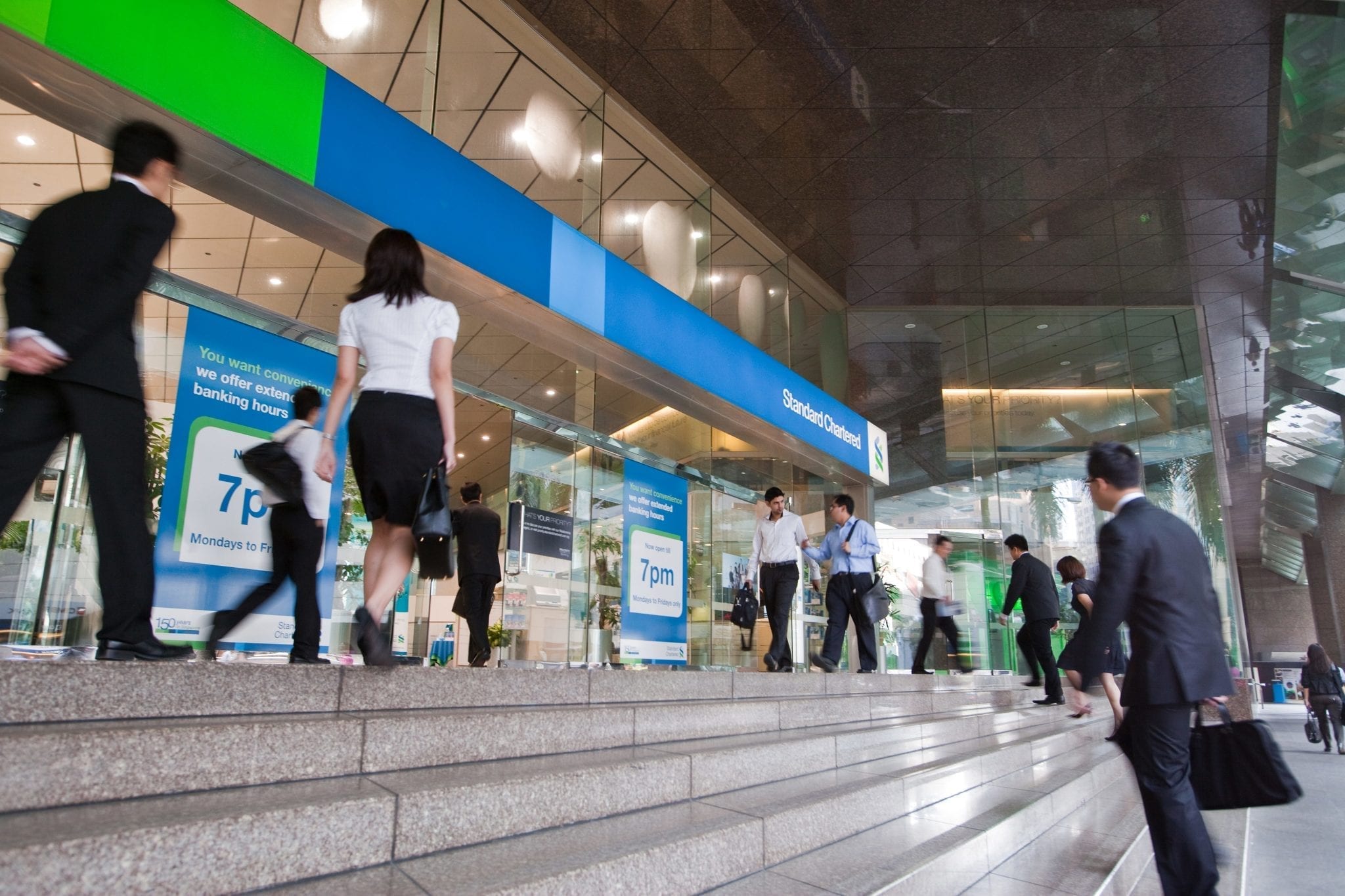
  • Standard Chartered Names Management Team for New Unit

    Standard Chartered Names Management Team for New Unit

    Announced in March, the Financing and Securities Services (FSS) unit brings together Securities Services (previously under Transaction Banking) and Portfolio Risk Management in the Financial Markets business.

    Standard Chartered Bank on Thursday named its FSS management team, who will support Singapore-based co-heads Margaret Harwood-Jones and Emmanuel Ramambason.

    Members of the FSS senior management team include:

    • Francois Verlaine – Regional Head, FSS, ASEAN & South Asia
    • Simon Kellaway – Regional Head, FSS, Greater China & North Asia
    • Luke Brereton – Global Head, FSS Sales and Business Development
    • Ryan Cuthbertson – Global Head, FSS Products
    • Liu Chee Wei – Head, Central Funding Desk and XVA, ASEAN & South Asia, Greater China & North Asia
    • Sam Phillips – Head, Central Funding Desk and XVA, Africa & Middle East, Europe & Americas
    • Madeleine Senior – Regional Head, FSS, Europe & Americas
    • Scott Dickinson – Regional Head, FSS, Africa & Middle East
    • Marten Bengt – Head, Modelling and Analytics Group
    • Tan Ying Ying – Chief Operating Officer, FSS

    The reorganization aims for the bank to become more client-centric and having targeted and integrated engagement with clients across various solutions and services, Standard Chartered said.

    Separately, the bank announced the addition of independent non-executive director Maria Ramos, with effect January 1, 2021.

    Based in South Africa, Ramos was chief executive officer of ABSA Group (previously Barclays Africa) from 2009 to 2019. Before joining ABSA, she was the group chief executive of state-owned freight transport and logistics service provider Transnet and served as director-general of South Africa’s National Treasury (formerly the Department of Finance).

    Standard Chartered also appointed independent non-executive director David Tang to the Board Risk Committee. Tang brings deep understanding of the bank’s key market of Greater China, and will contribute his expertise in relation to emerging technologies, digital and associated risks.

  • Visa Partnership to Tap on Growth in Digital Economy

    Visa Partnership to Tap on Growth in Digital Economy

    Visa has announced a five-year regional strategic partnership with e-commerce platform Shopee that intends to spur greater participation in Southeast Asia’s digital economy.

    The agreement includes collaboration on a number of initiatives to extend access to the digital economy for micro, small, and medium enterprises (MSMEs) across Southeast Asia.

    These businesses will be incentivized to digitalize their business on Shopee and adopt digital payments through Visa. The payments giant will also tap on Shopee’s extensive user base to expand its presence with Southeast Asia MSMEs and online shoppers, the announcement said.

    Shopee and Visa will also launch co-branded credit cards in selected markets in partnership with local banks in the next few months. The cards will offer shoppers integrated and seamless rewards and allow Visa to reach more local consumers, Shopee said.

    When a small business goes digital, it’s plugged into a much broader commerce landscape. Visa is working to help any business, regardless of their size or location, better attract and serve more local and global customers by getting enabled to accept digital payments in a safe and secure manner,» Neil Mumm, Visa’s regional head of merchant sales and acquiring, Asia Pacific, said.

    The announcement noted that Southeast Asia is on track to become the fourth-largest economy by 2030, with an increasing share of GDP driven by the digital economy.

    The region’s e-commerce market is estimated to be worth $150 billion by 2025, up from $38 billion in 2018, according to a report by Google.

    Shopee, which is owned by internet gaming, commerce and digital payments firm Sea, is a force to be reckoned with in Southeast Asia. Launched in 2015, the platform accounted for nearly a quarter of the combined gross merchandise value in Singapore, Malaysia, Thailand, Indonesia, the Philippines and Vietnam in 2019.

    Sea’s second-quarter earnings, released in August, indicated revenues of $1.3 billion – almost double from the quarter before, fuelled by revenue gains in online gaming and e-commerce, jumping 62 percent to $716 million and almost tripling to $511 million, respectively.

    The company remains unprofitable, with losses for the quarter growing 59 percent year-on-year to $373 million, largely due to Shopee’s costly battle for market share with regional rivals Lazada, which is owned by Alibaba, and Tokopedia in Indonesia, also backed by Alibaba.

  • Trading in Tokyo Resumes Following Glitch

    Trading in Tokyo Resumes Following Glitch

    The Tokyo Stock Exchange (TSE) has resumed regular operations on Friday after a technical outage that lasted all day Thursday.

    TSE is currently planning to replace the hardware and taking steps, including other maintenance, to ensure normal trading from tomorrow onwards, bourse operator Japan Exchange (JPX) said on Thursday evening.

    There was no indication that the exchange’s biggest glitch in a decade was caused by hacking or other cybersecurity breaches.

    JPX explained that Thursday’s outage was the result of a hardware failure. «The switchover from the failed device to the backup device did not work properly, and as a result, market information could not be distributed, JPX said.

    JPX has been on the receiving end of criticism over its crisis management and poor communication to investors regarding the outage.

    The matter has also raised questions over Japan’s digital systems and infrastructure, particularly as the country seeks to boost its status as an international financial hub.

  • Banking-as-a-Service Startup to Expand in Singapore

    Banking-as-a-Service Startup to Expand in Singapore

    Singapore-headquartered fintech RootAnt has raised $1.46 million in a seed investment round, led by Linear Capital and co-investor KZM Group.

    The funds will be used for expansion in Singapore, the rest of Southeast Asia, and Japan, with an aim to provide both anchor corporates and SMEs with new and enhanced solutions on its platform, as well as R&D and the development of its multi-tier financing platform the startup announced on Thursday.

    RootAnt operates a cloud transaction banking engine and specializes in embedded financing for enterprises, connecting financial institutions with new tech solutions, data sources, enterprise systems, blockchain networks, and business partner platforms.

    The company said it is also planning to launch other financial solutions this year that will cover verticals such as SME finance, green finance, Islamic finance, and supply chain finance.

    The entry of digital-only banks into the market, along with increased challenges among SMEs to make payments while ensuring healthy liquidity has prompted a need for more innovative and relevant digital banking solutions has become a priority.

    We aim to address the financial challenges faced by businesses caused by COVID-19, and also to create avenues for business sustainability, growth, and continuity, Lincoln Yin, RootAnt CEO and founder, said about the seed funding.

    We aim to become a key player in this industry to continue supporting businesses with their financing demands as they recover from the impact of COVID-19, Yin added.

  • Wirecard Ordered to Cease Activities in Singapore

    Wirecard Ordered to Cease Activities in Singapore

    The ability of its Singapore entities to continue providing payment services here has been affected, following its parent company’s insolvency filing in Germany.

    The Monetary Authority of Singapore (MAS) has ordered Wirecard Singapore to cease payment services in the country and to return all customers’ funds by 14 October 2020, the regulator said in an announcement on Wednesday.

    As a result, Credit card payments at merchants using Wirecard Singapore’s services, as well as usage of pre-paid cards issued by Wirecard Singapore, will be affected, and customers are advised to look for alternative service providers.

    MAS has assessed that it is in the interest of the public for Wirecard SG to cease its payments services and promptly return all customers’ funds. This provides the greatest certainty to customers on their appropriate course of action, including seeking alternative service providers, the announcement said.

    The firm is at the center of one of the region’s biggest corporate accounting scandals in recent years, having admitted that €1.9 billion is missing from its financial accounts. The firm’s CEO Markus Braun as well as other top executives have been arrested, while former operating chief Jan Marsalek remains missing.

    The collapsed German fintech’s sacked operating chief went to an extreme – and adventurous – lengths to bamboozle auditors, according to a German report.

    So far, one Singaporean has been indicted – a director of a local accounting firm that allegedly helped Wirecard falsify letters about the funds held in its escrow accounts.

  • Payments Platform PPRO Enters Indonesia

    Payments Platform PPRO Enters Indonesia

    The cross-border payments specialist is integrating e-wallet leaders Doku and Ovo into its global portfolio. The new integrations help to accelerate market entry and boost conversion for businesses hoping to tap on Southeast Asia’s largest e-commerce market, where credit card penetration is less than 5 percent of the population, the company said in an announcement.

    PPRO’s local payments platform-as-a-service provides partners with the ability to accept locally preferred payment methods through one contract and one API. Its integrations feature a total of four payment types: e-wallet, internet banking, bank transfers, and cash for consumers who prefer to pay at ATM and convenience stores.

    Indonesia is a strategic market for our top-tier customers and their merchants, who are being pressed to globalize faster than ever in the wake of the pandemic. Indonesia is also one of the world’s most complex regions regarding compliance, regulations, and consumer preferences, Kelvin Phua, PPRO global head of payment networks, said.

    Indonesia’s e-commerce market is set to grow 50 percent year-over-year to $35 billion in 2020, with many consumers using online shops for the first time this year due to the pandemic, PPRO said, citing a recent survey by management consulting company Redseer

    Founded in 2006, PPRO is backed by the likes of PayPal, Citi Ventures, and HPE Growth Capital. The company currently works with Alipay, WeChat Pay, GrabPay, Bancontact, iDEAL, BLIK, Boleto Bancario, and other local payment methods on its platform.

    In 2019, the company began its push to increase global coverage with the expansion of its Asia-Pacific (APAC) operations out of Singapore and partnered GrabPay to support its payments and e-commerce solutions in Singapore.

  • Goldman Sachs to Launch FX Platform in Singapore

    Goldman Sachs to Launch FX Platform in Singapore

    The platform is the company’s fourth global currency pricing, following others in London, Tokyo, and New York. Goldman Sachs will be launching a foreign-exchange (FX) trading and pricing engine in Singapore, planned for the first quarter of 2021, the company said in a statement on Tuesday.

    The platform aims to deliver improved low latency execution for clients and is built with the support of the Monetary Authority of Singapore (MAS), which aims to develop Singapore as a premier hub for foreign exchange trading in Asia Pacific.

    It makes perfect sense for us to be part of this initiative and to further develop the FX market ecosystem in Singapore, and Asia as a whole,» David Wilkins, Goldman Sachs global head of electronic FX distribution, said.

    The average FX daily trading volume in Singapore is the highest in Asia, trailing the U.S. and U.K. globally.

    We continue to actively develop our presence in Singapore and have seen consistent growth of our franchise here over a number of years in both FX and broader global markets,» E.G. Morse, Goldman Sachs Singapore chief executive, said in the statement.

    Goldman Sach’s FX engine follows similar moves by Standard Chartered, Citi, BNY Mellon, Barclays, BNP Paribas, J.P Morgan, Euronext, Jump Trading and XTX Markets, which have built their own regional trading infrastructure in the city-state.

  • UOB Launches Platform for Corporate Clients

    UOB Launches Platform for Corporate Clients

    The new platform aims to transform the digital banking experience for corporate clients and manage their banking needs in a simpler, smarter, and more personalized manner.

    Customers will be able to manage a range of domestic and cross-border banking activities on UOB Infinity, which aims to streamline business banking by integrating features such as cash management and trade finance, as well as real-time payment receipt confirmation at the beneficiary bank and information on charges for the cross-border transaction, including those from the intermediary bank.

    In addition, its app allows clients to make a wide range of payments – from local bill payments to making domestic and cross-border fund transfers – through services such as PayNow, FAST, and telegraphic transfers.

    The platform will be rolled out across the region, beginning with Singapore, the bank said in an announcement on Wednesday. Users of BIBPlus, the bank’s existing business internet banking platform, can use Inifinity with the same credentials.

    The design of Inifinity, such as its customizable desktop, comes amid rising demand for personalized digital experiences and increased use of electronic payments for business transactions.

    The result is «an experience that is intuitive for corporate clients and enables them to access the financial intelligence they need quickly and easily,» So Lay Hua, UOB head of group transaction banking, group wholesale banking, said.

  • BigPay gears up for regional expansion, with early access coming to Singapore users in coming weeks

    BigPay gears up for regional expansion, with early access coming to Singapore users in coming weeks

    BigPay is coming to Singapore, after 2 years of rapid growth with over 1 million users in Malaysia. The fast-growing Fintech is on an aggressive growth path and is getting ready to make its mobile money app and prepaid Visa card available to all Singapore residents in the coming weeks.

    “We quietly opened up our waiting list on the app earlier this year and already have 20,000 people ready to get early access” said Christopher Davison, Co-Founder and CEO. “People are turning to digital financial services and the pandemic has accelerated the need for fair and transparent alternatives to traditional banking – which is exactly what BigPay stands for.”

    Launched in 2018, BigPay has grown to be one of the largest e-money issuers in Malaysia by gross transaction value. The company’s business was unscathed by the global pandemic, showing strong growth in international money transfers and online spending thanks to the worldwide acceptance of its card. BigPay has received its licence from the Monetary Authority of Singapore to operate in Singapore early this year.

    BigPay will make its two core features – payments and remittance – available in Singapore. Users will be able to seamlessly open an account from their mobile phones and make payments at any local or international merchant. They will also be able to make free and instant money transfers to friends, split bills, manage work expenses and track their spending all in one integrated app.

    In addition, Singapore users will be able to remit money quickly and at a competitive rate to 10 markets, namely: Malaysia, China, the Philippines, Indonesia, Thailand, Vietnam, India, Bangladesh, Nepal and Australia, with more to come.

    Operating on a challenger bank model, BigPay’s goal is to give consumers access to all the mainstream financial products typically offered by retail banks – at a much lower cost and with greater efficiency. BigPay also plans to launch new business lines such as loans, insurance and wealth management in the coming months, as well as expand to other Southeast Asian markets early in 2021.

  • DBS and Keppel to Collaborate Under MOU

    DBS and Keppel to Collaborate Under MOU

    Under the memorandum of understanding (MOU), the two sides will collaborate on a range of initiatives that harness digital technologies to better serve customers and suppliers.

    DBS Bank and Keppel Technology & Innovation have agreed to work together on digital technologies to create more opportunities and efficiencies for both companies, according to an announcement on Tuesday.

    Three areas are covered under the MOU: exploring synergies between Keppel Group’s consumer businesses like M1, Keppel Electric and City Gas, and DBS’ consumer marketplace platforms; developing 5G-enabled digital banking solutions, and developing digital tools and platforms to provide bundled services from both M1 and DBS to large corporates and small-to-medium enterprises (SMEs); and providing digital supply chain financing solutions to Keppel Group’s supplier ecosystem.

    The initiatives will be rolled out over the rest of the year, the announcement said.

    The value of knowledge grows when it is shared. Our collaboration with Keppel’s ecosystem of businesses exemplifies this by demonstrating how the cross-pollination of expertise and networks from different industries can help Singapore seize new opportunities here and in the global marketplace, Tan Su Shan, DBS group head of institutional banking, said about the partnership.

  • UOB Kay Hian Partners Pico

    UOB Kay Hian Partners Pico

    The bank’s securities brokerage is working with the financial markets technology services provider, which will provide managed services and support for its new trading platform.

    Pico rapidly deployed a tailored platform for trading execution in the heart of Singapore’s liquidity hub that is engineered for seamless coordination of trading and risk strategies, it said in an announcement on Wednesday.

    UOB Kay Hian is one of Asia’s largest securities trading and investment firms. Headquartered in Singapore, it has offices in Hong Kong, Thailand, Malaysia, London, Shanghai, and New York.

    Working with Pico has helped UOB Kay Hian lower its OpEx, while freeing it to focus on optimizing its trading strategies and business operations, said director Desmond Yeo.

    Pico works with firms as a specialist partner to design, build, host and manage their electronic trading infrastructure. It connects to liquidity providers via PicoNet, a private ultra-low latency, resilient and comprehensive proprietary network mesh with the fastest path connections between on-net co-location sites.

    Pico opened offices in Singapore and Tokyo in mid-2018, and a year later announced its continued expansion in Asia with new hires, additional offices, and an increased data center presence in the region.

    The firm said it has plans to add 20 more data centers by 2021, including in China, Australia, South Korea, and India, to complement its existing 30+ global locations.