Category: Finance

Retail News Asia is committed to providing both local and global retailers with the latest Finance news throughout the Asian market. This on a daily base.

  • HSBC Private Banking identifies key business solutions for female entrepreneurs in Hong Kong Thriving during Covid-19

    HSBC Private Banking identifies key business solutions for female entrepreneurs in Hong Kong Thriving during Covid-19

    HSBC Private Banking gave a boost of confidence to female entrepreneurs in Hong Kong during the Covid-19 pandemic, as the week-long digital summit FoundHER, held in partnership with AllBright, concluded successfully. The summit, which gathered successful female founders and investors in town, sought to unite and build a strong business network that enables entrepreneurial success.

    The Hong Kong series was convened between 16 and 19 November to tackle challenges female entrepreneurs encounter during times of adversity. The event was tailored to provide practical and timely advice on making a successful virtual pitch; insights from experienced angel investors, business leaders and wealth management experts on new investment opportunities; and real-time consultations on business pitches.

    While investors are more stringent in their assessment of a firm’s business model and medium term growth potential during the Covid-19 pandemic, Fan Cheuk Wan, Managing Director and Chief Market Strategist for Asia, HSBC Private Banking, said, “We observe equally strong interests shared by private investors who are looking for innovative, sustainable investment solutions and business opportunities that will emerge robustly after the pandemic.” She added, “Female founders, especially those at early-stage startups, should stay highly adaptive and responsive to the rapidly changing world. By staying on top of the latest global and industry trends, they can build more robust and resilient businesses. Sustainable business models for startups can be more successful in convincing investors during fundraising, despite external challenges and a lack of track record.”

    Echoing these views is Veronica Chou, a well-known female investor, and founder of Everybody and Everyone, a sustainable and eco-innovative womenswear brand. Chou shared that constant communication and risk aversion are keys for her brand’s success. She said “The one thing we all need to do more of is to connect and learn from other industries and even competitors.” She stressed the importance of collaborating with the industry, communities and society at large, to address the growing need for more sustainable and innovative business practices following the global pandemic. Heeding these calls in advance would help protect one’s business, especially during challenging times.

    The FoundHER series has proven to be a meaningful and purposeful networking event at a time where the pandemic has severely hit growth plans of female founders across the city. HSBC Private Banking takes an active and functional role in enabling access to experts who can guide and support entrepreneurs, to help them grow their business and connect them to a variety of opportunities within its network.

    Cynthia Lee, Regional Head of Wealth Planning & Advisory, Asia Pacific , said, “We are well-placed to push forward our efforts in supporting Hong Kong’s female entrepreneurs, as we partner with AllBright for the second consecutive year. The digital summit underscores the value and power of networking, to constantly bring in fresh ideas and lessons from sustainable and successful business models. We believe the programme will prepare female founders and enable them to thrive when new investment opportunities arise from the post-pandemic global recovery.”


    Debbie Wosskow OBE, co-founder of AllBright said, “What we are doing with HSBC Private Banking is pivotal to create a format where every woman can pitch the investors skillfully and confidently. While many firms found it hard to navigate their business during the pandemic, FoundHERoffers female founders abundant toolkits and industry insights from the global women community.”

     

  • Banks continue to cut deposit interest rates

    Banks continue to cut deposit interest rates

    With the Covid-19 pandemic acting as a drag on credit growth, banks are continuing to cut deposit interest rates.

    State-owned lenders BIDV, Agribank and VietinBank this week reduced their 12-month rates by 0.2 percentage points to 5.6 percent.

    The other “Big 4” state-owned lender, Vietcombank, kept its 12-month rate unchanged at 5.8 percent but cut the 24-month and 36-month rates by 0.2 percentage points to 5.7 percent and 5.4 percent.

    The largest private lender, Techcombank, reduced its 12-month rate by 0.4 percentage points to 4.5-5 percent depending on the deposit amount.

    The rates have thus dropped by 0.4 percentage points within two months.

    Banks have reported high liquidity but difficulty lending as the pandemic hits businesses.

    Banking credit growth in the first nine months of this year was just 5.12 percent, far below the double-digit figures recorded of the last three years, according to the General Statistics Office.

    In August the State Bank of Vietnam revised its credit growth target for this year from 14 to 10.1 percent. It has also cut its policy rates four times so far this year to pump-prime the economy.

  • Citi Digital-Only Offering Targets 200,000 New Clients in Hong Kong

    Citi Digital-Only Offering Targets 200,000 New Clients in Hong Kong

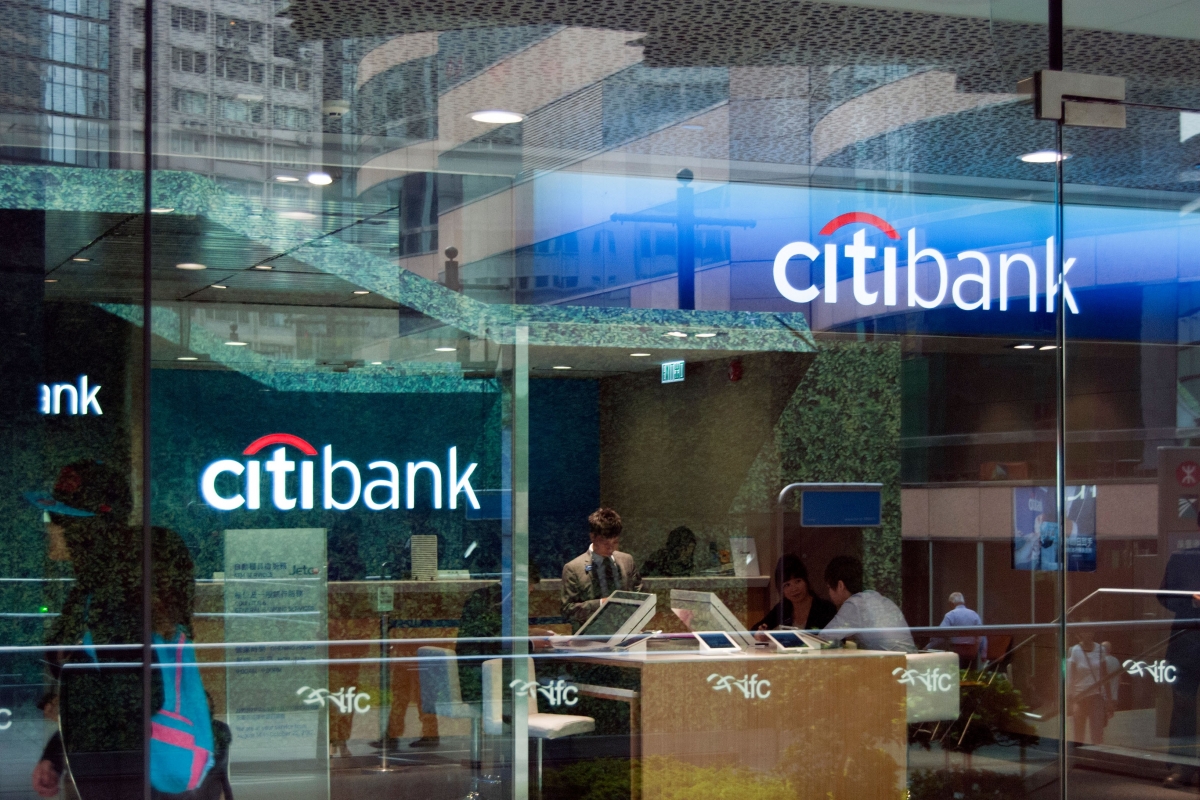
    Citi will look to realize the promises of financial inclusion with its new digital-only proposition in Hong Kong which can be accessed with as little as HK$1.

    And at HK$100, users can even find tailor-made fund portfolios based on investor needs, according to a statement from the bank.

    In addition to the low threshold, users can also earn as much as 1.8 percent on the deposit rate from the platform.

    Entitled Citi Plus, the platform will be first rolled out in Hong Kong before entering other markets in the Asia Pacific region.

    According to the bank, it will seek to add up to 200,000 clients over the next few years with a target of doubling its base within the next 24 months.

    Nowadays, young consumers have endless desires and expectations for digital living, and digital experience on wealth management is becoming part of their daily lives, said Lawrence Lam, consumer business manager at Citibank Hong Kong.

    Citibank has been committed to offering excellent services to best meet client needs. The launch of Citi Plus now is a testament to our customer-centric core principle.

  • UBS Poised for Swiss C-Suite Shake-Up

    UBS Poised for Swiss C-Suite Shake-Up

    UBS is reportedly preparing to retire one of its oldest top executives. The move paves the way for the Swiss bank’s highest-ranking female banker to take on a key business unit.

    The Zurich-based wealth manager is preparing to move Sabine Keller-Busse into the job of running its domestic arm, according to Manager Magazin. The German outlet didn’t cite sourcing for the move, nor provide any detail on when such a move could take place. A spokeswoman for UBS declined to comment.

    At the Swiss bank, where Ralph Hamers took over as CEO five weeks ago, she would replace Axel Lehmann, who has been in the top Swiss job for the last two years. The 61-year-old banker, the third person to oversee UBS’ home turf in five years, is among the oldest top executives at the Swiss bank.

    UBS, where the retirement age is 65 for men, doesn’t have a formal cut-off date for its top executives, but it isn’t much of a stretch to posit that Hamers will rejuvenate and diversify the body. The most likely time to do so would be when he hits 100 days in the job, in the spring of next year.

    The German outlet’s reporting is especially noteworthy because it was spot-on about the exit of Martin Blessing, the ex-CEO of Commerzbank, last year. The outlet’s reporting sparked an immediate, fierce rebuttal from CEO Sergio Ermotti at the time.

    The 55-year-old former McKinsey consultant earned plaudits for fast-tracking UBS’ work-from-home arrangements when the pandemic hit. At UBS, she has mainly overseen so-called corporate functions like human resources since 2010.

    She joined top management four years ago, was promoted to operating chief in the same shuffle that elevated Lehmann to the top Swiss job, and last year added UBS’ business in Europe, the Middle East, and Africa to her remit. Keller-Busse, who ran Credit Suisse’s business with private clients in Zurich from 2008 until joining UBS in 2010, was previously touted as a candidate for the top UBS job.

  • Social media payment apps test Vietnamese waters

    Social media payment apps test Vietnamese waters

    Social payment, or money transfer via social media, is entering an early development stage in Vietnam as new players step in.

    Payment service company PayMe last month launched its payment solution via chat boxes of popular social media like Facebook, Instagram and messaging app Viber.

    A user can link his or her PayMe and Facebook Messenger accounts and create a link to send money to another person or request a payment. The receiver can pay using his or her bank card.

    Home-grown messaging app Zalo had earlier this year launched a similar service allowing users to transfer money with a few taps on their phone, taking advantage of the company’s e-wallet service, ZaloPay.

    A Zalo spokesperson had said in August that the social payment solution was a factor in the number of transactions on ZaloPay increasing by 300 percent year-on-year in the first eight months of this year.

    Industry insiders say that the large number of social media users in Vietnam makes the country a market with large demand for social payment solutions.

    Facebook has 50 million users in Vietnam, while other social media like Twitter, Google and Instagram combined have around 40 million. Zalo says it has 100 million users.

    In this scenario, companies like PayMe are seeking a head start in the industry by offering social payment solutions to Facebook vendors and other companies with a large number of app users.

    “We are working to provide services to nearly 10 partners, each of them having nearly one million users in their ecosystems, meaning we will immediately have six million users,” said Le Hoang Gia, CEO of PayMe, which received the license for its e-wallet last year.

    He said that the booming of social commerce in Vietnam, or the combination of social media and e-commerce, is key to the development of social payments. Vietnam’s social commerce market was estimated at $5.9 billion in 2018.

    A survey by German statistics portal Statista in May 2019 showed that the penetration of social commerce among people 20-30 years old was over 51 percent.

    Many Vietnamese social media users have gotten used to requesting more information about products and making orders via messaging apps, but they mostly pay with cash on delivery.

    The goal of PayMe is to digitize and automate the social payment solution to complete this final step in the e-commerce system, Gia said.

    Stiff competition in other segments of the e-wallet industry, such as MoMo seeking to be a super-app providing various different types of services and other companies like Grab and VinCommerce having established deals with payment firms or developed their own app, forces new players like PayMe to branch out into a niche segment with potential. For now, that is social payment.

    However, there are roadblocks facing development of this new payment channel. The Military Bank (MB) in 2018 launched a feature to allow users to transfer money via Facebook Messenger using only their phone number. However, it decided to stop focusing on this payment solution and switched attention to developing its own payment app.

    Vu Thanh Trung, director MB’s digital bank department, said security was the biggest roadblock for this type of payment. Many social media users in Vietnam have reported receiving messages from accounts of friends and family members requesting payment. It turns out often that the person asking for money is a hacker.

    As hackers often use links to steal social media accounts, people get suspicious when they receive a social payment link, he said.

    “When it comes to transferring money on social media, even young people become cautious.”

    Most banks have already developed their own payment apps that are fast and convenient with a high degree of reliability and security, so many companies have tended to neglect the social payment segment, Trung said.

  • Singapore Beefs Up Wealth Management Talent Pipeline

    Singapore Beefs Up Wealth Management Talent Pipeline

    The Private Banking Industry Group launches a talent development initiative aimed at undergraduate students in Singapore.

    The Private Banking Industry Group (PBIG) in Singapore will look to «enhance the employability and job readiness of students entering the workforce» by offering 200 undergraduate traineeship positions over the next three years, according to a statement.

    Training will be related to in-demand roles such as relationship managers, product managers, data analysts, business risk managers and cybersecurity analysts.

    The PBIG is made up of industry leaders in the city-state, including 14 banks, and is currently co-chaired by the Monetary Authority of Singapore (MAS) and UBS.

    Candidates will be selected from a relevant program, of which 30 percent of the duration will be dedicated to the traineeship.

    The longer traineeship period will allow banks to develop more meaningful structured on-the-job training to complement the academic courses taken by the trainees, allowing them to be better equipped for full-time roles upon graduation, and stand a better chance to pursue a career in the wealth management sector, the statement said.

    Supporting financial institutions will benefit from a scheme that will fund 80 percent of the internship stipend, capped at $1,000 ($750) per month, for each trainee.

    The initiative, entitled Build, Encourage, Nurture (BEN), is being driven in response to both the growth and diversity in demand for talent within the financial services.

    The initiative will provide a sustainable pipeline of job-ready talent to Singapore’s private banking industry, which is essential for the sector’s growth, said Gillian Tan, an assistant managing director at MAS.

    We believe that to stay competitive in an ever-changing and disruptive future, it is critical for the industry to develop and nurture a workforce of the future with the right sustainable skills that can further enhance the financial industry and Singapore’s role as a key global financial center, added August Hatecke, APAC co-head of wealth management at UBS.

  • Digital payment firm Vietnam’s second startup unicorn

    Digital payment firm Vietnam’s second startup unicorn

    VNPay has become the second unicorn startup in Vietnam and one of 12 companies in Southeast Asia with a valuation of $1 billion.

    The payment company was listed as a unicorn in the recent “e-Conomy SEA 2020” report by Google and its partners, alongside well known firms like Indonesia’s ride-hailing firm Gojek and Singapore’s e-commerce platform Lazada.

    VNPay, which manages a network of payment systems using QR codes in major cities, is currently partnering with over 40 banks and 20,000 companies. The company has over 15 million monthly users who access its app to transfer money, pay utility bills and buy bus tickets.

    The company was one of the startups that attracted the highest investments in the Southeast Asian fintech industry last year, with a total of $1.7 billion being poured into this industry, up 40 percent from 2018, the Google report said.

    VNPay reportedly received $300 million from Japan’s Softbank Vision Fund and Singapore’s sovereign wealth fund GIC last year.

    The first Vietnamese startup with a valuation of over $1 billion was tech firm VNG in 2014. Its valuation has now increased by over 50 percent to $1.5-1.7 billion.

    Vietnam targets having five unicorn tech firms by 2025 and 10 by 2030 as part of its Industry 4.0 advancement plans, the Ministry of Planning and Investment said in a report last year.

  • Singapore Beefs Up Wealth Management Talent Pipeline

    Singapore Beefs Up Wealth Management Talent Pipeline

    After a deadly pandemic wiped out most revenue for the year, Macau’s gaming industry could face a permanent structural shift with the potential introduction of a new system to exchange digital yuan for gambling chips.

    Macau’s watchdog, the Gaming Inspection and Coordination Bureau, has been in talks with various casino operators over the usage a digital yuan to buy casino chips, according to a report citing unnamed sources.

    The discussions are still in the initial stages and no final decision has yet to be made.

    Currently, tourists entering Macau to gamble commonly use two methods to obtain casino chips. One method is to obtain chips by converting Hong Kong dollars (which is widely accepted in the fellow special administrative region). Another is to obtain credit often from junket providers, a method commonly used by mainland high rollers to sidestep Chinese capital control rules.

    By introducing the digital yuan and enforcing it as the medium to exchange casino chips, authorities risk disrupting Hong Kong dollar flows and, more importantly, putting junkets out of business.

    In addition to hurting service providers in the middle, imposing a digital yuan would significantly increase the transparency of money flows from the mainland to Macau.

    Industry watchers are concerned not only about the lack of privacy for gamblers but also the potential of a conversion cap to expand the coverage of mainland China’s capital control rules.

    Although some believe the introduction of the move could boost Chinese middle-class participation in Macau’s gambling sector through the ease of conversion, others expect a fallout in the casino hub due to its strong reliance on high rollers that need financial flexibility.

    The report added that the increased exposure to casinos in Russia and the Philippines by Suncity Group, the listed arm of Macau’s biggest junket operator and the recent mystery buyer of cigar brands like Cohiba, was a response to changes such as the potential implementation of the digital yuan, citing another unnamed source.

    Gaming revenue in Macau has plunged by $27 billion this year, down at least 90 percent for six straight months since March.

  • UOB to Launch FX Engine

    UOB to Launch FX Engine

    The bank joins other major FX participants in serving strong institutional FX flows in Asia, as the republic aims to boost its role as the global FX price discovery and liquidity hub in the Asian time zone.

    UOB will launch an electronic foreign exchange (FX) pricing and trading engine in Singapore, which will enable clients to tap the available market liquidity with greater efficiency, in the second quarter of 2021, the bank announced on Monday in a statement.

    The FX trading engine will take advantage of reduced latency via co-location connectivity to improve price discovery and to enhance pricing capability. Leslie Foo, UOB’s head of group global markets, said the bank is looking forward to playing a major role in Singapore’s fast-growing FX e-trading ecosystem.

    Under the Monetary Authority of Singapore’s (MAS) FX Trading Hub strategy, which aims to cement Singapore as the top FX trading center in Asia Pacific, firms like Barclays, J.P. Morgan, Standard Chartered, UBS, Citi, BNP Paribas, Euronext, Jump Trading and XTX Markets have built their own regional trading infrastructure in the city-state.

    It remains a key priority for MAS to further broaden and deepen our FX market, and we welcome more buy-side participants to join the fast-growing FX e-trading ecosystem in Singapore, Lim Cheng Khai, MAS executive director financial markets development, said in the announcement

  • Singapore Banks Unite to Boost Commodity Financing Standards

    Singapore Banks Unite to Boost Commodity Financing Standards

    The ABS Code of Best Practices for Commodity Financing, launched with the support of the Monetary Authority of Singapore (MAS), Enterprise Singapore (ESG) and Accounting and Corporate Regulatory Authority (ACRA), is the industry’s first set of commodity financing best practices.

    The Association of Banks in Singapore (ABS) has launched a set of best practices to ensure a more robust and disciplined financing approach to support the growth of Singapore’s commodity trading sector, it announced on Monday.

    Developed with feedback from a diverse range of commodity trading companies and an industry working group of 28 banks, the Code lays out key principles governing prudent commodity trade financing practices, providing a benchmark for banks’ lending standards in the sector to help enhance the resilience, relevance and competitiveness of Singapore as a global commodity trading hub.

    The Code is designed to provide broad guidance to banks, which are expected to ensure that appropriate policies and procedures, as well as controls, are in place to observe the principles in the Code in a risk proportionate manner, ABS said

    Samuel Tsien, chairman of ABS and Group CEO of OCBC, said the Code is «an important step to strengthen Singapore’s stature as a global commodity trading hub.»

    The Code is a step in the right direction to boost corporate transparency and enhance the trust between the banks and commodity trading companies. This will help to promote accountability and uphold the integrity of the commodity trading sector, Andy Sim, ACRA’s assistant chief executive, legal services and compliance, said in the announcement.

    Singapore’s oil trading sector has come under the spotlight since the commodity’s plunge earlier this year as a result of the Covid-19 pandemic, with several trading firms having trouble repaying their debts. Numerous banks including HSBC, DBS, OCBC, Societe Generale and ABN AMRO, were owed a total of $3.8 billion by oil trader Hin Leong, while Zenrock owes at least six banks a total of $166.1 million and has outstanding balances of $449 million

  • Fintech Lightnet Partners Visa and Velo Labs

    Fintech Lightnet Partners Visa and Velo Labs

    The three partners will collaborate on payment solutions aimed at addressing the under-served micro, small and medium enterprise (MSME) lending market. Singapore-headquartered fintech Lightnet Group has signed a memorandum of understanding with decentralized credit and settlement network Velo Labs and Visa to expand lending to the MSME market in Asia, according to a press statement on Monday.

    This initiative aims to enable users with poor or inexistent credit histories to receive a line of credit by depositing digital assets as collateral, with Velo tokens serving as the digital asset collateralizing financial solutions. This approach is suited to connect over 1 billion unbanked and underbanked individuals in APAC to the global financial system, Lightnet and Velo Labs said.

    Working closely together, the collaboration will also facilitate near-real-time global transactions between participating banks, money transfer operators and other financial service providers.

    The announcement cited the large opportunity for the MSME lending market, noting that $5.2 trillion in MSME lending goes unserved annually, with more than half of this financing gap existing in the Asia-Pacific (APAC) region.

    Being new-to-credit or lacking creditworthiness is often an obstacle to achieving one’s financial goals, such as securing loans to start a business or even buying a car…We are providing customers from the MSME market with another pathway to build credit and improve financial wellness, Tridbodi Arunanondchai, vice chairman and group CEO of Lightnet Group, said.

    Lightnet was co-founded in 2018 by Chatchaval Jiaravanon – a family member of the Charoen Pokphand group in Thailand – and tech entrepreneur and former investment banker Tridbodi Arunanondchai. Earlier this year, the startup raised $31.2 million in a series A funding round led by UOB Venture Management, the private equity unit of UOB Bank. It recently partnered Swiss crypto bank Seba to offer remittance services for migrant workers in Asia.

  • HSBC Rules Out Full U.S. Exit

    HSBC Rules Out Full U.S. Exit

    A full departure from the largest economy is reportedly no longer being considered but decisions on the retail unit remain unconfirmed.

    A U.S. retail banking pullout could still happen, according to a report citing unnamed sources, though a full exit from the market will not be explored anymore.

    Plans will be outlined by senior managers in the coming weeks alongside suggestions to cut investment banking activities to focus on international clients, especially in Asia and the Middle East.

    HSBC’s decision to downsize its U.S. business is part of a broader overhaul to cut costs and 35,000 jobs globally. According to the British lender, further revisions on plans such as future capital deployment and cost-cutting will be announced during the next annual reporting session.

  • DBS Ramps Up Support for Social Enterprises

    DBS Ramps Up Support for Social Enterprises

    The bank disbursed S$7 million ($5.23 million) in loans to social enterprises so far this year, up fourfold from 2019.

    Much of this support has gone towards creating and preserving livelihoods, with many of the SEs using the funds to create and retain jobs that hire people from disadvantaged communities, DBS said in a statement on Thursday.

    DBS said that access to working capital was an immediate priority for many SEs when the pandemic emerged, but many of them faced challenges in getting loans as they typically lacked a borrowing history with banks or relevant credit profiles.

    The bank rolled out its SE Digital Business Loan in May this year, which covers working capital needs at preferential rates. The bank also offers the Social Enterprise Business Loan which provides unsecured loans at a preferential interest rate, and the Temporary Bridging Loan, which provides short-term relief assistance.

    In addition, DBS Foundation awarded S$2 million in grants to social enterprises (SEs) to support the deployment of social innovations. The funding includes S$1.4 million given to 13 SEs in six of the bank’s key markets (Singapore, China, Hong Kong, India, Indonesia and Taiwan) in the 2020 cycle of its DBS Foundation Social Enterprise Grant Program.

    Two were from Singapore: Ento Industries – a biotech focused on reducing food waste, and Zigway, a ASEAN-focused fintech that makes bulk buying affordable for low-income families through a monthly subscription model.

    Recipients were chosen from a record 820 applications across Asia, based on social impact, innovation, as well as the sustainability and scalability of their business models. They were also required to demonstrate a path to achieving key business and social impact milestones.

    DBS noted the increasing recognition for the role SEs play in society.

    In the world we’re living in today, companies must not only think about delivering value to shareholders, but also consider the interests of the communities they serve. This has really come to the fore amidst Covid-19, which has sparked unprecedented social and economic challenges – yet, these very issues have also heightened opportunities for social enterprises to make a difference, and helped to cement the importance of their role in society, Karen Ngui, Board Member of DBS Foundation, said in the statement.

  • Libra Set to Launch in Early 2021

    Libra Set to Launch in Early 2021

    The Libra coin may finally launch early next year, but in a slimmed-down version. Which of the original promises will be kept with such a watered-down coin?

    When the Libra Association first went public with its project, the coin was based on a broad basket of currencies. When governments, regulators, and central banks made abundantly clear that they were opposed to such a coin, the Geneva-based association reduced the reach to include several major currencies. Now, the launch seems imminent, but the coin will be based on the dollar only.

    The association, which was founded by Facebook, plans to launch its coin at the beginning of 2021. The story was based on information provided by three people.

    However, even this slimmed-down version of a Libra coin depends on the approval of Finma, the Swiss financial market regulator. Finma refused to comment on Libra’s plans. One can safely say that Finma won’t take any risks given the global attention paid to the plans of Libra.

    The authorities have to ensure that coins such as Libra won’t make it easier for criminals to wash their ill-gotten gains. In other words, the project sponsors must make sure that they adhere to the same strict standards set by money-laundering laws as any other financial-service provider.

    And, what’s more, the idea of a multinational coin may impact the ability of central banks to enforce their monetary policy. The latest version of a slimmed-down Libra may indeed allay such worries.

    But of course, what is the purpose of a single-currency coin? The Libra was an attractive proposition because it promised an easy digital payment system for all: The Libra payment system is built on blockchain technology to enable the open, instant, and low-cost movement of money. People will be able to send, receive, and spend their money, enabling a more inclusive global financial system. Will a dollar-based Libra be of any use to a consumer in the euro-region for instance?

    The private initiatives for digital currencies need to be seen in the context of state-sponsored projects. Some central banks have forcefully advanced their own projects for digital central bank currencies. Including the Swedish and Chinese, while the European Central Bank (ECB) recently made clear that it also aimed to speed up the process.

    The Swiss National Bank (SNB) is also working on a digital currency in the context of the innovation hub with the Bank for International Settlements (BIS). This digital franc project will be presented on December 3, according to people familiar with the plan.

  • Vietnam allows taxman greater scrutiny of bank accounts

    Vietnam allows taxman greater scrutiny of bank accounts

    The decree requires banks to provide the account balance and transaction details to tax authorities upon request.

    While the current law does state that the banks are required to provide authorities with information, the nature of such information was not specified.

    Under the decree, banks will also need to provide monthly details on the newly opened or closed accounts of taxpayers.

    The stated purpose of the decree is to allow authorities supervise and examine the tax responsibilities of citizens as e-commerce develops rapidly in Vietnam.

    The decree also requires banks to pay tax dues on behalf of foreign organizations doing e-commerce and digitized business in Vietnam with local organizations and individuals.

    The banks are also required to submit to tax authorities every month a list of transfers from customers to foreign organizations.

    The decree had earlier received mixed responses from lawmakers. Pham Thi Thu Trang, a National Assembly deputy from the central province of Quang Ngai said that the decree contradicts regulations on personal information security and should not be imposed.

    Another lawmaker, Bui Thi Quy Tho, supported the new decree but proposed that transaction fees be reduced to boost cashless spending and better tax management.

    Vietnam is trying to tighten its tax policies as e-commerce booms as foreign service providers like Netflix expand their reach in the country.

    An official of the General Department of Taxation said last month that, in Hanoi alone, there were over 18,300 organizations and individuals making a total of VND1.46 trillion ($62.9 million) from online sales via Google, Facebook, and YouTube in Hanoi alone, according to data from 45 commercial banks.

    The department had collected nearly VND14 billion from them, the official said but did not mention the time frame for the figures.