Category: Finance

Retail News Asia is committed to providing both local and global retailers with the latest Finance news throughout the Asian market. This on a daily base.

  • Four in five Thais tries going cashless as confidence in digital payments grows

    Four in five Thais tries going cashless as confidence in digital payments grows

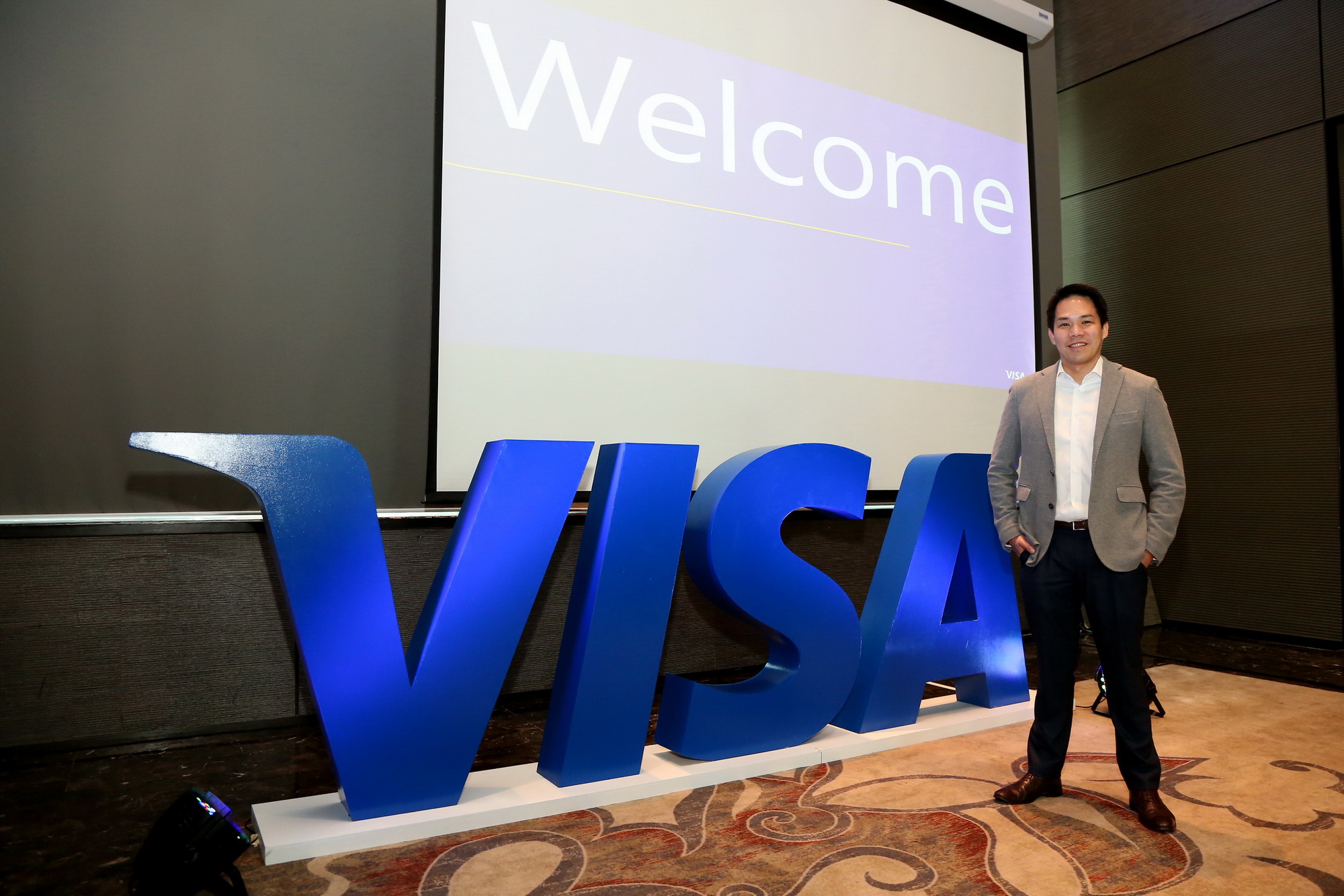
     Four in five Thai consumers (78 percent) have tried going cashless in 2018, compared to only fifty percent in previous year as confidence in digital payments grew, according to the 2018 Visa Consumer Payment Attitudes study (the “Study”). The study tracks payment habits and attitudes as well as exploring emerging topics related to payments among 4,000 consumers across eight Southeast Asian countries, including 500 respondents from Thailand.

    For Thai consumers, digital payment methods, such as cards, in-app mobile payments and QR payments combined together have a larger preference (57 percent) over cash (43 per cent).

    Suripong Tantiyanon, Country Manager for Visa Thailand said: “The higher preference towards using digital payments and the rise of confidence in going cashless are credited to industry players and the government, who have been relentlessly driving the national e-payments agenda.

    “In addition, we believe that the higher preference towards digital payments can be attributed to the proliferation of payment form factors and acceptance points.  More than ever before, Thai consumers can make payments with a wider range of connected devices and payment applications on smartphones, such as wearables and mobile payments.  At the same time, QR code offers merchants in traditionally cash-based segments with a fast, cost-effective and secure digital payments solution.”

    According to the study, two in five Thais (42 percent) said they carried less cash than they did two years ago, compared to 26 percent in 2017.  Top reasons for the decrease in cash in wallet are cash is unsafe (65 percent), higher adoption of digital payments (65 percent) and the hassle of using cash (39 percent).

    The study also showed  that of those who tried going cashless, more than half (60 percent) could manage a day without cash and forty-five percent could last without cash for more than three days.

    Overall, in terms of future expectation, more Thais are confident about the country becoming a cashless society.  Nearly one in three (29 percent) are confident that Thailand can become a cashless society in less than three years, compared to 11 percent in 2017.  Thirty-nine percent believed it will take between four to seven years while only six percent believed it will take longer than 15 years.

    “The findings are encouraging.  We believe that we are on the right track and it is important to help more consumers and merchants understand and embrace the benefits of digital payments.  At the same time, we are committed to innovate and collaborate with all stakeholders in the payment industry and beyond as we continue our journey towards transforming Thailand into a cashless society,” Suripong concluded.

  • 4 Reasons Why Crypto Transactions Could Dominate the Payment Markets in the Future

    4 Reasons Why Crypto Transactions Could Dominate the Payment Markets in the Future

    Over time, the position of the payment markets in the global economy has been invariably shaped and defined by the traditional payment systems. However, as with all technologies, it is not without its pitfalls.
    While these payment systems are equipped to handle the level of transactions well enough, they still have several faults. Thus, in the bid to survive the rapid pace at which revolution is taking place globally, the payments market had to accept the innovative power wielded by cryptocurrencies.

    As a result, these traditional payment systems have to compete with cryptocurrencies for dominance. However, given the pace at which crypto adoption is going, experts believe that crypto transactions could dominate the payments market at some point in the future.
    Let’s see why.

    Crypto Transactions have Blockchain Technology as their Backbone

    With blockchain technology being the primary backbone of crypto transactions, the payments market get to experience innovations in various ways. One such way is decentralization. No one wants to wake up to find their accounts frozen for something they are not aware of. Centralized services do this to people — with central authorities in control, there is limited freedom for flexibility in transactions. PayPal, for instance, imposes daily transaction limits on users and sometimes suffers from delayed services due to many glitches.

    Blockchain technology, on the other hand, is glitch-free. Furthermore, there are no limits as users get to transfer as much money as they want to anyone they want. This, of course, is a recipe for a high influx of people into the payments market.

    Let’s Talk About Scalability

    No one wants to wait for several hours or days before getting their transactions confirmed. A slow system can be really frustrating. This is where crypto transactions stand out. Created as an electronic cash system, they are better equipped to deal with the high demand for services.

    Cyber Security

    The evolution of technology means that keeping one’s transactions and accounts protected from prying eyes is quite difficult. This is particularly true of traditional online transactions.
    With the immutable force of tamper-proof ledger system offered by blockchain, crypto transactions are safe from these threats. Blockchain technology works in such a way that transactions and data can only be added to it but cannot be altered afterward.
    Thus, with crypto transactions, chances of intercepting transfers or installing malicious software are curtailed. This is particularly the case with crypto transactions performed through cold wallets and decentralized exchanges.

    The Future is Going Cashless

    The world is increasingly adopting digital economy which means that soon fiat currencies could be ditched and replaced with different forms of electronic cash systems. The fact that cryptocurrencies were introduced to the world as digital money means they could one day be the way to go. Even though the possibility of crypto transactions being used with different businesses is limited at the moment, the future appears to be bright. In fact, cryptocurrencies like Ripple and Stellar are gradually making the cut in larger circles.
    IBM, for example, recently announced that it was adopting Stellar as its native currency. This is definitely a move in the right direction for all cryptocurrencies.

    Learn more about crypto transactions and related subjects by checking out the infographic originally published at Bitcoinfy.net.

  • China, Hong Kong, Kowloon Team Heads Change at UBS

    China, Hong Kong, Kowloon Team Heads Change at UBS

    Following a realignment of its senior regional management last week, Swiss bank UBS has now rejigged its middle management, or country team heads as they are referred to at the bank.

    Kenny Wai, country team head for Kowloon, has resigned from the bank after seven years with UBS having previously been a desk head for both the Hong Kong and China International markets. In May 2018, Wai was made country team head for Hong Kong when Adeline Chien was promoted to a larger role as head of Hong Kong. Prior to UBS, Wai worked variously in compliance and as a client advisor, most recently at Merrill Lynch.

    His responsibilities will be taken up by Wai Man Chiu who joined UBS last year from Hang Seng Bank where she led a team of 30 colleagues. When she assumed the role of country team head at UBS, several members of her team from Hang Seng followed her to the Swiss bank. Most notable amongst them were desk head Jonathon Yeung and client advisors Aubrey Cheung, Connie Chan, and Raymond Yung.

    According to an internal memo seen from Marina Lui, the newly appointed head of wealth management China, she confirms the resignation of Wu Ya Ju, country team head of China International. Wu had been with UBS since 1996, starting as a client advisor with the bank. She is believed to be retiring from the industry. Also retiring is Philip Mak, country team head Hong Kong Domestic.

  • KResearch revises downward its 2019 economic projection to 3.7 percent

    KResearch revises downward its 2019 economic projection to 3.7 percent

    KResearch held a panel discussion on “Measuring the Thai Economic Temperature after Election” on Tuesday April 2, 2019. According to KResearch poll conducted among members of the general public and the business sector before and after the election, it was found that the election has given a boost to confidence. Nevertheless, close attention should be paid to the formation of the new government which may influence the confidence.

    Ms. Nattaporn Triratanasirikul, KResearch Assistant Managing Director, holds the view that, “No matter how the government is formed, Thailand will be challenged by the global economic slowdown which will, in turn, affect its exports. The new government has to expedite the implementation of economic stimulus policies under the FY2019 budget, including the passing of the FY2020 budget bill. If the new government can be formed within June 2019 and the economic stimuli can be implemented as expected, household consumption will be boosted by 0.2-0.4 percent of GDP, and the Thai economy in 2H19 will be brighter than in 1H19.”

    However, KResearch has revised downward its growth forecast for the 2019 Thai economy to 3.7 percent, or within a band of 3.2-3.9 percent, from the 4.0 percent pace before. The new economic growth projection reflects an expected slowdown in Thai exports resulting from the economic downturn in Thailand’s key trade partners despite better-than-expected improvements seen in the US-China trade dispute. KResearch has also cut its export growth projection for 2019 to 3.2 percent from previously 4.5 percent, and its 2019 import growth forecast to 4.3 percent from 5.3 percent.

    For the outlook of domestic interest rates, Ms. Nattaporn expects the policy rate to be kept at the 1.75 percent throughout this year. High liquidity in local commercial banks and the banks’ approach to gradually approve loans currently should not intensify the competition in the commercial banks’ interest rates. As for the movement of Thai Baht, KResearch forecasts that the Thai Baht will weaken and move within the range of THB31.20-32.50 per dollar.  Factors deserve close attention are domestic issues, especially, political and economic situations.

  • Meet Alipay’s Western Expansion Partner: RiverPay

    Meet Alipay’s Western Expansion Partner: RiverPay

    Alipay is one of the dominant forces in Chinese mobile payments solutions, but its ultimate goal, like with any payments company, is global expansion. You’ve recently covered some of Alibaba’s expansion into the UK through their partnership with Barclaycard, but there’s an unknown partner I want to introduce you to that’s giving Alipay access to over 12,000 store locations and over 30,000 points of sale in the U.S., Canada and Europe.

    Meet RiverPay: Alipay’s authorized payment service partner that connects global merchants with over 1 billion Alipay users around the world, especially Chinese travelers abroad. (69% of whom used mobile payments last year, according to Nielsen.)

    All of RiverPay’s merchant customers are adopting Alipay as a payment option, including top luxury retailers like Saks Fifth Avenue, Hudson’s Bay, Dolce & Gabanna and Prada. With payments integration in less than two weeks and compatibility with over 80 percent of mainstream enterprise resource planning systems, RiverPay can help merchants adopt Alipay fast without interruption to cashiering systems.

  • Hedge Funds Look to Expand in Asia

    Hedge Funds Look to Expand in Asia

    Hedge funds are looking to increase exposure to the region given the opportunities there, according to a survey by J.P. Morgan. Hedge funds are looking to grow further in Asia, with close to half of the investors surveyed by J.P. Morgan planning to do so. This is despite likely outflows experienced by fundamental long-short equity, event-driven, and managed-futures strategies, the survey found.

    Asia is a continuously opening market and there will be more funds going in there to take advantage of potential asset-price dislocations and opportunities, Michael Monforth, global head of capital advisory at J.P. Morgan, said in a statement.

    Searching For Higher Returns

    Despite the instability and poor performance that the market has shown in 2018, institutional investors are nonetheless still investing in hedge funds this year as they search for high returns and other ways of investment.

    For some markets, unwinding of QE or a global slowdown is akin to a rock band losing its lead singer: Investors are looking to alternatives, Monforth added.

    Asset Price Dislocations

    2018 was the biggest annual loss for the industry since 2011, falling by 4.8 percent on a fund-weighted basis according to Hedge Fund Research Inc. Hedge funds witnessed a $33.5 billion in outflows and the number of startups was at its all-time low since 2000.

    Investors remain apprehensive about hedge fund crowding, style drift, and transparency, according to the survey.

  • UBS Exploring Office Move in Singapore

    UBS Exploring Office Move in Singapore

    UBS is considering to move its office out of the central business district, according to local media reports. UBS is likely to consolidate its Singapore office footprint by relocating from One Raffles Quay and Suntec City to 9 Penang Road, according to a report in Business Times.  Market sources said that the commercial terms of a potential lease for 9 Penang Road have been more or less finalized, but the deal is still pending for approval by the top brass in Switzerland.

    The site, which is coming up on the former Park Mall site opposite Dhoby Ghaut MRT Station, would provide a different type of space for the bank. The motivation appears to be a desire by the bank to operate in a larger, campus-style, facility, rather than cost savings.

    Surprising Move

    Many office leasing observers were somewhat surprised that UBS, Asia’s largest wealth management bank, is considering moving out of the financial district into Penang Road, which is not a typical headquarters location for a major bank.

    However, 9 Penang Road may have its own appeal, given it is a stone’s throw from the prime Orchard Road shopping belt and the location offers good connectivity. Dhoby Ghaut station is an interchange for the North-South, North East and Circle lines.

  • New Head of Swiss Business Hub in Singapore

    New Head of Swiss Business Hub in Singapore

    The Swiss Embassy in Singapore appointed a new Head of the Swiss Business Hub for the ASEAN region.

    Renee Koh joined the Swiss Embassy already in November 2018 as the new Head of the Swiss Business Hub for the ASEAN region, according to a news release on Thursday.

    The Swiss Business Hub ASEAN is part of the Embassy of Switzerland in Singapore with antenna offices in the Embassies of Switzerland in Malaysia (Kuala Lumpur), Vietnam (Hanoi) and at the Consulate General of Switzerland in Ho Chi Minh City.

    The Swiss Business Hub facilitates commercial relations between Switzerland and ASEAN. Its activities are supported by Switzerland Global Enterprise (S-GE), which has been officially commissioned by the Swiss government to promote exports and investments.

  • Legacy Banks Must Become Agile, Says Citi

    Legacy Banks Must Become Agile, Says Citi

    New entrants and increased competition brought about by challenger banks could result in revenue losses of up to 30 percent among legacy banks over the next 10 years. While digitalization can lower costs for incumbent banks by 30 to 50 percent, new competition and greater transparency in the banking market, prompted by the emergence of challenger banks driven by fintech startups, are likely to lower revenues by 10 to 30 percent in the next decade, according to the report “Bank X: The New New Banks” published by Citi on Thursday.

    As legacy banks recognize the threat that new entrants into banking are posing to revenue and customers, they need to reinvent themselves and reimagine banking. This involves legacy banks partnering with technology companies to create effective joint ventures as well as moving into more disruptive technology and business models to transform themselves into digital competitors, the report said.

    If banks successfully transform digitally, their ROEs will rise from 8 percent in Europe and 16 percent in the U.S. to 15 percent and 24 percent respectively in a bullish scenario, and 5 percent and 10 percent respectively in a bearish scenario, the report noted.

    Bank X

    Built by new entrants, challenger banks designed around new digital technologies, leveraging data insights via agile technology stacks to offer customers better personalization and fully digital banking experiences. As they offer their services remotely via online or mobile banking, challenger banks tend to be quicker at incorporating new products or processes into their platforms and help easily connect with third-party products, ultimately offering more choices to the end-user.

    By creating their own Bank X, we believe legacy banks can transform themselves from slow-moving caterpillars to agile butterflies, Ronit Ghose, Citi Global Head of Bank Research, said.

    The report noted that while creating a new digital-only bank can help incumbent banks meet an evolving set of customer expectations quickly and effectively, setting up an independent challenger bank needs to be differentiated from digital transformations and core banking overhauls that they undertake. This is because creating their own Bank X requires independent application programming interfaces (APIs) and technology stacks, which is a significant departure from the operating model of incumbent banks.

    Need for Regulation in Asia

    Apart from the lower number of challenger banks in Asia compared to the U.K. and U.S., Citi noted that challenger banks in Asia are largely offshoots of big tech, telcoms, and banks. For example, WeBank, MYbank, and Kakao Bank are all backed by tech firms, KBank and Jibun Bank are backed by telcoms, while DBS has made progress in Indonesia and India with digibank, its own challenger bank.

    While Asia has several challenger banks originating from startups aiming to disrupt the financial system, Neat in Hong Kong or Paytm in India, they are exceptions. This is a result of the limited regulatory framework for challengers in Asia, with the emerging exception of Hong Kong, and the presence of large tech companies, particularly in China.

    Conversely, challenger bank activity is vibrant in the U.K. and Europe as a result of progressive regulations enacted to promote competition and break up the banking monopoly, the report said.

  • Singapore Fintech Launches Platform for Personal Loans

    Singapore Fintech Launches Platform for Personal Loans

    The new digital platform, which offers lower lending rates and encourages prompt debt repayment, could compete with banks’ personal loan facilities. Singapore fintech company Credit Culture has announced the launch of its moneylending platform, making it the first licensee from a pilot by the Ministry of Law for new business models in the personal loans industry, to do so.

    Promising transparent loan terms with no late interest and no early repayment fees, Credit Culture says its platform allows 24/7 access to personal loans with monthly interest capped at 1 percent, disbursed within only 10 minutes.

    We have seen how inefficiencies have affected the industry for years and the move to use technology to improve the system is long overdue. This is a win-win situation whereby improving the ecosystem, customers will be able to gain better access and management of their finances, said Edmund Sim, founder and CEO of Credit Culture.

    New Models for Loans

    Credit Culture’s credit scoring and application process is simpler, cheaper and more transparent than the manual processes offered by traditional banks. Its platform is built on the Amazon Web Services (AWS) cloud and taps on MyInfo, the central data repository of Singapore citizens’ information to populate loan applications.

    A proprietary credit-scoring engine then uses this data to assess the creditworthiness of a customer instantly. Apart from lower backend costs, the AWS approach is also scalable depending on customer demand, allowing the firm to grow quickly and roll out in new markets with ease.

    The rates charged by Credit Culture are significantly lower than those charged by banks on overdue credit card payments, which average 24 percent per annum, or more than 2 percent per month. However, the effective interest rate could turn out higher than personal loan rates offered by some banks.

    Ministry of Law Pilot

    Credit Culture was founded by a group of banking industry veterans with knowledge of the consumer credit and technology space. In December 2018, the firm was among six selected by the Ministry of Law as part of a pilot to professionalize the personal loans space in Singapore.

  • OCBC Forms Committee to Ensure Responsible Banking

    OCBC Forms Committee to Ensure Responsible Banking

    The bank’s new ethics and conduct board committee wants to ensure that the group’s core values of trust and integrity continue to anchor the way it conducts its business.

    OCBC Bank has formed an ethics and conduct board committee, which is chaired by OCBC chairman Ooi Sang Kuang and includes directors Lee Tih Shih and Christina Ong, according to a news release on Thursday.

    While the industry is seeing ethics and compliance as an area of greater concern, the committee, which provides oversight of the group’s policies, guidelines, and programmes, is a first among Singapore banks.

    Laying Out Standards

    It held its first meeting on Wednesday, laying out expectations and standards for the group’s 29,000 employees as it aims to «sustain and grow a strong culture of responsible banking and fair dealing» and ensure that responsible banking is rigorously enforced across the whole OCBC group, the bank said.

    In the last decade, there have been several high-profile examples of questionable conduct by financial institutions. These examples span the globe and the misconduct ranges from extreme over-leveraging to violating international sanctions, tax fraud, and money laundering. The misconduct stems mostly from an imbalance between the pursuit of financial goals and responsible banking, Ooi said.

    Transforming Rapidly

    The banking industry is transforming rapidly due to technological advancements, and customers’ expectations have also changed. However, what has not changed is that our customers still expect us to be utterly worthy of their trust. That is why amid so much change in the banking industry, our underlying values of integrity and honesty must never change, Ooi added.

    The ethics committee also oversees a new culture and conduct committee, chaired by group chief executive Samuel Tsien. The committee will implement initiatives to enhance existing policies and programmes on ethics and conduct, as well as roll out new ones to strengthen these values among all the group’s employees.

  • Japanese firm eyes stake in ailing Vietnamese bank

    Japanese firm eyes stake in ailing Vietnamese bank

    Japan’s J Trust has expressed interest in acquiring a stake in Vietnam Construction Bank, one of three weakest state-owned banks in the country. Nobiru Adachi, senior managing director and executive officer of finance firm J Trust, told Deputy Prime Minister Vuong Dinh Hue Friday that he wanted to restructure the Vietnam Construction Bank (CB).

    J Trust will also support CB in terms of technology and financial operations, he added.

    Hue responded that J Trust’s proposal was in line with the government’s wish for local or foreign investors to buy weak banks. The government wants to sell CB to an investor to restructure it, he added.

    J Trust should discuss its proposal with the State Bank of Vietnam so that the deal could be presented to the Prime Minister for consideration, he added.

    Hue said last year that the government would allow foreign investors to fully acquire weak banks that it had bought for zero dong. These banks are CB, Oceanbank and Global Petro Commercial Jsc Bank.

    CB, formerly Trust Bank, was acquired by the government in 2015 and was given the new name. By 2017, it managed to recover over VND5.7 trillion ($245.73 million) of its bad debt.

    J Trust engages in commercial banking services, retail financial services and debt collection services throughout Asia. It has experience in assisting struggling financial institutions and has successfully restructured weak banks in South Korea and Indonesia.

    Vietnam has nine wholly-owned foreign banks, four state-owned banks and 31 joint-stock banks.

  • Deutsche Bank Appoints Head of Thailand

    Deutsche Bank Appoints Head of Thailand

    The German lender hires a new head from Siam Commercial Bank to fill the position left vacant since 2018. Deutsche Bank (DB) will get a new head for its Thailand operations in May, with the appointment of Pimolpa Suntichok as chief country officer and head of the financing and solutions group for Thailand, according to people close to the matter.

    Suntichok fills a position left by Phumchai Kambhato, who left the bank in 2018. She will report to Werner Steinmueller in her country management capacity and to Sreenivasan Iyer for her FSG responsibilities.

    Suntichok was previously the Senior Executive Vice President serving as the Head of Commercial Banking Solutions at Siam Commericial Bank, Thailand’s largest commercial bank. She brings over 20 years of experience in banking, having worked at Bangkok Bank, Jardine Fleming Thanakom Securities, Fitch Ratings (Thailand), and Standard Chartered Bank (Thailand). She joined SCB in 2008 to lead the structured finance practice for the Capital Markets Division and became the Head of Corporate Segment in 2015 and the Head of MultiCorporate Segment in 2016, according to SCB’s website.

    Future Uncertainty 

    Deutsche Bank in recent months has seen a raft of departures in Asia, including Southeast Asia Vice Chairman Philip Lee, Jakarta-based managing director Kunardy Lie, and North Asia COO

    Katherine Lai.

    DB, on its third CEO in four years, has in recent years scaled down its Asian operations as its focus has shifted towards Europe amid difficulties in the region. However, Thailand remains an important market for DB in Asia-Pacific, with the bank having a 40-year history in the country.

    The bank is currently in the midst of merger discussions with Commerzbank, which has cast uncertainty over Deutsche’s general strategy for the future.

  • Visa launches payments security roadmap for Vietnam

    Visa launches payments security roadmap for Vietnam

    It was one of four initiatives the company outlined in the “Future of Security” roadmap it launched. Visa said the roadmap focuses on a number of key initiatives that would enable security to evolve at the same pace as the technologies changing the way of paying.

    Dang Tuyet Dung, Visa’s country manager for Viet Nam and Laos, said: “Securing the commerce eco-system is our highest priority and one we view as a shared responsibility between payment networks, consumers, banks, and the Government.

    “Technology has enabled new innovative ways to pay and be paid, but it has also brought unique risks. To stay ahead of fraud, we need to work together and give security the same attention and investment as we do the innovations driving new e-commerce experiences.”

    The other three initiatives are devaluing data by removing sensitive data from the eco-system, thus making stolen account details useless; protecting data by implementing safeguards to protect personal data as well as account details and harnessing data by identifying potential fraud before it occurs and increase confidence in approving good transactions.

    The release of Visa’s roadmap comes at a time of rapid change for payments in Viet Nam with innovations such as mobile payments set to enhance the payment experience for consumers.

    According to Visa’s study titled Consumer Payment Attitude, security remains a key consideration for consumers across Southeast Asia with 67 per cent concerned about the safety of their personal information when using their mobile phones to make payments.

    Asked specifically about what their top three concerns were, consumers in Viet Nam said losing their phone or having their phone stolen, the phone getting hacked or someone intercepting data and malware or viruses being installed on the phone.

    Visa works with industry stakeholders including financial institutions, merchants, policy makers, law enforcement, and accountholders to secure payments.

    The Visa Future of Security Roadmap is a product of comprehensive consultations and collaboration, making it an authoritative document on Vietnam payments security.

    Visa is delivering roadmaps around the world to ensure the security of the global commerce eco-system and in Viet Nam also working with industry bodies to align security initiatives.

  • New Milestone for Hong Kong as a Financial Center

    New Milestone for Hong Kong as a Financial Center

    The Hong Kong Monetary Authority has granted the first virtual banking licenses to three institutions. According to their business plans, these banks will launch their services within six to nine months.

    The three banks that received a license are Livi VB, SC Digital Solutions and ZhongAn Virtual Finance to operate in the form of a virtual bank. The granting of these banking licenses takes effect today, according to a media release on Wednesday.

    According to their business plans, these three newly licensed virtual banks intend to launch their services within 6 to 9 months. After the granting of the above banking licenses, the number of licensed banks in Hong Kong will be increased to 155.

    Reinforcing Hong Kong’s Position

    The Hong Kong Monetary Authority (HKMA) is making good progress in the processing of the remaining 5 virtual bank applications, according to further information.

    «It is a major milestone in reinforcing Hong Kong’s position as a premier international financial center. I believe that virtual banks will not only help drive fintech and innovation but also bring about brand new customer experiences and further promote financial inclusion in Hong Kong», Norman T.L. Chan, CEO of the HKMA, said.

    Targeting the Retail Public and SMEs

    I believe that virtual banks will have to offer innovative and customer-centric services in order to attract customers. Moreover, in targeting the retail public and SMEs as their main client base, virtual banks should help promote financial inclusion in Hong Kong, he added.

    The U.K. market, where neobanks and digital-only challengers have been around for a while, shows there’s a big chance new players will grab a significant chunk of new financial services revenue in the near future in Hong Kong, but that doesn’t mean all is lost for traditional banks here, Fergus Gordon, a managing director at Accenture who leads its Banking practice in Asia Pacific and Africa, said.

    Some Consolidation Expected

    Virtual banks will need some years to establish themselves, then there will likely be some consolidation among some of the players, and in the meantime, traditional players should continue to rapidly reconfigure their branch networks to become more focused on experiences and use technology to make the transition from digital to physical and back much more seamless, he added.