Category: Finance

Retail News Asia is committed to providing both local and global retailers with the latest Finance news throughout the Asian market. This on a daily base.

  • DBS Poaches Wealth Planning Head from Bank of Singapore

    DBS Poaches Wealth Planning Head from Bank of Singapore

    His key responsibilities include driving the expansion of the bank’s wealth planning, family office and insurance offerings, and providing holistic solutions and advisory for high net worth families.

    DBS Bank on Friday has appointed Lee Woon Shiu as Head of Wealth Planning, Family Office and Insurance Solutions at its private bank, it said in a press release on Friday.

    Lee is an industry veteran with more than 20 years’ of experience in advising numerous ultra-high net worth families in Asia-Pacific on wealth planning as well as the establishment and implementation of family governance and philanthropy strategies. He joins DBS from Bank of Singapore, the private banking arm of OCBC Bank, where he has worked since 2004. Most recently, he held the position of Head of Wealth Planning, Trust and Insurance.

    «With Asia at the cusp of a significant intergenerational wealth transfer, we are committed to being our clients’ partner of choice as we help to grow, manage and protect their family’s assets and legacy over time,» Sim S. Lim, Group Head of Consumer Banking & Wealth Management, DBS Bank, said.

    Outside the office, Lee is an adjunct professor at Nanyang Technological University’s Wealth Management Institute (WMI), and has been appointed Expert Panel Member of WMI to provide guidance to the institute and its faculty in developing new IBF standards and curriculum for wealth planning. He is also an Advocate & Solicitor of Singapore, a Solicitor of England & Wales and an accredited Trust & Estate Practitioner under the International Society of Trust and Estate Practitioners.

  • UOB Prices First Panda Bond

    UOB Prices First Panda Bond

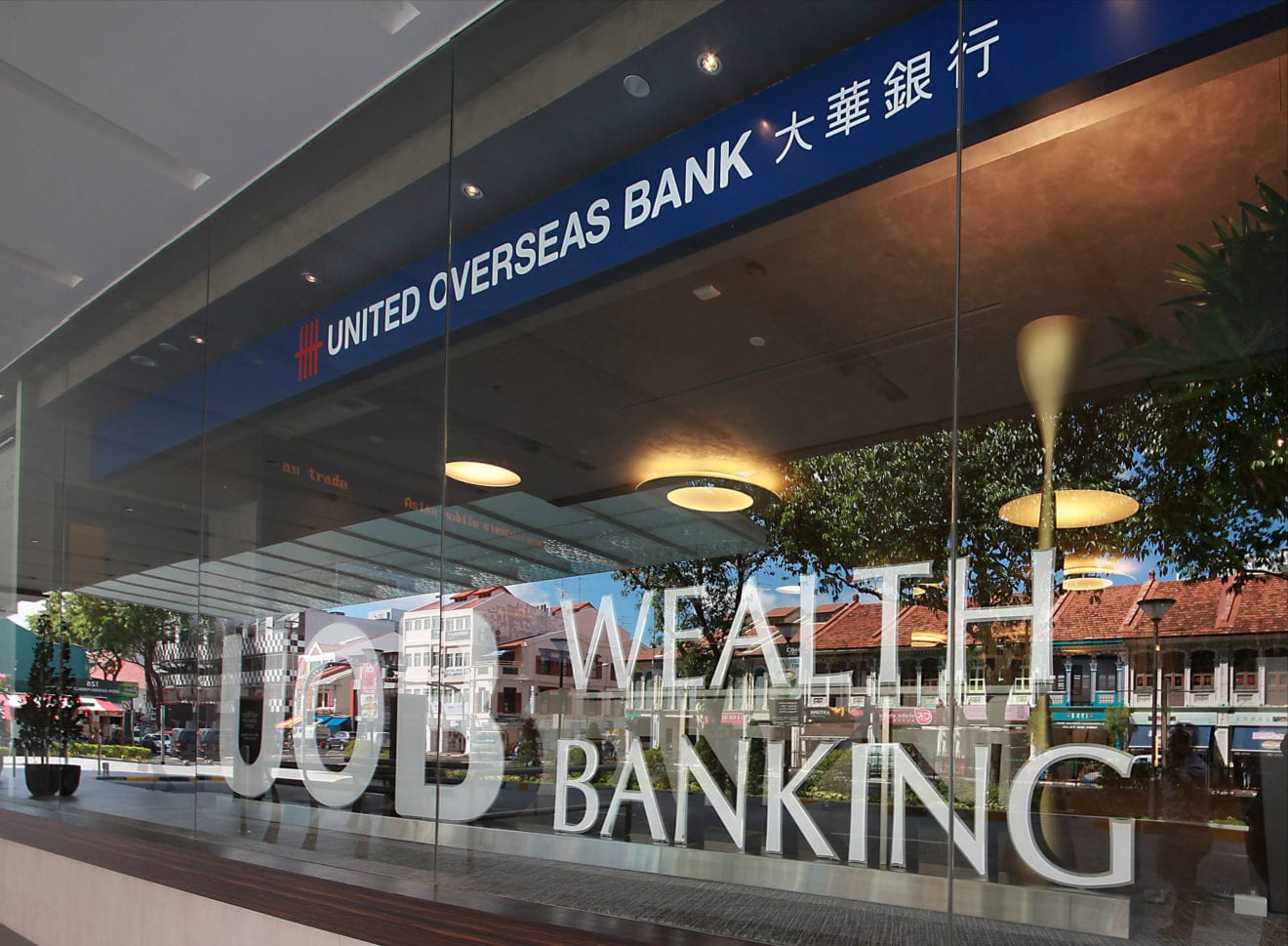
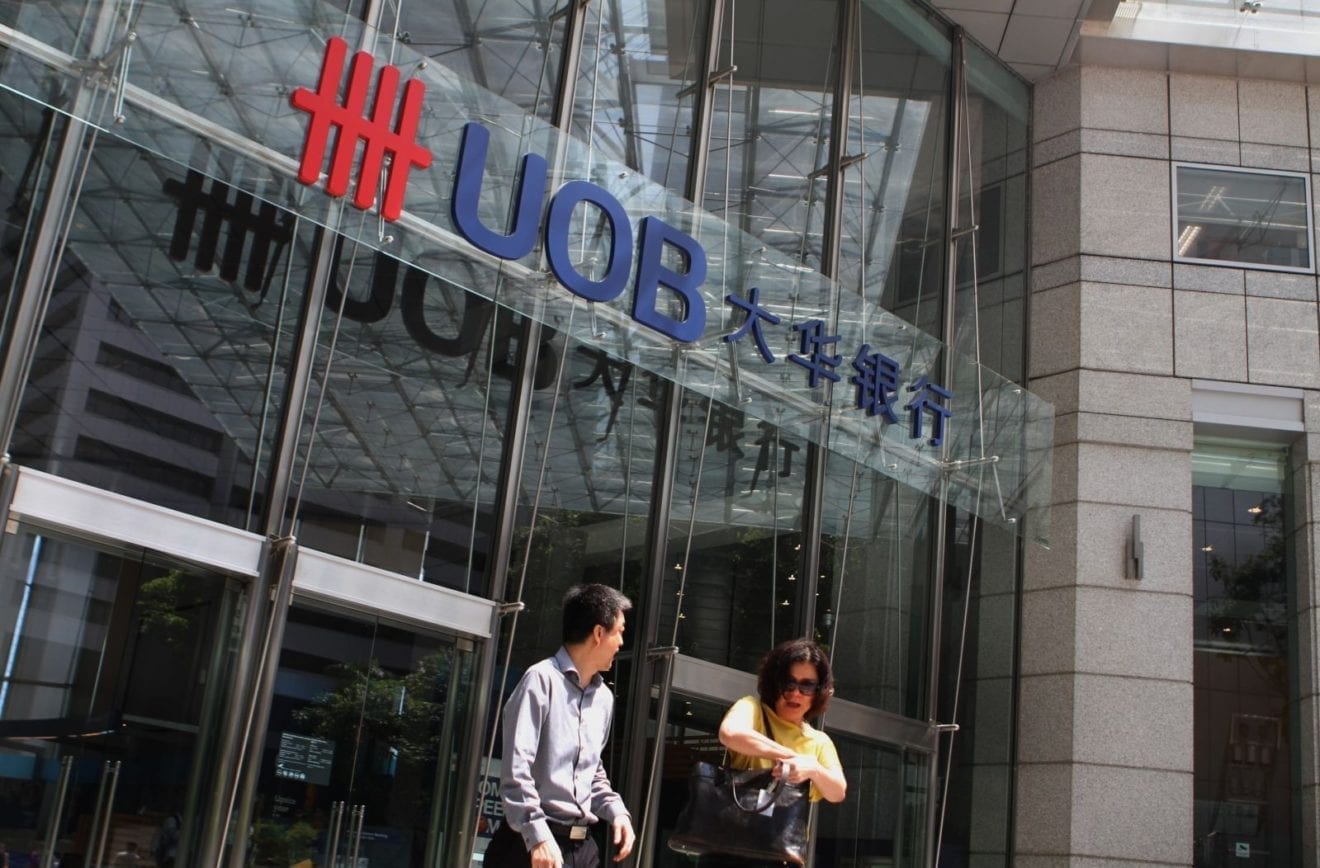
    United Overseas Bank announced it has priced Singapore’s first Panda Bond at 3.49 percent, one of the lowest rates among all Panda bonds. The Singapore based lender UOB said that its three-year, 2 billion renminbi (S$404 million) offering garnered strong demand with a subscription rate of 2.7 times from asset managers and commercial bank investors across Asia. Thirty-eight percent was placed to China’s onshore investors and 62 percent to international offshore investors.

    «Our participation in China’s onshore debt market, one of the largest globally, enables us to grow our presence in China as the country continues to liberalize the renminbi and its financial markets. Further, through this offering, we can diversify our funding sources and continue to tap the increased connectivity between China and ASEAN arising from the Belt and Road Initiative to serve our customers’ needs,» said Wee Ee Cheong, CEO of UOB, said in a media statement.

  • XYXX Innerwear received seed funding of 20 million from Sauce.vc, appoints Govind Shrikhande as Senior Advisor

    XYXX Innerwear received seed funding of 20 million from Sauce.vc, appoints Govind Shrikhande as Senior Advisor

    XYXX Apparels Pvt Ltd, the parent company of XYXX Innerwear brand, announced the first round of seed funding of 20 million from Sauce.vc. Sauce.vc is founded by private equity veteran and consumer angel investor Manu Chandra. Govind Shrikhande, ex-MD of Shoppers Stop has joined XYXX as a senior advisor.

    XYXX Innerwear is a premium men’s innerwear and loungewear brand which is rapidly gaining traction with the Indian consumer. It offers a wide range of comfortable and fashionable products using superior fabric such as MicroModal and Supima cotton at affordable prices. XYXX products are widely available online and have recently started retailing in multi-brand outlets in some regions. XYXX observed a monthly sale of one crore and is expected to double sales before July 2019.

    Manu Chandra, Managing Partner, Sauce.vc said, “We are proud to back XYXX and Yogesh. We believe there is tremendous potential for a premium innerwear brand that can offer better quality at affordable prices in the growing mass premium segment. Omnichannel distribution presence and supply chain management will be the key strengths this team will build on.”

    Yogesh Kabra, Founder & CEO, XYXX Apparels Pvt Ltd said, “XYXX offers a wide portfolio of inner and loungewear products made from luxury fabrics in a variety of appealing designs and prints. I am thrilled to have partnered with industry stalwarts Mr. Govind Shrikhande and Manu Chandra whose deep understanding and experience will help us make XYXX as a successful premium brand in the inner wear and loungewear category, with a sharp focus on premium quality and affordability.”

    Govind Shrikhande, ex-MD, Shoppers Stop and Advisor, Sauce.vc said, “I am very happy to partner with a young challenger brand like XYXX. The innerwear category is ripe for disruption by new home-grown brands. Yogesh and team are building a sound and scalable business with a deep understanding of textile and apparel manufacturing and supply chain. I look forward to contributing in this journey.”

  • Henley & Partners Opens Australia Office

    Henley & Partners Opens Australia Office

    New office caters to burgeoning international demand for Australia’s investor migration programs, as well as interest from within Australia for alternative residence and citizenship options abroad. Global firm in residence and citizenship planning Henley & Partners has announced its expansion into Australia and has made several key personnel hires, the firm said in a media release.

    The office is located in Melbourne, and will be led by director Tony Le Nevez.

    «Australia is the number one resettlement destination for high-net-worth individuals. With our global presence and expertise in assisting these clients acquire alternative residence or citizenship, it makes perfect sense for us to open an office in Australia,» Dominic Volek, managing partner and head of Southeast Asia, said.

    Strong Regional Growth

    This has been a period of strong growth in the region for the firm, which recorded 48 percent year-on-year growth in Southeast Asia. It opened a Thailand office in 2018 to cater to the burgeoning demand for residence and citizenship planning services among HNWIs there.

    «We expect the interest and demand that we are seeing in Southeast Asia to continue with eight of the top 10 fastest growing wealth populations forecast to be in Asia over the next five years,» Volek said.

    Key Appointments

    • Tony Le Nevez, Director, Henley & Partners Australia

    Le Nevez has over 35 years’ experience in the migration services industry. He previously worked for the Australian Department of Immigration in Canberra, and at for the Australian foreign service in Bangkok, Athens and Vienna, where he was a senior policy advisor and First Secretary. He joined the private sector in 2006 and is a member of the Investment Migration Council.

    • Jacky Poh, Deputy Head, Henley & Partners Singapore

    A wealth management professional for over 10 years, Poh has worked closely with HNWIs to execute prudent investment strategies inclusive of discretionary portfolios. Poh works closely with the managing partner to ensure the smooth operations and resource management of the Singapore office. He is also focused on establishing and maintaining relationships with key clients and stakeholders to drive business growth, with an emphasis on progressive Southeast Asian markets.

  • Barclaycard partners with Alipay to help UK merchants increase sales from booming Chinese tourism

    Barclaycard partners with Alipay to help UK merchants increase sales from booming Chinese tourism

    Barclaycard, which processes nearly half of the UK’s credit and debit card transactions, today announced a new agreement with Alipay, the world’s leading payment and lifestyle platform, which will allow retailers to accept Alipay transactions in stores across the UK.

    Building on a successful pilot over the past two years, the new agreement will enable UK retailers to take full advantage of the growing volume and buying power of Chinese visitors. In addition to the UK’s 393,000 Chinese residents and 95,000 Chinese students, tourists from China represent an increasingly important customer segment for retailers. VisitBritain is expecting 483,000 visits from China in 2019, up 43 per cent on 2017, with Chinese visitors expected to spend more than £1 billion this year, up 50 per cent, moving it well into the UK’s top 10 tourism market. The increase in market size is also demonstrated by the fact that the number of Alipay users in the UK has doubled in the last year.

    By accepting Alipay, the world’s most-used app in 2018 outside of social apps according to App Anni, retailers will be able to capitalise on the growing appetite of Chinese tourists to use mobile payments over cash while abroad. According to a 2018 survey conducted by Nielsen, the vast majority (93 per cent) of Chinese tourists said they would likely spend more in a store that accepted mobile payments. In addition, among the merchants surveyed that had adopted Alipay, nearly 60 per cent said that they had clearly seen growth in both foot traffic and revenue[5].

    The new agreement will enable UK retailers to accept in-store Alipay payments without replacing their existing point-of-sale system, allowing them to take advantage of the boom in Chinese tourism without disrupting their existing customer experience[6]. Retailers will also benefit from being at the fingertips of hundreds of millions of highly-engaged Alipay users, who will be able to search for outlets near their location to find out details such as opening hours, directions, and whether there are any discounts available.

    Alipay serves over one billion users worldwide together with local e-wallet partners, and this new agreement offers its Chinese users travelling in the UK the familiar mobile payment and lifestyle experience they enjoy at home, as well as Alipay’s competitive foreign exchange rate.

    Feedback from retailers has been incredibly positive; Barclaycard is already in discussions with around 70 clients interested in becoming early adopters.

    Rob Cameron, CEO, Global Head of Payment Acceptance at Barclaycard, said:

    “Thanks to the significant investments we’ve made in our platform, our clients have access to a growing range of payment types, each of which can help them increase market share by meeting the needs of new customers.

    “Our new agreement with Alipay gives retailers a vital tool to help them seize the revenue opportunity posed by the growth of Chinese visitors to the UK. At the same time, Alipay users will benefit from a more convenient and familiar in-store payments process – enhancing their overall shopping experience.”

    Roland Palmer, Head of Europe, Middle East and Africa at Alipay, said:

    “Alipay is excited to announce that it will be working with Barclaycard to provide visitors from China with the mobile payment experience that they are already familiar with. Through this strategic partnership, Alipay will now be able to offer many more UK merchants the opportunity to connect and engage with a growing number of Chinese visitors. This is another step forwards in our vision to offer Chinese tourists a seamless travel and payment experience when travelling overseas.”

  • Credit cards declining, Australians switch to new methods

    Credit cards declining, Australians switch to new methods

    A new report from data and analytics firm ilion suggests there is a mass-shift underway in the way Australians finance their purchases.

    According to its inaugural credit card report released on Sunday, Australian consumers under the age of 30 hold over half of all buy now, pay later accounts but just 10 per cent of total credit cards.

    One reason for this may be that banks are traditionally reluctant to give credit cards to younger consumers, who they view as a “more risky demographic group”. This coincided with new, alternate payment methods.

    “With evolving forms of repayments offering consumers more choice in an increasingly fragmented and competitive credit system, Australia is at the tipping point of its credit card cycle,” illion chief executive Simon Bligh said.

    As the payments landscape changes, retailers need to consider whether they should offer alternate payment options, if they haven’t already.

    “Retailers will need to respond to shifts in how consumers want to purchase and pay off their goods and services over coming years, particularly as younger Australians enter adulthood and constitute a growing and more influential proportion of the spending population,” Bligh said.

    While a majority of under 30s still hold a credit card (57 per cent), the long term trend is exponentially changing in the favour of BNPL options.

    Source: illion

    As the ilion report highlights, however, those under the age of 30 are twice as likely as their parents to fall more than two months behind in credit card payments.

    “[This suggests] they have a greater difficulty balancing spending and debt, regardless of their credit limit,” Bligh said.

    “Likewise, the likelihood of failing to pay off credit card debt on time increases if consumers have more than one card, and increases again if those cards are with multiple banks.”

    According to a recent investigation into the BNPL industry by the Australian Securities and Investments Commission, one in six users of the services had become overdrawn, delayed a bill payment or borrowed additional money to overcome payment obligations.

    This stems from the fact that both BNPL and credit cards allow customers to buy something that may be out of their price range, and easily put themselves in a position of becoming unable to meet their repayments.

    “The exponential growth in this industry, along with the risks we have identified, means this will be remain an ongoing focus for ASIC,” ASIC commissioner Danielle Press said.

  • UOB Hires New Managing Director

    UOB Hires New Managing Director

    United Overseas Bank recently hired a regional head of engagement to expand its digital team in SingaporeIndustry veteran Kristina Curtis joined UOB two months . ago as managing director, regional head of engagement, group retail digital. Her LinkedIn profile shows extensive experience in digital banking, having worked for ANZ as customer analytics and digital for global wealth, and for BT financial group as chief digital officer.

    When contacted, the bank declined to comment on the personnel move.

    Experience in digital banking

    The demand for people who have leadership and project management experience in digital banking is high in Singapore as banks are pushing to launch new digital platforms in areas of payment and wealth management.

    The ability to leverage on mobile application and new technologies to build an effective communication pathway with the customers and allow for continuous engagement is increasingly valued, evident from the fact that Curtis is not the only recent senior digital.

    Last October, UOB officially appointed Aaron Chia, formerly from Western Union, as the new head of its digital plus unit for wealth and lifestyle products.

  • Facebook’s unannounced mobile payment service shows up

    Facebook’s unannounced mobile payment service shows up

    Facebook’s Marketplace seems to be one of the few successful features launched by the social network giant in the last couple of years. Now, Facebook plans to add an important tool that will make the entire Marketplace experience smoother and easier, at least this is how we’re seeing things at first glance. A mobile payment service that will allow Facebook users to pay for goods they buy through Marketplace is already showing in the Android and iOS app. A new Pay with Facebook option is now available on some Facebook pages that sell various products (i.e. Marshmello Music).

    The new option supports various payment methods that use Visa and Mastercard, as well as cryptocurrency, though the latter seems just a placeholder for now since we don’t recognize the symbol.

    At the moment, the whole process seems a bit convoluted because the buyer must first send a request to the seller, who will then have to accept or refuse the offer and send another payment request to the buyer.

    Although it sure doesn’t sound like a seamless process, Pay with Facebook may at least offer Marketplace users a more secure (and free) method of payment. We’re still waiting for Facebook’s official announcement to learn more about the new mobile payment service, but we can’t guarantee it will ever come.

  • One in Three Entrepreneurs in APAC Rely on M&A

    One in Three Entrepreneurs in APAC Rely on M&A

    In Asia Pacific, one in three entrepreneur leverages on merger or acquisition as means to grow or expand their businesses, according to a recent report by BNP Paribas. A high proportion of entrepreneurs (33%) in the region rely on merger or acquisition to grow their businesses compared to their counterparts in Europe, GCC and USA, according to the 2019 BNP Paribas Global Entrepreneur Report.

    38 percent of Hong Kong business owners have undergone either a merger or acquisition in the past.

    Disruption and Development

    Over 50 percent of Indonesian entrepreneurs focus on contributing to growth of the local economy as their business goals in five years, while the entrepreneurial ambition in Taiwan is gravitated towards contributing to innovation and development in their chosen sectors. For Taiwan entrepreneurs, 38 percent are disruptors – their business goal is to permanently change the status quo with a new product or concept within five years.

    In India, it is for the next generation of their families to have meaningful careers.

    Use Of Credit Solutions

    Globally, 44 percent of elite entrepreneurs have used credit solutions to develop their business.  In Asia, 55 percent of entrepreneurs have sought to borrow to invest in their own businesses. This rises to six in every ten entrepreneurs in China, India and Indonesia.

    61 percent of Chinese entrepreneurs use credit or lending products to finance their business.  54 percent of Indonesian entrepreneurs have used structured products for credit or lending.

    Respondents

    The report is based on the responses of 2,763 Asian elite entrepreneurs handling a total net worth of USD16 billion, spanning 23 countries across Europe, Asia, the United States and the Middle East. It also unveils the different stages of maturity of their entrepreneurial journey, the impact on their private wealth and their need for family governance.

    Sampling of the Asia respondents include 830 elite entrepreneurs covering China, Hong Kong, India, Indonesia, Singapore and Taiwan. The average primary company revenue was $7.2 million.

  • Australian dollar rises over weekend

    Australian dollar rises over weekend

    The Australian dollar has risen slightly over the weekend to 70.42 US cents, up from 70.22 US cents on Friday.

    The Aussie dollar also trades at 62.67 euro cents, 54.20 British pence, $1.03 New Zealand dollars, 78.24 Japanese Yen, and 4.733 Chinese Renminbi.

    Australian markets are also expected to be affected by Monday’s public holiday in Victoria, South Australia, Tasmania and the ACT.

    CommSec chief economist Craig James says its no surprise that after the losses in the US, there would be similar declines in our own market on Monday.

    “US investors are trying to mull up the state of the economy – job figures were much weaker than expected but the question is whether this is just a one off type development. And housing stats were much firmer than expected,” he told AAP.

    “So that data was more mixed than anything.”

    He said investors could expect Monday to be a little softer in terms of volume, and potentially, growth because of the public holiday.

    He said because of that, no major economic data had been released.

    But what everyone is waiting for is a development in the US-China trade dispute.

    “Without new information, we are effectively in a holding pattern.”

  • All Vietnamese commercial banks to be listed before 2020

    All Vietnamese commercial banks to be listed before 2020

    A Prime Minister approved plan requires all commercial joint stock banks to be listed before 2020 towards increased transparency and diversity. This is one of a series of solutions set out in the scheme to “Restructure the stock market and insurance market by 2020 with orientation towards 2025” approved by the Prime Minister late last month.

    Accordingly, commercial banks are required to list on any of Vietnam’s three official stock exchanges – the Ho Chi Minh Stock exchange (HOSE), Vietnam’s main exchange which accounts for over 90 percent of total market capitalization; the Hanoi Stock Exchange (HNX), which houses remaining listed companies; and the Unlisted Public Company Market (UPCoM), which is set up to encourage unlisted public firms to participate in the securities market so that they can later transfer to one of the two main stock markets.

    Currently, only 17 of 31 banks are registered for trading on all three floors.

    The Prime Minister has assigned the Ministry of Finance and the State Bank of Vietnam (SBV) to supervise and direct banks on listing, securitizing debts, provision of required services for derivatives trading, as well as monitor domestic and capital sources on the market.

    Last year, PM lauded Vietnam’s stock market for outperforming other Southeast Asian nations in capital mobilization, with a market cap of 72 percent of GDP at the end of 2-10.

  • Kasikornbank aims high as K Plus users pass 10 million

    Kasikornbank aims high as K Plus users pass 10 million

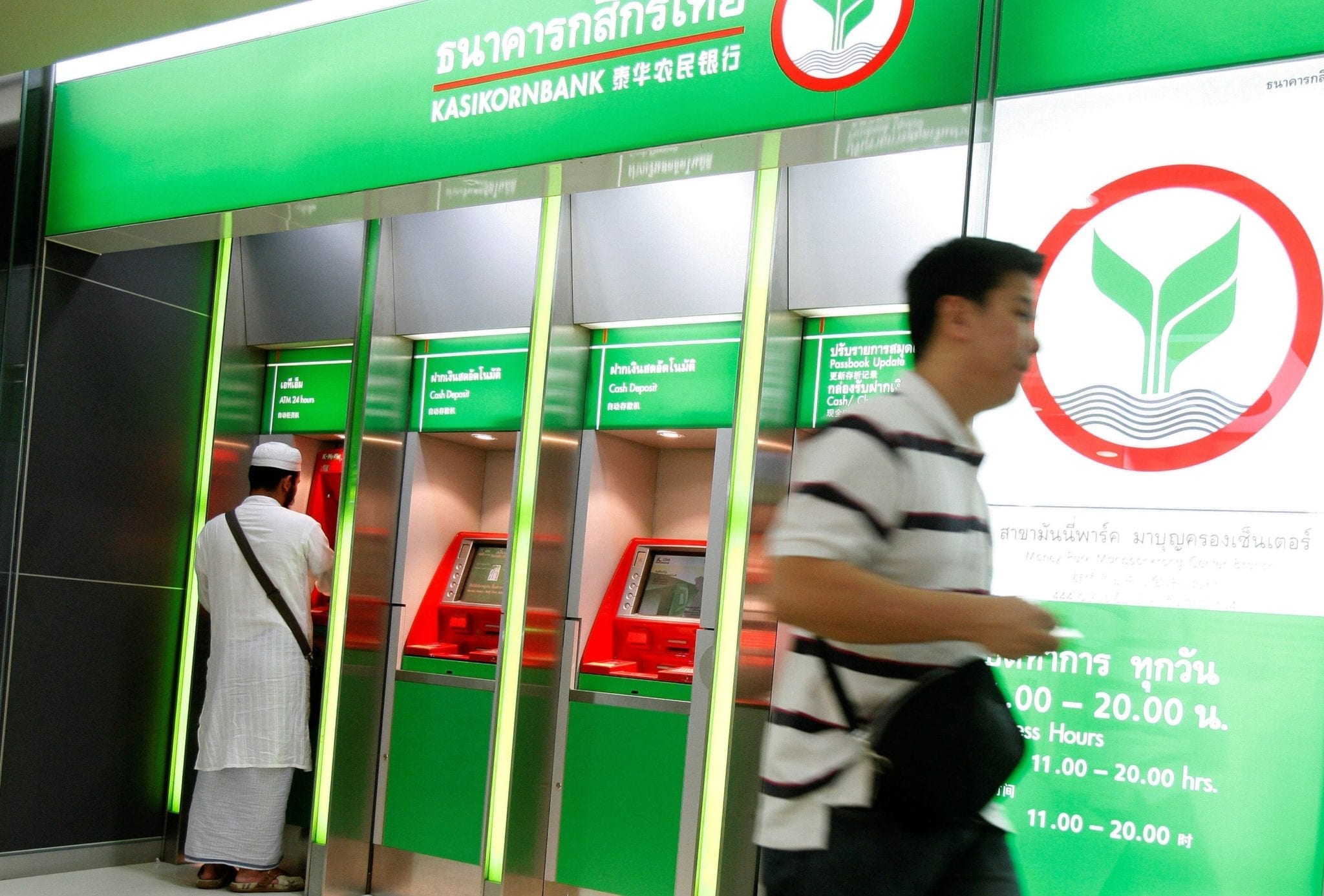
    Thailand’s fourth-largest bank by assets – by loans and deposits it also ranks fourth – has set some eye-catching targets. Take its K-Plus mobile banking offering. Already K-Plus has 10 million customers; that in itself is an already impressive number, given that Kasikornbank has around 14 million customers in total. And it represents impressive annual growth: the bank ended 2017 with 7.3 million users, up from 4.6 million the previous year, but it is a drop in the ocean compared to the target it has set.

    The bank believes it can grow K-Plus numbers to up to 100 million by expanding it to the regional market via partnerships. It is also continuing to target low-income earners who are not currently Kasikornbank customers.

    Organic growth targets for retail loans are in the range of 9-12% for 2019, and it is using machine lending and artificial intelligence technology to initiate financial and life solutions related to customers’ lifestyles and needs.

    K Bank grabs ride-hailing deal

    And then there is the investment in Grab: in November last year, K Bank invested $50m in the ride-hailing firm, with an aim to help launch the GrabPay electronic wallet in its sixth South-East Asian market in 2019.

    The deal also enables K Bank to use Grab’s data on merchants and drivers. The goal is to craft loan products while minimising non-performing loans with optimised use of data. So the Grab app will be integrated with the K Plus app and the bank will offer loans via the apps.

    Other 2018 highlights included a local chart-topping success in the Apple App store. K Plus is Thailand’s most popular app on Apple’s iOS platform outside the gaming segment, ahead of local rival banks Siam Commercial, Krung Thai Bank and Bangkok Bank.

    But it is the use of data and its potential for monetisation that really is attention-grabbing. K Bank really is aiming high in terms of becoming what it terms a ‘data-driven bank’, and believes that project data-driven data will account for one-half of its income by 2020.

    Such ambitions do not come cheap. K Bank’s IT group has set an investment budget for tech development this year of around $160m. It is, admittedly, a modest sum by Chase or Citi standards, but in the context of the Thai market, it is a significant investment. And if K-Plus can grow user numbers to anything approaching 100 million, and get close to its data revenue targets, K Bank will certainly put itself on the map.

    Mastercard trumps Visa for Earthport

    As EPI goes to print comes news that Mastercard looks to head off rival Visa as it attempts to buy Earthport for £233m ($306m).

    Over the Christmas period, Visa made an unexpected £198m bid for the company. The offer was recommended by the Earthport’s board and put to shareholders; however, in a statement to the market on 25 January, Earthport’s board withdrew its recommendation for Visa’s offer and urged shareholders to instead take Mastercard’s deal, which is at a 10% premium to Visa’s. Earthport’s shares, which have risen four-fold since Visa first offered to buy the company, rose another 30% to £0.36.

    Earthport has been around the block a few times since it was founded in 1997. It floated on AIM in 2009, and its adjusted operating loss for 2018 rose by 33% to £8.4m (FY2017: £6.3m). Its share price stumbled around single-digit territory for much of 2018, reaching a low of £0.055 in December, having peaked at £0.48 in April 2015.

    Earthport provides cross-border payment services in the UK, Europe, North America and internationally, operating through two segments: transactional and professional services. It does this through a combination of a network of segregated bank accounts in various geographies, software that mirrors movements of funds from bank to bank, and a knowledge base embedded in the platform and organisation related to each country.

    A deal for either Mastercard or Visa makes sense from the perspective of growing revenue from international money transfers. In other words, Earthport offers a revenue stream not dependent on traditional plastic cards. At the figures being canvassed the purchase price does seem steep, but is quite a coup for the new management team that took over at Earthport last year.
  • AEON Credit’s 5-minutes Sweep till you drop!

    AEON Credit’s 5-minutes Sweep till you drop!

    The highly-anticipated AEON Credit #MyFestiveMania Supermarket Sweep Challenge returned for its’ second round, giving out more than RM20,000 worth of prizes to 10 lucky winners. Winners stood a chance to fill up their shopping carts with as many groceries and household items as they can within 5 minutes time at the AEON Big Subang Jaya. Each cardholder is entitled to bring one partner to participate in the sweep challenge to help them grab any items within the time duration given.

    The campaign, which runs since December 2018, allows customers using any types of AEON Credit Cards to earn chances for every RM50 spent in a single receipt. The chances are entered into a draw to earn one of the 20 spots in the #MyFestiveMania Supermarket Sweep Challenge.

    “We received tremendous public response in the first round of #MyFestiveMania Sweep Challenge that was held on 26th January 2019, hence, we decided to hold a second round as way to show our appreciation towards our customers because at AEON, customers comes first. In total, we have 20 cardholders who won the spots and brought home more than RM2,000 worth of prizes,” said Shiro Ishida, Chief Marketing Officer of AEON Credit Service (M) Bhd.

    The 10 lucky winners for the second round of the #MyFestiveMania Sweep Challenge are Goh Wei Tin, Soon Chiew Giok, Ahmad Salahuddin Bin Hairai, Aida Fazliza Binti Mat Fadzil, Chew Lee Ching, Goh Chien Long, Sim Tan Qi Zhi, Ong Kee Wah, Chew Swee Har and Lee Chin Wah who are all AEON Credit Cardholders.

    For the second time around, AEON Credit Service together with AEON Big who has a long history of being an established and well-known brand in Malaysia. “We are pleased to once again be able to partner with AEON Big to bring a festive campaign to both our mutual customers that incorporates an element of excitement”, added Shiro Ishida.

    In the first round of the Supermarket Sweep Challenge that was held on the 26th January 2019, a total of 10 winners won a prize worth of RM2,880 each during the 5-minute sweep.

  • KBank holds exam for eight graduate scholarships

    KBank holds exam for eight graduate scholarships

    KBank will hold an examination for eight graduate scholarships for 2019 at both local and international institutes in many fields, including business administration, finance and IT, the bank said in a press release on Thursday.Scholarships in business data analytics are offered for the first time this year to seek a new generation of employees with competencies to help KBank press ahead with the strategies to be Customers’ Life Platform of Choice and a Data-Driven Bank. Applications are open from now until April 9, 2019.

    Kattiya Indaravijaya, KBank President, said that because human resources are the nexus of any organizations and national development, KBank is offering eight full scholarships for master programs at both local and international institutions, as follows:

    Graduate scholarships at international institutes in countries determined by KBank, namely the US, UK, France, Switzerland, Japan, China, Hong Kong Special Administrative Region and Singapore, for 14 fields, including business administration, finance, financial engineering, international business, risk management, mathematics, statistics, data analysis, computer science – artificial intelligence (AI), machine learning, human computer interaction or UX UI design biometrics, computer systems and computational linguistics. Graduate scholarships in business data analytics are offered for the first time in 2019 in response to KBank’s operations to use big data in mobilising the business.

    For local institutes, KBank offers scholarships for students to study at Sasin Graduate Institute of Business Administration of Chulalongkorn University and Thammasat University in four academic fields, namely Master of Business Administration Program (MBA), Master Program in Financial Engineering (MFE), Master of Science in Finance (MSF) & Master in Finance (MIF) and Master of Science Program in Marketing (MIM).

    Qualified applicants for business data analytics study must not be older than 28 years old, while applicants for study in other academic fields must not be older than 30 years old and must be a Thai citizen with a bachelor’s degree in any field and a minimum of 3.0 GPA.

    People applying to study abroad must submit their test scores of language proficiency, GMAT or GRE per the criteria together with their applications. Interested persons can fill the application forms at www.kasikornbank.com and find additional information from KBank’s announcement or KBank’s Human Resource Development Department, tel. 02-470 3172 or [email protected] from today until April 9, 2019.

  • Fintech helps the informally employed to access to finance

    Fintech helps the informally employed to access to finance

    The real scale of informal employment in developing countries is incomparably higher than the volume of goods and services produced in the informal sector. The longer traditional methods of assessing the real earnings of the population fall behind, the more customers alternative lending can expect, found Robocash Group.
     
    The share of the informal economy in Indonesia stated by the IMF in 2015 amounted to 14.8% of GDP, which was close to the level of many Western countries (e.g., Latvia had 16.6%). However, surveys of BPS-Statistics Indonesia showed that in the non-agricultural sector in 2017, there was 38.5% of the population informally employed in urban areas, and 54.8% in rural areas.
     
    There is a similar situation in the Philippines. According to the Philippine Statistics Authority, in April 2018, 56.2% of all self-employed worked in the service industry and 39.1% in agriculture. The number of family enterprises was 60.9% in agriculture and 30.3% in services.
     
    The utter lack of unemployment benefits across the region facilitates a high level of employment among the population. However, official earnings are often low that makes people look for an additional source of income. In turn, this situation brings forth a common problem for the entire lending industry in developing countries — a qualitative assessment of the real income of borrowers.
     
    The Philippines is a bright example where the underperformance of traditional banking methods has led to a decrease in bank lending and an increase in customers for alternative lending companies using new methods for assessing solvency.  According to Bangko Sentral ng Pilipinas, only 0.6% of the adult population had a bank loan in 2017 (2015 — 2.1%). At the same time, there was an increase in the number of clients of microfinance organizations, which include fintech firms providing alternative lending, to 7.6% in 2017 (2015 — 4.7%).
     
    Commenting on the findings, Sergey Sedov, CEO of Robocash Group said, “The experience of Robocash Group in Asia has shown that the use of algorithms based on artificial intelligence and machine learning serves as a bridge between the interests of business and society. We collect and study scattered information about customers to provide them with an opportunity to access to finance and accumulate credit history. In turn, this helps to overcome the paradox when people cannot borrow because of any credit history, which they cannot have due to the inaccessibility of loans. Speaking long-term, the expansion of fintech in Asia will significantly boost financial inclusion and thus accelerate subsequent economic growth by increasing the penetration of financial products into people’s lives.”