Category: Finance

Retail News Asia is committed to providing both local and global retailers with the latest Finance news throughout the Asian market. This on a daily base.

  • Trade Me valued below bid offer

    Trade Me valued below bid offer

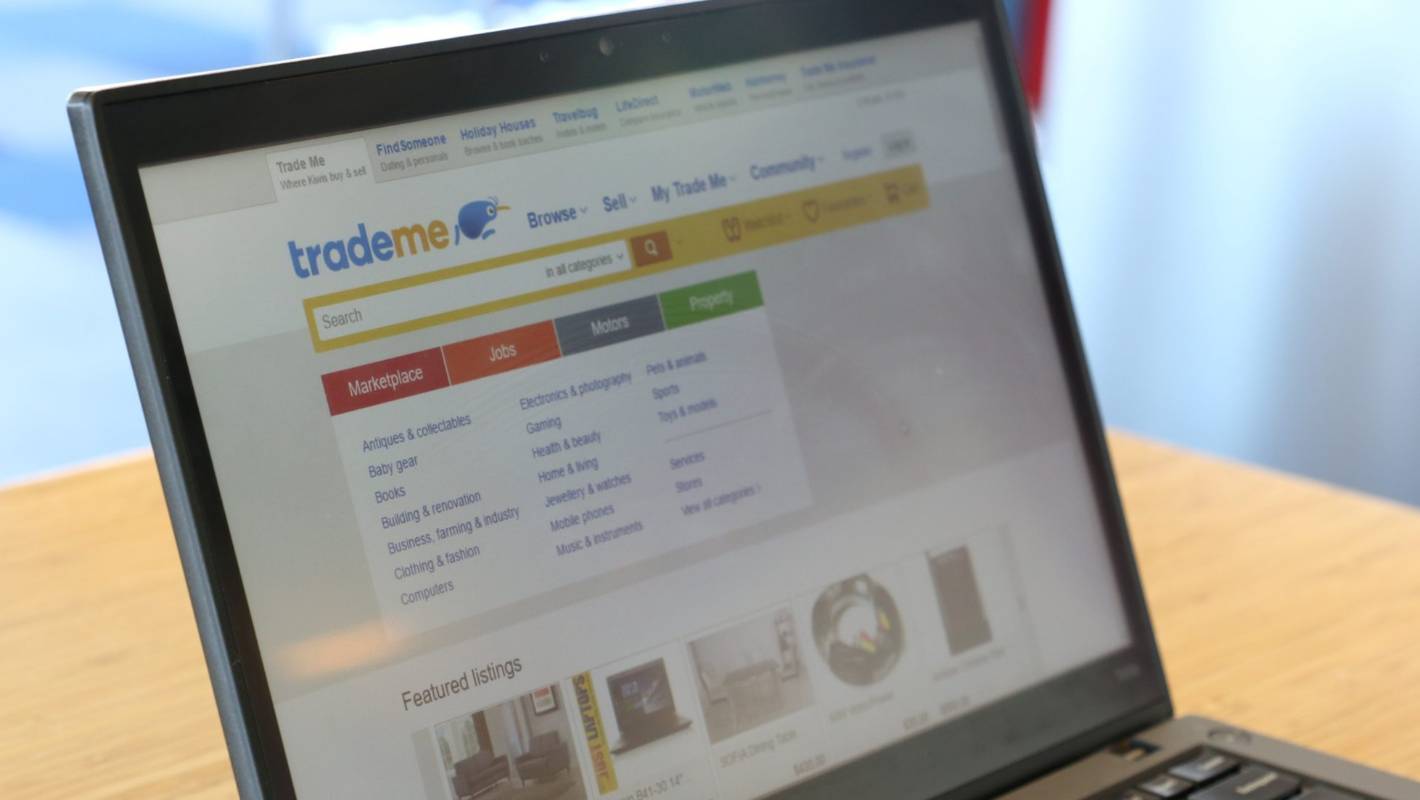
    Online marketplace Trade Me has seen its shares independently valued at between $5.93 to $6.39 per share, below the standing offer of $6.45 per share made by Titan to acquire the business in December 2018. Titan, which is owned by private equity fund Apax Partners, proposed to acquire 100 per cent of Trade Me shares by way of a scheme of arrangement. With the valuation, the offer will potentially pay shareholders a premium.

    The independent valuation was carried out by adviser Grant Samuel & Associates Limited, which was appointed by Trade Me to assess the merits of the offer by Titan.

    Shareholders are expected to vote on the matter on 3 April 2019, online or in-person in Wellington, with Trade Me recommending that shareholders vote in favour of the scheme.

    Though at least 75 per cent of shareholders need to vote in favour of the scheme, it must also be approved by the High Court of New Zealand, as well as the Overseas Investment Office.

    Should the vote go through, and all necessary conditions are satisfied, the scheme is expected to be implemented on or around the 8 May 2019.

    The marketplace turned 20 earlier this week, with chief executive John Macdonald noting he is “humbled that [1.8 million] Kiwis still visit us everyday.”

    “This is a big moment for us… our platform has given thousands of Kiwi entrepreneurs an opportunity to make their own business and reach an audience they’d never have found without us,” Macdonald said.

    “Many a garage across the country was converted into a new online business and a number of those have grown into substantial stores which still sell with us today.”

    Macdonald had initially intended to step down after 15 years at the business in December 2018, though agreed he would stay on until past the end of 2018 in order to help facilitate the takeover.

  • Alipay Hong Kong promotes Smart Mobility to enable Boundless Living

    Alipay Hong Kong promotes Smart Mobility to enable Boundless Living

    As a fast emerging TechFin brand, AlipayHK has led and driven the adoption of the e-wallet in application in Hong Kong. Since the formation of Alipay Payment Services (HK) Limited (“APSHK”), the joint venture between CK Hutchison Holdings Limited (“CK Hutchison”) and Ant Financial Services Group (“Ant Financial”) in March 2018, the company’s flagship product AlipayHK has extended its coverage to 50,000 merchants and more than two million users. This year AlipayHK will focus on widening the e-wallets adoption across public transportation providers and expand its cross-border payment services by strengthening collaboration among merchants. Its overarching goal is for people in Hong Kong to enjoy the benefits of smart mobility and the convenience that comes with using its e-wallet.

    AlipayHK revealed the e-wallet’s new features, EasyGo, at the Smart Mobility, Boundless Living exhibition which marked the first anniversary of the company. Guests were amazed by the speed and convenience of using EasyGo to pass through tickets gates and AlipayHK for cross-border payments. By simply scanning a QR code users could also enjoy special currency exchange rates and the additional perk of a HK$20 Guangdong-Hong Kong- Macao Greater Bay Area discount on cross-border purchases during the promotion period.

    Special guests who officiated the ceremony included: Mr. Canning Fok, Group Co-Managing Director of CK Hutchison and Chairman of APSHK, Mr. Eric Jing, Chairman and CEO of Ant Financial, Mr. Howard Lee, Deputy Chief Executive of Hong Kong Monetary Authority and Ms. Jennifer Tan, CEO of APSHK.

    Smart Mobility expands local coverage and goes global

    Smart Mobility is an important initiative of AlipayHK to drive the development of Smart Cities. As part of this, AlipayHK is widening the adoption of smart mobility solutions to a range of public transport providers. For example, in January it launched EasyGo on a minibus line and AlipayHK will now be extending this service to other minibus routes and transportation providers.

    Smart Travel is another major initiative for AlipayHK as part of its strategy to offer Hong Kong people a premium consumption experience when they travel overseas. Last month, AlipayHK launched its innovative connection service across the Greater Bay Area which covered popular shopping destinations, as well as essential services such as medical and education and provided a more convenient experience for people living in and traveling to the Greater Bay Area. When travelling to Japan, a popular destination for Hong Kong travelers, AlipayHK users can now use their e-wallets in the Daimaru Tenjin store in Fukuoka and the service will soon expand to the whole country. AlipayHK aims increase the coverage of this service to other retailers around the world so Hong Kong people can enjoy the convenience they experience from their e-wallets at home, and also when they travel overseas.

    Mr. Canning Fok said, “It is encouraging to see such a growth in the number of AlipayHK users in only a year. AlipayHK was the first e-wallet to become an official partner of the MTR Corporation and this disrupted the traditional payment methods for public transportation. As the Greater Bay Area develops, AlipayHK is poised to capture the opportunities from cross-border payment services among the nine cities within its cluster with the aim extending our coverage to the whole country. I hope the continuous development of AlipayHK will bring more innovative retail experiences to users as we broaden its application and user base across the globe.” Mr. Eric Jing said, “Hong Kong is a key market for Alipay’s globalization. We will continue to support AlipayHK by bringing the best products and technology know-how to Hong Kong, in order to create unique value for users and merchants. In the future, we will also connect e-wallets from other regions around the world with merchants in Hong Kong, enabling them to benefit from mobile payment.”

    Ms. Jennifer Tan said, “As an e-wallet provider in Hong Kong, AlipayHK always aims to pioneer positive change for Hong Kong citizens in order to make their lives easier. We would like to thank people in Hong Kong for their support. Without it, we would not have achieved such an impressive growth in users and merchants. We will continue to further develop solutions for public transportation service and cross-border payment to enable smart mobility and living.”

  • AEON gives hefty prizes for the lucky winners of the “AEON Happy Pay” campaign

    AEON gives hefty prizes for the lucky winners of the “AEON Happy Pay” campaign

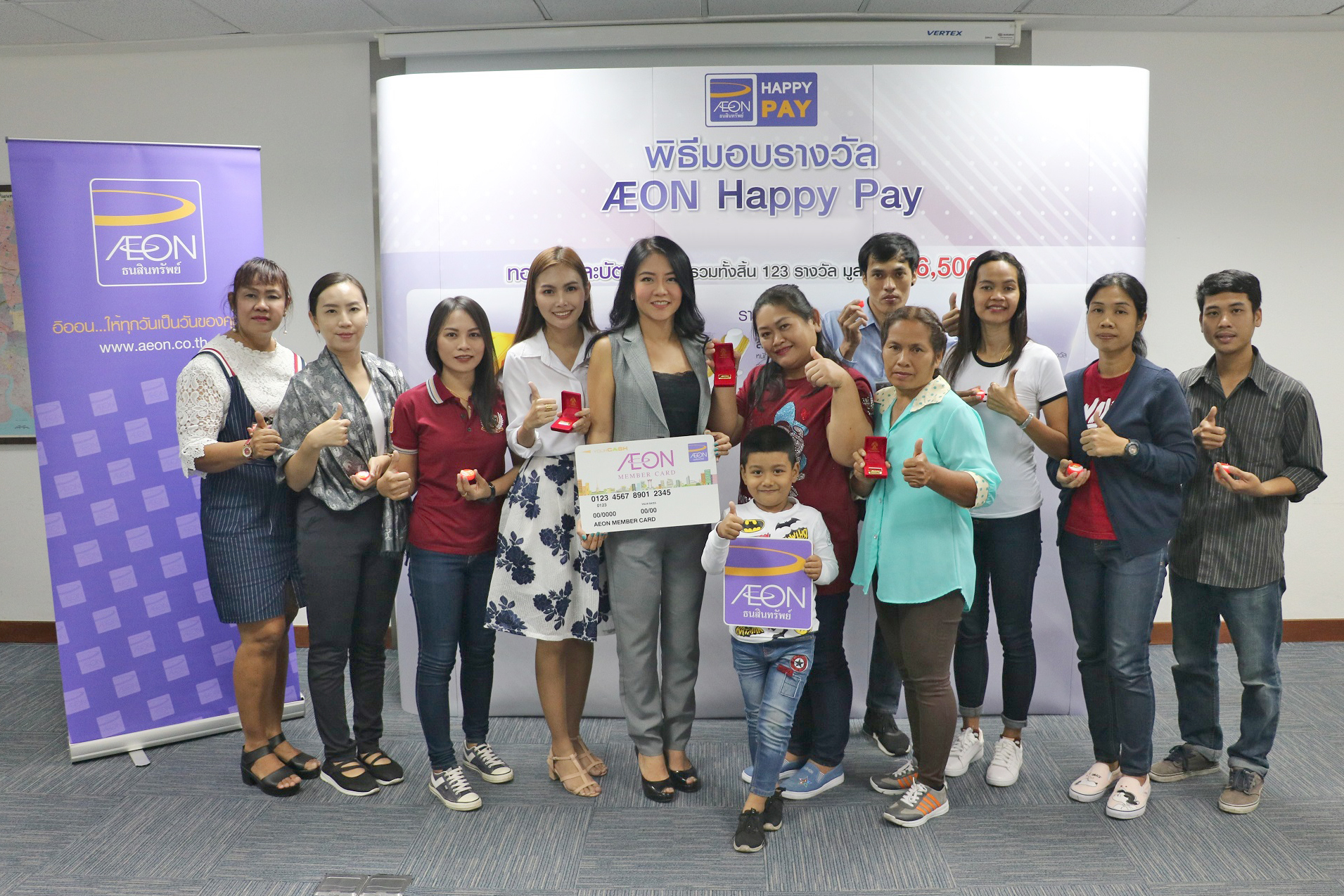
    Recently, Ms. Saranya Pipoppinyo (5th from left), Vice President Marketing of AEON Thana Sinsap (Thailand) Public Company Limited awarded prizes to the lucky winners of the “AEON Happy Pay” campaign. The grand giveaway comprises of three prizes of gold bars, worth 100,000 baht each, the second is 20 prizes of 50 satang gold necklaces and the third is 100 vouchers with a combined value of 586,500 baht.  Eligible participants include AEON Your Cash customers that make an installment payment at participating department stores and shops from 30 August – 30 November, 2018.


  • Abysmal start Zero Pay pilot in South Korean

    Abysmal start Zero Pay pilot in South Korean

    The Seoul city government’s smartphone-based payment-program pilot posted an abysmal track record in its first full month of service, data showed Wednesday.

    In a bid to help relieve small merchants of burdensome credit card fees, the municipality began the trial run of the “Zero Pay” service in late December, enabling users to pay for purchases card-free and receive tax benefits.

    About 8600 purchases totalling 199 million won (US$177,000) were settled via the Zero Pay system in January, according to the data provided to Rep. Kim Jong-seok of the main opposition Liberty Korea Party by the Financial Supervisory Service.

    The number of settlements came to a mere 0.0006 per cent of the 1.56 billion purchases made using credit, debit and prepaid cards, with the value reaching only 0.0003 per cent of the total 58.1 trillion won.

    As of the end of January, slightly over 46,600 small shops and businesses were taking part in the pilot payment service.

    Watchers attributed Zero Pay’s poor record to the small number of participating merchants and customers’ unwillingness to change their payment habits.

    Eleven commercial banks, including all major lenders, joined the test service, which the Seoul city government plans to formally launch after this month.

    Nine more banks are slated to take part in the Zero Pay system, and the municipality will recruit convenience stores and other franchise stores to join.

    Under the system, money is transferred from a consumer account to that of a merchant when the consumer scans the merchant’s QR code with a smartphone using the existing apps of commercial banks or online payment platforms.

    Following its formal launch, the central government plans to gradually expand the service to other parts of the country by offering tax breaks and eliminating related regulations.

  • HKT Payment adds marketplace to mobile wallet

    HKT Payment adds marketplace to mobile wallet

    HKT Payment has launched a new virtual store within its Tap & Go mobile wallet to allow customers to purchase online game virtual gift cards.

    The new Tap & Go Marketplace will offer a wide range of gift cards including Google Pay Gift Codes, PlayStation Network, Xbox and hvmod cards.

    Once payment is complete, a PIN will be instantly installed within the Tap & Go marketplace that can be easily redeemed on the respective online marketplace.

    “We are excited to launch the Tap & Go Marketplace and extend the service to better meet the needs of the game-savvy segment,” HKT Financial Services head Monita Leung said.

    “Not only does online purchase via Tap & Go Marketplace give customers full control over their spending and peace of mind with secure payments, but it also offers gamers greater convenience and a seamless experience.”

    The launch follows the introduction of the Faster Payment System in September that allows customers to instantly top up their mobile wallet.

    Leung said HKT Payment plans to continuously expand the gift card categories available over Marketplace to cover music, videos and software.

    HKT Payment secured Hong Kong’s second ever stored value facilities license in 2016.

  • Card-not-present fraud will cost retailers US$130 billion

    Card-not-present fraud will cost retailers US$130 billion

    Increasingly complex card-not-present fraud will cost retailers US$130 billion globally in digital sales over the next five years. A Juniper Research study predicts that retailers’ slow pace in keeping up with new fraud prevention requirements will allow cybercriminal practices to become more widespread as more and more consumers shop online. It observes that established point-of-sale vendors will need to move towards mobile POS technology in order to expand their reach into fresh markets and reduce their exposure to card-not-present fraud.

    “A layered fraud detection and prevention (FDP) solution naturally helps directly preventing fraud, but it also offers major gains in terms of recovering potentially lost revenue through false positives,” said the report’s author Steffen Sorrell. “This is something about which retailers remain undereducated, and has allowed fraudsters to capitalise on relatively low FDP spend”.

    An implication of the Juniper research is that a low understanding of FDP investment return is causing the low uptake of the technology. the report anticipates digital payment players will be spending $9.6 billion annually on FDP solutions by 2023.

  • Australian dollar lost

    Australian dollar lost

    The Australian dollar has fallen against its US counterpart Tuesday, buying 70.91 US cents from Monday’s 71.11 US cents. The local currency is at  79.39 Japanese yen, from 79.23 ; 62.40 euro cents, from 62.36 ; 53.57 British pence, from 53.48 and 104.16 NZ cents, from 104.04. Last Friday, the local currency has been given a lift after a survey of Chinese manufacturing surprised on the high side.

    The Caixin/Markit Manufacturing Purchasing Managers’ Index (PMI), released on Friday, rose to 49.9 in February, from 48.3 in January, topping expectations. It was enough to hoist the Aussie dollar up to 71.05 US cents from a low of 70.90 US cents, though it was still down 0.4 per cent on the week. The US currency rose overnight when data showed US economic growth beat forecasts in the December quarter, supported by strength in household consumption.

    In contrast, Australian households have been reining in spending amid sluggish wage growth and sliding home prices. CoreLogic property data out on Friday showed home prices across the country fell another 0.7 per cent in February, though that was a small improvement from January’s 1 per cent drop. The Reserve Bank of Australia recently warned that a further significant fall in prices could undermine household wealth and spending.

    The weakness in consumption is one reason analysts suspect figures for GDP out next week will indicate annual growth slowed to about 2.6 per cent last quarter.

    “We expect home price falls to double to 14 per cent, peak to trough, making a negative household wealth effect on consumption likely,” said UBS economist George Tharenou.

    “We expect GDP to clearly slow to a below-trend 2.3 per cent in 2019, seeing unemployment rise and the RBA cut in November, with risk of earlier easing.”

    Investors have already moved to price in the risk of a cut in interest rates this year, with futures implying about an 80 per cent probability of a quarter point easing in the 1.5 per cent cash rate. That in turn has pushed down Australian bond yields and fattened the premium offered by US debt. Yields on Australian 10-year bonds are now 56 basis points below those on US paper, compared with 36 basis points at the start of the year. Australian government bond futures dipped in line with Treasuries, with the three-year bond contract easing 3.5 ticks to 98.330 while the 10-year contract fell 5 ticks to 97.8550.

  • Vietnam Jan-Feb FDI inflows up 9.8 pct to $2.58 bln

    Vietnam Jan-Feb FDI inflows up 9.8 pct to $2.58 bln

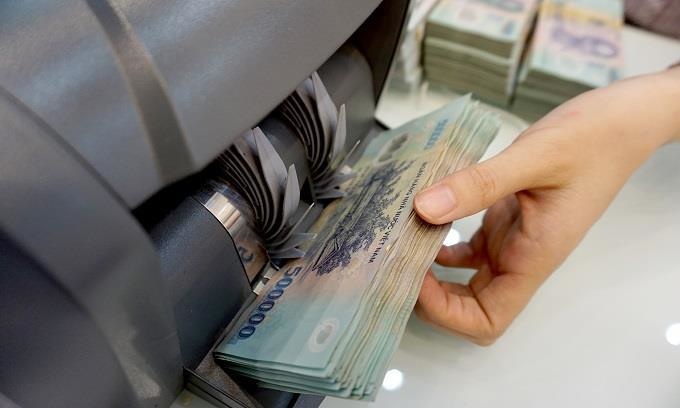
    Vietnam received $2.58 billion in foreign direct investment (FDI) in January-February, up 9.8 percent from the same period a year earlier. FDI pledges, which indicate the size of future FDI disbursements, were more than 2.5 times higher than the same period last year, climbing to $8.47 billion, the Ministry of Planning and Investment said in a statement on Tuesday.

    Of the pledges, 81.8 percent are to be invested in manufacturing and processing, while 5.6 percent would go to real estate, the ministry said.

    Hong Kong was the top source of FDI pledges in the period, followed by Singapore and South Korea.

    The Southeast Asian country reported a record high FDI inflows of $19.1 billion last year, up 9.1 percent.

  • Tokyo stocks close lower after Indian air strike reports

    Tokyo stocks close lower after Indian air strike reports

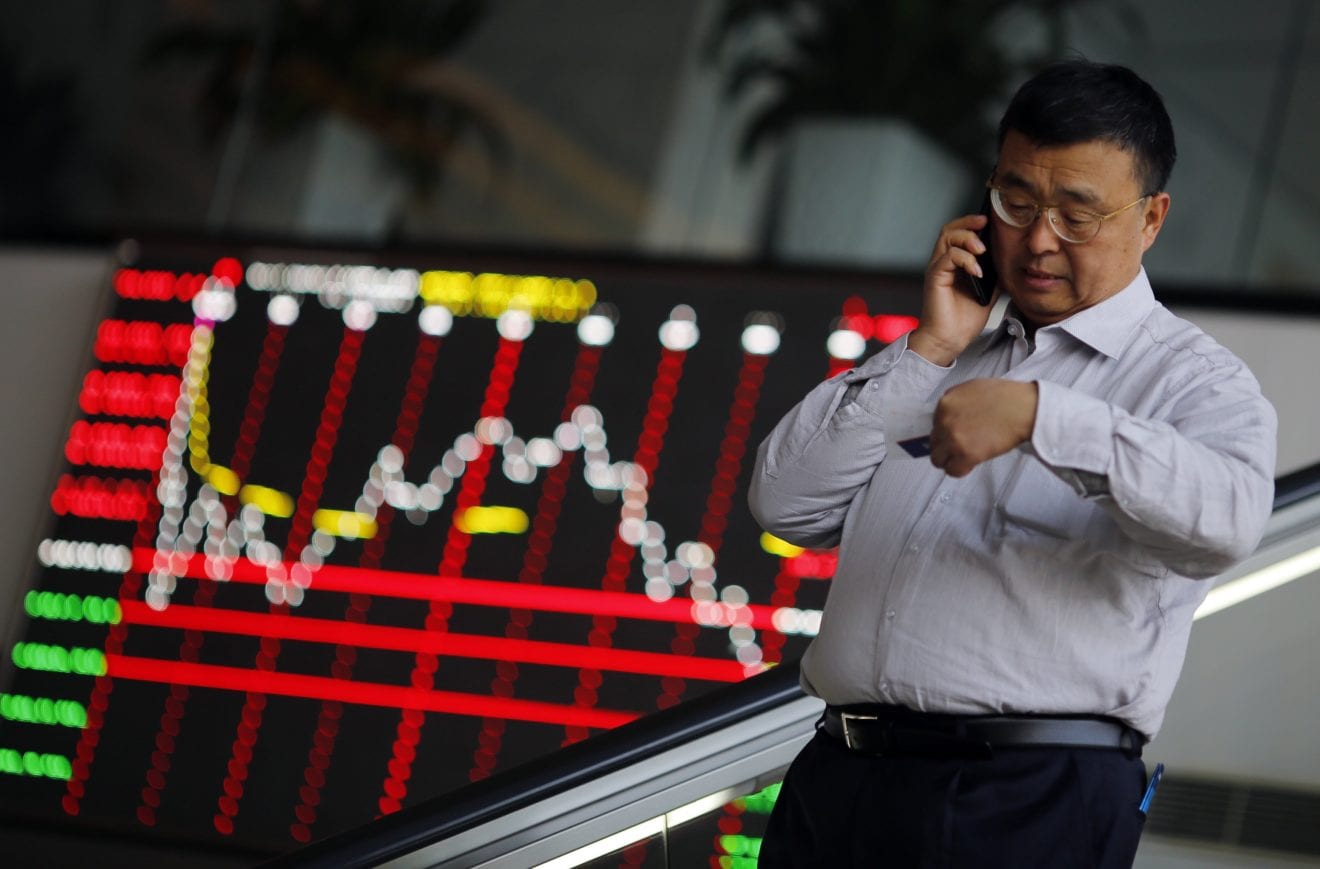
    Tokyo stocks closed lower on Tuesday following media reports saying Indian warplanes crossed into Pakistani airspace over the ceasefire line in Kashmir and dropped payloads. The benchmark Nikkei 225 index, which opened higher, lost 0.37%, or 78.84 points, to end at 21,449.39 while the broader Topix index was down 0.23%, or 3.67 points, to 1,617.20.

  • Wall St rises after Trump stirs China trade hopes again

    Wall St rises after Trump stirs China trade hopes again

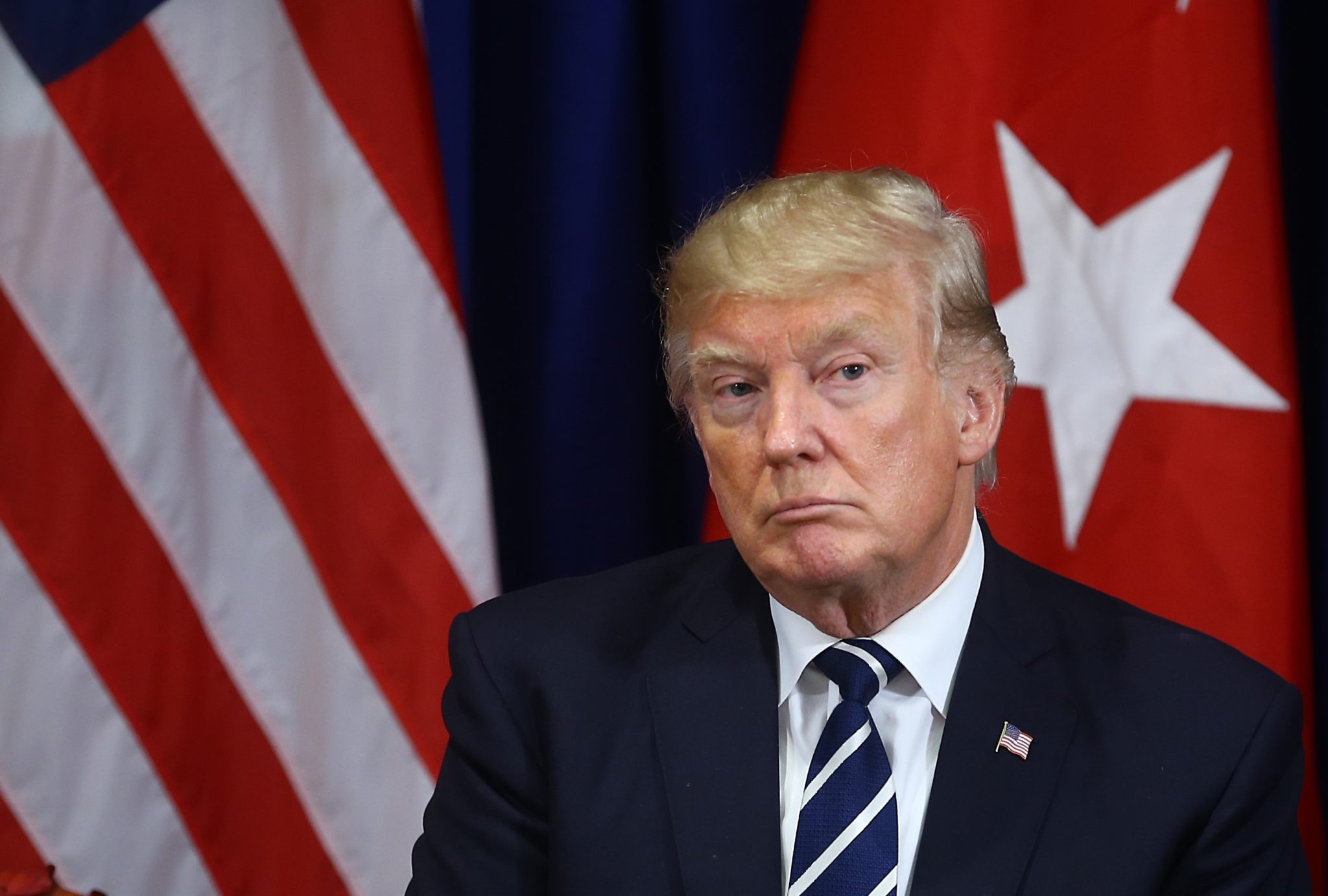
    Wall Street’s three major indexes ended higher on Monday but well below the session’s highs after President Donald Trump said he would delay a planned hike in tariffs on Chinese imports. Postponement of the tariff deadline was seen as the clearest sign yet the two countries were closing in on an agreement to end their prolonged trade spat, which has slowed global growth and disrupted markets.

    But gains were capped after weeks of advances for the S&P 500, the Dow Jones Industrial Average and the Nasdaq, partly due to trade optimism and dovish signals from the Federal Reserve.

    “A lot of the good news related to trade is priced in at this point,“ said R.J. Grant, head of trading at Keefe, Bruyette & Woods in New York.

    “There’s only so much we can rally when somebody says we’re making progress … The trade stuff is a little bit of a sideshow. If you get back to looking at economic growth, it’s clearly slowing.”

    The S&P 500 index ended 4.9% below its late September record closing high after narrowing the gap to 4.3% earlier in the session.

    Investors were also looking ahead to an appearance by Fed Chairman Jerome Powell before a US Senate committee on Tuesday.

    “In the short term trade got taken off the table today so next up on the calendar is Powell speaking to Congress. It’s possible investors are starting to clam up a bit because of what they think Powell may say,“ said Michael Cuggino, portfolio manager at Permanent Portfolio Funds in San Francisco.

    The Dow Jones Industrial Average rose 60.14 points, or 0.23%, to 26,091.95, the S&P 500 gained 3.44 points, or 0.12%, to 2,796.11 and the Nasdaq Composite added 26.92 points, or 0.36%, to 7,554.46.

    Investors were also wary of weakening estimates for current quarter earnings, with Wall Street on Monday expecting a 0.9% decline in S&P first-quarter earnings per share compared with expectations for 5.3% growth on Jan. 1, according to IBES data from Refinitiv.

    “It’s hard to get valuations to continue to rise in the face of falling earnings estimates,” said Jeffrey Kleintop, chief global investment strategist at Charles Schwab in Boston.

    Of the S&P’s 11 major sectors, 7 ended the day with gains.

    After advancing as much as 1.4%, the financials index lost ground late in the day to close up 0.4%.

    The S&P technology index rose 0.5%. The Philadelphia semiconductor index climbed 0.8% as chip companies have a big exposure to China.

    The industrials sector rose 0.4%, getting its biggest boost from General Electric Co, which gained 10.8% after announcing a sale of its biopharma business to Danaher Corp for $21.4 billion. Danaher shares rose 8.2%.

    A flurry of M&A activity also helped the risk-on sentiment.

    The Nasdaq Biotechnology Index rose 2%, its biggest boost coming from shares in Spark Therapeutics Inc, which soared 120% after Swiss drugmaker Roche Holding AG agreed to buy it for $4.3 billion.

    The biggest laggards were the S&P’s defensive sectors – consumer staples, utilities and real estate. The consumer discretionary sector also ended down 0.3%, with the biggest drag from Home Depot, down 1.3%, on concerns about a soft housing market ahead of its quarterly results.

    Advancing issues outnumbered declining ones on the NYSE by a 1.14-to-1 ratio; on Nasdaq, a 1.05-to-1 ratio favoured advancers.

    The S&P 500 posted 58 new 52-week highs and 2 new lows; the Nasdaq Composite recorded 128 new highs and 14 new lows.

    Volume on U.S. exchanges was 7.36 billion shares, compared with the 7.32 billion average for the last 20 trading days.

  • Korea’s Woori Bank partners with Chinese banks on remittance

    Korea’s Woori Bank partners with Chinese banks on remittance

    Woori Bank launched a money-transfer service linked with Chinese banks to allow its customers to readily and easily send money to people holding Chinese bank accounts. On Monday, the bank said the service will be carried out in real time. The partnered entities include the Industrial and Commercial Bank of China, the Bank of China, the Bank of Communications and also Chinese financial services company UnionPay.

    The service will charge 10,000 won ($8.9) in fees for a transaction less than 2 million won. For remittance over 2 million won, the charge will increase to a flat rate of 20,000 won.

    The service was jointly developed by Woori Bank, Woori Card and UnionPay. Once a user sends money, the service will notify the user of the transfer result via text message.

    The sender must send Korean won and the receiver will receive Chinese Yuan.

  • Petronas Chemicals share price up on higher profit

    Petronas Chemicals share price up on higher profit

     Petronas Chemicals Group Bhd’s share price up 0.66% or 6 sen this morning, after its net profit jumped 27.9% to RM1.29 billion for the fourth quarter ended Dec 31, 2018 (Q4). As at 11.56am, the stock stood at RM9.22 with 2.93 million shares changing hands. The group said the higher profit was due to lower tax expenses and higher share of profits from joint ventures and associates.

    Its revenue also increased by 6.8% to RM5.06 billion compared with RM4.74 billion in the previous year’s corresponding quarter.

    It has proposed to declare a second interim dividend of 18 sen per share amounting to RM1.44 billion in respect of the financial year ended Dec 31, 2018.

  • Maybank achieves record earnings of RM8.11 billion for 2018

    Maybank achieves record earnings of RM8.11 billion for 2018

     Malayan Banking Bhd’s (Maybank) registered highest ever net profit of RM8.11 billion for the financial year ended December 31, 2018 (FY18) from RM7.52 billion a year ago, mainly underpinned by higher loans growth, lower overhead costs as well as lower provisioning. Its FY18 revenue also rose 3.8% to RM47.32 billion against RM45.58 billion previously.

    Net profit for the fourth quarter, meanwhile, grew 9.1% to RM2.33 billion from RM2.13 billion in the same quarter a year ago, with revenue expanding 3.8% to RM12.23 billion from RM11.79 billion.

    The bank has proposed to declare a final dividend of 32 sen per share for the quarter under review.

    Together with the 25 sen interim dividend declared earlier, the full-year dividend payout of 57 sen per share amounts to RM6.3 billion or 77.3% of net profit.

    The total dividend payout also translates into a higher dividend yield of 6% versus 5.6% in 2017.

    In 2018, Maybank’s achieved a record net operating income which rose 1.7% to RM23.63 billion, on the back of a 3.1% increase in fund based income as a result of higher contributions from all business sectors and key home markets.

    Group gross loans expanded at a faster pace of 4.8% in FY18, compared with 1.7% previously. The Malaysian operations saw loans expanding 4.8%, Singapore 4.5%, Indonesia 7.0% and 10.9% for other international markets.

    Maybank also highlighted that its net impairment losses for the year coming in 20.5% lower than the previous year, lifting operating profit by 9.3% to RM10.8 billion in 2018.

    For Q4 alone, it also saw net impairment losses coming in 58.1% lower than Q3.

    The bank continued to maintain a healthy liquidity position with its liquidity coverage ratio of 132.4% and loan-to-deposit ratio of 92.7%. Total capital ratio was 18.51% while its fully loaded common equity tier 1 ratio stood at 14.51%, both well above the regulatory requirements of 8.0% and 4.5% respectively.

    On its prospects, Maybank said it will maintain its balance sheet expansion in line with forecast economic growth of its three home markets, in tandem with the group’s risk posture, and continue building on its diversified franchise and footprint to expand income streams through cross business collaborations and focusing on diligent pricing of its assets and liabilities.

    Barring any unforeseen circumstances, the group expects its financial performance for 2019 to be satisfactory in line with the expected growth prospects of its key home markets.

    The group has set the headline key performance indicator (KPI) for return on equity (ROE) of approximately 11%.

    At 2.35pm, Maybank’s share price was trading unchanged at RM9.54 on 3,344,100 shares done.

  • Foreign investors return to surging Vietnamese stock markets

    Foreign investors return to surging Vietnamese stock markets

    At over VND3 trillion ($129.21 million), foreign buying in the local bourses from February 1-25 is three times the January figure. Foreign investment since the beginning of the year has been worth over VND4.3 trillion ($185.16 million). They have been focusing on blue chips like Hoa Phat (HPG), one of Vietnam’s leading steel producers. The company, ignored for the last several months, returned to the portfolio of foreign investors and saw millions of shares traded every day in February.

    In the 11 sessions after the market reopened February 11 after the nine-day Lunar New Year (Tet) holiday from Feb 2-10, foreigners bought 20 million shares for more than VND600 billion ($25.8 million). A month earlier they had been net sellers of over 10 million shares.

    Other blue chips like Vietnam’s biggest dairy company Vinamilk (VNM), private conglomerate Masan Group (MSN) and the biggest bank by assets Vietcombank (VCB) have all run up quite sharply as a result of buying by foreign investors.

    The benchmark VN-Index has gained more than 100 points this year, equivalent to over 11 percent. On Monday it closed at 994.43 points, within touching distance of the psychological 1,000-point mark.

    Foreigners have played a significant role in the recovery, having invested over VND4.3 trillion ($185.16 million) in the period, almost half of it since Tet.

    According to Rong Viet Securities Company, foreign investment this year could actually go down as a result of the reduction in monetary easing and fiscal stimulus across the globe this year, meaning there is less foreign cash available to invest in marginal markets such as Vietnam.

    But it also points out that Vietnam is on the verge of being upgraded to ‘emerging’ market, which could be a positive sign for foreign investors.

  • Hanoi businesses do brisk business with Trump-Kim summit specials

    Hanoi businesses do brisk business with Trump-Kim summit specials

    Several enterprising businesses have cashed in on the Trump-Kim summit with signature products – craft beer, cocktails, haircuts and T-shirts. A standing bar on Tran Vu Street has already gained a lot of attention with a craft beer named Kim Jong Ale, a kimchi flavored beverage concocted in Saigon.

    Huong Anh, who manages the bar, has waxed lyrical about the beer for the occasion. “Kim Jong Ale is a customers’ favorite here. The inspiration behind this beer is the pure streams of Mount Paektu, which is located between North Korea and China,” she told reporters.

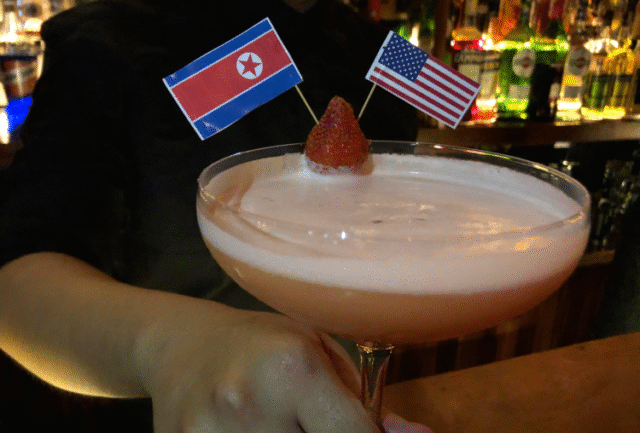
    Yet another bar on Hang Than Street brought out a cocktail called “Make the world great again”, mixing soju, bourbon and Fireball Cinnamon Whisky, pineapple juice, vanilla and grenadine.A wine bar in the capital city has also helped itself to some publicity and increased business with a cocktail called “Peace Negroniations,” a variation of the classic Negroni, made with pink-grapefruit soju, vermouth and bitters. We replaced gin with soju for this special cocktail,” bartender Chau said.

    It took two days to complete this recipe, said Ngo Dinh Tien, a bartender.

    A pizzeria has been offering free pizzas to people with names similar to that of Kim Jong-un and Donald Trump, and to those sporting the distinctive haircuts of both leaders, from February 20-28.

    To get such haircuts, the place to go to is the one on De La Thanh Street that has been offering these for free. The salon is even organizing a contest for people getting such haircuts, with the grand prize being free haircuts for three years.

    A South Korean restaurant in the My Dinh area has hung a banner on their door, featuring Kim Jong-un and Donald Trump and welcoming the summit. The owner said the poster has attracted a lot of attention with many customers taking selfies with it.

    An Old Quarter restaurant has hogged some attention for itself with hamburgers named after the two leaders – “Durty Donald” and “Kim Jong Yum,” served with U.S. and North Korean flags.


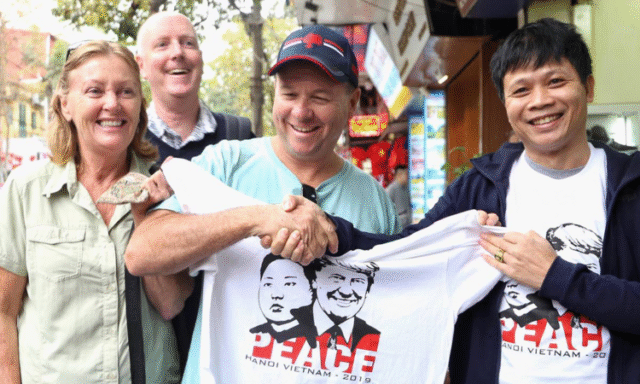
    Perhaps the hottest summit item has been souvenir T-shirts. Truong Thanh Duc’s small shop on Hang Bong Street has been operating at full capacity, making 500 shirts a day with a design that says peace and carries pictures of both leaders. Each T-shirt costs less than $5


    .