Category: Finance

Retail News Asia is committed to providing both local and global retailers with the latest Finance news throughout the Asian market. This on a daily base.

  • Foreign investment crucial to Vietnamese banks in 2019: Moody’s

    Foreign investment crucial to Vietnamese banks in 2019: Moody’s

    Most Vietnamese banks fall short of international capital adequacy norms and have to focus on attracting foreign capital this year, Moody’s has said. The credit rating agency said in a release Monday that “the underdevelopment of the domestic capital markets” means the banks would have to look to foreign investors to meet the capital requirement of 8 percent of risk-weighted assets to cover operational risks.

    Raising capital has been a struggle for Vietnamese banks in recent years. Major state-owned banks such as BIDV and Vietinbank have for long been making plans to increase charter capital but in vain.

    BIDV, the second largest listed bank, has had charter capital of nearly VND34.19 trillion ($1.46 billion) unchanged since 2015.

    Last November it planned to sell a 17.65 stake to South Korea’s KEB Hana Bank to increase it to over VND40.22 trillion ($1.73 billion), but the deal has not been consummated.

    Vietinbank, the fourth largest listed bank, has seen its capital remain unchanged since 2014 at VND37.23 trillion ($1.59 billion).

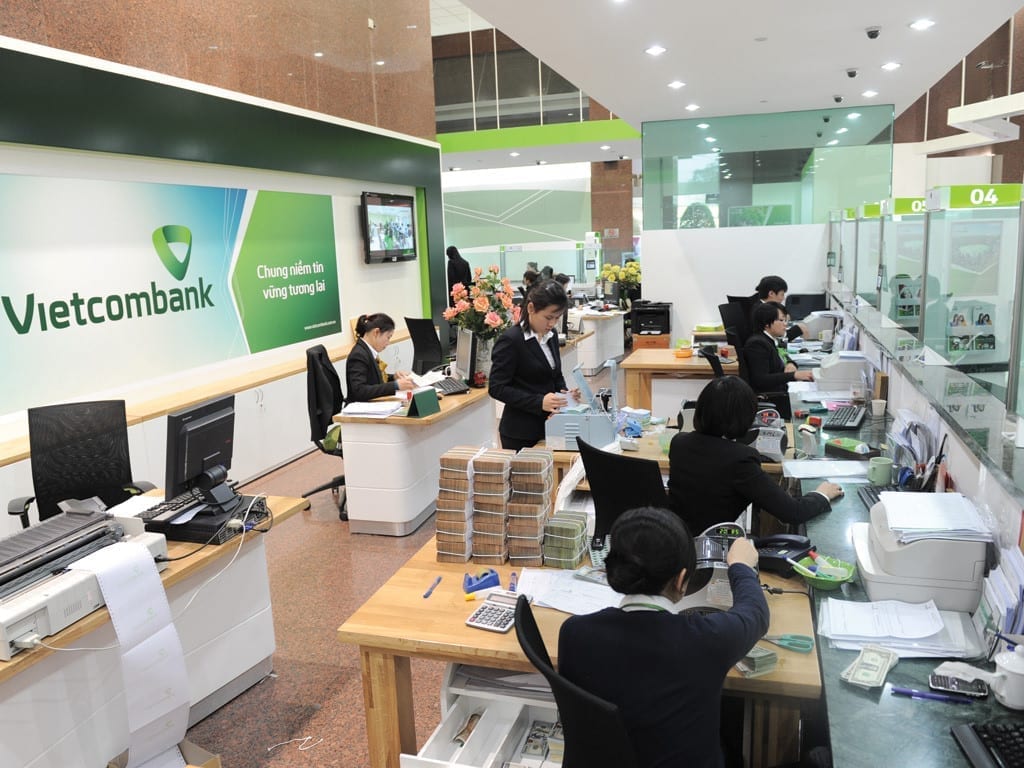
    Only Vietcombank, the largest listed bank in the country, last month raised VND6.2 trillion ($265.86 million) from selling a 3 percent stake to foreign investors, as part of its plan to ultimately sell 10 percent.

    BIDV and Vietinbank had offered to pay its largest shareholder, the State Bank of Vietnam (SBV), the previous year’s dividends in stocks and not cash to increase their capital, but the central bank refused saying it needed the cash.

    Moody’s added that the banks’ capitalization will strengthen this year because of stronger profitability and stable credit growth.

    It said that Vietnamese banks last year achieved a higher aggregate return on assets for a second year running, registering a rise of 1.1 percent from 0.9 percent in 2017.

    Aggregate net income for the banks rose 35 percent to VND70 trillion ($3 billion) in 2018 from the previous year, it said.

    “For 2019, Vietnamese banks that Moody’s rates will achieve a further improvement in profitability, again because of wider net interest spreads and lower credit costs,” said Rebaca Tan, a Moody’s analyst.

    “Credit growth will stay stable over the same period because of tighter control by the State Bank of Vietnam, and asset quality will improve further, as the banks continue cleaning up their balance sheets.”

  • Gold prices rise on trade talk optimism; Fed stance limits gains

    Gold prices rise on trade talk optimism; Fed stance limits gains

    Gold prices edged higher on Friday as optimism over U.S.-China trade talks pressured the dollar, but signs of the U.S. Federal Reserve raising interest rates again this year capped gains. Spot gold inched 0.1 percent higher to $1,324.59 per ounce at 0408 GMT. The metal was headed for a second straight weekly rise, up almost 0.3 percent. The precious metal had hit a 10-month high on Thursday, but later erased the gains.

    U.S. gold futures were subdued at $1,327.7 per ounce.

    “On a day-to-day basis, gold is a function of changing currency markets and the U.S. dollar. Medium outlook is a lot more to do with geopolitical issues and yields,” said Kyle Rodda, a market analyst with IG Markets.

    The dollar index against a basket of six major currencies was set to decline about 0.3 percent this week, which could be its biggest weekly fall in a month..

    “The fact that gold was overbought-driven very much by a new yield environment and tensions around the world has helped keep gold prices elevated,” Rodda said.

    Gold had hit a 10-month high of $1,346.73 on Wednesday, but minutes from the Fed’s January policy meeting indicated there might in fact be a rate hike this year, erasing gains in gold.

    “Dovish signals from U.S. Federal Open Market Committee officials for the shorter term have kept global equities steady whilst applying bearish pressures on the non-interest bearing asset,” Phillip Futures said in a note.

    Higher interest rates reduce investor interest in non-yielding bullion.

    Markets were looking for further indications of progress on trade talks with U.S. and Chinese negotiators resuming high-level talks on Thursday to hash out a deal that could end their trade war, just over a week before a U.S.-imposed deadline.

    The United States and China have started to outline commitments in principle on the stickiest issues in their trade dispute, marking the most significant progress yet toward ending a seven-month trade war, according to sources familiar with the negotiations, Reuters reported exclusively.

    Indicative of investor sentiment toward bullion, holdings of SPDR Gold Trust, the world’s largest gold-backed exchange-traded fund, fell 0.63 percent to 789.51 tonnes on Thursday.

    Meanwhile, palladium was up 0.3 percent to $1,473.00 per ounce, having surpassed the key $1,500 level for the first time on Feb. 20.

    The autocatalyst metal was on track for a third straight week of gains, up nearly 3 percent. Platinum gained 0.6 percent to $824, and was set for its best week since early January.

    Silver was little changed at $15.81 per ounce. It was on course to snap two consecutive weekly losses.

  • Allianz Malaysia earnings up 15.3% to RM100m in fourth quarter

    Allianz Malaysia earnings up 15.3% to RM100m in fourth quarter

    Allianz Malaysia Bhd’s earnings increased by 15.3% in the fourth quarter ended Dec 31, 2018 (Q4) to RM100.04 million, from RM86.78 million in the previous corresponding quarter mainly due to higher underwriting profit from motor business arising from lower claims and management expenses. For the quarter under review, the general insurance segment recorded a profit before tax of RM78 million, an increase of 15.7% as compared to the preceding year quarter.

    Meanwhile, the life insurance segment recorded a profit before tax of RM50.3 million, a decrease of 15.5% due mainly to higher group claims.

    Allianz reported a 7.63% increase in revenue to RM1.3 billion in Q4 from RM1.21 billion, driven by higher gross earned premiums and investment income.

    For the full year, its net profit grew 30.9% to RM377.02 million from RM287.96 million a year ago, while revenue was up 7.9% to RM5.18 billion from RM4.8 billion previously.

    The general insurance industry reported a marginal growth of 1.5% in gross written premium for the year ended Dec 31, 2018.

    Allianz said the group anticipates similar trend in the medium-term given the economic uncertainty and subdued consumer sentiments.

    However, it said the general insurance segment will continue to offer innovative products and services in anticipation of a fully liberalised insurance market while further expanding its multi-distribution model to maintain market leadership.

    For the life insurance segment, Allianz will continue to leverage on the strength of its multi-distribution channels and increase productivity across distribution channels to generate growth.

    The group will also continue to focus on optimising the performance of its insurance businesses and expect to maintain satisfactory results in 2019, it added.

  • Asia markets rally as Trump delays China tariffs

    Asia markets rally as Trump delays China tariffs

    Shanghai led a rally across Asian markets Monday after Donald Trump said he would delay a hike in tariffs on Chinese goods citing “substantial progress” in trade talks and fuelling hopes of an end to their long-running stand-off. Optimism over the negotiations had already provided support to global equities, spurring a rally in January and February, but the president’s comments gave extra ammunition to investors to ramp up the buying.

    The news also fired currency markets with the yuan extending gains to a seven-month high, while other high-yielding, riskier units were also up against the dollar.

    Trump said on Twitter that the US “has made substantial progress in our trade talks with China on important structural issues including intellectual property protection, technology transfer, agriculture, services, currency, and many other issues”.

    He added: “As a result of these very productive talks, I will be delaying the US increase in tariffs now scheduled for March 1.”

    The president also said he planned to hold a summit with his Chinese counterpart Xi Jinping at his Mar-a-Lago estate in Florida to sign a deal.

    China’s Xinhua news agency added that the two sides had “made substantial progress on specific issues” including on transfer of technology, intellectual property and agriculture.

    ‘Sigh of relief’

    In morning trade, Shanghai jumped 2.8% and Hong Kong added 0.4% while Tokyo ended the morning 0.7% higher.

    Sydney and Singapore each put on 0.1%, while Seoul was flat, Taipei added 0.4% and Jakarta rose 0.3%.

    The gains in Asia followed another positive lead from Wall Street, where the Dow enjoyed its ninth straight weekly gain – the longest streak since May 1995.

    “This is a sigh of relief,“ said Ben Emons, managing director for global macro strategy at Medley Global Advisors. “Markets will still keep a level of caution, but this news is encouraging,“ he said.

    The upbeat sentiment lifted high-risk currencies, with the yuan hitting its highest level against the dollar since July, while South Korea’s won, the Australian dollar and the Indonesia rupiah were also well up.

    Forex traders will be closely watching speeches this week from top Federal Reserve officials – including chairman Jerome Powell’s appearance in front of lawmakers – hoping for clues about the bank’s monetary policy plans.

    Wall Street “will be looking for soothing comments about the future size of the balance sheet – the bigger the better – and insights into future rate hikes”, said Jeffrey Halley, senior market analyst at OANDA.

  • Cashless-payments will be launched soon in Japan

    Cashless-payments will be launched soon in Japan

    More than 50 Japanese banks are joining Tokyo bank J-Coin to set up a cashless payment system developed by Mizuho Financial Group, to be launched late next month. The new service will initially be rolled out to existing account holders at regional banks. Mizuho Bank will initiate the service on March 1, with regional banks to follow after a period of around three weeks.
    Around half of Japan’s regional banks are participating in the scheme at a time when the Japanese government is advocating cashless payments in advance of the 2020 Tokyo Olympics and Paralympics.

    J-Coin payments will be processed via an app using a QR barcode, a phone number or a Line messenger personal ID number. Unlike the prepaid smart cards commonly used in Japan, J-Coin allows transactions between individuals without the need for dedicated scanning devices at point of sale.

    A number of major retailers, including East Japan Railway Co and FamilyMart, have already indicated interest in adopting the system.

    Observers have noted that partnerships with international cashless payment providers such as Alipay could see J-Coin become a preferred method of payment among visitors to Japan.

    The Japanese government, aiming to double digital payments to 40 per cent of all transactions by 2025, will offer rebates of 2 per cent of convenience-store cashless purchases and 5 per cent of cashless purchases at other small- or medium-sized stores for nine months after its consumption tax is raised from 8 per cent to 10 per cent in October this year.

  • CIMB Niaga posts 16.9% net profit growth in 2018

    CIMB Niaga posts 16.9% net profit growth in 2018

    CIMB Group Holdings Bhd’s 92.5%-owned T Bank CIMB Niaga Tbk reported an audited consolidated net profit of 3.5 trillion rupiah (RM1 billion) for the financial year ended Dec 1, 2018 a 16.9% growth compared with a year ago. The bank said the improved net profit came on the back of a 13.8% increase in on-interest income to 3.8 trillion rupiah and a 63 basis-point improvement in credit charges from 2.26% to 1.63% as provisions declined 25.7%.

    CIMB Niaga’s loan loss coverage remains comfortable at 105.86%.

    “We aim to maintain a targeted growth trajectory while keeping asset quality as a priority,” said CIMB Niaga president director Tigor M. Siahan.

    Total loans grew by 1.8% to 188.5 trillion rupiah mainly from growth in mortgages of 11.2% to 30 trillion rupiah, small- and medium enterprise loans of 8.5% to 29.6 trillion rupiah and credit card of 5.5% to 8.6 trillion rupiah.

    With total assets of 266.8 trillion rupiah as at Dec 31, 2018, CIMB Niaga maintained its position as Indonesia’s second largest private owned bank by assets.

    Its capital adequacy ratio stood at 19.66% as at end-December 2018, representing a 106 basis-point increase from the previous year.

    “Going forward, we will continue to focus on expanding our consumer and SME businesses, building our CASA (current account savings account) franchise and strengthening our Sharia business proposition and Sharia-compliant product offerings,” Tigor added.

  • Malaysia’s economy likely to slow in April to June 2019

    Malaysia’s economy likely to slow in April to June 2019

    Malaysia’s economy is likely to grow at a slow rate in April to June 2019 in view of the decline in the Leading Index (LI) in December 2018, according to the Statistics Department. Chief statistician Datuk Seri Dr Mohd Uzir Mahidin said the monthly change of LI decreased 1.4% to 117.3 points in December 2018 from 119.0 points in the previous month.

    “The declined in six out of seven components have weighed down the performance of the LI with the significant decreased by two components namely real imports of other basic precious & other non-ferrous metals and number of housing units approved, which posted negative 0.5% respectively,” he said in a statement.

    The annual change of LI also registered a negative growth of 1.7% in December 2018.

    The LI is designed to monitor the economic performance for an average of four to six months ahead.

    Meanwhile, the Coincident Index (CI), a measure of current economic activity, was unchanged in December 2018.

    The increased in real salaries & wages in manufacturing sector (0.2%) and real contributions to EPF (0.1%) were offset by the decreased in capacity utilisation in manufacturing sector (-0.2%) and Industrial Production Index (-0.1%).

    The annual change of CI grew at 3.6% as in the previous month.

  • Petronas Gas Q4 profit weighed down by Kimanis Power

    Petronas Gas Q4 profit weighed down by Kimanis Power

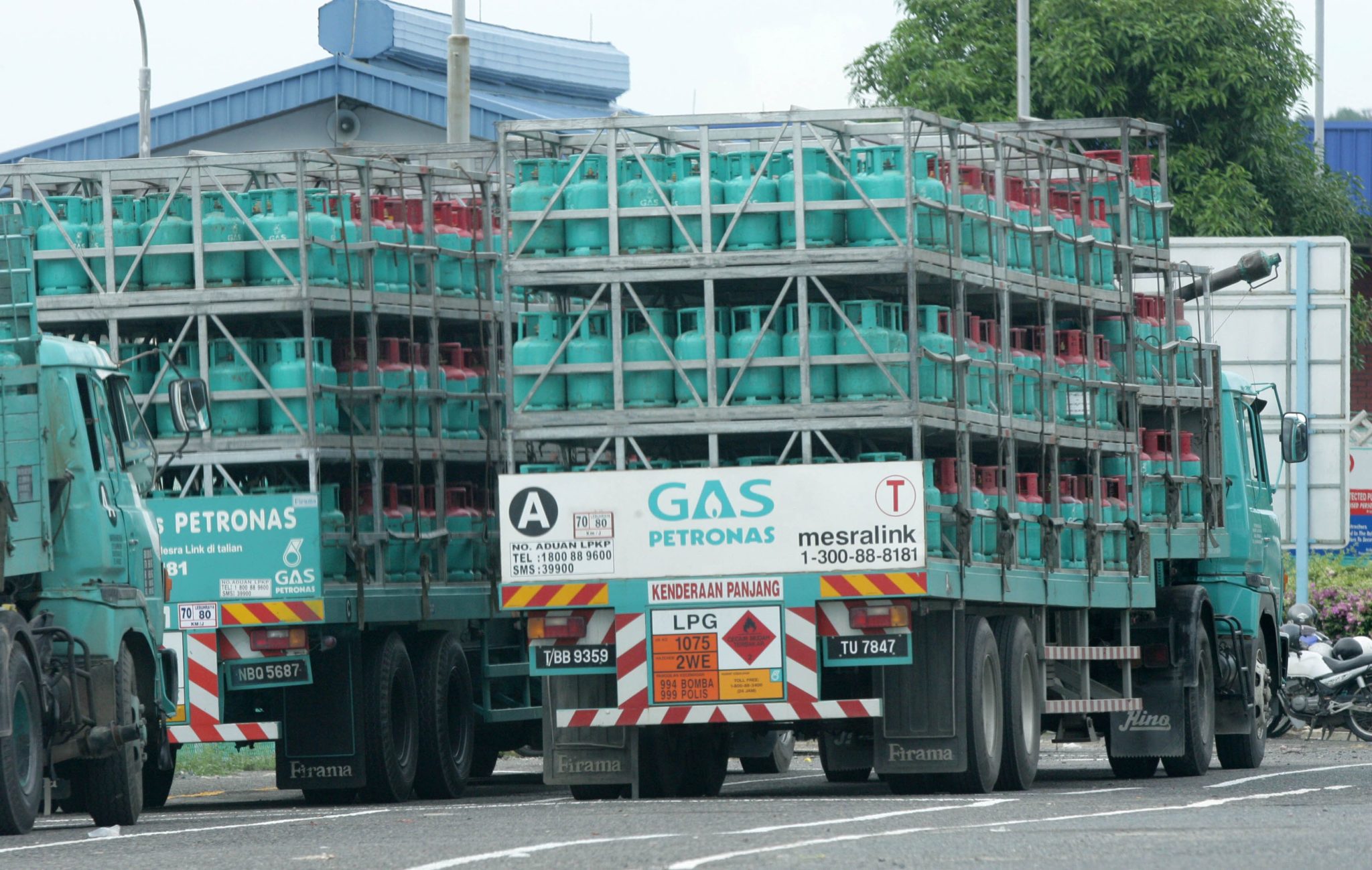
    Petronas Gas Bhd’s net profit fourth quarter ended Dec 31, 2018 fell 34.7% to RM317.90 million from RM486.70 million a year ago, largely attributed to share of losses from a joint venture company, Kimanis Power Sdn Bhd. The losses were due to de-recognition of deferred tax assets amounting to RM124.3 million (being 60% share of the group) in relation to certain tax benefits which now have a seven-year utilisation limit under the new Finance Act 2018.

    Its revenue grew 4.9% to RM1.39 billion compared with RM1.32 billion in the previous year’s corresponding quarter mainly contributed by the second liquiefied natural gas (LNG) regasification terminal in Pengerang, Johor which commenced commercial operations in November 2017, coupled with higher revenue from utilities and gas transportation segment.

    The group has approved a fourth interim dividend of 22 sen per share amounting to RM435.3 million in respect of the financial year ended Dec 31, 2018.

    For the full-year period, Petronas Gas’ net profit grew 0.98% to RM1.81 billion from RM1.79 billion a year ago, while revenue of RM5.5 billion was the highest in history, an increase of 12.3% compared to RM4.90 billion last year.

    The Energy Commission has approved the tariffs for the gas transportation and regasification services for 2019. While the tariffs are expected to affect the group’s transportation and regasification business segment revenues in 2019, both segments are anticipated to continue contributing positively to its earnings.

    The group’s gas processing segment is expected to deliver improved earnings pursuant to the higher fixed remuneration charge under the second term of the 20-year Gas Processing Agreement effective from 2019 until 2023.

  • Palm oil prices to remain steady in 2019: MPOC

    Palm oil prices to remain steady in 2019: MPOC

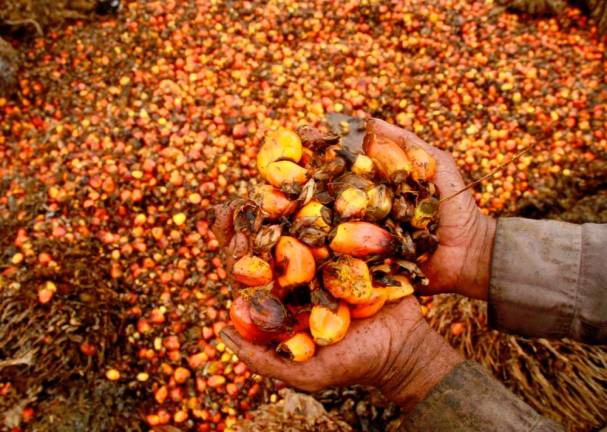
    Malaysian palm oil prices are set to hold steady in 2019 at an average of RM2,303 a tonne, according to estimates by the Malaysian Palm Oil Council (MPOC), while global output of the tropical oil is expected to rise by 3 million tonnes. “Global palm oil production is projected to be 72 million tonnes, with Malaysia and Indonesia as leading producers,“ the MPOC said in an online conference presentation.

    Rising production could cap recent price gains for palm oil, which has been recovering after touching a 3-year low last November at RM1,940 a tonne.

    Benchmark palm oil was trading at RM2,281 a tonne. The tropical oil averaged RM2,308 last year, according to Refinitiv Eikon data.

    MPOC, Malaysia’s key marketing agency for palm oil, also estimated that Malaysian output would rise to 20.2 million tonnes in 2019 and pegged Indonesian production at 42.8 million tonnes.

    Malaysia produced 19.5 million tonnes of palm oil last year, while Indonesia’s 2018 output stood at 42 million tonnes, based on estimates by the Indonesia Palm Oil Association.

    Malaysian palm oil output is expected to rise as newly replanted areas start to mature, but the increase will be marginal due to ageing trees and a possible El Nino in 2019 that will curb production, the MPOC said in its presentation.

    “Indonesian production is forecast to reach a record high of 42.8 million tonnes in 2019 due to improving weather conditions as well as newly maturing areas,“ it added.

    Palm oil exports in 2019 are also expected to increase in 2019, in line with an expected rise in demand from key importer India due to its declining domestic oilseed production.

    “India is expected to increase its (vegetable oil) imports by 500,000 tonnes, reaching 15.15 million tonnes, out of which palm oil will account about 10 million tonnes,“ said the MPOC presentation.

    Industry regulator the Malaysian Palm Oil Board forecast Malaysia’s a slight rise in production to 20.3 million tonnes this year due to favourable weather conditions and an expansion in oil palm matured area, according to an online presentation.

    It estimated Malaysia’s 2019 exports at 17.2 million tonnes, up from 16.5 million tonnes last year, due to “expected stronger palm oil demand from major markets.”

  • HSBC pre-tax profit up 16% at US$19.9 bn in 2018

    HSBC pre-tax profit up 16% at US$19.9 bn in 2018

    Banking giant HSBC said on Tuesday that pre-tax profit rose 16% to US$19.9 billion last year with growth across its global businesses despite a “challenging external environment in the fourth quarter”. The results capped the first full year at the helm of the Asia-focused bank for chief executive officer John Flint, who has vowed growth while keeping a lid on costs as trade tensions between the United States and China rumble.

    However, earnings in the last three months of 2018 came in below expectations as Washington’s trade war began to bite globally and hammered the stock markets, especially in Hong Kong and China.

    Adjusted pretax profit fell one percent to US$3.39 billion in October-December, missing the US$4.4 billion consensus average by Bloomberg Newsderived from estimates compiled by the bank.

    Global markets adjusted revenue was down US$202 million to US$1.1 billion over the same period, while wealth management dropped 18%, also to US$1.1 billion.

    Overall the year saw strong growth for HSBC with net profit ballooning 30%to US$12.6 billion while adjusted pre-tax profit rose three percent to US$21.7 billion.

    The bank had to lay off tens of thousands of staff as part of a wide-ranging overhaul that also saw it sell its Brazil operations in 2015.

    But it showed a healthy doubling of profits by 2017, a year that also saw it nominate Mark Tucker as chairman, breaking a longstanding tradition of appointing insiders to the post.

    In a statement attached to Tuesday’s earnings, Tucker and Flint said the bank was prepared to weather fallout from both a possible deterioration in the trade talks between Washington and Beijing and Britain’s impending departure from the EU.

    “The fundamentals for growth in Asia remain strong in spite of a softer regional economic outlook,“ Tucker said in a statement attached to the annual report.

    “The system of global trade remains subject to political pressure, and differences between China and the US will likely continue to inform sentiment in 2019,“ he added.

    With Brexit looming, HSBC followed the other major British financial giants in ring-fencing its UK bank.

    “We continue to prepare for the UK’s departure from the EU” Flint said, adding its operations in France “gives us a major advantage in this regard”

  • Alipay is available at Walgreens’stores now

    Alipay is available at Walgreens’stores now

    Chinese consumers visiting the U.S. can now use Alipay at Walgreens, one of the largest drugstore chains in the country. Whether traveling for business or pleasure, Alipay users can shop at 3,000 locations in major cities such as New York, San Francisco and Las Vegas to start, the companies said. The number is expected to reach 7,000 by April. Walgreens operates about 9,560 drugstores in all 50 U.S. states, Washington, D.C., and other U.S. territories.

    About 4 million users of the mobile-payments app are in the U.S. annually, according to Alipay, which is owned by Alibaba Group affiliate Ant Financial. The service offers them a quick and easy way to pay for goods while overseas, one that is already ubiquitous in China and lacks the higher foreign-transaction fees typical of credit cards.

    “Walgreens is focused on making shopping more convenient for our customers,” including Chinese consumers, said Walgreens President of Operations Richard Ashworth, including Chinese consumers. “Not only can they buy our products via our dedicated store on Alibaba’s Tmall Global marketplace, but they will now also be able to shop in the U.S., using Alipay as they would in China.”

    In September, parent company Walgreens Boots Alliance made its first move into China’s consumer market by launching a flagship store on Alibaba Group’s dedicated cross-border e-commerce platform, Tmall Global. The direct-to-consumer channel added to a wholesale and retail pharmacy business that WBA had already been operating in China.

    According to China’s Ministry of Tourism, Chinese travelers took about 140 million trips abroad last year. In an effort to capture that business, Ant Financial has been working with merchants across the globe to make Alipay available overseas to its more than 1 billion users (which includes users of its joint-venture partners’ apps). Alipay currently is available in over 40 countries and regions. Last year, Alipay added Germany’s Oktoberfest, the world’s largest gingerbread city in Norway and San Francisco’s Pier 39 to its list of merchant partners, all of which are popular destinations for Chinese tourists.

    “This is a key strategic partnership for achieving awareness in the U.S.,” Yulei Wang, general manager of Alipay North America, said of the Walgreens partnership. “We are excited to partner with a company that has been trusted across America since 1901, and is constantly evolving to provide more Chinese consumers a seamless and familiar way to pay.”

  • Vietnam banks among 500 most valuable brands

    Vietnam banks among 500 most valuable brands

    Four Vietnamese lenders, three state-owned and one private, are among the world’s top 500 most valuable brands this year. In an annual ranking by BrandFinance, VietinBank was ranked 242, BIDV, 307, Vietcombank, 325, and VPBank, 361. Last year, VietinBank, BIDV and Vietcombank, three major Vietnamese banks, made it to this elite list, and this year is the first time that a Vietnamese private bank, VPBank, has made it to the Brand Finance Banking 500.

    In this year’s ranking, BIDV is one of top ten banks in the world in terms of brand strength, with growth of 22 percent; while VietinBank is one of top ten banks with biggest Brand Value Change 2018-2019 with a whopping 66 percent increase.

    Chinese bank Industrial and Commercial Bank of China (ICBC) continues to sit on the throne this year, followed by three others Chinese lenders in the top four.

    According to the UK-based Brand Finance, a leading independent brand valuation and strategy consultancy, Chinese banking brands have grown “at an outstanding rate despite fears of an economic slowdown and the rise of protectionism in international trade.”

    It said Chinese banks grew 28 percent on average, achieving $407 billion in total brand value, over $100 billion more than American banks.

    In August last year, Vietnam’s government approved a master plan for banking sector development until 2025 with a vision to 2030.

    The plan envisages at least 2-3 banks in Asia’s top 100 in terms of total assets and targets to have 3-5 banks listed on foreign stock exchanges by 2025.

  • Record earnings for Maybank Indonesia

    Record earnings for Maybank Indonesia

    PT Bank Maybank Indonesia Tbk’s (Maybank Indonesia) profit after tax and minority interests (patami) for the financial year ended Dec 31, 2018 surged 21.6% to a new high of Rp2.2 trillion (RM640 million) on the back of higher net interest income (NII) and continued improvement in asset quality.

    The bank’s profit before tax (PBT) jumped 20.5% to a record Rp3 trillion, its highest achievement to date, while NII grew 5.2% to Rp8.1 trillion in December 2018 compared with Rp7.7 trillion in the previous corresponding period, it said in a statement today.

    Additionally, it said continuous implementation of disciplined pricing coupled with improved operational efficiencies enabled the bank to contain pressures on interest margin, resulting in improvement in net interest margin by 7 basis points (bps) to 5.2%.

    The bank’s asset quality also improved significantly as reflected by lower non-performing loan (NPL) levels of 2.6% (gross) and 1.5% (net) as at Dec 31, 2018 compared with 2.8% (gross) and 1.7% (net) respectively in the previous year.

    Following that, Maybank Indonesia was able to reduce its loan loss provisions by 38.6% to Rp1.3 trillion as of December 2018.

    Its loans grew 6.3% to Rp133.3 trillion from Rp125.4 trillion in the previous year.

    It also maintained a strong capital position with total capital reaching Rp26.1 trillion in FY18, while capital adequacy ratio (CAR) improved to 19% from 17.5%.

    Maybank Indonesia president commissioner and Maybank group president and CEO Datuk Abdul Farid Alias said the bank’s outstanding results for FY18 testify to its commitment towards sustainable business growth, as well as its relentless pursuit in ensuring sound asset quality, improved operational efficiency and better overall productivity.

    “Although the operating environment continues to remain challenging, we believe that we are poised for further growth in the coming year,” he added.

  • Alibaba’s Ant Financial buys WorldFirst for $700m

    Alibaba’s Ant Financial buys WorldFirst for $700m

    Alibaba subsidiary Ant Financial says it plans to buy UK-headquartered money-transfer company WorldFirst. And in separate news, the Chinese e-commerce behemoth is in discussions over investing in the Metro China wholesale retail business.

    The WorldFirst deal will allow Ant Financial to gain market share in Europe’s fintech and payments industries and will give it an established retail network of currency-exchange stores covering cities including Sydney, Australia; London and Amsterdam, as well as throughout Asia. It has 600 employees in seven international offices and claims to have exchanged more than US$67 billion for 130,000 customers since its launch in 2004.

    The company also had outlets in the US but has reportedly closed these to avoid potential regulatory hurdles with the sale to a Chinese-owned business.

    Ant Financial last year unsuccessfully tried to acquire US-based money-transfer company MoneyGram, largely due to opposition from US lawmakers.

    Metro move

    Meanwhile, Alibaba is in talks to buy a share of German wholesaler Metro AG’s Chinese business.

    Neither company has confirmed or denied the talks are underway and they are at an early stage and may break down.

    Metro China operates 95 stores and struggled to achieve profitability in the market until recently. Metro sales in Asia rose 7 per cent to US$1.17 billion in the December quarter.  Most of the Metro China stores are in tier 1 cities, including Beijing and Shanghai.

    Metro is holding talks with other parties as well ahead of an official sale process.

    Olaf Koch, Metro’s CEO, confirmed this week that the company was considering potential partnerships with Chinese companies. Metro and Alibaba have already cooperated online.

    “We are growing continually and we are profitable [in China],” Koch said at the time Metro released its first-quarter results.

  • Dollar eases as trade deal prospects bolster risk, sterling gains

    Dollar eases as trade deal prospects bolster risk, sterling gains

    The dollar was marginally weaker on Monday, as increasing expectations of a U.S.-Sino trade deal led investors to shift away from the safety of the greenback into riskier assets. Both the United States and China reported progress in five days of negotiations in Beijing last week, although the White House said much work remains to be done to force changes in Chinese trade behaviour.

    Negotiations will continue next week in Washington as investors hope for an end to the trade war between the world’s two largest economies.

    “Trade is the big focus for the markets…with talks shifting from Beijing to Washington, we could get more news flow,” said Michael McCarthy, chief markets strategist at CMC Markets.

    “I expect the euro to remain under pressure this week while dollar/yen could also fall if we see risk-aversion based on negative trade news flow.”

    In Asia, the yen was marginally higher versus the greenback at 110.53.

    The Aussie gained 0.1 percent to $0.7144, after gaining 0.48 percent on Friday on hopes of a trade breakthrough between the United States and China. The kiwi dollar also gained around 0.1 percent on the dollar to $0.6868.

    U.S.-China trade tensions have kept markets highly volatile since last year.

    U.S. duties on $200 billion worth of Chinese imports are set to rise from 10 percent to 25 percent if no deal is reached by March 1 to address U.S. demands that China curb forced technology transfers and better enforce intellectual property rights.

    The dollar index, a gauge of its value versus six major peers was marginally lower at 96.85. The index has gained 1.4 percent so far this month despite weaker-than-expected U.S. data as well as a cautious Federal Reserve which is widely expected to keep rates steady this year due to a slowdown in growth and muted inflation.

    The dollar index has gained mainly because of the euro , which has around 58 percent weightage in the index.

    The single currency was flat at $1.1292 in early Asian trade and has had two straight weeks of losses. Traders are betting on a weaker euro in the coming months as they expect the European Central Bank to keep its monetary policy accommodative due to low growth in the common area, tepid inflation and political uncertainties.

    On Friday, Benoit Coeure, a member of the European Central Bank’s executive board, said a new round of cheap multi-year loans to banks was possible. Coeure added that the euro zone’s recent economic slowdown is more pronounced than earlier expected, suggesting the path of inflation will also be more shallow.

    The ECB will next meet on March 7 and policymakers are widely expected to slash growth and inflation projections as the euro zone is suffering its biggest slowdown in half a decade.

    Elsewhere, sterling was up by 0.1 percent to $1.2903, building on its gains from Friday.

    The pound rallied 0.6 percent on Friday, helped by reports of some hedge fund buying, a conciliatory tone on Brexit from the Irish foreign minister and stronger-than-expected British retail sales data.