Category: Finance

Retail News Asia is committed to providing both local and global retailers with the latest Finance news throughout the Asian market. This on a daily base.

  • Vietnam per capita income matches Malaysia’s 20 years ago

    Vietnam per capita income matches Malaysia’s 20 years ago

    Vietnam’s recent economic achievements notwithstanding, much effort is needed for it to close the gap with other countries, a minister has said. Minister of Planning and Investment Nguyen Chi Dung said at a conference Wednesday that while Vietnam’s GDP per capita had surged by 27.4 times in the last 30 years to almost $2,590 last year, Malaysia had achieved this figure 20 years ago.

    Thailand had done so 15 years ago and Indonesia 10 years ago.

    The main limitations of its economy were low labor productivity, economic efficiency and competitiveness, and the country also faced the risk of being stuck in the middle-income trap.

    According to the 2018 Vietnam Annual Economic Report, average productivity per worker was VND60.73 million ($2,600) in 2017, lower than that of China, Japan, the Philippines, Thailand, and Cambodia.

    Currently the country also faced challenges like the U.S.-China trade war, the minister said.

    For these reasons, institutional reforms were necessary to achieve a more sustainable economy, he noted.

    Macroeconomic stability and high economic growth with innovation in science and technology were imperative.

    The private sector had to remain one of the pillars of the economy in future, Dung said. “If Vietnam doesn’t catch the 4.0 train, the gap between it with other countries will become wider. Vietnam needs to narrow that gap.”

    Vietnam’s GDP has grown at 6.8 percent a year on average for the last 20 years, and the economy has grown 39 fold in the period to $245 billion last year.

    Growth last year was 7.08 percent, the highest in a decade.

  • Chinese outbound tourists powering mobile payment growth

    Chinese outbound tourists powering mobile payment growth

    Chinese outbound tourists are taking China’s mobile payment industry to foreign markets, according to Nielsen. The research company’s report, 2018 Trends for Mobile Payment in Chinese Outbound Tourism, shows that mobile payment transactions by surveyed Chinese tourists surpassed the percentage paid with cash for the first time. Nearly 70 per cent of Chinese tourists paid with their mobile phones while abroad.

    Several factors encourage Chinese tourists to use mobile payment abroad, with the most important being that they have already become accustomed to this fast and convenient payment method in their home country.

    Merchants around the world have gradually recognised the importance of mobile payment for Chinese tourists and are witnessing benefits from better understanding of Chinese tourists’ habits and preference. Among the merchants surveyed at popular tourist areas in Singapore, Malaysia and Thailand that adopted Alipay, nearly 60 per cent saw growth in foot traffic and revenue.

    Many merchants surveyed said mobile payment is a safe, reliable and effective payment method that resonates with Chinese shoppers. Of the merchants that adopted Alipay, 71 per cent said they would recommend the mobile payment platform to peers.

    “Our store is located in an area frequented by Chinese tourists and they are our main customers. If we didn’t have mobile payment as an option, we would lose a lot of customers”,  said a Malaysian merchant cited in the white paper.

    “The outbound travel craze among Chinese tourists offers an important opportunity to expand mobile payment globally, while mobile payment outside of our home market has a broad space for development,” observed Gao Zilong, COO of self-service QR-code payment firm Inspiry International.

  • SK Innovation net falls 21% in 2018 on oil price decline

    SK Innovation net falls 21% in 2018 on oil price decline

    SK Innovation, Korea’s largest oil refiner, said Thursday that its earnings sank 21 percent last year on lower oil prices and less demand for petrochemical goods. Net profit reached 1.69 trillion won last year, compared with a profit of 2.15 trillion won a year earlier, the company said in a regulatory filing.

    Operating income dropped 34.2 percent year-on-year to reach 2.12 trillion won, while sales spiked 18.1 percent to 54.5 trillion won over the cited period.

  • Vietnam’s exports slow down

    Vietnam’s exports slow down

    Vietnam’s exports fell by 1.3 percent year-on-year in January to $20 billion as phone shipments fell sharply. Exports of phones were 27.5 percent down at $2.9 billion, according to the General Statistics Office. Computer and electronics exports fell 5 percent to $2.3 billion.

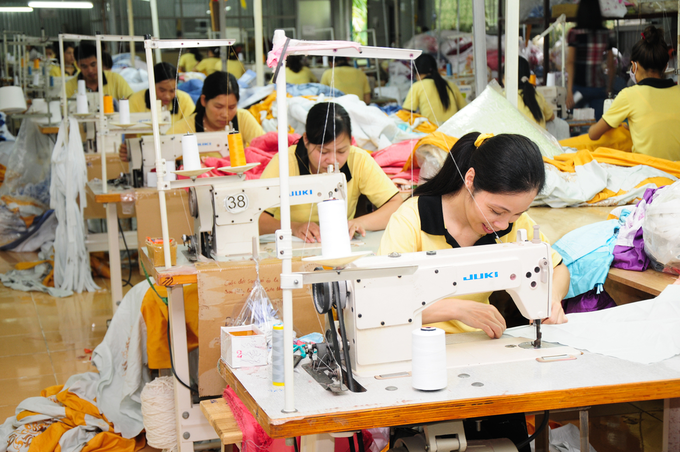
    But exports of textiles and garments rose by 6.7 percent to $2.7 billion, footwear by 12.8 percent to $1.6 billion and machinery and equipment by 15.2 percent to $1.4 billion.

    The U.S. was the biggest importer ($4 billion) followed by China ($3.8 billion) and the EU ($3.2 billion). The country’s Southeast Asian neighbors only accounted for $2 billion.

    Meanwhile, Vietnam’s imports rose by 3.1 percent to $20.8 billion.

    Last year exports were worth $244.72 billion, up 13.8 percent, and imports cost $237.51 billion, giving Vietnam its highest trade surplus ever of $7.21 billion.

  • Li & Fung appoints Joseph Phi as new group president

    Li & Fung appoints Joseph Phi as new group president

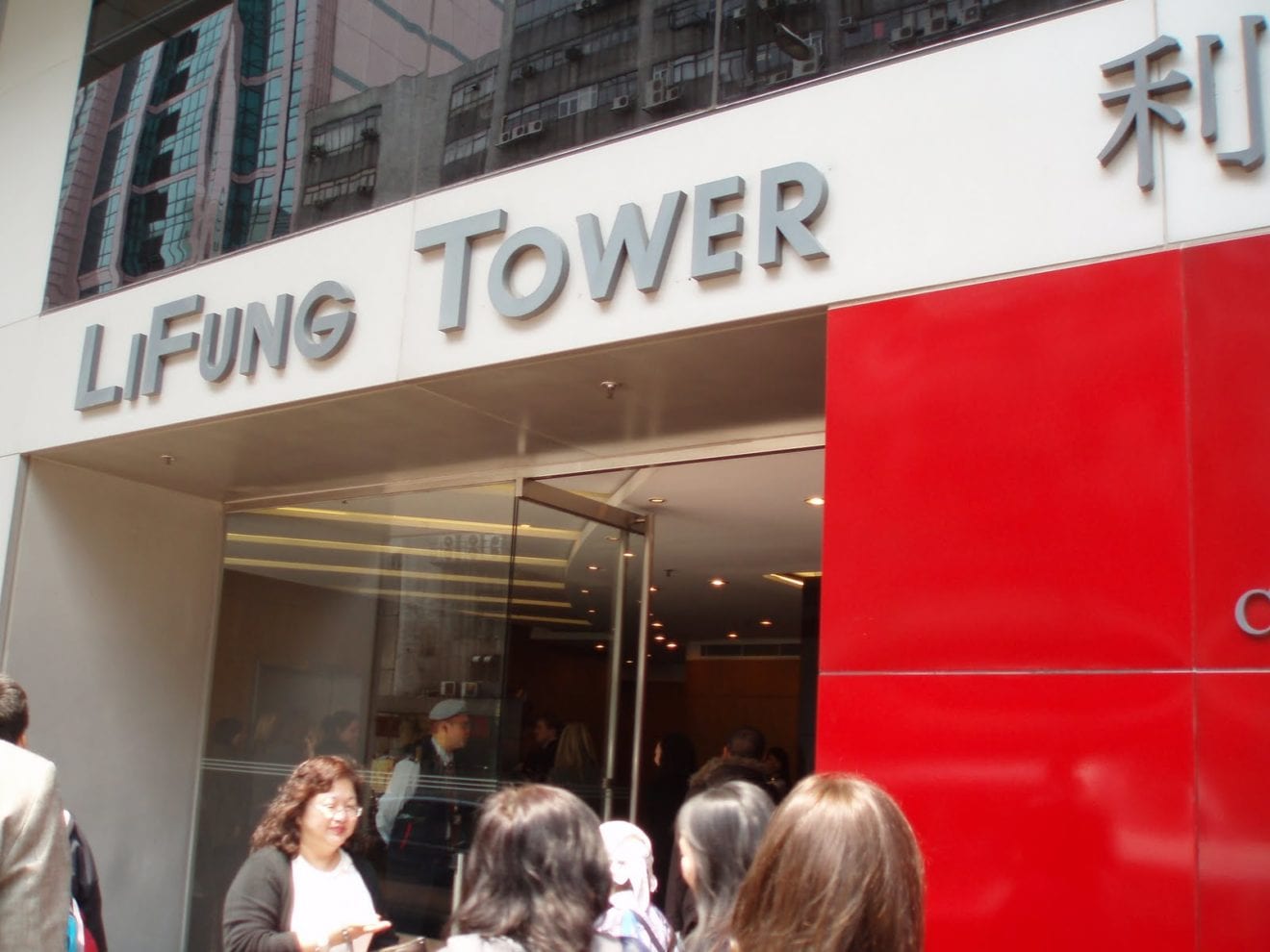
    Li & Fung has appointed Joseph Phi as the company’s Group President. As Group President, Joseph will lead the company’s Supply Chain Solutions operating groups, including Business Development. He will continue as President, LF Logistics and to serve on the Board of Directors of Li & Fung. He will report to Spencer Fung, Group CEO.

    Joseph has a strong track record at tLFhe company having organically grown its logistics business over the past decade. He has nearly 20 years’ experience with the company and is well positioned to assume this important leadership role.

    Joseph joined Li & Fung in 1999 and was previously executive director of Integrated Distribution Services Group Limited from 2004 until its acquisition by Li & Fung in 2011. He is Chairman of GS1 Hong Kong and a Director of its Management Board and is a Member of Supply Chain 50.

    He is an advisory committee member of Hong Kong Trade Development Council’s Logistics Services and honorary advisor of the Asian Logistics and Maritime Conference. He also serves as an advisory committee member of Eye Fund, a charitable institution in HK.

    Joseph graduated magna cum laude from the University of The Philippines (UP) with a Bachelor of Science degree in Industrial Engineering and attained a Master of Business Administration degree with top honors also from the same university.

    He is a 2011 recipient of UP College of Business Administration Distinguished Alumnus Award and 2013 recipient of UP Industrial Engineering Alumni Award and UP Alumni Engineers Global Achievement Award for Logistics. Between 2014 and 2018, he was an Adjunct Professor in the School of Business and Management at The Hong Kong University of Science and Technology.

    Joseph takes over from Marc Compagnon, who served as Group President and Executive Director of Li & Fung Limited from July 2014 and has moved to the Fung Group as Senior Advisor while remaining on the Board of Li & Fung Limited as a Non-Executive Director.

    Fung Group is the major shareholder of Li & Fung, whose core businesses operate across the entire global supply chain for consumer goods including sourcing, logistics, distribution and retail.

    Spencer Fung, CEO of Li & Fung said, “Our goal is to build the supply chain of the future to help our customers navigate the digital economy and to improve the lives of one billion people in the supply chain, and I am confident Joseph is the right person to build on the solid foundation that Marc has built and to take this to the next stage of development.”

  • Alibaba Group sales jumps high

    Alibaba Group sales jumps high

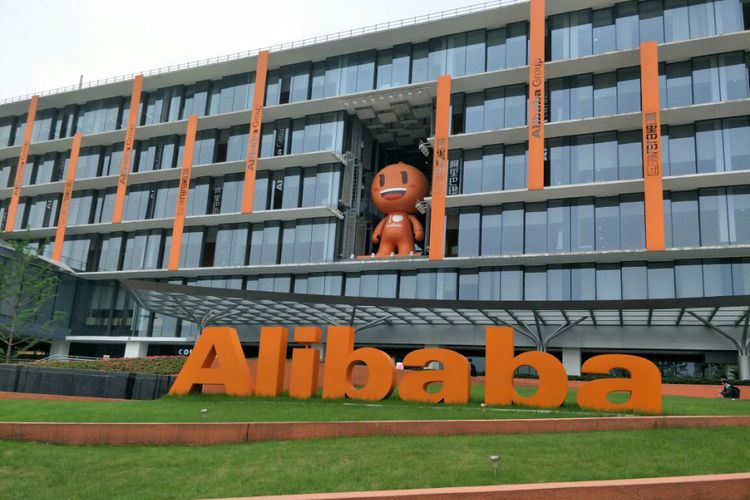
    Alibaba Group sales soared 41 per cent in the December quarter as its customer based neared 700 million. The Chinese company’s turnover for the three months reached US$17.057 billion and its net income attributable to shareholders $4.807 billion. “Our resilient operating and financial performance is a direct reflection of our persistent focus on better serving our growing base of nearly 700 million consumers across retail, digital entertainment and local consumer services,” said CEO Daniel Zhang. “Our growth is also driven by the power of Alibaba’s cloud and data technology that helps expedite the digital transformation of millions of enterprises.”

    Alibaba group sales from core commerce increased 40 per cent to $14.958 billion, while the cloud-computing division posted 84 per cent growth, turning over $962 million. The digital media and entertainment division achieved 20 per cent growth to reach $944 million.

    In a statement, Alibaba said its Taobao platform achieved “robust user growth and enhanced engagement”. Last December, its China retail marketplaces had 699 million mobile monthly average users, representing a quarterly net increase of 33 million. The annual active consumers on its China retail marketplaces was 636 million for the 12 months ended December 31, compared to 601 million for the 12 months ended September 30 last year, “reflecting successful user acquisition programs, such as referrals through the Alipay app”.

    More than 70 per cent of the increase in annual active consumers was from third-and-lower tier cities.

    Tmall thrives

    Alibaba said GMV on its Tmall business grew 29 per cent year on year in the December quarter, outpacing the industry.

    “This robust growth was driven by strength in the fast-moving consumer goods (FMCG), apparel and home furnishing categories,” the company said.

    During the quarter, Tmall signed up new brands to the platform including Valentino, Ermenegildo Zegna, Stuart Weitzman and Sergio Rossi which opened flagship stores and joined the Tmall Luxury Pavilion.

    Meanwhile, Alibaba’s proprietary grocery retail chain Freshippo (formerly Hema) continued to expand its footprint, “optimise its stores and introduce new initiatives that improve customer experience”. As of December 31, there were 109 self-operated Freshippo stores in China, primarily located in tier 1 and tier 2 cities, which continued to achieve “robust same-store sales growth” through the quarter.

    ‘Robust’ Lazada growth

    Alibaba’s Southeast Asian e-commerce platform Lazada achieved what the company described as “robust growth” in GMV. The company upgraded Lazada’s technology, which resulted in boosting the number of active users and achieved greater user engagement on Lazada’s mobile app.

    “We continue to invest resources to integrate Lazada’s business and technology operations into Alibaba with the aim of building a strong foundation for us to extend our offerings in Southeast Asia.”

  • Korean firms team up on insurance

    Korean firms team up on insurance

    SK Telecom, Korea’s top mobile carrier, and Hyundai Motor will jointly enter the insurance business, partnering with Hanwha General Insurance to bring their technology expertise to the industry. The Financial Services Commission (FSC), the country’s top financial regulator, said Wednesday it has given preliminary permission for SK Telecom, Hyundai Motor and Hanwha General Insurance to build an online insurance company that primarily deals with miscellaneous non-life insurance on digital platforms.

    “If the process goes smoothly, it can open in the fourth quarter of this year,” said a spokesperson at SK Telecom.

    In six months, the investing units are required to raise the promised capital, complete recruiting and have the physical operation in place, after which it will file for final approval.

    The companies said the unit will focus on cars, pets and travel.

    Hyundai Motor said the insurer will develop a product that differentiates insurance fees depending on a policy holders’ mileage and other driving behavior. Also on the cards is a system that discounts fees when subscribers are found to drive in a safe manner by adopting a real-time analytical technique to monitor driving habits.

    The insurance firm aims to carve out its own niche with lower fees and relatively short contracts.

    “We want to offer attractive alternatives for consumers who found existing insurance products expensive and requiring long-term commitment,” said Jang Yoo-seong, head of the artificial intelligence (AI) and mobility division at SK Telecom.

    The idea is based on InsurTech, a combination of insurance and technology that has quickly risen to prominence in the global financial industry.

    According to a study by the Korea Insurance Research Institute, the market has been rapidly growing in recently years. Investment in InsurTech start-ups, which amounted to $2.6 million in 2013, surged to $11.9 billion in 2017.

    The global InsurTech market revenue is valued at $532.7 million in 2018 and is expected to reach $1,119.8 million by 2023, according to Research and Markets, a U.S. market tracker.

    Hanwha General Insurance will raise 75.1 percent of the capital while SK Telecom puts in 9.9 percent. Hyundai Motor invested 5.1 percent and Altos Ventures Korea, an investment firm, 9.9 percent.

    In total, the companies will funnel in a total of 85 billion won.

    If passed, the new insurer will be the country’s second internet-only insurance company after Kyobo Life Planet.

  • Oil rises as traders expect Venezuelan supply disruptions amid U.S. sanctions

    Oil rises as traders expect Venezuelan supply disruptions amid U.S. sanctions

    Oil prices rose on Wednesday as concerns about supply disruptions following U.S. sanctions on Venezuela’s oil industry outweighed downward pressure from a darkening outlook for the global economy. U.S. West Texas Intermediate (WTI) crude futures were at $53.54 per barrel at 0455 GMT, up 23 cents, or 0.4 percent, above their last settlement.

    International Brent crude oil futures rose 37 cents, or 0.6 percent, to $61.69 per barrel.

    The gains followed a 2 percent price jump in the previous session, when markets first digested the U.S. sanctions on Venezuela’s oil exports.

    Washington on Monday announced export sanctions against state-owned oil firm Petroleos de Venezuela SA (PDVSA), limiting transactions between U.S. companies that do business with Venezuela through purchases of crude oil and sales of refined products.

    “The sanctions so far have been mostly disruptive for refiners on the U.S. Gulf Coast, who are being forced to seek alternative heavy crude supplies, and have stepped up purchases from Canada,” said Vandana Hari of Vanda Insights, an energy consultancy.

    She added, however, that Canadian oil exports would be “constrained by pipeline capacity bottlenecks.

    The sanctions aim to freeze sale proceeds from PDVSA’s exports of roughly 500,000 barrels per day (bpd) of crude oil to the United States.

    Although the move pushed up oil prices, markets appeared relatively relaxed as the sanctions only affect Venezuelan supply to the United States.

    “The (Venezuelan) export volumes will not be eliminated from the market, but rather rerouted to other countries,” said Paola Rodriguez-Masiu, an analyst at consultancy Rystad Energy.

    With the United States dropping out as a customer for Venezuelan oil, she added that “China and India … will be able to pick up these oil volumes at great discounts.”

    Despite this, some analysts said that non-U.S. oil trading firms with operations in the United States may still avoid dealing with Venezuelan oil.

    The Schork Report, a daily oil and gas trading publication, said on Wednesday that many “international oil traders … have significant trading operations in the U.S. … At least in the short-term, these traders will undoubtedly quit buying from Venezuela until such a time that they are assured that they are not running afoul of U.S. sanctions.”

    TRADE TALKS

    Other analysts also pointed to economic weakness as countering supply-side efforts to tighten the market such as the voluntary supply restraint by the Organization of the Petroleum Exporting Countries (OPEC).

    “Pulling in the opposite (oil price) direction are heightened concerns about global growth, particularly that of China,” said Ole Hansen, head of commodity strategy at Denmark’s Saxo Bank.

    Global economic growth and fuel consumption are expected to slow this year amid a trade dispute between the United States and China, the world’s two biggest economies.

    Officials from Washington and Beijing are set to launch a new round of trade talks on Wednesday aimed at resolving their disputes amid which both sides have slapped hefty import tariffs on each other’s goods.

  • Gold scales 8-month peak on Fed rate pause hopes, trade woes

    Gold scales 8-month peak on Fed rate pause hopes, trade woes

    Gold prices edged up on Wednesday to hit their highest since May, supported by uncertainty over U.S.-China trade relations and expectations the U.S. Federal Reserve will keep rates on hold later in the day. Spot gold was up 0.2 percent at $1,313.91 per ounce by 0245 GMT, after touching its highest since May 15 at $1,314.10 early in the session. U.S. gold futures rose 0.3 percent to $1,312.30 per ounce.

    “For the short-term gold is going to move higher as the Federal Reserve will have a dovish tone, which should weaken the dollar and give gold a bit of a move up,” said INTL FCStone analyst Edward Meir.

    The absence of an agreement in U.S-China trade talks should also benefit gold, he said.

    Investors are waiting on the Federal Reserve’s policy decision later in the day, with expectations officials will reinforce their recent dovish stance given a stalemate on global trade, signs of a slowdown in the U.S. economy, and waning business and consumer confidence.

    The Fed raised interest rates four times last year.

    Investors are also concerned that criminal charges against China’s Huawei Technologies Co. Ltd. for violating U.S. sanctions against Iran could complicate U.S.-China trade talks.

    China’s Vice Premier Liu is due to meet with U.S. Trade Representative Robert Lighthizer later in the day.

    “Gold also looks good on the charts … Physical demand seems to be improving in some markets and ETF buying has been increasing. In general the path of least resistance is probably higher from here,” Meir said.

    Underscoring investor interest in the bullion, holdings of SPDR Gold Trust, the world’s largest gold-backed exchange-traded fund, rose 1 percent to 823.87 tonnes on Tuesday, to their highest since June.

    SPDR gold holdings have risen 4.6 percent so far this month, their best since September 2017.

    “A combination of falling treasury yields, anxiety over Brexit and Venezuela is all helping gold,” said Nicholas Frappell, global general manager at ABC Bullion.

    British lawmakers rejected most amendments that aimed to keep Britain from leaving the European Union without a deal, reviving worries of a chaotic withdrawal from the trading bloc that would damage the UK economy.

    Silver rose 0.3 percent to $15.88 per ounce, having hit its highest since July 2018 at $15.92 in the prior session.

    Palladium fell 0.2 percent to $1,343.50, while platinum was up 0.4 percent at $813.

  • Vietnam foreign investment skyrockets in January

    Vietnam foreign investment skyrockets in January

    FDI pledges for new projects, increased capital and stake acquisitions in Vietnam rose 51.9 percent year-on-year to $1.9 billion in January. In a statement Monday, the Ministry of Planning and Investment said the manufacturing sector attracted the most interest from foreign investors, accounting for $1.19 billion or 62.4 percent of the total FDI. Science and technology ranked second with $185.8 million, followed by real estate with $179.1 million.

    Japanese were the top investors with nearly $364 million. South Korea and China were next with $349.1 million and $307.8 million.

    Ho Chi Minh City is the most attractive location for FDI investors in January, accounting for around 39.1 percent of the total FDI. Southern Binh Duong Province ranked second, accounting for 12.5 percent, followed by northern Hai Duong Province with 6.5 percent.

    As of January 20 authorities had issued licenses for 226 new projects with a total capital of $805 million. Meanwhile, another $340.2 million was pledged for existing projects this month.

    The two biggest projects were Kyoshin Vietnam’s $134.7 million investment expansion in HCMC by Japanese investors to produce, process and export electrical components and molds, and Katolec Global Logistics Vietnam’s $65 million investment for warehousing and storing goods in the northern province of Ha Nam.

    Estimated FDI disbursement for the month was $1.55 billion, up 9.2 percent year-on-year.

    Vietnam reported FDI disbursement of $19.1 billion last year, up 9.1 percent.

  • Kering faces €1.4 billion Italian tax bill

    Kering faces €1.4 billion Italian tax bill

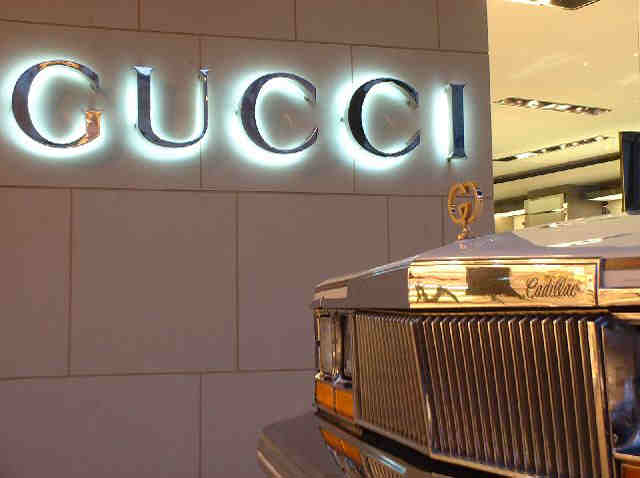
    Kering is facing an Italian claim for €1.4 billion (£1.2 billion) in unpaid taxes. The company’s Swiss-based Luxury Goods International (LGI) subsidiary has been under investigation for allegedly avoiding tax on earnings generated elsewhere. The probe has largely centred on Gucci, Kering’s star brand and biggest revenue driver. Italy’s tax police carried out checks at Gucci’s Florence headquarters and Milan offices in 2017, and drew up the report that has now been handed to Kering, a source close to the investigation said.

    Kering has consistently denied avoiding tax, saying its activities were fully compliant with all tax obligations.

    In its statement on Friday, the group said the Italian tax authorities’ findings for the years 2011-2017 had yet to be finalised by their own enforcement team.

    “Kering challenges the outcome of the audit report both on the grounds and the amount,” the company said, adding that it “does not have the necessary information” to record a provision against any potential bill for back taxes or penalties.

    The company has said that LGI is a substantial firm in its own right, with 600 employees handling inventory, billing and supply-chain logistics, with a business model “known to French and other competent tax authorities”.

    According to reports by France’s Mediapart newspaper and Germany’s Der Spiegel, Kering’s wholesale activities – the sale of products to retailers such as department stores – have come under particular scrutiny.

    Some business carried out by Kering employees in locations including Milan and Paris was billed through the Swiss unit, incurring lower tax rates, according to those reports.

  • CIMB completes Asean footprint

    CIMB completes Asean footprint

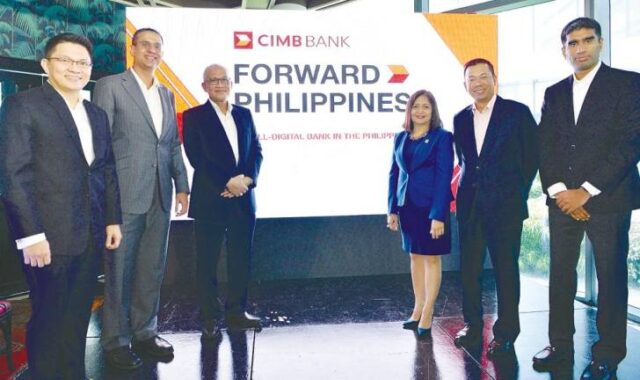
    CIMB Group Holdings Bhd is finally completing its operating footprint in Asean with the launch of its banking presence in the Philippines. It has received regulatory approval from the Securities and Exchange Commission of the Philippines for its investment banking joint-venture in the country, CIMB Bancom Capital Corporation.

    CIMB Group CEO (group ventures and partnerships) Effendy Shahul Hamid said CIMB Bancom will look to deliver value added advisory and cross-border capital market services to Philippine corporates looking to expand and grow across Asean, as well as capitalise on CIMB’s strong presence in the region to originate inbound deals to the Philippines.

    CIMB Bank Philippines Inc (CIMB Philippines) aspires to be the nation’s first all-digital and mobile-first bank, promising to make banking simpler, more convenient, and hassle-free, according to the group’s statement.

    “We look forward to bringing a differentiated and digital proposition to the market. Internet and mobile penetration in the Philippines remains one of the highest in the world, a clear sign of the progressive and modern society we hope to serve,” said Effendy.

    CIMB Philippines CEO Vijay Manoharan noted that consumers need innovative financial solutions that are relevant to their needs as well as help them get ahead and advance their financial well-being, but they do not necessarily need a physical bank.

    “By offering most of our products via the Octo app securely, we are offering the next-level any day, any time convenience for our customers by enabling them to effectively ‘carry’ our bank branch in the palm of their hands.”

    CIMB Philippines’ partners include 7-Eleven and DragonPay, with a total of 8,000 convenient customer touchpoints nationwide.

    The CIMB Bank Visa-powered Debit Card is accepted at any of the 20,000 Bancnet, Visa, and Visa Plus automatic teller machine (ATMs) nationwide and two million Visa and Visa Plus ATMs worldwide.

    To cater to those who want to really start preparing for what’s ahead and save for the future, CIMB Bank offers the UpSave Account, which allows greater savings with its high interest rate of 2% per annum (eight times higher than other banks).

  • Bursa Malaysia’s Q4 earnings fall 6.2% to RM51.9m

    Bursa Malaysia’s Q4 earnings fall 6.2% to RM51.9m

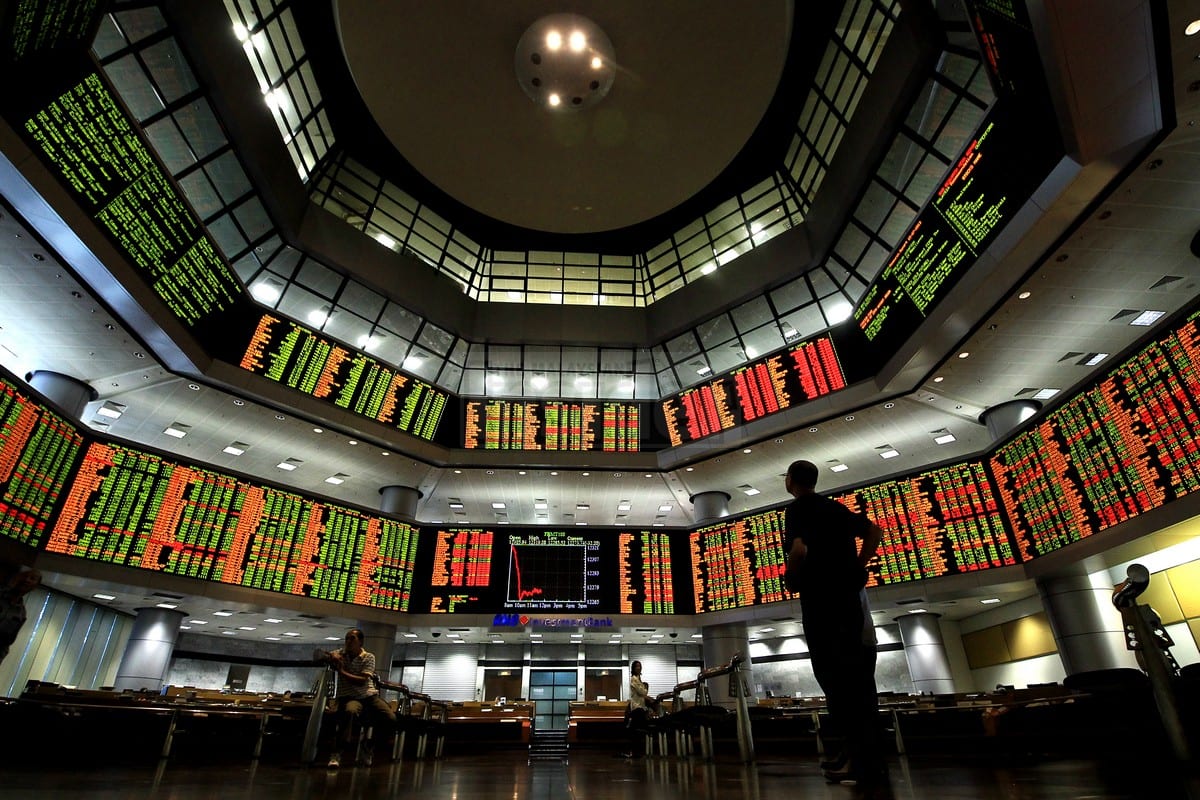
    Bursa Malaysia Bhd’s net profit in the fourth quarter ended Dec 31, 2018 (Q4FY18) was down by 6.2% to RM51.9 million, from RM55.27 million a year ago, mainly due to lower contribution from the securities segment.

    Revenue for the quarter declined 8.7% to RM128.9 million, compared with RM141.2 million in the previous corresponding quarter.

    The exchange has approved a second interim dividend of 11.6 sen per share for FY18, amounting to about RM93.7 million which is payable on Feb 28, 2019. With that, the total dividend (including special dividend) declared for the year amounts to 33.6 sen per share.

    Bursa’s full-year net profit was slightly up by 0.4% to RM224.04 million, from RM223.04 million a year ago, while revenue decreased by 1.2% to RM550 million, against RM556.8 million previously.

    For the year under review, securities market trading revenue increased 2.4% to RM265.8 million from RM259.6 million in FY17, mainly due to higher average daily trading value (ADV) for securities market’s on-market trades (OMT) in FY18.

    However, non-trading revenue saw a marginal decrease of 0.1% to RM165.9 million from RM166.1 million in FY17 due to lower listing and issuer services revenue.

    Bursa CEO Datuk Seri Tajuddin Atan said despite market volatility and challenging global economic environment, the exchange’s financial performance remained resilient.

    “Throughout the year, to create a more facilitative environment, we continued implementing initiatives to further enhance the vibrancy and liquidity of the market,” he added.

    At 2.35pm, Bursa’s share price was trading 7 sen or 0.9% lower at RM7.32 on 751,900 shares done.

  • Asia shares slip as China’s Huawei in legal hot water; focus on Sino-US talks

    Asia shares slip as China’s Huawei in legal hot water; focus on Sino-US talks

    Asian shares stumbled on Tuesday and the dollar hovered near two-week lows as prospects for a long-awaited Sino-US trade deal was dealt another blow after the United States levelled sweeping criminal charges against China’s telecom giant Huawei. MSCI’s broadest index of Asia-Pacific shares outside Japan got off to a shaky start with losses accelerating as other regional markets opened.

    Australia and New Zealand led the losses, with their benchmark indices down 0.7% each while South Korea’s KOSPI was off 0.3%. Chinese shares opened in the red too, with the blue-chip index down 0.2%.

    Japan’s Nikkei slid about 1%. US stock futures also lost ground following from a torrid overnight session on Wall Street, with E-Minis for the S&P 500 down 0.4%.

    Investor sentiment, already shaken by pessimism over global growth, took another hit after the US Justice Department unsealed indictments against China’s top telecom equipment maker, Huawei, accusing it of bank and wire fraud to evade Iran sanctions and conspiring to steal trade secrets from T-Mobile US Inc.

    The jolt to Huawei could undermine prospects for a trade deal between the economic giants as markets nervously await a fresh round of trade talks with Chinese Vice Premier Liu He set to meet US officials on Wednesday and Thursday.

    Further complicating matters, China triggered the legal process on Monday for the World Trade Organization to hear Beijing’s challenge to US tariffs, and berated the United States for blocking the appointment of judges who could rule on it.

    Souring US-China relations roiled global markets for much of last year, and have kept investors on the back foot this month. The trade war’s broadening impact on world growth is one reason the US Federal Reserve has signalled it will be patient on policy after raising rates four times in 2018.

    Overnight, markets got a reminder of the potentially damaging economic impact of the Sino-US trade war as Wall Street stocks were hit by profit warnings.

    The losses came as shares of Caterpillar and Nvidia Corp nosedived after the two manufacturers joined a growing list of companies cautioning about the crippling effects of softening Chinese demand.

    Caterpillar plunged more than 9% for its worst single-day drop since August 2011 while chipmaker Nvidia slid 13.8%.

    “Both companies are seen as industry bellwethers and their disappointing results provide further evidence that this time China’s slowdown is for real,” said Rodrigo Catril, Sydney-based strategist at National Australia Bank.

    The downbeat global growth impulse mean investors will look for further confirmation the Fed will pause its rate-hike cycle at a two-day policy meeting ending Wednesday.

    Overnight on Wall Street, the Dow and S&P 500 each closed down 0.8% and the Nasdaq was off more than 1%.

    WARNING BELLS

    Worryingly, earnings at China’s industrial firms too shrank in December, pointing to more troubles for the country’s vast manufacturing sector already struggling with a decline in orders, job layoffs and factory closures.

    Slowdown fears slugged the US dollar which faltered to its lowest in two weeks on Monday. The dollar’s index, which measures the greenback against a basket of major currencies, was last at 95.758.

    Against the safe haven Japanese yen, the dollar was down at 109.17, on track for a third straight session of losses.

    Markets will have more catalysts this week with over a 100 of the S&P500 companies reporting results, including Amazon, Apple and Facebook.

    Many economists, including the International Monetary Fund, have cut their forecasts for global growth this year citing the US-China trade war.

    “Slowdown is feeding into some acute areas of economic unease,” US investment bank Citi said in a note, citing recent disappointing factory output data out of Europe and China.

    “In some respects, markets seem to have reacted more to recent negative changes in economic data than at other points in recent decades,” it added, while noting investors are now pricing in a 1% contraction in global earnings per share (EPS) this year.

    “This would be the worst year-on-year percentage change in EPS since 2015” even though economic growth is seen much higher this year than in 2015.

    Elsewhere, Sterling dithered against the dollar ahead of voting in Britain’s parliament on Tuesday that aims to break the Brexit deadlock. It was last at $1.3148

    Oil bounced after hefty overnight losses. US crude was last up 16 cents at $52.15 a barrel while Brent gained 18 cents to $60.11.

    US gold futures hovered near a seven-month high around $1,302.3 per ounce. Spot gold was last at 1,303.3 after breaking above a key psychological barrier of $1,300 an ounce on Friday.

  • Sime Darby Plantation, Salcra ink MoU to uplift Sarawak’s palm oil industry

    Sime Darby Plantation, Salcra ink MoU to uplift Sarawak’s palm oil industry

    Sime Darby Plantation Bhd (SDP) and Sarawak Land Consolidation and Rehabilitation Authority (Salcra) have signed a memorandum of understanding (MoU) to form a collaborative framework to establish, strengthen and encourage synergistic commercial cooperation along the palm oil value chain. The collaboration aims to uplift Sarawak’s palm oil industry standards in terms of operational efficiency and productivity through best agronomic practices, SDP said in a statement yesterday.

    It is also intended to inculcate and enhance sustainability awareness for higher operational performance and bottom-line achievement.

    Under the MOU, both parties intend to combine their resources and expertise to jointly collaborate, evaluate and research on matters relating to the palm value chain and related agronomic inputs.

    These include in the areas of agricultural materials such as oil palm seedlings and saplings, management, consultancy services and training, consultancy services, as well as laboratory analytical services.

    The MoU also includes any other activities that are mutually beneficial to the parties such as logistics and activities connected to rubber plantation and other agricultural businesses.