Category: Finance

Retail News Asia is committed to providing both local and global retailers with the latest Finance news throughout the Asian market. This on a daily base.

  • ​Vietnam to remain a fast growing Asian economy

    ​Vietnam to remain a fast growing Asian economy

    With a 2019 GDP growth of 6.9 percent, Vietnam will remain one of the fastest growing economies in Asia. “We remain positive on Vietnam’s medium-term growth on strong manufacturing activity as FDI inflows to electronics manufacturing remain strong,” says economist Chidu Narayanan of Standard Chartered Bank. According to a report recently issued by the bank, the country is likely to reach GDP growth of 6.9 percent this year.

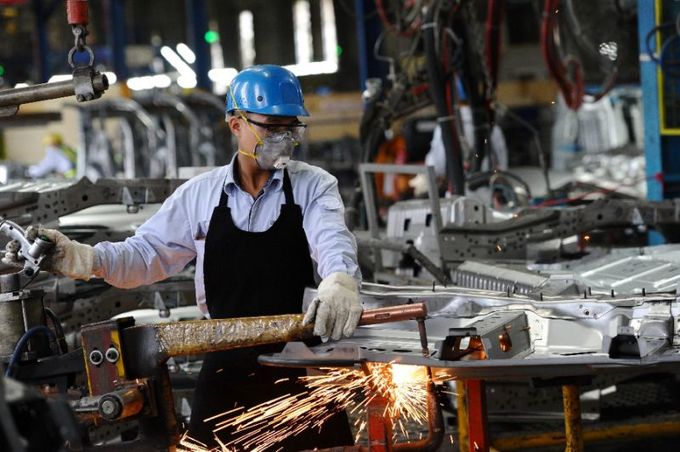
    The manufacturing sector has expanded by double digits for most of the past four years and this pace is likely to continue in 2019, says the report.

    The bank expects manufacturing growth to remain strong this year, though mildly lower than in 2018. Strong FDI inflows to manufacturing will likely support robust manufacturing output, it says.

    Standard Chartered economists also forecast FDI disbursement to stay at $15 billion this year and FDI inflows to the manufacturing sector, particularly electronics manufacturing, to remain high in the medium term.

    FDI disbursement in Vietnam reached a record $19.1 billion in 2018, a year-on-year increase of 9.1 percent,  according to the Ministry of Planning and Investment.

    “Most macro-economic indicators improved in 2018, interest and foreign exchange rates were kept stable despite the Fed’s hike in interest rates and U.S.-China tension, and non-performing loans were well-managed below three percent,” says Nirukt Sapru, CEO Vietnam and ASEAN and South Asia Cluster Markets.

    “We believe that the Vietnamese economy will remain one of the fastest growing in Asia and likely the fastest-growing ASEAN economy in 2019.”

    The World Bank forecast that Vietnam’s GDP is likely to drop to 6.6 percent in 2019 and 6.5 percent in 2020. Meanwhile, the Asian Development Bank (ADB) estimates the country’s GDP for 2019 at 6.8 percent.

    Vietnam’s GDP growth of 7.08 percent in 2018 was the highest in a decade, according to the General Statistics Office.
  • Vietnam trade deficit could balloon to $3 billion

    Vietnam trade deficit could balloon to $3 billion

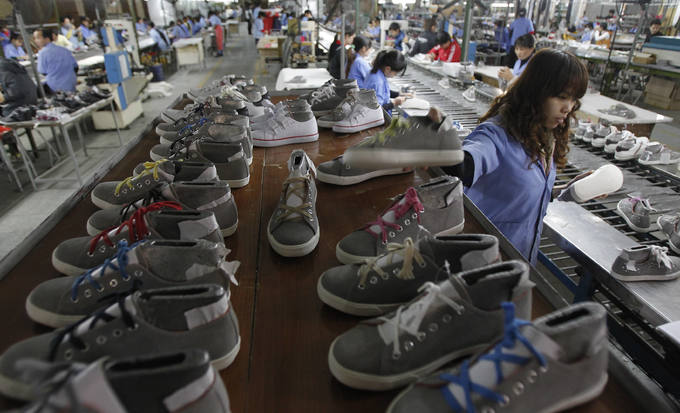
    Vietnam could face a trade deficit of $3 billion this year, after achieving the highest trade surplus in a decade in 2018. Export turnover in 2019 is expected to reach about $265 billion, down 17.4 percent from 2018. However, imports are expected to rise by 13.2 percent, reaching $268 billion, meaning a trade deficit of $3 billion, the Ministry of Industry and Trade has predicted.

    The volatility of trade policies of major economies like the U.S. and EU could hurt Vietnam’s exports this year, Deputy Minister of Industry and Trade Hoang Quoc Vuong said at a recent review conference.

    Geopolitical tensions and monetary policies which were tightened earlier than expected in many economies are other challenges for Vietnam’s export sector this year, he added.

    Global agricultural supply this year is expected to rise as countries hike up production of own agriculture sectors to avoid reliance on imports, and competition for agricultural and seafood products is set to intensify.

    Meanwhile, imports are forecast to continue to grow in manufacturing sectors that rely on imported materials or machinery.

    “Trade protection looks to be on the rise, especially after the U.S. has raised tariffs on imports from other countries. The US-China trade war is also not showing signs of cooling down,” Vuong said.

    Nguyen Xuan Cuong, Minister of Agriculture and Rural Development, said at the conference that 2019 was going to be a more difficult year after 2018’s windfall.

    “We’ve hit very high targets last year, so going even higher is extremely difficult. In addition, world trade is unstable, U.S.-China trade relations have not returned to normal, and Brexit remains unfinished. These are difficult challenges for our industrial and agricultural sectors this year,” said Cuong.

    He suggested that the Ministry of Industry and Trade supports growth in the agricultural sector, using its influence on supply chain areas like marketing and distribution.

    Vietnam had an export surplus of $7.2 billion in 2018, three times higher than that of 2017 and the highest in the past decade.

  • Indonesia Posts Biggest Trade Gap in 2018

    Indonesia Posts Biggest Trade Gap in 2018

    Indonesia posted a wider than expected trade deficit in December, bringing the gap for 2018 to the largest ever, the Central Statistics Agency, or BPS, said on Tuesday. December’s trade deficit was $1.10 billion, in a third consecutive month where the gap was wider than market expectations. A Reuters poll had expected a deficit of $930 million. Southeast Asia’s largest economy had a deficit of $8.57 billion in 2018, the widest ever, a stark contrast to its $11.84 billion surplus in 2017, BPS chief Suhariyanto said.

    Last year was challenging because exports had slowed at a time when imports surged due to a recovering domestic economy, said Josua Pardede, an economist at Bank Permata in Jakarta. This year would probably be equally challenging, he said.

    “Global economic growth is stagnating. Growth in our major trading partners such as China, the United States, Japan and Europe is slowing. If we can’t find new destinations for our products, export growth could slow further,” Josua said, noting that falling oil prices could cool down imports.

    Economists also warned that the trade data could mean Indonesia’s current-account deficit in the final quarter of 2018 was also wider than expected.

    Bank Indonesia Governor Perry Warjiyo previously said the current-account gap in the fourth quarter was expected at more than 3 percent of gross domestic product, though the full-year gap was seen at about 3 percent.

    The authorities issued a slew of measures to control imports last year, including mandating wider use of biodiesel, raising import tax and delaying big, import-heavy infrastructure projects.

    The central bank also raised interest rates six times by a total of 175 basis points last year to try to bring the current-account gap down, and Perry said the deficit in 2019 was expected at 2.5 percent.

    Fakhrul Fulvian, Trimegah Sekuritas economist, said December trade data proved that Indonesia may need to slow its GDP expansion further to “bring back the balance” and improve the current-account deficit.

    In December, exports dropped 4.62 percent to $14.18 billion on a yearly basis, a second month of contraction, compared with the poll estimate of 1.81 percent increase, largely because of a slump in shipments of mining products.

    Exports to China, Indonesia’s largest trading partner, also fell in December mostly because of a decline in coal and steel sales.

    Meanwhile, December imports were worth $15.28 billion, 1.16 percent up from a year ago, but slower than the forecast of 6.6 percent.

  • Vietnam scraps plan to merge stock exchanges

    Vietnam scraps plan to merge stock exchanges

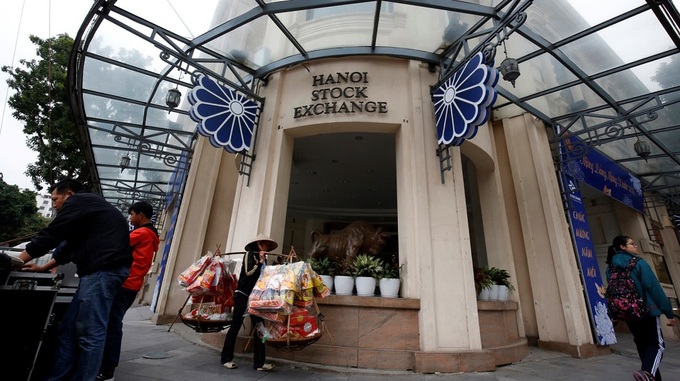
    The nation’s two bourses in Ho Chi Minh City and Hanoi will continue to operate independently under a new state-owned company. Ho Chi Minh City Stock Exchange (HoSE) and Hanoi Stock Exchange (HNX) will operate independently under the Vietnam Stock Exchange, which will be set up by the Ministry of Finance by 2020. The new company, to be headquartered in Hanoi, will have a charter capital VND3 trillion ($129 million), on the basis of combining the charter capital of both exchanges.

    The Vietnam Stock Exchange will issue regulations on stock listings and trading, monitor the stock market and supervise the two bourses. This new plan indicates that Vietnam has given up on an earlier plan to merge the two exchanges, owing to disagreement over where the combined one would be located.

    HoSE accounts for 93 percent of the two main exchanges’ total market capitalization of about $131 billion as of December. It is the main market, where blue chips such as Vietnam’s biggest private conglomerate Vingroup, dairy company Vinamilk and budget carrier Vietjet Air are listed.

    HNX, on the other hand, is home to smaller and mid-sized enterprises, bonds and derivatives.

  • Indonesia to put tax on e-commerce transaction

    Indonesia to put tax on e-commerce transaction

    The Ministry of Finance said on Monday that it will impose new rules requiring e-commerce sellers to share data with the authorities, while also stressing that they must pay taxes. Surging smartphone use and a rising middle-class income in Indonesia, home to 260 million people, has made its e-commerce industry a battleground for foreign investors.

    Global consultancy McKinsey projects spending in the Indonesian e-commerce market to rise to as much as $65 billion by 2022, from $8 billion last year, similar to the growth trajectory experienced in China between 2010 and 2015, and the government is trying to squeeze more from a market that traditional retailers have alleged avoids taxes.

    From April, all operators of online marketplaces will have to detail each seller’s turnover and report this to the authorities, the ministry’s tax spokesman Hestu Yoga Saksama said.

    The rules would apply to all online marketplace operators in Southeast Asia’s largest economy, including Lazada and Tokopedia, which are both backed by Chinese e-commerce giant Alibaba, and Bukalapak, which counts China’s Ant Financial among its investors.

    The Directorate General of Taxes said an online seller that makes at least Rp 4.8 billion ($340,000) in turnover must charge value-added tax to customers and pay this to the authorities.

    A seller must also pay income tax of 0.5 percent of turnover if it is a small or medium business, or a 25 percent corporate tax of profit if it is big enterprise, bringing the sector in line with requirements for conventional retailers.

    There were no new taxes being applied, but the rules were put in place to clarify what taxes each player in a marketplace is obliged to pay and to “create an equal treatment with conventional businesses,” the tax office said.

    The Indonesian E-Commerce Association (idEA) criticized the new rules, saying online sellers would instead choose to sell their products through social media, CNBC Indonesia reported.

    Tokopedia and Bukalapak both said they are still studying the possible impacts caused by the rules.

  • Trade war could drag Malaysia’s GDP down to 3.2% this year

    Trade war could drag Malaysia’s GDP down to 3.2% this year

    A full-blown trade war could drag Malaysia’s gross domestic product (GDP) growth to 3.2% this year, from an earlier projection of 4.7%, according to Affin Hwang Investment Bank Bhd head of research and chief economist Alan Tan. Tan said if the trade spat between the US and China were to escalate to a situation where tariffs are fully implemented on all Chinese goods, Malaysia’s GDP growth could be hit closer to 1.5 percentage point.

    “If Malaysia’s GDP is at 5%, the 1.5% will push the GDP growth down to 3.5%,” he told reporters at the press conference in conjunction with the bank’s launch ceremony of its Securities Borrowing and Lending (SBL) facility for retail investors yesterday.

    “Malaysia is an open economy and is still relying on trade. As we know, China today is the major market for Malaysia and if the global trade war were to escalate, we think that the Chinese economy, which has already shown signs of slowing down, may slow even further.

    “Therefore, we are of the view that Malaysia’s exports to China will be slowing down towards the second half of 2019 assuming if the trade war continues to drag on,” he added.

    However, Tan said domestic demand will continue to support the economic growth this year driven by several measures introduced by the government in Budget 2019, supporting the bank’s forecast on the GDP growth at the region of 4.7% this year.

    Additionally, he said that the bank opined that this time around, both US and China will be more willing to negotiate and possibly come out with a trade compromise by end of the first quarter this year, in view of the external uncertainties and weaker business sentiment.

    “Going into 2019, we already seeing signs of slowing down in the US and China. Unlike six months ago, where both economies continue to do relatively well,” he noted.

    Therefore, he said the bank believes that in the second half of 2019, following the resolutions of the global trade war, coupled with the weakening US dollar, interest will come back to the emerging market, including Malaysia.

    However, Tan said the bank expects that the market will remain flat in the first half of 2019 and looking at end-2019 target for the FBM KLCI at 1,810 points.

    On ringgit, he said the local currency is expected to appreciate to RM3.90-RM4.00 level in the second half of 2019, and possibly ending the year at RM3.90 against the US dollar, as the greenback is likely to soften towards the second half of the year.

  • CIMB Thai’s FY18 net profit drops on higher tax expenses

    CIMB Thai’s FY18 net profit drops on higher tax expenses

    CIMB Thai Bank PCL’s unaudited con-solidated net profit for the year ended Dec 31, 2018 (FY18) fell 98.2% year on year to 6.9 million baht (RM883,732), dragged down mainly by higher income tax expenses. Profit before tax decreased 44.5% to 271.2 million baht year on year, mainly due to a 9.6% increase in operating expenses and lower net fee and service income and other income of 7.0% and 2.6% respectively. This was offset by a 5.3% growth in net interest income and a 2.6% decline in provisions.

    President and CEO Kittiphun Anutarasoti said CIMB Thai group’s consolidated operating income, on a year-on-year basis, increased 2.9% from 2017 to 13.54 billion baht from higher net interest income of 5.3% on the back of loan expansion and higher interest income on investments.

    Net interest margin over earning assets stood at 3.71% in 2018, compared with 3.89% in 2017 as a result of lower yield on earning asset.

    As at Dec 31, 2018, CIMB Thai’s total gross loans stood at 227.8 billion baht, making an increase of 6.9% from Dec 31, 2017.

    Deposits stood at 234.3 billion baht, an increase of 6.5% from at the end of December 2017. CIMB Thai said the modified loan-to-deposit ratio was higher at 97.2% against 96.8% as at Dec 31, 2017.

    The gross non-performing loan (NPL) stood at 9.9 billion baht, with a lower gross NPL ratio of 4.3% compared with 4.8% as at Dec 31, 2017. The lower NPL ratio was due to more efficient risk management policies, improved asset quality management and loan collection processes as well as the sale of some NPLs in 2018.

  • Thailand franchise market predicted to grow

    Thailand franchise market predicted to grow

    Thailand franchise consultancy Gnosis Co expects a healthy market for franchises in the country. Gnosis MD Sethaphong Phadungpisuth said more than 50 chains from both local and international brands are exploring the market this year following measures to ease regulations on the part of the Business Development Department.

    “The Thailand franchise market will become more active this year. We expect the overall number of new franchise brands both from abroad and the domestic market that will open their franchise in Thailand this year to increase by 10 per cent to about 630 brands”, he said.

    According to Gnosis, some brands have chosen Thailand as a springboard to other Asean countries, in particular Myanmar and Laos.

    Among those diverse brands set to start operations in Thailand this year include Taco Bell, The Edge Learning Centre, and Singaporean hygiene and disinfection products firm Sureclean. Additionally the number of Taiwanese milk tea chains continues to increase in the territory.

    Franchise business in Thailand is estimated to be valued at THB250-300 billion (US$7.84 billion).

  • Vietcombank’s profit skyrockets, Vietinbank’s falls

    Vietcombank’s profit skyrockets, Vietinbank’s falls

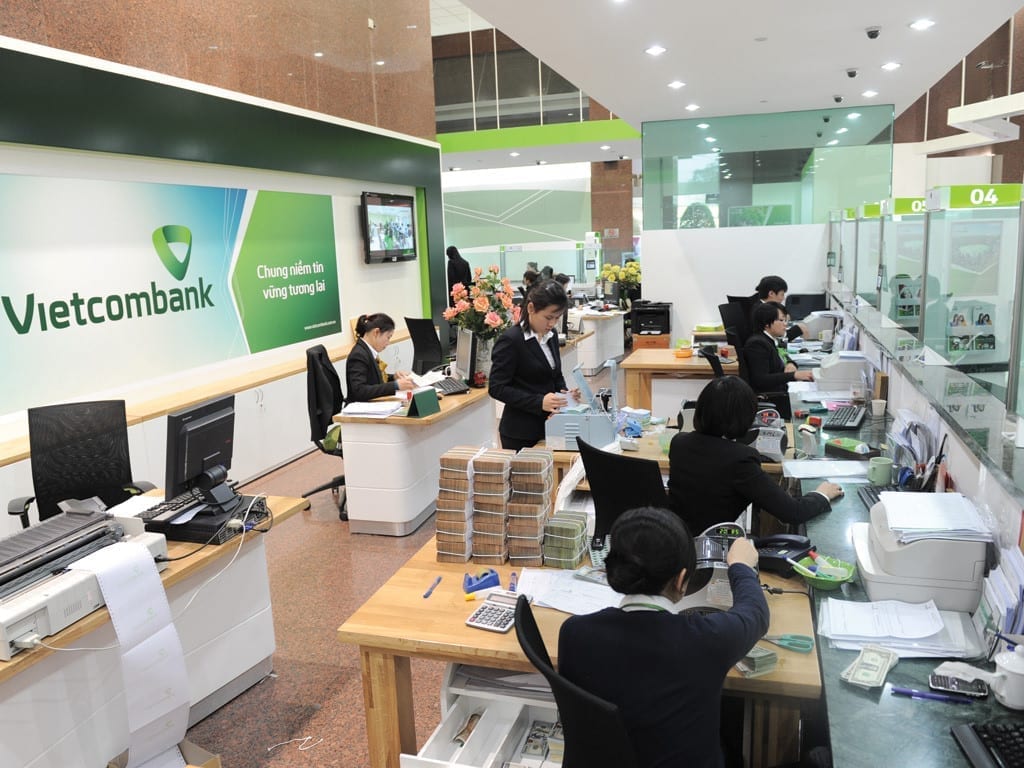
    Two of Vietnam’s largest banks reported contrasting performances in 2018, with Vietcombank’s profits rising by 63.5 percent and Vietinbank’s falling by 27 percent. Vietcombank, the largest listed bank by market capitalization, said profit before tax was VND18.02 trillion ($772.73 million) last year, up 63.5 percent over 2017. Vietcombank earlier this month raised VND6.2 trillion ($265.86 million) from selling a 3 percent stake to foreign investors.

    Singapore sovereign fund GIC bought 2.55 percent while Japan’s Mizuho Bank bought the remaining 0.45 percent to keep its 15 percent stake unchanged. Nghiem Xuan Thanh, Vietcombank’s chairman, said at a recent conference his bank had achieved all its target last year.

    Bad debts last year accounted for 0.97 percent of total loans and the bank hopes to keep it below 1 percent this year too. Vietcombank plans to have its total asset value increased by 12 percent, and its capital mobilization up by 13 percent this year.

    Vietinbank, the fourth largest listed bank by market cap, saw profit before tax slip to VND6.7 trillion ($287.3 million) in 2018 from VND9.2 trillion ($394.5 million) in 2017. Asset growth, credit growth and capital mobilization grew by 6-10 percent, lower than targeted.

    The lender’s proposal to increase charter capital has not been approved. Its chairman Le Duc Tho said increasing capital is “vital” since it has remained unchanged for years. The State Bank of Vietnam owns 65 percent of the bank, while foreign ownership has reached the 30 percent cap.

  • Malaysia won’t lose out to Vietnam: Council

    Malaysia won’t lose out to Vietnam: Council

    Malaysia will not lose its competitiveness to Vietnam even though it does not ratify the Comprehensive and Progressive Agreement for Trans-Pacific Partnership (CPTPP). Malay Economic Action Council researcher Mohd Effuan Aswadi Abdul Wahab said there was no significant proof that there would be an increase in investment once a country signed a free trade agreement (FTA).

    “It is said that many companies, especially manufacturing firms will move to Vietnam after the country has ratified the CPTPP as the trade agreement is being seen as opening doors for companies to go to countries which have ratified the FTAs. This is certainly not true,“ he said.

    He said investors would look into various factors, including political stability, better infrastructure, skilled workers and rule of law, before making any investment decision.

    “Investors will certainly look into Malaysia’s economic policies before they make any investment decision.

  • SimplyBrand blockchain platform launches token pre-sale

    SimplyBrand blockchain platform launches token pre-sale

    SimplyBrand, the world’s first blockchain-based e-commerce verification platform, launched a token pre-sale this week with strategic partner Cobinhood, a cryptocurrency service platform. By integrating blockchain, AI and crowdsourcing, SimplyBrand aims to end online counterfeiting through a safe and trustworthy digital commerce ecosystem.

    With the expansion of e-commerce, brands are finding it more difficult to trace counterfeit goods and prove authenticity in the highly fragmented internet space, leading to massive revenue losses and often damaging brand reputation. In addition, consumers continue to suffer from fraudulent traders of copied products.

    “For the past years, SimplyBrand has used data intelligence to successfully protect brand image and drive business results for Fortune 500 and renowned clients, including Asus and popular luxury brands,” said Shanghai-based Kaufman Chang, the founder and CEO of SimplyBrand.

    “As we usher in a new era powered by blockchain and AI technology, we believe the whole retail economy will benefit from this organic platform, which truly makes every purchase matter.”

    Chang says SimplyBrand is already a well-established company with a proven business model and trusted customers using big-data anti-counterfeiting services. Now it is expanding its expertise in machine learning and AI to a more innovative, comprehensive solution.

    “We are able to identify and verify products sold on all the major e-commerce platforms with high efficiency based on data including images, prices, locations, product description, etc. An immutable “blacklist” of counterfeit product will then be created on the blockchain for public reference.”

    Chang says this allows brands to remove offending product pages responsively and continuously help to improve AI accuracy. Within this ecosystem, crowdsourced participants who report fake products through the SimplyBrand app can earn token rewards to purchase brand privileged items or sell them on exchange, while brands can buy tokens from the exchange and use them to buy brand-protection services.

    “As a result, a virtuous cycle of loyal consumers, companies and other enforcement agencies will be created to eradicate the online scourge of counterfeit products for good.”

    SimplyBrand was co-founded by Chang and Ronnie Ng, both alumni of University of Chicago Booth School of Business. Chang is a startup entrepreneur with ventures in cloud computing software and big data security software and Ng is an entrepreneur and marketing specialist.

  • Maybank Malaysia bags ‘The Banker’s Bank’ award

    Maybank Malaysia bags ‘The Banker’s Bank’ award

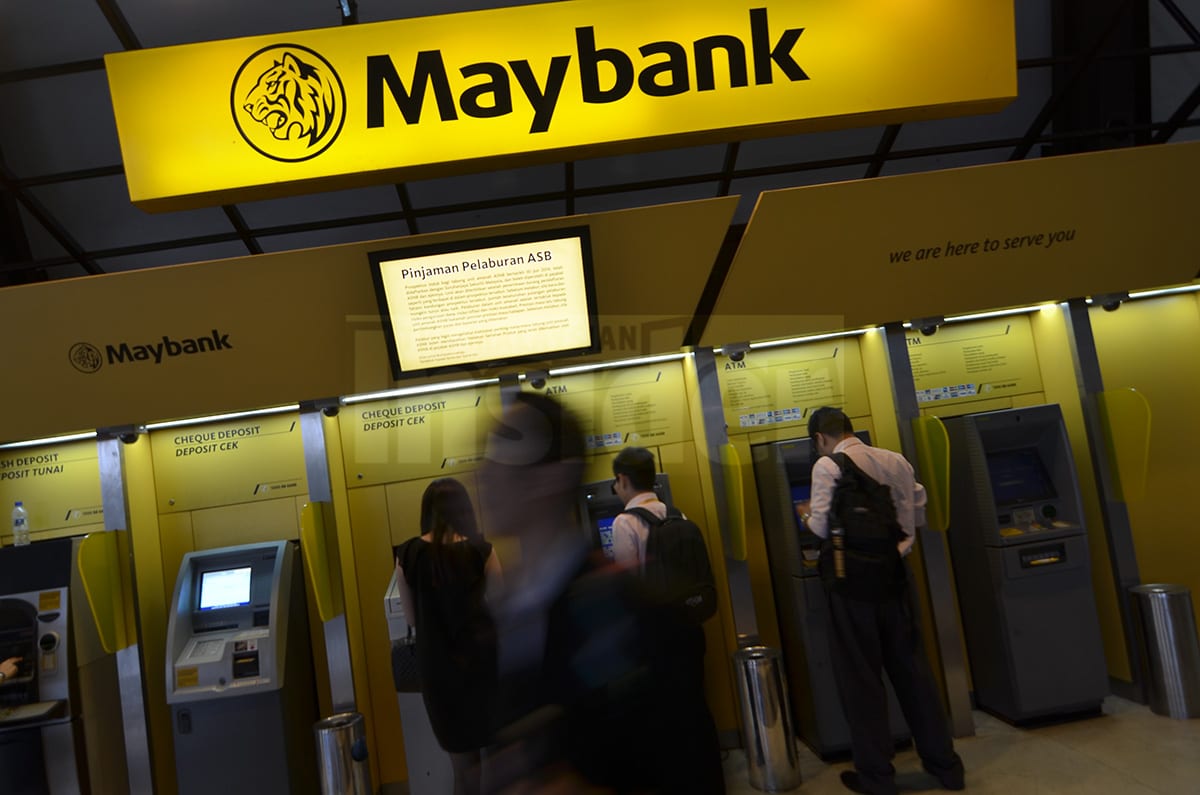
    Malayan Banking Bhd (Maybank) clinched The Banker’s Bank of the Year 2018 in Malaysia award with its fresh thinking on how to provide the best service quality to previously underserved consumers. In a statement, The Banker Editorial said Maybank launched HouzKEY, an innovative rent-to-own product, the first of its kind in Malaysia, recognising a gap in the market to provide services to Islamic banking customers.

    “With a growing demand for affordable homes in the country, Maybank created this alternative solution, which allows for home ownership through a leasing scheme that does not require a deposit.

    “Customers have a flat rate rental payment for five years, and at the end of that time, have the option to purchase the property at a price agreed at the start of the contract, continue to rent with a 2% annual rent increase, or to terminate the contract with no obligation,” it said.

    The scheme is Shariah-compliant, being based on the Ijarah principle of leasing.

    Maybank president/CEO Datuk Abdul Farid Alias said the bedrock of its success is predicated on the bank’s mission of humanising financial services, which drives it to innovate and offer financial solutions that enrich the lives of customers.

  • KoinWorks Indonesia Announces Investment From Quona Capital

    KoinWorks Indonesia Announces Investment From Quona Capital

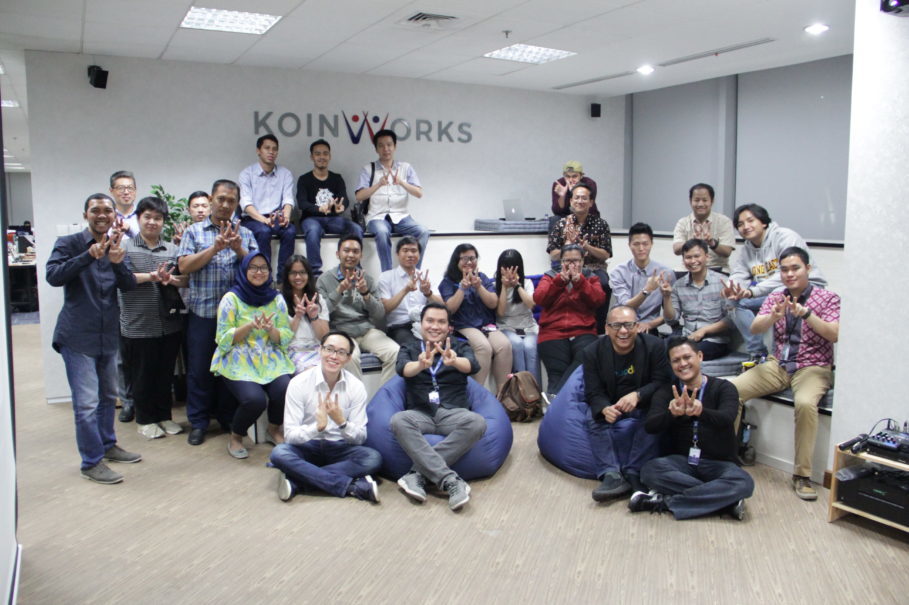
    Indonesian peer-to-peer lending platform KoinWorks said in a statement on Monday that it has received an investment from US-based venture capital firm Quona Capital. “We’re very happy we could collaborate with Quona as one of our investors,” said Benedicto Haryono, chief executive and co-founder of KoinWorks. “With the inclusion of Quona among our line of investors, it will further help develop KoinWorks in becoming a responsible peer-to-peer lending firm and continue to innovate and provide a positive impact for society,” Benedicto added.

    Quona Capital focuses on investment in financial technology companies it deems to have potential in facilitating access to financial products. The Washington-based company provides financial access in various regions, including Latin America, Africa, Britain and Asia.

    KoinWorks said in the statement that the collaboration between itself and Quona Capital is based on a mutual understanding that technology has a strong role in improving quality and access to financial access for those beyond the reach of traditional banks.

    The Jakarta-based fintech company, which has 100,000 investors on its platform, is one of the first fintech companies in the country to have obtained a license from the Financial Services Authority (OJK).

    KoinWorks bridges the gap between investors and investees through its online platform and provides unbanked individuals with access to financial services.

    The company focuses on business and educational loans. It won Bisnis Indonesia’s Most Innovative Fintech of the Year award in 2017.

  • Confidence Returns to Indonesia’s Financial Markets

    Confidence Returns to Indonesia’s Financial Markets

    After a steep correction last year and pressure on the rupiah, Indonesia expects stability to return to its financial markets this year as foreign capital starts flowing back into the domestic market. The first bond offerings of the year last week were more than three times oversubscribed, with interest mainly coming from foreign investors, who also bought more local stocks than what they sold over the past two weeks, reversing a net selling trend that persisted throughout last year, according to Indonesia Stock Exchange (IDX) data.

    For Bank Indonesia Governor Perry Warjiyo, the return of foreign capital inflows came as no surprise. The central bank has been aggressive in raising its benchmark interest rate – the seven-day reverse repo rate – which was increased by 175 basis points to 6 percent over the past nine months in response to tightening by the United States Federal Reserve.

    As it now seems more likely that the US central bank may raise the federal funds rate only twice this year instead of three times, Indonesia’s financial markets have become more attractive to foreign investors as a destination to park their funds.

    “The US dollar is not king anymore this year,” Perry said during a meeting with editors of the country’s largest media groups on Monday.

    Pressure on the rupiah has also eased. The currency currently trades at 14,031 to the greenback, having appreciated 8 percent from its weakest level of 15,253 four months ago, Bank Indonesia data showed.

    Bank Indonesia took measures in concert with the central banks of Malaysia and Thailand on Jan. 2 to reduce dependency on the dollar in bilateral trade. The arrangement will involve Indonesian trade with the two countries, which amounts to about $33 billion per year, being settled in the countries’ respective currencies, instead of the US dollar.

    Indonesia’s current-account deficit, the main culprit for the weakness in its currency, is expected to narrow to 2.5 percent of gross domestic product this year, compared with 3 percent last year.

    American multinational investment bank Morgan Stanley said lower oil prices should help Indonesia lower its current-account deficit.

    “With Brent down 36 percent from its September highs, we should see some relief on the trade balance, which has been weighing on the current account and, in turn, [become] a drag on confidence in equities and performance,” analysts Sean Gardiner and Aarti Shah wrote in a recent note to clients.

    They said oil prices, with the combined effects of the election stimulus, recovering loan growth, dovish monetary policy and rising company earnings have cemented Morgan Stanley’s bullish views on Indonesian stocks.

    The New York-based bank’s top picks include conglomerate Astra International, state-owned gas utility company Perusahaan Gas Negara, state-owned telecommunications company Telkom Indonesia, and lenders Bank Central Asia and Bank Mandiri.

    Bank Indonesia is confident that the country’s economy may grow by between 5.0 percent and 5.4 percent this year, compared with an estimated 5.2 percent last year. Household consumption is also expected to expand by between 5.1 percent and 5.5 percent and investment by between 6.5 percent and 6.9 percent, the central bank governor said.

    Perry said bank loans will maintain their expansive pace of 12 percent this year, in line with an increase of between 8 percent and 10 percent in third-party funds.

    However, one source of concern this year is lower commodity prices, which will affect Indonesia’s export earnings. Perry said the country should therefore increase its exports of manufactured goods, seek new markets for its products and encourage tourism.

    He said Bank Indonesia is comfortable with its current policy and that it can afford to maintain its benchmark rate until March.

    “We are optimistic that 2019 will be better than 2018,” Perry said.

  • Malaysia’s GDP growth to ease to 4.7% this year: Moody’s

    Malaysia’s GDP growth to ease to 4.7% this year: Moody’s

    Malaysia’s real gross domestic product (GDP) growth is expected to recede to 4.7% in 2019 after averaging at around the 5% mark between 2015 and 2018 on the back of external headwinds, according to Moody’s Investors Service. For 2020, the economy is projected to moderate further to 4.5%. The rating agency foresees external headwinds from trade protectionism to weigh on trade activity, while the review of infrastructure projects and slowdown in public spending will also prove to be a further drag to growth.

    “Nevertheless, economic expansion will still stay stronger than the median average for A-rated sovereigns, even taking moderating growth into account,” it opined.

    Moody’s said Malaysia’s credit profile, which is rated at “A3 Stable” reflects its large and diversified economy with healthy medium-term growth prospects, and relatively high government debt that is partly offset by a favourable debt structure and large domestic savings.

    It pointed out that the govern-ment’s recent fiscal policy choices, particularly in abolishing the goods and services tax, will narrow its revenue base and reduce fiscal flexibility – while its debt burden which is significantly higher than the A-rated median, will remain a credit constraint.

    “However, deep domestic capital markets and high savings provide a stable funding pool for the government’s debt, and partly offset these fiscal weaknesses. A solid institutional framework that includes effective monetary policy supports the country’s credit profile,” Moody’s said.

    It also noted that pervasive corruption will likely to remain a challenge for the government, which will also undermine policy effectiveness.

    Moody’s said that given a stable outlook of the sovereign rating, a change in the rating is unlikely in the near term, but could face upward pressure if the scope for fiscal consolidation increases.

    Conversely, the rating agency said it would consider downgrading the sovereign rating in the event of weakened fiscal prospects, increased debt burden, growing political tensions and diverging views within the government, which could undermine policy effectiveness or impair the government’s ability to adhere to its fiscal consolidation objectives, potentially threatening the stability of capital flows to the country in the process.