Category: Finance

Retail News Asia is committed to providing both local and global retailers with the latest Finance news throughout the Asian market. This on a daily base.

  • Maybank Malaysia vaults into list of world’s top 500 brands

    Maybank Malaysia vaults into list of world’s top 500 brands

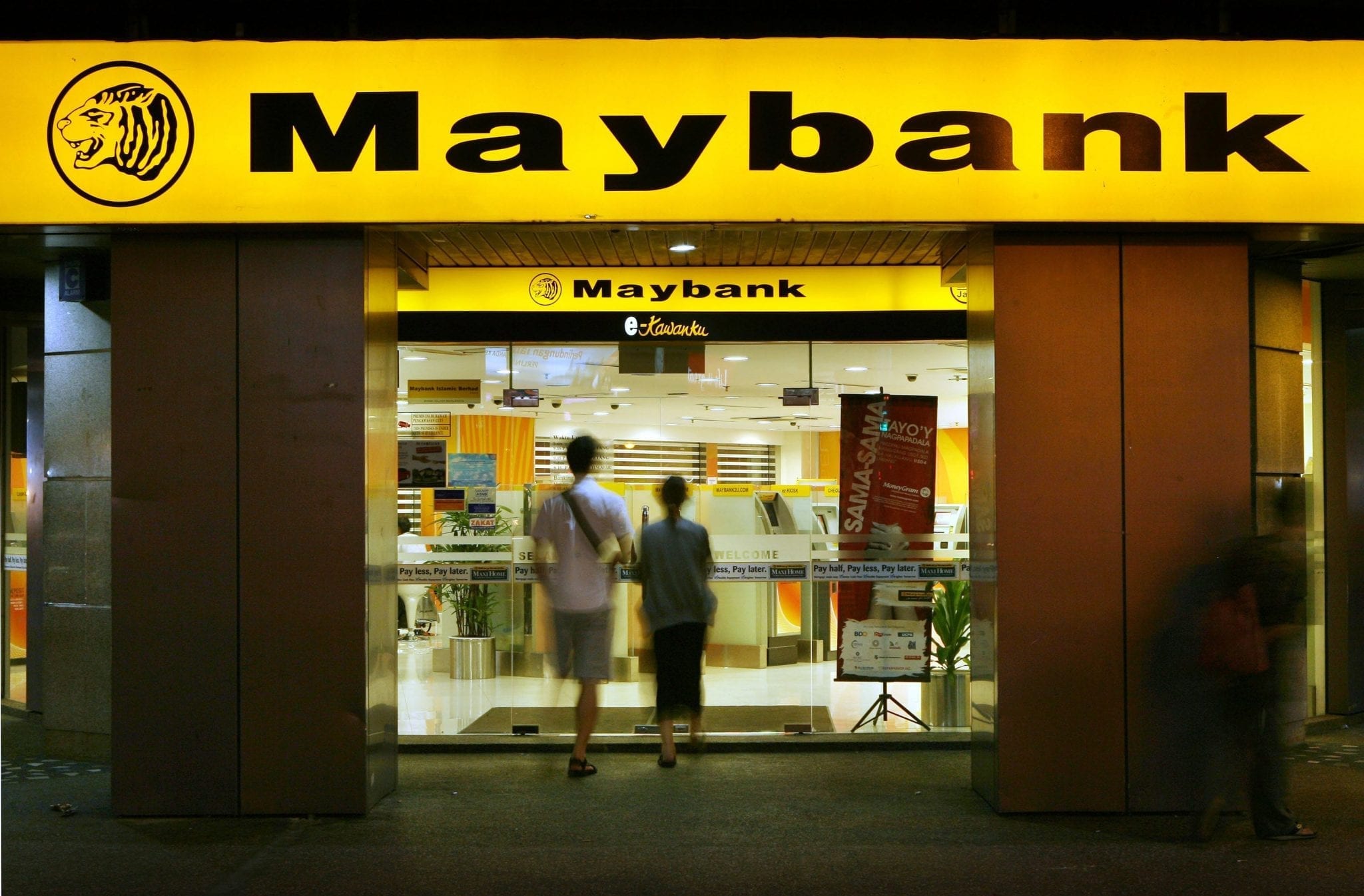
    Maybank has made it into the world’s top 500 brands for the first time, after it was named in Brand Finance’s Global 500 Brands – the only Malaysian bank and one of two Malaysian brands to be included in this prestigious listing. Maybank achieved a brand valuation of US$4.2 billion (RM17.3 billion), a 32% increase from last year’s valuation of US$3.16 billion according to its statement.

    Maybank said the group also maintained its position as the top bank brand in Malaysia for the fifth year running, improving its previous rating of “AAA-” to “AAA”.

    At the same time, it registered an increase in the Brand Strength Index (BSI) to 86/100 this year from 82/100 previously. BSI is a key driver that contributes to brand valuation and determines the strength of a brand.

    Maybank was among only eight Asean brands listed in the global ranking. It was placed 494 in the world’s top 500 most valuable brands list.

    Maybank group president and CEO Datuk Abdul Farid Alias said the recognition was a reflection of Maybank’s sustained efforts in building closer relationships with its stakeholders and focusing on delivering consistent value through all its products and services.

    “It is definitely a great honour for Maybank to be listed among the top brands in the world today. We believe it also demonstrates how a homegrown brand from Malaysia is defining new standards and raising the bar in the global stage with support from all its stakeholders.”

    Farid added that Maybank’s strategy in developing a meaningful brand experience was centred on its mission to humanise financial services, as well as its commitment to being at the heart of communities where it operates.

    “While we will continue to strengthen our brand positioning across all our engagement channels, we are also focusing on providing next-generation customer experience given that technology is rapidly influencing our lifestyles and the way people do banking today,” he said.

    Brand Finance in its annual survey, values the brands of thousands of the world’s biggest companies. The results of this analysis are then ranked with the world’s 500 most valuable brands featured in the Brand Finance Global 500 report.
  • Vietnam’s interest rate rises in the lead-up to biggest national holiday

    Vietnam’s interest rate rises in the lead-up to biggest national holiday

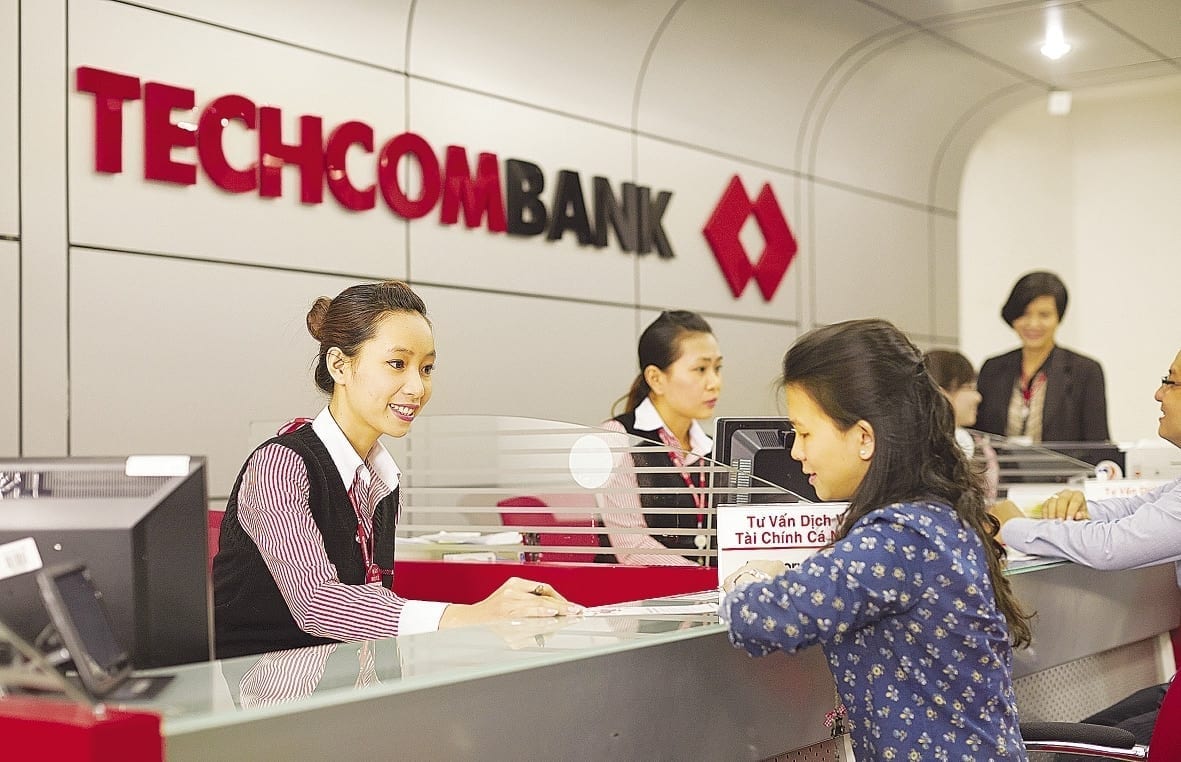
    Banks have hiked deposit interest rates by 0.1-0.5 percentage points as the country’s spending demand surges prior to Tet. Private lender Asia Commercial Bank last Friday introduced a new interest schedule with an increase of 0.2-0.3 percentage points in rates on most deposit terms. It also offers rates proportional to the amount of deposit. Techcombank, another of the larger private banks, since January 21, has hiked rates by 0.2-0.3 percentage points for terms of up to 12 months.

    Earlier, in mid-December most private banks had upped rates by 0.1-0.7 percentage points, while state-run banks increased them by up to 0.5 percentage points.

    However, there are also a few banks that choose to ‘go against the current’ by lowering deposit rates on same products. For instance, BIDV, Vietnam’s biggest lender by assets, has just lowered interest rates on its deposit rate schedule effective from January 22.

    BIDV’s 5-month savings is now 5.2 percent interest, down from its previously 5.5 percent which was its approved ceiling rate.

    Previously, at the end of December 2018, BIDV increased the 5-month term interest rate by 0.5 percentage points per year.

    On the same day, VPBank also reduced the interest rate on their 6-36 months terms by 0.1-0.5 percentage points.

    Specifically, the bank’s regular savings interest rate with 6-11-month terms is lowered by 0.2 percentage points, and is now 7 percent. The 12-month term interest rate is 7.05 percent; both 13 and 15 month terms are down 0.2 percentage points, and are now 7.2 and 7.4 percent respectively.

    However, VPBank still currently holds the highest single interest rate in the market of 8.6 percent for its 18-36 month fixed term savings.

    Experts believe that the negative adjustment of interest rates at some banks such as BIDV and VPBank may be for the purpose of restructuring to meet the banks’ individual capital needs, and does not yet accurately reflect the interest rate trend in the following months.

    In fact, the period before the Tet Lunar New Year holiday is when cash is still in high demand in the economy, as businesses need to withdraw money to pay bonuses and salaries, and people will withdraw cash to spend for Tet which will start from February 5.

    At the conference on tasks for the banking industry in 2019 on January 9, Deputy Governor of the State Bank of Vietnam (SBV) Dao Minh Tu said that banks have recorded a decline in deposits.

    According to him, this is a phenomenon that banks need to keep their eyes on, to determine where the flow of capital has gone, to real estate or production, or another channel in order to make reasonable adjustments to their plans.

    Tu said the SBV had adamantly stuck to its policy to stabilize interest rates despite very high pressure to drive rates upwards in 2018. Many small banks had raised short-term deposit rates to attract capital and improve liquidity, resulting in the central bank having to pump more money into the market or use other measures to limit and keep interest rates stable for businesses.

    The deputy governor said the SBV had to balance between the conflicting interests of banks, savers and businesses to come up with an appropriate interest rate for the whole market.

    The SBV targets credit growth of 14 percent this year, the same as last year. As a result, he noted, commercial banks will have to make better quality loans this year to avoid bad debt.

  • Vietnam makes debut in Bloomberg innovative economy index

    Vietnam makes debut in Bloomberg innovative economy index

    Vietnam has for the first time entered the Bloomberg Innovation Index of the world’s 60 most innovative economies. It scored 45.92 out of 100 in the 2019 index. Other new entrants include India, Mexico and Saudi Arabia. Bloomberg said: “The index analyzes dozens of criteria using seven metrics, including research and development spending, manufacturing capability and concentration of high-tech public companies.”

    Vietnam’s highest rankings were 34th in high-tech density and 39th in patent activity. It ranked a lowly 59th in productivity.

    Its productivity in 2017 was among the lowest in Asia despite growth, according to the Vietnam Annual Economic Report released by the Vietnam Institute for Economic and Policy last year.

    An average Vietnamese worker made VND60.73 million ($2,600), lower than the rate for Cambodia, Indonesia Malaysia, the Philippines, and Thailand, it said.

    In the Bloomberg index, South Korea retained its top place from last year and was followed by Germany, Finland, Switzerland, and Israel.

    Other Southeast Asian countries were Singapore in sixth place, Malaysia (26th) and Thailand (40th).

  • Vietnamese banks report plunge in profits

    Vietnamese banks report plunge in profits

    While profit across the banking sector grew by an estimated 40 percent last year, VietinBank, LienVietPostBank and SaigonBank have reported steep declines. The biggest surprise came from state-owned VietinBank, the country’s second biggest lender by assets, which reported a 25 percent fall in profits before tax to go out of the group of five most profitable banks in the country.

    Le Duc Tho, its chairman, said this was a result of having to restrict operations last quarter to begin restructuring.

    Asset growth, credit growth and capital mobilization grew by 6-10 percent, lower than targeted.

    LienVietPostBank reported a 30 percent decline in profit before tax as a result of losses related to securities investments and low marginal interest rates.

    It achieved losses of nearly VND5 billion ($215,140) from securities investments whereas in 2017 it had made a profit of VND380 billion ($16.35 million).

    SaigonBank’s profit before tax fell by more than 26 percent due to provisioning for bad debts. The bank had to increase provision for bad debts by 22 percent to an amount equivalent to 87 percent of its profit from business operations.

    Its bad debts doubled in the first half of 2018 to nearly VND900 billion ($38.72 million), but by the end of the year it brought the rate down from 6.48 percent during mid-year to 2.2 percent. It involved provisioning of VND287 billion ($12.35 million).

    HSBC Vietnam CEO Pham Hong Hai said from 2019 bad debts could reemerge as a problem for banks after the recent lending spurt and the instability of the global financial markets.

    As a result, banks’ profits would most likely see a downward trend this year, he warned.

    The State Bank of Vietnam targets credit growth of 14 percent this year, the same as last year, and keeping non-performing loans to below 2 percent.

  • Dollar eases as focus shifts to Fed meeting

    Dollar eases as focus shifts to Fed meeting

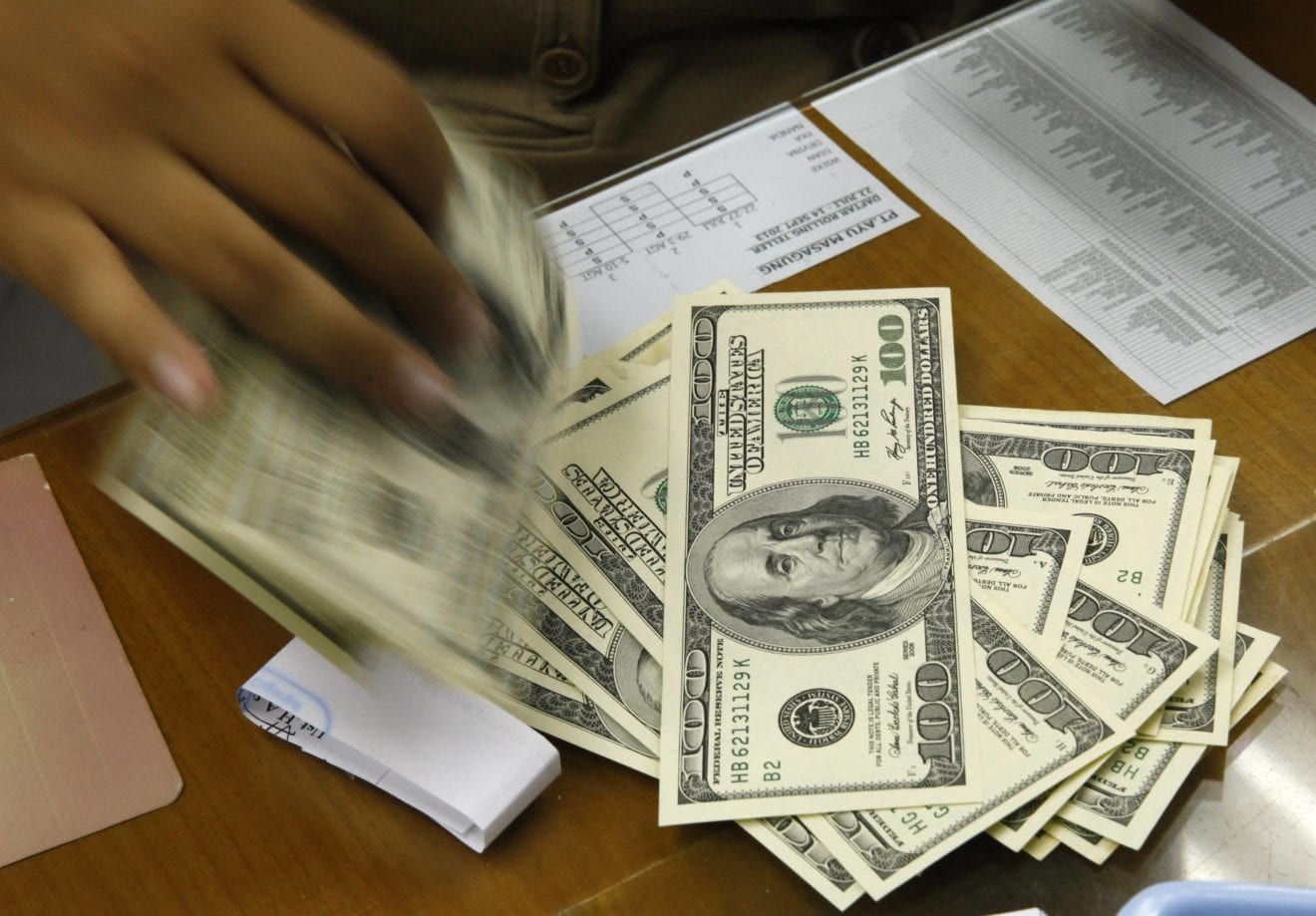
    The dollar eased versus most of its peers on Monday as investors turned their attention to this week’s Federal Reserve policy meeting, with traders wagering policymakers will signal a pause in their tightening cycle. The Federal Open Market Committee meets between Jan 29-30, and Chairman Jerome Powell is widely expected to acknowledge growing risks to the US economy as global momentum weakens.

    The dollar fell 0.2% versus the offshore yuan to 6.7406. The rally in the yuan also fuelled a bounce in the Australian dollar, which gained 0.18% versus the dollar to $0.7195. Kiwi dollar strengthened by 0.3% to $0.6859.

    “The general direction for the dollar is still down and markets will be taking cues from the FOMC this week,” said Sim Moh Siong, currency strategist at Bank of Singapore.

    “The Fed will most likely keep rates steady this year given the state of economic growth outside the US”

    The dollar index, a gauge of its value versus six major peers was marginally lower at 95.74, after falling 0.8% on Friday.

    A deal to reopen the US government for now after a prolonged shutdown also reduced investor demand for the safety of the greenback.

    ‘The re-opening of Federal government after one-month shutdown fuelled ‘risk on’ rally in the US equities and slashed demand for safe-haven currency like USD, leading to sharp decline of the dollar index last Friday,” said Margaret Yang, markets analyst at CMC Markets.

    Over the past two months or so, Powell and several other Fed policymakers have taken a more cautious approach on further monetary tightening, leaving the dollar underpowered after it enjoyed a boost from the Fed’s four rate increases last year.

    Traders are bearish on the dollar for 2019.

    Amid a weakening global economy and US-Sino trade tensions, the US central bank is widely expected to hold rates steady this year to avoid hurting growth at home. Interest rate futures markets are pricing in no rate hikes for 2019.

    Investors are also anxiously waiting news from high-level US-China trade talks on Tuesday and Wednesday to see if the world’s largest economies can reach a compromise that will end their trade war. President Donald Trump has threatened to hike tariffs on Chinese goods if there is no significant progress in the negotiations.

    The yen added 0.2% in early Asian trade at 109.34.

    The dollar has gained around 1.2% on the yen over the last two weeks. Not helping the yen was the Bank of Japan’s downgrade of its inflation forecasts last week when it also maintained its accommodative monetary policy, as widely expected.

    Moreover, Japanese investors have been net buyers of foreign bonds over the last few weeks, stoking demand for dollars. This likely explains why the safe-haven yen has not appreciated during this period even though risks of a global economic slowdown have rattled investor sentiment.

    The euro was marginally higher at $1.1411.

    The single currency managed to cling on to a 0.4 percent gain made last week despite the European Central Bank downgrading its growth forecasts for the near term.

    Growth data out of Europe’s economic powerhouses such as Germany and France has been weaker-than-expected and analysts expect the ECB to remain dovish for an extended period.

    Traders believe Europe’s slowdown and a dovish ECB are priced into the euro, which has traded in a $1.12-$1.16 range over the last three months.

    Sterling was marginally lower, fetching $1.3193.

    Cable gained 2.5% last week after a report in the Sun newspaper that Northern Ireland’s Democratic Unionist Party had privately decided to offer conditional backing for British Prime Minister Theresa May’s Brexit deal this week.

    However, Ireland’s Deputy Prime Minister Simon Coveney said on Sunday the backstop was already a compromise drawn up to meet May’s negotiating red lines, and the EU and Ireland were united in the view it “was not going to change”.

    Analyst expect sterling to remain volatile. Britain is set to leave the European Union on March 29, but the country’s members of parliament remain far from agreeing a divorce deal.

  • OCBC: Malaysia could restore fiscal health in 3 years

    OCBC: Malaysia could restore fiscal health in 3 years

    Malaysia has a reasonable chance of restoring its fiscal health within three years if the economic growth remains stable with new revenue streams and stable expenditure, according to OCBC Bank chief economist Selena Ling. “But if you have a case where the global environment is very serious and dire and there is no deal between US and China… then it becomes a very hostile environment for any developing country to operate in,” she said last Friday.

    She noted that if the global economy remains at a status quo for the rest of the year and crude oil prices stabilise, Malaysia may miss the fiscal deficit target by 0.1-0.2 percentage points.

    Having said that, the potential slippage is not expected to be “very severe” that will derail Malaysia off its targets.

    “Rating agencies also want to see a multi-year plan. If it’s just a slippage of one year that you can attribute to a lot of external factors, probably the rating agencies will give you a pass. It’s really not a one year story they’re looking for,” she explained.

    The government has projected fiscal deficit to ease to 3.4% of gross domestic product (GDP) this year from 3.7% in 2018. It looks to further narrow the fiscal deficit to 3% and 2.8% in 2020 and 2021, respectively.

    Ling projects Malaysia to record a full-year GDP growth of 4.4% for 2019 amid slowing global growth and the ongoing external headwinds.

    Malaysia’s ringgit, on the other hand, could appreciate to RM4 against the greenback in the event of a weak dollar.

    She said the strengthening of the ringgit will have less to do with domestic factors as the slowdown in economic growth is seen as benign, coupled with an unlikely change in the Overnight Policy Rate (OPR).

    Another reason that could be supportive of strong ringgit is the risk of the US economy falling into a recession next year.

    Meanwhile, Ling expects oil prices to be subdued and could result in a shortfall in government coffers if they remain at the current level of around US$50 per barrel until year-end.

    Although Budget 2019 is based on the oil price assumption of US$70 per barrel, she does not see a need to recalibrate the budget at this juncture, but it will exert pressure on seeking new revenue sources.

    “As far as the budget revision is concerned, I suspect (it will) not be so soon because the US$70 is a medium-term price target and oil prices have been volatile in the last six months.

    “But if you look at the average price, it is relatively stable and maybe for the next budget in October 2019, they (the government) may revise the oil price assumption,” she added.

  • Indonesia’s Danamon Bank Plans Merger With BNP

    Indonesia’s Danamon Bank Plans Merger With BNP

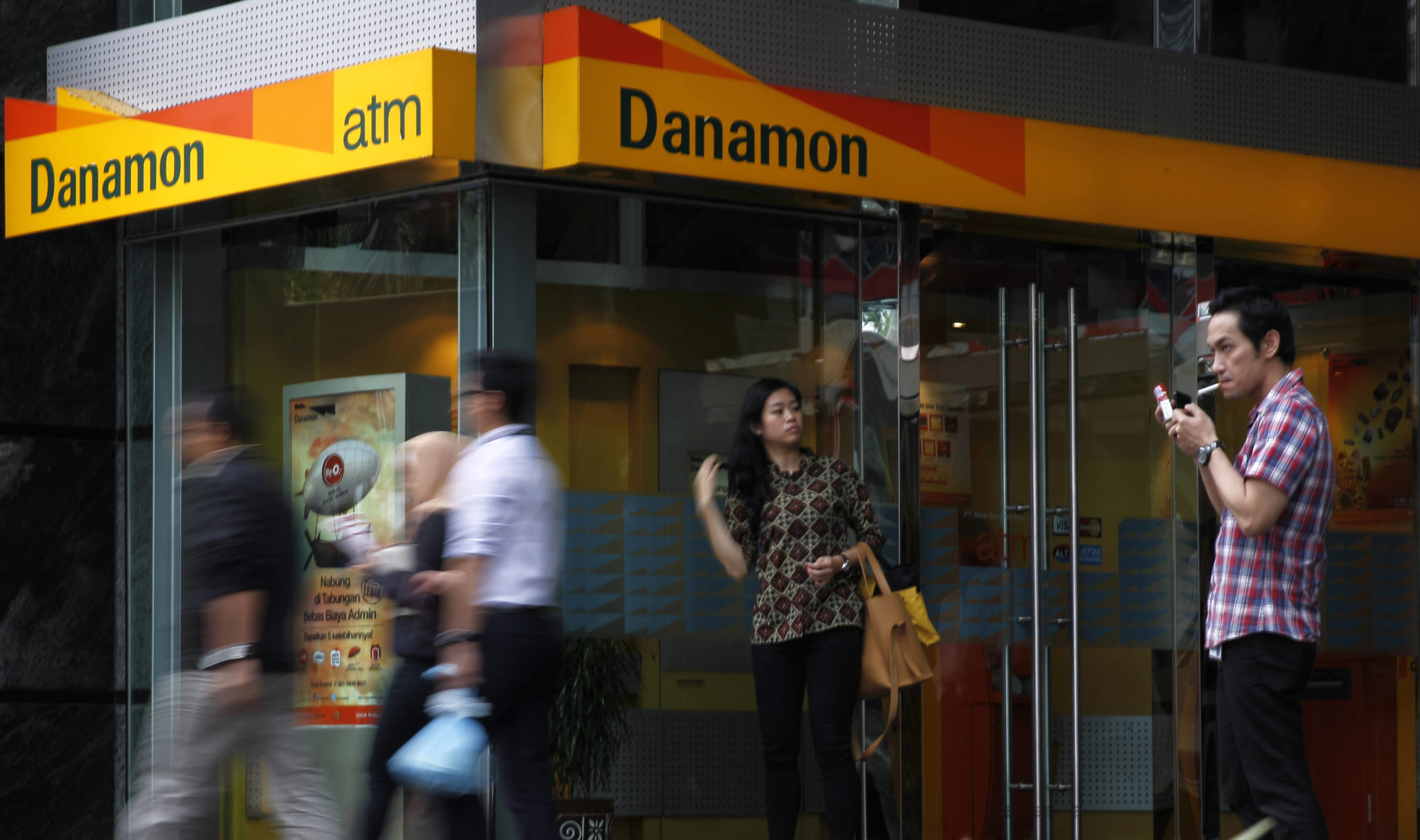
    Bank Danamon, Indonesia’s fifth-largest private lender, announced a plan on Tuesday to merge with local lender Bank Nusantara Parahyangan. “The proposed merger is subject to approval by the relevant regulatory authorities, both banks’ shareholders, and to meeting the legal formalities for such a transaction,” Bank Danamon said in a statement on Tuesday.

    This is part of a larger plan by Japan’s Bank Mitsubishi UFG (MUFG) to acquire a 73.8 percent stake in Bank Danamon.

    Bank Danamon and Bank Nusantara Parahyangan (BNP) are now able to merge after MUFG acquired 40 percent of Danamon in August last year.

    Aside from owning Bank Danamon, MUFG also holds a majority stake in BNP through its subsidiary, Acom, one of Japan’s largest loan companies.

    Bank Danamon and BNP are required to merge as Indonesia applies a single-presence policy, which ensures that one single entity does not hold a majority stake in more than one company.

    MUFG’s plan for acquiring a majority stake in Danamon has been laid out in three stages.

    In the first stage, which was completed in December 2017, MUFG acquired a 19.9 percent stake in Danamon from Singapore’s wealth fund firm Temasek for $1.17 billion.

    The Japanese lender subsequently raised its stake in Danamon to 40 percent last August with the acquisition of a further 20.1 percent. In the final stage, the Japanese lender will seek approval to acquire the remaining shares, which in total, will give it a 73.8 percent stake.

    The acquisition is the part of MUGF’s ambitious plan to expand its presence in the region.

    The deal marks the largest acquisition of an Indonesian company by a foreign entity after American multinational cigarette and tobacco manufacturer Philip Morris International bought a 60 percent stake in HM Sampoerna for $3 billion.

  • Asean’s Power Landscape Expected to Transform in 2019

    Asean’s Power Landscape Expected to Transform in 2019

    Member states of the Association of Southeast Asian Nations are on a path to transform their power landscapes as energy demand continues to rise to match the region’s economic growth potential, a power management company said this week. “In the pursuit of a robust digital economy, Asean is heralding in an era of unprecedented innovation … 2019 will see power play an indispensable role in shaping the evolution of the region’s economy,” Ireland-based power management company Eaton said in a statement.

    In Southeast Asia, technology will have to meet increasing demand for clean, renewable energy and remote power management, support the arrival of 5G connectivity, and provide resilience against growing cyberthreats.

    Asean’s evolving energy demand, which according to the International Energy Agency will grow by almost two-thirds by 2040, will go together with the projected boom in the region as part of the fourth industrial revolution.

    Development of the region’s smart cities network has already made way for some significant changes in regional power management, Eaton said.

    “We are seeing a seismic shift in the region’s power management outlook as cities gear up on technology as the foundation of smart and sustainable urban development,” the company said.

    Eaton said batteries would continue to develop in this part of the world beyond their traditional use as a backup energy source.

    “At present, heavy investments in Asean are being made in preparation for such technologies in the years to come,” the company said.

    Singapore, for example, has embarked on a public-private partnership through its Energy Market Authority to speed up the deployment of energy storage systems.

    Though new technology seems to demand new assets, Eaton also highlighted the importance of making the most of existing assets.

    “Only by devising new and innovative solutions can the industry progress amid drastic changes in power demand and supply,” the company said in the statement.

  • CIMB get permission for banking venture with Philippines

    CIMB get permission for banking venture with Philippines

    CIMB Group Holdings Bhd has obtained the green light to establish its investment banking business in the Philippines. In a filing with Bursa Malaysia, the group said its wholly owned subsidiary CIMB Group Sdn Bhd had on Jan 23 received the relevant approvals from the Securities and Exchange Commission of the Philippines, including the Certificate of Incorporation and Certificate of Registration for an investment house licence.

    The investment banking business in the Philippines will be operated via a 60% shareholding in CIMB Bancom Capital Corporation with the remaining 40% stake to be held by local partners Bancom II Consultants, Inc and PLP Group Holdings, Inc.

    The three parties have entered into a joint venture agreement following the receipt of the approvals.

    CIMB shares went down 1 sen or 0.2% to close at RM5.65 today on 13.4 million shares done.

  • Naver says it’s not interested in opening an internet bank

    Naver says it’s not interested in opening an internet bank

    Naver said Monday that it has no plans to launch an internet-only bank, shutting down rumors that the IT giant might open the country’s third such bank after K bank and Kakao Bank. “Although we have reviewed [joining] the internet-only bank business, we decided against it and will not attend the information session regarding internet-only bank licenses on Wednesday,” said a Naver spokesperson.

    “This is the decision we made after giving a lot of thought into whether Naver can be competitive when the domestic internet-banking environment is already so well established and existing internet-only banks K Bank and Kakao Bank are doing well.”

    The announcement comes as a surprise to the industry as Naver has been hailed as one of the likeliest candidates to qualify for a banking permit. Last month, financial authorities announced that they would grant internet-only bank licenses to up to two companies this May in an effort to boost competition in the banking industry. The information session, organized by the Financial Supervisory Service and Financial Services Commission, comes as part of the government’s effort to facilitate the application process.

    Despite government initiatives, however, no major company has yet to directly express an intention to apply for a bank license.

    Game developer NHN Entertainment and booking and shopping platform Interpark – which led a failed effort to apply for a permit in 2015 – have also said they don’t plan on pursuing internet-only banks.

  • Gold rises as growth concerns, US govt shutdown weigh on dollar

    Gold rises as growth concerns, US govt shutdown weigh on dollar

    Gold prices rose on Thursday as the dollar declined due to concerns the prolonged U.S. government shutdown will limit economic growth at the same global growth is slowing as well. Spot gold was up 0.1 percent at $1,283.31 per ounce, as of 0326 GMT, while U.S. gold futures were down 0.1 percent at $1,282.60 per ounce. “We are seeing a weaker U.S. dollar for the moment, which is in general supportive for gold,” Michael McCarthy, chief market strategist at CMC Markets said.

    However, McCarthy cautioned that bullion price gains are limited by slowing investor buying as indicated by price charts used by technical traders.

    “The issue for gold is there is a very heavy resistance seen around $1,290 and $1,310. A further weakening of the U.S. dollar could be supportive. But, we need something to really push gold through the resistance level,” he said.

    The U.S. dollar index, which measures the greenback against a basket of six major currencies, fell for third day, dropping 0.3 percent during that period. However, Asian shares rose on Thursday after Wall Street managed to end higher.

    On Wednesday, U.S. President Donald Trump said that the United States was doing well in trade talks with China, saying at a White House event that China “very much wants to make a deal.”

    However, a prolonged U.S. government shutdown reminded investors of risks to growth to the economy.

    White House economic adviser Kevin Hassett said in a CNN interview the U.S. economy could see zero growth in the first three months if the partial government shutdown lasts for the whole quarter.

    Meanwhile, investor focus turned to the European Central Bank (ECB), which is widely expected to keep its monetary policy unchanged at its first policy meeting of 2019 that ends later on Thursday.

    Market watchers also expect ECB to acknowledge growing threats to the euro zone economy.

    “The ongoing trade war, Brexit and slow global growth narrative are supportive for gold at present levels, as is Chinese seasonal demand,” MKS PAMP Group said in a research note.

    “That being said, Comex non-commercial and exchange-traded fund (ETF) holdings remain extended, so we expect a bit of tug of war in the short-term between $1,270-$1,300.”

    Holdings of SPDR Gold, the largest gold-based ETF, was at its highest since June 2018.

    Among other metals, palladium, which hit a record high of $1,434.50 an ounce last week on low inventories and rising demand, rose 0.1 percent to $1,348.50 an ounce.

    Silver was down 0.1 percent $15.35 an ounce, while platinum was steady at $795.

  • RAM Malaysia lowers inflation forecast for 2019 to 2%

    RAM Malaysia lowers inflation forecast for 2019 to 2%

    RAM Ratings, which expects inflation to inch up to 0.3% in December 2018 from 0.2% in the previous month, has revised its full-year headline inflation forecast for 2019 to 2.0% from 2.7%. The rating agency said in a statement that inflation in December 2018 is estimated to rise to 0.3% from 0.2% in the preceding month due to dissipation of deflationary pressures from the transport fuel component.

    The price of RON95 petrol fell 3.3% year on year in December, after a 4.5% drop in November.

    On that note, overall inflation is envisaged to come in at 1.0% in 2018.

    As for 2019, RAM Ratings has revised its headline inflation projection downwards to 2.0%, mainly due to changing expectations on global oil prices, which are increasingly pointing to a lower average range of US$60-US$65 (RM248-RM269) per barrel for 2019.

    RAM head of research Kristina Fong said the rating firm’s sensitivity analysis indicates that for every US$5/barrel move in the price of Brent crude, headline inflation potentially changes 0.3 percentage point.

    “The move back to the weekly Automated Pricing Mechanism for pump prices – effective January 2019 – is not expected to exert any significant downward pressure on inflation given the short period it will be in place ahead of the anticipated targeted fuel subsidy mechanism to be implemented in second quarter 2019.

    “Moreover, global oil prices are expected to trend a little higher compared to the start of the year, An escalation in oil (petrol) prices beyond RM2.20/litre will trigger the use of subsidies to maintain this ceiling. This will also contain inflationary pressure,” she added.

    The Department of Statistics released the December inflation data yesterday.

  • Malaysia may feel bite of China economic slowdown

    Malaysia may feel bite of China economic slowdown

    The slowdown in China may impact Malaysia more given the strong trade linkage with China, according to PublicInvest Research. “China is not only our biggest trade partner in 2018 (YTD 2018: 16.7%) but also our largest export market (YTD 2018: 13.9%) and our second biggest import source after Singapore (YTD 2018:19.8%). This could bring negative ramifications not only to Malaysia but also to other peers like Singapore, Thailand, Indonesia and the Philippines and hence, the growth prospects of Asean-5,“ the research house said in a report.

    In fact, it said, the simmering trade stress has caused noticeable dent to export momentum in November with Singapore, Thailand and Indonesia suffering a contraction in exports. This could be repeated in December.

    PublicInvest Research said unfavourable outcomes to the trade negotiation may see longer times taken for growth to normalise due to demand deficiencies which are always more damaging than supply shocks.

    “Other than this, the pullback in global financial and commodity markets arising from pockets of stress mentioned above can hurt Malaysia as well due to contagion effects. This can bring down the ringgit in addition to putting a cap in the prices of our key commodity exports like crude oil, crude palm oil and rubber,“ it explained.

    The slowdown in China is particularly alarming and shows signs of worsening following the release of its 2018 growth of 6.6% (2017: 6.8%), the slowest since 1990.

    “We don’t see negative surprises in this as it is within the People’s Bank of China’s estimates,“ it said, adding that the International Monetary Fund (IMF) expects China’s slowdown to continue, forecast to ease to 6.2% in 2019 amid firmed commitment to reforms and rebalancing on the back of the trade collision with the US.

    PublicInvest Research said the slew of IMF downgrades could result in negative ramifications not only to global financial markets but also commodities. Risk aversion could heighten, pushing investors to take less risks which may be precursor to elevating demand for safe haven assets particularly bonds.

    “Among all the growth risks mentioned by IMF, we are particularly concerned over China given its extensive trade network and huge economy.”

    PublicInvest Research said unfavourable trade negotiations could be harmful not only to China’s outlook but also emerging economies, particularly Asean, given their strong interdependence on trade. This could lead to inexorable downturns to Asean economies, particularly those that depend on China’s exports (intermediate goods).

    “Over and above all, we think that China still has sufficient tools to support growth should trade negotiations turn unfavourable although the impact could still be there.”

  • Malaysia’s GDP growth likely to return to 4.6-5.0% range in 2020: UBS economist

    Malaysia’s GDP growth likely to return to 4.6-5.0% range in 2020: UBS economist

    Malaysia’s real gross domestic product (GDP) growth is likely to return to the 4.6-5% trend range in 2020 as economic drag diminishes, said UBS Investment Bank economist Edward Teather. He said the impact of the trade war and the government’s institutional reforms should go from drags on growth to net positive contributions to the country’s economy this year.

    “Pakatan Harapan’s institutional reforms and the Comprehensive and Progressive Agreement for Trans-Pacific Partnership (CPTPP) membership would improve prospects in 2020.

    “Malaysia is also a key potential beneficiary of the CPTPP trade deal,” he said during a conference call on global and Asian 2019 outlook.

    However, he said, Malaysia might lose some potential gains if it decided to pull out of the trade deal and this would impact GDP growth next year.

    “Without CPTPP, there will be less potential to be tapped; but it’s possible without the deal, the government would consider liberalisation, introducing more transparency and level playing field between private companies,” he said.

    Teather said trade war, slower China growth and institutional reform and fiscal consolidation policy initiatives would continue to drive the weakness in growth in the near term.

    Hence, he said, UBS expected Malaysia’s growth to be at 4% this year from the estimated 4.7% in 2018.

    “2019 will likely be a case of pain before gain. First, we expect Malaysia to be impacted by trade war-related disruption, but also to be well placed to subsequently take market share from China in the United States,” he said.

    Meanwhile, Teather expects the ringgit to fall to the RM4.40 level to the US dollar this year before improving in 2020. Malaysia being an open economy, the ringgit was pressured by the lower trade growth, he said.

    “Exports, in dollar terms, rose 10% in 2018 and would only grow 1% in 2019. So it’s quite a strong slowdown and that is partly because of lower oil prices and less demand for products and components,” he added.

    On the Overnight Policy Rate (OPR), he said Bank Negara Malaysia (BNM) may leave interest rates on hold throughout 2019.

    “Soft growth should allow BNM to look at acceleration in inflation driven by the change from the goods and services tax to the sales and service tax in 2018 and fuel subsidy reforms.

    “In early 2020, better growth momentum, confidence in CPTPP and trade war-linked supply-chain adjustments in Malaysia’s favour could lead to a 25-basis point rate hike by BNM,” he said.

    He forecast the US Federal Reserve would raise its benchmark interest rate once this year, in September, and that the Brent crude to hover at US$65 per barrel this year and US$73 per barrel in 2020.

  • CIMB divests insurance broking business for RM59.6m

    CIMB divests insurance broking business for RM59.6m

    CIMB Group Holdings Bhd’s wholly-owned indirect subsidiary CIG Bhd yesterday entered into a share purchase agreement with HBG Asia Holdings Ltd and HBG Malaysia Sdn Bhd (Howden) to divest its remaining 51% stake in CIMB Howden Insurance Brokers Sdn Bhd (CHIB) to Howden for RM59.6 million.

    The group said approval from Bank Negara Malaysia in relation to the proposed divestment was received by Howden on Nov 27, 2018.

    “CHIB currently operates an insurance broking business and the proposed divestment is in line with CIMB’s aspirations to further streamline and focus on its core banking businesses. As part of the proposed divestment, CHIB will cease to be an associate of CIG,“ CIMB said.