Category: Finance

Retail News Asia is committed to providing both local and global retailers with the latest Finance news throughout the Asian market. This on a daily base.

  • StanChart and Huawei Team Up

    StanChart and Huawei Team Up

    The solution combines Internet of Things (IoT) and cloud capabilities so the bank will be able to track the movement of goods on a real-time basis, reducing operational risks and providing reliable data that can be used in financing decisions, Standard Chartered and Huawei said on Wednesday.

    Rather than corporates having to manually initiate these transactions through paper-based or emailed instructions, corporates’ and banks systems will be able to «speak» to each other in real-time, triggering financing or payment instructions through Application Programming Interfaces, or APIs.

    Fundamental Change

    «Technology can change the fundamental way we do banking. We look forward to piloting the solution with clients and working with Huawei and other technology partners to explore new use cases, Michael Gorriz, information chief at Standard Chartered, said.

    The IoT solution uses Huawei’s OceanConnect, an open platform built on IoT, cloud computing, and big data technologies. With a cloud-based unified IoT device management capability as its core, it links up with connected devices and collects real-time data through a series of agents while providing user-friendly open APIs to application developers to design and orchestrate the business process.

  • Indonesia Central Bank says Alipay, WeChat non-compliant with e-transaction rules

    Indonesia Central Bank says Alipay, WeChat non-compliant with e-transaction rules

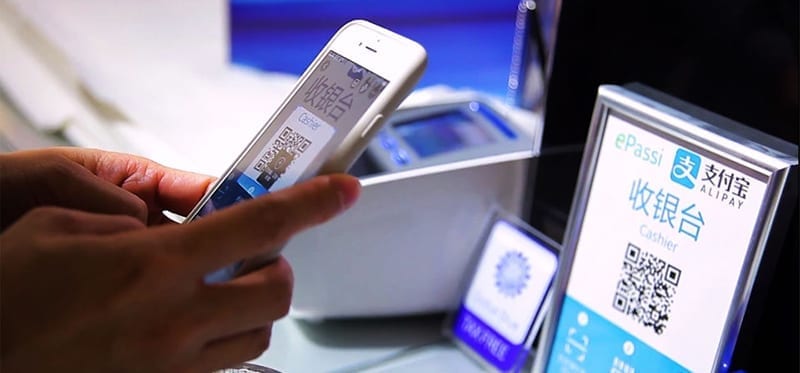
    Bank Indonesia has said that foreign consumer payment applications, like China’s Alipay and WeChat that Chinese tourists reportedly used in Bali, are not approved for local use.

    The central bank said the applications did not comply with regulations, in particular because they did not have a cooperation with local payment systems.

    BI payment system policy executive director Onny Widjanarko said in Jakarta on Thursday that all foreign payment applications, including Alipay and WeChat, were required to comply with Indonesian regulations. “Any payment system should be adjusted to existing regulations,” he said.

    Under the National Payment Gateway (GPN) system, any foreign principles involved in retail transactions are required to cooperate with local switching companies.

    Onny said foreign payment applications must meet two requirements to be approved for conducting transactions in Indonesia: establish cooperation with a local switching company and be connected to major Indonesian banks.

    “So far we have found two cases. The foreign payment apps have cooperated with local switching companies, but they are neither connected to nor are cooperating with Book 4 major banks,” Onny said. He also stressed that all transactions in the country were required to use the rupiah.

    He said BI had halted any transactions made through foreign payment apps that did not have a cooperation with local companies.

    Onny said the central bank would monitor the situation to ensure that all transactions were made through local switching companies in compliance with regulations.

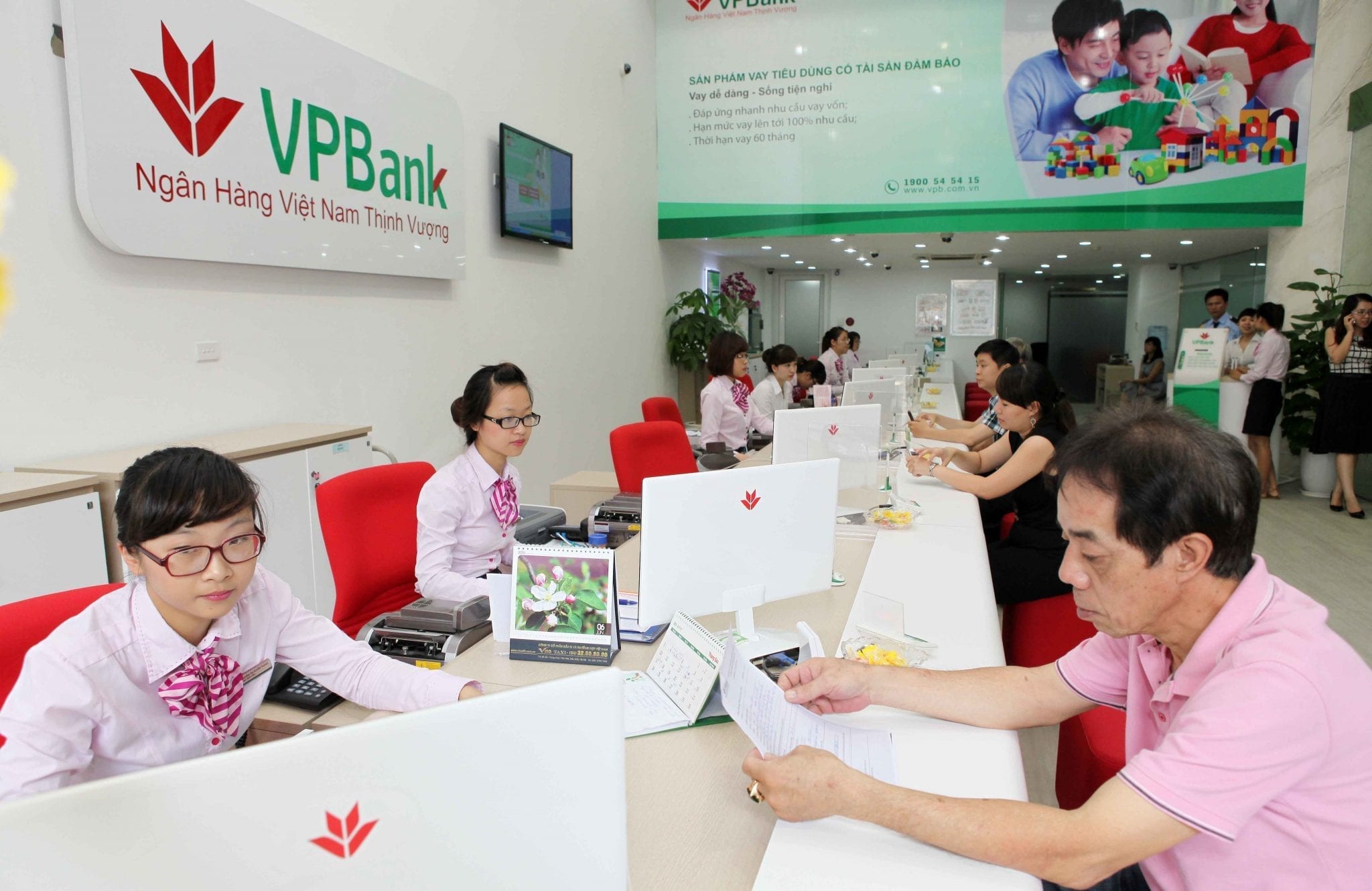
  • Vietnamese banks expect profits to rise

    Vietnamese banks expect profits to rise

    A newly-released central bank survey on business trends among Vietnamese banks found 72.6 percent saying their business situation had improved from the second quarter, with 15.8 percent reporting significant improvement.

    The survey, which was conducted in September, showed that over half, 56.8 percent, of the banks surveyed said that they have hired more staff in the third quarter, higher than the 46 percent in the second quarter.

    But 26.6 percent of them said they still need more staff and 61.5 percent planned to hire more people in the last quarter.

    The banks project lending to grow the most, followed by payments and deposits.

    Over 88 percent expect profits before tax to grow 18.6 percent on average from last year, higher than last year’s expectations of 13.6 percent.

    They expect capital mobilization on average will grow by 5.8 percent in the last quarter and 15.3 percent for the whole year, higher than last year’s 14.9 percent.

    The banks also forecast their outstanding loans to grow by 4.5 percent in the last quarter this year and by 15.2 percent for the whole year thanks to a stable mobilization interest rate.

    Vietnam has nine wholly-owned foreign banks, four state-owned banks and 31 joint-stock banks.

    The country’s credit growth in the first nine months of this year was 9.52 percent, lower than the 11.02 percent of the same period last year.

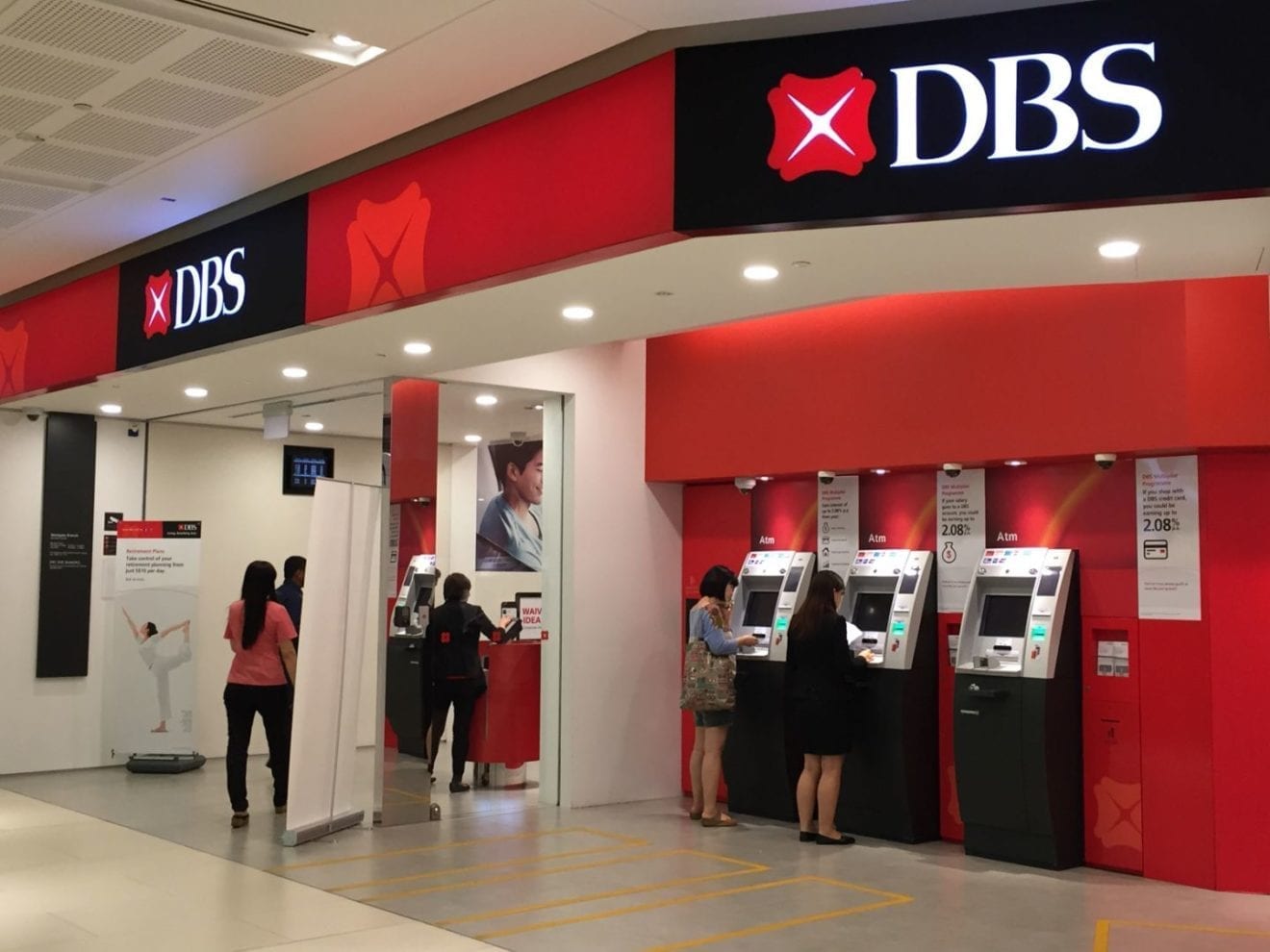
  • DBS Extends Support for Social Enterprises

    DBS Extends Support for Social Enterprises

    DBS said it is extending support for social enterprises via its Social Enterprise(SE) Support Programme on Tuesday specifically addressing their top three priorities. These include: improving their business model to achieve financial sustainability; sourcing for funding and; customer acquisition.

    «Social enterprises have big ambitions to make a positive impact in their community, and very often they struggle with limited resources. We want to support these social enterprises in their journey to create greater social impact,» said Joyce Tee, DBS’ group head of SME banking.

    Started A Decade Ago

    DBS pioneered the social enterprise banking package 10 years ago, but more than half of the social enterprises surveyed by the Singapore Centre for Social Enterprise said they lacked access to financial support.

    As such, DBS will continue to provide SEs access to virtually free banking services through its DBS Social Enterprise Package. With this package, SEs can open an account with a zero-minimum balance and enjoy unsecured loans at preferential rates.

    Three pillars

    The DBS Social Enterprise Support Programme has three pillars – mentoring, training and financing. Under the program, SEs will also receive a relationship managed account traditionally reserved for larger corporate customers. The programme will jointly be administered by the DBS SME Banking team and the DBS Foundation.

    To start, DBS will mentor the 12 social enterprises DBS Foundation awarded in its 2018 Social Enterprise Grant Programme. Over 28 senior SME relationship managers have committed at least of 8 hours a month to mentor social enterprises in their specialised industries. These industries include retail, F&B and healthcare.

  • Vietnam to grow 7 percent in 2018: report

    Vietnam to grow 7 percent in 2018: report

    A report by the Standard Chartered Bank says Vietnam will top ASEAN economic growth this year.

    The report, released Friday, attributed this to manufacturing and agriculture sectors.

    Titled Vietnam: fast, not furious, growth,” it said the economy will grow by 7 percent this year.

    Other factors contributing to the high growth is the robust growth of electronics, with high foreign direct investment inflow and increasing consumption, the report said.

    It estimated next year’s growth at 6.9 percent.

    Standard Chartered economist Chidu Narayanan said that Vietnam has strong growth prospects, and an average FDI inflow of about $17 billion a year can be expected from now until 2020.

    Manufacturing is set to have a double-digit growth for the second year in a row, and agriculture will recover in the second half of this year, the report said.

    It also saw stable growth in the service sector, led by strong consumption in the country, the report said.

    The service sector, accounting for 40 percent of the economy in the first half this year, saw a 7 percent growth year-on-year growth in the same period.

    The report also said young, well-trained and low-cost human resources will play a part in boosting service growth, it said.

    Standard Chartered also forecast that the USD/VND exchange rate would reach VND23,400 by the end of this year.

    The central bank rate on Sunday was VND22,720 and VND23,310-23,390 at local banks.

    On Thursday, the World Bank upped its forecast for Vietnam’s growth by 0.3 percent to 6.8 percent.

    However, the Asian Development Bank last month lowered the growth rate from 7.1 percent to 6.8 percent, saying that the ongoing trade war between the U.S. and China could have spillover impacts on Vietnam’s export and FDI inflows.

    In the first nine months this year, Vietnam’s GDP grew by 6.98 percent, the highest nine-month growth rate since 2011.

    The economy grew by 6.81 percent last year, the highest rate in a decade.

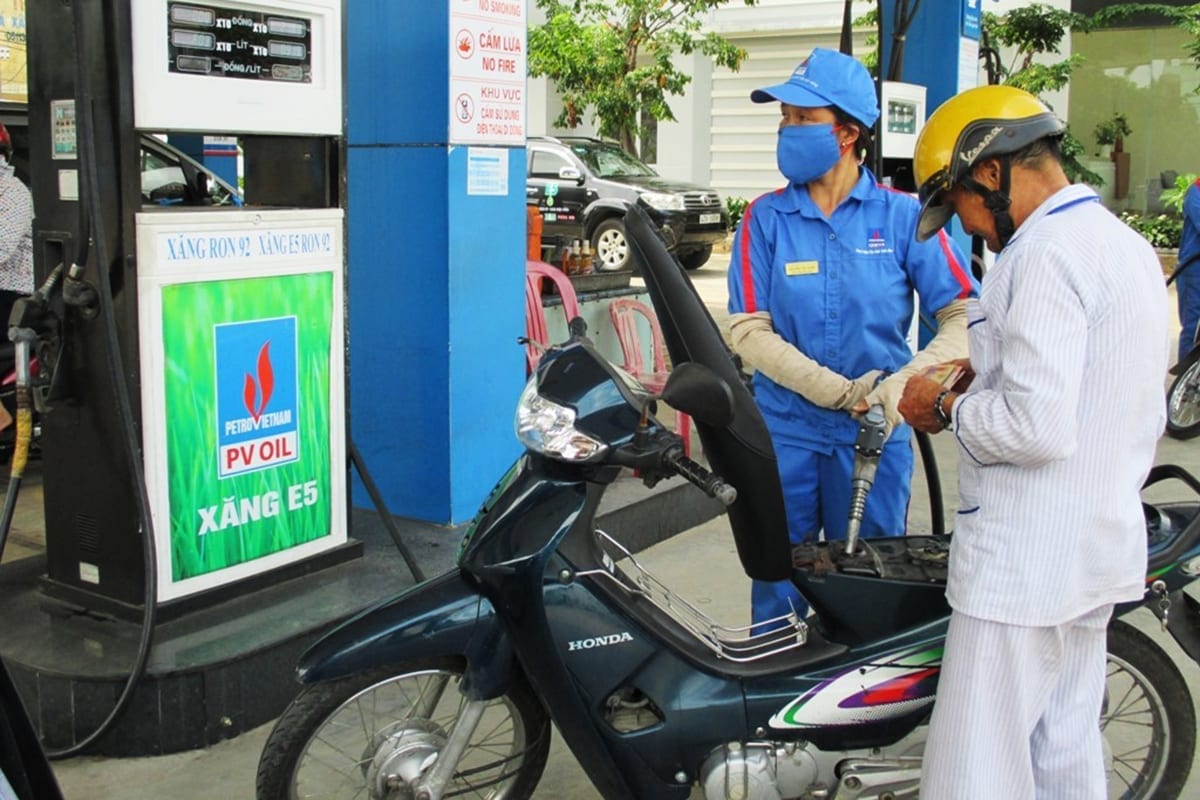
  • Vietnam’s latest fuel price hike spikes inflation concerns

    Vietnam’s latest fuel price hike spikes inflation concerns

    Last weekend’s increase in fuel prices has stoked fears that Vietnam might not meet its 2018 inflation target.

    The ministries of Industry and Trade and Finance upped fuel price last Friday, and prices of biofuel E5 RON 92 went by VND675 per liter to VND20,906 (90 cents) and that of RON 95 by VND577 to VND22,347 (96 cents).

    Kerosene prices went up by VND485 to VND17,086 (73 cents) per liter and that of mazut oil by VND752 to VND15,694 (67 cents) per kilogram.

    The ministries said that the increase in domestic prices followed a rise in world fuel prices of 3-5 percent over the last 15 days.

    They said that a RON 92 barrel costs $90.36, RON 95, $92.40 and diesel, $96.89.

    This was the third fuel price hike since early September. In this period, the per liter price of E5 RON 92 went up by VND1,296 (5.6 cents) in total, while that of RON 95 rose by VND1,170 (5 cents).

    While the latest increase has raised concerns among economists that Vietnam will not be able to meet its inflation target for the year, transportation businesses are worried about immediate impacts.

    Lam Dai Vinh, director of a cargo business said that he had to raise his service prices as fuel price accounts for 40 percent of his costs.

    Although his customers were not happy, Vinh said that he had no other choice.

    Economist Nguyen Tri Hieu said that the fuel price hike is one of the contributing factors to higher consumer price index (CPI).

    Costs will increase for businesses, which in turn, will lead to higher goods prices and therefore affect inflation, he said.

    “It is unlikely that Vietnam will be able to keep inflation below its target of 4 percent this year,” Hieu added.

    Echoing Hieu, Ngo Tri Long, former director of the Market Research Institute under the Ministry of Finance, said that there are “variables” in the market that could negatively affect inflation this year.

    Inflation was at 3.57 percent from January to September this year, according to the General Statistic Office.

    Experts are concerned about other factors that could lead to higher inflation, including the Vietnamese currency, dong, falling against the US dollar as a result of the U.S.-China trade war and natural disasters that often occur in the second half of the year, making business target more difficult to meet.

    Oil firms grow

    However, local oil firms are seeing robust growth because of higher oil and petrol prices.

    PetroVietnam Drilling (PVD) saw the price of its stock on the HCMC Stock Exchange (HOSE) increase by 65 percent in the last 30 days because of increasing world prices.

    From September 21 to October 6, crude oil prices went up from $78.9 to $88.81 per barrel, while that of RON 95 rose from $84.16 to $92.4 per barrel.

    PVD board chair Do Van Khanh said that when crude oil prices go above $60 per barrel, the company’s oil rigs will not have to be put on hold, and when it reaches over $70, business will become stable.

    PetroVietnam Gas also saw revenues up by 41.5 percent in the first half of this year, because oil prices rose 36 percent year-on-year in the same period.

    The price of its stock on HOSE has gone up by over 40 percent to VND120,000 ($5.15) since early July.

    Vietnam’s fuel price is set to increase even more next year when the new environmental tax approved by the National Assembly’s Standing Committee takes effect.

    Starting January 1 the tax on petrol will increase from VND3,000 (13 cents) per liter to VND4,000 (17 cents), and on diesel from VND1,500 to VND2,000.

    The hike was scheduled for next year so that the government could keep inflation under 4 percent this year.

    Although the plan met strong public opposition during its draft phase, authorities defended it, saying it would bring VND15.7 trillion ($676.8 million) each year to the government’s coffers, and help to deal with environmental issues.

    In the first half of this year, Vietnam imported 7.07 million tonnes of fuel worth $4.66 billion, up 40.4 percent in value from the same time last year, according to Vietnam Customs.

    The country exported 1.6 million tonnes of fuel, worth over $1 billion, up 41.7 percent in value.

  • Asian banks tear down brick-and-mortar expansion model

    Asian banks tear down brick-and-mortar expansion model

    Just a few years ago, starting a retail banking operation in Indonesia, a nation teeming with islands stretched across a distance as wide as the U.S., would require investing in thousands of physical branches and on an army of bank tellers.

    But Singapore’s largest banking group DBS Group Holdings is attempting to disrupt that business expansion model by wielding its own branchless smartphone banking platform.

    The bank launched digibank in Indonesia in August last year, the biggest selling point being accounts that can be opened without visiting a bank branch. Although other banks offer similar digital services, almost all of them require customers to open accounts at physical locations.

    DBS sales associates can be found in over 50 coffee shops and malls in the cities of Jakarta, Bandung, Surabaya and Jogjakarta. Signing up takes about 15 to 30 minutes — or “as long as it takes to drink a coffee,” as the digibank salesforce promotes. The accounts check fingerprints through e-KTP, the Indonesian electronic identification card.

    New applicants can verify their biometric identities on the spot at coffee shops, or they can wait at home for digibank agents to come visit them. Through their mobile phones, customers can accept deposits, transfer funds, and an artificial intelligence program answers most basic queries, such as those regarding balances and account histories.

    After DBS rolled out digibank in India in 2016, it captured over 2 million customers, yet only 60 to 70 people run that operation. “In the last five years since 2013, the whole world has changed,” said Pearlyn Phau, deputy group head of the consumer banking group and wealth management at DBS.

    The fact that smartphones handle almost all aspects of life, especially among the younger demographic, have paved the way for this moment. Advances in financial technology and flexible government regulations were also tail winds. “With the digital model, what we’re trying to do is to re-enter the retail space, but without the high cost of brick-and-mortar,” said Phau.

    DBS plans to add lending functions to digibank by the end of this year. In Indonesia, digibank drew about 600,000 users over the past year. “In the next five years, we want to book around 3.5 million customers,” said Wawan Salum, managing director of the consumer banking group at PT Bank DBS Indonesia.

    Another Indonesian bank, Bank BTPN, is attempting to eliminate the face-to-face verification step altogether. The company is applying for government permission to verify new accounts for Jenius, the smartphone-based financial service platform, via video calls.

    “Once that is approved, we will not even send someone on a motorbike to come and visit you for identification,” said Peterjan van Nieuwenhuizen, BTPN’s head of digital banking. “You can just do a video call on your phone.”

    Jenius, which went live in 2016, began offering unsecured loans last month. Lending limits are set based on an individual’s financial profile, such as the transaction history, and the financing includes instant-access credit lines. Jenius could offer insurance and wealth management products later on.

    “We started consumer retail banking…from scratch,” said Nieuwenhuizen. “We started from the concept of how we can be a life finance tool rather than a bank. Traditionally, it would have been very difficult for us, or any new player, to enter [Indonesia] because you’re building a thousand branches across more than 13,000 islands.”

    Jakarta, Indonesia’s capital, suffers from traffic snarls like other major metropolises across Southeast Asia. The extra effort to travel to a bank branch has contributed to the lack of foot traffic to bank branches. But the spread of smartphones has granted youth tools to easily fulfill bank transactions. Only 20% of adult Indonesians held accounts in 2011, but the share has risen to 49% last year, World Bank data shows.

    Globally, about 1.7 billion adults have neither opened an account, nor transferred money with a mobile phone, the World Bank estimates. However, two-thirds of unbanked adults have mobile phones. That shows digital banking could be ripe for explosion in places like the Philippines and Vietnam.

    Innovative financial services open the door for small to mid-tier banks, as well as foreign players, to expand market shares — more so than large, established banks. Go-Jek, the Indonesian ride-hailing app, also poses a threat to traditional banks since it runs an online payment service.
  • TCB, Visa launch QR code payment in Taiwan

    TCB, Visa launch QR code payment in Taiwan

    This month, the Taiwan Cooperative Bank (TCB) and Visa have implemented what both call Taiwan’s first standardized and EMV-compliant QR code payment.

    Part of Financial Information Service Co.’s “Standardized QR Code Solutions,” the new EMV solution will be among the first large-scale deployments of standardized QR Code payments in Taiwan, initially covering more than 8,000 TCB acceptance points. In the future consumers can link their TCB Visa debit or credit cards with the Taiwan Mobile Payment mobile app to experience the security and convenience of mobile payment.

    Visa announced plans to introduce QR code payment in Taiwan in July last year. It was meant as a response to the introduction of Apple Pay, Samsung Pay and Google Pay in March, May and June of the same year.

    At the time, Visa said it had 35 million credit cards issued by 20 banks in Taiwan – presenting both a threat and opportunity for the card company with the introduction of alternative payment platforms for consumer retailers hooked to their smartphones.

    In January 2018, mobile payment in Taiwan stood at just 13% – low for a highly developed economy renowned for leading innovation. In contrast, mobile payment in China accounted for 61.2% of the global user base in 2018. With the encouragement of Taiwan Premier, Lai Ching-te, the government is aiming to have 90% of mobile phone users using mobile payment by 2025.

    “This roll-out will boost the bank’s already extensive acceptance footprint due to standardized QR Code’s cost-effectiveness as a payment method. We hope to help further advance Taiwan’s mobile payment for the benefits of all.” TCB chairman Chung-Dar Lei.

    Marco Ma, General Manager of Visa Taiwan, added that “the EMV QR Code Specifications are intended to be globally interoperable, and with the right mobile application local consumers, as well as overseas travelers will be able to use the same QR Code to make payments everywhere the specifications have been adopted, opening up more revenue sources beyond Taiwan.”

    TCB’s EMV QR code solution offers extensive payment applications including payments for credit card bills, utilities, insurance premiums, tuition fees, air tickets, taxes, food and e-commerce purchases.

  • Grab secures e-money license in the Philippines

    Grab secures e-money license in the Philippines

    Ride-hailing company Grab is expanding its mobile wallet services in the Philippines following receipt of an e-money license from the Bangko Sentral ng Pilipinas (BSP).

    Statistics from the central bank revealed that more than 98% of transactions in the Philippines still happen in cash, whereas 86% of people remain unbanked. Cash handling and services also cost millions of pesos a year to the banking industry.

    Besides its existing payments functions for ordering rides, express delivery and peer-to-peer credit transfer, Grab will soon be able to order food, pay their bills and purchases from their favorite stores and restaurants.

    As with rides, new services may help customers earn points with its GrabRewards loyalty program, with offers from partners such as SM Cinema, Cebu Pacific flights, McDonalds or Globe prepaid.

    The GrabPay mobile wallet built into the Grab app is designed to offer a low-entry barrier to secure cashless payment options for both consumers and merchants.

    The first feature to be launched by Grab under the e-money license will be the option to top-up prepaid load from the Grab app. Users in the Philippines who wish to top up their prepaid load, can tap the ‘Load Now’ bar below the GrabPay mobile wallet bar alongside other features including send, request and top up wallet.

    After entering the phone number to be topped up, they can select their top-up product. The request is sent to the telco service provider and receipt provided.

  • Security concerns inhibiting m-payment adoption in Hong Kong

    Security concerns inhibiting m-payment adoption in Hong Kong

    More than half (53%) of Hong Kong residents polled during a recent survey conducted by the Hong Kong Internet Registration Corporation (HKIRC) said concerns over cybersecurity and privacy risks are major barriers to greater adoption of mobile payments.

    Other barriers that have been cited in the survey include technical instability and the lack of support for mobile payment from most local merchants in the city

    In speaking about the survey, HKIRC deputy CEO Bonnie Chun allayed the primary fear of using mobile payment, pointing out that the government ‘has already put a lot of regulations in place to ensure the industry strictly follow their guidelines. We suggest the government promote its policies via different channels such as social media among others,” said Chun.

    She added that the government should keep on educating the public about the different ways of maintaining safe online hygiene such as changing one’s passwords regularly, using two-factor authentication, not using public Wi-Fi connections for making payment transaction and downloading mobile apps only from reliable sources.

    “Also, mobile payment providers should increase their transparency on how they handle personal data. They should try not to collect too much personal data during the registration process to increase users’ confidence.”

    Mobile payment gets a foothold in Hong Kong

    The survey polled 1,200 residents in the city between the ages of 18 and 65, who belong to various industry sectors.

    Survey results showed that mobile payment is now gaining a foothold in the city with 23% of respondents using mobile payment and is now in the top three payment methods in Hong Kong after credit cards (37%) and Octopus Card (25%).

    While 93% of respondents between the ages of 18 to 25 have used it before, a high percentage – 77% – of older respondents aged 56 to 67 have also used mobile payments.

    More than a quarter of respondents or 28% have been using mobile payments two to three times a week. About 88% of respondents use their mobile phone for transactions of less than HK$500 ($64).

    The survey showed that respondents want to be able to use mobile payment in three areas: public transport, government bills and clinic,

    “The future of mobile payment in Hong Kong is very positive. When we start using mobile payment in public transport, people will become more familiar with it and the adoption rate will increase,” Chun said

  • Singtel launches VIA cross-border mobile payment alliance

    Singtel launches VIA cross-border mobile payment alliance

    Singtel and Thai mobile affiliate AIS have jointly launched a cross-border mobile payment alliance known as VIA, introducing Singapore-Thailand cross border mobile payments in collaboration with Thailand’s Kasikornbank.

    Through the collaboration, Singtel and AIS will offer QR code based mobile payments through their respective mobile wallets – Singtel Dash, as well as AIS Global Pay and Rabbit Line Play.

    The service can be used at all merchants displaying the new VIA brand as well as the more than 1.6 million Kasikornbank merchants displaying the Thai QR Code.

    Singtel said the VIA Alliance in the first cross-border initiative to connect both telco and non-telco mobile wallets.

    The alliance will be progressively expanded to include more of Singtel’s regional associates, including Airtel in India, Globe Telecom and the Philippines and Telkomsel in Indonesia, as well as more non-telco partners such as China’s Ping An Insurance Group.

    “This is a game changer for the Singtel Group and the region. The VIA alliance is aimed at unifying Asia’s fragmented payments scene by connecting different mobile wallet systems across the region. As more people travel around the region, we want them to be able to enjoy the ease and familiarity of using their local mobile wallets abroad,” Singtel International CEO Arthur Lang said.

    “VIA will enhance the payment experience for millions of consumers including our Group’s customer base of more than 700 million. We see a tremendous opportunity to drive the adoption of mobile payments which supports ASEAN’s push towards financial inclusion and vision of a single digital market.”

  • Malaysia’s Aug exports decline 0.3%, trade surplus at nearly 4-year low

    Malaysia’s total exports fell marginally by RM215.2 million or 0.3% to RM81.8 billion in August, the second time exports recorded a decrease in 2018 after February due to the high base effect, according to the Department of Statistics.

    Trade surplus also recorded the lowest value since November 2014 at RM1.6 billion on the back of a double-digit growth of 11.2% or RM8.1 billion in imports to RM80.2 billion in August.

    Total trade stood at RM162 billion, RM7.9 billion or 5.1% higher than the same month a year ago.

    The main products which contributed to the decline in exports were palm oil and palm oil-based products (-RM1.5 billion); liquefied natural gas (-RM918.3 million); timber and timber-based products (-RM49.0 million); and natural rubber (-RM39.5 million).

    However, increases were recorded for crude petroleum (+RM1.3 billion); electrical & electronic products (+RM985.5 million); and refined petroleum products (+RM232.2 million).

  • European businesses repose confidence in Vietnam

    European businesses repose confidence in Vietnam

    European companies’ business sentiment in Vietnam is at the highest level in 18 months, EuroCham’s Business Climate Index shows.

    The latest index (BCI), which the business group released Wednesday, is at just two points below the all-time high achieved in the third quarter of 2016.

    This growing confidence in Vietnam’s trade and investment environment is reflected in a six-point jump in the second quarter of this year against the first quarter.

    The BCI shows Vietnam is open for business as an attractive trade and investment destination, Nicolas Audier, co-chairman of EuroCham, said in a press release.

    “The EU-Vietnam Free Trade Agreement (EVFTA) should be ratified soon. On the cusp of this historic deal, which will boost trade and investment on both sides, we hope this positive message from EuroCham and its members will inspire the government to continue opening its markets to foreign investment and improving its trade and investment environment.”

    EuroCham members reported an optimistic outlook on a range of issues, from their own investment and profit projections to workforce levels and Vietnam’s economic outlook.

    Over 70 percent reported a positive situation at their enterprise in the last quarter, with 62 percent describing it as ‘good’ and 12 percent as ‘excellent’.

    Looking ahead to the next quarter, 64 percent believed their business situation would be ‘good’ while 15 percent said ‘excellent’.

    EuroCham members are also optimistic about Vietnam’s economic outlook, with 57 percent predicting ‘stabilization and improvement’ in the next quarter and 34 percent believing it would remain unchanged.

    Fifty seven percent believed their business would see either a ‘significant’ or ‘moderate’ increase in staff next quarter, while 61 percent expected either a ‘significant’ or ‘moderate’ increase in investment.

    Over three-quarters of members (76 percent) believed orders or revenues would see a ‘significant’ or ‘moderate’ increase in the third quarter.

    For the first time, EuroCham asked members for their views on corporate social responsibility (CSR). 87 percent said CSR is important to their business operations in Vietnam. The main motivations for CSR included ‘brand reputation’ and ‘customer/environmental concern’.

    Vietnam’s GDP grew by 6.98 percent between January and September, the highest nine-month rate since 2011. The economy grew by 6.81 percent last year, the highest in a decade.

    The foreign sector’s exports in the first eight months of the year were worth $110.3 billion, up 13.4 percent year-on-year and accounting for 71 percent of the country’s total exports of $155.4 billion.

  • Malaysia’s GDP growth to moderate to 4.9% for 2018

    Malaysia’s GDP growth to moderate to 4.9% for 2018

    Malaysia’s economic growth is expected to ease to 4.9% in 2018, as export growth slows and lower public investment following the cancellation of major infrastructure projects, said World Bank chief economist for the East Asia and Pacific region Sudhir Shetty.

    As a highly open economy, he said Malaysia will continue to face substantial risks relating to uncertainty in the external environment.

    Heightened financial market volatility either triggered by shifting monetary policy expectations in advanced economies could spread across emerging economies, including Malaysia.

    Another key risk relates to the escalation in protectionist tendencies and trade tensions in some major economies that could have an adverse impact on Malaysia, given its high level of integration with global markets.

  • IDEAS: Lack of technology, skills transfer from China to Malaysia

    IDEAS: Lack of technology, skills transfer from China to Malaysia

    While Malaysia has benefited from China’s foreign direct investment (FDI) in terms of financing and capacity, the social and environmental impacts of these investments should be looked into as well.

    The Institute for Democracy and Economic Affairs’ (IDEAS) research paper entitled “Impacts of Investment from China in Malaysia on the Local Economy” said there is a lack of technology and skills transfer from China to Malaysia, which the think tank highlighted as being crucial.

    IDEAS director of research and development Laurence Todd said there are instances of Chinese companies favouring Chinese labour and subcontractors over local ones.

    Having said that, he noted that evidence from other countries suggests FDI is most beneficial when there is a high level of technology and knowledge transfer but this requires the involvement of human capital.

    “There are indications that Chinese firms do not always provide opportunities for such transfers, particularly to local SMEs,” he said.