Category: Finance

Retail News Asia is committed to providing both local and global retailers with the latest Finance news throughout the Asian market. This on a daily base.

  • Vietnamese experts sound alarm over US-China trade war impacts again

    Vietnamese experts sound alarm over US-China trade war impacts again

    Low-tech, polluting FDI firms will try to set up shop in Vietnam as the U.S.-China trade war escalates, experts have warned.

    Nguyen Bich Lam, head of the General Statistics Office, said that small-scale Chinese firms are likely to eye a shift to Vietnam to avoid high tariffs imposed by the U.S.

    Such firms typically use pollution causing technology, he said, adding that there have been previous warnings about such FDI projects.

    The latest escalation of the U.S.-China trade war only heightens this possibility, he noted.

    Vietnam needs to carefully inspect projects which were registered in the last nine months with capital lower than $1 million to prevent those with outdate technologies from harming Vietnam’s natural environment, Lam added.

    Echoing Lam, Le Dang Doanh, former director of the Central Institute for Economic Management under the Ministry of Planning and Investment, said that a number of these companies have already entered Vietnam in recent years.

    It is the responsibility of the ministry to say no to FDI projects that can harm the environment, he said.

    Lam emphasized: “At this time, Vietnam needs to filter out FDI projects, not accepting them at any cost as it did 30 years ago.”

    Other experts expressed concerns that Vietnam could end up becoming a dumping ground for Chinese goods.

    Economist Nguyen Tri Hieu said that China might seek to dump its goods on Vietnam to avoid Donald Trump’s tariffs.

    Cheaper Chinese goods competing with Vietnamese goods will not benefit Vietnam’s economy, he said.

    Meanwhile, industry insiders have expressed fears that China might borrow the “made in Vietnam” label to dodge U.S. tariffs.

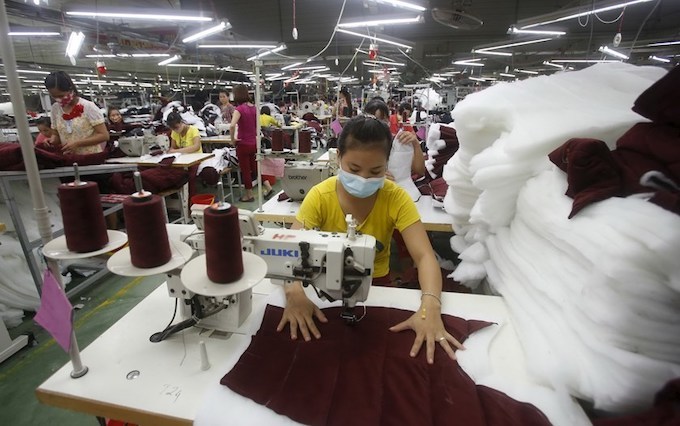
    Diep Thanh Kiet, vice chairman of the Vietnam Leather, Footwear and Handbag Association (LEFASO), said there was a “very high” possibility that Chinese bags would be exported to the U.S. through Vietnam.

    Chinese businesses can do this by easily setting up a factory in Vietnam with a budget of only $200,000 to manufacture products with materials imported from China, he told local media.

    If this cannot be controlled, there could be grave consequences for Vietnamese textile firms since “the U.S. might apply the same tariffs as they have done on China,” Kiet said.

    The U.S. slapped tariffs of 10 percent on $200 billion worth of Chinese goods on September 24, and Beijing immediately retaliated with tariffs at 5 and 10 percent on $60 billion worth of U.S. products.

    The two countries have already slapped tariffs on $50 billion worth of each other’s goods earlier this year.

  • CIMB to accept payments from six mobile wallets

    CIMB to accept payments from six mobile wallets

    CIMB Bank Bhd will be accepting Quick Response (QR) Payment from six major mobile wallets at its terminals, enabling it to tap into an estimated customer base of about 4.5 million in Malaysia and 520 million registered mainland Chinese.

    This is the first in the market QR payment acceptance for six mobile wallet systems are accepted on a single terminal. The six mobile wallet partners are Alipay, Touch & Go Digital, Boost, KiplePay, Mcash, and Vcash.

    CIMB has partnered with GHL Systems Bhd, a leading payments company in Malaysia and Asean, to introduce the CIMB’s multi-QR terminal acceptance points for both merchants and customers.

    CIMB Group Consumer Banking CEO Samir Gupta said that this move will not only fulfil its customers and merchants’ needs, but also help develop the cashless payment ecosystem in Malaysia, in support of Bank Negara’s vision in promoting a cashless society.

    “We are delighted to enable CIMB merchants to process multiple QR codes via GHL’s unique single payment facility/gateway. Our multi-channel model is not just convenient but also cost-saving to CIMB’s merchants as multiple QR settlements are streamlined into a single payments provider,” said GHL Group CEO Danny Leong.

    The payment method is already available at certain outlets of House of Leather, NSK and Super Seven.

  • New US interest rate to exert pressure on Vietnam’s inflation goal

    New US interest rate to exert pressure on Vietnam’s inflation goal

    The recent increase in U.S. interest rate will generate pressure on the Vietnamese dong and make inflation target hard to meet, experts warn.

    The U.S. Federal Reserve lifted interest rates for the third time this year by a quarter of a percentage point to a range of 2.00 percent to 2.25 percent on Wednesday, foreseeing another rate hike in December.

    Economist Nguyen Tri Hieu said this increase will pressure the USD-VND exchange rate, as the dollar strengthens further over the dong.

    Local banks will push their interest rates up to prevent their customers from exchanging local currency to the U.S. dollar, he said.

    Imports will be priced higher in VND, pushing the consumer price index (CPI) higher, Hieu said.

    “It is very likely that CPI will surpass the country’s goal of 4 percent for the year,” he added.

    Echoing Hieu, HSBC country head of global markets Ngo Dang Khoa said that the U.S. interest rate moves will create challenges for Vietnam’s economy as the inflation rate is closely approaching the government’s limit.

    The weakened VND can also lower capital flow from foreign investors as they might not be confident in making further investments, Khoa said.

    It can also slow down the equitization (privatization) of state-owned enterprises as changes in the dong’s value will affect the stock market, he noted.

    “For local businesses, higher interest rates will increase capital expenditures, which will have a direct impact on their profit.”

    But Khoa said he believes there are also opportunities for Vietnam to increase exports to the U.S. as spending and demand for investment in the U.S. will rise with the new interest rate.

    Between January and September this year, Vietnam’s GDP grew by 6.98, the highest nine-month growth rate in eight years. Inflation for this period was 3.57 percent, according to the General Statistics Office.

  • Vietnamese firms should see Industry 4.0 as a business opportunity: VCCI

    Vietnamese firms should see Industry 4.0 as a business opportunity: VCCI

    The Vietnam Chamber of Commerce and Industry has high hopes that Industry 4.0 will open more doors and opportunities for Vietnamese companies.

    On September 29, the chamber (VCCI) partnered with Vietnam Solomon Technology Company Ltd., to hold a conference in Hanoi, to heighten awareness among local companies about the inevitable transformation to Industry 4.0.

    VCCI deputy chairman Hoang Quang Phong said that finding effective ways to run businesses should be an ongoing discussion for both business owners and regulators in Vietnam.

    He said the fourth industrial revolution will have strong impacts on many industries including manufacturing, automation, transportation, finance, education, healthcare and agriculture.

    Phong believes that artificial intelligence and other technologies will provide a platform for businesses to improve productivity, innovate new products and services, reduce raw material consumption and costs to meet consumer demands.

    New technologies for automation and artificial intelligence were introduced at the conference for businesses to gain an overview of an innovative, sustainable industry in the future.

    For instance, Vietnam, Solomon introduced AccuPick, a technology that can identify complex shapes of an object with high precision in a very short amount of time.

    Solomon also introduced the Delco Eco Farm, and other artificial intelligence based business ideas at the event.The company said AccuPick can be used in automotive, mechanics, food and other industries to boost productivity.

  • Vietnam 9-month GDP growth highest in 8 years

    Vietnam 9-month GDP growth highest in 8 years

    Vietnam’s GDP grew by 6.98 percent between January and September, the highest nine-month growth rate since 2011.

    Data released by the General Statistics Office (GSO) Friday showed growth in the third quarter was 6.88 percent year-on-year.

    In the year-to-date agriculture and fisheries grew by 3.65 percent, the highest since 2012. Industry and construction grew by 8.89 percent and services by 6.89 percent.

    Between January and September, the country earned $178.9 billion from exports, a year-on-year increase of 15.4 percent, while spent $173.52 billion on imports, up 11.8 percent.

    Exports of 26 items each topped $1 billion. Three of them exceeded the $10-billion mark: electronics-computers-components, machinery-equipment and phones-components.

    Inflation was at 3.57 percent in the first nine months of this year. Vietnam set target to keep inflation below 4 percent for the whole year.

    “Growth in the first nine months showed many positive results. However, there are still many challenges, especially in the background of the China-U.S. trade war,” GSO general director Nguyen Bich Lam said on Friday.

    The escalating trade friction between the U.S. and China poses a threat to countries like Vietnam which exports intermediate goods to China, while weaker global demand will also act as a drag on growth prospects, Reuters quoted Capital Economics as saying Friday.

    The research firm projected Vietnam’s growth rate to slow down from 7 percent this year to 6 percent in 2019 and 2020.

    But the trade spat has not yet affected Vietnam’s exports to the U.S, Lam said. Vietnam could seek opportunities to boost exports and welcome foreign investments, while watching out for risks including transhipment to avoid tax, similar tariffs imposed on Vietnam and global trade contraction, he added.

    In a report issued Wednesday, the Asian Development Bank forecast Vietnam’s GDP to expand by 6.9 percent this year.

    The economy grew by 6.81 percent last year, the highest rate in a decade.

  • US, Japan keen to invest in Vietnam infrastructure

    US, Japan keen to invest in Vietnam infrastructure

    Vietnam’s plans for building and expanding airports and seaports have attracted the interest of companies in the U.S. and Japan.

    Joel Szabat, deputy assistant secretary in the U.S. Department of Transportation’s Office of Aviation and International Affairs, said his country wants to strengthen ties with Vietnam in the transport infrastructure area, especially airports and seaports.

    He told Deputy Minister of Transport Le Dinh Tho at a meeting Tuesday that his department would facilitate U.S. investment in Vietnam’s infrastructure projects in the form of public-private partnerships (PPPs).

    But Vietnam needs to have more policy consistency and open policies, Szabat said.

    Last month Japan’s Secretary of State Tsukasa Akimoto told Deputy Minister of Transport Nguyen Ngoc Dong that many Japanese investors are eyeing key transport projects in Vietnam.

    They are interested in the Long Thanh International Airport and high-speed north-south railway, he said.

    At the meeting with Szabat, Tho said Vietnam is focusing on five areas of transport infrastructure: roads, aviation, waterways, railways, and network connections to boost logistics.

    One of its national infrastructure projects is the north-south expressway measuring over 2,100km in length, of which “650km will be built in 2017-2020 under the PPP model,” he said.

    With the country’s railway network being obsolete, there is need for an upgrade to both its long-distance and inner-city railways, he noted.

    “Our ministry is considering feasibility studies for the north-south high-speed railway.”

    The transport ministry is set to report on the high-speed railway to the National Assembly next year.

    It is now consulting various agencies for a feasibility study for the Long Thanh airport in the southern Dong Nai Province, which is expected to be approved by the government at the end of next year.

    Vietnam has 21 airports, eight of which receive international flights. Given the rapid rise in traffic, it plans to build, expand or upgrade several including Noi Bai in Hanoi and Tan Son Nhat in HCMC.

    The ministry this month approved changes to the upgrade plans for Tan Son Nhat Airport, including the addition of a third terminal and a 250-hectare expansion of the airport.

    Besides building a new terminal, T3, to the south with a capacity of 20 million passengers a year, the ministry also seeks to expand the two existing terminals to increase their capacity to 30 million passengers a year.When the work is complete, the airport’s size will increase from the current 545 hectares (1,350 acres) to 791 ha.

    The airport currently handles 36 million passengers a year against a designed capacity of only 25 million.

    Tho said Vietnam has two major ports, Lach Huyen in the north and Cai Mep-Thi Vai in the south, which can accommodate ships of up to 100,000 DWT.

    “However, network connections for logistics in ports remain underdeveloped.”

  • Japanese banks to offer instant money transfers using blockchain

    Japanese banks to offer instant money transfers using blockchain

    Japan will this month become the first major economy to launch a domestic payments system based on blockchain technology when three Japanese banks start offering customers free real-time money transfers via a new mobile app. The launch of the MoneyTap system, which secured approval for its licence from the ministry of finance last week, could be an important step in helping Japan to achieve its goal of reducing the use of cash, which still accounts for 80 per cent of transactions in the country. The new platform has been developed by SBI Ripple Asia, a joint venture between Japan’s SBI Holdings and US blockchain specialist Ripple.

    It will be launched by three of the country’s mid-sized lenders: SBI Net Sumishin Bank, Suruga Bank, and Resona Bank. Japanese banks charge customers about $3 to transfer even small amounts of money to other accounts via the Zengin domestic payments system, which only operates until 3pm on weekdays, meaning people often have to wait a day or more for money to arrive. That is much more expensive and slower than in many other countries. “We would like to change peer-to-peer and interbank payments in Japan, which are very inefficient,” said Takashi Okita, chief executive of SBI Ripple Asia and a former official at Japan’s Financial Services Agency.

    “The FSA is trying to reduce cash as a percentage of the economy and once people use the new MoneyTap system they will never go back,” he said. “The banking industry in Japan is still living in the non-internet era — even the banks realise they have to change.” Alipay, the mobile payments arm of China’s Alibaba, launched a service in June to provide a quicker and cheaper way for people to send money from Hong Kong to the Philippines over its GCash blockchain system using Standard Chartered as its banking partner.

    Ripple caused a stir in the payments industry in April by teaming up with Banco Santander to offer a service based on Ripple’s blockchain messaging technology that allows the Spanish bank’s customers in the UK, Spain, Poland and Brazil to send money in many currencies around the world. More than 100 financial institutions have registered with Ripple to use its blockchain-based messaging system, known as XCurrent, which allows banks to co-ordinate the transfer of money between currencies in seconds.

    The launch of MoneyTap in Japan will mean it is the first big country to have a blockchain-based system for transferring money between different banks. Mr Okita said SBI Ripple Asia had been working with a consortium of 61 Japanese banks on the new system and it hoped more of them would sign up to use it soon. He also plans to expand its offering to include cross-border payments. The MoneyTap app does not use Ripple’s XRP cryptocurrency, which is meant to be a cheap and universal bridge currency, providing an alternative to the expensive nostro and vostro accounts of correspondent banking. But Mr Okita said this option would be open in future to any banks that wanted to use it.

  • Asia’s Aversion to Bank Accounts Is a Big Deal

    Asia’s Aversion to Bank Accounts Is a Big Deal

    There’s a flaw in the forecast for an ever-rising Asia: a vast gap in the financial system. Big slices of the population don’t have a bank account.

    It’s hard to see the region reaching its full potential, let alone surpassing the U.S. as an economic superpower, until this bridge is crossed. An economy without broad use of banks cannot grow into a superpower.

    East Asia and the Pacific seem to be making progress on this. Seventy-one percent of adults have a bank account or equivalent at a mobile money provider, a bit more than the global proportion of 69 percent, the World Bank reckons. But the details are less encouraging. That 71 percent is little changed from four years ago. In Southeast Asia’s biggest economy, Indonesia, just 49 percent own an account.

    In the most populated members of the Association of Southeast Asian Nations, a group of 10 nations lauded for their economic progress and potential, the proportion is well below 50 percent. India is doing better at about 80 percent, but short of where it needs to be.

    This lopsided nature further reveals itself in the size of the overall pie. Indonesia overtook Singapore in 2016 as the largest financial-services market in Asean, according to PwC. On one level, this is a function of Indonesia’s huge population and gross domestic product. Yet almost every Singaporean has a bank account — around 96 percent — and the city is home to an array of sophisticated finance operations.

    You can see the potential for a place like Indonesia to pull ahead and meet its destiny. Just imagine where it would be if its people and businesses were fully banked! Until then, some of the more bullish projections about Asia must be tempered.

    What’s so great about a bank account? Once a person has an account, they have a better chance of fully participating in the economic life of their country, and their country has greater odds that gender, racial and income inequality can be addressed. Panelists at the World Economic Forum on Asean in Hanoi this month, in which I participated, wrestled with the subject.

    The more transactions that continue in cash, the harder it also is to tackle corruption. Indonesia’s anti-graft agency is taking action, but also meeting stiff resistance from factions within the government and parliament, says Transparency International. Not to pick on Indonesia. The Philippines, another seriously underbanked economy, and India struggle as well.

    Technology may hold part of the answer. As mobile payment systems proliferate around the globe, it’s entirely possible developing countries will just leapfrog over the bank branch and ATM structure and go mostly digital.

    It’s tough for banks to cover the 17,000 islands that make up Indonesia, for example. Almost twice as many Indonesians have mobile phone subscriptions as have bank accounts, the International Finance Corp. estimates. That’s spurring a surge in e-payments and investment from KKR, Warburg Pincus and Sequoia as well as Google, Alibaba and Tencent, the Nikkei Asian Review reported.

    However economies get there, it’s the destination that’s important. Without a financial system to service heavyweights, Asia can’t rule the world.

  • HSBC is making a bet on Asia millionaires

    HSBC is making a bet on Asia millionaires

    HSBC Holdings is planning to increase its wealth-management staff in Asia as chief executive officer John Flint bets on growth in the region.

    The bank plans to add more than 1,300 positions, split roughly between retail and private banking, by 2022, according to the heads of the two divisions, which between them currently employ just over 32,000 people in the region. The bulk of the hires, some of which could be internal, will be in Hong Kong and Singapore.

    The wealth strategy is part of Mr Flint’s plan to grow HSBC by expanding in Asian markets including Greater China and South-east Asia. The CEO, promoted in February, said in June that HSBC will pour as much as US$17 billion by 2020 into expanding the region’s business and improving technology. The bank aims to grow revenue from Asia by at least US$1 billion during the same period.

    “We have a real opportunity to do more and that’s to further build on Hong Kong and to materially build what we do today in Singapore,” Kevin Martin, the firm’s Asia-Pacific head of retail banking and wealth management, said in an interview. “Both businesses need to do it in concert,” he said, referring to the retail and private banking units.

    THe London-based bank’s plans for wealth management in Asia, which is dominated by global banks such as UBS Group AG, Citigroup Inc and Credit Suisse Group AG, come as regional firms including DBS Group Holdings Ltd. and BOC Hong Kong (Holdings) Ltd are also expanding amid an unprecedented rise in the region’s assets.

    HSBC said on Monday that Antonio Simoes, who was head of UK and Europe, will run global private banking from Jan 1. Peter Boyles, who currently runs the group, will retire after 43 years at the company.

    Offshore wealth in Asia, excluding Japan, has been growing at about 10 per cent a year, according to Boston Consulting Group data, faster than the 5 per cent globally. Offshore wealth from China alone amounted to about US$1 trillion this year, the consulting firm estimated.

    Hong Kong’s wealth managers expect to double the money they handle over the next five years to about US$2 trillion, the city’s Private Wealth Management Association said in a recent report published with KPMG China, citing the increasing interest of Chinese nationals looking to diversify their holdings.

    “The wealth that the Chinese have already offshore is a massive piece of opportunity for us,” said Tan Siew Meng, Asia-Pacific head of global private banking at HSBC.

    The expected growth in the industry may exacerbate Hong Kong’s shortage of relationship managers, according to the Private Wealth Management Association’s report. Two-thirds of respondents said a “limited talent pool” was the biggest supply-side constraint.

    Mr Martin said the 1,300 staff boost is “not a big scary number” given that his retail bank, including subsidiary Hang Seng Bank Ltd, employs about 31,000 people in the Asia-Pacific region. Staff within the group may transfer to the wealth business, he said. Hiring will be both internal and external, and include relationship managers, product specialists and advisers, Ms Tan said. Her private bank had 1,100 employees in the region at the end of last year.

  • Weakening Rupiah Sees Calls for Gov’t to Scrap Palm Oil Export Tax

    Weakening Rupiah Sees Calls for Gov’t to Scrap Palm Oil Export Tax

    A lawmaker and an industry analyst have called on the government to scrap its export tax on crude palm oil to help improve the competitiveness of the sector and boost exports, amid a weakening rupiah.

    Since 2015, the  Indonesian Oil Palm Estate Fund (BPDPKS), which is tasked with strengthening and promoting sustainable practices in the industry, has been imposing a $50 per ton export levy on crude palm oil and $30 per ton levy on crude palm oil derivative products when prices drop below $750.

    The levies were imposed to encourage local producers to sell more of their products at home and to incentivize local biodiesel producers. However, palm oil producers have complained about this policy since the start, as it burdens those seeking to export their products, which is more beneficial during a stronger dollar.

    “Under this condition, the government needs to be flexible in imposing some policies. It should consider scrapping the export tax … to help us to achieve a trade surplus,” said Eriko Sotarduga, a member of House of Representatives Commission VI, which oversees trade, industry and business competition.

    The rupiah strengthened to 14,825 to the dollar on Friday from 14,840 previously, according to data. It has fallen by 8.5 percent so far this year. Indonesia’s trade balance returned to a $1.72 billion surplus in August after recording its first deficit in 19 months in July.

    Eriko said amid the current low price of crude palm oil, scrapping export levies could help producers to expand the market, because they have been struggling to compete with other vegetable oils.

    Meanwhile, Bungaran Saragih, an advisor at the Palm Oil Agribusiness Strategic Policy Institute, said the government must provide the industry with its full support, given the fact that the industry sustains millions of people, with about 40 percent of the country’s production coming from smallholders.

    “Nowadays, palm oil is the best commodity” to support the nation’s economy and currency. Therefore, it deserves some incentives, he said.

    The government has been very careful in dealing with the sector as the commodity is the biggest foreign-exchange contributor.

    Palm oil exports reached their highest value ever last year at $23 billion, which was a 26 percent increase from 2016.

    However, the current administration is also cautious about issuing new permits to producers. President Joko “Jokowi” Widodo ordered a review of existing permits on Wednesday, amid growing concern over deforestation in the country.

    As reported earlier this week, environmental activist group Greenpeace International accused 25 palm oil producers, supplying some of the world’s most renowned brands, of contributing to massive forest destruction.

  • ADB lowers Vietnam’s 2018 growth forecast

    ADB lowers Vietnam’s 2018 growth forecast

    Vietnam’s economy is likely to expand by 6.9 percent instead of the 7.1 percent predicted in April.

    In its Asian Development Outlook (ADO) 2018 report issued Wednesday, the Asian Development Bank (ADB) also estimates Vietnam’s GDP for 2019 at 6.8 percent.

    Explaining the downward revision, the bank said that the year’s second half is likely see a moderate growth in exports, agriculture, construction, and mining sectors.

    The bank also believes that the ongoing trade war between the U.S. and China could have spillover impacts on Vietnam’s export and FDI inflows.

    Referring to the ongoing trade war between U.S. and China, ADB’s Vietnam Country Director Eric Sidgwick, said the country was vulnerable since it has integrated deeply with global trade.

    “These are not good events for Vietnam. As Vietnam is so open … any reduction to global trade is going to affect it,” quoted Sidgwick as saying.

    “There may be a beneficial impact in the short term, but we have to see how it plays out over the longer term. The long-term risk is trade contraction in general and high competition from as a result of that Vietnam being squeezed out,” he said.

    Vietnam’s growth this year could be dented by lean strength in key export markets such as China, the European Union and Japan, while unfavorable weather conditions could also undermine agricultural output and mining production, ADB said.

    ADB advised that Vietnam should continue to monitor the situation to assess the impact of the trade war and respond in timely manner.

    To mitigate negative impacts, Vietnam needs to continue to improve its business environment, infrastructure and market diversification, Nguyen Minh Cuong, an ADB economist said.

    “This will increase the competitiveness of Vietnam in the global market, whether it is affected by the trade war or not,” he added.

    ADB also raised the forecast of inflation rate from 3.7 percent to 4 percent this year, and from 4 percent to 4.5 percent in 2019.

    Vietnam’s GDP has sustained and built on last year’s gains with an impressive 7.08 percent growth in the first half of 2018, the highest rate since 2011.

  • US-China trade war dims Asia’s 2019 growth outlook: ADB

    US-China trade war dims Asia’s 2019 growth outlook: ADB

    Developing Asia could grow more slowly than previously thought next year as the US-China trade war inflicts damage on the region’s export-reliant economies, the Asian Development Bank (ADB) said.

    Tightening global liquidity could also weigh on business activity by pushing up borrowing costs, while capital outflows are also a risk.

    The Manila-based institution kept its 2018 economic growth estimate for the region at 6.0% in an update of its Asian Development Outlook. But it trimmed next year’s forecast to 5.8% from 5.9%.

    “Downside risks to the outlook are intensifying,” said ADB chief economist Yasuyuki Sawada, pointing to the potential impact of US-Sino trade tensions on regional supply chains and the risk of sudden capital outflows if the Federal Reserve raises interest rates even more quickly.

    The ADB’s 5.8% growth estimate for 2019 would be the slowest for the region since 2001, when it expanded 4.9%.
    The report covers 45 countries in the Asia-Pacific.

    The ADB’s latest forecasts did not reflect fresh tariffs that the US and China imposed on each other’s goods on Monday.

    Sawada said the additional duties would not significantly change ADB’s growth forecasts, but added the “escalating” trade conflict must be closely monitored.

    China’s economy is expected to grow 6.3% in 2019, the ADB said, slower than its 6.4% forecast in July and weaker than its 6.6% growth estimate for 2018, which was unchanged from its previous projection.

    Domestic consumption in China “seems to be quite robust and supporting 6.6% growth this year”, Sawada said.

    “But admittedly we don’t know (how) the further escalation of the trade dispute may directly affect consumer sentiment,” he added.

    Beijing has set a growth target of around 6.5% this year, the same as last year, which it handily beat with an expansion of 6.9%.

    Chinese authorities have pledged they can still meet the 2018 target, and have started to roll out growth boosting measures as the trade war threatens to put further pressure on the already cooling economy.

    For Southeast Asia, moderating export growth, quickening inflation, net capital outflows and a worsening balance of payments have dimmed the outlook, with growth this year projected to slow to 5.1% from the July forecast of 5.2%.

    “Policy makers have at their disposal an array of policy tools with which to manage pockets of vulnerability and maintain stability, but they must be applied carefully,” Sawada said.

    Inflation across the region is expected to remain under control, helped by country-specific factors like moderate food price inflation in India and China and fuel subsidies in Indonesia and Malaysia, the ADB said.

    Sawada said Asian governments have “enough policy space to handle” shocks and pressure from currency depreciations.

    The ADB lowered its 2018 economic growth forecast for Vietnam to 6.9% from 7.1% projected previously, partly due to the ongoing trade friction between the US and China.

    Vietnam, one of the fastest growing economies in Asia, has an open economy that is heavily reliant on exports, while the US and China are among its biggest trade partners.

    ADB lowered its growth forecast as the ongoing trade tension between the US and China could have a spillover impact on Vietnam. However, the ADB outlook is still higher than the Vietnamese government’s target of 6.7%.

  • Indonesia Needs to Raise Rate to Stay Ahead of the Curve

    Indonesia Needs to Raise Rate to Stay Ahead of the Curve

    Bank Indonesia, the country central bank, needs to raise its benchmark interest rate on Thursday (25/09) or risks to be left behind the curve and sees a further weakening of the rupiah, economists said.

    “Bank Indonesia must be ahead of the curve amid the trend of rising global interest rates,” said Cyrillus Harinowo, a former central banker and now a commissioner at Bank Central Asia, Indonesia’s third-largest lender by market capitalization.

    Bank Indonesia has increased its benchmark 7-day reverse repo rate by 125 basis points so far this year, while the Federal Reserve has raised its interest rates by 175 basis points. That narrowed the interest rate differential between Indonesia’s interest-bearing assets and similar assets in the US, making the former more risky to hold for foreign investors.

    Cyrillus said Bank Indonesia has 12 times a year to raise the benchmark rate, compared to 4 times in the US, which should give it more leeway for adjusting its monetary policy.

    A Reuters poll showed that 20 out of 25 economists predict Bank Indonesia will increase its 7-day reverse repurchase rate by 25 basis points (bps) to 5.75 percent.

    Three other analysts see BI making a bolder move of hiking by 50 bps, while the last two predict the central bank will stand pat.

    The rupiah has lost about 9 percent against the dollar this year amid a sell-off of Indonesian assets due to rising US interest rates, contagion fear from other emerging market crises and the US-China trade war.

    Since BI’s last hike on Aug. 15, the currency has hit its lowest level since the 1998 Asian financial crisis and continued to trade near that level.

    Indonesia’s economy fundamental today, however, is far different from two decades ago, Tony Prasetiantono, the head of the Center for Economic and Public Policy Studies at Gajah Mada University (UGM).

    That time the rupiah nosedived by almost 600 percent from 2,300 a US dollar to 15,000. Indonesia’s economy contracted in 1998. Today it is still growing albeit at a slower pace of 5.17 percent compared to the government target of 5.4 percent.

    “Another indicator is inflation. Currently, it is around 3.5 percent while in the 1998 crisis it was 78 percent,” Tony said.

    “And the main thing is that the banking fundamentals are very healthy at the moment, much different from 1998,” he said.

    August Trade Deficit

    Fed officials have signaled a likely quarter-point rate increase at their meeting which ends early Thursday Asia time.

    Fakhrul Fulvian, Trimegah Securities economist, said he changed his view on Thursday’s decision from a hold to a 25 bps hike after “not as good as we had estimated” August trade data. The month’s deficit was $1.02 billion, much wider than the $680 million the market expected.

    The government has taken steps to curb imports, including imposing higher tariffs on over 1,000 imported goods, widening biodiesel use and delaying big infrastructure projects.

    “A relatively high level of foreign currency debt explains why the Indonesian authorities are worried when the currency falls sharply,” said Capital Economics, one of the large majority seeing a 25 bps hike on Thursday.

    Foreign investors own about 37 percent of Indonesian government bonds.

    BI officials have repeatedly pledged to be “ahead of the curve” in setting monetary policy.

    On Friday, Governor Perry Warjiyo said that investors had begun to resume buying emerging-market assets, and this plus exporters converting their earnings had increased the domestic supply of dollars.

    He also said inflation should stay benign until the end of the year despite the rupiah’s fall. The annual rate in August was 3.20 percent, within BI’s 2.5-4.5 percent target range.

    Satria Sambijantoro, Bahana Sekuritas economist and one of the two in the poll predicting a hold on Thursday, said Indonesian bonds, at current rates, are attractive.

    “The central bank is already ahead of the curve,” he said.

  • Vietnam’s top banks struggle to increase capital to meet global norms

    Vietnam’s top banks struggle to increase capital to meet global norms

    Three top Vietnamese banks have been struggling to increase their capital to meet international adequacy norms.

    The second Basel Accords, or Basel II, prescribe capital of 8 percent of risk-weighted assets for all financial institutions, including in Vietnam, to cover operational risks.

    The National Financial Supervisory Commission found that Vietnamese banks need to increase their charter capital by 1.8-2 times to meet the Basel capital adequacy ratio (CAR).

    They include three of the four biggest lenders, BIDV, Vietcombank and Vietinbank.

    BIDV, Vietnam’s biggest bank by assets, currently has total assets of VND1,270 trillion ($54.3 billion) but capital of nearly VND34.19 trillion ($1.46 billion), which has remained unchanged since 2015.

    BIDV’s CAR is now only 9 percent according to leading broker VietCapital Securities, which is “close to dangerous” if compared to Basel II standard, the bank’s CEO, Phan Duc Tu, said.

    In the last three years the bank has been making three or four plans each year to increase charter capital, but none of them have been successful.

    In 2016 BIDV and Vietinbank had offered to pay its largest shareholder, the State Bank of Vietnam (SBV), the previous year’s dividends in stocks and not cash to increase its capital.

    But the central bank rejected it saying it needed the cash.

    Last year BIDV had made several plans like initiating an employee stock ownership plan (ESOP), selling shares to existing shareholders, paying dividends in stocks, and private placement of shares to strategic shareholders.

    Again all of them fell through.

    The public bank with the highest state ownership – of over 95 percent – has been looking for strategic investors it can sell stakes to but in vain.

    In 2016 Vietcombank, the third largest bank by assets, signed a deal with Singapore sovereign wealth fund GIC Private Limited to sell a 7.73 percent stake. The deal has yet to be consummated, with the bank’s chairman, Nghiem Xuan Thanh, saying they have been unable to agree on a price.

    Vietcombank’s charter capital has remained since 2016 at VND35.98 trillion ($1.54 billion).

    The SBV recently gave the lender approval to increase its charter capital by 10 percent to VND39.58 trillion ($1.69 billion).

    Vietcombank plans to make a private placement of 10 percent of its stake and has received approval from its shareholders for this.

    Should its plan succeed, Vietcombank will surpass Vietinbank as the bank with the largest charter capital.

    Vietinbank, the country’s second largest lender by assets, has seen state ownership fall to the minimum permitted level of 65 percent, and so can no longer issue more shares.

    Its charter capital has remained at VND37.23 trillion ($1.59 billion) since 2014.

    A masterplan, approved by the Prime Minister early last month, targets to have 3-5 banks listed on foreign stock exchanges.

    The plan, which covers the banking sector’s development until 2025 with a vision to 2030, also set targets to reduce the state capital ownership in three major banks: Vietcombank, BIDV and Vietinbank.

    In 2018-2020, the state will reduce its shares in those banks to at least 65 percent and in 2021-2025, the figure will be 51 percent.

    Vietnam has nine wholly-owned foreign banks, four state-owned banks and 31 joint-stock banks.

  • BRI, BCA unveil new digital banking products for Indonesia

    BRI, BCA unveil new digital banking products for Indonesia

    In a bid to expand their customer base, state-owned lender Bank Rakyat Indonesia (BRI) and private lender Bank Central Asia (BCA) have invested in new digital banking products.

    BRI director Indra Utoyo said the new product was slated to launch before the end of the year. “Our new digital banking product will offer micro, retail and consumer loans,” Indra said last Thursday.

    He added that the product was expected to expand the lender’s customer base and beef up its micro, retail and consumer loan business.

    BRI’s new digital banking product would include the latest omni channel feature and biometric technologies, said Indra, adding that the bank had invested Rp 500 billion (US$ 34.83 million) to develop the new product.

    Meanwhile, BCA has unveiled its plans for a new digital banking product that promises simpler transactions on e-commerce platforms. The product is expected to launch in October.

    “The [digital banking] service will support transactions made through credit cards, debit cards and bank transfers,” said BCA financial director Vera Eve Lim on Monday, adding that the product would also offer support for financial settlements.