Category: Finance

Retail News Asia is committed to providing both local and global retailers with the latest Finance news throughout the Asian market. This on a daily base.

  • CIMB Niaga Syariah reports 165.5 percent rise in profit

    CIMB Niaga Syariah reports 165.5 percent rise in profit

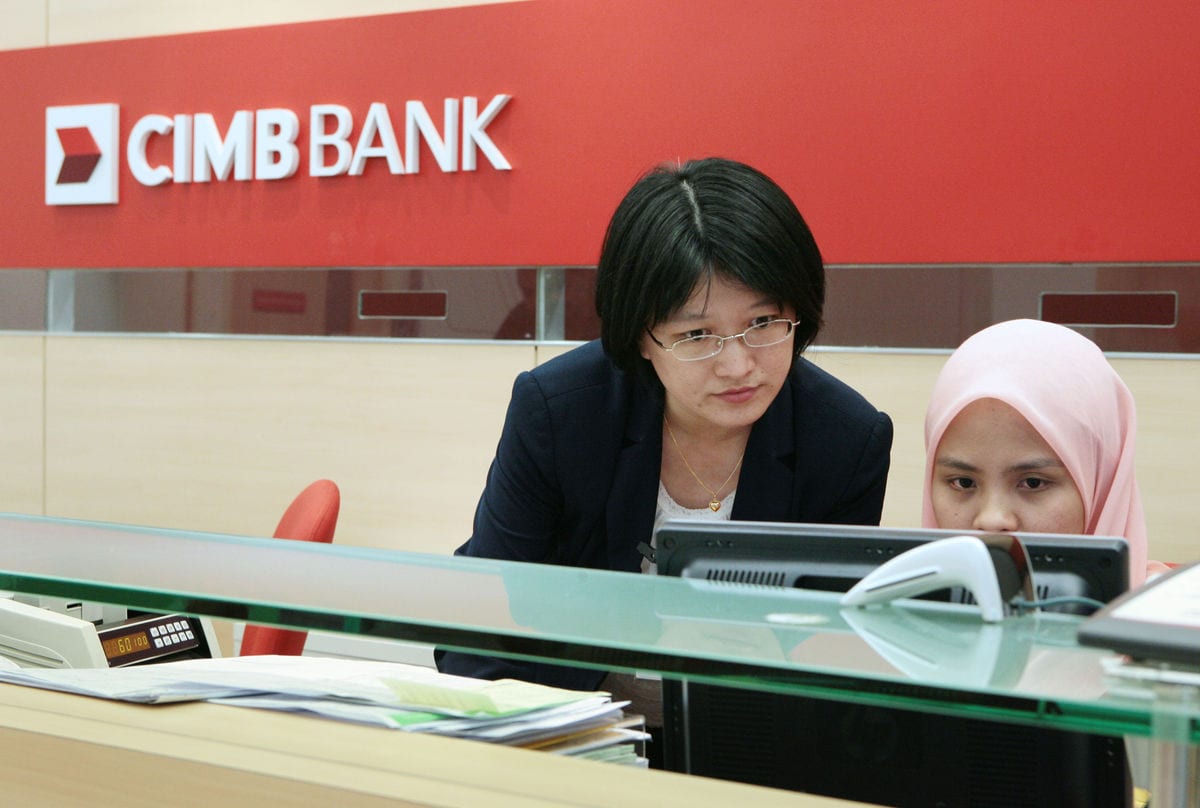
    CIMB Niaga Syariah, the sharia unit of PT Bank CIMB Niaga Tbk recorded a 165.5 percent increase in its net profit to Rp305.43 billion in 2016 from Rp115.03 billion in the previous year.

    Director of the sharia unit of CIMB Pandji P. Djajanegara attributed the surge in profit to 40.2 percent rise in sharia financing to Rp10.21 trillion in 2016 from Rp7.28 trillion in 2015.

    “An increase was recorded in all business segments,” Pandji said here on Monday.

    He said the non performing financing (NPF) of the sharia unit of the bank dropped to 1.15 percent from 1.86 percent despite the surge in financing.

    “The performance of the sharia unit was in line with the management adoption of prudential banking principle while expanding its financing portfolio,” he said.

    In 2017, apart from expanding consumer financing, CIMB Niaga Syariah wanted to increase financing of business segment including corporation, micro, small and medium enterprises (UMKM) and commercial financing, he said.

    He said the sharia business is expected to account for 10 percent of the credits to be provided by PT. CIMB Niaga Tbk.

    The third party fund held by CIMB Niaga Syariah rose 40.2 percent to Rp10.63 trillion in 2016 from Rp7.58 trillion in 2015.

    Pandji attributed the increase in the third party fund partly to the status of the unit as a recipient of hajj pilgrimage payments including regular hajj and special hajj pilgrimage.

    CIMB Niaga Syariah has a product of hajj saving that includes hajj plan saving, and hajj pahala (merit) saving and iB Mapan Wakaf saving.

    With the financing and the third party funds , the assets of CIMB Niaga Syariah rose 40.34 percent to Rp12.78 trillion in 2016 from Rp9.11 trillion in 2015.

    The sharia unit contributed 5.45 percent to the total assets of Bank CIMB Niaga in 2016 , up from 3.90 percent in 2015.

    PT CIMB Niaga is the countrys fifth largest bank in assets controlled by the CIMB Group of Malaysia.
  • IDX Inaugurates 250th Investment Gallery

    IDX Inaugurates 250th Investment Gallery

    The Indonesian Stock Exchange (IDX) has inaugurated the 250th Investment Gallery located at the Faculty of Economy and Business of Udayana University in Denpasar, Bali. The galleries are spread in 240 universities in Indonesia.

    IDX President Director Tito Sulistio said investment gallery is a means to introduce the capital market to academicians. It is established in collaboration between the IDX, universities, and companies that are Members of Exchange (AB).

    “It is hoped that academicians will not only know the capital market from the theoretical aspect only but can also directly implement the practice,” Tito said in Bali on Friday (10/3).

    The Investment Gallery provides all publications and printed materials about capital market published by the IDX, including regulations and laws on the capital market.

    Academicians can use information and the data for academic purposes and research. The materials can also be used as a reference in decision making when doing share transactions.

    Tito hopes that those galleries can disseminate information on the capital market, not only among academicians but also economists, investors, capital market observers or the public  in the regions.

    Tito added that this year, IDX inaugurated 10 Investment Galleries this year, seven of which are located Bali and five of them are in Denpasar.

  • Citi, Visa Launch eProcurement Platform In Singapore

    Citi, Visa Launch eProcurement Platform In Singapore

    Reports Friday said the companies are rolling out an eProcurement platform, Renepay, based on a reverse auction business model. The network will include B2B suppliers across the country within various industries, including financial services, marketing, real estate, telecom, beverages and more.

    Customers of Citi’s Visa Commercial Card will have access to the Renepay platform and can take advantage of extended payment periods without interest when making purchases on the network. The platform also digitizes paperwork typically involved in procurement processes, reports said, and aims to reduce contract negotiation time.

    The platform processes electronic purchase orders, invoices and payments, Citi and Visa noted.

    “We recognize that corporate buying is very specialized, and we wanted to provide buyers a platform where they can interact with leading suppliers online and arrive at the best price through the online negotiation center,” said Visa’s Vikram Kshettry, head of B2B partnerships in Asia-Pacific.

    “At every step of the procurement cycle, we allow corporates to decide on what best works for them including what to purchase, which suppliers to transact with and the payment process which they would like to adopt,” added Renepay founder Firdaus Morgul in another statement.

  • DBS to launch mobile-only banking service in Indonesia

    DBS to launch mobile-only banking service in Indonesia

    The Development Bank of Singapore (DBS) plans to introduce a smartphone-based mobile banking option for the Indonesian market as a way to further digitalize the banks’ operations and utilize digital innovation to its advantage.

    Digital transformation is part of a larger agenda for DBS, seeing that the need for digitalization is no longer seen by the banking industry as a threat to its business but as a tool of cooperation to innovate services, said Bank DBS Indonesia’s head of digital banking, Leonardo Koesmanto.

    DBS will open a new mobile-only bank in Indonesia in the early part of the second quarter of 2017 to promote a more digital, branchless and signature-less experience for its customers in this market. The system will function through biometrics and will require the presence of an electronic ID (e-KTP) to register or use its operations.

    “We are taking the more scalable digital route because these days, bigger banks are shrinking their number of branches. With this investment we can serve more people more effectively,” Leonardo said on Wednesday.

    It is likely that DBS’s mobile-only banking option in Indonesia will be rolled out through a soft launch around next month, in order to assess the feasibility of the technology and root out teething faults. The idea has already been tried by DBS in India.

    DBS currently has around 30 physical branches in Indonesia. Leonardo commented that in order for banks to truly achieve growth in a market, they would need 300 to 400 branches.

  • AEON Launches “365 Days… Enjoy Shopping with AEON Credit Card”

    AEON Launches “365 Days… Enjoy Shopping with AEON Credit Card”

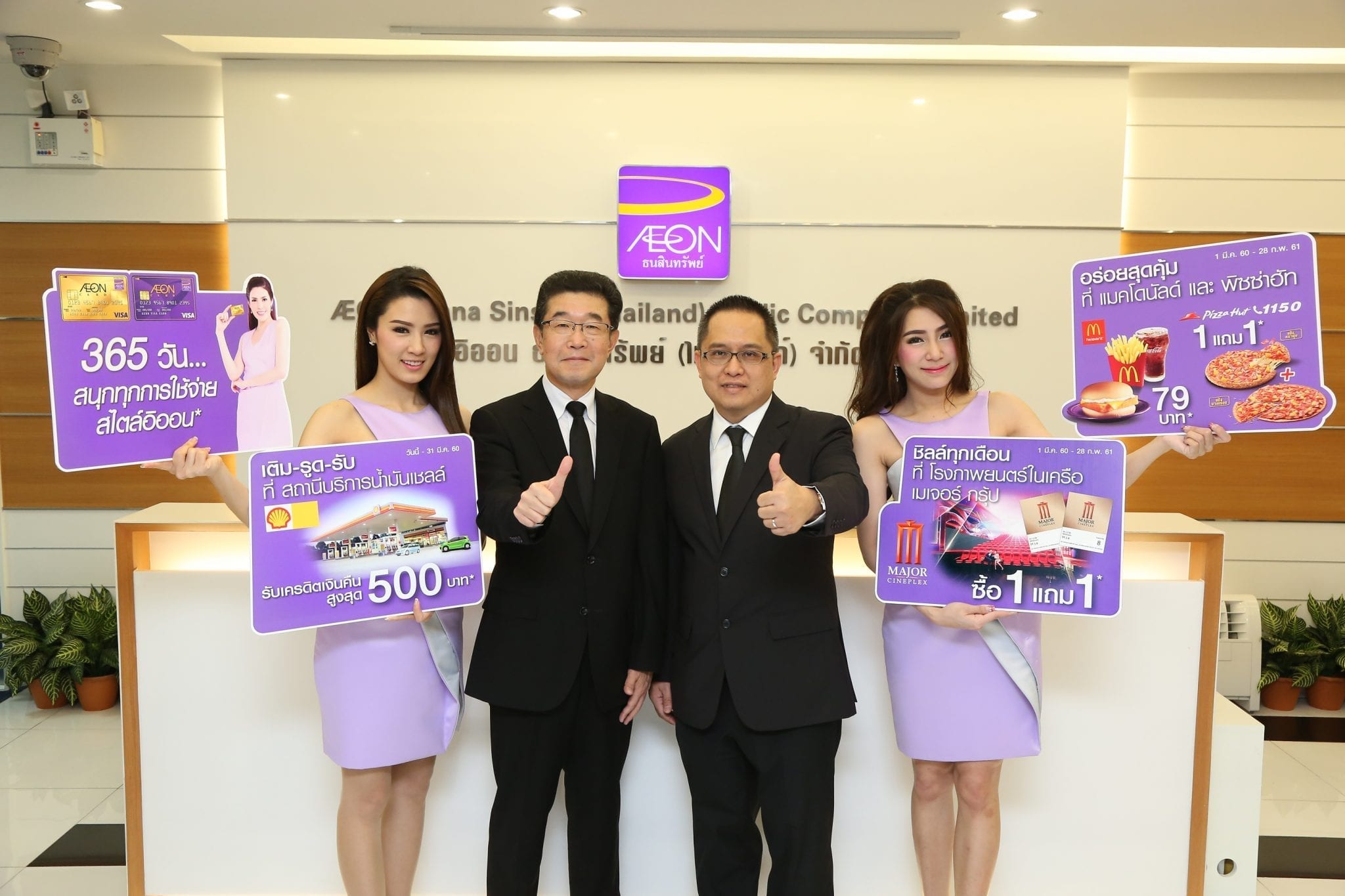
    Mr. Kiyoyasu Asanuma (left), Managing Director of AEON Thana Sinsap (Thailand) Public Company Limited, together with Mr. Nuntawat Chotvijit (right), Director of Marketing, AEON Thana Sinsap (Thailand) Public Company Limited, presided over the recent launch of “365 Days… Enjoy Shopping with AEON Credit Card” campaign. The campaign offers a range of special privileges to AEON Royal Orchid Plus Platinum cardholders, AEON Gold cardholders and AEON Classic cardholders throughout 2017. Cardholders will also be entitled to special promotions from AEON’s partners, including its newest partner, Pizza Hut.

    The first exclusive promotion available to all cardholders is a set of Extra Value Meals worth 79 baht from McDonald’s and a Buy One, Get One Free promotion from Pizza Hut when placing an order at the restaurant or using the delivery service. The second promotion entitles cardholders to a Buy One, Get One Free cinema ticket, or at a special price of 99 baht, when buying a cinema ticket at any Major Cineplex theatre.

    Moreover, for the third benefit, Get up to 500 baht cash back when spending an accumulated amount of 3,000 baht or over with AEON credit cards The fourth promotion entitles AEON credit cardholders to receive a 5% discount on items at MaxValu and MaxValu Tanjai every 1stand 15th of the month. The campaign runs from today until 28th February 2018.

  • Visa QR payments coming to Indonesia, Pakistan, Vietnam

    Visa QR payments coming to Indonesia, Pakistan, Vietnam

    Visa will soon be expanding its QR-based mobile payment service to ten more markets, including Indonesia, Pakistan and Vietnam.

    The service, named mVisa, is now live in India, Kenya and Rwanda, and will soon be available to merchants and consumers in the three new APAC markets, as well as Egypt, Ghana, Kazakhstan, and Nigeria.

    mVisa, a mobile solution, aims to provide easy and secure digital commerce to financial institutions, merchants and consumers in emerging markets.

    The service is designed to help merchants overcome infrastructure issues by allowing consumers to use their mobile phones to make cashless purchases at merchant outlets, pay bills remotely and send money to friends and family members by securely linking their Visa debit, credit or prepaid account to the mVisa application.

    mVisa digitizes the underlying account and allows consumers to transfer funds from their account to the retailer’s account reliably and securely by scanning a QR code.

    Use cases of mVisa include the allowing subscribers of Tata Sky, a direct-to-home service provider in India, to recharge their account by using their mobile phones to scan the WR code directly from the TV screen or online. This function allows Tata Sky customers to order and pay for monthly or one-time services from home without having to visit a physical retail outlet.

    Mahanagar Gas Limited, a utility provider in Mumbai, also issues customer bills printed with the mVisa QR code. Customers scan the QR code on the bill, as they would at a merchant outlet, and complete their transaction at their leisure.

  • UK Fintech firm eyes Vietnam’s banking sector

    UK Fintech firm eyes Vietnam’s banking sector

    Opportunity Network, a UK-based FinTech company that offers banks a digital business matchmaking platform, on Wednesday announced plans to engage Vietnamese commercial banks in joining its fast-growing global partner network.

    Brian Pallas – the founder of UK-based FinTech company, Opportunity Network. The company will offer Vietnamese corporate and private banks access to an innovative business-to-business digital platform designed to promote growth.

    Headquartered in London with offices across New York, Barcelona and Dubai, Opportunity Network is backed by the Boston Consulting Group and provides a collaboration platform that connects 13,500 companies in 128 countries.

    This three-year-old firm is currently valued at US$180 million and boasts a deal value in excess of $38 billion.

    The company will offer Vietnamese corporate and private banks access to an innovative business-to-business (B2B) digital platform designed to promote growth.

    Through this platform, local businesses can hunt for trustworthy partners to help them expand into new markets via international trade activities, such as selling privately held enterprises, executing cross-border mergers and acquisitions (M&A) and maximising global asset utilisation that has a deal value of $1 million and above.

    Opportunity Network uses a proprietary algorithm that is designed to smoothen global deal-making by matching users’ strategic preferences with current deals on the platform.

    Instead of on-boarding businesses directly, its main clients are banks who then invite their best customers to participate on the platform through a membership scheme, creating a pre-screened online community.

    The company has key partners such as Young Presidents’ Organisation, global network of young CEOs with 25,000 members in 130 countries, London Stock Exchange and major banks in Europe, and has recently partnered with Citizens Bank in the US. It has also announced a global expansion plan to establish local presence in 40 countries.

    “Opportunity Network is a bank-FinTech enabler and a digital Customer Relationship Management (CRM) platform. We help banks leverage financial technology to deliver more value and create better experiences for their corporate clients, especially the small and medium enterprises looking for trustworthy counterparties to expand both locally and internationally and gain market share while saving time, money and effort,” said Ly Nguyen, country managing director at Opportunity Network.

    “This is in line with the Vietnamese government’s policy to promote private sector growth, with strong focus on SMEs to double the number of firms by 2020 and facilitate trade, investment and M&A opportunities.”

    The financial services sector is going through a dramatic change in today’s highly connected digital environment.

    With higher customer expectations, ever-increasing customer touchpoints, and the advent of new technologies, banking institutions are forced to enhance their digital capabilities to stay relevant.

    “It’s the perfect time for us to work hand in hand with local banks and leverage the digital tool as a strategic enabler for banking transformation,” Nguyen said.

  • LuLu Financial Group expands Philippines footprint with remittance service

    LuLu Financial Group expands Philippines footprint with remittance service

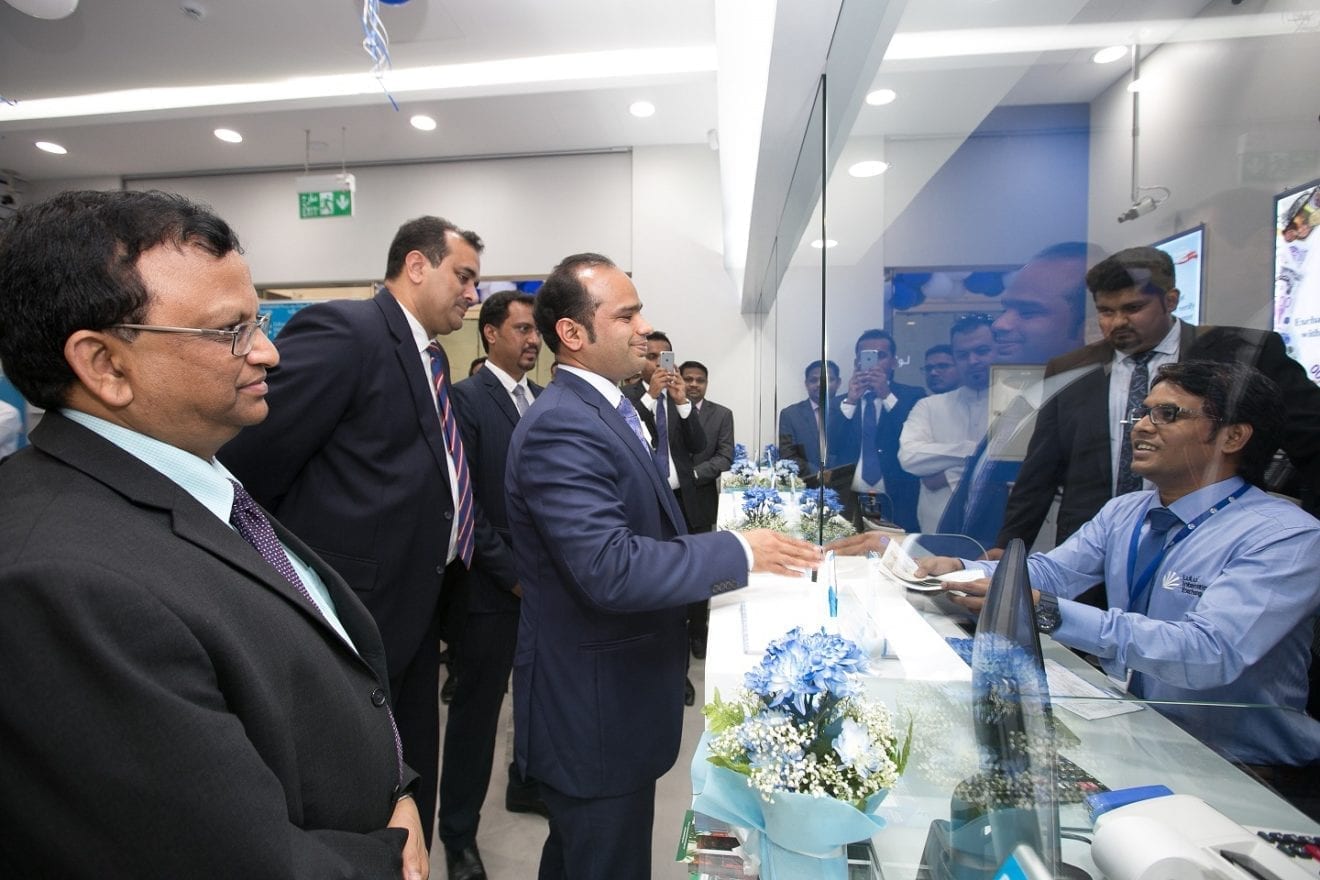
    Abu Dhabi-based LuLu Financial Group, one of the largest retail conglomerates in the UAE, is expanding its presence in the Philippine remittance and foreign exchange industry.

    The move aims at encashing the strong economic ties between Middle East and the Philippines and the increasing number of the deployment of overseas Filipino workers in the region.

    A significant chunk of the nearly $30 billion sent home each year by almost five million expatriate Filipinos can be channeled toward more productive sectors like helping finance the government’s infrastructure buildup program, reported Inquirer.

    “The economic bond between the Philippines and the nations of the GCC are strong and getting stronger, given the large number of Filipinos working there and sending money back home,” LuLu Financial managing director and CEO Adeeb Ahamed had reportedly said earlier.

    He was referring to the GCC region, which played host to an estimated 2.2 million Filipino contract workers. About one-fourth of the yearly dollar remittance tally that helps boost the Philippine economy comes from this region, the report said.

    Ahamed was quoted as saying that this huge potential encouraged LuLu Financial to open its third foreign exchange and remittance office in the Philippines to better serve Filipino clients in its home region.

    LuLu Financial is a non-banking financial organization. It deals in foreign exchange, global money transfer and salary and wage administration. It has 132 branches worldwide, staffed by over 1,500 employees.

    Ahamed reportedly said the group had the physical network to be able to serve GCC-based Filipinos’ remittance needs close to their workplaces.

    He said the remittance business in the Middle East might already be crowded, but LuLu Financial’s ties with its parent gave it the advantage of being closer to its clients.

    Ahamed said it would be a good idea for the Philippines to try to harness the financial muscle of remittances from overseas Filipinos, similar to what the India had done.

    He reportedly cited the case of a major international airport in India which was built with funds raised from overseas Indian workers through retail placements of equity shares.

    “This was built using the public-private partnership model,” he said.

    “Funds were raised, airport was completed and the retail shareholders saw the value of their stocks rise sharply. This is something the Philippines can also do.”

    For starters, Ahamed was quoted as saying by Inquirer, it would be a good idea for the government to forge ahead with its plan to create a bank dedicated to serve the OFW community.

  • Indonesia Signs Currency Swap Deal with Korea

    Indonesia Signs Currency Swap Deal with Korea

    Bank Indonesia (BI) and the Bank of Korea signed a bilateral currency swap arrangement (BCSA). Through the deal, both central banks will be able to swap currencies for a value of KRW 10.7 trillion or Rp115 trillion.

    The agreement was signed by BI governor Agus D.W. Martowardojo and Bank of Korea governor Lee Ju-Yeo, March 6. Agus said the BCSA extension will economic ties between the two nations through the use of their respective currencies.

    “The goal is to reduce our dependency on using a certain currency,” Agus said on Monday, March 6, 2017.

    According to Agus, the BCSA is part of the government’s initiative to deepen the financial market and support economic defense “especially in facing today’s economic uncertainties,” Agus said.

    The BCSA also guarantees the use of Indonesia and South Korea’s currencies in trading, to support the regional financial stability.

    Agus said the deal is valid for three years and can be extended if the two countries agree.

    The first BCSA between BI and Bank of Korea was signed on March 6, 2014, based on economic ties—especially in trade—between the two nations.

    South Korea is Indonesia’s fourth import destination with an average market share of 6.5 percent a year from 2010-2015. Korea is also Indonesia’s sixth export destination, with an annual market share of 6.8 percent in the same period.

    However, most transactions are denominated in US dollar. “That’s why we need to diversify the use of our own currency when trading with regional countries, to stabilize the rupiah,” Agus said.

  • Rupiah May Extend Gain

    Rupiah May Extend Gain

    Reza Priyambada, a senior analyst of PT Binaartha Sekuritas, predicts that the rupiah will extend its gain. The rupiah is expected to move to around a support level of Rp13,385 and resistance level of Rp13,327.

    “Recent strengthening of the rupiah may open the opportunity for a rebound in the rupiah to extend its gain,” Reza said in a written statement on Tuesday, March 7, 2017.

    Rupiah moved in the positive zone yesterday. It strengthened by 33 points or 2.5 percent to Rp13,350 per US dollar. Raza said that stronger rupiah was due to weaker US dollar as Asian currencies got stronger.

    Rupiah has also strengthened as the Indian Ocean Rim Association (IORA) Summit takes place. The summit is expected to stimulate increase in foreign investment in Indonesia which may trigger economic growth and bolster foreign exchange reserves.

    Rupiah remained strong despite negative sentiment over China who has cut its growth target for 2017, from 6.5-7.0 percent to 6.5 percent.

  • Bank Indonesia Prepares for Fed Rate Hike

    Bank Indonesia Prepares for Fed Rate Hike

    Bank Indonesia Governor Agus Martowardojo said the central bank is preparing for the impact of Fed Fund Rate (FFR) hike in March. Agus said there were clear signs of a US’ interest rates increase during The Federal Reserves’ monthly meeting in February.

    “The probability is 90 percent, that’s why all market participants are getting ready,” the former finance minister said yesterday.

    Agus said that although a Fed Rate hike will likely be followed by a rupiah correction, the impact will not negatively impact the domestic monetary situations.

    He claimed the country’s economic resilience is quite strong, referring to the sustained economic growth in the range of 5.0 percent. Similarly, inflation has been within a safe range of three to five percent in the last two years.

    Other defensive factors are Indonesia’s healthy balance of payments that goes well in hand with a controlled current account deficit. As of February 2017, the country’s balance of payment was at a surplus of US$4.5 billion. The foreign exchange reserve was around US$116.9 billion.

    Bank Mandiri chief economist Anton Gunawan predicts the Fed Fund Rate will rise three times this year. However, he said there is a tendency that investors will prefer Asian markets rather than return to America’s.

    Anton said the rupiah could still see a fairly stable exchange rate to trade between Rp13,200 and Rp13,400 per US dollar.

    “The hedging liability also serves to reduce pressure on the rupiah,” he said.

  • Royal Bank of Scotland Ends Business Activities in Indonesia

    Royal Bank of Scotland Ends Business Activities in Indonesia

    Although the bank started under the name ABN AMRO BANK NV Indonesia, the majority of its shares was acquired by the Royal Bank of Scotland Plc in 2010. After this acquisition the bank’s name changed to RBS NV.

    Earlier, in December 2015, the bank’s branch in Surabaya (East Java) had already been closed. The ending of all of RBS NV’s business activities in Indonesia is part of the bank’s overall business strategy. Besides Indonesia, it decided to end its business networks in 24 other countries. Due to the RBS Group’s losses across the world, it decided to focus on the domestic market of the United Kingdom (UK) in order to improve its earnings. RBS NV’s corporate activities in Indonesia were profitable until the end of 2014. After that year its activities in Indonesia resulted in net losses and therefore it decided to end its businesses here gradually.

    Through OJK Board of Commissioners Decree No. 7/KDK.03/2017 on the Revocation of the Permit of The Royal Bank of Scotland NV’s Branch in Indonesia, dated 28 February 2017, the license of the bank has been revoked. According to the OJK, RBS NV Indonesia has completed all its obligations and therefore its request for the license revocation was approved. However, those who still (claim to) have rights and obligations with the local branch of Royal Bank of Scotland in Indonesia can contact the disclosure team, located at the Indonesia Stock Exchange (IDX) building (Tower 2, second floor) in South Jakarta until 31 March 2017.

  • Japanese, Vietnamese cooperation in finance, banking a successful marriage

    Japanese, Vietnamese cooperation in finance, banking a successful marriage

    Japanese enterprises in banking and finance are now the biggest foreign shareholders in Vietnamese banks, financial and financial leasing companies, and their Vietnamese partners highly regard their expertise and support.

    Recently, Sumitomo Mitsui Trust Bank (SMTB)—the largest trust bank in Japan with total assets of $585.4 billion—has bought 49 per cent of BIDV Financial Leasing Company and renamed it BIDV-SuMi TRUST Leasing Limited Company. The joint venture took place as an expansion of their strategic cooperation since 2013.

    According to a VIR source, another investor from Japan is negotiating to buy 49 per cent of VPBank Finance Company Limited (FE Credit). These two examples evidence Japanese investors’ attention on the Vietnamese financial market and Vietnamese banks’ interest in cooperating with them.

    Previously, Military Bank (MB) transferred 49 per cent of Mcredit Consumer Finance Company’s shares to Shinsei Bank and HDBank transferred 49 per cent of HDFinance’s shares to Credit Saison Co., Ltd. Le Huu Duc, chairman of MB’s board of directors, said the reason for the cooperation was that Japanese investors “have the advantage of modern technology and experience in consumer finance.”

    Because of the interest from Japanese investors and their strong finances, there are more cooperation deals in the making.

    Currently, numerous banks and financial companies in Vietnam, including giants like BIDV and soon maybe Agribank, are calling for investment from strategic foreign investors.

    Increasing cooperation with Japanese investors

    Besides transferring shares, a range of big Vietnamese banks also cooperate with Japanese banks to look for business opportunities as Japanese FDI is increasing.

    At the end of February 2017, BIDV signed a memorandum of understanding (MoU) on serving Japanese customers in Vietnam with Fukuoka Bank, the 16th biggest bank in Japan.

    Similarly, VietinBank and Vietcombank also signed dozens of MoUs with Japanese partners. In particular, Vietcombank signed with approximately 60 Japanese banks.

    Following the trend, other commercial banks also seek Japanese partners and have even established a new service called Japan Desk to support clients form Japan.

    Besides VietinBank, Vietcombank, and BIDV, Sacombank, HDBank, TPBank, and others offer this service.

    “There are more and more Japanese firms entering the Vietnamese market. The two countries have similar cultures and retail banking strategies, so the cooperation can promote both parties’ strengths and often results in high efficiency,” said a leader of Sacombank.

    Japanese clients require perfect and diversified services, while capital and the range of services in Vietnam is limited.

    One can expect an increasing trend of teaming up among Japanese and Vietnamese banks in the coming time. This will be beneficial for all parties.

  • Ant Financial invests in Globe Telecom’s Mynt

    Ant Financial invests in Globe Telecom’s Mynt

    Alibaba’s Ant Financial is making its first foray into the Philippines via partnership with Ayala and an investment into Globe Telecom’s Fintech business unit Mynt.

    The fresh capital infusion will help Mynt achieve its vision of becoming a world-class online and offline payment provider as well as scale up its mobile wallet services and quickly expand its digital financial services.

    Mynt is a wholly-owned subsidiary of Globe Capital Venture Holdings (GCVHI) under Globe Telecom. Upon closing of the transaction, Ant Financial will own a substantial minority interest in Mynt, while Ayala Corp will acquire a minority interest. GCVHI will hold the remaining equity interest.

    Ernest Cu, Globe President and Chief Executive Officer, Ernest Cu said the capital infusion from will help position Mynt to democratize financial services in the Philippines.

    Mynt is pioneering mobile and digital initiatives that provide financial services that previously were not available to most Filipinos. It is currently the biggest mobile money base in the Philippines with over 3 million registered customers and 1 billion pesos ($19.9 million) worth of transactions per week.

    Mynt claims to be the only company in the country that serves as a one-stop shop for Fintech services for consumers, merchants, and organizations through GCash and Fuse Lending.

    Mynt operates GCash and Fuse Lending. GCash is a micropayment service used to buy prepaid load, pay bills, send money, make donations, shop online, and purchase goods without the need for cash.

    Fuse Lending offers personal and business loans to unbanked and underserved Filipinos through the use of mobile technology, alternative data, as well as innovative credit scoring methods.

  • Techcom trust debuts on HOSE

    Techcom trust debuts on HOSE

    Techcom Việt Nam Real Estate Investment Trust (TCREIT) made debut on the HCM Stock Exchange (HOSE) yesterday under the code FUCVREIT at a par value of VNĐ10,000 (44 US cents) per fund certificate.

    Five million FUCVREIT fund certificates were floated on the southern bourse, without a specific due term for the fund’s being traded. Changes in the due term will be
    decided by investors’ resolutions.

    HOSE said in a statement that this was also the first domestic-invested fund in Việt Nam’s  securities market. The trust fund was founded by the Techcom Capital Co Ltd (TCC), an investment arm of Techcombank.

    Ending the first session, its price closed at VNĐ12,000 apiece with 8,330 fund certificates exchanged.

    The investment trust was founded as a closed-end fund with initial capital of VNĐ50 billion (US$2.22 million). The fund expects to increase its capital in the future to meet
    investors’ demands when targeting potential real-estate projects.

    By making investments in Techcom Capital’s property investment trust, domestic and overseas investors can indirectly own part of potential real-estate projects and receive
    constant earnings from those projects without spending money on direct investments in the projects.

    In addition, with the fund’s trading on HOSE, investors can buy and sell fund certificates more easily, compared to trading in a real-estate project.

    A REIT fund is founded by investors’ capital when they purchase fund certificates and authorise the fund management board to supervise their shares. A real estate
    investment fund often spends most of its net asset value (NAV) investing in real-estate projects and real-estate companies.

    The domestic real estate investment fund has a long-term investment strategy focusing on property projects, such as office buildings, hotels, resorts and shopping centres,
    which generate constant earnings for the fund from leasing and business activities.

    The fund will also consider making investments in projects, such as apartment buildings and housing, which are developed by reputable institutional developers and have high
    possibilities of price increases, to benefit from selling products in those projects.

    In Việt Nam, there are some foreign-invested real-estate investment trusts, such as Vinaland by the VinaCapital, VPF by the Dragon Capital and VPH by the Saigon Asset Management. These funds mobilise capital from overseas investors to purchase stakes in Việt Nam’s real-estate projects and property stocks, after which the funds will be
    listed on overseas stock exchanges.

    According to current regulations, of the total NAV, a REIT must spend at least 65 per cent investing in real-estate projects and property stocks and, at most, 35 per cent investing in other types of assets, such as deposits, bonds and securities.

    When the fund seeks capital via an initial public offering (IPO) and/or increases its capital, investors can purchase more fund certificates by making payments in cash or
    they can contribute their stakes in real-estate projects to receive the amount of certificates that are of equal value to the stakes in property projects.

    This could become a new tool to help investors offload their stakes from real-estate projects by selling their fund certificates, if the projects have low trading liquidity in the property market.