Category: Finance

Retail News Asia is committed to providing both local and global retailers with the latest Finance news throughout the Asian market. This on a daily base.

  • KBank unveils capital branch

    KBank unveils capital branch

    Kasikornbank (KBank), one of the largest banks in Thailand, officially unveiled its first branch in Phnom Penh with the aim of offering financial services to local businesses as well as corporate and retail customers.

    KBank entered the Cambodian financial market in November and initially, the branch’s objective was to facilitate Thai businesses in Cambodia in the area of corporate finance and fund mobilization for investment in infrastructure projects towards the production of garments and processed food.

    KBank services are available in Thai baht, US dollars and Cambodian riel for bilateral trade activities and other transaction services.

    KBank president Predee Daochai said the bank’s first injection of investment capital into Cambodia was $50 million and it will increase, based on bank performance and demand.

    Mr. Predee said recently that KBank’s loan portfolio was $2 million with a small amount of deposits. However, the bank expects to expand its loan portfolio to about 1.5 billion baht ($43 million) to corporate customers, local businesses and retail customers, both Thai and Cambodian, in the next three to five years.

    “We have to grow in terms of loans and deposits. Our loan portfolio is $2 million, but we have targeted that within the next three to five years, it should rise to two billion baht [$57 million] and we aim to have 800 million baht [$22.8 million] in deposits,” he said.

    “We can grow faster than that because there are many big Thai customers here since they came here many years ago. Most of them use our services in Bangkok so they are pleased to use our services here.”

    Mr. Predee said that KBank is not only looking to serve the financial sector in Cambodia, but also wants to help boost investment and trade between Cambodia and Thailand.

    He said if the first branch performs well, the bank will look to open a second branch in the country.

    Nattavudh Photisaro, Thai ambassador to Cambodia, said that KBank opened its representative office in Cambodia in February 2015, and had a soft opening of its Phnom Penh branch in November.

    He added that although KBank just officially unveiled its branch, it was no stranger to the Thai embassy in Phnom Penh as the bank had worked closely and has strong ties with the Thai diplomatic staff in Cambodia for the past couple years.

    “With KBank, Thailand has a total of four banks in Cambodia including Bangkok Bank, Krungthai Bank and Cambodian Commercial Bank. Now KBank has brought another Thai business to Cambodia,” he said.

    Mr. Nattavudh added that bilateral trade between Thailand and Cambodia reached $5.6 billion last year. He said several Thai companies have expanded their operations in Cambodia and more will follow.

    “I have always encouraged Thai businesses here to operate on three principles: mutual trust, mutual respect and mutual benefit. I think that Kasikornbank has taken these principles to implement here,” he said.

  • Korean firm enters Indonesian credit card market

    Korean firm enters Indonesian credit card market

    Shinhan Indo Finance Ltd (SIF), a subsidiary of South Korean credit issuer Shinhan Card, has launched its first credit card on the Indonesian market.

    The “ShinhanIndo Card Hi-Cash” comes in four different types to reach consumers from all segments, especially the millennials.

    In developing its credit card business, SIF is cooperates with Indo-Pack, merchants under Indomobil Group, and K-Pack, merchants from South Korean companies, the company’s vice president Tan Kim Piauw told a press conference after the launching event on Monday.

    SIF was established in December 2015 as a multi-finance joint venture between the Korean credit issuer and two Indonesian firms, Indomobil Group and Asuransi Central Asia (ACA).

    The joint venture obtained permits to issue credit cards from the Financial Services Authority (OJK) and Bank Indonesia in December last year.

    In its initial stage of operation, Indomobil’s 20,000 employees and those of ACA were SIF’s main market target, Tan said, adding that this year the number of credit card holders was expected to reach 80,000.

    “We hope to book Rp 500 billion in transactions in 2017,” he said.

    Speaking at the press conference, Shinhan Card CEO Wi Sung Ho said that with its growing middle class, Indonesia was a market with quite a bit of potential for the credit card business. He said that the number of credit card holders totaled only 17 million despite the country’s large population, far below the South Korean market with 22 million cardholders.

  • Nice start to the year. Pity about the rest of it

    Nice start to the year. Pity about the rest of it

    There are too many uncertainties ahead to know whether it will continue or crumble, economists say. The world economy has begun the year in fine form. America is cruising along, China is growing faster than expected, Britain is muffling the Brexit downdraft. Even the usually lagging euro zone is perky.

    Pity about what lies ahead.

    Almost every major economy’s data releases these days seem to follow a similar pattern.

    First, they are generally positive – either better than previously or only a little weaker. Then, policymakers and economists come out and say there are too many uncertainties ahead to know whether it will continue or crumble.

    “Geopolitical risks are mounting and increasingly catching market attention in such fashion as to risk overshadowing most other developments,” Canada’s Scotiabank told its clients.

    The risks are primarily political. How will U.S. President Donald Trump’s “America First” protectionist talk translate into policy? Will Brexit finally come back to bite Britain by cutting off commercial growth and breeding inflation?

    For the euro zone, meanwhile, the risks are existential. Elections in France, Italy, Germany and the Netherlands could result in anti-euro political parties gaining significant ground or even taking office. And Greece’s hold on its place in the currency union remains flimsy.

    In the past week the extra money investors demand to buy French bonds rather than German ones jumped – much of it because of a comment by an official of the far-right National Front that it would put leaving the euro at the heart of its economic platform.

    Polls suggest National Front candidate Marine Le Pen will not win the presidency – but after the Trump and Brexit surprises last year nothing can be ruled out.

    Other risks are more Keynesian, revolving around whether years of stimulus from central banks in the form of asset-buying and negligible interest rates are finally producing inflation, which in turn will stop consumers from buying, slowing economic growth.

    Economics can be very much a game of whack-a-mole.

    Up next

    The coming week may well be dominated by China, which returns from a holiday with a large slate of data, including the services purchasing managers index – which implied steady if slightly slower growth – foreign reserves data and possibly trade figures.

    China grew a faster-than-expected 6.8 percent in the fourth quarter, boosted by higher government spending and record bank lending.

    But the economy still faces headwinds from a cooling housing market and possible protectionist measures from the U.S.

    The foreign exchange reserves, meanwhile, are on the verge of falling below $3 trillion, although the pace of declines could be slowed by capital controls and the dollar’s retreat.

    China is being cautious. It raised a number of policy rates on Friday against what Deutsche Bank described as a dilemma.

    “Policy needs to be tightened for financial stability considerations, but (the central bank) wants to control the pace and magnitude so that … the tightening does not trigger disruptive adjustments (bubble burst), and … does not jeopardize the stabilizing growth outlook,” it said.

    In the euro zone, there will be German, French, Spanish and Italian industrial production data. All are expected to show growth.

    Germany’s volatile factory orders may be under particular scrutiny. They fell 2.5 percent month-on-month in November, a plunge from a 5 percent rise the month before.

  • AXA Financial Indonesia seeks new customers from digital platform

    AXA Financial Indonesia seeks new customers from digital platform

    Life insurer AXA Financial Indonesia, part of the AXA Indonesia Group, launched a digital tool to expand its customer base on Monday.

    The tool provides easy access to information for several purposes, namely creating a children’s education fund, retirement fund, business capital and tourism or pilgrimage fund.

    AXA Financial Indonesia chief agency officer Nina Ong said the tool and products were directed at modern dynamic citizens, ages 25 to 45 years old.

    The company expects the tool to help attract 20 percent to 30 percent of such citizens as its new clients and expand its customer base, which is now served by about 14,000 agents.

    AXA Financial Indonesia’s move is part of an overall strategy by the insurance industry, which has continued to report low insurance penetration despite Indonesia’s status as the largest economy in Southeast Asia.

    Data from the Financial Services Authority (OJK) shows that the insurance penetration ratio stood at 2.63 percent only, as of September, below the ratios in Malaysia, Singapore and Thailand at over 5 percent.

    AXA Financial Indonesia booked Rp 1.44 trillion (US$108.03 million) in total revenue in the first nine months of 2016, a more than sixfold increase compared to the same period in 2015, supported by positive results in its investments.

  • SCB Securities to use Thai Decide system for institutional customers

    SCB Securities to use Thai Decide system for institutional customers

    Decide is a state-of-the-art trading platform provided as a service and co-located at the SET Data Centre, which supports retail and institutional trading on both the Stock Exchange of Thailand and Thailand Futures Exchange.

    SCB Securities chief executive officer ML Thongmakut Thongyai said: “After the successful implementation for our institutional customers we look forward to exploiting the power of Thai Decide for our retail customers.”

    Thibaud Langlet, general manager of Serisys for Southeast Asia, said: “Leading financial institutions like SCB Securities need world-class platforms like Decide to allow them to win in today’s rapidly changing landscape. Providing Decide as a service allows us to ensure high quality and cost efficiency.”

    Coaching conference in May

    The “APAC2017 Coaching Conference” will be held in Bangkok from May 25-27, and its organisers promise it will be an inspiring place where coaches and leaders explore how coaching creates sustainable value within teams, corporations and society.

    The highlights include a leading-edge “East meets West” pre-conference day on May 25, featuring Dr Marshall Goldsmith, Venerable Vudhijaya Vujiramedhi, and the governor of the Bank of Thailand, Veerathai Santiprabhob.

    The conference programme features 35 speakers from five continents, including international coaching experts Goldsmith and Dr Stephen Murphy-Shigematsu.

    Thai cooking class

    Hospitality company Dusit International has rolled out a new Thai cooking class, giving participants the chance to learn how to make a selection of Thailand’s most famous dishes.

    Open to hotel guests and the general public at selected Dusit Hotels and Resorts worldwide, each hands-on session is conducted by a seasoned Thai chef and includes a choice of three authentic recipes, followed by a sit-down lunch or dinner.

    Among the available recipes are signature favourites such as khao pad gai (chicken fried with rice), pad thai goong (fried noodles with prawns), tum yum goong (spicy soup with prawns), massaman lamb shank curry, and chicken satay.

    FWD launches ‘Cancer Fighter’

    FWD Life Insurance has launched “Cancer Fighter”, a new insurance product that covers all stages of cancer from first diagnosis onwards.

    The package provides benefits at early diagnosis to cover medical treatments, including ongoing chemotherapy and radiotherapy recovery benefits, said chief marketing officer Aman Kapoor.

    The “Cancer Fighter” gives a significant lump sum (50 per cent of sum assured) when the cancer is detected early to help pay for the best medical treatments at the early stage to beat the disease.

    In cases where cancer is detected at a later stage, full benefit (100 per cent of sum assured) will be given to the customer. Moreover, an additional 40 per cent of sum assured will be provided for ongoing chemotherapy and radiotherapy treatments to help with full recovery.

    The “Cancer Fighter” plan can be bought with a main life-insurance policy from FWD, is available for customers aged 16-65 years, and can be renewed up to age 84 years.

  • Thai e-wallet platform provider joins hands with Myanmar retailer.

    Thai e-wallet platform provider joins hands with Myanmar retailer.

    A joint venture agreement between them was signed during a Myanmar-Thailand cooperation mission presided over by Myanmar State Counsellor Aung San Suu Kyi and Deputy Prime Minister of Thailand Dr Somkid Jatusripitak in Nay Pyi Taw yesterday.

    The joint venture will leverage the strengths of both parties to launch various innovative fintech services such as payment platform, loyalty, e-gift platform and closed- and open-loop e-wallets for Myanmar’s population of 51 million. The joint venture is a key stepping stone for T2P to expand its services beyond its home country Thailand and for City Mart to offer new products through its existing retail platform.

  • Retail offers banks a lifeline

    Retail offers banks a lifeline

    Retail customers offer a silver lining for banks amid tepid demand in corporate lending and the fragile state of small and medium-sized enterprises (SMEs), says Kasikorn Research Center (KResearch).

    Lending to individual customers in 2017 is expected to continue to outshine overall loan growth and the traditional mainstay of Thai lenders — commercial loans — said the research unit of Kasikornbank (KBank) in a report.

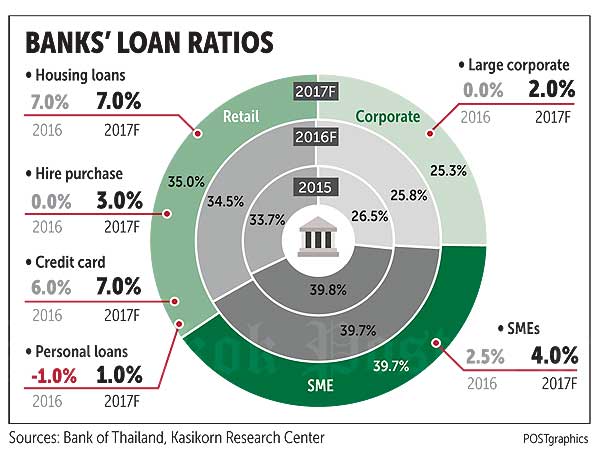
    KResearch forecasts 5.5% growth in retail loans this year, compared with 3% in commercial loans and 4% in overall lending.

    Over the past few years, retail lending also grew at a faster pace than overall and commercial loans. Retail loans rose by 6.2% in 2015 and 4.5% in 2016, well above 2.9% and 1.5%, respectively, for commercial loans those two years and 4.0% and 2.5% for overall lending, according to KResearch data.

    Thai banks’ exposure to retail loans is expected to climb to 35% this year from 34.5% last year, with SME loans steady at 39.7%, said the report. The share of large corporate loans or so-called wholesale banking is projected to fall to 25.3% from 25.8%.

    As Thailand’s economy has struggled with subpar growth since 2013, it is not a surprise banks have pushed into the retail banking business — mortgages, credit cards and personal loans in particular — as companies’ investment projects have stalled. Companies have also turned to debt instruments to raise capital because of low interest rates.

    Retail banking business offers a better profit margin than corporate loans, but carries lower default risks than loans to SMEs struggling with the uneven economic turnaround.

    Moreover, retail borrowers, white-collar workers in particular, on average have seen their income continue to grow slowly, while the unemployment rate remains low at less than 1%.

    “We expect retail lending will deliver the strongest growth in that segment this year as large corporates move toward the capital market for fund mobilisation, while only a handful of banks, especially large lenders, have expertise in SMEs lending,” said Thanyalak Vacharachaisurapol, deputy managing director of KResearch.

    “Even though retail loan growth is expected to increase at a fast clip, overall lending will only record single-digit growth as banks remains cautious amid high household leverage. However, the end of the lock-up period for the first-time car buyer scheme will add to consumer purchasing power this year.”

    The lock-up period is five years for most cars bought under the excise tax rebate scheme. KResearch estimates some 320,000 car owners, representing 30% of those in the first-time car buyer scheme, will have their lock-up period end this year, and some may consider replacing their cars.

    Auto-hire purchase is expected drive retail lending growth this year, said the report.

    KResearch predicts auto loans will expand 3% this year, up from zero last year, while housing loans — accounting for more than half of retail lending — are expected to grow steadily at 7%.

    Although banks will likely focus on retail banking business this year, lenders’ focus areas will be diverse, said the report.

    Krungthai Bank (KTB) and Siam Commercial Bank plan to pay more attention to the wealth customer segment to offset fee-based income expected to be hit by PromptPay, electronic money transfer under the government’s national e-payment scheme.

    KTB, the country’s second-largest lender by total assets, aims to increase assets under management (AUM) for wealthy clients by 25% this year from 600 billion baht. Its provincial customer base is the bank’s strength for expanding both its wealthy client numbers and its AUM.

    KBank, the country’s fourth-largest lender by assets, set a total loan growth target of 4-6% and retail loan growth of 5-7%, with mortgages contributing the highest growth among other retail lending.

    Bank of Ayudhya (BAY) targets double-digit growth for its retail banking business this year compared with total loan growth of 6-8%. The bank recorded the highest loan growth among its industry peers last year at 11.2%, with retail blazing the trail, increasing 15.9%.

  • German tech firm opens in Myanmar

    German tech firm opens in Myanmar

    Neil Emerson, the firm’s senior vice president and managing director for Asia Pacific, said that its customers’ positive feedback and satisfaction drove them to establish an on-the-ground presence in Myanmar.

    Previously, the firm had been operating in Myanmar through third-party business partners, supporting local banks with their self-service technology needs for many years.

    “Our intention is to work with the Myanmar community and become a trusted partner. That is really important to us,” he said.

    “Our local office will enable us to build a closer relationship with our customers and serve them better. We continue to drive innovation in both banking and retail technology and services to meet Myanmar’s unique market requirements … Myanmar banks really aim to expand to support their customers. We are willing to support them by having our presence here.”

    Emerson said that the firm could cater to the growing needs of Myanmar banks as they expand their products and services in and beyond major cities. The firm also plans to help established or new retailers who wish to enter the Myanmar market with its automation, omni-channel and lifecycle management solutions.

    Piers Leach, country manager for Myanmar, was proud to say that the firm is the market leader in Myanmar’s ATM (automated teller machine) network.

    To date, the firm has acquired 70 per cent market shares, providing its services to nearly 1,700 ATMs across the country. All the leading private banks including KBZ, Aya, CB, AGD and UAB have become its customers.

    Big contract

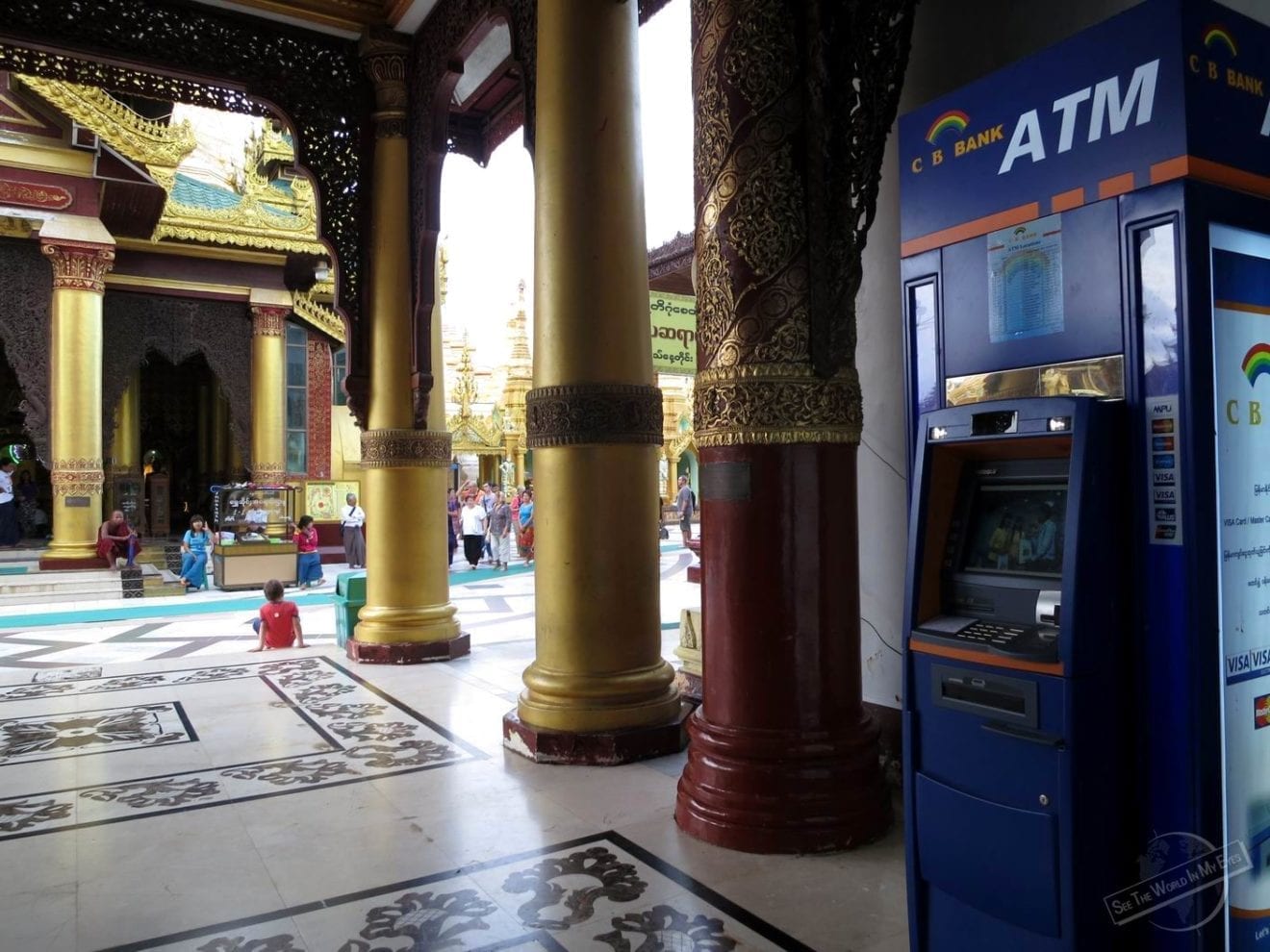
    Last month, CB bank signed an extensive contract with the firm for systems, software and services to expand its self-service cash offerings beyond Yangon. The bank operates one of the largest ATM networks in the country and aims to double its size of ATM network in 180 branches across the country. The bank will add 500 new ATMs and cash recyclers to its current network of 500 terminals supplied by the firm.

    Leach said that the firm aims at providing its technology to all the banks in Myanmar – private and state-owned.

    They are also looking at the retail sector including shopping malls, convenience stores, grocery shops and gas stations. The firm already has a team of 30 service staff in Myanmar, and will expand its workforce over time.

    “We have seen a significant growth in the banking industry in Myanmar over the last few years, and we have already been a long and established partner for most of the country’s leading commercial banks.

    “We are excited to more effectively grow our partnership with clients with a new, direct presence in the country,” he said.

    Leach does not consider Myanmar’s infrastructure as a challenge.

    “Network connection is improving over time in Myanmar. We have seen a lot of progress with regard to network connection. So, we do not see it as a problem,” he said.

    Biswajit Jha, vice president and managing director for Asean, shared a similar view.

    “It depends on how you look at it – whether it is a challenge or an opportunity. We see it as an |opportunity. Today, everybody has a smart phone in Myanmar, and infrastructure is developing very rapidly.

    You have to come across the learning phase for smooth transition to cashless society,” he said.

    “Everything is about convenience. If it is convenient to you, you would go for that,” added Jha.

    Sachin Handoo, senior director for Indochina and South Asia, said that a stable power supply should be provided to ensure that equipments are running properly.

  • BNI plans to set up subsidiary in Malaysia

    BNI plans to set up subsidiary in Malaysia

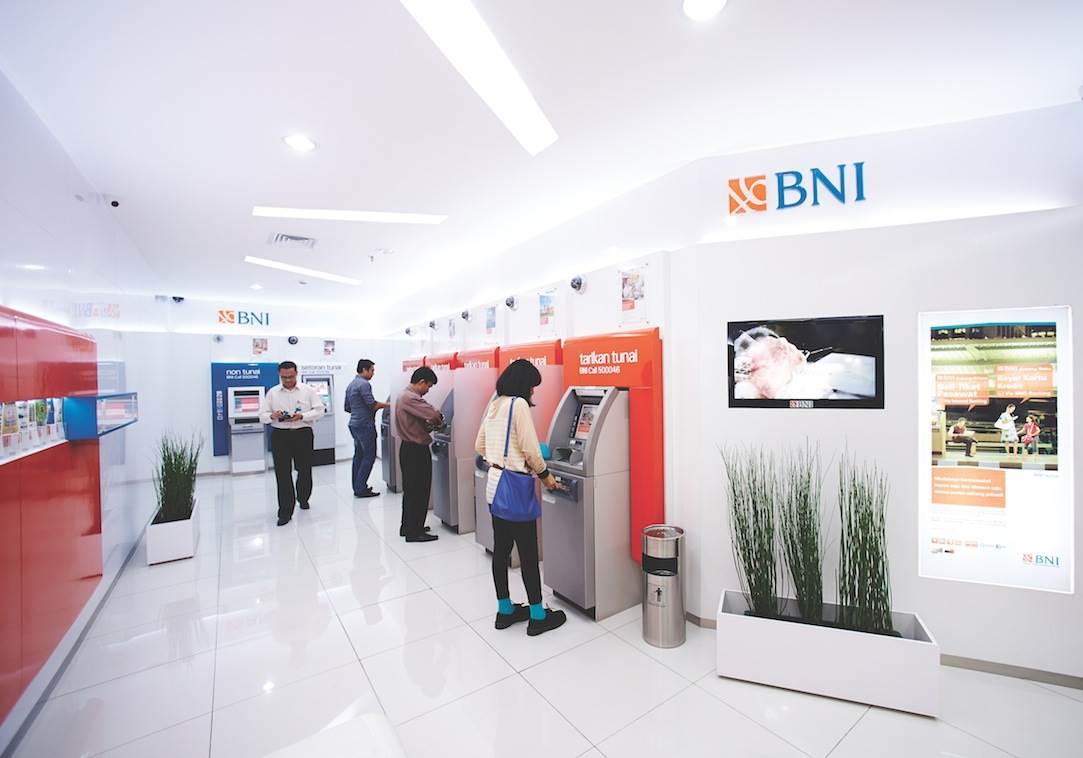
    State lender Bank Negara Indonesia (BNI) plans to set up a subsidiary in Malaysia this year after the two countries signed an agreement on reciprocity-based banking business.

    BNI is waiting for the holding company of state-owned companies in the banking sector to issue a policy, which is currently under process, BNI Director for Treasury and International Affairs Panji Irawan said at the Indonesia Stock Exchange here on Thursday.

    To set up the subsidiary, BNI is considering involving other state lenders, including Bank Mandiri and Bank Rakyat Indonesia, to shore up its business capacity and efficiency, he added.

    “Whoever is interested in it, can cooperate with us. We cannot do it alone,” he noted.

    In view of its financial capacity, BNI is likely to set up a subsidiary rather than establishing a branch office in the neighboring country, he revealed.

    “The subsidiary will not serve as a branch. It will be locally incorporated and must have a board of directors,” he explained.

    Under the Malaysian law, BNI must have a paid-up capital of US$66 million to US$75 million to set up the subsidiary, he informed.

    BNI President Director Achmad Baiquni wanted the bank to strengthen its network in the neighboring country in the first half of this year.

  • Cost savings to boost mobile wallet business

    Cost savings to boost mobile wallet business

    In the mobile wallet business, volume business and long-term supplier contracts can deliver cost savings for buyers, according to market research firm Technavio.

    According a new report from the company, cost savings can be achieved through adoption of technology, supplier competition, adoption of negotiation strategies, optimization of procurement practices and bundling of services.

    In terms of technology, the researcher points to adoption of NFC, HCE, BLE and QR codes through the efforts of Apple, Google and Samsung.

    Consumers need to perceive mobile payments as an easy and convenient mode of payment via the integration of the mobile banking and payment experiences.

    Consumers are comfortable making financial transactions using mobile channels developed by trusted financial institutions such as banks. Converging these two into one seamless experience is crucial to bridge the gap and push consumers into making mobile payments online or at POS.

    A fast, simple, and seamless mobile payment process can enhance brand reputation and differentiation in the market. Customers consider personalized user experiences on payment interfaces, fast and efficient check-outs, and multiple payment options (debit/credit cards, internet banking) as important features in mobile wallets. A 2016 market study on mobile commerce predicts about two billion mobile phone/tablet users will make mobile commerce transactions globally in 2017.

    Beyond basic P2P money transfers and bill payment services, Technavio says suppliers are strategically partnering with network operators and banks to provide localized and real-time offerings such as loyalty points, discounts, and ratings and reviews across popular retail, entertainment, and hospitality businesses.

    Technavio says suppliers must offer mobile wallet services that can smoothly process financial transactions and possess fast, secure user interfaces with relevant communication on discounts, loyalty, and re-purchase benefits to meet the requirement of procurement professionals. They must also enhance the safety and security of personal and financial data of the customers with multi-layered mobile technology.

  • Mobile wallet spending set to grow 32% in 2017

    Mobile wallet spending set to grow 32% in 2017

    Global mobile wallet spending is on track to grow nearly 32% in 2017 to reach $1.35 trillion, a new study from Juniper Research predicts.

    Although at the moment transactions are concentrated in China and East Asia, the research firm predicts that brands such as PayPal and Apple wallets which can be used both instore and online means that wallets will increasingly become the default payment mechanism in other markets.

    The study found that mobile spend is currently concentrated in China and East Asia owing to the success of Alipay and WeChat.

    The report claims that PayPal’s choice to use a HCE (Host Card Emulation) NFC solution to enable POS payments is a key disruptive moment in the wallet wars. It also attributes Paypal’s future mobile wallet success to the on-going success of its social payments subsidiary Venmo.

    Research author Dr. Windsor Holden noted that “Network operators remain wedded to offline payments based on an NFC SIM card, at a time when more agile competitors are deploying integrated HCE wallets that also enable online usage.”

  • MUFG to Buy $773 Million Stake in Philippines’ Security Bank

    MUFG to Buy $773 Million Stake in Philippines’ Security Bank

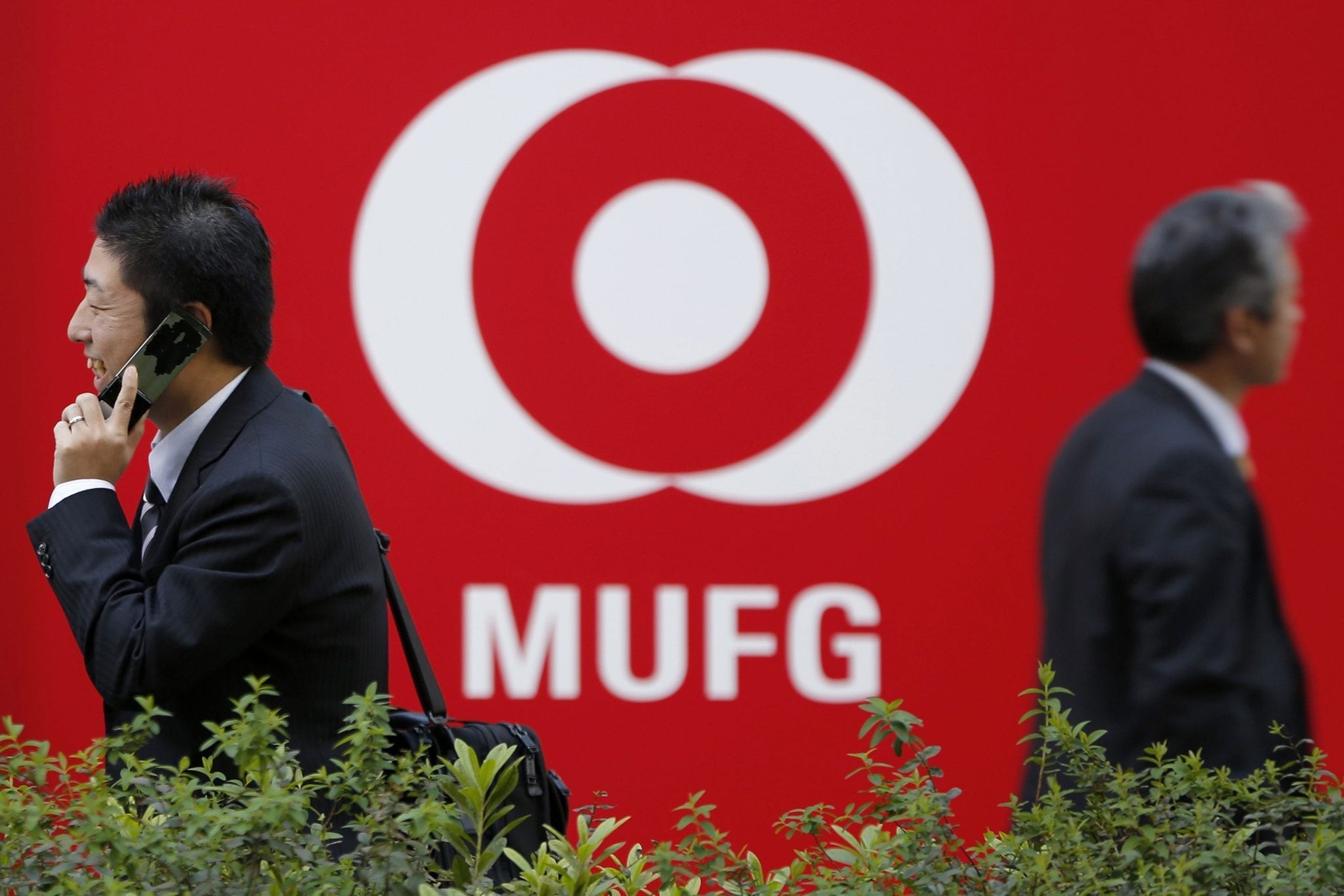
    Mitsubishi UFJ Financial Group, Japan’s biggest bank, agreed to buy a 20 percent stake in Philippine lender Security Bank Corp. for 36.9 billion pesos ($773 million) as it deepens its expansion in Southeast Asia.

    Security Bank accepted MUFG’s offer to buy 150.7 million newly issued common shares at 245 pesos each and 200 million preferred shares at 0.1 peso apiece, the Manila-based bank said in a filing Thursday. That represents an 81 percent premium on Security Bank’s Wednesday closing price of 135 pesos.

    The deal will be the largest equity investment in a Philippine financial institution by a foreign lender, allowing Security Bank to accelerate its growth strategy and expand its branch network, the Manila-based company said. Japan’s biggest lenders have expressed interest in investing in the Philippines after the country loosened its rules on foreign bank ownership in 2014. The nation’s central bank said after the announcement that it welcomes the entry of foreign bank investments.

    “Security Bank will benefit from the deal by having a bigger war chest to execute its strategy,” Charles William Ang, an analyst at COL Financial Group Inc., said by telephone. “The deal is also a sign that foreigners are still very bullish about our banking industry, which remains under-penetrated. There are more opportunities for growth and profit compared with Japan.”

    ‘Right Price’

    Ang said the transaction amount reflects the large size of the stake. MUFG is paying a 78 percent premium to Security Bank’s average price over the past month, the fourth highest among all bank acquisitions in Southeast Asia, according to data compiled by Bloomberg. The price of 245 pesos a share is 2.8 times book value, the data show.

    “People say that it’s expensive, but we believe this is the right price,” Go Watanabe, chief executive officer for Asia-Oceania at MUFG’s main lending unit, said at a briefing in Manila. “We believe this price is fair, calculating the intrinsic or future value of the bank.”

    Shares of Security Bank climbed 6.7 percent, the most since June 2013, to 144 pesos. MUFG dropped 2.4 percent in Tokyo as Asian equities resumed their New Year tumble.

    Second Biggest

    MUFG is comfortable with a 20 percent stake, Watanabe said. The investment will make its Bank of Tokyo-Mitsubishi UFJ Ltd. unit the second-biggest shareholder of Security Bank, behind the Dy family. The deal is expected to close in the middle of the year, and MUFG will appoint two directors to Security Bank’s board, according to the statement.

    Security Bank will target 500 branches by 2020 from the current 262, the company’s President Alfonso Salcedo told reporters. The investment will allow it to tap new markets through MUFG’s relationships with Japanese companies and its global network, according to the statement. Security Bank’s operations range from retail banking to brokerage services and leasing, its website shows.

    Investments by foreign lenders “further reinforce bank capitalization, introduce global best practices and know-how and expand markets,” Bangko Sentral ng Pilpinas Governor Amando Tetangco said in a mobile-phone message. “These also promote more job-creating foreign direct investments.”

    Indonesia and India remain missing parts in MUFG’s expansion in Asia, Watanabe said. The financial group has been expanding in the region as a declining population and near record-low interest rates constrain growth at home.

    Thailand, Vietnam

    It was among 12 firms that expressed interest in buying United Coconut Planters Bank from the Philippine government, people with knowledge of the matter said last June. MUFG owns 77 percent of Thailand’s Bank of Ayudhya and it bought a 20 percent stake in state-owned Vietnamese lender VietinBank in 2013.

    Sumitomo Mitsui Financial Group Inc., Japan’s second-biggest lender by market value, was the first foreign lender to get a license to operate in the Philippines under a 2014 law allowing full entry of overseas banks. Five more lenders have since received approval, President Benigno Aquino said Tuesday at the opening ceremony of Sumitomo Mitsui’s first branch in the Southeast Asian nation.

    Japan’s Mizuho Financial Group Inc. ended talks to buy San Miguel Corp.’s controlling stake in Philippine lender Bank of Commerce, people with knowledge of the matter said in October.

  • Japanese leasing firm expands in Indonesia

    Japanese leasing firm expands in Indonesia

    Mitsubishi UFJ Lease & Finance Company Limited (MUL) has announced its subsidiary in Indonesia, MULI, has opened a branch in Bandung, in a bid to capture new business as the country’s economy improves.

    The Bandung Branch is MULI’s second branch in Indonesia following the opening of its Surabaya Branch in October 2014. Since establishing a subsidiary in Jakarta in 1995, MUL has provided financing services focusing on mechanical equipment leasing and other activities for over 20 years.

    MUL says it aims to tap into growing demand in Indonesia, which is experiencing high economic growth in the ASEAN region, and expand the business opportunities. To this end, MUL is actively working to develop its business through such measures as acquiring an auto lease company, diversifying funding sources with the issuance of Indonesian rupiah-denominated notes, and providing asset management services that attract strong demand in Indonesia.

    Located about 150 km southeast of the capital Jakarta, Bandung, site of the latest branch, is the third largest city in Indonesia where the manufacturing and fiber/sewing industries are thriving. As a growing number of domestic and foreign companies are setting up their business there, growth is expected in the region. Through the establishment of the Bandung Branch, MULI will expand business bases in the West Java area and provide tailor-made services to meet the diverse needs of companies in Bandung and the surrounding areas.

  • BRI posts net profit of Rp25.8 trillion

    BRI posts net profit of Rp25.8 trillion

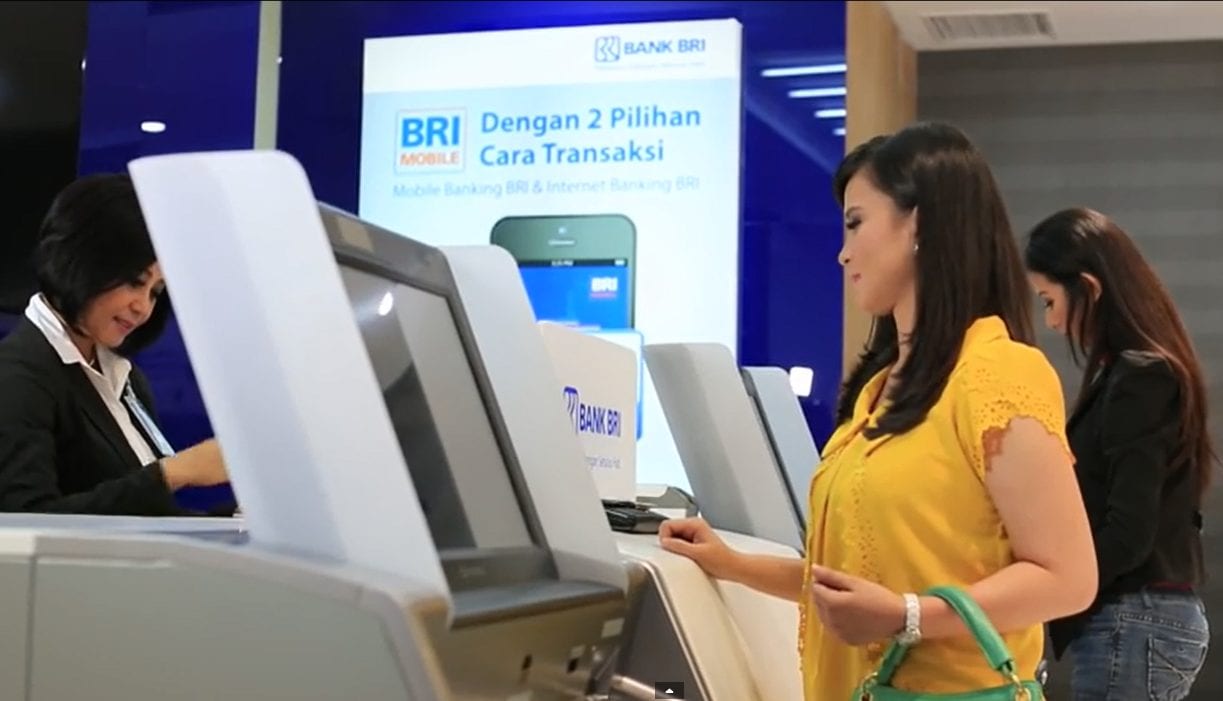
    State-owned lender Bank Rakyat Indonesia (BRI) last year posted a net profit of Rp25.8 trillion, up 2.18 percent from a year earlier.

    The profit growth was attributable to the banks prudential efforts as indicated by a rise in the ratio of reserves to non-performing loans to 170.53 percent in 2016 from 151 percent in 2015.

    The 2016 income was mostly contributed by fee-based income which grew 25.2 percent to Rp9.2 trillion, BRI President Director Asmawi Syam said in a press conference here on Tuesday.

    Meanwhile, net interest income increased 16.2 percent to Rp65.7 trillion, he added.

    “The interest income was fueled by credit growth which reached 13.8 percent or Rp635.3 trillion,” he said.

    BRI Vice President Director Sunarso said the banks net profit grew only 2.18 percent as it adopted prudential principles amidst economic downturn and an upward trend of the banking industrys non-performing loans.

    “The profit did not fall short of target. It continued to grow positively,” he said.

    By adopting the prudential principles, the bank managed to keep down its non-performing loan ratio in 2016 to 2.03 percent from 2.02 percent (gross), while its reserve ratio rose to 170 percent from 151.5 percent.

    He said the banks loan-to-deposit (LDR) ratio reached 87.7 percent and its capital adequacy ratio (CAR) stood at 22.9 percent.