Category: Finance

Retail News Asia is committed to providing both local and global retailers with the latest Finance news throughout the Asian market. This on a daily base.

  • Indonesia Eximbank to boost SME exports

    Indonesia Eximbank to boost SME exports

    State-owned Indonesia Eximbank will play a pivotal role in boosting small and medium enterprise (SME) exports through export based people’s business credit (Kurbe) and an incubator program.

    Indonesia Eximbank acting president director Suswijono Moegiarso said it already disbursed Rp 1 trillion (US$74.95 million) Kurbe in 2016, a cross subsidy between big debtors and SMEs.

    For 2017, the Financial Service Authority (OJK) has recommended the bank to the Economic Coordinating Ministry for channeling government’s Kurbe, he said.

    “The Kurbe will help boost SMEs exports this year, we are really thankful to OJK for the recommendation,” Suswijono said during the Export Purposed Import Facility (KITE) event in Tumang Village, Boyolali, Central Java, on Monday.

    There are five SMEs that already have Kurbe from the Eximbank with a total value of Rp 13.3 billion, namely UD Daffi Art,  CV Inducomp, CV Yudhistira, PT Banyan International and PT Bali Tangi.

    Those five SMEs also have a KITE import facility from the customs office.

    The bank would also provide mentoring and an incubation program for the export oriented SMEs called coaching programs for new exporters (CPNE).

    Indonesia Eximbank managing director Indra Wijaya Supriadi said that in 2016 the program already created five export oriented SMEs. “These SMEs successfully exported modified cassava flour (mocaf), broomsticks, room insulators, catfish fillets and frozen beef,” Indra said.

  • Asian shares rattled by Trump policy worries, dollar soft

    Asian shares rattled by Trump policy worries, dollar soft

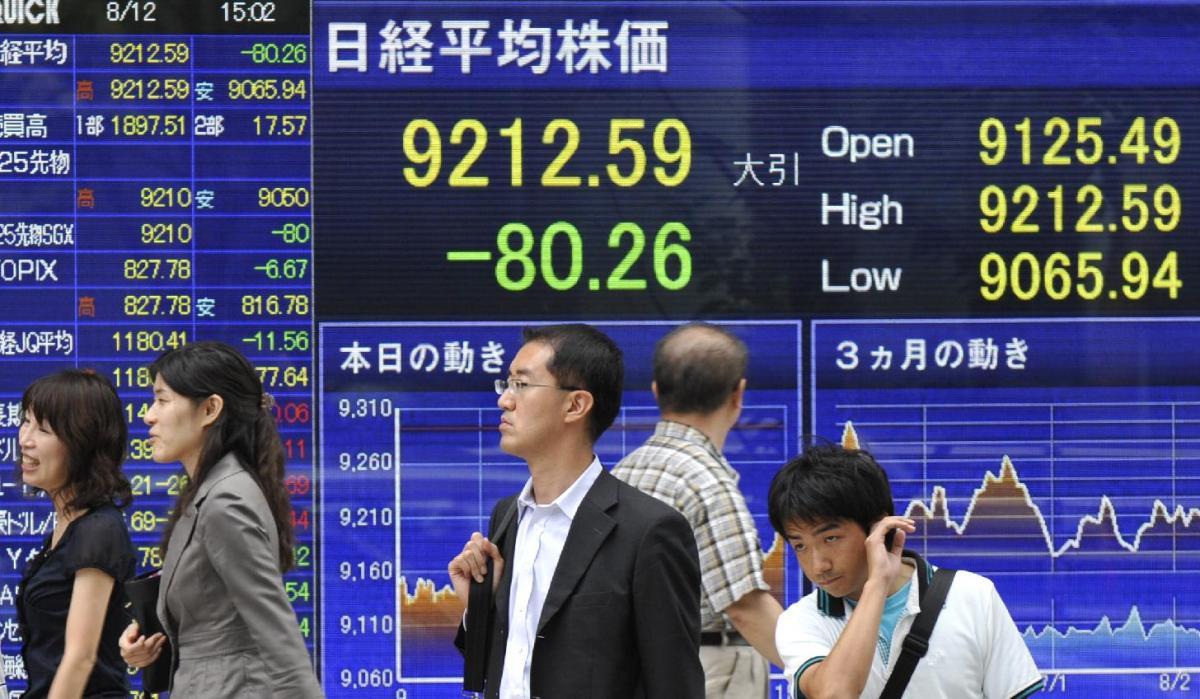
    Asian shares slipped on Tuesday as stringent curbs on travel to the United States ordered by President Donald Trump brought home to investors that he is serious about carrying out his controversial campaign pledges.

    Global stocks posted their biggest loss in six weeks on Monday after Trump signed an executive order to bar Syrian refugees indefinitely and suspend travel to the United States from seven Muslim-majority countries, sparking widespread protests.

    European bourse are expected to remain fragile after big losses on Monday, with spread-betters seeing opening losses of as much as 0.1 per cent in major indexes, including Britain’s FTSE, Germany’s DAX and France’s CAC.

    “Investors are becoming worried as it appears as if he was setting fire to geopolitical risks that already exist,” said Yoshinori Shigemi, global market strategist at JPMorgan Asset Management.

    Trump’s move drew criticism from some US policymakers, and business leaders, with technology companies, which depend on talent from around the world, planning to discuss a legal challenge.

    “His stance is really inward-looking, making investors nervous about his ’moderateness’,” said Masahiro Ichikawa, senior strategist at Sumitomo Mitsui Asset Management.

    MSCI’s broadest index of Asia-Pacific shares outside Japan fell 0.5 per cent while Japan’s Nikkei dropped 1.7 per cent, its biggest fall in almost three months.

    On Monday, the US S&P 500 Index fell 0.6 per cent, its biggest fall in a month, though it remained well above levels seen before the November 8 presidential election.

    MSCI’s gauge of the world’s 46 stock markets shed 0.6 per cent, its largest loss in a month and a half.

    The mood soured further when Trump fired the federal government’s top lawyer after she took the extraordinarily rare step of defying the White House.

    US stock futures ESc1 shed 0.3 per cent on Tuesday and the dollar extended losses against the yen.

    Still, most share prices were up on the month, supported by signs of accelerating momentum in the global economy and hopes of large fiscal stimulus from Trump.

    MSCI’s ex-Japan Asian shares index was up 5.7 per cent this month while its index of world markets was up 2.5 per cent. They were also higher than their levels before the US elections.

    In the currency market, the dollar was broadly weak and fell 0.3 per cent against the yen to 113.49 yen. It was down 3.1 per cent so far this month, after three straight months of sizable gains.

    The Japanese currency showed no reaction after the Bank of Japan kept its policy on hold, as expected. A string of recent data has suggested the economy is slowly regaining traction.

    The euro edged up to US$1.0710, consolidating after its rebound this month from its 14-year low of $1.0340 set on January 3.

    In a possible sign of increased anxiety among investors, the safe-haven Swiss franc strengthened to a seven-month high of 1.0637 franc per euro on Monday.

    Worries are also growing about a political shift to populist leaders in Europe.

    French bond yields rose to the highest level since September 2015, on rising uncertainty over the Presidential election later this year.

    Conservative leader Francois Fillon, seen as the front-runner, is now battling to contain a scandal over allegedly unlawful payments to his wife while the Socialists on Sunday picked a hard-left candidate, possibly helping popular far-right leader Marine Le Pen.

    Italian debt yields climbed to 1 1/2-year highs partly as early elections could be called following a ruling from the country’s constitutional court last week.

    Italian assets have also been hit by worries over its banking sector after UniCredit, the country’s biggest bank, revealed on Monday it expects to book a net loss of around 11.8 billion euros ($12.6 billion) for 2016 and fall short of European Central Bank capital requirements.

    By contrast, the yield on German debt fell on Monday even as data showed inflation in Germany hit a 3 1/2-year high in January.

    News that Germany posted a national inflation rate of 1.9 per cent stoked talk of an unwinding of monetary stimulus by the ECB, even though the inflation outcome was below expectations.

    Elevated uncertainty about Trump’s policies, including a lack of detail so far on his plans for tax cuts and fiscal spending, offset optimism on the US economy.

    Data on Monday showed US consumer spending accelerated in December while inflation showed some signs of picking up last month.

    The core PCE price index, the Federal Reserve’s preferred inflation measure, rose 1.7 per cent on a year-on-year basis after a similar gain in November.

    “We’ve seen a jump in US economic sentiment after Trump’s victory. But the improvement in hard economic data remains moderate,” said Haruka Kazama, senior economist at Mizuho Research Institute.

    “And if Trump takes more steps to limit permits for immigrants, that would surely boost inflation as the US is now near a full employment,” she added.

    The Federal Reserve, which will start its two-day policy meeting today, is widely expected to keep interest rates unchanged as it awaits greater clarity on Trump’s economic policies.

    Oil prices dipped as rising US drilling activity offset efforts by OPEC and other producers to cut output in a move to prop up the market.

    Brent crude futures LCOc1, the international benchmark for oil prices, were trading at $55.14 per barrel, down 0.2 per cent from Monday’s settlement price.
  • Positioning Malaysia as hub for Islamic funds

    Positioning Malaysia as hub for Islamic funds

    The Securities Commission Malaysia (SC) launched its latest Islamic capital market (ICM) initiative with the unveiling of a five-year Islamic Fund and Wealth Management Blueprint, which vision is for Malaysia to be a leading international centre for Islamic fund and wealth management (IFWM) and to drive further development and growth of the ICM.

    IFWM, despite having a longer history than sukuk and banking in general, continues to be the Cinderella of the ICM. This is despite the fact that there are almost 1.5 billion Muslims in the world and the size of the Muslim professional and middle classes with an increasing amount of disposable income and affluence, continues to grow both at home and in the diaspora.

    Wealth management in the form of estate planning, inheritance and pension provision in old age is vital both for investment and social security reasons. It is set to proliferate, especially following the launch in January of the dedicated RM100 billion Islamic pension fund, Simpanan Syariah, by the Employees Provident Fund (EPF), which has confirmed its plan to increase the fund by an additional RM50 billion next year.

    But, why has IFWM been slow to take off as the industry enters its fifth decade in its contemporary history? The reasons are manifold. The three main asset classes in investment portfolios are usually gilts (bonds and certificates of various sorts including sukuk), real estate and equities. While in the conventional system, all the above asset classes are tried and tested and culturally accepted, the same is not true of Muslim markets. The old adage that Arabs (and many Muslims) prefer to invest in bricks and mortars because they are tangible and can be “felt” is still having a psychological impact in the investment psyche of some Muslims, including high net worth (HNW) ultra-conservative ones. This despite the fact that the real estate sector, especially in the Gulf Cooperation Council countries, has seen several bubbles over the last few decades which has seen market collapses and affected ordinary investors badly. Governments have lowered the ceiling of exposure to real estate of banks and also banned gearing — stopping individuals borrowing money to speculate in property.

    In the equities market, Saudi Arabia and Malaysia are the two largest ICM markets by far, accounting for most of the estimated US$70 billion to US$80 billion (RM310 billion to RM354 billion) global Islamic equities market, of which the kingdom accounts for an estimated US$30 billion to US$40 billion and Malaysia RM132.4 billion.

    But, they pale in insignificance compared with the conventional counterpart, which has assets under management (AUM) in excess of a few trillion dollars. The sudden proliferation of the sukuk market over the last decade has detracted from the development of the equities market as financial institutions spent more resources in innovating sukuk structures as opposed to equity offerings, which on the whole remain vanilla.

    These asset classes, of course, are subject to the vagaries of economic cycles. Even global sukuk issuances in 2016 for instance is set to top US$80 billion, way below the US$130 billion in the halcyon days of 2012.

    IFWM, like most of the direction of investment financing in the industry has traditionally been geared towards HNW people. The Islamic finance industry has failed to democratise the syariah-compliant investment space, in particular access to capital markets. How many sukuk are aimed at retail and ultra-retail investors? Here Malaysia has set the standard with Dana Infra, which has issued retail sukuk to part fund the LRT expansion in Kuala Lumpur.

    Given that sukuk is now a globally acceptable investment asset class, it is not unusual to see the Californian State Pension Fund as an investor in such certificates. At least, in the equities side, Malaysia’s Islamic unit trusts and the Saudi National Commercial Bank (NCB’s) Al Ahli Islamic equity fund suite have pioneered access to syariah-compliant products. But, whether they have enjoyed the same government support in terms of tax and other incentives is a moot point.

    It is against the above challenging background that Second Finance Minister Datuk Johari Abdul Ghani launched the SC Blueprint on behalf of Prime Minister Datuk Seri Najib Razak.

    Malaysia has an impressive record of launching blueprints and master plans for the various segments of the Islamic finance industry, backed by the requisite legal, regulatory and enforcement frameworks. This is because it is the only country where Islamic finance has been treated in a holistic, systemic way. The Islamic asset and wealth management blueprint is the latest and, perhaps, belated manifestation.

    Najib in his message in the blueprint was to the point: “The IFWM Blueprint is a further demonstration of the country’s continuing leadership in Islamic finance as we seek to develop yet another new growth driver for the industry to enhance its value proposition and ensure its sustainability.”

    The three strategic thrusts of the blueprint are predictable — strengthening Malaysia’s positioning as a global hub for Islamic funds; establishing Malaysia as a regional centre for syariah-compliant sustainable and responsible investment; and developing Malaysia as an international provider of Islamic wealth management services.

    Similarly, the 11 recommendations of the blueprint, once again, feigns ambition than substance. There are interesting themes, including enhancing market access and international connectivity; promoting the growth of private equity; facilitating new digital business models, products and services for IFWM; and providing targeted incentives to strengthen international competitiveness.

    SC chairman Tan Sri Ranjit Ajit Singh reiterated at the launch: “As part of the holistic development of Malaysia’s Islamic markets and consistent with the Capital Market Masterplan II, the blueprint will also drive greater internationalisation of the Islamic fund and wealth management industry through enhanced cross-border capabilities and connectivity.”

    The reality, unfortunately, is that the Malaysian IFWM industry and institutional investors have been frustrating, parochial and ultra-conservative in their cross-border activities save for a few forays in Asean and Australia. For the blueprint to realise its potential, a mindset change by Malaysian asset managers is similarly required!

  • SGX Welcomes Dasin Retail Trust To Mainboard

    SGX Welcomes Dasin Retail Trust To Mainboard

    Singapore Exchange (SGX) welcomed Dasin Retail Trust to Mainboard under the stock code “CEDU”.  

    Dasin Retail Trust is the first SGX-listed China retail property trust providing direct exposure to the fast-growing Pearl River Delta region.  Dasin Retail Trust’s principal investment mandate is to own, develop or invest in land, uncompleted developments and income-producing real estate in Greater China, used primarily for retail purposes, as well as real estate-related assets initially focused on retail malls. The Trust has an initial portfolio comprising three retail malls strategically located in Zhongshan City in the People’s Republic of China.

    Yang Bin, Chief Executive Officer of Dasin Retail Trust Management Pte. Ltd., the trustee-manager of Dasin Retail Trust, said, “We are pleased to celebrate Dasin Retail Trust’s successful listing on the SGX-ST as the first mainboard listing in 2017. Our defensive asset portfolio offers a mix of stable and growth assets, which offer investors cash flow stability and strong growth potential. Backed by the vast economic growth opportunities in the Pearl River Delta region, strong consumer spending culture, standard of living in the region and the Sponsor’s strong fundamentals, we are confident of the portfolio’s potential to provide unitholders with attractive returns from regular distributions and long-term income growth.”

    Simon Lim, Head of Equity Capital Market (Sectors), SGX, said, “We are delighted to welcome Dasin Retail Trust as the first Mainboard listing in 2017. This listing offers investors a proxy to invest in China’s growing retail market through our robust business trust framework.”

    The listing of Dasin Retail Trust brings the total number of SGX-listed REITs and property trusts to 43, with a combined market capitalisation of about S$70 billion.

    Dasin Retail Trust opened at $0.805 today.

  • Bank Indonesia warns illegal money changers to apply for license

    Bank Indonesia warns illegal money changers to apply for license

    Bank Indonesia (BI) has warned unlicensed non-bank money changers to apply for a license during the ongoing transition period as a requirement to operate legally.

    The central bank has imposed the transition period since Oct. 6 last year when it issued a regulation and circular concerning the licensing requirement. The unlicensed money changers were given until April 7 to submit applications.

    BI will work together with the National Police, the Financial Transaction Reports and Analysis Centre (PPATK) and the National Narcotics Agency (BNN) to crack down on illegal money changers that fail to comply with the regulation after the transition period ends.

    “Applicants need only to submit a written application attached with several documents to Bank Indonesia. It is free of charge,” said BI executive director of payment system policy and supervision Eni V. Panggabean in a press briefing on Monday.

    Money changers, formally called non-bank foreign currency exchange businesses, comprise transactional activities related to currency exchange through a trading mechanism of foreign currency banknotes as well as the purchase of traveler’s checks.

    “One of the requirements for non-bank money changers to apply for a license is to become a limited company that should be fully owned by Indonesian citizens,” Eni said.

    The central bank’s warning came following findings by the National Police, the PPATK and the BNN regarding the rising trend of money laundering activities involving illegal money changers, which were used for transactions related to graft, narcotics and terrorism.

  • International Commercial Bank Lao Wins GBO 2016 Awards

    International Commercial Bank Lao Wins GBO 2016 Awards

    International Commercial Bank Lao Limited provides banking and related financial services in the Lao People’s Democratic Republic. It offers various deposit products, including current, savings, education fund savings, and senior citizen savings accounts; and fixed deposits, fixed deposits with advanced interest, demand deposits, and term deposits.

    The company also provides loans, such as vehicle/auto express loans, housing/shoplot/mortgage loans, and educational loan schemes; and other services comprising bills discounting and bank guarantees. In addition, it offers international banking services, such as inward and outward remittances, import/export collections, documentary letters of credit, and foreign currency operations. The company provides its products and services through head office and two branches located in Vientiane; and one branch located in Pakse.

    The company is headquartered in Vientiane, the Lao People’s Democratic Republic. International Commercial Bank Lao Limited is as a subsidiary of Asia Investment and Financial Services Co., Ltd.

    Mr. Zulkiflee Kuan Shun Abdullah, Chief Executive Officer of International Commercial Bank Lao Ltd. Upon receiving this award said “We are indeed honoured to win the “Best Retail Bank – Laos 2016″ award by Global Business Outlook. This would not be possible without the dedication, hard work and commitment from all the staff and the support from the stakeholders. It has been a great achievement for the Bank in 2016. The Bank has been accorded awards in the same category by 2 other international publications. These awards are recognition of their invaluable contribution to the Bank. The stakeholders share this award with all the staff and together we will continue to strive to provide Value Banking to our customers. ”

  • Diversification is driving Brunei’s banking sector forwards

    Diversification is driving Brunei’s banking sector forwards

    As a result of a wider economic expansion and diversification strategy, Brunei’s banking sector is growing at a rapid rate and attracting a new wave of international players

    Despite its small size, Brunei, a southeast Asian nation on the island of Borneo, is a formidable economic power in the region. A thriving oil sector has ensured a very high standard of living for the population. However, similar to many oil-producing nations in the present climate of plummeting prices and global oversupply, the economy’s reliance on the energy industry has become problematic. In response, the Brunei Government is taking comprehensive steps to reduce the economy’s reliance on oil and gas revenue and instead focus on the growth and development of local businesses.

    In 2015, ASEAN – of which Brunei has been a member since 1984 – established the ASEAN Economic Community, achieving a major milestone in regional economic integration. “The integration of ASEAN members can potentially represent a huge opportunity for growth”, said Pierre Imhof, CEO of Baiduri Bank. As such, the possible increase in trade and investment flows, which will result from a single market for goods, services, capital and labour, can open the doors to a far broader customer base for Bruneian banks, while also enabling local SMEs to venture outside of the country.

    National interests
    With the recent implementation of Darussalam Enterprise (DARe), a statutory body established by the government earlier in the year to monitor and nurture the development of local enterprises in Brunei, diversifying the economy and supporting SMEs has become a major priority for a nation that is heavily dependent on revenue from the oil and gas sector. “We have always had a strong focus on SMEs, which has consistently been one of our major customer groups from the very beginning”, Imhof told World Finance. “With the establishment of DARe and its assistance in the development of SMEs, I hope to see the SME market develop to become even more competitive locally, and to eventually become competitive internationally as well. In line with our commitment to develop local businesses and SMEs, Baiduri provides a wide range of financial products to businesses in order to ease their cash flow management and support their growth.”

    Baiduri Bank recently rolled out enhancements to its online banking platforms to coincide with the growing demand for flexibility

    The bank also offers Business i-Banking, Baiduri’s internet banking facility catering specifically for businesses. “Our aim is to provide customers with a modern, user-friendly and secure channel for businesses to manage their banking more efficiently”, Imhof said.

    In April of last year, Baiduri introduced Business Banking – a new unit as part of its retail banking division – that was designed to target the growing number of SMEs in Brunei. According to Imhof, the unit serves to complement the bank’s corporate banking department by tapping into non-borrowing and small-borrowing accounts. Services provided by Business Banking include card merchant services for local retailers and setting up the Baiduri Internet Gateway System, which allows retailers to accept payment from their online customers. The Business Banking unit also helps SMEs apply for credit facilities.

    Moreover, Baiduri Bank is launching a new online payment solution with affordability at its core – again with local SMEs in mind. According to Imhof: “Our latest product, known as MerchantSuite, aims to provide a very accessible and user-friendly method of facilitating online payment without the merchant needing to create their own website. This way, our SMEs are able to conduct business efficiently with minimum difficulty. With over 90 percent of our corporate clients being SMEs, Baiduri Bank clearly recognises their ability to generate revenue in the country and the vital contribution they make to the long-term economic stability of Brunei.”

    Race to expansion
    Another vital aspect to consider when trying to stay competitive in a rapidly changing society is keeping up with the latest technological innovations. In response to this necessity, Baiduri Bank recently rolled out enhancements to its online banking platforms to coincide with the growing demand for greater flexibility, in order to meet various business needs.

    This transition towards the modern digital economy also required the bank to provide a safe and secure digital environment for its customers. According to Imhof: “We continue to invest heavily in our systems to ensure a high level of service delivery along with the highest level of security in the industry.” In fact, Baiduri Bank is at present the first and only bank in Brunei to receive the PCI-DSS certification, a payment card industry standard for the secure processing, transmitting and storing of cardholder data. In line with this trailblazing approach, Baiduri Bank has implemented hi-tech security features for its online banking platforms, such as authentication via mobile or tokens, dual-factor authentication and SMS notification for logins and transactions.

    In response to a shifting customer trend towards diversified investment portfolios, Baiduri Bank launched Baiduri Capital, a wholly owned subsidiary that offers a range of global investment products and services. Baiduri Capital was also the first business in the country to launch an online securities trading platform, thereby leveraging technological developments in the global market.

    “We feel that this is the right time for the Baiduri Bank Group to go into securities trading, as there is a growing number of Bruneians looking for opportunities to build their wealth by investing in stocks and shares, in addition to deposits”, said Imhof. “Therefore, the establishment of Baiduri Capital is very much in line with the bank’s long-term strategy of playing a leading role in the development of Brunei’s financial sector and in serving the people of Brunei.”

    The timing of this strategic move was crucial. “Through our online trading platform, our customers can already trade online in various international stock exchanges, such as those in Malaysia, Singapore, Hong Kong and the US”, said Imhof. As indicated by a statement made by Brunei’s financial regulator, there is more and more talk about a stock exchange being established in Brunei Darussalam in the near future. Baiduri Capital has the capacity to play an important role in educating Bruneians and building their experience of stock trading in light of this potential and significant development.

    This commitment to Brunei’s economic development is further indicated by the bank’s acquisition of the retail banking business of United Overseas Bank’s Brunei branch at the end of 2015. “We look at strengthening and developing our retail business in line with our long-term strategy”, Imhof said.

    In fact, the retail business is now a pillar of the bank’s business activities. With this acquisition, Baiduri has significantly increased its customer base in a bid to get ahead in Brunei’s challenging economic environment. “The acquisition of United Overseas Bank’s Brunei retail business was made possible thanks to Baiduri’s high level of excess liquidity and strong capital base, as evident from its credit rating of BBB/A-2 with a ‘stable’ outlook from Standard & Poor’s, which we believe reflects the bank’s excellent performance.”

    Tackling challenges
    Being rooted in the domestic market, Baiduri Bank has the competitive advantage of an in-depth knowledge of its customers and cultural preferences, in addition to having strong brand name recognition. Imhof explained: “Some of the main benefits of being a local bank are that the decision process is done internally. This allows us to tailor our products and services to specifically suit our clients’ needs. From a business banking perspective, it also means that we are able to be more flexible and faster in making decisions to grant facilities or in structuring financing options.”

    When asked about the recent arrival of the Bank of China in the Bruneian market, Imhof spoke of the move being demonstrative of the strong interest in Brunei from overseas. “Brunei’s local banks are perfectly equipped to cater to the needs of clients, just as well as, if not better than, other international banks. They can offer those clients a wide, if not wider, range of products and services. In terms of the Bank of China specifically, I believe that its presence will have a positive impact on the image of the country and that, as with any newcomer, there will be a learning curve to understanding Brunei’s unique market culture.”

    Amid the current international financial landscape, the global banking industry is operating in an increasingly regulated environment – and Brunei is no exception. “Though it is expected that the business environment will continue to face challenges, the opportunities for businesses and for the Baiduri Bank Group to grow are very promising, throughout the process of Brunei promoting economic diversification and development”, Imhof said. Moreover, the prospect of a stock exchange coming into fruition in the coming years is expected to firmly cement Brunei’s place on the map, which may encourage a surge in both local and foreign investment.

  • Vietnam’s bank CEOs receive sky-high salaries

    Vietnam’s bank CEOs receive sky-high salaries

    Meanwhile, the managers at VP Bank receive twice as much as Vietcombank’s managers, about VND3.6 billion if the bank can fulfill the business plan. At ACB, the average level for key personnel is VND530 million a year.

    Vietnamese banks are more generous, accepting to pay billions of dong a year to their key personnel.

    VP Bank is believed to lead the banks in pay to members of the board of directors and supervisory board. Shareholders agreed to pay one percent of pretax profit, or VND32 billion to the members if the bank can make the pretax profit of VND3.2 trillion in 2016.

    There are nine members on the boards, which means that if the business plan can be fulfilled, each of the members can receive VND3.6 billion a year.

    Techcombank also promises attractive awards to the managers. Its shareholders approved the pay of VND29.54 billion in 2016 to the board of directors and supervisory board. With 11 members, each of them expects to receive VND2.6 billion this year.

    With satisfactory business result, Vietcombank’s shareholders approved the pay of VND1.9 billion for every member of the boards in 2015.

    The bank has consulted with shareholders about the pay equivalent to 0.35 percent of post-tax profit to the members of the boards in 2016, while the bank plans the pretax profit of VND7.5 trillion. This means that if the business plan is fulfilled, the pay would be VND2.3 billion.

    Meanwhile, Maritime Bank plans a little bit lower pay for the members of the boards, at VND16 billion. Every of nine members expects to get VND1.7 billion in 2016.

    Orient Bank plans a relatively modest pay to its key personnel with the budget of VND8.2 billion only for the members of the board. However, the figure is still higher by VND1.2 billion than the last year.

    Nam A Bank plans to pay VND18 billion to 18 members of the boards in 2016, the level which some shareholders think is too high icompared with the dividend of 5 percent paid to shareholders in 2015.

    Banking is the business field which offers high pay to staff.

    A report of Navigos Search showed that the two positions which received the highest pay in the first three months of the year were the senior executive of a joint stock bank and a service company. Each of them got over VND200 million a month.

    The following positions were ones in the fields of healthcare, service, trade and bank.

    Meanwhile, the managers of state-owned conglomerates, keep complaining that the pay is unreasonably low which cannot reflect the effective business performance of the enterprises.

  • Small banks avoid being merged or acquired

    Small banks avoid being merged or acquired

    Small-sized banks are making great efforts to grow and avoid being merged or acquired, however, it is not easy, according to the Đầu tư chứng khoán (Securities Investment) newspaper.

    VietA Bank, for example, plans to promote retail sales and focus on individual customers and small- and medium-sized enterprises (SMEs).

    Although VietA Bank’s non-performing loan ratio in late September 2016 reduced to 1.17 per cent from 2.25 per cent in early 2016, its provisions for risky loans rose by 82 per cent to VNĐ71 billion (US$3.12 million), strongly affecting the profit result. Following the first three quarters of 2016, VietA Bank posted pre-tax profit of only VNĐ101 billion.

    Another case is Kienlongbank, which was transformed from a rural bank to an urban bank. The bank aims to become a retail bank targeting SMEs operating in agriculture and rural areas. However, Kienlongbank is also facing difficulties like other small banks in the banking system.

    The bank failed to complete its 2016 profit plan, with pre-tax profit of only VNĐ19.8 billion recorded in the first nine months of 2016, a decline of 90 per cent compared with the same period of 2015. Kienlongbank’s bad debts increased from 1.12 per cent in the beginning of 2016 to 1.46 per cent by late September 2016.

    Financial expert Trần Du Lịch said the more important task for small banks, at present, is to find solutions to successfully carry out restructuring and improve financial capacity, thereby avoiding being merged or acquired.

    In an attempt to avoid M&As, small banks also plan to raise capital and have conducted self-restructuring in recent years through internal resources, however, many have repeatedly been unsuccessful.

    Saigonbank, for example, has not fulfilled its plan to increase charter capital to VNĐ4 trillion following its refusal to merge with Vietcombank.

    VietA Bank also managed to raise its capital to just VNĐ3.5 trillion in early 2016 and no further progress has been recorded since then.

    Following the failure of the merger deal with Export Import Commercial Joint Stock Bank (Eximbank), according to insiders, NamA Bank has also been unable to increase capital as expected. The current charter capital of the bank is just more than VNĐ3 trillion.

    The central bank recently also allowed VietBank to increase charter capital from VNĐ3 trillion to VNĐ3.249 trillion. With this level of charter capital, VietBank remains at the top of banks with the lowest charter capital in the market, along with other banks whose legal capital has reached only VNĐ3 trillion, such as Kienlongbank, VietCapital Bank, NCB and Saigonbank.

    Experts said small banks which wanted to survive without conducting M&As, must raise their financial capacity.

    However, foreign investors are not interested in weak domestic banks if the controlling regulations are not relaxed. As long as the ownership limit of foreign investors is still less than 51 per cent, foreign shareholders cannot take control of the bank.

    According to economist Lê Xuân Nghĩa, since weak and small banks are finding it difficult to increase financial capacity to accelerate the settlement of bad debts and restructuring, it is in their interests to find potential partners to conduct M&As.

  • HSBC closes 62 more UK branches, but all Hong Kong outlets to stay open

    HSBC closes 62 more UK branches, but all Hong Kong outlets to stay open

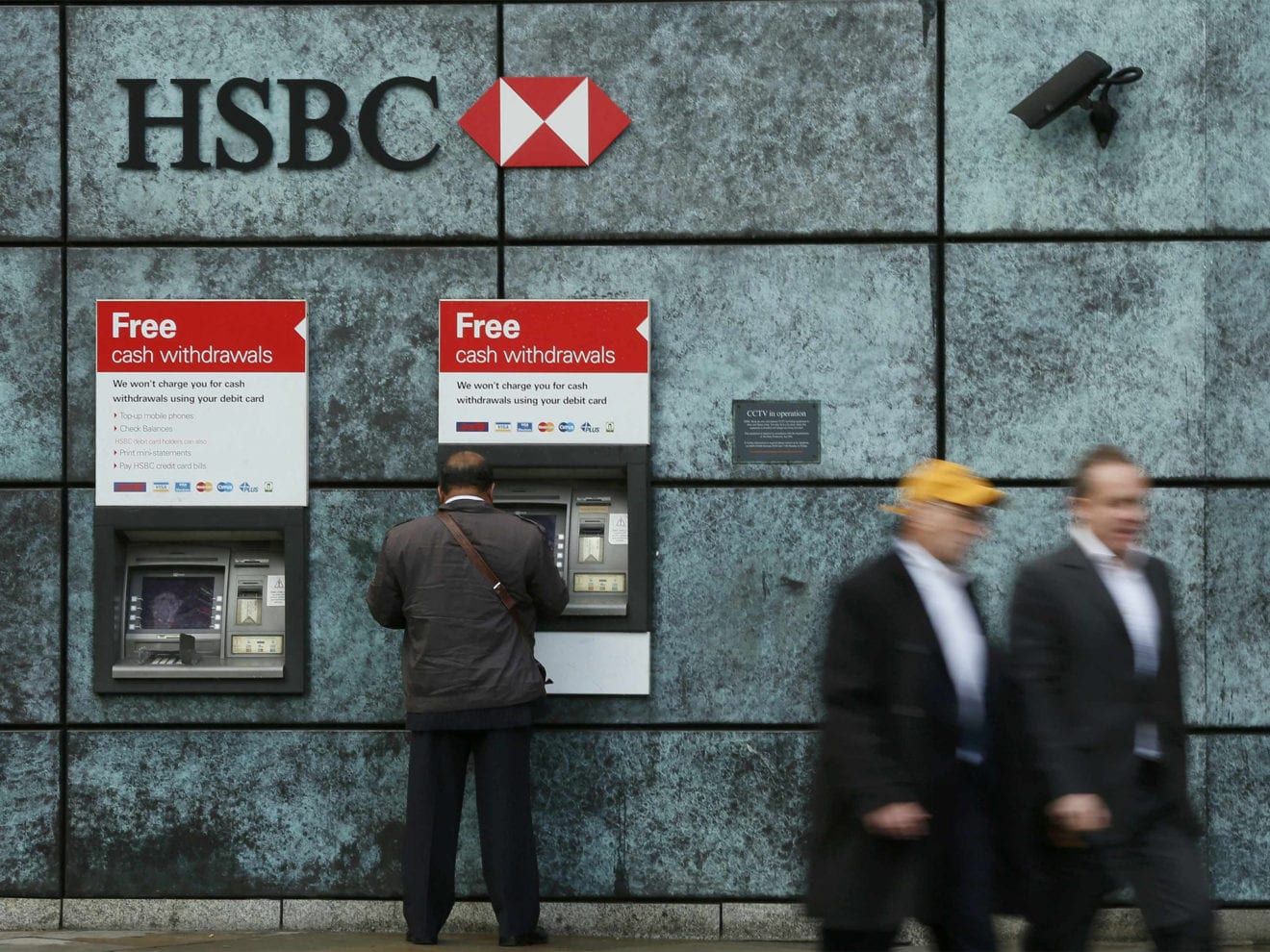
    HSBC is shutting 62 more British branches this year, meaning the bank will have closed 340 outlets across the country within the past two years.

    But in a divergence of strategies between two of its most significant retail banking markets, the bank said it had no such plans in Hong Kong.

    “While individual branches relocate from time-to-time, there is no programme of closures in Hong Kong,” insisted HSBC spokesperson Gareth Hewett.

    The bank has about 100 branches and more than 300 standalone express bank centres in Hong Kong. It blamed the UK closures on the changing habits of its customers, adding HSBC will still have 625 branches in the country by 2018.

    “More customers are using mobile and internet banking than ever before … and fewer people are using branches. More than 90 per cent of our interactions with customers are now through our digital channels – an increase from 80 per cent last year,” said Francesca McDonagh, HSBC’s head of retail banking and wealth management for UK and Europe.

    Last year HSBC halved its branch network in India, again citing the move to digital as an important factor in the decision.

    While the lender is pursuing a digital strategy in Hong Kong, which includes digital peer-to-peer payments systems and virtual assistants for its corporate clients, these new initiatives have not led to a need to reduce its branch network here.

    More customers are using mobile and internet banking than ever before … and fewer people are using branches. More than 90 per cent of our interactions with customers are now through our digital channels – an increase from 80 per cent last year

    Francesca McDonagh, HSBC’s head of retail banking and wealth management, UK and Europe

    Across the board, branch networks in Hong Kong have remained broadly solid, though last June Bank of East Asia said that its brokerage business, East Asia Securities, would close its 22 retail outlets.

    As has become standard practise, BEA too noted the vast the majority of its transactions were now being conducted via the internet or over the phone.

    The new closures mean HSBC has shut more branches than any other major UK high street lender, but the closures are by no means unique.

    Last week, the Yorkshire and Clydesdale bank group said that it would close 79 UK branches, and, in 2015 and 2016, more than 1,000 banks were closed across Britain according to consumer group Which?

    Dominic Hook, national officer at UK’s largest trade union Unite said in a statement: “Unite is again calling on the banking industry to rethink such branch culling exercises, which do nothing to reassure customers or staff that banking is accessible and open to all.

    “Without doubt customer service in financial services will suffer if our high streets are left with no local branches.”

  • BNI prepares Indonesia-Hong Kong worker card

    BNI prepares Indonesia-Hong Kong worker card

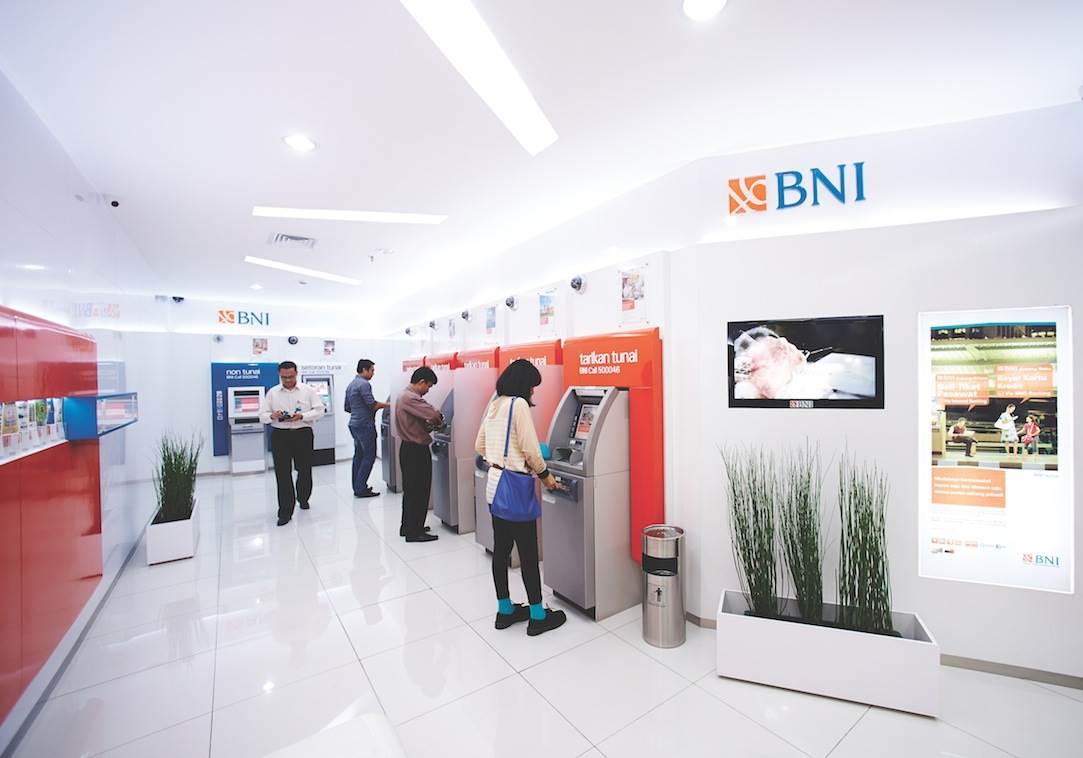
    State-owned PT Bank Negara Indonesia (BNI) will be launching Indonesia-Hong Kong Worker Card (KPIH), a multi-function card for Indonesian employees in Hong Kong.

    The Bank had previously launched Indonesia-Singapore Worker Card (KPIS) in November 2016.

    The dissemination and soft launching event of the card was carried out in the presence of 500 Indonesian migrant workers in the Banks Hong Kong branch on Jan 22, and was attended by BNIs Vice President Suprajarto.

    “There are savings acquisition potentials, which reached 25 thousand Indonesian migrant workers in Hong Kong. This card has many functions. Apart from being a debit card, it can also act as a Worker Identity Card,” Suprajarto said in an official statement received by Antara here on Monday.

    The cards functions include Internet/Mobile/SMS banking facilities that ease transaction processes, access to the Banks programs information and remittance and/or bill settlement to Indonesia through BNIs Hong Kong branch or ATM machines.

    The card can also be used as a shopping card in stores with a MasterCard logo in their EDC s.

    Card holders also get a chance to join an entrepreneurship training program called “KAMI bersama BNI” (We are with BNI), as well get home credit facilities for new residential purchases or renovations through BNIs Hong Kong branch.

    As an appreciation to the Banks consumers, BNI is having a remittance fee discount program for money wiring services through the Hong Kong branch, in which transfer costs are being exempted for transactions among BNI accounts, he continued.

    Customers can also move their savings balance into a deposit account once the amount is considerably high, and they can also propose for the Worker Retirement account and auto-debit system for health and work insurances.

    For migrant workers who wish to start their own business in Indonesia, BNI also offers financial support through their Peoples Business Credit (KUR) program.

    They can simply contact the Banks small credit centers across Indonesia to submit their proposal.

    One of the programs selling points lies in its low interest rate, which is noted to be at 9 percent annually as per 2016.

    Until the end of 2016, BNI had given out credits to 386 migrant workers in Hong Kong through seven credit centers, with the loan reaching Rp5.3 billion.

    The loan is also being disposed to migrant workers who had been employed in Singapore, Japan and Taiwan.

    As of December 2016, there are 2,463 debtors, with the total amount reaching Rp38.9 billion.

  • Bitcoin penetrates deeper into Indonesian market

    Bitcoin penetrates deeper into Indonesian market

    Bitcoin, a cryptocurrency that uses cryptography to make transactions anonymous, has penetrated deeper into the Indonesian market even though there is currently no legal umbrella for the currency’s use in the country.

    Bitcoin Indonesia currently has 250,000 members, up from 80,000 at the end of 2015, with a daily transaction value of Rp 20 billion (US$1.48 million).

    Bitcoin Indonesia business development manager Suasti Atmastuti Astaman said it was natural to see such a positive trend as Bitcoin had successfully gained global trust, especially following the recent Russian government’s decision to legitimize Bitcoin as an official currency at the end of November 2016.

    “Bitcoin’s value completely depends on supply and demand in the market. At present, as more and more countries have relaxed their stances on digital currency, including the United States, China and Russia, more and more people are putting their trust in it. That’s why Bitcoin’s value has been rapidly surging,” Suasti said.

    However, Suasti also said the Indonesian government might need more time to learn the know-how of Bitcoin, while waiting for its real impact in other countries that had legitimized the digital currency. “So, if someone asks when will Indonesia make Bitcoin an official currency, only God knows,” she said.

    As of Monday, Bitcoin was priced at $1,018 with a market capitalization of $16.36 billion, seeing an annual increase of 151.7 percent, according to CoinMarketCap.

  • CB Bank pursues self-service banking in Myanmar

    CB Bank pursues self-service banking in Myanmar

    Cash remains the primary payment method in many parts of Southeast Asia. In Myanmar, competition to provide cash services is intense.

    Vikram Kumar, country manager for Myanmar at the International Finance Corporation, the private arm of the World Bank Group, recently told that domestic banks in Myanmar are under pressure “to prepare themselves to cope with the demands placed on them by the expected pace of economic growth. As a consequence, most banks have upgraded or are in the process of upgrading their technology capacity.”

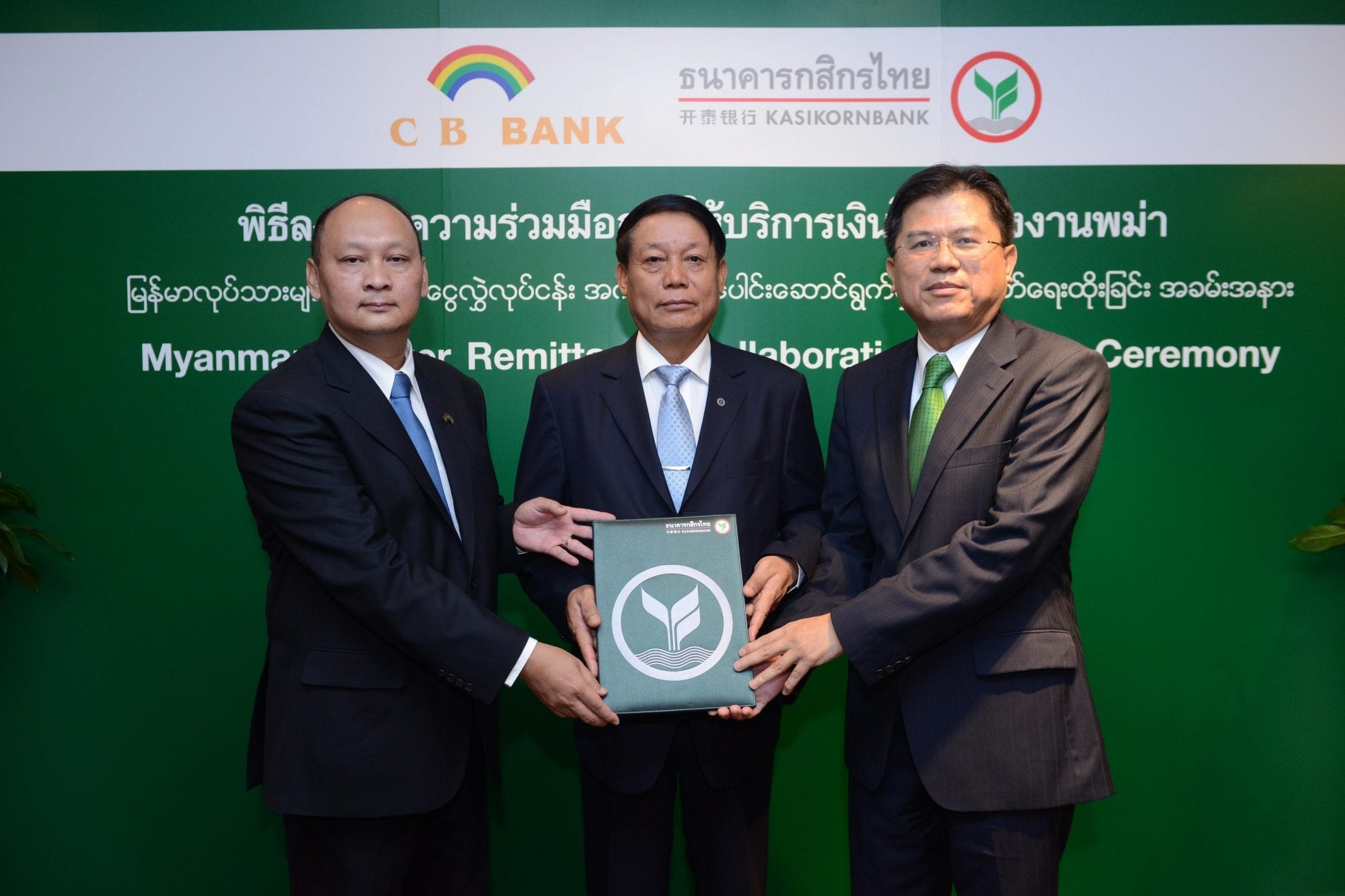
    Myanmar’s Co-Operative Bank Limited (CB Bank) is the latest to upgrade its banking infrastructure. Sometime earlier the bank upgraded all its existing ATMs to more secure EMV chip card technology and obtain EMV certification with both VISA and MasterCard.

    More recently, the bank ordered 500 new ATMs and cash recyclers as part of a more extensive contract for systems, software and services to expand its self-service cash offerings beyond the country’s main commercial hub Yangon.

    Diebold Nixdorf is also assisting CB Bank with the implementation of cardless cash withdrawals at ATMs. Bank customers will be able to use their mobile devices to generate a one-time PIN to activate a withdrawal at an ATM either for themselves or for a third party without requiring a bankcard.

    The technology provides an innovative person-to-person payment service to consumers especially in developing markets, and underscores Diebold Nixdorf’s commitment to drive connected commerce and help bridge the digital and physical worlds.

    CB Bank has grander ambitions beyond just upgrading its infrastructure. According to U Kyaw Lynn, CEO and Executive Vice Chairman, at CB Bank, the bank aims to become one of Myanmar’s top banks offering secure, innovative and convenient cash services across our branch, online and mobile channels.

    The rollout will mean a total of 1,000 advanced cash systems across a network of 180 CB Bank branches. Completion is expected to be by the end of 2017.

  • Cash payment declines by 2% in 6 year

    Cash payment declines by 2% in 6 year

    Cash as a mode of payment has declined in the country by 2 per cent in the past six years, from 14.02 per cent in 2010 to the current 12 per cent.

    As per the State Bank of Việt Nam’s report released this week, the country currently has around 67.4 million bank accounts compared to 16.8 million accounts in 2010.

    Modern infrastructure and technology to facilitate non-cash payments, especially online payments, have developed significantly. The number of bank cards has increased by 11.36 per cent against the end of 2015, to around 111 million now.

    There are around 254,000 points of sales (POS) and 17,380 automatic teller machines (ATMs), up 13.77 per cent and 5.39 per cent, respectively, compared to end of 2015.

    The central bank has issued many policies relating to modern infrastructure and technology to boost non-cash payments, to protect customer interests, and ensure quality of service.

    It has instructed commercial banks to quickly carry out a plan to convert all magnetic cards into chip cards to prevent fraud. Under the plan, all ATM cards will become EMV-standard chip cards by 2020, to reduce risks in e-commerce for both buyers and sellers.

    To protect the interests of customers, in October 2016, the central bank issued Circular 30/2016/TT-NHNN, which requires credit card service providers to compensate card owners for loss not caused by the owners, starting November 28, 2016.

    The Government also recently approved a policy encouraging cashless transactions in Việt Nam in order to reduce the number of cash-based deals, improve electronic payment methods and control tax evasion.

    Under the plan, by 2020, cash transactions in the country will be account for less than 10 per cent of total market transactions. As per the plan, all supermarkets, shopping malls and distributors will accept credit cards; 70 per cent of water, electronics and telecommunication service providers will accept cash-free payments from households and individuals; and 50 per cent of the total urban households will use electronic payment for daily transactions.

    The policy also proposes the development of new payment methods for rural and remote areas in order to encourage financial inclusion and increase overall access to services. At least 70 per cent of Vietnamese citizens over the age of 15 will have bank accounts by the end of 2020. Social welfare and pensions will be paid through electronic payment methods.

  • Bright prospects seen for digital banking

    Bright prospects seen for digital banking

    Nguyễn Thanh Trúc in District 1 has just paid her monthly electricity bills via internet banking.

    “I have used the service for more than one year. This is a very convenient service and helps me save time from going to electricity bill collection points,” she said.

    In fact, more and more Vietnamese consumers are turning to computers, smartphones and tablets to do business with their banks. They have opted to make deposits online or online payments of electricity and water bills and even buy gold on their smartphones, according to experts.

    There is huge potential to develop digital banking in Việt Nam.

    According to a report discussed at a workshop held recently in HCM City, Việt Nam posts an internet growth rate of 9 per cent a year, ranking 15th in the world. The number of internet users accounts for 52 per cent of the country’s population.

    About 44 per cent of customers at commercial banks have used digital services.

    The fourth industrial revolution and Government policy to encourage credit card payment instead of cash have enlarged digital banking potential in the country.

    In the past, along with growth in internet and mobile device use, commercial banks in Việt Nam have been expanding and developing internet banking on mobile devices to offer better services to customers.

    To attract customers to use the Internet and mobile banking services, banks have launched promotions.

    LienVietPostBank, for instance, discounts 30 per cent of the transaction value to customers who pay bills for TV services or discounts VNĐ20,000 to customers who pay electricity or water bills using Ví Việt app until January 31.

    Similarity, at Viet Capital Bank, customers using the Payoo app to pay their TV bills of HanoiCab and MyTV Cần Thơ will be given back 30 per cent of the transaction value until January 31.

    Many banks, including VietinBank and VPBank, are offering bonus interest rates to customers who make online deposits.

    Banking finance expert Cấn Văn Lực said technology is the key to shorten the distance between banks and customers as well as help save big costs compared to traditional transaction methods.

    “Banks themselves also understand that if they do not invest in digital technology, they will be left behind. Customers today can actively perform transactions anytime, anywhere, via computer or smartphone with all types of products and services that they can conduct at a traditional banking branch,” Lực said.

    A general director of a joint stock bank, who did not want to be named, said: “A digital banking project can cost some millions of US dollars, but in the long-term, this investment is still cheaper than expanding branch networks.”

    Faster, more convenient and more secure electronic payment transactions were the targets that commercial banks were aiming for in the digital banking competition, he said.

    Lực said digital banking was certainly going to be a new way of banking for all banks.

    Transactions using digital technology would contribute 40 per cent of banking revenue in 2018, up 32 per cent compared to 2014, he said.

    “One of the factors in developing digital banking is to build trust and confidence among consumers about the security of online transactions,” he added.

    Online shopping boom

    Online shopping has been popular worldwide and Việt Nam is keeping up with the trend thanks to its active Internet use, according to a recent KPMG International’s survey.

    Chong Kwang Puay, managing partner and consumer markets lead of KPMG in Việt Nam and Cambodia, said with its high Internet penetration rate, Việt Nam would see online shopping surge soon.

    According to the survey, 18 per cent of consumers in Việt Nam and Cambodia purchased goods from an online-only retailer, such as Amazon, Lazada and Nhommua. Some 10 per cent purchased from the website of a retail shop, and only 3 per cent purchased directly from a manufacturer or brand’s website.

    The number one reason consumers gave for shopping online is the convenience of shopping. This is followed by having the ability to compare prices, or to find online sales or better deals.

    To gain consumer trust, companies and brands are recommended to improve online security and privacy protection. Most respondents (26.5 per cent) consider customer data and information protection to be of utmost importance, and 20.4 per cent consider food and product safety as the most important attributes.