Category: Finance

Retail News Asia is committed to providing both local and global retailers with the latest Finance news throughout the Asian market. This on a daily base.

  • Vedder Price expands into Singapore

    Vedder Price expands into Singapore

    Vedder Price announced the opening of a new office in Singapore, continuing the growth of the firm’s global footprint. The Singapore office will initially tap existing members of Vedder Price’s prominent Global Transportation Finance (GTF) practice, with plans to further develop this new office through additional lateral hires. The office will practice U.S. and UK law.

    The Singapore location gives Vedder Price a foothold in a key region that is critical to the firm’s clients and where the firm’s GTF practice is already thriving. The Asian global transportation finance market is expected to undergo explosive growth in the next 20 years, particularly in aircraft finance, as the region’s population grows and air travel surges. Growth in maritime finance is also expected.

    Vedder Price enjoys a strong worldwide reputation for legal services related to global transportation finance. The firm serves a broad base of clients across all transportation sectors, including the aviation, aerospace, railroad and marine industries, and serves both U.S.-based and international clients who execute deals worldwide under U.S. and UK law. The firm was named the “Law Firm of the Year” at the 2015 Aviation 100 Awards and recognized for “Overall Deal of the Year.

    “This is an exciting time for our firm and practice as we expand our capabilities into Asia,” said Dean N. Gerber, Vedder Price Board of Directors member, Executive Committee Vice Chair and Chair of the firm’s Global Transportation Finance team. “Singapore continues to be a key focal point for global transportation finance and leasing, and we expect this to continue for years to come given market conditions. We look forward to establishing new relationships and to strengthening our ability to serve our many clients already doing business or domiciled in Asia.”

    The office will be established by Shareholder Ji Woon Kim who recently relocated from the firm’s New York office. Mr. Kim will manage the business development and strategic growth of the office, including lateral hires. Mr. Kim, who has spent his entire career at Vedder Price, has helped build the GTF practice for more than a decade. In 2013, he was recognized as a Rising Star by Airfinance Journal, and in 2014, he was listed as a Rising Star by New York Super Lawyers in the practice of aviation and aerospace. He will be joined by solicitor Lev Gantly who relocates from the firm’s London office.

  • New Silkroutes Group in Joint Venture to Offer Private Equity Funds in Asia Pacific

    New Silkroutes Group in Joint Venture to Offer Private Equity Funds in Asia Pacific

    New Silkroutes Group (“NSG” or “the Group”) has formed a joint venture with three parties, including the Singapore subsidiary of China’s Nanshan Group, to develop private equity funds that will focus on healthcare and infrastructure in the Asia Pacific region, including Japan and Australia.

    The new Singapore-incorporated entity, New Silkroutes Asset Management, is 30% owned by NSG’s subsidiary New Silkroutes Capital Pte Ltd, 30% by Nanshan Group Singapore, 30% by former United Overseas Bank (“UOB”) executive Terence Ong Sea Eng, and 10% by Fuji Capital Pte Ltd.

    New Silkroutes Asset Management, which is applying for the Capital Markets Services licence from the Monetary Authority of Singapore, will initially focus on the healthcare sector in the region.

    The number of people in the middle class in Asia Pacific is expected to rise to 3.2 billion by 2030 from 525 million in 2009, according to the Organisation for Economic Cooperation and Development. This increase, together with growing affluence, is expected to drive demand for better quality medical treatment and care.

    Healthcare is an area NSG recently said it would expand into. The Group announced last month it would acquire a 51% stake in Singapore-based Healthsciences International Pte Ltd (“HSI”) for S$2.17 million. HSI’s management team has experience in developing and managing hospitals and ancillary healthcare services. It also offers primary and preventive care through its three complementary integrative healthcare clinics, and runs employee healthcare benefits programmes in Southeast Asia.

    Mr Ong will head New Silkroutes Asset Management. The veteran banker retired recently from UOB after a 34-year career, during which he ran several of the lender’s key divisions. His last position at the bank was Head of Group Global Markets and Investment Management, where he drove UOB’s global treasury and asset management businesses.

    He was also Chairman of UOB Asset Management and UOB Venture Management, and a member of several of the bank’s key committees, including its management executive committee and investment committee.

    Mr Ong was previously Deputy Chairman of the board of Simex, a futures exchange that merged with the Stock Exchange of Singapore to form the Singapore Exchange. In 2010, he was conferred the Distinguished Financial Industry Certified Professional title by the Institute of Banking and Finance Singapore. In September this year, he received the Lifetime Achievement Award from Futures & Options World, a leading news and data service for the international futures and options industry.

    “The stakeholders in this joint venture have deep expertise in their respective fields. With this collaboration, I am confident we can offer investors an attractive alternative to generate a consistent stream of income,” said Mr Ong, who was instrumental in bringing Nanshan Group Singapore into New Silkroutes Asset Management.

    “Leveraging on the networks and expertise of New Silkroutes Asset Management’s stakeholders, we will be able to source promising healthcare services companies in Asia Pacific and add value to the companies we invest in,” he added.

    Nanshan Group is a privately-held company ranked among the top 500 enterprises in China. It started with an aluminium business, which subsequently listed in Shanghai, and evolved into a conglomerate with interests in textile, finance, healthcare, real estate, tourism, education and aviation.

    Within the healthcare space, Nanshan Group has invested in and built hospitals, nursing homes and related facilities in China. In Singapore, its main focus is real estate development and aluminium trading. It acquired several industrial buildings and hotels and launched its maiden condominium project in Singapore in recent years.

    Singapore-incorporated Fuji Capital provides strategic advisory and fundraising services to companies. Its major stakeholders have investments in the financial services sector in North America. These investments include licensed entities operating in gateway cities across the US.

    “As an associate company of NSG, the new joint venture will complement our wholly owned investment management arm, New Silkroutes Capital, which is also exploring investment opportunities in healthcare, among other sectors,” said Dr Goh Jin Hian, Group CEO at NSG. “Healthcare will be another engine of growth for NSG as we believe this is an area with huge potential in Asia Pacific.”

    Based in Singapore, New Silkroutes Capital offers investment management and strategic advisory services to institutions, enterprises and high-net-worth individuals looking for professionally managed investment products. It has a joint venture in New York that can develop structured products and private-label funds.

    NSG exited the SGX Watchlist in November 2014 and is morphing into an investment holding company with businesses in investment management, energy and resources, healthcare, and infocomm technology. The Group currently gets most of its revenue from oil and gas trading.

  • More companies delaying payments, says Singapore Commercial Credit Bureau

    More companies delaying payments, says Singapore Commercial Credit Bureau

    Fewer Singapore companies are paying their bills on time, according to data released on Monday by Dun & Bradstreet Singapore’s (D&B Singapore) Singapore Commercial Credit Bureau.

    Prompt payments fell 8.9 percentage points from 51.1% in 3Q15 to 42.2% in 3Q16. At the same time, slow payments increased by 8.1 percentage points to 46.4% from 38.3% a year ago.

    Compared with the previous quarter, prompt payments fell by 3.8 percentage points to 42.2%, and slow payments rose by 3.8 percentage points to 46.4%.

    Partial payments increased by 0.8 percentage points to 11.5% from a year ago but fell by 0.03 percentage points over 2Q16.

    The data was compiled from over 1.6 million payment transactions of Singapore firms operating through the bureau.

    Prompt payment is defined as having 90% or more of total bills paid within the agreed payment terms while slow payment is defined as having more than 50% of total bills paid later than 30 days beyond the agreed credit terms.

    Delays in payment increased across all industries — construction, wholesale trade, services, manufacturing, and retail — during the quarter.

    However, the biggest proportion of slow payments came from the construction sector, where payment delays increased by 10.8 percentage points from a year ago and by 4.2 percentage points from a month ago to 50.8%.

    On a quarterly basis, special trade contractors had the greatest increase in slow payments of 5.9 percentage points to 48.8%, while the heavy construction sector had the highest proportion of slow payments of 52.7%. Delayed payments also increased in the building constructor sector by 4 percentage points to 52%.

    The wholesale trade sector had some of the greatest increases in payment delays due to the declines in local and foreign wholesale trade. Slow payments increased 4 percentage points over the quarter and 8.3 percentage points over the month to 41.2%.

    In particular, slow payments by wholesalers of durable goods jumped by 4.5 percentage points q-o-q to 41.4%, while that of wholesalers of non-durable goods rose by 2.5 percentage points q-o-q to 40.4%. per cent in Q3 2016.

    Retail had the second highest proportion of slow payments, but registered the smallest q-o-q increase during the current quarter, after a large spike in 2Q16. Delayed payments rose 2.9 percentage points q-o-q and 6.8 percentage points y-o-y to 49.4%.

    Retailers of building materials and garden supplies had the highest increase in slow payments from 53.1% in 2Q16 to 61.2% in 3Q16, followed by retailers of general merchandise, with a 6.8 percentage point increase and automobile retailers with a 6.3 percentage point increase.

    Audrey Chia, D&B Singapore’s Chief Executive Officer, noted that the weaker performance in payment was a “clear indication that firms here are feeling the impact of a credit crunch”.

    To provide some relief to cashflow problems, Chia added that firms should seek alternative measures including rigorous credit checks on customers and the diversification of funding through non-traditional financing institutions.

  • Jakarta tax amnesty has little impact on banks here

    Jakarta tax amnesty has little impact on banks here

    The tax amnesty scheme in Indonesia has had a much smaller impact on funds flowing out of Singapore’s private banking industry than feared, an RHB report suggested on Tuesday.

    The funds flowing out of Singapore likely made up only 1-2 per cent of assets under management (AUM) of the private banking industry. Some 79 trillion rupiah (S$8.3 billion) was repatriated in the first nine-month phase of Jakarta’s tax amnesty programme.

    The scheme allows Indonesians to declare assets that were previously undeclared to tax authorities. In return, they paid a sharply reduced tax rate on those assets – just 2 per cent – in the first phase, which ended on Sept 30.

    The 79 trillion rupiah was 12 per cent of the assets of wealthy Indonesian clients that were declared to be kept in Singapore, according to data from the Indonesian government. Singapore has been a big draw for rich Indonesians. All in, the assets held here and declared to the Indonesian authorities made up 70 per cent of all overseas funds that had been declared.

    RHB calculated that the total assets of the three Singapore banks’ private banking segment stood at about S$321 billion. This means the amount repatriated to Indonesia from Singapore accounts for only 2.6 per cent of the three banks’ total AUM. These already exclude the asset base of the top private banks in Singapore, such as UBS, Citi, and Credit Suisse. So, all in, the impact on Singapore’s private banking industry should be about 1-2 per cent of all assets held here, RHB noted.

    “There is likely to be more repatriation of funds from Singapore to Indonesia going forward, but the experience of Phase 1 suggests that the amount repatriated is unlikely to be a large percentage of Singapore banks’ assets under management,” it said.

    This comes as the tax rate for those who repatriate their assets in Phase 2 rises to 3 per cent, one percentage point more than in Phase 1. The tax rate will be increased yet again in the third phase, Jakarta has said.

    Indonesian taxpayers had declared more than 3,600 trillion rupiahs in assets both domestically and overseas. An Indonesian tax authority quoted by The Straits Times said the country had set a 4,000 trillion rupiah target for the first phase.

    The tax amnesty scheme comes amid heightened scrutiny of tax evasion. Banks here had to file a suspicious transaction report on clients taking part in the programme, with the Singapore authorities later having to state publicly that participation in a tax amnesty scheme alone would not attract criminal investigation in Singapore. The Monetary Authority of Singapore (MAS) said that the use of suspicious transaction reports is a practice across other jurisdictions when handling tax amnesty cases.

  • BI to Introduce Coin Deposit Machine

    BI to Introduce Coin Deposit Machine

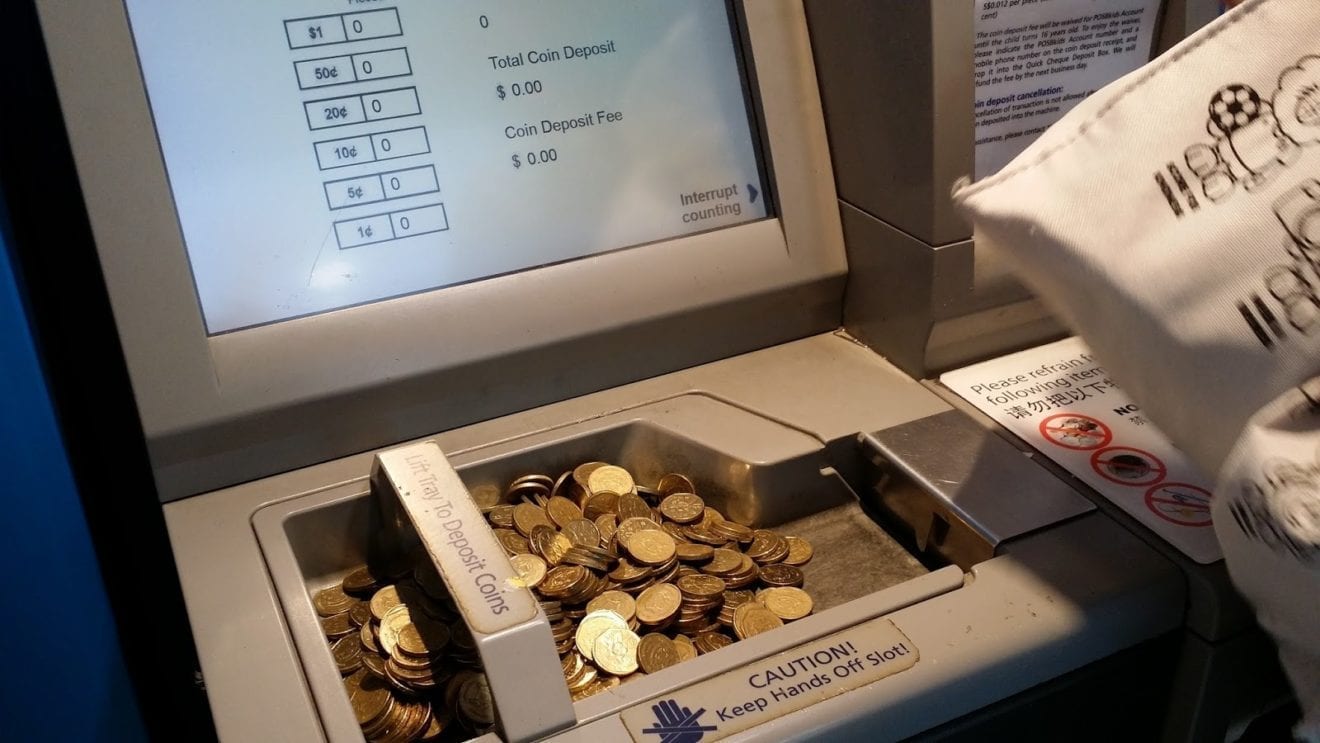
    Deputy Director of the BI Financial Management Department Asral Mashuri in Jakarta, Tuesday 4, 2016, said that Bank Indonesia (BI) is planning on implementing a coin deposit machine to ease people in saving the form of money.

    “The machine would look like an ATM, but this one is for coins, and the machine can sort out the money; which is one thousand and one hundred. It would be easy for people to use,”  he said.

    According to Asral, nowadays, many people keep the coins and left it uncirculated. The uncirculated coins have forced BI to reprint it, although coins have a longer lifespan than paper money.

    A coin deposit machine is hoped to help banking institutions in retracting the coins. “This also accelerates the money circulation, and later on, banking institutions can retrieve money from people’s savings,” Asral said.

    He added that it will be implemented as soon as possible. The study is still ongoing; it will be realized but not in the coming months. “The machine will be available for the public to use soon as possible,” Asral said.

  • Mandiri prepares syndicated loans of Rp4 trillion

    Mandiri prepares syndicated loans of Rp4 trillion

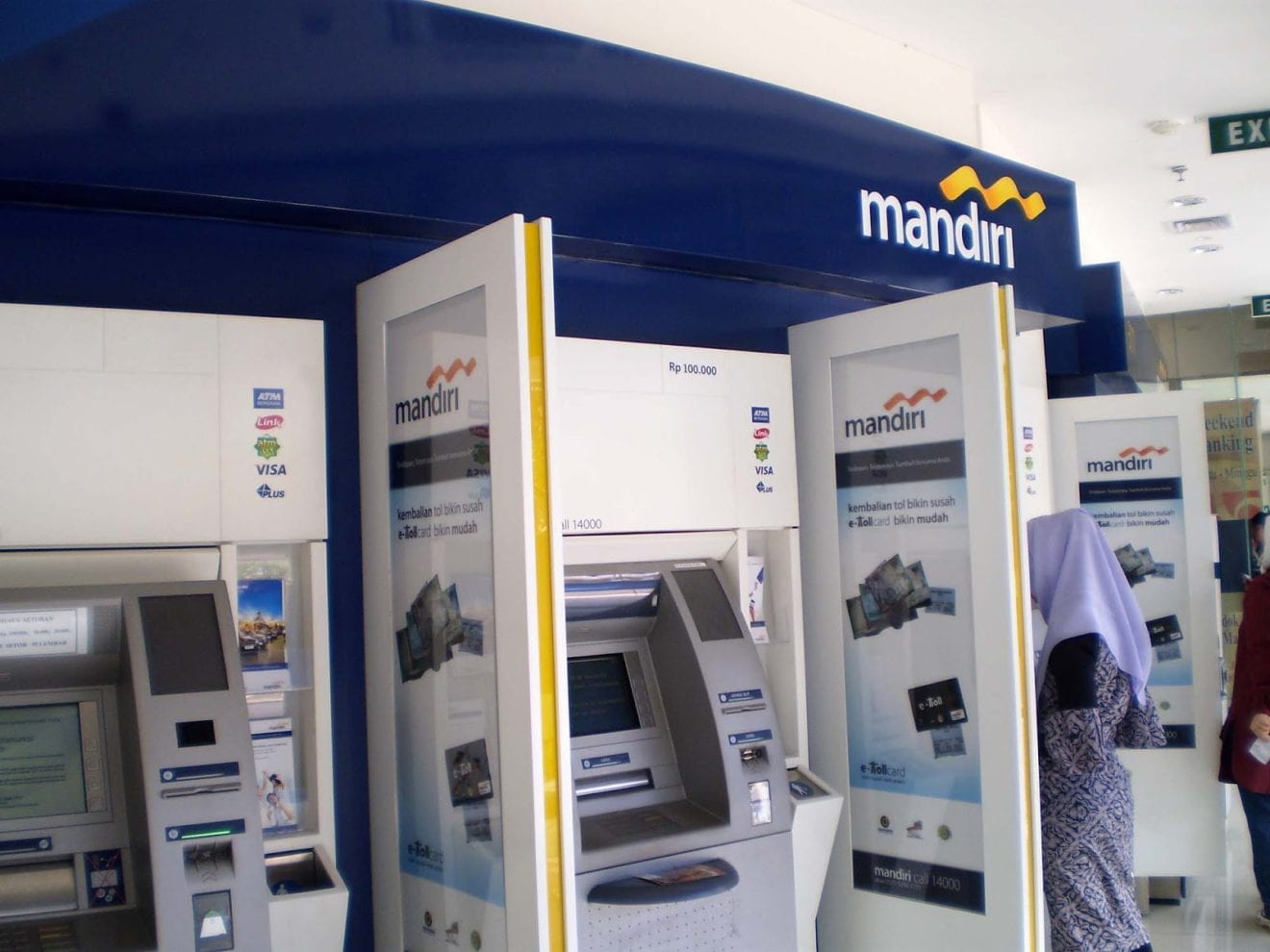
    State lender Bank Mandiri is preparing a syndicated loan of Rp4 trillion to build five airports in Indonesia in the fourth quarter of 2016, the banks corporate banking director, Royke Tumilaar, said.

    Bank Mandiri will lead the syndication of loans to state airport operator PT Angkasapura I which will develop the five airports, Royke stated here on Monday.

    “Syndicated loans worth Rp4 trillion will be extended for the purpose. The Kulonprogo airport in Yogyakarta will be among these five airports,” he added.

    The loans will be used to build new airports and expand the existing ones. The five airports include Ahmad Yani in Semarang, Syamsudin Noor in Banjarmasin and Kulonprogo in Yogyakarta. Also, the Terminal 3 at the Juanda Airport in Surabaya and Sultan Hasanuddin Airport in Makassar are to be developed with these loans.

    Other debtors that will be involved include Sarana Multi Infrastruktur (SMI), PT Bank Central Asia Tbk (BCA), PT Indonesia Infrastructure Finance (IIF) and PT Bank Rakyat Indonesia Tbk (BRI).

    Royke further syndicated loans will also be given in the fourth quarter of 2016 for the construction of toll roads in and around Jakarta.

    “We hope the process can be started in the fourth quarter of 2016, the construction of a new airport in Kulonprogo also begins by then,” he noted.

    Overall, the demand for loans to finance infrastructure development in the second semester of 2016 continued to increase, he noted.

    The state bank has also prepared loans worth Rs 20 trillion for the construction of power plants in the fourth quarter, he disclosed.

    As per the bank’s target, the credit extended to infrastructure development will grow 20 percent year on year by the end of this year.

  • Sharia Finance Sees Promising Future

    Sharia Finance Sees Promising Future

    The Financial Services Authority (OJK) says that the sharia finance still sees promising future despite the slowing down of global economic growth.

    “I’m optimistic on the promising future of the sharia finance industry. However, there will be many challenges and uncertainty,” said Sarjito, OJK Deputy Commissioner for Capital Market Supervision, Thursday, September 29, 2016.

    The challenges and uncertainty include the difficulty in expanding the business in a different jurisdiction that gets hit by local regulations and also the interpretation of sharia itself.

    Sarjito continued, the other challenge is the weak of the sharia finance management and its governance. “The last one is the lack of human resources that are competent enough and having the adequate capacity in sharia finance,” he said.

    The sharia finance industry in Indonesia has shown an unbelievable progress. Based on the report of the Indonesian Islamic Finance, the asset of the sharia finance industry has a 10% growth, and reached Rp617 billion in 2015.

    The number has exceeded the conventional finance asset’s growth. The same trend is also seen in other countries that are also developing the sharia finance.

  • Rupiah weakens 43 points against USD

    Rupiah weakens 43 points against USD

    The rupiah weakened 43 points to close at 13,015 per US dollar in the Jakarta interbank spot market on Friday evening, compared with the previous close of 12,972.

    “The rupiahs exchange rate depreciated against the US dollar along with the weakening of exchange rates in Asia,” economist Rangga Cipta of Samuel Sekuritas said.

    He said sentiment towards the upward revision of the US second-quarter gross domestic product growth was one of the factors causing the dollar to appreciate against several global currencies.

    Data for US inflation rate, which is projected to increase, has boosted the dollar to move into the positive zone, Rangga explained.

    After all, the relatively stable and rising crude prices and domestic optimism about the tax amnesty program has prevented the rupiah from falling further, he added.

    “The condition will make the rupiah depreciate against the dollar only in a short term,” he said.

    Money market expert Rully Nova of Bank Woori Saudara Indonesia Tbk said the rupiahs depreciation is relatively limited following the market expectation of a low inflation rate in September this year.

    “It is expected the data for inflation rate will be released early next week (Monday),” he said.

  • Ericsson, HomeSend team for remittance in emerging markets

    Ericsson, HomeSend team for remittance in emerging markets

    HomeSend and Ericsson have teamed up to accelerate the adoption of international remittances via mobile across emerging markets.

    With the partnership, 50 million Ericsson-powered mobile wallet users are expected to benefit from access to international payment services via HomeSend’s network of money transfer operators (MTOs).

    The Ericsson Wallet Platform is now certified by HomeSend, a joint venture between Mastercard, eServGlobal and BICS that aims to bridge the gap between financial institutions, non-financial entities and mobile network operators.

    The HomeSend-Ericsson partnership aims to give financial service providers a low-cost, simple and fast way to connect the HomeSend global money transfer hub with Ericsson’s mobile money offering around the world. With this, mobile money users are expected to be able to enjoy new levels of flexibility, choice and value.

    Ericsson’s Mobile Financial Services solutions now also include Ericsson interconnect, the company’s cloud-based financial transactions switching and mediation service, which aims to extend reach to Financial Services providers using any wallet or mobile banking platform.

    “The partnership represents HomeSend’s continuing commitment to displace cash and facilitate electronic payments, advancing financial inclusion in the new global economy,” said Stephen Doyle, CEO, HomeSend. “Millions of new unbanked consumers will gain improved access to digital inflows from friends and relatives, as we continue to advance toward a fully open ecosystem for global mobile money remittances.”

    In 2016, the World Bank expects remittances to reach over $600 billion, with more than $440 billion being sent to developing countries. The partnership aims to bridge the gap between finance and telecommunication service providers, enabling mobile wallet users to send and receive money from their family abroad through their mobile phones, while enabling financial institutions to offer their customers the convenience of digital money transfers regardless of their location or that of the recipient.

    “By enabling fast, secure integrations to HomeSend’s remittance hub, we are providing growth opportunities for our customers,” said Peter Heuman, head of Ericsson Mobile Financial Services.

    “Integration with the HomeSend Hub connects Ericsson mobile wallet powered financial service providers, and potentially other financial service providers, to a global network of financial institutions and MTOs. This represents a major advance in helping to grow mobile financial services ecosystems whilst supporting financial inclusion.”

  • Standard Chartered probed by US over Indonesia ‘bribes’

    Standard Chartered probed by US over Indonesia ‘bribes’

    Standard Chartered acknowledged on Tuesday (Sep 27) it was being investigated by the US Department of Justice over claims that an Indonesian subsidiary had paid bribes to secure contracts.

    The London-based, Asia-focused bank said in a statement that it had referred the matter to the “appropriate authorities” and launched its own review.

    The Wall Street Journal newspaper said that an internal audit at Indonesian energy company Maxpower Group found evidence of possible bribery and US prosecutors were examining whether Standard Chartered was culpable for not stopping it.

    “Standard Chartered takes very seriously allegations of impropriety in any of our private equity investments,” the bank told AFP in a statement when asked about the report.

    “We proactively referred this matter to the appropriate authorities and have conducted our own review.

    “When we receive allegations of improper behaviour in an investee company, we pursue those allegations vigorously and act appropriately, including sharing information and cooperating fully with government authorities and addressing any issues of internal conduct and accountability.”

    The Department of Justice did not comment when contacted by AFP.

    The Wall Street Journal said the Maxpower internal audit found that more than US$750,000 in cash advances needed to be examined as possible bribes, while lawyers who reviewed the audit found indications that employees made inappropriate payments to Indonesian government officials between 2012 and 2015.

    Standard Chartered began investing in Maxpower in 2012 and is the majority shareholder. There was no immediate comment from Maxpower.

    But a source close to the case told AFP the US authorities were indeed examining whether Standard Chartered, via its representatives on the Maxpower board, was aware of alleged bribes to win government contracts.

    The investigation would also look at why the bank’s alert procedures for spotting such matters had not been triggered.

    But the probe will focus on whether Standard Chartered has violated the terms of its 2012 deferred prosecution agreements with the Department of Justice.

    Standard Chartered paid US$667 million in 2012 to settle charges it violated US sanctions by handling thousands of money transactions involving Iran, Myanmar, Libya and Sudan.

    In August 2014, the bank was hit by US regulators with a US$300 million fine and restrictions on its dollar-clearing business for failing to detect possible money-laundering.

  • Bank of Bhutan to Start Accepting JCB Card

    Bank of Bhutan to Start Accepting JCB Card

    JCB International Co., Ltd. (JCBI), international operations subsidiary of JCB Co., Ltd., and Bank of Bhutan Ltd. (BOBL), the first and largest scale commercial bank in Bhutan, today announced that BOBL started accepting JCB cards at the bank’s merchants.

    Bhutan is popular destination for people in Asia Pacific. According to Tourism Council of Bhutan, over 150,000 travelers visited the country in 2015, which has more than tripled over the past 5 years. Most of the travelers are from regional countries in Asia, where JCBI focuses on for its business. BOBL, established in 1968, is the first bank of the country and currently has about 45 branches throughout Bhutan. With this launch, JCB cards are accepted at more than 480 locations and it covers 90% of POS terminals and ATMs in the market.

    JCBI Deputy President Kimihisa Imada said, “This year is the 30th anniversary of the establishment of diplomatic relations between Bhutan and Japan and it is my pleasure to announce the launch of business cooperation of BOBL and JCB in such a historic year. South Asia is an emerging market and Bhutan is located in the middle of East Asia, Southeast Asia, and South Asia. Through the bank’s nationwide merchant network, we can meet JCB cardmember demand while travelling and sightseeing in Bhutan, especially cardmembers from neighbor countries, such as China, Bangladesh, and Thailand, which have about 13 million cardmembers.”

    Pema N Nadik, Chief Executive Officer of BOBL, said, “The introduction of JCB card acceptance has been long awaited given the popularity of Bhutan as a destination for Japanese travelers. With JCB cards now being accepted in Bhutan through the network of Bank of Bhutan’s ATM and POS terminals, visitors holding JCB cards have the option of making payments securely through this payment channel.”

  • DBS to offer digibank service in Indonesia

    DBS to offer digibank service in Indonesia

    DBS Bank plans to launch a mobile-only banking service in Indonesia by the end of the year.

    DBS Group chief executive Piyush Gupta told the Sweden-Southeast Asia Business Summit on Wednesday that the bank is targeting Indonesia to capitalise on the young, tech-savvy consumers among its 260 million population.

    “Indonesia is an important market with its size and scale, and the economic reforms taking place in the country,” he said. “There is great potential for business as we see a pickup in the country’s economy under the leadership of President Joko Widodo.”

    DBS’s digibank offering, which includes an e-wallet and a savings account, will be available to customers in addition to its consumer and corporate banking services at its 34 branches in 13 Indonesian cities. DBS opened its first branch in Indonesia – an outlet in Jakarta – in 1989.

    DBS hopes to replicate the success it is seeing in India since it started its digibank service there in April – the first mobile-only banking facility in the sub-continent, said a DBS spokesman.

    The service has attracted more than 250,000 new clients in the first four months of its operation.

    A digibank account can be opened in India with just a 12-digit Aadhaar number, which provides a unique biometric identification for all resident Indian citizens.

    More than a billion Indians have been issued with Aadhaar cards by the government. With over 200 million smartphone users in the country, the market for digibank is huge.

    The service’s e-wallet can be used for making payments, including telephone and electricity bills. Customers can also use a Visa virtual debit card to shop at over 100,000 online merchants.

    “While we continue to invest in growing our existing network in India, we also believe that with the digital revolution, the future of banking will be very different,” said the spokesman.

    “Increasingly, many customers want to be able to do their banking digitally and on the go. A successful digital banking strategy will meet changing customer needs, while enabling us to accelerate our reach in large geographies without the need for a large brick-and-mortar footprint.”

    Indonesian clients will be able to use their biometric national identity card to open digibank accounts.

    DBS said it intends to launch digibank in other markets after its introduction in Indonesia.

  • Korean bank deploys optical encryption from Ciena

    Korean bank deploys optical encryption from Ciena

    KB Kookmin Bank, Korea’s largest financial institution, is deploying Ciena’s encryption capabilities for secure, high-capacity data centre interconnect (DCI), in a bid to better protect customer data.

    The encryption solution protects KB Kookmin Bank’s data transmissions from its offices and enables secure data centre interconnect (DCI) between its data centers.

    Several security solutions exist to protect data at-rest that secure servers, databases, routers, and switches by managing user access and credentialing. However, large amounts of critical data are in-flight and transported beyond the walls of the data center, traversing a larger, wide area network. Ciena’s optical-layer encryption solution gives KB Kookmin Bank an additional level of protection and protects data in flight as it leaves the private cloud and is transported between locations and data centers. Ciena’s solution adheres to local and international regulations and legislations, including the Federal Information Processing Standard (FIPS) 140-2 encryption certification.

    Additionally, Ciena’s software-based MyCryptoTool gives KB Kookmin Bank a dedicated management user portal that allows end-users to remotely control all of the security parameters associated with their encrypted services.

    “We are committed to providing the best possible service to our customers, which includes data protection and security. Ciena’s optical encryption solution provides an extra layer of protection and gives our customers the confidence to know their personal information is safe,” said Kim Ki-Hyun, CIO of KB Kookmin Bank.

  • Philippines raises 100 bln pesos through retail T-bond sale

    Philippines raises 100 bln pesos through retail T-bond sale

    The Philippines raised 100 billion pesos ($2.1 billion) from the sale of retail treasury bonds, the government said on Monday.

    The nine-day public offer for 3.5 percent 2026 bonds closed on Sept. 16.

    Proceeds from the sale will be used to finance the government’s plan to increase infrastructure spending.

    ($1 = 47.9100 Philippine pesos)


  • Sun Life, CIMB merge life-insurance businesses in Indonesia

    Sun Life, CIMB merge life-insurance businesses in Indonesia

    Life insurer Sun Life Financial Indonesia has officially integrated with Malaysia’s financial group CIMB subsidiary CIMB Sun Life following the Rp 550 billion (US$41.8 million) acquisition of 51 percent shares in CIMB Sun Life.

    Sun Life Financial Indonesia president director Elin Waty said the acquisition, conducted between April and June, was in line with the government’s single presence policy. In the corporate action, Sun Life is now the surviving entity.

    “We warmly welcome CIMB Sun Life’s employees and look forward to working together as a unified business with an even greater ability to serve our clients […] It is also in line with Sun Life Indonesia’s vision to assist people to increase their welfare,” she said in Jakarta on Thursday.

    Sun Life Financial Asia president Kevin Strain added that the acquisition also represented the company’s effort to strengthen its platform across the Asian market.

    “The life insurance sector in Indonesia has enormous potential and is a priority market for our long-term growth in Asia,” he said.

    Strain further said the merger would strengthen Sun Life Financial’s commitment to invest US$40 million to increase its online penetration and strengthen its brand presence in Indonesia.