Category: Finance

Retail News Asia is committed to providing both local and global retailers with the latest Finance news throughout the Asian market. This on a daily base.

  • Banks, NBTC agree on 5 step m-banking security plan

    Banks, NBTC agree on 5 step m-banking security plan

    The National Broadcasting and Telecommunications Commission hosted a meeting with representatives from the Bank of Thailand, the Thai Bankers Association and the Telecommunications Association of Thailand.

    The participants have agreed on a five-step plan to tighten KYC rules to increase confidence in eBanking and mobile banking in the run up to the launch of Thailand’s Promptpay national mobile payments system.

    1. The NBTC, BOT, TCT and mobile operators will create a set of KYC rules. The NBTC will order telcos to follow them strictly and will evaluate compliance with the new rules.
    2. Banks and mobile operators will launch an awareness campaign for people to tell their banks when their mobile phone or SIM is lost.
    3. If it can be proven that the customer has told their bank that their SIM has been lost, they will not be held responsible for monetary losses.
    4. A system will be set up for banks to be notified automatically when new SIMs are issued. Until such a system is in place, banks will give telcos a watchlist of telephone numbers that are linked to Internet banking, mobile banking or Promptpay accounts for their special attention.
    5. Issuing new SIM cards for accounts linked to bank accounts can only be done in person by the account holder and not via proxy.

    Meanwhile, NBTC Secretary General Takorn Tantasit has banned the import of all Galaxy Note 7 phones due to their exploding batteries. Phones from affected batches are immediately banned from being imported and the import of new note 7 batches can only resume once Samsung provides the NBTC with satisfactory electrical and safety test results.

  • BI Targets 11% Credit Growth

    BI Targets 11% Credit Growth

    Governor of central bank Bank Indonesia Agus Martowardojo said that BI is targeting bank credit growth by 11 percent next year.

    According to him, the target is expected to be reached due to the influx of fresh funds into financial institutions through the tax amnesty.

    “We consider that the tax amnesty will bring enough funds,” he said in Jakarta on Friday.

    The estimate, however, is lower than that of the original target of 12.7 percent.

    According to Agus, the change coincided with the approval of the 2017 economic growth target of 5.1 percent.

    Assumptions credit growth of 12.7 percent, he said, is met if the government and the House of Representatives agreed on economic growth target of 5.2 percent.

    The cause of the slow growth of credit is the weakening global economic growth, which is below 3.5 percent, he added.

  • Indonesia Banking Award Winners Announced

    Indonesia Banking Award Winners Announced

    Tempo Media Group, in collaboration with the Indonesia Banking School, held the annual Indonesia Banking Award (IBA) to recognize Indonesian banks with the best performance in 2015.

    The IBA this year featured an award for the best bank in remuneration and a new award for a sharia business unit. Banks with the best performance in Indonesia were given awards in six categories, namely the most efficient bank, the most reliable bank, diversity of the board, the best bank in retail banking services, the best bank in productivity, and the best sharia business unit.

    The most reliable bank award in the national conventional bank category with a total asset of above Rp 100 trillion (US$7.6 billion) was given to Bank Central Asia (BCA), Bank Rakyat Indonesia (BRI), Bank Negara Indonesia (BNI) and Bank Mandiri. For conventional banks with a total asset value of Rp 50 trillion (US$3.8 billion)-Rp 100 trillion, the award was given to OCBC NISP and Bank BTPN. In the sharia bank category, the award was granted to BRI Syariah, Syariah Bukopin and BNI Syariah.

    The best bank in productivity award for conventional banks went to Panin Bank, Bank Jasa Jakarta, KEB Bank Hana, and regional development banks (BPD), i.e. Bank Jatim, Bank Sulteng, and Bank BJB.

    The best sharia business unit award went to BPD commercial banks, namely Bank Kalbarl, BPD DIY, Bank NTB, and Bank Jambi. In the non-BPD category, the award was given to Maybank Indonesia, CIMB Niaga, OCBC NISP, and Bank BTN. In addition, the diversity of the board award went to Bank Mandiri, BNI, and BCA.

    The most efficient bank went to BPDs with a total asset value of above Rp30 trillion (US$2.3 billion), namely Bank Jateng, bank Jatim, and Bank BJB. The award for BPDs with a total asset value of Rp10 trillion (US$769 million)-Rp30 trillion went to Bank Kalbar, Bank SulSelBar, Bank Aceh, Bank Papua, and Bank BPD Bali. In the category of BPD with a total asset of below Rp 10 trillion, the award was won by BPD DIY, Bank Lampung, Bank Sulteng, Bank NTT, and Bank Sultra.

    Conventional banks with a total asset value of above Rp 100 trillion granted with the best bank in retail banking services award were Bank Mandiri, BCA, BNI, BRI and Danamon. For conventional banks with a total asset value of Rp 50 trillion-Rp 100 trillion, the award went to OCBC, NISP and Bank BTPN.

    Bank Jatim, Bank Jateng and Bank BJB bagged the Best Bank in Retail banking services award in the category of BPDs with a total asset value of above Rp 30 trillion. In the category of BPDs with a total asset value of Rp 10 trillion-Rp 30 trillion, the award went Bank Riau Kepri, Bank Nagari, and Bank Sulselbar. In the category of BPDs with a total asset value of below Rp 10 trillion, Bank Maluku, Bank NTB and Bank Sulteng had been awarded with the title.

    The IBA was held at Hotel JS Luwansa in Kuningan, Jakarta, on Wednesday, September 7, 2016. Attending the event was Financial Services Authority (OJK) deputy chairman Nelson Tampubolon, Deposit Insurance Corporation (LPS) executive director, Bank Indonesia (BI) deputy governor Hendar Harahap, and Tempo Media Group president director Bambang Harimurti.

  • Maybank joins up with Samsung Pay

    Maybank joins up with Samsung Pay

    Singapore’s Maybank has joined the Samsung Pay bandwagon to help meet its goal of strengthening its digital presence across the region.

    Launched in partnership with Samsung Electronics Singapore, the deployment will enable customers to use their Maybank credit and debit cards to perform transactions at most point‐of‐sale (POS) terminals in Singapore.

    This mobile wallet deployment is expected to bring greater payment convenience to Maybank’s Singapore customers.

    In conjunction with the launch, Maybank Singapore will be offering special promotions for its customers including cash rebates, lucky draws and 1‐for‐1 promotions.

    CEO, Maybank Singapore, Datuk Lim Hong Tat said this partnership with Samsung forms part of Maybank’s digital roadmap for its regional operations, with Singapore being the first ASEAN market to launch Samsung Pay.

    Group Chief Strategy Officer of Maybank Michael Foong, said, “Over 40% of our customers in Singapore are now transacting using their Maybank Singapore contactless credit cards, and cardholders here can now use this Samsung Pay facility virtually anywhere in the world 1 where credit or debit cards are accepted.”

    The launch of Samsung Pay in Singapore follows the bank’s introduction of its mobile wallet in Malaysia last month, and will be followed by the progressive roll‐out of other digital initiatives across the region.

    Other past initiatives include the launch of mobile banking apps with augmented reality in some regional markets, biometric authentication, cardless withdrawals, “e‐ang pows” for festive gifts and even hackathon events for the tech community.

  • JCB to offer Apple Pay in Japan

    JCB to offer Apple Pay in Japan

    JCB, the only international payments brand based in Japan, today announced that it brings its customers Apple Pay when it launches in October, an easy, fast and secure way to make mobile payments that is private and convenient with iPhone 7, iPhone 7 Plus, Apple Watch Series 2 throughout their day, including in stores, within apps and on the web.

    Since its establishment in 1961, JCB has been a pioneer in the Japanese payment industry, providing attractive products and services to meet the emerging needs and expectations of Japanese consumers. As part of this initiative, JCB introduced the contactless payment solution QUICPay in 2005, playing a leading role for mobile payments in Japan.

    The QUICPay acceptance network can now be used for Apple Pay transactions, enabling everyday use at places such as convenience stores, supermarkets and drug stores. By supporting Apple Pay, we will be bringing a convenient and secure customer experience to an even broader range of consumers.

    The newly released JCB Token Platform (JTP) will play an important role in the technology for secure mobile payments by replacing the original card number with a unique device specific number for Apple Pay users.

    Apple Pay is easy to set up and you will continue to receive rewards and benefits offered by your credit cards. Customers can also use JCB Card to pay for Suica on Apple Pay including recharging Suica balance.

    In stores, you can pay with Apple Pay with iPhone 7, iPhone 7 Plus and Apple Watch Series 2 anywhere QUICPay is accepted. Just tell the cashier you would like to pay with QUICPay, then simply place your iPhone 7, iPhone 7 Plus near the contactless reader, and with the touch of a finger on Touch ID, the payment is complete. When paying with your Apple Watch Series 2, double-click the side button before holding it near the reader.

    For JCB cardholders, online shopping in apps and on websites accepting Apple Pay is as simple as the touch of a finger on Touch ID, so there’s no need to manually fill out lengthy account forms or repeatedly type in shipping and billing information. When paying for goods and services on the go in apps or Safari, Apple Pay works with iPhone 6 and later, iPad Pro, iPad Air 2, and iPad mini 3 and later. You can also use Apple Pay in Safari on any Mac introduced in or after 2012 running macOS Sierra, and confirm the payment with iPhone 6 or later or Apple Watch.

    “The payment industry is rapidly evolving with diversifying consumer needs and technological advancements. The simple and intuitive user experience that Apple Pay provides, together with JCB’s unique position in Japan as an issuer, acquirer and payment system, will help create a new payment lifestyle that is both secure and convenient for everyday use,” said Ichiro Hamakawa, President and CEO, JCB Co., Ltd. “Apple Pay represents another giant step towards the realization of a cashless society. As a global brand and a pioneer in the payment industry, we are committed to supporting this trend in both Japan and abroad through our network.”

    Security and privacy is at the core of Apple Pay. If your iPhone, iPad or Apple Watch is ever lost, you can use Find My iPhone to put your device in Lost Mode to suspend Apple Pay, or you can wipe your device clean completely. You can also stop the ability to make payments with Apple Pay on iCloud.com.

    When you use a credit card with Apple Pay, the actual card numbers are not stored on the device, nor on Apple servers. Instead, a unique Device Account Number is assigned, encrypted and securely stored in the Secure Element on your device. When you use Apple Pay, your credit card number will not be shared with the merchant.

  • British bank names first Filipino CEO

    British bank names first Filipino CEO

    Standard Chartered Bank, a British financial services company and the oldest international bank in the Philippines, has announced the appointment of Lynette Ortiz, currently managing director and head of international corporates and financial institutions, as the new chief executive for the Philippine branch effective Oct. 1, 2016.

    Ortiz will replace Anirvan Ghosh Dastidar, who has been appointed as the new chief executive of Standard Chartered Brunei effective same date.

    New Standard Chartered Bank Philippines
    chief executive Lynette Ortiz

    Ortiz returned to Manila in June this year from her regional posting as head of capital markets for Asean based in Singapore. She has gained reputation as a highly regarded banker both locally and within the region having led a number of landmark transactions for Asean issuers, in both domestic and international markets, in recent years.

    Prior to assuming her regional role, Ortiz was financial markets and capital markets head for the Philippines. She has over 25 years of solid banking experience starting with Citibank in New York, and has held senior roles in risk management, treasury, corporate finance and capital markets in foreign and local institutions.

    Coming back to lead the Philippine branch is both pride and tall order for Ortiz. In May, Standard Chartered announced an agreement with EastWest Bank for the transfer of retail banking business which is expected to be completed within the year.

    Post the retail business transfer, Standard Chartered in the Philippines will be operating as a purely corporate and institutional bank. “Our corporate and institutional banking business in the Philippines has built a strong track record as a leader in providing client-centered value propositions that are innovative and transformative. Over the recent years, the business has seen sustained growth in securing mandates for capital markets, corporate finance and transaction banking segments,” Ortiz said.

    Standard Chartered takes pride in having Ortiz as the first female Filipino CEO for its Philippine branch. The bank said that under the leadership of someone with such caliber and solid background in corporate banking, financial and capital markets, it is confident of Ortiz as its new country head.

    “Her appointment demonstrates the bank’s recognition of a local talent that is truly global in quality and competency. Given Lynette’s extensive banking experience, knowledge of the markets and strong client relationships, she will play a key role in delivering growth momentum and further deepen our corporate and institutional banking business in the Philippines,” said Dastidar, the outgoing chief executive.

    Ortiz is expected to lead SCB Philippines’ efforts to build its clout in the developing and growing capital markets in Asean, in a bid to support the financing and investment requirements of its clients in the Philippines, including business players who are actively bidding for major infrastructure projects in the public-private partnership program.

    Standard Chartered has been present in the Philippines for over 144 years, and is the oldest international bank in the country. The bank views the Philippines as a strategic part of its Asean network, and it represents a key part of the bank’s unique international network.

    Standard Chartered has played a key role in helping fuel the Philippines’ trade, economy and markets, participating in the PPP projects, as one of the book-runners in the Republic’s sovereign bond issuances, developing and growing capital markets, acting as a sovereign ratings advisor and supporting corporate clients’ growth into international markets.

    “The work that we have done and continue to do both domestically and overseas with large corporates in the country and with the Republic itself is testament to the importance of the market to us, and of the differentiated value that we bring to it,” said Ortiz.


  • IOC eyes petroleum retailing in Myanmar

    IOC eyes petroleum retailing in Myanmar

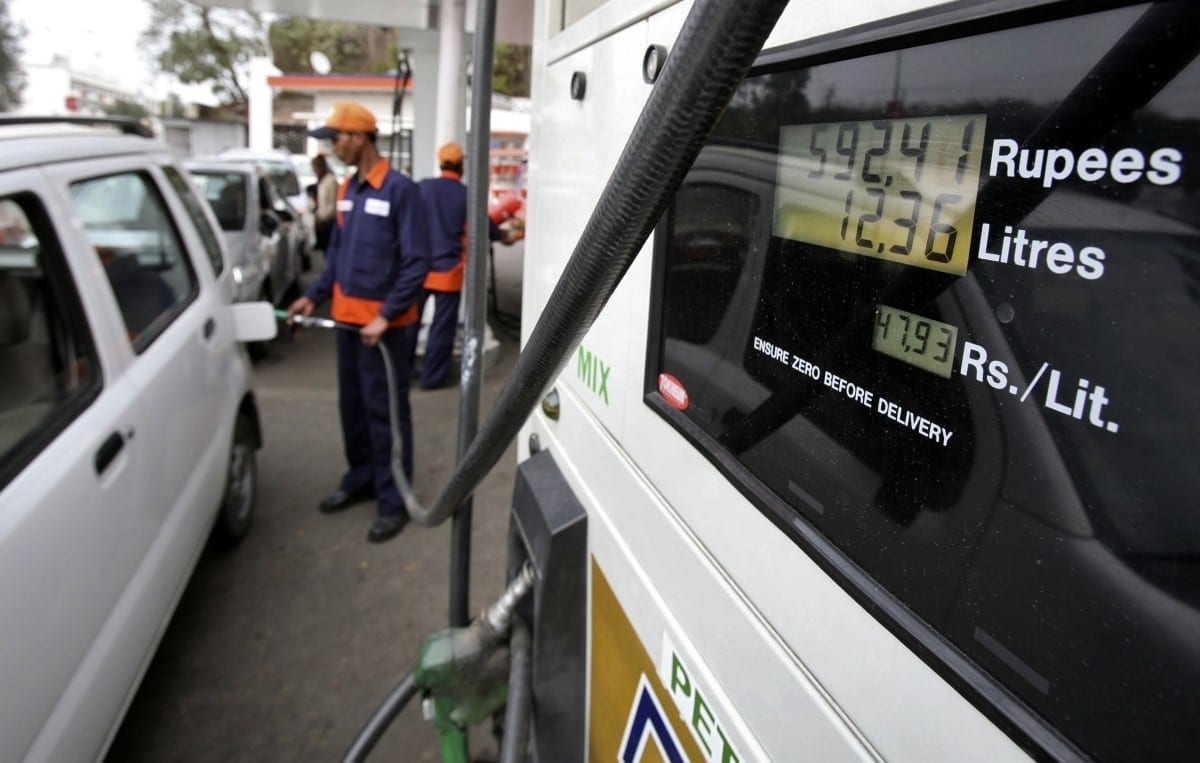
    The state-run firm currently has marketing subsidiaries in Sri Lanka, and West Asia. IOC, as part of its overseas expansion, is set to come up with its first international product pipeline to Nepal.

    “We have submitted a bid to start retail outlets and also to set up plants in Myanmar,” said Anish Aggarwal, director (pipelines) of IOC, on the sidelines of a summit organised by Project Management Institute.
    The concept of this pipeline was first proposed in 2006 as a joint venture between and Oil Corporation (NOC). However, it never took off as was not keen on the project.
    “We are awaiting the statutory clearance from the government. Once it is in place, the project can be commissioned with in 30 months,” Aggarwal added.

    India exports $1.1 billion worth of petroleum products to annually.

    It was in 2015 that signed a memorandum of understanding with to lay the pipeline between Raxaul in Bihar to Amlekhganj in at a capacity of 1.3 million tonnes per annum. The project would cost about Rs 275 crore and cover 41 km.

    Currently, all petroleum products are trucked from IOC’s depot in Bihar to Nepal. The project includes expansion of the Amlekhgunj Amlekhganj depot.

    Thirty-nine km out of the 41-km pipeline lie in India. Currently, supplies petroleum products to from Haldia, and refineries.

  • More protection to be offered to wealthy Singapore investors

    More protection to be offered to wealthy Singapore investors

    Wealthy investors in Singapore may soon be able to choose to be covered by the same protections as retail investors under proposals from the Monetary Authority of Singapore (Mas).

    First announced by the regulator in September 2015, Mas intends to table amendments to the legislation in Parliament by the fourth quarter of 2016, reports Bloomberg. If passed, the changes would come into force in 2017.

    Current framework

    Under Singapore’s current law, it is assumed that wealthy (accredited) investors are better informed and have greater means to protect their own interests. Therefore, banks are exempt from having to provide as much information about financial products as they would to retail investors.

    Accredited investors

    Currently, an individual with personal assets exceeding S$2m (£1.1m, $1.5m, €1.3m) or an annual income of at least S$300,000 is classified as an accredited investor. The ‘opt-in’ regime proposed by Mas would require those meeting accredited investor status to make a conscious decision to be treated as such, with the full knowledge of the lower level of regulatory protection afforded to accredited investors.

    Investors opting to be treated as accredited investors would sacrifice the benefits of stronger regulatory safeguards to have easier access to a wider range of complex and risky products.

  • Bank Indonesia to launch national payment gateway

    Bank Indonesia to launch national payment gateway

    Bank Indonesia will soon issue a new policy in payment system — “National Payment Gateway” (NPG) — to prevent outflow of fund in the “e-commerce” transactions that will help redress the countrys domestic trade balance .

    “Soon we will issue a policy of national payment gateway. All payment systems in the country from various providers will be connected in what we call inter-connectivity and inter-operability. Jut wait and see,” Deputy Governor of the central bank Perry Warjiyo said here on Friday .

    Perry said with the NPG all domestic transactions would be wrapped up in the country without the use of foreign payment system service.

    “This is important before we start cooperation with other countries that all transactions made in Indonesia could be settled in the country ,” Perry said.

    With the NPG we could increase domestic trade balance in each transaction made in Indonesia without relying on financial service of agency, he added.

    Perry said NPG also would support payment system in tourism industry, which the government actively develops as a potential foreign exchange earner.

    Bank Indonesia encourages the government to develop and modernize the countrys tourism industry to grow to become a new economic growth driver amid the slump that hits the export and mining sector which have lost their most of role as the economic backbone.

    Perry said the tourism industry could help accelerate the economic development in mid term.

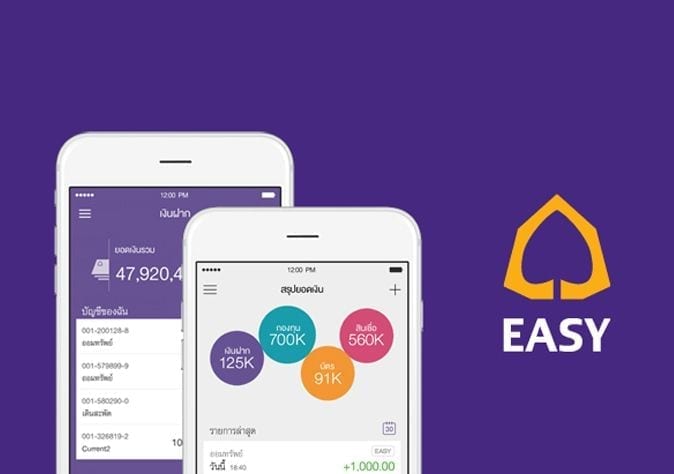
  • SCB Easy Application on the Fritz Pending Upgrade

    SCB Easy Application on the Fritz Pending Upgrade

    Customers of Siam Commercial Bank (SCB) might have recently found out the hard way that the SCB Easy App is on the fritz and hasn’t been working as properly as it should’ve been.

    SCB has already suspended the service of the app yesterday, in order to be able to properly update the system.

    According to SCB, the disruption of service was due to the increased use of system for financial transactions. However, the app will hopefully be up and running again by Sept. 10 after the system upgrade.

    Customers, fortunately, are still able to use the bank’s services through other channels, including their website: www.scbeasy.com

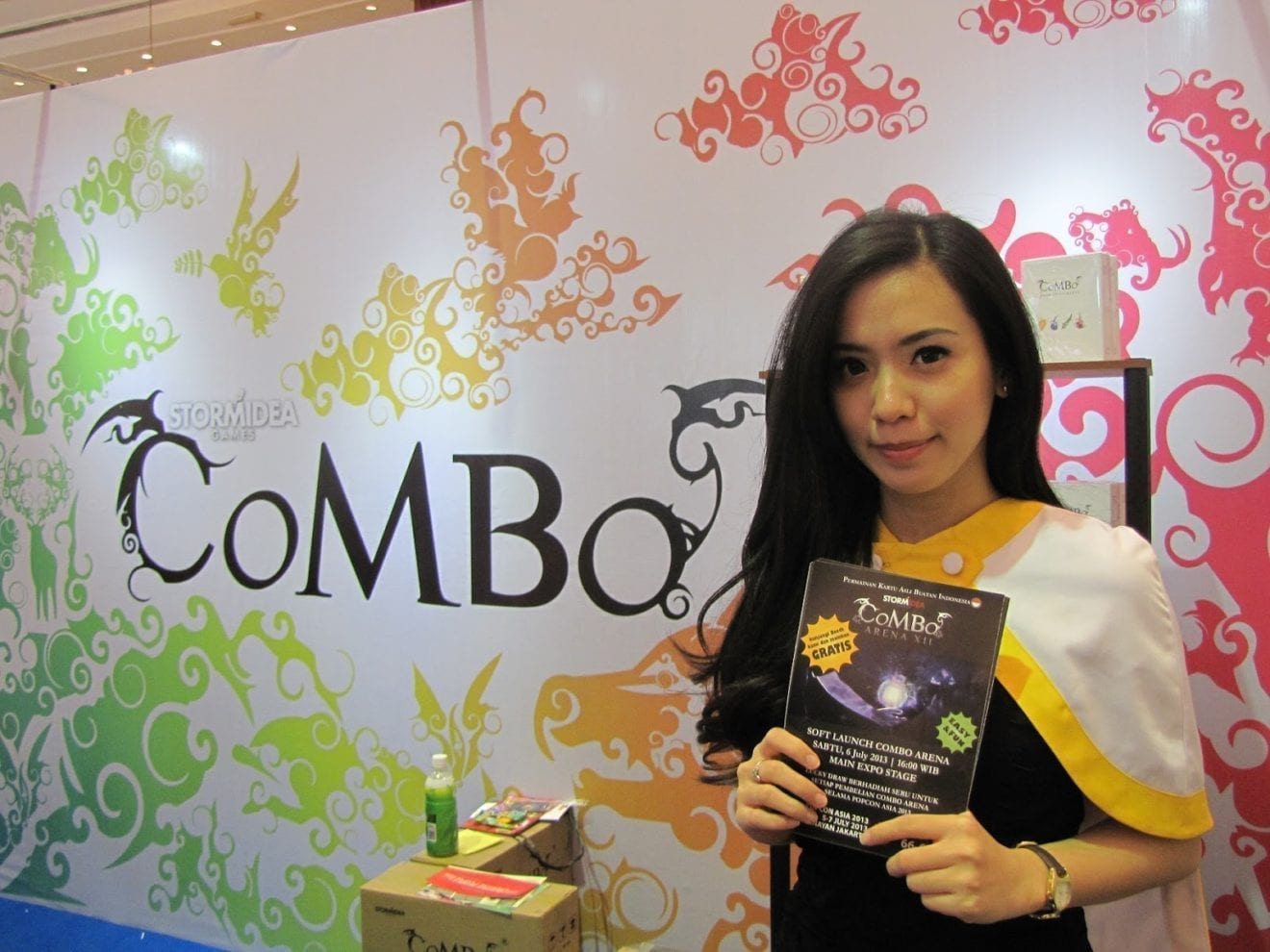
  • Combo card will be tested in 40 cities

    Combo card will be tested in 40 cities

    The combo card that promotes non-cash social assistance will be tested in 40 cities until the end of 2016, Bank Indonesia (BI) has stated.

    If the trial goes off well, on January 1, 2017, the entire social assistance from the government can be channeled through the Family Welfare Card (KKS) Red and White combo device, Director of Elektronifikasi Program and Financial Inclusion of Bank Indonesia Pungky Purnomo Wibowo said Friday (September 2) night.

    “January 1, 2017, we apply all of the Family Hope Programs and the rice prosperous social assistance (Rastra). Further, the student aid program and the School Operational Assistance (BOS) will be around that time as well,” he said.

    The combo card can be used to avail the Rastra, and family expectations (PKH) aid, Pungky explained in the demonstration project or the pilot project.

    The combo card used in the “e-waroeng” (electronic shop and gotong royong/mutual help) are also agents of Financial Services Digital (LKD).

    The beneficiaries of social grants (bansos) bring the Cards Family Welfare (KKS) issued by the Bank to the new joint four, namely Bank Mandiri, Bank Rakyat Indonesia, Bank Negara, and Bank Tabungan Negara, and exchange it at “e-waroeng”.

    With the KKS, the public can receive Rastra basic foodstuffs such as rice, sugar, flour, and oil at subsidized prices.

    Furthermore, the combo cards can not only be used to get help in the LKD functions, but can also be used for transactions such as cash withdrawals or transfers, as well as saving money, such as bank function nirkantor (branchless banking), Pungky said.

    This combo card can make the distribution of social aid meet the rules of 6T – the right target, the right amount, the right price, right time, right quality, and right administration, Deputy Governor of BI Ronald Waas said on the occasion.

    The government budget for social protection in 2017 reached Rp158 trillion, the BI recorded. With that budget, social protection assistance would be effective and appropriate.

  • HSBC appoints new wealth chief in Singapore

    HSBC appoints new wealth chief in Singapore

    Anurag Mathur will become HSBC’s new head of retail banking and wealth management in Singapore as of mid-September.

    He will replace Matthew Colebrook, who is taking charge of the bank’s equivalent business in the Middle East.

    HSBC

    Mathur has most recently worked as head of international markets for HSBC’s retail banking and wealth management arm in Asia.

    This has seen him oversee Bangladesh, Brunei, Macau, Mauritius, New Zealand, Philippines, Sri Lanka and Vietnam.

    Mathur has most recently worked as head of international markets for HSBC’s retail banking and wealth management arm in Asia.

    This has seen him oversee Bangladesh, Brunei, Macau, Mauritius, New Zealand, Philippines, Sri Lanka and Vietnam.

  • Manulife in upbeat mood after first half surge

    Manulife in upbeat mood after first half surge

    Manulife Indonesia president director and chief executive officer (CEO) Indren S. Naidoo (right) and Manulife Aset Manajemen Indonesia chief economist and investment strategist Katarina Setiawan talk on the sidelines of a press briefing in Jakarta on Wednesday.

    Despite the country’s weak economy, life insurer Manulife Indonesia enjoyed a sharp increase in new business premiums during the first semester of the year on the back of surging wealth and insurance sales.

    Its total new business premiums soared by 28 percent year-on-year (yoy) to Rp 1.8 trillion (US$135 million) in the first semester, according to Manulife’s unaudited financial results for the first semester of 2016.

    During the January and June period, Manulife’s wealth sales rose 27 percent yoy to Rp 1 trillion from
    Rp 785 billion, while its insurance sales increased 17 percent yoy to Rp 764 billion from the corresponding period in 2015.

    As of June, Manulife’s total premium and deposits amounted to Rp 9.1 trillion, a 12 percent hike from Rp 8.1 trillion recorded in the same month last year. The number of the company’s in-force policies, meanwhile, grew steadily to 2,297,305 from 2,250,210 recorded in June last year.

    “We are confident that our business will book positive growth over this year,” Manulife’s newly appointed president director and chief executive officer Indren S. Naidoo told a press briefing on Wednesday.

    Indren, who assumed his position in May, said he was optimistic that the company could tap into the growing insurance market in Indonesia, which is the most populous country in Southeast Asia, but has low insurance penetration.

    Indonesia’s economy expanded an annual 4.92 percent in the January-March quarter, below analysts’ expectation of 5.05 percent. Growth weakened for the fifth straight year in 2015, to 4.8 percent, amid poor commodity prices and contracting exports.

    Financial Services Authority (OJK) data showed that conventional insurance premiums accounted for just 2.37 percent of the country’s gross domestic product (GDP) during the first quarter of the year. Life insurance penetration rates, meanwhile, reached 0.93 percent of the GDP in the January-March period.

    “Compared to some other markets in Asia, we are actually quite low. So, the opportunity is there,” said Indren, who previously assumed CEO positions at Manulife units in the Philippines, Thailand, Vietnam and Cambodia prior to his current position.

    Indren said Manulife would continue to expand its unit-linked products, which have become the main driver of the company’s business growth.

    The contribution of Manulife’s unit-linked products, which combine insurance and investment products such as government bonds and stocks, “was close to 80 percent of our business”, Indren said, explaining that the insurer would continue to promote the instrument as customers still expected double-digit returns on their investment amid the downward trend in banks’ deposit interest rate.

    In the first half of the year, Manulife launched unit-linked product Mi Wealth Insurance to further boost its investment-linked insurance products.

    He expressed his optimism that the burgeoning middle-income segment in the country, expected to reach 100 million of people by 2020, would be a boon for Manulife’s unit-linked products, which are aimed to higher-end customers.

    The CEO said Manulife would continuously educate potential customers on life insurance, as well as its unit-linked instruments by leveraging its 8,000 agents in 25 branches across the country and its bankassurance service, for which the insurer has forged partnerships with three lenders in the country: DBS, Bank Danamon and sharia-based Bank Muamalat.

    “We are here not to sell, but to teach [the customers]. At the end of the day, you, as a customer, will make the decision [on whether to buy Manulife’s products],” Indren said.


  • Bank Indonesia still has chance to slacken its monetary policy

    Bank Indonesia still has chance to slacken its monetary policy

    Bank Indonesia (BI) Governor Agus Martowardojo said the central bank still likely has a chance to relax its monetary policy in the second half of this year.

    “Seeing the condition in August, we can say that there is still a chance to slacken monetary policy but whether it will be carried out next September or October will depend on the data” the central bank governor said in Jakarta on Wednesday.

    BIs board of governors meeting on August 18-19 decided to maintain its 7-Day Reverse Repo Rate (BI 7-day RR Rate) at 5.25 percent with a deposit facility (DF) interest rate of 4.5 percent and lending facility (LF) being lowered by 100 basis points from 7.0 percent to 6.0 percent.

    BI began introducing the 7-Day RR Rate last April. At the BIs board of governors meeting on April 21, 2016, the BI Rate was fixed at 6.75 percent and the BI Repo Rate at 5.50

    Besides this, the BI also maintained a symmetrical and narrow interest rate corridor where the lower limit of DF Rate is set 75 basis points below the 7-Day RR rate and the upper limit of LF Rate is set 75 basis points above the 7-Day RR Rate.

    The decision is in line with the efforts to maintain the macroeconomic stability by continuously preserving the momentum of domestic economic growth amid weakening global economic performance.

    With macroeconomic stability, controlled inflation at targeted range, good current transaction deficit and stable currency rate, room for monetary relaxation is still open.

    The BI also continues to take abreast of short-term domestic global economic development, particularly the possibility for the Fed to raise its Fund Rate. “We wilL see it in September there will be flight to quality with regard to reports on the improvement of the United States economy.”

  • Governement Aims to Protect Fintech Customers

    Governement Aims to Protect Fintech Customers

    Coordinating Minister for Economic Affairs Darmin Nasution wants to have an agency that protects customers of (financial technology/fintech) companies. The agency will also monitor and supervise fintech businesses to make sure they comply with existing laws and regulations.

    The agency, he said, will work in similar ways to the Central Securities Depository (KSEI) and the Clearing and Guarantee Corporation (KPEI) in supervising capital market transactions.

    “In the case of contract breaches, consumers must not incur losses. There must be an agency that covers the loss, he said at the Indonesia Fintech Festival, Tuesday, August 30.

    He said that the fintech industry offers an opportunity for entrepreneurs and the financial services sector. But fintechs have their negative impacts and risks as well, that’s why the OJK and Bank Indonesia (BI) must regulate the industry for the protection of its customers.

    BI Governor Agus Martowardojo supports the development of fintechs, saying it is an industry that allows faster, more efficient services for the financial industry in terms of payment system.

    Agus said he has three hopes for the fintech industry. First, for international fintechs to register as an Indonesian entity. Second, to have all payments denominated in rupiah, and third is for the industry to save their funds in the national banking system.

    President Joko Widodo, who attended the Fintech Festival, said that the business is a golden opportunity for people living in remote areas. Widodo believes that better access to financial services will crunch income gap.

    “I invite fintech businesses to innovate and spawn new breakthroughs in the use of digital technology that will fast-track financial inclusivity,” he said.