Retail News CRM

Category: Finance

Retail News Asia is committed to providing both local and global retailers with the latest Finance news throughout the Asian market. This on a daily base.

  • Goldman’s Instructed by ANZ

    Goldman’s Instructed by ANZ

    It has been an interesting week for Australian bank ANZ. On Monday it agreed a deal with Singaporean bank DBS to dispose of its Asian wealth units. Now it appears the bank has hired Goldman Sachs for another deal.

    According to a report the bank has appointed Goldman Sachs to lead the sale. Also involved in any transaction will be the Melbourne-based boutique Flagstaff Partners.

    Insurance Units Next to go?

    Flagstaff has worked with ANZ on several occasions including as a financial adviser to the ANZ Banking Group on the sale of ANZ Trustees to Equity Trustees. It also acted as a financial adviser on the acquisition of the remaining 51 percent shareholding in the ANZ-ING wealth management and life insurance joint venture.

  • Ex-UBS Executive Director Joins HSBC

    Ex-UBS Executive Director Joins HSBC

    A former Executive Director, Wealth Management at UBS, Singapore, has crossed the street to take up a senior role with rival HSBC Private Bank.

    In a statement HSBC Private Bank said: «We can confirm the appointment of Shang-Wei Chow as a Market Head, Domestic (Singapore) team at HSBC Private Bank, effective 3 November 2016. His appointment underpins our continued efforts to enhance our client servicing capabilities and deepen our engagement with clients.»

    Chow is a seasoned private banker with nearly 15 years of experience managing client relationships and wealth portfolios in Southeast Asia. As a Market Head of the Domestic team he will be responsible for new business development and deepening existing client relationships in line with HSBC’s strategy. Prior to joining the bank he was Executive Director, Wealth Management at UBS, Singapore.

    A Year of Change

    HSBC has seen numerous changes to its Singaporean private bank throughout 2016 including the departures of HSBC veterans Rob Ioannou to DBS and Michael Hua to LGT Private Bank.

    HSBC Private Bank in the city-state has also appointed several new bankers including a Head of Investment Counselling together with a new Head of Ultra High Net Worth Investment Counselling.

  • AI, Gamification and Blockchain at DBS Hong Kong Accelerator

    AI, Gamification and Blockchain at DBS Hong Kong Accelerator

    Showcasing innovative fintech solutions that leverage artificial intelligence, blockchain technology, gamification and more, the founders of seven startups from Hong Kong and around the world met with hundreds of potential investors at DBS Accelerator Demo Day, the finale of the second DBS Accelerator programme in Hong Kong.

    Accelerators play a vital role in the Asian startup ecosystem and in supporting innovation. Providing vast resources, mentor support and dedicated work and office space, DBS Accelerator aims to create opportunities for innovators from across Asia and globally.

    Financial Innovation Evolving Rapidly

    The seven startups in this year’s programme are Flowcast, FOMO Pay, Hampen Technology, Mindlayer.io, NetGuardians, Playbasis and XinGuo Technology. They were selected from more than 150 applicants from around the world, including Hong Kong, Singapore, China, Thailand and the U.S.

    «We believe FinTech has the ability to go beyond mere disruption and make a tangible difference to the experiences customers have in using financial products and services,» said Lawrence Morgan, CEO of Nest.

  • SoftBank to establish tech investment fund

    SoftBank to establish tech investment fund

    SoftBank Group has announced plans to establish the SoftBank Vision Fund to make investments in the technology sector globally.

    The fund will be managed in the United Kingdom by a subsidiary of SoftBank and will deploy capital from SoftBank and investment partners. The fund will aim to be one of the world’s largest of its kind.

    SoftBank expects to invest at least $25 billion over the next five years. The company has concluded a non-binding memorandum of understanding (MoU) with the Public Investment Fund of the Kingdom of Saudi Arabia (PIF).

    Under the MoU, PIF will consider investing in the fund and becoming the lead investment partner, with the potential investment size of up to $45 billion over the next five years.

    In addition, a few large global investors are in active dialogue to join SoftBank and PIF to participate in this investment fund. The overall potential size of the fund can go up to $100 billion.

    SoftBank will use its operational expertise and network of portfolio companies in order to add value to the fund’s investments.

    Deputy Crown Prince Mohammed Bin Salman, chairman of PIF, said the PIF is focused on achieving attractive long-term financial returns from its investments at home and abroad, as well as supporting the Kingdom’s Vision 2030 strategy to develop a diversified economy.

    “With the establishment of the SoftBank Vision Fund, we will be able to step up investments in technology companies globally,” said Masayoshi Son, chairman and CEO of SoftBank Group.

    “Over the next decade, the SoftBank Vision Fund will be the biggest investor in the technology sector,” said Son. “We will further accelerate the Information Revolution by contributing to its development.”

    SoftBank Group’s head of strategic finance Rajeev Misra is leading the Fund. SoftBank has engaged former Deutsche banker Nizar Al-Bassam and ex-Goldman partner Dalinc Ariburnu for the project. PIF also had its own team of experts engaged.

  • Security is key for mobile wallet adoption in Thailand

    Security is key for mobile wallet adoption in Thailand

    Whether paying with contactless cards or mobile wallets, Thais prioritize security over convenience and are more likely to use contactless payment methods when they know strong security measures are in place, according to a recent study conducted by Visa.

    The Visa Mobile Wallet and Contactless Study found that the majority of Thais (82 percent) believe security is more important than convenience when it comes to mobile and contactless payments.[1] With accelerated growth in financial technology (FinTech), public and private sectors are grappling with ways to increase consumer confidence in electronic payments, particularly when it comes to transactions carried out on mobile devices.

    The average Thai spends around 160 minutes a day on their mobile devices.[2] By the end of 2016, it is estimated that around 20 million people will own smartphones in Thailand, a figure expected to rise to 24.8 million by 2019.[3] Although internet access and mobile device ownership among Thais are on the rise, uptake of mobile financial services has been gradual, partly due to Thai consumers being unaware of advancements in cyber security, and technology. 

    Suripong Tantiyanon, Visa Country Manager, Thailand said: “Based on our study, the more secure the mobile payment experience is, the more willing Thai consumers will be to use it. We’re confident this cautious yet optimistic attitude, coupled with Visa’s multilayered approach to security, will drive the uptake of mobile transactions in Thailand.” 

    The Visa study, independently conducted by YouGov on behalf of Visa, examines Thais’ attitudes towards mobile and contactless payments alongside those of other Southeast Asian markets, namely Singapore and Malaysia. It finds that the three biggest fears in mobile wallet security are hacking of mobile phone (73 percent), theft of mobile phone (65 percent) and getting charged for unintended purchases (63 percent). 

    “Among the respondents, only 39 percent said they would consider using third-party mobile wallets. But within this particular group of potential adopters 74 percent are already aware of how encrypted tokens eliminate the risk of personal data theft,” added Mr. Suripong.

    Visa Token Service (VTS) ensures mobile and contactless payments are secure as well as convenient. VTS replaces cardholder information, such as account numbers and expiration dates, with a unique digital identifier (a “token”) that can be used for payment, via a user’s mobile wallet, without exposing the cardholders’ more sensitive account information.

    Tokenization hides consumers’ confidential account information during digital transactions, making digital payments more secure. According to the study, approximately 55 percent of Thais are familiar with VTS, with awareness highest among those that are also familiar with mobile wallet technology.

    Just under half of Thais (46 percent) believe paying with a mobile device is as safe as with physical cards; a figure likely to increase in the future, as people become more familiar with advancements in Visa’s mobile payment systems. 

    Three in five Thais (61 percent) believe that one day they will no longer need to carry a card or cash and will instead be able to use their mobile wallets for everyday spending.

    “Once Thais become familiar with innovative security measures, such as encrypted tokens, they are much more likely to use mobile and contactless payments more regularly,” said Mr. Suripong.

  • LANDBANK introduces mobile lending for medicines

    LANDBANK introduces mobile lending for medicines

    The Land Bank of the Philippines (LANDBANK) has introduced a new mobile lending program for the purchase of essential drugs.

    LANDBANK, a  government financial institution, has teamed up with branded generic drugs company RiteMed to expand the use of its electronic salary loans program.

    The LANDBANK Mobile Loan Saver (LMLS) launched in September 2014 and has since gained a large following among government employees, farmers and fishers, small and medium enterprises, overseas Filipinos and private sector employees.

    Under LMLS, customers can easily apply for a loan using their mobile phone and get quick credit decision from LANDBANK regarding their application. As of August 2016, total loans released under LMLS amounted to over 12 billion pesos.

    The RiteMed partnership will allow loan borrowers to allocate a portion of their approved net loan proceeds for the purchase of medicines. RiteMed will also make available a range of maintenance medicines at discounted prices.

    Medicines ordered via LMLS will be delivered for free in sealed packs to the concerned government agency or company office where the borrower is employed, within a week from the time of loan approval and release.

    “We understand the financial burden of high medicine costs on many Filipinos, which is why through this initiative, we hope to provide LMLS borrowers with access to affordable and quality medicines. This is yet another showcase of the endless possibilities in terms of financial technology and digital lending, especially as we hope to reach out and provide financial and other services to more Filipinos across the country,” said LANDBANK Officer-in-Charge and Executive Vice President Cecilia C. Borromeo.

    Started as an initiative in response to the Philippine government’s call for private companies to reduce the prices of essential drugs, RiteMed started manufacturing and marketing 20 off-patent, low-cost essential drugs that were 20% to 70% cheaper than their equivalent counterparts in 2002.

    Today, its product has grown to include almost 200 medicines for diabetes, hypertension, high cholesterol, infection, pain, kidney, gastro-intestinal, asthma and allergy, cough and colds and vitamins.

    Vincent Patrick Guerrero, general manager of RiteMed, said in a media statement that the company is optimistic that with the technology behind LMLS and the nationwide network of LANDBANK, they would be able to fulfill the objective of RiteMed to provide access to quality healthcare for all Filipinos.

  • Virtual cosmetics counters are the future

    Virtual cosmetics counters are the future

    oon it be much easier to find the perfect lipstick colour and sunglasses to match your face shape, and the best part is you won’t even have to leave home.

    China is on the cusp of a major shake-up in online shopping technology to makes the virtual change room and cosmetics counter a reality.

    Gone will be the days of buying the wrong colour or style of clothing, accessories or make-up and by the hassle of posting back returns.

    At the Shanghai Zizhu entrepreneurial incubator, Olivia Wan demonstrates how online video technology can allow customers to choose sunglasses and experiment with different lippy shades.

    Purple, pink and red lip colours, flash across the video footage of shoppers standing in front of the screen.

    On another screen, the technology measures the faces of shoppers and suggests styles of glasses.

    In China, there’s insatiable appetite for shopping.

    In some cities such as Shanghai, which have populations equivalent of Australia crammed into one metropolitan area, the sardine factor of malls and shopping strips is high.

    “With the use of technology we want to make people more beautiful,” Wan, Shanghai Beauty Face Internet Technology Company chief operating officer, told AAP through a interpreter.

    According to global consulting firm McKinsey and Company, China’s online retail market is the world’s largest with an estimated $US630 billion ($A830 billion) in sales in 2015.

    The online market is 80 per cent bigger than the US and accounts for 13.5 per cent of all spending.

    Meanwhile, in the high-tech zone of neighbouring city Hangzhou, a visit to the display room of HIK Vision, a leading camera and surveillance company, is almost like being on the set of the US mystery drama CSI: Crime Scene Investigation.

    The potential of some of the gadgets is slightly unnerving but staff insist they just create the products and its completely up to customers how they is used.

    In one corner a screen shows footage of people on bikes, in cars and pedestrians. Other boxes reveal their gender, height, estimated age, whether they are wearing seat belts, carrying bags and car number plates.

    In the post September 11 security conscious climate, governments are likely to be big customers.

    The company has supplied surveillance technology for events such as Olympic Games, Soccer World Cups and global leaders summits.

    Another display terminal shows an intricate revolving sphere of people’s faces and their email trails.

    *The reporter travelled to China on a delegation hosted by the Chinese People’s Institute of Foreign Affairs.

  • Ant Financial teams with Thailand’s Ascend Mobile

    Ant Financial teams with Thailand’s Ascend Mobile

    Ant Financial Services Group has announced a strategic agreement with Thailand fintech company Ascend Money.

    Under the agreement Ant Financial will invest in Ascend Money, with the aim of accelerating the growth of a mobile lifestyle and digital financial services platform in Thailand and support the company’s growth in Southeast Asia.

    Headquartered in Bangkok, Thailand, Ascend Money operates in six countries, including Thailand, Indonesia, the Philippines, Vietnam, Myanmar and Cambodia. Ascend Money targets two under-served groups, including digital consumers with its innovative mobile wallet application and the under-banked with its massive agent network.

    It currently provides payment services such as domestic and international remittance, bill payment, top up services, online and offline payments and payroll services. Future services will include lending, insurance and investment.

    Together with Ant Financial, Ascend Money will grow its online and offline payment and financial services ecosystem and strengthen its payment services for users and merchants. The deal represents Ant Financial’s first-ever investment in a Thailand-based company. With this partnership Ant Financial, which also runs Alipay, the largest mobile lifestyle and payment app in China, will provide Ascend Money with strategic and technical support for the growth of its business.

    Leveraging Ant Financial’s capabilities in payment, Big Data, risk control and cloud computing capabilities, the partnership with Ascend Money aims to offer Thai consumers comprehensive and equal access to financial services. Ascend Money is Ant Financial’s first partner in Southeast Asia and second globally after Paytm in India.

    “Ascend Money’s mission is to enable everyone access to innovative financial services, leading to better lives,” said Suphachai Chearavanont, Chairman of Ascend Group. “The shared vision of financial inclusion and company values in creating opportunity and sustainability have lead us to this partnership.”

    “Ant Financial is setting its footprint worldwide, not only to provide services for its Chinese users, but to promote equal access to financial services globally,” added Ant Financial SVP Douglas Feagin.

    “Partnerships are vital for Ant Financial’s growth and we want to work alongside companies around the world who share our missions.”

    In early 2015 Ant Financial joined forces with Paytm, the world’s fourth largest e-wallet, to promote secured digital payment to local users in India. Ant Financial is also working with dozens of global payment partners, including Concardis, Ingenico, Wirecard and Zapper in Europe, First Data and Verifone in North America, Paysbuy and Counter Services in Southeast Asia, Recruit in Japan and KICC and ICB in Korea.

  • OCBC adds Siri, iMessage support to Pay Anyone

    OCBC adds Siri, iMessage support to Pay Anyone

    OCBC Bank has integrated its Pay Anyone e-payment service with Siri and iMessage to enable peer-to-peer payments supported by voice and messaging technology

    OCBC has enabled payment commands on its mobile banking app to be facilitated via Apple’s Siri or iMessage.

    Users can now issue a voice command to Siri, Apple’s virtual assistant, specifying the payee and payment amount to make payments. Customers can also send money to others via iMessage, Apple’s messaging platform.

    The Siri and iMessage services for OCBC Pay Anyone, the payment service within OCBC’s mobile banking app, are available to all OCBC Bank customers using iPhone devices running the iOS10 software and the latest OCBC Mobile Banking app. Payments are authenticated by the customer using their mobile banking credentials.

    To send money using Siri, users need to instruct Siri with a voice command indicating whom from their contact list to send money to, and the amount to send. Upon making this request, the Siri interface will pop up on the iPhone, asking the user to confirm the payment details. Once the payment details are confirmed, the user will be guided to complete the transfer using OCBC Pay Anyone.

    Additionally, users can choose to send money via iMessage while texting their friends, without leaving the conversation by closing the messaging app or opening another app. Within the iMessage conversation screen, users can choose the OCBC Pay Anyone iMessage app to initiate payment directly to the person they are chatting with.

    The app automatically populates the recipient’s name, and the user just needs to indicate the amount to send and complete the transaction with OCBC Pay Anyone. Once the money is sent, the OCBC Pay Anyone app will close and the user can resume chatting within the same iMessage window.

  • Ant Financial announces global blueprint for digital financial inclusion

    Ant Financial announces global blueprint for digital financial inclusion

    Ant Financial Services Group (“Ant Financial”, or the “Company”), one of the world’s leading digital financial services providers, today announced its global blueprint for promoting digital financial inclusion, and a strategic agreement with Ascend Money, the leading fintech company in Thailand. Under the agreement Ant Financial will invest in Ascend Money, which aims to accelerate the growth of a leading mobile lifestyle and digital financial services platform in Thailand and support its growth in SE Asia.

    Together with Ant Financial, Ascend Money will grow its online and offline payment and financial services ecosystem and strengthen its trusted and convenient payment services for users and merchants. The deal represents Ant Financial’s firstever investment in a Thailandbased company and demonstrates the Company’s confidence in the financial services sector in Southeast Asia. With this partnership Ant Financial, which also runs Alipay – the largest mobile lifestyle and payment app in China and beyond with over 450 million users – will provide Ascend Money with strategic and technical support for the growth of its business.

    Leveraging Ant Financial’s capabilities in payment, Big Data, risk control and cloud computing capabilities, the partnership with Ascend Money will build on synergies in digital financial services in order to offer Thai consumers comprehensive and equal access to financial services. Ascend Money is Ant Financial’s first partner in Southeast Asia and second globally after Paytm in India, as the Company aims to “bring small and beautiful changes to the world”.

    “Imagination, innovation and information are key to realizing Ant Financial’s goal of promoting equal access to financial services on a global platform,” Eric Jing, CEO of Ant Financial, said. “As we aim to provide services to over two billion users in ten years, we are building an open ecosystem with our global partners. The payment market in SE Asia has vast untapped potential and we are dedicated to contributing our share to bring a greater variety of convenient and reliable financial services to small and micro enterprises and individual consumers. Ascend Money, as a leader in Thailand, is best equipped to build an innovative financial ecosystem in the country.

    “Ascend Money’s mission is to enable everyone access to innovative financial services, leading to better lives,” said Suphachai Chearavanont, Chairman of Ascend Group. “The shared vision of financial inclusion and company values in creating opportunity and sustainability have lead us to this partnership.”

    “It’s our life purpose to help the underserved, which include digital consumers and the under-banked,” Punnamas Vichitkulwongsa, CEO of Ascend Group, said. “Our goal is to provide innovative financial services to over one hundred million customers and SMEs in Thailand and Southeast Asia by 2020. Our partnership with Ant will help accelerate innovative financial services and platforms, enabling a strong financial services ecosystem.”

    Ascend Money is the leading fintech company in Thailand and Southeast Asia, operating under the TrueMoney brand for payments and Ascend Nano for lending. With its headquarters in Bangkok, Thailand, Ascend Money operates in six countries, including Thailand, Indonesia, the Philippines, Vietnam, Myanmar and Cambodia. Ascend Money targets two underserved groups, including digital consumers with its innovative mobile wallet application and the underbanked with its massive agent network. It currently provides payment services such as domestic and international remittance, bill payment, top up services, online and offline payments and payroll services. Future services will include lending, insurance and investment. 

    “Ant Financial is setting its footprint worldwide, not only to provide services for its Chinese users, but to promote equal access to financial services globally,” Douglas Feagin, Senior Vice President of Ant Financial, said. “Partnerships are vital for Ant Financial’s growth and we want to work alongside companies around the world who share our missions.

    In early 2015 Ant Financial joined forces with Paytm, the world’s fourth largest ewallet, to promote secured digital payment to local users in India.. Ant Financial’s innovative technologies in payment and risk control are now supporting a mobile lifestyle, ranging from online and offline payment, mobile topup, utility bill payments and movie ticketing, of over 150 million Indian consumers. Meanwhile, Ant Financial is working with dozens of global payment partners, including Concardis, Ingenico, Wirecard and Zapper in Europe, First Data and Verifone in North America, Paysbuy and Counter Services in Southeast Asia, Recruit in Japan and KICC and ICB in Korea.

    Since late 2014, Alipay has worked closely with local merchants at popular destinations for Chinese visitors and tourists, including Korea, Hong Kong, Taiwan and Macau. In March 2015, Alipay was accepted at approximately 15,000 retailers in those countries and regions. By the end of September 2016, this network had expanded to over 80,000 retailers in 70 countries and regions, where restaurants, malls, duty free shops, amusement parks and O2O sharing platforms accept Alipay’s instore and other offline payments. The network covers countries and regions including the US, UK, Germany, Australia, New Zealand, Thailand, Singapore, Malaysia, Vietnam, Hong Kong, Macau, Taiwan, Japan and Korea.

    During the Golden Week holiday in 2016 (October 1 to 7), transaction volume processed by Alipay at overseas destinations increased by four times compared to the same period last year. The countries and regions outside mainland China with the largest number of Alipay transactions are, in order, Korea, Thailand, Hong Kong, Japan and Germany.  

  • ANZ suffers $265m hit over Asia exit

    ANZ suffers $265m hit over Asia exit

    ANZ has taken a major step toward exiting Asian retail banking and wealth management with an agreement to sell businesses in five countries to Singapore’s DBS bank.

    Australia’s fourth-largest lender on Monday said DBS will pay book value plus $110 million for assets in Singapore, Hong Kong, China, Taiwan and Indonesia.

    Chief executive Shayne Elliott, who is undoing much of ANZ’s expansion into Asia under predecessor Mike Smith, said the sale represented the bulk of the bank’s regional retail and wealth management businesses – with remaining assets in Vietnam, Laos, Cambodia and the Philippines under review.

    Mr Elliott said ANZ had not committed to further sales and would not be drawn on a timeline for a possible broader exit.

  • DBS to acquire ANZ’s Asian wealth assets

    DBS to acquire ANZ’s Asian wealth assets

    DBS Group said it plans to buy Australia and New Zealand Banking Group’s (ANZ) wealth and retail businesses in five Asian markets – part of a big private banking push for the Singapore lender and the first significant retreat from Asia for ANZ.

    The businesses in Singapore, Hong Kong, China, Taiwan and Indonesia, will be sold for around S$110 million, in a deal that underscores how smaller players are being squeezed out of private banking due to lack of scale.

    “Further investments do not make sense for us given our competitive position and the returns available to ANZ,” Chief Executive Shayne Elliott said in a statement.

    Mr Elliott also told an analysts call the bank would look to exit its retail and wealth assets in the Philippines, Vietnam, Cambodia and Laos separately.

    He added that for the bank to have remained competitive it would have had to invest further in developing its branch network and digital capacity.

    The deal will help DBS build up its leading position in the region, said Ms Tan Su Shan, DBS’ head of consumer banking and wealth management, noting that the Singapore lender had recently entered the top five bank rankings for the Asia-Pacific region.

    DBS and local rival Oversea-Chinese Banking Corp have been aggressively bidding for the Western private banking assets for sale in Asia.

    DBS, Singapore’s biggest lender, is also weighing a bid for ABN AMRO’s Asian private bank, sources have told Reuters.

    ANZ TO FOCUS ON INSTITUTIONAL BANKING IN ASIA

    The ANZ transaction is expected to be completed progressively from the second quarter of 2017, with full completion in all markets expected by early 2018.

    Most of its staff currently employed in the affected units will join DBS, ANZ said, adding that it will focus on its institutional banking business in Asia instead.

    ANZ, Australia’s third-largest bank by market value, also said it would take a loss of A$265 million on the sale, including write-downs, and added the sale was expected to increase its Tier 1 capital ratio by 15 to 20 basis points. The losses are set to be booked in the first half of the current financial year.

    They will come of top of A$360 million in one-off charges that will be booked in the year just ended. Those earnings are due to be released in full on Thursday.

    In 2009, ANZ acquired the Royal Bank of Scotland’s retail, wealth and commercial businesses in Taiwan, Singapore, Indonesia and Hong Kong as well as institutional businesses in Taiwan, the Philippines and Vietnam for US$550 million.

    The move was part of a “super-regional strategy” led by former ANZ Chief Executive Mike Smith, who left the bank last year.

    DBS Q3 PROFIT STABLE, BAD DEBT CHARGES UP

    The news comes as DBS posted a slight increase in third-quarter net profit, in line with expectations, although bad debt provisions rose sharply due to its exposure to the troubled oil and gas sector.

    Singapore banks are grappling with growing risks to earnings as credit woes deepen for the offshore services sector, which has been hit hard by an almost two-year rout in oil prices that lasted until early this year.

    DBS said net profit came in at S$1.071 billion in the third quarter that ended in September, versus a profit of S$1.066 billion a year earlier. That compares with an average forecast of S$1 billion from five analysts polled by Reuters.

    Bad debt charges rose to S$436 million in the third quarter from S$178 million a year ago.

  • Iran, Indonesia talk banking ties

    Iran, Indonesia talk banking ties

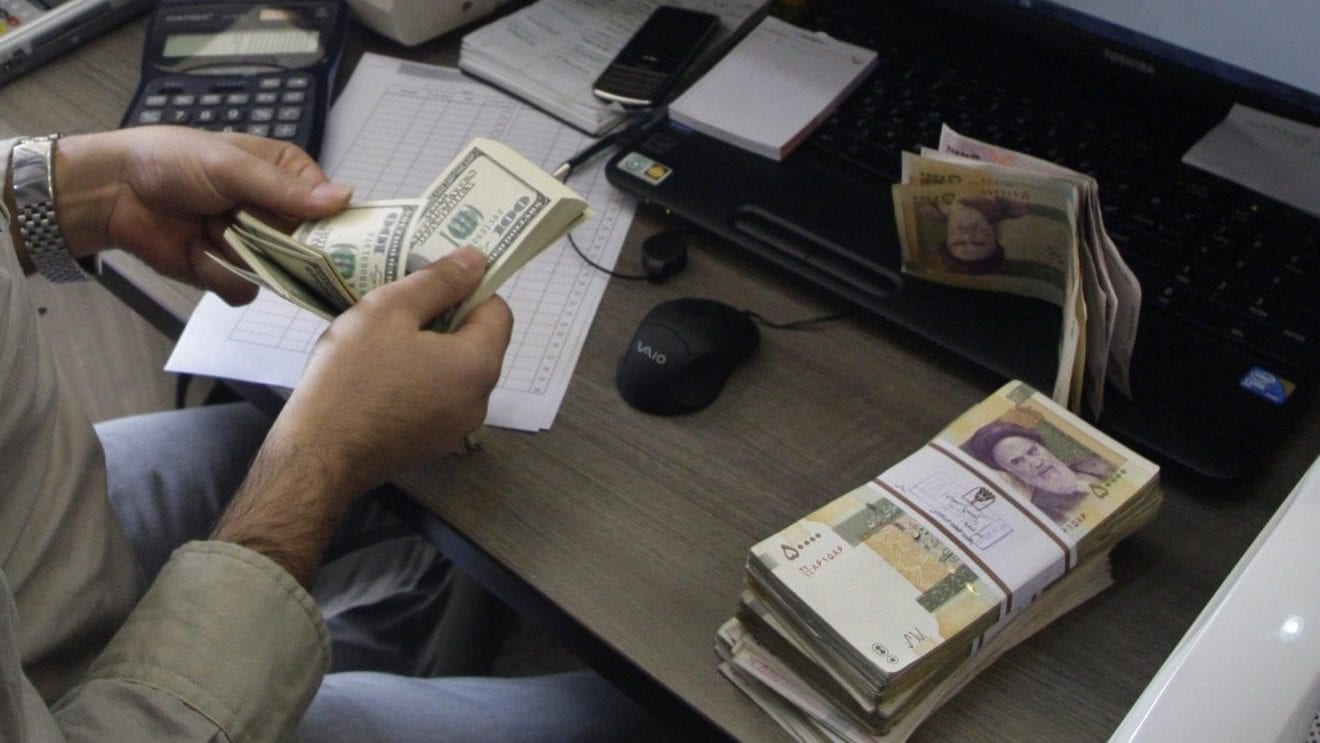
    An Iranian banking and financial delegation has paid a visit to Indonesian capital city of Jakarta to discuss facilitating banking ties between the two countries.

    During the visit, the sides called for removing the obstacles hindering the expansion of banking ties between the two countries, IRNA news agency reported Oct. 29.

    The Iranian delegation, headed by Ahmad Azizi, a high advisor to Governor of the Central Bank of Iran Valiollah Seif, pointed to the existing capacities for cooperation between the two countries and urged for broadening the ties, particularly in banking and financial spheres.

    The sides further laid great stress on the need for establishing direct banking relations between the banks of the two countries aimed at deepening trade ties.

    The delegations also agreed to keep in touch as long as banking ties are restored between Iran and Indonesia.

    Although the nuclear related sanctions on Iran were lifted following the implementation of the Joint Comprehensive Plan of Action on January 16, Iran still has difficulty establishing banking ties with leading banks as they are worried about running afoul of US regulations.

  • Bank of Ayudhya Wins Global Business Outlook 2016 Awards

    Bank of Ayudhya Wins Global Business Outlook 2016 Awards

    Global Business Outlook (GBO), a business publication based out of London, has conferred the 2016 awards for ‘Best Commercial Bank’ and ‘Best Retail Bank’ in Thailand to Bank of Ayudhya (Krungsri).

    Krungsri was established in 1945, and its ordinary shares were listed on the Stock Exchange of Thailand in 1977. The bank is currently the fifth largest in Thailand in terms of loans and deposits. Krungsri provides a comprehensive range of banking, consumer finance, investment, asset management, and other financial products and services to individual consumers, SMEs, and large corporations through 681 branches and over 28,000 service outlets nationwide. Also Krungsri Group is the largest card issuer in Thailand with 7.8 million credit cards, sales finance, and personal loan accounts in its portfolio.

    Noriaki Goto, Krungsri President and Chief Executive Officer, upon receiving the awards said: “Krungsri is honoured with the Best Retail Bank Thailand and the Best Commercial Bank Thailand for 2016 awards. They are testimony to the strength of both our retail and commercial banking businesses and the fruit of our people’s passion to deliver excellent financial products and services to our valued customers. We are proud that these efforts are recognised by such a large base of professional organizations. Driven by our customer centricity strategy, we anticipate customers’ demands and serve them through innovation and technology. Krungsri remains committed to investing for the future and delivering innovative financial products and services for both retail and corporate segments.”

  • Deutsche Bank woes may lead to job cuts in Singapore

    Deutsche Bank woes may lead to job cuts in Singapore

    The problems at Germany’s largest lender, Deutsche Bank, which has seen its share price tumble to record lows on concerns of a looming US$14 billion (S$19 billion) fine by US authorities, could raise questions over the fate of some of its 2,100-strong workforce in Singapore, analysts said on Monday (Oct 3).

    “For the German bank, the impact of negative interest rates and slower growth have affected profitability. As for the impact here in Singapore… we might find a possibility of the bank reducing headcount,” said CIMB Private Banking economist Song Seng Wun.

    “The knock-on impact on Singapore would be pressure on the labour market in the finance sector. The tough labour market within finance may get tougher,” he added.

    Singapore has been Deutsche Bank’s Asia-Pacific head office since 1988, after the lender first established a presence in the city-state in 1971, its corporate website showed. It has a wholesale banking licence here and its business lines including corporate & investment banking, global markets, asset management, and wealth management.

    When asked about possible job cuts at the Singapore office, a spokesperson for Deutsche bank said: “Singapore is and will continue to be a key hub for Deutsche Bank in Asia-Pacific, a region which delivered 14 per cent year-on-year revenue growth last year and remains a core part of our global network.”

    Deutsche Bank shares plummeted to a record low of 9.90 euros last week and were trading at 11.45 euros mid-afternoon in Frankfurt on Monday. The bank has been battling rumours that the German government may have to come up with a rescue plan in case it cannot pay the staggering fine imposed by US regulators for mis-selling mortgage-backed securities before the global financial crisis. The fine is more than twice the provision it had set aside for litigation.

    Deutsche Bank last October unveiled a sweeping plan to restore its finances, including eliminating 9,000 jobs or about 9 per cent of the global workforce, including 4,000 positions in Germany. However, unlike Australia and New Zealand Banking Group, a qualifying full bank which has slashed about 400 jobs in Singapore over the past year, any headcount reduction at Deutsche Bank here won’t likely to be as drastic, analysts said.

    “Deutsche Bank’s business in Singapore has… little retail exposure; it does more private and investment banking. The bank is still geographically strong in Singapore. It is a significant player here and would be more distant from the issues faced at the German headquarters,” said KGI Securities (Singapore) trading strategist Nicholas Teo.

    UOB economist Francis Tan said: “There will be some impact, maybe small cuts but not likely to be big for the bank. Asia is still rising, so even if there are cuts it would be more on the European side. Looking at the relative growth rates this area has compared to the Western world, it would not be a good move to cut a lot of jobs. You don’t want to kill the golden goose.”

    Global banks have been slashing headcount in the Republic against the backdrop of weak economic outlook and stricter capital rules. Besides ANZ, banks such as Barclays and Standard Chartered have let go some of their employees in Singapore over the past year.

    The crisis faced by Deutsche Bank is unlikely to be a ‘Lehman moment’, experts said, referring to the collapse of the storied US investment bank Lehman Brothers eight years ago that played a major role in the global financial crisis.

    “A lot of people who are looking at a bank like Deutsche, and easily they are comparing this to Lehman but it is not the same. If you look at the liquidity conditions of banks now, it is very different from 2008-09,” said Mr Tan.

    “Balance sheets are not as weak as eight years ago and banks are not as vulnerable as they were,” Mr Song said.