Category: Finance

Retail News Asia is committed to providing both local and global retailers with the latest Finance news throughout the Asian market. This on a daily base.

  • What’s Driving China’s Stock Market Selloff?

    What’s Driving China’s Stock Market Selloff?

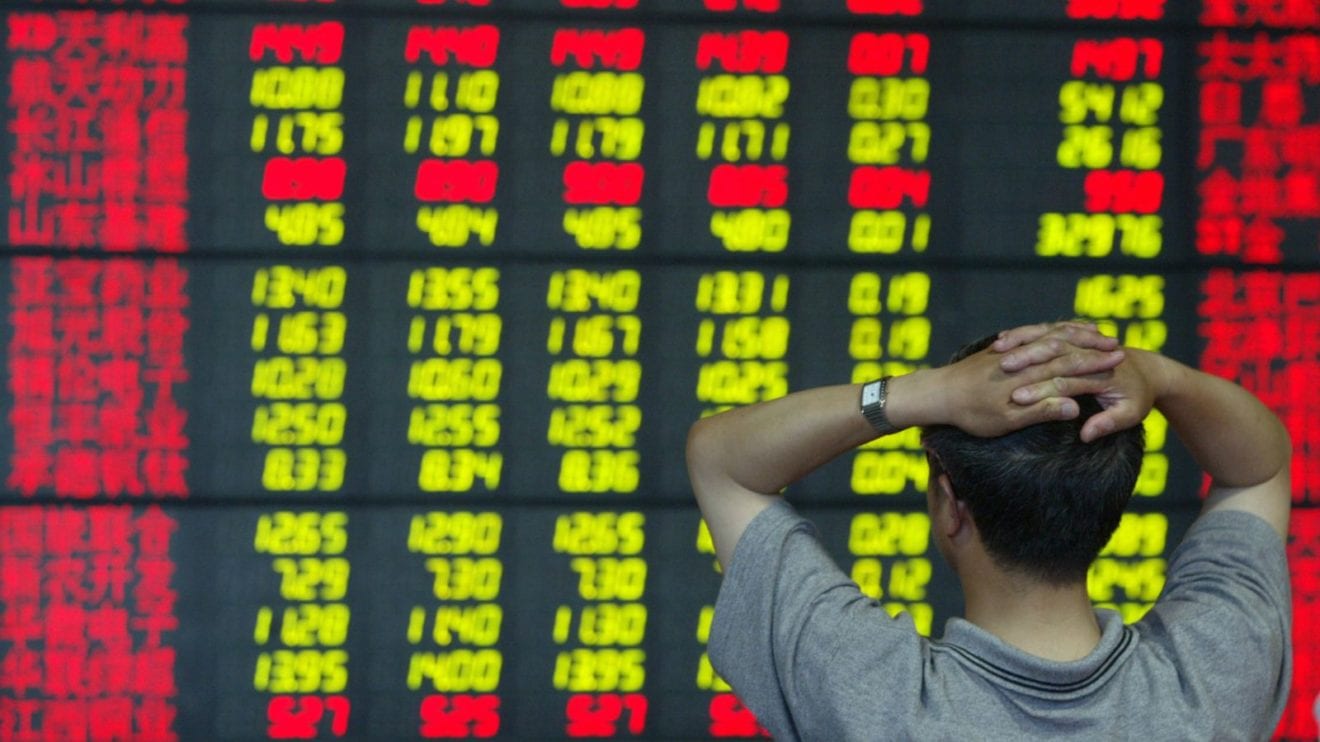
    Just as they did when Chinese stocks swooned in July, global investors appear to be learning the right lessons about China for all the wrong reasons. Investors who can see through the haze and confusion can keep picking up bargains in undervalued markets like Indonesia.

    First and foremost, the latest stock-market turmoil does not mean that China’s economy is in a meltdown. Yes, China’s economy is still slowing as investment retreats and exports decline. Spending by China’s emerging middle class remains a bright spot. But the service sector’s growth isn’t powerful enough to counteract the slowdown in China’s industrial sector. Most predictions are for growth of roughly 6.4% this year, slightly below the government’s 6.5% target.

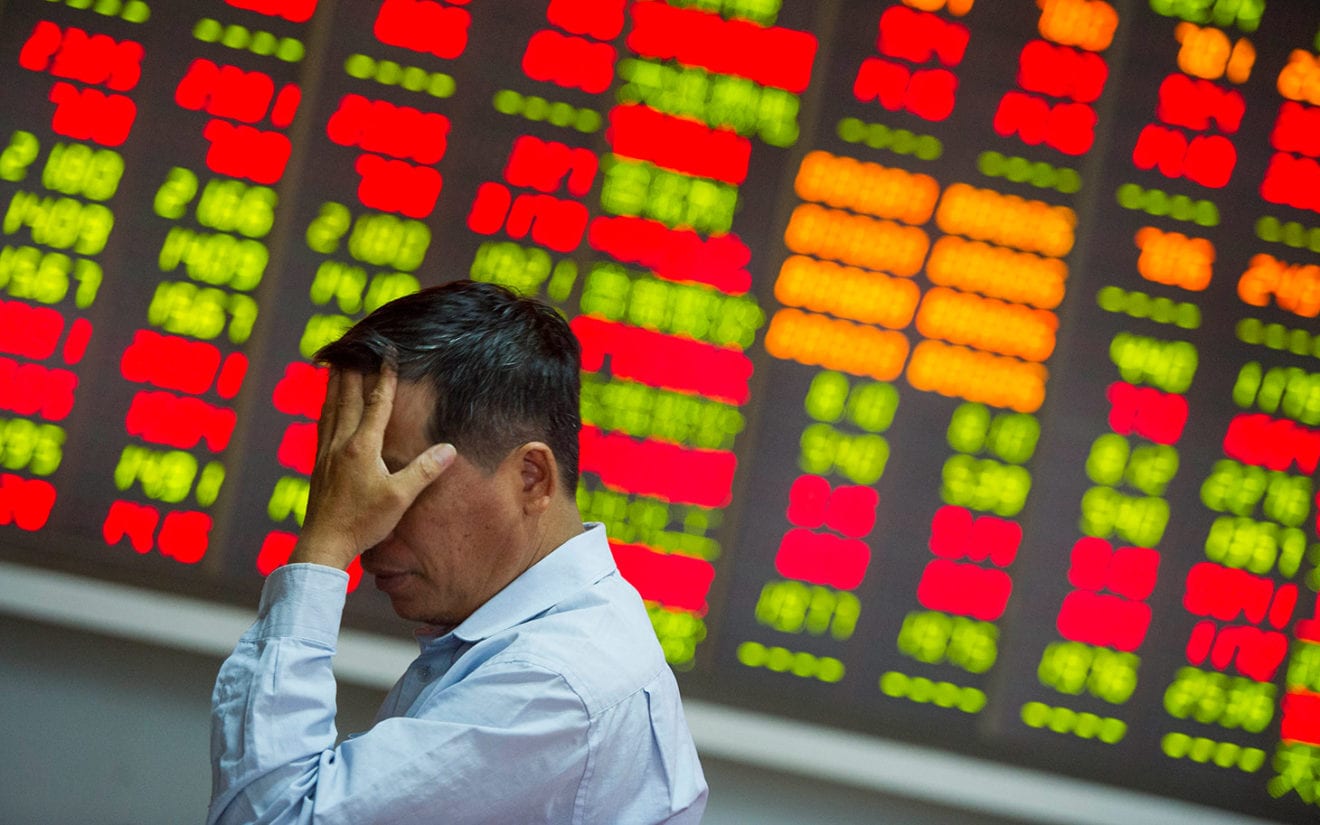
    What’s driving the selloff? Not global investors jittery about China’s growth prospects. China’s markets remain highly restricted to foreigners, who represent a tiny fraction of trading. On the contrary, trading in China is dominated by domestic, retail investors. This makes the market relatively volatile. Retail investors everywhere tend to trade more frequently are more prone to herd behavior. Many in China fled the market after last summer’s turmoil, which has left the market in the hands of an even smaller group of jittery, retail punters.

    That’s why China’s new circuit breakers turned out to be such a bad idea. Intended to halt panics so cooler heads could prevail, the trading curbs proved too narrow for a market as volatile as China’s. In the U.S., a much less volatile market, trading pauses for 15 minutes if the S&P500 drops 7% or more and halts for the day only if the index falls 20%. China’s circuit breaker imposed a 15-minute halt after a 5% drop and halted trading if its CSI300 index fell 7%, a fluctuation all too common last year. So as stocks started falling, retail investors nervous they might be frozen into positions if the circuit breakers tripped joined the stampede to sell. The circuit breakers thus heightened volatility. Realizing this, regulators scotched the breakers Thursday night.

    Most of these domestic, retail investors in the stock market aren’t middle-class consumers. They’re relatively affluent individuals who invest a conservative portion of their net worth in stocks. Volatility in China’s stock market therefore poses little threat to the overall wealth of China’s middle class and its ability to spend.

    So what caused these wealthy punters to take flight? Because China’s economy is so tightly controlled by the government, and the stock market so dominated by big government-controlled companies, investors in Shanghai have long looked to signals on policy, rather than corporate profits, to drive markets. Beijing’s intervention in the stock market last summer has only reinforced this logic. So signals over the weekend that President Xi Jinping might favor painful economic reform over feel-good stimulus measures touched off this week’s selling.

    Does that mean we shouldn’t be worried? Absolutely not. While China’s slowdown by itself isn’t enough to derail global growth, it won’t help. As times get tougher, growing labor unrest is a worrisome red flag. And the more growth slows, the more difficult it will be for China Inc. to service a mountain of corporate and local government debt that by some estimates has swelled to 250% of GDP. China is inching closer to a possible credit crisis.

    That’s particularly true now that China has removed its gloves to join the global currency war already underway between Japan and Europe. It fired a shot across the bow in August with a one-time depreciation of its currency, the yuan. Then in December, the People’s Bank of China started marking the yuan down with the currencies of China’s major trading partners.

    Some economists believe most of that revaluation lower is complete. Not likely. Central banks in Europe and Japan, which are using weaker currencies to try to revive growth, will now likely need to push their own currencies lower still, which will prompt China to nudge the yuan lower with them. That creates a vicious circle of depreciation.

    Worse, China’s decision to move the yuan lower appears to be accelerating what was already a torrent of outflows by Chinese savers eager to get their cash out of the way of the slowing economy and a widening crackdown on corruption. China is trying to discourage the outflows by cracking down on foreign-exchange transactions and even trying to influence rates for yuan offshore. But the vacuum of funds out of banks is pushing up the cost of credit, forcing the PBoC to print yet more yuan to inject into the banking system – a measure that stands to weaken the yuan even further. And Jefferies warns that liquidity is likely to tighten even more ahead of the Lunar New Year holidays a month from now.

    A weaker yuan will ultimately be good for China’s exporters and stocks. But because it inflates China’s economy by exporting deflation, the cheaper yuan is bad for economies that rely on exporting to China, like Australia, or that are using a weaker currency to try to inflate their own growth, like Japan.

    Not surprisingly, stocks in Australia and Japan suffered the biggest declines in Asia outside China this week, falling 5.8% and 5.4%, respectively. Also hit hard was South Korea, which has one of the region’s highest exposures to China’s import demand. Stocks there have dropped 2.8%.

    But the turmoil doesn’t alter the overall outlook for regional markets this column laid out earlier this week. Because it’s most likely to enjoy government support, China’s stock market is still likely to outperform its neighbors’. And stocks in a handful of Asian markets still stand to exceed investors’ rock-bottom expectations. This week’s declines have made stocks in Jakarta, for example, even more attractive.

    Comments? E-mail us at wayne.arnold@barrons.com

    Comments? E-mail us at asia.editors@barrons.com
  • Singapore retail sector kept at ‘neutral’ by OCBC, picks Sheng Siong, Thai Bev

    Singapore retail sector kept at ‘neutral’ by OCBC, picks Sheng Siong, Thai Bev

    OCBC reiterates its “neutral” stance on Singapore’s retail sector, but says opportunities exist in companies that are able to weather the current gloomy sentiment.

    The house notes that the year has started on a bleak note with volatile stock markets and a World Bank report flagging continued fears over developing economies, especially China.

    Singapore reported stronger fourth quarter growth, but the economy logged its lowest pace of growth in six years in 2015.

    OCBC believes its “picks in the sector exemplify stability and are able to ride out the gloomy sentiment.”

    OCBC has “buy” recommendations on Sheng Siong Group, QAF and Thai Beverage.

  • Top Japan bank buys 20% of Security Bank

    Top Japan bank buys 20% of Security Bank

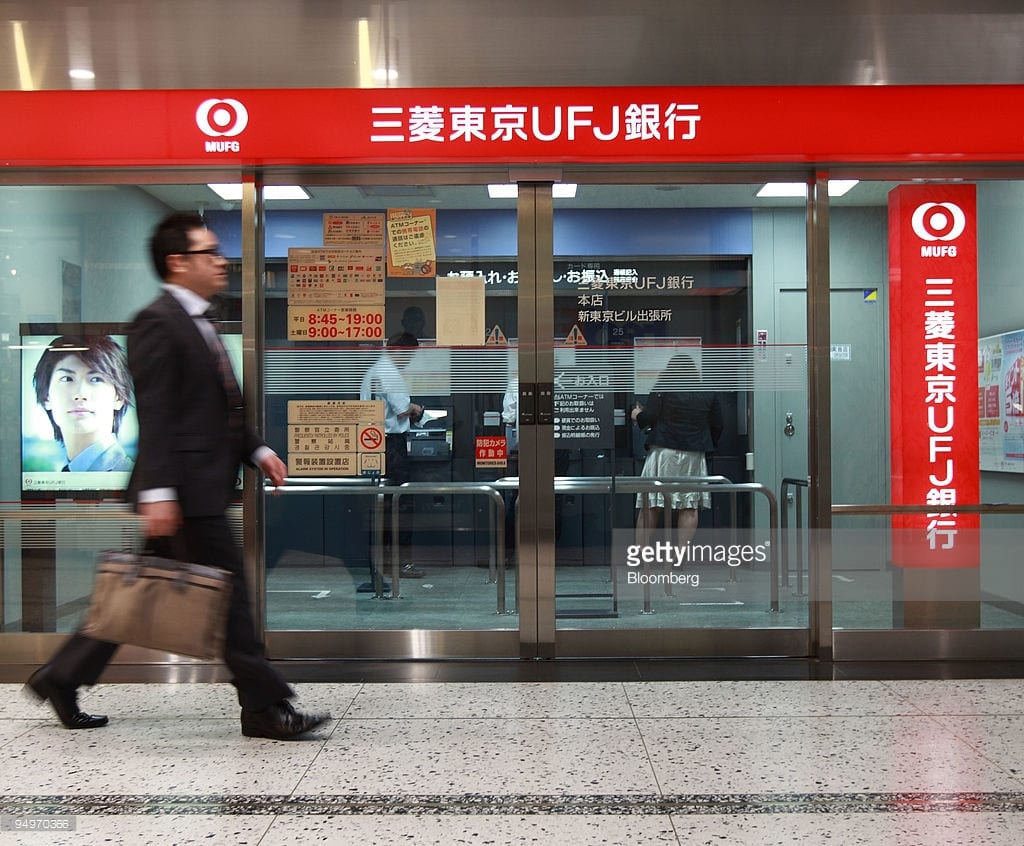
    Bank of Tokyo-Mitsubishi UFJ Ltd., Japan’s biggest bank, is buying a 20 percent stake in the Philippines’ Security Bank Corp. in a deal expected to expand both institutions’ market reach.

    Security Bank Corp. said the deal would infuse an additional P36.9 billion in capital with BTMU investing in newly issued common and preferred shares. The sale remains subject to regulatory approvals and other conditions.

    Described as the largest equity investment in a Philippine financial institution by a foreign investor, the stake sale will increase Security Bank’s shareholder capital from P52.4 billion as of September 2015 to P89.3 billion on a pro-forma post-transaction basis.

    “The additional capital will help us accelerate our strategy over the next three to five years of building our retail banking business as a third business pillar alongside wholesale banking and financial markets,” said Alfonso Salcedo Jr., Security Bank president and chief executive officer.

    Salcedo said the bank would be able to scale up its branch network much faster, from the current 262 to more than 500 branches by 2020.

    “We will be able to conveniently serve our customers with a larger network, offer them a comprehensive range of financial services, as well as make inroads into the Japanese business sector, tapping on BTMU’s expertise,” he added.

    The strategic partnership will result in BTMU, the commercial banking entity of Mitsubishi UFJ Financial Group, becoming the second largest shareholder of Security Bank.

    BTMU will be appointing two directors to Security Bank’s board, while Security Bank will become an equity affiliate of BTMU.

    The Dy Group will remain as the biggest shareholder of Security Bank with majority voting control.

    Through the partnership, BTMU aims to establish a comprehensive financial service platform, including retail banking, to meet clients’ needs in the Philippines. It has adopted similar equity alliance deals in Asia including Vietnam.

    Seeking to take advantage of the fast-growing Philippine market and the economy’s attractive fundamentals, BTMU expects to expand its business platform indirectly through the investment in Security Bank, which is known for its retail and small and medium business capabilities that will be new business areas for BTMU in the country.

    “BTMU has been focusing on Asia as one of its core markets for growth. It is a strategic intent for the bank to identify the right partner in the higher growth markets like the Philippines to deepen our presence, including through inorganic means,” said Go Watanabe, chief executive officer of BTMU for the Asia and Oceania region,
    “This strategic partnership with Security Bank reinforces our Asia strategy and enables both parties to offer more comprehensive financial services to a wider range of customers in the Philippines. We believe in Security Bank’s growth strategy and are keen to play a role and be part of its transformational journey, “he added.

    For Security Bank, the partnership with Japan’s largest banking group is expected to enhance shareholder value by accelerating the bank’s growth strategy, including the
    expansion of its branch network and increasing its retail market penetration.

    It also expects to tap BTMU’s extensive relationship with Japanese corporates, its global network, and diverse range of functions and expertise within MUFG.

    “We are elated to have BTMU as a strategic shareholder and business partner. The transaction will position Security Bank as a large independent bank supporting the growth of the Philippines’ economy, with the strength and capabilities to compete with other larger financial institutions,” said Alberto Villarosa, Security Bank chairman.

  • Thai import duties may be cut

    Thai import duties may be cut

    Thailand import duties may be cut in a move to make the nation a more attractive shopping destination for foreigners.

    The Thailand Customs Department is mulling a reduction of import duties on luxury items like clothing and accessories. While Thai retail prices overall are regionally competitive, import duties on so-called luxury items and a seven per cent sales tax make luxury branded goods, and items like fragrances, more expensive than elsewhere.

    Thailand Customs Department director Kulit Sombatsiri says the department is studying the implications of the move to ensure it will not affect local businesses, and might limit the reduction to selected products that Thailand does not make.

    This move follows a proposal from the private sector that claims the reduction would boost tourist spending, the Post Today reported. Import duties are 30 per cent for most luxury items.

    Other major Asian shopping hubs such as Hong Kong and Singapore do not impose import duties on luxury items.

  • China’s stock market like a casino, only riskier

    China’s stock market like a casino, only riskier

    The one thing to remember about the Chinese stock market is that it operates so differently from U.S. and European markets. First off, the China market is dominated by retail investors, who treat it very much like a casino. Look at this chart:

    There are more than 200 million trading accounts in China. That’s the same size as America’s adult population. And that’s one of the main reasons we’re seeing so much volatility. FIS Group in a recent report said that more than 90 percent of capital accounts are owned by retail investors, suggesting the wild moves in Chinese stocks is primarily driven by “their market structure” and “trade momentum.”

    Even though we’ve seen huge drops in the last week, let’s not forget how massive the spikes up have been in the past 10 years. Chinese stock market volatility makes the S&P 500 look almost like a flat line.

    Another way to see it: the difference between small and large caps.

    Of course small caps anywhere tend to move more than large caps — but in China, that difference is bigger, especially in the past months.

    Remember, many Chinese large-cap stocks are primarily state-owned enterprises, so retail traders generally look toward smaller companies to make their quick bucks.

    Wu Jinglian, a veteran economist, has said comparing Chinese markets to a casino is actually unfair — to the casinos. He said that at least the casinos have stronger rules, and don’t have price manipulation.

    That’s why when bad news in the economy happens, a spooked and scared set of retail traders will be much quicker to bail versus the more professionally dominated U.S. market.

  • China imposes fresh stock-sale restrictions

    China imposes fresh stock-sale restrictions

    China’s securities regulator will suspend its newly implemented circuit-breaker mechanism designed to tame market volatility after it exacerbated stock sell-offs and shut down equity trading early twice in one week.

    The China Securities Regulatory Commission announced late on Thursday night that the circuit-breaker system would be halted from Friday, only four days after introduction, without saying how long the suspension will last.

    “It didn’t work out as expected… Currently the negative effect is bigger than the positive one. Therefore, we have decided to suspend it in order to maintain market stability,” the CSRC said in a statement posted on its Weibo account.

    The regulator implemented the mechanism on Monday, hoping to offer a “cooling period” when there are sharp fluctuations in the market and therefore stamp out the wild swings.

    A move of 5% in either direction on the CSI 300 Index, China’s blue-chip tracker, triggered a 15-minute trading halt for stocks, convertible bonds, stock options and futures contracts. A swing of 7% froze trading for the rest of the day.

    Previously, individual Chinese stocks were only allowed to rise or sink by a maximum 10% per day.

    Circuit-breaker controversy

    However, the new mechanism appears to have amplified the panic among investors and prompted new waves of selling in response to sluggish economic data and renminbi weakening, according to some market players and equity analysts.

    Hong Hao, chief China strategist at Bank of Communications in Hong Kong, said circuit-breakers could easily pose threats to market liquidity and investor sentiment.

    “Clearly the tight stops of 5% and 7% of China’s circuit breaker have a magnet effect as prices gravitate towards the breaker [striking points] and prompt a stampede that drains market liquidity,” he said.

    The circuit-breaker system halted trading early on Thursday for the second time in a week, following its first use on Monday. The close of a 14-minute trading session in Shanghai and Shenzhen on Thursday morning also marked the shortest in the country’s history.

    “There are huge risks to introduce it in China now as irrational, retail investors are not really for it. When they see the market fall by 3%, they will only want to sell rather than buy. Then it could soon trigger the trading halt. Then there’s no liquidity,” one Hong Kong-based senior investment banker at a Wall Street bank told FinanceAsia.

    Fresh stock-sale restrictions

    Earlier on Thursday, the CSRC also introduced fresh restrictions on stock sales. It announced new rules to prohibit large shareholders and company directors or managers with stakes of more than 5% from selling more than 1% of their outstanding shares every three months.

    In a separate statement, the CSRC said the new rules would help to “defuse panic sentiment” among investors and would not lead to a new peak of stock selling. “There’s no basis to say they will lead to sharp falls in the market.”

    The new rules, which will come into effect on January 9, require stock sales to be conducted through a centralised auction system and major shareholders to disclose equity-disposal plans 15 days in advance.

    “The 15-day heads-up could more or less dilute the impact on the market – as retail investors know which company’s major holders plan to sell shares. Retail investors can exit their positions first,” said one Beijing-based fund manager at Citic Securities.

    The new measures, which will apply to significant stakes held when a company listed, replace an existing ban set to expire on Friday.

    Beijing in early July imposed a six-month curb on stock selling by major shareholders as part of a raft of controversial measures introduced in the summer to prop up sagging markets.

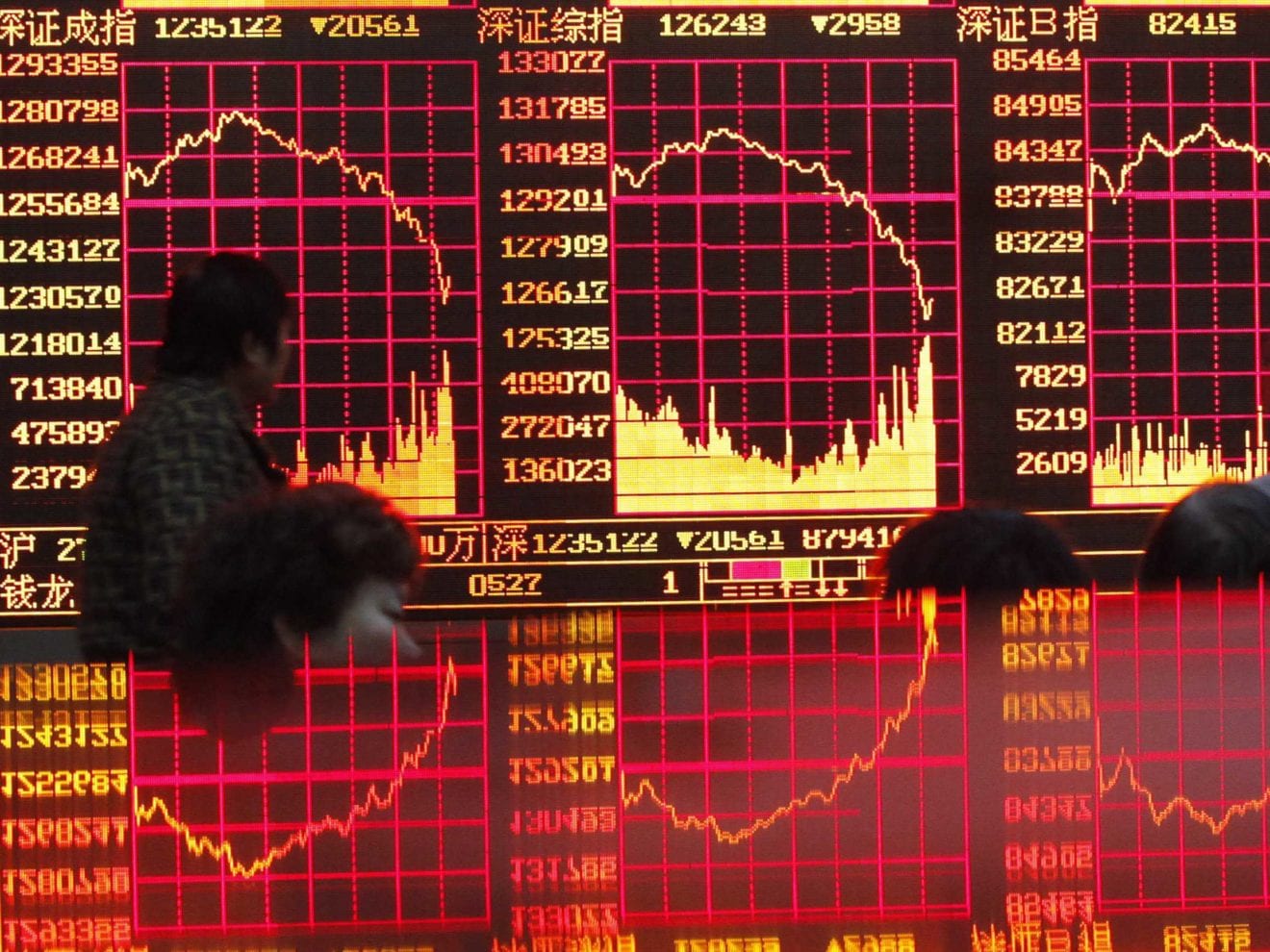
    China’s stock market, dominated by retail investors, has been one of the most volatile in the world over the last 18 months, with the Shanghai Composite index advancing by as much as 150% in a year-long rally running through mid-June, before plunging 43% by late August. It recovered somewhat in the subsequent months, and plunged again into 2016.

    Hong at Bank of Communications told FinanceAsia earlier on Thursday that the new restrictions alone would be “useless to stem the market plunge as the top priority now is either to abolish the circuit breaker mechanism or improve it.”

    Some of China’s retail investors have tried to use humour on social media platforms like Wechat and Weibo to deal with the new circumstances.

    One wag said the new circuit breakers were like having a girlfriend with a bad temper: “If she’s angry with you and you fail to cheer her up in 15 minutes, she won’t be talking to you for the rest of the day.”

  • China’s stock market is a clown show

    China’s stock market is a clown show

    Just as “bad cases make bad law,” to cite the ancient legal adage, bad stock markets make for bad investment decisions. China’s stock market, with its repeated crashes, has the entire world in a tizzy.

    The Shanghai stock exchange experienced its shortest trading day ever on Wednesday, as circuit breakers designed to end trading if the market slid 7% kicked in after only 14 minutes of active trading. As reported, the Shanghai Composite has dropped about 12% this year, and the Shenzhen composite has fallen more than 15%.

    Investors in the U.S. have taken the opportunity to sell. As of Thursday’s close, the Standard & Poor’s 500 index is down 4.67% from the opening bell for 2016 trading Monday, theNasdaq has lost 4.29%, and the Dow Jones Industrials have shed 5.12%. European stocks have marched over the cliff in tandem.in the U.S. took the opportunity to sell. As of Thursday’s close, the Standard & Poor’s 500 index is down 4.67% from the opening bell for 2016 trading Monday, the Nasdaq has lost 4.29%, and the Dow Jones Industrials have shed 5.12%. European stocks have marched over the cliff in tandem.

    The world should take a deep breath. The China stock market meets the definition of a bad stock market.

    The market is the target of relentless intervention by the Chinese government, which has been setting investment rules and tweaking them without any evident understanding of how open markets work. Adding to the chaos, the market was inflated by an inflow of small investors buying on huge margins — a notoriously skittish class of investors buying under conditions that made them especially vulnerable to the market’s volatile swings.

    Last April, as Evan Osnos of the New Yorker reported, the official organ of the Chinese Communist Party exhorted citizens to plunge into the market. An upsurge of more than 80% in four months was “merely the start of a bull market.” Investors should take heart from the government’s determination to keep Chinese companies strong.

    “Over the next two and a half months, investors opened thirty-eight million new stock accounts, more than quadruple the number of accounts opened in all of 2014,” Osnos wrote. “Retail exchanges, equipped with audience seating, attracted retirees and other small-time investors who spent hours scanning the digital displays, like visitors to the dog track.”

    This was a bubble primed for pricking. But that wasn’t all. On July 8, during a major market crash, Chinese regulators imposed a lockup on shareholders owning 5% or more of their companies, prohibiting them from selling for six months.

    The effect of lockups is well understood in mature stock markets; they tend to create latent bearish pressures as the expiration approaches. That expiration was due for Friday, Jan. 8, plainly creating some of the downdraft witnessed this week.

    The circuit breakers are another source of trouble. Introduced Jan. 4, the rules halt trading for 15 minutes after a 5% drop in the benchmark CSI 300 index, and stop trading for the rest of the day when the index falls 7%. They were triggered on day one, and again on Wednesday.

    Circuit breakers exist in U.S. markets, but critics say they’re cinched too tight in China, where 5% swings have been far more common. In the U.S., trading is shut down only if the Standard & Poor’s 500 benchmark falls 20% in a day.

    Adding to the confusion is that Chinese authorities lack the courage of their own convictions. On Wednesday, regulators tried to keep the bear caged by extending the stock lockup for three more months, albeit in modified form–big shareholders could sell, but only up to 1% of their companies’ shares. And following the circuit-breaker meltdowns of Monday and Wednesday, they scrapped the circuit-breakers themselves, a clear indication that they were not implemented properly in the first place.

    Among other signs of the immaturity of the markets and their regulators are stiff limits on short-selling–after a market crash this summer, the Shanghai and Shenzhen exchanges banned one-day short sales, in which traders place short orders and cover them on the same day. Mature exchanges understand that short selling is an indispensable relief valve for overheated bull markets.

    All these features, artifacts of the government’s inclination toward intervention in the stock market on the bull side, make the market an unreliable gauge of economic trends, many critics say. (Though they’re not unanimous — last February, economists at MIT and New York University argued that the market had matured to the point that it was providing reasonably accurate signals about future corporate earnings. “China’s stock market no longer deserves its reputation as a casino,” they wrote.)

    None of this means that there’s not cause to be concerned about the Chinese economy and its effect on world markets. Underlying the Chinese market plunge are signs that the world’s second-largest economy is slowing down, and that government economic officials aren’t fully up to the task of managing it.

    They’ve been frantically depreciating the Chinese yuan, which will put pressure on the nation’s trading partners by making Chinese exports more competitive and imports more expensive. The rapid depreciation sends a signal, moreover, that policymakers are getting to the end of their stimulative arsenal.

    Adding to uneasiness about government policy, no one has ever been entirely certain about the pace of China’s economic growth because its official figures are untrustworthy. Gross domestic product may have been overstated as much as three-fold, some observers believe.

    There’s no question that cracks in the Chinese economy are worrisome, but the wild swings of the stock market may be exaggerating the mood of panic. It makes sense for investors worldwide to keep their eye on the economy, but the stock exchanges? Just watch the ride.


  • 2015 ends well for private sector in Singapore

    2015 ends well for private sector in Singapore

    Last December proved another positive month for the private sector, with overall business and operating conditions holding up.

    The Nikkei purchasing managers’ index (PMI), which is a proxy for business activity, inched down from 52.2 in November to 52.1 last month. A reading of above 50 signals expansion.

    Output growth was sustained and still noticeable, despite the slight decline since November.

    An official PMI representing only factory activity, out on Monday, indicated a sixth consecutive month of contraction in the manufacturing industry, with a reading of 49.5 for last month, from November’s 49.2 reading.

    The Nikkei Singapore PMI is derived from a survey by Nikkei and Markit Economics. Data is compiled from monthly questionnaires sent to executives in over 400 private sector firms that represent the structure of Singapore’s economy, including manufacturing, services, construction and retail.

    The report said: “The health of the economy has now strengthened in each of the past seven months, though the rate of improvement remained moderate overall.”

    It found that foreign client demand softened last month owing to new export-order growth slowing to a modest rate since November.

    Costs for firms also rose at the quickest rate in 11 months, said to have been driven by faster increases in both purchasing prices and staffing costs. “Companies only passed on part of their higher cost burdens, however, and raised their selling prices marginally,” said the survey.

    Economist Annabel Fiddes at Markit said: “Firms took a cautious approach to employment and purchasing activity, with staff numbers little changed in December and input buying rising only slightly.”

    She said this suggests that growth projections for the start of this year remain muted, as companies wait for a “much- needed pick-up in client demand”.

  • European Stocks Fall on North Korea Bomb Test

    European Stocks Fall on North Korea Bomb Test

    European shares fell on Wednesday as a self-professed bout of nuclear testing by North Korea and a falling renminbi rattled investors.

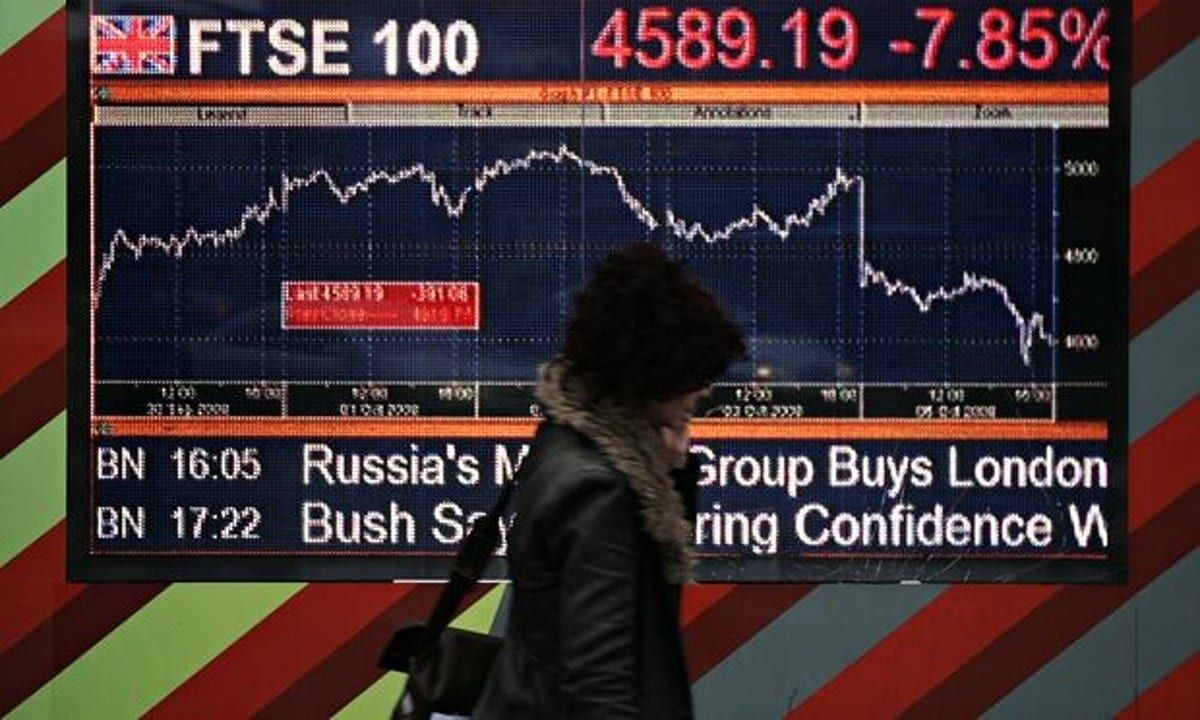
    By late morning in London, the FTSE 100 was down 1.33% at 6,055.53. Mining stocks, as leaders BHP Billiton (BHP) and Rio Tinto (RIO) led the benchmark lower.

    In Frankfurt, the DAX was down 1.31% at 10,175.31 and in Paris the CAC 40 was down 1.36% at 4,475.91. Volkswagen (VLKAY)  extended Tuesday’s losses in Frankfurt amid fears of hefty legal costs in the U.S. over emissions-tests rigging.

    After the Chinese central bank set the renminbi reference point at a weaker-than-expected level, the currency fell to a five-year low against the dollar. Meanwhile, North Korea claimed to have tested an underground hydrogen bomb, although some international observers were skeptical.

    Final eurozone purchasing managers’ data from Markit Economics came in better than expected in December, with the composite index, which melds the service sector with factory output, unexpectedly rising to 54.3, taking it further above the 50 threshold which separates economic expansion from contraction. Initial December data had pointed to a reading of 54.0. However, weak European Union producer price data for November later took the sheen off those Markit figures.

    Construction and engineering company Costain was up almost 2% in London after it reported record orders worth £3.9 billion ($5.7 billion) in 2015, including £2.8 billion-worth of revenue that Costain will accrue in 2017 and beyond. It will release its full 2015 results on March 2.

    Retailer Topps Tiles was up about 1.3% after reporting same-store sales growth of 4.4% in its first quarter.

    Another retailer, Card Factory, was up 1.8% as it announced that Christmas trading had met its expectations. It said CEO Richard Hayes would retire and be replaced by Karen Hubbard, the chief operating officer of discounter B&M European Value Retail.

    Insurer NN (NNGPF) was up almost 3% at €32.10 in Amsterdam after ING cut its stake to 16.2% from 25.8%. ING sold the shares at €31 in an accelerated book build, raising €1 billion ($1.1 billion). NN itself bought 8 million of the 33 million shares on offer.

    Many Asian indices fell as the renminbi and emerging-market currencies retreated.

    In Seoul, stocks were mixed, with the main index closing up 0.47% at 687.27 after the North Korea H-bomb claim. But Chinese stocks recovered after a state media outlet reported that Chinese securities regulators would extend a six-month ban on share selling by major investors until permanent rules were put in place. The ban would otherwise have expired on Friday. The Shanghai Composite closed up 2.25% at 3,361.84 and the Shenzhen Component index gained 2.24% to close at 11,724.88.

    In Hong Kong, the Hang Seng closed down 0.98% at 20,980.81.

    Shares of New World China Land closed up almost 21% in Hong Kong at HK$7.49 per share after majority shareholder New World Development offered HK$7.80 per share to take the company private after a previous attempt failed to garner sufficient shareholder approval in June 2014. The new offer values the stock at HK$67.8 billion ($8.7 billion).

    In Tokyo, the Nikkei 225 closed down 0.99% at 18,191.32 and the Topix fell 1.05% to close at 1,488.84.

    In Sydney, the S&P/ASX 200 closed down 1.18% at 5,123.13.

  • Bank Mega, official Barcelona bank in Indonesia

    Bank Mega, official Barcelona bank in Indonesia

    FC Barcelona and Bank Mega signed a Regional Partnership Agreement last December to officially confirm the latter as FCB’s Official Bank in Indonesia. The representatives of the Club at the signing ceremony included Manel Arroyo, Vice Chairman, Francesco Calvo, Chief Revenue Officer and Xavier Asensi Brufau, Managing Director – Asia Pacific, while Bank Mega was represented by Kostaman Thayib, President Director and Dodit Wiweko Probojakti, Managing Director of Cards and Loan.

    The agreement makes Bank Mega Barça’s first ever banking partner in Indonesia. Holders of Mega Barça cards will have various advantages, such as the chance to win tickets for Barça games at Camp Nou, extra rewards for purchases at FCB’s official Asian online store, the chance to win exclusive FCB gifts and more. Savings Account customers that meet specific requirements will also receive special FCB souvenirs. The program will be launched in the first quarter of 2016.

    About Bank Mega

    Bank Mega is one of the largest card issuers in Indonesia under CT Corpora holding company. Bank Mega has a network of 345 branches across Indonesia.

    The bank strengthens the synergy of companies under the management of PT CT Corpora, such as Carrefour and Metro, as well as improving credit card services, a factor that distinguishes Bank Mega from the competition.

    “Bank Mega is the perfect bank to be the Official FC Barcelona Bank in Indonesia” said Manel Arroyo. “We are delighted to form this partnership and reach our massive fan base in Indonesia and show our appreciation to the fans through various partnership programs. Bank Mega is one of the top three credit card issuers in Indonesia, and it has strong synergy with retail companies under CT Corpora. We are confident that this partnership will be beneficial to Barça fans. We look forward to a long and mutually beneficial relationship with Bank Mega.”

    “This partnership is based on Bank Mega and FC Barcelona’s intention to provide benefits for the over 26 million Barça fans in Indonesia” added Kostaman Thayib, President Director of Bank Mega. “This partnership brings co-branded products that could enhance the fans’ identity as part of the Barça family and provide different benefits with exclusive programs from Bank Mega’s various products and services, including co-brand payment cards. Ultimately, the fans will have the money-can’t-buy opportunity to meet Barça players in person.”

    Mr Thayib also mentioned that the partnership will launch co-branded Mega – Barça cards, which will be specially designed for FC Barcelona fans in Indonesia.


  • Singapore risks fading into investment backwater as market cap shrinks

    Singapore risks fading into investment backwater as market cap shrinks

    Fresh off its worst year for listings in at least two decades, the Singapore stock market now faces the threat of fading into an irrelevant backwater for global investors as large privatisations, small floats and a broad-based equities slump continue to erode its market value and appeal, market watchers warn.

    With the number of initial public offerings (IPOs) here falling in 2015 to its lowest annual level since the Singapore Exchange (SGX) opened its doors in late 1999, the local share market has been left in the dust by regional rival Hong Kong as of late, while its neighbours in South-east Asia have begun to nip at its heels.

    One crucial and worrying sign is that the sharp slide in Singapore’s total market capitalisation in 2015 reflects evaporating liquidity, decreasing depth and a sore lack of interest in raising funds here as attention turns to markets with brighter prospects, analysts and asset managers say, adding that this trend could well turn into a vicious cycle.

    The total market value of stocks listed on the Singapore Exchange added up to about US$463.46 billion at the close of trading on Dec 31, 2015, going by a Bloomberg gauge based on actively traded primary securities and stripping out exchange traded funds and ADRs (American depositary receipts).

    This number would make the entire Singapore market cap smaller than that of Nasdaq-listed Apple, which weighed in at around US$586.86 billion at the end of last week. It also marks the Singapore market cap’s lowest level since hitting US$464.41 billion at the end of 2011.

    Singapore’s market cap shrank a sharp US$107.18 billion or 18.8 per cent from a year ago, according to Bloomberg data. The bulk of the drop was due to a broad-based equities slump that also put a dent in other bourses across Asia. The Straits Times Index fell 14 per cent in 2015 to finish the year at 2,882.73 points, down from 3,365.15 at the end of the previous year.

    But another significant factor is a handful of big delistings that has occurred alongside a persistent dearth of sizeable initial public offerings (IPOs), analysts say.

    “Privatisations of many large companies in the last few years, especially in the property sector, have shrunk the investable pool of stocks in Singapore,” said Kum Soek Ching, head of Southeast Asia research at Credit Suisse Private Banking Asia Pacific.

    “The absence of large and meaningful IPOs in recent years have also not been supportive to the total market cap of Singapore … With less market participants, a smaller-cap market can suffer from liquidity issue during periods of stress.”

    Large delistings in 2015 included that of conglomerate Keppel Corp’s property arm Keppel Land in July. KepLand had a market value of S$6.56 billion, based on 1.55 billion shares outstanding and the takeover price of S$4.38 per share that KepCorp paid.

    Engineering firm UE E&C, which was worth S$337.5 million based on an offer price of S$1.25 for 270 million shares, was taken over by a private equity firm and delisted in March. Bookstore chain Popular Holdings also delisted in May. It had had a market value of around S$255.07 million, based on offer price of S$0.32 and about 797.09 million shares outstanding.

    The declining total market cap points to an increasing lack of interest from companies in tapping equity capital markets here.

    Against the market values of the delistings last year, there was just S$339.18 million in total IPO fund- raisings in 2015. All but one of the 13 public floats here last year were Catalist listings, and the average IPO size worked out to around a puny S$26 million.

    The number of IPOs and the total IPO funds raised last year were the smallest in at least two decades, going by newspaper reports. Up until 2015, the SGX had not seen fewer than 20 public floats a year. In the depths of the global financial crisis, the year 2008 had 22 IPOs raising US$931 million while 2009 had 23 floats that raised about S$3.21 billion, according to media reports then. Even in 1998, with the Asian financial crisis, SGX managed to rake in 20 IPOs that raised about S$406 million.

    Several Singapore-based companies are also eschewing a local listing for an overseas float. Aircraft leasing firm BOC Aviation said last year that it wanted to list in Hong Kong. A Singapore medical company that develops treatments for Alzheimer’s also said recently that it was gunning for a Nasdaq IPO, according to media reports.

    The recent trend of substantial privatisations and tiny IPOs could continue to reduce Singapore’s market cap this year, which market watchers say does not bode well for local stocks’ investment appeal.

    “Investors, especially foreign institutions, like liquid markets, and market liquidity correlates with market size. Institutional investors take a silo approach and allocate to illiquid private equity and liquid listed equity, where they seek and expect liquidity,” said Bryan Goh, chief investment officer at wealth manager Bordier.

    Dealmakers have already hinted that they expect 2016 to be characterised by Catalist IPOs, and a couple of large delistings are already on the cards. French shipping firm CMA CGM is trying to privatise Neptune Orient Lines (NOL), which had a market cap of S$3.2 billion at end-2015. Singapore Airlines is also trying to delist Tiger Airways, which had a market cap of around S$1.03 billion as at Dec 31.

    Ms Kum added that the size of a market’s total capitalisation would determine its weighting in indices such as the MSCI that institutional investors use as benchmarks. “A market with a small weighting may become irrelevant for institutional investors, unless it has a very compelling story.

    “With a lower index weighting, the Singapore market risks losing its relevance and importance to institutional investors. Private investors may also increasingly need to avail themselves of more investable options in overseas markets, in order to preserve or grow their wealth, creating a vicious cycle in diminishing the market size and relevance.”

    According to Bloomberg data, Hong Kong had a total market cap of US$4.105 trillion at end-2015, nearly nine times that of Singapore. It also eclipsed Singapore in terms of IPO fund-raising last year, raising more than 160 times the total figure in the Republic. Japan’s market cap is nearly 11 times that of Singapore and the US is nearly 51 times as large.

    To makes matters gloomier, other countries in South-east Asia, which have so far remained smaller than Singapore in terms of total market value, are beginning to catch up.

    The gap between Singapore’s and Malaysia’s market cap was US$117.98 billion in 2014; that shrank 27 per cent to US$86.35 billion in 2015. For Indonesia, the gap with Singapore narrowed 24 per cent from US$148.68 billion to US$113.34 billion, while the gap between Singapore and Thailand was reduced by 16 per cent from US$154.85 billion to US$130.53 billion over the same timeframe.

    IG market strategist Bernard Aw noted: “We are always in competition with other bourses, and failing to increase or retain investors’ interest is akin to a kiss of death. This is why Singapore is trying to attract investors’ interest back via initiatives such as the introduction of new equity indices which are sector-specific.”

    However, some market watchers said there were still things to like about the Singapore stock market.

    “Singapore does not necessarily lose its shine as an investment destination as a result of its market cap declining or being relatively smaller than that of other global financial hubs,” said Andrew Wood, head of Asia country risk at BMI Research.

    “It is really the quality of the firms listed in that market as well, the maturity of the financial markets framework, along with other factors such as the political risk and macroeconomic risk environment in that country. Singapore scores very well for the last three criteria.”

    Though he cautioned that Singapore “could lose out if it is seen as a less attractive environment for IPOs, and a shrinking market cap could speak to a relatively shallower capital market”, Mr Wood said Singapore could still remain attractive for investors due to its regulatory environment and its macroeconomic and political stability.

    Hugh Young, Asia managing director of Aberdeen Asset Management, also remained optimistic. Though he noted that “the reality is that for many of the world’s largest investors, Singapore is a backwater given its size and relative lack of liquidity”, he said market size should not matter for “true investors looking for great investments”.

    “Of course for the more thorough investor, small markets and small companies can be a profitable hunting ground as they can be overlooked and neglected … All in all, it’s not something I would overly worry about although for many it can be a matter of pride – ‘we’re better because we’re bigger’. Size is not everything.”

  • Singapore consumer confidence in Dec above long-term average

    Singapore consumer confidence in Dec above long-term average

    Although currently weak in personal finances, consumers in Singapore have expressed confidence over the next five years. This has led December’s level of consumer confidence to rise to levels above the long-term average, according to the results of the ANZ-Roy Morgan Singapore Consumer Confidence survey released on Wednesday.

    The ANZ-Roy Morgan Singapore Consumer Confidence for December rose to 126.5, above the long-term average of 123.7. This month’s index is also higher than last December’s 121.8.

    In terms of personal finances, a smaller proportion of respondents think they are better off financially, with 29 per cent (or down by 2 percentage points) saying their families are “better off” than a year ago. At the same time, 8 per cent (down 2 percentage points) said they are “worse off” financially.

    Respondents are still doubtful about near-term prospects, with an unchanged proportion, or 32 per cent, saying that their family will be “better off” financially in a year’s time. Eight per cent (up one percentage point) expect to be worse off.

    On economic conditions in Singapore going forward, exactly half of respondents (down 2 percentage points) expect Singapore to have “good times” financially over the next 12 months, compared to 11 per cent (unchanged) who expect “bad times”.

    Over the longer term, half (up 2 percentage points) of respondents expect Singapore to have “good times” financially during the next five years and 11 per cent (down 3 points) expect to fare badly.

    Shopping sentiment is still strong. Twenty-three per cent (up 4 points) of respondents say now is a good time to buy major household items, while 13 per cent (down a point) think it’s not worth it.


  • DBS Indonesia upbeat, eyes higher loan growth in 2016

    DBS Indonesia upbeat, eyes higher loan growth in 2016

    Private lender Bank DBS Indonesia, part of Singapore’s DBS Group Holdings, expects higher loan growth this year compared to 2015 as it predicts an improvement in the country’s economy.

    DBS Indonesia president director Paulus Sutisna said the bank projected that its loans would grow by 12 percent in 2016, higher than the 10 percent booked as of last year.

    According to its financial report, the bank booked loans of Rp 43.4 trillion (US$3.11 billion) as of September, an increase of 9.87 percent year-on-year (yoy) from Rp 39.5 trillion in the same period of 2015.

    “We are more optimistic about this year because the government is holding early auctions and procurements for its spending on infrastructure projects. Such acceleration will help the country’s economic growth,” Paulus said after an event on Wednesday.

    Paulus said acceleration in government spending would boost the real sector, which in turn would increase demand for bank loans, adding that “our growth will depend on the performance of our clients”.

    Given Indonesia’s large population the bank will focus on sectors related to the mass segment such as retail and consumer goods and some types of manufacturing and infrastructure-supporting industries.

    “We’ll still focus on some commodities, such as palm oil, as well as automotive, chemical and pharmaceutical industries,” he said.

    Paulus said the bank was also planning to enlarge its consumer and retail banking as well as small and medium enterprise (SME) portfolios as it still depended mainly on the corporate segment.

    “Corporate banking is dominant now as our retail business is still under 20 percent of our total lending. We hope to divide evenly our consumer and retail banking, SME and corporate portfolios by one-third each, perhaps in the next five to seven years,” he said.

    The government has forecast that Indonesia’s economic growth will reach 5.3 percent in 2016. The country’s GDP growth stood at 4.73 percent for July to September, a slight increase from the 4.67 percent growth posted in the second quarter and 4.72 percent in the first three months of the year.

    Despite the optimism, Paulus said the bank would remain cautious about various challenges in the global economy that still lingered, such as falls in commodity prices and currency volatility, as they would have an impact on Indonesia.

    Challenges in the global and domestic economy also affected DBS Indonesia’s income as it saw losses of Rp 178.9 billion as of September 2015, compared to net profits of Rp 366 billion in the same period last year. However, the bank’s unaudited financial report in November shows that it already started to post net profits of Rp 23.79 billion.

    Paulus said the bank would also invest in internet banking, which was essential to support a bigger consumer portfolio in the future, especially in fee-based income.

    As part of its efforts to grow fee-based income, the bank has enhanced its existing partnership with life insurer Asuransi Jiwa Manulife Indonesia, part of Canada’s Manulife Financial, through the launch of a new single-premium, unit-linked product MiWealth Protection.

    The new product is designed for DBS customers who wish to grow their wealth in order to be financially secure and enjoy their life in retirement. DBS Indonesia consumer banking group director Wawan Salum said the bank expected 20 percent growth in the number of wealth-management customers this year.

  • Canada’s Manulife seeks to revive Singapore REIT IPO this year -exec

    Canada’s Manulife seeks to revive Singapore REIT IPO this year -exec

    Canada’s Manulife Financial Corp is looking to revive a plan to list a real estate investment trust in Singapore this year after an initial public offering (IPO) was shelved last year due to poor market conditions.

    “We’d very much like to bring it back,” Chief Financial Officer Stephen Roder told reporters at the launch of a 15-year life bancassurance partnership with Singapore’s DBS Group Holdings Ltd on Tuesday. He did not give an exact time frame or expected size of any IPO.

    Manulife shelved a nearly $400 million real estate investment trust IPO in Singapore in the third quarter last year citing deteriorating global markets.

    That left BHG Retail REIT as Singapore’s sole REIT IPO last year after several other deals were pulled due to uncertain financial markets and concerns over the impact of a potential U.S. interest rate hike.

    On Tuesday, Manulife and DBS also said they would co-invest up to S$100 million ($70.24 million) over the next 15 years in digital technology and innovation.

    ($1 = 1.4237 Singapore dollars)

  • Gaisanos,Korea’s Woori Bank team up on banking

    Gaisanos,Korea’s Woori Bank team up on banking

    THE GAISANO family has taken in Woori Bank of South Korea as a strategic partner in thrift bank subsidiary Wealth Development Bank Corp. to brace for stiffer competition in the banking system.

    Cebu-based Vicsal Development Corp. (Vicsal), the parent firm of Wealth Development, announced an “investment agreement” with Woori Bank, creating a “strategic alliance” between the foreign bank and one of the country’s leading thrift banks.

    The joint venture combines the global and technical resources of Woori Bank and Viscal. However, the press statement did not disclose how much economic interest the South Korean partner would get in this venture.

    “It is a strategic initiative in response to the liberalization of the country’s banking sector,” WealthBank chair Edward Gaisano said.

    Gaisano added that the deal was expected to increase the net worth of the thrift bank by threefold, strengthen its balance sheet as well as deepen its market reach and product offerings.

    WealthBank claims to be one of the country’s fastest growing independent thrift banks, expanding from just one branch in 2002 to 16 across the country today. The bank has close to P7 billion in assets.

    Under the partnership, WealthBank plans to ride on the world-class facilities and expertise of Woori Bank. It also targets to serve 1.2 million Korean tourists who visit the Philippines yearly as well as the 100,000-strong Korean expatriate community in the country.

    The partnership also seeks to allow WealthBank to cater to overseas Filipino workers in South Korea, as well as local and Korean small and medium enterprises.

    Woori Bank is the oldest and one of the largest banks in Korea. It has the largest Korean bank overseas network with a footprint in 18 countries.

    “This partnership with Woori Bank will unlock the huge potential of WealthBank with the expected synergy. We are excited about the joint venture as it further underscores our commitment to growth through collaboration with world-class companies,” Gaisano said.

    Vicsal has recently strengthened its strategic alliances through joint ventures with other leading global companies such as Ayala Land, Megaworld Corp. and Hong Kong Land.

    Retail unit, Metro Retail Stores Group Inc. (MRSGI) recently debuted on the Philippine Stock Exchange.

    Aside from banking and retailing, Vicsal is also into real estate development through the Taft Property Venture Development Corp. and in financial management through AB Capital. Vicsal is also the majority owner of Filipino Fund Inc., a closed-end mutual fund listed on the local bourse.