Category: Finance

Retail News Asia is committed to providing both local and global retailers with the latest Finance news throughout the Asian market. This on a daily base.

  • More retail-friendly bond issues in 2016

    More retail-friendly bond issues in 2016

    Singapore’s fixed-income market next year is tipped to be active, with more retail-friendly issuances. What’s more, perpetuals will continue to be popular even as financial conditions are likely to remain volatile. Retail bond demand is expected to stay healthy and there should be more deals done than in 2015 – thanks to higher yields, said Clifford Lee, DBS Bank head of fixed income.

    Four retail bonds with yields of 3.85 to 5.25 per cent were sold in 2015 by Perennial Real Estate Holdings, Oxley Holdings, Frasers Centrepoint and Aspial Corp. Investors could buy these bonds for as low as S$2,000 per lot, much cheaper than the minimum S$250,000 for most bonds sold here.

    Mr Lee said retail investors are not dumb, unlike your “mom and pop” investors. “The smaller caps have smaller subscription, indicating they do have discretion.”

    While the retail offerings were oversubscribed, he said the oversubscription was not massive – an indication that retail investors know what they are doing.

    The four retail bonds raised S$1.25 billion, against just one issue from CapitaMall Trust in 2014 worth S$350 million.

    “Of the four issuers this year, three may even be ‘high yield’ – although none are rated – which may spur further issuance from other mid-sized firms which could offer higher yields on their retail bond issues,” said Terence Lin, iFast’s regional research manager in the fixed-income division.

    Investors, especially financial institutions and real estate investment trusts (Reits), are expected to still like perpetuals – bonds with no fixed maturity – in 2016, as they did in 2015.

    Seven perpetuals were sold this year which raised S$3 billion, almost double the S$1.8 billion for 2014.

    Mr Lin indicated that issues such as the new Julius Baer, Ascendas Reit perps and FCL perps have so far been among the most heavily traded bonds in the SGD corporate bond market in 2015. “We think their popularity stems from the higher yields offered versus traditional fixed maturity bonds (given the additional maturity uncertainty), while most of the perpetual bonds are still expected to be called on their first call dates (which are usually less than 5 years away), making them good alternatives to traditional short duration bonds,” he said.

    Also, he added, many of the perpetuals are issued by higher-quality names, offering investors a level of comfort.

    While more bank perpetuals are expected to be launched, as banks look to build additional capital, as well as to refinance maturing/callable debt, many non-bank corporate perpetuals are also maturing.

    Firms such as Hyflux, Cheung Kong, Olam International, GuocoLand, Global Logistic Properties, Hotel Properties, Mapletree, Mapletree Logistics Trust and Genting Singapore are some of the existing issuers of perpetual SGD debt which are callable in 2016/2017, making them potential refinancing candidates/perpetual bond issuers come 2016.

    Tan Kee Phong, OCBC Bank’s head of capital markets, estimated that US$33 billion in loans and S$13 billion in SGD bonds are set to mature from syndicated loans in 2016 in Singapore. Yet nothing can be taken for granted, according to Elaine Ngim, Coutts’ he ad of fixed income in Asia. “Two key factors that may determine if 2016 is a bull’s or bear’s year are how fast Fed will hike rates and how slow will China economic growth be,” she said.

    “China’s growth story will be the larger factor for Singapore, as its economy is trade dependant on their growth. As a result, investors may become increasingly selective on quality of issuers and their industry,” said Ms Ngim.

    DBS’s Mr Lee also said China would have the biggest impact on the Asian bond markets, because it accounts for the lion’s share of the Asian G3 (USD, yen or euro) bond arena.

    China-linked issuance in 2015 was 54 per cent or US$91 billion of the US$169 billion Asian G3 bond market. But offshore funding costs have ballooned and a lot of Chinese companies are now opting to issue onshore, Mr Lee indicated.

    “If China continues to issue onshore next year, then it (Asian credit market) could get a kick in the stomach,” he said.

    The SGD bond market was pretty solid in 2015, especially compared with equities. This year has seen 161 deals worth S$22.7 billion done, slightly less than the S$23.5 billion raised in 2014. The highest was S$31 billion in 2012.

    “2015 was comparatively a better year for bonds in Singapore when compared to the STI index, with main drivers being corporate bonds, specifically statutory board issuers in the 5-7-year maturity bucket,” said Ms Ngim.

    Up to Dec 11, the Singapore Fixed Income Indices for 2015 outperformed the STI by 17.64 per cent (1.87 per cent vs. -15.77 per cent).

    Despite the year starting out somewhat jittery, there was no lack of higher risk issuers, Ms Ngim said.

    “Looking back at these issues, 2015 is categorised by several buckets, namely the real estate developers and Reits who are listed on the SGX, shipping and the offshore support vessels, and closing off the year with a few global financial issuers,” she said.

    Still, some have found 2015 a challenging year for the SGD bond market.

    “We believe credit quality of issuers, on average, declined, with particularly significant weakness seen in commodity linked companies and in the offshore marine sector, which is a sizeable part of the SGD bond market,” said Neel Gopalakrishnan, Credit Suisse, director, emerging markets bond analyst, private banking Asia Pacific.

    “Secondary market liquidity was another issue with no meaningful bids available especially for higher yielding bonds, making it almost impossible for bondholders to exit their positions if they were uncomfortable with the underlying issuer,” he said.

  • Hong Kong Central Bank Lifts Key Rates

    Hong Kong Central Bank Lifts Key Rates

    “Instead of going into the property market, (capital flows) could go out and ease the property market, and that could strike consumers’ confidence and I think the economy next year may not perform so well”, said Paul Tang, chief economist at Bank of East Asia in Hong Kong. As Hong Kong’s currency is pegged to the United States dollar, the city’s monetary policy typically moves in line with the Fed.

    “The normalization of Hong Kong’s interest rate will begin with the outflow of funds from the Hong Kong dollar trigger by high interest rates of the U.S. dollar”.

    A company logo is displayed inside the HSBC headquarters in Hong Kong November 3, 2015.

    The rate hike followed the U.S. Federal Reserve’s decision to raise the range of its benchmark federal funds rate by a quarter of a percentage point to between 0.25 percent and 0.50 percent on Wednesday, its first move in almost a decade.

    “We have seen a relatively slow economic growth this year, which is to a large extent attributed to the weak performance in our foreign trade”.

    Meanwhile, rampant deflationary pressure worldwide, volatilities in the global financial landscape, the growth of regional trade agreements, as well as lingering geopolitical threats and increased terrorist concerns, are the major risks and challenges facing Hong Kong exporters. Data from retail banks, which account for about 90% of the total customers’ deposits in the banking sector, are used in the calculation.It should be noted that the composite interest rate represents only average interest expenses.

  • Rising HK dollar expected to give locals the travel itch

    Rising HK dollar expected to give locals the travel itch

    Cash registers in Hong Kong won’t be ringing merrily next year after the US rate hike, with locals likely to scratch their travel itch with the appreciating Hong Kong dollar.

    The greenback reached a two-week high against a basket of major rivals yesterday after the US Federal Reserve raised interest rates for the first time in nearly a decade.

    The Hong Kong dollar, pegged to the US unit, also rose.

    Hong Kong Retail Management Association chairman Thomson Cheng Wai- hung said the interest hike’s immediate effect on the industry is limited, but further hikes next year would destabilize the market and make tourists further lose their appetite for the SAR.

    “No matter if it is accommodation in hotels or shopping, it would appear more expensive for tourists. Many of them are going to Japan, South Korea and Europe. The trend would worsen,” Cheng said.

    He expects retailers selling high-end products such as jewelry to take a hit.

    According to a survey last month of its members, a single- digit decline in sales this Christmas is expected year-on- year. Most members feel next year’s performance will be worse. Cheng predicted that retail sales this year would drop 3 percent from last year.

    As for local shoppers, some could be attracted to travel overseas due to the strong Hong Kong dollar. “It is not an advantage for local retailers,” Cheng said. The strong US dollar and hence HK dollar would encourage mainland tourists to explore other destinations, CLSA senior investment analyst Mariana Kou said.

    “We believe Japan, Korea and Europe would continue to be beneficiaries,” Kuo said.

    Safety concerns after recent terrorist attacks, however, may affect travel into Europe.

    Miramar Travel saw Christmas bookings jump by 20 percent from last year. But they reminded Hongkongers that despite cheaper shopping, other travel expenses do not necessarily go down.

    The rising popularity of Japan has led to a shortage of hotels and higher costs.

    Travel Industry Council chairman Jason Wong Chun-tat said the hike had been expected and would have limited impact on exchange rates.

    He remained optimistic for inbound tourism, saying hotel occupancy rates are expected to reach 80 to 90 percent during this holiday season.

  • HK braces for economic chill ahead of new rate hike cycle

    HK braces for economic chill ahead of new rate hike cycle

    Hong Kong is bracing for greater economic challenges as the prospect of a new cycle of interest rate rises drives fears of capital outflows that could put further pressure on the Asian financial hub.

    Hong Kong’s property market, which has seen prices more than double since 2008, had already slowed in anticipation of a local rate hike, and analysts say a further slowdown will depend on China, which is facing its weakest growth in 25 years.

    The city’s central bank on Thursday raised the base rate it charges through its overnight discount window to a seven-year high of 0.75%, tracking a decision by the US Federal Reserve to raise the range of its main rate by a quarter point, its first move in nearly a decade.

    The Hong Kong dollar’s peg to the US dollar means the city’s monetary policy follows that of the Fed, which said in its statement on Wednesday it expects a gradual tightening cycle.

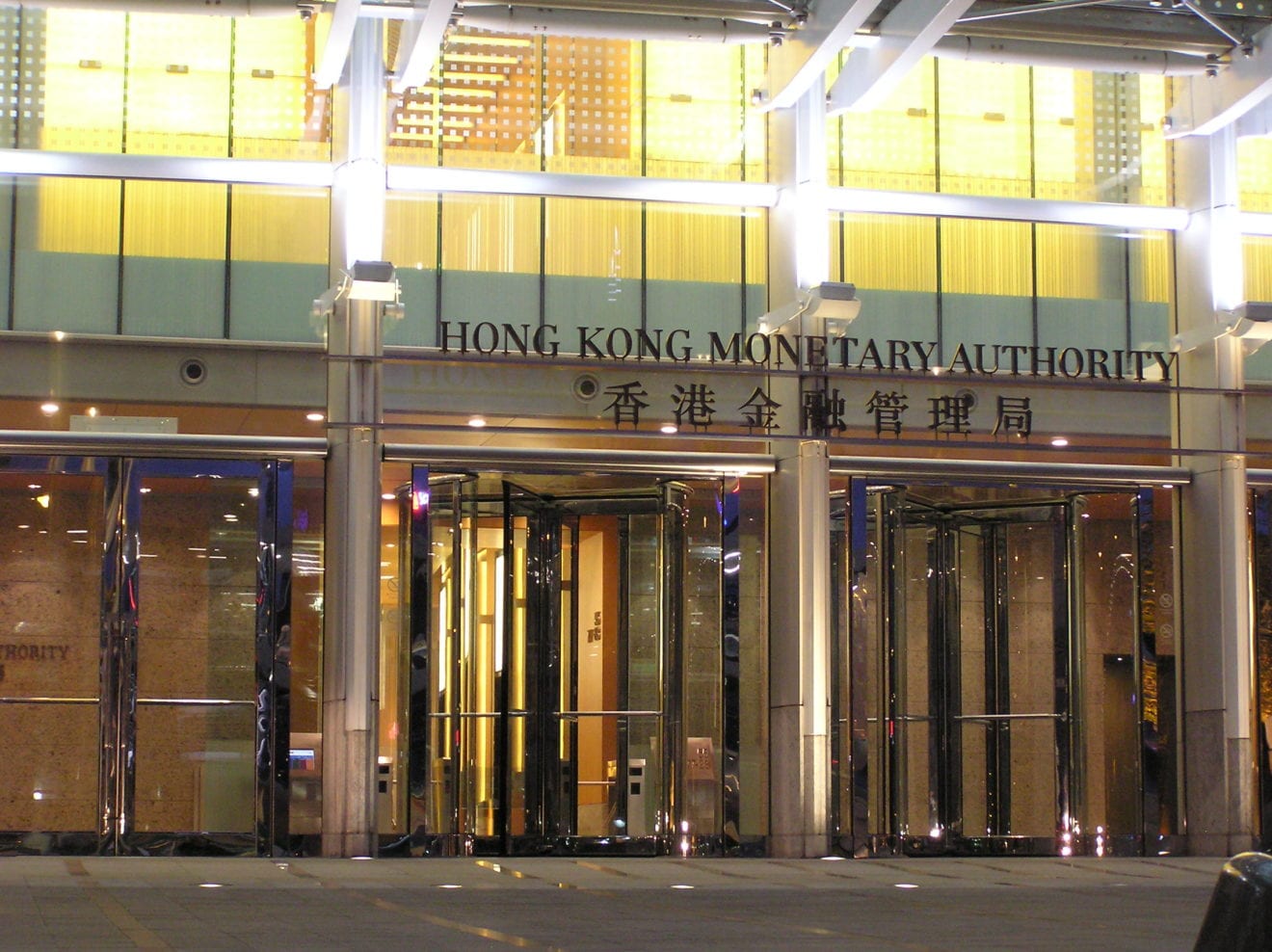
    Norman Chan, the chief executive of the Hong Kong Monetary Authority (HKMA), warned of gradual capital outflows as hot money that had flowed in due to loose monetary policy exits.

    “I would advise members of the public to make necessary preparations in terms of managing the credit, liquidity and other relevant risks in order to cope with possible shocks and adjustments that may arise from the normalisation of US and Hong Kong interest rates,” Chan said after the policy decision Thursday.

    And although the immediate impact of policy tightening is likely to be limited, it comes at an increasingly uncertain time for Hong Kong, which is grappling with sluggish economic growth on the back of a slump in tourism and retail spending, as well as a slowdown in China.

    About US$130 billion has flowed into Hong Kong dollar assets since 2008, when the Fed adopted its near-zero rate policy, according to the HKMA.

    Hong Kong property sales slid 41.7% in November year-on-year to a record low, while the city’s property stock sub-index has dropped about 20% from multi-year highs hit in June. The index was up 0.8% early on Thursday.

    Financial Secretary John Tsang, who last week flagged a rate hike as the biggest concern for the city’s economy, said Hong Kong had the ability to cope with large capital outflows, echoing a report from the International Monetary Fund this week that said risks were manageable.

    “Whether Hong Kong will experience capital outflows next year depends not only on the pace of rate hikes by the Fed, but also China’s economy,” said Raymond Yeung at ANZ in Hong Kong, adding the property market faces some pressure in the medium term.

    Commercial banks in Hong Kong will decide separately whether to increase their lending or deposit rates.

    Any increase in rates could add to the city’s household debt to gross domestic product (GDP) ratio, which is already at a record high of around 64%, as repayment obligations rise.

    For homeowners, it could also mean leaner times in a city where the average house price is 17 times household income, according to consultancy Demographia.

    While the city has successfully weathered previous US rate hikes, Hong Kong’s economy is now more vulnerable as it struggles with weaker retail sales as fewer cash-rich mainland tourists stream across the border on shopping sprees.

    Though policymakers have faced a growing chorus of criticism on the burden of holding a currency peg to the greenback, the government reiterated on Thursday that a peg is the best policy option for the city’s mercantile economy.

    Expectations are the city’s economy will expand at 2%-3% rates in the current year, far below the heady rates of nearly 8% seen in the first quarter of 2011.

    Some observers said the property market was still a concern.

    “The key problem with Hong Kong right now is that (property) prices are already well ahead of earnings power and the economic situation,” said Nicole Wong, property analyst at CLSA.

  • Postal Savings Bank of China has raised investment

    Postal Savings Bank of China has raised investment

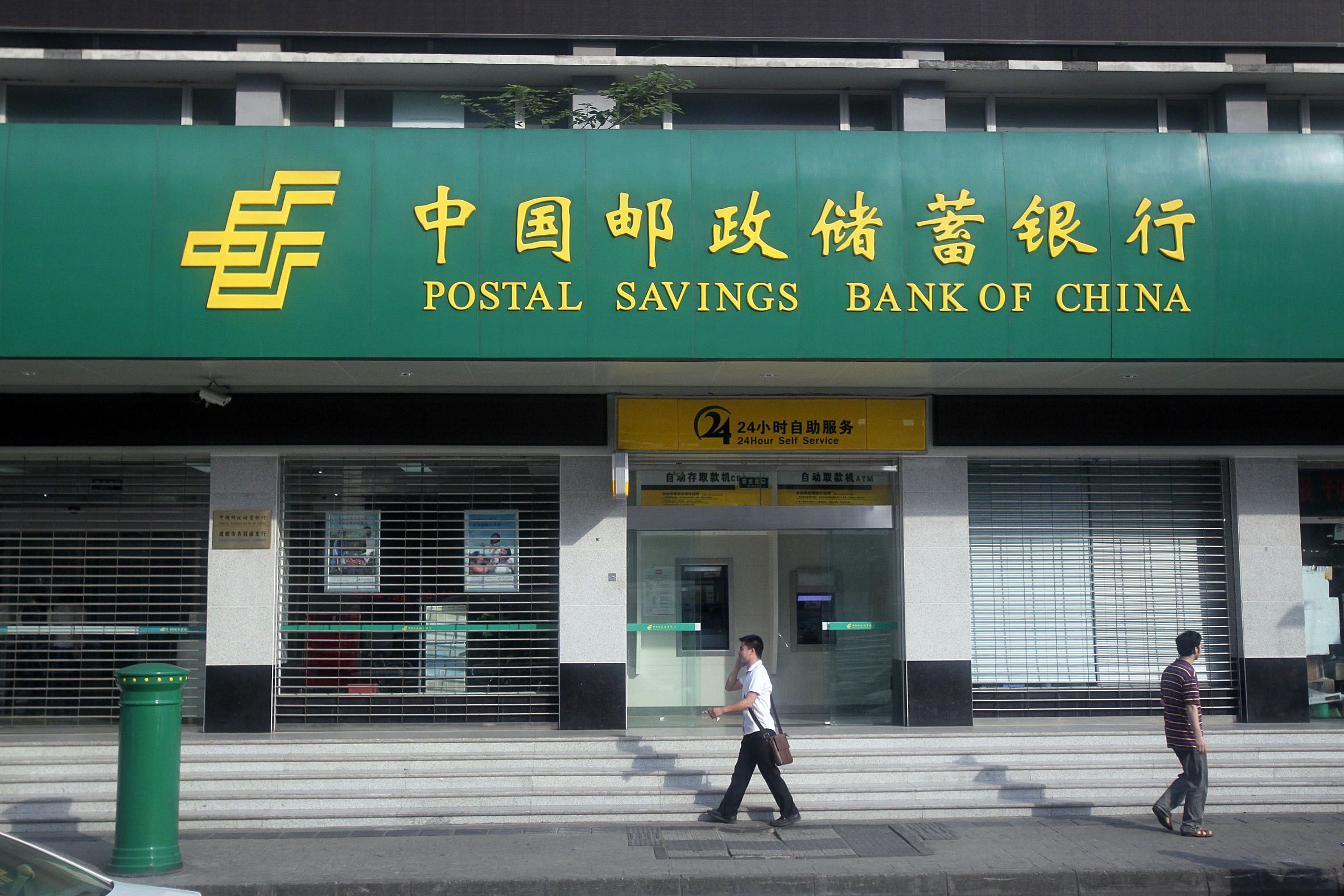
    Postal Savings Bank of China has raised $7bn from a global group of 10 investors including JPMorgan, an affiliate of Alibaba, and Temasek, valuing the state-owned lender at $41bn ahead of a float that could come as soon as next year.

    The sale of 17 per cent equity marks the largest private fundraising by a Chinese financial institution, and its international collection of investors will be seen as a signal Beijing is more open to outside funds to help with its slow-moving plans to reform its state-owned enterprises.

    Postal Savings Bank is China’s biggest unlisted lender and its sixth largest commercial bank in terms of assets. It has more than 400m retail customers and nearly 40,000 branches, many of them in rural areas where until recently the only alternative was putting money under the mattress.

    A similar pre-float sale of a $17bn stake last year in the retail operations of Sinopec was sold largely to domestic investors — so-called friends and family — in spite of interest from international groups, denting hopes at the time that China was serious about bringing in outside expertise and funding.

    Lu Jiajin, Postal Savings Bank president, on Wednesday described the placement as an “example of mutually beneficial co-operation between China and the world”.

    He added: “This indicates that the world has . . . confidence in China’s financial systems and [the] stability and profitability of China’s banking industry”.

    The international investors are UBS; JPMorgan; Singapore’s Temasek investment fund and DBS, the city-state’s biggest bank; Canada Pension Plan Investment Board; and the IFC arm of the World Bank.

    CPPIB is committing $500m. Mark Machin, head of international business and president of Asia for CPPIB, said the investment met the fund’s strategic goals of investing in less-developed regions of China and increasing exposure to the Chinese consumer.

    Chinese banks have come under pressure in a rapidly shifting landscape, and face challenges including rising bad loans and competitive pressures from the country’s interest rate liberalisation agenda.

    Hong Kong-listed shares in the country’s big four state-backed banks — ICBC, Bank of China, China Construction Bank and Agricultural Bank of China — have dropped at least 17 per cent this year.

    “This isn’t a sector bet, it’s an investment in this bank,” said Mr Machin, adding that Postal Savings Bank’s focus on consumer lending helped isolate it from some of the bad loan issues faced by corporate lenders.

    Ant Financial, the payments affiliate of Alibaba; rival internet Chinese giant Tencent; China Telecom; and insurer China Life have also committed funds.

    A filing with the Hong Kong stock exchange showed China Life is putting up $2bn and its stake will not be more than 5 per cent — implying a valuation of $41bn for Postal Savings Bank.

    Pre-IPO funding rounds are increasingly being used as a way of establishing baseline valuations and demonstrating support for a company before it approaches the public markets.

    JPMorgan said its agreement with Postal Savings Bank covered “multiple levels of collaboration” between the two sides.

    An executive at one of the companies involved in arranging the deal said: “They have reached out to strategic partners who can help them professionalise rather than just have passive investors”.

    Mr Lu said Postal Savings Bank wants to establish itself “as a 100-year bank with steady operations and excellent risk management”.

  • New Banking Fees May Turn Thailand into a Cashless Society

    New Banking Fees May Turn Thailand into a Cashless Society

    Bank fees will undergo changes in the near future to better reflect the actual costs of banking, and may pave the way for Thailand becoming a cashless society.

    According to Veerathai Santiprabhob, Bank of Thailand governor, the current bank fee structure is distorted. He noted that paper-based transactions are cheap compared to actual costs, and banks are subsidizing these costs with fees on electronic transactions. In other words, a check fee may only be Bt15, but the actual cost is far higher. Currently, customers can withdraw money from ATMs, but banks incur huge costs for managing cash at ATMs.

    A new project is helping to reduce cash usage in the country through the introduction of more point-of-sale throughout Thailand. There are currently less than 100,000 points of sale, which is much lower than the 2 million recommended by the Bank of Thailand.

    To maintain retail customers, banks will be expected to reach out to merchants to create their own points of sales. Smaller merchants will also be required to have mobile point-of-sale to support small customers.

    Under the project, companies who are registered with the Commerce Ministry will also be prohibited from denying e-payments.

    The creation of a central system that will oversee cross bank transactions through the Internet, ATM cards and debit cards will help move Thailand to a cashless society. Adoption of the Any ID e-payment model will further help the country make this transition.

  • German start-up Number26 launches pan-European mobile bank

    German start-up Number26 launches pan-European mobile bank

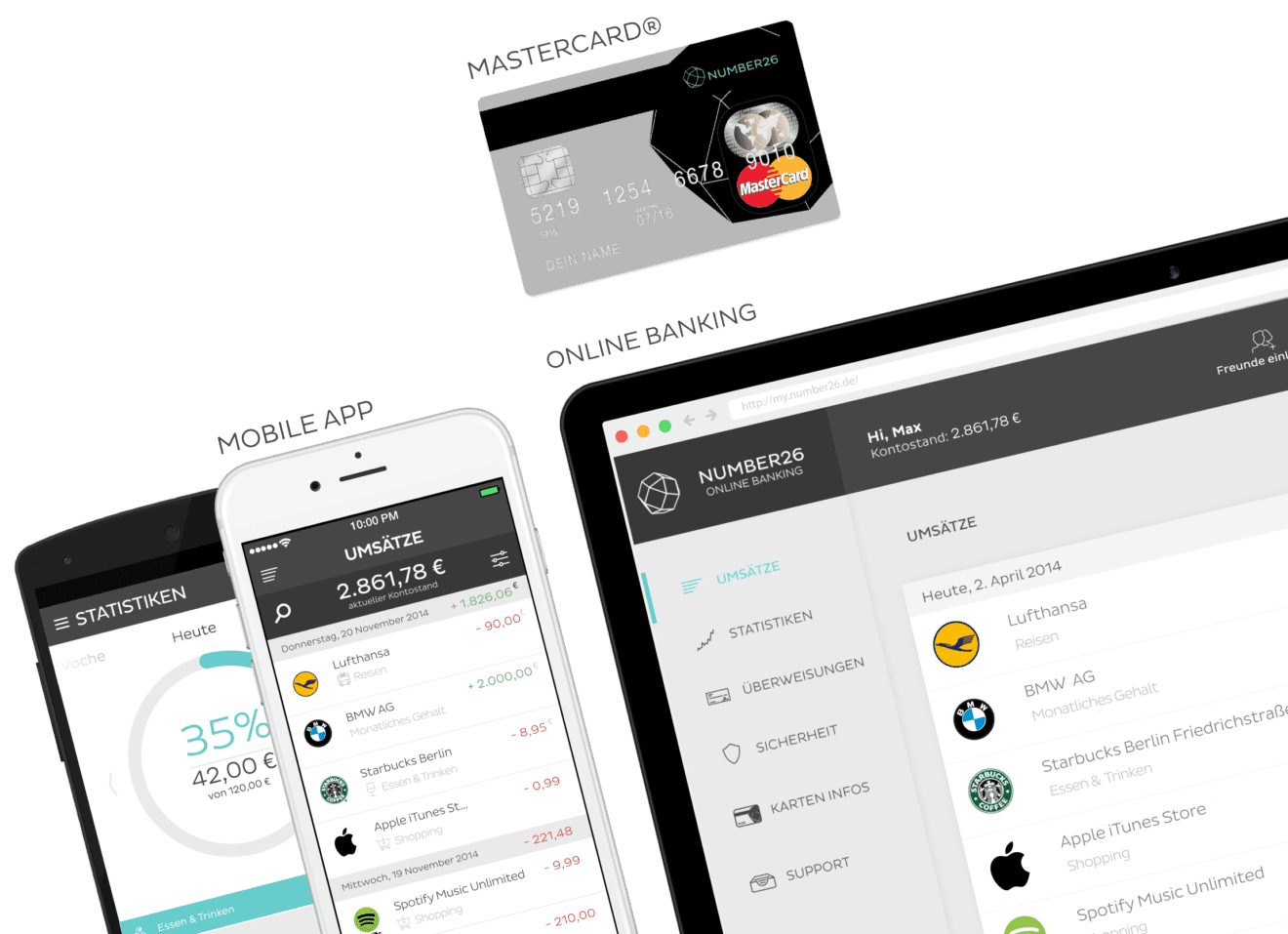
    Number26 is looking to succeed where traditional lenders have struggled, by relying on mobile phones to build a true pan-European bank.

    The German financial services start-up is expanding into six European markets, making it the first mobile phone bank to straddle the region’s borders, it said on Thursday.

    Number26 is entering France, Italy, Spain, Slovakia, Greece and Ireland, the latter being a test for moving into Britain, and eventually plans to develop a continent-wide bank.

    Founded by two Austrians and based in Berlin, the company revealed plans to offer a MasterCard and basic current accounts via a licence from its partner Wirecard Bank of Germany, which guarantees funds using the German Deposit Protection Fund. Its parent, Wirecard, also supplies Number26 with core banking software and transaction processing.

    Without branches, legacy computer infrastructure and by relying on selective outsourcing, mobile-first banks can compete with little up-front capital against big banks, all while promising lower lending rates and higher rates on savings.

    Number26 also has a jump on rival mobile-first banks including Atom Bank which took a UK bank licence in June and Tandem, which received a licence this week. Both plan to start operating in Britain next year. BBVA, Spain’s No. 2 bank, has taken a 29.5 per cent stake in Atom.

    “The model for these mobile start-ups is to compete on fees,” said Andrew Copeman, an analyst with financial research firm Aite Group. “Banks can’t afford to go after those rates because they are saddled with big overhead from branch networks and old systems.”

    Taken by surprise, banks have responded by ploughing more money into fixing creaky systems, rolling out mobile apps of their own and shuttering many branches. Worldwide, banks could cut half their jobs in 10 years as they fight to stay relevant, the former head of Barclays has said. “I don’t see banks at all as my competitors. They just can’t move fast enough,” Number26 chief executive Valentin Stalf, 30, said in an interview.

    The company, which launched this year in Germany and Austria, provides more than 80,000 customers with accounts for cash withdrawals, deposits and overdraft services up to ?2,000 via a slick smartphone app. “We see the current account as just a starting point,” said Maximilian Tayenthal, 35, Number26’s co-founder and chief financial officer. Credit, savings and insurance products will follow, he said.

    It recently began offering a retail checkout-based alternative to ATM machines for cash withdrawals and deposits in Germany.

    It now counts 6,000 cash outlets including supermarket chain Rewe, or more ATMs than Deutsche Bank and Commerzbank combined.

    The Number26 name refers to the optimal number of quarter turns it takes to solve a Rubik’s Cube puzzle and is a play on the most efficient route it can find to reinvent banking.

    Mobile phone-based banks aim to tear up the rule-book of an earlier generation of direct banks, which used online sites and telephone call centres to woo millions of customers away from bank branches starting in the 1990s.

    ING’s DiBa and others are now some of Europe’s biggest retail banks after being spun out of parent banks to offer a wide array of services created within those banks.

    By contrast, Number26 is looking to evolve rapidly into a full-service banking hub, providing not just services of its own but those from third parties. It is in talks to offer money transfers from TransferWise, loans from LendingClub and deposit comparison site SavingGlobal on its platform.

    The 75-employee company has raised ?12.5 million in venture funding. Backers include Peter Thiel, founder of PayPal and one of Silicon Valley’s top investors, Earlybird Venture Capital and Axel Springer Plug & Play, both of Germany, and Swiss-based Redalpine Venture Partners.

  • UOB to help Jakarta draw investments

    UOB to help Jakarta draw investments

    United Overseas Bank (UOB) is linking up with an Indonesian government agency to encourage more foreign direct investment (FDI) into Indonesia.

    Under an agreement signed yesterday, the Investment Coordinating Board (BKPM) will allow UOB clients to apply for what is called a Principle Licence here without having to travel to Indonesia.

    A foreign company must obtain the licence as an initial step to incorporating an entity there.

    BKPM, which is under the direct supervision of President Joko Widodo, supports foreign investment into the country and helps Indonesian companies venturing overseas.

    UOB said it will support Indonesian investors looking to expand overseas through BKPM’s Indonesia Investment Promotion Centre in Singapore.

    BKPM will also help UOB clients take advantage of business opportunities in Indonesia.

    Last year, Indonesia was the second-largest recipient of foreign direct investment inflows into Asean, receiving US$28.5 billion (S$40.2 billion), UOB noted.

    China’s FDI into Indonesia has increased more than fivefold over the past three years, growing from US$141 million in 2012 to US$800 million last year, UOB said.

    Mr Sam Cheong, head of UOB Foreign Direct Investment Advisory, said opportunities in the region will be boosted by the upcoming Asean Economic Community.

    Under China’s “One Belt, One Road” initiatives, trade and investment between China and South-east Asia will likely continue growing, he added.

    BKPM chairman Franky Sibarani said in a statement: “(The agreement) will help to promote investments in Indonesia across major sectors, such as the infrastructure, maritime, import substitution, export-oriented, agriculture, downstream mining, industrial estate and tourism industries.”

  • Singapore sees mild deflation of -0.5% for 2015

    Singapore sees mild deflation of -0.5% for 2015

    Singapore is projected to experience a mild deflation of -0.5% for 2015, according to a forecast adjustment made by Maybank Kim Eng.

    The tweak in its estimate is still within its earlier forecast range of between -0.5% and 0%, the research house writes in a note on Tuesday.

    Maybank Kim Eng’s forecast comes on the back of several macroeconomic headwinds, following the latest inflation figures released on Monday.

    These include the prevailing subdued outlook on transport cost given low global crude oil prices, depressed housing and utilities costs and soft global commodity prices, which should offset the impact of the tight job market.

    Headline inflation eased to -0.8% in October from -0.6% in September, mainly due to the lower costs of oil-related and retail items, the Monetary Authority of Singapore and the Ministry of Trade and Industry said on Monday.

    Core inflation, which excludes accommodation and private road transport costs, eased to 0.3% in October from 0.6% in September.

    For 2016, Maybank Kim Eng expects inflation to nudge up to 0.5% on the receding effect of lower global oil prices.

    The will also be underpinned by budgetary measures such as the reduction in the concessionary foreign domestic worker levy, one year road tax rebates, abolition of national examination fees and the increase in medical subsidies, it says.

  • Mobile banking consumers in Singapore warned of malware threat.

    Mobile banking consumers in Singapore warned of malware threat.

    Bank customers in Singapore have been warned of a rise in malware infections on Android phones that seek to hijack online passwords and one-time security codes.

    The warning, from the Association of Banks in Singapore (ABS), says the infections appear as a software update for Android smartphones, or as a service for updating WhatsApp.In the latter, a pop-up advertisement encourages consumers to tap it and download a “new” version of the program or risk losing access to the service. After downloading the update, the application will prompt the customer to input confidential information, such as credit card details, which could then be used to commit fraud.

    Smartphones that have been jailbroken or rooted are particularly susceptible to infection, says the ABS.

    Ong-Ang Ai Boon, director of ABS, says that major retail banks in Singapore have seen an increase of mobile banking customers from 1.5 million in 2013 to 2.4 million in 2015.

    “ABS would like to remind mobile banking customers that smartphones are as susceptible to malware as desktop computers or laptops,” she says. “Consumers are reminded to download applications only from trusted sources.”

  • HSBC results hit by Asia market falls

    HSBC results hit by Asia market falls

    HSBC has reported a 14% drop in profits for the third quarter of 2015 after adjusting for foreign currency movements, as the sharp falls in stock markets across Asia hit revenues in its retail banking and wealth management division. The overall adjusted profit was $5,5bn (£3.56bn, €5.0bn) compared with $6.4bn in the third quarter of 2014.

    The global bank said adjusted revenues were down 4% in the three months to the end of September to $14bn, mainly because of the drop in the Principal Retail Banking & Wealth Management division. Revenue was also lower in Global Banking & Markets operation.

    Operating expenses were also up 2% in the third quarter at $8.58bn, mainly due to increased spending on regulatory programmes and compliance.

    “Despite slowing growth in the mainland Chinese economy and market volatility in Asia, there has been no visible impact on our Asian credit quality in 3Q15,” group chief executive Stuart Gulliver told an investor briefing.

    Hong Kong hit

    Iain Mackay, HSBC’s group finance director, said the reduction in revenue in the wealth management operation mainly reflected lower earnings in Hong Kong.

    “This was caused by the stock market correction in Asia, which reduced asset valuations in our life insurance manufacturing business,” Mackay said.

    Profit from retail banking and wealth management operations also fell 32.8% in the third quarter when compared to the previous quarter. While for the Asia region as a whole profits were down 30% in Q3 compared to Q2.

    The bank also reported a 19.1% drop in profits from the Middle East and Africa region during the latest quarter compared with the previous one.

    Overall HSBC ‘s results were better than expected after costs related to fines and compensation for customers fell by $1.4bn. However, its shares weakened by 1.2% in London morning trade.

  • Kakao, KT to launch Korea’s first Internet banks

    Kakao, KT to launch Korea’s first Internet banks

    Two consortiums, led by South Korean Internet giant Kakao and No. 2 telecom operator KT, were approved to launch the nation’s first Internet-only banks next year, the banking authority said Sunday.

    Under the government’s pilot program, the two banks will offer financial services from deposits, lending and credit cards to foreign exchange transactions through their online platforms only — the first of their kind in Korea’s 23 years of financial history.

    Their operations are expected to start after they get financial approval in the first half of next year. The Financial Services Commission requested they come up with stricter security measures.

    Do Kyu-sang, financial services chief at the Financial Services Commission, speaks at a media meeting held at the agency`s briefing room in Seoul on Sunday. Yonhap

    According to the agency, Kakao’s Kakao Bank gained high scores for innovative services based on its immensely popular mobile messenger app KakaoTalk with 40 million users.

    KT’s K Bank was also praised for better customer access as it has teamed up with partners from diverse sectors such as telecommunications, payments and retail, it said.

    Internet banks come as the government looks to open up its financial services sector recently. Internet companies are already jumping into the bandwagon amid the rapid infiltration of online banking and mobile payments here.

    Due to stringent financial regulations, however, they are still required to partner with a licensed bank to launch their own Internet bank.

    Kakao and KT are especially pinning high hopes on “middle-interest loans” that would appeal to small borrowers.

    Currently, top-tier banks offer an annual rate of 3 percent to 5 percent, while the secondary financial institutions such as mutual savings banks or capital services firms charge whopping 15 percent to 34 percent interest rates.

    Internet banks say they can better evaluate the creditworthiness of borrowers based on the data they collect from hundreds of millions of mobile devices — including location, the use of local services and e-commerce transitions.

    Kakao Bank plans to bring Kakao’s traffic resources, big data on users and data analytics, while its bank partners KB Kookmin Bank and Korea Investment Holdings have knowledge of financial products.

    The bank also aims to go global as it has secured ties with Tencent, China’s biggest social-networking and mobile games company, and the U.S. online retail giant eBay, which also owns Korea’s two leading shopping sites Gmarket and Auction.

    “We will ramp up efforts to offer diverse and practical benefits for customers through Kakao Bank,” said Yoon Ho-young, Kakao’s senior vice president.

    K Bank also showed confidence in building a more accurate credit rating system based on KT’s own delinquency customer list and the data collected from its card and bank partners, including Woori Bank, the nation’s second-largest lender in terms of assets.

    “We will expand benefits for small borrowers and start-ups,” said Kim In-hoi, the bank task force leader. “We aim to become the No. 1 Internet bank by offering more convenient on- and off-line services.”

  • BDO firms up tie-up with Japanese banks

    BDO firms up tie-up with Japanese banks

    BDO Unibank, Inc. (BDO) and FIDEA Holdings Co., Ltd. (FIDEA Group) further strengthened their business relationship through a memorandum of understanding (MoU) that will allow BDO to provide support to FIDEA’s clients who plan to invest in the Philippines.

    FIDEA is a joint holding company between major Japanese regional banks The Shonai Bank, Ltd. (Yamagata prefecture) and The Hokuto Bank, Ltd. (Akita prefecture).

    Both banks have partnered with BDO Unibank under the Japan Bank for International Cooperation (JBIC) framework in 2013. Said framework was developed to support the banking needs of Japanese enterprises eyeing the country as a business destination.

    The partnership with the FIDEA Group will provide BDO Unibank adequate coverage in Japan’s northern region (Tohoku), specifically in Akita, Yamagata, and Miyagi prefectures where majority of the primary industries (agriculture, fishing, forestry, mining) are located.

    As a leading player in the local banking sector, BDO Unibank can provide the Japanese clients financial and non-financial advisory services, and other products and services that would be helpful to them should they decide to set up shop in the Philippines.

    Since 2007, BDO has established a fully staffed Japan Desk, with Japanese-speaking personnel, dedicated to market and service Japanese companies operating in the Philippines, and service the retail needs of Japanese customers.

  • A London Vending machine launched accepts out-of-circulation bills and a range of coins

    A London Vending machine launched accepts out-of-circulation bills and a range of coins

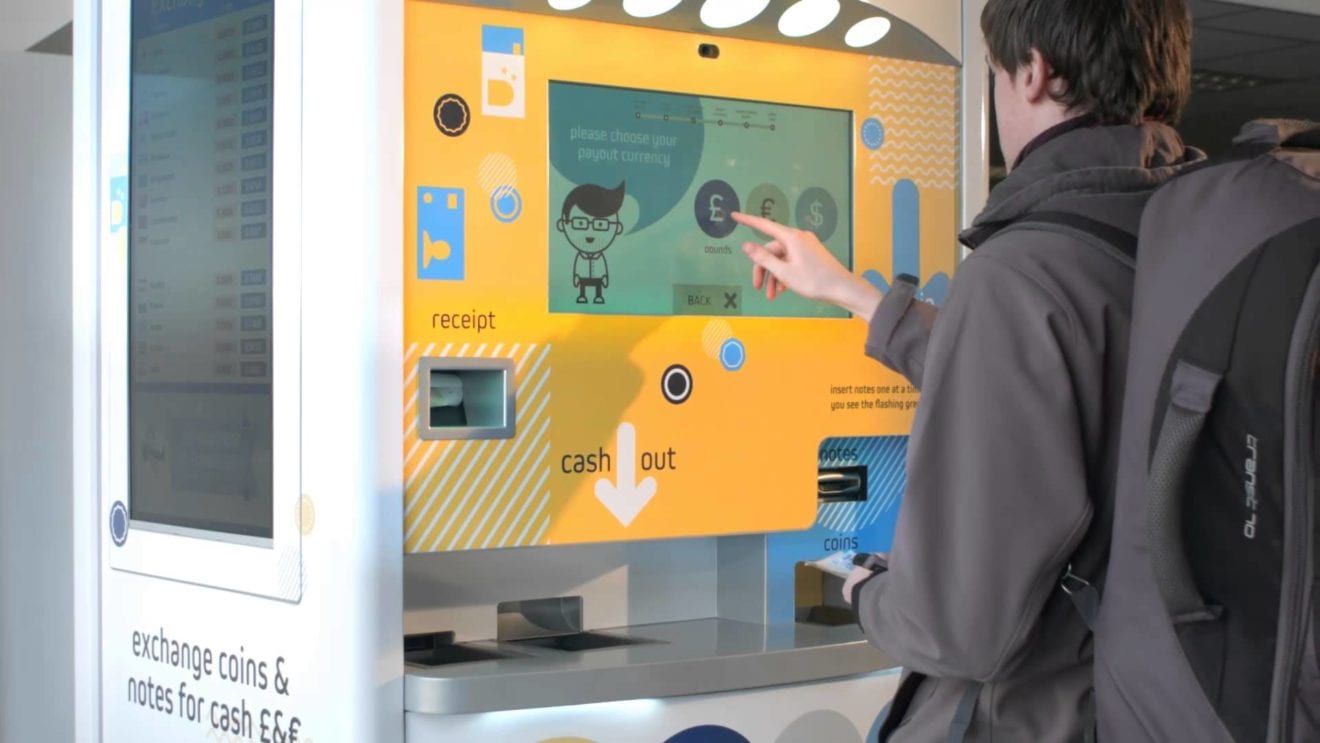
    A self-service vending machine developed by two British-based, South African entrepreneurs converts currencies from as many as 150 countries into dollars pounds, or euros. The company, Fourex, led by the entrepreneurs has planned to introduce the machines next month at busy locations such as shopping centers and transport hubs across London which shall include Canary Wharf tube station. The vending machine is uniquely different from existing automated teller machines since it accepts out-of-circulation bills from the past 30 years, including old European currencies. The developers are looking to create an impact on the retail foreign exchange business which includes majors such as Thomas Cook & Travelex.

    The machine which is planned by the company to expansible to up to around 400 high-traffic locations across Britain in the next couple of year, offers promising prospects to travelers across the world. They may be able to get themselves clear of collection of coins which are rendered useless over time and bills in various foreign currencies including old Deutsche marks.

    According to Oliver Du Toit, who is a co-founder of the money exchange technology firm stressing on the versatile applications of the machine said “Everyone has a drawer of money that is essentially worthless. We have a machine that recognizes almost any coin or banknote in the world.”

    The vending machines could accept even the smallest denominations, covering a vast range of currencies with no implicit fees or any sort of commissions. Technologically, it functions by capturing high-resolution of so called “digital fingerprints” of as many as 200 currencies, which includes as many as the variants of 4,000 coins.

    Self-services technology which majorly covers ATMs, vending machine & kiosk serve a range of functions and the market would get traction owing the rising adoption of these machines by consumer goods & services sector industries such as healthcare, banking, retail, and F&B. There are many reports in the market which offer an insight into the current market dynamics & future growth opportunities of the self-services technology. Recently, Big Market Research has added a report titled “Global Self Services Technologies Market (ATM Machines, Kiosk Machines, Vending Machines, Geography)”. The report offers in-depth insight into key drivers and restraints, market profile of key market players along with the strategies adopted by them to consolidate their presence in the market. As per the report North America is the major market for self–service technology, followed European and APAC region.

  • Fubon Bank Hong Kong first bank in Greater China to introduce NCR Interactive Teller

    Fubon Bank Hong Kong first bank in Greater China to introduce NCR Interactive Teller

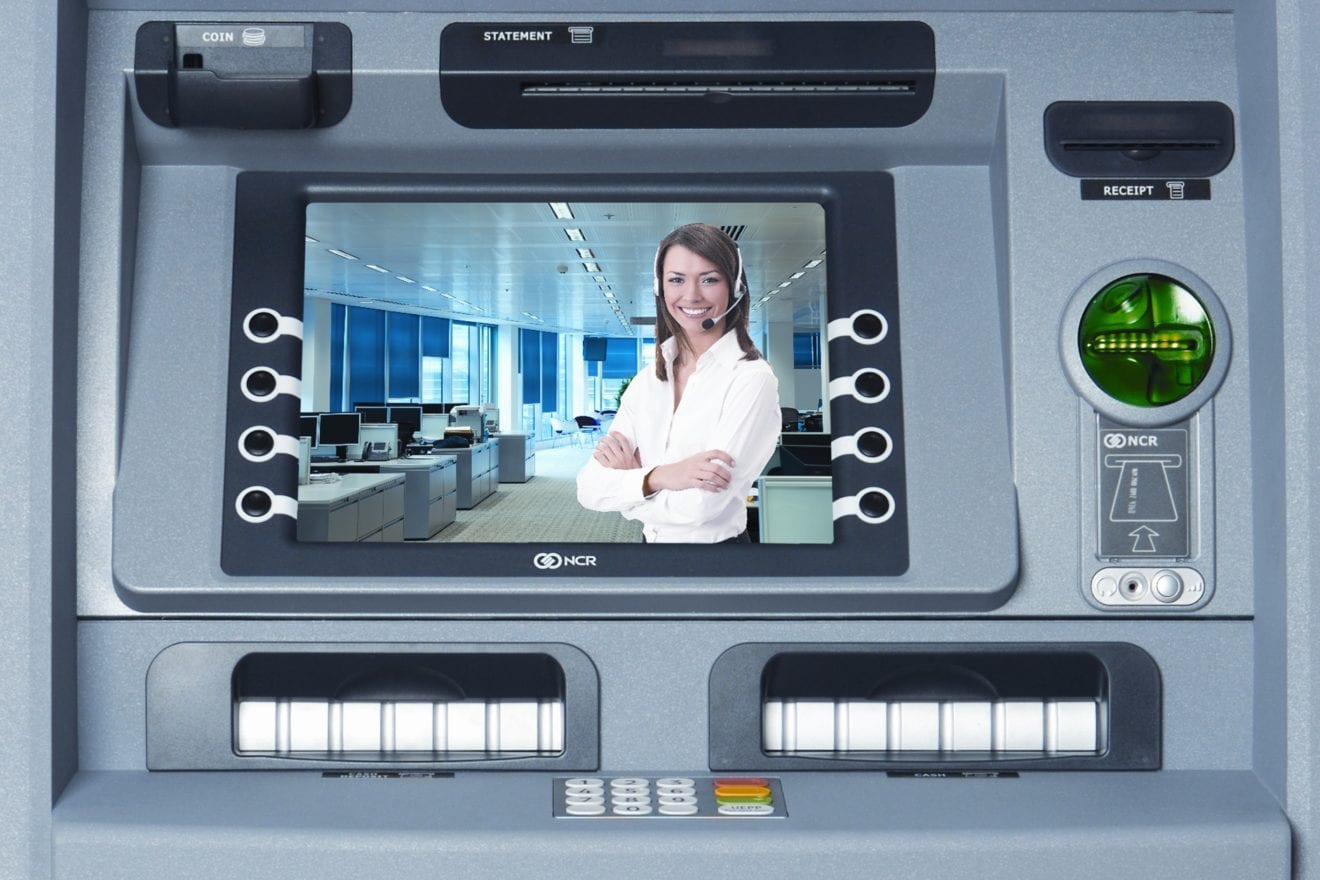
    NCR Corporation, the global leader in consumer transaction technologies, today announced that Fubon Bank (Hong Kong) Limited (“Fubon Bank”) has become the first bank in Greater China to introduce NCR Interactive Teller to transform its traditional branch banking and enhance customers’ banking experiences. NCR’s software-based Interactive Teller technology allows live tellers at the customer service centre to take remote control of an ATM inside a branch to assist customers with up to 95 percent of transactions typically completed by tellers at counters.

    The NCR Interactive Teller units are now available at Fubon Bank’s recently remodeled branch at Queen’s Road East in Wanchai and will also be available in a new branch to be opened in the Western District in late November. The new solution allows Fubon Bank customers to execute branch banking transactions such as cash deposits, cheque deposits, cheque encashment, cash withdrawals, setting up time deposits, and account transfers.

    “Fubon Bank always strives to delight our customers with a service-centric approach by leveraging innovative technologies to enhance our customers’ banking experiences. With the high cost of running bank branches in Hong Kong, NCR Interactive Teller technology is the premier solution to help redefine our branch banking experience and transform our retail network strategy,” said Carmen Yip, Executive Vice President & Head of Retail Banking Group, Fubon Bank. “NCR Interactive Teller puts a human touch to technology, mixing efficiency with ease-of-use. From now on, Fubon Bank is able to offer teller service to customers in a smaller footprint.”

    With the NCR video teller technology, a live teller located at Fubon’s Customer Service Centre takes control of an ATM at the branch and instantly serves customers over two-way video, which helps to provide a more personalized experience. NCR Interactive Teller offers similar services as a teller over the counter offers. For instance, customers can withdraw money from their bank accounts without using a traditional ATM card and passwords, and like branch tellers, remote tellers can introduce bank products and services to customers after completing bank transactions. In addition, customers can have private conversation with the remote teller by using a handset.

    “In Hong Kong, branch space is precious. NCR Interactive Teller allows banks to transform their branch locations into more effective service and sales environments, and release in-branch staff to better focus on sales and services,” said Keith Au, general manager of Hong Kong & Taiwan, Financial Services, NCR Corporation. “NCR Interactive Teller software offers a powerful combination: live video teller transactions for an interactive, personal experience or an unassisted ATM transaction for fast, always-on service. Fubon Bank customers will appreciate the increased convenience and the flexibility of choice on how they interact at this flexible channel.”

    Fubon Bank has plans to bring NCR Interactive Teller technology to additional branches in 2016.

    An internal study done by NCR showed that implementation of NCR’s Interactive Teller resulted in a 33 percent reduction in transaction time and the cost-per-transaction is 40 percent more economical compared to a branch teller transactions.

    Since introducing the technology in 2013, NCR Interactive Teller technology has been deployed by more than 200 financial institutions around the world.