Category: Food

Retail News Asia is committed to providing both local and global retailers with the latest Food and Food & Beverage news throughout the Asian market. This on a daily base.

  • Allen’s celebrates 130th anniversary with Party Fave mix

    Allen’s celebrates 130th anniversary with Party Fave mix

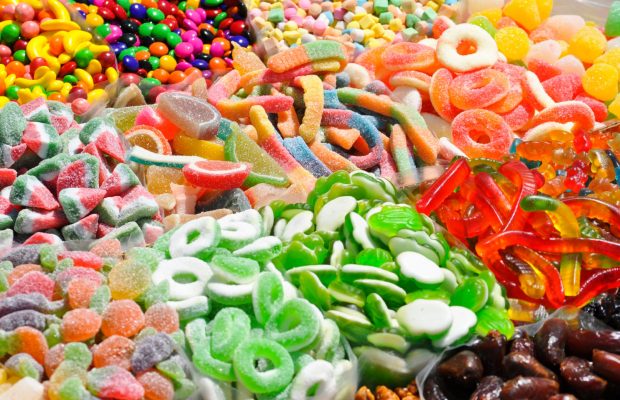
    Allen’s has kicked off its 130th birthday celebrations with the launch of two new party-inspired lolly packs, Allen’s Party Faves and Allen’s Piñata Party.

    The team at Allen’s has created more than 1,000 different types of lolly over the last 130 years – lovingly made in Victoria since 1891. Some of the more unusual lollies included a jelly tongue and a giant jelly rat.

    Australians’ favorite Allen’s lollies are Snakes Alive and Party Mix. Around 240 million Snakes Alive are made in a year and if you lined them up head to tail, they’d stretch 36,000km – enough to wrap around the moon three times or right around the world at least once.

    The new Allen’s Party Faves pack is filled with lolly flavors including chocolate cupcake, strawberry fairy floss, and green apple icy pole – all inspired by favorite party moments.

    Meanwhile, the new Allen’s Piñata Party is filled with fruity-flavored piñata animals, including blackberry llama, strawberry flamingo, and lemon dinosaurs.

    Nestlé Head of Marketing Confectionery, Joyce Tan says Allen’s lollies are the perfect addition to celebrations big or small.

    “Making Aussies smile has been our passion for the last 130 years, thanks to our great-tasting and much-loved lollies. Many Australians have a special Allen’s story and favorite lolly, so we can’t wait to see the smiles on Australians’ faces when they discover these creations for our 130th birthday celebration.”

    Allen’s Party Faves will be available through the petrol and convenience channel from September. Piñata Party is exclusive to Coles.

    The Allen’s 130th Birthday celebrations will continue over the coming months with more iconic collaborations on the horizon.

  • Nomad Brewing and Darrell Lea create liquorice Stout

    Nomad Brewing and Darrell Lea create liquorice Stout

    Liquorice-loving dads have a lot to look forward to this Father’s Day.

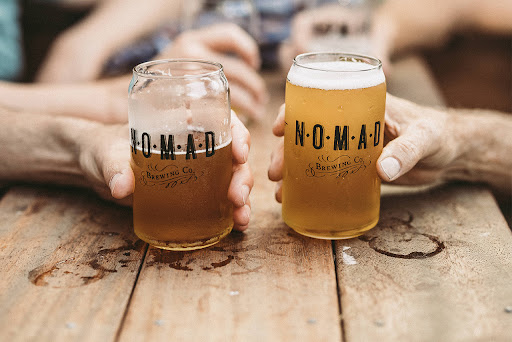
    Aussie chocolatier Darrell Lea has teamed up with Nomad Brewing Co in Sydney’s Northern Beaches to create a new brew distilled from chocolate bullets.

    The limited-edition dark chocolate licorice stout is described as tasting “rich and creamy” and  “beautifully bitter”.

    “We know people who love our liquorice are passionate advocates for the flavor which some may consider being controversial, so we wanted to breathe some new life into it with the Batch 37 Dark Chocolate Liquorice Milk Stout which has real Milk Chocolate Bullets and Batch 37 Liquorice in the brew,” Darrell Lea’s general manager of marketing, Johanna Campbell said.

    “Many dads are big fans of our licorice products, and what better way to say cheers to our dads than combining two of their favorite things?”

    The limited-edition Darrell Lea Batch 37 Dark Chocolate Liquorice Stout is available to purchase online at nomadbrewingco.com.au for $11 per can or $45 per 4-pack, plus you’ll also receive a free bag of Darrell Lea Batch 37 Licorice gift with every purchase.

  • Robot baristas to serve coffee in over 30 train stations in Singapore

    Robot baristas to serve coffee in over 30 train stations in Singapore

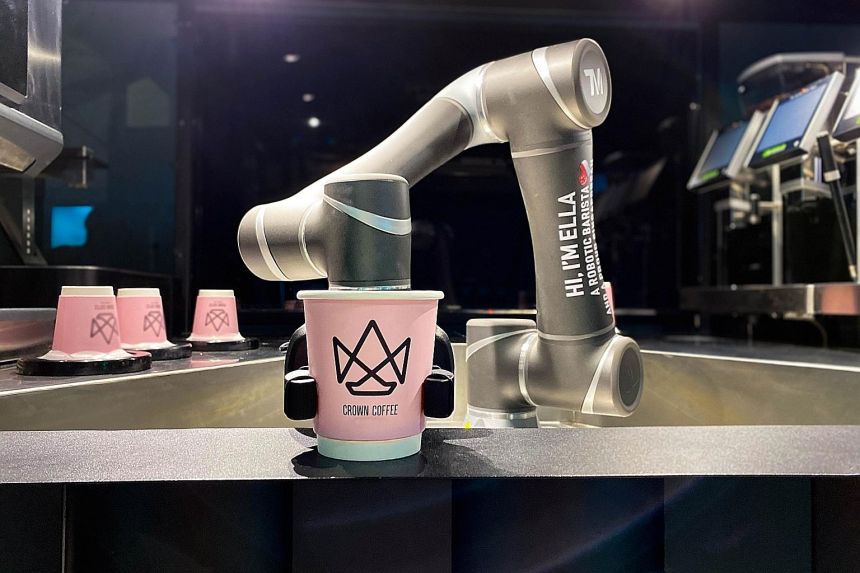
    Singapore-based Crown Digital announced yesterday that it will be installing its robotic baristas at 30 Mass Rapid Transit (MRT) stations in that country by the end of 2022.

    Dubbed “Ella,” Crown Digital’s robo-coffee kiosk is 5 sq. meters, serves a variety of coffee and tea drinks, and can make up to 200 coffees per hour. While Ella uses an articulating arm to make and serve drinks, one of its standout features is its transparent screen that can display information about drinks, orders and even full-motion videos and graphics.

    For these MRT installations, Crown Digital has collaborated with Stellar Lifestyle, which has “expertise in property and retail management, media and digital advertising solutions,” according to the Crown Digital announcement blog post. Crown Digital also wrote that Stella Lifestyle has invested an undisclosed sum in Crown Digital’s pre-Series A round of funding.

    This is the second rail network that Crown Digital has partnered with, following a pilot deal with Japan’s JR East‘s train stations signed at the end of last year. With their high-traffic audiences looking for refreshment on-the-go, transit hubs like MRT stations and airports are popular target markets for robotic coffee kiosk companies that are just now coming market such as Crown Digital, Smyze, and Cafe X.

    Another benefit to robotic coffee baristas in these pandemic times is that they are contactless. Robots don’t get sick, and don’t act as a vector of viral transmission the way that humans do.

    While there are a number of robot baristas coming to market, we have yet to see big coffee chains jump into automation. The exception is Costa Coffee, which bought Briggo last year and re-branded those Coffee Hauses into Costa Coffee BaristaBots. Though I suspect that as more deals like Crown Digital’s start popping up, we’ll soon see other big coffee brands like Starbucks and Dunkin add their own robots as well.

  • Subway plans to start selling into Indonesia

    Subway plans to start selling into Indonesia

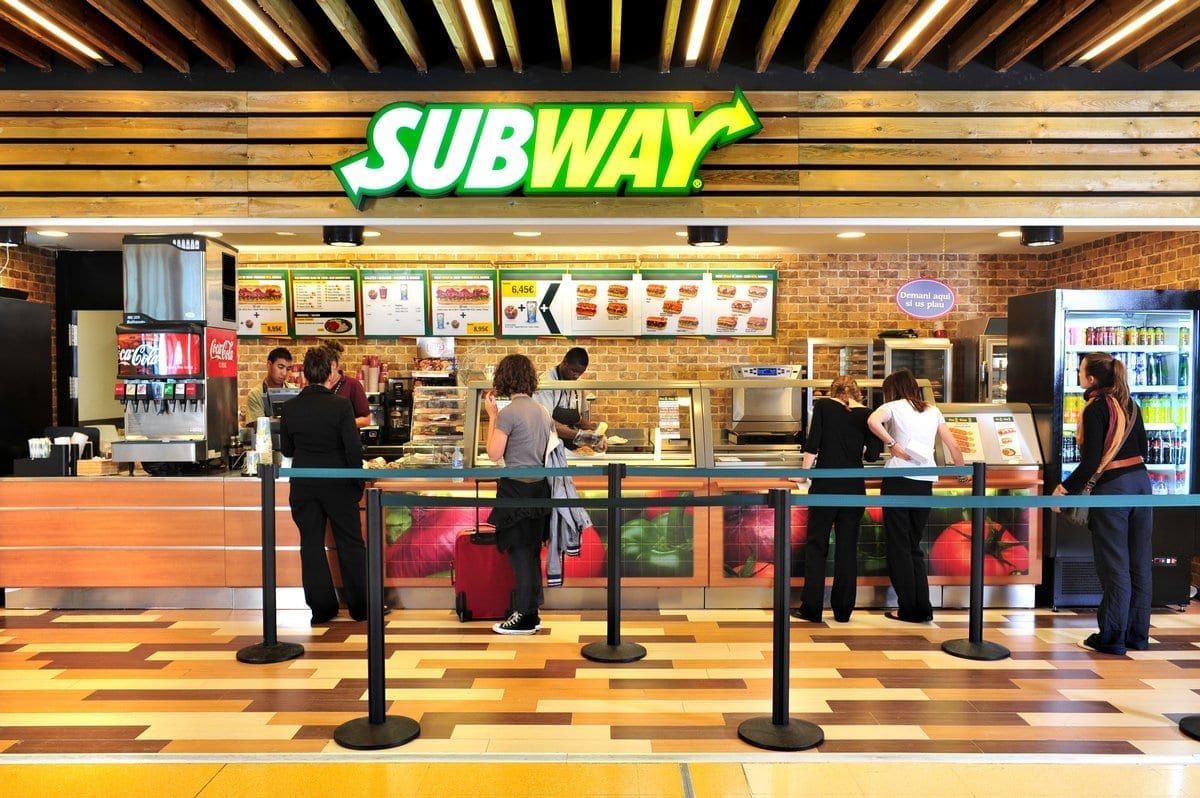
    Subway, the world’s largest restaurant brand, has signed an agreement with PT Sari Sandwich Indonesia, a subsidiary of Indonesia’s food & beverage retailer, PT Map Boga Adiperkasa Tbk (MBA), whose parent company is PT Mitra Adiperkasa Tbk (MAP). This agreement kicks off Subway’s aggressive plans to expand its international footprint. The partnership will launch Subway restaurants in Indonesia by Q4 2021, with initial locations set to open in the Greater Jakarta region.

    “The demand for Subway restaurants is unprecedented in many markets around the world, including Indonesia,” says John Chidsey, Chief Executive Officer of Subway. “MAP, Indonesia’s leading lifestyle retailer, is the ideal partner to kick off our expansion in the Asia Pacific region, where we know convenient, better-for-you options are in demand. This is just the start of our global expansion plans.”

    A major player in the Indonesian F&B market, MBA has over 590 stores across 33 Indonesian cities serving brands like Starbucks, Pizza Marzano, Krispy Kreme and others. According to the agreement, the Subway brand will be managed by PT Sari Sandwich Indonesia and expands MBA’s business portfolio to eight premium international brands. In addition, Indonesia will be the first-ever market to implement Subway’s exclusive country franchise model globally. Based on this model, MBA will solely spearhead Subway’s development in Indonesia with the goal of establishing strong and steady annual restaurant growth.

    “MBA recognizes the importance of food retailing and works with best-in-class brands, making Subway a natural choice,” says V.P. Sharma, Group CEO of PT Mitra Adiperkasa Tbk.

    The partnership expands growth for both companies, allowing Subway fans in Indonesia to get freshly made, craveable food with fast, friendly and convenient service closer to home.

    “Subway offers delicious, better-for-you sandwich choices that cater to the growing trend of Indonesians looking for a more balanced and healthier diet,” said Anthony Cottan, President Director of PT Map Boga Adiperkasa Tbk. “The Subway model of making every sandwich customized, in addition to its convenience and affordability, will attract many guests and position it for growth in Indonesia for many years to come.”

    The expansion into Indonesia marks the first step in Subway’s continuing plans to grow its presence in the Asia Pacific region. The brand’s restaurants and sales throughout the region, in countries such as South Korea, Australia, New Zealand, Thailand and Singapore, have seen significant success in recent years and Subway expects similar results in Indonesia.

  • How specialty food exporters are meeting the latest cold chain standards

    How specialty food exporters are meeting the latest cold chain standards

    Food safety has always been a hot-button topic in the supply chain industry. These days geography and borders are no match for consumer demand, as specialty food produced in one corner of the planet inevitably needs to find its way to consumers in another corner.

    The result is that food supply chains are more complex than ever and governed by a raft of regulations. For instance, the government of the United Kingdom has published a lengthy treatise on the importance of freezing food for transport and the standards that exporters have to follow.

    Yet, accidents occur that put food safety in the spotlight. Five people in the Netherlands recently suffered from ciguatera poisoning after consuming frozen red snapper steaks processed in India, making headlines in the media. 

    While regulations provide exporters with some guidance, many have begun adopting technology and processes that help them assure food safety throughout the supply chain.

    Data logging

    Condition-related data logging has become a vital part of the supply chain, especially food. The way it works is simple. Data loggers connected to shipments monitor temperature, shock, humidity, light, and other conditions at all times. 

    These data are fed to centers where supply chain employees monitor the status of shipments. Cold chain temperature control is of the essence, since almost all food that is transported across continents is frozen. Each part of the supply chain poses unique challenges for cold chain transport.

    For instance, last-mile operations are notoriously tough to execute because of a lack of cold chain infrastructure. Data logging provides visibility that helps companies predict and prevent possible issues with food damage. Logistics employees can analyze past data to identify possible choke points.

    Logistics companies also use this data to evaluate vendor performance and design better transportation routes. For example, one vendor might perform well in colder conditions which mask their lack of infrastructure. By digging deeper into condition-related data, every stakeholder in the supply chain can make better decisions.

    Typically, one might think that the shortest route between two points is a straight line. However, condition-related data helps shippers pinpoint problematic areas. For instance, every country has different customs requirements. Prior damage at a particular customs warehouse indicates a lack of cold chain technology that will increase product losses despite offering a shorter route.

    Regulations and geopolitical changes are also essential points to consider when designing routes. While advanced analytics algorithms handle these processes, they rely on data gathered by loggers connected to shipments.

    Manufacturers are also increasingly using data logging to monitor their storage facilities. Often, product damage originates at the warehouse, and condition monitoring helps prevent unnecessary product losses.

    Insulated shipping boxes

    While data logging helps supply chain stakeholders track condition-related data, insulated shipping boxes help them enforce necessary conditions. Advances in production technology have resulted in a wide range of shipping boxes that manufacturers can use.

    Sustainability is a common concern in the supply chain these days, and box manufacturers offer solutions such as those made from biodegradable and compostable insulation made from recycled cotton. The insulation is wrapped in a poly film that disintegrates safely within 18 months, thus providing manufacturers with enhanced protection and sustainability.

    Though less eco-friendly, polyurethane boxes offer greater protection from physical damage over longer distances. This is pertinent for goods that are routinely shipped around the world thanks to steady demand. In addition to large boxes manufacturers can opt for envelopes, smaller coolers, and so on. In short, the cold chain these days contains technology that has moved well beyond refrigerated trucks.

    Some container manufacturers have taken things a step further and have transformed insulated containers into smart data gathering machines. While data loggers track individual shipments, smart containers monitor everything from conditions to container position when in transit. The result is more data for shippers to make better decisions.

    Modified transport and storage operations

    Despite technological advances, human error and unpredictability introduce risks into the supply chain. A shipper might have the necessary infrastructure, but there’s no allowing for one of their vehicles suffering from a flat tire that delays shipments.

    The only way to mitigate these unknown risks is to prepare shipments beforehand for cold transport. Companies do this by cooling containers and shipping boxes before transport. They also monitor loading dock temperatures to make sure conditions don’t exceed safe thresholds.

    Many companies are also resorting to random shipment checks to enforce cold chain regulations in addition to turning towards creative storage. For instance, a former limestone mine in Kansas has been turned into a storage facility since it lends itself well to cold storage.

    Thanks to the existing underground, its temperature range is predictable, secure, and less expensive to maintain. As a result, products requiring cold chain storage are automatically safer.

    Different methods, one goal

    Food safety is an issue that affects everyone in the supply chain. As manufacturers and other supply chain stakeholders work to meet government regulations, technology and improved workflows are helping them ensure the food we consume is safe. 


  • Starbucks plans to reduce food waste in Japan

    Starbucks plans to reduce food waste in Japan

    Starbucks today announced a new program to reduce food waste at select Starbucks stores across Japan.

    To ensure unsold food does not go to waste, participating stores have the option of marking down select bakery products by 20% several hours prior to closing.

    As part of Starbucks ongoing commitment to fight against hunger, the company will donate part of the revenue of these discounted sales to Musubie, a local non-profit which provides meals for children across Japan.

  • Domino’s seeks to grow its slice of QSR following bumper year

    Domino’s seeks to grow its slice of QSR following bumper year

    For many, March and April 2020 came with plummeting sales and a scramble to pivot operations. Domino’s was not a part of that crowd—not by a long shot. From April 20 to May 17 last year, same-store sales lifted 20.9 percent at U.S. franchises and 22 percent at company-owned stores. In the same period, domestic retail sales increased 25 percent.

    It was a stellar run for Domino’s amid all the challenges. But now the calendar has flipped forward a year, and the environment is completely different. Capacity restrictions are lifting, vaccines are increasing, and COVID rates are declining, for the most part. There’s a lot more options for consumers out there, which means Domino’s market share comes into question.

    CEO Ritch Allison is wary about the upcoming laps, but not worried, and that’s an important distinction, he said. Allison feels Domino’s is in as good of a position as it’s ever been. U.S. same-store sales increased 13.4 percent in Q1, the market’s 40th consecutive quarter of growth. With a two-year stack of 15 percent, Domino’s saw a slight sequential improvement on a two-year basis compared to Q4 2020. The lift in comps was driven by a healthy mix of average check and order growth.

    The brand opened a net of 36 U.S. stores, including just one company-owned closure. Most importantly, franchisees are coming off another year of record-setting profitability, with average store-level EBITDA coming in at just over $177,000.

    “We’ve got some pretty strong laps ahead of us from the second and the third quarters of last year, but what we’re really focused on are continuing to make the investments to drive long-term growth in the business,” Allison said during the chain’s Q1 earnings call. “And as I look out across the rest of the year, we are really in an enviable position.”

    Domino’s is in an enviable position because it has plenty of “arrows in the quiver” to fuel business, Allison said. For example, there is much room to gain in the carryout business, which saw growth in sales throughout 2020, but a weakening order volume. There’s reasons for this trend, too. Domino’s began 2020 running TV advertisements for Pie Pass, a big screen that displays customers’ names as they pick up their pizza. That had to be turned off immediately when COVID hit.

    Through the remainder of the year, Domino’s developed carside delivery as a safer service model, but it still wasn’t pushing carryout as hard as it had been in the past few years. Domino’s turned off its more aggressive promotional weeks that are usually spread across the annual calendar. Even in Q1 the pizza chain elected not to run any “boost week” promotions because of the positive sales impact from stimulus checks. Domino’s also doesn’t discount the affect of other restaurants dedicating more resources to the carryout channel throughout the pandemic.

    One key remedy is continuing the fortressing strategy, which helps Domino’s capture incremental carryout business, as well as lower relative costs, better service, and higher economics for drivers.

    “As I look this year and ongoing, fortressing is going to continue to be a big part of that strategy to gain share,” Allison said. “As we’ve talked about in the past, we are still relatively underpenetrated in terms of share in the carryout business specifically. And fortressing gives us an opportunity to go out and grab that largely incremental carry out business.”

    The foundation is already there. Domino’s has 27 million active members in its loyalty program, and the figure continues to grow. The company sees strong and steady frequency among these guests, as well. Going forward, Allison said there will be opportunities to “turn the volume back up” on new customers.

    Domino’s arsenal includes an advertising war chest to drive customer awareness and acquisition. It allows Domino’s to gather sales trends and “put a little bit more muscle against things” when and where it needs to. A good example of this came earlier this week. Domino’s announced a national TV campaign highlighting its relationship with Nuro, a robotic delivery company. As part of the advertisements, Domino’s brought back “The Noid,” a character the chain first used in the 1980s. Allison said the campaign is already “generating incredible buzz around the Domino’s brand.”

    “It’s stuff that we think about all the time because the vast majority of the dollars in that advertising fund are franchisees dollars,” Allison said. “So we spend it with great care. We talk a lot about how we use analytics to make decisions at Domino’s. It’s an area where we’ve got terrific analytics in terms of understanding the return on spending those dollars across a range of different channels or opportunities that we have to invest them on the part of our system. And so, we are constantly looking at that and managing the dials to use that investment for the greatest return for our system.”

    The marketing and advertising efforts will include carside carry out, which is a “critical weapon” in cranking up awareness toward the carryout business, Allison noted.

    “We brought that forward to address the safety concerns that customers had around picking up their food in a COVID environment,” Allison said. “But over the long-term, that’s really a great tool for us as we compete for carryout business against the drive-thru lanes of other [quick-service restaurant] concepts.”

    As Domino’s ignites its carryout business, it will be doing so in a pressure-filled labor market. Just this week, the pizza chain announced that franchise-owned stores in Florida are looking to hire roughly 4,000 workers across more than 400 stores.

    When it comes to labor pressures affecting the supply chain, CFO Stu Levy said Domino’s keeps franchisees from carrying that burden. The company is absorbing a piece of that labor increase versus passing it through, and it does the same with food inflation. At the store level, Levy noted that restaurants are challenged in many areas, but Domino’s will never use it as an excuse to slack on service.

    Similar to the carryout business, fortressing will be the “arrow” used to mitigate future labor issues. So will technological investments that drive throughput and reduce the need for manpower.

    “A good bit of the work that we’re trying to do around tech and around the store operating model is basically to keep drivers moving 100 percent of the time, with the long-term goal that they never get out of their cars or delivering pizzas constantly as opposed to other tasks and other activities that they had to perform in the old operating environment,” Allison said.

    Allison said one factor that separates Domino’s from the crowd in terms of incentive is that being a driver or a pizza maker is a legitimate stepping stone toward becoming an entrepreneur. Domino’s has the stats to prove it—more than 90 percent of franchisees started as employees.

    Will the job market prevent franchisees from opening stores? Allison doesn’t think so. In 2020, Domino’s opened a net of 624 stores. And when you look back at the trailing four quarters, its 730 net new openings. So the pace is accelerating. The unit economics are more than solid, and the demand for franchisee investment hasn’t faltered in the least, according to the CEO.

    “Staffing’s always a challenge, but one that we and our franchisees feel comfortable that we can manage overtime,” Allison said. “Part of the beauty, particularly as it relates to the opening of these new stores, is that the majority of these are opening as part of our fortressing program and giving us an opportunity to do two things. One is to shrink the territory, so we get more deliveries per hour of delivery driver labor, but also you get that incremental carry out business, which is a much less labor-intensive business for our stores, which is one of the reasons we want to continue to grow and build that business.”

    Domino’s ended Q1 with 17,819 restaurants—6,027 domestic franchise, 11,428 international, and 364 domestic company-owned.

    International comps increased 11.8 percent in Q1, marking the 109th consecutive quarter of international same-store sales growth. International markets also opened a net of 109 stores in the quarter.

    Total revenues increased from $873.1 million to $983.7 million year-over-year. The growth was primarily due to U.S. and international same-store sales growth and increases in global store counts during the trailing four quarters.
  • Vietnam biggest buyer of Cambodia’s mangoes

    Vietnam biggest buyer of Cambodia’s mangoes

    Cambodia exported 140,000 tons of fresh mangos, or 86.8 percent of its total exports of the fruit, to Vietnam in the first seven months of this year.

    Citing data from the Cambodian Ministry of Agriculture, Forestry and Fisheries, the Vietnam Trade Office said the nation exported 161,228 tons of mangos between January and July, a year-on-year surge of 248 percent.

    Besides fresh mangos, Cambodia exported nearly 13,525 tons of mango jam, including 77 tons to Vietnam, 1,000 tons to Thailand and 11,000 tons to China in the seven-month period.

    Cambodia, which cultivates mangoes on 126,668 hectares at present, exported 845,274 tons of mangos worth over $473.2 million last year, mostly to Vietnam, Thailand, China, South Korea, Singapore, Russia and France.

  • Instant noodle producers gain from Vietnamese craving

    Instant noodle producers gain from Vietnamese craving

    Noodle companies in Vietnam posted strong figures last year as the country became the third-largest market globally with over 7 billion servings.

    Masan Consumer, which makes Omachi and Kokomi noodles, saw revenues from packaged food, including noodles, rising 38.5 percent from 2019 to nearly VND6.9 trillion ($302 million) last year.

    Sales of Omachi noodles rose 32 percent, with the brand claiming 45 percent of the high-end market. Omachi was also the best-selling noodle brand in supermarkets.

    In the mid-end segment, Kokomi saw sales growing 43 percent to become the best-selling brand in the northern region.

    Masan Consumer continued to post strong figures so far this year with revenue growing 10 percent to VND11 trillion.

    The company expects instant noodles and porridge products to rise double-digit for the whole year.

    Japanese producer Acecook posted revenue of VND11.5 trillion last year, 1.6 times that of Masan Consumer’s packaged food sales.

    The company claims to account for half of Vietnam’s instant noodles market. It forecasts sales to reach 350 million products next year, twice that of 2017.

    Smaller noodle producers also recorded stable figures. HCMC-based Vifon leaders once told press it made around VND200 billion a month.

    Another company, Colusa-Miliket, saw revenue falling 2 percent to VND624 billion last year.

    There are about 50 noodle businesses in Vietnam including foreign companies. The country exports to 40 markets.

    Vietnam became the third-largest instant noodles market with over 7.03 billion servings consumed last year, up two places from a year before.

  • Vietnam world’s third largest instant noodles market

    Vietnam world’s third largest instant noodles market

    Vietnam has become the world’s third-largest instant noodles market with over 7.03 billion servings consumed last year, up two places from a year before.

    This is an increase of 29 percent from 2019 and a new record for the country, according to data from the World Instant Noodles Association (WINA).

    The latest figure means that Vietnam accounted for around 6 percent of instant noodles servings in the world. Each Vietnamese consumed 55.6 servings last year.

    The country ran behind China and Indonesia with 46.35 billion and 12.64 billion servings, respectively.

    India and Japan make up the top five instant noodles consumers in the world.

    The surge in instant noodles consumption in Vietnam has happened as the country dealt with two major Covid-19 outbreaks last year, forcing people to stay at home under social distancing orders.

    Global consumption of instant noodles rose nearly 10 percent in 2020 to 116.56 billion servings, WINA data shows.

  • Jollibee takes full control of Tim Ho Wan business

    Jollibee takes full control of Tim Ho Wan business

    Jollibee Foods Corp (JFC) is to buy out its minority joint-venture partners in the private-equity firm that owns the Tim Ho Wan business, giving the Philippine company full control.

    Jollibee Worldwide, which already owns 85 per cent of Titan Dining, will pay US$52.7 million for the remaining stake in the business which owns the brand and the company-owned stores.

    JFC and Titan Dining established a joint venture in September last year to open a Tim Ho Wan restaurant in Shanghai and now plans to expand the network to 100 stores within four years.

    “JFC aims to build as an important part of its portfolio a significant business serving Chinese cuisine in different parts of the world,” the company said in a statement.

    Tim Ho Wan was founded by Mak Kwai Pui – previously of three Michelin starred Lung King Heen restaurant at Hong Kong’s Four Seasons Hotel – and partner Leung Fai Keung. The two chefs opened their first 20-seater top dim sum eatery in Mongkok in 2009.

    Under private-equity ownership – and latterly JFC’s control – the chain has expanded to 53 restaurants across Asia.

  • World’s first Oreo cafe launches in US

    World’s first Oreo cafe launches in US

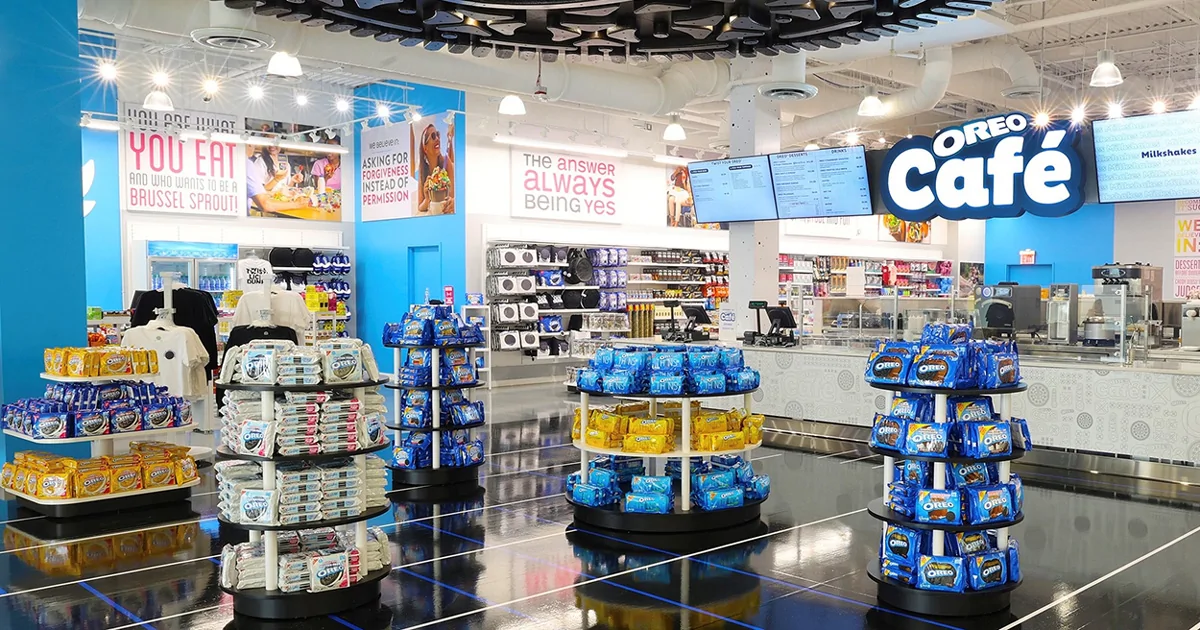
    A sweets shop at New Jersey’s American Dream mall just got even sweeter. The first-ever Oreo cafe opened last week on the top floor of the candy department store IT’SUGAR, a candy and gift shop that measures 22,000 square feet across three levels. The store features a menu of Oreo-inspired desserts, including do-it-your-self customizable treats, and limited-edition cookie merchandise.

    Located in the Meadowlands complex in East Rutherford, American Dream is a 3 million square foot commercial and entertainment center that opened in 2019 after nearly two decades of delays.

    In addition to dozens of retailers and food vendors, the mall includes DreamWorks Water Park, the largest indoor water park in North America, a Nickelodeon Universe Theme Park, an indoor ski and snow resort, LEGOLAND, an aquarium, mini-golf, and more.

    The immersive Oreo cafe includes a treats bar where visitors can customize sweets or pick from the menu of Oreo desserts, like a Waffle Sundae with baked-in Oreo pieces and Oreo cookies & cream cheesecake with Oreo cookie mousse.

    Visitors can build their own treats by choosing a dessert base, which can be a waffle, ice cream sandwich, cone, or milkshake, and then pick from more than a dozen toppings. According to the shop, there are over 200 possible combinations. Lovers of the famous cookie can even purchase Oreo products and merchandise, like tote bags, apparel, and home decor.

    The Oreo cookie actually has roots in the area. Just across the Hudson River, the cookie was invented at the former Nabisco factory, the present-day site of Chelsea Market. Nabisco wanted to create a cookie to compete with Hydrox, a creme-filled sandwich cookie. The company’s lead food scientist Sam Porcello created the recipe for the filling and the Oreo Biscuit was first sold to a grocer in Hoboken in 1912. Today, over 60 billion Oreo cookies are sold each year around the world.

  • Retail coffee prices to climb as frost and freight costs bite

    Retail coffee prices to climb as frost and freight costs bite

    A massive shipping logjam caused by the most devastating frost in decades in Brazil and record freight costs wrought by COVID-19 in top coffee producer Brazil is expected to push retail prices to multi-year highs in the coming weeks. have hope.

    A rise in coffee prices will further increase the cost of the shopping cart for other items such as bread, vegetable oil and sugar. The United Nations Food Agency’s index of world food prices for July saw a 31% year-on-year rise at a time when many consumers are struggling financially because of the pandemic.

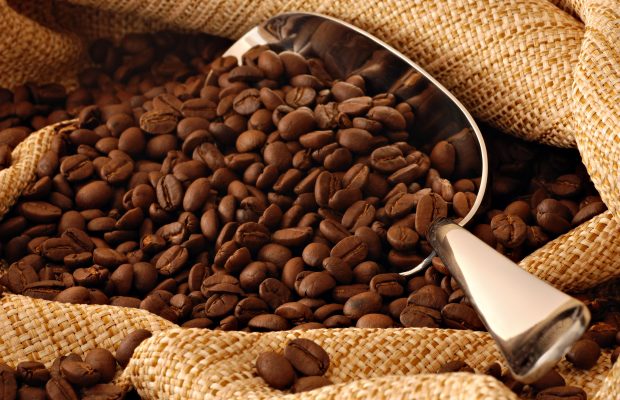
    The worst cold snap since 1994 in Brazil sent the price of green coffee beans to the highest level in nearly seven years and is expected to pass on to consumers when they buy roasted beans or ground coffee at supermarkets.The price of Arabica coffee on the ICE Futures US exchange has more than doubled in the past 12 months and crops in Brazil have already dried up after the worst drought in 91 years.

    The extent of the damage is still being assessed, but it could take up to seven years for production to fully recover in areas where there are no coffee trees left.

    Shipping disruptions, partly due to increased demand for consumer goods and not enough ships as people stayed home due to the global coronavirus pandemic, have led to a sharp increase in the cost of transporting beans to major consumer countries in North America and Europe. is of. .

    With merchants believing that consumers will soon have to pay more to buy coffee from supermarkets, the price of a latte or Americano at high street coffee chains may not follow suit in the short term.

    “The roast and ground (coffee at the supermarket) only has coffee and a little packaging. Your coffee at Starbucks can’t go up (as much) because you pay more for the shop, the wifi, the experience,” he said.

    Data released by the US Bureau of Labor Statistics showed ground coffee prices rose to $4.75 a pound in April, up 8.1% from a year earlier and the highest level since July 2015, as a drought-hit Brazil. had an early effect on crops.

    Arabica coffee prices on the ICE Futures US exchange rose sharply, however, after the recent frost and retail prices are sure to increase in response.

    In Brazil, the world’s number two consuming country after the United States, prices of roasted and ground coffee rose 3.4% in June, according to the statistics office IBGE.

    They are sure to grow further. Following the July frosts, Brazilian coffee industry group Ebique asked roasters to analyze their costs and adjust prices accordingly to maintain the stability of their businesses.

    Ebic estimates that green coffee prices for roasters in Brazil have increased by about 80% from the end of December to July.

    “Some companies, including market leaders, have already announced price increases,” Ebic said in a letter to affiliated roasters seen by Businesshala.

    JDE Peet’s, whose brands include Douwe Egberts, Kenko and Peet’s, said there has been a sharp increase in material, freight and other costs over the past 12 months.

    “Historically, significant fluctuations in green coffee prices have been reflected in the market (retail prices) and we expect this precedent to continue,” the company said.

    An increase in transportation costs, coupled with a shortage of shipping containers, can play a major role in driving up prices. Coffee is typically shipped in containers, as opposed to items such as cereals, which are transported in bulk carriers.

    Many coffee companies find it easier to cope with an increase in the cost of beans, at least in the short term, than to increase shipping costs because they often price their purchases several months in advance.

    Mark Schneider, chief executive officer of Nestle, recently said, “We’ve been hedging here for a good percentage of our coffee needs for the rest of this year and even part of next year, So I’m not worried about it.” Conference call, adding it was not in terms of transportation costs.

    Carlos Santana, coffee head trader at Aisa Intergricola, a unit of ECOM Trading, said it was very challenging to ship coffee specifically to the US.

    “It’s not nearly as economical to use this route right now. Ports are full in the US, shipping companies don’t want to move as much cargo there, so they charge more. Prices are three times higher than they were before the pandemic,” They said.

    Thiago Cazarini, a coffee broker in the Brazilian state of Minas Gerais, said despite paying very high prices to secure a container, exporters are having problems trying to load them into ships.

    He said the problem is widespread, affecting all players.

    One US coffee importer said, “Brazil is logically such a mess at the moment. I have coffee that arrived two months ago and haven’t received it yet.”

    Julian Thomas, managing director of Maersk Brazil (MAERSKb.CO), part of the world’s largest container shipping line, said: “The current bottlenecks of pandemic containment measures and a strong demand are also affecting supply chains in and outside Brazil. Is.”

    “We are still serving our customers and can meet their growing demand,” he told Businesshala.

    German container shipper Hapag Lloyd (HLAG.DE) said there were delays for shipping goods, “but not just coffee”.

    Brazil accounts for an estimated 30% of global exports and its peak shipment season has already begun.

    Additional reporting by Maytal Angel in London and Ana Mano in So Paulo; Editing by Veronica Brown and David Evans

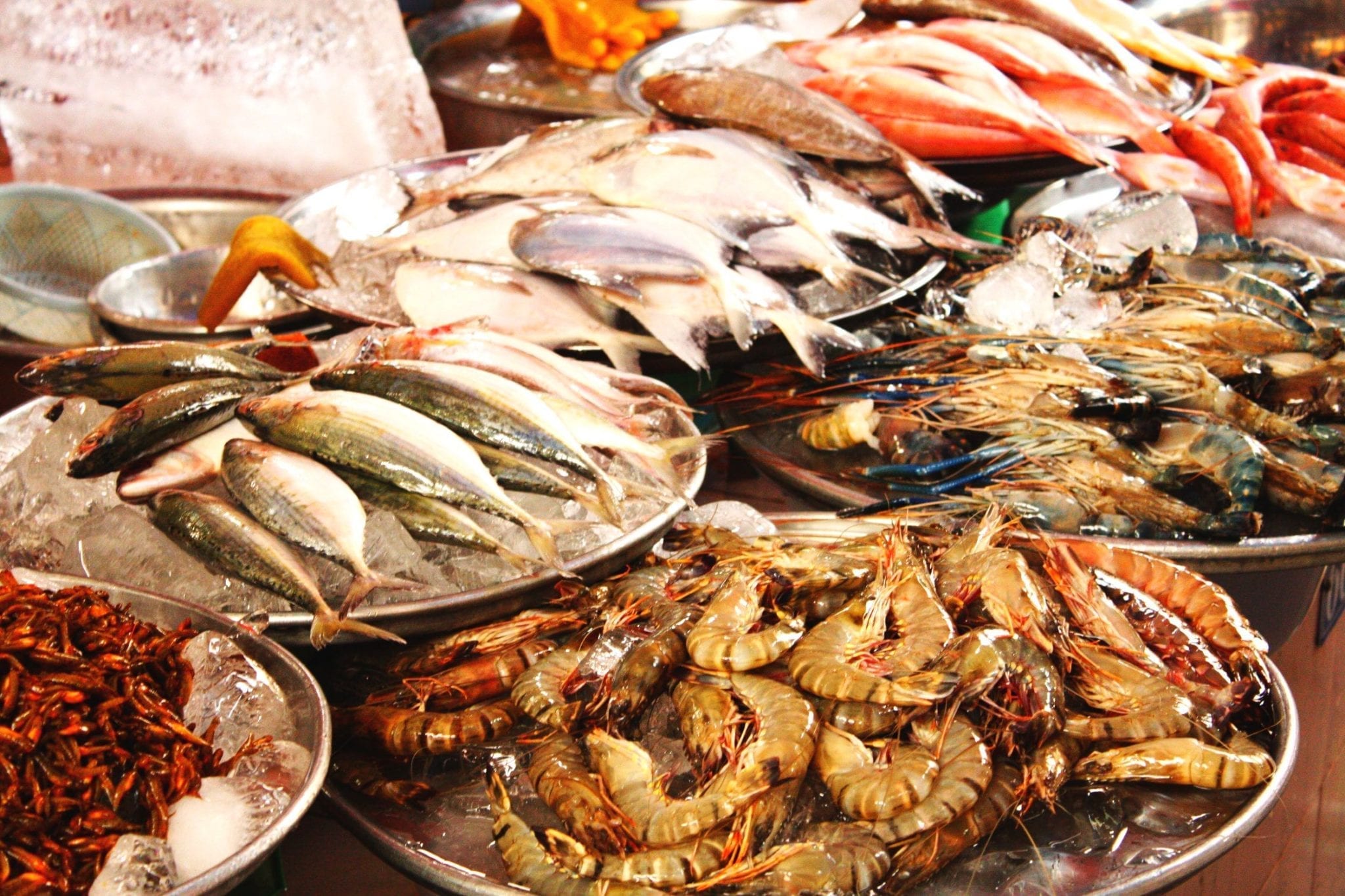
  • Imported seafood prices skyrocket amid transport restrictions

    Imported seafood prices skyrocket amid transport restrictions

    The prices of imported king crabs and abalones have risen by 30-50 percent in HCMC due to limited supply caused by mobility restrictions.

    King crabs are sold at VND2.5-2.9 million ($109-126) per kilogram, 50 percent higher year-on-year.

    Australian and South Korean abalones are sold at 30 percent higher at VND1.6-1.8 million.

    Salmon prices are up 18 percent at VND650,000.

    A seafood importer who owns a restaurant in the city’s Tan Binh District blamed the price rise on a supply shortage, saying the semi-lockdown has made transporting seafood difficult.

    Another reason is the limited number of flights coming to Vietnam from abroad.

    Another importer said half the crabs died on the way to Vietnam due to flight delays, causing him losses. He has stopped selling for now.

    Tran Van Truong, CEO of seafood chain Hoang Gia, said flights from Norway to HCMC are rare and in most cases have to transit in other countries.

    Many sellers are increasing the sale of domestic seafood items such as red tilapia and squid to survive.

  • Rising food prices make things harder amid Covid woes

    Rising food prices make things harder amid Covid woes

    Surging prices of essential goods are worsening the difficulties for people who have already been hit by job losses and travel restrictions.

    The last time Le Quang Hai of Hanoi’s Cau Giay District went to the market, the prices of eggs and most vegetables had doubled. He already could not afford meat.

    The price increases were a further financial burden for the 23-year-old delivery worker who has been unemployed for two weeks as his company cut the number of staff on authorities’ orders to limit the number of people commuting.

    His only income has been the VND1.5 million ($65) government support, which will soon run out.

    “I might have to borrow money from some friends as Hanoi has imposed social distancing for another two weeks. I hope the outbreak will be contained before I run out of money.”

    In Hanoi’s neighboring province of Hung Yen, Nguyen Hoang Yen, who tends plants in an apartment complex, has seen her work hours reduced by half for a week now due to restrictions on people coming in from outside.

    But rising food prices are creating more challenges for her family of three which depends mainly on the 50-year-old to put food on the table.

    “We try to keep our meals simple. There is not much we can do but to wait for all of this to be over.”

    Rising prices of meat, vegetables and groceries are adding to the challenges for low-income workers.

    Industry insiders say the closure of wholesale markets and retail outlets due to Covid-19 have pushed prices up in the capital.

    In Xuan La Market in Tay Ho District, the price of a kilogram of cabbage and squash have risen by a third to VND15,000 and by 20 percent to VND27,000.

    Hanh, a vegetable vendor, said since earlier this week she has been unable to buy from outside of Hanoi due to transport restrictions.

    Egg prices remain at around 50 percent higher than before the outbreak.

    “Rising demand and limited supply since most eggs are transported to HCMC have caused prices to rise,” Nguyen Thi Kim Dung, director of retail chain Co.op Mart Hanoi, said.

    The price hikes have placed a strain on both blue- and white-collar workers.

    Minh Tu, a graphic designer in Ba Dinh District, has seen his income cut by 30 percent as his company lost contracts.

    “I eat more carbohydrate and less protein to reduce my expenses. For the next few weeks there will be no fruits or desserts,” the 29-year-old said.

    To ensure enough supply and keep prices from rising, the city trade department plans to use bus stations, stadiums and empty plots of land as hubs for food to make up for the closure of wholesale markets.

    The city has also set up several mobile shopping sites to reduce crowds at markets and stabilize prices.

    Dam Manh Tuan, director of retail outlet Aeon Long Bien, said around eight tons of food would be distributed to four such points in Long Bien District at the same prices as at Aeon stores.

    Similar sales points are being set up in downtown districts.

    But for Quynh Anh in Hoan Kiem, who has been laid off from her job as an office receptionist, another two weeks of social distancing means prices will likely increase further.

    And, for the 25-year-old, finding a new job is almost impossible at this time.

    She said: “I’ve cut down spending to a minimum and my savings are almost gone. Things have never been this hard.”