Category: Food

Retail News Asia is committed to providing both local and global retailers with the latest Food and Food & Beverage news throughout the Asian market. This on a daily base.

  • Starbucks Korea expands social-distancing plan

    Starbucks Korea expands social-distancing plan

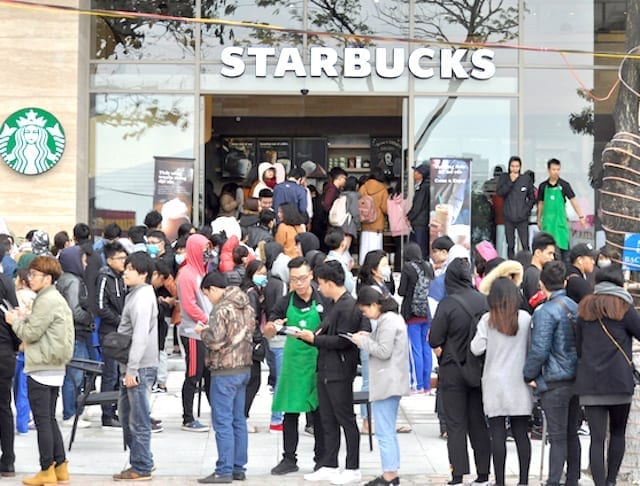
    Starbucks Korea will expand social-distancing measures across its branches nationwide from Thursday, after a successful trial at some stores in Daegu and North Gyeongsang Province.

    The company plans to ensure a safe distance between customers and employees is maintained when ordering by placing safety line stickers in front of checkout counters.

    Furthermore, for a limited time, customers will not be able to bring their own reusable mugs.

    When ordering drinks using individual multi-use cups, customers will still get benefits for being eco-friendly, such as discounts or points, by showing personal cups. However, customers will be provided the drink in a disposable cup. This strategy was introduced in the US a fortnight ago and has since been implemented in many markets across Asia.

    Meanwhile, Starbucks will also conduct campaigns such as asking people to wear masks when ordering, and to dispose of paper straws in trash cans.

  • Starbucks Philippines shuts down all stores due to COVID-19

    Starbucks Philippines shuts down all stores due to COVID-19

    Following its temporary closure of stores in Luzon last week, Starbucks Philippines has now extended the shutdown to Visayas and Mindanao.

    In social media posts, the coffee chain said the health and well-being of its partners (employees) and customers remain top of mind and their highest priority.

    The complete closures means no delivery or takeaway services will be offered either.

    “Based on the guidance of local authorities and after much consideration, our stores in Visayas and Mindanao will also close. As such, all Starbucks stores in the Philippines will be temporarily closed”, Starbucks Philippines posted on its Facebook and Twitter account.

    The company said it looks forward to serving customers again as soon as possible, but as of now, it encourages everyone to stay indoors and stay safe and healthy.

    President Rodrigo Duterte declared the whole Luzon under “enhanced community quarantine” on March 16 and some other regions followed suit as the number of cases of coronavirus disease (COVID-19) continued to soar.

    Yesterday recorded the highest jump of COVID-19 in the Philippines with 82 confirmed patients in just a single day making it to 462 in total with 33 deaths while 18 have already recovered.

  • Starbucks Japan launches Smart Lounge railway station concept

    Starbucks Japan launches Smart Lounge railway station concept

    Starbucks Japan has launched a new concept store in collaboration with railway operator JR East.

    The “Starbucks Coffee Takanawa Gateway Station” opened yesterday, introducing its Smart Lounge concept – a store space focused on business use. The store features numerous semi-private and single-seat seats to meet the needs of using a cafe for work purposes as well as a large table used for meetings with multiple people.

    Two fully-private booth-style share offices are provided within the store. Power outlets are available for all seats, and the store also operates a mobile battery sharing service. Wifi is available throughout the premises.

    The cafe also specializes in speedy cashless payment via Starbucks Card and Suica, among other e-payment platforms. Via a dedicated app, it allows customers to settle orders in advance and receive products smoothly at stores, designed to allow more effective use of time and reduction of waiting time at cash registers.

    “Starbucks has more than 1500 stores nationwide and connects with 800,000 customers a day,” said Starbucks Japan head of store development Kazuhiro Ishihara. “Each store has its own personality and expression that reflects the locality and needs of each individual.

    “At the Takanawa Gateway Station, we provide a smart and comfortable experience that suits its location and purpose, and integrates with people’s lives to create a future city that no one has yet seen. We aim to be a store and base that can be created with people.”

    Takanawa Gateway Station is situated in Shinagawa town, a new urban area under development that aims to be a new gateway to Tokyo.

    JR East aims to operate 30 shared office spaces by the end of the financial year.

  • Yum China reopens most stores, reports recovering footfall

    Yum China reopens most stores, reports recovering footfall

    Yum China says it is witnessing “early signs of recovery” in Mainland China as business gradually resumes and people return to work.

    However, the company, which operates KFC, Pizza Hut and Little Sheep chains, said in an update to shareholders that restaurant traffic remains “heavily impacted” as people continue to implement social-distancing measures.

    Store closures peaked in mid-February when about 35 percent of the company’s network was closed, the remainder offering only delivery and takeaway services. However, trade for those still trading significantly declined. Same-store sales for Yum China were down by between 40 percent and 50 percent year on year during the Chinese New Year holiday period.

    This week, about 95 percent of Yum China’s stores had reopened either fully or partially and about 15 percent of those continued to offer only takeaway or delivery services.

    In its update, Yum China said that while customer volumes were slowly building, they remained well down on pre-outbreak levels.

    “The pace of recovery varies by region and is slower during weekends as people avoid going out. In recent days, same-store sales were down approximately 20 percent. Sales performance fluctuates as the recovery is uneven, and the situation continues to evolve,” the company said.

    Yum China launched contactless delivery in late January, which proved popular and supported the delivery business during a period of lower dine-in traffic. “Delivery sales grew year over year, and its mix as a percentage of company sales approximately doubled.”

    Yum China also launched contactless pick-up and corporate catering services as highly sanitary options for consumers and corporate customers.

    Now that the coronavirus crisis appears to have passed its peak in Mainland China, the company is considering resuming its network expansion program. Currently paused – largely due to a shortage of construction workers and traffic restrictions – the company says it will “continue to monitor the situation and work with local authorities, resuming new store openings when conditions allow”.

    “Despite a challenging start to the year, Yum China is here for the long run, and will ensure that it remains well-positioned for the long-term growth opportunities in China.”

  • SM, Jollibee roll out emergency packages for employees

    SM, Jollibee roll out emergency packages for employees

    As the community quarantine continues all over Luzon, Philippine conglomerate SM Group has committed to maintaining regular pay for all of its employees, without deductions from their vacation or sick leave entitlements.

    The company will also give a US$97.64 (Php5000) additional payment to security staff and janitors, who the company describes as front liners.

    Hans Sy, chairman of the executive committee of SM Prime said that in such trying times, “we are in uncharted territory”.

    “Let’s be one with each other, united in the spirit of service. Let’s be mindful of our front liners and help with their need to be alert so they can continue to do their best in working for the safety and health of our communities.”

    SM earlier said it would waive tenant rentals nationwide as well as support health workers fighting the spread of COVID-19 with $1.95 million (Php100 million) worth of protective equipment, testing kits and supplies.

    Meanwhile, Jollibee Foods Corp has announced a $19.52 million (Php1 billion) emergency-response package for employees affected by the quarantine.

    “In these times, we know how people are worried about their safety and how to take care of their families. We want to help lessen their worries and we are setting up this fund to be able to help them through this difficult time,” said JFC founder and chairman Tony Tan Caktiong.

    The employee package will be given to Jollibee Group’s offices, stores, commissaries, and logistics centres, including the senior citizens and PWDs assigned to stores under the joint employment program with local government.

    The same assistance will be provided to partner employers in stores and other locations.

    Jollibee employees are scheduled to receive their 13th-month pay by April 30. This is in response to President Rodrigo Duterte’s appeal to employers to pay the 13th month early, due to the coronavirus crisis.

    In addition, affected employees may convert the leave credits in advance and can also file for personal leave as necessary until the situation normalizes.

    Jollibee Foods is providing $1.95 million (Php100 million) worth of food to healthcare workers and personnel manning checkpoints around quarantined areas.

  • Yum! Brands to take over The Habit Burger Grill chain

    Yum! Brands to take over The Habit Burger Grill chain

    Yum! Brands has bought California-based The Habit Burger Grill, adding its first fast-casual burger chain to its portfolio which already includes KFC, Pizza Hut and Taco Bell

    The company says it has bought all of The Habit Burger Grill’s issued and outstanding common shares in a deal worth US$375 million.

    “The Habit Burger Grill is a sweet spot within fast-casual because of its delicious California-inspired menu with premium ingredients at a QSR-like value, strong unit economics and tremendous untapped growth potential in the US and internationally,” said David Gibbs, CEO of Yum! Brands.

    As a subsidiary of Yum! Brands, The Habit Burger Grill will continue to be run as an independent brand, the company said in a statement.

    President and CEO of The Habit Burger Grill, Russell Bendel, said, being part of Yum! will take The Habit Burger Grill to the next level by leveraging Yum!’s global scale, resources, and franchising capabilities to strengthen and significantly grow our beloved brand for many years to come.”

    Founded in California in 1969, fast-casual restaurant concept The Habit Burger Grill operates about 300 restaurants across 13 states in the US.

  • Australia’s Hey Yogurt lifts off in Malaysia

    Australia’s Hey Yogurt lifts off in Malaysia

    Australian probiotic yogurt brand Hey Yogurt is planning to launch 100 outlets in Malaysia this year following its Nasdaq listing in February.

    The brand – which combines Australian yellow peaches with grain and yogurt and is marketed as a low-sugar, low-fat health food – has been operating in Singapore since January, where it has already achieved sales of more than 1000 cups per day.

    Hey Yogurt is already preparing its first stores in Kuala Lumpur, Malacca and Johor Bahru.

    The popularity of the drink during an economic downturn brought about by the coronavirus epidemic may be related to recent findings that the Lactobacillus bacteria found in yogurt has positive benefits for the immune system when blended with probiotics, according to a German study cited by the brand.

  • McDonald’s UK to scrap plastic Happy Meal toys

    McDonald’s UK to scrap plastic Happy Meal toys

    McDonald’s UK is ditching its plastic Happy Meal toys in favor of more sustainably produced alternatives in its stores.

    In a move to reduce the firm’s plastic waste by more than 3000 tons, from May onwards the firm will phase out the playthings it provides with its children’s meals and instead offer books, stuffed items or paper-based toys.

    Simultaneously, the restaurant chain will be collecting plastic toys back in its UK and Ireland restaurants to be recycled into play equipment for its children’s charities.

    McDonald’s UK has already been providing books as an option with its Happy Meals for several years under its Happy Reader program.

    “We care passionately about the environment and are committed to reducing plastic across our business,” said McDonald’s UK marketing chief Gareth Helm.

    “Families have high expectations of us and we’re working as hard as we can to give them the confidence that their Happy Meal is as sustainable as possible.”

  • South Korea’s Crispy Chicken n’ Tomato expands in Japan

    South Korea’s Crispy Chicken n’ Tomato expands in Japan

    South Korean chicken chain Crispy Chicken n’ Tomato has expanded its retail network into Tokyo, opening 10 stores in the city this month.

    Besides selling at stores, Crispy Chicken n’ Tomato has also partnered with UberEats to offer “sharing brand service” which allows one store on UberEats to bear two brands at the same time.

    The company introduces this type of business as unlike franchises, owners do not need to change interiors, uniforms, equipment or their existing menu.

    Crispy Chicken n’ Tomato’s operator, E-mate Co, said food-delivery sales are increasing significantly in a local restaurant market that has traditionally suffered slow sales growth for various reasons.

    “We are looking for restaurant partners and agencies that want to secure new profits”, said a spokesperson.

  • Hong Kong malls join Deliveroo programme to rescue plunging F&B sales

    Hong Kong malls join Deliveroo programme to rescue plunging F&B sales

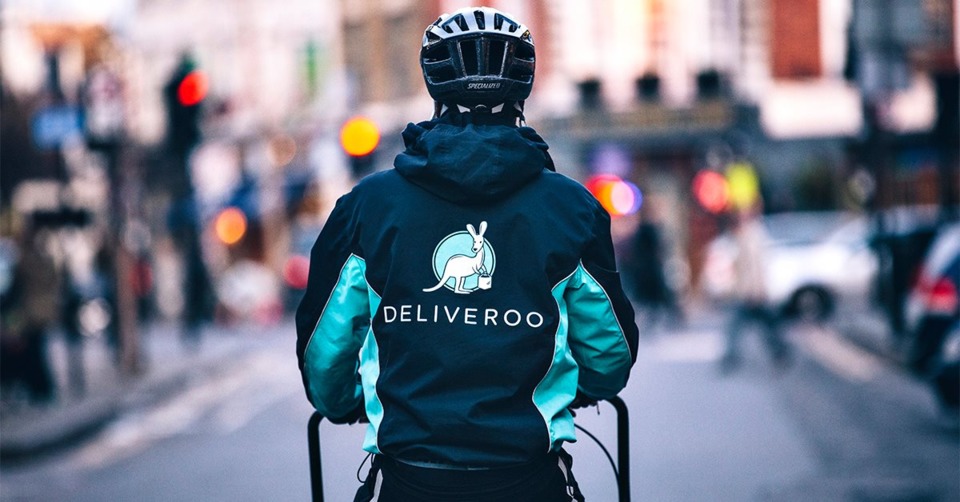
    Twenty Hong Kong shopping malls have joined a program launched by Deliveroo to help food & beverage tenants survive the coronavirus by expanding their delivery business.

    Deliveroo expects the mall partnership program to generate at least HK$20 million (US$2.6 million) in incremental online sales for the restaurants, “a critical avenue of additional income” for retail food & beverage tenants hit by decimated footfalls as consumers avoid crowded places such as malls.

    Deliveroo estimates about 300 restaurants will benefit from the program which has benefited from a $1.5 million investment by the company and partner malls.

    The program will include a fast-tracked onboarding for mall tenants and cross-marketing opportunities for malls to work with Deliveroo.

    The 20 shopping malls which have already signed on to partner with Deliveroo, include K11 Musea and K11 Art Mall from New World Development; Lee Gardens, Lee Theatre and Hysan Place From Hysan Development; East Point City, New Town Plaza, Popwalk, APM, World Trade Centre, Tai Po Mega Mall, Yuen Long Plaza and New Jade Shopping Plaza from Sun Hung Kai Properties; Tseung Kwan O Plaza and Nan Fung Place from Nan Fung Group; MegaBox from Kerry Properties; and Amoy Plaza, Kornhill Plaza, Fashion Walk and Grand Plaza from Hang Lung Properties.

    Discussions are ongoing with other malls across Hong Kong to join the program.

    Deliveroo says research of its 6500 restaurant partners has shown that online delivery channels which used to comprise 15 to 25 percent of turnover before the advent of the coronavirus crisis, now accounts for 50 percent total sales and for some, even more.

    Besides the fast-track onboarding, Deliveroo has developed a voucher program enabling malls and tenants to create coupon offers at a reduced rate, encouraging higher spend from existing customers and drawing in new customers to place food-delivery orders with restaurants located inside partner malls.

    Deliveroo and participating malls will develop locally relevant offers to drive demand and turnover for restaurant tenants’ delivery and pick-up services. User codes are being created for tenants of offices or apartments located above the malls and district-specific push notifications will be sent via social media and digital channels.

    Deliveroo says it has already signed on about 150 new restaurant partners due to the incentives provided by the mall partners, representing more than 25 per cent of all new sign-ons since the onset of the coronavirus crisis.

    In the case of one New Territories partner mall, restaurant tenants have seen sales increase by 1500 over the last fortnight.

    “The 30 restaurant outlets in the property are projected to earn at least HK$15,000 to $20,000 more in sales than they achieved in February delivery sales,” Deliveroo said in a statement.

    Brian Lo, GM of Deliveroo Hong Kong, said he is encouraged to see the positive momentum in engagement in the programme from leading developers and mall operators in Hong Kong.
  • Ikea and Pizza Hut design table based on pizza box widget

    Ikea and Pizza Hut design table based on pizza box widget

    Swedish furniture chain Ikea and Pizza Hut Hong Kong have teamed up to create a full-sized pizza table shaped exactly like the tiny plastic table (the “sava”) included in pizza boxes.

    The product is part of a collaboration that has also resulted in a new pizza recipe using Ikea’s meatballs – and comes packed in a genuine pizza box for good measure.

    The collaboration has been advertised throughout Hong Kong in a campaign designed by Ogilvy.

    “We’ve been absolutely thrilled to see the launch of the new Ikea and Pizza Hut pizza with a fun, cheeky campaign that has proven to be quite popular with the fans already on the first day,” said Ogilvy Hong Kong executive creative director John Koay. “This is a great pizza, and this campaign really shows how collaborations can really benefit the fans – not just the brands.”

    “This campaign shows the playful side of Pizza Hut,” said Pizza Hut Hong Kong marketing director Wendy Leung, “and that our credentials can move beyond the kitchen into new and interesting collaborations with other brands.”

    The Ikea and Pizza Hut collaboration has already proven popular with 67 percent of units already sold.

  • Starbucks China to open Coffee Innovation Park

    Starbucks China to open Coffee Innovation Park

    Starbucks China will invest US$130 million in a new roasting facility in 2022 as part of its upcoming Coffee Innovation Park in Kunshan.
    The park will be Starbucks’ largest manufacturing investment outside of the US and its first in Asia, incorporating a roasting plant, warehouse and distribution centre. The firm has committed to strengthening the specialty coffee industry in China, aiming to operate 6000 stores in China within two years.

    “Starbucks has spent the past 20 years sharing its passion for coffee across China and helping to build a leading industry that makes us all proud,” said Starbucks China chairman and CEO Belinda Wong.

    “The roasting facilities at the Coffee Innovation Park will set a blueprint for the future of coffee roasting and supply chain management, and further elevate China’s coffee industry, while supporting Starbucks’ growth in China.”

    The Coffee Innovation Park will incorporate advancements in sustainable manufacturing, smart supply chain innovation, and technology to help deliver the most energy- and water-efficient roasting operations for Starbucks in the world, while minimizing waste.

    Starbucks opened its Yunnan Farmer Support Centre eight years ago to provide open-source agronomy resources to coffee farmers throughout the region. Its new Coffee Innovation Park will source coffees from China and around the world directly from the origin for processing, roasting, packaging and distribution, for the first time in China.

  • DC Super Heroes Cafe in Manila closes for good

    DC Super Heroes Cafe in Manila closes for good

    DC Super Heroes Cafe in Manila permanently closed on Thursday, announcing the move on Facebook.

    In the post, management thanked customers of the SM Megamall store who had been fans of the superheroes-themed cafe since it opened in 2018.

    “To say that it was our pleasure to serve you is an extreme understatement. Our goal was to create a place where every superhero fan can enjoy good food and feel at home. Seeing your faces when you walk into our store, when you talk excitedly with our team about how you enjoy all the small details when you acknowledge the service and food makes it all worth it”.

    The DC Super Heroes Cafe in Manila, managed by Edric Chua. was known for its DC-inspired food and drinks. It also offered DC superhero merchandise collections for characters including Batman, Superman and Wonder Woman. Even though closing, the shop promised customers it will still continue to sell merchandise through its Facebook account.

    “We would have loved to extend our stay, but these are trying times. The most important thing to remember now is to stay properly informed, and to stay safe,” the company concluded.

    In the end, DC Super Heroes Cafe in Manila described its customers as “the true heroes”.

  • The Philippines’ Max’s Group posts 17-per-cent profit growth

    The Philippines’ Max’s Group posts 17-per-cent profit growth

    Max’s Group (MGI) which operates restaurants under its own brand name, Yellow Cab Pizza, Krispy Kreme, Jamba Juice and Teriyaki Boy, has boosted net income to $14.43 million last year.

    Fourth-quarter sales alone increased by 10.4 percent to $108.55 million from $98.22 million the previous year.

    System-wide revenue for the full year totaled $77.56 million, up 7 percent year on year, to $392.07 million.

    “Our performance demonstrates the success of our strategies to focus on our core business and spur long-term expansion through franchising,” said MGI president and CEO Robert F Trota. “Our continued investment in our commissaries also marshals the integration and modernization of our operations.”

    He said the company remains cognisant of the headwinds in the current business environment and assured investors that their teams are well-equipped to sustain levels of service and profitability.

    Meanwhile Ariel P Fermin, group COO said that following a year when the company invested in its brands to drive mainstream relevance, its focus now is to deliver on the increased demand.

    “Our integrated supply-chain programs are designed to furnish consistent quality, cost-optimized, and responsive services to our growing customer base and store network.”

    He added that the fundamentals the company put in place will serve it well in light of the challenges ahead this year.

    Max’s Group opened 82 new stores last year, including 22 overseas, taking its network to 760 locations, with 70 of them located overseas in North America, the Middle East and Asia.

  • Starbucks teams with Royal Selangor in merchandise range

    Starbucks teams with Royal Selangor in merchandise range

    Starbucks Malaysia has collaborated with iconic local pewter manufacturer and retailer Royal Selangor to produce a collection of handcrafted merchandise exclusively for coffee lovers in Malaysia.

    The collection includes a coffee stirrer, collar pin, shot glass, keychains, glass mug, and an ID tag.

    Sydney Quays, group CEO of Berjaya Food Berhad and MD of Starbucks Malaysia and Brunei, said the company is excited to offer a collection that celebrates Malaysia, and elevates Malaysian resources through the partnership.

    “Just as our customers are always looking out for meaningful trends and styles, we seek out some of the most coveted home-grown brands from across Malaysia to explore ways we can collaborate and curate a line of locally-made products through the Starbucks X Royal Selangor series,” said Quays.

    Meanwhile, Chen Tien Yue, Royal Selangor International executive director said designing the range was a fun project for both designers and crafts, developing not only coffee accessories but also personal accessories that would appeal to the Starbucks fan.

    Royal Selangor was founded in 1885 by Yong Koon. It was first named as Selangor Pewter but later changed to Royal Selangor in 1992. The company produces tableware and gift items including tankards, tea sets, photo frames, desk accessories and wine accessories distributed worldwide from its Kuala Lumpur base.

    “After 20 years in Malaysia, the Starbucks siren is now immortalised in pewter”, Yue added.