Category: Food

Retail News Asia is committed to providing both local and global retailers with the latest Food and Food & Beverage news throughout the Asian market. This on a daily base.

  • New lease-reporting standard will ‘significantly’ impact Xiabuxiabu results

    New lease-reporting standard will ‘significantly’ impact Xiabuxiabu results

    Chinese restaurant operator Xiabuxiabu says the impact of the new International Financial Reporting Standard 16 (IFRS 16), which changes the way leases are treated in financials, will seriously impact its profit this year.

    The Hong Kong-listed company issued a profit warning yesterday saying profit attributable to shareholders for the six months to June would decrease “significantly” compared with last year.

    “The application of IFRS 16 will result in a higher total charge to the statement of profit or loss in the first few years of the lease, and such expenses will decrease during the latter part of the lease term, therefore there is no impact on the expenses recognized during the lease term. As the group currently operates a large restaurant network with more than 1000 restaurants, the effects of the application of IFRS 16 will be significant,” said chairman H O Kuang-Chi.

    “As the results for the six months … have not been finalized, the information contained in this announcement is only a preliminary assessment by the board based on information currently available including the unaudited consolidated management accounts.”

    Xiabuxiabu will release its interim results by the end of this month.

  • Restaurant openings sap Jumbo Group profit

    Restaurant openings sap Jumbo Group profit

    Jumbo Group profit fell 24.8 percent in the third quarter to S$1.7 million (US$1.2 million) as new restaurant openings added to expenses.

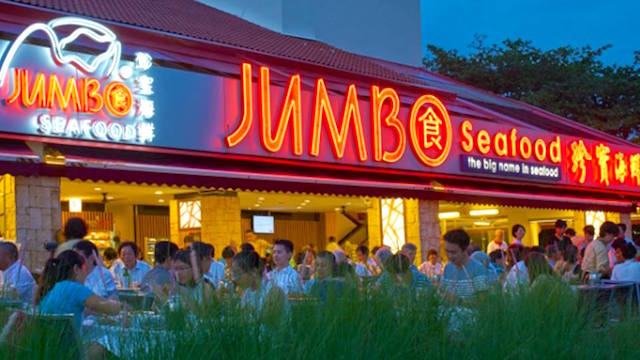
    The Singapore-listed restaurant group opened three new outlets in Singapore: a Jumbo Seafood at Jewel Changi, along with Zui Yu Xuan Teochew Cuisine and Chao Ting Teochew Pao Fan eateries at Far East Square.

    Sales were affected by the closure of the Jumbo Seafood restaurant on Riverwalk for one month during renovations.

    Group sales rose by 0.8 percent to $36.4 million.

    For the first nine months of the financial year, Jumbo Group profit was up 6.2 percent to $9.1 million on revenue down 0.4 per cent to $113.1 million.

    The company said in its results announcement that operating costs and tough competition across its Southeast Asian markets will continue to pose a challenge. However, the company expects new restaurants will help strengthen its market position in Singapore, “the bedrock of earnings growth”.

  • Smashburger weighs down Jollibee results

    Smashburger weighs down Jollibee results

    Jollibee’s Smashburger and Red Ribbon business units significantly dragged down the restaurant operator’s first-half profits.

    Jollibee Foods Corporation says the company’s net income attributable to shareholders was P1.1 billion (US$21.1 million) in the second quarter – half that of the preceding three months. First-half profit was down 34 percent on the same period last year.

    The company blamed the decline on losses relating to the Smashburger chain and lower sales by its Red Ribbon bakery business.

    “On Smashburger, we introduced major changes that created short-term disruption in sales and profit but will drive sustainable sales growth and strengthen the brand health,” said Jollibee CFO Ysmael Baysa.

    While Smashburger, a relatively recent acquisition for the company, was not yet performing, Baysa says Jollibee has considerable experience restructuring businesses it buys into more profitable operations, namely Yonghe King and Hong Zhuang Yuan in China, and the Highlands Coffee business in Vietnam.

    The poor performance of Red Ribbon during the quarter was attributed to a shortage of supplies relating to the transfer of the company’s commissary kitchen to new premises south of Metro Manila.

    Last month, Jollibee announced the purchase of California cafe chain The Coffee Bean & Tea Leaf for US$350 million. It expects that business to contribute to Jollibee’s bottom line within 12 to 18 months.

    Global sales by Jollibee rose 13.8 percent in the first half, to P113.8 billion (US$2.11 billion) . Most of that growth came from its international operations, which grew by 24.9 percent, far faster than the 13.8 percent of its domestic business.

    Between January and June, the company opened 170 stores, 111 of those in its home market.

  • Habit Burger Opening in Cambodia

    Habit Burger Opening in Cambodia

    The Habit Restaurants is set to expand its Habit Burger Grill franchise throughout Cambodia in partnership with Amory F&B in a 25-store development agreement.

    The first outlet is expected to open in Phnom Penh in spring next year.

    “We quickly developed a passion for The Habit Burger business when we saw how much focus there is on great customer service,” said Kampuchea Tela Company CEO Okhna Chhun On. “This is something we strongly believe in, and we are excited to bring the Habit experience and great food to the people of Cambodia.”

    “The Habit’s excellent brand, best-in-class systems, and experience will help us to go the extra distance to become national leaders in the burger segment,” said Amory F&B Company CEO Chhun Sophearoth. “As an organization, we keep developing and investing in our people, much like The Habit Burger, and this will be an important part of our success.”

    “We are thrilled to continue to expand our brand internationally and to see Amory F&B Company bring our unique style of hand-crafted-to-order food, chargrilled burgers and high-quality customer service to the people of Cambodia,” said The Habit Restaurants president and CEO Russ Bendel.

    “Amory is comprised of a team of experienced, committed operators who share our dedication to customer satisfaction and enthusiasm for The Habit brand.”

  • Hoshino Coffee chains eye Asian expansion

    Hoshino Coffee chains eye Asian expansion

    Upmarket Japanese coffee businesses are expanding into other Asian markets in an attempt to win over customers from global leaders such as Starbucks.

    Specialty brands Sarutahiko Coffee and Hoshino Coffee are among those reaching into major Asian markets, with Sarutahiko entering Thailand and Hong Kong, and Hoshino moving to Taiwan.

    “Consumers who frequent Starbucks are ready to embrace Japanese-style service,” said president and CEO of Sarutahiko Tomoyuki Otsuka.

    Mitsubishi has taken a 15 percent holding of Sarutahiko for around 500 million yen ($4.6 million), with a view to expanding the brands’ network from the current 16 stores (including three in Taiwan) to 30 outlets.

    Hoshino Coffee already trades well in Singapore, Malaysia, and Indonesia and will launch in Taiwan in the next fiscal year.

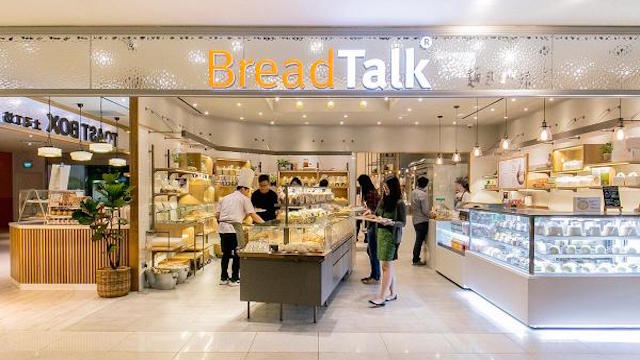
  • BreadTalk Group Profit Down

    BreadTalk Group Profit Down

    Expansion-related costs saw Singapore-listed BreadTalk Group’s quarterly profit more than halve despite rising sales.

    According to a stock-exchange filing, net profit was down by 57.9 percent to S$1.02 million for the June quarter, but sales rose 9.8 percent to $163.3 million.

    Besides its namesake brand of bakeries, BreadTalk’s portfolio includes Toast Box, Food Republic, and The Icing Room, along with a host of franchises including Din Tai Fung, Song Fa Bak Kut Teh and Wu Pao Chun Bakery.

    Net profit for the half-year was down 35.3 percent at $2.34 on sales up 7.9 percent to $321 million.

    The higher costs are believed to relate to expansion into the UK as well as set-up costs for new Din Tai Fung outlets.

    Sales rose in the core bakery and food-court divisions, however, those gains were eroded by higher distribution and selling costs. The bakery division, which accounts for about two-thirds of BreadTalk’s sales, posted a loss over the half-year on a pre-tax basis.

    This was mitigated by strong performances of the food courts, especially in Hong Kong and Mainland China, where profits rose by 23.8 percent, thanks largely to low vacancy rates.

    BreadTalk is on track to open its first Song Fa Bak Kut Teh outlet in Taiwan later this year and plans to open more eateries in Thailand and Singapore. It will also continue to roll out new food courts, focusing on Greater China and Cambodia.

    “Efforts to turnaround the bakery business, particularly in China and Thailand, remain underway, while we continue to build on the strong performance of the business in Singapore,” the company said in its filing.

  • Dairy Farm sales lift through several acquisitions

    Dairy Farm sales lift through several acquisitions

    Dairy Farm sales surged by 13 percent in the first half of the year to US$13.8 billion.

    The Hong Kong-headquartered company said the improved top line was largely due to its investment in Robinsons Retail and a strong performance by Chinese supermarket business Yonghui, but it is clear that early signs of the company’s five-year transformational program are bearing fruit, while at the same time adding to costs.

    Underlying profit was up 5 percent to $177 million.

    In a stock-exchange filing, chairman Ben Keswick said the first half of the year saw a strong performance from the health-and-beauty division, and solid sales performances from convenience, home furnishings and restaurants.

    Sales by the group’s subsidiaries in the first half were 3-per-cent lower than the same period last year (1-per-cent lower at constant exchange rates), predominantly as a result of the separation of the Rustan Supercenters business in the Philippines during the final quarter of last year and the closure of some grocery stores in Southeast Asia.

    Keswick said the supermarket and hypermarket division’s operating profit remained in line with the previous year.

    “Underlying sales performance has begun to show signs of growth, reflecting improvements in quality, availability, price competitiveness and general operating standards, notably in Southeast Asia. In North Asia, sales in Hong Kong continued to grow, particularly in upscale stores, though Taiwan is increasingly under threat from the aggressive space expansion of local competitors.”

    In Indonesia, work is underway to transform a Giant Hypermarket into an Ikea store.

    Sales in all other divisions within the group delivered positive growth in the first half.

    Convenience store operations (including 7-Eleven in Hong Kong and Singapore) achieved higher sales in all markets, with the strongest growth coming from stores in Mainland China. Overall profits were slightly lower than last year as investment in store space growth over the period exceeded the higher profits achieved in both Hong Kong and Macau.

    In the health-and-beauty division, strong sales were reported in North Asia, against significant sales growth in the same period last year, reinforcing the strength and resilience of the Mannings brand.

    “Guardian in Southeast Asia also reported an encouraging improvement in sales and profit performance during the period, with the delivery of much better overall operating standards, as well as improvements in service and product availability. A growing customer base in both Indonesia and Malaysia reflects the focus on delivering an improving product offer as well as better value,” said Keswick.

    Ikea sales grew in all markets, both at a total sales level and on a like-for-like basis. However, profitability was lower due to a combination of an increased cost of goods and pre-opening expenses for new stores under development in Taiwan and Indonesia.

    Maxim’s delivered good performances across all of its key businesses, especially restaurants, where customers have shown strong engagement with new franchises, including Shake Shack in Hong Kong.

    Yonghui reported strong underlying sales and profit growth, mainly driven by the continuing expansion of its store network and healthy sales growth. Yonghui’s profit also benefited from the partial divestment of its associate, Yunchuang at the end of last year.

    “Every area of Dairy Farm’s subsidiary businesses is undergoing some form of business transition and this scale of change will take time to execute successfully in a sustainable way,” concluded Keswick.

    “Within Southeast Asia food, optimization of the store portfolio is continuing which will have a positive effect on results in the second half.

    “While the group will begin to see some early benefits from its transformation program during the remainder of the year, sales growth may be tempered by general market uncertainties. The group remains firmly focused on the successful delivery of its transformation plan for the benefit of our customers, team members and shareholders,” he said.

  • Menulog grows footprint, revenue in Australia

    Menulog grows footprint, revenue in Australia

    London-based food company Just Eat posted its half-year results on Wednesday, including the latest results from its Australian subsidiary Menulog.

    The takeaway food platform, which launched its own delivery service in 2018 (previously it only catered to restaurants that could ‘self deliver’), reported a 29 percent increase in revenue on a constant currency basis in the first half to £27.3 million.

    Orders increased more than 10 percent year on year. Underlying EBITDA, however, fell into the red, with the company reporting a £2.1 million loss in the first half, compared to a £4.3 million profit in the prior corresponding period.

    According to Just Eat, this was due to the cost of rolling out of its new delivery service. It had signed up 5700 restaurants to the service by the end of June and now covers 70 percent of the addressable population in Australia.

    “We’ve been working at pace and made good progress in the first half of the year to become the preferred food delivery app for our customers, with a broader choice of restaurants, a better user experience and a more personalized and impactful approach to communication,” Just Eat interim chief executive Peter Duffy said.

    “Australia has returned to top-line growth with our delivery operations achieving gross profitability. These are strong foundations for Just Eat to build on, as the business continues to drive forward.”

    The company reported a 28 percent year on year increase in restaurant partners. It now has seven of the top nine international chains operating in Australia on its platform.

    Active customers fell by 10 percent compared to the same period of 2018 due to a smaller EatNow platform – a subsidiary brand, which is set to be retired later this year. Average order value also fell 2 percent, from £23.49 during the first half of 2018 to £23.03.

    “Effective action taken by our teams in a period of transition resulted in significantly improved performance in the first half of the year and has seen us reclaim market share,” the parent company wrote in a note to investors.

  • Body of Cafe Coffee Day founder discovered after apparent suicide

    Body of Cafe Coffee Day founder discovered after apparent suicide

    VG Siddhartha, the founder of India’s largest coffee chain Cafe Coffee Day, has been found dead, in an apparent suicide.

    Siddhartha had been missing since Monday, last seen by his driver standing on a bridge. He had penned a letter to his board in which he wrote that he could no longer handle pressure from private equity investors and a taxation enquiry.

    “I gave it my all but today I gave up as I could not take any more pressure,” local Indian media have reported the letter as reading. He referred to a “serious liquidity crunch” relating to “harassment” from tax officials and pressure from lenders.

    Siddhartha founded Coffee Day Enterprises in the late 1990s, years before Starbucks made its Indian debut, building a network of 1700 outlets – 10 times the size of Starbucks. The company was listed in 2015. Current shareholders include private-equity company KKR with which has 6 per cent stake after selling a 4.25 per cent stake last February.

    “We are deeply saddened by the developments and our thoughts are with his family at this time,” KKR said in a statement about Siddhartha’s death.

    As news of his disappearance, and later the discovery of his body, spread, the company’s share price plunged by 20 per cent.

    Last month, Coca-Cola was linked to an investment in the coffee chain which would have valued the enterprise at about US$1.45 billion. The status of that deal is unclear.

    Meanwhile, Coffee Day Enterprises board released a statement to the stock exchange pledging to “ensure continuity of business”

  • RFG director taking on operational role

    RFG director taking on operational role

    Retail Food Group director Jessica Buchanan has resigned from her position in order to transition to an operational consulting role.

    The move, announced in a statement to the ASX on Thursday, will enable Buchanan to execute some of the strategic initiatives she has helped to formulate in her capacity as a director.

    These include a strategy for the rollout of 62 new product campaigns, which are now being delivered to franchise partners by the company’s brand general managers.

    The first of these campaigns are showing significant improvements, a company spokeswoman said.

    According to RFG, the new Gloria Jean’s ‘Kit Kat Chiller’ promotion so far has lifted sales by 9 percent, and the Brumby’s ‘Gourmet Donut’ campaign has lifted sweet category sales by 8 percent.

    Buchanan, who founded consumer research agency Consumerology, which counts Autograph, Katies, Millers, and Crossroads as clients, has many years of experience in consumer product marketing and retail franchising.

    She was also a non-executive director of Banjo’s Bakery Cafes for four years from 2008 to 2012, according to LinkedIn.

    Earlier this month, The Age and The Sydney Morning Herald reported that Buchanan had sought to stock products from Naytiv, a food brand she started in 2017, in some of RFG’s franchises.

    The company ultimately decided not to move forward with the idea, according to a statement given to the publications.

    “Jessica has served on the RFG Board for eight years and as we close out the end of another financial year, she has decided the best use of her time at this point is to step into the company and commit more of her time to help drive the successful execution of these campaigns for our franchisees,” the spokeswoman said about her transition to operational consultant.

    RFG executive chairman Peter George thanked Buchanan for her contribution as a director and said he looks forward to working with her as a contributor.

    “Innovative product offerings and campaigns will be critical to the revitalization of the RFG’s franchisee network which will, in turn, underpin the operational turnaround of RFG,” he said.

    The franchisor, which owns the Gloria Jean’s, Donut King, Crust, Pizza Capers and Brumby’s Bakery businesses, has faced ongoing challenges since it got caught up in the parliamentary inquiry into the franchising sector.

    In March 2018, the company revealed plans to close more than 200 stores and posted a $306.7 million loss later in the year, after it was forced to make impairments and provisions to the tune of $402.9 million to cover store closures and restructuring and a reduction in brand value and assets.

    Over the last 12 months, RFG has renegotiated its financial covenants with lenders, gaining some breathing room while it seeks to reduce debt levels, including the potential sale of its Crust, Pizza Capers and Donut King businesses.

    The company’s stock price spiked in early July after it received a $160 million refinancing proposal subject to various conditions from Soliton Capital Partners, which it did not make public despite the ASX’s continuous disclosure rules.

    The company defended this decision, citing the fact that it has said numerous times that it is exploring various ways to reduce its debt.

  • Starbucks China sales and transaction volume grows

    Starbucks China sales and transaction volume grows

    Starbucks China sales growth out-paced the rest of Asia in the third quarter, up 6 per cent on a same-store basis and 2 per cent by transaction volume.

    But the coffee giant appears to be getting the most traction from its home market, where sales grew 7 per cent in the 13 weeks to June 30, the average ticket price was up by 4 per cent and the number of transactions rose 3 per cent.

    “Starbucks continues to be focused and disciplined in the execution of our three key strategic priorities that we established last year: accelerating growth in the US and China, expanding the global reach of the Starbucks brand through our Global Coffee Alliance with Nestle, and increasing shareholder returns,” said Kevin Johnson, president and CEO, referring to the Growth at Scale program.

    The company opened 442 net new stores in the quarter, with nearly one third of those in China and 48 per cent in other international markets outside the US. It ended the period with 30,626 stores worldwide, 7 per cent more than a year earlier.

    Johnson said Starbucks delivered strong operating performance demonstrating the success of the Growth at Scale agenda.

    “Our two targeted long-term growth markets, the US and China, performed extremely well across a number of measures as a result of our focus on enhancing the customer experience, driving new beverage innovation and accelerating the expansion of our digital customer relationships. Given the strong momentum across our business, we are raising our full-year financial outlook.

    “With our efforts to streamline the company and elevate the Starbucks brand, we are positioning the company to deliver predictable and sustainable operating results while building an enduring company that creates meaningful long-term value for Starbucks shareholders,” he concluded.

    Global comparable store sales increased 6 per cent, driven by a 3 per cent increase in average ticket and a 3 per cent increase in comparable transactions.

  • Yum China speeding up expansion plans

    Yum China speeding up expansion plans

    Yum China plans to invest up to US$525 million opening between 800 and 850 new stores in the current financial year.

    Most of the new stores will be KFC outlets and of its new cafe chain Coffii & Joy.

    The protections were included in the company’s second-quarter results released overnight, which showed total system sales up 10 percent year on year to US$2.12 billion, with KFC leading the way at 12 percent. Sales at Pizza Hut rose by 4 percent.

    While sales were up, much of the growth was driven by network expansion. Same-store sales grew 4 percent, with a 5-per-cent increase at KFC and a 1-per-cent increase at Pizza Hut.

    Restaurant margin slipped from 15.1 percent to 14.7 percent, however, operating profit rose 6 percent from $193 million to $204 million.

    Net Income increased 24 percent from $143 million to $178 million, primarily due to the increased operating profit and a gain from the company’s equity investment in Meituan Dianping.

    During the quarter, Yum China opened 178 new restaurants taking its store count to 8751 across more than 1300 cities.

    “We continued to capitalise on market opportunities across China with aggressive, KFC-led store expansion,” said Yum China CFO Jacky Lo. “With a strong cash payback period for new KFC stores and many untapped opportunities, we intend to continue to rapidly expand our store footprint in the second half of the year.

    “Looking forward, we expect overall sales growth to moderate as KFC begins to lap several key sales drivers, including successful value campaigns that we initiated in the second half of last year. However, we remain confident that our strong foundation and commitment to innovation throughout our business will power continued growth for Yum China. We will continue to create new and exciting menu items, and leverage our leadership in digital, data and delivery to meet the evolving needs of our consumers.”

  • Sumo Sushi & Bento launches in India

    Sumo Sushi & Bento launches in India

    Dubai Japanese restaurant chain Sumo Sushi & Bento is entering the Indian market.

    The firm has partnered with local operator FranGlobal to open up to 25 outlets within five years, with the first location launching in either Delhi or Mumbai within six months.

    “India is a vibrant and exciting country and people are demanding new cuisines and we will hit the mark on it,” said Sumo Sushi & Bento CEO Julianne Holt Kailihiwa. “There’s already awareness, interest and curiosity among Indians around Japanese cuisine, especially fusion oriented food. Sumo has been successfully running its chain of restaurants for 20 years catering to Middle East customers who have a very cosmopolitan taste. There’s also a big Indian customer base in Dubai hence we feel that India reasonably should be a scalable market for the brand.”

    The firm has been operating in the Middle East for almost 20 years, catering to a cosmopolitan customer base with a strong vegetarian menu segment. It will be targeting a similar clientele in India’s major urban hubs.

    “Our biggest challenge is to provide good quality product at a competitive price because the raw material used in Japanese cuisine is expensive,” said Franglobal CEO Venus Barak. “Our quality matches the ones offered in a five-star hotel. We also plan to introduce beer and wine in the menu.”

  • Jollibee bought The Coffee Bean & Tea Leaf

    Jollibee bought The Coffee Bean & Tea Leaf

    Philippine restaurant operator Jollibee Foods is to buy US cafe brand The Coffee Bean & Tea Leaf outright for US$350 million.

    The acquisition is Jollibee’s largest to date, and will involve a $100 million investment in a new Singaporean holding firm to handle the process, constituting an 80 percent equity of the business. The $250 million balance is to be regarded as an advance to the firm, which will issue preferred shares within six to nine months to repay it. The takeover will be financed initially through a bridge loan.

    The remaining 20 percent equity in the new firm will be taken by members of the family operating Jollibee partner Viet Thai International Joint Stock Company, which runs the Highlands Coffee and Pho 24 franchises, primarily within Vietnam.

    An IPO for the new holding company is expected to be made within three-to-five years.

    The Coffee Bean & Tea Leaf is owned by California-based International Coffee and Tea. It recorded revenue of $313 million last year, however, analysts estimate it lost about $21 million.

    “The deal will bring international business’ contribution to 36 percent of worldwide sales and will bring Jollibee closer to its vision to be one of the top five restaurant companies in the world in terms of market capitalization,” said Jollibee Foods Corporation chairman Tan Caktiong.

    “Our priority is to accelerate the growth of The Coffee Bean & Tea Leaf brand particularly in Asia, by strengthening its brand development, marketing, and franchise support system.”

    The Coffee Bean & Tea Leaf operated 1189 locations as of the end of last year, around a third of which are in Southeast Asia.

  • Little Damage Opens in Singapore

    Little Damage Opens in Singapore

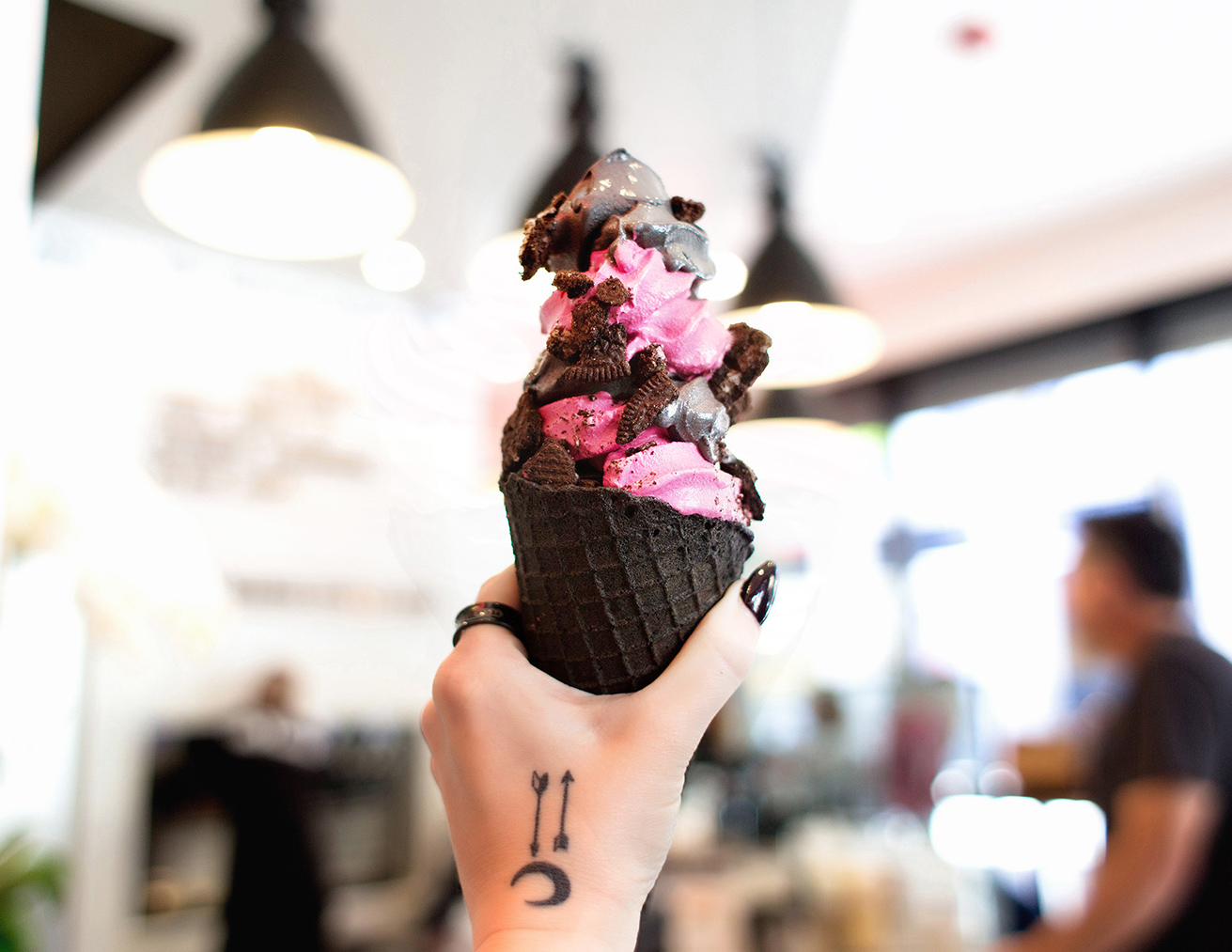
    Los Angeles ice cream shop Little Damage has launched in Singapore with a second outlet already in planning.

    Decked out in black-and-white checkered prints, the first outlet at Wheelock Place mainly caters to takeaways. The walls are decorated with neon phrases seen in its LA outlet, such as “I Like Love You” and “Cute But Psycho, But Cute” for photo ops.

    A second outlet will be opened by the end of this year. Stores also sell goods including tumblers and bags, with plans to add apparel soon.

    Little Damage has been brought to Singapore by Caerus Holding, which also operates other F&B local franchises, including cake boutique Lady M.