Category: Food

Retail News Asia is committed to providing both local and global retailers with the latest Food and Food & Beverage news throughout the Asian market. This on a daily base.

  • Top Luckin management fired over faked sales data

    Top Luckin management fired over faked sales data

    Chinese coffee chain Luckin, once lauded for its overt attempt to dethrone Starbucks within the country, has fired or suspended eight executives over the fraudulent misrepresentation of sales data last year.

    Luckin executives Jenny Zhiya Qian, who was CEO, and Jian Liu, COO, have been sacked over the highly publicized scandal that saw its stock price plummet more than 70 percent on New York’s Nasdaq stock exchange before trading in the stock was suspended.

    In earnings statements, the company overreported sales by at least RMB2.2 billion (US$310 million). When the misrepresentation was revealed by a whistleblower the company announced an investigation, suspending Liu.

    According to reporting in the South China Morning Post, six other Luckin executives and employees who were involved in or had knowledge of the fraud have also been placed on suspension or leave. The firm’s senior VP Jinyi Guo has been appointed acting CEO.

    The true extent of the misrepresentations still remains unclear while a panel reviews financial records, however, last November, the company claimed sales were running at six-times the rate of the previous year.

    Prior to its listing in the US, the company secured investment from the Singapore Government sovereign wealth fund GIC and China International Capital Corp, among others. It raised US$778 million in early January, and $645 million in a US IPO.

    “The company will continue to cooperate with the internal investigation and focus on growing its business under the leadership of the board and current senior management,” said a statement this week issued by the firm’s board.

    Luckin expanded swiftly since its inception three years ago, and operated more than 4500 locations in China by late last year, surpassing Starbucks’ 4300 outlets. At the time, Luckin was determined to overthrow Starbucks through aggressive growth and app-based purchasing prioritizing takeaway and deliveries.

    Top Luckin executives fired over faked sales data
  • Singapore coffee chain Kimly boosts profit, despite Covid-19

    Singapore coffee chain Kimly boosts profit, despite Covid-19

    Singaporean traditional coffee shop operator Kimly has recorded a 5.3-per-cent year-on-year boost in half-year profit to SG$10.5 million (US$7.4 million).

    The result was achieved on a more modest 1-per-cent increase in sales to $107.4 million ($75.74 million) in the half-year ended March 31.

    The improved revenue was largely due to the brand’s five new coffee shops and eight food stalls opened since November.

    While the Covid-19 pandemic seriously and adversely impacted economic growth prospects in Singapore, Kimly’s coffee shops, canteens and food courts remain open for takeaway and delivery services throughout. Since the nation’s circuit breaker was introduced on April 7 footfall has fallen at these locations, the company said.

    “In line with the further tightening of circuit breaker measures recently, the group has suspended operations at its six Rive Gauche outlets and Cake Central Kitchen facility but the group does not expect the suspension to have any material impact on the group’s revenue.”

    The Kimly board said that besides placing focus on enhancing food offerings and operational efficiency in the upcoming year, “we remain committed to secure more long-term direct ownership of food outlets and food stalls in matured estates which is in line with our asset ownership strategy”.

    “We believe that there are still acquisition opportunities in the local market where we can tap on to further expand our presence in Singapore as well as enhance our profitability.”

  • Popeyes China to open its first store, in Shanghai

    Popeyes China to open its first store, in Shanghai

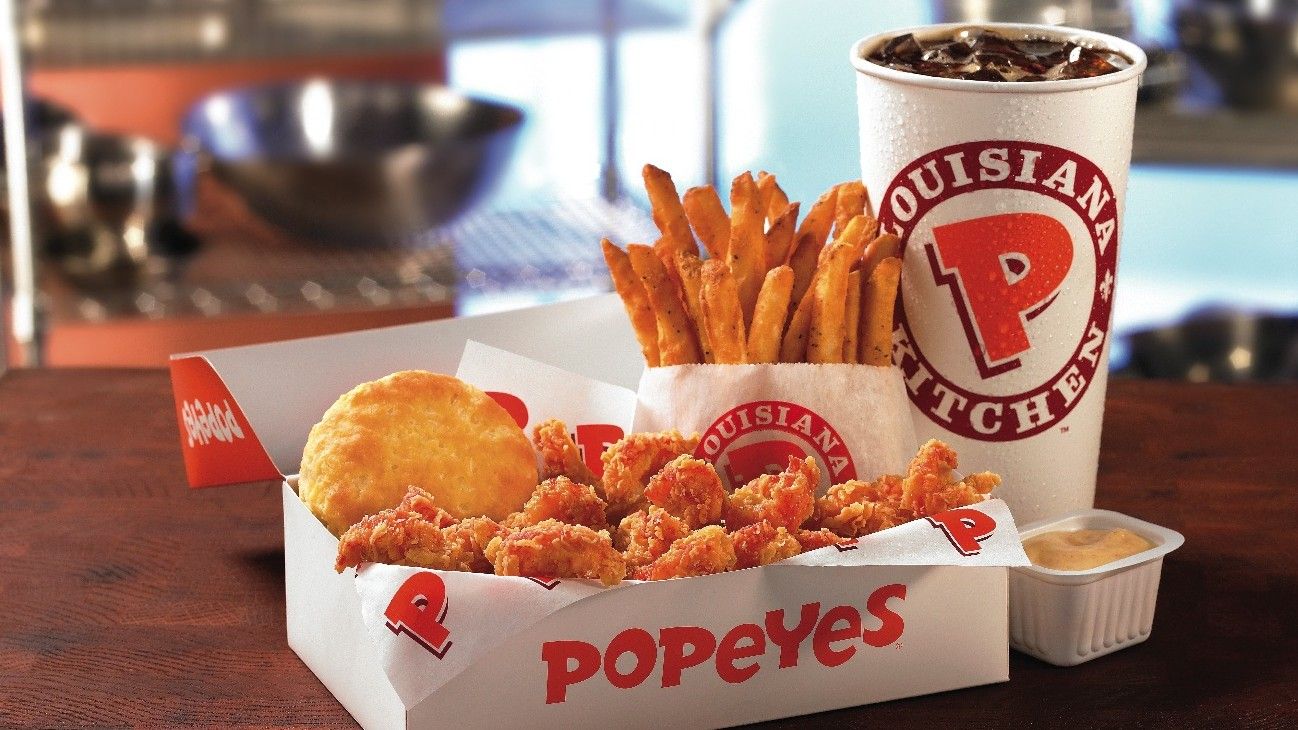
    Popeyes China will open its first store next week, in Shanghai, as it aims to build a network of 1500 outlets nationwide within 10 years.

    Located on Huaihai Road, one of the city’s most popular shopping precincts, the 470sqm debut Popeyes China store features a Louisiana-inspired design with a twist of Chinese aesthetics.

    Raphael Coelho, CEO of Popeyes China, says the company will look to expand in other parts of the country including Hangzhou and Suzhou after the brand’s debut. He is confident about the growth prospects for the brand as the country is quickly recovering from the Covid-19 pandemic.

    “We hope to set our roots in the China market and grow in the long run and be loved by consumers and clients,” said Coelho.

    The company announced last year that it would launch in Mainland China, becoming the last of Restaurant Brands International’s three major chains to enter the Chinese market. Burger King has operated in the territory since 2005, and it now has more than 1000 locations in China.

    Popeyes operates more than 3100 locations in more than 26 countries worldwide, including the US and Canada.

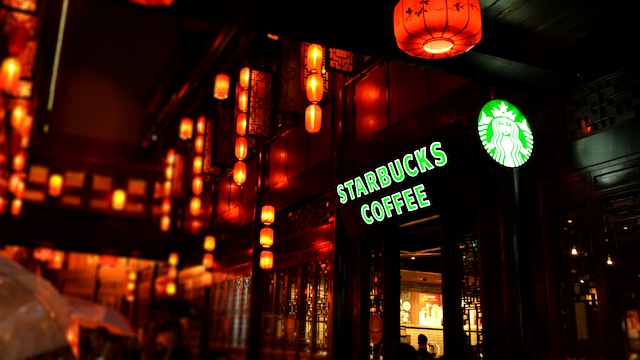
  • Second Starbucks community outlet opens doors in South Korea

    Second Starbucks community outlet opens doors in South Korea

    A second Starbucks community store has opened in South Korea.

    The new venue, located in Seongsudong, Seoul, is described by the company as a “hub for young people and prospective startups to share information about networking and starting their own businesses”.

    The store is located near a sizable startup and social-venture community and a major metro station.

    Starbucks will host a series of startup workshops for young people at the store via its new Starbucks Youth Startup Entrepreneurship Programme, which is funded by a portion of sales from the store, coordinating with other stores across the market to offer the program to youth in other parts of the country.

    The community space within the store features movable walls and furniture as well as regular cafe seating.

  • Tea WG opens fourth Hong Kong store

    Tea WG opens fourth Hong Kong store

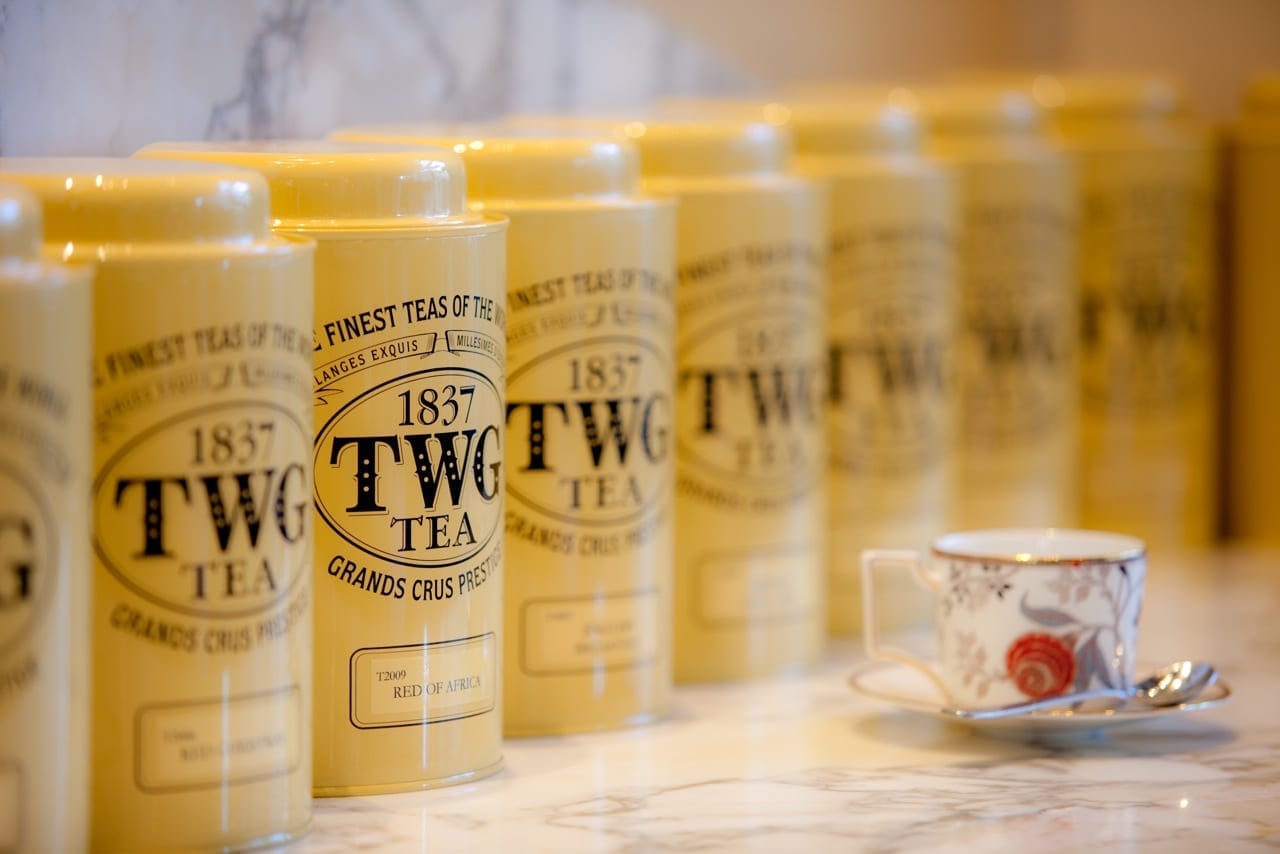
    Singaporean luxury tea brand Tea WG has expanded its Hong Kong footprint, adding a fourth boutique at Sha Tin’s New Town Plaza, its first in the New Territories.

    The retailer, which trades as TWG Tea in other markets, opened two boutiques in Festival Walk and Elements last year following its growing popularity in the territory.

    The teahouse was founded in 2008 by Taha Bouqdib, Maranda Barnes and Rith Aum-Stievenard who conceptualized luxury tea rooms with over 800 types of tea and inspired gastronomy, loved by both locals and tourists in more than 20 countries. Starting out in Singapore, the artisanal tea trend in Asia found success in the luxury market for the modern-day aspirational customer.

    The brand developed a sommelier-training facility to help its staff build an extensive knowledge through tea-tastings, training and exams to better serve customers.

    Although Tea WG’s clientele is mainly women enjoying their afternoon tea set over a cup of the company’s ‘Silver Moon’ green-tea blend, each global boutique serves different types of customers. From “tai tai’s” (wealthy ladies of the house) to Instagramming millennials, the brand is seeing a surprising increase in the number of affluent men splurging on upscale tea accessories and gold tea cups. Tea appreciation workshops (similar to wine tastings) are also held for its VIPs, offering a ‘fine-tea’ experience.

    Tea WG has built a luxury reputation that has drawn five-star establishments from Marriott Hotels to Singapore Airlines to serve the brand – even creating exclusive blends for their own clientele.

    From a Singapore brand to more than 70 locations in the world, including Paris, Tokyo, Dubai, the brand has even won over British and Chinese nationals with its exquisite blends.

    After opening a London salon and boutique flagship, Tea WG aims to expand to the US and Australia – but in the meantime, customers there can buy packaged tea through the brand’s mobile app and online store.

  • Record slump in Hong Kong restaurant sales

    Record slump in Hong Kong restaurant sales

    Hong Kong restaurant sales plunged 31.2 percent in the first quarter of this year – the largest decline on record – as consumers practiced social distancing and the government restricted occupancy.

    Significant growth in home deliveries of restaurant meals was insufficient to stem the dramatic fall in patronage.

    According to the Census and Statistics Department, Hong Kong restaurant sales were down by 10.8 percent in January, at the time the coronavirus began to affect inbound visitors from Mainland China. Sales in February plunged 42.1 percent and in March by 41.7 percent.

    Full-quarter restaurant receipts were estimated at HK$21.7 billion (US$2.8 billion), while purchases by restaurants fell 29.1 percent to $7 billion.

    Chinese restaurants appear to have been hit hardest, perhaps reflecting the disappearance of mainland tourists. Sales for the quarter fell by 39.6 percent in value and 40.9 percent in volume.

    Turnover at non-Chinese restaurants were down by 29 percent in value and 29.9 percent in volume, while fast-food shops experienced a decline of 17.1 percent in value and 18.2 percent in volume.

    Bars – worst affected by social-distancing measures – saw receipts down by 37.5 percent in value and 40.8 percent in volume.

    A government spokesman said that while there have been some signs of relative improvement in Hong Kong restaurant sales recently from the very austere situation earlier, the business environment of the food and beverage sector will remain difficult in the near term amid the economic recession.

  • Chinese tea chain Heytea leaving Hong Kong

    Chinese tea chain Heytea leaving Hong Kong

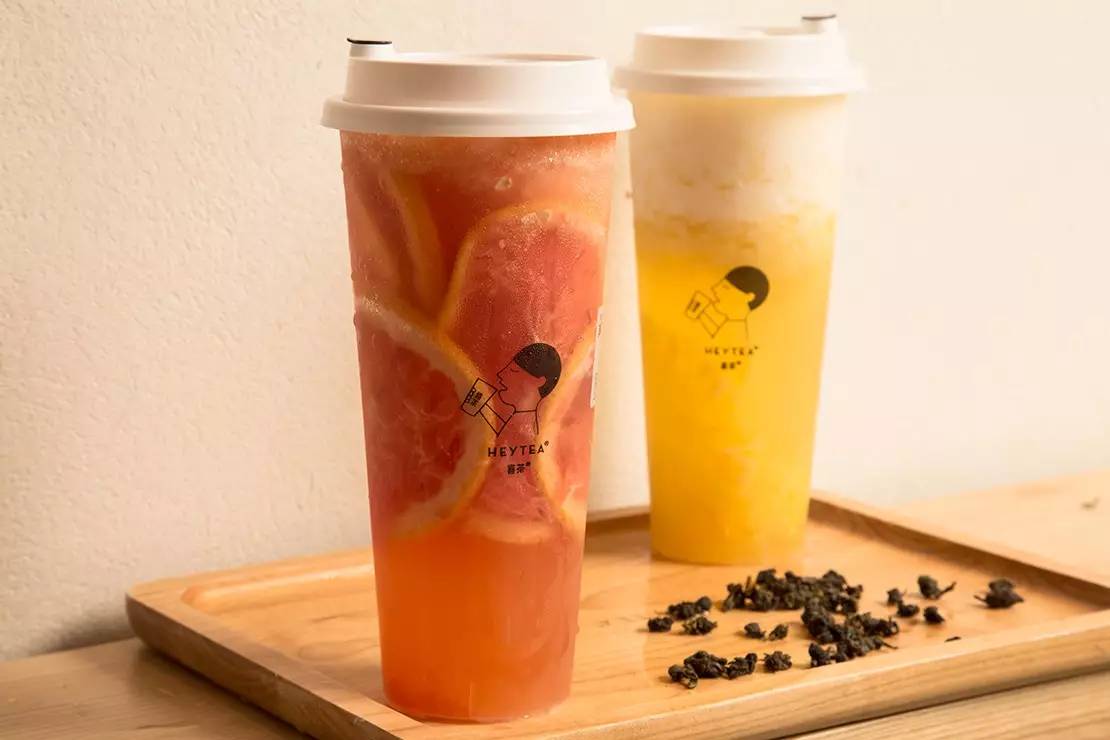
    Chinese tea chain Heytea has closed three-quarters of its Hong Kong network, leaving just two stores operating, at Causeway Bay’s Times Square and Sha Tin’s New Town Plaza.

    Three of Heytea’s outlets in Tsim Tsa Tsui – at The Sun Arcade and New World Development’s two K11 malls – have been boarded up. A K11 representative shared with Apple Daily that Heytea had rescinded its tenancy at the end of April. The tea chain had entered K11 Art Mall and K11 Musea in March and September last year, respectively. The K11 Musea flagship dubbed the ‘Heytea Lab’ spanned 4000sqft, offering patrons views overlooking Victoria Harbor and featuring the brand’s first tea-cocktail bar. It lasted less than one year.

    Heytea entered Hong Kong in late 2018, with customers queueing for up to four hours at the opening of the inaugural store at New Town Plaza. However, since the protests from June last year, many pro-democratic locals had boycotted the once-hyped tea brand due to its mainland Chinese origins.

    With Hong Kong now divided along political lines, locals initiated their own ‘Hong Kong 5.1 Golden Week’ protest action over the recent long weekend, a reference to the “Five Demands, Not One Less” slogan at the core of last year’s protests. The protest actively supported ‘yellow economy’ businesses that openly support Hong Kong protestors.

    More than 300 Heytea stores continue to operate in Mainland China and the brand made its first international foray into Singapore in 2018. The company sourced its initial funding from He Boquan, an angel investor from IDG Capital, and has just completed another round of financing led by Hillhouse Capital and Coatue Management, valuing the business at RMB16 billion (US$2.3 billion) post-investment.

  • Lavazza launches with a strong partner with with Yum Brands

    Lavazza launches with a strong partner with with Yum Brands

    Fast-food and QSR-restaurant operator Yum China has partnered with Italian coffee company Lavazza to develop a network of coffee shops across the country.

    The companies have opened a Lavazza Flagship store in Shanghai, first outside Italy, as the first step in the new partnership.

    The flagship is located in Jing’an, Shanghai’s historic downtown district, offering what the companies describe as “an immersive Italian coffee shop experience that is almost identical to what they could expect to find in Italy”. High ceilings, artistic murals and marble furnishings help deliver the Italian ‘feel’ and the coffee is complemented with a “gastronomic cafe” serving traditional Italian-inspired snacks.

    “We see great potential for coffee in China and Lavazza shares this enthusiasm,” said Joey Wat, CEO of Yum China. “Leveraging our deep understanding of Chinese consumers, we look forward to working together with Lavazza to explore the coffee market in China.

    Antonio Baravalle, CEO of Lavazza Group, described Yum China as “a prestigious partner with in-depth knowledge of the market and the needs of Chinese consumers”.

    “China is an important market with huge untapped potential for coffee consumption. We have been searching for the right opportunities to establish Lavazza in China and Asia, and this partnership is an important first step,” he said.

    The 125-year-old family-owned Lavazza positions itself as a premium brand offering high-quality coffee. It has a strong presence across Asia at the retail level and as a supplier of beans to independent cafes, which must meet strict standards of coffee-making to be allowed to serve the brand.

    Lavazza has created a blend exclusively for the China market: Bel Paese Coffee, which it says offers tastes from across the different regions of Italy, including using historic espresso recipes and local interpretations.

    A range of ‘Coffee Design’ specialty coffees is also available at the Lavazza Shanghai Flagship Store.

    The food menu was created in partnership with an unnamed Michelin-starred chef to provide an authentic Italian offer.

    Yum China says its brands – including Pizza Hut, KFC and a growing portfolio of Chinese food chains – sold 130 million cups of coffee to consumers last year

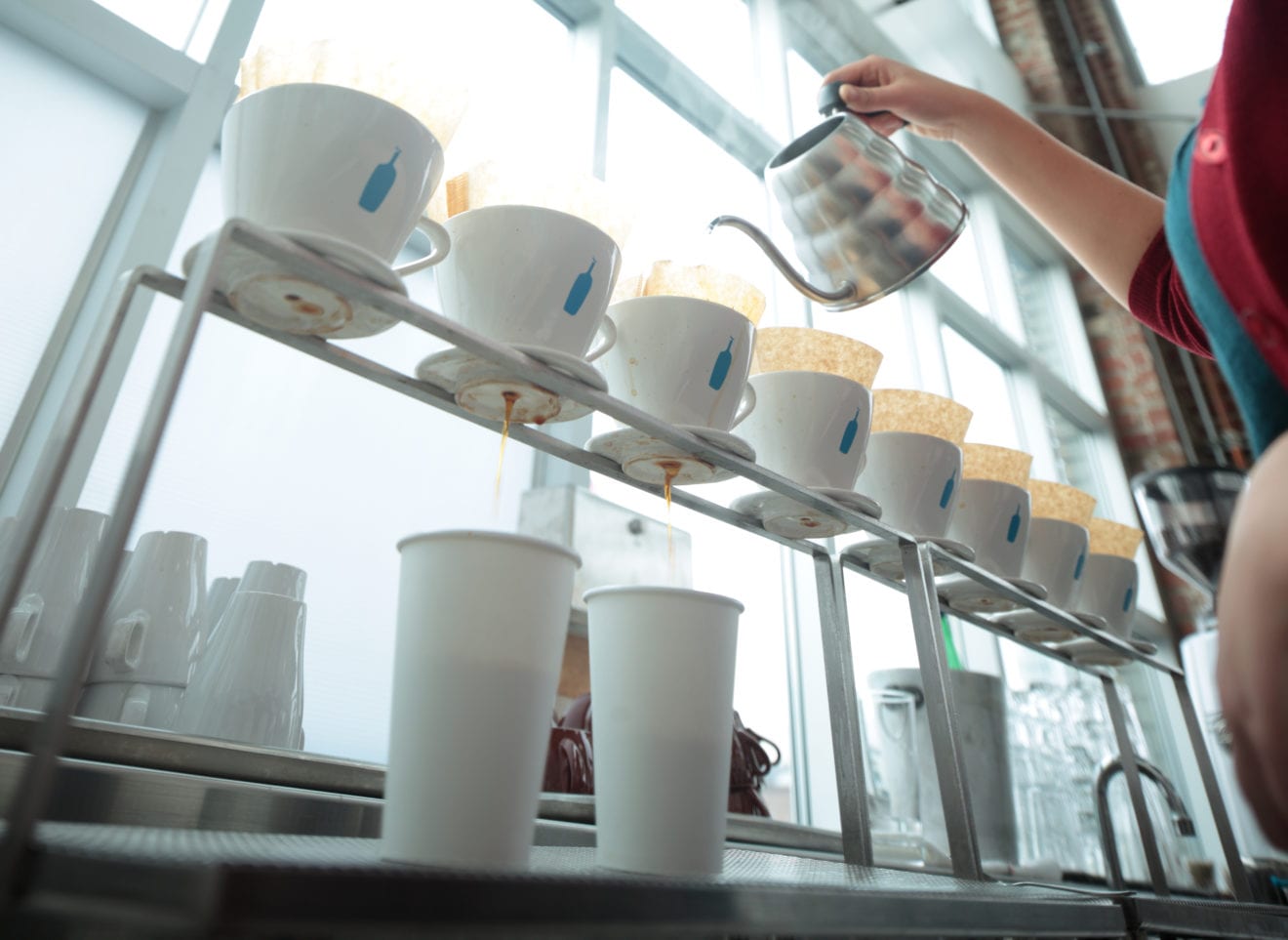
  • US cafe chain Blue Bottle lifting off in Hong Kong

    US cafe chain Blue Bottle lifting off in Hong Kong

    After months of speculation, US coffee chain Blue Bottle has launched in Hong Kong.

    The modern coffee roaster is currently serving only takeaway coffee from its location in Lyndhurst Terrace due to restrictions on restaurant trading during the coronavirus pandemic.

    The store, expected to open for dine-in services when social-distancing restrictions are eased, features “an industrial medley of timber work surfaces [and] exposed support beams” design, according to LifestyleAsia.

    The store is Blue Bottle’s 22nd venue in Asia. It currently has more than 50 cafes in the US, and recently debuted in Japan and South Korea.

    The brand is known for its single-origin beans and cold-brew coffee which prompted consumer-goods giant Nestle to acquire a 68-per-cent stake for US$425 million back in 2017.

  • Yum China Profit gain despite Covid-19 virus impact

    Yum China Profit gain despite Covid-19 virus impact

    Yum China emerged from the first quarter in profit despite the disruptive effects of the Covid-19 pandemic on sales and operations.

    While revenue was down 24 percent for the operator of KFC, Pizza Hut in Mainland China, and several local restaurant chains, the company reported an operating profit of US$97 million. That was achieved even after extending support to staff and franchisees, whose income was affected by store closures during the pandemic. Total sales were $1.75 billion, down from $2.3 billion.

    “This achievement under extraordinary circumstances is a testament to our resilient and flexible business model,” said Yum China CEO Joey Wat. “Weathering this storm of all storms gives us great confidence in our ability to thrive in the years ahead by serving our employees, customers, and shareholders.”

    Yum China opened 179 new stores during the March quarter – mostly prior to Lunar New Year – extending its store count to 9295 across more than 1400 cities.

    During the Covid-19 crisis, the company began temporarily closing stores in late January, working within the guidelines of respective local city authorities. Some 35 percent of stores were closed by mid-February at the peak of the outbreak, with significant regional differences. As of last week about 99 percent of its stores have either partially or fully reopened.

    Same-store sales declined in restaurants which remained open, due to reduced operating hours and falling customer numbers. Many of the stores provided only delivery or takeaway services.

    During the first three weeks of January – prior to the pandemic taking hold – the company experienced strong trading across its network. But then same-store sales declined by 40-50 percent compared with last year’s Lunar New Year holiday turnover. By late March, same-store sales had recovered somewhat, down by about 20 percent. Delivery sales accounted for 35 percent of total sales throughout the quarter, almost double the share of a year earlier.

    The company said sales during April – the early weeks of the second quarter – were down by more than 10 percent on a same-store basis.

    The reason Yum China performed so well during the quarter was a mixture of cost control, landlord support, assistance from government agencies and improved labor productivity, which mitigated lower sales and increased expenses due to contactless delivery and increased delivery costs.

    By channel, Pizza Hut was affected more than KFC, with sales down 38 percent, compared to 15 percent (excluding foreign-exchange adjustments).

    Yum China’s net income declined 72 percent from $222 million to $62 million, primarily due to the reduced operating profit and losses in an equity investment in Meituan Dianping.

    Wat said the company relied on its “culture of innovation” to protect stakeholders and support the business during the pandemic-related lockdown.

    “Most importantly, we quickly implemented a safe way to reach our customers through highly sanitary contactless delivery and contactless takeaway. Our digital infrastructure enabled us to stay nimble and communicate quickly with customers and employees online and through mobile technology. We were able to inform our members about compelling offers through our apps, while efficiently adjusting labor hours based on rapidly changing traffic and sales patterns,” he said.

    CFO Andy Yeung said that while the situation in China is gradually stabilizing, the company remains cautious as restaurant traffic is still below pre-outbreak levels.

    “We expect an extended recovery period, and that the pace will be uneven across regions, day parts and segments. On the other hand, global infections continue to rise. It remains difficult to predict the full impact of the pandemic on the broader economy and how consumer behavior may change.”

  • KFC tests plant-based chicken meals in China

    KFC tests plant-based chicken meals in China

    KFC has launched a three-day test of its plant-based chicken meals in China starting from today, April 28.

    Partnering with US food manufacturer Cargill, KFC China debuts its plant-based chicken nuggets, which are made from soy, wheat, and special pea, at selected stores in Shanghai, Guangzhou, and Shenzhen.

    “We are committed to embracing innovation and continue to delight and surprise our customers with tasty products,” said Joey Wat, CEO of Yum China. “The test of KFC’s Plant-Based Chicken Nuggets caters to the growing market in China for delicious alternative meat options on the go.

    “We believe that testing the plant-based chicken concept with one of our most iconic products will take this increasingly popular meatless trend to a new level.”

    Before the test was launched, consumers downloaded some 7000 coupons required to purchase the food from the KFC app. In Shanghai, the coupons sold out in just one hour. The company has also changed the layout and decor of participating stores to promote the initiative.

    KFC is not the only food-retailing brand to roll out plant-based meals in China this month – Starbucks recently launched a plant-based menu in stores across the country.

  • Starbucks China and Sequoia Capital launch technology investment plan

    Starbucks China and Sequoia Capital launch technology investment plan

    Starbucks is to partner with the investment company Sequoia Capital to invest in new technologies that will accelerate the company’s digital innovation in Mainland China.

    The two companies plan to focus on next-generation food and retail technology companies whose products will help Starbucks grow the coffee and retail industry in China, one of its fastest-growing markets globally.

    An early focus will be opportunities to embed digital technologies across Starbucks’ retail business, making the most of data-driven analytics, modeling, and decision making.

    “These may entail adopting creative solutions to enhance front- and back-of-house operations, such as the use of machine learning and predictive intelligence tools in managing Starbucks growing retail operations in China, or the optimization of Starbucks supply chain through precise, real-time inventory management,” the company said in a statement.

    “China’s vibrant environment is a rich ground for entrepreneurship that has seen the emergence of many local innovators that we hugely admire,” said Starbucks China CEO and chairman Belinda Wong.

    “The partnership enables Starbucks to tap into the most dynamic Chinese technology entrepreneurs in order to delight our customers with meaningful innovations created in China, for China.”

    By partnering with Sequoia Capital, Starbucks will gain early access to technologies which it expects will create investment opportunities to grow its China business and keep pace with technology innovations which are driving structural reform across digital, online, and brick-and-mortar retailing.

    “Beyond the direct benefits from this collaboration, Starbucks also hopes to leverage its retail expertise, scale, and infrastructure to help realize the growth aspirations of like-minded purpose-driven companies that have a passion for leading positive change for customers and communities,” said Wong.

    “The partnership presents an exciting platform for our portfolio companies to test, commercialize and scale new innovations for China,” added Neil Shen, steward of Sequoia Capital, and the founding and managing partner of Sequoia Capital China. “Together with Starbucks, we look forward to bringing the digital transformation of the consumer retail industry in China to the next level.”

    This is not Starbucks’ first commitment to identifying and funding new technologies. Last year it launched Siren Ventures in the US to invest in new concepts and technologies.

    “We are excited to tap the tremendous energy of technology entrepreneurs from two of the world’s largest and most dynamic markets, to pioneer innovative solutions that could reimagine the global retail landscape,” said Kevin Johnson, president, and CEO of Starbucks.

  • Eating at home will be ‘the new reality’ for Asian consumers after Covid-19

    Eating at home will be ‘the new reality’ for Asian consumers after Covid-19

    Covid-19 has changed Asian customers’ habits, especially in Hong Kong, as more of them decide to eat at home.

    And according to a study conducted by Nielsen, the trend will continue once the pandemic passes, potentially reshaping the foodservice and grocery industries.

    Nielsen found that 86 percent of mainland Chinese customers prefer to eat at home more often now than before the Covid-19 outbreak. In Hong Kong, 77 percent of consumers surveyed said they want to cook at home more often.

    “As Hong Kong consumers adjust to the ‘new normal’, people are spending more time at home to prepare meals for their families,” said Andrea Borelli, MD at Nielsen Hong Kong and Macau. “With the redefined ‘stay-at-home economy’, it has helped to reinvigorate packaged-food sales as this provides the opportunity for FMCG players in these categories to engage with their consumers more closely.”

    This trend also became popular in other Asian countries including South Korea, Malaysia, and Vietnam (all approximately 62 percent).

    “The shifts away from out-of-home dining to at-home food delivery, takeaways and cooking during the Covid-19 period are locally nuanced by traditional consumption habits but also by the different quarantine and shutdown measures by market,” Borelli added.

    He said Covid-19 has reoriented consumer thinking and actions, which will have long-term consequences. Consumers will not only re-evaluate places for eating out but also be far more cognizant of what they’re eating.

    The trend is also evident in countries outside of Asia. According to GlobalData, both the UK and France are witnessing slow demand for takeaway meals.

    “In response, players such as Deliveroo and UberEats are looking to reduce risk exposure by forging partnerships with food retailers, working with major players such as Co-op and M&S in the UK and Carrefour in France,” said Thomas Brereton, retail analyst at GlobalData.

    “In that sense, the virus is accelerating the existing shift towards online food shopping; however, all parties must be aware of the expected duration of such alliances, with more thorough reviews – particularly on the dynamics of joint responsibility for ESG, brand image, etc – needed as the outbreak progresses.”

  • China retail ‘after Covit-19’ in store innovation says 7Fresh head

    China retail ‘after Covit-19’ in store innovation says 7Fresh head

    China’s retail industry remains behind the curve in-store innovation, which stands as a hurdle to the Chinese market’s inevitable dominance in global retail.

    The observation was among several key insights shared by 7Fresh head Jonathan Wang in a recent interview circulated by JD, which owns the 7Fresh omnichannel fresh-food supermarket business.

    “The key factors driving global retail transformation are quite simple: channel reformation, store format innovation and supply chain management,” said Wang. “China is already leading the global retail industry in channel reformation and digitizing the supply chain, but is still lagging behind the leading players, such as the US and Japan in terms of store innovation.”

    Wang noted that the scale of China’s e-commerce sector currently exceeds that of the US, UK and Japan combined. Despite this lead, China’s traditional offline retailers receive less than 5 percent of their revenues from online channels.

    “In China, some omnichannel supermarkets are far more advanced than those of leading Western supermarkets,” said Wang. “Many Chinese shoppers today are accustomed to ordering online and getting live and fresh seafood, fruits and vegetables, and other produce delivered to their doorsteps within 30 minutes. This is still far from the norm in most major US cities.

    “At 7Fresh supermarkets, online orders typically account for 40 percent to 45 percent while the proportion reached nearly 70 percent in February when Covid-19 was peaking in China. The company’s advanced supply chain technology was clearly the lynchpin to provide the superior omnichannel retail experience.”

    While China’s online business has proven its strength in navigating emerging opportunities, offline retail remains rooted in its store formats. At the same time, the Chinese middle class is growing, along with its desire to spend an increasing disposable income on quality items – exhibiting what is perhaps China’s most rapidly evolving set of consumer habits, tastes, expectations, and buying patterns in recent history.

    “It may be that the retail industry used to be relatively low-key, but since the industry has drawn much greater attention nowadays, people started to become aware of the ‘sexy’ aspect of retail,” said Wang.

    “Most of 7Fresh’s systems are designed as SaaS systems so that they can be adapted easily and quickly. Thanks to digitization, JD’s 7Fresh supermarket was able to break even within one year and a half. Its sales efficiency is three times that of a regular supermarket. Establishing 7Fresh is about exploring retail’s best practices, and we wish to share this excellence with the industry to make a positive impact and improve its capacity overall.”

  • Record numbers show Taiwan food-service sales decline

    Record numbers show Taiwan food-service sales decline

    Taiwan foodservice sales have slumped by 21 percent year on year due to the coronavirus pandemic.

    Ministry of Economic Affairs data revealed total F&B sales of NT$51.9 billion (US$1.73 billion) this year across the territory, the steepest decline since reporting on sales figures began in January 2000.

    A parallel survey of Taiwanese restaurant sales saw a 23-per-cent drop in sales early this month. Figures revealed a downward trend in Taiwan foodservice sales before the government introduced social-distancing measures, with venues serving Chinese cuisine the most strongly affected.

    Ministry deputy head of statistics Wang Shu-chuan said that full-month figures for April could see a similar drop of around NT$16 billion ($532.5 million).

    General retail sales for the first financial quarter this year dropped 0.6 percent from last year to NT$924.5 billion ($30.8 billion), with revenues for March hitting NT$290.6 billion ($9.7 billion), down 3.4 percent. At the same time, e-commerce operators saw sales rise 19.1 percent year on year to NT$81.1 billion ($2.7 billion) during the first quarter.