Category: Food

Retail News Asia is committed to providing both local and global retailers with the latest Food and Food & Beverage news throughout the Asian market. This on a daily base.

  • Nutella unveils limited-edition collection inspired by Australian locations

    Nutella unveils limited-edition collection inspired by Australian locations

    Breakfast spread brand Nutella has rolled out a new limited-edition collection featuring recipes from some of Australia’s “most loved” locations.

    The new ‘Nutella Loves Aussie Recipe’ collection features ingredients and flavours from eight landscapes in Australia such as NSW’s Bondi Beach, NT’s Outbacks, Pink Lake in Western Australia and Cardle Mountain in Tasmania.

    Azzurra Puricelli, marketing manager for Nutella, said the new collection celebrates the uniqueness of the country.

    “We’ve rediscovered what home really means in the last few years. We hope Australians can enjoy collecting these jars just as much as they enjoy a delicious breakfast with Nutella in the mornings”.

    The company has also produced a custom Lithgow label honouring the Nutella factory in Lithgow, NSW, where 8.8 million kgs of hazelnut spread are made each year.

    Recipes can be accessed by scanning a QR code on the jars.

  • Aldi opens its first Melbourne Corner Store concept today

    Aldi opens its first Melbourne Corner Store concept today

    Aldi has opened its first Corner Store concept, in Melbourne’s CBD, complete with a cafe serving barista coffee.

    The company says the store is designed for inner-city customers stocking ready-to-eat meals, fresh produce, bakery items such as cinnamon buns, croissants and baguettes, and its discounted Special Buys products. The Corner Store concept was first tested on Sydney’s North Shore, a hybrid model of part convenience store, part supermarket.

    Huw Longman, director of Aldi Corner Stores, said the new shop will meet customers’ needs in the surrounding high-density, urban area.

    “Shopping habits continue to evolve, and we are seeing a large audience of people who prefer shopping more frequently with a hyper-focus on convenience.”

    He said the store meets these needs, taking convenience and creativity and combining it with quality and savings.

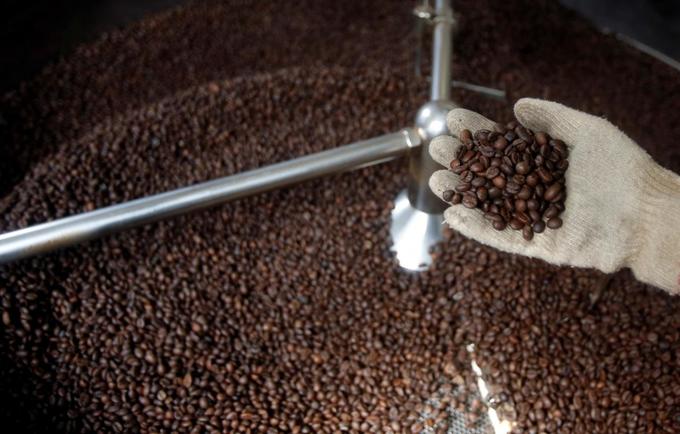
    To commemorate the store opening, a unique limited-time Lazzio coffee cart pop-up will offer customers coffee for 37 cents. The coffee beans are hand-roasted in Victoria by Black Bag Roasters. Proceeds from the coffee sales will be donated to Aldi’s national charity partner, Camp Quality.

  • Brisbane coffee brand Aromas Coffee Roasters sold

    Brisbane coffee brand Aromas Coffee Roasters sold

    Queensland-based Aromas Coffee Roasters has been acquired by local Indigenous-owned company SupplyAus Holdings for an undisclosed sum.

    Aromas Coffee Roasters boasts a 47-year history, serving more than 300 locations in the state, while SupplyAus was co-founded by Adam Williams, a Wiradjuri man, and Shane Andrews, a descendant of the Mununjali people in 2018.

    SupplyAus CEO, Adam Williams, told Business News Australia, that this was a “major step to inspire other Indigenous entrepreneurs to have a go”.

    “Buying a legacy brand like Aromas shows Indigenous kids and young people that even the biggest brands are within our reach.”

    With the acquisition, the company plans to integrate some of Aromas Coffee’s operations with its own coffee portfolio – Dhuwa Coffee, which is sold in 900 Woolworths stores.

    “That’s something we are good at with the rest of our brands, so to be able to roll that through with Aromas is something we are looking forward to.”

    Alongside, the company is currently exploring opportunities to invest in indigenous employment with the rollout of its own Aromas Cafe and also grow the brand internationally.

    SupplyAus now owns and operates a range of brands, including Bunji Workwear, SupplyAus Medical, Jingeri Office National and Aromas Coffee Roasters.

  • Aeon to bring Japan’s Komeda’s Coffee to Hong Kong

    Aeon to bring Japan’s Komeda’s Coffee to Hong Kong

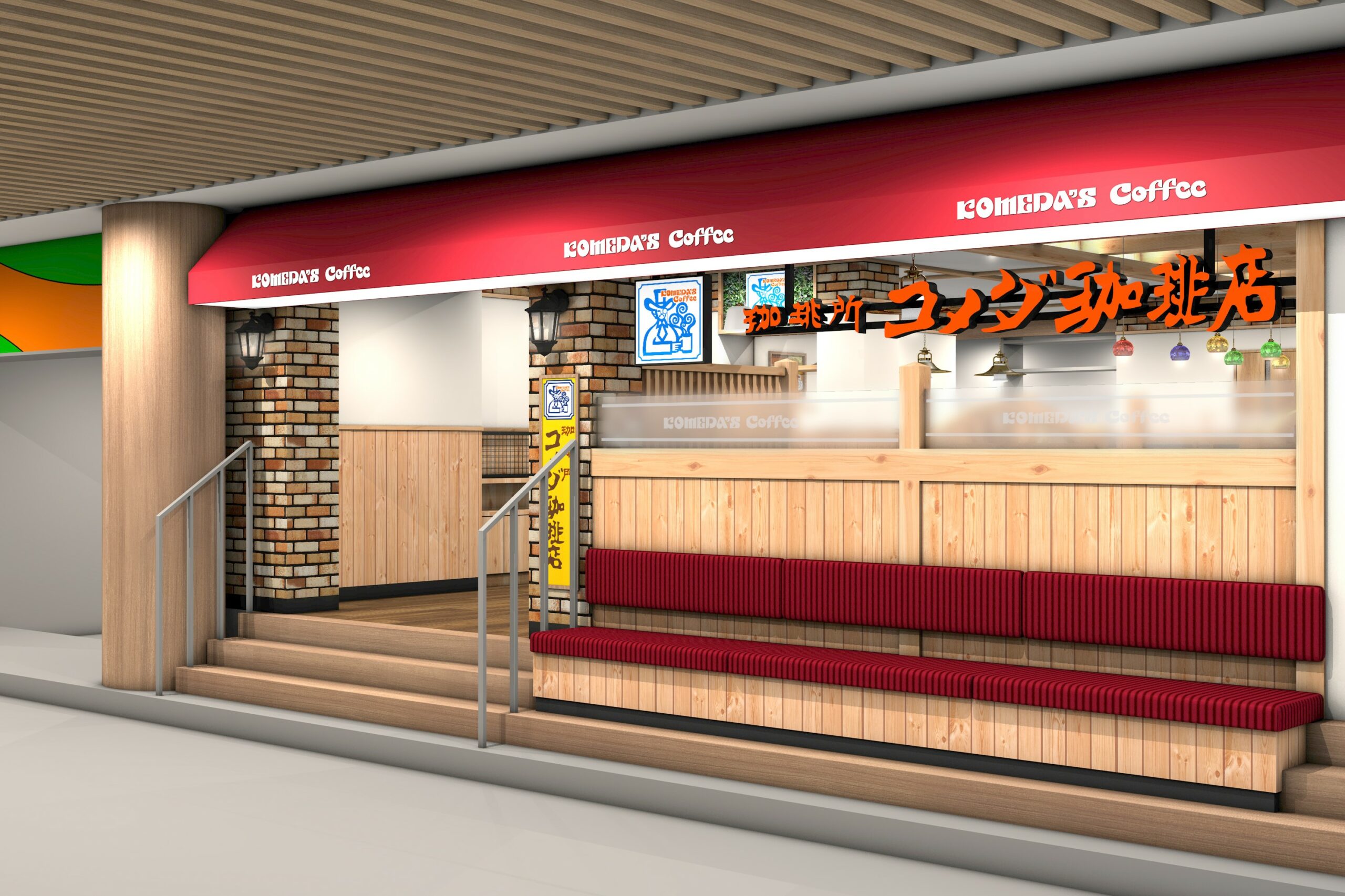
    Aeon Hong Kong is set to open the territory’s first Komeda’s Coffee store next month after securing the regional franchise rights to the Japanese cafe chain earlier this year.

    Aeon Hong Kong said the Komeda’s Coffee store will be situated inside Aeon Style Huangpu and adopt Japanese traditional architecture. Komeda’s Coffee was founded in 1968 in Nagoya, considered the home of Japan’s cafe culture. As of last May, the chain has 33 international stores across Taiwan and Shanghai.

    “This new strategic cooperation is the first time that Aeon Hong Kong has joined hands with a well-known Japanese coffee chain, which may accelerate Aeon Hong Kong in the format of restaurant chain stores,” said Isao Sugawara, MD of Aeon Hong Kong.

    Established in 1985, Aeon Hong Kong operates 10 general shopping department stores, two independent supermarkets, 43 independent Living Plaza by Aeon, 25 Daiso Japan, one Bento Express by Aeon and four independent stores in densely populated areas of Hong Kong.

    The group said will continue to further expand the network of small specialty stores and deepen the strategic cooperation with Daiso.

    The first half of the year saw a 4.2 per cent growth in the group’s Hong Kong business revenue, reaching US$300 million, despite the Covid-19 disruption. The loss from this business shrank to $9.7 million from more than $13.5 million the year before.

  • Starbucks appoints Laxman Narasimhan as its next CEO

    Starbucks appoints Laxman Narasimhan as its next CEO

    Starbucks today announced that Laxman Narasimhan will become the company’s next chief executive officer and a member of the Starbucks Board of Directors. Narasimhan will join Starbucks as incoming ceo on October 1, 2022 after relocating from London to the Seattle area and will work closely with Howard Schultz, interim ceo, before assuming the ceo role and joining the Board on April 1, 2023.

    Narasimhan brings nearly 30 years of experience leading and advising global consumer-facing brands. Known for his considerable operational expertise, he has a proven track record in developing purpose-led brands. Building on companies’ histories, he has succeeded in rallying talent to deliver on future ambitions by driving consumer-centric and digital innovations. Most recently, he served as chief executive officer of Reckitt, a FTSE-12 listed multinational consumer health, hygiene and nutrition company, where he led the company through a major strategic transformation and a return to sustainable growth.

    “Laxman is an inspiring leader. His deep, hands-on experience driving strategic transformations at global consumer-facing businesses makes him the ideal choice to accelerate Starbucks growth and capture the opportunities ahead of us. His understanding of our culture and values, coupled with his expertise as a brand builder, innovation champion, and operational leader will be true differentiators as we position Starbucks for the next 50 years, generating value for all our stakeholders. On behalf of the entire Board, I am thrilled to welcome Laxman as Starbucks next ceo,” said Mellody Hobson, Independent Starbucks Board of Directors chair.

    During the transition period, Narasimhan will be fully immersed in the company, spending time with Schultz and the management team, partners and customers and gaining in-depth exposure to the brand, company culture, and Reinvention plan. This will initially include Starbucks store immersions, visiting manufacturing plants and coffee farms, connecting with partners around the globe as well as Starbucks long term business partners.

    Schultz will remain in the role of interim ceo during this transition period, following which he will continue as a member of the Starbucks Board of Directors. He will remain closely involved with the company’s Reinvention and act as an ongoing advisor to Narasimhan.

    “When I learned about Laxman’s desire to relocate, it became apparent that he is the right leader to take Starbucks into its next chapter. He is uniquely positioned to shape this work and lead the company forward with his partner-centered approach and demonstrated track record of building capabilities and driving growth in both mature and emerging markets. As I have had the opportunity to get to know him, it has become clear that he shares our passion of investing in humanity and in our commitment to our partners, customers, and communities. The perspectives he brings will be a strong asset as we build on our heritage in this new era of greater well-being. I greatly look forward to our partnership over the coming months and years,” said Schultz.

    “Starbucks commitment to uplift humanity through connection and compassion has long distinguished the company, building an unrivaled, globally admired brand that has transformed the way we connect over coffee. I am humbled to be joining this iconic company at such a pivotal time, as the Reinvention and investments in the partner and customer experiences position us to meet the changing demands we face today and set us up for an even stronger future,” said Narasimhan. “I look forward to working closely with Howard, the Board, and the entire leadership team – and to listening and learning from Starbucks partners – as we collectively build on this work to lead the company into its next chapter of growth and impact.”

    Previously, Narasimhan held various leadership roles at PepsiCo, including as global chief commercial officer, where he was responsible for the company’s long-term strategy and digital capabilities. He also served as ceo of the company’s Latin America, Europe and Sub-Saharan Africa operations, and previously as the ceo of PepsiCo Latin America, and the cfo of PepsiCo Americas Foods. Prior to PepsiCo, Narasimhan was a senior partner at McKinsey & Company, where he focused on its consumer, retail and technology practices in the U.S., Asia and India and led the firm’s thinking on the future of retail.

    Narasimhan is also a trustee of the Brookings Institution, a member of the Council on Foreign Relations, served as a member of the UK Prime Minister’s Build Back Better Council, and is a member of Verizon’s Board of Directors. He holds a degree in Mechanical Engineering from the College of Engineering, University of Pune, India. He has an MA in German and International Studies from The Lauder Institute at The University of Pennsylvania and an MBA in Finance from The Wharton School of The University of Pennsylvania.

  • Branded sales boost revenue for AVL

    Branded sales boost revenue for AVL

    Australian Vintage Limited (AVL) has reported a total revenue increase of eight per cent to the end of April 2016 on the back of strong branded sales.

    The increase in revenue is a reflection on higher branded sales in the UK, Europe, Australasia, and North America, however it was partially offset by lower bulk wine sales.

    Neil McGuigan (pictured), chief executive officer of AVL, said: “Australasia/North America sales are up eight per cent on last year with bottled sales up 19 per cent and cask sales down 20 per cent. Cask sales are down due to significant pricing pressure.

    “Sales of our bottled product into UK/Europe are up 19 per cent on last year due mainly to the increased sales footprint in the UK market. Bulk sales into this market are down by 77 per cent compared to last year as we continue to focus on changing from a bulk wine producer to a branded business.

    “Sales of our three key brands, McGuigan, Tempus Two and Nepenthe continue to grow with sales to the end of April up 20 per cent on last year.

    “AVL’s commitment to quality has recently resulted in three of the McGuigan Black Label red wines being recognised in the top five selling red wines in Australia. This commitment to quality was again reinforced at the International Wine Challenge held in London where the McGuigan brand was awarded four Trophies, five Gold, nine Silver and 12 Bronze medals including the Trophy for the Best Australian White Wine of Show for the 2010 Shortlist Eden Valley Riesling. AVL will continue to push the boundaries with quality wine production and vineyard innovation to continue to enhance Australia’s reputation globally,” said McGuigan.

    Meanwhile, the company terminated its Del Rios vineyard lease and paid the $4.9 million termination fee earlier this year. This termination together with the recent expiry of other onerous third party grower contracts will provide significant savings in future grape costs.

    “The company continues to focus on increasing branded sales and at the same time improving the efficiency of the business and improving the quality of our outstanding wines. We remain confident that our core strategies are correct,” said McGuigan.

    “Subject to no material changes to the current exchange rates we remain confident that our 2016 net profit before one off items will be up 10 to 15 per cent on last year’s $7.1 million net profit after tax and before one off items.”

  • The Coffee House owner reports loss of $12 mln

    The Coffee House owner reports loss of $12 mln

    Seedcom Joint Stock Company, owner of The Coffee House and delivery company AhaMove, reported a loss of VND287 billion (US$11.96 million) for the first half, a 11% rise year-on-year.

    Seedcom CEO Nguyen Hoanh Tien said that the losses stemmed from two reasons, the first being the intensified investment and expansion into the B2B segment with omni-channel sales management solution Haravan, specialized F&B sales solution iPOS and a new unit to distribute consumer goods, CPG.

    Depreciation in the retail segment, the result of store development in recent years, was the other reason, he said.

    “By the second half of this year the financial results will certainly be better when business results are more positive.”

    The company’s chairman, Dinh Anh Huan, said Seedcom seeks to grow by 500% in 2022-25 and begin generating profits next year.

    Established in 2014, Seedcom also owns Giao Hang Nhanh (delivery), Juno, Hnoss (fashion), and Kingfoodmart (supermarket).

  • Bangladesh to import rice from Vietnam and India to replenish reserves

    Bangladesh to import rice from Vietnam and India to replenish reserves

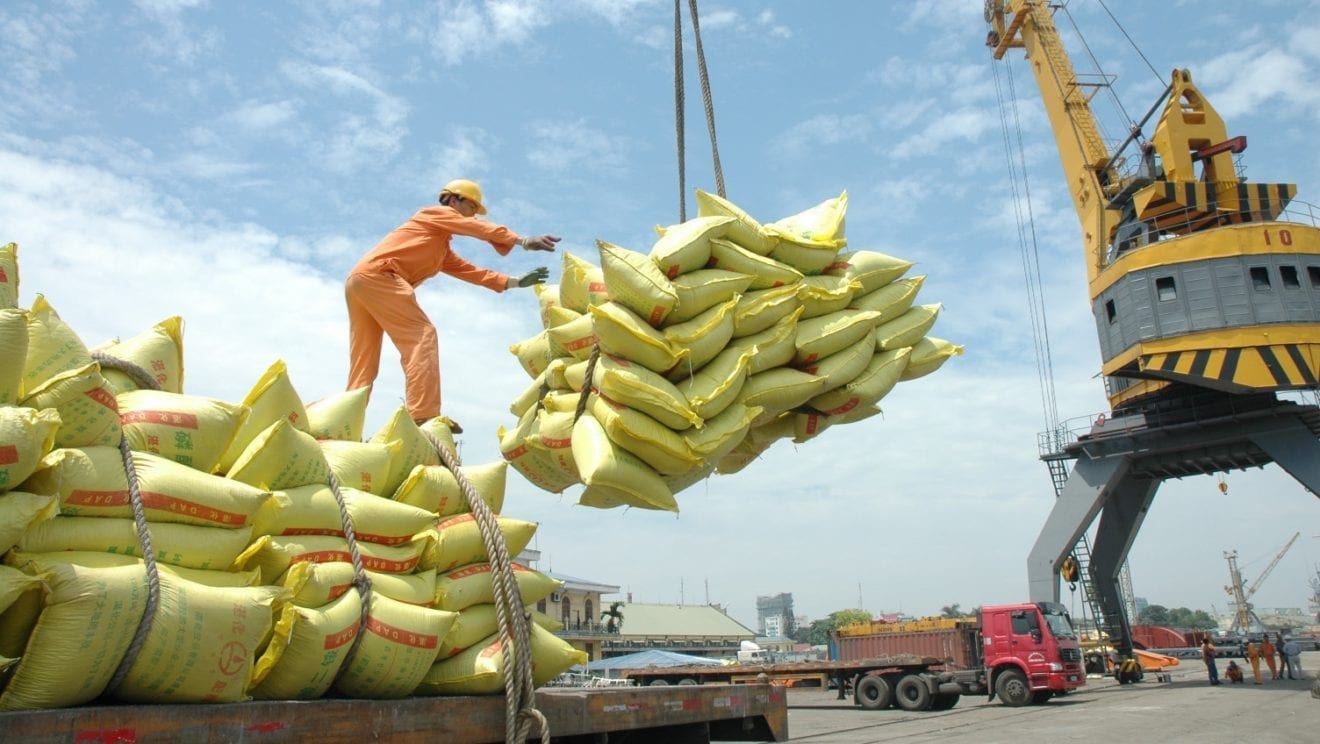
    Bangladesh is finalizing deals with Vietnam and India to import a total of 330,000 tonnes of rice as it races to replenish reserves and cool domestic prices, two officials with direct knowledge of the matter said on Monday.

    Soaring prices of the staple grain for the country’s 165 million people pose a problem for the government, which plans to expand cut-price rice sales to help people hard-hit by high costs.

    The south Asian country will buy 100,000 tonnes of parboiled rice from an Indian public sector firm and 200,000 tonnes of parboiled rice and 30,000 tonnes of white rice from Vietnam, the government officials said.

    The price for the parboiled rice from Vietnam will be $521 a tonne and white rice $494 a tonne, said the officials, speaking on condition of anonymity because the deals have not been made public.

    The price for rice from neighboring India will be $443.50 per tonne via seaports and $428.50 per tonne via railways, the officials said. All the prices included freight, insurance and unloading costs, they said.

    “Preparations are underway to sign the deals soon,” one of the officials said, adding the rice would be delivered within two to three months after the signing.

    The Bangladesh government is also holding talks with Myanmar to import rice, the officials said, putting aside a rift over the Rohingya refugee crisis.

    Bangladesh this week slashed import duty on rice to 15% from 25%, cutting it for the second time since July in a bid to boost private imports.Its private rice import plan, however, faces a setback with only 36,000 tonnes bought since July, after the government allowed private traders to import nearly 1 million tonnes of the staple grain after slashing duty to 25.0% from 62.5%.

    The government will begin selling rice at a cheaper rate for 5 million poor families and expand such sales from September, in an effort to rein in surging domestic prices, which saw yet another uptick after it hiked domestic oil prices early this month.

    Bangladesh, traditionally the world’s third-biggest rice producer with around 35 million tonnes annually, uses almost all its production to feed its people. It still often requires imports to cope with shortages caused by floods or droughts.

  • Craft brewers increasing production but downtime is hindering growth

    Craft brewers increasing production but downtime is hindering growth

    New research reveals that while craft brewers increased production by 7.6 per cent compared with the previous three months, the industry average for actual production time remains just 45 per cent.

    The findings come from the Craft Brewers Benchmark Report, a quarterly report prepared by manufacturing performance software company OFS which provides insights into how data can be used to improve production efficiency in the craft brewing industry.

    The report analysed the production of millions of litres of beer by primarily Australian, New Zealand and U.S. craft breweries between April and June this year and looked at key performance benchmark data and overall equipment effectiveness (OEE).

    “This is an industry that’s thriving while leaving so much potential on the table, OFS CEO James Magee said. “That luxury can’t last forever – we need a mindset shift in how the industry collects and leverages data to improve productivity.”

    Despite the challenges, craft brewers scored particularly well for waste efficiency with only two per cent of beer produced that did not end up in cans or bottles, a 28 per cent improvement compared with the previous three months.

    On average, 6517 units of craft beer were produced per hour, 74.2 per cent behind the potential output of 11,353 per hour. On the other hand, unplanned downtime accounted for 25.46 per cent of production time, in line with the previous three months..

    As for the OEE score, the industry earned an average of 44 per cent, a slight increase from 43 per cent.

    Magee noted visibility is key to further improving efficiency, as when craft brewers can see an opportunity in front of them, they don’t miss it.

    “It’s telling that craft brewers manage product waste so well – they barely leave a drop behind,” he said. “Wasted time, however, is harder to view without the right tools in place, and it’s too easy to generalise and make assumptions about output, downtime, and changeovers when you’re relying on a busy crew updating an excel sheet or piece of paper.

    “What we’re hoping to do with these industry snapshots is show the efficiency potential that’s there when craft brewers surface these insights,” Magee added. “It isn’t rocket science, it is literally just an accurate real-time view of what’s happening on the line, and too few have it.”

  • Fonterra takes first step into non-dairy products

    Fonterra takes first step into non-dairy products

    Fonterra said it had worked with DSM, a global nutrition and bioscience company, since 2019 to speed up the making of proteins with dairy-like properties using precision fermentation. The partnership had already created intellectual property and filed patents, the statement said.

    Jonathan Boswell, program leader for complementary Nutrition at Fonterra said the patents were confidential because they were not in the public domain yet. Dairy nutrition would remain Fonterra’s core strength, the company said.

    But the food preferences of some consumers were changing to non-animal products. New technologies had a place alongside dairy, the company said. There would be a role for both dairy and other sources of nutrition to feed the world’s growing population, the company said.

    Food scientist Anna Benny, who researched how precision fermentation would disrupt the dairy market, said most milk produced in New Zealand was dried to make whole milk powder. This was sold as a commodity and acted as an ingredient in everything from yoghurt drinks to ingredients in the medicine.

    Benny said the million-dollar question was what would happen to the milk price and to farmers when whole milk powder could be replaced by products made by using precision fermentation.

    “People are still investing in farms and [farm-related businesses] that will not pay back in the next seven to 10 years. All the signals we are getting from industry players and the government is that milk is selling well and that dairy farmers are propping up the economy. It will be catastrophic for the economy if milk powder fails,” Benny said.

    New Zealand’s current reliance on whole milk powder meant it was overexposed to such risks. There were not enough signals from the government and the industry that the dairy industry was at risk, Benny said.

    Once companies were able to copy whole milk powder through precision fermentation, could make it on a large scale, and its price was similar or lower than whole milk powder from dairy, then there would be a tipping point, Benny said.

    She said Fonterra’s partnership was similar to companies overseas.

    In the United States, Perfect Day, which manufactured animal-free dairy alternatives, was working with ADM, she said.

    Waikato dairy farmer Pete Morgan said at its core Fonterra was a food company. If it looked decades into the future, it would see precision fermentation was part of the answer to feeding a growing world population.

    “The answer isn’t an us dairy and them other technologies, the answer will come from everybody. A company with a long-term focus would have to look at such technologies,” Morgan said.

    Morgan said it was widely known that if the world was to have enough food to meet its nutritional requirements by 2050, the amount of food being produced would have to double.

    Milk was important as a raw product, but Fonterra was not just about milk but had expertise in food manufacturing, intellectual property, supply chains and customers, Morgan said.

    There would be farmers who struggled to understand why Fonterra made this move, he said, but he believed Fonterra had a long-term view.

    There was disruption coming to the dairy market, and it was better to head into that disruption with knowledge, than to wake up one day and have fallen behind, Morgan said.
  • Seafood exports growth slows due to global inflation

    Seafood exports growth slows due to global inflation

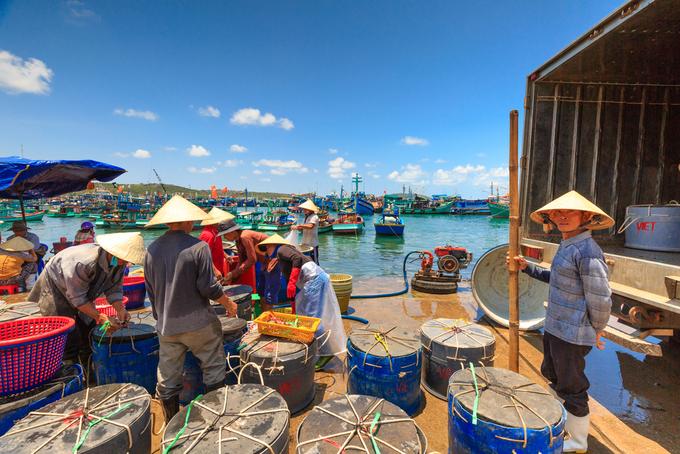
    Vietnam’s seafood exports have been slowing down since July as inflation takes a toll on consumption in the U.S., E.U. and U.K.

    Exports to the U.S. declined by 30.5% year-on-year in July after inflation in that country hit a 41-year high the previous month, according to the Vietnam Association of Seafood Exporters and Producers (VASEP).

    Black tiger shrimp exports were down 69% and that of pangasius fish, 4%. But tuna shipments increased by 34% and that of squid by 90%. But exports were up 30% in the year-to-date.

    Exports to the E.U. rose by 18% year-on-year in July, well down from the 31% in the second quarter.

    Inflation has been skyrocketing in the bloc, with the Russia – Ukraine tension causing food prices to climb, VASEP said, adding that the falling euro also contributed to declining consumption.

    Exports to the U.K. fell by 12% year-on-year in the second quarter and 18% in July, as inflation raged at a 40-year high.

    Shrimp and tuna exports were down 27% and 54%.

    Exports to China rose by 25% in July, but authorities there are still monitoring the spread of Covid-19 closely at the border and will ban any exporter whose cargo is found infected.

    With seafood exports reaching nearly reached $6.7 billion in the first seven months, VASEP is optimistic about achieving $10 billion for the year.

  • Taiwan sends back Vietnamese noodles for containing banned substance

    Taiwan sends back Vietnamese noodles for containing banned substance

    Taiwan has returned 1.44 tons of Vietnam’s Omachi instant noodles saying they contain high levels of carcinogenic ethylene oxide.

    The Taiwan Food and Drug Administration has determined that the batch of noodles, imported by Chinese company Qianyu, contains 0.195 milligrams of ethylene oxide per kilogram, which exceeds Taiwan’s standards.

    Ethylene oxide is banned in food in Taiwan as authorities consider it a carcinogen as long exposure to it could increase the risks of cancer and some neurological diseases.

    Masan Consumer, the producer of the noodles, said that it did not sell the noodles to Qianyu, even though it does produce noodles for the Taiwan market.

    Each country and territory has its own food standard and therefore Masan Consumer produces products specifically for each country and territory.

    “We have strict terms with distributors to prevent them from exporting products from one market to another.”

    Masan Consumer affirms that the Omachi noodles meet Vietnam’s food standards and are safe for consumers.

    Vietnam’s Ministry of Industry and Trade is looking into the issue.

    Last August, several batches of instant noodle products by Vietnamese businesses were also recalled by the E.U. for heightened levels of ethylene oxide.

    In July this year, Germany has issued warnings about certain imported Vietnamese instant noodle products that contain heightened levels of ethylene oxide.

  • Imported pork prices dip to record low over low demand

    Imported pork prices dip to record low over low demand

    Import pork prices have fallen to a record low at half their domestic equivalents due to modest demand at restaurants and hotels.

    Import pork prices have fallen by 36-40% year-on-year with ribs costing around VND88,000 ($3.76) per kilogram, half the domestic figure.

    Hanh, a pork seller in Ho Chi Minh City’s District 12, said that there has been weak demand for imported pork since the beginning of the year.

    “We sell imported pork mostly to restaurants, but consumption has been falling there, causing prices to drop.”

    Hanh has lowered her import by 30% year-on-year.

    Thanh, a seller in Go Vap District, stopped selling imported pork from Russia two weeks ago.

    “Only a few customers come by each day, and I was recording losses. I decided to stop selling it.”

    Tran Hoan, a media representative for a pork importer in HCMC, said that restaurants and hotels are the biggest buyers of this product, but they have not been buying because consumption is week.

    In the first six months, pork imports fell 48.7% in value to $96 million, according to Vietnam Customs.

    Brazil accounted for 35.1% of the value, followed by Russia, 25.7%, and Germany, 16.6%.

    An average kilogram of imported pork is priced at VND50,000-60,000, compared to domestic fresh pork prices of VND100,000-170,000.

  • Domino’s Pizza buys businesses in three SEA markets

    Domino’s Pizza buys businesses in three SEA markets

    Domino’s Pizza Malaysia is set to become part of the largest Domino’s network outside of the United States (US) via a proposed acquisition by Domino’s Pizza Enterprises Ltd (DPE).

    DPE is an Australian-based group that operates more than 3,400 Domino’s stores in ten markets around the world.

    DPE has entered into a binding agreement with Mikenwill (M) Sdn Bhd, which owns 100 per cent of

    Dommal Food Services Sdn Bhd, the master franchise holder in Malaysia; and Impress Foods Pte Ltd, which owns 100 per cent of Domino’s Pizza Singapore and 65 per cent of Domino’s Pizza Cambodia; as well as minority shareholders in Cambodia for the remaining 35 per cent stake.

    “This will see DPE acquiring 100 per cent of the Domino’s Pizza businesses in Malaysia, Singapore, and Cambodia, comprising 287 corporate stores across these markets.

    “The binding agreement entails the acquisition of the corporate stores and franchise rights held by Mikenwill (M) Sdn Bhd and Impress Foods Pte Ltd. The acquisition is expected to be completed by the end of 2022,” the pizza maker said in a statement today.

    Domino’s Pizza Malaysia, Singapore, and Cambodia group chief executive officer Ba U Shan-Ting said in tandem with the acquisition, the company aims to expand the number of stores to more than 600 over the long term, setting it on the path to becoming the largest pizza chain in the three countries.

    Domino’s Pizza Malaysia is the largest Domino’s market in Southeast Asia, managed by Dommal Food Services Sdn Bhd with 240 stores in the country while Impress Foods Pte Ltd manages the Singapore and Cambodia markets with 38 and nine stores respectively.

    “DPE’s latest strategic acquisition of Malaysia, Singapore, and Cambodia is in line with its ongoing expansion plans, particularly in Asia.

    “DPE’s impressive track record is reflected in its extensive international footprint which began in the Australian market, with Taiwan being the most recent addition to its portfolio, bringing its total presence to 13 countries around the world.

    “DPE aims to achieve a store count of 3,000 stores in Asia by 2033,” the company said.


  • Leading seafood firm to issue 1:1 bonus

    Leading seafood firm to issue 1:1 bonus

    Major listed seafood exporter Minh Phu Seafood JSC is set to issue bonus shares at a ratio of 1:1.

    It is expected to be done this year by capitalizing reserves, and will double the company’s charter capital to VND4 trillion (US$170.9 million).

    Minh Phu also plans to pay a cash dividend of VND2,300 per share.

    Its revenues in the first six months rose 43% to VND8.7 trillion, but profits fell 15% to VND236 billion due to bad debt provisioning and rising financial costs.

    It eyes revenues of VND18.96 trillion and profits of VND1.27 trillion for the full year.