Category: General

Retail News Asia is committed to providing both local and global retailers with the latest General Retail news throughout the Asian market. This on a daily base.

  • Google is expanding the storage capacity of its Workspace Individual plan to 1TB

    Google is expanding the storage capacity of its Workspace Individual plan to 1TB

    Well, we have good news for those who decided to use Google’s Workspace Individual plan in their business. As the tech giant announced in a new blog post, every Individual Workspace account will soon receive an increase in its storage space.

    But the increase won’t be just 100GB or 500GB. Subscribers to the Individual Workspace tier will soon have access to a whopping 1 TB of storage space. The upgrade will be automatically rolled out by Google, so users won’t need to do anything to obtain it.

    Currently, subscribers of the Individual plan have only 15GB of Google Drive storage, just like the free personal Google accounts we all use. But as users grow their businesses, they will need more space to keep their documents, data, and digital assets, so 15GB may not be enough at some point.

    In addition to the storage increase for Workspace Individual users, Google is also rolling out a new feature called “merge tags” to Gmail, allowing eligible Workspace users to send more personalized emails to their audiences from the web version of Gmail.

    When sending mass emails to many people all at once, users can put merge tags like “@firstname” and “@lastname” in their text. Upon sending the messages, these tags will be replaced with the first and last names of the recipient, creating more personalized emails. This feature will be available to users with Google Workspace Business Standard, Business Plus, Enterprise Starter, Enterprise Standard, Enterprise Plus, Education Plus, and Workspace Individual.

  • Zuckerberg’s net worth is down $70 billion this year

    Zuckerberg’s net worth is down $70 billion this year

    This has not been a good year for Mark Zuckerberg’s wallet. Apple’s App Tracking Transparency feature, which allows iPhone users to opt-out of being tracked for the purpose of receiving personalized advertising, is expected to cost Facebook $10 billion in revenue this year. That is a mighty big chunk of change and led investors to dump Meta’s stock.

    Since the beginning of the year, Meta’s stock has declined 61.7% dropping from $338 to the current price of $129.82. That decline has cost Facebook founder and CEO Mark Zuckerberg a whopping 70% of his net worth. And things will get even worse tomorrow morning. After the markets closed in New York this afternoon, Meta dropped a stinker of a third-quarter earnings report sending the stock down in after-hours trading to $104.30 for a $25.22 decline or nearly 20%.

    Not including what the damage will be tomorrow morning, Zuckerberg’s net worth has declined from $125 billion to $55.3 billion since the start of the year. Tomorrow morning, Zuckerberg could take another $10 billion hit, although he still might not need you to start a Go Fund Me page for him.

    Meta reported $27.71 billion in third-quarter revenue, which was a 4% decline from the $29.01 billion that the company grossed during the same time period last year. Still, it topped the $27.38 billion estimate made by Wall Street analysts. Operating margin, the percentage of profit remaining after subtracting costs, dropped to 20% from 36% a year earlier. Net income took a big hit, declining 52% from last year’s $9.19 billion during Q3 to $4.40 billion during this year’s third quarter.

    This year’s earnings per share during the three months from July to September fell 49% to $1.64 from the $3.22 Meta reported during the 2021 third quarter. Wall Street forecast that Meta would report earnings per share of $1.89. That 25 cents a share shortfall was part of the reason for the stock’s huge decline.

    Other problems included Meta reporting average revenue per user of $9.41, short of the $9.83 that Wall Street was looking for. The number of Daily Active Users (DAUs) met estimates of 1.98 billion people during Q3 while at 2.96 billion the number of  Monthly Active Users actually topped forecasts of 2.94 billion.

    Commenting on the results for the third quarter, Zuckerberg said, “Our community continues to grow and I’m pleased with the strong engagement we’re seeing driven by progress on our discovery engine and products like Reels. While we face near-term challenges on revenue, the fundamentals are there for a return to stronger revenue growth. We’re approaching 2023 with a focus on prioritization and efficiency that will help us navigate the current environment and emerge an even stronger company.”

    Besides owning Facebook, Meta also owns Instagram which it bought for only $1 billion in 2012. With an estimated value of $102 billion, the purchase of Instagram is considered one of the best acquisitions (if not the best) made in the tech industry. A bit over two years later, Facebook closed on its purchase of WhatsApp, a deal that cost the social media company $21 billion by the time the deal closed.

    Also helping to take Meta’s shares down in after-hours trading was the company’s forecast that fourth-quarter revenue would be in the range of $30 billion to $32.5 billion. Wall Street was predicting that Meta’s gross for the current quarter would be $32.2 billion.

    If Meta does open tomorrow at around $104, it will be the lowest price since November 2015 or approximately seven years ago. If you’re Mark Zuckerberg, tonight is just another bad night from a bad year that has seen his standing among the world’s richest people decline to number 20. This is a good example of how those entrepreneurs who see their wealth grow exponentially due to the stock they own in the company they founded, can easily see the process work in reverse when the shares fall.

  • YouTube now lets you vote which new features it should prioritize for its TV and console apps

    YouTube now lets you vote which new features it should prioritize for its TV and console apps

    Wouldn’t it be great if we could decide what features app developers should add to their applications? To be able to choose between various options and pick those that we want developers to prioritize and work on? Well, it looks like YouTube now lets us do exactly that.

    In a recent blog post, the video platform announced that the YouTube community will now be able to vote on which features will be implemented first on the TV and console versions of the platform.

    Every quarter, the announcement thread will be updated with the top feature requests people want YouTube on TV and consoles to have. For a better visibility, these requests will be marked as recommended answers. If you see a request that you want and would like the YouTube team to prioritize, you can upvote it. The features that have received the most upvotes will be prioritized by development teams.

    Also, if you have a feature request that is not in the list, you can reply directly to the announcement post and share your idea. If there are lots of similar replies like yours, your request will be added to the voting list.

    It’s also a great idea to visit the announcement thread occasionally. YouTube stated that it will update it when it starts working on one of the feedback requests or when there is other news from its development teams.

  • Coles expands drone-delivery service into southeast Queensland

    Coles expands drone-delivery service into southeast Queensland

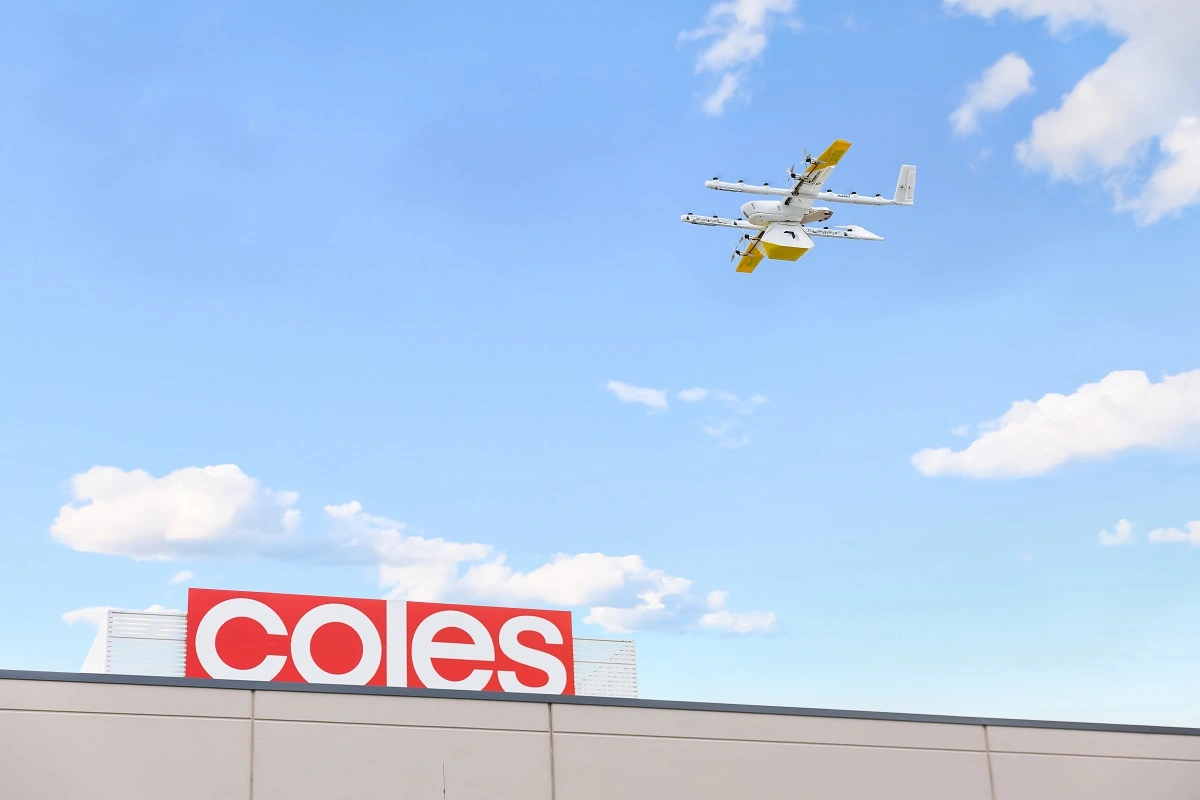
    Coles has announced it will offer drone delivery of groceries to customers’ homes in South East Queensland, with a trial set to launch next week. The supermarket chain will be the first major retailer to offer drone delivery, partnering with drone company, Wing, to launch the new service.

    From Wednesday, November 2nd, customers in the Gold Coast suburbs of Ormeau, Ormeau Hills, and Yatala will be among the first to pilot the store-to-door drone delivery model, offering grocery delivery in minutes, directly from the Coles store at Ormeau Village Shopping Centre.

    Coles says the service will gradually expand to include other nearby suburbs, delivering 500 of the most popular Coles grocery items, including bread, fresh produce, convenience meals, snacks, health care items, and household essentials.

    Coles is the first major Australian retailer to trial the new ‘store-to-door’ drone delivery model, with a dedicated fleet of Wing delivery drones to be co-located in the Coles store car park.

    Coles team members will process and pack orders, and Wing staff will load the drones and oversee operation of the delivery service.

    Coles Head of Network Development and Customer Delivery, James Geddes said Coles was proud to expand its partnership with Wing with the first-ever store-to-door drone delivery concept in Australia.

    “We are delighted to be expanding our drone delivery pilot program with Wing to our Queensland customers. The service will provide a convenient and effective way of delivering everyday essentials to our customers’ homes in a matter of minutes,” Mr Geddes said.

    “Customers can now get those urgent items they need in a hurry, delivered by drone, directly from the local Coles Ormeau Village store. Whether they’ve forgotten to pick up a loaf of bread or fresh milk during their weekly shop or are missing an ingredient for dinner-time meal prep or school lunches, they can now get those products delivered quickly, without having to drive to the store.

    “This new service reinforces our commitment to enhancing the way our customers shop with Coles by delivering anytime, anywhere, anyhow shopping, while supporting our ambition to be Australia’s most sustainable supermarket by continuing to reduce the number of trucks on the road.”

    The Coles drone delivery expansion into Queensland follows a pilot program launched in Canberra earlier this year, where Coles co-located its products at Wing’s drone delivery facility.

    Since the Canberra pilot program began in March, more than 5,000 Coles deliveries have been made through Wing, with some of the most popular items including fresh fruit, milk, bread, and eggs, along with confectionery, snacks, and cold drinks.

    As part of the expansion into South East Queensland, Wing will also soon be offering Coles items for delivery from the rooftop of Grand Plaza in Logan, Queensland, where it has been operating a drone delivery service for selected on-site businesses, for just over a year.

    Wing Australia General Manager, Simon Rossi said the company was investing in a range of pilot programs, designed to help enable drone delivery at scale, and bring delivery to more Australians.

    “We’re excited to be teaming up with Coles on this Australian first store-to-door drone delivery service, helping to expand the delivery options available to Coles customers by bringing affordable, sustainable, and fast drone delivery to the skies of South East Queensland,” Mr Rossi said.

    “Since launching our drone delivery service in Logan a few years ago, we’ve heard from customers across South East Queensland who are keen to see drone delivery expand to their region. We’re delighted that through this pilot program with Coles, for the first time, drone delivery will be available to residents in the City of Gold Coast.”

    Customers can download the Wing app (available from the App Store or Google Play), enter their address, and add items to their cart before submitting their order for fulfilment.

    Upon arrival, the drone hovers in the air and slowly lowers the package to the ground at the customer’s delivery location for a contactless delivery.

    Wing drone delivery from Coles in Ormeau will be available from 9am to 4:30pm Tuesday to Sunday.

  • French Refinery Strike Further Hits Petrol Supplies

    French Refinery Strike Further Hits Petrol Supplies

    Petrol supplies at French service stations fell further over the weekend due to a weeks-long strike at oil major TotalEnergies, Prime Minister Elisabeth Borne said on Sunday, prompting possible further requisitioning of services.

    President Emmanuel Macron’s government is facing mounting social unrest due to high inflation, with thousands protesting on Sunday against soaring prices and several trade unions calling for a general strike.

    “We’re at about 30% of the stations that have a supply problem on at least one of the fuels,” Borne said in an interview on French TV channel TF1.

    Energy ministry data on Saturday showed 27.3% of French petrol stations were facing supply problems, down from 28.5% the previous day and 30.85% on Wednesday, when requisitioning started.

    Under the requisitioning plan, some workers are ordered to go back to work to guarantee the resumption of minimum services.

    “If there are very tense situations tomorrow… we will also carry out requisitioning,” Borne said.

    “There is a wage agreement that has been signed by organisations representing the majority of employees (at TotalEnergies),” Borne said.

    “(Workers) have to go back to work.”

    Borne said the general discount on fuel prices at service stations that it introduced in response to the surge in global oil prices would be extended to mid-November.

    The discount of 30 cents per litre was previously due to be reduced to 10 cents on Nov. 1.

    The prime minister added she had talked with TotalEnergies  CEO Patrick Pouyanne and that he had agreed to extend the company’s additional discount of 20 cents per litre.

    The country’s refinery strike, led by the hardline CGT union, is also emboldening the political opposition, likely leading the government to use special constitutional powers to pass its 2023 budget bill, Borne said.

    The government is set to use special constitutional powers that would allow it to bypass a vote in parliament, Borne said.

    Opposition parties would be likely to respond with a motion of no confidence, which would likely fail but would nonetheless be damaging as the government seeks to build bridges for planned pension reform.

    Lacking a sound majority to pass the bill through a regular vote, the government decided to use the special powers, decried by opponents as being undemocratic, to avoid the humiliation having the country’s tax-and-spend law voted down.

  • YouTube removes 2,000 animated Vietnamese videos for copyright violation

    YouTube removes 2,000 animated Vietnamese videos for copyright violation

    Nearly 2,000 Wolfoo videos about the animated wolf and his family have been removed by YouTube for copyright violation, causing losses of around US$2 million for their Vietnamese producer.

    Between June and October the three YouTube channels, Wolfoo Family, Wolfoo Channel and Wolfoo’s Story potentially each lost 2-3 billion views, according to social media data provider Social Blade. This caused the company losses of $2 million, and “The damage is increasing every hour,” it said.

    Sconnect said YouTube removed the videos following a demand by the UK’s Entertainment One, the producer of Peppa Pig, an animated series about a pig and his family.

    “Entertainment One has falsely identified our videos as a product derived from Peppa Pig and filed their complaints to YouTube, which accepted all their copyright claims and deleted Wolfoo videos.”

    YouTube allows users to seek the removal of videos they deem a violation of its policies.

    The fact that YouTube removed the videos showed that its request was “per the procedures as prescribed” by the platform, eOne said.

    YouTube said Saturday it never acts as an intermediary to resolve conflicts between two parties and only provides a tool for users to protect themselves.

    Content owners are provided with a tool to protect their videos while users are provided with a tool to report copyright violations, it added.

    Sconnect said 195 Wolfoo videos are no longer restricted, but nearly 2,000 others remain flagged and restricted.

    Nguyen Xuan Cuong, deputy chairman of the Vietnam Digital Communications Association, said YouTube’s removal of nearly 2,000 Wolfoo videos has caused great damage to Sconnect.

    All parties involved should contribute to the case so that it could be a learning experience for other Vietnamese businesses of cross-border services. Sconnect was launched in 2014 as a social media video platform. It has a total of 56 million subscribers to its 19 channels and 18 billion views. Peppa Pig debuted in 2004 on TV before being uploaded on social media platforms.

    Sconnect recently filed a lawsuit against the British company for unfair competition, claiming losses of nearly $292,000 as a result.

    It had been sued by the latter in January in Russian and British courts for intellectual property infringement, claiming Wolfoo is a “reworked” version of the Peppa Pig characters. But the Moscow City Court ruled against eOne. Immediately the company withdrew all claims.

    Sconnect said during the legal battle eONE had used the unresolved lawsuit to copyright “Wolfoo” videos on YouTube.

  • How to Manage Supply Chain Disruptions

    How to Manage Supply Chain Disruptions

    As we have seen over the past few months, while facing numerous global crises caused by countless factors such as political tensions, environmental disruption, financial instability and biological risks, we also learnt an essential lesson about today’s business landscape, which is that many companies are not entirely well prepared to withstand or even recover from the supply chain disruptions that are occurring nowadays. Many companies currently suffer from a lack of the right level of visibility over their supply chains to effectively prevent, identify and mitigate disruptions. In addition, their IT infrastructures and supply chain management strategies are not sufficiently resilient to allow them to respond quickly to any potential risks and emerge unscathed from unexpected disruptions.

    Companies are experiencing a difficult time, but there are a variety of platforms available on the market, such as EDI systems and IT services that can help companies to transform their environment into agile and resilient supply chain ecosystems, and help to remove many of the supply chain bottlenecks.

    In this article we will explore how to overcome supply chain disruptions with the use of modern technology, being prepared for,  preventing and surviving major supply chain disruptions and achieving a competitive edge in such difficult times while counting on a digital supply chain.

    Supply chain disruptions are constantly occurring

    Supply chain disruptions are omnipresent and unexpected at the same time and can arise from a variety of factors (such as shortages, natural disasters, global health pandemics, political uncertainty, economic upheavals, etc.). Supply chain disruptions are growing rapidly, and the last few years have been particularly intense for many companies, including in Asia.

    Supply chain operations are also becoming more costly every year, due in part to the expectations of end-customers, who have grown to expect nearly instant order fulfillment, tailor-made offers and products, and complete transparency on product information and delivery status. In order to remain competitive in the marketplace, today’s companies need to ensure that the communication channels established with their suppliers and customers allow them to transfer large volumes of business-relevant data in the shortest possible time. That can be daunting and disturbing, but this is the current business scenario. However, this doesn’t mean that your company can’t do anything to prepare and protect your supply chains, even in the face of extraordinarily difficult circumstances.

    The importance of supply chain risk management strategy

    The most significant risks of which any company has to be aware are related to manufacturing, workforces and logistics. Therefore, the goal of supply chain management is predominantly to achieve full transparency, resilience and agility in this area.

    This is particularly challenging now, as most businesses have expanded their supply chains significantly in terms of size and complexity to meet today’s customer needs and expectations. The companies operating similar chains are more vulnerable to a wider range of risks, including those over which they have no control.

    In order to be able to predict disruptions and manage risks, it is necessary to redefine and improve supply chain risk management and strategy to ensure that your company and its employees will operate within an efficient supply chain network, while ensuring cost efficiency and contributing to the achievement of company goals. This includes various improvements to your business. If a company approaches such a process in an appropriate direction, it will certainly discover that changing models can be even faster, easier and more cost-effective than your management think. Some supply chains may adopt more scalable operating models that allow more flexibility in assembling and reorganizing components. Others may focus on developing an integrated, end-to-end digital roadmap. It is therefore crucial that businesses assess their current strategies, identify their weaknesses and act on their priorities in order to close the gaps.

    Digitization is evolving in the supply chain

    Digital transformation is a trend that continues to evolve in the supply chain. Many companies are already benefiting from it, and have already invested in multiple tools, including EDI supply chain for data exchange.

    Digitization itself consists of completely redesigning and improving all business communication channels and exchange processes between trading partners along the entire supply chain, with the aim of making it easier for a company to build and collaborate within a supply chain network system and enable it to protect its assets when disruption occurs. The essential part of this process is the digitization of procurement processes, which starts with eliminating the use of paper and the manual handling of orders, delivery notes, invoices and other documents. This is achieved by introducing digital tools for data exchange and document management. The combination of the right IT tools and the information they contain will help streamline various procedures and introduce a more effective way of controlling activities within the supply chain. Furthermore, reporting and data analysis tools will guide your company in the land of business opportunities, and point you in the most profitable direction for your company. By incorporating these solutions into your IT infrastructure, your internal departments – sales, production and logistics – will use one common data platform to share information.

    Key advantages of a digital supply chain

    As mentioned, a holistic approach to supply chain management is extremely important to improve flexibility and protect your company against future disruption, and it is therefore vital that companies build long-term resilience into their existing supply chains to handle future challenges. This approach must be driven by technology that supports analytics, AI and ML to ensure end-to-end transparency across the supply chain.

    Here is an overview of some of the benefits of digital supply chain, which offers companies countless advantages:

    • Digitization of supply chain processes eliminates major supply chain bottlenecks by providing a comprehensive overview of activities and inventory levels. With the right monitoring and data exchange tools, you can be sure that your company will never run out of stock.
    • Managing operations digitally, you create a working environment in which ordering and delivery times can be drastically reduced.
    • Cash flow can be vastly improved, as less money is needed to maintain excess stock.

    A digital supply chain can help optimize decision-making processes and reduce operating costs, enabling you to adopt the just-in-time (JIT) methodology, and allowing you to collect, share and analyze your business data efficiently while giving full visibility and real-time monitoring of your operations. Thus, you can create a solid business roadmap and make important decisions based on real data.

    The impact of digital technologies

    Today’s companies are using various digital tools and services to avoid, anticipate, and overcome supply chain disruptions. However, methods that are data-driven and cloud-based are considered the most effective, because such solutions allow businesses to react to all kinds of market changes almost instantaneously, and to scale their supply chain operations up and down whenever they want to meet their needs and goals.

    Solutions such as electronic data exchange (EDI)   are now instrumental to running a business, and without digital tools it is impossible to predict, prevent, or even survive supply chain disruption. In order to remain competitive, companies need to develop fully dynamic, transparent, and highly efficient supply chains – and this can be done only with data exchange and document management platforms and services. Of course, these cannot be basic solutions. They must be powerful enough to allow businesses to monitor their supply chain flows in real time so that they can react to any disruptions accordingly – letting you focus more on what is the most important in your business.

    Author: Vincenzo Cirillo

    Vincenzo Cirillo leads global EDI and e-invoicing solutions at Comarch for Asian clients, drawing on his extensive experience in the supply chain and automotive industry in several countries. He has developed a passion for enabling digital business.


  • Microsoft tells regulators that it wants to create an Xbox mobile app store

    Microsoft tells regulators that it wants to create an Xbox mobile app store

    When it comes to the smartphone business, Microsoft could have been a contender. Windows Mobile was the operating system on many popular pre-iPhone handsets like the Motorola Q. It also ran some post-iPhone touchscreen models like the HTC Touch Diamond, the HTC Touch Pro, and the HTC HD2, to name a few.
    Many consumers favored Microsoft’s Windows Phone over iOS and Android due to its buttery smooth scrolling. But the Lumia handsets running the software, whether made by Nokia or Microsoft, never caught on, and as a result, developers never felt compelled to develop apps for the platform. Eventually, Microsoft put the kibosh on its plans to challenge iOS and Android, and when Microsoft launched the Surface Duo dual-screened handset in 2020, it was powered by Android.
    Microsoft does have ownership of a vast amount of intellectual property related to Android, and it made much more money each year with the success of Google’s mobile operating system than it did having ownership of Microsoft’s Windows Mobile and Windows Phone.
    The UK’s Competition and Markets Authority (CMA) is doing its due diligence in investigating Microsoft’s $68.7 billion acquisition of game maker Activision Blizzard. In responding to questions posed by the regulatory agency, Microsoft mentioned that the acquisition would allow it to take on the Google Play Store and the Apple App Store.

    Microsoft’s response included these comments: “Building on Activision Blizzard’s existing communities of gamers, Xbox will seek to scale the Xbox Store to mobile, attracting gamers to a new Xbox Mobile Platform. Shifting consumers away from the Google Play Store and App Store on mobile devices will, however, require a major shift in consumer behavior. Microsoft hopes that by offering well-known and popular content, gamers will be more inclined to try something new.”

    The report names two popular video games, Activision’s Call of Duty: Mobile and King’s Candy Crush Saga that Microsoft could use to help it build a mobile app storefront that could compete with the Play Store and App Store. Microsoft, noting the popularity of mobile games and the revenue it drives of in-app purchases, sees Apple and Google making a fortune and wants a piece of the action.
    Discussing the proposed purchase of Activision Blizzard, Microsoft explains to the CMA that “The transaction gives Microsoft a meaningful presence in mobile gaming. Mobile gaming revenues from the King division and titles such as Call of Duty: Mobile, as well as ancillary revenue, represented more than half of Activision Blizzard’s … revenues in the first half of 2022.”

    Microsoft adds that it “currently has no meaningful presence in mobile gaming and the Transaction will bring much-needed expertise in mobile game development, marketing, and advertising. Activision Blizzard will be able to contribute its learnings from developing and publishing mobile games to Xbox gaming studios.”

    The software giant has put up a website for its Activision Blizzard acquisition and has posted a giant graph showing the history of the gaming industry. The graph shows a valuation for the entire gaming business of $165 billion in 2020 with consoles valued at $33 billion (20% of the market), PCs worth $40 billion (24%), and mobile gaming valued at $85 billion (51% of the market).
    The CMA happens to be focused on how Microsoft’s proposed acquisition would impact the console market. The smallest tier of the industry, the purchase would represent a larger chunk of this market which could make the regulatory agency concerned enough to block the deal. Microsoft would prefer that the CMA look at how a possible purchase of Activision Blizzard would be a small drop in the mobile gaming market.
    Even if Microsoft gets the green light to close on the purchase of Activision Blizzard, becoming a challenger to the App Store and Play Store is going to be tough. On Android, games found on an Xbox mobile app store could be sideloaded on a mobile device. But that still won’t work on iOS where Apple’s walled garden prevents users from sideloading apps in the name of security.
  • Waze helps drivers find the cheapest fuel with Gas Station feature

    Waze helps drivers find the cheapest fuel with Gas Station feature

    Despite fuel prices going up since the beginning of the year, traffic continues to increase in many US cities. Luckily, Waze is here to help you not just avoid as much traffic as possible, but also find the cheapest fuel with the Gas Station feature introduced earlier this year.

    Considering OPEC recently announced a new cap for global oil supply coming into effect soon, Gas Station will probably help many drivers be better prepared for fluctuating gas prices across the US. If you haven’t used Gas Station, you can do that directly from Waze, by simply searching the most affordable gas stations and find the best prices for fuel in your area.

    Just to put that into perspective, here is some relevant traffic data in 10 major cities across the US, which compares traffic from August – October 2022 to the same period one year ago:

    • Nashville traffic increased by 20.8%
    • Charlotte traffic increased by 17.6%
    • Boston traffic increased by 14%
    • Washington DC traffic increased by 10.8%
    • Austin traffic increased by 10.7%
    • New York City traffic increased by 9.7%
    • Dallas traffic increased by 9.3%
    • Houston traffic increased by 9.2%
    • Atlanta traffic increased by 7.8%
    • San Diego traffic increased by 7%

    To take advantage of Gas Station, first choose your preferred gas type (i.e., regular, midgrade, premium and diesel) within settings and the app will find the type of gas that meets your needs. Another important feature offered by Gas Station is the ability to find the best-priced fuel in a certain area.

    The Waze Gas Station feature will also notify users of nearby gas stations, prompting drivers to update the price of gas at specific location so other users of the app can search for the cheapest prices in their area.

    Also, in case you didn’t know, Waze offers real-time gas pricing information, a feature powered by community members sharing gas prices along their drive. It makes it much easier to plan your drive ahead of time, not to mention that your trip will be more affordable.

  • Asos to overhaul business model after profit slump

    Asos to overhaul business model after profit slump

    ASOS, a single-time British poster youngster for the shift to on the web style retailing, will overhaul its business enterprise model following the financial crunch and a string of operational troubles hammered its income.

    New CEO José Antonio Ramos Calamonte mentioned that when ASOS’s core business enterprise in the UK remained robust, returns from its international operations, especially from the United States, were unsatisfactory and necessary to be addressed.

    He vowed to re-vamp ASOS’s “inefficient” provide chain, uncover a way to re-engage its 20-a thing buyers, improved leverage its information, reduce charges and refresh its culture.

    “The strategy more than the subsequent 12 months is going to be focusing on simplifying the business enterprise and producing it a lot more resilient and a lot more versatile,” Ramos Calamonte told Reuters.

    “We want to be capable to provide a lot more relevant stock and quicker to customers.”

    Shares in ASOS have been up eight.eight% at 1138 GMT, as investors welcomed the shift and a new deal with lenders, paring 2022 losses to 78%.

    ASOS and rival Boohoo (BOOH.L) grew swiftly as young buyers about the globe snapped up their rapidly fashions, and demand surged once more through the coronavirus pandemic when higher street rivals have been closed.

    But provide chain troubles, elevated competitors and the sharp downturn in the economy have badly impacted its business enterprise model. The perennial issue of managing consumer returns has also weighed on the business enterprise.

    Ramos Calamonte mentioned he was committed to totally free returns. Boohoo, which does charge for returns, warned on the outlook final month.

    ASOS created adjusted pretax profit of 22 million pounds ($24.9 million) in the year to Aug. 31, in line with guidance that was lowered final month and down from the pandemic boosted 193.six million pounds created in 2020-21.

    It forecast a very first half loss as it cuts costs to clear old stock, requiring a non-money create-off of up to 130 million pounds. Some 40 million pounds of other restructuring charges will also be booked.

    In the second half, ASOS will commence to operate with decrease stock levels as lead instances on orders and deliveries are lowered. It would also advantage from lowered freight prices and price cuts.

    ASOS did not give profit guidance for the complete year. Prior to the update, analysts on typical have been forecasting an adjusted pretax profit of 61 million pounds.

    It mentioned when trading was volatile, September had showed a slight improvement relative to August.

    Ramos Calamonte mentioned that with money and facilities of a lot more than 650 million pounds, ASOS had ample area to manoeuvre and did not have to have one more equity raise.

    Capital expenditure for 2022-23 was guided at 175-200 million pounds, down from 200-250 million pounds, with the phasing of automation projects below critique.

    The CEO mentioned he was not concerned by the threat of a takeover bid and did not obsess more than the share cost.

  • Mondelez Int’l appoints new president for Southeast Asia unit

    Mondelez Int’l appoints new president for Southeast Asia unit

    Mondelez International, the maker of iconic brands including Cadbury Dairy Milk, Oreo, Ritz and Toblerone, has appointed Hemant Rupani as president for its Southeast Asia (SEA) Business Unit.

    Hemant, previously Managing Director of Mondelez Kinh Do Vietnam, replaces Glenn Caton who has moved to another position in the company’s global operations.

    In his new role, Hemant will be responsible for the SEA cluster of markets including the exports business in the broader Asia Pacific, Middle East and Africa (AMEA) region, leading growth and end-to-end business.

    He said: “The SEA business has been on an accelerated growth path driven by increasing consumption, digital penetration, talented population, and cultural diversity in the region.”

    “We have built a reign as category leaders across segments with our portfolio of iconic global brands and local jewels. Combining our solid team, local-first strategy, and robust investments, we are in a strong position to lead the future of snacking and drive sustainable growth forward.”

    He added: “Over the years, we have learned to adapt in making the business more agile, resilient, and competitive. Digitalization will play an increasing role to help us speed up innovation, strengthen proximity to consumers, and spearhead progress towards creating snacks the right way.”

    Hemant is an accomplished leader with over 20 years of experience working in India, the U.S. and Vietnam, covering various industries including food and beverage (F&B), telecommunications, and consulting.

    Throughout his career journey, Hemant has enabled multiple business turnarounds, driven operational excellence, and built high-impact teams. Prior to joining Mondelez International in 2016, he worked with several leading organizations including PepsiCo, Vodafone, Britannia, and Infosys Technologies.

    Mondelez International commands a long-standing heritage in SEA. The region also houses ten manufacturing facilities and two technical centers that support its world-class supply chain capabilities and product innovation.

    Early this year, Mondelez International invested $23 million to expand its OREO production line in Cikarang, Indonesia, which also uses the latest technologies in reducing energy, water and carbon emissions. The company has also integrated solar panel rooftops on two of its manufacturing plants in Malaysia, including the Cadbury chocolate production factory which has a 48-year-old heritage locally.

  • Secondhand market emerges as battlefield for South Korean retailers

    Secondhand market emerges as battlefield for South Korean retailers

    South Korea’s retail giants are invigorating efforts to dominate the second-hand transaction market, and this focus is expected to accelerate further with Naver Corp poised to make an entry.

    The internet portal giant is reviewing the idea that its recently acquired Poshmark Inc., a US social commerce platform specializing in secondhand apparel trade, could step into the South Korean market, according to industry sources.

    Once the equity acquisition is completed in April next year, Poshmark is expected to become an independently operated Naver subsidiary.

    If Naver Shopping, the Naver’s online shopping site and Coupang Inc.’s only rival in the e-commerce market, unites forces with Poshmark, it would create a huge ripple effect.

    Other major retailers are also making bigger forays into the secondhand market.

    Lotte Group, for instance, announced that it would enable a non-face-to-face pickup service for direct secondhand transactions through the convenience store chain 7-Eleven, which is currently operated by Lotte’s affiliate Korea Seven Co.

    After buying items at the secondhand marketplace platform Joonggonara, which was acquired by the group last year, customers will be able to take delivery of the items at 7-Eleven convenience stores.

    Shinsegae Group also invested in the secondhand transaction app Bungaejangter via its venture capital subsidiary in January.

    Bungaejangter opened an online store at SSG.com, the online mall arm of Shinsegae, and provides resale services with a focus on secondhand luxury items.

    According to the Hana Financial Management Research Institute, the size of the nation’s secondhand market jumped from about 4 trillion won (US$2.77 billion) in 2008 to 20 trillion won in 2020.

  • Mitsukoshi to land its first Philippines department store this year

    Mitsukoshi to land its first Philippines department store this year

    Isetan Mitsukoshi Holdings is set to open the first Mitsukoshi department store in the Philippines by the end of this year under a partnership with local property developer Federal Land.

    The four-storey lifestyle store, located in Manila’s business district Bonifacio Global City, will host about 120 merchants.

    Targeting younger, middle-class customers, Mitsukoshi is theming the store the “Next Manila Lifestyle” and will offer a range of products from Japan across cuisine, fashion, and cosmetics categories.

    Customers can purchase food from Japanese-inspired restaurants in basement 1, while cosmetics and beauty salon services are on the ground floor.

    The second floor will offer Japanese dining options and a selection of International food choices, along with Japanese homewares and accessories – and will be home to premium retail brands’ stores. The third floor is dedicated to wellness and enjoyment.

    Statista estimates the value of the Philippines’ retail sales at US$53.6 billion last year and predicts that during the next four years spending will increase to $68.71 billion.

    The Covid-19 pandemic has encouraged many Filipinos to move online to shop. As at May 2020, according to Statista, 41 per cent of respondents claimed they made more online purchases due to the epidemic in the Philippines. However, 63 per cent of respondents to a subsequent study in June of last year said they were likely to visit a mall in the upcoming six months.

  • Thai AirAsia to Launch Flights from Bangkok to Dhaka

    Thai AirAsia to Launch Flights from Bangkok to Dhaka

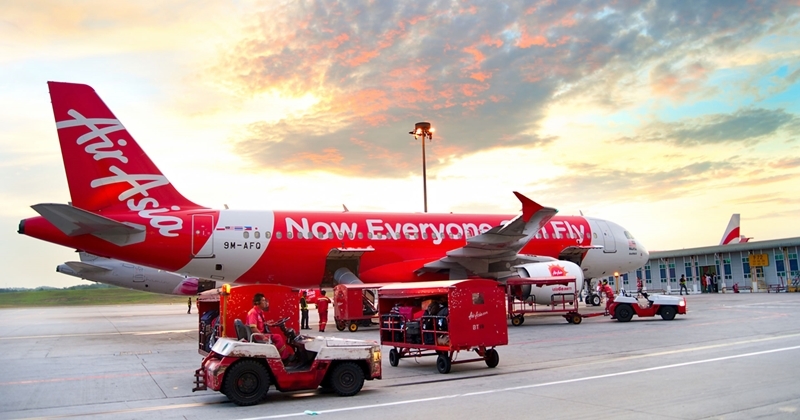
    Thai AirAsia has unveiled plans to launch flights from Don Mueang (DMK) Airport in Bangkok to Dhaka, the capital of Bangladesh, as well as to the city of Lucknow in northern India.

    The airline will operate four flights per week to Dhaka commencing 24 November, and thrice weekly to Lucknow from 4 December 2022.

    Promotional fares for the Don Mueang-Dhaka flights start from 3,590 THB per trip for AirAsia members, while the Don Mueang-Lucknow flights are available from 3,290 THB per trip. The special fares can be booked up to 16 October 2022 for travel between Don Mueang-Dhaka from 24 November 2022 and 25 March 2023, and Don Mueang-Lucknow from 4 December 2022 to 25 March 2022, via the airasia Super App.

    “The travel appetite has improved since COVID19 restrictions were relaxed. The South Asian markets have grown rapidly in the recent period and AirAsia now operates six routes to the region, flying Don Mueang to Kolkata, Kochi, Jaipur, Bangalore and Chennai in India and to Maldives. All of the routes have been well received, especially by Indian travelers who have been connecting across Thailand.

    Data from the Tourism Authority of Thailand show the fast growing number of tourists from India and South Asia have so far visited Thailand this year and the inflow is expected to continue into 2023,” said Santisuk Klongchaiya, Chief Executive Officer of AirAsia Thailand. “Dhaka and Lucknow are new and exciting destinations AirAsia will be flying direct to for the first time with these additions. On top of attracting tourists to Thailand, the unique and magnificent architecture of these two cities should make them another popular aspiration for avid Thai travelers looking for a once-in-a-lifetime experience.”

  • Ikano Retail posts record revenue growth

    Ikano Retail posts record revenue growth

    Ikano Retail has recorded its highest turnover yet for the financial year to August 31, reaching US$1 billion across the five markets in which it operates Ikea stores – Malaysia, Singapore, Thailand, the Philippines and Mexico, equivalent to 41.2 per cent year-on-year growth.

    The increased sales were driven by the return of visitors to physical stores after two years of Covid-19 disruptions. CEO of Ikano Retail, Christian Roejkjaer, said there were 113 million visits to the group’s stores and shopping centres.

    In Malaysia, where the group operates four shopping centres, the company recorded $361.8 million in sales. Meanwhile, in the Philippines, where earlier this year it opened the world’s largest Ikea store in Pasay City, turnover reached $113.6 million.

    Sales in Singapore and Thailand reached $255.4 million and $276.6 million respectively.

    “Our shelves were not fully stocked as we would have liked it and our costs went way up,” said Roejkjaer. “Still, we are leading our markets for affordable, quality home furnishing solutions – and our customers appreciate that.’’

    The retailer is also accelerating its expansion plan after the easing of Covid-19 restrictions, planning to open its first compact city-centre concept store in Thailand later this year at The Emsphere, along with its third Mexico store.