Category: General

Retail News Asia is committed to providing both local and global retailers with the latest General Retail news throughout the Asian market. This on a daily base.

  • You can now link Fitbit and Google Fit with Google Assistant

    You can now link Fitbit and Google Fit with Google Assistant

    With the recent launch of the Google Pixel Watch and the close partnership with the wellness experts at Fitbit, which Google acquired last year, it’s obvious that the search giant is looking to make a serious push into the fitness tracker market. And it only makes sense that the super-smart Google Assistant would be able to seamlessly integrate with the current and upcoming features in Google Fit and the dedicated Fitbit app, right?

    Well, it seems this time is upon us right now — many users can spot the ability to link to Google Fit and Fitbit in their Assistant Settings, and the feature seems to be rolling out to any and every contemporary Google device that supports the Assistant.

    With the small caveat that, while you can link both Google Fit and Fitbit apps, you have to make the choice of keeping only one of the two active at a time.

    Linking either of the apps and granting the necessary permissions will give Google Assistant access to:

    • Your activity metrics, such as workouts, steps, duration, pace, and burned calories
    • The distance you have covered during your training by tracking your location
    • Your heart rate data

    A “Proactive health & fitness results” toggle suggests that the Assistant may display health/activity cards on your device, letting you know of recent trends, either to congratulate you on the successful journey or remind you to pick up the pace.

    To connect Fitbit and Google Fit to Google Assistant, open your Google Assistant settings, go to the Wellness section, and choose Activity. Then select either Google Fit or Fitbit and proceed with the linking steps. Keep in mind that the feature is not yet widely available, so don’t be worried if you only see the Calm app in the Wellness section.

    Currently, even if you sync them up, voice prompts to the Assistant will call up a blank. It seems that the feature is still inactive, locked behind a server-side toggle, which Google will probably flip once the update has rolled out to more devices. If this is the case, we most likely won’t have to wait too long to ask Google Assistant to tell us how many steps we have taken during the day.

  • Nespresso to reward consumers who return pods for recycling

    Nespresso to reward consumers who return pods for recycling

    Nespresso has launched a new Recycling Rewards scheme, offering consumers incentives to recycle their used aluminum coffee capsules at Nespresso boutiques.

    From 16 to 30 June, anyone who returns a full bag of 100 used aluminum coffee capsules of any kind to a Nespresso Boutique can receive a free gift in return.

    Rewards include a free sleeve of Nespresso coffee, a notebook made with recycled coffee grounds, and a beach towel. To claim their gift, participants must register their recycling via a QR code in-store.

    “Over the last decade, our recycling program has evolved to ensure convenient access to every customer in Australia, with multiple channels for involvement. Now, we are exploring new ways to accelerate participation, starting with [Nespresso] boutiques,” says Jean-Marc Dragoli, General Manager at Nespresso Oceania.

    “The Recycling Rewards trial is part of a broader strategy which seeks to better understand recycling behavior, raise awareness of and engagement with our recycling program, and give more aluminum coffee capsules a second life.”

    The two-month trial is part of Nespresso’s commitment to creating a sustainable, circular coffee economy. It aims to accelerate participation in the company’s coffee capsule recycling program while gathering valuable insights into whether incentives have a role to play in driving recycling behaviour in the future.

    Once returned to Nespresso, used capsules are taken to a dedicated recycling facility in New South Wales where the coffee grounds and aluminium are separated. The recovered coffee grounds are sent to another local facility and used as soil in landscaping applications or compost. The aluminium component of the capsule is compacted and sent for smelting and refining. Aluminum is recyclable and can be used to make a range of products from bicycles to mechanical pencils.

    The Recycling Rewards trial is boutique-based only, however, Nespresso’s broader recycling program currently offers three additional ways for customers to recycle, including dropping capsules off at a participating collection point, posting capsules back to Nespresso using a special Australia Post satchel, and the option to participate in a bulk recycling collection initiative where workplaces or community locations can become a recycling point.

    To find out more about the Recycling Rewards initiative, visit www.nespresso.com/au/en/recycling-rewards.

  • Apple iPhone gets stuck inside Qantas aircraft, earns frequent flyer miles

    Apple iPhone gets stuck inside Qantas aircraft, earns frequent flyer miles

    An iPhone was lost by its owner on a Qantas flight and the handset ended up stuck on the plane during several international flights. The action started on May 6th as detailed in an online forum called the Australian Frequent Flyer Community. That is when a member of the community using the handle “Rugby” asked for a phone number for Qantas’ lounge.
    He needed the number because his wife had apparently left her iPhone on a Qantas plane. Rugby wrote that thanks to the “Find My” app, he knew that the handset had boarded the plane with his wife, flying from Sydney to Auckland. It then flew back to Sydney, went from Sydney to Honolulu to Sydney, and then flew from Sydney to Auckland to Sydney again.
    Meanwhile, the Rugby family was able to follow the phone’s travels and there must have been enough battery life for the phone to continue sending out signals. The device was believed to be stuck in the seat that Mrs. Rugby had been sitting in during the original flight. You would have thought that this would have led Qantas to do whatever was needed to extricate the phone from the chair.
    That’s because the airline always makes announcements warning passengers that a phone stuck in a chair could catch on fire. Indeed, back in 2016 an iPhone stuck in a business class seat on a Qantas flight from L.A. to New York caught fire after the lithium battery inside the phone was crushed. The passenger tried to use the recliner to free the device and it ended up bending the battery and engulfing the phone in flames.
    Luckily, the onboard crew was able to put out the fire using fire extinguishers and Qantas decided to redesign the seats on its planes. You would have thought that the airline would have put forth a more serious effort to find and/or free Mrs. Rugby’s Apple iPhone considering the mid-flight fire that took place only a few years back. One person monitoring the thread suggested that the Rugby’s send an email to Qantas to let them know of the potential threat to the airplane.
    Another member of the community had a good point about how poorly Qantas is cleaning its planes between flights if it couldn’t find the phone. Also, the airline’s security checks between flights are also lacking.
    After the phone made three roundtrips and landed in Sydney for the third time, a member of the forum assisted Qantas with the retrieval of the phone. It wasn’t known whether this person was a passenger who had been following the forum or a Qantas employee who is a member of the forum. Regardless, the Rugby’s received a call from a Qantas employee who said that they had the phone and would be taking it to international baggage services.
    Mr. Rugby was in Auckland when he heard from Qantas that they had his partner’s iPhone. He picked up the well-traveled device the following week when he returned to Sydney. By the way, leaving your phone on a plane is not an isolated situation. A member of a forum called One Mile At A Time who goes by the name of “JD,” wrote, “Flew MEX-FRA first class (747) a couple of years ago. When I woke up I could not find my iPhone anywhere.”
    He continued. “After a perfect in flight, it was like an out of body experience… I couldn’t find it, the flight attendants couldn’t find it and the other poor passengers in first class were like “get over it”. I was so embarrassed but once everyone deplaned, mechanics came on board and finally was (sic) able to find it… we almost missed our connecting flight but was elated to have my iPhone back for our month long vacation in Europe.”
  • Twitter tests “Liked by Author” label for tweeted responses

    Twitter tests “Liked by Author” label for tweeted responses

    Elon Musk might have put his acquisition of Twitter on hold temporarily, but that hasn’t stopped the social media platform from continuing to make changes to spruce up the app. People discovered a new label on the Android Twitter app that surfaces when the author of a tweet “likes” a response to his message. TechCrunch says that it was told by Twitter that the company is testing different labels.
    Once the author of a tweet “likes” a reply sent in response to that tweet, the reply receives a badge that shows a heart followed by the words “the Author.” It indicates that the person responsible for the original tweet liked the reply. The badge can be viewed by the person who posted the response and others viewing the original message and the replies. It isn’t clear whether this will be a global response but so far there have been reports that the “Liked by Author” label has been seen in multiple countries.
    The label is similar to the “Liked by Creator” badge that shows up on TikTok when a subscriber who created a video on the app likes a comment that someone posted about it. The new label would allow Twitter subscribers to brag when their tweet has been “liked” by a celebrity. And if there is one thing that Twitter is full of, it is celebrity users.
    The company has been playing musical chairs with employees in the wake of Musk’s $44 billion bid for the social media site. And now Musk is concerned that he is overpaying for Twitter; with the number of users possibly lower than what the company has previously acknowledged, even the richest man in the world needs to make sure that he isn’t overpaying for his purchase.
  • Macau Competing with Vegas as Global Gaming Capital

    Macau Competing with Vegas as Global Gaming Capital

    In the West, when someone thinks about flashy casinos and an exciting roulette table, their mind likely goes to Las Vegas. Images of the brightly lit Strip fill their mind, along with stills from movies like Rain Man and The Hangover.

    However, farther East, the average person is more likely to think of Macau when casinos are brought up. The region is the most densely populated area in the world, with well over half a million residents in an area of less than thirteen square miles. And life in Macau focuses on the biggest, most lucrative, and luxurious casino-resorts in the world that line Cotai.

    While Vegas and Macau don’t often directly compete, as they’re located on opposite sides of the world, online gaming worldwide has changed the industry. Today, casino bonuses are available from brands like Caesars, BetMGM and DraftKings. The availability of online deals has greatly shifted the atmosphere in Vegas, though Macau looks a bit more resilient to virtual casinos.

    In fact, in terms of direct comparison, Macau’s gaming industry is the world’s most robust. Before we dive into the statistics, let’s cover a bit about each region’s history and focus.

    Distant Origins, Different Focuses

    Vegas and Macau, though each catering to casino-goers, each deliver a unique experience. Vegas got its start in the 1960s and 70s as a hideout for Los Angeles bigwigs looking to have a little fun; MGM remains a major presence from its early days as Metro Goldwyn Meyer, a film studio that still runs today and which contributed greatly to the area’s wealth.

    Macau, on the other hand, got its start as a trading post allocated to the Portuguese from the Ming Dynasty back in 1557. Since then, it’s become a multicultural hub that retains the early architectural collaborations between locals and Portuguese traders. Back in this time period, Vegas remained the territory of Paiute tribes.

    Today, these distinct origins can still be felt. Vegas remains an all-out entertainment stopover, of which casino gaming is only one facet. There are also big-name musical residencies, spectacles from groups like Cirque de Soleil, and plenty of sports action from the Big Four leagues.

    Meanwhile, Macau has kept its focus on heritage and gaming. The Historic Centre of Macau is a UNESCO World Heritage Site, with countless museums highlighting the area’s history. In other words, it’s not just a gaming stopover, but also a cultural adventure.

    Are the Tides Shifting?

    There’s one huge caveat that makes Macau a heavy hitter in the gaming industry: it’s the only region in China that allows traditional casino gaming. While Vegas is North America’s gaming capital, there are countless other counties and localities that play home to big-name casinos, such as Atlantic City in New Jersey.

    In 2021, 7.7 million visitors flocked to Macau, which included a 30% increase from 2020. However, back in 2019, Macau welcomed closer to 40 million. In 2021, Vegas saw over 32 million visitors back onto the Strip, though this number was closer to 42 million back in 2019. Clearly, in terms of tourists, each region handles a similar number of tourists in an average year.

    However, Macau posted 43.7% growth between 2020 and 2021, raking in close to $30 billion last year. Meanwhile, Vegas posted just over $13 billion in 2021 for gaming revenue statewide, according to Nevada state sources. Keep in mind that Macau’s numbers include revenue from restaurants and hotels; the government tax revenue stood at only $4.22 billion in 2021.

    Historically, Macau has been the global capital for gaming in terms of revenue. Back in 2014, for context, Macau raked in almost $30 billion in revenue, while Vegas posted just over $6 billion. Are the tides shifting—or are expanded Vegas entertainment opportunities, such as bundled casino-resort plans, muddying the revenue waters?

    The World’s Largest Casino-Resort & Most Expensive Hotel

    Though Macau has a much smaller area than Vegas, the region is home to some of the world’s biggest and most impressive casinos. Though Vegas also isn’t short on incredible designs from leading architects and gold-star luxury experiences, Macau’s skyline looks noticeably different.

    The Venetian Macao, for example, is the largest casino-resort in the world. Its casino spans over 550,000 square feet, while its extravagant design and grounds blow its Vegas inspiration out of the water. Nearby sits the City of Dreams, a joint casino-resort-shopping center that was designed by the Zaha Hadid architectural firm.

    The structure is supported by a mesh exoskeleton, which makes it one of Cotai’s most visually striking designs. Meanwhile, the 13 is the most expensive hotel ever built. Each villa includes a private elevator lobby, while guests are treated to complimentary transportation in a Rolls-Royce.


    Jeju & Philippines Expanding Gaming Options

    Clearly, Macau is Asia’s premier gaming destination, with no expense spared when it comes to creating an all-out entertainment experience. Though not quite as varied as the Strip in terms of showbiz, Macau has replaced flash with class—but is it enough to keep the region ahead of Vegas in terms of revenue in the coming years?

    One huge change for Macau has been the growth of Jeju Island, a gaming destination located just offshore from South Korea. In the third quarter of 2021 alone, Jeju Dream Tower raked in $10 million in revenue, hinting that the region is becoming more popular for traveling gamers.

    Meanwhile, the Philippines also has a strong gaming market that regularly attracts visitors from around the world. Last year, the country brought in $2.2 billion in revenue from casinos nationwide. In fact, the Philippine gaming industry has been the subject of top brands from both Macau and Vegas.

    For example, the City of Dreams project mentioned above has since expanded into Manila. The location is now the country’s top-rated casino-resort. So far, Vegas brands have yet to touch down in the island nation, though it seems inevitable. For both of the world’s gaming capitals, expanding into new regions like the Philippines will be integral for expanding their brands. However, with Macau geographically and culturally nearer to the country, it looks like Vegas is one step behind.


  • Marketing Value Across Language Barriers: The Worth of Translation in a Commodified Economy

    Marketing Value Across Language Barriers: The Worth of Translation in a Commodified Economy

    In this fast-paced and commodified economy, it just seems that you can put a price tag on almost anything. But there are certain things that you can’t mass produce and expect the same results every single time. An example of this is translations.

    Even if we can’t commodify translations, it can’t be denied the significant role of marketing translations for retail goods, especially when it comes to luxury items. Unlike conventional retail products, luxury items have a different value system that makes them worth more.

    But we come across a problem in not commodifying translations: how do we guarantee their quality, especially when communication is crucial in globally marketing luxury items?

    Today, we will examine this issue and take a hard look at how we as a society perceive value and meaning not only in translations but in certain commodities, like luxury items.

    If you want to learn more about what we discovered through our interview with a leading language expert and owner of a marketing translation agency regarding this issue and the unique relationship between the language industry and the retail sector, keep on reading!

    Tomedes’ Pursuit of Meaning: Insights from 15 Years of Globally Marketing Brands

    In writing this piece, we were fortunate enough to talk with Ofer Tirosh, the CEO and founder of Tomedes, a marketing translation services agency trusted by thousands of international brands from small and medium enterprises to Fortune 500 companies in promoting them in any market across the globe.

    We interviewed Ofer not just because of his experience in managing marketing projects for retail and luxury brands but because of his interesting perspective on some issues in the language industry. For example, his point of view on machine translations and their application in preserving dying languages for future linguists and anthropology researchers to review and study.

    Before we get into the nitty-gritty details of our discussion on commodifying translations, we first had to go back to the basics and have him define what marketing translations are?

    According to Ofer, based on his experience in handling marketing projects for 15 years, unlike other forms of translations, they’re not just hiring native translators but also SEO and marketing specialists knowledgeable of the target market the brand is trying to enter. The translation has a crucial role: to ensure that their branding is relatable to the target customers through various mediums, from hard copy materials to social media campaigns.

    For him, the brand’s messaging and meaning are vital because, in his line of work, the context of any marketing can get “lost in translation” and could lose its pervasiveness to its audience. Marketing is all about making the audience aware of a brand and catching their attention that would compel them to buy its products and services.

    The Similarities and Differences of Luxury Brands and Translations

    During our discussion, we asked Ofer about his opinion if there were any shared similarities between luxury brands ( a commodity) and translations (a non-commodity).

    “If there was one similarity between luxury brands and translations, it would be the meaning in their product. For luxury brands, the value of their product comes from what it means for their customers to purchase their brand. As for the final product of translations, the meaning of the text is crucial as it connects and affects its target audience,” Ofer explained.

    The differences between luxury goods and translations come from one can be replicated and mass-produced as it’s tangible while the other can’t be duplicated because of different factors.

    For example, in marketing translations, Ofer explained that even though they were to translate the same marketing message across different countries, they would have to adjust the wording to fit the cultural preferences of their target audience.

    What Makes a Commodity a Luxury Item?

    Let’s get a bit philosophical for a bit. If we were to take a step back from how our society functions and our roles, there is no meaning to what we do. There’s only meaning when it comes down to how we perceive it to have meaning. This is essentially at the core of Existentialist philosophy.

    If we were to examine why some commodity goods are considered luxury items while others aren’t, it all comes down to how they have branded themselves and the psychology of the consumer. There has been significant research showing that some customers feel like their self-esteem increases or they have a sense of belongingness if they purchase a specific luxury item that they emotionally connect to.

    Many global luxury items heavily rely on the marketing translation agency to ensure that they maintain or enhance their emotional branding with their international customer. In this situation, it’s not just the commodity’s quality that becomes a factor in being deemed a luxury item but comes down to the relationship these brands have developed with their audience.

    What Makes Translation a Non-Commodity?

    Besides being an intangible commodity until you see the finished product, the translation process can’t be replicated for all projects. We asked Ofer what factors would make marketing translations and other types of translation impossible to commodify.

    “In managing a remote-first marketing translation agency, I’ve worked with several translators over the years. Because each person is different, the consistency in the quality of translations can vary from person to person. For this reason, we utilize advanced technology and have a clear work management system to ensure that we’re providing the best translations,” he explained.

    Another factor why translations can’t be commodified is that “meaning” is malleable. One word could mean something for one culture, and in another culture, even if they use the same language, it could have an entirely new context.

    The Issue of the Subjective Nature of Value

    In our conversation regarding the role of a marketing translation agency, Ofer brought up the issue of the subjectiveness of value and why it can be challenging for any business to market themselves, whether it’s their first time or they’ve been doing it for years.

    “For commodity brands, it’s easier because it’s tangible. For non-commodity brands, like translations, geared toward service-oriented purchases, it can be a little harder to sell the value of your brand,” Ofer explained.

    He continued, “But with our situation at Tomedes, what worked for us was the brand trust that we developed through the years with our long-time business clients. It’s also by how we deliver through with our brand promise in ensuring that their needs are our top priority.”

    In the Age of Machines, Can We Finally Commodify Translations?

    But we wondered if mass production is the problem, why translations cannot be commodified, and why can’t automated translations be a solution for any marketing translation agency seeking to have their multilingual marketing content be uniform?

    Ofer explained that although they use advanced translation technology in their operations, they have native translators managing the process because the current technology isn’t a hundred percent accurate.

    “When it comes to marketing translations, every word should move the customer through its meaning, which is why human expertise is needed for translation because machines can mimic but can’t create it,” He said.

    Marketing Translations’ Importance in Promoting a Brand Value Worldwide

    By now, we’ve hammered home how crucial marketing translations are in communicating to global customers about a brand’s value, especially for luxury brands.

    So let’s try to answer the why part. Why does this matter in promoting brand value worldwide?

    Throughout our talk with Ofer regarding the translation industry,  retail sector, and the intersection where these two meet through marketing, he said that before he begins to go through a marketing project, he first asks the client what they envision the multilingual content to be for their audience.

    “It always starts with their brand’s story. It’s either their origin or their aspirations for the future of their company. I guess that’s how life is for us humans. We try to make sense of the world through stories. Once you understand that core need for connection through story building, you can successfully build a better relationship with your customers,” Ofer explained.

    Should We Bother Commodifying Translations in the First Place?

    When I asked Ofer about it, he replied with a question: “Would that make much of a difference to my marketing translation agency  if we commodify it?”

    It could be because it would make all translations follow a specific price point and be uniform in their quality.

    But then again, if we were to go back on the definition of value, it is meaningless on its own but valuable to someone because they have placed value into it. You can’t really put a specific price tag on translations because it’s an act of human connection, which we can observe through how global consumers can relate with one another through a brand that they emotionally connect to.




  • Google introduces Emergency SOS feature for Wear OS

    Google introduces Emergency SOS feature for Wear OS

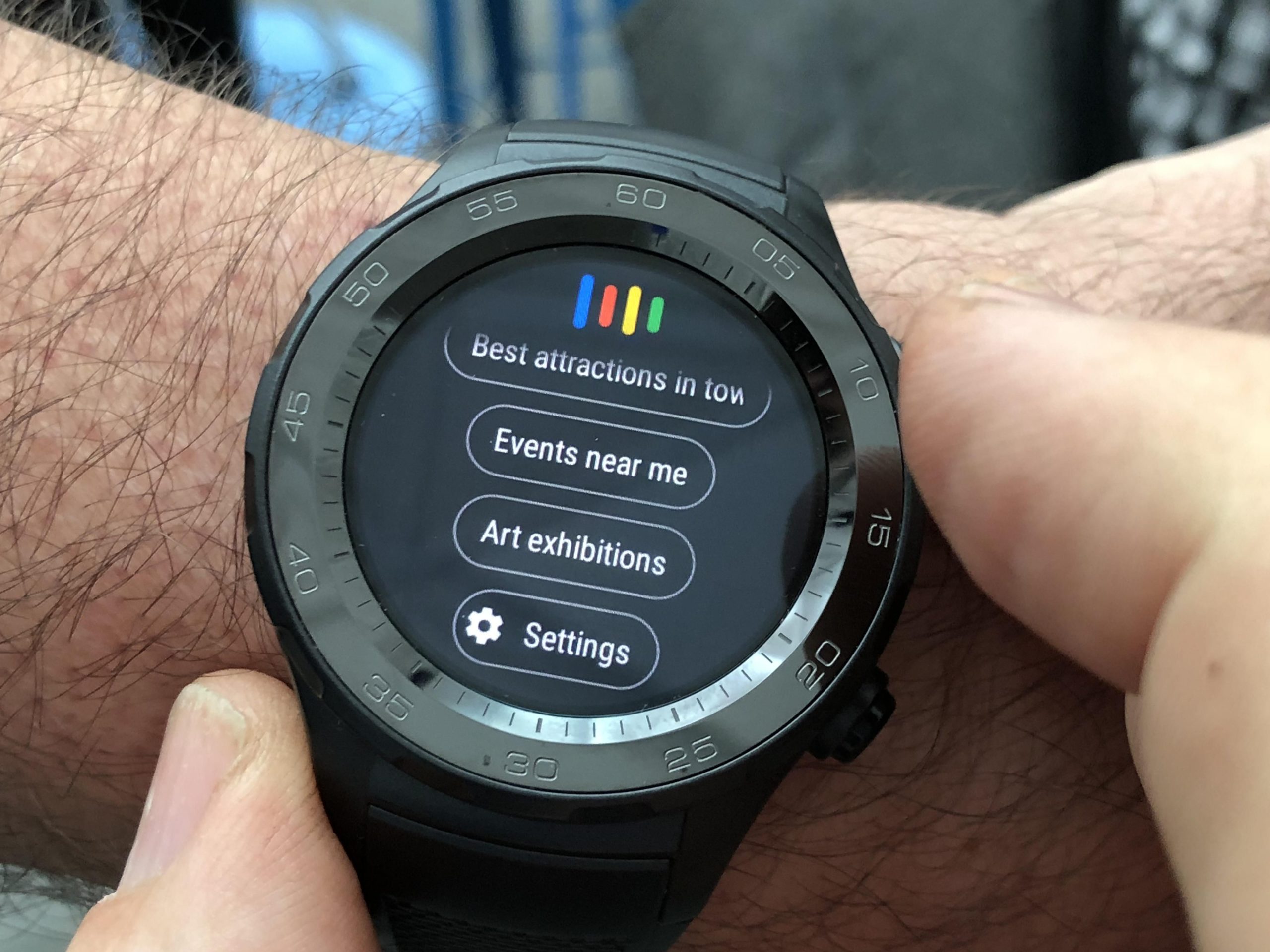
    Google will soon begin rolling out an Emergency SOS feature on Wear OS. It is going to work similarly to the one found on Android smartphones and will enable users to easily contact their relatives or the public authorities directly via their smartwatch in the case of an emergency.

    Amidst the slew of exciting hardware announcements that took place during the I/O 2022 keynote event, it is easy to see how some less flashy software tweaks could stay under the radar. Nevertheless, even if an Emergency SOS feature for Wear OS is not particularly thrilling, it is still no less important than that Pixel everyone is talking about.

    Emergency SOS in Android is by no means a new concept. Virtually every smartphone has their equivalent of such an option. The novelty lies in the fact that this feature will now be available for wearables with Wear OS as well. On Android phones, the user must press the power button 5 consecutive times to activate Emergency SOS. It’s not clear how the feature could be triggered in Wear OS, but a similar shortcut, with a voice command as an alternative method, sounds likely.

    Emergency SOS for Wear OS will function similarly to the one for Android. In order to enable it the user must begin by filling in the necessary contact details. Only once this has been done will they have the option to activate Emergency SOS. It is important to note that, as this is ultimately a smartwatch feature, in order for it to be used, the wearable must be linked with a smartphone with cellular connectivity, if the wearable does not support LTE.

    Turning Emergency SOS on will prompt users to select whom they would like to contact (either a particular contact or the emergency services directly). They will easily be able to cancel the call via a big red button on the main watch screen, and additional options will be provided once the call has ended.

    For the time being, it is unclear when exactly this feature will make its debut. Apple has already implemented a similar option in the Apple Watch. Based on Google’s track record, it could take a while before Emergency SOS makes its way to Wear OS. At the very least, we know it is coming.

  • Meta announces cuts in its RealityLabs division

    Meta announces cuts in its RealityLabs division

    Facebook parent company, Meta, has announced cutbacks in its RealityLabs division. This branch of the company focuses on Meta’s hardware efforts, develops the tech giant’s virtual and augmented reality products and is instrumental in the tech giant’s long-term strategy of establishing the “metaverse”.

    A spokesperson for Meta confirmed that some RealityLabs projects will be postponed, while others would be canceled altogether. For the time being, there are no concrete details on which ventures are going to be affected.

    For the most part, this news come as no surprise. Earlier in May, Meta announced that they will be cutting back on new hirings. The company has ruled out layoffs, at least for now.

    Meta’s earning reports published in past months indicate that the financial growth of the company is stagnating. The RealityLabs division in particular is operating at a loss. Some steps to address the concerns of investments were imminent.

    What is interesting, however, is that no one in Meta truly expected RealityLabs to reap financial success in the short-term. Mark Zuckerberg, the company’s CEO, has always made it clear that RealityLabs could take the better part of a decade? to start paying off.

    Hence, Meta is currently relying on revenue from their social media platforms to fund their long-term ambitions. This has been the financial strategy of the company, in theory, at least. Following the fluctuating number of daily Facebook users, some doubt has been cast on the viability of this business model in the long run.

    If anything, these cutbacks indicate a certain degree of hesitation on Meta’s part with regards to the company’s direction. When Facebook originally rebranded itself to reflect their newfound emphasis on the metaverse, its confidence in the project, however adventurous, seemed unwavering. It now seems that Meta is having second thoughts.

  • Central Retail reports solid growth in Thailand, Vietnam and Italy

    Central Retail reports solid growth in Thailand, Vietnam and Italy

    Mr. Yol Phokasub, Chief Executive Officer of Central Retail Corporation PCL (CRC), announced “Central Retail has achieved success hitting record-high in Q4/2021 performance, with a revenue of THB 58,765 million +15%. EBITDA THB 8,031 million +42% and a net profit of THB 2,464 million +124%. We ended 2021 on a high note with profit of THB 277 million. EBITDA THB 20,059 million and a total revenue of THB 195,654 million. Despite the ongoing challenges posed by the spread of COVID-19 for extended periods across Thailand, Vietnam and Italy, Central Retail achieved profitability and generated positive returns to shareholders, with dividend payment of THB 0.30 per share.

    Thailand: Sales in 2021, excluding tourist spendings, returned higher than pre-pandemic levels. Accounting for this achievement is Central Retail’s Multi-Category Platform, providing portfolio flexibility and adaptability to changing customer needs. The focus in 2021 was the hardline segment, which aligns with consumer trends during the pandemic, enabling the segment to rapidly grow and drive sales to levels higher than the pre-pandemic era by 26%. The company launched 5 new Thai Watsadu branches and new store formats under go! WOW banner of total 15 branches within three months in 2021, of which was positively received by customers, underlining the company’s leadership position in Omnichannel Home Improvement Platform. Additionally, Central Retail successfully acquired COL, including OfficeMate and B2S, and is prepared to list MEB, the leader in the e-book business and novel website for Thais, in the stock exchange of Thailand in 2022. For the food segment, Central Retail maintains its #1 position as The Best Food Destination in Thailand, driving business expansion in 2021 by opening 46 branches to reinforce its leadership position in the category. Tops Supermarket also received the Top Influential Brands award from Influential Brand Singapore and Neo Target, a leader in corporate reputation consultancy in Thailand. The company also implemented fixed prices of consumer goods from the end of last year until the first quarter of this year to alleviate financial burdens of consumers during turbulent times. For the fashion segment, the company drove the highest levels of growth in the fourth quarter when compared to previous quarters in the last two years and the segment is still strong in momentum.

    Vietnam: Despite the impact from COVID-19, Central Retail charged ahead with investment plans, including renovations and business expansion to strengthen its leadership in the hypermarket and lifestyle mall segment across urban and rural areas. The company also expanded into the food segment by launching new store format mini go! that targets mass consumers, as well as Tops Market to serve every customer segment in Vietnam. Although Vietnam faced a difficult situation during the pandemic that forced stores to close during the second and third quarters, our sales grew by 8% higher than 2019 whilst EBITDA grew 9% compared to the previous year.

    Italy: Central Retail initiated renovations of Rinascente across 3 flagship stores, including Milan, Florence and Rome. The renovations took place during the lockdown in Italy and were completed in time for the border reopening in mid-2021, which has successfully attracted a growing number of customers, resulting in strong business growth. The spending power from domestic customers along with the return of European tourists boosted sales growth in the fourth quarter, matching 99% of sales during the pre-pandemic era. The company’s annual sales in Italy saw a strong growth of 30% compared to the previous year and has achieved a fourfold increase in EBITDA compared to the year before.

    Property: Renovated and launched new branches across Thailand and Vietnam, including the opening of GO! lifestyle mall in Vietnam and Robinson Lifestyle in Thailand, totaling 6 branches. Robinson Lifestyle maintained an occupancy rate of over 90% and the number of customers has been increasing consistently. By the end of 2021, Central Retail has a total of 69 branches across Robinson Lifestyle, Tops Plaza and GO! lifestyle malls with total net leasable space over 650,000 square metres, a 10% increase from the previous year.

    Technology and Digital: Central Retail enhanced technology integration across the organisation and its people by adopting a digital-first culture and building on the most comprehensive omnichannel platforms, securing Central Retail’s unique leadership in omnichannel retailing. These efforts resulted in omnichannel sales accounting for 20% of total sales, and a 109% growth. The company also built on the CRC Data Ecosystem and developed new techn

  • Facebook pulls the plug on some services leading to less geolocation tracking

    Facebook pulls the plug on some services leading to less geolocation tracking

    Facebook will no longer be collecting data from a number of its geolocation services. Hence, features that previously tracked your real-time location, including Nearby Friends and weather alerts among others, will soon be discontinued (after May 31st, 2022).

    In a statement for The Verge, a representative from Meta – Facebook’s parent company – confirmed the “deprecation of some location-based services”. Nearby Friends and weather alerts will be the first to go, with location history and background location expected to follow suit in the immediate future.

    Originally, the information regarding the decision to terminate geolocation data collection was disclosed to users that utilize the aforementioned services through a notification. The official justification for the discontinuation is “low usage” on the users’ part.

    Not only will data no longer be gathered, but Facebook will delete any and all stored data on August 1st, 2022. Users will be able to download and view the data collected by the platform before that cut-off point via the Setting and Privacy menu.

    It should be noted that this does not mean Facebook will stop collecting geolocation data altogether. In line with the company’s data policy, said information will continue being gathered and processed, albeit for other “experiences”.

    This naturally raises some questions, but anyone hardly expected for Facebook to voluntarily give up on collecting so much valuable user data. Meta has come under fire in recent years for the way in which sensitive user information is being handled.

    This has led companies like Apple and governments alike to start implementing measures to safeguard user data, much to the distaste of Meta. For example, iOS enables users to both distort their geolocation and withhold it from Facebook altogether.

    In the end, Facebook will be Facebook and will always treat user data as an invaluable commodity. Whether they will continue to get away with it remains to be seen.

  • EU could start enforcing Digital Markets Act rules on Apple, Google, Meta in Spring 2023

    EU could start enforcing Digital Markets Act rules on Apple, Google, Meta in Spring 2023

    You may have heard so far that the European Union has been preparing to have a say in how big tech companies like Apple, Google, and Meta operate. We are talking about a legislation dubbed the DMA (Digital Markets Act) which the European Commission has been rigorously preparing for a while. The European Commission’s

    executive vice president Margrethe Vestager has set her eyes on controlling (or at least, fining if uncontrollable) tech giants such as Apple, Google, Amazon, Meta, and others with the DMA. Previously, she expected the battle to begin in October, but it seems we are more likely to see some action in the Spring of next year.

    The waiting game depends on when the DMA will get implemented. The legislation is currently waiting for approval from the Council and Parliament.

    The EU is, however, gearing up for enforcement of the new laws. The legislation focuses on the so-called gatekeeper companies, that, if you’ve been attentive so far in this article, you might presume refers to those big tech companies we mentioned earlier.

    And you would be correct. If you’re curious, here’s the definition of what companies are considered gatekeepers: the company needs to have a market capitalization (a fancy way of saying the total of its stocks value) of over €75 billion ($82 billion) and own a social platform or app with at least 45 million monthly users.

    These companies could face fines of up to 10 percent of their total worldwide turnover (for the preceding year) if they fail to comply with the legislation. For the repeated offenders, the fine can grow to 20 percent, which could help the EU drive its point home.

    So, big tech companies will have three months to declare their status to the Commission, and then they’ll have to wait for up to two months to receive confirmation from the EU. Indeed, it seems like it could take quite a while for the giant mechanism to start working (you can’t expect tech giants and government commissions to fight a fierce Marvel-like battle that’s so quick it’s hard to see).

    And as you might imagine, the EU has a lot more work it needs to do beforehand. Hiring heroes (we mean, staff), preparing the hundreds of monitors and computers to analyze data (and possibly, the 007 coffee for the employees that are working there)… joking aside, it will indeed take some tremendous work to prepare such legislation to be executed. Vestager also mentions that they will need to prepare legal text on various procedures.

    However, when the DMA passes, it will possibly mark an end of an era. In case you haven’t heard of it yet, this is the legislation that could force Apple to allow users to download apps from outside the App Store (a possibility that freaks Tim Cook out and has him worried about the iPhone security), as well as require WhatsApp and iMessage to become interoperable with smaller chat apps.

    Sideloading (the process of downloading apps on iPhone from outside the App Store) is arguably the biggest change the DMA will force for Apple. Previously, Apple has raised concerns that this will weaken the iPhone’s security. By the way, Android users have been able to sideload apps for quite a while now.

    On the other hand, an even bigger cause of headache for Apple is that the DMA would make Cupertino allow App Store customers to make in-app payments through alternative payment platforms (you may have heard about the infamous Apple Tax, 30% cut, which Apple takes from developers when payments are made via the App Store).

    With all this being said, it will be quite interesting to see the DMA in action and what changes will big tech giants have to implement (and whether they will comply).

  • Google Tasks now allows users to set up recurring tasks directly from the app

    Google Tasks now allows users to set up recurring tasks directly from the app

    The Google Tasks app is adding a feature that is such a no-brainer you have to wonder why it wasn’t added before. Oh, wait! The new feature was available through Google Calendar, but not from the app-that is until now. Let’s get down to specifics. But first, as many of you know, Google Tasks allows you to create to-do lists that integrate with Gmail and Google Calendar to help you get your chores done.
    You can create, manage, and view tasks on any device while you’re on the go. Tasks created on Gmail and Google Calendar from your desktop can be managed on your mobile phone or tablet. And to make it easier for you to finish a task, you can break down each one into sub-tasks allowing you to take smaller bites of the project, helping you finish it faster. And as your work on a task progresses, you can edit it. Tasks can be created from an email in the Gmail app and traced back to the source gmail it came from.
    Placing a due date on each task can help you quickly finish a project, says Google. However, with such pressure placed on you to complete a task by the due date, you might find yourself drenched in sweat as the pressure builds. You can also organize your tasks by date and receive notifications reminders as if you didn’t put enough pressure on yourself.
    Currently, you can set when a recurring option will come to an end by opening the task in Google Calendar. The three options you have are to keep the task recurring constantly with no end, have the recurring task end on a specific date, or have it end after X number of occurrences. To set a recurring option in Google Calendar, open the latter app and look for the yellow background that indicates a task.
    From there, press the pencil icon and the words “Does not repeat.” That will reveal a pop-up menu. Press on Custom and you’ll be sent to the Custom recurrence page that allows you to set how many times a day, week, month, or year you want this task to recur. You can even keep this task recurring without a stop-date, choose a specific stop-date, or choose for the task to end after a certain number of times that it recurs.
    After you choose the settings, hit done. Yes, that might seem like a lot of work, but there is a new shortcut you can use directly from the Google Task app. Open the app and you should see your Tasks under the “My Tasks” heading. Tap on the date next to the calendar icon. That brings up a small pop-up box with a calendar. Near the bottom of the box is an icon of a clock and right under that, there is an icon showing two arrows next to a box that says “Repeat.”
    When you tap on Repeat you get a mini-custom recurrence page that lets you choose how often you want this task to recur, the date and the time you want to start the task, and the date and time that you want it to stop. You can even add sub-tasks from this menu.
    So there you have it. You can now set your recurring tasks from Google Calendar, or directly from the Google Task app. Do it whichever way you want to, but you might find doing it from the app to be a little bit faster. And once again, Google keeps working on an older app just to make it a little easier to use, and a little bit faster to edit. While the recurring options feature in the Tasks app started rolling out on Friday, it can take up to two weeks to show up for all users.
  • Chinese speakers in demand as factories expand

    Chinese speakers in demand as factories expand

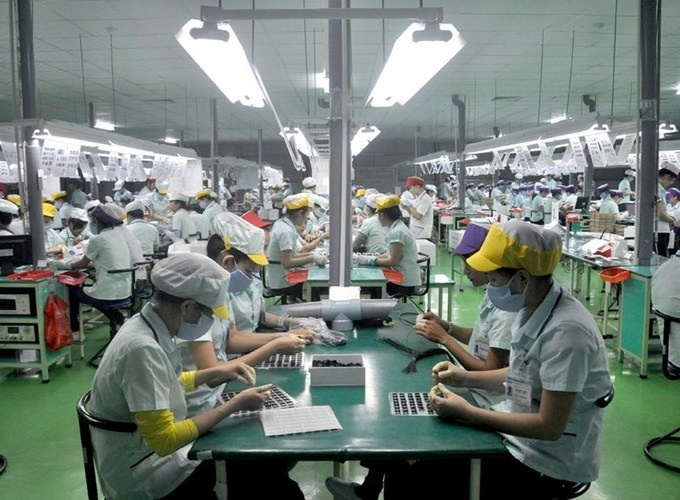
    Solar panel manufacturer Jinko Solar Vietnam in the northern province of Quang Ninh is looking for 5,000-8,000 workers, with most of them required to have basic Chinese communication skills. So far, less than 1,000 have been hired.

    “Manufacturing workers, technicians, quality control managers, we need them all. But not many suitable candidates are available,” said Dang Tran Hoang Anh, an HR officer with the company.

    As one of the world’s largest solar panel manufacturers, Shanghai-based Jinko entered Vietnam in 2020, and is looking for people in 40 different job categories to make high-quality products that are shipped to Europe.

    Anh said that Jinko pays well above average wages to secure the best talents in Vietnam. He just hired a worker who can speak Chinese fluently for a monthly salary of VND29 million ($1,263), 70 percent higher than what she was being paid at her old company.

    “We want the best Vietnamese workers who can communicate in Chinese to complete many projects.”

    Jinko is one of many companies that are scrambling to find Chinese-speaking Vietnamese workers as they set up factories in Vietnam to take advantage of the country’s low labor cost and export potential. Higher costs and risks in China, including its trade war with the U.S., motivated companies from many countries to make a shift to Vietnam.

    Taipei-based electronics manufacturer Wistron Infocomm in the northern province of Ha Nam is recruiting people for 10 job categories including project management consultants, procurement officers and engineers, with most of them required to have basic or fluent Chinese language skills. Car tire manufacturer Jinyu Tires in the southern province of Tay Ninh is looking for 50 students who can speak Chinese for a training program to find the best future employees.

    Popular recruitment platforms VietnamWorks and JobStreet have 140-200 job postings for Chinese-speaking candidates, mostly as procurement officers, quality control managers and engineers. The recruitment rush for Chinese-speaking workers began at the end of last year and grew stronger in the first quarter, with strong demand seen in northern industrial hubs, said Ngo Thi Ngoc Lan, northern region director at recruitment firm Navigos Search.

    The provinces of Bac Ninh and Bac Giang have a large supply of workers who can speak Chinese, but companies are seeing strong competition for them, she said. In the provinces of Phu Tho and Quang Ninh, there is less competition but it is more difficult to recruit high-skilled workers, she added. China has consistently been among the top 10 foreign direct investors in Vietnam in recent years.

    Mainland China ranked fourth in registered capital in the first four months at over $1.07 billion, while Hong Kong and Taiwan secured the seventh and eighth places. Together, the three territories registered $2.1 billion in capital, second only to Singapore at $3.1 billion. China’s Goertek Vina, one of the key suppliers for Apple, increased its investment in Vietnam by $306 million to over $565 million this March.

    The company had nearly 28,000 workers in its plant in the northern province of Bac Ninh as of February, up from an average 23,000 last year. Another 5,000 jobs will be added when its plant in the central province of Nghe An begins operations in June, and by 2023, it will have 30,000 employees. Another Apple supplier, Foxconn, said last year that it would pour an additional $700 million into its Vietnam operations on top of its $1.5 billion investment.

    Lan said that U.S.-China tensions, which began several years ago, have pushed many Chinese companies to move to Vietnam, generating a large demand for local employees. Chinese employees have higher requirements than Vietnamese peers in terms of salary and benefits, so it is more cost-effective to hire Vietnamese, she added.

    She predicted that the trend of recruiting Chinese-speaking Vietnamese in factories will keep rising for at least five more years.

    “This will surely encourage workers and students to learn Chinese as they see the career potential.”

    At present, however, finding Chinese-speaking Vietnamese people is not easy. Anh of Jinko said it was difficult to find suitable Chinese-speaking candidates because many do not want to move from Hanoi to Quang Ninh to work.

    “We have to train most candidates, either in Chinese or in their professional skills, to get the people we need.”

    Lan said that companies are also seeing challenges in recruiting because candidates either have the professional skills and lack language fluency or vice versa. Some companies also want employees to be able to speak English, she added.

    Chinese firms offer salaries that are 40-50 percent lower than European and American companies, while requiring employees to work on Saturdays. These are some drawbacks that discourage candidates, she said.

    Jinko Solar Vietnam used to have Chinese nationals account for 70 percent of its employees in Vietnam, but the company has reduced the ratio to 50 percent now, because Chinese staff often work for six to 12 months and return to home. The factory, meanwhile, needs long-term personnel.

    “We are offering salary of up to VND70 million a month for some directors’ jobs, and we only want Vietnamese candidates.”

  • Elon Musk Weighs in on Active Investing

    Elon Musk Weighs in on Active Investing

    The Tesla CEO is using his newly acquired toy, Twitter, to criticize passive investing.

    Elon Musk joined a conversation on Twitter, which he recently acquired for $44 billion, initiated by venture capitalist Maro Andreessen. On the thread, the latter posited that firms like BlackRock have too much influence over companies given their outsized holdings in passive funds tracking indexes, on Thursday.

    Passive investing has «gone too far», Musk said on the Twitter thread, where he was joined by Ark Investment Management founder Cathie Wood. Those investing in index funds that tracked the S&P 500, for example, would have missed out on the big gains in Tesla before it was included as a component of the index, Wood said.

    Wood made the point that history will deem the accelerated shift toward passive funds during the last 20 years as a massive misallocation of capital.

    Those supporting index funds, however, say that active funds charge high fees and often fail to beat indexes against which they are benchmarked. For their part, the active managers highlight their role in creating efficient markets and their potential to harness higher gains.

  • Samsung Internet’s latest release focuses on privacy and security

    Samsung Internet’s latest release focuses on privacy and security

    The 17th iteration of Samsung Internet is finally ready for primetime, the South Korean company confirmed this week. We’ve previously reported about the beta version of Samsung Internet 17.0, but if you missed the news, here is what’s coming in this release.

    As the title says, this release mainly focuses on privacy and security. First off, Samsung Internet 17.0 further improves the AI-powered Smart anti-tracking feature, which is now turned on by default. The privacy function is meant to prevent third parties attempting to track users’ personal information from being successful at that.

    Additionally, Samsung Internet 17.0 offers users an interesting overview of how the browser is protecting their web experience. The updated version of the browser features a visual snapshot of a user’s privacy dashboard via the Quick Access page, which provides a detailed record of weekly activities and settings that can be adjusted.

    The latest version of Samsung Internet now allows users to take advantage of external security or on-device security keys as an alternative for SMS or app-based two-factor authentication.

    Last but not least, Samsung Internet 17.0 comes with several improvements to its overall user experience such as the ability to drag and drop tabs into custom tab groups. Also, the update brings enhanced search experience across bookmarks, history and saved pages. The official version of Samsung Internet 17.0 is now available for download on Google Play and Galaxy Store.