Retail News Asia is committed to providing both local and global retailers with the latest General Retail news throughout the Asian market. This on a daily base.
Costco plans to open three new stores in Melbourne and Geelong within the next two years, investing up to $150 million.
CEO Patrick Noone told The Australian in an interview that potential sites were identified near Melbourne’s CBD, and at Officer and Geelong. Each store will be allocated $50 million, with the projects now depending on zoning and council approvals.
“We are growing quite nicely, and Melbourne is a big city. For us, business isn’t slowing down in Melbourne,” said Noone.
“Melbourne is a growth area and we’d like build there as soon as we get the approvals.”
During the Covid lockdowns, Costco remained a ‘destination shop’ for Melbournians as members travelled long distances to shop at the store, buying in bulk when regulations allowed.
Costco currently boasts 200,000 members and sells a mix of goods from fresh food, groceries, meat, consumer electronics, clothing, diamonds and even coffins.
According to The Australian, Costco Australia’s sales in the year to August rose from $2.6 billion in 2020 to $2.8 billion last year. Strong online growth helped the company double its profit to $46.39 million.
Vietnam Helicopter Corporation’s profits rose by 11 percent to VND263 billion (US$11.3 million) last year despite the severe impact Covid-19 had on the aviation industry.
It saw a 6.7 percent drop in revenues to VND2.08 trillion.
The company transports cargo and people, trains pilots, imports aviation devices, and offers firefighting services.
Owned by the Ministry of National Defense, it has seven affiliates and subsidiaries and a charter capital of VND3.98 trillion.
It charges $3,650-7,300 for an hour of chartered flying.
Waze runs all sorts of collaborations to bring its customers different content each month. This time around, the navigation app is bringing Waze users a new celebrity in-car experience that puts famous singers front and center.
This particular collaboration is aimed at Kehlani fans, as the American singer, songwriter and dancer is now bringing their music to Waze users all over the world. The new Kehlani experience includes two Moods that are inspired by the singer’s music and road-trip musts.
The first one is called Flowing Mood and is inspired by Kehlani’s latest album, Blue Water Road, while the second is the Captivating Mood, which is said to represent the camera Kehlani keeps close all the time while on the road.
Additionally, the new in-car experience features Kehlani’s signature vehicle, El Kehmino, which is inspired by their own ’81 El Camino. Finally, Kehlani curated a Spotify playlist that users can stream through the Waze Audio player.
The celebrity in-car experience is now available on Waze for a limited time with voice navigation in English. To install it, tap “My Waze” in your app to find the “Drive with Kehlani” banner.
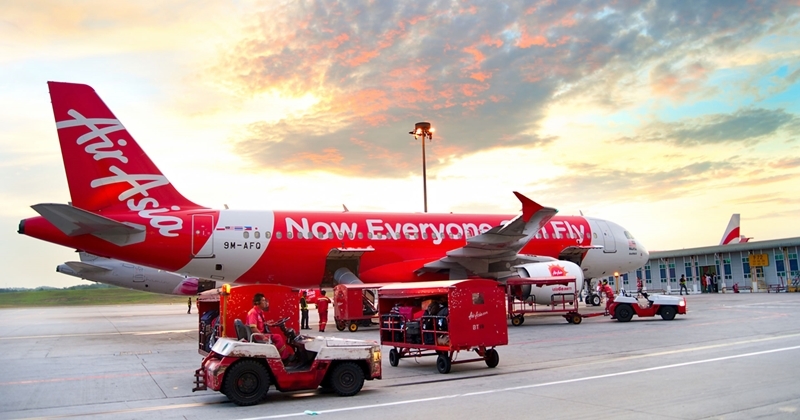
AirAsia announced it will be installing an innovative aircraft software modification known as Descent Profile Optimiser (DPO) on its A320ceo aircraft commencing from June in conjunction with the World Environment Day. This upgrade will help to generate fuel savings and significantly reduce carbon dioxide (CO₂) emissions. The enhancement to the aircraft’s onboard Flight Management System (FMS) performance database allows the aircraft to optimise the descent phase of the flight which subsequently minimises the amount of time spent at an inefficient level off.
The new initiative is set to reduce fuel consumption and improve the fuel efficiency by up to 0.75 percent of fuel burn which is equivalent to saving 101 kgs of CO₂ emissions per flight. This could reduce CO₂ emissions by over 221 tonnes per aircraft per year, representing a considerable contribution to more sustainable Flight Operations. Once installed initially on 17 aircraft, it would save 3,764 tonnes of CO₂ per year or the equivalent of 62,700 urban trees planted based on the US EPA’s Greenhouse Gas Equivalencies Calculator.
Bo Lingam, Group CEO of AirAsia Aviation Group Limited (AAAGL) said: “As the travel industry begins to recover and we expect to get back to pre-pandemic levels by the end of this year, it is important that we review our climate strategy and put in place new mechanisms and processes that will help to minimise the environmental impact of our flight operations. Installing the new flight operations optimisation solution for our current A320ceo aircraft allows us to reduce our carbon footprint for the short and medium-term as we continue to gradually upgrade our fleet to the higher capacity and more fuel-efficient A321neo in the longer term. Given the reality of climate change and the airline industry’s contribution to emissions, reducing our carbon footprint is currently one of our top sustainability priorities and we look forward to further reducing an additional 221 tonnes of CO₂ emissions per aircraft each year with the DPO system we are implementing. We remain committed to ensuring not only that we build a sustainable airline but also align with the aviation industry’s sustainability goal to reach net-zero by 2050.”
Besides the DPO, AirAsia has implemented several other key efficiency initiatives to reduce fuel consumption and carbon emissions such as One Engine Taxi (procedure to operate one engine during the taxi phase of flight instead of both engines), Idle Reverse Landing (a procedure that uses idle engine thrust upon landing instead of powered thrust to reduce noise and fuel burn) and the Required Navigation Performance-Authorisation Required (RNP-AR) approach (a procedure that uses the aircraft’s advanced navigation capabilities instead of conventional ground-based equipment for the shortest landing approach). In 2021, these measures enabled AirAsia to avoid emitting 11,175 tonnes of carbon dioxide, which is equivalent to planting 186,250 urban trees.
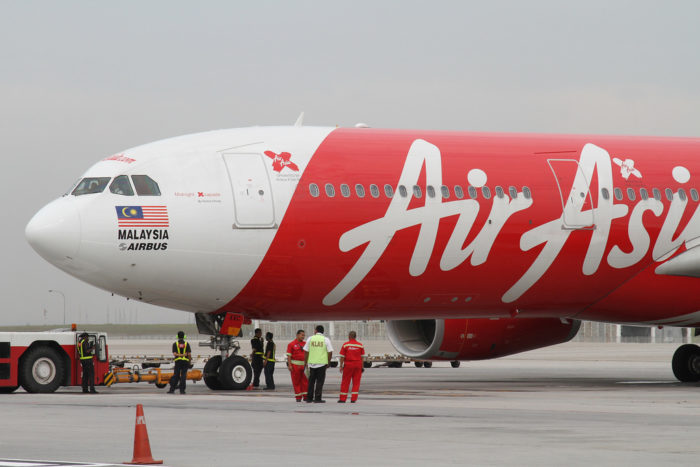
Malaysia’s AirAsia is facing a wave of complaints from customers who say they have still not been refunded for flights that were cancelled or rescheduled during the pandemic.
AirAsia and its subsidiary AirAsia X (AAX), both owned by Capital A Berhad, grounded thousands of flights in 2020 and 2021 after the Malaysian government shut state and international borders to curb the spread of COVID-19.
But months after the low-cost carrier resumed flights following the lifting of interstate and international border restrictions for Malaysians in October, hundreds of customers have taken to social media to complain of poor customer service and long waits for refunds.
Rohana Betak, 60, said she requested a refund of 4,000 Malaysian ringgit ($911) after the airline cancelled her flights between Senai and Kota Kinabalu, the capital of Sabah state, following the introduction of a nationwide lockdown in March 2020.
Betak, who planned to visit the area around Mount Kinabalu, Southeast Asia’s highest peak, with her family in October 2021, said the airline’s automated online customer service only offered her the option of travelling on different dates. Betak decided against accepting the offer due to uncertainty over when restrictions would be lifted and concerns about catching COVID-19. Two years later, she says she is still waiting for her money back.
“In my request, I said it was fine to refund me credits for the booking but instead I was reminded in June 2020 that I must board the flight to Sabah on a different date and there would be no refunds,” Betak told Al Jazeera.
“It was not helpful because instead of offering me at least credit in refunds, it told me I had no other choice but to travel on different dates.”
Rohana Betak, pictured in a pink hat in the back row, says she has been waiting two years for a refund from AirAsia [Courtesy of Rohana Betak]
Travel to Sabah before October 2021 was strictly limited to certain categories of travellers, including those travelling for work and those born in the state. Rohana and her family did not fall under any exempted category.
“When it demanded I get on another flight, I asked if they wanted to send me and my family to our deaths?” Betak said. “It’s so frustrating and I am so tired of trying to get my money back so I’ve accepted that I might not get my money back at all.”
Many of the complaints have been directed towards AVA, AirAsia’s online chatbot, which is the only line of communication between customers and the airline for issues involving bookings or flights.
In particular, some have questioned why it is so difficult to reach customer service to request a refund, even for flights booked since the lifting of pandemic restrictions.
Customer Aulia Chaerisa Salleh said she is waiting for a refund for a flight between Batam and Jakarta that was booked earlier this month after she was informed no seat was available.
“I paid for my ticket and it did not register in the system so I tried to get my refund for my tickets. I tried the AVA live chat but it is not helpful at all. It has been days, I haven’t heard from them,” she said.
Under AirAsia’s current refund policy, the airline offers customers a refund, credit or a new travel date whenever a flight is cancelled or postponed.
AirAsia told Al Jazeera the airline is engaged in ongoing dialogue with consumer regulators across the region to ensure compliance with all local regulations.
“AirAsia Group’s policies are in line with many low-cost operators in the travel industry worldwide and are fully compliant with all regulatory requirements and as a customer-centric airline, we have focused on resolving all customer queries during the pandemic as soon as possible,” a spokesperson said.
The airline group said it has resolved more than 90 percent of refund requests and is committed to resolving a small number of outstanding claims as soon as possible.
“In Malaysia for example, our current refund progress is only left with 0.03 percent of the refund requests we received and we are looking forward to completing the refunds exercise for all outstanding queries within the next few months,” the spokesperson said, adding that the past two years had been the most challenging in the history of commercial aviation.
The spokesperson added that “our passengers remain our number one priority” and the airline will “continue to enhance our services to deliver the very best in terms of safe, affordable and reliable air travel”.
Tan Kok Liang, president of the Malaysian Association of Tour and Travel Agents (MATTA), said the refunds backlog is a short-term issue and its 3,100 members will continue to book with AirAsia as long as requested by customers.
“The problem child is AAX and while air connectivity is crucial for tourism recovery, based on media reports, AirAsia should be held more accountable to all stakeholders,” Tan told Al Jazeera.
The hefty compensation paid out to airline co-founders Tony Fernandez and Kamarudin Maranun, who took home close to 30 million ringgit ($6.8m) combined last year, has also raised eyebrows.
Following the release of Capital A’s Annual Report 2021 last month, some social media users vented their frustrations on Fernandez’s personal Instagram accounts, with one comment slamming AirAsia as “the one and only airline that does not have a customer service phone number.”
Despite the generous executive compensation, AAX, the group’s long-haul carrier, was last year forced to undergo debt restructuring to save itself from liquidation after racking up huge debts during the pandemic.
In March, AAX announced it had completed its debt restructuring after creditors earlier agreed to a deal under which the airline would pay just 0.5 percent of outstanding debt and terminate existing contracts to restructureRM33.65 billion(US$8.1 billion) of liabilities.
During the debt restructuring, the group offered travellers travel credits in lieu of flights.
The Malaysian Aviation Commission (MAVCOM), however, urged the airline to reimburse customers for tickets purchased while threatening to exercise its powers under the Malaysian Aviation Commission Act 2015.
Capital A posted revenue of 1.7 billion ringgit ($387m) in the 2021 financial year, down 47 percent from the previous year, as capacity sank to just 36 percent of 2020 levels.
Cross-borders platforms like Facebook and Google have paid VND5.1 trillion ($220 million) in taxes for the period between 2018 and 2021, says Finance Minister Ho Duc Phoc.
He informed lawmakers in a report that by April 2021, Facebook had been taxed VND1.97 trillion; Google, VND1.9 trillion; and Microsoft, VND651 billion.
The figures were 15 percent higher than Phoc’s report in March.
Vietnamese authorities also collected VND735 billion from handling violations and tax avoidance by individuals and organizations providing cross-border digital and e-commerce services, the report said.
Last year, Vietnam earned VND1.32 trillion from taxing cross-border platforms, up 15 percent from 2020.
The General Department of Taxation said last year that Facebook, Google, Netflix, YouTube and other cross-border platforms were not fulfilling their tax obligations in Vietnam.
Vietnam is also looking to tax online sellers, both on e-commerce platforms and social media, as e-commerce sales have been surging by double-digits in recent years.
Phoc called for tightening regulations and upgrading the capacity of collectors in order to tackle tax evasion more effectively.
Retail sales in Singapore surged 17.4 per cent in April (excluding motor vehicles), faster than the rate of 13.6 per cent in March.
Statistics Singapore said the increase was driven by sales of apparel, food & liquor – up by 46.6 per cent year on year – and improved supermarket turnover.
Retail sales in Singapore, excluding motor vehicles, were estimated at S$3.3 billion (US$2.4 billion) in April, with online retail sales accounting for 14.2 per cent of that. Online sales of computer & telecommunications equipment comprised 48.2 per cent of the category’s turnover, while 28.3 per cent of furniture & household equipment was sold online.
Statistics Singapore said the growth in apparel sales was due to increased demand for bags and footwear, partly fuelled by increased tourist spending as border restrictions were eased. Sales of food & alcohol, in department stores, and of watches & jewellery, increased by between 28.4 and 35.6 per cent.
However, sales at mini-marts & convenience stores fell by 5.5 per cent.
Apple has agreed to make work schedules at its retail stores more flexible, according to employees with knowledge of the plans, part of a push to improve conditions in the face of unionisation efforts.
The company informed staff at some stores that scheduling changes will take effect in the coming months, according to the workers, who asked to not to be identified because the plans aren’t public.
Some retail employees have voiced their frustrations with managers and labour groups about their schedules, and Apple’s retail chief recently signaled that changes could be coming.
“I am deeply committed to making Apple the best it could be for you, from scheduling to pay and benefits to development to the experience and environment in the stores,” Deirdre O’Brien told staff in a recent video message.
The company is planning the following changes, according to the employees: A minimum of 12 hours in between shifts, an increase from the current minimum of 10 hours.
A maximum of three days per week when employees can work past 8 pm, unless they choose to work late shifts.
According to Instagram, using Reels can significantly increase the number of your followers on the platform. The social media says that, during a 60-day period, public accounts with over 10,000 followers that uploaded at least five Reels got more followers than those in the same category who did not post Reels at all. And, to help you make even more amazing short videos, Instagram announced that it is adding some new features to its Reels.
You can now add sound effects to your Instagram short videos. As the social media shared, you can use its refreshed collection of sound effects to “inject humor” into a Reel or “help your audience get into their emotions while watching one.” Furthermore, if the video is at least five seconds long, you can now record your voice-over and add the recording to your Reel. However, Instagram warns that others could use the sound bite as well, so take that in mind if you decide to record your voice.
The social media also announced that you can now use some of the Stories stickers in your Reels. You can now add:
Polls to let your followers vote on a subject
Quiz which lets you, as Instagram said, “put your audience’s skills to the test”
Emoji Slider that lets your followers show how they feel about something
With this update, Instagram has also extended the length of its short videos. You can now “tell deeper stories with 90-second Reels.” And to make it even easier for you to fill these 90 seconds, Instagram now lets you use templates to create a Reel by using another one. The app “pre-loads the audio and clip placeholders,” and all you have to do is “add and trim your unique clips.”
The Vietnamese steel industry was expected to benefit from the Russia-Ukraine crisis, but stocks of companies have been plunging due to rising input costs and declining demand.
The shares of industry leader Hoa Phat Group fell Thursday to a 14-month low. HPG has dropped by over 27 percent this year as against a 14 percent fall for the VN-Index.
Hoa Sen Group’s share price fell to its lowest in 15 months in May and has barely risen since. It has lost 42 percent this year. Nam Kim Steel is down 23 percent and Pomina Steel Corp, 40 percent.
After Russia launched military operations in Ukraine in February, some top Ukrainian steel manufacturers said they would have to cut production to a minimum this year, while Russian producers face an embargo from western countries.
The two together exported 57 million tons of steel last year, or 3.1 percent of global demand, and there was an expectation that Vietnamese manufacturers would fill the gap.
Stock brokerage VNDirect said in March, “We believe that top Vietnamese exporters have the opportunity to increase their production in the near future.”
Steel stocks soared in February, with NKG rising by 60 percent that month even as the VN-Index inched up by less than 1 percent.
HSG rose by 36 percent, POM by 21 percent and HPG by 17 percent.
But after reaching a new peak of nearly US$1,600 a ton in early April, steel prices have dropped to around $1,160 now.
Analysts blamed this on slower than expected economic recovery and the resultant drag on demand.
In its latest forecast, the European Steel Association said consumption could fall by 1.9 percent this year instead of rising by 3.2 percent as it projected in February.
This is because high energy prices, disruptions in the supply chain and the Russia-Ukraine crisis could lead to a slump in demand for cars and consumer electronics, and lockdowns in China’s major cities are likely to have negative impacts on the global economy, it said.
In a double whammy, production costs are surging.
Analysts at KIS Vietnam Securities expect the rising costs to drag Hoa Phat Group’s profit margin down by 4.4 percentage points this year to 23 percent.
In the first quarter its pre-tax profits were nearly 14 percent lower than in thesecond quarterlast year when steel demand was booming.
Hoa Sen saw profits decline for a fourth quarter in a row, while Nam Kim’s fell by 40 percent from the second quarterof last year.
“Shareholders will see dreadful earnings figures in the second quarter,” Hoa Phat chairman Tran Dinh Long said at the company’s annual general meeting on May 24.
HPG dived by 5 percent that day.
But analysts at SSI Research expect the steel industry to begin recovering when China eases its Covid restrictions.
Texting with an out-of-control auto-correct is hilarious sometimes (we have all had our fair share of funny auto-correct situations, don’t pretend like you didn’t have any!), but other times, making an error in your text message can actually even cause trouble or misunderstandings. Well, for that, WhatsApp is working on allowing you to edit your message, and this very helpful feature has been spotted under development for WhatsApp for iOS, Android, and desktop.
The popular chat app has previously tested an edit feature back in 2017, but that one never made it to a stable version of the app. Now, however, and it is currently under development. This means it is not yet available for beta testing, but it might be soon.
As you could probably imagine, the feature will allow you to edit your text message. The preview that WABetaInfo shared about the feature shows you can tap and hold on to a message, select the three-dotted icon on the top and choose Edit.
For now, it seems the Edit history of a message won’t be displayed, but as we already stated, given the fact that this feature is still under development, changes to how it functions are possible. At the moment, there’s no information about the time frame you have to edit a message after it’s been sent
So far, there’s no specific date disclosed yet as to when it will make it to the public. Before that, it will first appear to WhatsApp beta testers to iron out any issues with it, before getting an official release.
WhatsApp has recently been all about improving the experience you have on the chat app. It has now launched message reactions, as well as the possibility to send larger files in chat, and the edit feature the company is currently working on will hopefully complement this great feature set soon. When we know more, we’ll let you know, so stay tuned!
Google has just announced that one of its apps that was initially only available for Android users is finally coming to iOS. The Google TV app allows users discover what to watch with recommendations from across all apps installed, thus making it easy to start watching movies and shows.
The Google TV app is available for iOS from the App Store, starting today. Both iPhone and iPad users who already have the Play Movies & TV app installed on their iOS devices will now be able to update it to the new Google TV app.
Besides getting recommendations from across your apps, the Google TV app also allows you to create a Watchlist for your discoveries. Rating movies and shows within the app is also possible, so you can get even better recommendations based on your interests on both the app and your Google TV devices.
Regardless of whether you’re using an iOS or Android devices, the Google TV app will enable you to use your phone as your remote. Of course, this feature will only work with a Google TV or other Android TV OS devices; just make sure to click the remote button in the app and connect to your TV to control it with your phone and use Google Assistant.
When we talk about forex trading in Asia, we stress whether is Forex trading legal in Malaysia or not. Our studies are incomplete because Malaysia has a lot of influence in the Asia hemisphere. Although its economy is growing, Malaysians are regular and active Forex traders. Malaysian traders are best benefited by dealing with well-regulated foreign Forex firms. We have created a list of essential components related to Forex in Malaysia for this specific reason.
Choosing a Trusted Forex Broker in Malaysia
It’s crucial starting with the regulatory regime while looking for a reputable Forex broker in Malaysia. For Forex brokers in Malaysia, there are two types of regulatory requirements: locally regulated brokers and brokers who accept Malaysian clients but are regulated outside of Malaysia. Internationally licensed brokers, rather than domestically regulated Malaysian brokers, provide the best selection of options by far. Almost all international brokers also offer sharia-compliant Islamic brokerage accounts.
Domestically Regulated Senarai Brokers
The Securities Commission Malaysia (SCM) oversees all aspects of Malaysia’s capital markets. In 2007, the SCM published its initial license system, followed by recommendations in 2018. The fundamental obligation of protecting the investor underpins the SCM’s efforts.
The SCM has made it simple for anybody to check SCM authorization and certification through an online platform. You may look for a company’s name here to discover whether they are SCM-approved.
Regulatory authorities exist in nations with significant financial markets, and some regulate Forex brokers more tightly than others. The Financial Conduct Authority (FCA) of the United Kingdom, numerous EU-based authorities such as those in Cyprus and Ireland, the Australian Securities and Investments Commission (ASIC), and New Zealand’s Financial Services Provider Registry are among the top regulatory agencies. Customer assets are protected in these areas, mandating brokers to disclose how they keep client cash.
Yes, but only with a recognized and regulated financial institution is the straightforward answer to this query. According to the authoritative regulation, you may only lawfully exchange currency in Malaysia via licensed institutions when the question arises that is Forex trading legal in Malaysia, of which there are several. Some argue that this law only pertains to actual money and that retail Forex trading, particularly online, does not come under this classification because you exchange imaginary currencies online. This is considered a problematic issue that requires more than a simple yes or no answer. Using one certified establishment and maintaining an Islamic account is the most straightforward route to trade Forex lawfully in Malaysia.
In Malaysia, investing abroad is allowed, and many people believe that retail forex trading through an overseas brokerage may quickly be deemed a foreign investment. The country’s most significant problem with Forex is that it is a developing economy that wishes to keep some control over the purchasing value of money. Since most Forex trading does not include their currency, even in Malaysia, they frequently neglect the numerous methods by which Forex may be traded utilizing other currencies.
The concept is that the laws are constructed so that the government may act as it deems appropriate. That is to say, you are incredibly improbable to be imprisoned in Malaysia for trading forex because there are legal mechanisms to do it, but the government maintains the right to exercise some supervision over what is going on. Forex trading using other people’s money and soliciting money to trade both illegal under the law. This is obvious, and anyone who breaks these rules will face serious consequences.
Many laws are already in place that individuals do not follow, and many of them are ignorant of the legislation in the first place. This implies that you can go about your business most of the time without running afoul of the legislation. Still, the moment you do something that offends the authorities or brings your transgressions to their awareness, you might be punished for everything you’ve done wrong, even if you weren’t aware of it.
Malaysian forex trading is an outstanding demonstration. Nothing is likely to occur to you if you are trading your funds, not disturbing anybody, and not being particularly vocal about it. If you do something that enrages the Malaysian regulatory authorities, they can pursue you for any violations of the law.
Conclusion
We have been very clear throughout this article about how Malaysian regulatory authorities may react if they discover that you are illegally trading forex in their jurisdiction with anyone else’s money, so we advise our readers to stay off their radar and avoid doing anything that will almost certainly result in adverse actions by their authorities. At the end of this post, we hope that we were able to answer the question, “Is forex trading legal in Malaysia?” If not, you can always write us up and our staff will get back to you.
Big C Supercenter Plc, a leading retail operator in Thailand, has acquired Kiwi Mart — a convenience store chain in Cambodia — via its Cambodian subsidiary to strengthen its retail business in the neighbouring country.
According to Gary Hardy, an adviser of Big C Supercenter, Big C Supercenter (Cambodia) reached an agreement to acquire Kiwi Mart in Cambodia last week.
The acquisition was effective as of May 17, but the value of the deal has not been disclosed.
“The acquisition of Kiwi Mart is an important opportunity for both Big C and its parent firm, Berli Jucker Plc, to expand business in the Asean region, including Cambodia,” he said.
The deal allows Big C to own 18 Kiwi Mart stores in Cambodia, 17 of which are in Phnom Penh, with the other branch located in Kampot province.
Big C has had a presence in Cambodia since 2019, with the first Big C hypermarket opening in Poipet, with a total space of 8,000 square metres.
Currently, Big C operates two branches in Cambodia — one branch of Big C Mini and one branch of Big C hypermarket.
Kiwi Mart was established in 2017 as a 24-hour convenience store, selling a variety of products, including French, Thai and local brands, targeting domestic and foreign customers.
“Big C realised an opportunity to expand our business to cover all areas of Cambodia via online and offline platforms, making our products easy to access and come closer to Cambodian consumers,” he said.
Aswin Techachareonvikul, chief executive of Big C Supercenter, said Big C plans to continuously expand its branches in Cambodia to tap into the country’s consumers whose purchasing power keeps increasing.
The company expects its business expansion in Cambodia to be able to create job opportunities for up to 1,200 local people over the next few years.
In March, Big C’s parent company Berli Jucker unveiled plans to spend 60-70 billion baht under a five-year business plan running from 2022 to 2026 to double the size of its modern retail business across Southeast Asia with an anticipated doubling of sales to 270 billion baht.
Some 12-14 billion baht will be earmarked annually for the next five years as it plans to expand its business and develop an Asean trading platform, customer data platform, supplier management platform and product and service development platform to sustain its sales and profits.
Of the total, 70% of the budget will support retail business, while 30% is slated for packaging, consumer products and healthcare business.
The firm will open 2,091 modern retail stores across Southeast Asia during this period, increasing the number of its modern retail stores to 3,739 stores from 1,648 at present.
India has received 34 million barrels of discounted Russian oil since Moscow invaded Ukraine on Feb. 24, according to Refinitiv Eikon data, more than trebling the value of total imports from Russia, including other products, compared with the same period of 2021. The volumes of India’s seaborne oil imports from Russia exclude CPC Blend oil, which is also exported via Russia’s Black Sea port, but mostly supplied by Kazakhstan’s subsidiaries of western countries as transit volumes.
India’s oil imports from Russia have been rising since February, as Asia’s third largest economy and the world’s third biggest oil importer, turned to deeply discounted Russian oil, mostly Urals crude, to cut its imports bill.
The country received more than 24 million barrels of Russian crude this month, up from 7.2 million barrels in April and about 3 million in March, and is set to receive about 28 million barrels in June, according to Refinitiv Eikon oil flows.
Surging energy imports helped push India’s total goods imports from Russia between Feb. 24 and May 26 to $6.4 billion, compared with $1.99 billion in the same period last year, according to government figures seen by Reuters.
India’s exports to Russia, however, fell nearly 50% to $377.07 million over that period, as its government is yet to set up a formal payment mechanism.
As the West responded to the invasion with a barrage of sanctions, India has come under fire for its continued purchases of Russian energy. New Delhi has brushed off the criticism, saying those imports made only a fraction of the country’s overall needs and has said it will keep buying “cheap” Russian oil, arguing a sudden stop would drive up costs for its consumers.
Russian and Indian energy companies have also been discussing term supply agreements and possible acquisitions of stakes in Russian oil and gas projects.