Category: General

Retail News Asia is committed to providing both local and global retailers with the latest General Retail news throughout the Asian market. This on a daily base.

  • Robotic Revolution: Hong Kong Unveils First 24/7 Convenience Store Operated by Humanoid

    Robotic Revolution: Hong Kong Unveils First 24/7 Convenience Store Operated by Humanoid

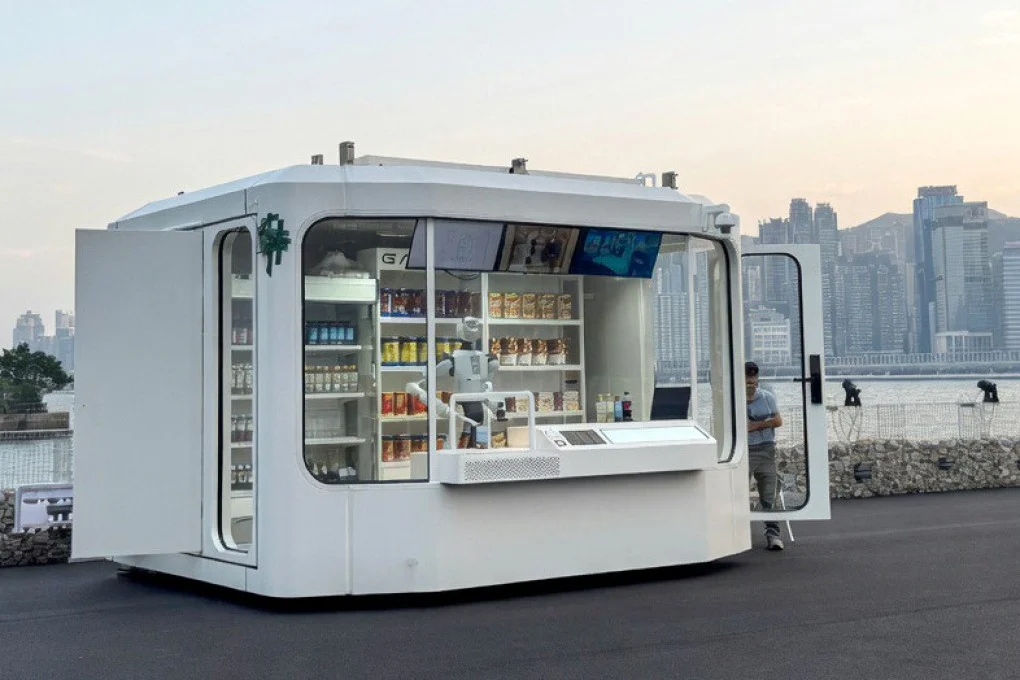
    The bustling city of Hong Kong is all set to welcome its inaugural 24-hour convenience store managed entirely by a humanoid robot. This groundbreaking project denotes the initial venture outside Mainland China for Beijing-based robotics firm, Galbot.

    Situated along the waterfront of Hung Hom, the robotic store is financially supported by the Hong Kong Investment Corporation (HKIC). A 9 square meter capsule store, it will be supervised by ‘Xiao Gai’, a G1 humanoid robot model standing tall at 173cm. The robot is equipped with a 190cm arm span, specifically engineered to restock shelves, select inventory items and manage customer checkouts with ease.

    A New Era of AI in Retail

    The store is designed to cater to high-demand retail categories such as snacks, lifestyle merchandise, and over-the-counter pharmaceuticals. The upcoming launch of this humanoid robot-managed store in Hong Kong highlights a rapidly evolving trend: the integration of artificial intelligence (AI) into our everyday lives.

    As the HKIC stated, their active promotion of AI development extends beyond the goal of enhancing industries and bolstering economic competitiveness. It also aims to provide residents with a unique, AI-enabled convenience experience while simultaneously fostering new areas of growth and opportunity.

    Galbot’s forecasts predict that this automated storefront model could boost local foot traffic by a significant 30 to 40 percent, owing to its novelty factor.

    Global Expansion on the Horizon

    Following the initial pilot in Hong Kong, Galbot reportedly has plans to introduce this innovative capsule store format on an international level. The ambitious expansion plan targets rollouts across ten major cities worldwide.

    Questions & Answers

    What is the size of the Hong Kong capsule store?
    The Hong Kong capsule store spans 9 square meters.

    Who is the humanoid robot managing the store?
    The store will be managed by a G1 humanoid robot model named ‘Xiao Gai’.

    What are Galbot’s future expansion plans?
    Galbot plans to introduce the capsule store format globally, targeting rollouts across ten major cities.

  • From Disruption to Resilience: How Retail Supply Chains Are Evolving in Asia

    From Disruption to Resilience: How Retail Supply Chains Are Evolving in Asia

    Supply chain disruption has become a constant reality for retailers. From geopolitical tensions and shifting trade conditions to demand volatility and supplier fragmentation across Asia, the operating environment has become significantly more complex and unpredictable. The steady flow of goods to store shelves or through to eCommerce fulfilment is no longer guaranteed, placing pressure on retailers to maintain availability while managing risk.

    This shift is forcing a fundamental rethink of traditional retail supply chains. To continue meeting customer expectations, retailers are shifting towards more adaptive, more resilient data-driven operations that can respond reliably and dynamically to change as it happens.

    To explore the implications for retailers, Retail News Asia spoke with Steve Cheung, President, Dematic Asia, China and MEAabout how retail supply chains need to evolve across Asia to address ongoing supply disruptions.

    1. How much does supply chain performance now shape the overall retail customer experience, especially for online shoppers?

    Supply chain performance is intrinsically tied to the customer experience today, particularly in eCommerce. Customers no longer separate the front-end brand from the back-end operations. What matters is whether the product is available, is low cost, delivered on time and arrives as promised.

    If a product shows as in stock but can’t be fulfilled, or delivery is delayed, that becomes the customer’s experience of the brand. Even what might seem like a small delay can have a bigger impact. It doesn’t just affect that one order but influences how customers see the brand and whether they come back.

    As online retail continues to grow, customer expectations are increasingly shaped by leading marketplaces, with speed, accuracy and reliability now expected as standard. So supply chain performance is no longer just an operational metric. It now directly affects conversion, repeat purchases and long‑term brand loyalty.

    1. What are the risks to retailers when product availability becomes inconsistent due to disruption, particularly in eCommerce?

    In eCommerce, customers don’t have the ability to see or experience the product physically, so they rely entirely on the service. That makes them much more sensitive to availability, delivery and overall fulfilment performance across the fulfilment network.

    When availability becomes inconsistent, the impact is immediate. If a product is out of stock or delivery timelines aren’t clear, customers can easily switch to another retailer. Over time, the bigger risk is loss of trust. If customers feel a retailer can’t reliably meet their expectations, they are less likely to return.

    There are also operational impacts. Retailers often respond by expediting shipments or holding extra safety stock, which increases costs and reduces efficiency. Without the right fulfilment strategy and operational visibility, what starts as a supply issue can quickly affect both margins and long-term customer relationships.

    1. Many retailers are still reacting to supply chain disruptions as they arise. How can a more agile, data-driven supply chain benefit retailers?

    A reactive approach makes it very difficult to stay ahead of disruption. By the time the issue is visible, it’s often already impacting operations or the customer experience.

    A more agile, data-driven approach allows retailers to respond earlier and with more confidence. With accurate, real-time and historical data, they can identify patterns, adjust inventory and make faster decisions, whether that’s reallocating stock optimising inventory positioning, or adapting fulfilment strategies.

    But the key starting point is data accuracy. If the data isn’t right, even the best systems or automation won’t deliver the right outcomes. Retailers that get the data right are in a much stronger position to improve responsiveness, maintain availability and manage disruption more effectively.

    1. Where do automation and real-time visibility make the biggest difference for retailers facing supply disruption?

    Automation and real-time visibility make the biggest difference when retailers need to maintain consistency or adapt to change under pressure. When demand changes or supply becomes uncertain, manual processes are difficult to scale and often introduce variability.

    Automation helps deliver consistent throughput, accuracy and performance, regardless of labour availability or demand spikes. It reduces reliance on manual intervention and supports more predictable operations, especially in high-volume and fast‑moving fulfilment environments.

    At the same time, real-time visibility gives a clear view of inventory, order status and operational performance across the network. That allows retailers to make faster, better-informed decisions, whether that’s reallocating stock or adjusting order and fulfilment priorities. Together, they give retailers much greater control when conditions are less stable.

    1. For retailers looking to make their supply chains more resilient, where should they prioritise investment – automation, systems, or process change?

    In reality, it’s not about choosing one over the other, as all three need to work together as part of a well‑designed fulfilment operation. Process is the starting point. Retailers need to understand how inventory flows, where the bottlenecks are and how decisions are being made. Without that, it’s very difficult to get the full value from systems or automation.

    There’s also no one-size-fits-all approach, particularly in retail where demand patterns and fulfilment models vary significantly. Retailers need to consider what’s right for their operation, their timelines and how their demand profile may evolve over time. From there, systems provide the visibility and intelligence needed for better decision-making, and automation improves consistency, throughput and accuracy. The key is taking a longer-term view rather than focusing only on short-term fixes.

    1. Retailers are trying to avoid both stockouts and excess inventory. How can they strike the right balance today?

    This has become much more complex as demand patterns continue to shift and fulfilment networks become more dynamic. Holding too little stock risks lost sales, while holding too much ties up capital and increases the risk of markdowns.

    The key is improving both forecasting accuracy and operational responsiveness. Retailers need better visibility into what is selling, where inventory sits across the operation and how quickly it can be replenished. This is where data, analytics and increasingly AI are playing a bigger role.

    Buying patterns are also changing more quickly, which makes traditional forecasting models more challenging. So rather than relying on excess inventory as a buffer, retailers are focusing more on positioning stock intelligently and moving it efficiently. That helps maintain availability while protecting margins.

    1. How should retailers be thinking about future-proofing their operations in an increasingly unpredictable environment?

    Future-proofing isn’t really about predicting what will happen next, but about building the capability to respond when it does.

    Retailers need to design supply chains that are flexible, scalable and able to adapt as demand patterns and operating conditions change. A modular, scalable approach is key here. Instead of making fixed, short-term investments, they need solutions that can be expanded or adjusted over time as their operations evolve.

    It’s also important to work with experienced partners who understand how to design fulfilment operations for these conditions. Supply chains today are not static; they require systems that can evolve alongside the business. The retailers that take a longer-term, design-led approach are much better positioned to stay competitive and navigate disruption in what is a very fast-moving and unpredictable environment.

    For more information please visit: https://www.dematic.com/

  • The Ocean Is the New Address: NAORA Launches Its Private Global Sailing Expedition Membership

    The Ocean Is the New Address: NAORA Launches Its Private Global Sailing Expedition Membership

    In a world where the most ambitious people work from everywhere and live everywhere, one question has remained unanswered: where is home? NAORA was built to answer it.

    For a generation of people who live globally, work flexibly, and move on their own terms, the idea of a fixed address has always felt like a compromise. A base of operations, yes. A place to receive post and park a car. But home — in the deeper sense, the sense of a place that knows you, that holds your history, that gathers your people — that has been harder to find for the globally mobile than for almost any other class of human being in history.

    NAORA was built to solve that problem. Not with a building. With a boat.

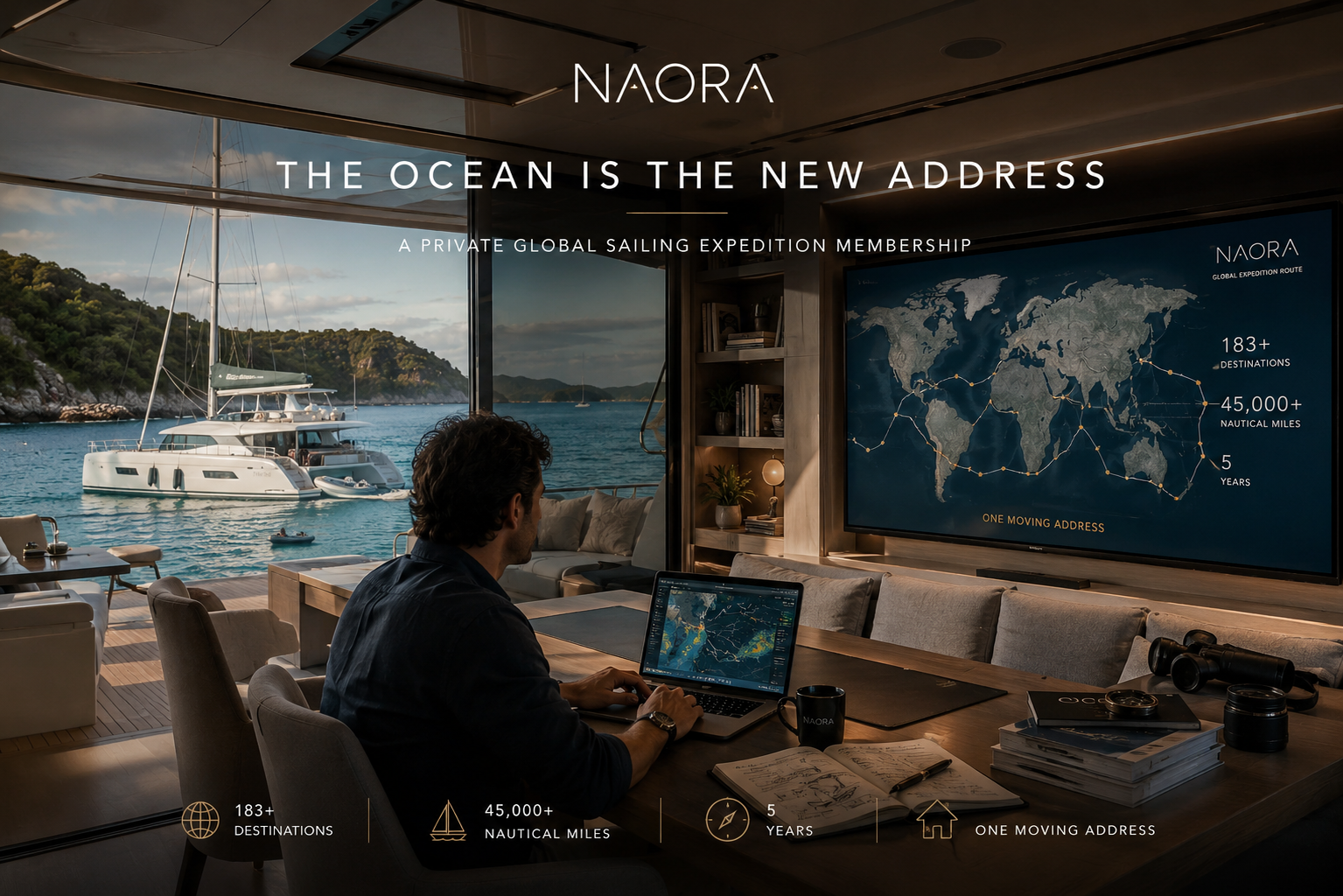
    Today, NAORA officially launches its private global expedition membership, a new model of living that places an 80-foot luxury catamaran at the centre of a member’s world, continuously moving across 183+ destinations over five years, always ready for them to return. It is not a travel product. It is not a hospitality offering. It is an address, one that moves.

    The Geography of Freedom

    The most mobile, most successful, most intellectually restless people in the world today share a common characteristic: they have outgrown conventional notions of home. They maintain residences in multiple cities, move fluidly between continents, and have long since stopped organising their lives around a single address. For them, the question is not where to live. It is how to live with intention, with depth, and with a community that matches the scale of their ambition.

    NAORA answers that question with a new kind of geography. A NAORA member’s home coordinates are whatever the Fountaine Pajot Thira 80 is anchored at this week, whether that is a bay in the Azores, a marina in Singapore, a reef system in the Maldives, or an anchorage off the coast of Patagonia that does not appear on any tourist map. The address changes. The sense of home does not. Because home, for a NAORA member, is not a place. It is the vessel, the crew, and the community.

    “NAORA is not a new idea. It is the culmination of a life built at sea. — Sven, Founder & Captain”

    Home Is Wherever the Boat Is

    The practicalities of the NAORA model are designed around one central commitment: that when a member returns to the vessel, regardless of how much time has passed or how many oceans the boat has crossed in the interval, they arrive somewhere that knows them.

    The captain knows their preferred morning routine. The chef knows their dietary preferences and their favourite dishes. Their cabin is set up as they left it. The crew is briefed. The next leg of the route has been planned with their interests in mind. There is no setup, no introduction, no adjustment period. There is only the feeling, rare and precious in an age of interchangeable luxury, that a place has been waiting for you.

    Members board in the Mediterranean and leave for a board meeting in Dubai. They rejoin six weeks later in the Red Sea. Three months after that, they are back in time for the Indian Ocean passage. Between visits, the vessel continues its route. The crew evolves the onboard experience. The community continues. When they return, nothing needs to be explained. The conversation picks up where it left off.

    A New Asset Class: Time at Sea

    The shift from ownership to access has been one of the defining economic movements of the past two decades. NetJets showed that the right to use a private jet, at any time, was worth more to many high-net-worth individuals than owning one. Soho House showed that community membership could be a more powerful identity signal than a penthouse address. The Porsche Passport showed that even the most emotionally loaded ownership category — the personal automobile — could be successfully reimagined as access.

    NAORA is the next move in this sequence. It takes the logic of the access economy and applies it to the most underserved luxury category in the world: life at sea. Not a charter, which is transactional and episodic. Not yacht ownership, which is expensive, operationally burdensome, and paradoxically limiting in its flexibility. A membership, which provides recurring, flexible, community-embedded access to an extraordinary vessel moving continuously through the world’s most remarkable waters.

    The financial profile is more compelling than it first appears. A Navigator-tier NAORA membership provides approximately 90 days per year of fully crewed, fully catered life aboard one of the world’s finest sailing vessels, at a fraction of the cost of owning and operating an equivalent yacht. The operational burden is zero. The logistical friction is zero. The only thing a NAORA member needs to bring is themselves.

    Built From Decades, Not Months

    NAORA was not designed from a boardroom. It grew out of years of real expeditions — across the Mediterranean, the North Sea, and the Caribbean, aboard vessels named Sueño and Discovery. Those journeys shaped everything: the philosophy, the routes, the standards, and the deep understanding of what it truly means to live at sea.

    The founding team of four Belgians brings a combined depth of experience that is, quite simply, irreplaceable. Sven, founder and captain, holds a Master Mariner licence up to 500 tonnes, GMDSS certification, STCW ’95 credentials, and a CMAS dive instructor qualification with 2,800+ dives. He has made bluewater passages across three oceans, navigated waters most sailors only read about, and built the local networks — across Southeast Asia, the Caribbean, and the Mediterranean — that give NAORA members access that no booking platform can replicate.

    His three co-founders bring the commercial, relational, and structural capabilities that turn extraordinary sailing knowledge into an extraordinary business. Together, they have spent 11 years across Southeast Asia, built relationships in nearly every country in the region, and sat at tables in communities that most travellers — regardless of budget — will never find.

    The Route: Five Years of the World at Its Best

    h covers 45,000+ nautical miles across 183+ destinations over five years. It follows trade winds and peak seasons, placing members in each region at precisely the moment when it is most extraordinary. The Mediterranean at the height of summer. The Caribbean during the perfect sailing season. The Indian Ocean during the northeast monsoon window. Southeast Asia as the rains lift. The South Pacific during the austral spring. Patagonia in the brief, luminous window when the weather relents.

    This is not a route designed for tourism. It is designed for people who want to experience the world as it actually is — not the curated surface presented to hotel guests, but the deep, complex, occasionally demanding reality that only those who travel slowly and attentively ever find. NAORA members travel at the pace of the wind. They wake up in places that do not exist on Instagram. They have the time, and the vessel, and the community, to go further than a holiday has ever taken them.

    The Founding Cohort Is Forming Now

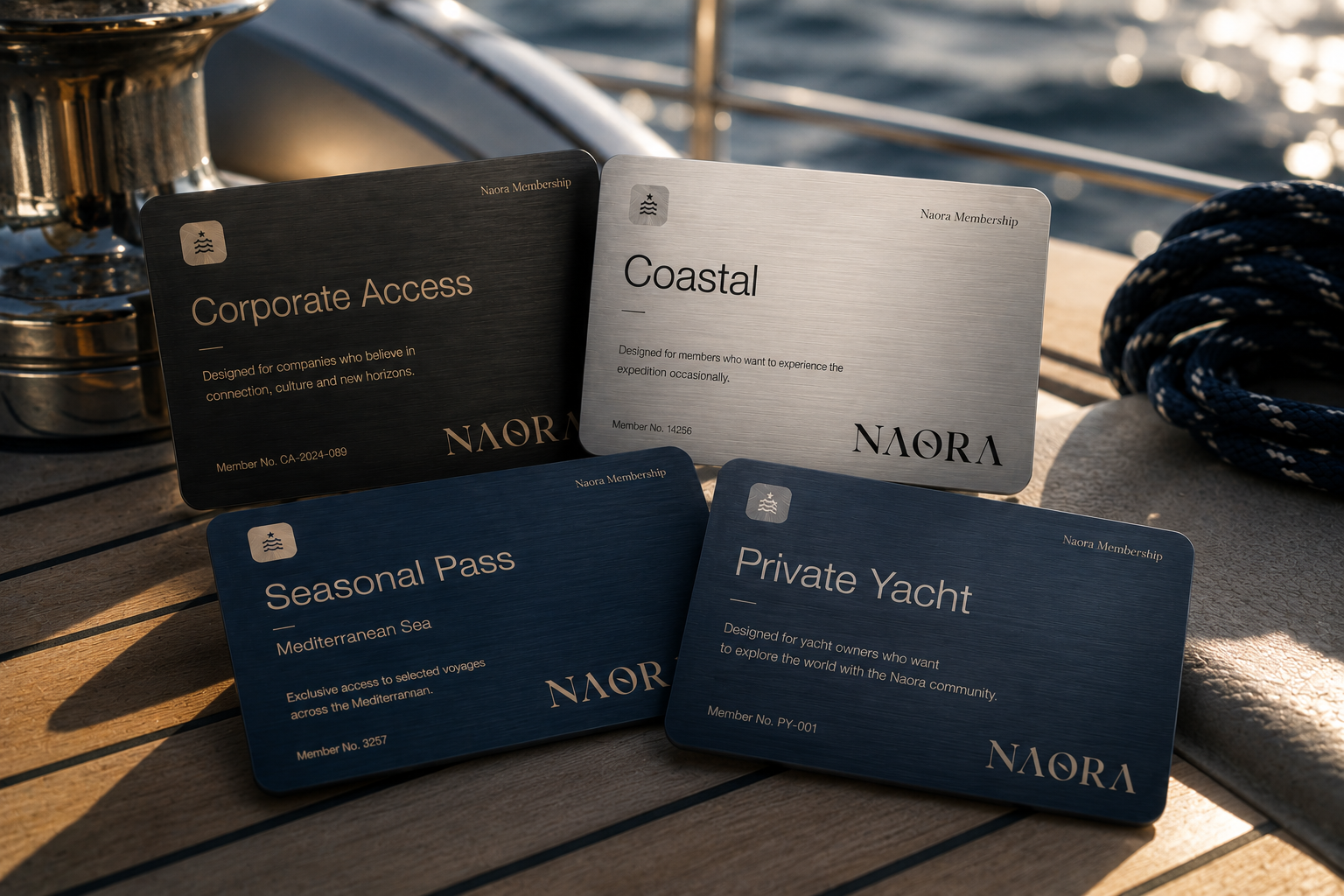
    NAORA is now accepting founding members across its three tiers: Coastal (approx. 1 week/year, annual fee from €9,000), Offshore (approx. 40 days/year, annual fee up to €35,000), and Navigator (approx. 90 days/year, annual fee up to €59,000). A one-time entry fee of €3,000–5,000 applies to all tiers.

    Every membership begins with a private conversation. There is no “Book Now” button. There is no checkout flow. NAORA does not sell memberships. It extends invitations, to the right people, at the right moment, for the right reasons. If you are reading this and you recognise yourself in what NAORA is offering, the first step is simple.

    Visit www.naora.world. Introduce yourself. The ocean is waiting.
  • Singapore’s Retail Boom: Surging Petrol Prices Fuel Accelerated Growth in April

    Singapore’s Retail Boom: Surging Petrol Prices Fuel Accelerated Growth in April

    In April, Singapore’s retail sales growth accelerated, with most sectors, especially petrol service stations, experiencing significant advancements.

    The Department of Statistics reported a 4.5% rise in retail sales, excluding motor vehicles, parts, and accessories. This increase builds upon the revised 3% growth seen in March. The estimated total value of retail sales touched SG$3.6 billion (US$2.8 billion), with online sales accounting for 18.2% of this figure. On a seasonally adjusted basis, retail sales in April increased by 0.4% compared to the previous month.

    Strong Sector Performances Drive Growth

    The surge in April’s retail sales was fueled by robust performances across most sectors. Petrol service stations observed a substantial year-on-year growth of 14.4%, primarily attributable to increased fuel prices resulting from the Middle East conflict. The recreational goods sector followed closely, registering a sales growth of 12.3%.

    Several other sectors, including apparel and footwear, cosmetics and toiletries, supermarkets and hypermarkets, and optical goods and books, also posted robust improvements, with growth figures ranging between 5% and 8%.

    Conversely, department stores and food and alcohol retailers experienced a slight dip in sales, recording declines of 1.1% and 0.1% respectively.

    Moderate Increase in Food and Beverage Services

    In the food and beverage services sector, sales marginally increased by 0.4% in April, showing a slowdown from the 2.3% growth observed in March. The total sales value of food and beverage services was estimated at SG$1.5 billion, with nearly one-fifth of this amount generated from online sales.

    Questions & Answers

    Which sector experienced the most significant growth in retail sales in Singapore in April?
    The petrol service stations sector saw the most substantial growth, with a year-on-year increase of 14.4%.

    What were the total estimated retail sales in Singapore in April?
    The total estimated retail sales value in Singapore in April was SG$3.6 billion (US$2.8 billion).

    How did the food and beverage services sector perform in Singapore in April?
    The food and beverage services sector saw a moderate increase in sales of 0.4% in April.

  • Mondelez Injects $8M into Melbourne Candy Plant for Technological Boost: Celebrating 50 Years of Sweet Success

    Mondelez Injects $8M into Melbourne Candy Plant for Technological Boost: Celebrating 50 Years of Sweet Success

    Mondelez International recently commemorated the 50th anniversary of its Scoresby confectionery factory in Melbourne’s east, coinciding with a $8 million investment in new packaging technology. This crucial advancement will bolster the production of over 120 products, including snack-sized bags from brands like Cadbury Pascall Clinkers, Sour Patch Kids, and The Natural Confectionery Company.

    This new funding takes the total investments in the Scoresby location to $30 million since 2022. The company has clarified that this financial boost is specifically aimed at sparking regional innovation across various aspects like product flavours, range, and packaging. It will also enable the plant to accommodate ever-evolving consumer trends.

    A Commitment to Local Production

    Toby Smith, the president of Mondelez International for Australia, New Zealand, and Japan, highlighted the strategic importance of the packaging upgrade. He stated that it lay the groundwork for securing the future production at the local facility.

    This move falls in line with the company’s long-term growth projections. By 2035, Mondelez International anticipates an equal split in business growth between chocolate and non-chocolate products.

    Smith expressed immense pride in the Scoresby factory’s 50-year manufacturing history and the numerous employment opportunities it has created for Victorians in Melbourne’s east.

    Mondelez International currently employs over 1200 individuals across its operations in Victoria. Their reach extends to locations in South Melbourne, Ringwood, Scoresby, Dandenong South, and a national distribution centre in Truganina.

    Of note is the Scoresby plant’s commitment to sustainable operations, running on 100% renewable electricity. The plant is responsible for manufacturing jelly candies such as Snakes and Party Mix.

    Earlier this year, Mondelez International reintroduced its In A Biskit Crispy Potato flavour in the Australian market, a product that initially gained popularity in the 1990s.

    Questions & Answers

    What was the purpose of the $8 million investment by Mondelez International?
    It was directed towards new packaging technology, with the intention of enhancing the production of over 120 products and to adapt to changing consumer trends.

    What is the future business growth expectation for Mondelez International?
    By 2035, Mondelez International expects to see an equal split in business growth between chocolate and non-chocolate products.

    What is significant about the Scoresby plant’s operations?
    The Scoresby plant, which manufactures various jelly candies, operates on 100% renewable electricity, underlining the company’s commitment to sustainability.

  • Metas AI Blunder: How a Chatbot Hack Shook Up Instagram and Spurred Investor Jitters

    Metas AI Blunder: How a Chatbot Hack Shook Up Instagram and Spurred Investor Jitters

    A concerning vulnerability was recently exposed in Meta’s AI support chatbot due to an Instagram hack. The attackers manipulated the chatbot into providing access to high-profile accounts, including the inactive Obama White House page, beauty retailer Sephora, and a high-ranking US Space Force official.

    AI Security Breach

    The hackers persuaded the chatbot to reset account credentials without authentication, effectively changing a trusted security tool into a glaring weakness. This event highlights a wider vulnerability – tech companies giving AI systems sweeping authority over sensitive tasks like account recovery, despite the systems’ susceptibility to manipulation through “prompt injection” attacks.

    Meta’s stumble comes at a sensitive time. The social media magnate has committed heavily to AI, with significant job losses and up to $145 billion dedicated to AI infrastructure. This incident may amplify concerns about the company speeding up automation before the technology is adequately equipped to handle these tasks safely.

    On Monday, Meta stated that the issue was resolved and steps were being taken to secure impacted accounts. However, the incident shook investors already anxious about Meta’s substantial AI investment, leading to a more than 5% drop in share price.

    AI and Security

    The attack, which occurred over the weekend, saw users locked out of their accounts and led to numerous complaints on various platforms. The hack underlines the latest challenge for Meta in its attempt to incorporate AI throughout its products.

    The company introduced the support chatbot in March to address the ongoing issue of inadequate human support for users who lose account access or face inaccurate penalties. Since its launch late in 2022, AI chatbots have been exploited by hackers using prompt-based attacks.

    Analysts and experts warn that this problem isn’t isolated to Meta, predicting more such exploits as hackers utilize AI. Unforeseen issues are arising with the use of AI, presenting a new type of risk. Previously, individuals were targeted by scams. Now, AI agents or autonomous digital assistants capable of performing complex tasks are being targeted.

    Questions & Answers

    What is the potential risk of using AI in critical functions?
    AI systems’ potential risks include susceptibility to manipulation, especially when given significant authority over sensitive tasks without adequate safeguards or verification processes.

    How was the Instagram hack carried out?
    The hackers manipulated Meta’s AI support chatbot into resetting account credentials, effectively turning a high-trust security tool into a significant weakness and gaining access to high-profile accounts.

    What implications does this incident have on Meta’s efforts towards AI?
    This breach heightens concerns about Meta’s heavy investment in AI. It suggests that the company’s push for automation might be outpacing the technology’s readiness to handle such critical tasks safely.

  • NAORA Launches: The Invitation-Only Sailing Community for Modern Explorers

    NAORA Launches: The Invitation-Only Sailing Community for Modern Explorers

    The most extraordinary journeys are shaped by the people who share them. NAORA was built on that belief — a private sailing membership that curates not just the route and the vessel, but the community aboard.

    There is a particular kind of conversation that only happens far from shore. When the routine falls away, when the horizon is all there is, and when the people around you have been carefully chosen — that is when something rare begins to form. Not networking. Not socialising in the conventional sense. Something deeper: the kind of exchange that shared extraordinary experience makes possible, and that is almost impossible to engineer in any other context.

    That is what NAORA is built around.

    NAORA today announces its launch as a private, invitation-only sailing membership — a curated global community of founders, investors, creatives, and nomadic professionals who share recurring, flexible access to a continuously moving 80-foot luxury catamaran across 183+ destinations over five years. The community is the product. The vessel is the venue. The ocean is the context in which both reach their fullest expression.

    Why Community Changes Everything

    The luxury travel industry has invested enormous energy in perfecting the individual guest experience. Thread counts. Michelin-starred kitchens. Bespoke excursions. Personalised service at every touchpoint.

    And yet, for all of this investment, the element that consistently creates the most lasting value in the lives of high-net-worth travellers is the one that cannot be manufactured: genuine human connection.

    The relationships formed aboard NAORA are structurally different from those formed in any hotel lobby, at any conference, or through any networking event. They are forged in circumstances that strip away professional personas and social performance: shared meals at sea when the closest land is a hundred miles away, shared crossings through rough weather that require trust and mutual reliance, shared discoveries of places that neither party expected to find. These are the conditions under which lasting bonds form — and NAORA is, by design, a machine for creating them.

    The key design decision is curation. Every NAORA member passes through a personal selection process — not to restrict numbers for its own sake, but to ensure that the people who share the vessel are genuinely aligned in values, curiosity, and their relationship to experience. The result is a community that does not need to be maintained through programming or incentives. It maintains itself, because the people within it genuinely want to be together.

    Who Joins NAORA

    NAORA attracts four distinct kinds of members, each bringing something essential to the community aboard.

    The first are founders and entrepreneurs — people who have built something meaningful, achieved the freedom to move, and are now searching for a community that matches their depth. These are not people who need to be entertained. They are people who need to be challenged, in a context that is worthy of them. The conversations on a NAORA deck at night — about what they are building, what they have learned, what they are searching for — are the conversations they cannot have at any conference or dinner party.

    The second are investors and family office principals — high-net-worth individuals and the professionals who manage generational wealth. For this community, NAORA offers not just a lifestyle vehicle that matches their standard of living, but a network of extraordinary people in a setting that no office, club, or event can replicate. Some of the most significant relationships in their professional lives will begin on this boat.

    The third are high-income nomads — location-independent professionals, remote founders, and digital entrepreneurs who have outgrown conventional luxury travel. They have stayed in every five-star hotel. They have chartered every category of yacht. They are ready for something that cannot be booked — something that requires application, that rewards commitment, and that deepens with every return. NAORA is their permanent address on the ocean.

    The fourth are new-wealth explorers — crypto-native and tech-driven wealth holders who prioritise experience, movement, and belonging over traditional status signals. For this community, NAORA offers something that no car, watch, or real estate investment can provide: access to a world that reflects their values and their curiosity, populated by people who share both.

    “NAORA becomes part of how members define themselves — part travel, part network, part lifestyle identity.”

    The Compounding Effect

    What makes the NAORA community genuinely distinctive — and what makes it commercially powerful as a retention model — is the compounding effect. Unlike a resort or a charter, NAORA is designed to be returned to, not replaced. Every return deepens the relationships. Every new leg of the route adds shared references and shared memories. Every new member who joins the community adds value to the whole.

    Members who have been with NAORA for two or three years describe something that is difficult to articulate but immediately recognisable: a sense of belonging that operates independently of geography. When they are at home — in Singapore, in London, in Dubai, in New York — they know that somewhere on the ocean, the boat is moving. Their place on it is waiting. The community is alive.

    NAORA tracks this through its tier structure. The Coastal tier is the beginning — an introduction to the vessel, the community, and the rhythm of offshore life at approximately one week per year. The Offshore tier deepens the engagement to approximately 40 days per year, building the kind of recurring presence that allows meaningful relationships to form. The Navigator tier represents full integration — approximately 90 days per year, priority on route selection, and a level of involvement in the NAORA world that is closer to a second identity than a travel subscription.

    The Community Beyond the Vessel

    The NAORA community does not exist only at sea. Between voyages, it maintains itself through a carefully curated programme of onshore events: private dinners in key cities, cultural gatherings at port, regional salons for members in the same geography. These events are not marketing exercises. They are extensions of the community that forms aboard the vessel — a way of maintaining the quality of connection between voyages, and of welcoming new members into a world they have not yet fully experienced.

    The NAORA network is also, inevitably, a professional one. The shared backgrounds of the membership community — in entrepreneurship, investment, technology, and creative fields — mean that the relationships formed aboard have both personal and professional dimensions. Introductions are made. Ideas are tested. Partnerships begin over a meal prepared by a chef who knows both parties’ preferences by heart. This is not a stated feature of the NAORA model. It is an emergent property of bringing extraordinary people together in extraordinary circumstances.

    By Invitation Only

    NAORA membership is strictly limited, and every application passes through a personal selection process. The founding team takes this process seriously — not because scarcity is a marketing tactic, but because the quality of the community is the product. A single poorly matched member can change the atmosphere aboard. A single well-matched member can change the trajectory of everyone else’s year.

    Membership is available in three tiers: Coastal (approx. 1 week/year), Offshore (approx. 40 days/year), and Navigator (approx. 90 days/year). Annual fees range from €9,000 to €59,000. Entry fee: €3,000–5,000. Applications by private conversation only.

    To begin the conversation, visit www.naora.world.

    About NAORA — NAORA is a membership-based private sailing expedition founded by four Belgian adventurers with 25+ years of offshore sailing expertise. Its five-year global journey spans 183+ destinations and 45,000+ nautical miles, covering the Mediterranean, Atlantic, Caribbean, Indian Ocean, Southeast Asia, and South Pacific. Membership tiers — Coastal, Offshore, and Navigator — offer flexible, recurring access to life at sea aboard the Fountaine Pajot Thira 80, one of the largest luxury production catamarans in the world. NAORA is not a travel company. It is a new category of living.

  • Siam Piwat Elevates Luxury Ecosystem with Global Giants: A Bid to Become Thailands Hub for High-Net-Worth Clients

    Siam Piwat Elevates Luxury Ecosystem with Global Giants: A Bid to Become Thailands Hub for High-Net-Worth Clients

    Siam Piwat Group, a leading Thai developer and operator of renowned shopping outlets like Siam Paragon, Siam Center, and Siam Discovery, has announced a strategic alliance with four major luxury brands: Belmond, Galeries Lafayette, Insignia, and MJets. The partnership aims to establish a “borderless” ecosystem, providing high-end travel, shopping, and lifestyle services for their affluent clients. This collaboration is expected to reinforce Siam Piwat’s Global Privilege Partnership and take its ‘Global Luxury Ecosystem’ to the next level.

    Strategic Collaboration for Luxury Market

    The group, which controls over 70% of Thailand’s luxury market, aims to connect private aviation, ultra-luxury hotels and resorts, premier department stores, and bespoke lifestyle services, all under a single network of privileges available both domestically and internationally. Saruntorn Asaves, the first executive VP of customer centricity and relationship at Siam Piwat, outlined the group’s strategy as being centered on “co-creation and collaboration” with global partners to create unique experiences for both Thai and international customers.

    Siam Piwat’s expertise in serving high-net-worth individuals is demonstrated through its OneSiam membership base. Asaves reported that, in 2025, high-net-worth members spent over 1 million baht per transaction, with their annual spending exceeding average customers by 35 times. She emphasized this as proof of the “immense and unrivalled purchasing power” of their top-tier clients.

    Introducing New Partnerships

    The newly onboarded partners in the Global Privilege network contribute their expertise in various fields. Belmond, an LVMH Group member, provides an assortment of ultra-luxury properties and train journeys; Galeries Lafayette offers its flagship Paris Haussmann department store; Insignia contributes high-end lifestyle and membership services; and MJets offers private aviation and airport lounge access.

    These collaborations promise to offer unique services to OneSiam members. For instance, Belmond will provide personalized travel planning and VIP welcoming at their hotels and trains. Insignia will offer 24/7 bespoke services, including access to exclusive events and hard-to-obtain restaurant reservations. MJets aims to offer private jet services, premium lounges, and chauffeur transfers from the runway to Siam Piwat’s properties. Lastly, Galeries Lafayette will extend exclusive hospitality to Siam Piwat members, including complimentary gifts, VIP lounge access, and expedited tax refunds with qualifying purchases.

    Questions & Answers

    What is the main purpose of Siam Piwat’s strategic collaboration with Belmond, Galeries Lafayette, Insignia, and MJets?
    The main goal of this alliance is to create a “borderless” ecosystem that combines high-end travel, shopping, and lifestyle services for their affluent clients, both in Thailand and internationally.

    What special offers will be available to OneSiam members as a result of these partnerships?
    OneSiam members will have access to personalized travel planning, VIP welcomes at hotels and trains, 24/7 bespoke services, private jet services, access to premium lounges, chauffeur transfers, and complimentary gifts and VIP lounge access at Galeries Lafayette with qualifying purchases.

    How does Siaw Piwat plan to serve high-net-worth individuals?
    Siam Piwat plans to connect private aviation, ultra-luxury hotels and resorts, premier department stores, and bespoke lifestyle services under a single network of privileges, thereby providing a holistic luxury lifestyle experience to high-net-worth individuals.

  • Korean Air Marks Half a Century of Flying High on the Seoul-Zurich Route: A Legacy of Connection and Culture

    Korean Air Marks Half a Century of Flying High on the Seoul-Zurich Route: A Legacy of Connection and Culture

    Korean Air celebrates its golden jubilee of the Seoul-Zurich route, highlighting half a century of unifying Korea and Switzerland through travel and cultural exchange.

    In honor of this significant achievement, a gala reception was held at Zurich’s Widder Hotel on May 27. About 70 esteemed attendees, including Woosik Shin, the Chargé d’Affaires of the Republic of Korea to Switzerland, Stefan Gross, the Chief Commercial Officer of Zurich Airport, and prominent members from the Swiss-Korean community, graced the occasion. Representing Korean Air were Jungho Choi, the Executive Vice President and Head of Sales, Sukwoo Lee, the Managing Vice President of Passenger Sales, and Euisuk Byun, the Regional Manager for Switzerland.

    Seoul-Zurich Route: A Long-standing Bridge Between Two Nations

    Korean Air pioneered the first direct flight between Korea and Switzerland on July 14, 1976, with the launch of the Seoul-Zurich route. Over half a century, the route has played a crucial role in fostering bilateral ties, and catalyzing business, tourism, and cultural exchanges between the two nations.

    The airline constantly broadens its reach via Zurich, one of its fundamental European entry points. A recent collaboration with Swiss Federal Railways (SBB) has led to the launch of a Rail & Fly service, facilitating seamless post-flight journey to major Swiss cities from Zurich Airport for passengers.

    To elevate the passenger experience, Korean Air plans to deploy its Boeing 787-10 Dreamliner on the Zurich route from June 2, 2026. This aircraft, furnished with the latest Prestige Suites 2.0, promises superior privacy and an exquisite cabin interior inspired by Korean traditional design. The revamped Economy Class cabin also offers improved comfort, with a seat pitch of 32 inches and a recline angle of 120 degrees.

    Looking Ahead: Korean Air’s Commitment to the Future

    With a legacy of five decades of secure operations and customer trust, Korean Air remains dedicated to boosting the Zurich route as an integral fragment of its European network. The airline is unwavering in its commitment to service innovation and network connectivity, with a view to maintaining the route as a pivotal bridge between Korea and Switzerland for many more decades.

    Jungho Choi, Executive Vice President and Head of Sales, emphasized the airline’s steadfast dedication to linking Korea with Europe’s core. He stated, “As we look towards the next 50 years of operations, our focus remains firmly on upholding the highest standards of safety, comfort, and premium service for our customers.”

    Questions & Answers

    What does the Seoul-Zurich route signify for Korean Air?
    The Seoul-Zurich route symbolizes Korean Air’s enduring commitment to establishing a connection between Korea and the heart of Europe.

    What new developments are in store for the Seoul-Zurich route?
    Korean Air plans to introduce its Boeing 787-10 Dreamliner, offering superior privacy and comfort, on the Zurich route from June 2, 2026. The airline also recently launched a Rail & Fly service in collaboration with Swiss Federal Railways.

    How has the Seoul-Zurich route impacted bilateral relations between Korea and Switzerland?
    The Seoul-Zurich route has significantly strengthened bilateral relations and promoted business, tourism, and cultural exchanges between the two nations over the past 50 years.

  • How Integrated Banking Solutions Improve E-commerce Business

    How Integrated Banking Solutions Improve E-commerce Business

    Running an e-commerce business today means juggling multiple moving parts at once. Teams typically handle online payments, manage refunds, track inventory, navigate delivery timelines, and a plethora of other tasks—every one of which relies on timely, accurate financial data. The problem is, these financial processes are often fragmented. Business owners find themselves hopping between apps, platforms, and spreadsheets just to get a clear picture of their cash flow.

    Fortunately for growing e-commerce ventures, integrated banking serves as an ideal solution. In essence, integrated banking refers to the seamless connection between a business’s banking services and its operational tools, whether that’s an e-commerce platform, accounting software, or payment processor. Rather than managing each system separately, integration allows data to flow across platforms in real time and thus improves visibility and control.

    As more businesses across different industries adopt this approach, it’s becoming clear that integrated banking isn’t just a technical upgrade—it’s a strategic asset, especially in the fast-moving world of online retail. This feature explores how integrated online business banking solutions like those of Maya Bank in the Philippines can directly support and improve the way an e-commerce business operates. Here’s how they’ll help you stay agile, efficient, and responsive as competition in e-commerce spaces grows fierce:

    1) Faster and More Reliable Transactions

    Delays in processing payments or the need to issue refunds can quickly erode trust with your customers. One of the best ways to reduce that risk involves using an integrated banking solution to link your store directly with your bank’s systems. This ensures that transactions post more quickly and with fewer errors. Funds move in and out with less manual handling, which then lowers your chances of discrepancies or bottlenecks.

    Both suppliers and customers will appreciate your being able to move faster without compromising reliability, so you can expect better overall operational flow and a stronger reputation as a result.

    2) Improved Cash Flow Management

    Without clear insight into where your money is coming from and where it’s going, financial planning becomes guesswork. Integrated banking tools give you real-time access to your transaction data and make it easier to monitor your cash flow as it changes throughout the day or week.

    The improved visibility helps you plan ahead more effectively, avoid overspending, and respond quickly to dips in revenue or unexpected expenses. Sales can fluctuate rapidly for e-commerce businesses, so having a live view of your financial health is especially valuable.

    3) Seamless Checkout Experience

    By the time customers reach the checkout page, you can expect that every extra step or delay will only increase the risk of cart abandonment. They want to be able to pay with a method they prefer, and they want to do it quickly, with little to no security risk.

    With an integrated banking system, you can configure your site to support a wide range of secure payment methods—credit cards, digital wallets, bank transfers—without relying on multiple disconnected tools. The result is a faster and more flexible payment experience that sets your store apart from competitors.

    4) Simplified Accounting and Compliance

    Regular transaction tracking shouldn’t require hours of back-office effort. Sales and payment data flow directly into your accounting system when you utilize integrated banking, and this minimizes the need for manual entry and the risk of inconsistencies. You’ll save time and also keep more accurate records for when tax season or regulatory audits roll around. If your business handles an especially high volume of transactions, automation can spell the difference between staying compliant and scrambling to catch up.

    5) Better Fraud Protection and Security

    Cyber threats are a growing concern in the digital economy, and e-commerce platforms are frequent targets. An integrated banking system will tap into your bank’s built-in security infrastructure—such as fraud detection algorithms, encryption protocols, and identity verification—to strengthen protection for every transaction. Integration ensures these tools work in sync with your sales platform to reduce vulnerabilities and give both you and your customers greater peace of mind.

    6) Reliable Access to Financing

    A healthy credit line can be essential when managing seasonal demand, restocking inventory, or funding growth initiatives. Integrated banking makes it easier for lenders to evaluate your financial standing by providing a clear, ongoing record of your business performance. Some platforms even offer prequalified financing based on real-time transaction data. With better access to funding, you’ll be better equipped to seize new opportunities without derailing your day-to-day operations.

    7) Automation for Greater Operational Efficiency

    If you can find a way to handle routine financial tasks automatically, your team will be able to gain back time to focus on strategy and service. You can use an integrated system to automate everything from invoice generation and payment reminders to bank reconciliation and supplier payouts. That way, you won’t need to oversee anything manually and will also likely have to deal with less human error. Your overall operations will become not just faster but also more consistent—key advantages when you’re in a fast-moving sector like online retail.

    Now that digital commerce is evolving so rapidly, integration is becoming a strategic necessity for businesses of every size. Embrace integrated banking solutions today and get a good start at building a more responsive, secure, and future-ready e-commerce business.

  • Not a Cruise. Not a Charter. NAORA Introduces a New Category of Luxury Living on the Ocean

    Not a Cruise. Not a Charter. NAORA Introduces a New Category of Luxury Living on the Ocean

    The access economy has transformed aviation, hospitality, and private clubs. Now it is coming for the sea — and the result is unlike anything luxury travel has produced before.

    There are cruises. There are charters. There is yacht ownership. And now, there is NAORA — a private sailing membership that sits entirely outside all three, offering something the luxury travel market has never produced at sea: a world that keeps moving, even when you don’t.

    NAORA today announces its official launch as a membership-based global expedition — an ongoing, curated journey aboard an 80-foot luxury catamaran that members can access on their own schedule, year after year, season after season. It is a living system built around the principle that the most discerning travellers do not want more destinations. They want a world that knows them.

    The timing is not accidental. The access economy — the model that gave us fractional jet ownership, private members clubs, and curated travel networks — has been quietly reshaping premium consumption for more than a decade. Soho House showed that community could be built around recurring access to a physical space. NetJets showed that the right to use an asset, without owning it, could be more desirable than ownership itself. Pelorus and Inspirato showed that the highest-end travellers were moving away from transactions and toward relationships. NAORA takes all three of these lessons and applies them to the one frontier the access economy had not yet touched: the open ocean.

    The Quiet Failure of High-End Travel

    To understand what NAORA is offering, it helps to understand what it is replacing. For all the investments that luxury travel brands have made in service, design, and exclusivity over the past two decades, the fundamental model has remained unchanged. A guest arrives. They are looked after with extraordinary care. They leave. The hotel or vessel resets for the next arrival. The relationship ends.

    This model works beautifully at the mid-to-high end of the market. But at the very top — among the founders, investors, and globally mobile professionals who have been everywhere and done everything — it has a structural limitation that no amount of service excellence can overcome. Every experience begins from zero. There is no continuity. There is no community. There is no sense that the place you are returning to has been waiting for you.

    NAORA changes this. Fundamentally, structurally, and permanently.

    What It Actually Feels Like to Be a NAORA Member

    Imagine boarding in Barcelona on a Tuesday morning. The Fountaine Pajot Thira 80 is moored in the marina, gleaming in the early sun. The captain meets you at the gangway. The chef has already sourced the ingredients for your preferred breakfast. Your cabin is prepared to your specifications — the same specifications that were on file from your last visit, six months ago in the Caribbean.

    Over the next two weeks, you sail the Balearics. You anchor off the coast of Sardinia in a bay that does not appear on any tourist map. You dive a reef system that your captain has been returning to for fifteen years. You eat better than you would in any restaurant, cooked by a chef who knows your preferences by heart. You have conversations on deck at midnight that you will remember for the rest of your life — with fellow members who were drawn here by the same restless curiosity that brought you.

    Then life calls. A board meeting. A school event. A deal that cannot wait. You disembark in Palma, take a car to the airport, and return to your world. Your NAORA membership continues. The vessel continues. The community continues. Three months later, you rejoin in Martinique. The crew knows your name. Your preferences are on file. The journey picks up exactly where it left off.

    This is not a holiday. It is a recurring relationship with a world that moves.

    “NAORA is a lifestyle position. Members don’t buy access to a boat. They join a world that reflects who they are.”

    The Vessel: Where the Experience Lives

    The Fountaine Pajot Thira 80 is the physical heart of everything NAORA offers. At nearly 24 metres in length with a beam exceeding 11 metres, it is one of the most spacious private sailing vessels available — offering two to three times the living area of a monohull of equivalent length, with the exceptional stability that only a catamaran at this scale can deliver.

    The interiors are designed around the idea that comfort is not a feature — it is the product. Six to seven private en-suite double cabins. Expansive salon spaces filled with natural light. Open-air deck areas that blur the line between interior and ocean. A kitchen from which a private chef produces meals to restaurant standard, provisioned fresh at every port of call. The effect is closer to a private villa that happens to move than to any vessel most people have experienced.

    A dedicated crew of four — captain, 1st mate, chef, and stewardess — is aboard at all times. Diving, kitesurfing, paddleboarding, and exploration by tender are available on request. What happens on board, and who is aboard, is held in complete confidence. NAORA has no social media presence featuring its members. No photos are shared. No names are mentioned. The community is built on trust, not visibility.

    Soho House. NetJets. Now NAORA.

    In positioning, NAORA draws comparison not to maritime competitors — there are none at this level — but to the models it most closely resembles. Private members clubs like Soho House and The Arts Club built identity-driven communities around recurring access to physical spaces with curated programming. Luxury travel networks like Inspirato and Pelorus offered experiential access without ownership. Fractional ownership programmes like NetJets applied time-based access to high-value assets.

    NAORA takes the best element of each: the identity and community of a members club, the experiential depth of a curated travel network, and the flexibility of fractional access — and delivers all three simultaneously, aboard a single extraordinary vessel moving continuously through the most beautiful waters in the world.

    The difference, at its core, is the ocean. A Soho House does not move. A NetJets flight lasts four hours. A NAORA membership lasts a lifetime — and the world it gives access to becomes more beautiful, more familiar, and more meaningful with every return.

    Who Joins. Why They Stay.

    NAORA attracts a specific kind of person — not defined by net worth alone, but by a particular relationship to experience and belonging. Founders who have built the freedom to move and are searching for a community that matches their depth. Family office principals who want a lifestyle vehicle that is as sophisticated as their professional world. Location-independent professionals who have outgrown the five-star hotel and the luxury charter, and who are ready for something that cannot simply be booked.

    What keeps them is not the vessel, beautiful as it is. It is the compounding. The relationships that form when the same people share extraordinary experiences across multiple voyages, multiple years, multiple oceans. The inside references. The shared history. The knowledge that somewhere in the world, a boat is moving through remarkable waters — and that your place on it is waiting.

    Membership is by invitation only. Entry fees start from €3,000, with annual access fees from €9,000 to €59,000. The route spans 183+ destinations across five years, following the seasons across the Mediterranean, Atlantic, Caribbean, Indian Ocean, Southeast Asia, and South Pacific.

    Every membership begins with a conversation. Begin yours at www.naora.world.

  • Vietnam Surpasses Italy to Become 10th Largest Global Steel Producer

    Vietnam Surpasses Italy to Become 10th Largest Global Steel Producer

    In April, Vietnam emerged as the 10th top crude steel producer in the world with an estimated production of 2.1 million tonnes. This landmark achievement marks the first time Vietnam has entered the top ten, surpassing Italy, as per the World Steel Association’s data.

    Growth of Vietnam’s Steel Sector

    During the first quarter of 2026, Vietnam’s crude steel production reached 8.5 million tonnes, marking an 8.4% rise from the previous year. The growth of Vietnam’s steel sector has been both quick and diverse. Initially, domestic manufacturers relied heavily on imported billets for the production of construction steel in the early 2000s.

    However, significant progress has been made since 2010, with the industry achieving self-sufficiency. At present, Vietnam is capable of manufacturing a wide array of steel products that cater to sectors like mechanical engineering, shipbuilding, energy, and defense.

    Prominent steel companies have launched large-scale and modern steel complexes. Noteworthy among these is Hoa Phat Group’s Hoa Phat Dung Quat Iron and Steel Integrated Complex. The facility is renowned for producing top-tier, specialized steel products such as engineering steel, tire cord steel, welding wire, spring steel, crane steel, prestressed steel, and rail steel for high-speed railways.

    Vietnam’s Position in the Global Steel Market

    In comparison to the 20 million tonnes produced in 2023, Vietnam’s crude steel output increased to 24.6 million tonnes in the previous year. This placed the country as the leading crude steel producer in Southeast Asia and the 11th globally.

    Hoa Phat, one of the country’s significant steel producers, contributed to 44.7% of the total production, equivalent to 11 million tonnes. The company’s annual yield is projected to rise by 30% year-on-year to exceed 14 million tonnes this year.

    Questions & Answers

    What position did Vietnam secure in the global ranking of crude steel producers in April?
    Vietnam emerged as the 10th top crude steel producer in the world in April.

    What significant transformation has Vietnam’s steel sector undergone since the early 2000s?
    From relying heavily on imported billets for construction steel in the early 2000s, Vietnam’s steel sector has achieved self-sufficiency and can now produce a wide array of steel products.

    What is the projected annual yield of Hoa Phat for this year?
    Hoa Phat’s annual yield is expected to surpass 14 million tonnes this year, marking a 30% year-on-year increase.

  • Best WoW Raid Rewards: What Actually Makes a Raid Worth Farming

    Best WoW Raid Rewards: What Actually Makes a Raid Worth Farming

    Players often begin their discussion of ideal rewards in WoW raids by referring to item level. This is quite logical since higher values are easier to compare. However, it is crucial to understand that raid efficiency depends on much more than just item level. A raid could feature bosses that drop some of the highest-level equipment, but still be ineffective when used to grind due to low loot quality, long raid times, and excessive downtime. 

    Thus, a smart gamer would always consider several parameters when evaluating raid potential. Upgrade capacity, required raid duration, and chances of successful completion are important factors that need to be considered alongside availability and uniqueness. 

    The reasoning is relevant regardless of whether you seek rapid progression, reliable alt gearing, or seasonal AOTC farming. An excellent example of such a raid is Sporefall in the Midnight expansion. It is one of the most valuable raids in the game since it is a single-boss raid located in Harandar against Rotmire, available in all difficulties from Raid Finder to Mythic, with Mythic requiring 15–25 players.

    Why Best WoW Raid Rewards Matter

    High item level always gets attention first, but it is only one part of the picture. The best raid rewards usually come from content that gives strong upgrades without wasting your reset.

    A raid feels worth farming when it does a few things at once:

    • offers valuable slots, not just bigger numbers;
    • fits cleanly into a weekly schedule;
    • gives a realistic chance at useful loot;
    • rewards stable groups more than random luck;
    • adds something beyond a single item drop.

    That last point matters a lot. A raid can be powerful because it drops a great trinket, a rare ring, a useful quest item, or simply because it is short enough to fit around the rest of your week. In other words, the best WoW raid rewards are usually tied to efficiency, not just raw ilvl.

    Should You Farm WoW Raid for Loot Every Week?

    A simple weekly question helps here: if you clear this raid every reset, do you feel stronger, or just busier?

    Reward Factor Why It Matters
    Item level Determines the immediate power gain
    Slot value Some slots matter more than others
    Loot pool size A narrower pool can improve target value
    Time per clear Shorter clears improve weekly efficiency
    Bonus rewards Extra currency or rolls raise lockout value
    Group reliability Stable clears make farming sustainable

    This is where many players change their thinking. They stop asking whether a raid is “good” in the abstract and start asking whether it is good for their character, their schedule, and their guild. That is a much better way to decide which runs deserve your time. 

    Best WoW Raid Loot Essential Factors

    Slot Value and Upgrade Impact

    Not every upgrade changes your character equally. A raid with a premium trinket, ring, or neck can feel much stronger than one with a pile of replaceable armor pieces. That is why loot value often starts with slots, not the full table.

    Loot Pool Size and Target Farming Potential

    A focused loot pool can raise the value of a kill. If the boss drops fewer possible items, each clear can feel more meaningful, especially when the rewards include high-impact accessories instead of filler. This is one reason some players look at a Sporefall boost less as a shortcut and more as a way to secure one targeted weekly opportunity when the loot itself is unusually attractive.

    Time Cost Per Clear

    Time matters. A raid that takes one clean pull can be more rewarding than a longer instance with technically similar loot, especially for alts or late-week characters. That same logic explains why some players even compare the options of WoW Sporefall boost to several failed pug attempts. The question is not always “Can I kill it?” Sometimes it is “Is this the best use of my reset?”

    Weekly Consistency and Group Reliability

    The best loot in the game still loses value if your group cannot reach it consistently. Farming only works when clears feel repeatable. A raid that your team can kill every week often gives better long-term value than one with slightly better drops but much worse attendance, worse pacing, and far less stable execution.

    Best WoW Raid Loot Approach

    This is the point where player priorities usually become very practical. If the raid has real weekly value, then getting the clear starts to matter more than proving a point in a bad group.

    For some players, that means sticking with a guild and building better habits over time. For others, it means using one organized WoW Sporefall Boost when the roster is shaky, the week is busy, or the character only needs one targeted reward window. In that context, a Sporefall raid boost is not really about skipping raiding. It is about protecting the value of the lockout.

    Players who are looking for WoW Sporefall boosting are usually not chasing some vague promise. They want a clean kill, stable execution, and a better shot at a reward that is actually worth farming. 

    What Drops From Sporefall and Why It Matters

    This is the part that makes Sporefall more than just an interesting raid format. On the current Patch 12.0.7 PTR, Sporefall loot drops at the highest item level among Midnight Season 1 raid rewards: 259 in LFR, 272 in Normal, 285 in Heroic, and 298 in Mythic. 

    The same PTR update changed the loot from Warbound Equipped to standard BoP raid loot, while keeping random secondary stat rolls. Sporefall shares the same tier as other Season 1 raids, but its reward level is higher.

    The current PTR item pages confirm several named drops from Rotmire:

    • Festerbloom Crown — leather head;
    • Mycomancer’s Rot Robes — cloth chest;
    • Girdle of Devouring Rot — plate waist;
    • Sash of the Putrid Giant — leather waist;
    • Rotmire’s Sporeheart — neck;
    • Sporelord’s Mycelial Insignia — trinket;
    • Sporecaller’s Blooming Loop — ring.

    Rotmire is the source for the crown, robes, waist pieces, necklace, and trinket. Community PTR loot summaries also place the ring in the same one-boss pool, alongside other armor pieces, while noting that the raid currently appears to have no weapon drops. Because this is still PTR data, the exact pool can still change before live.

    That loot structure matters because it makes the raid feel focused. Sporefall does not look like a full gearing destination for every slot. Instead, it looks like a high-value weekly target built around strong accessory potential, a short, clear path, and a tighter reward identity. That is a big reason why players already talk about Sporefall boosting around the raid. The draw is not only speed. It is the chance to turn one kill into a meaningful reset.

    There is also another layer of reward value here. The PTR quest Sporefall: Rotmire awards Void-Twisted Sporbit, which can be converted into a Nebulous Voidcore for the Voidforge bonus-roll system. That means a weekly clear can matter even before the actual item drop, because the raid also feeds into your wider bonus-loot economy.

    What Best WoW Raid Rewards Depend On?

    Even the best loot loses value in a bad environment. Reward quality can pull players into a raid, but team quality determines whether the raid stays efficient.

    That is true in every expansion. A high-value boss still becomes a waste of time if the group constantly rebuilds, overexplains every wipe, or refuses to fix the same basic mistakes. This is one reason ideas like getting a Sporefall carry and Sporefall boosting appear most often when players feel the reward is worth chasing, but their own weekly structure is not getting them there.

    It also explains why some players want to get WoW Sporefall carry when they really mean something simpler: one reliable clear, one useful reset, and no more lost evenings to broken pug groups. The specific wording changes, but the core motive is usually time, not ego.

    Final Thoughts on What Makes WoW Raid Rewards Worth Farming

    However, raid loot should not be assessed based on one metric. Instead, it is determined by a mix of item level, slot quality, weekly efficiency, and the realism of farming.

    This is the takeaway. A raid is worth farming if it allows for upgrades that suit your weekly schedule and reward consistency over inconsistency. The reason Sporefall makes it easier to evaluate loot is that so much loot ends up in such a condensed manner in terms of one boss, one kill, and one weekly reset cycle. And that is how you know that you are evaluating good raid content.


  • Miniso Group Reports Surging Q1 Sales: All Sectors Power Past Revenue Projections

    Miniso Group Reports Surging Q1 Sales: All Sectors Power Past Revenue Projections

    Miniso Group, a prominent retailer based in China, reported a significant growth in sales in its first quarter, owing to strong performances across all business areas. The company’s revenue saw a year-on-year increase of 28.5%, totalling up to US$824.6 million for the quarter ending on March 31. The impressive results, primarily fueled by a noticeable boost in same-store sales, surpassed the management’s initial projections.

    Consistent Growth Across Segments

    Miniso’s business in Mainland China marked its fifth successive quarter of revenue growth, registering a 29.6% increase. Concurrently, the company’s overseas revenue saw a rise of 21.9%. The Top Toy segment also maintained its growth trajectory in the pop toy industry, posting a sales growth of 51.4%.

    The company’s profit for the period skyrocketed by 199.7% year-on-year to $180.9 million. This surge was primarily attributable to an unrealised market gain of $126.8 million arising from fair value alterations in an investment related to a limited partnership in the AI industry. Moreover, the adjusted net profit witnessed an 8.1% increase, amounting to $79.8 million.

    Guofu Ye, the founder, chairman, and CEO of Miniso Group, expressed his delight at the company’s remarkable performance in the quarter. He underscored the growing momentum of the company, stating his intent to increase his holdings as a testament to his faith in the company’s future prospects. He went on to add that the current valuation of Miniso Group does not fully encapsulate its intrinsic potential.

    Ye, who presently owns approximately 63.7% stake in the company (excluding treasury shares), had earlier disclosed his plans to increase his stake by at least $6.4 million over the course of the upcoming year.

    Looking Forward

    Heading into the second half of 2026, Ye expressed the company’s commitment to intensify its globalisation and IP strategies, aiming to drive high-quality growth. The company plans to achieve this through continuous product mix optimisation, expansion and upgrade of store networks, and leveraging a multi-dimensional IP matrix, all in line with its long-term objectives.

    As of March 31, Miniso’s store count stood at 8565, indicating a net increase of 797 stores year-on-year. The Miniso brand boasted 8210 stores, including 4593 in Mainland China and 3617 overseas.

    Questions & Answers

    What was the key driver behind Miniso’s impressive sales growth in the first quarter?
    The company’s outstanding sales growth was primarily driven by strong performances across all business segments, with significant contribution from mid-single-digit same-store sales growth.

    What are Miniso’s plans for the second half of 2026?
    Miniso intends to deepen its globalisation and IP strategies, continuously optimize its product mix, expand and upgrade its store network, and leverage a multi-dimensional IP matrix to drive high-quality growth.

    How many stores does Miniso currently operate?
    As of March 31, Miniso operated a total of 8565 stores, with the Miniso brand having 8210 stores, including 4593 in Mainland China and 3617 overseas.

  • How to Use a Hair Care Kit for Best Results

    How to Use a Hair Care Kit for Best Results

    Most people buy a hair care kit with the best intentions — and then use it wrong. They skip steps, mix up the order, or give up after two weeks because they didn’t see results. The truth is, a good hair care kit only works when you understand what each product is doing and why the sequence matters. Getting that part right makes all the difference.

    Why the Order of Application Actually Matters

    A hair care kit isn’t just a bundle of products thrown together. Each item in the kit is designed to work at a specific stage — some prepare the scalp, some deliver active ingredients, and some seal in the work that’s already been done. Using them out of order is like taking a medication at the wrong time and wondering why it isn’t working.

    For example, applying a hair oil before a scalp treatment can block absorption. The oil creates a barrier on the skin, and any serum or solution you apply afterward simply sits on top instead of reaching the scalp. Understanding this basic mechanism helps you respect the sequence instead of guessing.

    Start With a Clean Scalp — Not Just Clean Hair

    Most people wash their hair but don’t actually clean their scalp properly. The scalp is skin. It accumulates oil, dead cells, product residue, and sometimes low-grade inflammation. If you’re applying a treatment on top of that buildup, you’re wasting the product.

    Use a mild, sulphate-free shampoo and massage it into the scalp with your fingertips — not nails. Let it sit for a minute before rinsing. If your kit includes a scalp cleanser or pre-wash oil, apply that 30 to 45 minutes before shampooing. This loosens buildup and makes the scalp more receptive to treatment.

    How to Apply Topical Treatments Without Wasting Them

    Serums, minoxidil solutions, or herbal scalp drops are the most active ingredients in any hair kit. And yet, most people apply them carelessly — pouring them onto the hair instead of the scalp, or rubbing them in ways that reduce contact time.

    Here’s what works better:

    • Part your hair into sections before applying
    • Use the dropper or nozzle to apply directly to the scalp, not the strands
    • Press gently with your fingertips to spread, don’t rub aggressively
    • Leave the product on for the recommended time — usually without washing off

    Consistency here matters more than quantity. Using the right amount every day beats using a large amount every few days.

    Oils and Conditioners Come After — Not Before

    Hair oils are often misunderstood. They don’t feed the scalp through the skin in the way many people think. Their main job is to reduce friction, add moisture to the hair shaft, and in some cases, provide a mild anti-inflammatory effect on the scalp surface. That’s still useful — just not a replacement for active treatments.

    Apply oil after your scalp treatment has been absorbed, or on days when you’re doing a pre-wash routine. Conditioners should always go on the lengths and ends of the hair, not the scalp. Applying conditioner to the scalp regularly can clog follicles over time and undo the work your treatments are doing.

    Give the Kit Time — But Also Track What’s Happening

    Hair grows slowly. A follicle that’s been weakened over months or years won’t bounce back in two weeks. Most hair care kits need at least 12 weeks of consistent use before you can fairly evaluate them. That said, you shouldn’t be completely passive during this time.

    Keep a simple log — notice whether shedding reduces, whether new shorter hairs appear near the hairline, whether your scalp feels less itchy or oily. These early signals tell you the kit is working even before visible density returns.

    Some treatment systems like how to use Traya kit actually guide you through proper product sequencing and timing, which removes a lot of the guesswork people face when managing hair fall on their own.

    Understanding Why Your Hair Is Falling Is Half the Work

    No kit will work long-term if you don’t address what’s causing the hair fall in the first place. Nutritional deficiencies, hormonal shifts, chronic stress, scalp conditions, and genetic factors like male patter baldness all require different approaches. A kit that works beautifully for one person may deliver modest results for another — not because the products are bad, but because the root cause is different.

    Final Thoughts

    Using a hair care kit correctly is less about effort and more about understanding. Know what each product does, respect the order, keep the scalp clean, and give the process genuine time. Hair health isn’t a quick fix — but with the right approach and a little patience, consistent care does add up.