Category: General

Retail News Asia is committed to providing both local and global retailers with the latest General Retail news throughout the Asian market. This on a daily base.

  • Vietnam to import coal from Australia amid power shortage fears

    Vietnam to import coal from Australia amid power shortage fears

    Vietnam wants to import around five million tonnes of coal from Australia amid a domestic shortage that has forced power plants to cut production.

    Apprising Australian ambassador Robyn Mudie about this on Friday Minister of Industry and Trade Nguyen Hong Dien sought his help to link up Vietnamese companies with their Austrian counterparts so that they could start buying the coal this month.

    Australia is one of the world’s biggest coal exporters. The trade ministry is also looking for sources in South Africa. National utility Vietnam Electricity (EVN) said this week that several thermal power plants in the northern and central regions are cutting down production to 60-70 percent due to a coal shortage.

    It also warned of the risk of power shortages from this month. But the trade ministry has said there will be no power shortages this year. It is mobilizing around 3,700 megawatts from other coal- and gas-fired plants and renewable and hydropower sources.

    EVN said that by 2025 another 5,500 megawatts of renewables are needed to ward off power shortages. It has also called for incentives for rooftop solar. The company is seeking the government’s permission to build wind power plants in the north. Most plants now are in the central and southern regions.

    Coal-fired plants accounted for 43.6 percent of total power generation in February, according to EVN. Vietnam promised to achieve net-zero emissions by 2050 at the U.N. Climate Change Conference in the U.K. last November.

  • Vietnam Airlines accumulated loss nears charter capital

    Vietnam Airlines accumulated loss nears charter capital

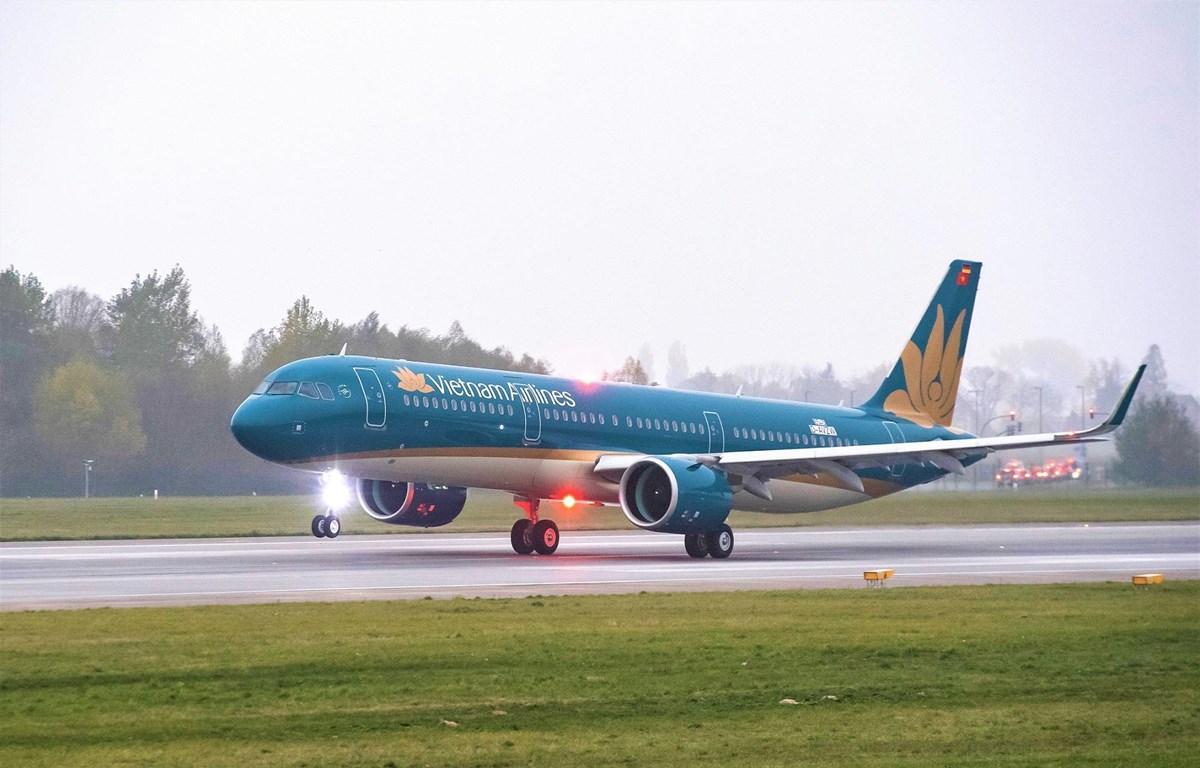
    The accumulated loss of national flag carrier Vietnam Airlines climbed to VND21.98 trillion ($928.39 million) last year, roughly the same as its charter capital.

    The airline was hit hard by the Covid-19 pandemic that saw borders closed and commercial flights suspended for two years.

    It posted a loss of VND13.02 trillion last year alone, with revenue dropping 31 percent year on year to VND28.09 trillion.

    The airline increased its charter capital by 56 percent to VND22.14 trillion last year by issuing 800 million shares, with the State Capital Investment Corporation (SCIC) contributing an additional VND6.89 trillion.

    The Commission for Management of State Capital at Enterprises (CMSC) now holds a 55.2 percent stake in the flag carrier, the SCIC 31.14 percent, and Japan’s ANA airline 5.62 percent.

    The airline has been increasing the number of flights it operates since the beginning of this year as the government began lifting restrictions based on rising vaccination rates.

    It operated 7,314 flights last month, up nearly 21 percent year-on-year.

    The airline has proposed that the government raises the price cap for domestic travel from April 1 and add a fuel surcharge for local routes as fuel prices have soared in recent months.

  • Bamboo Airways not affected by ex-chairman’s arrest

    Bamboo Airways not affected by ex-chairman’s arrest

    The Civil Aviation Authority of Vietnam says carrier Bamboo Airways is operating normally, unaffected by the recent arrest of its ex-chairman Trinh Van Quyet.

    The carrier’s key personnel, including pilots, cabin crew, and technical staff are complying with all regulations, it reported to the Ministry of Transport Thursday, after an emergency meeting with the airline’s management.

    The meeting happened a day after the arrest of real estate giant FLC and Bamboo Airways chairman Trinh Van Quyet for alleged manipulation of his company’s share prices by using 20 different trading accounts to create fake demand.

    Quyet is the largest shareholder of the airline, holding 55.5 percent of its charter capital, or VND3.89 trillion ($170.3 million). Bamboo Airways has a charter capital of VND7 trillion.

    The aviation authority also assured that in the case Quyet’s assets were frozen, the carrier would still operate normally operational, as it meets the government’s minimum capital requirement of VND700 billion.

    But it will keep a close watch on the carrier for the next three to six months to ensure safety and assess the impacts of Quyet’s arrest.

    “The Civil Aviation Authority of Vietnam will support Bamboo Airways when necessary to help the airline overcome current difficulties, and maintain development,” it said.

    On Thursday, FLC deputy chairman and Bamboo Airways’ general director Dang Tat Thang replaced Quyet as the airline’s new chairman until shareholders and the board of directors make a final decision.

    Thang continues to retain his position as general director.

  • Bamboo Airways to be monitored for safety following chairman’s arrest

    Bamboo Airways to be monitored for safety following chairman’s arrest

    The Civil Aviation Authority of Vietnam said it would closely monitor Bamboo Airways for the next three to six months to ensure safety following the arrest of its chairman.

    Its aircraft maintenance and operations and training would be closely supervised, deputy head of the Civil Aviation Authority of Vietnam (CAAV), Ho Minh Tan, said at an emergency meeting with the airline’s management Wednesday.

    The meeting came a day after real estate giant FLC and Bamboo Airways chairman Trinh Van Quyet for alleged manipulation of his company’s share prices by using 20 different trading accounts to create fake demand.

    He had earned VND530 billion (US$23.19 million) in this manner between Dec. 1 and Jan. 10, investigators said.

    Deputy general director Nguyen Ngoc Trong said banks and financial institutions are committed to fulfilling all contracts they have signed with the carrier, which would in turn fulfill all its responsibilities and obligations. Bamboo Airways began flying in 2019.

    On Thursday, Dang Tat Thang was named the new chairman to replace Quyet until shareholders and the board of directors make a final decision. He also remains the general director.

  • AirAsia ready for border reopening, expects 250 international flights weekly by end-April

    AirAsia ready for border reopening, expects 250 international flights weekly by end-April

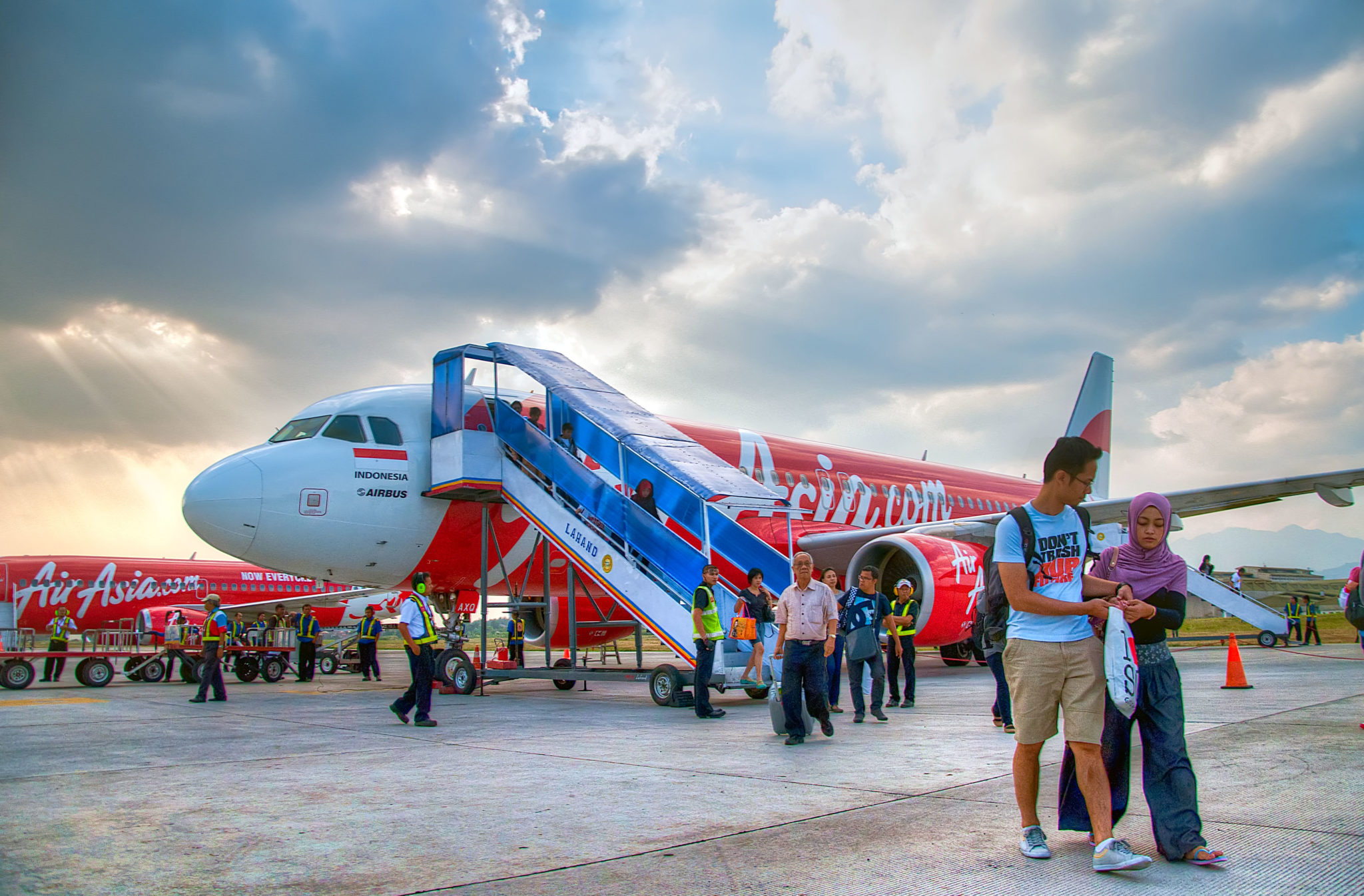
    AirAsia is expecting an increase of more than 70 international flight volumes per week for the first week of border reopening starting on April 1.

    AirAsia Malaysia chief executive officer Riad Asmat said the international flight number is expected to reach 250 weekly by the end of April.

    “AirAsia welcomes the announcement by the Malaysian government to fully open international borders on April 1, we are ready.

    “I believe the seamlessness of travel will happen sooner than later,” he told reporters in a media briefing on the airline’s preparation for border reopening here today.

    He said since resuming its operations with travel bubbles and a focus on domestic services, the gradual resumption of international flying is already well underway in tandem with borders gradually reopening around the world.

    With the continued easing of travel restrictions, the airline group has increased its domestic flight capacity by 156 percent since October 2021 kickstarted with the Langkawi travel bubble, and by 50 percent for international flights since the announcement of borders reopening in April is made by the government on March 8, 2022.

    A total of 75 aircraft are operating currently group-wide, he said. This is also supported by the reopening of other countries like Thailand, the Philippines, Indonesia, Cambodia, Singapore and Vietnam, said Riad.

    While the airline currently has a number of international services already operating, the announcement of the nation’s reopening will provide a welcome boost to support additional capacity in many of its core international markets in line with significant pent-up demand.

    Meanwhile, AirAsia Aviation Group Ltd chief executive officer Bo Lingam said the airlines earnings is expected to go back to pre-Covid level presumably by the end of the year with the hope that the fuel price goes down by then.

    “AirAsia applauds the governments around the region for their decision to reopen borders and remove travel restriction with minimal testing requirements.

    “We are thrilled to be resuming more flights in all of our core markets in Malaysia, Thailand, the international destinations including Bali, Manila, Bangkok, Ho Chi Minh City, Phuket, and more, starting in April.

    Domestic flying also continues to soar across the group with four new domestic routes launched in Malaysia, from Kuching to Langkawi, Penang to Sibu, Johor Bahru to Bintulu, and Kota Kinabalu to Kuala Terengganu this year, he said.

    “Regionally, we have seen similarly encouraging developments for domestic and international services in Thailand, the Philippines and Indonesia. We will continue to review our network which evolves based on a number of factors including demand,” he said.

    He added that new services will be announced in due course as the world continues to gradually reopen.

    “While our domestic services across the group have grown by 156 per cent in recent months due to significant consumer demand, and by 50 per cent for international, we expect to return to 100 percent or more of pre-COVID domestic and international flying by the end of this year,” he said.

  • WhatsApp finally improves voice messaging experience, adds new features

    WhatsApp finally improves voice messaging experience, adds new features

    As people start using voice messaging more and more, apps like WhatsApp must fine-tune the experience provided by their services. Initially introduced back in 2013, WhatsApp’s voice messaging service hasn’t evolved too much over the years, despite its userbase becoming larger.

    Today, WhatsApp announced plans to improve the voice messaging experience on its platform with the addition of several nifty features:

    • Out of Chat Playback: Listen to a voice message outside of the chat so you can multitask or read and respond to other messages.
    • Pause/Resume Recording: When recording a voice message, you can now pause the recording and resume when ready, in case you’re interrupted or need to gather your thoughts.
    • Waveform Visualization: Shows a visual representation of the sound on the voice message to help follow the recording.
    • Draft Preview: Listen to your voice messages before sending them.
    • Remember Playback: If you pause when listening to a voice message, you can pick up where you left off when you return to the chat.
    • Fast Playback on Forwarded Messages: Play voice messages at 1.5x or 2x speeds to listen to messages faster on both regular and forwarded messages.

    While these new features may not be available for everyone right away, WhatsApp announced that they will be rolled out to users in the coming weeks, so be patient if you don’t see them on your phone yet.

  • Aeon Hong Kong looks to its Daiso network to restore profit

    Aeon Hong Kong looks to its Daiso network to restore profit

    AEON Stores Hong Kong have lost HK$470 million in 2021, but the retail group is still planning to expand its footprint in the city by launching more retail stores under the brand Daiso Japan.

    In the recent announcement of its annual result for the financial year ended on 31 December, AEON Stores (Hong Kong) said it lost HK$470 million (US$60.04 million), representing an increment of HK$433.2 million (US$55.34 million) compared to 2020. The company said in the year 2021, the group’s revenue decreased by 4.1% year on year to HK$9.56 billion (US$1.22 billion). Moreover, the group received fewer government subsidies from the Hong Kong government and municipal governments in China in 2021. The amount of subsidies decreased from HK$146.4 million (US$18.7 million) in 2020 to only HK$10.0 million (US$1.27 million) last year.

    The group added that as the pandemic was gradually brought under control in 2021, daily social, business and economic activities resumed, resulting in the decreasing sales performance of some merchandise spurred by the pandemic including food and cleaning products. At the same time, due to the prolonged pandemic and its subsequent disruption, the local economy was slowly recovering, and the sentiment among citizens was generally cautious about consumption. As a result, the group’s apparel merchandise demand did not improve significantly.

    In the third quarter of 2021, with the assistance of the launch of the consumption voucher scheme and a relatively stabilised pandemic environment, sales performance recorded a slight improvement but such improvement were relatively weaker in the subsequent rounds of consumer voucher scheme launched in the fourth quarter of 2021. To strengthen this company’s position in the Hong Kong market, in February, AEON Stores (Hong Kong) February 2021, the group partnered with foodpanda mall to provide Topvalu food products, HÓME CÓORDY household products and frozen food products. By June, the whole line of supermarkets was online, offering sales and home delivery services for a variety of supermarket items.

    Moving forward, the group will open stores in accordance with its preset investment plan. In February 2022, the group opened its fourth “AEON STYLE” store at Domain Mall, Yau Tong to meet the demand of customers in the district.

    When it comes to this new store, the company previously said that due to the nature of its retail businesses, the group has to enter into tenancy agreements for the leasing of retail stores from time to time. According to AEON, the retail fronts contribute to and maintains the group’s scale of operation which in turn benefits the group in lowering the overall operation costs. Along with the store space, the company has also rented one internal advertising light box on the ground floor and two outdoor advertising banner spaces outside the building facades for the display of the company’s name and advertising of the company’s business at the premises.

    At the same time, the group will further expand the business of small specialty stores under the brand Daiso. When it comes to digitalisation, to improve operational efficiency and control costs, the group will optimise its mobile assistant for employees and increasing the utilisation rate via “Mobile Assistant”. In addition to strengthening the use of the self service cashier system “POS Express”, the group will further deploy cashiering machines to accept and change cash to customers, reducing the workload of cashiers and using its resources better.

  • South Korea’s retail sales rebounded in February

    South Korea’s retail sales rebounded in February

    Sales at South Korea’s top department stores rebounded sharply in February from the previous month, government estimates showed on Tuesday, reflecting this year’s change of timing for the Lunar New Year holiday.

    Combined sales last month at department stores run by Hyundai Department Store, Lotte Shopping and Shinsegae Co rose 7.1 percent from a year ago, the finance ministry said.

    This was the fastest gain for department store sales since a 10.5 percent rise seen in August last year and compared to a 11.0 percent drop in January, which was the steepest contraction on record.

    Retail numbers are usually distorted at the beginning of the year as the Lunar New Year holiday, when consumers tend to splurge, can fall either in January or February. This year the holiday was in February while it was in January last year.

    Sales at the country’s top discount stores also showed a sharp gain in February, jumping 30.5 percent on-year and bouncing back from a 18.3 percent drop in January.

    The January decline was the sharpest fall seen since February 2014.

    Meanwhile, the same data showed annual sales of locally produced automobiles last month slipped 3.8 percent, undermining a 3.9 percent gain in January.

    Gasoline sales by volume last month rose 12.5 percent in annual terms, rising for a third straight month and picking up the pace from a 5.3 percent rise in January the finance ministry data showed.

  • Lulu Group’s India ambitions get closer with a $463 million deal

    Lulu Group’s India ambitions get closer with a $463 million deal

    UAE-based retail major Lulu group on Monday announced an investment of Rs 3,500 crore in Tamil Nadu to set up shopping malls, hypermarkets and a food-logistic park.

    A memorandum of understanding (MoU) to this effect was signed on Monday by Pooja Kulkarni, Managing Director and CEO of Tamil Nadu Industrial Guidance & Export Promotion Bureau and Ashraf Ali MA, Executive Director of Lulu Group, the company said in a statement.

    The MoU was signed in the presence of Tamil Nadu Chief Minister MK Stalin; Industry Minister Thangam Thenarasu; Yusuffali MA, Chairman of Lulu Group; other officials and dignitaries at the Abu Dhabi Chamber of Commerce HO in Abu Dhabi.

    As per the MoU, the first shopping mall will come up in Chennai by 2024, while the first hypermarket is expected to open by this year-end itself at the Laxmi Mills compound in Coimbatore.

    Lulu Group will also set up food processing and logistics centers for procuring and processing agri-produce for exports to middle eastern countries.

    A high-level delegation from Lulu will soon visit the state to finalize locations and related formalities.

    “State of Tamil Nadu provides excellent infrastructure and support to the investors and we are very happy to explore bigger investment opportunities not only in Chennai but also in tier two cities such as Coimbatore, Salem, Madurai, Trichy.

    “Our aim is to provide more than 15,000 direct and indirect job opportunities to Tamil youth in the next 3 years,” Yusuff Ali said.

    Lulu Group currently operates more than 225 hypermarkets and shopping malls in the Middle East, Egypt, Indonesia, Malaysia and India.

    The group employs more than 57,000 people globally. Lulu Group has announced an investment of Rs 2,000 crore near Ahmedabad to set up a modern shopping mall. It has committed an investment of Rs 500 crore to set up a food processing plant in Greater Noida, Uttar Pradesh.

    In India, Lulu Group already has four operational shopping malls in Kochi, Thrissur, Trivandrum and Bengaluru. The mall at Bengaluru is not owned by the Lulu group but it is managing and operating the property.

    The group’s business portfolio ranges from hypermarket operations to shopping mall development, manufacturing and trading of goods, food processing plants, wholesale distribution, hospitality assets and real estate development.

  • Apple’s new iOS 15 privacy features have advertisers on edge

    Apple’s new iOS 15 privacy features have advertisers on edge

    After Apple created chaos in the advertising industry last year with the App Tracking Transparency (ATT) feature, experts in the field are concerned that Apple will continue offering more privacy features and put a larger crimp into the business of selling products to consumers who depend heavily on their mobile devices.

    Two recent features that advertisers are concerned about are Private Relay and Hide My Email, both released in iOS 15. The latter allows you to create a random email address that will automatically forward emails to your personal inbox. You can read and reply to those emails but your personal email address will be hidden by the randomly created address.

    Apple points out that it doesn’t read any of the content in emails that go through Hide My Email except to filter out spam. Apple says that it needs to do this to “maintain our status as a trusted email provider.” All email messages going through the Hide My Email platform are deleted from Apple’s relay servers after they are delivered to you, a process that usually takes only seconds.

    Hide My Email tricks advertisers who normally collect your email address from online forms you’ve filled out and then send spam to that address. However, with Hide My Email, the marketers no longer have access to your real email address.

    To enable Hide My Email, go to Settings > Tap your name at the top of the screen. From the new screen, go to iCloud > Hide My Email. From there, go to Create New Address. A random address that ends with @iCloud.com will be created which will forward to your personal inbox. If you’re not happy with the random address, you can press the button that says  “Use Different Address to see a new one.” If you’re happy with the address, tap on “Continue.”

    The next screen will allow you to create a note next to the new address so that you can remember what you used it for. Hit “Next” in the upper right corner and it’s all over; you’ve created your fake email address. To delete it, go to Settings > iCloud > Hide My Email to see a list of your randomly generated email addresses and where mail to that address is getting forwarded to.

    To delete any of those addresses, tap on Deactivate Email Address at the bottom of the screen. A pop-up screen will ask you to confirm which address you want to 86, Tap on it and press the “Deactivate” button. That’s it.

    What we should tell you is that for you to sign up for Hide My Email, you must subscribe to a premium iCloud tier of service. This doesn’t have to put you in the poorhouse as 50GB of additional cloud storage is only 99 cents a month. 200GB of iCloud storage is $2.99 per month, and a whopping 2TB of iCloud storage will cost you $9.99 monthly.

    Another feature scaring Ad executives is Private Relay which also requires an iCloud subscription. It acts like a VPN blocking your IP address while encrypting traffic on the web. To turn it on, go to Settings > Tap your name at the top of the screen > iCloud > Private Relay.

    Private Relay blocks workarounds developed by companies to get around ATT and Hide My Email prevents online marketing firms from knowing the real email addresses of their customers preventing them from being targeted for follow-up purchases. Both features are devastating to marketers who have been using IP addresses (blocked by Private Relay) and email addresses (hidden by Hide My Email) to workaround App Tracking Transparency.

    Grant Simmons, a vice president at ad performance tracking firm Kochava, says of Apple’s continued war against third-party marketers, “It’s got the industry holding their collective breath.”

  • TikTok is working on a ‘Watch History’ feature

    TikTok is working on a ‘Watch History’ feature

    You saw a video on TikTok that you really liked, but you didn’t save it and didn’t remember the name of the uploader. You want to watch the video again, but you can’t seem to find it. What do you do? Well, if TikTok releases this feature, you will be able to see what videos you have watched and then find the video in question.

    Hammod Oh, a Twitter user who discovers upcoming features on different social platforms, found out that TikTok is testing a new “Watch History” feature. The feature will allow users to easily see what videos they’ve already watched for up to seven days. So, the end of your never-ending search for that interesting video you saw could be close.

    In a tweet, later shared by social media consultant Matt Navarra, Hammod Oh shared a screenshot that shows a new option called “Watch History,” which was probably under the “content and activity” section in the settings menu of the TikTok app.

    Currently, TikTok’s new “Watch History” feature is only available to selected users who are part of the test program for the feature. There isn’t any information on when we could expect TikTok to officially release the feature for the rest of us. TikTok only told TechCrunch, “We’re always thinking about new ways to bring value to our community and enrich the TikTok experience.”

  • US to consider tariffs on solar panels made in Southeast Asia

    US to consider tariffs on solar panels made in Southeast Asia

    U.S. trade officials on Monday said they will launch an investigation that could result in tariffs on solar panels imported from four Southeast Asian nations, a blow to clean energy project developers that rely on cheap imports to keep costs down.

    The Commerce Department’s decision regarding imports from Malaysia, Thailand, Vietnam and Cambodia was a victory for Auxin Solar. The San Jose, California-based solar manufacturer this year requested the probe, arguing that Chinese manufacturers shifted production to those nations to avoid paying U.S. duties in place for nearly a decade on Chinese-made solar goods.

    Auxin’s petition is the latest in a string of efforts by U.S. solar producers to stem the flow of cheap Asian panels that they argue make their products unable to compete in the market.

    Solar industry trade groups said the investigation alone would immediately hamstring project development and harm U.S. progress in addressing climate change. President Joe Biden has set a goal of weaning the U.S. electricity sector off of fossil fuels by 2035, a target that could propel solar to supply up to 40% of the nation’s electricity needs – up from 3% currently.

    Imports from the four countries account for about 80% of the panels expected to be installed in the United States this year, according to the American Clean Power Association industry group.

    “This decision effectively freezes development in the U.S. solar industry,” association CEO Heather Zichal said on a conference call with reporters. “Frankly, the Commerce Department’s action to initiate this investigation is a disaster for our industry.”

    In a statement, a Commerce Department spokesperson said the department would “conduct an open and transparent investigation.”

    “This inquiry is just a first step – there has been no determination one way or the other on the merits, and no additional duties will be imposed at this time,” the spokesperson said.

    In a memo posted on a Commerce Department website earlier in the day, officials said Auxin had provided information indicating that solar companies operating in the four countries are subsidiaries of large Chinese producers and that products made there would be subject to U.S. countervailing and anti-dumping duties if made in China.

    “Auxin properly alleged the elements necessary for a circumvention determination,” the memo said.

    The Commerce Department said it will issue a preliminary determination within 150 days. Auxin welcomed the decision.

    “We are grateful Commerce officials recognized the need to investigate this pervasive backdoor dumping and how it continues to injure American solar producers,” Auxin Chief Executive Mamun Rashid said in a statement.

    U.S. solar trade groups lobbied heavily against the Commerce Department taking up the petition.

  • Billion-dollar projects stir hope of economic recovery

    Billion-dollar projects stir hope of economic recovery

    A number of billion-dollar projects are in the works, signaling a robust economic recovery. Last week Danish toy company Lego received a license for a $1-billion factory in the southern province of Binh Duong. The company’s second-largest factory in Asia and sixth largest in the world is among the fastest to be approved in Vietnam with all procedures being completed within six months.

    Local companies have also been launching billion-dollar projects.

    Steel giant Hoa Phat Group this month secured credit from eight banks for its Hoa Phat Dung Quat 2 plant, its biggest to date with a total investment of VND85 trillion.

    Diversified group T&T began work on a VND35-trillion resort and golf project in the northern province of Phu Tho at the end of last month, hoping to take advantage of the expected recovery in tourism in the next few years.

    Nguyen Van Toan, deputy chairman of the Vietnam Association of Financial Investors, said the country has the potential to attract $40 billion in FDI this year, a 27 percent increase from last year.

    It has shown resilience amid Covid-19 and focused on digital transformation during social distancing, and the government continues to prioritize FDI, he added.

    Nguyen Mai, chairman of the association, said the resumption of international travel on March 15 would allow more foreign investors to enter Vietnam without difficulty and therefore make business decisions quickly.

    American, European, and Japanese companies are looking to restructure supply chains and Vietnam could take this opportunity to attract their investments, he said.

    The key advantages for foreign companies here are the availability of land and human resources, he said.

    The government wants to make 2022 the year of recovery from Covid, and has set a GDP growth target of 6-6.5 percent compared to 2.58 percent last year.

  • Instagram could let you react with a voice message to a Story

    Instagram could let you react with a voice message to a Story

    Instagram is allegedly working on a new Snapchat-like way for you to respond to your friends’ Stories. According to Alessandro Paluzzi (a developer who discovers upcoming new features by reverse engineering apps), Instagram is working on a feature that will allow users to create voice messages as another way to react to Instagram Stories.

    In a tweet, Alessandro Paluzzi shared an image coming from Instagram Stories. In Paluzzi’s screenshot, we can see that there is a new microphone icon located in the area where the Story replies are situated, which will most likely allow you to record a voice message and then send it as a reaction to an Instagram Story.

    It should be noted that although Alessandro Paluzzi has found the voice message reaction feature in the code of the Instagram app, this does not mean that Instagram will release the feature. Sometimes developers create a feature that, for some reason, they don’t implement into their application. There is also no word from Instagram about this potential feature.

    The new reply category that Instagram is developing is another proof that Instagram is trying to make its platform better. As we previously reported, Instagram no longer sends a direct message to a Story’s author when you like a Story. The change was made because Instagram wanted to make the DMs more focused on conversations between you and your loved ones.

  • WhatsApp testing a massive increase in file size limit for send and receive feature

    WhatsApp testing a massive increase in file size limit for send and receive feature

    If you’ve ever wanted to send a big file via WhatsApp and were greeted with the fact that the chat app can’t send it for you — well, this might be ending soon, as WhatsApp is testing a new 2GB file size limit. The company has been looking into ways to improve the WhatsApp experience for its user, and this change is the latest effort Meta is pouring into the end-to-end encrypted chat service.

    WABetaInfo discovered the new limit on files you can send via WhatsApp in the latest WhatsApp beta for Android and iOS. Currently, the new file size limit has only been rolled out to users in Argentina, but it will most likely be released globally soon too.

    Before this update, WhatsApp had a limit of 100MB for files you wanted to send or receive on the chat service. With this new change, this limit will be raised significantly to 2GB. As we already mentioned above, the feature has been rolled out to a small number of beta testers, currently located in Argentina.

    It is important to mention that this is a test feature, so it is still possible WhatsApp could decide to backtrack on it and not release it globally, but we do hope it will be able to work out any bugs that it might have and release it to everyone. There is no timeline as of yet on this test and a possible subsequent official release of the feature.

    This is just one of the many features that WhatsApp has currently been working on to make your experience on the app even better. One of the long-anticipated WhatsApp features that is about to become official is multi-device support.

    We reported recently on the fact that the long-awaited and very useful multi-device support is now finally coming to both Android and iOS (it will first be released on iOS by the end of this month, and Android users should get it sometime in April).

    Why is this WhatsApp feature so important? Well, for those of you who don’t know, currently you can use WhatsApp on PC or Mac to chat, but you need your iPhone or Android phone to be online at all times so that the chat will work. That is because WhatsApp is currently storing your identity key for the end-to-end encryption on your phone.

    However, this is about to change with the new WhatsApp update that is coming. With it, you will be able to have your WhatsApp account on up to four additional devices, which you can use at all times without having your phone online as each of them will have its own identity key.

    Another useful feature that WhatsApp introduced recently is the ability to react to messages sent on the chat app with emoji. Many of the existing instant messaging apps have this feature and WhatsApp is indeed a little bit late to it, but nevertheless, the feature was spotted in a recent beta of the app which means it can soon be officially released as well.

    Once it becomes official, you will have six reactions to messages sent to you on WhatsApp: Like, Love, Laugh, Surprised, Sad, and Thanks.

    And last but not least, another useful feature WhatsApp is working on is search shortcuts. Currently, you have a somewhat lengthy process to follow if you wish to search from your messages in WhatsApp, which includes locating a specific chat or group chat window, then tapping on the three-dots menu and searching. It seems that the app will be getting a simpler way to search for a message in a future update.

    WhatsApp beta for Android version 2.22.6.3 brings the new search shortcut. Although it sounds similar to WhatsApp’s current solution for searches, it is different in the way that it allows you to search right from the info page of personal contacts and groups, without having to go to a specific group or chat where you think the message was sent.