Category: General

Retail News Asia is committed to providing both local and global retailers with the latest General Retail news throughout the Asian market. This on a daily base.

  • SpaceDC to build largest hyperscale data center in the Philippines

    SpaceDC to build largest hyperscale data center in the Philippines

    SpaceDC, a Singapore-based visionary data center provider, is working with JLL, a global real estate services firm, to build a secure, resilient, network-rich, data center called <MNL1, which will be situated in Cainta, part of Greater Manila. The green data center will be fully powered with renewable energy – wind, geothermal – and is slated to open in 2022. 

    At 43,000 square meters, MNL1 will be the largest hyperscale data center campus in the Philippines, and will deliver 72 megawatt of critical power. With an outstanding PUE of 1.3, MNL1 will also lead in terms of energy efficiency and design, to minimize carbon footprint.

    SpaceDC CEO, Darren Hawkins said, “The Philippines ranks second in terms of data center growth in Southeast Asia. With only 47 megawatts of available capacity in the country it is a dramatically underserved market. We are excited to be a first mover in a new market where we see our customers are investing heavily in.”

    “SpaceDC is in the right place at the right time to take advantage of the strong customer interest we are seeing in the Philippines. MNL1’s design is setting new standards in terms of technology, quality and operational excellence in the Philippines.” commented Ralph Davidvon, executive director, data center services for JLL, the appointed project construction manager.

  • Vietnam stock market makes bright start after Tet holidays

    Vietnam stock market makes bright start after Tet holidays

    The VN-Index began the new lunar year with a 1.5-percent jump Monday morning, led by aviation and energy stocks. It gained 22 points to 1,503 points at 11.20 as the market reopened after the nine-day Tet break, reaching a near four-week high.

    It represents a 4.1-percent recovery from the bottom of 1,439 points reached on January 18 as investors booked profit before the holidays. Most brokerages expect the index to rise this week since no negative news came out during the holidays.

    Analysts at ASEAN Securities and BIDV Securities said the VN-Index is set to stay in the 1,500 levels this week. It closed in the green on an opening day on five of the last six years since 2016, only dipping in 2020 when Covid-19 first hit Vietnam.

    The VN30 basket, comprising the 30 largest capped stocks, saw 24 of them gain Monday, led by VJC of budget airline Vietjet, which rose by 6.6 percent as investors expect a recovery by the aviation industry after the government announced plans to revive international tourism by March-end.

    Vietnam Airlines (HVN) gained 7 percent to the ceiling and its highest in over three months. Airports Corporation of Vietnam (ACV) rose by 7.4 percent with volumes reaching 321 percent of the average of the last 10 sessions.

    Energy stocks also rose, with PLX of fuel distributor Petrolimex climbing by 6 percent and GAS of state-owned Petrovietnam Gas gaining 6.2 percent. POW of electricity producer Petrovietnam Power Corporation was up 6.5 percent.

    Companies expected to benefit from rising consumption demand, such as VRE of real estate retail firm Vincom Retail and MSN of conglomerate Masan Group were the other gainers.

    The HNX-Index on the Hanoi Stock Exchange, home to mid-and small-cap companies, was up 1.2 percent, and the UPCoM-Index on the Unlisted Public Companies Market had gained 1 percent at the time of publishing.

  • The Australian Federal Court rejects Facebook’s argument that it couldn’t be sued

    The Australian Federal Court rejects Facebook’s argument that it couldn’t be sued

    There has been a new development regarding an Australian case against Facebook and the Cambridge Analytica scandal, in which the personal data of millions of people was collected without their consent. The Australian Federal Court rejected Facebook’s argument that it can’t be sued under Australian privacy laws since it doesn’t do business or collect personal information in Australia.

    The court’s opinion is that Facebook does business in Australia because it installs cookies on the devices of Australian users. This, according to the court, is ‘an important part of the operation of the Facebook platform.’ Also, according to the court, any website accessible in Australia is doing business in the country.

    But, according to Facebook, a cookie isn’t installed where it was placed but where it was sent from. Given that Facebook’s servers aren’t located in Australia, it means that Facebook doesn’t do business there. Facebook also explained that its data centers had delivered digital signals to user devices, which had resulted in a change in the digital status of those devices.

    The company also gave an example in which a person from overseas sends a letter to Australia. Upon receiving the letter, the reader decides to take action that has an economic impact. This could never be interpreted as the sender doing business in Australia.

    According to the court, Facebook’s explanation ‘proves far too much,’ and is ‘divorced from reality.’ The court also stated: “It proves too much because it has the consequence that no computer-based activity in one jurisdiction can ever amount to more than an effect in computers located in another.”

    The lawsuit against Facebook originated from the violation of the privacy of many Australian Facebook users in the Cambridge Analytica scandal, which happened more than four years ago.

    By using a personality test app called “This is Your Digital Life,” a consulting firm called Cambridge Analytica gained access to the personal data of millions of Facebook users without their permission. Although only 53 people in Australia had the app installed, the app managed to collect the data of approximately 311,074 other people in the country via these 53. The gathered information from the app was then used mainly for political advertising, like the Brexit and Donald Trump campaigns.

  • Twitter will start testing its long-anticipated downvote feature globally

    Twitter will start testing its long-anticipated downvote feature globally

    Downvoting on Twitter has been in testing since summer last year, and the feature is now finally expanding for testing to more users. The button will be available to a select group of users around the world, as the company seems to have received positive feedback about the feature since the initial testing performed last July.

    Twitter said in a post that the company has learned a lot about the types of replies that users don’t find relevant, based on the feedback from the initial testing period. Now, the test will be expanded to the web, as well as both iOS and Android users.

    The number of downvotes a reply to a tweet gets will not be visible to the public; however, users will be able to see how many downvotes they got on a reply they published. During the first testing period, Twitter had made available several different versions of downvoting. For example, some users had both upvote and downvote buttons, while others had a downvote button next to the heart option.

    A third version of the test had thumbs up and thumbs down to indicate upvoting and downvoting. Twitter has not said whether the global tests will have the same options.

    According to Twitter, the majority of users have downvoted because a reply has been perceived as offensive, not relevant, or both. Additionally, downvoting has also become a convenient way to flag content you don’t want to see, according to the social media giant.

    But Twitter is a bit late to the party. For example, Reddit has used downvotes since it started back in 2015. Facebook, on the other hand, has tested downvotes in 2018, but the feature never made it to an official global release. On the other hand, Instagram has an option for users to hide likes if they wish to.

    Twitter Safety stated that so far, the experiment with downvoting has been a positive experience and that people who had tested it said that it improves the quality of conversations on the platform.

    It’s not only downvoting that Twitter has been recently working on. The social media platform has been busy performing tests on different features bound to improve the experience users have when visiting Twitter and socializing with others on the platform.

    The most recent feature that we reported on is reportedly dubbed Articles, and it could allow users to create blog-like posts on the platform that don’t suffer from the 280-character limit. The feature seems to be in the works and was discovered by reverse engineer Jane Manchun Wong.

    Another interesting feature that Twitter seems to be working on is called Tweet Take, which would allow you to use your camera to add a video or photo reaction to your retweets. When you tap on the retweet button, you would be able to activate your camera to record your reaction, which will then be displayed on the timelines of your followers with the tweet embedded in it.

    Currently, this feature is in its testing period, available to select iOS users.

    On top of that, Twitter is also testing a new composer bar, which will be located above the bottom navigation bar, and its aim is to replace the floating compose button, so that adding photos, videos, and starting a Space conversation can become easier. This feature is again up for testing on iOS (selected users).

    And last but not least, recently we reported on the fact that Twitter will be changing its “Trusted Friends” feature (still in development) into a feature dubbed “Flock”. A Flock can contain up to 150 people.

  • Cebu Pacific says more domestic destinations ease travel requirements

    Cebu Pacific says more domestic destinations ease travel requirements

    Airline Cebu Pacific said a number of local destinations were open to leisure travelers and no longer required COVID tests for fully vaccinated individuals.

    In a statement, Cebu Pacific said the 19 destinations were: Bohol, Boracay, Butuan, Camiguin, Cagayan de Oro, Cebu (Cebu City and Mandaue City), Clark, Maguindanao Province, Davao, Dumaguete, General Santos, Iloilo, Legazpi, Manila, Naga, Ozamiz, San Jose, Tacloban, and Tuguegarao.

    “This is a welcome development, and we appreciate the various local government unit’s efforts to further ease travel for everyJuan, especially for fully vaccinated individuals,” said Xander Lao, chief commercial officer at Cebu Pacific.

    “This will jumpstart the return of tourists and pave the way for the recovery of the local tourism industry, which we are also ready to support with a ramp-up in flight frequencies as needed,” he added.

    According to Cebu Pacific, LGU requirements may include vaccination certificates, vaccination cards, government-issued IDs, travel permits from S-Pass, confirmed accommodations, and registration to specific contact tracing applications.

    It noted that Butuan and Cagayan de Oro require fully vaccinated travelers to simply upload their vaccination status via S-Pass.

    For Legazpi, fully vaccinated travelers must report to their LGUs for symptoms screening and profiling. Traze app must also be downloaded.

    Clark requires travelers to present a valid ID and any travel document required by the LGU while Cebu province, Lapu-Lapu City and Davao do not require arriving fully vaccinated guests to present any travel documents for entry.

    A person is considered fully vaccinated two weeks after the second dose in a two-dose series, or after receiving a single-dose vaccine, Cebu Pacific said.

  • Meta warns that it’s possible to shut down Facebook and Instagram in Europe

    Meta warns that it’s possible to shut down Facebook and Instagram in Europe

    Meta, formerly known as Facebook, has warned that it may need to shut down its Facebook, Instagram, and other products and services in Europe if it is unable to process user data on both US-based and Europe-based servers. The warning comes after a change in European laws requiring users’ data to be kept and processed on only European servers.

    In a report to the US Securities and Exchange Commission, Meta stated that the data transfer between countries or regions is ‘critical’ to its ‘operation.’ Meta also shared its fear that if it’s unable to transfer data between the US and countries in Europe, it could impact the way it currently provides its services and its ability to target ads.

    Europe has Standard Contractual Clauses (SCCs) for international data transfers. As Meta stated in its report, in August 2020, it received a draft decision from the Irish Data Protection Commission (IDPC), which stated that Meta’s data transfers between the US and Europe are against the General Data Protection Regulation (GDPR) and must be suspended.

    Although the decision by the IDPC was only a draft, Meta suspects that a final decision may be issued in the first half of 2022. According to the company, if it can’t rely anymore on the SCCs and if a new data transfer framework is not introduced, its fear will become a reality, and it won’t be able to offer many of its products in Europe, Facebook and Instagram included. This, like Meta said, ‘would materially and adversely affect’ its business and financial condition.

    At this moment in time, Meta’s warning is only a possible future, and it doesn’t mean it will ever happen. But let us know what you think. Do you think that Meta may indeed shut off its Facebook and Instagram platforms in Europe, or do you think that these are only empty words?

  • Strong end to the year for Singapore retail sales

    Strong end to the year for Singapore retail sales

    Retail sales in Singapore will continue to see modest growth in December as well as in the first quarter of 2022 on the back of increased mobility, according to a report by RHB.

    RHB said retail sales in Singapore have been on an uptrend since July based on the three-month moving average.

    “Retail sales are anticipated to rise in the year ahead as domestic demand continues to recover amid the pick-up in overall business activities. This is also aided by the expected improvement in the labor market in 2022 as the unemployment rate steadily falls, with the latest monthly print of 2.6% for October,” RHB said.

    It said that fluctuations in sequential readings may occur due to year-end demand increase, particularly on spending in the discretionary industries.

    The Department of Statistics Singapore reported that retail sales for November 2021 inched up 1.9% year-on-year (YoY), reaching a value of $3.7b, whilst food and beverage sales climber 0.6% YoY in November 2021 reaching $706m.

    Travel restrictions in Singapore are also expected to occur gradually in 2022 which will increase visitor arrivals and support spending on retail sales especially in the second half of the year, RHB said.

    However, it said that the new strains of the coronavirus may slightly delay the re-opening of borders and easing of restrictions.

  • AirAsia X to resume flights between Kuala Lumpur and Sydney

    AirAsia X to resume flights between Kuala Lumpur and Sydney

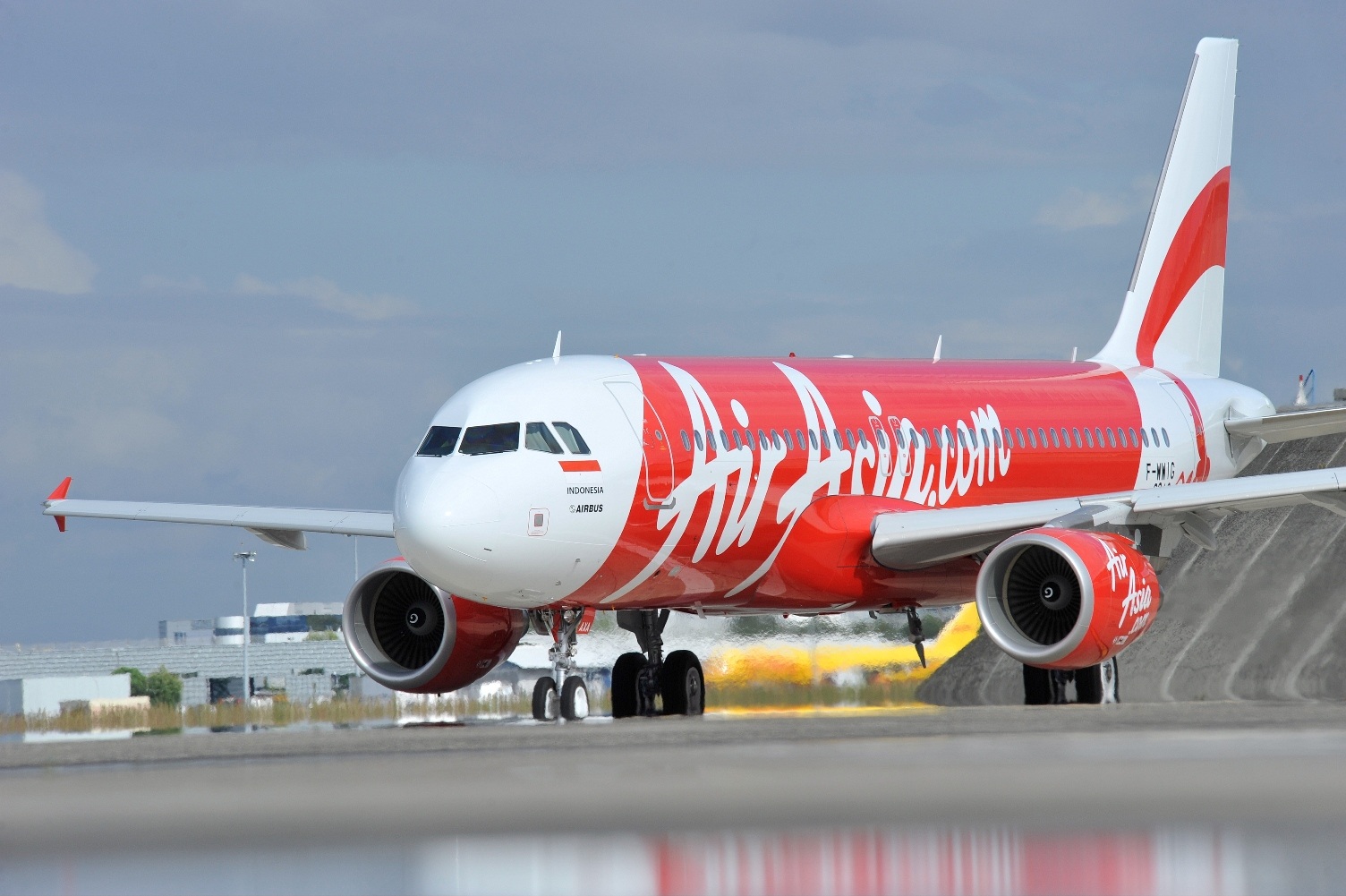
    AirAsia X (AAX) has unveiled plans to resume flights between Kuala Lumpur and Sydney on Feb 14. Flights will initially be operated weekly on Mondays from Kuala Lumpur to Sydney, returning on Tuesdays. Flight D7 228 is scheduled to depart from Kuala Lumpur at 19:25, arriving in Sydney at 06:30. The return leg, flight D7 229, is slated to leave Sydney at 08:30 and arrive back in Kuala Lumpur at 14:15.

    “Following our travel downtime over the last two years, and the recent completion of our restructuring process, we are thrilled to be able to relaunch and commence our gradual return to the skies. This would not have been possible without the overwhelming support from our guests and creditors and we thank them for their patience and understanding,” said Benyamin Ismail, CEO of AirAsia X. “Without any domestic routes AAX has been significantly affected by the pandemic. We now see light at the end of this long tunnel and we are working hard to operate again in all of our key markets, as one of the world’s leading low-cost medium-haul operators. Starting with flights to and from Sydney, we will progressively continue to honor outstanding bookings and Credit Accounts for our guests and creditors in other markets as soon as possible.”

    The airline has confirmed that it will prioritize full redemptions for customers affected by the restructuring. AAX customers can reinstate their flight booking and utilize their credit account to book the flights.

    Captain Suresh Kumar Bangah, COO of AirAsia X, said, “We have been very active on all-cargo flights throughout the pandemic and this has been a lifeline for us. For the first time, we are adding on passengers to supplement cargo revenue in our push to be a major combination carrier in this part of the world. Whilst take-up will be gradual, it can only get better in the coming months as more people return to the skies. We are ready for that pent-up demand.”

  • Manufacturing continues recovery

    Manufacturing continues recovery

    Vietnam’s purchasing managers’ index rose to 53.7 in January 2022 from 52.5 in December, marking the highest growth since last April. The new index also points to the fourth straight month of growth, according to a report by U.K. research company IHS Markit. IHS Markit Vietnam Manufacturing Purchasing Managers’ Index measures the performance of the manufacturing sector and is derived from a survey of 400 companies.

    The index is based on five individual indexes with the following weights: new orders (30 percent), output (25 percent), employment (20 percent), supplier delivery times (15 percent) and stock of items purchased (10 percent), with the delivery times index inverted so it moves in a comparable direction.

    A reading above 50 indicates an expansion of the manufacturing sector compared to the previous month; below 50 represents a contraction; while 50 indicates no change.

    Both output and new orders increased at sharper rates in the opening month of the year as customer demand continued to improve. In each case the rate of expansion was the sharpest in nine months. Total new orders were supported by a further improvement in new business from abroad, with the rate of growth quickening to the fastest since November 2018, IHS Markit stated in its January report for Vietnam.

    Firms were also increasingly confident in the year-ahead outlook for production, although optimism depends to some extent on the pandemic being brought under control. Around 60 percent of respondents predicted a rise in output, with overall optimism the strongest in over three years.

    There were further signs inflationary pressures have become less pronounced than seen through much of 2021. Input costs increased at the second-slowest pace in seven months, while output price inflation eased to the weakest since last September.

    According to respondents, a key factor behind rising input costs was higher charges for freight and international shipping. Problems with shipping and ongoing disruption caused by the pandemic mean supplier delivery times continued to lengthen at the start of the year.

    A second successive rise in employment was recorded in January as firms continued to rebuild workforce numbers following the Delta wave of the pandemic in 2021. The rate of job creation picked up from that seen in December but remained only modest as some staff were off work with Covid and others had yet to return from their hometowns.

    Commenting on the latest survey results, Andrew Harker, Economics director at IHS Markit, said: “Vietnamese manufacturers made a positive start to 2022, with the absence of any widespread restrictions meaning that the sector was able to grow despite relatively high Covid-19 case numbers. Firms were also increasingly confident about the year-ahead outlook.

    “The pandemic continues to impact the sector, however, most notably through staff absences, while the possibility of sharply rising case numbers due to the Omicron variant could lead to even more disruption,” he said. A further headwind remains issues with shipping, which affected deliveries from suppliers and the ability of firms to deliver to customers, as well as adding to cost burdens.”

  • See which five new features Instagram is rumored to be working on

    See which five new features Instagram is rumored to be working on

    It looks like Instagram is working on a few new features. Leaker Alessandro Paluzzi, a mobile developer, and a reverse engineer shared on Twitter that Instagram could be working on:

    • An option to share Reels directly on Facebook
    • Improving the Story and Reels editor’s guidelines
    • Enabling you to leave a message if you can’t answer a video or audio call
    • Business users to be able to receive audio calls without a visible phone number
    • The ability to share upcoming live videos as a Story and outside Instagram

    An option to share Reels directly on Facebook

    From the tweet below, we can see that a new “Share to Facebook” option would be available in the Reel’s sharing menu, possibly enabling you to share your Reel directly to Facebook without the need for additional steps.
    Currently, if a user wants to share a Reel on Facebook, they have to enable the “Recommend on Facebook” option, then they have to choose “Turn on for this Reel,” and then the user has to return and try sharing the Reel on Facebook.

    Apparently, Instagram wants to make its platform as easy as possible to use.

    As we can see from the shared Tweet, Instagram has been working on improving its guidelines in the Story and Reels editor. When the user tried to move the written text to the bin icon, a guideline appeared, which told the user how to delete the text.

    As demonstrated in the Tweet, Instagram is working on a “Reply” button that would appear along with the “Accept” and “Decline” call options when a user receives a video or audio call and can’t take the call at that moment. When a user taps the new “Reply” button, a few default responses would appear, along with the option to send a custom reply message.

    Currently, if a business user wants to be reachable through audio calls on Instagram, they must reveal their phone number. From the Tweet, we see that this may become a thing of the past, and everyone may be able to start a call with a business account without the need for a phone number.

    Want to share a live video as a Story? It looks like Instagram is working on a way to make it possible. From the tweet below, we see two new possible options for sharing a live video: “share to Story” and “share externally.”

    The “share externally” feature would possibly enable you to share your live video outside of Instagram, but currently, there is no information on how exactly this feature would work.

    There you have it, not one, not two, but five new features that may come to Instagram. Sadly, there is no information on when we could expect them to be released.

    Something that we do know, however, is that Instagram has begun rolling out the ability to express yourself via your own virtual avatar in direct message chats and in Stories. Currently, this new feature is available only in the US, Canada, and Mexico, but in the coming months, it will be available in more countries as well.

  • Google is making changes to the Chrome icon for the first time since 2014

    Google is making changes to the Chrome icon for the first time since 2014

    A tweet from Google Chrome designer Elvin Hu reveals that for the first time in eight years, Google is changing Chrome’s icon. The new look debuted with the update to the Chrome Canary app which is an experimental and unstable version of the browser used by developers and early adopters. Other versions of Chrome that Android users can install are the stable, beta, and Dev versions.

    And not that it has anything to do with the new icon, you still might want to know the difference between each one. As we noted, Chrome Canary offers an untested build of Chrome which might not run at times. Google recommends that only developers and advanced users install it on their handsets since most Canary updates won’t proceed any further.

    Installing the Chrome Dev version of the browser allows you to test out the latest features of the Chrome browser even though, as Google says, they will be “rough around the edges.” Google is hoping that Android users will provide them with early feedback when testing out new features that may never make it to the Beta or stable versions of the app.

    And there is also the Chrome Beta app which is the last step for a new feature before it is added to the stable version. It is not as unstable as the Dev version and features receive their final tweaks on the Chrome Beta app before millions of people use them on the stable version of Chrome.

    Lastly, the stable Chrome app is the safest version of the browser and is the one that you’ll see in the Play Store if you search for Google Chrome. Most of you shouldn’t install Canary or Dev while some of you might have an interest in downloading the Beta version of Chrome on your phone.

    As for the main branding of the Chrome logo, the shadows between the colors (which are easily seen between the red and yellow colors) are being removed. This removes the slight 3D effect that made it appear as though the red area was raised above the yellow. Removing that small shadowy area makes the colors on the newly updated main icon appear flat.

    Chrome’s Hu also noted that “We simplified the main brand icon by removing the shadows, refining the proportions and brightening the colors, to align with Google’s more modern brand expression.” Google found that placing certain shades of Green and Red next to each other created what Hu called “an unpleasant color vibration.” To combat this, Google used a more subtle gradient (so subtle that you might not notice it) in order to prevent the unpleasant vibration from bothering the viewer.

    Interestingly, Google created different variants of the Chrome icon for each operating system. As Elvin said, “We want the icons to feel recognizably Chrome, but also well crafted for each OS. For example, on Windows, the icons take on an obviously gradated look, appearing at home on Windows 10 & 11.”

    On ChromeOS, brighter colors will be used without gradients so that the icon can match the rest of the system icons. On MacOS, a small shadow will soon be employed to give the icon a 3D appearance. On iOS, the Chrome Beta will  show the logo in a blueprint-style background to show that it is a developer-focused app.

    The new Chrome icons are expected to hit your devices soon. Google has been shrinking the size of the Chrome icon going back to 2008 when it had the appearance of a 3D ball. There really is a lot of thought that comes into play even when trying to design a simple app icon.

  • Google Messages update allows users to send Photos links for sharper videos and pictures

    Google Messages update allows users to send Photos links for sharper videos and pictures

    Some changes are rolling out to the Google Messages app and it appears that hamburger is back on the menu. Or perhaps we should say that the hamburger menu is back. The redesign has surfaced for some who are using the beta version of the Messages app and it replaces the three-dot menu in the upper right corner with a hamburger menu on the left side of the display.

    Options currently found in the three-dot menu will be moved to the hamburger menu such as “Messages,” “Starred,” “Archived,” and “Spam & blocked.” Other options such as “Device Pairing” and “Choose Theme” will be listed in a separate section at the bottom of this menu.

    You’ll know when the change has hit your phone because the first time you open the app after the update, you’ll be prompted to enable Google Photos integration for the Messages app. “Share videos as they’re meant to be seen” reads the prompt follow-up with “Preserve sharp video clarity when you sign in and send Google Photos links.” A link at the bottom of the page allows for the use of the Messages app without a Google account.

    You will have a couple of choices that you can toggle on including one that will always send a link to Google Photos when you use Messages to share a video by text (SMS/MMS), and another option that will always send a Google Photos link when you text images via SMS/MMS. By allowing the Google Photos link to be sent with videos and images, you are giving the recipients of such content via Google Messages the ability to view them in a higher quality than if you sent them via MMS.

    While the update is being disseminated to some of those who are members of the app’s beta program, not all beta members are currently receiving it. Certainly, Google will widen the distribution of the update once it hears feedback from users.

    If you’ve received complaints about the quality of the videos and pictures that you’ve shared via Google Messages, this is a clever way to send higher quality content using that app with an assist from Google Photos.

  • Facebook stock takes historic dive, after Zuckerberg claims Apple cost him $10B

    Facebook stock takes historic dive, after Zuckerberg claims Apple cost him $10B

    Facebook’s parent company Meta is currently undergoing one of the biggest stock price drops in the company’s history. Meta’s shares plummeted by more than 23% over the past 24 hours—which will ultimately result in Meta’s market cap crashing down by $210 billion, to about $689 billion.

    This comes as a direct result of Mark Zuckerberg’s disappointing earnings report on Wednesday evening, which revealed that the company had fallen below its projected earnings estimates for the last quarter of 2021. As a consequence, the company is forecasting another low-earning quarter in 2022.

    According to Zuckerberg’s lengthy post, Apple is largely to blame for the blow to the company’s revenue.

    He directly called out Apple and its App Tracking Transparency policy in his report, claiming that the tech giant’s privacy-friendly update in iOS 14.5 is going to end up costing Meta $10 billion, as the company is currently rebuilding its entire ad infrastructure in order to better target iOS users going forward.

    “Next up is ads,” Zuckerberg began. “With Apple’s iOS changes and new regulation in Europe, there’s a clear trend where less data is available to deliver personalized ads.”

    “But people still want to see relevant ads,” he continued, “and businesses still want to reach the right customers. So we’re rebuilding a lot of our ads infrastructure so we can continue to grow and deliver high-quality personalized ads.”

    As part of this restructuring process, Meta has announced that it will be an increasing focus on Instagram Reels—which have been becoming increasingly popular with users’ decreasing attention spans—as well as other investments that may prove profitable in the long run. A huge part of that is Meta’s grand plans to revolutionize the internet by introducing the Metaverse.

    Zuckerberg also revealed that for the first time in history, Facebook has seen a visible decline of active users on the platform during the fourth quarter of 2021. Yet the company is holding on to the hope that things will take a turn for the better with the new ad infrastructure, as well as project Metaverse.

  • Snapchat parent Snap reports its first profitible quarter ever

    Snapchat parent Snap reports its first profitible quarter ever

    Yesterday we told you that Facebook parent Meta said that Apple’s App Tracking Transparency (ATT) feature, which allows iOS users to opt-out of being tracked for the purposes of receiving custom online ads, will cost Meta $10 billion in revenue this year. That bit of news, along with Meta announcing that it will fall short of Wall Street’s expectations for first-quarter 2022 revenue, sent the company’s shares down 26.4% on Thursday to $237.76, a loss of $85.24.

    Another company that has been affected by Apple’s ATT is Snap, the parent company of messaging app Snapchat. But the latter had a much better experience last year than Facebook/Meta had and even reported today the first quarterly profit in company history.

    For the fourth quarter of 2021 Snap had revenue of $1.3 billion, up 42% year-over-year. Net income for the three-month period hit $23 million, the first time that the company was in the black during any quarter.

    In 2021, Snap grossed $4.1 billion, up 64% compared to the same quarter a year ago. The company still was in the red for the entire year, but the net loss declined 48% to $488 million on an annual basis. Snap Chief Financial Officer Derek Andersen said that the company’s first quarterly profit and the improvement in the amount of red ink it spilled in 2021 can be attributed to how the company’s advertising business “began to recover from the impact of the iOS platform changes quicker than we anticipated.”

    During regular trading hours on Thursday, Snap shares declined $7.57 or 23.60% to $24.50. Most investors figured that Snap would be making a similar grim announcement about Apple’s ATT as Facebook did. Instead, after the earnings report was released, Snap soared $14.50 or 59.18% to $39. That is still far off the 52 week high above $83.

    Snap says that it has developed tools to help advertisers adjust to the large number of iOS users who do not want to be tracked for custom advertisements. Jeremi Gorman, Snap’s chief business officer, admitted that it will take time to adjust but said “We are pleased with the early progress.”

    Other companies have also reported that the market for digital advertising is strong. Google reported a 33% year-over-year hike in total ad revenue which includes Search (up 36% over last year), and YouTube (up 25.3% on an annual basis). Microsoft foreshadowed its upcoming earnings report when it said that the ad market is strong for LinkedIn ads, and for ads on its Bing search engine.

    While Meta forecasts a shortfall for its first-quarter profits, Snap expects revenue for the quarter to reach $1.08 billion topping analysts’ expectations. In addition, Snapchat’s Daily Active Users (DAU) rose 20% in Q4 to 319 million. DAU numbers improved sequentially and year-over-year in North America, Europe, and the Rest of the word.

    Also, the Daily Active Users number has seen 20% year-over-year growth for five consecutive quarters. That is due to the strong usage of the Snapchat app by teens and young adults.

    Snap also noted that it has been investing in its AR platform and revealed that its 18 New Year’s Eve Lenses generated more than 7 billion impressions. New features have been added to its Lens Studio including “a new Sounds Library, real-world physics, world mesh, and an API library for real-time data.

    Snapchat also released a feature for the Google Pixel 6 and Pixel 6 Pro called “Quick Tap to Snap” allowing users of those two phones to access the Snapchat camera with two simple taps on the lockscreen. And Snap’s first original programming, “The Me and You Show,” starring Snapchatters and their friends, reached more than 50 million viewers.

    And for those Disney fans out there, new Lenses were released featuring characters like Elsa from Frozen and Timon from The Lion King.

    The difference between Meta and Snap is that Snap has been able to work around Apple’s ATT and rolled with the punches. Facebook/Meta yelled “bloody murder” and spent its time picking on Apple instead of finding a solution as Snap did. That’s why Meta shares collapsed by over $85 on Thursday and Snap shares are poised to rise over 50% on Friday morning.


  • Apple News is launching its first daily local newsletter

    Apple News is launching its first daily local newsletter

    Apple News has begun sending out its first daily local newsletter, and the first to receive its own Apple News bulletin is the San Francisco Bay Area. Up until now, Apple News offered regional news but didn’t have a dedicated newsletter. The bulletin includes a variety of local news across topics such as sports, politics, and dining. The news comes from various publications like the San Francisco Chronicle, SF Gate, Eater San Francisco, KQED, and the Oaklandside.

    By using actual people to curate articles rather than algorithms, Apple News is making sure that the newsletter will only include relevant news, not clickbait or news without much value.

    The daily newsletter is currently available only in the Bay Area and is published at the end of the day. Apple News is planning to release local newsletters in other regions as well.

    Apple News offers local news in 11 parts of the country. Some of these parts are New York, Houston, Los Angeles, San Diego, Miami, and Washington, DC.