Category: General

Retail News Asia is committed to providing both local and global retailers with the latest General Retail news throughout the Asian market. This on a daily base.

  • After update, Google Maps disappears from Android Auto

    After update, Google Maps disappears from Android Auto

    Google Maps helps users get from point “A” to point “B” using the most environmental-friendly and fastest route. And once you get to “B,” the app helps you find a place to eat, a place to sleep, things to see, and more. In other words, many travelers depend on the app and use it almost every day to help them make their daily commute without running into traffic jams, accidents, and speed traps.

    According to several posts made on Google’s support forums, after the latest update to Android Auto 7.2, Google Maps just upped and disappeared. The app still shows up on the user’s handset and can still be accessed as long as the car is not connected to the phone. Outside of an Android Auto community specialist, Google has yet to acknowledge that this problem exists and with that in mind, the search giant has yet to issue a workaround.

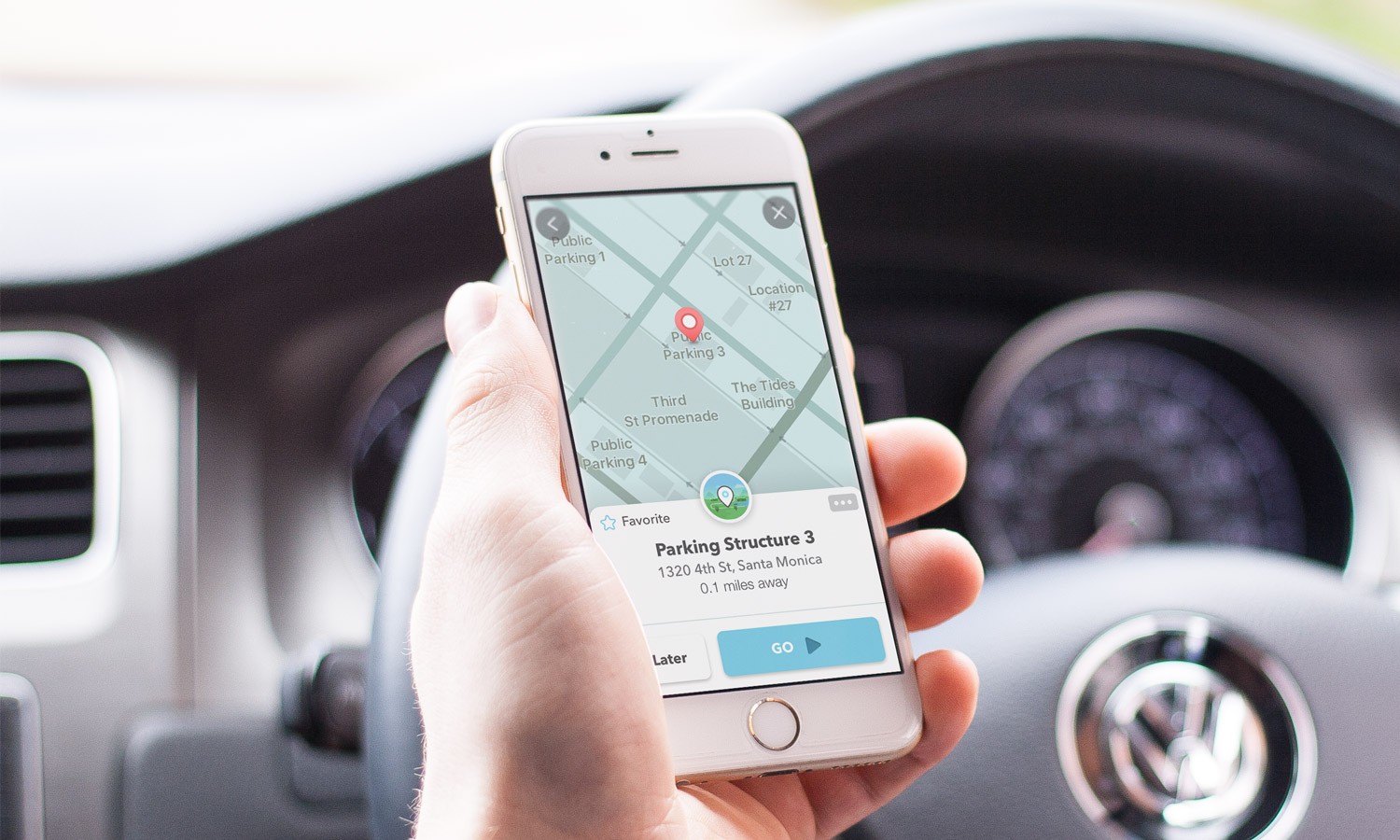
    There is a solution, however, users with this problem can switch to another navigation and mapping app like Waze. Also owned by Google, Waze uses crowdsourced data to help it deliver the fastest and safest routes for users to follow. Unlike Google Maps, Waze concentrates on navigation although it can still lead you to gas stations and restaurants. Or, if using Google Maps is a must, just run the app through your phone instead of using Android Auto.

    One user who posted on Google’s forum said that prior to the latest Android Auto update, everything worked perfectly on his 2018 Audi Q7 and his Samsung S21 Ultra. Once he installed the update, Android Auto no longer appeared as an app on his phone home screen and could not be reinstalled. The Q7 display no longer includes Maps; after using his voice to call for the Google Maps app, he is told that “This application is not available on your device.”

    While he can navigate using Google Maps on his Galaxy S21 Ultra, his car no longer displays maps and the turn-by-turn directions can not be heard from his car’s speaker. After talking with Samsung, the man says that he was told that the issue is not with his Galaxy S handset, but with Android Auto.

    In his post, he notes that he tried uninstalling and reinstalling updates, rebooting the phone, and re-setup Android Auto on his car, all to no avail. A subsequent post was sent in by a person with a similar story who uses a Galaxy S20 Ultra running Android 12. This person also lost Google Maps on Android Auto.

    The aforementioned community specialist with the Android Auto team responded by saying, “Thanks for reporting this issue. We have reached out to you via email to collect more information. Please share the required details.” So at this point, we have to assume that Google is not totally familiar with the issue.

    If you are affected by this bug,, you should simply use Google Maps on your handset, or switch to Waze on Android Auto. Either way, you will need to wait for Google to make the necessary repair through an OTA software update.

    Speaking of updates, Android Auto 7.2, the one that caused Google Maps to disappear, was released at the beginning of this year with no changelist.

    Have any of you found that Google Maps has disappeared from your Android Auto screen after installing the 7.2 update? If so, which one of our suggestions are you using? Did you decide to simply turn to your phone to run Google Maps, or are you continuing to use Android Auto and have switched to Waze. Let us know by dropping your comment in the box below.


  • Unilever says GSK consumer arm ‘strong strategic fit’ for business

    Unilever says GSK consumer arm ‘strong strategic fit’ for business

    Dove soap maker Unilever signaled on Monday it would pursue a deal for GlaxoSmithKline’s consumer health business, calling it a “strong strategic fit” after its 50-billion-pound approach ($68.4 billion) was rejected.

    The update comes after GSK confirmed over the weekend that it had rejected the Unilever offer for its consumer healthcare business, which is home to brands such as Sensodyne toothpaste and Emergen-C vitamin supplement.

    “The acquisition would create scale and a growth platform for the combined portfolio in the U.S., China and India, with further opportunities in other emerging markets,” Unilever said, pointing to synergies in the oral care and vitamin supplements business.

    Unilever held talks with banks about additional financing for a potential sweetened offer for GSK’s consumer products division, Bloomberg News reported on Sunday, citing people familiar with the matter.

    Unilever, which is set to announce an initiative later this month to strengthen its business, said on Monday it was committed to “strict financial discipline” for any acquisitions.

  • In one country, the Apple Tax appears to be crushed for certain apps

    In one country, the Apple Tax appears to be crushed for certain apps

    Sundar Pichai and  Mark Zuckerberg, the CEOs of Google and Facebook respectively, allegedly signed off a secret and illegal ad deal according to BuzzFeed. As a result, Facebook was given “information, speed, and other advantages” during auctions for ad space run by Google. Yesterday, unredacted court documents revealed the involvement of the two CEOs in the deal.

    The documents are from a complaint originated by Texas and other states in December 2020 that accused Google of committing “false, deceptive, or misleading acts” while running its buy-and-sell auction system for digital ads. The complaint states that Google teamed up with Facebook in 2018 that Google called “Jedi Blue,” a name that riffs on the Star Wars movie franchise.

    Facebook unnerved Google by promoting a method called “header bidding” that was a threat to Google. With “header bidding,” publishers offer inventory to multiple ad exchanges before calling their ad servers. By hiking demand for limited inventory, publishers make more money.

    According to the complaint that was released on Friday, “Google understood the severity of the threat to its position if Facebook were to enter the market and support header bidding. To diffuse this threat, Google made overtures to Facebook.” The deal was made at the highest level of both companies and the complaint notes that “Google CEO Sundar Pichai also personally signed off on the terms of the deal.”

    The complaint also revealed that Facebook CEO Zuckerberg wanted to meet with the company’s COO Sheryl Sandberg before making a decision. While employees’ names were redacted in the court documents, their titles weren’t.

    Both Google and Facebook are under pressure for using anti-competitive methods. Google says that the lawsuit isn’t accurate, and company spokesperson Peter Schottenfels said, “We sign hundreds of agreements every year that don’t require CEO approval, and this was no different. And contrary to AG Paxton’s claims, the fact of this agreement was never a secret — it was well-publicized. It simply enables FAN [Facebook Audience Network] and the advertisers it represents to participate in Open Bidding, just like over 25 other partners do.”

    Facebook’s corporate parent Meta agreed with Google that the deal between the two tech giants did not call for Facebook to receive any particular advantages that other companies were not being given. “Meta’s non-exclusive bidding agreement with Google and the similar agreements we have with other bidding platforms, have helped to increase competition for ad placements,” said Meta spokesperson Stephen Peters. “These business relationships enable Meta to deliver more value to advertisers while fairly compensating publishers, resulting in better outcomes for all.”

    As you might have expected, Google is planning to ask a judge to toss the case. Both Google and Facebook have been under fire from lawmakers for antitrust issues. Last summer, bills were introduced in Congress with lawmakers worried that firms like Google, Facebook, Amazon, and Apple were using their dominance in businesses like online shopping, search, and entertainment in order to crush their competition.

    Additionally, Congress is concerned that these firms are making acquisitions that never should have received approval from antitrust regulatory agencies. As a result, there has been a call in Washington D.C. to force tech giants to break up into smaller companies.

    Last year, the filing fees imposed on transactions valued at over $1 billion rose while the same fees for transactions valued at less than $500,000 would decrease. The idea is to give tech giants the incentive to purchase smaller firms instead of larger ones. In addition, the higher fees are expected to generate $135 million for antitrust enforcement agencies in its first year.

  • Google, Facebook CEOs sign off on illegal ad deal

    Google, Facebook CEOs sign off on illegal ad deal

    Sundar Pichai and  Mark Zuckerberg, the CEOs of Google and Facebook respectively, allegedly signed off a secret and illegal ad deal according to BuzzFeed. As a result, Facebook was given “information, speed, and other advantages” during auctions for ad space run by Google. Yesterday, unredacted court documents revealed the involvement of the two CEOs in the deal.

    The documents are from a complaint originated by Texas and other states in December 2020 that accused Google of committing “false, deceptive, or misleading acts” while running its buy-and-sell auction system for digital ads. The complaint states that Google teamed up with Facebook in 2018 that Google called “Jedi Blue,” a name that riffs on the Star Wars movie franchise.

    Facebook unnerved Google by promoting a method called “header bidding” that was a threat to Google. With “header bidding,” publishers offer inventory to multiple ad exchanges before calling their ad servers. By hiking demand for limited inventory, publishers make more money.

    According to the complaint that was released on Friday, “Google understood the severity of the threat to its position if Facebook were to enter the market and support header bidding. To diffuse this threat, Google made overtures to Facebook.” The deal was made at the highest level of both companies and the complaint notes that “Google CEO Sundar Pichai also personally signed off on the terms of the deal.”

    The complaint also revealed that Facebook CEO Zuckerberg wanted to meet with the company’s COO Sheryl Sandberg before making a decision. While employees’ names were redacted in the court documents, their titles weren’t.

    Both Google and Facebook are under pressure for using anti-competitive methods. Google says that the lawsuit isn’t accurate, and company spokesperson Peter Schottenfels said, “We sign hundreds of agreements every year that don’t require CEO approval, and this was no different. And contrary to AG Paxton’s claims, the fact of this agreement was never a secret — it was well-publicized. It simply enables FAN [Facebook Audience Network] and the advertisers it represents to participate in Open Bidding, just like over 25 other partners do.”

    Facebook’s corporate parent Meta agreed with Google that the deal between the two tech giants did not call for Facebook to receive any particular advantages that other companies were not being given. “Meta’s non-exclusive bidding agreement with Google and the similar agreements we have with other bidding platforms, have helped to increase competition for ad placements,” said Meta spokesperson Stephen Peters. “These business relationships enable Meta to deliver more value to advertisers while fairly compensating publishers, resulting in better outcomes for all.”

    As you might have expected, Google is planning to ask a judge to toss the case. Both Google and Facebook have been under fire from lawmakers for antitrust issues. Last summer, bills were introduced in Congress with lawmakers worried that firms like Google, Facebook, Amazon, and Apple were using their dominance in businesses like online shopping, search, and entertainment in order to crush their competition.

    Additionally, Congress is concerned that these firms are making acquisitions that never should have received approval from antitrust regulatory agencies. As a result, there has been a call in Washington D.C. to force tech giants to break up into smaller companies.

    Last year, the filing fees imposed on transactions valued at over $1 billion rose while the same fees for transactions valued at less than $500,000 would decrease. The idea is to give tech giants the incentive to purchase smaller firms instead of larger ones. In addition, the higher fees are expected to generate $135 million for antitrust enforcement agencies in its first year.

  • Serious Safari bug reveals iPhone, iPad, and Mac users’ personal data

    Serious Safari bug reveals iPhone, iPad, and Mac users’ personal data

    Security firm FingerprintJS published a report on Friday about a bug found in the iOS 15 version of the Safari mobile browser. The report states that this bug “lets any website track your internet activity and even reveal your identity.” A bug found in an Application Programming Interface (API) used and supported by most browsers could be used by attackers to find out many things about you.
    An API is used by programmers to connect parts of the software to other software making it easier to develop programs. One such API, called IndexedDB, is supported by most major browsers and holds what the report calls “a significant amount of data.”

    The bug in the iOS 15, iPadOS 15, and macOS allows random websites to know what other sites a user is visiting on other windows and tabs. That is possible because sites like YouTube, Google Calendar, and Google Keep use “unique user-specific identifiers” in their database names. As a result, authenticated users can be identified as the aforementioned sites create databases that include the  Google User ID belonging to the user, and databases are opened for all the accounts being used.

    The Google User ID leads an attacker to a wealth of personal data. Each one can be used to identify a specific Google account and in combination with Google APIs, it can, at the least, reveal your profile picture to a hacker. It also could help the attacker grab much more personal information and unravel “multiple separate accounts” owned by the same user.

    Unfortunately, learning your personal information doesn’t require you to perform any specific action as the report states “A tab or window that runs in the background and continually queries the IndexedDB API for available databases, can learn what other websites a user visits in real-time. Alternatively, websites can open any website in an iframe or popup window in order to trigger an IndexedDB-based leak for that specific site.”

    FingerprintJS checked with Alexa’s top 1,000 visited sites and found that 30 interact with indexed databases right on their homepage, without any interaction or authentication required by the user. Even if a person is using the private mode in Safari, if he visits multiple websites using the same tab, all databases interacted with are leaked to the sites the user subsequently visits.

    There isn’t much that a Safari user can do if he is running iOS 15 or iPadOS 15. One suggestion is to block all JavaScript by default and only allow it on sites that are 100% trusted. Mac users can switch browsers to escape this bug, but this is not a solution on iOS 15 or iPadOS 15. We should point out that the bug was submitted by FingerprintJS to the WebKit Bug Tracker on November 28, 2021, as bug 233548.

    If you want to check this out on your iPhone or iPad, open Safari and point it at safarileaks.com and follow the simple directions. Quickly (too quickly), the name of the last site you visited appears (if it was one of the sites listed on the Demo page) and your unique Google User ID can be accessed.

    Frankly, the only solution that you have is to wait for Apple to update the iOS and iPadOS software and make sure to install it as soon as it is released. Again, if you’re using a Mac, changing browsers is a valid option although that is not the case with iOS and iPadOS. And keep in mind that users don’t need to perform any specific action in order to set off the bug.

  • Instagram testing TikTok-like vertical scrolling for Stories

    Instagram testing TikTok-like vertical scrolling for Stories

    Instagram is working on ways it can better rival the crazy popular short-video-sharing platform TikTok, and a redesigned way to show Stories is one of them. The company announced such a feature will be coming back last year, but now, it has finally started appearing to some users for testing.

    The feature was first spotted by social media consultant Matt Navara, and it seems Instagram is currently testing for some users located in Turkey. The update brings vertical scrolling to Stories, and in order to jump to the next user’s Stories, you need to swipe down, just as on TikTok. To view Stories from the same user, you still need to tap the left or right side of the screen.

    Additionally, the update was also received in Brazil, thus making us think that the tested feature has a more global rollout, or it has been expanding to more countries.

    The new feature immediately reminds us of TikTok, and it could as well be interpreted as an attempt by Instagram to better compete with the app with steadily growing popularity. What’s more, Instagram has also been making Stories more focused on video instead of just a simple photo.

    At the moment, it is unclear when this feature will be available to all users, as it is currently in its testing period.

    The feature we reported on above is not the only attempt that Instagram has recently made to better rival video-sharing TikTok.Back in December, Instagram also tested an increased maximum duration limit for videos in Stories. When posting videos in Stories, if they are longer than 15 seconds, they would get segmented into different Stories, and Instagram is currently working on amending this. It has been testing allowing up to 60 seconds of videos in Stories without segmentation.

    And let’s not forget to mention Reels: it is the more obvious TikTok-like feature on the social media platform. Instagram has been pushing for it to gain traction and popularity and is even offering a bonus of up to $10,000 for content creators that post Instagram Reels.

    Reels actually debuted back in 2020, but it hasn’t been gaining as much attention as the rival TikTok, which continues to rank quite high across all metrics of popularity. Recently, TikTok was even crowned as the “most visited website of 2021”, at least in a Cloudflare domain ranking. By the way, TikTok surpassed Google.com in this ranking!

    Nevertheless, that doesn’t stop Instagram-owner Meta to continue developing its services and enriching the user experience with new features. One particularly good feature that Instagram has recently announced and is planning to implement soon is a version of the chronological feed that vanished in 2016. Basically, Instagram will have three different options for your main feed: one dubbed Home (which will be the current one), one dubbed “Favorites”, and one dubbed “Following”. The latter will allow people to scroll through the posts of only the creators they have followed and view them in chronological order.

    For many people that would be quite handy as many users don’t like getting post recommendations from people that they don’t follow in their feed instead of the content of people they like and want to see more of.

    Another recent feature that Instagram is working on is called “Edit Grid”, and it will allow you to arrange the posts in your profile to your liking, regardless of the date the photo was published.

    Of course, all these features are currently in testing or under development and an official global release date has not been specified.

  • Backlinks: More or Better?

    Backlinks: More or Better?

    Backlinks: More or Better?

    The topic of link mass has been raised more than once by marketing specialists. The quality of link mass directly affects the ranking of your site in search engines and if you want to achieve success and development in business, then you need to take care of the quality of your backlinks and link mass in general. Optimizers are very careful about the link-building process because most of the success depends on it. Today let’s break down what backlinks are and why their quality is important for SEO optimization.

    What Is the Phenomenon of Backlinking?

    Let’s start with the most significant thing. Remember, backlinks are the most important factor for ranking sites and in SEO analysis. Whether a startup or an experienced merchant, you should pay attention to the backlinks in the first place and constantly monitor the quality. A couple of years ago, Google confirmed that for them the content and backlinks are two key factors that allow them to evaluate the resource and to further promote it. By analyzing the link mass, search engines build a ranking of sites that are more often seen by users.  Essentially, these are links that direct users to your site from other relevant websites.

    Another important point to pay attention to is that in link-building more doesn’t mean better. A couple of years ago, Google’s algorithm included as one of the key factors the presence of backlinks and their number. The more backlinks led to a site, the more trustworthy it was. Now everything has been turned upside down and the number no longer plays a role. You can have a billion links from low-quality resources, but you will not notice any increase in audience and popularity. We recommend you read more about ​​how to get high quality backlinks.

    The Importance of High-Quality Backlinks

    Despite the fact, that algorithms are constantly being changed and modified, backlinks quality remains the top priority for SEO optimization.  If in the early days of online marketing, the search engine took into account only the quantity of backlinks, without paying attention to their quality. However, today the situation looks exactly the opposite. It is quality that matters, not quantity. Read this blog to know more. Backlinks still play a vital role in the promotion and development of different resources. And all the studies that have been conducted on this subject show that in competitive niches (and this is almost all commercial ones) in the top positions appear sites that have better-built backlinks from reputable sources.

  • The FTC’s attempts at splitting up Meta are continuing

    The FTC’s attempts at splitting up Meta are continuing

    The Federal Trade Commission (FTC) has been trying to break up Meta for quite some time now, due to alleged anti-competitive practices the company did: pretty much, the act of buying rising possible competitors Instagram and WhatsApp has been considered as anticompetitive by the FTC. It had filed a lawsuit last year, and the “amended and more detailed” version of it was now allowed to proceed.

    The documentation provided by CNN’s Brian Fung shows that the social media giant has again tried to dismiss the case; however, the judge didn’t agree with its argument and allowed the case to move forward.

    This lawsuit was initially filed back in December of 2020, and it indeed accused the social media giant of anti-competitive practices. According to the complaint, Facebook violated antitrust regulations with the purchase of Instagram and WhatsApp (which have been rising rivals to it) in an attempt to eliminate possible competition.

    Back in June, the complaint was dismissed by a federal court, and the main reason for this decision was the lack of evidence that Facebook is indeed a monopoly in its market. Despite the dismissal though, the FTC went ahead with a 3-2 vote to refile the complaint.

    As many of you may have probably heard so far, many regulators (not only in the United States but in Europe as well) have been scrutinizing tech giants for at least a couple of years now. The reason: supposed anti-competitive practices. And it’s not only Facebook but Google, as well as Apple, that have been under the radar of antitrust entities.

    Many of these antitrust regulations, research, proposals, or lawsuits are continuing for years. In some of the cases, tech giants have been found to behave in an anti-competitive manner, and of course, fined by commissions quite heavily.

    One of the more recent cases was involving Google vs the EU court, and the Mountain View tech giant ended up having to pay a fine of $2.8 billion. In this particular case, the fine was due to the fact Google had paid phone makers to have Google Search pre-installed on Android phones.

    Additionally, back in July, Google was ruled to stand trial for recording and disseminating private conversations of people who accidentally activated Google Assistant.

    On the other hand, both Apple and Google are currently being investigated for their alleged monopoly by a UK watchdog. In this case, we are talking about the mobile operating systems Android and iOS; for which the two companies have been alleged to hold a monopolistic position on the global market.

    Facebook is one of the big tech companies that US regulators are looking to split up, but it is not the only one. The effort to empower healthy competition (at least, according to the US regulators) could end up affecting all four big companies (Apple, Google, Facebook, and Amazon), and any of these might have to go against similar complaints that we have reported on above. This means that technically, US regulators might try to split up Amazon, Google, and Apple.

    Back in June last year, five bills were introduced aimed at these four tech giants, because of their domination in online shopping, search dominance, and entertainment. Basically, anti-trust practices. All of this comes to say that these tech companies have been having quite a hard time with regulators across the globe for their alleged monopolies over the mobile (or generally the tech) market.

    In summary, the tech giants are facing scrutiny all over the world. Australia and India have also aimed laws at reducing their monopolistic power.

  • AS Watson expanding online presence with Amazon Singapore

    AS Watson expanding online presence with Amazon Singapore

    This will launch an extensive product range and offer free scheduled delivery. Amazon Singapore and Watsons entered a partnership to launch a wider range of beauty, health, and personal care products on Amazon.sg through a dedicated storefront.

    According to Amazon, Prime members will find products available on Watson’s storefront from various brands such as as Aveeno, Bioré, Cetaphil, Bifesta, Wavertree & London, L’Oréal Paris, Oral-B, Anessa, Tsubaki, ZA, and other items ranging from facial care to health supplements.

    Customers are also given a free two-hour scheduled delivery of their items within the same day for orders over S$25 until 10 February. Prime members, meanwhile, will still receive free shipping on Watsons for orders above S$60 after the promotion period, Amazon said in a press release.

    This is Amazon Singapore’s first partnership with leading beauty and health retailers, creating a dedicated storefront on Amazon.sg.

    Henry Low, Amazon Singapore’s country manager, said the partnership is “the perfect next step to improve our offerings in Singapore.

    Irene Lau, Managing Director of Watsons Singapore, also noted the two-hour delivery offered by Amazon.sg to its prime members.

    “This is in line with our proactive customer-centric and Offline+Online strategies to offer our shoppers more convenient options to shop seamlessly, whenever and wherever, be it on watsons.com.sg or partner sites, like Amazon.sg,” she said.

    Special deals and promotions such as Weekend Specials and 1-for-1 Deals would also be available for Prime members until 6 February in line with the partnership.

  • WhatsApp voice messages may soon be playable anywhere in the app

    WhatsApp voice messages may soon be playable anywhere in the app

    A report by WABetainfo reveals how WhatsApp’s global voice message player might look like. The player will be able to play voice messages that you have already begun listening to anywhere within the app. The picture shows that the voice message player might be situated at the top of the WhatsApp app and might include a progress bar that shows how much you have left from the audio message. The picture also shows a button to pause and play the message and another button to dismiss it.

    According to the report, WhatsApp’s global voice message player will eliminate the need to stay inside the chatbox in order to listen to a voice message. The player will be constantly visible and will appear on every page of the WhatsApp app, hence the word “global.”

    Because of its global function, WhatsApp’s voice message player is supposed to become very useful for listening to long voice messages. By using the player, you will be able to listen to a long audio message while, at the same time, chatting with other contacts.

    WhatsApp’s global player for voice messages is still in its development stage. At the moment, there is no official information on when this new feature will be released to WhatsApp’s users.

  • Vietnam operating costs among Asia’s lowest

    Vietnam operating costs among Asia’s lowest

    Vietnam has the second-lowest operating costs among nine countries in Asia and is assessed to have high logistics development potential, a report says.

    The monthly minimum operating cost for a manufacturing company in Vietnam is $79,280, compared to leader Singapore at $366,561 and second-placed Thailand at $142,344, according to a report by Singapore-based business transformation consultancy TMX.

    The report says the minimum operating cost in Vietnam is only higher than Cambodia’s at $65,313. The report calculated the average costs of doing business in nine popular potential manufacturing locations in Asia: Cambodia, India, Indonesia, Malaysia, Myanmar, the Philippines, Singapore, Thailand, and Vietnam.

    Vietnam, along with several other countries like Thailand and the Philippines, offers a sizable and relatively affordable pool of labor.

    While Vietnam offers abundant employment opportunities, it has fewer highly skilled talent in many sectors with talent competitiveness of around 35 points, compared to the 40 points for the Philippines and Thailand.

    Warehouse rentals in Vietnam is the same as others at eight other countries, the report said.

    The report also said that Vietnam was the only country in the “high potential” group in terms of logistics costs.

    In the overall country competitiveness scorecard, it ranks fifth behind Singapore, Malaysia, India, and Thailand.

    “Vietnam has a better score in a business environment. However, with a lower talent score, it indicates challenges for companies looking to find ready talent. Such businesses may consider investing in training and development,” the report said.

  • Transport ministry wants several airports to be privatized

    Transport ministry wants several airports to be privatized

    The Ministry of Transport wants private investors to build and operate proposed airports such as Sa Pa in the north and Quang Tri in the central region.

    It wants two others built under public-private partnerships in Lai Chau and Cao Bang in the north.

    It also said local authorities should take over the management of runways in 13 airports.

    Four central airports that have military components, Tho Xuan in Thanh Hoa Province, Chu Lai in Quang Nam Province, Phu Cat in Binh Dinh Province, and Tuy Hoa in Phu Yen Province, can also involve private investors if the Ministry of Defense transfers runway management to local authorities.

    Many companies have expressed interest in building and upgrading airports.

    Vietjet has been eyeing Chu Lai in central Quang Nam Province, Cat Bi Airport in Hai Phong City, Tuy Hoa, and Dien Bien in the namesake northwestern province.

    IPP Group wants to invest in Phu Quoc and Tuy Hoa, Vingroup in Chu Lai and FLC in Dong Hoi Airport.

    Vietnam began building and upgrading airports before the Covid pandemic hit since tourism was growing rapidly.

    By 2025, the government plans to have the first phase of Long Thanh International Airport operational with a capacity of 25 million passengers a year.

    Tan Son Nhat in HCMC and Noi Bai in Hanoi are set to be expanded to handle 50 million and 60 million passengers by 2030.

    The country needs VND403.1 trillion ($17.75 billion) to build and expand airports by 2030.

  • AirAsia CEO says international travel will bounce back strongly despite omicron impact

    AirAsia CEO says international travel will bounce back strongly despite omicron impact

    International travel is likely to recover soon despite progress being slowed by the omicron variant, according to AirAsia chief executive Tony Fernandes.

    “I do believe that we’re at the beginning of the end,” he said “Squawk Box Asia” on Monday, noting that the recovery has already begun in earnest.

    “The good thing is, this time last year, we had no planes flying. Now, we’ve got a large chunk of our fleet flying domestic Malaysia, Thailand, and Indonesia,” he said, adding that demand has been “very, very robust.”

    International travel will get back to pre-Covid levels around six months after borders begin to reopen, he predicted and said he hopes borders will start to open again in March.

    After a flurry of announcements about quarantine-free travel in Asia last year, several countries including Thailand and India reinstated restrictions for some arrivals, as omicron drove up caseloads.

    Fernandes also acknowledged that China continues to be a “big question” in terms of reopening, given that the country is still pursuing its zero-Covid policy.

    Separately, Fernandes said the company’s ride-hailing business has done “incredibly well” and “far exceeded” expectations since its launch in August 2021.

    He said AirAsia’s strategy is “exactly the same” as the one it used when the company entered the low-cost airline market years ago — high efficiency that results in lower prices for consumers.

    As a late entrant, AirAsia Ride could observe what models were successful, and did not have to spend a lot of money on research, development or tech, he said. It also acquired part of Indonesian start-up Gojek’s Thailand operations.

    “The market is still very, very calm.”

  • Waze adds new feature that won’t totally rely on crowd-sourced data

    Waze adds new feature that won’t totally rely on crowd-sourced data

    Over the years, the navigational and mapping app Waze has created several innovative tools that eventually made their way to stablemate Google Maps. Speed limit notifications, crowdsourced accident and speed trap reports have become part of the Google Maps experience after debuting on Waze. Google reportedly paid over $1 billion to buy Waze in 2013 and there are some differences between the two.

    While both get you from point “A” to point “B” safely, and in the fastest possible time, Google Maps will also help you find things to do, tell you where you should eat, where you can spend the night, and more once you reach your destination. And while both apps will warn you about any issues that could cause you to arrive later than expected, Waze relies on crowdsourced information more than Google Maps does.

    For example, if a road is flooded, on Waze you typically would not be informed of this unless another Waze user had first reported it. That isn’t very safe for the first Waze user who drives onto a flooded street without getting a warning. So according to auto evolution, Waze is going to take advantage of a partnership between Google’s RISE Organization and FloodMapp.

    FloodMapp has created a real-time system that analyzes certain data to help predict exactly where a flood will take place. This information is sent to Waze where it can be used to alert drivers if their travels will be taking them too close to roads that are flooded. The bottom line is that some unlucky person doesn’t have to get stuck in a flooded-out location and report it to Waze to warn other drivers about this problem.

    Waze is hoping that users warned to avoid a road that is flooded still report in if they happen to see it in person. By using visual confirmation, Waze will know whether its system is working as it should. And if a flooded road is confirmed, it will help the app reroute drivers away from impassable roads and suggest an alternative route.

    The new flood warnings for Waze users will first be available in Norfolk, Virginia. However, if everything works as expected, the feature will be made available to additional regions. At last count, Waze has 140 million monthly users with 30 million users in the U.S.

    Back in October, Waze CEO Guy Berkowitz revealed some sobering news about the app’s capabilities. “We have a problem with the algorithm,” he said. “The more people we serve, the more it’s affected. The coronavirus has put us in a situation where we have to reinvent our algorithm.” Using crowdsourced data, it makes sense that if there are fewer people on the road because of the virus, the number of crowdsourced reports sent to Waze each day will decline.

    But there is another aspect to this issue. In Israel, where Waze was first developed, the pandemic kept many motorists off the road. Once these drivers went back behind the wheel, traffic patterns changed dramatically which messed with the algorithms used to recommend to Waze users which route they should take. Waze users complained that they were being rerouted to locations far away from their desired destinations and as one upset Waze user put it, the app “just went crazy.”

    Many of the crowdsourcing features in Waze are now available in Google Maps which begs the question, why hasn’t Google shut Waze down? Apparently, the company feels that there is enough of a difference between the two. And looking at the apps, that is true. Google Maps looks like a polished, professional effort while Waze can take on the appearance of a cartoon.

    Additionally, Waze shows hyperlocal ads with content that is relevant to the driver’s current location. The app’s own promotional material for advertisers highlights its ability to help drivers find advertisers’ businesses. As Waze cleverly says, “Become part of your customer’s journey.”

  • Meta’s Privacy Center enables Facebook users to learn more about their privacy settings

    Meta’s Privacy Center enables Facebook users to learn more about their privacy settings

    Meta has announced the Privacy Center, its latest feature where users of services like Facebook can learn how Meta collects their private information. In the Privacy Center, users will also be able to read Meta’s Data Policy and get additional information on how to use the privacy and security controls of the service. Furthermore, the Privacy Center will become Meta’s hub for all privacy and security settings the company has introduced over the years.

    Currently, the Privacy Center has five modules, and each of these modules offers guides and controls for a related privacy matter.

    The five modules are:

    • Security: For setting up two-factor authentication, updating other security settings, and getting additional information about your safety.
    • Sharing: For finding information on how to change the settings for your posts and how to use the Manage Activity tool.
    • Collection: For additional information on what data Meta collects and how to use tools like Access Your Information.
    • Use: For managing and receiving extra information about how Meta uses your data.
    • Ads: For managing the displayed ads through controls like Ad Preferences and for learning how the service decides what ads to show.

    At the moment, the Privacy Center is available only on the desktop version of Facebook to a limited number of users in the US. In the future, the Privacy Center will be accessible on the mobile version of Facebook as well. Meta also announced that it’s planning to roll out the Privacy Center to more users and to more of its apps. Although the Privacy Center currently has five modules, Meta will continue to add more modules and controls to it with time.