Category: General

Retail News Asia is committed to providing both local and global retailers with the latest General Retail news throughout the Asian market. This on a daily base.

  • Vietnam buys 80 pct of Cambodia’s agriculture exports

    Vietnam buys 80 pct of Cambodia’s agriculture exports

    Vietnam bought nearly 80 percent of Cambodia’s nearly $5 billion worth of agriculture exports last year. It bought 96-99 percent of Cambodia’s cashew, pepper and mung bean exports, according to a report by Cambodia’s Ministry of Agriculture, Forestry and Fisheries.

    Exports of Cambodia cashew to Vietnam grew 4.6 times from 2020, and that of pepper and mung bean surged four times. Other produce that Vietnam bought in large amounts from its neighbor were rice, grapefruit, bananas, and mangoes. Cambodian Agriculture Minister Veng Sakhom told Vietnam’s President Nguyen Xuan Phuc during the latter’s recent visit that Vietnam was Cambodia’s biggest importer among 70 countries and territories last year.

    Vietnamese companies had also harvested $200 million worth of latex in the first 11 months last year, he added.

    “Rubber farming has created jobs for around 33,000 locals. Vietnamese companies also contributed to over 50 percent of Cambodia’s banana exports, creating jobs for around 14,000 workers.”

    Insiders say the surge in Cambodia’s exports of agricultural produce to Vietnam came as many Vietnamese companies have invested in Cambodian farming.

    Agriculture expert Vo Tong Xuan ascribed the trend to Vietnamese businesses and individuals taking advantage of Cambodia’s affordable land fund as well as lower labor costs.

    “The yield is then exported back to Vietnam.”

    In the first 11 months last year, trade value between Vietnam and Cambodia rose 84 percent year-on-year to $8.6 billion, according to Vietnam Customs. Cambodia’s exports to Vietnam rose 337 percent in the period.

  • Air Asia accepts vax cards as primary travel requirement

    Air Asia accepts vax cards as primary travel requirement

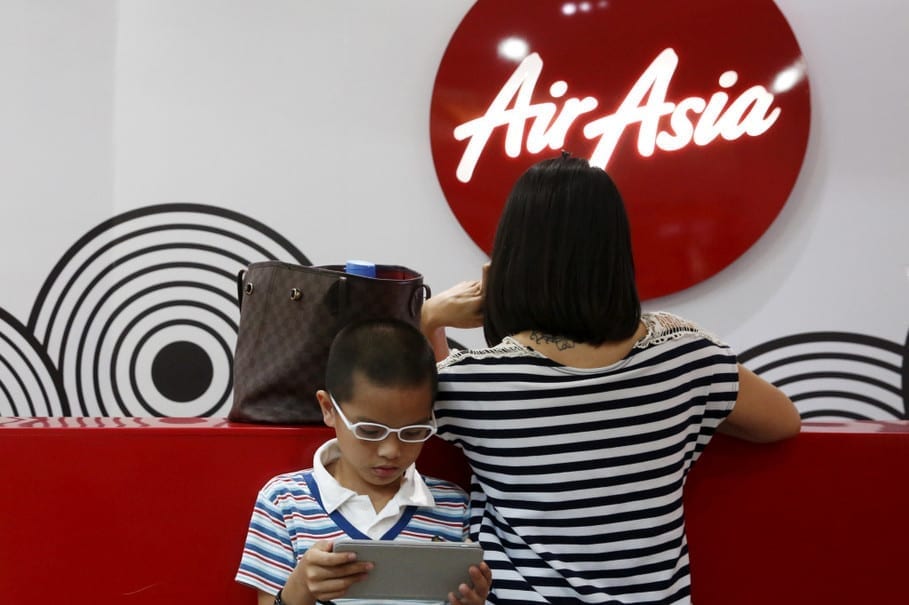
    All AirAsia Philippines domestic destinations continue to accept vaccination cards as a primary travel requirement, except for Caticlan, Kalibo, Tacloban, Bacolod, Iloilo and Zamboanga, which now require negative RT-PCR test results taken 72 hours prior to departure, regardless of vaccination status, the airline stated in its latest travel advisory.

    Amidst the surge of COVID-19 cases in Metro Manila plus (Metro Manila and CALABARZON), the low-cost carrier said in a statement Tuesday, Jan. 11, it has elevated its internal COVID-19 response to ensure the safety of employees and guests, optimizing operations to avoid canceling flights.

    AirAsia Philippines established a Safety Plus 24/7 Team composed of different department leaders and the People and Culture – Medical team to monitor the health of employees and distribute medication to those who have contracted the virus.

    The airline now requires all employees, including those who are working at home, to submit online daily health check forms to monitor their health.

    Its flight operations department is also clustering schedules and does regular onsite Antigen tests for flight deck and cabin crew.

    “Adequate planning and anticipation are key to mitigating the risks entailed on the unprecedented surge of COVID-19 cases,” said AirAsia Philippines Spokesperson Steve Dailisan.

    “Thankfully, we initiated the reintegration training of our hibernated staff as early as December, and this January, they will complement the requirements for manpower,” he noted.

    “Internally, we have added layers in monitoring and clustering among our Allstar frontliners to make sure our flight schedules remain unhampered during these times,” according to Dailisan.

    AirAsia Philippines also prioritized securing booster shots for all of its employees who have been fully vaccinated against COVID-19.

    On top of this, the airline offered enhanced flexibility among guests who wish to move their flights.

    They can avail of the unlimited rebooking option with no change fees by accessing the manage my flight option through the airasia Super App or airasia.com.

    However, AirAsia Philippines guests traveling over the next few days should check their flight status and visit the airasia flysafe page for the latest updates on travel requirements.

  • The Philippines to loosen restrictions on foreign retailers

    The Philippines to loosen restrictions on foreign retailers

    President Rodrigo Duterte has signed into law a measure that would further open up the Philippine retail sector to more foreign retail businesses by lowering their required paid-up capital.

    Republic Act (RA) 11595, which amends RA 8762, also known as the Retail Liberalization Act of 2000, was signed by Duterte on Dec. 10, 2021, and was released to reporters on Thursday.

    Duterte earlier certified the bill as urgent as part of efforts to encourage the entry of more investors and further boost economic recovery amid the prevailing coronavirus disease 2019 (Covid-19) pandemic.

    Under the law, “a foreign retailer shall have a minimum paid-up capital of PHP25 million.”

    The current law sets the required capital at USD2.5 million or PHP119.67 million.

    The law also mandates the entry of foreign retailers coming from countries that do not prohibit the entry of Filipino retailers.

    In the case of foreign retailers engaged in retail trade through more than one physical store, the minimum investment per store must be at least PHP10 million “provided that this requirement shall not apply to foreign investors and foreign retailers who are legitimately engaged in retail trade and were not required to comply with the minimum investment per store at the time of the effectivity of this Act.”

    The Department of Trade and Industry, Securities and Exchange Commission, and the National Economic and Development Authority shall review the required minimum paid-up capital every three years and their recommendations should be submitted to Congress.

    Foreign retailers are encouraged to have a stock inventory of products that are made in the Philippines.

    As for penalties, violators may face imprisonment of not less than four to six years and a fine of not less than PHP1 million but not more than PHP5 million.

    In the case of partnerships, associations, or corporations, the penalty shall be imposed upon its partners, president, directors, general manager, and other officers responsible for the violation.

    If the offender is not a citizen of the Philippines, he or she shall be deported immediately after the service of sentence.

    If the Filipino offender is a public officer or employee, he or she shall, in addition to the penalty prescribed, suffer dismissal and permanent disqualification from public office.

    RA 11595 is a consolidation of House of Representatives Bill 59 and Senate Bill 1840 passed by the House and the Senate on September 21 and 20 last year, respectively.

  • AirAsia scaling new heights with drone training

    AirAsia scaling new heights with drone training

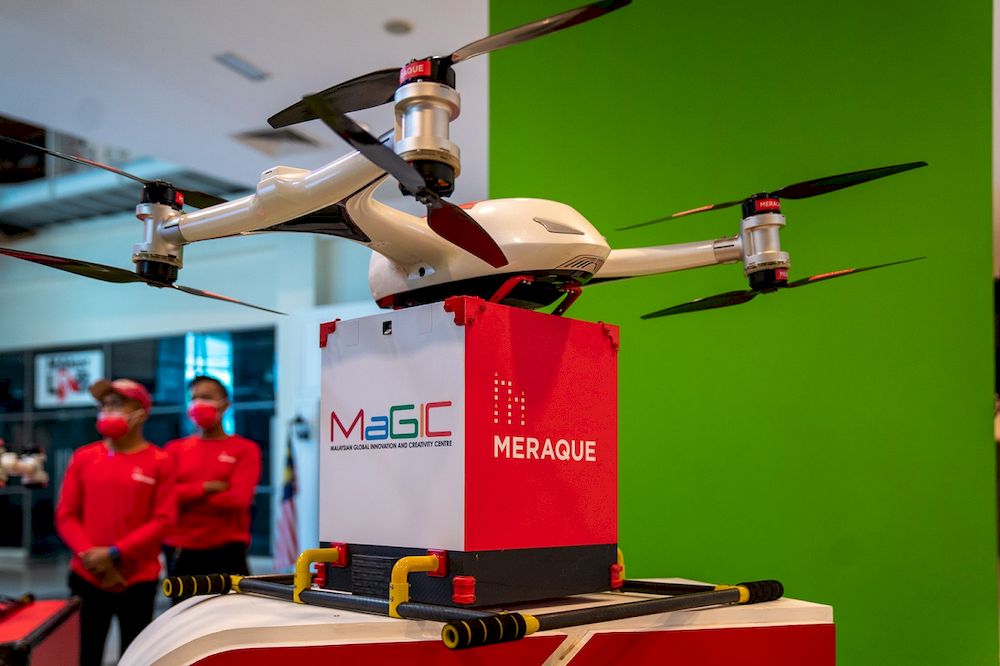
    AirAsia Group has become the first in Malaysia to obtain a license to conduct drone training: a game-changer in the drone delivery revolution in the country. This would, at the same time be a boost to the fast-growing domestic e-commerce industry.

    Group chief executive officer of AirAsia Aviation Ltd Bo Lingam said the move to train drone pilots would drive drone delivery. AirAsia Aviation Ltd is a unit of AirAsia Group.

    “It’s a lucrative and incredibly fast-growing market. Globally, the industry has already taken off and is projected to reach US$7.39bil (RM31bil) by 2027.

    “This new training program provides an opportunity to upskill our ‘Allstars’ and offer exciting new programs for the broader community, as well as supporting the drone industry in providing quality training to have more qualified remote pilots in Malaysia.

    “No prior experience is necessary, making this a great opportunity for everyone to learn to fly,” he told StarBiz.

    Ultimately, he said this would support the company’s vision to launch urban drone delivery for goods and retail items from airasia’s e-commerce platforms.

    The sky is the limit as the company could also potentially scale up to support remote areas for essential supplies during natural disasters, he added.

    President AirAsia Group (digital), Aireen Omar said: “Innovation has always been in our DNA and we can’t wait to launch our AirAsia Drone Academy through our digital edutech arm, airasia academy, as we continue to support the digitalization of Malaysia through a broad range of innovative tech-based training programs.

    “Drone delivery will soon become our latest logistics solution, providing a strong boost to support the ever-growing e-commerce industry.

    “Most importantly, this innovation will allow us to create new high-tech job opportunities for Malaysians.

    “The ability to pivot is part of our culture and while some are losing their jobs in aviation, we offer a second chance for them to build a new career with us through e-commerce,” she said.

    As a disruptive leader, Aireen said AirAsia is ready to take on new innovative challenges and embrace the wave of Industry Revolution 4.0 to its advantage.

    AirAsia Group chief safety officer and head of unmanned aircraft system (UAS) Captain Ling Liong Tien said the company is thrilled to be the first in Malaysia to win approval from the Civil Aviation Authority of Malaysia (CAAM) for the accreditation of the remote pilot training organisation (RPTO).

    He said the team has been working closely with CAAM for months and looks forward to starting its first class in the coming weeks.

    “The idea behind becoming an RPTO is to support the industry by providing quality remote pilot training leveraging our strong aviation background and decades of expertise. The UAS has become an important element in many industries driving cost effectiveness and numerous efficiencies.

    “Our commitment is to develop a strong foundation, supported by our existing robust safety management system, crew resource management and human factors training programs along with the remote pilot training modules – both in the class and out in the field,” he said.

    Commercial remote pilot training classes would commence from Jan 24.

    Interested candidates may register to enrol for one of the courses through the airasia academy website.

  • Do not install this fake Flash Player Android app even if a friend urges you to

    Do not install this fake Flash Player Android app even if a friend urges you to

    What do you get when you combine the untimely death of a hugely popular piece of software once used on everything from smartphones to PCs with the insatiable thirst for unlawful financial gains of highly skilled hackers?

    A scary new malware campaign that, to be perfectly honest, should be pretty easy to avoid by now for anyone who’s done even the least amount of research possible on this sort of stuff before. Of course, it’s never too late to start educating yourself on the daily dangers of modern mobile life, and the first thing you need to keep in mind is that you should never, ever, ever, EVER download an Android app from an untrusted source.

    Unfortunately, because the bad actors behind this latest “FluBot” distribution scheme know exactly what they’re doing, you might receive a link to a shady website trying to feed you the vicious aforementioned banking trojan via a bogus Flash Player app from someone you 100 percent trust, like a close friend, family member, or someone else from your contacts list.

    That’s because, once your phone is infected, one of the symptoms of said infection will be the unauthorized access of your contacts, with the added malware ability to send text messages without user permission.

    Bottom line, no matter where a link seems to be coming from, you should exercise good judgment and refuse to install random APK (Android Package) files. We know, we miss Adobe’s Flash too, but the San Jose-based software giant would never use APKs to revive something that’s been dead since 2020 and dying since 2017.

    Of course, the sneakiness of this malware campaign’s authors can often go beyond just sending a text from one random Android user to a friend or family member. Because asking someone to download a “Flash Player” app from outside the Play Store would be too obvious a tell for many people, the malicious texts you should… simply ignore may try to fool you into opening links by advertising various video-related things.

    A good idea in such a case would probably be to ask whoever sends you a message containing a potentially malicious link one or two simple questions, thus making sure their intentions are pure.

    If the name FluBot happens to ring a bell, that might be because the same trojan has infected countless devices in the past using methods as diverse as posing as a security update, parcel delivery notice, and other legit apps from popular developers.

    While the main goal is and always has been to steal money with the help of banking credentials you might have stored on your Android phone, the secondary purpose is to spread like wildfire by hijacking your contacts and messages.

  • Google executive accuses Apple of using peer pressure and bullying to sell iPhones

    Google executive accuses Apple of using peer pressure and bullying to sell iPhones

    Back in October, Google Senior VP Hiroshi Lockheimer suggested that Apple end the blue bubble vs. green bubble battle by incorporating Google’s Rich Communication Services (RCS) into the iOS Messages app. As you might know, features found on iOS such as end-to-end encryption, are broken when an Android user is part of a group chat. Lockheimer, whose official title at Mountain View is Senior Vice President of Platforms and Ecosystems, has more to say about RCS.

    First, for those uncertain what RCS is, it is Google’s attempt to build an SMS/MMS platform to compete with Apple’s Messages app. With RCS, Android users could send larger text messages, share larger media files, and have privacy thanks to end-to-end encryption. Google was even talking about using the platform as an e-commerce system allowing companies to get in touch with customers.

    RCS also gives Android users read receipts, and would allow them to send messages over Wi-Fi and mobile data. With iOS support for RCS, the Google executive notes that there would be less pressure among American youths to purchase an iPhone. With RCS, messaging an Android user would be a more modern and similar experience.

    Before RCS, Google had an Android messaging app and most U.S. carriers also loaded Android phones with their own messaging app bloatware leading to a confusing mish-mash of features on different carrier apps.

    Lockheimer, who is a strong supporter of RCS, tweeted comments related to a Wall Street Journal article about iMessage’s domination among texting teens. This had led young Android users to feel left out when texting iOS users. Lockheimer wrote, “Apple’s iMessage lock-in is a documented strategy. Using peer pressure and bullying as a way to sell products is disingenuous for a company that has humanity and equity as a core part of its marketing. The standards exist today to fix this.”

    Not all Twitter users took Apple’s side of things. A subscriber named Remon (@TheGreatUsurper) stated, “Typical iPhone user missing the point. Android has an iMessage equivalent, it uses a protocol to replace SMS. All major carriers already support the standard. Android users text over wifi & data, (receive) read receipts, great group chats, (and) reactions. Apple intentionally hurts communication.”

    ion not to support RCS is being done so that Apple continues to benefit from the vendor lock-in effect. Back in 2016, Apple’s Phil Schiller said “moving iMessage to Android will hurt us more than help us.” Apple’s software head Craig Federighi stated that “iMessage on Android would simply serve to remove [an] obstacle to iPhone families giving their kids Android phones.”

    The Google SVP believes that with iOS support for RCS, there would be less pressure on teens to buy an iPhone. Along those same lines, there also would be less pressure on the parents of teens to buy them an iPhone instead of an Android phone. And since some Android handsets are much cheaper than iPhone models, not allowing Apple’s Messages platform to integrate with RCS is theoretically costing consumers a large amount of money every year.

  • Singapore Weighs Open Borders Amid Omicron

    Singapore Weighs Open Borders Amid Omicron

    The country’s COVID-19 task force said closing its Vaccinated Travel Lanes (VTLs) would not stop the spread of Omicron.

    Closing Singapore to visitors from countries with high numbers of Covid-19 cases would affect the republic’s reputation and connectivity with the rest of the world, and rules have already been tightened to contain the Omicron variant, the country’s multi-ministry task force on Covid-19 said at a press briefing.

    Even if we close all the VTLs, there will still be non-VTL connections between Singapore and other countries and Omicron will still be able to enter Singapore unless we impose a total lockdown and close our borders entirely, Ong Ye Kung, taskforce co-chair said about whether it was looking to review border and VTL measures.

    At the same time, the task force warned of an upcoming Omicron wave» and said that it does not intend to relax further social restrictions currently, but will try not to have to tighten them until at least the Chinese New Year in February. Current gathering limits permit groups of five.

    Compliance with safe management measures will give Singapore a much higher chance of getting through this upcoming wave without having to tighten further, Finance Minister Lawrence Wong said at a press briefing.

    Switzerland is among Singapore’s top investment and trading partners, and there are around 1,000 Swiss companies and around 3,000 Swiss expatriates in the city-state. UBS is a notable example, with several thousand employees in Singapore and frequent travel between Zurich and Southeast Asia.

    The city-state stopped new ticket sales for VTL flights and buses from December 23 to January 20 amid Omicron concerns and said it would cap VTL quotas and ticket sales for travel after January 20 at 50 percent.

    Last week, it said that on-arrival tests for non-VTL travelers, who are all required to serve a 7 or 10 day Stay Home Notice (SHN) either at their place of residence or at a dedicated facility, are no longer required. From 8 January, all non-VTL travelers entering Singapore will also no longer be required to undergo a COVID-19 PCR test on arrival.

    The Ministry of Health on Wednesday said that from 14 February 2022 onwards, persons aged 18 years and above who have completed the primary vaccination series of COVID-19 vaccines and are eligible for booster vaccination will only be considered as fully vaccinated for 270 days after the last dose in their primary vaccination series.

  • The French data regulator fines Google and Facebook a total of $238 million

    The French data regulator fines Google and Facebook a total of $238 million

    Google and Meta, formerly known as Facebook, must now pay a $238 million combined fine to France. CNIL, France’s data regulator, fined both companies because they violated the EU’s privacy rules. Both tech giants have made it easier for users to accept cookies on their websites, but they have not made it as simple for users to reject the tracking cookies.

    CNIL stated that the sites: facebook.com, google.fr, and youtube.com offer immediate acceptance for tracking cookies only by tapping a button. However, these websites don’t offer a similar button for rejecting the cookies. Instead, they made it more difficult for users to refuse to be tracked by the websites.

    Making it easier to accept cookies than to refuse them, according to the CNIL’s restricted committee, affects the user’s freedom of consent. When a user visits a website, they want to find what they’re looking for as quickly as possible. By making the acceptance of the cookies easier than the refusal, Google and Meta influence the choice of the user in favor of consent.

    CNIL fined Google €150 million ($170 million) and Meta €60 million ($68 million). In addition to the fines, CNIL mandated that Google and Meta provide a way for French users to reject tracking cookies as easily as they would accept them. Both companies were given three months to comply with the mandate. If they do not comply with the order, both companies will have to pay 100 000 euros ($113 000) per day as a penalty.

    In a statement, Google said, “People trust us to respect their right to privacy and keep them safe. We understand our responsibility to protect that trust and are committing to further changes and active work with the CNIL in light of this decision under the ePrivacy Directive.”

    Meta also made a statement according to the CNIL’s decision, saying, “We are reviewing the authority’s decision and remain committed to working with relevant authorities. Our cookie consent controls provide people with greater control over their data, including a new settings menu on Facebook and Instagram where people can revisit and manage their decisions at any time, and we continue to develop and improve these controls.”

    The CNIL, France’s National Commission on Informatics and Liberty, is in charge of ensuring that the data privacy law is followed in the use of personal data in France.

  • Send Read Receipts can’t be turned off in Messages for some users

    Send Read Receipts can’t be turned off in Messages for some users

    It’s sometimes useful to see whether someone has read your message or not but then again some people find this functionality a bit much. And it’s true, waiting to see if your precious message has reached its recipient can encourage obsessive and stalking behavior.

    Now, it seems that a nasty bug is preventing some users from turning this feature off on their iPhones and iPads. Apple offers the option to turn on and off Send Read Receipts in Messages in iOS, iPadOS, and macOS, and if your devices are synced to the same iCloud ID, this feature will be toggled on or off on all of them.

    This can be done by going to Settings > Messages and then toggling the Send Read Receipts switch (iOS and iPadOS), or going to Settings > Preferences > iMessage and checking or unchecking “Send read receipts” for Mac users.

    However, toggling Send Read Receipts on or off does nothing for some users, and people can still see when they read messages. The same issue was present briefly on previous iOS and iPadOS releases but now the problem can be seen in the latest software releases.

    Apparently, there’s no resolution at this time, although there’s a workaround. Some people found that restarting their iPhone or iPad does the trick temporarily. And while we wait for a fix to be released, share your experience with Messages. Can you turn off Send Read Receipts?

  • TikTok videos coming to screens in gyms, bars, and restaurants

    TikTok videos coming to screens in gyms, bars, and restaurants

    Atmosphere, a streaming TV service for businesses like restaurants and gyms, announced its partnership with TikTok. The new collaboration will bring carefully selected TikTok videos to businesses around the world in the form of a new channel on Atmosphere’s platform.

    Dan Page, TikTok’s Head of Global Business Development and New Screens, said about the new partnership, “By partnering with Atmosphere, we’re excited to make it easy for people to experience TikTok together by bringing the joy and creativity of our platform to new screens, venues, and audiences.”

    Atmosphere’s ad-supported streaming platform provides entertainment content to over 19,000 businesses worldwide. Some of these businesses are restaurants, bars, gyms, and doctors’ offices. Atmosphere also works with Westin, Taco Bell, and Texas Roadhouse, so if you are a customer of these restaurants, you will also be able to watch Atmosphere’s carefully curated TikTok videos during your meal.

    Leo Resig, CEO and co-founder of Atmosphere, said in a statement, “Everyone is constantly on the go and on their phones, so we developed a hyper-entertaining streaming TV platform with Atmosphere, which elevates the vibe of any business. This is a win-win for the business and their customers as well as advertisers, who are having a harder time connecting with an unreachable TV audience. ”

    Atmosphere offers a streaming TV platform for businesses worldwide that has more than 64 TV channels. Atmosphere’s platform gives access to various entertainment content like video compilations, sports, lifestyle, and art. More than 20 million unique visitors every month, according to Atmosphere, watch its TV platform.

  • Gojek drives car service into Hanoi

    Gojek drives car service into Hanoi

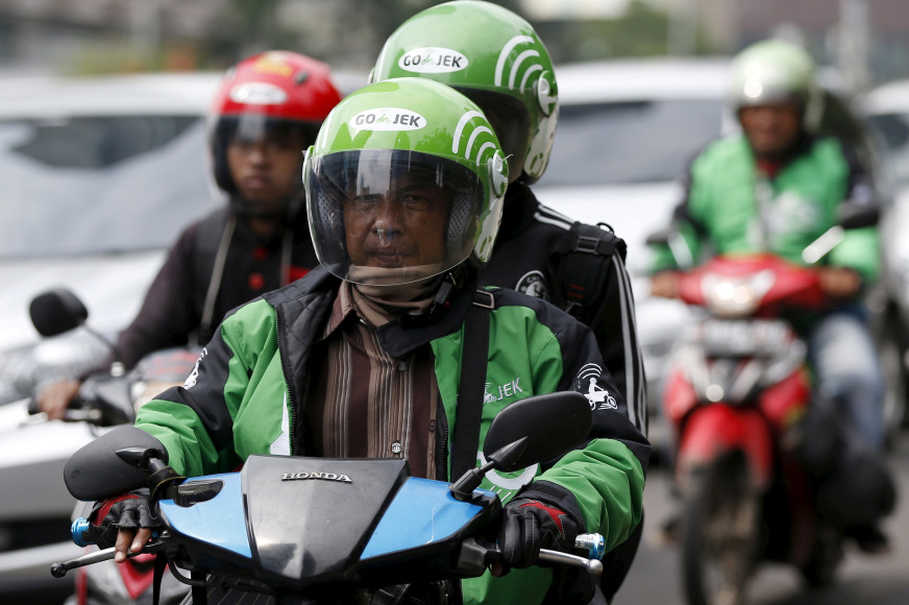
    Ride-haling platform Gojek has launched its GoCar Protect service in Hanoi a month after introducing it in HCMC.

    The Indonesia-headquartered company guarantees that all its drivers have got two doses of Covid-19 vaccines and all cars are equipped with an air purifier and a transparent protective shield to separate drivers and passengers.

    Drivers must take a selfie to prove they have a mask on at the start of the day.

    Gojek Vietnam general manager Duc Phung called the launch in HCMC a success after seeing a “multifold increase” in the number of bookings.

    “The risk of infection continues to be our users’ top concern when considering mobility options,” and that this is why the company continues to adopt stringent safety practices, he said.

    The launch adds a third car ride-hailing option in Hanoi after GrabCar and beCar.

    Gojek, which entered Vietnam in 2018, introduced its car services much later than its competitors, who have been at it for years.

    Ride-hailing and food delivery revenues rose by 35 percent in 2021 to $2.4 billion, according to a report by Google, Temasek and Bain & Company.

  • Walmart to hire over 3000 US drivers as it expands home delivery

    Walmart to hire over 3000 US drivers as it expands home delivery

    Walmart said on Tuesday it plans to hire more than 3,000 U.S. delivery drivers and build out a fleet of all-electric delivery vans to support its “in-home” grocery delivery service, its latest investment in its last-mile fulfillment network.

    The retailer, which said it has about 100 drivers at present, expects to be able to reach 30 million homes by the end of the year. It now services 6 million homes.

    Bentonville, Arkansas-based Walmart in 2019 launched its InHome delivery service through which workers deliver groceries directly into shoppers’ homes, sometimes placing items straight into kitchens or garage refrigerators when people are not in the house.

    The driver uses a one-time access code to unlock the customers’ doors or garages through an app that pairs with a “smart” entry lock.

    Fearing COVID-19, many shoppers have turned to online grocery delivery since the start of the pandemic, sparking aggressive competition in the industry from the likes of Amazon.com Inc’s Whole Foods, Instacart and Uber Technologies Inc.

    Walmart has experimented for years with last-mile delivery options. In 2017, for instance, Walmart established a program through which its own store employees would bring online orders directly to shoppers’ homes after completing their usual shifts on sales floors.

    In August, ahead of the U.S. holiday shopping season, Walmart launched a last-mile delivery service for other merchants. Last year, it also tested company-branded “last-mile” delivery vans, taking a page from Amazon’s playbook as online demand pressures United Parcel Service, FedEx Corp and the U.S. Postal Service.

  • Vietnam retail sales down in 2021

    Vietnam retail sales down in 2021

    Data of the General Statistics Office (GSO) of Vietnam showed that the country’s total retail sales of consumer goods and services from January to October reached VND3,720 trillion (US$162.4 billion), down 8.6% compared with the same period last year.

    Food and foodstuffs were the only sector whose retail sales rose, with a year-on-year increase of 4.4%.

    All other sectors suffered a decline in retail sales. Retail sales of vehicles; tools, equipment, home appliances, educational and cultural products; and clothes edged down 6.7%, 11.1% and 11.7% year-on-year, respectively.

    HCMC, which always leads the country in retail sales, saw a year-on-year decline of 26.2% from January to October 2021. Retail sales of other big cities and provinces such as Can Tho, Hanoi and Khanh Hoa fell 4.8%, 4.4% and 18.6% against the same period last year, respectively.

    Some localities enjoyed a slight increase in retail sales, including Danang (up 0.9% year-on-year), Dong Nai (up 3.7%), Binh Duong (up 6.4%) and Haiphong (up 8.7%).

    Accommodation and catering services were the hardest hit sectors. From January to October, accommodation and catering revenues plunged 38.8% year-on-year in HCMC, 35.9% in Nghe An, 25% in Binh Duong, 22.8% in Dong Nai, 19.5% in Hanoi, 17.3% in Danang, 12.7% in Quang Ninh, 11.1% in Can Tho and 6.4% in Haiphong.

    Travel revenues also dropped sharply in January-October, down 67.5% year-on-year in Thua Thien-Hue, 58% in HCMC, 53.4% in Danang, 49.9% in Haiphong, 45.7% in Hanoi, 41.5% in Quang Binh, 34.2% in Ba Ria-Vung Tau and 30.6% in Quang Ninh.

    Travel restrictions aimed at slowing the spread of Covid-19 and lost incomes have negatively affected the retail market.

    According to the General Statistics Office, the retail market always posted double-digit growth from 2016 to 2020.

    The country’s retail sales were US$118 billion in 2016 (up 10.2% year-on-year), US$129.56 billion in 2017 (up 10.9%), US$142.8 billion in 2018 (up 12.4%), and US$161.7 billion in 2019 (up 12.7%).

    In 2020, despite the negative impact of the Covid-19 pandemic, total retail sales of consumer goods and services amounted to US$172 billion, up over US$11 billion from 2019.

    As the Covid-19 pandemic has been brought under control, many services have been allowed to reopen since early last month. The country’s total retail sales of consumer goods and services in October rose 18.1% month-on-month.

    The General Statistics Office expected the resumption of economic activity and increasing demand in the year-end season would help the retail sector recover strongly.

  • Aeon eyes 100 grocery stores in Vietnam

    Aeon eyes 100 grocery stores in Vietnam

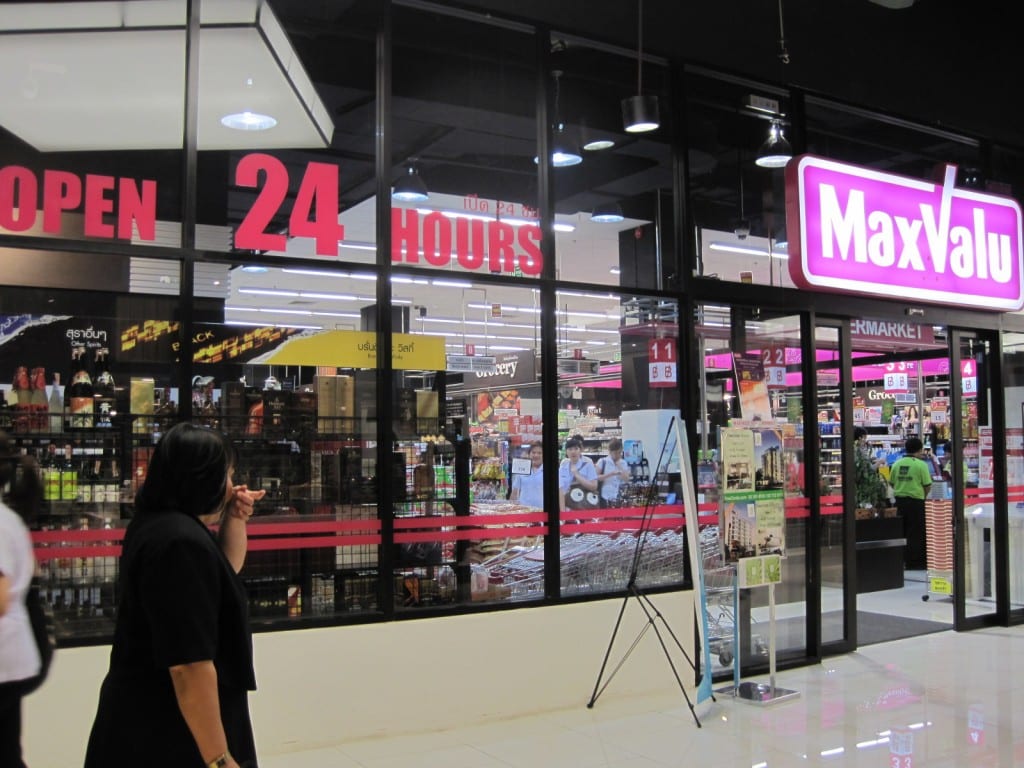
    Aeon has unveiled plans to expand its network of MaxValu compact supermarket stores in Vietnam, eyeing about 100 new locations across the country by 2025.

    According to Nikkei Asia, the expansion will include a larger store format with floor space spanning 500sqm or more. MaxValu currently operates four Vietnam stores, all in Hanoi. In addition, Aeon Group’s subsidiary, Aeon Mall, aims to expand its network of malls in Vietnam from six to 16 by 2025.

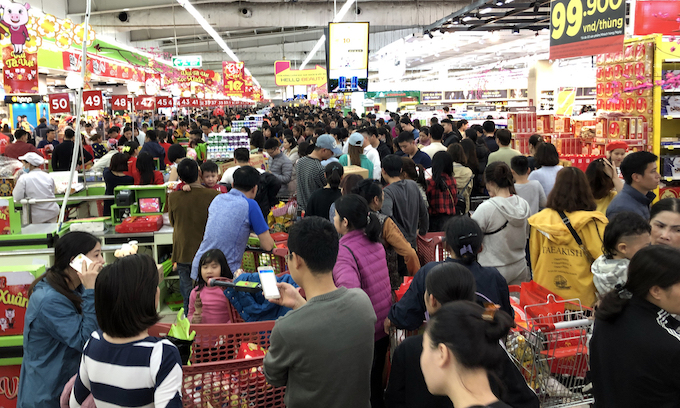
    Despite the challenges of the Delta-variant wave hitting the country, the group sees significant opportunity in the Southeast Asian market, where customers are gradually shifting from shopping at local markets to supermarkets due to hygiene concerns.

    “Next year, Aeon Vietnam will focus on opening more business locations with diverse retail models including shopping malls, department stores, supermarkets, convenience stores and specialized stores,” Furusawa Yasuyki, general director of Aeon Vietnam, told local press.

    The expansion plan also helps Aeon further strengthen its position in the market, where retail giants such as locally-owned Masan Group and Thailand’s Central Group are ramping up the competition.

    Last week, Masan Group unveiled an expansion plan for its mini-mall chain WinMart+, which will integrate a to-go cafe and mini bank offices including ATMs and customer-service reps. The group is set to have 20,000 franchised stores together with an addition of 10,000 outlets owned by the group by 2025. WinMart+ is expected to expand the multi-utilities concept in the future.

  • Retail sales in Hong Kong continue to recover slowly

    Retail sales in Hong Kong continue to recover slowly

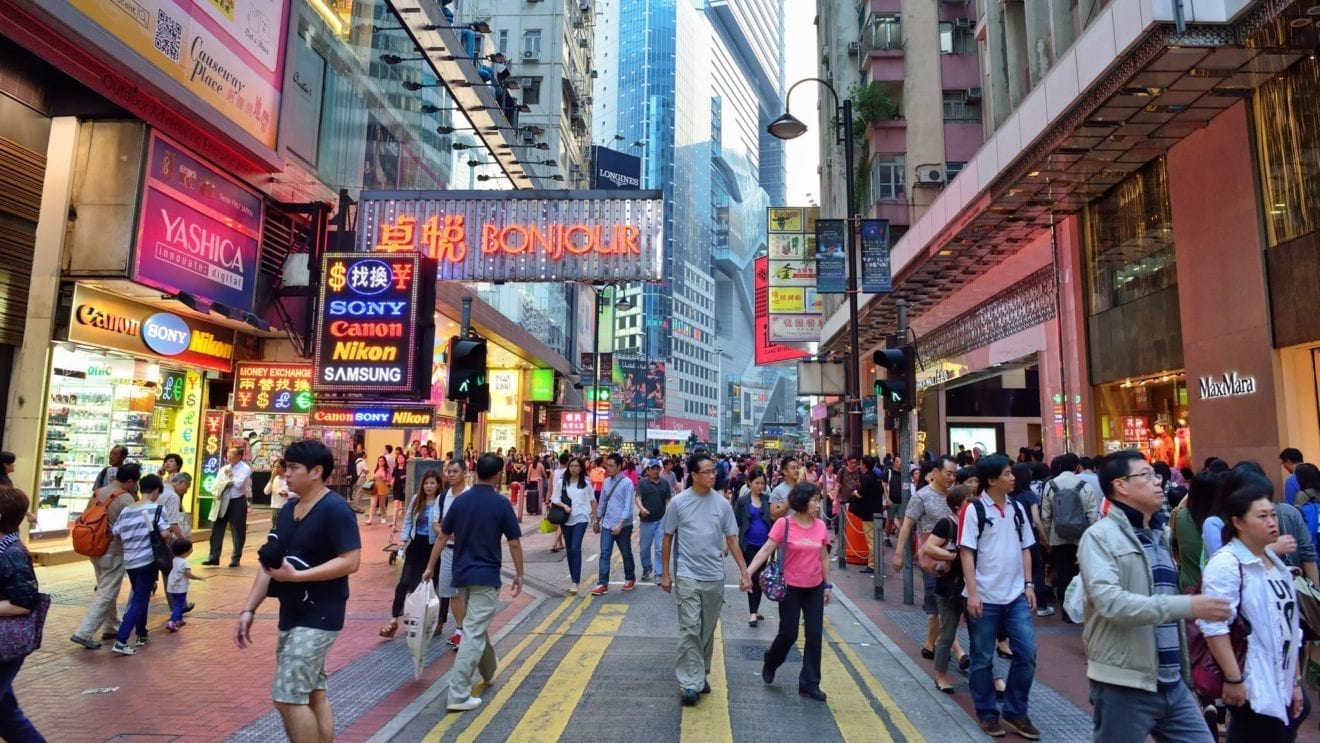
    Hong Kong’s economy lost some momentum in the second quarter but still expanded by 7.5% from a year earlier, as domestic and global activity continued to recover from last year’s pandemic-induced slump.

    Despite some slowdown in robust export growth, the government said the city’s economic recovery remains on track as global demand picks up and local coronavirus fears ease.

    The preliminary gross domestic product (GDP) estimate released on Friday compares with a revised growth rate of 8% in the first quarter and forecasts of 8.4% by DBS and 8.5% by ING.

    On a quarterly basis, the economy contracted by a seasonally adjusted 1% in April-June, its first decline since the second quarter of 2020. That compared with a revised 5.5% growth in the previous quarter.

    “The global economic recovery should continue to support Hong Kong’s exports of goods in the near term, though there may be some moderation from the exceptionally strong performance in the first half of 2021,” a government spokesman said in a statement along with the GDP figures.

    “Exports of services should likewise sustain growth,” the spokesman said, adding that a stabilized pandemic situation locally and a consumption voucher scheme will help stimulate consumer demand.

    For the first half of 2021, the economy grew by 7.8% over a year earlier. The government maintained its full-year growth forecast at 3.5%-5.5%.

    Analysts caution, however, that the recovery will be uneven. While consumer spending is improving as coronavirus worries ebb, international travel restrictions will continue to weigh on tourism and related retail and services sectors.

    The trade-reliant city is also benefiting from mainland China’s swift recovery from the COVID-19 crisis, though China’s growth rates are slowly returning to more normal levels.

    Hong Kong’s economy fell into its longest recession on record in early 2019, weighed down by huge anti-government protests followed by the pandemic in 2020.

    Seasonally adjusted unemployment slipped to 5.5% in April-June, from 6% in March-May and 6.4% in February-April. Exports jumped 33% in June, their eighth straight month of growth.

    Retail sales rose 10.5% in May from a year earlier, the fourth consecutive monthly gain, but growth lagged pre-pandemic levels as inbound tourism is virtually non-existent.

    Hong Kong reported two new imported COVID-19 cases on Friday, with no local community infections recorded in over 50 consecutive days.

    The government has urged more people to get vaccinated to pave the way for a reopening and broader based economic recovery. About 35% of the population has received the recommended two doses and 47% have had their first dose.