Category: General

Retail News Asia is committed to providing both local and global retailers with the latest General Retail news throughout the Asian market. This on a daily base.

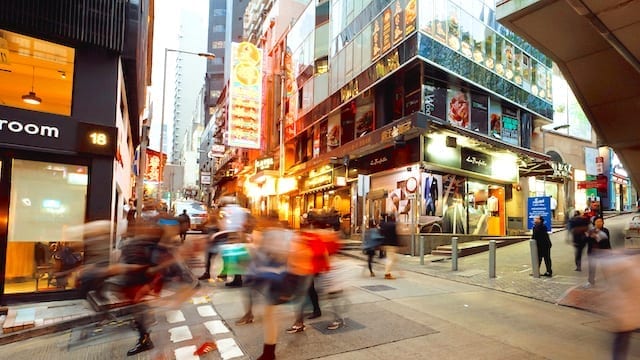
  • Hong Kong retail sales rise 10.5 percent in May

    Hong Kong retail sales rise 10.5 percent in May

    Hong Kong retail sales rose 10.5 percent in May from a year earlier, the fourth consecutive monthly gain, boosted by an easing Covid-19 threat. But the growth lagged pre-pandemic levels as inbound tourism is at a halt and global travel restrictions linger.

    Sales climbed to HK$29.6 billion (US$3.81 billion), government data showed on Wednesday. That compares with a 12.1 percent rise in April, a 20.21 percent rise in March, and 30 percent growth in February.

    “The near-term operating environment of the retail sector will remain challenging given the lack of visitor spending,” a government spokesman said.

    In volume terms, retail sales in May jumped 7.8 percent year-on-year, compared with a revised 11-per-cent surge the previous month.

    Online retail sales in May soared 53.1 percent in value year-on-year, compared to revised 26.9-per-cent growth in April and a 44-per-cent rise in March.

    Sales of jewelry, watches, clocks, and valuable gifts, which depend heavily on mainland tourists, surged 54.8 percent in May versus a revised 93.9 percent rise in April, the data showed.

    Clothing, footwear, and allied products rose 12.1 percent in May, compared to a revised 61.2 percent in April.

    Tourist arrivals fell 34.8 percent year-on-year in May to 5305, after posting a 38.3-per-cent jump in April in the city’s first growth in arrivals after 21 consecutive months of declines.

    Hong Kong’s seasonally adjusted unemployment was 6 percent in the March-May period, against 6.4 percent in February-April, as the labor market was boosted by economic recovery and as the novel coronavirus outbreak receded.

    The government saw some sectors to take longer to return to pre-pandemic levels because of an uneven pace of recovery.

    The city’s economy grew by a revised 7.9 percent in the first quarter from a year earlier, snapping six consecutive quarters of annual contractions. Official forecasts are for the economy to grow between 3.5 percent and 5.5 percent in 2021, after a 6.1-per-cent contraction last year.

  • 7-Eleven will invest $15m+ in Far North Queensland

    7-Eleven will invest $15m+ in Far North Queensland

    7-Eleven is investing in Far North Queensland for the first time, with about 15 stores expected to open in the region over the next two years.

    General manager – channel, Braeden Lord, said exact locations have not yet been chosen.

    “We are continuing to work with landlords and developers to identify opportunities to secure the right sites to meet the needs of the community.

    “We’re starting in Townsville and Cairns and will be continuing to explore the region which we feel has a huge potential for growth.”

    The convenience store chain is committed to opening stores in Townsville and Cairns before June 2022 and Lord is expecting swift expansion across the region by 2023.

    He said the company’s $15 million+ investment will help drive economic growth in Far North Queensland.

    “Recent investments in our supply chain have made it possible for us to bring our offer to Townsville and Cairns and we are incredibly excited about the chance to serve the local communities in Far North Queensland.

    “7-Eleven is committed to providing regional Australians with access to the same level of choice and convenience that is available to people who live in metropolitan areas,” he said.

    The significant investment in the region brings fresh employment opportunities, with more than 200 full-time jobs expected during the building phase and a further 150 local jobs created for ongoing store operations.

    “There will be a number of leadership positions available, and we hope to have Townsville and Cairns locals join us as leaders,” said Lord.

    Each convenience store will need up to 15 team members in a mix of full-time, part-time and casual roles.

    “We provide extensive training to ensure people are set up for success on opening day so previous experience  , petrol and retail isn’t a requirement.”

    7-Eleven generally operates new stores as corporate retail outlets for at least a year before opening them up to franchising.

    Within the last 12 months 7-Eleven has continued to roll out stores including additional outlets in New South Wales and Victoria.

  • Minimalist Interior Design: Top 4 Tips for Creating a Stellar Look For Your Home

    Minimalist Interior Design: Top 4 Tips for Creating a Stellar Look For Your Home

    When it comes to modern interior design trends, if there’s one thing that designers swear by, it’s minimalism. The ‘less is more’ philosophy bodes well for millennials who wish to go for practical aesthetics that look good but also serve a purpose. The same is true for those in small spaces, such as 1 BHK, 2 BHK or 3BHK, where many are increasingly opting for HDB minimalist designs. In fact, the current generation is so inspired by this philosophy that they don’t just restrict it to design or fashion but have also adopted it as a way of life.

    The minimalist interior design doesn’t necessarily mean something boring or dulled-out. However, it can be tricky to find the right balance that prevents your décor from looking over the top while maintaining its appeal and beauty.

    Image Source: Shutterstock

    The best way to do this is by looking around your home and spotting things that don’t necessarily need to be there. In other words, minimal home décor is all about knowing when your home décor stops looking like décor and starts looking like clutter.

    Sounds confusing? To break this down, we’re sharing four tips that can help you transform your home into a minimalist’s heaven.

    # 1 Pick Your Colours Wisely

    Colours are a major part of your interior décor – exactly why you need to be particular about the colours you choose for your home. Neutral colours such as tan, brown, white, and grey are a big part of minimalist interior design as they tend to have a calming effect on your senses and do not look loud.

    However, when it comes to HDBs, know that HDB minimalist designs are not completely devoid of bright colours. You can go for contrasting accents and introduce a pop of brightness in your home. Colourful cushions, throw blankets, frames, or even rugs can be a great way to break the monotony and brighten up your space.

    # 2 Have a Single Focal Point

    Minimalist interior design is all about reducing the noise in your space and inviting openness. This is why minimal homes have a single focal point that acts as the centrepiece for the rest of your design. This focal point gives you a direction to base your décor around and gives you a starting point to draft your positive and negative space.

    A good example here could be the seating area of your minimalist living room. The couch or the sofa set could act as the focal point, while the open area around the sofa set could be your breathing space.

    # 3 Declutter, Declutter, Declutter

    Decluttering is a big part of minimalist interior design. Minimal homes have a lot of open space and do not hoard anything that’s not essential. So, if you’re dreaming of living in a minimal house, get ready to say goodbye to all those things that you haven’t used for quite some time.

    This also involves revaluating what you display on open shelves and what you hide away in cabinets. Investing in appropriate storage solutions is also a big part of minimalist interior design as it helps keep the house spacious and open.

    # 4 Be Tasteful With Art

    Many people believe that minimalist interior design has no room for art. However, this cannot be farther from the truth. But you need to be tasteful while choosing art for your minimal home. The art pieces should reflect your personality and go with the colour and theme of your room.

    Going monochrome with your art pieces is a great idea to incorporate character into your home without going too away from the minimalist interior design theme.

    So, these were a few tips that can help you realize your dream of living in a minimal home. However, it’s always a good idea to get professional inputs while redecorating your home – whether it is for HDB minimalist designs, minimalist living room designs, or minimalist interiors for your whole house. Expert professions can help and guide you to explore new ideas and also help you save time and money.

    Amongst the many, Livspace is known for offering a plethora of interior design services to make your décor dreams come true. Be it end-to-end solutions, procurement of raw materials, installation or handling carpenters, plumbers and other necessary service provides – they ensure timely execution, while you get to enjoy a hassle-free interiors’ service. To know more about Livspace, head to their website today!
     

  • Vietnam economy to expand 6.7 pct in 2021

    Vietnam economy to expand 6.7 pct in 2021

    Singaporean lender United Overseas Bank (UOB) forecast Vietnam’s GDP would grow by 6.7 percent this year.

    It said Vietnam’s economic growth trajectory remained on track, with exports in the first five months growing 35.5 percent year-on-year, while imports rose 54 percent.

    Foreign direct investment (FDI) inflows remain upbeat so far in 2021, a reflection of investor confidence and Vietnam’s relevance in the global supply chain. Registered capital FDI this year as of May hit $14 billion, rising marginally by 1 percent from last year.

    However, the fourth outbreak of Covid-19 that started on April 27 has resulted in movement restrictions and lockdowns that disrupted a range of business and manufacturing operations, it said in a Friday report.

    UOB said the recent outbreaks of Covid-19 and the discovery of new virus variants certainly pose a downside risk to the economy, as vaccination rates have been low relative to neighboring countries.

    One factor to watch, according to UOB, is Vietnam’s inflation rate, which has risen to 2.9% year-on-year in May. Inflation rates in May increased by 0.16 percentage points compared to April, the highest growth rate since September 2020, driven by the growth in transportation and housing prices.

    The government has a growth target of 6.5 percent this year.

  • Google adds “Lock screen” settings for the Android version of Assistant

    Google adds “Lock screen” settings for the Android version of Assistant

    in version 12.24 of the Google app,  “Lock screen” settings for the Android version of Google Assistant can be found. It’s part of a group under the heading of Popular Settings and it appears after Voice Match and Languages. With the settings enabled, Google Assistant can be used even when the phone is locked.

    The first time you try this feature out, Google will show you a splash screen that allows you to decide whether to enable your phone to use Google Assistant without unlocking the handset, or you can choose to opt-out. In other words, you can “Get hands-free help from your Assistant when your phone is locked. You can always turn this off in your Assistant settings.”

    When your phone is locked, you will need to employ Voice Match to use Assistant hands-free to obtain personal information and to call or message your contacts. With Voice Match, the phrase “Hey Google” is required to wake up and activate Google Assistant without the use of your hands. If you decide to opt-in, you will be able to obtain “Assistant responses on lock screen” including personal info such as contacts and messages.

    You can also obtain personal information from Google Assistant by activating it through a tap on the screen without saying “Hey Google.” To arrange this, tap on Popular Settings > Lock screen and toggle on the second option.

  • Cebu Pacific increases flights to Boracay, Bohol ‘to support recovery’

    Cebu Pacific increases flights to Boracay, Bohol ‘to support recovery’

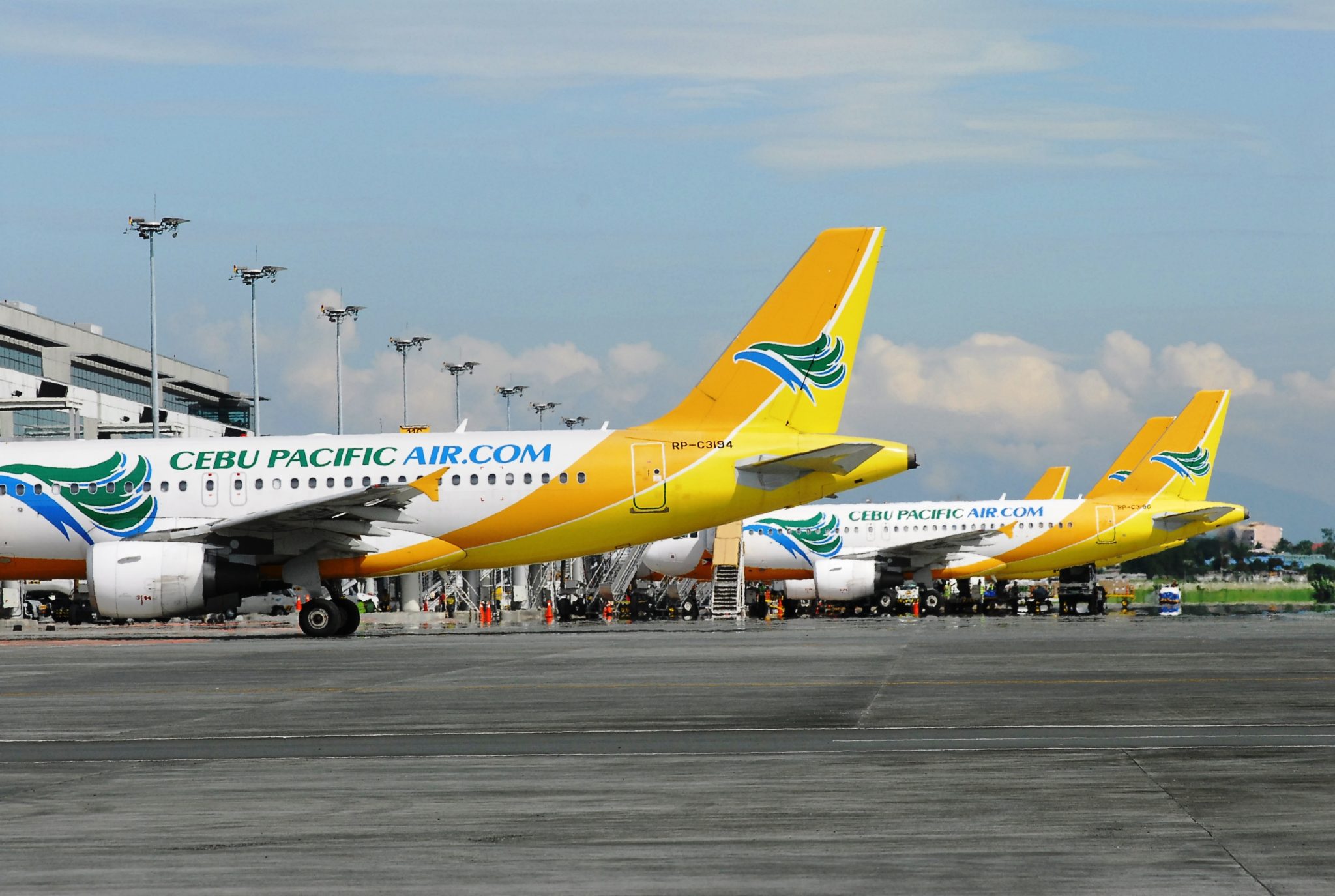
    Budget carrier Cebu Pacific said Monday its flights between Manila and Boracay will now be five times daily, while flights to Bohol will also operate daily.

    The additional flights to Boracay and Bohol, which started on Monday, should “support recovery efforts,” the budget carrier said in an e-mailed statement.

    In a statement on Tuesday, the airline said: “We gradually increased our flights to Boracay weekly — from only two times daily on June 4, three times daily on June 7, four times daily on June 11, and now five times daily beginning yesterday, June 21.”

    “Bohol was at four times weekly in the second week of June and now it’s already one time daily,” it added.

    Cebu Pacific said it currently operates the “widest network” in the country covering 32 destinations, on top of its six international destinations.

    Candice A. Iyog, Cebu Pacific vice-president for marketing and customer service, said: “With the arrival of more vaccines and the pace at which vaccines are being rolled out, we are hopeful that in due time, our networks will recover to pre-pandemic levels.”

    “We remain cautiously optimistic as we prepare for the bounce back and will do everything that is within our control to support and aid that,” she added.

    The International Air Transport Association (IATA) said recently that “over the last months, the recovery of air passenger demand has been mainly driven by domestic markets that have mostly remained unaffected by travel restrictions.”

    “In the meantime, international travel was restricted by most countries and governments are only starting to relax those restrictions as they vaccinate their populations and stabilize the epidemiological situation,” it added.

    Cebu Pacific, operated by Cebu Air, Inc., said it had flown six million coronavirus vaccine doses from China as of June 17, “on top of more than 1.4 million doses carried to 15 Philippine provinces.”

    The number of flights Cebu Pacific had in 2020 was 71% lower at 41,804. The number of passengers it carried last year also dropped 78% to five million.

  • Cebu hoteliers ink pact with AirAsia

    Cebu hoteliers ink pact with AirAsia

    Philippines AirAsia inked a partnership with the Hotel, Resort and Restaurant Association of Cebu (HRRAC) to help boost tourism and economic recovery in Cebu at a ceremony hosted last Friday.

    Under the Memorandum of Agreement, the Malaysian carrier will become the official airline partner of HRRAC’s hotel members to revitalize the tourism sector and economy of the island province.

    “Tourism stakeholders including AirAsia are united with stakeholders such as the HRRAC, the Department of Tourism and the local government unit in rebooting the tourism industry in Cebu, a vital industry that contributes to the Philippine economy,” said the airline’s CEO Ricky Isla during the signing ceremony.

    “But to succeed, we must offer travelers not just sights but also added value to their money. It is through partnerships that we provide exciting options and promos for our guests who are excited to be rediscovering Cebu as the global health situation is improving,” Isla told the Philippines News Agency.

    AirAsia will come to the table with partnership opportunities for HRRAC member companies to tap the sales potential of the airline’s a-Access, an incentive card that of holiday experiences and discounts.

    “The Covid-19 pandemic has demonstrated to the tourism industry that trust, partnership, and solidarity are essential for revitalizing travel as we anticipate the reopening of borders,” HRRAC president Alfred Reyes, who is also general manager of bai Hotel Cebu.

    Isla noted the long-term objective was to revive the meetings, incentives, conventions, and exhibitions (MICE) industry in Cebu, especially to encourage regional events to meet in Cebu once the pandemic is under control. Cebu was a top choice for MICE events, many of them Asia-wide conventions and exhibitions.

    “We aim to bring back the strong image of the Philippines as a MICE destination,” Isla concluded.

  • Nextdoor will help you get that COVID-19 jab

    Nextdoor will help you get that COVID-19 jab

    According to the CDC, about 53% of Americans have received their first COVID-19 shot, and 45% are fully vaccinated. While these numbers are pretty impressive, they’re still far from the 80-85% needed for us to say goodbye to this darn virus once and for all.

    Earlier this year, Uber partnered with Walgreens to offer vaccination appointments and also drive people to the spot when the time comes, and now Nextdoor is following suit. The company announced that it’s launching a special web tool to help more Americans get vaccinated.

    “Vaccine Map will locate nearby vaccine appointment locations, including local Albertsons Companies pharmacy store banners such as Safeway, Vons, Albertsons, and Jewel-Osco, and allow you to schedule an appointment or learn more about the vaccines with educational information from the U.S. Centers for Disease Control and Prevention (CDC).

    You don’t need to install the Nextdoor app, you can just follow the link on your smartphone or PC, punch in your ZIP code and get a map of the nearest pharmacies that offer vaccinations. Then, with a simple click, you can schedule an appointment and get this over with.

  • Railways seeks bailout as Covid-19 rages

    Railways seeks bailout as Covid-19 rages

    Vietnam Railways (VNR) is seeking a VND800 billion ($34.82 million) loan to fund operations amid plummeting demand for its services because of the Covid-19 pandemic.

    The state-owned company has requested the government for the funds, saying that if the pandemic impacts persist until the next year, it would run out of money to pay staff salaries.

    It is, therefore, proposing that the government gives it an “emergency” loan and provide support for its 13,000 employees, who are either suspended or working part-time.

    It is also proposing that over 6,000 employees are prioritized for vaccination; and that infrastructure fees and land fees are lowered or scrapped for the projects it is implementing.

    Last month, the company suspended 393 trains, and there were times when just one pair of trains was used for the North-South route.

    The company’s revenues in the first five months fell 19 percent year-on-year to VND1.11 trillion and 40 percent from 2019, when the pandemic was yet to hit the country. It posted a loss of over VND1.32 trillion last year.

  • Google Chrome delays removal of third-party cookies to 2023

    Google Chrome delays removal of third-party cookies to 2023

    Google has moved to an updated time frame for fulfilling its 2020 plan to eventually remove all third-party cookies from its official browser, Chrome. That annoying third-party data collection prompt asking you to “accept” or “reject” cookies, on most websites we visit these days, will soon be a thing of the past.

    This new leap is just one of Google’s recent initiatives to associate its brand name with a bit of privacy awareness, although everyone knows how Google gets its big bucks: AdSense and advertising services. And that goes hand-in-hand with the fact that the more Google uses tracking and data collection to target audiences, the more money there is to be made.

    It’s a bit of a catch-22 situation, but with the Privacy Sandbox initiative announced back in 2019, Google has seemingly been trying to work towards a slightly less privacy-invasive balance.

    Today, Google announced that by the end of 2023, we can expect third-party cookies to be gone entirely from Chrome. More specifically, they will be phased out over a period of exactly three months, “starting in mid-2023 and ending in late 2023.” The original plan was to remove them in early 2022.

    The reason for leaving two years in between is because, Google wants to have certain “key technologies” in place by the end of next year. Among these key technologies is the “widely disabled FLoC” (an algorithm that allows ad selection without sharing individuals’ browsing behavior), as well as other APIs driven by privacy.-

    Google has shared the following two-step plan for phasing out third-party cookies in Chrome.

    • Stage 1 (Starting late-2022): Once testing is complete and APIs are launched in Chrome, we will announce the start of stage 1. During stage 1, publishers and the advertising industry will have time to migrate their services. We expect this stage to last for nine months, and we will monitor adoption and feedback carefully before moving to stage 2.
    • Stage 2 (Starting mid-2023): Chrome will phase out support for third-party cookies over a three-month period finishing in late 2023.

    It’s already been over a year since Google began searching for ways to limit personally identifying data while still being able to deliver ads to the right groups of people “sufficiently large enough to maintain anonymity,” with the Google Sandbox. We can’t fool ourselves that the search will ever be on the same level as Apple when it comes to browsing and privacy, but it’s definitely taken a couple of steps in the right direction.

  • Google Fi enables VPN service on Apple’s iPhone

    Google Fi enables VPN service on Apple’s iPhone

    Google Fi has been offering customers a VPN service to protect their data while they’re browsing the internet for quite a while. Unfortunately, the said service was only available to those using Android devices.

    Today, Google Fi announced that it’s expanding the VPN service to iPhone. Those using Apple’s smartphone will be happy to know that Fi’s VPN service is included in all the carrier’s plans. It will allow Fi’s customers to stream, browse and download on an encrypted, private connection.

    More importantly, the service is meant to protect Fi customers against hackers on unsecured networks, as well as prevent websites from using their IP addresses to track their location. To enable Fi’s VPN service on an iPhone, you’ll have to go to Phone settings, tap Privacy & security, and enable Protect your online activity.

    You’ll get a pop-up, so make sure to choose Got it, and then Allow. You will then be required to enter your device passcode or fingerprint. If everything went well, you should see a VPN icon in the status bar when you’re connected.

  • Twitter’s Facebook-like emoji based Tweet Reactions could be coming to all very soon

    Twitter’s Facebook-like emoji based Tweet Reactions could be coming to all very soon

    Back in March, we passed along the word that Twitter was considering adding Facebook-style emoji reactions for tweets. Android Developer Dylan Roussel discovered that this new feature might be closer to becoming a way for Twitter users to weigh in on a tweet. Currently, there is a heart icon that can be tapped to express one’s positive feelings about a tweet, but the new emoji reactions reveal a much broader range of feelings including  thinking, crying, laughing to tears, clapping hands, and a heart.”

    Roussel says that the reaction emojis don’t work yet since Twitter has just started to implement it. Back when we first discussed the possibility of Facebook-style emoji responses coming to Twitter, a spokesman for the latter said, “We’re exploring additional ways for people to express themselves in conversations happening on Twitter.” Besides Facebook, another social media app that includes the use of reaction emoji is LinkedIn.

    Late last month, reliable Twitter tipster Jane Manchun Wong disseminated a tweet about what she called “Tweet Reactions. Wong said that it would include emoji for like, cheer, hmm, sad, and haha. That seems to match up with some of the reactions spotted by Roussel: thinking=hmm, crying=sad, laughing to tears=haha, and clapping hands=cheer.

    The fact that the emoji reaction showed up on Roussel’s tweet shortly after Wong’s tip should be a sign that Twitter will soon be rolling this out for everyone.

  • AirAsia readies for Sandbox opening

    AirAsia readies for Sandbox opening

    As the Thai government confirms the country will embark on a reopening phase beginning with a pilot “Sandbox project” in Phuket 1 July, airlines are planning to increase domestic flights.

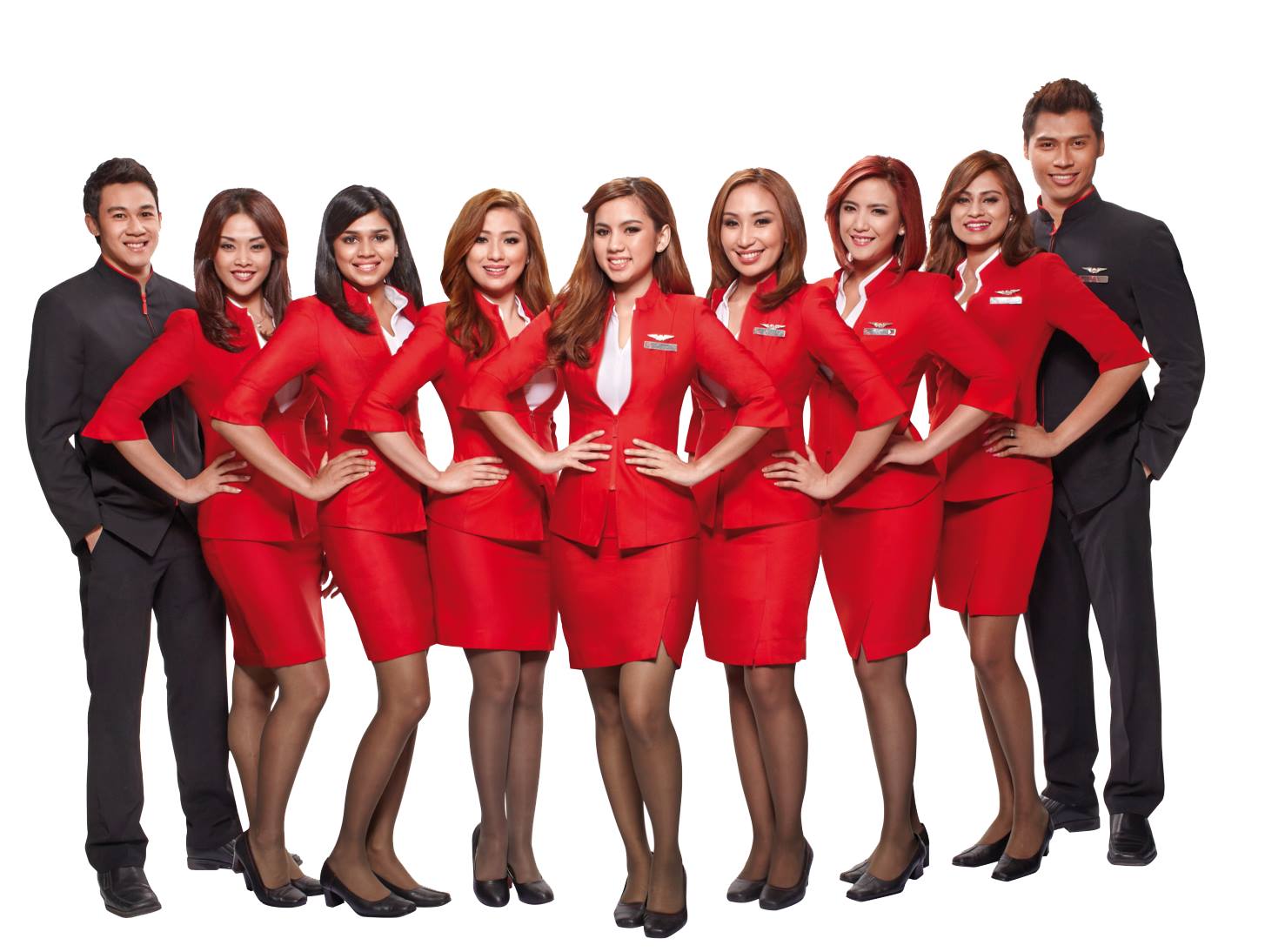
    In a press statement released Tuesday, AirAsia says it is “set to paint the skies red again in support of the Phuket Tourism Sandbox programme that is also seen as the first step in welcoming international visitors to Thailand.

    Caption 1  Krid Pattanasan

    AirAsia Thailand head of government relations and secretary-general of the Airlines Association of Thailand Krid Pattanasan said: “Domestic travel will be the first to restart with the reopening of Phuket from 1 July 2021. Thai and foreign travellers who have been fully vaccinated against Covid-19 will be able to enter Phuket under strict government guidelines.

    “This initiative will soon be extended to other destinations including Chiang Mai, Krabi, Phang Nga, Pattaya and Hua Hin. AirAsia has been rigorously preparing for this much-awaited programme, and its staff are ready to welcome and facilitate guests, including by getting themselves vaccinated to ensure the safety, wellbeing and peace of mind for all guests.”

    By the end of June, over 80% of AirAsia’s staff will be fully vaccinated against Covid-19. The programme started with those who have direct contact with guests such as ground staff, cabin crew and pilots, but it is extending to those working as baggage handlers, technical crew and engineering staff are also ensured to receive the vaccine.

    In preparation to take to the skies again, AirAsia has lined up various attractive promotions to further stimulate travel. These promos will commence as soon as the government provides the green light for mass air travel to kick off.

    Caption 2 Lunchakorn Saengsiri

    Senior Cabin Crew Lunchakorn Saengsiri, as frontline staff in direct contact with guests, said receiving a full vaccination has provided great confidence when interacting with his co-workers, his family and AirAsia guests.

    He noted that despite the low frequency of flights currently, he and his colleagues have been maintaining safety and hygiene standards for every flight.  Close contact with passengers has been reduced to the minimum in accordance with state regulations, while the consumption of food and sale of goods in-flight has been completely restricted.

    Caption 3 Tapachcha Khanpimool

    For Senior Cabin Crew Tapachcha Khanpimool, most people have been adapting to the situation, and she expressed the belief that once vaccinations become widespread, air travel will quickly return especially the much anticipated domestic travel.

    “We are very excited to return to flying and have ensured that we are fully ready by protecting ourselves and staying up to date on the latest information  so that we can provide the best possible service to our guests.”

    Meanwhile, Ramp Agent Noppalit Budrath shared that despite everyone in his department having been fully vaccinated, it is crucial that the highest safety and hygiene measures continue to be observed. He said this is especially true as in the course of his duties delivering aircraft for service and to be present during landing and take-off, he would frequently come into contact with passengers.

    Caption 4 Noppalit Budrath

    AirAsia intends to increase its domestic service by 20 to 30% compared to the same period in 2020 and before the latest COVID-19 wave.

    It will fly Don Mueang-Phuket three times daily and Suvarnabhumi-Phuket once daily every Monday, Wednesday, Friday and Sunday.

  • Rehiring everyone laid off is my priority, says AirAsia boss

    Rehiring everyone laid off is my priority, says AirAsia boss

    One of the first things Tony Fernandes wants to do after the company is back in business is to rehire every staff he had to let go during the Covid-19 crisis, even as he remains confident the airline is set to come out much stronger.

    The AirAsia Group’s CEO said having survived the last 15 months without raising capital unlike many foreign airlines was a testament to the company’s strength, and said the injection of about RM2.5 billion from various sources is imminent.

    “We made Malaysia globally recognized, we have changed travel after what I came up with within the shower, ‘Now everyone can fly’, has become a reality. So we got to win and make sure we don’t fail. Nothing is cast in stone but we are looking good,” he told BFM in an interview in its Breakfast Grille segment yesterday.

    In this context, he said, his No. 1 priority is to rehire everyone that the company has had to let go.

    “They did nothing wrong. They are great people and we are an amazing company because of our people.

    “I have a responsibility to regrow, rehire and reskill. We are doing all those things right now. The fact that we are still alive after 15 months is a testament that we have very good staff at AirAsia.”

    He was responding to a question from his host who asked if with 90% of its 200 planes grounded and with a cash balance of about RM500 million, how long the airline could survive.

    Fernandes said with vaccination being rolled out rapidly in many parts of the world and flying beginning to return to normal slowly especially in the US, he expects things to pick up soon, adding that Airbus is manufacturing more aircraft with its orders increasing.

    “And now we have new capital coming in. We got some good investors and we will be announcing them soon. I have been very consistent in saying that we will be raising about RM2.5 billion.

    “Our Thai counterparts have already raised (additional capital), while we are in the process of doing it in the Philippines and Indonesia,” he said, adding that the papers have been submitted to the regulators and announcements are expected to be made next month.

    Fernandes said some airlines had gone to raise capital at the beginning of the pandemic and had spent it all, and were forced to raise capital again.

    “We have been very frugal on how we have managed our funds. We have been spending all this time restructuring our balance sheets with our creditors. Most important thing is our creditors have been massive supporters of our business.”

    He said AirAsia will survive as there is an end in sight with the company talking to officials throughout Asean, adding that the opening of Phuket for tourists next month and the massive vaccination were signs of better times.

    He said AirAsia Group is no more just an airline with 17 digital ventures that had been set up recently.

    “We are now a holding company for digital and aviation assets. You will see the clarity of what we built very soon. We are going to be profitable here in 12 to 24 months.

    “Are we going to be the biggest in revenue? No. I am not here to lose money, but I am here to make a margin. We will grow consistently and profitability, we will be the most profitable digital company in Southeast Asia,” he said.

  • Apple protects email users from having their personal data collected

    Apple protects email users from having their personal data collected

    When you open an emailed newsletter, there are images that are not included in the message but are stored on a separate server. When you open the email, this server gets a message to  open the image along with information such as your approximate location, the device you are using, and the time that you opened the email. Bloomberg says that the data is used by publishers and brands as a way to determine how well their marketing strategy is working.

    But in its new role as internet privacy cop, Apple has a feature called “Mail Privacy Protection” that will automatically download the data held on the separate server whether you opened the email or not. But Apple will not give away your personal data such as location and the name of the device you are wielding. Considering that roughly 50% of all email is opened on an Apple app (says analytical firm Litmus Software), Apple is once again using its power to keep user data from getting into the hands of advertisers.

    According to data from marketing firm Warc, from this past March 22nd, ad spending on iOS rose 10%. During the same time period, ad spending on Android rose 21%. But how much is Apple really getting hurt?

    Andy Yen, CEO of encrypted email provider Proton Technologies says about Apple that “They’re making a big focus on privacy, but Apple is interested in the advertising market and already makes a lot of money there.”

    The thing to remember is that Apple can afford to accept fewer ads than Google and Facebook because of how each of the tech firms make the bulk of their profits. Apple sells devices while companies like Google and Facebook sell ads. Not only do ad sales provide those companies with big bottom lines to appease stockholders, they also help subsidize the price of the Google and Facebook devices you buy allowing them to be more affordable.