Category: General

Retail News Asia is committed to providing both local and global retailers with the latest General Retail news throughout the Asian market. This on a daily base.

  • Google Assistant driving mode slowly rolling out to more countries

    Google Assistant driving mode slowly rolling out to more countries

    After introducing the Assistant Driving Mode in the United States last year, Google has decided that it’s finally time to make the feature available to users in other countries too. If you’re not living in the US, chances are that you don’t know what’s this Google Assistant Driving Mode.

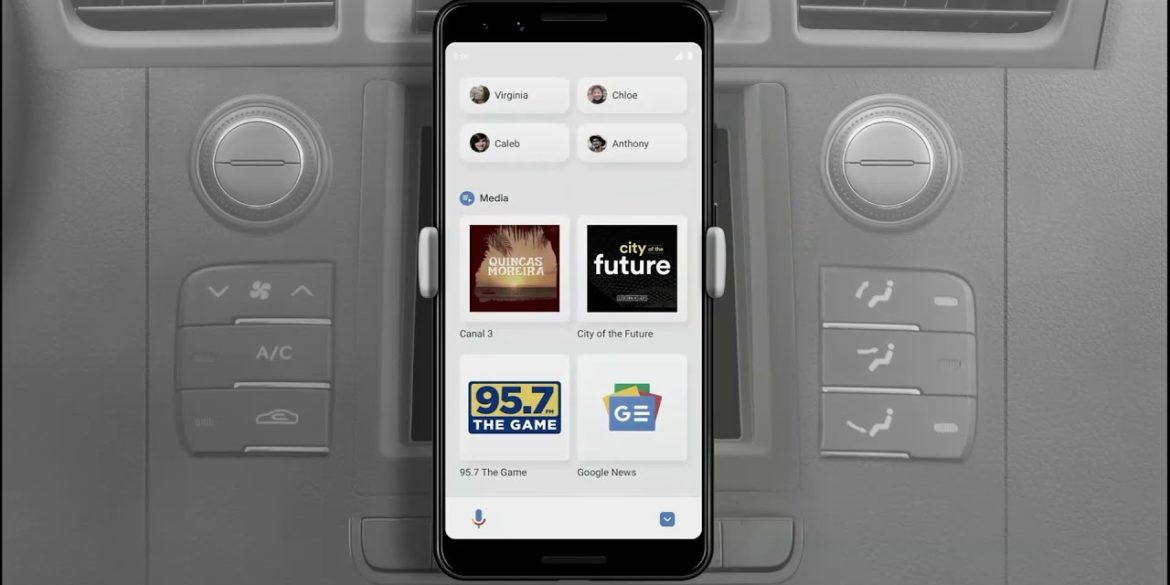
    Google launched the Assistant Driving Mode as a replacement solution for Android Auto’s mode from smartphones. The feature is meant to allow drivers to get their notifications read to them out loud, so they can continue to drive without having to check their phones.

    Google Assistant’s driving mode can not only read messages to drivers, but it can also send messages and make calls for you. Not to mention that you’ll be able to control your music by simply using your voice.

    Currently, we know for sure that the Assistant’s driving mode is slowly rolling out to users in the UK, but it’s safe to assume that the feature will soon be available in other countries too. As per Google’s support page, some of the features of Assistant’s driving mode “aren’t available in all languages or countries,” whereas previously it stated that it’s only live in the US.

    Of course, Google Assistant’s driving mode is limited to just one language at the moment: English. As far as the hardware requirements go, you’ll need a smartphone powered by Android 9.0 or higher, which packs 4GB RAM or more. Also, Google’s Assistant driving mode only works in portrait mode.

  • Thai cement giant to make Vietnam ‘top priority’ market

    Thai cement giant to make Vietnam ‘top priority’ market

    Siam Cement Group (SCG), one of Thailand’s leading industrial companies, has earmarked Vietnam as its top priority market in upcoming years.

    Once a petrochemicals plant comes online in southern Vietnam, the company anticipates revenue from Southeast Asia excluding Thailand would rise to 35 percent of the total from the current 26 percent, its CEO Roongrote Rangsiyopash told Nikkei.

    “We have several projects ongoing, some big ones like a chemicals complex in northern Vietnam. That one, fortunately, has had no impact from the pandemic,” he added.

    The group has seen a trend of localized production within ASEAN and will make this a focus.

    “For the next few years, I foresee Vietnam would be our top priority,” Roongrote stated.

    SCG recently signed an agreement to buy 70 percent of Duy Tan Plastics, the largest manufacturer of rigid plastic packaging products in Vietnam, bringing its number of packaging companies in the country to eight.

    The group started investing in Vietnam in 1992. It has over 20 subsidiaries in Vietnam in the cement and building materials, chemicals and packaging industries. It has been investing in the packaging industry for over a decade.

  • What’s Happening With Japan’s Casinos and When Will They Open?

    What’s Happening With Japan’s Casinos and When Will They Open?

    The idea of Japan opening casinos is an exciting prospect for many companies and patrons around the world. It’s a plan that has been in the works for a long time, with the first plans being mooted as early as 2000. Two decades ago, the Governor of Tokyo proposed the construction of a casino off the coast of the capital on an artificial island. However, it didn’t get much traction.

    He didn’t give up though, suggesting floating casinos that would be housed on boats near the coast of the city. But these also didn’t get very far in the face of a lot of opposition from other politicians and some members of the public.

    Currently, betting is allowed in a small number of circumstances, namely racing sports, bingo, lotteries, and pachinko (a sort of pinball-style game).

    It is a far cry from countries like the UK and much of the rest of Europe where licensed businesses are permitted to operate both physical and online casinos. This has led to a lot of competition among online casinos in the region, with leading companies offering unique versions of classic games like roulette, such as live games and Multi-Player options. The situation is similar in the US, where online wagering has been legalized in around a dozen states.

    This is set to change in the near future though as Japan’s lawmakers passed legislation in July 2018 that will permit several casinos to open in the Land of the Rising Sun.

    Nearly three years on, what’s changed, and when are we likely to see a Japanese casino open?

    The Rationale for Japanese Casinos

    Japan’s casinos are going to follow a similar model to those found in Singapore. Although locals will be permitted to frequent them, they’ll mostly cater to overseas guests. It is hoped that the casinos will provide a new reason for tourists to visit the country, in addition to its already diverse offering of unique foods, cutting-edge technology, and fascinating traditions.

    The original plan was that they would be ready to open after the Tokyo 2020 Summer Olympics, but both the games and the casinos have been delayed and it’s going to be a few years before the latter opens.

    “The Holy Grail”

    The late Sheldon Adelson, who was the long-time boss of the Las Vegas Sands Corporation, described the prospect of opening a casino in Tokyo as “the holy grail”. Until last year, he had spent decades on a charm offensive in the country, trying to convince Japanese politicians that casinos would be beneficial to the island nation. He believed that the capital city would be a great location for a casino because it already had the necessary infrastructure (including transport, hotels, and other nightlife) to make it a success.

    However, in 2020 Adelson’s company pulled out of the bidding process, citing “technicalities” around the rules that would prevent the Sands Corporation from achieving its goals for the country. Some reports suggest that he had turned his attention to Brazil instead.

    In addition to that, historically, Japan has been known for its caution when it comes to defining the rules for gaming. Ancient Japanese rulers established a peculiar exemption to the prohibition of amusement when the regulations were very harsh. Since then casinos have experienced many changes. Nowadays a Japanese online casino provides gamblers with an opportunity to play a variety of games, including the old traditional ones that are nowadays modernized and accessible for all the people who have internet access.

    What is Happening With the Bidding Process

    In December, policies relating to the next stage of the bidding process were agreed, setting standards that say casinos must include convention space, entertainment, shopping, and hotel rooms.

    This will mean venues in Japan will be “integrated resorts”, following the model used in Las Vegas, Macau, and other major gaming cities.

    With the rules set, cities that want to have a casino opened within their borders must now bid for that right. It is believed that Osaka, Nagasaki, Wakayama, and Tokyo are all going to be submitting bids. Their proposals are likely to be supported by casino operators, with many consortiums of international brands linked to each city.

    What Happens Next?

    The bidding process officially begins on October 1st, and will run until the end of April 2022. Between now and October, localities looking to submit proposals will need to prepare the groundwork for their submission and select an operator to partner with.

    Once the process is concluded, three locations will be selected for the first wave of licenses. It will then take several years for architectural designs to be drawn up, approved, and for construction to begin. Therefore, we’re still unlikely to see casinos opening until the second half of the decade.


  • AirAsia Group airlines anticipate strong recovery in 2Q

    AirAsia Group airlines anticipate strong recovery in 2Q

    The AirAsia group is something of a bellwether for the Southeast Asian airline industry due to its footprint in a range of countries in the region. So the widely varying rates of recovery for the group’s members give important indicators of the outlook for both the AirAsia empire and the broader Southeast Asia region.

    The brutal period that AirAsia has endured during the COVID-19 pandemic is highlighted by the RM5.9 billion ($1.4 billion) annual loss it reported for 2020.

    But looking ahead, the airline believes there is reason for near term optimism, as demand is projected to improve in its most important domestic markets. Some are bouncing back strongly towards pre-COVID levels, while others are in weaker condition as they prepare to emerge from the latest lockdowns.

    But the general trend is upward in the second quarter. The group’s view is that there is even light at the end of the tunnel for its international operations, which have suffered most during the pandemic.

    Granted, it is in AirAsia’s interests to paint a positive picture as it seeks to reassure financial markets during what is still a pivotal period for the airline. Nevertheless, it certainly has grounds to predict general improvement as it moves towards midyear and beyond.

  • Making the most of Shopify in Google Search

    Making the most of Shopify in Google Search

    Getting organic traffic is something that every eCommerce store owner dreams about. Targeted traffic coming to your site for free sounds like a pipe dream, but it is exactly what millions of website owners do every day. Now, it is a little more difficult for an eCommerce site to get that kind of traffic.

    This is why some platforms that your store could be built upon are better than others. Shopify, for instance, has a lot of built-in features that make it much easier to take care of your SEO. Any kind of help you can get from your platform should come very welcome. SEO is complicated and there are a lot of moving parts to keep track of.

    That’s why there are agencies dedicated strictly to SEO because it can be very difficult to do on your own. In this article, however, we will give you several Shopify SEO tips to help you bring in a lot of organic traffic.

    Optimize your site structure

    There are a few situations in which site owners, and even SEO experts, focus a lot on what Google wants and ignore the users. Luckily, when it comes to site structure you are killing two birds with one stone.

    Your site should be structured in a way that allows Google to crawl your site effectively and understand what the topic is. The more easily Google can access the relevant content then the better it can know where to rank your pages.

    On the other side of the coin, a site that is well structured is easy for a visitor to navigate. A good user experience is then had and they are more likely to stay on the site and convert from there. Whether your conversion goals are for them to sign up for a newsletter or to make a purchase, they are not likely to hit the mark if the site is hard to navigate.

    It all comes together when they stay on your site, look at lots of pages, and don’t bounce back to the SERPs. This sends a signal to Google that the site satisfied their search and that the content is good. This helps raise your site in the rankings as it will be seen as an authority on the topic.

    The best way to structure it is to break it down into categories and have each category in the menu bar that is easily seen. Then, make sure to have a lot of your relevant pages interlinked within the content.

    Make sure it’s responsive

    As more and more people use their phones as a computer, it makes sense that your site needs to be mobile-friendly. In fact, Google has stated that it is a major goal to create a system in which sites that are mobile-ready and have few of the issues associated with responsive pages will be rewarded over sites that are not.

    When your site has been online for a while and you have access to the analytics, you will surely find that most of your traffic is coming from mobile and tablets. Desktops are being used less and less.

    Luckily, this is not something you have to worry about since Shopify templates come responsive out of the box. You do need to keep a few things in mind.

    For instance, links that are too close together will be difficult for people to press since they are using their finger and not a mouse. Google will take note of these things.

    Use content marketing

    Even with all the features built into Shopify for SEO you still need content. It is the content that will bring people in, to begin with, and is what keeps them on your site. Just working on technical SEO is not enough. In fact, many content marketers will tell you that content marketing is better than technical SEO.

    The way it works is that you build authority by using various channels with lots of content. All of the content should be curated according to what your ideal user’s needs. It starts with using organic SEO and writing content on your site to rank on Google. This involves using the keywords that your audience is actively using in search and then crafting good content around those keywords. Which means having a blog on your store site.

    Then, make sure to have a consistent presence on social media. Your ideal customer is likely using just one or two platforms so it’s important to figure out which ones they are most likely using and focus there. This means that if your target audience is gamers under 25 then you shouldn’t deal with Facebook as they are not hanging out there. If your ideal customer is a middle-aged housewife then Facebook is the ideal place to focus.

    To shore up your authority create a podcast and Youtube channel. On these channels make sure to be creating content that is helpful to people so they will keep coming back for more. Over time you will be seen as a trusted source of information and head over to your site to buy your products.

    Not only are you going to be bringing in traffic through these sources, but Google will also take notice that a lot of traffic is coming in this way and use social proof to give you more authority. And more authority means better rankings.

    Use structured data 

    I mentioned how important content marketing is and that it is more important than technical SEO. Well, one way that technical SEO is crucial is to make sure to use structured data on your site.

    There are predefined formats for different types of features on your site. This is the structured data and it helps Google understand what is happening on your site. For instance, if you have a FAQ section then there should be some structured data that allows Google to know that this is what the section is. The same goes for a recipe or a how-to list.


  • Vietnam Airlines to resume commercial flights to Asian destinations this week

    Vietnam Airlines to resume commercial flights to Asian destinations this week

    Vietnam Airlines will reopen international commercial flights connecting Hanoi and HCMC with several Asian destinations including South Korea, Japan and Australia, starting this Saturday.

    The national flag carrier said flights from Hanoi to South Korea’s Incheon City will depart every Thursday while there will have seven flights from Hanoi to Japan’s Narita City in April, with the first scheduled to depart on April 3.

    The carrier will also operate one flight from Hanoi to Australia’s Sydney every Saturday, while flights from HCMC to Sydney would depart every Thursday and Sunday.

    On return trips, the carrier would only carry Vietnamese citizens being repatriated or foreign experts with permission to enter the country. Vietnam is yet to open its doors to foreign tourists.

    A representative of the carrier said the resumption of these international routes are meant to meet growing travel demand of Vietnamese citizens wishing to study and work abroad as well as stranded foreigners longing to return home.

    In addition to these routes, the national flag carrier is planning to operate inbound commercial flights to carry passengers from Japan, South Korea and Taiwan, but is awaiting the government’s approval for this move.

    Vietnam closed national borders and canceled all international flights in March last year. Since then, only Vietnamese repatriates, foreign experts and highly-skilled workers are being allowed in with stringent conditions.

    Vietnam Airlines had said earlier that it is awaiting approval from the U.S. government to launch regular direct flights to that country.

    Vietnamese aviation authorities Wednesday proposed allowing vaccinated foreign passengers into the country from September without requiring centralized quarantine.

  • VinMart to become WinMart

    VinMart to become WinMart

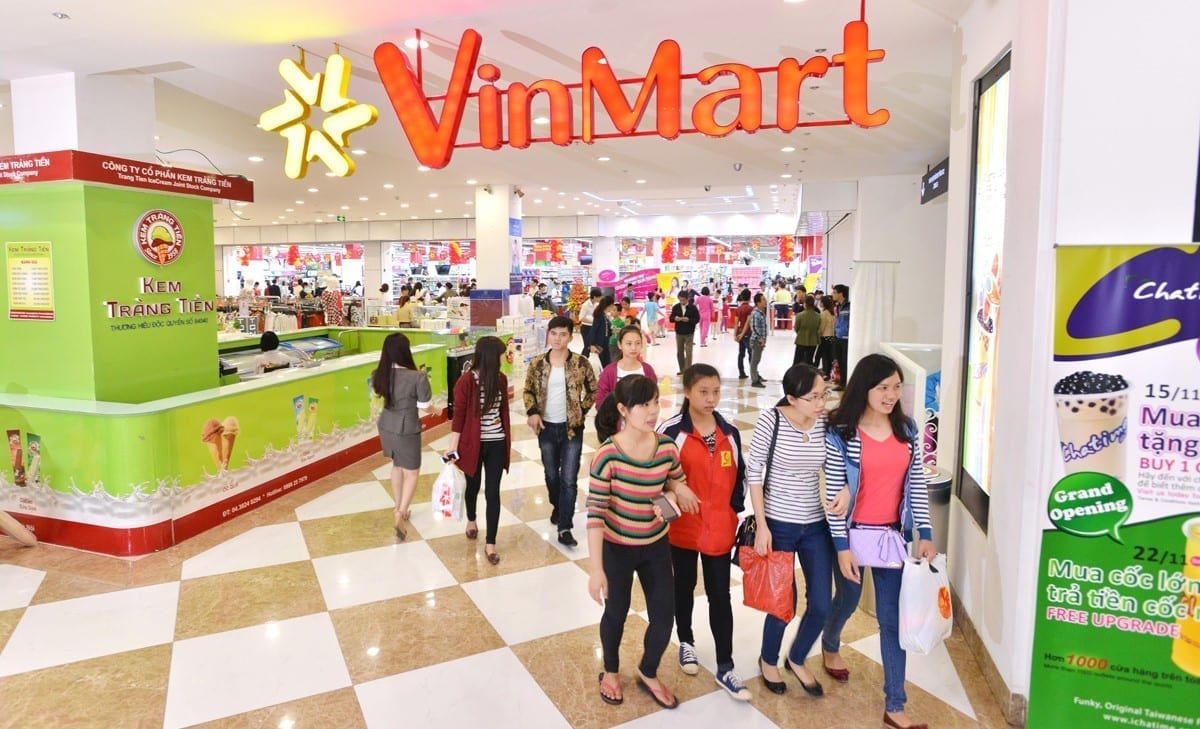
    A year after conglomerate Masan Group acquired it from Vingroup, the VinMart retail chain is set to become WinMart.

    The rebranding would take place after the restructuring of the retail chain is complete, Truong Cong Thang, CEO of The CrownX, a subsidiary that operates VinMart, said at the Masan annual general meeting Thursday.

    The CrownX reported a 14 percent rise in revenues last year to VND31 trillion ($1.35 billion), with VinMart+ convenience stores achieving revenue growth of 42 percent despite shutting down over 744 underperforming stores.

    Danny Le, CEO of Masan Group, said the company plans to increase the number of VinMart and VinMart+ outlets by 30,000 in the next five years, with 20,000 of them being franchised.

    In December 2019, the company acquired a 83.74 percent stake in VinCommerce, the subsidiary of Vietnam’s biggest private conglomerate, Vingroup, which operated VinMart chain.

    The chain, which reported a $100-million loss in 2019, broke even last year, and Masan now targets annual sales of $7-10 billion and double-digit profit growth by 2025.

  • Fake iOS app steals one million dollars in Bitcoins taking a victim’s life savings

    Fake iOS app steals one million dollars in Bitcoins taking a victim’s life savings

    You have to feel bad for a man named Phillipe Christodoulou. Looking for a place to store Bitcoins he owned that were valued at $600,000 at the time, he installed an app called Trezor Wallet from the Apple App Store, when Christodoulou opened the app looking to check his balance, he was stunned to discover that his 17.1 Bitcoins (now worth over $1 million) was gone.

    As it turned out, Trezor, which manufactures hardware cryptocurrency wallets, does not offer an iOS or Android app and had been complaining about the fake apps listed in the App Store and Play Store to no avail. Back in December, the company disseminated a tweet warning Android users that own a physical Trezor device that “This app is a scam and has no relation to SatoshiLabs and Trezor. We’ve already reported it to the Google team. Always confirm any action on your device and never type seed words until your Trezor asks you to.” Google did remove the Android version of the app in December.

    Seed words or a seed phrase is a list of words needed to recover Bitcoin funds “on-chain.” Anyone who knows the words can take ownership of the user’s Bitcoins so Trezor recommends that they must not be typed into a website and that seed words need to be guarded as fiercely as one would protect cash or jewels.

    While the bad actors that created the fake iOS and Android versions of the (non-existent) Trezor app stole $1 million in Bitcoins from Christodoulou, the victim is more upset with Apple. Once a loyal Apple customer, Christodoulou now says that Apple “betrayed the trust that I had in them. Apple doesn’t deserve to get away with this.”

    Apple spokesperson Fred Sainz says that “Study after study has shown that the App Store is the most secure app marketplace in the world.” However, you won’t get Meghan DiMuzio, executive director of the Coalition for App Fairness, to agree with the Apple spokesperson. DiMuzio, contradicting Sainz’ statement, said, “Apple frequently pushes myths about user privacy and security as a shield against its anti-competitive App Store practices. The truth is, Apple’s security ‘standards’ are inconsistently applied across apps and only enforced when it benefits Apple.”

    The 17.1 Bitcoins that were stolen represented Christodoulou’s life savings and right now there is no indication that he will be able to get that money back.

  • Google brings back a nifty feature to Maps users on Android

    Google brings back a nifty feature to Maps users on Android

    Google adds new features to its mobile apps all the time, but sometimes, they remove the ones they don’t think are up to the challenge. We never know what’s behind these decisions, but we can definitely say that some features don’t deserve to be removed.

    That didn’t seem to interest Google’s Maps team when they decided to remove a very useful feature from the Android app, the compass widget. Last month, developers revealed many of the improvements that the Maps app will receive in the coming weeks but left one out from the initial announcement.

    Long story short, Google announced today that after removing the compass from Maps for Android in early 2019 “in an effort to clean up the Navigation screen,” it decided to bring it back after receiving overwhelming feedback in its favor.

    The compass will show you which direction is north via a red arrow. Just like it was implemented two years ago, the widget will be positioned on the right side of the screen. The “new” compass widget is now rolling out to all Google Maps for Android users globally, so as long as you have version 10.62 (or higher) installed, you should be able to use it.

  • 8 types of learning toys that every child should have

    8 types of learning toys that every child should have

    Throughout time toys have played a significant role in children’s learning and development, especially educational ones. It’s not exaggerating to say that toys are the best companions to our kids. In general, parents do not always have time to be their companions, even though they strive to spend time with them as much as possible. Somehow, toys play this magical role to make your child’s time more playful and meaningful.

    To cultivate your child’s interest, they need to have a few different types of learning toys.

    Plush toys or stuffed animals

    Usually, a plush toy is the first type of toy that every child will have, like a teddy bear or stuffed animal. It seems that it’s a never-die industry everywhere in the world. If this type of toy exists forever, there must be something that we shouldn’t ignore.

    Kids love hugging soft animals to sleep. Studies showed that teddy bears help improve psychological well-being. “It’s human nature to crave these feelings from childhood to adult life” said psychologist Corrine Sweet. Nevertheless, parents should be aware of the materials and components when choosing stuffed toys for kids to avoid unnecessary dangers.

    Puzzles

    Unlike dolls and stuffed animals, puzzles are important toys to help kids learn and enhance their necessary critical skills through play. They could grow with your kids in parallel as they will become more interested in solving puzzles with greater difficulty. Once they are interested, they will spend the whole day solving puzzles.

    Apart from brain development, puzzles, like jigsaws and wooden puzzle board, are excellent educational learning kits for children, to keep their mind away from mobile devices.

    Essential skills kids will benefit from puzzles:

    • Fine motor skills.
    • Memory and cognitive abilities and skills.
    • Problem-solving skills.
    • Independent thinking skills.
    • Object sorting skills.
    • Ability to solve particular needs.
    • Ability to combine objects.

    Musical toys

    Music is a beautiful international language that can cross beyond nations, cultures, and races.

    Music plays a significant role to enrich our lives. It’s essential for kids to grow and boost brain development, which is a critical part of developing cognitive abilities, language, listening, and speaking skills.

    Kids are naturally curious about the sounds from different instruments. Being curious about something means they have an interest in it. That means it can be a powerful tool to develop necessary skills through musical toys.

    Other vital skills kids can acquire through musical toys:

    • Cognitive skills enhancement and sensory development.
    • Gross and fine motor skills development.
    • Self-expression and self-confidence.

    Role-playing toys

    Kids love role-playing! It helps engage kids with learning through imaginative plays. In general, kids learn from real-life environments much faster than from any books. Role-playing is an essential scenario-based learning tool for kids to understand the importance of their behaviours, activities, relationships, and roles in this society.

    Furthermore, kids have the opportunities to “outgrow” and develop these core skills:

    • Critical thinking skills.
    • Communication and collaboration skills.
    • Decision-making skills.
    • Risk analysis skills.
    • Interpersonal skills.

    Role-playing toys provide simulating scenario-based learning environments for kids to learn and explore in immersive environments.

    Dress-up play toys

    Similar to role-playing toys, dress-up play toys provide imaginative simulating environments for kids to experience and explore possible real-life scenarios through fun plays. Kids have room to design their clothes for toys with their creativity and imagination. In the whole process, kids can enjoy pretending to be the role or character they are dreaming of being, which helps develop their interpersonal skills and self-exploration.

    Furthermore, it’s also important to develop gross and fine motor skills in early childhood. Parents can also play with your kids if possible as that’s the best way to understand more of your kids, like who they want to be and what they want to do in the future.

    Builder and construction toys

    STEM or STEM-related toys, such as builder and construction toys, have successfully grabbed massive attention from parents and educators worldwide. The reasons behind this are quite simple – the STEM workforce is in high demand all over the world, especially in an ever-connected world, as it is essential to cultivate your child’s interest and ignite their passion in STEM areas with STEM toys at an early age.

    More are more STEM-based programs or campuses will be built up worldwide to meet the increasing enrolments. The United States and China have been putting many efforts into supporting and encouraging kids and teenagers to pursue STEM curricula.

    Vehicles toys

    Vehicle toys, such as cars, trucks, trains, or aeroplanes, have the potential to stimulate children’s development in a prolonged way. Research showed that car toys might aid kids’ emotional, social, and physical development as well as language and communication skills.

    They allow your children to simulate sitting on the vehicles with creativity and imagination on the road, which provides a dynamic learning environment for them to experience many possible opportunities and scenarios for the future through imaginative play. Kids can be the creators of their future and life. Parents can participate in their games or encourage them to play with their companions. It’s a great way to develop their teamwork and communication skills for the long term.

    Board games

    Although we cannot say all kids love games, they usually wouldn’t hate them. Actually, interactive-based learning games, such as board games, are prevalent among kids.

    Here are the essential skills kids can expect to gain through interactive-based learning games:

    • Focus and concentration.
    • Communication skills.
    • Independent thinking.
    • Problem-solving skills.
    • Improving self-esteem: they learn how to accept reality when they lose games.

    Although we cannot only rely on toys to develop children’s abilities and skills, it’s also undeniable that toys play essential roles in enhancing their development in multiple areas from different perspectives.

     

  • Apple iOS 15 release date and expected new features

    Apple iOS 15 release date and expected new features

    The next iOS 15 update is expected to be revealed on June 7 at Apple’s annual WWDC dev-centric summit at an online keynote. As is tradition, we are certain that most all new features of iOS to be demoed on stage, but the most intriguing ones would likely be unraveled as soon as the first developer beta of iOS 15 arrives on the day of the announcement.

    Now, what’s to expect about the new version of Apple’s OS? Given that iOS 14 was a pretty important update for iOS that overhauled a slew of things, most importantly the interface by adding widgets to the home screen, we don’t really believe that iOS 15 will add that much to that visual overhaul. This doesn’t mean you should curb your enthusiasm though, there’s plenty of spicy talk regarding iOS 15!

    • June 7, 2021 for iOS 15 developer beta release
    • September 2021 iOS 15 final release

    This year’s June 7 WWDC developer summit will be an online-only event, says Apple, and will “offer unique insight into the future of iOS, iPadOS, macOS, watchOS, and tvOS.” Aside from releasing a beta, this early reveal of iOS also gives plenty of headroom to app developers to prepare their apps for the upcoming changes and get up to speed on all the new features.

    As far as the final launch of the official version of iOS 15, it will undoubtedly take place alongside the release of the iPhone 13 (iPhone 12S) series. Traditionally, iPhones are released in late September/early October, so expect the next version of iOS along those lines.

    Word on the street is iOS 15 will open up the operating system to even more customization by allowing users to change even more of the default apps. iOS 14 kickstarted this trend by letting Safari and Mail be changed and an alternative be used instead. The latest iOS 14.5 beta lets you change your default music platform of choice as well, substituting Apple Music for Spotify, for example. This opening of iOS will likely persist in iOS 15 as well.

    Interactive widgets

    iOS 14 introduced widgets, which are a great new addition to Apple’s OS, but in their current state, widgets are simply not as useful on iOS as they are on Android because they aren’t interactive. iOS 15 is rumored to be introducing interactive widgets that the user will be able to interact with, i.e. change volume, enable specific toggles, and so on. More sizes are also reportedly coming to widgets in iOS 15: currently, we have small, medium, and large, but a bunch of new in-between sizes could arrive. This will make the widget support on iOS 15 much more useful and more customizable.

    Redesigned Settings

    The Settings menu is a staple of iOS that houses all of the possible device settings you might want to tinker with. It’s been largely kept the same for the past years, scoring tons of new features and menus that have gradually made it less and less intuitive. A redesign could help Apple solve that problem and make things a bit more intuitive once again.<

    Always-on display and redesigned lock screen

    One of the big rumors about the iPhone 13 is that it would score a always-on display similar to the one found on the Apple Watch, which can scale down the refresh rate all the way down to 1Hz and waste just a minuscule amount of battery. The always-on display will certainly be hardware-dependent and won’t arrive on old iPhones, but iOS will also have to change to accommodate the new feature. Rumor is the lock screen will be updated so as to display notifications in a more friendly manner to suit the always-on display.

    iOS 15: Supported devices

    iOS updates tend to drop support for older iPhones. This wasn’t the case with iOS 14, which was supported on the same devices on which iOS 13 was available, but this won’t be reiterated by Apple’s next iOS version.

    The iOS 15 update support will be dropped for the last iPhones with a headphone jack, the iPhone 6s and 6s Plus, as well as the original iPhone SE as only devices with an A10 or newer chipset will still remain supported.

    Here’s what iPhones will most likely get iOS 15:

    • iPhone 12 Pro Max
    • iPhone 12 Pro
    • iPhone 12 mini
    • iPhone 12
    • iPhone 11
    • iPhone 11 Pro
    • iPhone 11 Pro Max
    • iPhone XS
    • iPhone XS Max
    • iPhone XR
    • iPhone X
    • iPhone 8
    • iPhone 8 Plus
    • iPhone 7
    • iPhone 7 Plus
    • iPhone SE (2020)
    • iPod touch (7th generation)

    iOS 15: Privacy

    The latest iOS 14.5 beta pumped up the privacy of the iOS even further by automatically redirecting safe browsing data through Apple’s own servers and acting as a proxy of sorts, protecting you from the prying eyes of the advertising monstrosities prying for your data (looking at you, Google). Supposedly, we can expect similar privacy features to be part of iOS 15 as well.

  • Vietnamese carriers restart direct US flight race

    Vietnamese carriers restart direct US flight race

    Bamboo Airways and Vietnam Airlines are locked in a race to become the first Vietnamese carrier to establish a direct route to the U.S. The race has been re-triggered by the large demand for such flights amid the Covid-19 pandemic.

    Trinh Van Quyet, chairman of Bamboo Airways, said that the global vaccination campaign will help create a boom in the aviation industry by the end of this year. This is why the airline wants to fly directly to the U.S. in the last quarter of this year, he said.

    He had earlier announced a plan to make Bamboo Airways the first Vietnamese carrier to conduct regular direct flights to the U.S. However, it failed to meet its own deadline last year.

    The board of directors of flag carrier Vietnam Airlines has also approved a plan to launch direct flights to the U.S. early next year, saying it was the right time to do it. Since May last year, the airline has conducted 12 repatriation flights from the U.S. It has used up the number of repatriation flights allowed by U.S. authorities and is now seeking permission for regular flights.

    Such flights will help utilize its wide-body fleet, which has been in low demand due to the pandemic. Vietnam has considered regular direct flights to the U.S. since 2003, but profitability concerns have made carriers hesitant. Vietnam Airlines leaders have said earlier that low demand and fierce competition could lead to annual losses of $30 million in the first five years.

    American carriers have faced the challenges that Vietnamese carriers face now, and stopped direct flights between the two countries long ago. United Airlines launched a direct service in 2007 but pulled the plug on it in 2012, while Delta Air Lines flew its direct service for a mere six months in 2008. No American carrier has launched a direct flight since.

    The market entrance of Bamboo Airways in 2019 stirred up the race again, with its leadership expressing confidence that it was possible to make a profit with direct flights to the U.S.

    Bamboo Airways chairman Quyet had calculated that the airline could earn VND8 billion ($346,700) a month from direct flights with a return ticket price of $1,300.

    Without direct flights, people have to transit in East Asia while traveling between Vietnam and the U.S., and the journey can take 18-21 hours. A direct flight would shorten the travel time to 15-17 hours.

  • Google Maps driving directions are going green

    Google Maps driving directions are going green

    Google has been hard at work keeping its Maps app top-notch these days, as it continues to compete in the neck-to-neck battle with Apple Maps. It’s been adding all sorts of features over the years, constantly improving your commuting experience—especially if you exploring a new city. Among many other things, it can now help you find great places to eat, sleep, and hang out, and even plan group get-togethers at a favorite joint.

    CNET has revealed that Google is rolling out a brand new feature to its driving directions function, this time aimed to help us live a little greener.

    Google Maps has announced it will be adding carbon emission minimization in its calculations for optimal driving directions. If there are two similar routes a driver could take, Google will now be able to take into account road inclines, traffic jams, and other factors in order to choose the least wasteful option. If the greener choice would significantly prolong the trip length, however, Google will let you know so that you can make the choice for yourself.

    Another upgrade Google Maps will be giving us is an improvement to its “Live View” alternate reality feature. Introduced in 2019, Live View superimposes virtual arrows onto the real world through your phone screen while you are walking, pointing you in the right direction. As of the new update, Google Live View will be available indoors in Westfield shopping centers across the U.S, including San Francisco, Chicago, and Los Angeles. The company has promised to bring Live View to Zurich and Tokyo airports eventually as well.

    Alongside these updates, Google is also trying out grocery pick-up options in a partnership with Fred Meyer (a division of the Kroger grocer) to encourage social distancing and safety amidst the COVID pandemic. This feature is currently being tested in Portland, Oregon, and Google will be sure to let us know will let us know if it goes nationwide.

  • Another huge loss for AirAsia in 2021

    Another huge loss for AirAsia in 2021

    AirAsia Group is expected to report another huge loss in its 2021 earnings on prolonged closure of borders and a slower-than-expected recovery in tourism.

    Affin Hwang Capital said AirAsia had posted a record headline net loss of RM2.44 billion in the fourth quarter (Q4) of 2020.

    This was due to weak revenue, large impairment charges on right of use assets/receivables, fuel hedging losses and the recognition of deferred tax, partly cushioned by forex, disposal, and derivatives fair value gains.

    The firm expects AirAsia to report core net loss of RM1.4 billion this year due to the reimplementation of movement control order during the first quarter (Q1) 2021, prolonged closure of borders, and longer-than-expected timeframe for the Covid-19 immunization program.

    “We now anticipate AirAsia to report net loss of RM92 million in 2022 earnings (from net profit of RM238 million) due to slower-than-expected recovery in international tourism,” it said.

    Sequentially, Affin Hwang said AirAsia’s Q4 revenue from Malaysia’s airline operation had slipped by 68 percent quarter on quarter to RM113 million.

    This was after the reimplementation of movement control orders while the revenue from Indonesia and the Philippines had improved by 413 percent and 60 percent respectively.

    While the results were grossly below expectations, the airline’s management made good progress in private placements, Affin Hwang said, adding that AirAsia would have sufficient liquidity for 2021.

    The firm maintained a “Sell” call on AirAsia with a higher target price of 75 sen from 50 sen previously.

  • Japan’s retail sales fall for third straight month

    Japan’s retail sales fall for third straight month

    Japanese retail sales fell for the third straight month in February as households kept a lid on expenditure amid the coronavirus emergency, underscoring the fragile nature of the economy’s recovery from last year’s slump.

    Analysts expect Japan’s economy sharply contracted in the first quarter, as lacklustre consumer spending and weakening exports create challenges for policymakers who have already rolled out massive stimulus.

    Retail sales lost 1.5% in February from a year earlier, government data showed on Tuesday, a smaller fall than the median market forecast for a 2.8% drop.

    But it marked the third straight month of declines following January’s 2.4% fall and a 0.2% drop in December.

    “That the coronavirus isn’t subsiding is a major reason to worry about a delay of an economic recovery,” said Atsushi Takeda, chief economist at Itochu Economic Research Institute.

    “Clothes aren’t selling because people aren’t going out,” he said. “People are not really returning to commercial facilities, the trend is for them to go shopping at supermarkets in their neighbourhoods.”
    The broader decline in retail sales was driven by falls in spending on items such as clothing, toiletries and general merchandise, the data showed.

    Compared with the previous month, retail sales rose 3.1% on a seasonally adjusted basis.

    Separate data showed the nationwide seasonally adjusted unemployment rate was steady at 2.9%, lower than the median forecast of 3.0%.

    There were 1.09 jobs per applicant in February, down from the previous month’s 1.10, labour ministry data showed.

    The world’s third-largest economy is set to contract by an annualised 6.0% in the current quarter, which would be the first decline in three quarters partly due to sagging consumer spending, according to the latest Reuters poll data.

    Some analysts are worried that a longer contraction in household spending and weakening exports raise the prospect of a slower economic recovery than initially thought.