Category: General

Retail News Asia is committed to providing both local and global retailers with the latest General Retail news throughout the Asian market. This on a daily base.

  • Vietnam beats global average in sustainable lifestyles

    Vietnam beats global average in sustainable lifestyles

    Vietnam is ahead of the global average in adopting healthy and sustainable lifestyles, a survey has found.

    Forty seven percent of respondents in Vietnam said they had supported a socially responsible company last year, against a global average of 33 percent, the survey by research company GlobeScan and digital payment firm Visa said.

    Eighty two percent said they had sought out information related to healthier lifestyles last year, well above the global average of 56 percent.

    The survey, which polled 27,000 people in 27 countries and territories, also found that people in Vietnam are taking proactive steps towards healthier and more sustainable lifestyles.

    Ninety percent said they had made changes to their lifestyles last year to be more environment-friendly, and 87 percent made changes to be healthier.

    Vietnamese also display a high interest in environment-friendly lifestyle choices, with 81 percent saying they had sought out information about them last year against a global average of 47 percent.

    “It is encouraging to see that consumers in Vietnam are already taking concrete steps to lead healthy and sustainable lifestyles,” Dang Tuyet Dung, Visa country manager for Vietnam and Laos, said.

    Asked what companies could do to help them live healthily and sustainably, Vietnamese listed a desire for new products that are better for both people and the environment as a top priority.

  • Vietnam Airlines to invest $430 mln to offer ground services at Long Thanh airport

    Vietnam Airlines to invest $430 mln to offer ground services at Long Thanh airport

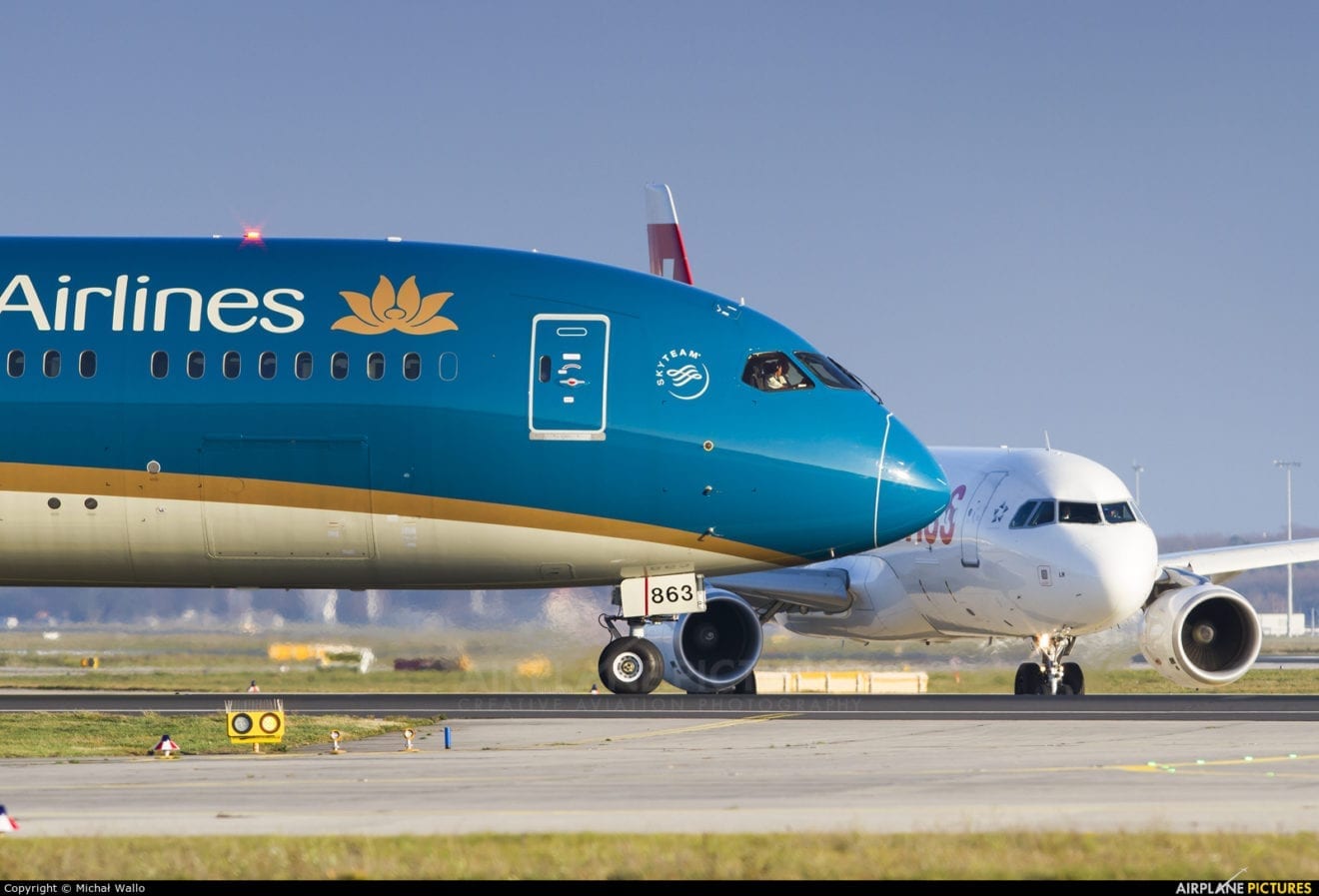
    Vietnam Airlines plans to invest VND9.9 trillion ($430 million) in the under-construction Long Thanh International Airport to become a provider of ground services and in-flight meals.

    It plans to provide aircraft maintenance services, supply jet fuel and meals, serve passengers in lounges, and set up duty-free shops, the carrier said in a proposal to authorities.

    These are services the state-owned carrier already provides at major airports in the country.

    It will bring in 30 percent of the amount from its own resources and borrow the rest.

    Its subsidiaries can either set up facilities at the airport or joint ventures with the Airports Corporation of Vietnam (ACV), which oversees the construction and would operate the airport, the proposal said.

    It hopes to get a dedicated area at the airport to build hangars for aircraft maintenance and in the terminal to prioritize its customers.

    Construction of the first of three phases of Long Thanh International Airport in the southern province of Dong Nai, 40 kilometers east of Ho Chi Minh City, began in January.

    The $4.6-billion first phase of the airport is set to be completed by 2025 when it will be able to handle 25 million passengers and 1.2 million tons of cargo a year.

    The final phase will be completed by 2040, when the airport will have four runways and four passenger terminals. It will have a capacity of 100 million passengers and five million tons of cargo.

  • AirAsia Japan closure has cost group $80 million so far

    AirAsia Japan closure has cost group $80 million so far

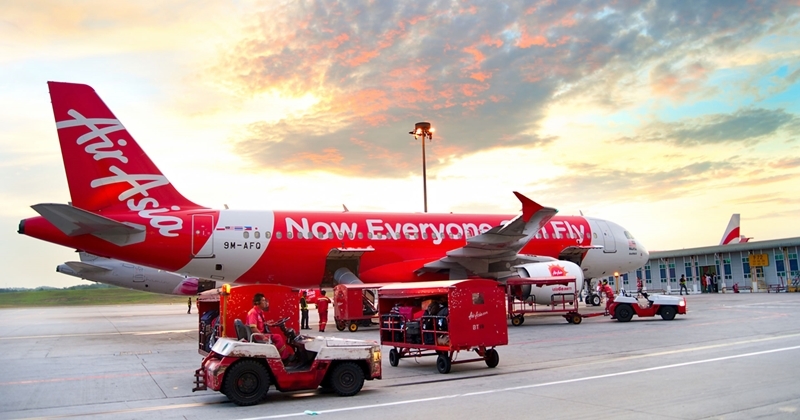
    AirAsia Japan’s closure has cost the Malaysia-based AirAsia Group nearly $80 million over three quarters.

    AirAsia Group owns 48.9% of the joint venture carrier, which ceased operations in October and filed for bankruptcy in the following month.

    AAJ commenced bankruptcy proceedings by a court order issued on 24 February, AirAsia Group said in a same-day Bursa Malaysia disclosure.

    As a result of the proceedings, the low-cost airline group recognized a loss of over $74 million in the second half of 2020, “due to financial assistance [to AAJ] in the form of intercompany transactions and loans being written off as these amounts were deemed to be irrecoverable”.

    AirAsia Group also incurred nearly $5.2 million in expenses related to aircraft de-registration, in the fourth quarter of 2020 and the current quarter, to move three aircraft from Japan to Malaysia.

    The group states: “Further announcement(s) will be made in due course on the particulars of claim and financial impact to AirAsia Group, if any, under the bankruptcy proceedings.”

    AirAsia Group last stated in a 25 August disclosure that it provided AAJ with financial assistance totaling $6.27 million during the second quarter of 2020.

    In 2019, the group gave AAJ a $12 million loan in November that year, as well as loans of Y1 billion ($9.4 million) and Y2 billion in January and March, respectively.

    Further back, AAJ received a Y500 million loan from the group in the third quarter of 2017.

  • Thai Airways announces staff cuts in desperate bid to avoid bankruptcy

    Thai Airways announces staff cuts in desperate bid to avoid bankruptcy

    Thai Airways says it has cut around 240 executive positions as part of its bankruptcy restructuring process.

    The airline said: “The number of executive positions has been reduced from 740 to about 500”, also confirming that the number of supervisory levels would go from eight to five to increase efficiency.

    Thai Airways, like most of its rivals around the world, has slashed capacity as travel restrictions and falling demand make many commercial routes unviable during the coronavirus pandemic.

    The airline will submit its restructuring plan to the Central Bankruptcy Court on 2 March and the plan is expected to be voted on by creditors in May.

    If a majority of creditors vote against it then the airline will go ahead with bankruptcy procedures.

    Acting president Chansin Treenuchagron said: “A successful restructuring will require cooperation from all parties, including creditors and employees.”

    Thai Airways employs around 21,000 people and is Thailand’s national carrier, an important part of its vital tourism industry.

  • Consumers complain most about transport sector

    Consumers complain most about transport sector

    The transport service sector received the highest number of customer complaints in 2020, with travel restrictions related to the Covid-19 pandemic triggering more disputes than usual.

    A report released Monday by the Vietnam Competition Authority (VCA) under the Ministry of Industry and Trade says that complaints in the transport sector accounted for 49.1 percent of the total, followed by banking, finance and insurance (9.3 percent), and telephone and telecommunications (8.8 percent).

    Tourism and restaurant ranked fourth with 6 percent of customer complaints, says the report, also noting that sectors hit hardest by the Covid-19 crisis, like aviation and tourism, have elicited more complaints from customers than in previous years.

    Last year, when Vietnam experienced two Covid-19 outbreaks in March and July, the government had imposed stringent travel restrictions to try and curb the spread of the virus.

    The VCA said that it had answered 9,965 out of 11,211 calls its center received last year, up 63 percent from the previous year.

    Around 56.4 percent of all complaints related to businesses’ violation of commitments. Others related to the quantity and quality of goods as also delivery time. There were complaints about contracts with service providers (7.5 percent) and information provided by sellers (5.2 percent), the report says.

    Last year, Ho Chi Minh City topped the list of localities receiving the highest number of customer complaints, followed by Hanoi.

  • Google unveils a fresh batch of important Android enhancements and features

    Google unveils a fresh batch of important Android enhancements and features

    Android 12 might not be ready for primetime just yet, but while adventurous users try out Google’s next big batch of mobile improvements and cool new features and the vast majority of the world’s smartphone owners continue to wait for a stable Android 11 update, the search giant is today taking the wraps off half a dozen smaller enhancements aimed at making handsets “more secure and convenient for everyone.”

    Small doesn’t equal trivial in this particular case, mind you, and perhaps more importantly, it’s definitely worth highlighting that these six fairly meaningful new features, just like the six unveiled back in December 2020, are not exclusively headed for owners of Android 11-running devices.

    Incredibly enough, you don’t even need Android 10 to enjoy Password Checkup functionality, be able to schedule your texts in the popular Messages app, “get more done hands-free” with Google Assistant, darken your Google Maps routes, spice up your Android Auto drives, or further improve the accessibility of the already extremely convenient TalkBack service.

    Arguably the most exciting new tool integrated into global devices powered by Android 9 and above starting today, at least for users perennially concerned about their online and mobile security, is Password Checkup. This has been a thing on the Chrome browser for more than a year now, expanding to support pretty much any app on your phone requiring login credentials.

    Google’s hugely popular Autofill feature will automatically check to see if said credentials are compromised, immediately alerting you when detecting a potentially stolen password and prompting you to choose a new one. Of course, you’re free to ignore Big G’s security warnings, but in the long run, it’s definitely wise not to do that. You never know when a compromised password publicly available for bad actors to use at their discretion will in fact be used against you in one of many and equally scary ways.

    While significantly less… dramatic, the second big new feature unveiled today may well appeal to an even larger number of users worldwide, aiming to make it easier to communicate with your friends and family from far away.

    Whether you live in a different timezone from someone you deeply care about or fear you might forget to wish your better half a happy birthday before everyone else, you can now “schedule send” messages on phones with Android 7 and up as long as you download or update the aptly titled Google Messages app to its latest version.

    253 million is a pretty lofty number, so it shouldn’t come as a big surprise that Google is paying very close attention to the extensive global community of blind and low-vision Android users, revamping the TalkBack experience with more intuitive gestures, a unified menu, a new reading control menu, and well, more, with some of these important accessibility changes showcased in the short video embedded below.

    Meanwhile, there’s not a lot to say about the imminent worldwide expansion of the Google Maps dark theme other than “finally!” This has been a very long time coming, and as you can imagine, its activation requires little to no effort… if you know where to look. Namely, in the “Theme” submenu of your navigation app’s “Settings” menu, where you can choose to use Google Maps “Always in Dark Theme”, as well as easily switch back to the light side.

    No Android update would be complete without some sort of a Google Assistant upgrade, and indeed, the AI-powered service is improving its convenience by displaying cards that can be read at a glance and perform more tasks than ever before sans requiring you to unlock or touch your Android phone.

    Last but not necessarily least, Android Auto is gaining the ability to keep you entertained during your long drives with a number of fun little voice-activated games, as well as new custom wallpapers to brighten your day and personalize your car display. These features will be available “in the coming days” on phones running Android 6.0 and up when connected to a compatible vehicle.

  • Purchasing a Property in Singapore: 5 Things to Take into Account

    Purchasing a Property in Singapore: 5 Things to Take into Account

    Homeownership may remain an elusive dream for many people in other countries, but not so for the citizens of  Singapore. Thanks to the government’s successful public housing scheme, the Lion City is one of the countries with the highest property ownership rate in the world.

    Although there are plenty of opportunities for Singaporeans like you to own a property, it does not mean that the process is always easy. After all, buying a home is a huge decision and a long-term financial commitment that you cannot enter blindly. If you are thinking of purchasing a property in Singapore, make sure to consider the things below.

     Eligibility to Buy a Property

    Before you get excited at the thought of having a property in one of the most desirable cities in Asia, you should first ensure that you are qualified to purchase the home you want. For example, if you intend to buy a private residential property, you need to be a Singaporean citizen who is twenty-one years of age or older. If you are eyeing a Housing and Development Board (HDB) flat, the eligibility requirements will vary depending on the type of sales scheme you will choose.

    An HDB Build-To-Order (BTO) flat, for instance, requires single buyers to be Singapore citizens who are at least 35 years old. Income ceilings are also set for various types of BTO flats, among other restrictions. To check whether you met the eligibility conditions to buy an HDB flat, you may use the “Check Your Eligibility” e-service provided by the HDB.

    Your Current Finances

    Another crucial factor to consider when planning to buy a home is your finances. Make sure that you take a look at your current resources to know whether or not you can afford to purchase a property at this time. Keep in mind that even if you are eligible for a loan and have CPF savings, there are plenty of expenses that you have to cover on your own. To get an idea if you can afford all the costs involved in purchasing a property, try to assess the following:

    • Your personal funds. Examine if you have enough savings to cover upfront costs, such as the agent’s commission; the cost of renovation, furniture, and other miscellaneous expenses; as well as monthly repayments if you suddenly lose your job.
    • Your CPF Ordinary Account (OA) balance. You should also find out how much funds you have in your CPF OA account. Your OA savings and your future monthly CPF contributions are crucial factors in estimating the amount you can spend on buying a property.
    • Income. You need a stable income source if you are buying a property since you need to pay for your monthly mortgage payments and to cover other ongoing expenses, like fire insurance and management service fees. Try using an HDB BTO calculator and similar financial tools to find out the monthly repayments you have to make. This way you’ll be able to gauge whether or not your earnings can cover the cost of acquiring your dream home.

    Your CPF Savings

    Unless you have tons of cash, you will most likely rely on your CPF Savings to purchase a property. Although you can do so under the CPF Housing Scheme, you should remember that your CPF money is primarily for your retirement needs. As such, there is a limit to the amount of CPF savings you can use to fund your home.

    Your CPF withdrawal limit depends on numerous factors like the type of property and home loan you are getting. It is essential to figure out how much CPF savings you can use so that you can better plan on how to finance your new home. Try using the CPF Housing Usage Calculator to get an estimate.

    How Much You Can Borrow

    Apart from finding out how much CPF savings you can use, it is also essential to get an idea of how much money you can borrow to finance your home purchase. Note that lenders determine the loan amount based on the following:

    • Mortgage servicing ratio (MSR). The MSR shows the percentage of your gross monthly earnings allotted for your loan payments. You can compute your MSR by dividing your monthly mortgage payment by your gross monthly income. Note that your MSR should not go beyond 30 per cent if you are buying an HDB flat or executive condominium.
    • Total debt servicing ratio (TDSR). Lenders will also calculate your TDSR (your total monthly debt payments divided by your gross monthly income) to ensure that you still have enough earnings for your living expenses and debt repayments. Know that you cannot take a home loan if you exceed the TDSR limit of 60 per cent. 
    • Loan-to-value limit (LTV). Your LTV limit is the maximum amount you can borrow to finance your home. This limit varies depending on the number of outstanding housing loans you have and other factors.

    Type of Home Loan

    Make it a point to also think about the home loan options available to you when planning to purchase a property. For instance, if you are eyeing a private residential property, you can only borrow from a bank or similar financing institutions. For HDB flats, you have the option to apply for an HDB housing loan if you are eligible, in addition to a bank loan.

    When looking at home loan options, take your time to compare home loans provided by different lenders to find the loan package most beneficial to your needs. Weigh the pros and cons of various home loans, taking into account the following factors:

    • Loan amount
    • Loan term
    • Interest rates
    • Lock-in period and fees, especially penalty fees for early repayment
    • Special features and discounts

     Buying a home is not a decision that you can take lightly. It requires careful planning and honest assessment of your finances so that you will not end up biting off more than you can chew. Be sure to consider the points discussed above to help you decide if you are in the best position to achieve your homeownership goal today.


  • Former Lloyd’s APAC CEO Joins Delta Insurance

    Former Lloyd’s APAC CEO Joins Delta Insurance

    The specialty underwriting agency has appointed a new chief operating officer to support its burgeoning growth in Asia Pacific.

    Delta Insurance has expanded its management team, appointing current advisory board member Kent Chaplin as COO, the firm announced in a statement on Tuesday.

    Chaplin is no stranger to the industry and the region – he was formerly the CEO and head of Asia Pacific for Lloyd’s, and worked for the insurer in Singapore from 2011 to 2018. In 2019, Chaplin joined U.S.-headquartered company DXC Technology as its global head of reinsurance and specialty sales in Singapore.

    He appointed to Delta Group’s advisory board in August 2019, where he provided strategic planning, business development and governance support.

    Delta Insurance, which started operations in 2017 in New Zealand, is innovation and technology-driven insurtech headquartered in Singapore. It specializes in cyber, technology and professional risk protection, with Lloyd’s underwriting backing.

    Amid the Covid-19 pandemic in 2020, the firm saw 50 percent growth in the Asia Pacific region.

    That growth has encouraged us to significantly broaden our footprint in Asia-Pacific and beyond – becoming more global in our outlook, Ian Pollard, group managing director, said in the statement.

  • Bamboo Airways hikes capital by 50 pct

    Bamboo Airways hikes capital by 50 pct

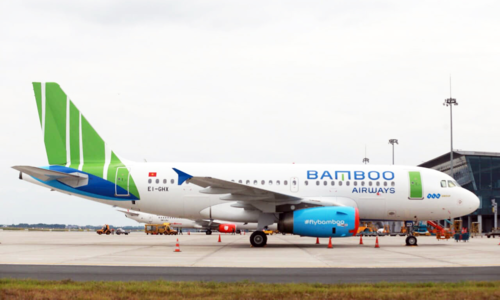
    Bamboo Airways has increased its charter capital by half to VND10.5 trillion ($458 million), its fifth hike in less than four years since establishment.

    The airline, in which conglomerate FLC owns a 51.29 percent stake, posted a pre-tax profit of over VND400 billion last year, up 34 percent from 2019.

    The airline began flying in 2019, and carried over four million passengers last year, a 40 percent increase from the previous year.

    It has a fleet of nearly 30 aircraft and plans to expand it to 50 this year. It has the best on-time performance in the country.

  • Google finally updates the Gmail for iOS app after three months

    Google finally updates the Gmail for iOS app after three months

    Google finally released an update for its Gmail for iOS app on Monday. As you might recall, many of Google’s iOS apps have not been updated for iOS and it is thought that this was done on purpose to avoid having to add App Privacy labels to its apps. Starting on December 8th, any app updated in the App Store has to include its App Privacy Label. Located near the end of each app’s App Store listing, the App Privacy Label shows the data that an app can collect including the data that can be linked to the user’s identity. In the case of Gmail, this data includes Purchases, Location, Contact Info, Contacts, User Content, Search History, Identifiers, Usage Data, Diagnostics, and Other Data.

    Google is reportedly being shy about having the App Privacy Label posted for its most popular iOS apps after seeing the criticism Facebook received for posting its longer than average App Privacy Label. Google denied all of this last month and said that it would be updating its iOS apps within weeks. But many of its iOS apps have gone without a recent update and the lack of an update for Gmail resulted in iPhone users being sent a warning earlier this month noting that their Gmail app is out of date. The message said, “You should update this app. The version you’re using doesn’t include the latest security features to keep you protected. Only continue if you understand this.”

    Before Monday, it had been about three months since the Gmail app for iOS had received an update; there are still some other Google apps that need to follow suit. But by bringing one of its most popular iOS apps up-to-date, Google has sent a message that says it is not afraid of the App Privacy Label and has started the process of updating its remaining iOS apps.

  • Vietjet acquires 67 pct in express delivery startup

    Vietjet acquires 67 pct in express delivery startup

    Budget airline Vietjet has invested VND31.5 billion ($1.36 million) to acquire a 67 percent stake in shipping startup Swift247 which seeks to improve the linkage between air and road delivery.

    The company, co-founded by Tommy Nguyen, son of Vietjet CEO Nguyen Thi Phuong Thao, has a charter capital of VND47 billion. Its CEO, Ha Nang Viet, owns 26 percent of the company.

    The Ho Chi Minh City-based company, founded in 2019, delivers products between Southeast Asian destinations within 24 hours by combining air and road transport. Other delivery services take days.

    It offers a delivery time of as low as five hours between Hanoi and HCMC.

    The company also has a tie-up with ride-hailing company Grab.

  • Here’s what WhatsApp subscribers face if they don’t opt-in to the new Privacy Policy by May 15th

    Here’s what WhatsApp subscribers face if they don’t opt-in to the new Privacy Policy by May 15th

    WhatsApp is not planning on making any changes to its new Privacy Policy and users must opt-in to the update by May 15th. In an email from WhatsApp to one of its merchant partners , WhatsApp will “slowly ask” users to agree to its new terms. Those who do not comply with the new terms will lose full functionality of WhatsApp starting on May 15th. Those subscribers not agreeing to the new policy by that date will face a punishment. In its newly posted FAQ page, WhatsApp says, “To give you enough time to review changes at your own pace and convenience, we’ve extended the effective date to May 15th. If you haven’t accepted by then, WhatsApp will not delete your account.
    However, you won’t have full functionality of WhatsApp until you accept. For a short time, you’ll be able to receive calls and notifications, but won’t be able to read or send messages from the app. By “a short time,” WhatsApp means “for a few weeks.”
    After May 15th, you can still accept the updates although WhatsApps rules regarding inactive users will apply. Those rules say that after 120 days of inactivity, accounts are usually deleted. And if you do decide to delete your WhatsApp account, there is a price to pay. The WhatsApp Help Center says, “If you’d like to delete your account on Android, iPhone, or KaiOS, we hope you reconsider. It is something we cannot reverse as it erases your message history, removes you from all of your WhatsApp groups, and deletes your WhatsApp backups.”
    So what is this whole thing about? WhatsApp has been forced to update its privacy policy after deciding that it will allow users to directly message businesses on its platform. The problem is that there is a grave misunderstanding with some subscribers believing that by agreeing to the new Privacy Policy update, WhatsApp users will be sharing their personal data with Facebook. But this is not true and private messages will remain encrypted from end-to-end. This won’t be the case for messages sent to businesses over WhatsApp. Data used in business messages can be used for ad targeting with some data kept on Facebook’s servers.
    WhatsApp once described end-to-end encryption in this way: “Strong encryption acts like an unbreakable digital lock that keeps the information you send over WhatsApp secure, helping protect you from hackers and criminals. Messages are only kept on your phone, and no one in between can read your messages or listen to your calls, not even us. Your private conversations stay between you.”
    The misplaced belief that Facebook was getting to see encrypted messages between WhatsApp users led a number of subscribers to make the decision to leave WhatsApp for rival messaging apps like Signal and Telegram. But had users understood that their personal messages remain encrypted, the rush for the exits would not have happened. Talking about the confusion and the mistaken beliefs about Facebook, a WhatsApp spokesman said, “We’ve heard from so many people how much confusion there is around our recent update.
    There’s been a lot of misinformation causing concern and we want to help everyone understand our principles and the facts.” So in the weeks leading up to the May 15th deadline, WhatsApp is going to post an in-app banner that will allow users to re-read about the new privacy update so that they will accept the changes allowing them to continue using the app. An image of that banner accompanies this article.
    The new privacy policy will allow WhatsApp and Facebook to share payment and transaction data to target ads better. For the last five years, WhatsApp has shared user phone numbers and device information with Facebook.  The latter bought WhatsApp for a final price north of $19 billion in February 2014. WhatsApp has over 2 billion users in over 180 countries.
  • Miniso plans to roll out new sub brands and concepts

    Miniso plans to roll out new sub brands and concepts

    Miniso has unveiled a new “X strategy” business plan to diversify its business and launch multiple brands this year. The Chinese discount variety store said it will focus on the toy market this year with “Art Toy” as a new strategic product category. The retailer entered the toy sector last year with its new sub-brand “TopToy”, with nine new stores.

    The brand will also ramp up its expansion plan in China and overseas with focus on digitalization. As China is in recovery post-Covid-19, Miniso said it will expand its footprint domestically, mostly in Tier 3 cities and even rural areas. As part of its digitalization strategy, Miniso will launch unmanned stores in China, with products also soon available on all online channels including its self-owned online stores, WeChat mini-programs, and flagship stores on major e-commerce platforms.

    Miniso’s international expansion plan will see the opening of stores in high-populated countries, including India, Indonesia, the US, Mexico and Spain. “Covid-19 is a catalyst that has accelerated our digital transformation and embrace of online channels,” said Robin Liu, chief marketing officer of Miniso. “We will keep broadening our online sales channels.”

  • Indonesia slaps anti-dumping duties on cold steel sheets imported from Vietnam

    Indonesia slaps anti-dumping duties on cold steel sheets imported from Vietnam

    The Indonesian Anti-dumping Committee has concluded that Vietnam is dumping cold steel sheets following a 16-month-long investigation.

    Indonesia will apply anti-dumping duties of 3.01-49.2 percent on imports from Vietnam. But some major exporters are set to get away with low duties, according to the Trade Remedies Authority of Vietnam.

    Hoa Sen Group will pay 5.34 percent and Ton Dong A Corporation will pay 3.01 percent.

    The Trade Remedies Authority of Vietnam said it has been informed by the committee that Vietnamese and Chinese cold steel sheets are being imported into Indonesia at a price lower than in those countries, hurting domestic companies.

    In August 2019, the Indonesian committee announced it was opening the anti-dumping investigation. In July last year, it made a preliminary conclusion that the item under investigation was indeed being dumped.

    Immediately TRAV sent a letter objecting to some unreasonable aspects of the preliminary conclusion. KADI decided to extend the investigation for six months.

    Its final conclusion was announced on February 17.

  • Android 12 Developer Preview hints that a 5G Pixel 6 XL is coming

    Android 12 Developer Preview hints that a 5G Pixel 6 XL is coming

    The first Android 12 Developer Preview was released last week, it carries a hidden UI that is similar to Samsung’s One UI. For those unfamiliar with One UI, the software is designed to bring interface elements like buttons, toggles, checkboxes, icons, sliders, progress bars, and more closer to the bottom of the screen. This way, users won’t have to perform calisthenics with their fingers in order to tap one of these elements in the upper reaches of the display.

    By enabling a hidden “Silky home” feature flag, new system settings UI surfaces with elements placed near the bottom of the display. Go to adb shell settings put global settings_silky_home true. The version of the UI with the flag enabled has the content moved lower toward the bottom of the display in order to make one-handed use possible.

    There is no guarantee that the “Silky home” mode will be part of the stable version of Android 12. More exciting though is the possibility that catering to a larger-sized Android screen like this feature does, is a sign that Google is going to be offering a Pixel 6 XL model this year. So far there is no indication that this is in the cards, and there are other large-screened Android phones that could use a UI with more reachable elements. But many of these are Samsung models already served by Samsung’s One UI. Eliminate Samsung from the equation and the odds improve in favor of a Pixel 6 XL.