Category: General

Retail News Asia is committed to providing both local and global retailers with the latest General Retail news throughout the Asian market. This on a daily base.

  • Valiram names new regional executive team

    Valiram names new regional executive team

    Premium retailer Valiram has announced a series of executive appointments across the group, including regional outposts in Thailand and Indonesia.

    Linda Lim is named Country General Manager, Thailand, while Kunal Kapoor has been appointed Country General Manager, Indonesia. Warodom Pranbunpook takes on the role of General Manager of the retail group’s sports division.

    As reported, former DFS Group Global Fashion Operations Director Jason Blejwas recently joined Valiram as group-level Senior Vice President Merchandising and Planning.

    Valiram said the appointments would steer its business to new heights amid challenging times.

    Valiram Chief Executive Officer Ian Lim commented: “Valiram has always been committed to creating exceptional experiences for our customers throughout our businesses across the region, and we believe that these individuals will continue to uphold that commitment and drive success in their respective divisions and markets.”

    Linda Lim has experience in luxury retail in both local market and travel retail formats. She was instrumental in the growth of the Kate Spade New York brand in Malaysia, Singapore, Indonesia, Australia, and Vietnam, overseeing the launch and operations of 30 stores.

    Her experience in Valiram’s travel retail division includes managing the beauty and fragrances category as well as fashion brands Dunhill, Coach, Hugo Boss and Polo Ralph Lauren in Kuala Lumpur International Airport in Malaysia and Resorts World Sentosa, Singapore.

    Kapoor has over 15 years in luxury and fashion retail, including management experience in the Middle East.

    He joined Valiram in December 2019 as General Manager of the group’s travel retail division.

    Pranbunpook has 19 years of experience in management of leading global brands in Thailand and Southeast Asia. Prior to joining Valiram, he was ASICS Country General Manager Thailand.

    As General Manager of Sports, he will oversee the expansion and development of the sports division, which, according to Valiram, has been on a growth trajectory since its launch in May 2020, with the opening of Thailand’s largest Nike store.

  • Instagram working on TikTok-like vertical Stories feed

    Instagram working on TikTok-like vertical Stories feed

    Instagram borrowed the short-form video format from TikTok and rebranded it as Reels. Now, the Facebook-owned platform is looking to clone another one of TikTok’s ideas.

    The social media giant has announced that it’s in the process of testing a TikTok-like vertical feed for Instagram Stories, a feature that was rather ironically borrowed from rival Snapchat.

    Alessandro Paluzzi was the first to spot the new feature and his screenshots reveal a fairly simple UI that informs users about the new ability to scroll vertically to view Stories.

    Instagram, which confirmed the feature’s development to TechCrunch, is probably planning to prioritize videos over photos moving forward, hence the updated Stories feed.

    Adam Mosseri, the Head of Instagram, recently implied that Reels and IGTV videos could be merged into a single content format alongside regular videos. After all, most users likely don’t know the difference. This would leave Instagram with a much cleaner and, more importantly, clearer UI for users to navigate.

  • Vietnam Airlines suffers $483 mln loss

    Vietnam Airlines suffers $483 mln loss

    Vietnam Airlines reported a loss of over VND11.1 trillion ($483 million) last year as the Covid-19 pandemic grounded all its international flights.

    The figure was lower than its projection in December of over VND12 trillion.

    Revenues were down nearly 59 percent to VND40.83 trillion as its total number of flights fell by over 27 percent to 86,978.

    The government recently approved a bailout for the carrier, with the State Bank of Vietnam (SBV) allowed to provide a refinanced loan of up to VND4 trillion at zero interest.

    Vietnam Airlines also received permission to issue more shares to existing shareholders to increase its capital.

    The country’s aviation industry suffered badly last year due to flight restrictions to curb the spread of the novel coronavirus, and the number of air passengers plunged by 41 percent to 32.3 million, according to the General Statistics Office.

  • Facebook appears to be using misleading data to attack Apple’s new privacy feature

    Facebook appears to be using misleading data to attack Apple’s new privacy feature

    Starting with iOS 14.5, iPhone users will be asked to decide whether they want to opt-in to getting tricked by third-party apps. Allowing the trackers to do their thing means that when users do make a purchase online or merely visit an online store, they will get inundated with ads for related products on their phones and tablets. Facebook, which generated nearly $85 billion in ad revenue during the fourth quarter of last year, says that its advertising business could shrink by as much as 50% because of Apple’s new feature. The social media network also claims to be concerned for small businesses that will be hurt if most iOS users, as expected, decide not to allow themselves to be tracked.

    Facebook has been giving evidence of the damage that Apple could do to small businesses by citing certain examples. However, a pair of marketing professionals have written a piece in the Harvard Business Review claiming that this so-called evidence uses figures that have been “overstated,” “cherry-picked,” “misleading,” and are part of a disinformation campaign.”

    For example, Facebook claimed in a full-page newspaper ad that “Without personalized ads, Facebook data shows that the average small business advertiser stands to see a cut of over 60% in their sales for every dollar they spend on ads.” However, as marketing pros Bart de Langhe and Stefano Puntoni wrote in the Harvard Business Review, this data is misleading because Facebook bases the data on a metric known as ROAS or return on ad spend. The information this provides is the amount of revenues associated by advertising as opposed to the amount of revenue caused by advertising.

    If certain consumers were going to make purchases anyway, their spending is not caused by the advertising and the resulting decline would be less than 60%. As the two marketing pros wrote, “The problem with the 60% figure is that Facebook doesn’t report anything about the two kinds of campaigns it was comparing. For all we know, they might involve different industries, different companies, different products, different times, different places — and if they did, then Facebook’s comparison wouldn’t mean much. In fact, it might just show that companies who knew their customers well achieved a higher return on advertising spend than companies that didn’t.”

    Besides the above example, Facebook also incorrectly repeated certain figures. For example, Facebook posted on its website and in its ads that “Forty-four percent of small to medium businesses started or increased their usage of personalized ads on social media during the pandemic, according to a new Deloitte study.” But that figure was misleading; the authors looked at Deloitte’s numbers which included the percentage increase in targeted advertising on social media for companies in nine industries. Telecom and Technologies had the largest increase at 34%. Facebook’s figure of 44% was not only overstated, the industry that Facebook chose to use was the one best suited to fit its argument.

    Let’s examine this again. Facebook said, “Forty-four percent of small to medium businesses started or increased their usage of personalized ads on social media during the pandemic.” If you read this without double-checking the figure, you’d believe that Apple’s new opt-in policy on targeted ads was affecting as much as 44% of small and mid-sized businesses. However, as noted above, the largest industry increasing its targeted advertising during the pandemic was Telecom and Technologies with a 34% hike. As de Langhe and Puntoni wrote, “Facebook, it seems, cherry-picked the data that best supported its case, and then increased the size of the cherries it picked by a third.”

    The authors say that they are not trying to dismiss the concerns that small businesses have over Apple’s new privacy policy. However, “Under Apple’s new plan, companies will have to explain their data-collection practices when submitting new apps or making updates, and many users won’t give permission to have their behavior tracked online. Facebook says it wants to stand up for small businesses in the face of these changes, which it is perfectly entitled to do. But disinformation about advertising effectiveness isn’t the way to do that.”

  • Covid-19 brings heavy drop in Hong Kong retail profits past December

    Covid-19 brings heavy drop in Hong Kong retail profits past December

    Hong Kong’s retail environment showed further signs of improvement in November, although the recovery may have been short-lived as the city was hit with a fresh wave of virus infections and imposed new restrictions late in the month. The provisional value of total retail sales in November 2020 was HK$28.7 billion ($3.7 billion), down by 4% compared with the same month in 2019.

    The provisional value of total retail sales in November 2020 was HK$28.7 billion ($3.7 billion), down by 4% compared with the same month in 2019. That was better than the median forecast of -7.4% in a Bloomberg survey of economists and an improvement from a revised -8.7% in October. Sales by volume fell 4.7%, according to the government statement.

    The economy showed some signs of improvement in the second half of 2020 alongside recoveries across the region as China’s rebound fueled demand. However, that’s been dampened by fresh waves of infections since November, with the city re-imposing social distancing restrictions including shuttering bars and nightclubs to help curb the outbreaks.

    Restrictions were tightened further in December ahead of the critical year-end shopping season, with restaurants forced to halt in-person dining after 6 p.m. On Monday the government also pushed back the re-opening of classrooms for more than a month as part of measures to stamp out the spread of the virus.

    “As inbound tourism remains at a standstill, and the fourth wave of the local epidemic has weighed on local consumption sentiment since the latter part of November, the business environment of the retail trade will remain challenging in the near term,” the government said in the statement.

    The government allocated additional support to businesses hurt by the shutdowns and Financial Secretary Paul Chan said in a blog post-Sunday that the economy will probably return to growth in 2021 as the recovery strengthens in the second half of the year.

  • Strong China sales fail to ease European Covid pain for Capri

    Strong China sales fail to ease European Covid pain for Capri

    Capri Holdings is expected to post a fourth straight fall in quarterly revenue on Wednesday as the blow from fresh lockdowns in Europe eclipses a China-driven recovery in sales of its luxury handbags and apparel.

    A spike in coronavirus infections from late last year forced many European governments to put their economies back into lockdown, keeping consumers away from stores during the crucial holiday shopping season.

    Capri not only has to deal with store closures in Europe and sluggish department store traffic due to the pandemic but also a “stale” Michael Kors brand image, Jane Hali & Associates retail analyst Jessica Ramirez said.

    Investors will be hoping that Capri’s Versace and Jimmy Choo brands can emulate fashion giant LVMH’s growth in China, which helped cushion some of the pandemic’s impact in other markets.

    Sales of luxury goods in China have been rising since the easing of COVID-19 measures in the second half of 2020, sparking hopes that one of the world’s biggest markets for high-end fashion could ease the pain of companies suffering in regions where the virus continues to rage.

  • Yeah1 suffers another year of loss

    Yeah1 suffers another year of loss

    Media company Yeah1 reported a post-tax loss of VND151 billion ($6.55 million) last year, its second straight year of losses, as it developed a new business.

    Amid the Covid-19 pandemic the company, one of the largest digital media ecosystems in Vietnam, decided to set up a new multi-channel trading platform, Giga1, which seeks to cut out intermediaries and deliver goods directly from manufacturers to customers.

    “In 2020, we spent a lot of resources on this ecosystem of consumption and retail, which led to higher spending and affected the company’s profits,” Nguyen Dang Quynh Anh, deputy director of Yeah1, said.

    Revenues fell by 16 percent last year to VND1.22 trillion. In March, its contract with YouTube was terminated due to a violation of policies.

    It began as an operational error but later “turned into a real crisis for the company,” chairman Nguyen Anh Nhuong Tong said.

  • Google’s strong fourth quarter pushes Alphabet shares higher

    Google’s strong fourth quarter pushes Alphabet shares higher

    Google parent company Alphabet reported its fourth-quarter earnings this afternoon and during the three-month period the company recorded a record-breaking $56.9 billion in revenue. That was a gain of 31.7% from the $43.2 billion that Alphabet grossed during last year’s fourth quarter. It also topped Wall Street expectations of $52.7 billion in revenue.

    Advertising revenue was $46.2 billion during the quarter, up 22% on a year-over-year basis. Analysts were looking for Google to report $42.3 billion in advertising revenue for the fourth quarter. To generate that amount of business, Google had to spend $10.47 billion in traffic acquisition costs.

    Alphabet’s fourth-quarter profit rose from $9.3 billion last year to $15.7 billion for a 69% hike. Analysts were expecting the company to report a profit of $11.9 billion. According to Google finance chief Ruth Porat, YouTube and Search helped Google perform so well during the period. The executive said, “Consumer and business activity recovered from earlier in the year.” Revenue from YouTube ads rose in the fourth quarter to $6.89 billion from $4.72 billion during the same quarter the previous year for a strong 46% increase.

    Looking at the bottom line for the fourth quarter, Alphabet made $15.23 billion during the 2020 period compared to the $10.67 billion the company earned in 2019’s Q4. That resulted in a 42.7% gain in earnings. Earnings per Share (EPS) rose to $22.30 per share from $15.35 per share.

    Google continues to tend to its Money Tree. At the start of the fourth quarter, Alphabet had a cash position of $20.1 billion. By the end of the quarter, that figure was up to $26.5 billion. So using our fingers and toes, we can compute that Google’s parent added $6.4 billion in cash during the fourth quarter of the year. Still, it would appear that money seems to disappear in the cloud. For the first time ever, Alphabet released information related to its cloud unit; for the quarter that business took in $3.8 billion in revenue while reporting a loss of $1.2 billion.

    Wall Street was smitten with Alphabet’s report. Shares of Alphabet, which rose $26.16 or 1.38% to $1,927.51 during the regular trading session, soared 7.66% in after-hours trading after the earnings report was released. During the later trading period, Alphabet was changing.

  • Vietnam retail sales surge ahead of Lunar New Year

    Vietnam retail sales surge ahead of Lunar New Year

    Total retail sales of goods and revenue from consumer services in January are estimated at 479.9 trillion VND (nearly 20.77 billion USD), up 3.7 percent month-on-month and 6.4 percent year-on-year, according to the General Statistics Office (GSO).

    Goods-retail sales totaled 378.9 trillion VND, accounting for 79 percent of the total and up 4.1 percent month-on-month and 8.7 percent year-on-year.

    Revenue from accommodation and food service stood at around 48.7 trillion VND, representing 10.1 percent of the total. It increased 2.7 percent against December but was down 4.1 percent against January 2020.

    Tourism revenue was around 1.6 trillion VND, or 0.3 percent of the total, up 0.7 percent compared to December but down 62.2 percent year-on-year.

    Earnings from other services were estimated at 50.7 trillion VND, accounting for 10.6 percent of the total and up 1.1 percent month-on-month and 7.3 percent year-on-year.

    The GSO said retail sales and consumer services have become more vibrant as the Lunar New Year (Tet) holiday nears.

    Most enterprises, shopping centers, supermarkets, and business establishments have readied an abundant supply of goods and offered various promotional programs to stimulate consumption ahead of the lunar new year, the office noted.

  • Vietjet earns $3 million profit despite pandemic

    Vietjet earns $3 million profit despite pandemic

    Budget airline Vietjet recorded a consolidated after-tax profit of VND70 billion ($3 million) in 2020 despite headwinds caused by the Covid-19 pandemic.

    This makes Vietjet one of the few airlines in the world that did not reduce its workforce, the carrier said in its latest financial statement.

    The second-largest airline in Vietnam in terms of market share reported consolidated revenues of VND18.2 trillion last year, down 64 percent year-on-year.

    According to its financial statement, ancillary revenue accounted for nearly 50 percent of Vietjet’s total revenue in 2020. The airline promoted ancillary services to offset decreasing air travel revenue, the statement noted.

    For instance, it increased the number of cargo flights to make up for dwindling revenues from passenger flights and increased the application of the self-service system at the Noi Bai International Airport in Hanoi to lower costs.

    Vietjet said it conducted 78,462 flights in 2020, down from 139,000 in 2019. The airline’s total assets were valued at over VND47 trillion as of last year.

  • Pharma industry growth slows down

    Pharma industry growth slows down

    The pharmaceutical industry’s revenues rose by just 3 percent in 2020, down from an average of 11.8 percent in the previous five years.

    But it was a notable year for mergers and acquisitions. According to analysts at SSI Securities, the total value of M&A was VND1.68 trillion ($73 million) last year and involved a number of foreign investors.

    In May, South Korean conglomerate SK Group, which makes anti-cancer and cardiovascular drugs and mental health medications, paid VND920 billion to acquire a 25 percent stake in Imexpharm Pharmaceutical Joint Stock Company.

    In August, Japan’s Aska Pharmaceutical acquired a 24.9 percent stake in Ha Tay Pharmaceutical Joint Stock Company (Hataphar).

    In December, German generic drugmaker Stada paid VND400 billion to increase its stake in Pymepharco by 6 percent to nearly 76 percent.

    SSI analysts estimated the pharmaceutical industry to grow by 15 percent in 2021 mainly due to a rapidly aging population and rising incomes.

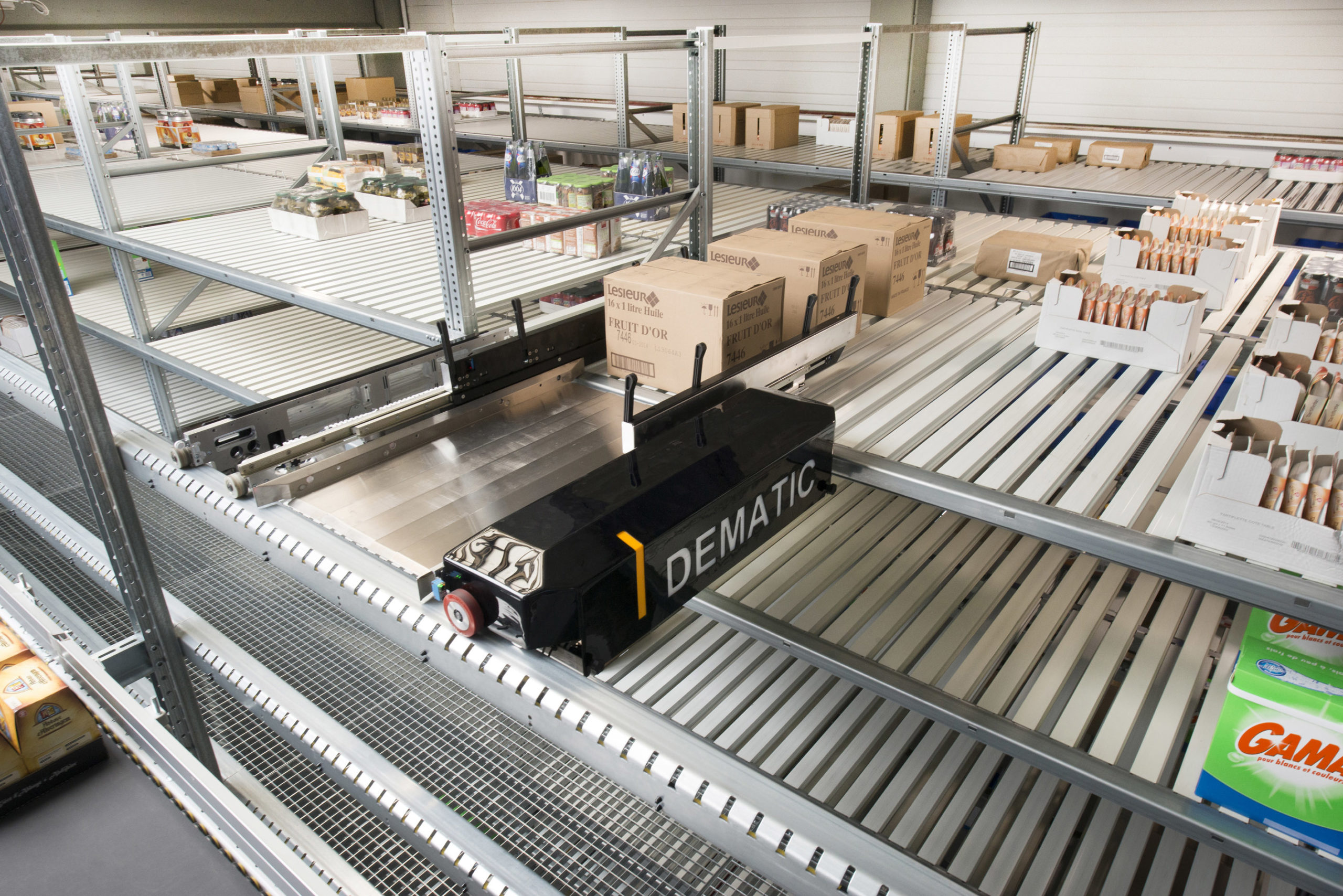
  • Dematic Automates Landmark Group’s Premier Distribution Centre

    Dematic Automates Landmark Group’s Premier Distribution Centre

    Dematic announces the completion of a new automated distribution centre for the Landmark Group in Dubai, UAE, allowing the multinational retailer to consolidate the logistics activities for part of its five existing manual distribution sites.

    “The automation solution designed by Dematic allows our supply chain network to now operate with enhanced efficiency, productivity and transparency. With this investment, we are advancing technological progress and taking a pioneering position in our region,” said Mihin Shah, Chief Supply Chain officer of Landmark Group. The new distribution centre is located in the Jebel Ali Free Zone (JAFZA), close to DP WORLD Jebel Ali Port, one of the largest container ports in the world. From this location, the Landmark Group stores and distributes garments, furniture, toys, small goods and more to nearly 1,400 of its retail stores and thereafter directly to end consumers.

    “Landmark presented us with an opportunity to go beyond consolidating their fulfilment operations to becoming a partner in transforming their business,” said Hasan Dandashly, Dematic President and CEO. “They have experienced remarkable growth in a short amount of time to become one of the largest retailers in the Middle East, Africa, and India, supplying over 2,300 businesses in 24 countries. We take pride in being the kind of resource that Landmark would trust to streamline their operations both to meet current demand and prepare for future success.”

    A distinctive feature of the 265,000 sqm site is a pallet warehouse (43 metres high) with a silo design and up to 36,000 storage locations for receiving goods. Inventory not immediately needed for distribution are palletized, then stored and retrieved double-deep via four 41 metre stacker cranes (Model SR-U1500/1) with two telescopic forks. The climate-regulated high-bay warehouse stores temperature sensitive items and is equipped with a fire prevention system with an oxygen-reduced environment so even highly flammable goods can be stored.

    The Dematic Multishuttle® system handles faster moving goods with a patented Inter-Aisle Transfer feature that makes maximum use of space with aisle-spanning exchanges and double-deep storage. With several lifts per aisle and conductor rail-controlled shuttles for high performance acceleration and speed, one shuttle can serve between 700 and 800 storage locations. As a result, up to 15,000 totes per hour can be transported to the picking stations, making it the largest and fastest Dematic has ever installed. “With this distribution centre, we have set a logistics benchmark for the entire Middle East,” Shah said.

    The facility also offers enormous capacities for hanging textiles: The Dematic GOH system can accommodate up to 2 million garments and can achieve high throughput rates of up to 250,000 items per day.

    The overall solution has more than 200 workstations with specific applications, including value added services such as customizing goods for specific retailers by adding tags, branding or promotional offers. An 11-kilometre Dematic conveyor system for containers and pallets and a Dematic sortation system completes the operation.

    Dematic iQ software ensures smooth and optimal material flow to meet delivery commitments Landmark makes to their retailers. The software operates as a Warehouse Management System (WMS) for stock management and includes a Warehouse Control System (WCS) and a Material Flow Controller (MFC). Goods are dynamically repositioned in four automated warehouse sections and the temperature-controlled manual warehouse, based on current and forecasted demand.

    The Dematic iQ software also efficiently handles hanging and flat goods within a single system to meet customer requirements and desired sequencing. At the same time, the software ensures that the right product is at the right place at all times by balancing the workload among the subsystems. “Automation offers scalability and speed while at the same time improving work safety,” Shah said. As a result of the consolidated and automated operation, Landmark’s B2B and B2C customers can now depend on even better service.

  • Mixed fortunes for online and offline retailers in Japan and Korea

    Mixed fortunes for online and offline retailers in Japan and Korea

    Brands in the tech sector are likely to record mixed fortunes as a result of the COVID-19 pandemic, with retail tech brands predicted to fare the best compared to leisure and tourism tech brands, which are expected to suffer considerably, according to the latest report by Brand Finance. The top 100 most valuable tech brands, on average, should see a slight decrease in brand value following the pandemic, falling 5%.

    The Brand Finance Tech 100 2020 ranking is split into sub sectors, with electronics, software, retail and media & games analysed separately as these brands make up more than 80% of the total brand value in the ranking. All brand values are correct as at 1st January 2020.

    Alex Haigh, Director, Brand Finance, commented:

    “The sheer size and diversification of the tech sector undoubtedly means that brands are going to be affected differently from COVID-19. On the one hand, e-commerce brands are likely to see a boost to their brand values following record high demand. In contrast, other tech brands’ journeys in the coming year could be more turbulent, with supply chains impacted, consumer spending shifting and slowing demand impacting brands’ bottom lines and, in turn, their brand values.”

    Electronics: Apple storms ahead despite losing brand value

    Making up 27% of the total brand value and with 30 brands featuring, electronics are the dominant sub sector in the Brand Finance Tech 100 2020 report. The electronics sub sector is likely to be moderately impacted by COVID-19, with a potential 10% loss of brand value at stake.

    Leading the way is Apple, recording a 9% drop in brand value to US$140.5 billion and simultaneously dropping to 3rd spot in the ranking, with Google (brand value up 12% to US$159.7 billion) overtaking in 2nd.

    Apple has struggled to grow in key emerging markets, showing little motivation to diversify its portfolio. Brand Finance’s analysis shows that Apple could lose up to 20% of its brand value following the pandemic with supply chains broken and consumer spending slowing – the brand will be hoping the return to normality in China could offset some of this damage.

    With an impressive brand value growth of 37%, ZTE is the fastest growing electronics brand – its surge in brand value bolstered by its increased adoption of 5G. Telco equipment brands should be in a solid position to experience good growth as the rise of 5G accelerates globally.

    Software: Google overtakes Apple

    The second most valuable sub sector, software, makes up 21% of the total brand value in the Brand Finance Tech 100 2020 ranking with 15 brands featuring. Brand Finance’s analysis shows that software brands could lose up to 10% of their brand value as a result of COVID-19.

    With a brand value of US$159.7 billion, Google is the most valuable software brand in the ranking and the 2nd most valuable in the overall ranking. Google’s sleek brand extension from software to hardware, is a direct threat to Apple, who have lost their streak of brilliance in recent years. COVID-19 is likely split Google’s fortunes down the middle with Google Cloud predicted to celebrate boosted demand, as remote working becomes widespread. The pandemic does pose a major threat to its advertising business, however, – where the majority of the brand’s revenue comes from – which is inevitably going to slow down.

    Chinese software giant Baidu recorded the largest drop in brand value in the ranking, down 54% to US$8.9 billion. The company reported its first quarterly loss since its initial public offering (IPO) back in 2005. Along with the intense market competition, the brand’s revenues were heavily impacted as regulators placed more attention on online advertising. Baidu is now focusing on other areas to drive long-term growth, such as its cloud division, smart speakers, and even driverless cars in an effort to secure better results for the future. The combination of the economic slowdown in China and COVID-19’s damage to ad sales will no doubt cause some damage to aid-dependent brands like Baudi.

    Retail: Amazon primed for more growth

    Retail brands contribute 19% of the total brand value in the ranking, largely as a result of the sheer dominance and size of the world’s most valuable brand Amazon. Bucking the trend of traditional bricks and mortar retail, e-commerce brands have the opportunity to thrive in the current climate as demand reaches record highs. Retail is, therefore, the only subsector in the Brand Finance Tech 100 2020 ranking, that could potentially see an increase in brand value as a result of COVID-19, up to 20%.

    Breaking the so far unattainable US$200 billion brand value mark, following 18% growth, Amazon remains a cut above the rest. While most brands are experiencing or expecting a slump in revenue during the pandemic, Amazon is set for continued growth. As with fellow e-commerce brands, Amazon has been benefitting from the unprecedented surge in demand as consumers turn online following store closures.

    Japan’s Rakuten is the fastest growing brand in the ranking, recording an impressive 66% brand value growth to US$5.2 billion. The Tokyo-headquartered brand has celebrated strong growth in its domestic e-commerce services and has its sights set on building upon and winning new customers with the aim of cross-use of services to further open up the brand’s ecosystem.

    Media & Games: limited damage from COVID-19

    The 14 media & games brands make up 18% of the total brand value in the Brand Finance Tech 100 2020 report. Eight of these brands hail from the US and have grown, on average, 12% in brand value year on year. Brand Finance’s calculations have found that this sub-sector is going to suffer limited impact from COVID-19, equating to a 0% change in brand value.

    Media & Games’ most valuable, Facebook (brand value down 4% to US$79.8 billion), has negotiated several high-profile reputational issues, most notoriously the Cambridge Analytica scandal, which resulted in a US$5 billion fine last year. The pandemic could, however, turn the tide on the tarnished brand, as people are forced to keep in touch with friends through social media. Facebook has also been developing a symptom survey, which is hoped to reveal a lot about COVID-19 and contribute to research.

    In contrast, Facebook-owned Instagram has enjoyed an explosion of growth, securing the second-highest brand value increase among all tech brands this year, up 58% to US$26.4 billion. The platform is successfully leveraging its position in the market as a genuine business tool – beyond its traditional influencer market – as more businesses move online during the lockdown.

    In line with positive trends in brand value among other video streaming services, last year also saw Netflix enjoy an 8% boost in brand value to US$22.9 billion. Netflix has been a pioneering force in changing consumers’ viewing habits. This success has only been spurred on by COVID-19, with the timely release of Tiger King raking in 34 million US viewers in the first 10 days alone.

    In addition to calculating overall brand value, Brand Finance also determines the relative strength of brands through a balanced scorecard of metrics evaluating marketing investment, stakeholder equity, and business performance. Alongside revenue forecasts, brand strength is a crucial driver of brand value. According to these criteria, WeChat is the world’s strongest tech brand with a Brand Strength Index (BSI) score of 92.9 out of 100 and a corresponding elite AAA+ brand strength rating.

    WeChat has significantly broadened its proposition since its inception, successfully leveraging its brand to develop an extraordinary level of vertical product integration. With WeChat Pay now being accepted in more than 60 countries and the platform opening to international travellers in China for the first time, the brand has set its sights on global markets.

  • Vietnam beat China to become Asia’s top-performing economy

    Vietnam beat China to become Asia’s top-performing economy

    Vietnam outperformed its regional peers, including China, to become the top-performing economy in Asia in 2020.

    Though some economies have not yet reported fourth-quarter numbers, estimates compiled by the U.S. broadcaster from official sources and multilateral institutions like the International Monetary Fund found Vietnam was one of only three economies in Asia to achieve growth last year along with Taiwan and mainland China.

    The Vietnamese government estimates the economy grew at 2.9 percent last year compared to China’s 2.3 percent growth.

    All other major economies such as South Korea, Japan, Singapore, Hong Kong, and India contracted.

    Vietnam’s impressive economic growth was thanks to its competent handling of the Covid-19 pandemic.

    Despite sharing a long border with China where Covid-19 was first detected in December 2019, Vietnam has reported just over 1,500 infections and 35 deaths.

    The manufacturing sector is widely credited for the economy’s outperformance last year, with production growing on the back of steady export demand.

    Many economists expect economic growth to accelerate this year, it said.

    Vietnam’s economy will quintuple by 2035 and become the 19th largest in the world, U.K. consultancy Centre for Economics and Business Research has forecast.

  • Tim Cook calls Facebook’s business model violent and says that it leads to divisiveness

    Tim Cook calls Facebook’s business model violent and says that it leads to divisiveness

    Earlier this morning, we told you that Facebook was reportedly planning to attack Apple-in court. The social media network is believed to be ready to accuse Apple of violating antitrust laws by using the iPhone’s popularity to force a major change on third-party app developers. In order to keep iOS users from constantly being served up targeted ads, iPhone and iPad users would have to opt-in and allow themselves to be tracked. Since you could assume that most iPhone users would prefer not to be tracked, this change is going to negatively impact outfits like Facebook that derive a large percentage of their business from posting online ads.

    Today, Apple CEO Tim Cook gave the opening address during a panel at the European Computers, Privacy & Data Protection (CPDP) conference. Cook discussed Apple’s privacy initiatives pointing out the dangers of business models that rely on collecting personal information from users. During his address, Cook stated, “As I’ve said before, if we accept as normal that everything in our lives can be aggregated and sold, then that we lose so much more than data. We lose the freedom to be human.” The executive did not mention Facebook specifically although those who have been following recent events had a good inkling about which company he was talking about.

    Discussing the dangers of businesses that collect personal user information, Apple’s CEO said, “If a business is built on misleading users, on data exploitation, on choices that are no choices at all, it does not deserve our praise. It deserves scorn.” Cook also said that such businesses could lead to polarization, distrust of life-saving vaccinations, and violence set off by extremist groups. Many of these outcomes are already being seen in the United States. Cook also spoke about Apple’s decision to protect its users’ privacy “to create ripples of positive change across the industry.”

    Cook said, “At Apple, we made our choice a long time ago. We believe that ethical technology is technology that works for you. It’s technology that helps you sleep, not keeps you up. It tells you when you’ve had enough, it gives you space to create, or draw, or write or learn, not refresh just one more time. It’s technology that can fade into the background when you’re on a hike or going for a swim but is there to warn you when your heart rate spikes or help you when you’ve had a nasty fall. And with all of this, always, it’s privacy and security first, because no-one needs to trade away the rights of their users to deliver a great product.”