Category: General

Retail News Asia is committed to providing both local and global retailers with the latest General Retail news throughout the Asian market. This on a daily base.

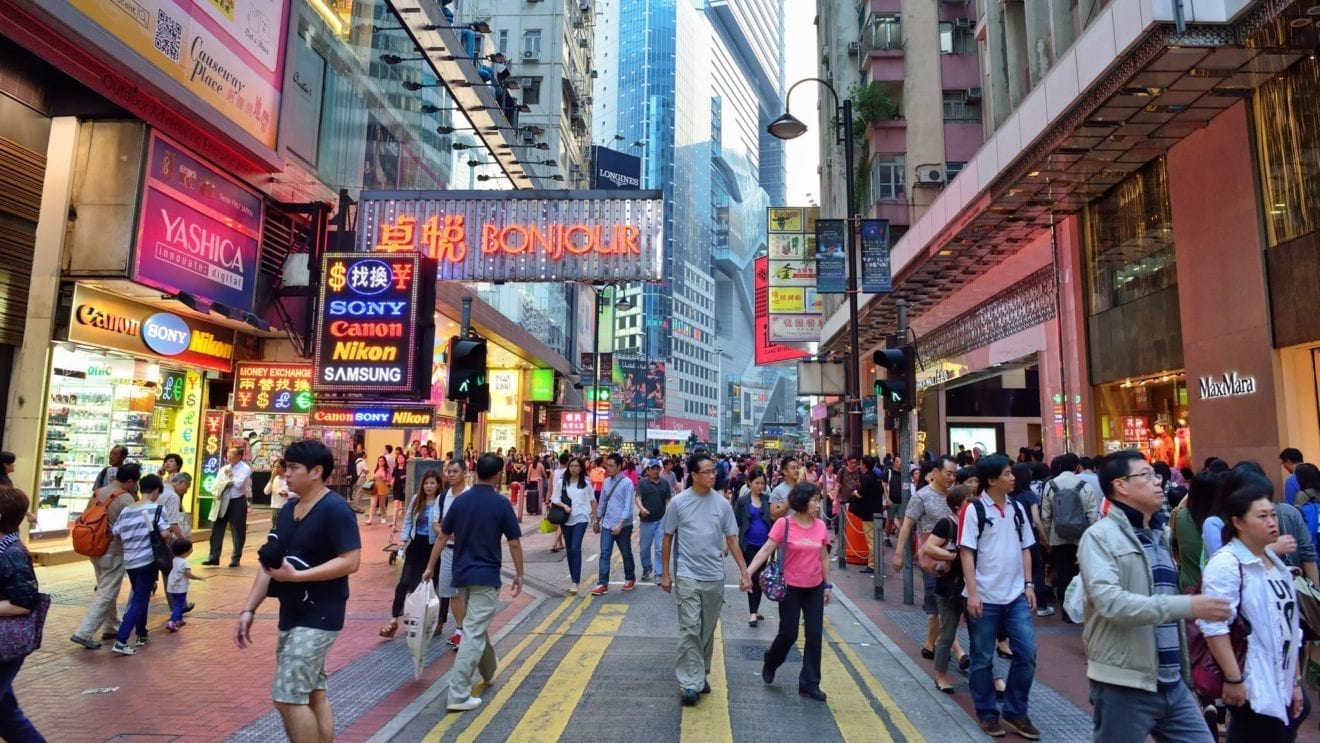
  • Hong Kong faces tourism bust

    Hong Kong faces tourism bust

    Hundreds of parked tour buses are gathering dust at a northern Hong Kong container port, having been off the road for 10 months since authorities banned non-resident arrivals into the city due to the new coronavirus.

    The area has turned into a “bus cemetery,” said Freddy Yip, president of Hong Kong’s Travel Agent Owners Association. He said the former British colony – which was the world’s leading tourist city destination last year – faces a similar fate at the end of November, when the government ends a wide-ranging wage subsidy program that has helped about 2 million employees in all types of industries.

    The program was introduced in June and renewed in September, but the Hong Kong government has ruled out an extension beyond the end of November citing the high cost, leaving many tourism-dependent businesses on the brink of collapse, unable to find other revenue sources and unable to pay wages.

    “If they cannot see any light ahead of them, they will just stop and cut their losses,” said 70-year-old Yip, who has worked in the trade for nearly 50 years.

    A spokesperson for the Hong Kong government said it would “keep a close watch on the latest situation and respond in a timely manner,” but gave no further details.

    About 56 million people visited Hong Kong last year. The city was ranked number one for arrivals globally last year by research company Euromonitor International. Visitors, most of them from mainland China, are drawn to its vibrant mix of cultures, dramatic harbour views and world-class shopping.

    The Chinese-ruled, semi-autonomous global finance hub makes about 5 per cent of its gross domestic product, or about US$18 billion, directly from tourism, not counting money spent in local shops and restaurants. Hong Kong’s tourism sector directly employs about 260,000 people, according to the government.

    Mainland Chinese visitors typically spend more per day than the average resident on baby formula, cosmetics and luxury goods, driven by a perception that Hong Kong has better quality standards than at home. That source of spending was cut off in early February, when Hong Kong sealed its borders to mainland China, with exemptions only for a small number of business travellers.

    Bubble trouble

    Visitor arrivals have been down 96 per cent to 99 per cent year-on-year every month since February, according to government figures. A travel bubble with Singapore – allowing a limited number of people to move between the cities after being tested for the virus – is due to begin this week, but is not likely to halt that decline, industry executives said.

    The arrangement lets travellers forgo quarantine, but is initially limited to one daily flight of only 200 passengers each way. That is a drop in the ocean for Hong Kong, which set its own record in January last year with 6.8 million visitors, including 5.5 million from Mainland China.

    Tour guide Mimi Cheung, 46, said she was pessimistic about the travel bubble, due to the limited number of people, strict regulations and high costs – around HK$2000 ($260) for mandatory virus tests, plus around HK$6000 ($774) to buy a tour in either city.

    “The government should open the mainland border under safe conditions. It will bring some hope,” said Cheung, who has found temporary work as a night security guard to provide for her parents and two children.

    Hong Kong leader Carrie Lam has said reopening the border with the mainland remains a priority, but Chinese officials have shown no indication they are willing to do so until virus cases fall to zero in Hong Kong.

    The city’s government has been trying to spur local tourism by offering free tours for small groups, but operators say it has been little help.

    Dozens of travel agencies have told staff to take unpaid leave from December, saying they can no longer afford to pay salaries or rent, according to employees interviewed by Reuters, travel associations and local media reports.

    Violent anti-government street protests in the second half of last year discouraged some tourists, leaving many operators without cash buffers to weather this year’s crisis.

    The city’s meetings and conventions business is also likely to see a 90 per cent revenue drop this year, equivalent to about HK$50 billion ($6.45 billion), said Stuart Bailey, chairman of the Hong Kong Exhibition & Convention Industry Association.

    The sector, which employs around 80,000 people, has had to cancel most of this year’s events, he said.

    “People are not optimistic we will be back to 2019 levels for at least 18 months to two years.”

  • AirAsia Japan files for bankruptcy in latest Covid casualty

    AirAsia Japan files for bankruptcy in latest Covid casualty

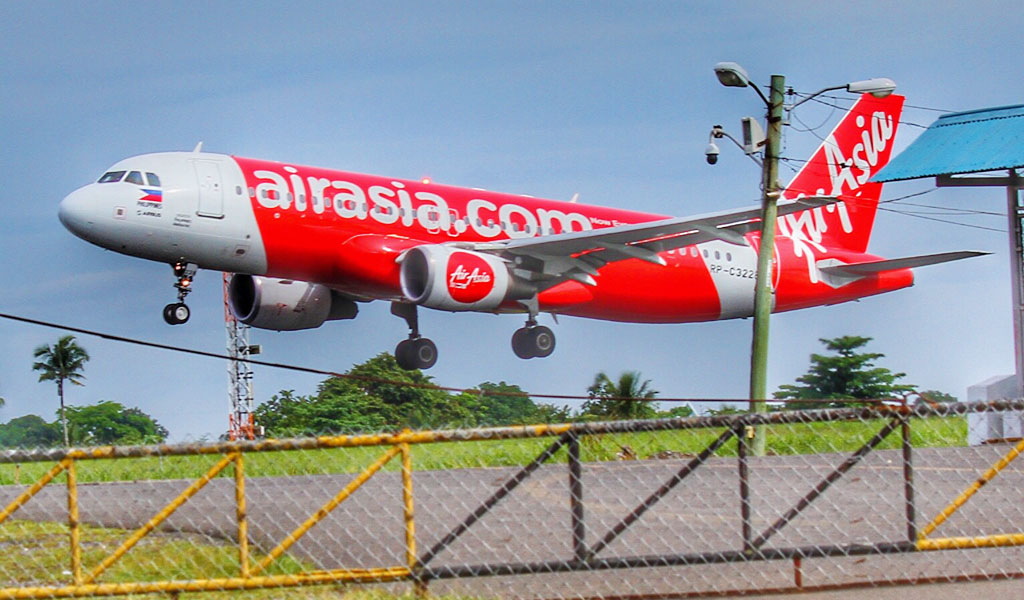
    AirAsia Japan Co has filed for bankruptcy with the Tokyo District Court after flagging last month it would cease operations in the country, as the coronavirus pandemic that’s wiped out travel globally took its toll.

    Flights between Japan and destinations such as Bangkok will continue to be operated by other AirAsia carriers.

    The Japanese arm of Malaysia’s AirAsia Group Bhd received a provisional administration order from the court Tuesday, it said in a statement.

    “Given AirAsia Japan’s current financial position, we regret to inform that AirAsia Japan is currently unable to settle the outstanding refunds,” the statement said. “We sincerely apologize for any inconvenience caused to customers who have used or booked AirAsia Japan flights.”

    AirAsia, which reported its largest loss on record in the second quarter ended June 30, has been under immense pressure this year as Covid-19 roils the aviation industry. Airlines globally have been plunged into crisis, with many cutting thousands of jobs and trying to secure funds for survival. Some, pushed to the brink, have gone out of business.

    The low-cost airline has also stopped funding its Indian affiliate, leaving the future of AirAsia India Ltd largely dependent on its majority shareholder, Indian conglomerate Tata Group. Long-haul budget arm, AirAsia X Bhd, isn’t faring much better, earlier this month submitting a new debt restructuring proposal to creditors.

    AirAsia Japan had already canceled all flights, including one between Nagoya and Taipei. Services operated to Japan by AirAsia’s other carriers in places like Thailand and the Philippines won’t be affected. International services to Japan from Malaysia, Thailand and the Philippines will resume as travel restrictions are eased and borders reopen, the airline said Tuesday.

    Customers who have booked AirAsia Japan flights can apply for a refund, which should be available from April next year, or they will receive a credit that can be used on any other AirAsia-operated flight.

  • Thai puts 34 aircraft on sale, including entire 747 fleet

    Thai puts 34 aircraft on sale, including entire 747 fleet

    Embattled Thai Airways has put up its entire Boeing 747 and its 777-200/300 fleet up for sale, as it aims to raise cash amid a long-drawn business rehabilitation process.

    The Star Alliance carrier disclosed on its aircraft trading website that 34 aircraft from its fleet will be put up for sale. Of these, 10 are 747-400s, six are 777-200s and another six are 777-300s.

    Thai Airways has 10 Boeing 747s currently in storage.

    The other aircraft include six Airbus A340-600s, which the carrier has not operated since 2015, and another three A340-500s, which it flew until 2012. Two 737-400s and one A300-600 round up the list of aircraft on sale.

    Thai states that the aircraft offered for sale are on an “as-is, where-is” condition, with most expected deliveries to take place in the second quarter of next year.

    The 10 747s (MSNs 26609, 26610, 27724, 27725, 28705, 28706, 32369, 32370, 33770 and 33771) are powered by GE CF6 engines and were manufactured between 1993 and 2003. They remain in storage, according to Cirium fleets data.

    The 777-200s (MSNs 27726, 27727, 27728, 27729, 27732 and 27733) were built between 1996 and 1998, and are powered by Rolls-Royce Trent 875 engines. Thai’s 777-300s (29150, 29151, 29211, 29212, 29213 and 29214) are fitted with R-R Trent 890s and were built between 1998 and 2000.

    Cirium fleets data shows the carrier has only 11 aircraft in service, with 85 in storage. Thai has a varied fleet, ranging from A330s, A380s and 787s.

    Thai filed for business reorganization in May, as it acutely felt the impact of the coronavirus outbreak. Already in a precarious financial situation, the pandemic saw travel demand collapse and widened the airline’s losses.

    Thailand’s central bankruptcy courts gave the troubled carrier the green light to reorganize in September, allowing it to appoint its rehabilitation organizers.

  • Dire forecast for global luxury goods sales

    Dire forecast for global luxury goods sales

    Sales of luxury goods worldwide are set to fall by 23 percent to US$258 billion this 12 months, their largest ever drop and first since 2009, as a result of fallout from the coronavirus pandemic, in line with consultancy Bain.

    The anticipated decline, regardless of a powerful sales recovery in China, is on the decrease finish of a 20 percent to 35 percent vary which Bain’s carefully adopted business forecast had predicted in May.

    That is because of an even bigger than anticipated rebound in the course of the summer season when lockdown measures had been lifted or eased internationally and shops promoting high-end purses, garments, jewelry, and watches had been reopened.

    However, a resurgence of the pandemic in Europe and the United States since October has led to new restrictions and store closures whereas uncertainty linked to the US elections additionally weighed on client sentiment.

    The solely vivid spot is China, the place sales have surged because it started to emerge from the well-being disaster within the spring. Sales in mainland China are seen rising by 45 percent at present trade charges to $52 billion this 12 months.

    “We have a two-speed world, with Europe and the US strongly hit by the second wave and by social and political uncertainty, while China is relentlessly accelerating day after day,” Federica Levato, a companion at Bain, mentioned.

    Fourth-quarter sales are anticipated to drop by 10 percent, though the decline may very well be larger relying on how a lot of the brand new shutdowns hit the essential Christmas season.

    Revenues for the likes of Louis Vuitton proprietor LVMH, Hermes, and Prada ought to partly recuperate in 2021, though Bain says it is going to take till the top of 2022 and even 2023 to return to final 12 months’ ranges.

    The coronavirus disaster has accelerated three developments, Bain mentioned, with purchases on-line nearly doubling from 12 percent in 2019 to 23 percent in 2020, and e-commerce set to turn into the main channel for luxury purchases by 2025.

    International journey curbs have led to folks shopping for extra of their dwelling nations, whereas buyers born from 1981 onwards now account for nearly 60 percent of complete purchases.

  • Google rolls out Assistant driving mode and COVID related features for Google Maps

    Google rolls out Assistant driving mode and COVID related features for Google Maps

    Google has been working hard on updating Google Maps over the last few years to provide Android and iOS users with more than just turn-by-turn navigation. Google Maps allows you to explore certain cities to find hotels, bars, restaurants and more. You can also find places to see and things to do in cities that you are planning to visit. And when it comes to the coronavirus, Google Maps has you covered. According to Google, almost 250 new features and improvements have been added to the Google Maps app since the pandemic started. 50 million updates are being made to Google Maps every day. And with the holiday traveling season upon us, Google continues to improve the most popular navigational and mapping app in the world.

    Two new COVID-19 related features are making their way to Google Maps for both iOS and Android users.  You will soon be able to see the all-time number of COVID-19 cases detected in an area along with links that will take you to local resources that will help you battle the virus. These maps, found in the COVID layer of Google Maps, are color-coded to help you quickly determine how coronavirus is spreading. Using an arrow, the feature reveals whether the number of cases over the last seven days is rising, shrinking, or staying the same. And the page will give you the total number of confirmed cases in that area along with the number of deaths.

    If you’re concerned that you won’t be able to maintain a safe distance apart from other commuters while taking the bus or the train, Google Maps will provide you with live crowdedness information to see how mobbed the bus, train, or subway line you plan on riding is. This data is sourced directly from Google Maps users traveling on these modes. And if you’re like most, the pandemic has turned you into a major customer of delivery services in the United States, Canada, Germany, Australia, Brazil and India. If you place an order for delivery through Google Maps, you can receive an estimated time of arrival for your order. You’ll also have access to wait times and delivery fees, and will be able to reorder favorites directly from the app. Google says that once it is safe to start eating at restaurants again, Google Maps will show you the status of your reservation in 70 countries around the world.

    Today, Google announced that it has started rolling out Google Assistant driving mode. With this mode enabled, you can use your voice to send and receive calls and texts even while focusing on the road ahead of you. You’ll also be able to hear the headings of texts that are waiting for you to read without having to take your eyes off of the road. In this mode, you will be notified when there is an incoming call and be given the option to pick it up or decline it using your voice. The driving mode makes all of this possible without ever leaving the navigation screen, so you can minimize distractions on the road.

    In Driving mode, you can play streaming music from hundreds of providers including YouTube Music, Spotify, and more. To open driving mode, go to Google Maps and navigate to a destination, and tap on the pop-up prompt. Or you can say to your Android phone “Hey Google, open Assistant settings.” Then select “Getting around,” choose “Driving mode” and turn it on.

    To make sure that the data Google Maps gives you is accurate and up-to-date, it relies on information gleaned from 170 billion high-definition Street View images from 87 countries, information from Google Maps users, and data from more than 10,000 local governments, transit agencies and organizations.

  • Eslite opening mega store in KL, Malaysia

    Eslite opening mega store in KL, Malaysia

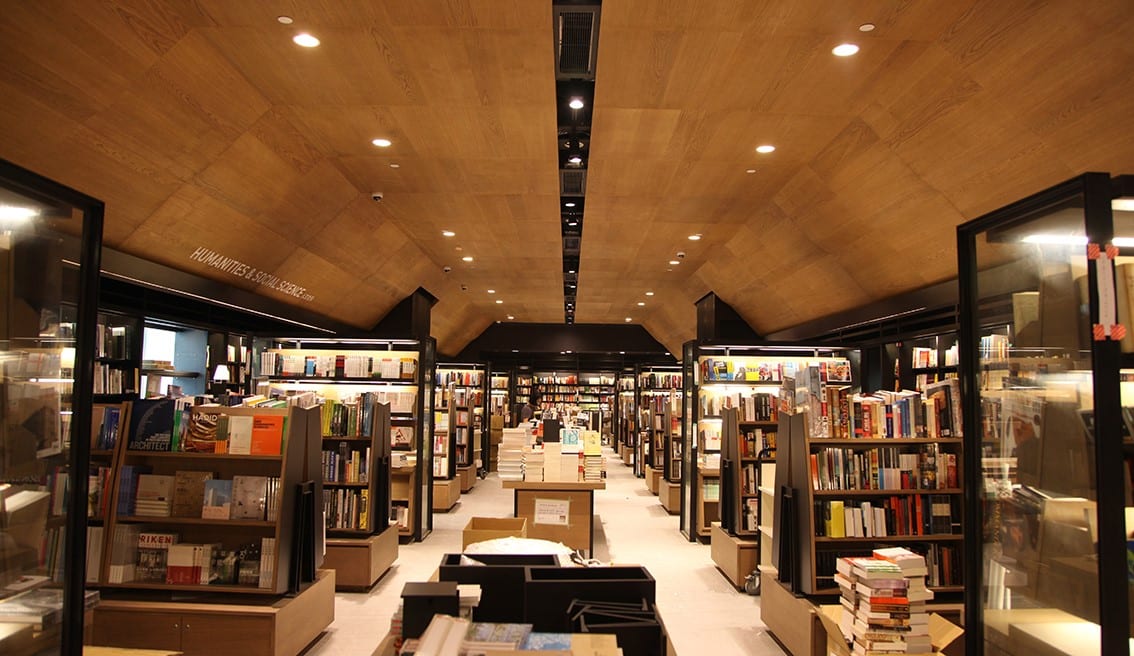
    Eslite Spectrum Corp (誠品生活), which runs the Eslite bookstore chain in Taiwan and abroad, yesterday inked an agreement with Malaysia’s YTL Corp Bhd to open a branch in downtown Kuala Lumpur in 2022.

    The two sides signed the partnership via a teleconference to launch the Taiwanese bookstore brand in YTL’s mixed-use property The Starhill in Bukit Bintang, a central business district in the Malaysian capital.

    Despite the company’s aim to grow its business abroad, Eslite Spectrum chairwoman Mercy Wu (吳旻潔) said that she was initially hesitant about expanding to Malaysia when the world was in the grip of a pandemic.

    “I decided to take the step at the urging of YTL Corp, the largest conglomerate in Malaysia whose founder, Yeoh Tiong Lay (楊忠禮), was an immigrant from Kinmen and had long supported Chinese culture and education,” Wu told a news conference in Taipei.

    Joseph Yeoh (楊恭賢), vice president of YTL hotels and property wing, said from Kuala Lumpur he was confident that Eslite would succeed in Malaysia, as many people there would still prefer in-person shopping once the COVID-19 pandemic is over.

    YTL has a global footprint with nine shopping malls in different parts of the world and the collaboration with Eslite could lead to other partnerships in the future, Joseph Yeoh said.

    “We will first focus on the current project,” he said.

    The upcoming flagship Eslite branch at The Starhill would be a 2,000 ping (6,600m2) space featuring a bookstore, as well as retail, food and beverage sections, Wu said.

    A Taiwanese team is in charge of its interior design, in line with the company’s mission to integrate the humanities, arts and creativity into life, Wu said.

    “Our initial hesitation stemmed from our insistence on doing the best we can to live up to a reputation of being the top cultural brand across Chinese societies,” Wu said.

    Kuala Lumpur, dubbed the World Book Capital City by the UN, is an ideal destination for expansion, as Malaysia has topped the list of foreign visitors from Southeast Asia for the past 10 years, she said.

    Malaysians have long embraced cultural diversity, with Chinese constituting the second-largest ethnic group, making Malaysia a major export market for Taiwanese books, she added.

    The new Eslite branch is expected to help drive cultural tourism in Malaysia and benefit the two partners, Wu and Yeoh said.

  • Vietnam Airlines to get bailout funds after pandemic impacts

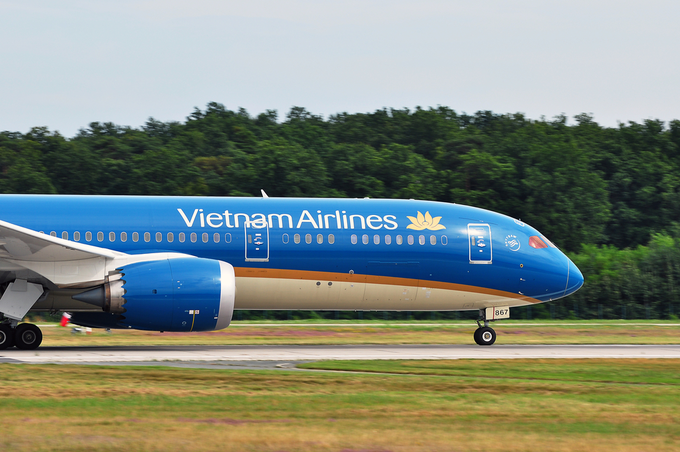
    Vietnam Airlines to get bailout funds after pandemic impacts

    The National Assembly has approved several measures to help national flag carrier Vietnam Airlines overcome the financial impacts of Covid-19.

    A parliamentary resolution passed Tuesday allows the State Bank of Vietnam to refinance and offer loan extensions no more than two times to banks that would lend Vietnam Airlines additional capital for the company to continue its operations.

    The carrier will also be allowed to sell more shares to existing shareholders to increase its charter capital in accordance with the Law on Securities, but is exempt from the condition that its business being profitable in the year prior to the offering.

    The State Capital Investment Corporation (SCIC), a state-owned holding company, will act on behalf of the government to purchase Vietnam Airlines shares.

    The NA has asked for strict inspection and auditing of the measures when they are carried out. It has also asked Vietnam Airlines to continue building its own solutions for reducing losses and taking care of its employees in the context of the pandemic continuing to develop in complicated ways.

    Vietnam Airlines has sent 14 reports to relevant state agencies and met with government representatives several times, seeking assistance in tackling financial problems posed by the pandemic.

    The carrier has suggested the government grants it a relief package of VND12 trillion ($518.53 million), including options for refinancing and raising its charter capital.

    It reported a loss of VND10.75 trillion ($464 million) for January-September, during which its revenues fell 58.3 percent year on year to VND23.9 trillion.

    It transported 10.2 million passengers during the nine months, down 41.2 percent year-on-year.

    The airline has blamed its plight on the pandemic’s impacts. It has cut sales, financial and management expenses, reduced salaries of pilots and flight attendants. It has also increased operations of repatriation flights.

    The carrier’s third-quarter revenues fell 68 percent year-on-year after the second Covid-19 outbreak hit the country late July. The third quarter is usually the highest revenue earner of the year as schools close and summer travel peaks. The second outbreak forced the carrier to cancel 22 new domestic routes during the peak period.

    Vietnam Airlines currently operates more than 60 domestic routes with an average of 300 flights per day. It has resumed one-way flights to Japan and plans to reopen routes soon to mainland China, Taiwan, Laos and Cambodia.

    The airline has estimated this year’s total loss at around VND15.2 trillion on revenues of VND55.7 trillion.

  • Bkav exports security cameras to US

    Bkav exports security cameras to US

    Cybersecurity firm Bkav has exported its first batch of security cameras to the U.S., furthering its ambition to become a top-five camera manufacturer worldwide.

    Its AI View security cameras will be installed at the headquarters of technology giant Qualcomm Incorporated in California, Bkav said in a statement.

    “From here, we have the foundation to further develop in this market, aiming at becoming a Top 5 camera manufacturer in the world,” said Tommy Le, Bkav Vice President of Business Development in the U.S.

    The Bkav cameras are capable of recognizing faces, doing headcounts, measuring social distancing, determining whether someone is wearing a face mask or not, finding a parking spot, detecting fires, and unauthorized intrusions.

    The company says its cameras are priced around 20 percent lower than similar products of famous European manufacturers.

    Bkav is currently working on a series of camera projects in India, Mexico, Malaysia, and Vietnam.

    Another batch of AI View cameras are set to be installed in a large park in the U.S. by the end of the year, the company said.

  • Gmail will soon give you more control over how your personal data is used

    Gmail will soon give you more control over how your personal data is used

    Google, through the Gmail app, has been working at making it safer and easier for people to communicate via email since 2004. And when it comes to security, Google says that Gmail blocks more than 99.9% of “spam, phishing and malware” from reaching your inbox. Google also lets you know about the data it collects “to provide you with helpful experiences.” And by making auto-delete the default setting this year, it means that Android users won’t have to consciously change the settings to automatically get rid of data that they don’t want to share with others, including advertisers.

    In the coming weeks, Google will add settings to Gmail that will allow users to continue using some smart features such as the automatic filtering that allows emails to be placed in different categories such as primary, social and promotions. Other smart features that users will be able to enable or disable include Smart Compose. The latter suggests what a user might want to write in an email. Summary cards can remain enabled; these show package tracking numbers, travel plans, and more. In addition, information collected from Google that includes Event details can be used to create entries in the user’s calendar. If a user is concerned that he is allowing Google to collect oo much personal data, these smart features can be turned off and disabled. Not to worry though; they can be turned back on in Gmail.

    Other controls will allow a user to personalize Google products with data from Chat, Meet, and Gmail. In other words, Google products like Assistant, Travel, and Maps can use personal data gathered from Chat, Meet, and Gmail to improve the experience of using those products. For example, users can get reminders about the bills they owe via Google Assistant, Google Maps will show restaurant reservations, itineraries can be bundled in Travel, and loyalty cards and tickets can be used quickly with GPay. Users can also choose to disable the above features while using limited versions of other Google products.

    Google is trying to continue offering useful features that improve the experience and ease of using Gmail and other Google products. At the same time, the company is giving users the ability to prevent too much personal data from getting into the wrong hands.

  • Omni-channel focus rescues Central Retail’s bottom line

    Omni-channel focus rescues Central Retail’s bottom line

    It’s a snowy Saturday in Chicago, but Amy, age 28, needs resort wear for a Caribbean vacation. Five years ago, in 2011, she would have headed straight for the mall. Today she starts shopping from her couch by launching a videoconference with her personal concierge at Danella, the retailer where she bought two outfits the previous month. The concierge recommends several items, superimposing photos of them onto Amy’s avatar. Amy rejects a couple of items immediately, toggles to another browser tab to research customer reviews and prices, finds better deals on several items at another retailer, and orders them. She buys one item from Danella online and then drives to the Danella store near her for the in-stock items she wants to try on.

    As Amy enters Danella, a sales associate greets her by name and walks her to a dressing room stocked with her online selections—plus some matching shoes and a cocktail dress. She likes the shoes, so she scans the bar code into her smartphone and finds the same pair for $30 less at another store. The sales associate quickly offers to match the price, and encourages Amy to try on the dress. It is daring and expensive, so Amy sends a video to three stylish friends, asking for their opinion. The responses come quickly: three thumbs down. She collects the items she wants, scans an internet site for coupons (saving an additional $73), and checks out with her smartphone.

    As she heads for the door, a life-size screen recognizes her and shows a special offer on an irresistible summer-weight top. Amy checks her budget online, smiles, and uses her phone to scan the customized Quick Response code on the screen. The item will be shipped to her home overnight.

    This scenario is fictional, but it’s neither as futuristic nor as fanciful as you might think. All the technology Amy uses is already available—and within five years, much of it will be ubiquitous. But what seems like a dream come true for the shopper—an abundance of information, near-perfect price transparency, a parade of special deals—is already feeling more like a nightmare for many retailers. Companies such as Tower Records, Circuit City, Linens ’n Things, and Borders are early victims—and there will be more.

    Every 50 years or so, retailing undergoes this kind of disruption. A century and a half ago, the growth of big cities and the rise of railroad networks made possible the modern department store. Mass-produced automobiles came along 50 years later, and soon shopping malls lined with specialty retailers were dotting the newly forming suburbs and challenging the city-based department stores. The 1960s and 1970s saw the spread of discount chains—Walmart, Kmart, and the like—and, soon after, big-box “category killers” such as Circuit City and Home Depot, all of them undermining or transforming the old-style mall. Each wave of change doesn’t eliminate what came before it, but it reshapes the landscape and redefines consumer expectations, often beyond recognition. Retailers relying on earlier formats either adapt or die out as the new ones pull volume from their stores and make the remaining volume less profitable.

    Like most disruptions, digital retail technology got off to a shaky start. A bevy of internet-based retailers in the 1990s—Amazon.com, Pets.com, and pretty much everythingelse.com—embraced what they called online shopping or electronic commerce. These fledgling companies ran wild until a combination of ill-conceived strategies, speculative gambles, and a slowing economy burst the dot-com bubble. The ensuing collapse wiped out half of all e‑commerce retailers and provoked an abrupt shift from irrational exuberance to economic reality.

    Today, however, that economic reality is well established. The research firm Forrester estimates that e-commerce is now approaching $200 billion in revenue in the United States alone and accounts for 9% of total retail sales, up from 5% five years ago. The corresponding figure is about 10% in the United Kingdom, 3% in Asia-Pacific, and 2% in Latin America. Globally, digital retailing is probably headed toward 15% to 20% of total sales, though the proportion will vary significantly by sector. Moreover, much digital retailing is now highly profitable. Amazon’s five-year average return on investment, for example, is 17%, whereas traditional discount and department stores average 6.5%.

    What we are seeing today is only the beginning. Soon it will be hard even to define e-commerce, let alone measure it. Is it an e-commerce sale if the customer goes to a store, finds that the product is out of stock, and uses an in-store terminal to have another location ship it to her home? What if the customer is shopping in one store, uses his smartphone to find a lower price at another, and then orders it electronically for in-store pickup? How about gifts that are ordered from a website but exchanged at a local store? Experts estimate that digital information already influences about 50% of store sales, and that number is growing rapidly.

    As it evolves, digital retailing is quickly morphing into something so different that it requires a new name: omnichannel retailing. The name reflects the fact that retailers will be able to interact with customers through countless channels—websites, physical stores, kiosks, direct mail and catalogs, call centers, social media, mobile devices, gaming consoles, televisions, networked appliances, home services, and more. Unless conventional merchants adopt an entirely new perspective—one that allows them to integrate disparate channels into a single seamless omnichannel experience—they are likely to be swept away.

    Why will digital retailing continue to grow so fast? Why won’t it peak sometime soon, or even implode the way it did the last time around? Anyone who has shopped extensively online knows at least part of the answer. The selection is vast yet remarkably easy to search. The prices are good and easily compared. It’s convenient: You can do it at home or at work, without using gasoline or fighting to park. Half of online purchases are delivered free to U.S. consumers—up 10 percentage points over the past two years. Many returns are free as well. Product reviews and recommendations are extensive. Little wonder that the average American Customer Satisfaction Index score for online retailers such as Amazon (87 points) is 11 points higher than the average for physical discount and department stores.

    The advantages of digital retailing are increasing as innovations flood the market. For instance, Amazon has already earned valuable patents on keystone innovations such as 1-Click checkout and an online system that allows consumers to exchange unwanted gifts even before receiving them. Digital retailers drive innovation by spending heavily on recruiting, wages, and bonuses to attract and retain top technical talent. They were also among the first to utilize cloud computing (which dramatically lowers entry and operating costs) and to enhance marketing efficiency through social networks and online advertising.

    Customers are out in front of this omnichannel revolution. By 2014 almost every mobile phone in the United States will be a smartphone connected to the internet, and an estimated 40% of Americans will use tablets such as the iPad. If you doubt whether consumers are ready for technology-driven retail solutions, find a “dumb” video display in any public location and look for fingerprints on the screen—evidence that people expected it to be an interactive touchscreen experience.

    Meanwhile, traditional retailers are lagging badly. Online sales account for less than 2% of revenue at Walmart and Target. Nor are traditional retailers pioneering digital innovations in other channels, such as mobile shopping and call centers, or seamlessly integrating these technologies in their most important channel—physical stores.

    It’s not surprising that these retailers are bring­ing up the rear. As a consultant, I often walk through stores with senior retail leaders whose knowledge of physical retailing is impressive: They know precisely where a fixture should be, exactly how lighting is likely to affect sales, and which colors work best in which departments. As a group, however, they are shockingly subpar in computer literacy. Some retail executives still rely on their assistants to print out e-mails. Some admit that they have never bought anything online. Technophobic culture permeates many great retail organizations. Their IT systems are often old and clunky, and knowledgeable young computer geeks shun them as places to work.

    But it isn’t just computer illiteracy that holds traditional retailers back. Four other factors are at work as well.

    Retailers were burned by e-commerce hype during the dot-com bubble.

    Many created separate online organizations to maximize valuations. The separate organizations targeted different customer segments, inhibited collaboration, and created serious frictions and jealousies. When the predictions of dot-com domination proved wildly optimistic, overpriced acquisitions began failing, and store organizations smugly celebrated. A decade later, real collaboration between retailers’ store and digital operations remains rare.

    Digital retailing threatens existing store economics, measurement systems, and incentives.

    Traditional retailers live and die with changes in same-store sales, in-store sales per labor hour, and compensation systems based on such metrics. That was fine when online sales were 2% to 3% of revenues, but the whole system falls apart when that number reaches 15% to 20%.

    Retailers tend to focus on the wrong financial metric: profit margins.

    If a change dilutes margins, it’s bad. But Bain’s research shows that retailers’ stock prices are driven by return on invested capital and growth rather than by margins. Amazon’s five-year operating margin is only 4%—far below the 6% average for discount and department stores. But with faster inventory turns and no physical store assets, Amazon’s return on invested capital is more than double the average for conventional retailers. As a result, Amazon’s market value, $100 billion, is roughly equivalent to that of Target, Best Buy, Staples, Nordstrom, Sears, J.C. Penney, Macy’s, and Kohl’s combined.

    Conventional retailers haven’t had great experiences with breakthrough innovation.

    They are most comfortable with incremental improvements and with following the well-known dictum “Retail is detail.” Too many store reinvention programs have launched with great fanfare, only to die unceremonious deaths. Propose a more novel approach and retailers will ask why, if it’s such a good idea, nobody else is doing it.

    Retailers tend to believe that their customers will always be there. But as customers grow more comfortable with omnichannel shopping, they grow less tolerant of what they encounter in stores. Sales associates are hard to find. When you find one, he or she doesn’t know much about the merchandise. Stockouts are frequent, checkout lines long, returns cumbersome.

    An omnichannel world, in short, represents a major crisis for traditional retailers. Customers are passing them by. Online players are gaining. To keep up, existing retailers will need to create an omnichannel strategy—and pick up the pace of change.

    Redesign Shopping from Scratch

    The first part of any such strategy is facing reality. Retailing executives must acknowledge that the new technologies will get faster, cheaper, and more versatile. They need to forecast the likely digital density in their categories and prepare for the effects. What should I do differently today if I believe that 20% of our sales will soon come from digital retailing—and that 80% of our sales will be heavily influenced by it? Should we be opening any new stores at all? And if so, how different should they be? How should we adjust to a world of greater price transparency? What happens when traffic-building categories shift online and no longer pull customers into our stores?

    Situations like these call for start-from-scratch, across-the-board innovation. In the book Idealized Design: How to Dissolve Tomorrow’s Crisis…Today, coauthor Russell L. Ackoff recounts a similar turning point at Bell Labs in 1951. The vice president in charge of the labs asked a group to name the organization’s most important contributions to telephonic communications. The VP pointed out that each one, including the telephone dial and the coaxial cable, had been conceived and implemented before 1900. He challenged the group to assume that the phone system was dead and had to be rebuilt from scratch. What would it look like? How would it work? Soon Bell’s scientists and engineers were busy investigating completely new technologies—and came up with concepts for push-button phones, call waiting, call forwarding, voicemail, conference calls, and mobile phones. Retailers need the same start-over mentality.

    The design specifications of omnichannel retailing are growing clearer by the day. Customers want everything. They want the advantages of digital, such as broad selection, rich product information, and customer reviews and tips. They want the advantages of physical stores, such as personal service, the ability to touch products, and shopping as an event and an experience. (Online merchants take note.) Different customer segments will value parts of the shopping experience differently, but all are likely to want perfect integration of the digital and the physical.

    The challenge for a retailer is to create innovations that bring the vision to life, wowing those customers and generating profitable growth. Let’s see what this might mean in practice.

    Pathways and pain points.

    Retailers traditionally defined their job with three simple imperatives: Stock products you think your target customers will want. Cultivate awareness of what’s in the store. When prospective customers enter the store, make it enticing and easy for them to buy. The job in an omnichannel world is more complex. Products themselves can more easily be customized to the preferences of individuals or small groups. Shoppers’ awareness depends not solely on company-generated marketing efforts but also on online expert reviews or recommendations from friends on Facebook and Twitter. The shopping experience includes not just visiting the store but searching for various vendors, comparing prices, quick and hassle-free returns, and so on.

    Retailers today have a variety of precision tools that they can apply to discrete parts of these shopping pathways. Consider the job of creating awareness, which in the past relied mostly on mass-market advertising, promotions, and the like. Today marketers can send coupon codes and offers to customers’ mobile devices. They can optimize search terms and location-based promotions. They can provide targeted offers to customers who check in to stores through external platforms like Foursquare. The list of possibilities is getting longer by the day.
  • VN-Index sees biggest losing session in two weeks

    VN-Index sees biggest losing session in two weeks

    The VN-Index plunged 1.60 percent to 950.79 points Monday, its biggest single-session loss since October 28. The Ho Chi Minh Stock Exchange (HoSE), on which the VN-Index is based, saw 305 tickers lose and 146 gain. Total trading volume was at this year’s highest point at VND10.23 trillion ($442.39 million), compared to last month’s average of VND8-9 trillion.

    The VN30-Index for the stock market’s 30 largest caps slumped 1.64 percent, with all but one ticker losing. HPG of steelmaker Hoa Phat Group was the only ticker in the group to close in the green by 0.9 percent.

    Topping losses were MSN of food conglomerate Masan Group, down 6.9 percent, VIC of private conglomerate Vingroup, down 5 percent, and TCH of truck dealer Hoang Huy Group, down 2.9 percent.

    Other major losers included PNJ of jewelry retailer Phu Nhuan Jewelry, down 2.3 percent, VHM of real estate developer Vinhomes, 2.2 percent, SBT of agricultural firm TTC-Sugar, 2.2 percent, and POW of electricity generator, 2 percent.

    Private banks were also among the loss-makers. HDB of HDBank dropped 2.5 percent, STB of Sacombank 1.8 percent, VPB of VPBank 1.4 percent, TCB of Techcombank 0.4 percent, and EIB of Eximbank 0.3 percent.

    State-owned banks fared slightly better with losses of lesser magnitude. VCB of Vietcombank was down 1.3 percent, BID of BIDV 1 percent, CTG of VietinBank 0.2 percent, and MBB of mid-sized Military Bank, 1.3 percent.

    The HNX-Index for the Hanoi Stock Exchange, home to mid- and small-caps, was down 0.95 percent, but the UPCoM-Index for the Unlisted Companies Market gained 0.23 percent.

    Foreign investors were net sellers again to the tune of VND400 billion on all three bourses, with selling pressure mostly on HDB of HDBank and CTG of VietinBank.

  • Airasia.com Super Sale returns with a flurry of bargain offers

    Airasia.com Super Sale returns with a flurry of bargain offers

    airasia.com has launched a second Super Sale via its ‘super app’, offering a range of deals starting from as low as RM1.99 (US$0.48) from 16 to 22 November

    The airasia.com Super Sale made its debut last month, superseding the hugely popular AirAsia Free Seats sale.

    The airasia.com super app offers a range of products and services, including fresh produce, groceries, food deliveries, travel & lifestyle products, Muslim-friendly services, and health & wellness packages.

    airasia.com can be accessed via website or mobile app and customers can use BigPay Checkout for a seamless payment experience across all product lines.

    Throughout the airasia.com Super Sale period, shoppers can enjoy up to -50% off from selected merchants on airasia Fresh with a RM1 delivery fee. They can also get 50% off from selected merchants via airasia Food, the online food ordering platform which runs on a zero-commission model.

    Other deals include Buy 1 Free 1 for selected skincare, cosmetics, accessories and more on airasia Shop; -50% off with an additional -5% discount with the promo code ‘SUPER5’ for Unlimited Deals; -10% off Aqiqah Abroad and Aqiqah Makkah on Ikhlas; an aesthetics bundle from RM299 (US$73) on airasia Health and many more.

    airasia.com CEO Karen Chan said: “Since the launch of airasia.com as an Asean super app in October, we have continued to expand our market reach and diversify our product range across the region. We have recently launched the AirAsia Unlimited Pass in the Philippines, Thailand and Indonesia, and introduced airasia Health in Malaysia – a platform that provides end-to-end medical services.

    “We are also working on expanding our eCommerce presence within Asean through strategic partnerships and collaborations with technology providers, merchants and vendors.

    “The airasia.com Super Sale this time offers even more exciting deals as we have included more products and merchants. Through the Super Sale we are able to help further revive the many businesses that have been affected by the effects of the pandemic. We hope everyone will have an enjoyable time shopping and finding the best deals for travel, activities, food, rewards and more,” she added.

    On top of the discounts, shoppers can also earn 3x BIG Points when they pay with the AirAsia credit card during the airasia.com Super Sale. BIG members also have the option of paying using BIG Points.

  • AirAsia X makes creditor status concession to Malaysia Airports

    AirAsia X makes creditor status concession to Malaysia Airports

    AirAsia X has agreed to classify Malaysia Airports as a secured creditor, as it seeks to expedite its massive debt restructuring program.

    “After consultation, AirAsia X has accommodated [Malaysia Airports] and made certain clarifications and revised the scheme under two separate classes ’A’ and ‘B’,” says the carrier in a statement.

    “Class A shall consist of creditors who are considered critical or essential and who may have secured and/or other rights. Class B shall consist of creditors who do not fall within Class A.”

    In a separate stock exchange filing, AAX states that Malaysia Airports’ legal challenge contended that as a secured creditor it has the right to detain aircraft, parts, accessories, vehicles, and other equipment.

    AAX adds that it makes the status change “in the interest of time,” a reference that it hopes to come to an agreement with creditors in the first quarter of 2021. Announced on 6 October, AAX’s proposal calls for restructuring MYR63.5 billion into an “acknowledgment of indebtedness” for up to MYR200 million payable over the next five years at a 2% interest rate.

    Following the airline’s proposed debt restructuring on 6 October, Malaysia Airports filed a legal challenge protesting its being lumped in with unsecured creditors. Malaysia Airports is also suing AAX for MYR78.2 million ($19 million) in unpaid passenger service charges (PSC) – the subject of a long-running dispute between the two parties.

    The airline also notes that Malaysia Airports has threatened to take legal action against its directors in their personal capacity over the PSC issue, which it claims is “intimidatory in nature.”

    “AirAsia X also wishes to report that major creditors have all demonstrated great maturity, professionalism, constructive engagement and commercial realism in dealing with the debt restructuring exercise,” it says.

    “Though the process is on-going and a common consensus remains to be reached, AirAsia X looks forward to being able to present the revised scheme for all creditors to vote on early in the first quarter of 2021.”

    Assuming 75% of creditors go along with AirAsia X’s proposal and other approvals are obtained, AirAsia X basically aims to start afresh in 2021, initially operating a pair of A330s, and working up to a full network by the end of next year.

    Creditor BOC Aviation has also opposed the restructuring via legal means, with a challenge in the High Court of Malaya on 14 October. In September, before AAX announced its restructuring, the lessor filed a claim against the carrier for nearly $23 million in a London court.

    AAX, lossmaking even before 2020’s coronavirus pandemic, faces an existential crisis owing to the collapse in international air traffic to and from Malaysia this year. In the second quarter, operating losses widened to MYR323 million on revenues of MYR91.4 million, which were down 91% from a year earlier. Its cash and cash equivalents at 30 June stood at MYR212 million, down 31% from three months earlier.

    The airline operates 41 A330s, of which 18 are leased. It also has orders for 116 Airbus jets comprising 76 A330neos, 10 A350-900s, and 30 A321XLRs.

  • Masan injects $215.7 mln into VinMart controlling unit

    Masan injects $215.7 mln into VinMart controlling unit

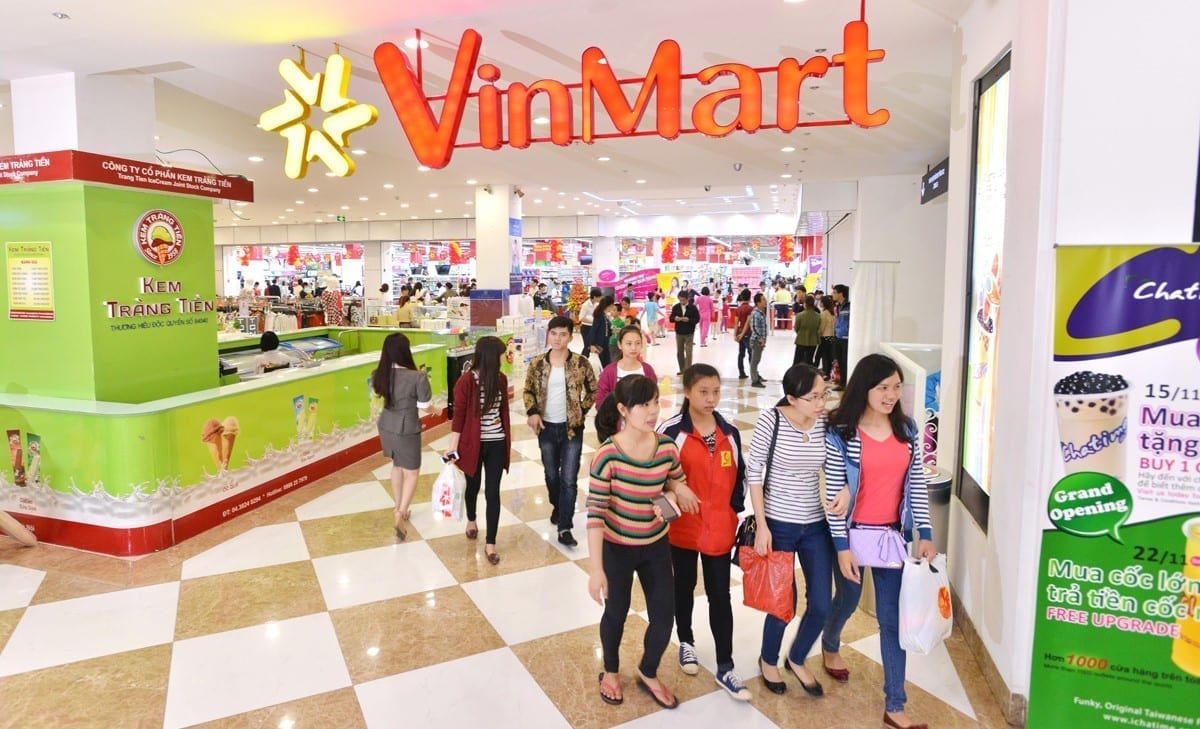
    Conglomerate Masan Group will invest VND5 trillion ($215.7 million) in the subsidiary that controls its VinMart retail chain to help expand it.

    The investment would quadruple the charter capital of The Sherpa to VND6.5 trillion, it said in a statement.

    Through the company, Masan indirectly owns 71 percent of VinCommerce, which operates VinMart+ convenience stores and VinMart supermarkets.

    Masan acquired VinCommerce from Vietnam’s largest private company, Vingroup, in January this year.

    Masan earlier announced it plans to have over 300 VinMart supermarkets and nearly 10,000 VinMart+ convenience stores by 2025, up from 122 and 2,524 at the end of September.

    Masan closed 433 VinMart and VinMart+ stores in the first nine months of this year to cut losses and forecast VinCommerce to break even this quarter.

  • Government greenlights Long Thanh International Airport

    Government greenlights Long Thanh International Airport

    The first phase of the Long Thanh International Airport project, costing over $4.6 billion, has been approved by the government. The decision approving the airport, designed to become an important regional international air transit hub, was signed Wednesday by Deputy Prime Minister Trinh Dinh Dung.

    The first phase will have one 4km long runway with a width of 75 meters and a system of taxiways and apron, and a 373,000 sq.m passenger terminal designed to serve 25 million passengers and 1.2 million tons of cargo per year. The work is expected to be completed in 2025.

    The work will be divided into four sub-projects: the headquarters of state management agencies, flight management services, essential airport facilities, and other items.

    Essential airport facilities will include buildings, airport apron, passenger terminals, and cargo terminals. This task has been assigned to the Airport Corporation of Vietnam (ACV), which operates 21 airports in the country. ACV will raise its own capital for the construction, the decision says.

    The Long Thanh International Airport will apply modern and open technologies so that they can be easily updated with the most advanced construction, management and operational technologies in accordance with international standards.

    The project’s investment plan was approved by the National Assembly in mid-2017. The parliament also issued a resolution on compensation, support and resettlement for land clearance to build the airport.

    Early last month, the government had directed Dong Nai Province to urgently hand over building sites so that construction can begin early next year.

    The airport will have three phases that are expected to be completed in 2040. By then, it will have four runways, four-passenger terminals and auxiliaries to accommodate 100 million passengers and 5 million tons of cargo every year.

    Lying 40 kilometers east of HCMC, the airport is expected to take up the overflow from the largest existing airport in the country, the Tan Son Nhat International Airport.