Category: General

Retail News Asia is committed to providing both local and global retailers with the latest General Retail news throughout the Asian market. This on a daily base.

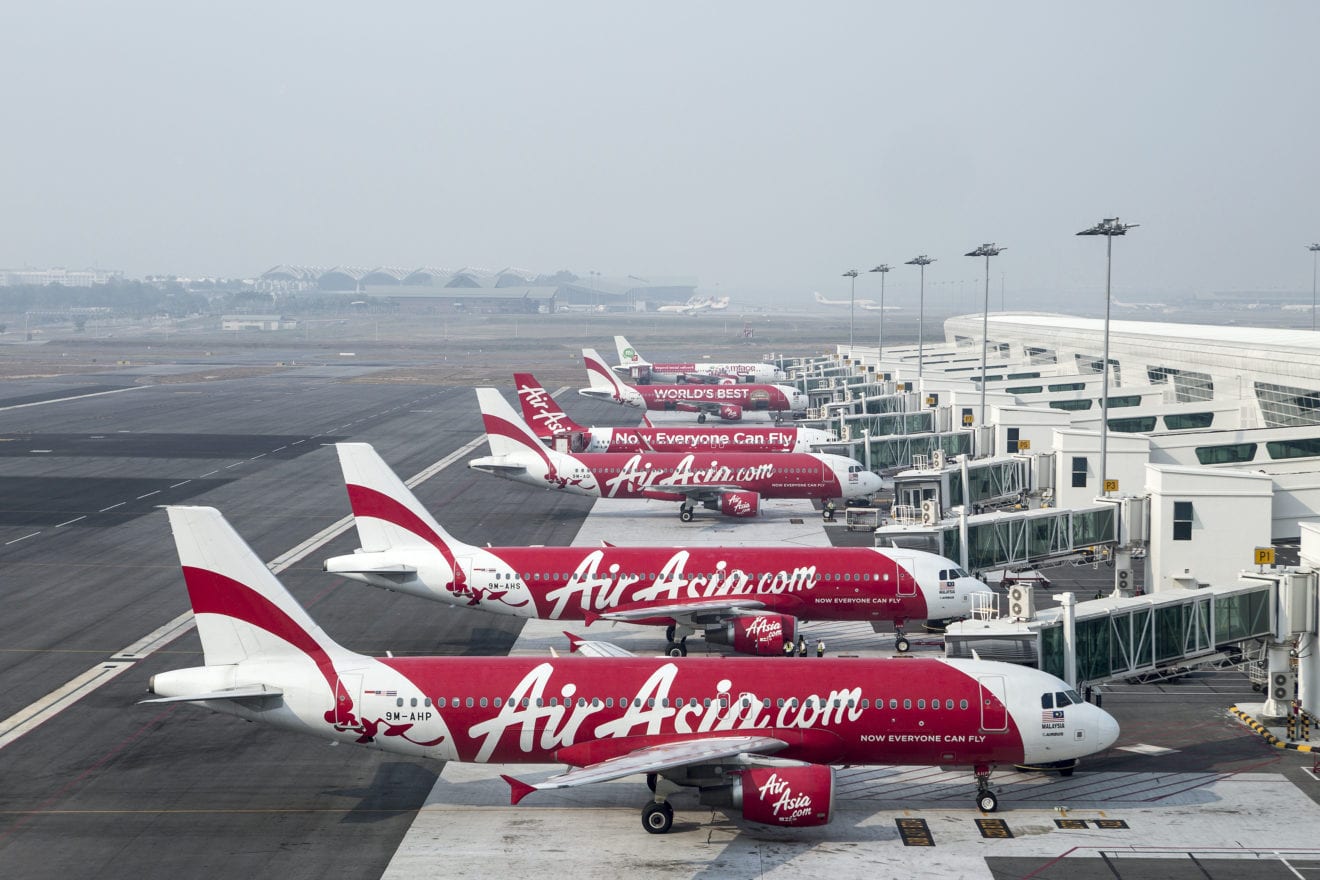
  • Thai AirAsia wants regulators to lift restriction on middle seat

    Thai AirAsia wants regulators to lift restriction on middle seat

    Thai AirAsia (TAA) will ask regulators to change the rule requiring airlines to keep middle seats open, aiming to increase capacity ahead of the government’s domestic tourism promotion next month.

    “We have complied with this rule that was introduced when the infection rate in the country was still high, but as we have a low number of cases now, it’s time to consider dismissing this limitation,” said Santisuk Klongchaiya, chief executive of TAA.

    The average load factor since resuming domestic flights in May is 80-85%, he said, but those figures are based on capacity reduced to 60-70% because of middle seat elimination.

    The empty seats, intended to mitigate the spread of the coronavirus, cut revenue by a third for each flight.

    Mr Santisuk said most airlines globally did not block off middle seats when restarting their flights during these two months.

    He said airlines cannot carry this burden in the long run, particularly the loss of opportunity as domestic demand starts to show positive signs.

    Santisuk Klongchaiya, chief executive of TAA

    “We’ve heard that soon the government will launch a new tourism stimulus package for consumers, including a subsidy on airfares,” Mr Santisuk said. “If airlines can increase capacity to the normal level, it’ll coincide with the policy to support travel activities.”

    A meeting between the Civil Aviation Authority of Thailand and airlines is scheduled for June 16. The agency will hear aviation operators’ thoughts about international flights reopening.

    At present, TAA is operating 16 routes countrywide and plans to add more destinations to respond to growing demand.

    Nuntaporn Komonsittivate, head of commercial operations at Thai Lion Air (TLA), said the average load factor is 70% based on available seats. Although the number is high, it barely translates to a profit because 30-40% of seats must always be empty.

    From June 19, TLA decided to reopen all 13 domestic routes to test local demand. It launched an airfare promotion to stimulate purchasing power when the lockdown relaxation enters the fourth phase.

    “Although we cannot be sure about the feedback of the market, we have to try to increase our liquidity and also look for future revival when travel between countries that have successfully contained the coronavirus is allowed,” Ms Nuntaporn said.

    She said the nationwide curfew is another unfavorable factor for flight operations, causing inconvenience for passengers catching early-morning or late-night flights. There are also time-consuming health and safety procedures at airports.

    Meanwhile, TLA must strictly control costs by extending salary cuts further after laying off hundreds of workers earlier, Ms Nuntaporn said.

    The carrier at present has 14 aircraft, down from almost 40 when tourism reached its peak last year.

  • Japanese department store Odakyu launches service to serve Chinese at home

    Japanese department store Odakyu launches service to serve Chinese at home

    Japanese department store Odakyu has partnered with Taeltech marketplace to launch service in China.

    Through the Taeltech ecosystem, Odakyu Department Store will trial a selection of products including Japanese accessories, apparel and cosmetics, in the first few months in a pilot before the official launch in more than 500 cities in China.

    Shuji Kawate, business creation department GM at Odakyu Department Store, explained the reason for the partnership with Taeltech is that Odakyu saw a “unique business opportunity” as most inbound tourism revenue is generated by Chinese tourists. The company also saw “the potential to provide the best customer service, in this partnership with Chenggan (Taeltech) by catering to their continued needs, thus expanding the department store experience into China in the future.”

    Taeltech has also created a “Odakyu Zone” in its marketplace, which functions as an extension of the department store experience for customers who have returned home. In return, the department store will provide promotional opportunities in prime locations to Taeltech.

    “Not only does this partnership give Chinese consumers the opportunity to order high quality and verifiable authentic Odakyu Department Store products from their homes, in the future it also introduces the Tael Ecosystem to Chinese tourists within Japan, connecting our target market both domestically and internationally,” said Alex Busarov, CEO at Taeltech.

    Founded in 2014, Taeltech’s ecosystem has more than 50,000 users across China.

  • Malaysian retail sales plunge 32.5 percent in April

    Malaysian retail sales plunge 32.5 percent in April

    Malaysian retail trade sales plunged 32.5 percent year on year in April, according to the Department of Statistics Malaysia (DoSM).

    The significant decline occurred as many retailers were heavily affected by the imposition of the Movement Control Order.

    Retail sectors contributing to the negative growth included consumer goods in specialist stores, cultural & recreational goods, and household equipment.

    Sales of food and beverage rose by a modest 1.9 percent, which is less than in some other Southeast Asian markets during the Covid-19-related lockdowns and temporary store closures

    Despite the dramatic fall, Malaysian retail sales online in April saw 28.9-per-cent growth year on year, as consumers moved online unable to visit physical stores.

  • EU wants to have Google, Facebook and Twitter report monthly on their actions against fake news

    EU wants to have Google, Facebook and Twitter report monthly on their actions against fake news

    As the fight with the coronavirus pandemic continues, so does the fight against misinformation on social media. The European Union wants to now have tech giants like Facebook, Twitter, and Google report monthly on their efforts against misinformation, regarding COVID-19.

    EU foreign policy head Josep Borrell and Vera Jourova, the European Commission’s Vice President for values and transparency, reportedly stated that the tech giants should provide information on their fight against fake news. Jourova additionally stated that the spread of fake news and false information on social media is harming not only democracy but also the health of the people. She added that it also can undermine the economy.

    The monthly reports should include actions that were done to promote legitimate content and to restrict coronavirus-related misinformation, along with false ads on the matter.

    Josep Borrell stated that along with the aforementioned measures, more support for free and independent media should be provided, as well as support for fact-checkers and researchers.

  • Simon pulls out of merger deal with Taubman

    Simon pulls out of merger deal with Taubman

    US mall operators Simon Property Group and Taubman Centers have called off their planned merger, citing the impact of Covid-19 on the retail industry.

    Simon was to buy an 80-per-cent interest in Taubman, with the Taubman family retaining a 20 percent stake in a US$3.6 billion deal. Taubman owns, manages and/or leases 23 super-regional shopping centres in the US and three in Asia via its Hong Kong-headquartered Taubman Asia business.

    Simon says it was pulling out of the deal because it believed Taubman’s properties were “disproportionately hurt” by the pandemic due to their location in densely populated cities and tourist locations and had high-end tenants whose sales had been hit particularly hard this year.

    However, Taubman has indicated it will fight to protect the deal, arguing the decision was without merit and plans seek damages from Simon.

    The Asian properties which would have been part of the merger are the Starfield Hanam in South Korea, ​and the Chinese properties CityOn Xi’an and ​CityOn Zhengzhou.

  • Harvey Norman Asia sales suffer during Corona outbreak

    Harvey Norman Asia sales suffer during Corona outbreak

    Australian electronics and furniture retailer Harvey Norman suffered an 18-per-cent decline in sales in its Singapore store network last year.

    While sales dropped 26.1 percent in local currency during the second half-year due to the Covid-19-related lockdown, first-half sales – described by the company as “poor” – were down as well, by 11.9 percent. In Australian dollars, sales benefited from a 5.8 percent appreciation in the Singaporean dollar in the period.

    Harvey Norman’s 12 company-operated stores in Singapore closed on April 7 and still remain closed by government decree. The retailer has continued to trade online during the store closures, and anticipates being able to reopen offline later this month.

    Meanwhile, in Malaysia the company closed its 23 stores from March 18 to April 17, in line with government requirements, and gradually reopened individual stores, starting with just the electrical and computer categories, and eventually furniture and bedding, between April 18 and May 12. Online trade resumed from April 18 for the electrical and computer categories only.

    Sales were down 4.2 percent year on year in constant local currencies for the six months to May 31, and up 6.5 percent for the full year, thanks to a strong 15-per-cent uptick during the first half.

    In Australian dollars, sales were positively affected by a 5.2-per-cent appreciation in the Malaysian Ringgit during the year.

    In New Zealand, Northern Ireland, Slovenia and Croatia, where the retailer operates wholly-owned company stores, sales were down across the board.

    The only outlier was Ireland, where Harvey Norman operates wholly-owned company stores and saw a significant sales increase in the second half, despite only being allowed to fully reopen stores on June 8.

    Throughout the Covid-19 crisis, Harvey Norman’s Australian franchisees were allowed to keep stores open as long as they complied with social-distancing requirements. Sales were up 17.5 per cent in the second half.

  • Developing Asia economies to face the threat of recession amid the global pandemic

    Developing Asia economies to face the threat of recession amid the global pandemic

    The COVID-19 pandemic would have a major effect on developing economies in Asia and may even drive several countries into recession, according to the World Bank. The novel coronavirus presents a massive danger to one of the leading economic development drivers in the world, driving it into recession and throwing 11 million citizens into poverty, the Washington-based institution reported. Most of the economies in the region haven’t faced a recession since the 1998 crisis.

    Before the pandemic crippled the world economy, things were looking up for the East Asia and the Pacific (EAP) region. Prior to the global pandemic, projections estimated that nearly 35 million people would escape poverty in 2020, with over 25 million in China alone. Now with the real possibility of a recession looming over the EAP, there will be no getting out of poverty anytime soon.

    Asia’s economies will contract 0.5 percent in the worst-case scenario, which predicts a protracted pandemic with more serious consequences, the study forecasts.

    As the Vice President for East Asia and the Pacific at the World Bank Victoria Kwakwa noted, the countries were already coping with trade tensions on the global market and the consequences of the spread of coronavirus in China, and now they’re faced with a global shock.

    Despite the pandemic endangering many industries on the market, there was a positive market sentiment recently, with US equities surging further. The things aren’t looking good for China however, as retail sales fell, along with the GDP.

    The growth in the developing EAP region was projected to be 5.8 percent in 2019. Now the numbers have fallen significantly indicating them to slow to 2.1 percent in the baseline and to negative 0.5 in the lower case scenario in 2020.

    How to minimize the damage

    The World Bank advises that countries need to take steps immediately to alleviate some of the imminent impacts of the virus – including accelerated improvements in healthcare infrastructure and targeted fiscal measures.

    Along with doubling down on supporting the national healthcare capacity for long-term preparedness, the report also suggests that the countries should take an integrated approach of containment and macroeconomic policies.

    “Targeted fiscal measures – such as subsidies for sick pay and healthcare – would help with containment and ensure that temporary deprivation does not translate into long-term losses of human capital,” reads the World Bank report.

    The Chief Economist for the region at the World Bank has also suggested that in addition to the national actions, the most effective vaccine against this virus would be accelerated international cooperation. “Countries in East Asia and the Pacific and elsewhere must fight this disease together, keep trade open and coordinate macroeconomic policy,” said Aaditya Mattoo.

    The study calls for international collaboration and new cross-border public-private alliances in order to improve the development and delivery of essential medical products and services in the face of the pandemic and retaining financial stability in the aftermath. In order to ensure the gradual economic growth in the region, the World Bank stresses that the trade policy should remain open so that all countries have access to medical and other resources.

    Another World Bank policy advice is easing credit to support households to smooth their expenditure and helping businesses withstand the immediate shock. Nonetheless, given the possibility of a prolonged crisis, the study emphasizes the need to pair these efforts with regulatory supervision, particularly when many EAP countries already bear heavy corporate and household debt burdens. “For poorer countries, debt relief will be essential, so that critical resources can be focused on managing the economic and health impacts of the pandemic,” the study notes.

    The World Bank report also takes into account some characteristics of the countries in the region and the implications of COVID-19 on specific sectors that are of vital importance for them. Highlighting that households that are dependent on sectors that have been hit the hardest by the pandemic will be at the highest risk of falling into poverty. Such vulnerable economic activities include tourism in Thailand and the Pacific Islands, manufacturing in Cambodia and Vietnam, and households dependent on informal labor in all countries.

    Many of the countries in the region have already been facing significant challenges and the global pandemic just adds up to those, such as droughts in Thailand or commodity shocks in Mongolia. The outlook for 2020 in the Pacific Island countries is subject to particularly significant risks owing to the dependence of their economies on grants, tourism, and imports.

    To combat the detrimental effects of the global pandemic, the World Bank, along with the other international organizations, has already taken significant steps in aiding the developing countries in efforts to minimize the damage.

  • AirAsia launches three-day sale for domestic flights

    AirAsia launches three-day sale for domestic flights

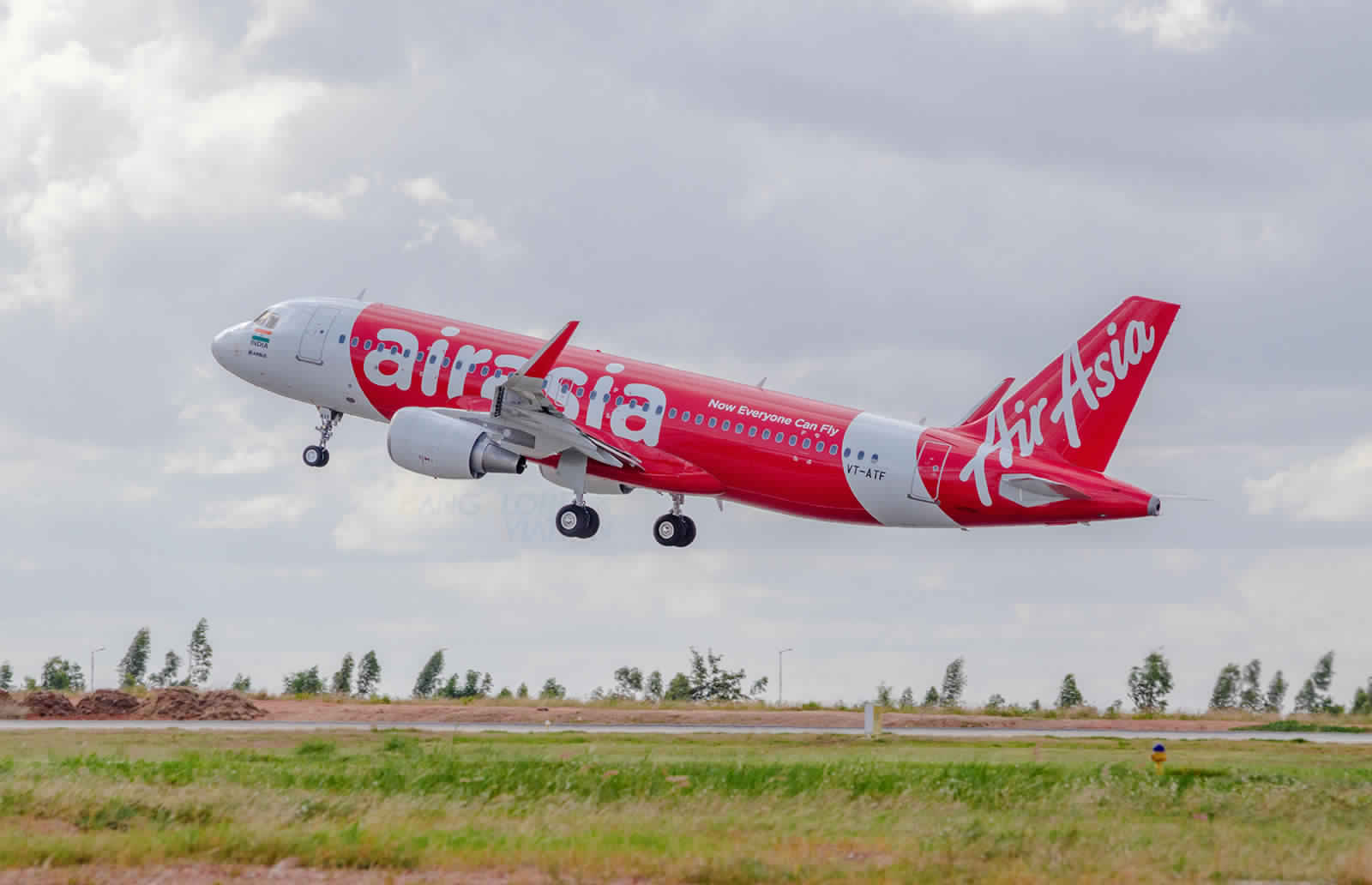
    AirAsia Group Bhd, which resumed its domestic flights on April 29, has launched a three-day sale for domestic flights booked through airasia.com and its mobile app from today to Sunday.

    During the sale, AirAsia BIG members can enjoy all-in one-way fares from as low as RM129 for domestic travels between July 1 and Nov 19, while non-members’ fares start from RM134.

    In a statement, Amanda Woo, head of the commercial for AirAsia, said passengers can now perform an unlimited number of date changes to their flights with the recent announcement of flight change fee waiver for all new bookings with travels up to Dec 31.

    She added that since the resumption of its domestic services, AirAsia has enhanced its safety measures throughout the entire flying journey, including pre-flight, in-flight, and arrival processes.

    Several contactless procedures including contactless payments at the airport, contactless kiosks, passenger reconciliation system, as well as enhanced features on AirAsia mobile app are also in place to ensure a smooth and safe travel experience for all AirAsia’s guests.

  • AirAsia to shed 30% of workforce

    AirAsia to shed 30% of workforce

    AirAsia India is expected to let go of several of its employees as its part-owner, AirAsiaBerhad struggles to maintain its group operations across regions following the outbreak of coronavirus.

    AirAsia Berhad is set to reduce up to 30 percent of its workforce across regions including its Indian operations which it part-owns with Tata Sons as the group struggles to maintain its operations following the Covid-19 outbreak.

    Sources in the airline said that apart from salary reduction up to 75 percent, the group is seriously considering plans to let go between 25 percent and 30 percent of its entire workforce of about 20,000 across regions.

    An AirAsia India spokesperson, however, declined to comment on the possible measures being taken to retrench employees. As of December 2019, AirAsia India had a market share of 7 percent. It has a total fleet size of 30 aircraft and flies to 21 destinations across India.

    The airline sector is one of the most-affected industries since the outbreak of coronavirus across the countries. According to airline consultancy firm CAPA, most airlines in the world could file for bankruptcy soon. “As the impact of the coronavirus and multiple government travel reactions sweep through our world, many airlines have probably already been driven into technical bankruptcy, or are at least substantially in breach of debt covenants.”

    As far as the airlines operating in India are concerned, CAPA said they are expected to incur a total loss of $3.6 billion during the first quarter of the current financial year. Cash reserves are running down quickly as fleets are grounded and what flights there are operate much less than half full, it said.

    Surprisingly, AirAsia India recently received its board’s clearance for increasing its borrowing limit by 1,000 crore to ensure it continues to pay leasing and parking charges for its grounded aircraft. AirAsia India is learned to be the first domestic airline to formally increase the borrowing limit. The decision to increase the limit from 500 crore to 1,500 crore was taken at a meeting of the shareholders in April.

    AirAsia India is a joint venture between Tata Sons, which owns 51 percent in the airline, and AirAsia Berhad. The special resolution was approved to carry out “existing and future financial requirements to support its business operations”

    AirAsia India, which has been struggling since it began its operations in June 2014, recorded a fourth-quarter net loss of 123.3 crore in FY19, which was 26 percent lesser than the same quarter in the previous year. It recorded revenues of 1,057.6 crore, a 65 percent increase from Q4 of FY18 on the back of a 38 percent increase in capacity, and a 19 percent increase in average fare.

  • Muji opens largest Hong Kong flagship store

    Muji opens largest Hong Kong flagship store

    Despite struggling with suspended operations and inventory problems during the Covid-19 pandemic, Japanese home-and lifestyle-goods retailer Muji is set to open its 21st store in Hong Kong later this month.

    Taking over the former Uny-owned Piago department store space in Telford Plaza, the new flagship will span 24,000sqft with all ranges including home, electronics, apparel, cosmetics, and food.

    The Telford Muji flagship will largely focus on food, expanding its range with packaged goods, groceries, fresh baked goods, and a new coffee and tea bar in addition to its existing cafe and Meal Muji restaurant.

    Muji is also expected to make its debut in Vietnam later this year.

    In May, Muji Japan launched a store on Amazon, seeking to mitigate the impact of its 280 stores in the market being forced to close due to Covid-19. That marked the first time Ryohin Keikaku has sold Muji products via an online platform outside its own e-commerce store.

  • Shoppers return to Macau’s casino malls

    Shoppers return to Macau’s casino malls

    Macau’s casino malls have seen a welcome resurgence in foot traffic as locals bearing shopping vouchers return to store floors.

    While gamblers have yet to return to the casino venues, government e-voucher handouts to eligible residents of the territory have stimulated the local economy in the wake of the coronavirus pandemic.

    “Consumption coupons did help,” said JLL Macau head of leasing Oliver Tong. “When you go to casino malls, including The Venetian and Galaxy, during the weekend, the footfall is tremendous. It felt like going back to November or December last year when there were a lot of people. But these were all locals.”

    Visitor numbers to Macau dropped 99.7 percent in April, with retail sales down 45.1 percent for the first quarter to US$1.41 billion.

    Many retail tenants at Macau’s casino malls and adjacent to gaming facilities have been allowed rental waivers for three months.

    Check our partners from BestCasinoSites.me.uk.

  • Aeon Hong Kong unveils new concept stores

    Aeon Hong Kong unveils new concept stores

    Aeon Hong Kong has unveiled new-look store concepts in two suburbs – Tsim Sha Tsui and Tsuen Wan.

    The stores feature several new zones and a new look alongside the retailer’s traditional supermarket offer.

    The Aeon Hong Kong supermarket located in Tsim Sha Tsui shopping center The One since 2011 reopened on Friday after remodeling. Aeon says the store is targeting both office workers and local residents with its product mix.

    Spread over two floors, the retail space is split into two concepts. On the Lower Ground 1 floor, Living Plaza offers household and daily necessities and a gourmet food area with a focus on Japanese and Thai cuisine.

    On Lower Ground 2, the Aeon supermarket gathers food from Japan and around the world alongside the Home Coordy section (pictured above)

    The pet products zone (above) features a wide range of Japanese pet food and supplies brands such as Ciao, Inaba and Nisshin.

    Meanwhile, the Aeon Tsuen Wan store features a store-in-store for casualwear label iC, (above), a beauty-products zone (below) and space dedicated to trendy outdoor products.

  • Google Maps update will help commuters plan their social distancing

    Google Maps update will help commuters plan their social distancing

    Google never stops working on several key apps. One of these is Google Maps which no longer is limited to turn-by-turn directions. Google Maps will also show you places to go and things to see wherever your travels take you. It also shows you more enhanced walking directions in AR and recently launched Maps’ “Plus Code” that allows users to share their precise location with friends and family

    Today, Google announced that the iOS and Android version of Maps will receive an update allowing users to discover in advance how crowded a train or bus is (a mobbed train or bus could raise the risk of catching COVID-19) or whether a bus or train is running on a limited schedule. Google says that essential workers need this information to get to their jobs and others will want this data too as more countries reopen.

    Last year Google added “crowdedness predictions” in Google Maps that used crowdsourced data from tens of millions of riders to help Google forecast how crowded a bus or train line would be at a certain time of day. Now, Google is making it easier for users to contribute to this data. Look up Directions, tap to see Transit Details, then scroll down to find crowdedness predictions where it is available. There, users can enter their own experiences.

    Starting today, you can use Google Maps to find the times historically when there are large crowds of people at a transit station. You can also see live data that compares current crowd size to usual conditions. This should help you plan your social distancing. To find this information, search for a transit station in Google Maps or tap on one when it appears on the screen. That will call up the departure board and busyness data (if available). This feature will be rolling out over the next several weeks and is based on aggregated and anonymized data from those who have opted into Google Location History. The latter is off by default. To keep the information anonymous, the busyness data is shared only when enough users are opting in to provide sufficient data.

    Maps is adding alerts from local transit agencies that will alert users if there are any COVID-19 related rules that affect commuters using mass transit such as whether masks are required when on trains or buses. These transit alerts are being pushed out now by Google in countries including Argentina, Australia, Belgium, Brazil, Colombia, France, India, Mexico, Netherlands, Spain, Thailand, United Kingdom, and the U.S. More countries will be added soon.

    Google is also adding notifications and alerts about any COVID-19 checkpoints and restrictions along your route. This will appear even when you’re driving across national borders starting with the U.S., Canada, and Mexico). If you’re driving to a medical facility or a COVID-19 testing center, Google will remind you to verify eligibility and facility guidelines so that you’re not turned away.

    Google says, “Getting from A to B can be more complicated these days. Because of COVID-19, it’s increasingly important to know how crowded a train station might be at a particular time or whether the bus is running on a limited schedule. Having this information before and during your trip is critical for both essential workers who need to safely navigate to work and will become more important for everyone as countries around the world begin to reopen. COVID-19 has certainly impacted the way that we move around in the world. As cities and countries across the globe adapt, we’re committed to bringing the most pertinent information right to your fingertips. So when you’re ready and able to, you can safely venture out.”

  • AirAsia to slash workforce by at least 30%

    AirAsia to slash workforce by at least 30%

    Southeast Asia’s biggest low-cost carrier AirAsia Group is set to reduce its workforce by up to 30% as founder Tony Fernandes considers selling a 10% stake in the airline to raise cash. Desperately trying to stave off a cash flow crisis triggered by the coronavirus pandemic which has decimated the region’s travel and tourism industry, AirAsia will also slash remaining staff salaries by up to 75% in an attempt the save the airline, the Nikkei Asian Review has learned.

    The retrenchment will include cutting 60% of AirAsia’s cabin crew and pilots for both AirAsia and its medium-haul affiliate AirAsia X. AirAsia Group operates through Malaysia, Thailand, Indonesia, Japan, India and the Philippines.

    Almost all of the company’s 20,000 employees have been individually re-evaluated since January based on salary scale and performance, with the lay-off expected to continue through to the end of July.

    Multiple sources have told Nikkei that the airline — in which Fernandes continues to hold a majority stake — may also sell 10% of the company’s paid-up shares to raise cash, with South Korea’s SK Corp reportedly leading a trio of multinationals expressing interest.

    The share sale would not require shareholder approval as management has already been mandated to increase the number of new shares by up to 10% at a shareholders meeting last June. Korea’s third-largest conglomerate SK Corp could subscribe to new AirAsia shares of 1 Ringgit each, raising approximately $78.4 million for the airline. SK Corp, which has a major presence in the energy and telecommunications industries via its 95 subsidiaries, registered revenue of $213.6 billion last year and is backed by to $257.9 billion worth of assets.

    “All the proposals are being deliberated by the Board of Directors, with a decision can be expected as soon as next week,” a source said.

    While remaining employees are asked to take pay cuts ranging between 15%-75%, Fernandes has also slashed AirAsia’s capital expenditure and the working capital of all the group’s operating airlines. Fernandes and the airline’s co-founder Kamarudin Meranun have also agreed to draw no salary for the medium term.

    “Budgets for departments have been slashed while the salary cuts are expected to last until the end of next year,” the source said. “AirAsia only expects the situation to improve in 2022.”

    Employee benefits, which include free and discounted flights and complimentary meal coupons, have been curtailed significantly.

    “Bonuses, salary increments, and incentives have been put on hold while only travel allowance and basic salary paid,” the source said. Another source close to Fernandes said that Fernandes was also exploring the sale of unprofitable airline ventures in Japan and India.

    “He (Fernandes) is open to reduce stakes or even exit Japan and India, due to the complexity of the domestic industry and escalating costs if compared to sales,” the source, who declined to be named. Thai AirAsia was exploring a merger with several domestic budget carriers in an attempt to survive the pandemic.

    Malaysia’s government is also looking at channeling over $350 million to the country’s three main cash-strapped carriers AirAsia, Malaysia Airlines, and Malindo Airways as part of a broader economic rescue package.

    The government hopes the funds will help the airlines survive the pandemic crisis and new operating procedures which may include social distancing onboard and contactless check-in.

  • Malaysia’s IPC mall launches trash-to-treasure recycling campaign

    Malaysia’s IPC mall launches trash-to-treasure recycling campaign

    Malaysian mall IPC mall has launched a campaign to promote recycling as part of the “new normal”.

    At a time when national recycling efforts have been put on hold, visitors are invited to drop off recyclables at the mall’s Recycling & Buy-Back Centre (RBBC) to enjoy rewards for selected categories.

    The “Trash to Treasure” campaign highlights IPC as the first retail destination in Malaysia to have a facility like the RBBC, which introduces two new recyclable categories – food and fabric waste. While food waste will be bio-recycled and turned into animal feed and organic fertilizer, any collected fabric will be sorted for donations or recycled into industrial wiping cloths and upcycled into wearables.

    “Over the years, our sustainability efforts have shown that responsibly disposing of waste goes a long way in creating a more sustainable environment,” said IPC Shopping Centre PR and digital marketing manager Mark Tan. “As a community-centric shopping center, we want to empower the community to make recycling part of their everyday lives in this new normal. Hence, making the RBBC accessible and safe for all by following the latest health guidelines, and implementing protective measures.”

    The mall is noted for its attention to environmental and sustainable issues, including its use of energy-saving light bulbs, solar panels and rainwater harvesting.