Category: General

Retail News Asia is committed to providing both local and global retailers with the latest General Retail news throughout the Asian market. This on a daily base.

  • Thai AirAsia X Schedules Airbus A330 Charter Flights To Croatia

    Thai AirAsia X Schedules Airbus A330 Charter Flights To Croatia

    Bangkok-based long-haul airline Thai AirAsia X has scheduled four charter flights between Bangkok and the Croatian capital Zagreb in May and October. However, seeing that AirAsia recently announced it is suspending almost all flight operations, will these actually go ahead?

    AirAsia is temporarily parking almost all of its fleet as a consequence of severe travel restrictions imposed by countries across the world to which AirAsia affiliate airlines operate.

    Earlier this month, the airline had an incredible promotion called the Big Sale with deals on flights scheduled until 1st of July 2021. Tickets were being sold with either very heavy discounts, or completely free. Passengers only had to pay the tax charge, which on some flights amounted to as little as $2.83.

    Flights from Kuala Lumpur to Seoul in Korea, and to Australia’s Gold Coast, Perth, Melbourne, Sydney, and Taipei in Taiwan, were priced at just $16 during the sale. However, even though these reductions were incredible, they clearly were not enough to stimulate sufficient demand for air travel. Thus, AirAsia is now parking much of its fleet.

    Unlike AirAsia, Thai AirAsia X has actually suspended all flights, not just international ones. The suspension started on the 16th of March and will last for three months. It is therefore unclear whether the scheduled charter flights from Bangkok to Zagreb will even take place.

    Five rotations have been scheduled for the planned Thai AirAsia X charter services from Bangkok to Zagreb.

    The dates are the 1st of May, the 6th of May, the 11th of May, the 13th of October and the 19th of October. Clearly, the scheduling is done to cater for tourist demand outside of the peak holiday season. An Airbus A330 will be operating the flights on all dates.

    Thai AirAsia X is relying on evidence of existing demand to support these charter services. Presently, passengers wishing to reach Zagreb from Bangkok have a variety of connecting options of reasonable affordability.

    For example, for a seven-day journey departing Saturday 3 October and returning Saturday 10 October, options include:

    • Emirates ($750): a 14-hour journey with a stop in Dubai of under two hours
    • Turkish Airlines ($750): a 14-hour overnight journey with a stop of under two hours in Istanbul Airport for (though this might be a very short stopover given the difficulties Istanbul’s new airport is facing)
    • Turkish Airlines ($680): a 15.5-hour daytime journey with a stop in Istanbul of under three hours
    • Qatar Airways ($700): a 15-hour journey with a 1.5 hour stop in Doha
    • Austrian Airlines ($675): a 13-hour journey with a one-hour stop in Vienna
    • Eva Air and Croatia Airlines ($2,000): a 13.5-hour journey with a 1.5-hour stop in Vienna
    • Air France ($785): a 17-hour journey with a three-hour stop in Paris
    • Lufthansa and Croatia Airlines ($785): a 17.5-hour journey with a four-hour stop in Frankfurt

    For a relatively small market, and given that Zagreb Airport is not highly attractive to airlines, this is a highly satisfactory range of services. Stopovers as short as one hour are on offer, and competition from carriers of various alliances keeps prices reasonably low.

    Thai AirAsia X will be entering an already crowded market.

  • Metro Retail Stores show strong profit growth

    Metro Retail Stores show strong profit growth

    Metro Retail Stores Group in the Philippines has reported a 21.5-per-cent growth in income to US$20.80 million (Php1.06 billion) last year.

    The growth was driven mainly by an 11.3-per-cent increase in sales to $722.31 million (Php36.8 billion) with operating expenses rising by a lesser rate of 9.3 per cent.

    Additional insurance recoveries relating to a serious fire the previous year saw non-core income increase by $4.29 million (Php218.7 million), offset by the net impact of the new PFRS 16 accounting standard of $7.13 million (Php363.7 million).

    Metro Retail Stores’ operating income, as well as net income, would have increased by 13.7 percent and 18.0 percent respectively excluding the impact of PFRS16.

    The firm says that increasing its store network to serve emerging cities and municipalities in Visayas, Central Luzon and the Bicol region was vital to the home-grown retailer’s strong performance.

    In 2018, the company recorded a 1.2-per-cent drop in net income due to the closure of a hypermarket and the temporary suspension of a supermarket following a fire, along with other factors.

    Metro Retail Stores Group is owned by the Gaisano family based in Mandaue City, Cebu. It has 53 department stores and hypermarkets in the Visayas Region.

    The company’s supermarkets, hypermarkets and pharmacies are all continuing to trade to provide much-needed basic goods and services as the Philippines struggles with the Covid-19 outbreak.

  • AirAsia Group hibernates fleet

    AirAsia Group hibernates fleet

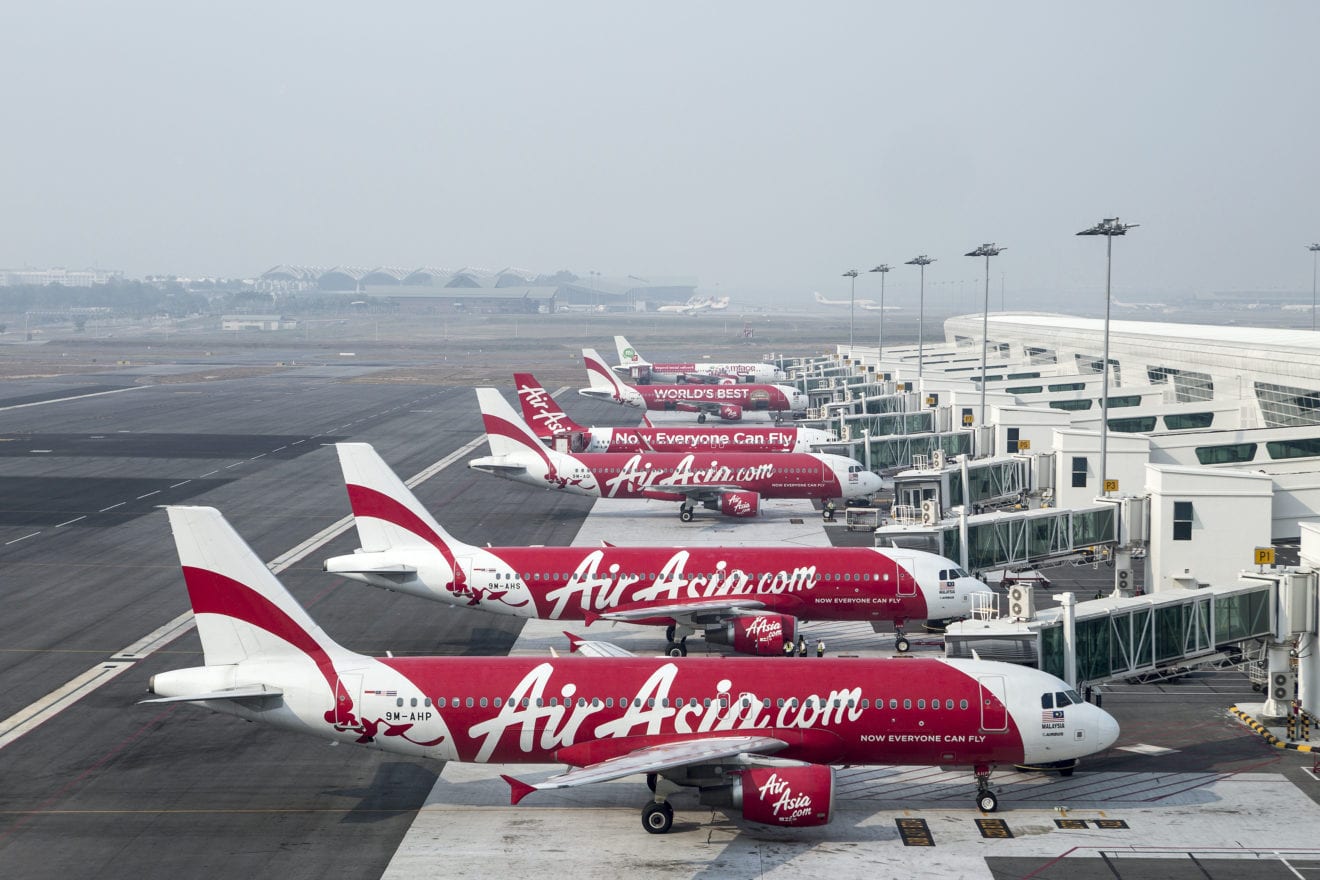
    AirAsia Group announced, at the weekend, it is temporarily hibernating most of its fleet across its entire network in Asia, in view of the COVID-19 pandemic that led to extensive border restrictions.

    The actual fleet downtime differs with each of the group’s member airlines.

    AirAsia Malaysia suspended all flights, international and domestic, 28 March and that continues to 21 April.

    AirAsia Philippines suspended all flights 20 March, and that continues to 14 April

    AirAsia Thailand suspended all international flights from 25 March to 25 April and now suspends all domestic services from 1 to 30 April.

    AirAsia Indonesia suspends all domestic flights 1 to 25 April and international flights from 1 April to 17 May.

    AirAsia India suspended all flights 25 March for 21 days. (The airline flies only domestic routes)

    AirAsia X Malaysia suspended most flights from 28 March until 31 May. The airline only services international routes.

    AirAsia X Thailand suspended all flights 16 March for three months. Its DMK-ICN service suspended until 19 April.

    Issued on behalf of the entire AirAsia Group and the AirAsia X Group the statement said: “With governments imposing travel and movement restrictions including home quarantine orders, AirAsia is also playing its part in helping curb the spread of the virus in order to keep flying safely for everyone.”

    The group added that it was prepared to reinstate services as soon as the situation improves and subject to the necessary regulatory approvals.

    Passengers have the option of converting flight bookings into a credit account that is valid for future redemption for 365 days or moving their flights for an unlimited number of times without any charges to another date prior to 31 October 2020.

    The changes to bookings are made via AirAsia virtual Allstar AVA on airasia.com or support.airasia.com. However, passengers mainly through social media posts that virtual chatbot AVA could not keep up with the influx of requests with no back-up system manned by people to relieve the pressure.

    The group added that the “temporary fleet hibernation is the right thing to do to ensure the well-being of our passengers and employees.”

    Both management and senior employees of AirAsia Group have volunteered a salary sacrifice, ranging from 100% at the very top to 15%.

    “This will help ensure that we can ride out this prolonged period of extremely low travel demand and at the same time minimise the impact on our employees, especially those in junior positions,” AirAsia Group Berhad explained in the statement.

  • Singapore Airlines gets $13bn lifeline as airlines beg for help

    Singapore Airlines gets $13bn lifeline as airlines beg for help

    Singapore’s state investor Temasek Holdings and others will inject as much as 19 billion Singapore dollars ($13.27bn) into Singapore Airlines (SIA) in the world’s single-biggest rescue of an airline slammed by the coronavirus pandemic.

    The enormous financing plan, which drove SIA shares down as much as 10.5 percent on Friday, underscores the depth of financial trouble for the global airline industry, with nearly one-third of the world’s aircraft already grounded because of the pandemic, according to data provider Cirium.

    Many governments worldwide have already stepped in to help airlines amid the virus-induced travel slump, with the United States offering $58bn in aid. Many carriers have grounded fleets and ordered thousands of workers on unpaid leave to keep afloat.

    The 5.3 billion Singapore dollars ($3.72bn) in equity and up to 9.7 billion Singapore dollars ($6.8bn) in convertible notes – bonds that can be converted into equity stakes in the company – of the Singapore Airlines fundraising are being underwritten by Temasek, which owns about 55 percent of the group.

    The carrier has also obtained a 4 billion Singapore dollar ($2.8bn) bridge loan facility with the country’s biggest lender, DBS Group Holdings Ltd, to support near-term liquidity requirements.

    “This is an exceptional time for the SIA Group,” SIA Chairman Peter Seah said in a statement late on Thursday.

    SIA’s shares went into a rare trading halt earlier Thursday after plunging to their lowest in 22 years this week as investors feared the virus will have a deep impact on the company.

    “Under the current dire circumstances, the rights issue is the best tactical move for SIA. It underscores the carrier’s strategic importance to Singapore and the island state’s position as both a financial centre and aviation hub,” Shukor Yusof, head of aviation consultancy Endau Analytics, said in a blog post.

    SIA has said it would cut capacity by 96 percent, ground almost its entire fleet and impose cost cuts affecting about 10,000 staff amid what it called the “greatest challenge” it had ever faced.

    The rights issue will be offered at 3 Singapore dollars ($2.10) per share, a 53.8 percent discount to SIA’s last traded price of 6.5 Singapore dollars ($4.56).

    “While the raising looks earnings and valuation decretive, SIA now looks well-positioned to ride out the storm with balance sheet concerns largely de-risked,” Bank of America analysts told clients.

    Temasek International Chief Executive Dilhan Pillay Sandrasegara said the deal would not only tide SIA through its short-term liquidity challenge but would position it for growth beyond the pandemic.

    SIA said it would use the funding from the rights issues to beef up its capital and operational expenditure needs.

    On Thursday, the Singapore government announced more than $30bn in new measures to help businesses and households brace against the pandemic.

    Airlines around the world are seeking government aid to stay afloat after the coronavirus pandemic wiped out travel demand.

    Airport traffic at 12 key hubs in Asia-Pacific region plunged by 80 percent on average in the second week of March compared with the same period last year, Airports Council International Asia-Pacific said on Friday as it called for government relief measures for airport operators.

    United States airlines are preparing to tap the government for up to $25bn in grants to cover payroll, even after the government warned it may take stakes in exchange for bailout funds, people familiar with the matter said.

    American Airlines Group Inc, a much larger carrier, on Thursday evening disclosed it would be eligible for $12bn of US government aid as part of a $58bn loan and grant package for the airline industry.

    Australia’s Qantas Airways this week secured 1.05 billion Australian dollars ($636.1m) against its aircraft fleet.

    Others, including Air New Zealand Ltd and Virgin Australia Holdings Ltd, have warned they expect to be smaller carriers in the future.

    South Korean low-cost carrier Eastar Jet has begun returning some of its Boeing 737 planes to lessors, while Southwest Airlines Co said it would consider actions to reduce the company’s size if passenger traffic remains significantly lower six months from now.

  • South Korean department stores look to VIPs as sales slide

    South Korean department stores look to VIPs as sales slide

    South Korean department stores have launched an all-out effort to secure VIP customers who spend more than ordinary customers.

    Department stores have suffered fallout from the surge in popularity of online shopping malls for years, but sales have come under further pressure with the coronavirus outbreak.

    Sales at Lotte Department Store from March 1 to 22 decreased by 37.8 percent compared to the same period last year.

    At the height of the pandemic, and under the burden of its economic consequences, the top priority for South Korean department stores is to secure VIP customers.

    While VIP customers at the Galleria Department Store account for only 10 percent of all customers, their consumption amounts to 60 percent of sales.

    According to Shinsegae Department Store, the number of VIP visits last month was 2.5 times that of regular customers.

    Even when the number of visits by regular customers dropped by half after the Covid-19 outbreak, the number of VIP customers dropped by only about 20 percent.

    Managing loyal VIP customers and securing more big players in the future is a matter directly related to a store’s survival.

    This is why Lotte Department Store made changes to its VIP system. Under the old scheme, customers had to spend 20 million won (US$16,400) per year to qualify for the lowest level VIP program, as part of what was a four-level system.

    However, Lotte recently added another lower-level program to expand the scope of its VIP offerings.

    Meanwhile, Galleria Department Store, unveiled the largest VIP lounge in South Korea on the 12th floor of its newly opened Gwanggyo branch in Suwon, south of Seoul.

    VIP lounges in South Korean department stores have typically been places for customers who spend tens of millions of won a year. However, at the Gwanggyo branch, customers who spend 5 million won per year can enjoy the VIP lounge.

    “The fact that VIP thresholds have been lowered is indicative of a sales strategy to secure loyal customers by providing better services to more customers,” said a source in the department store industry.

  • Why exemplary ethics will pay off beyond the coronavirus outbreak

    Why exemplary ethics will pay off beyond the coronavirus outbreak

    In the midst of the coronavirus (Covid-19) outbreak, retailers that have made bold commitments to their staff, customers and the wider community will be remembered while those that have proven themselves to be less ethical risk falling out of favor with shoppers when normality returns.

    In the UK, grocers were some of the first retailers to make changes to their operations due to the Covid-19 pandemic, for instance working to address the lack of product availability of key items due to stockpiling by introducing limits on the number of items shoppers could purchase, and shopping hours dedicated to the vulnerable, elderly and National Health Service workers.

    Those that have gone beyond this will be remembered more by shoppers, with Morrisons emerging as a retailer willing to take additional steps to protect its staff and suppliers – for instance by setting up a hardship fund for staff in financial difficulty, launching a call center for those who are unable to shop online, and paying small suppliers immediately to help them survive this crisis.

    As demand for fashion drops, international brands are harnessing their production capacity to produce equipment to help fight Covid-19. Inditex announced that it will produce surgical masks and hospital gowns for Spanish healthcare facilities, and LVMH has switched from manufacturing perfume to hand sanitizer for French hospitals.

    This highlights the retailers that are more willing to incur costs to benefit society as few major fashion brands are manufacturing such items so far, though many have the capacity to do so. Retailers need to make sure that press-friendly responses in the midst of plummeting sales do not backfire by ensuring the health of workers involved in the manufacturing of these items as the outbreak grows globally.

    Conversely, there are retailers that will be remembered for profiteering and treating their staff poorly, impacting consumers’ purchasing habits beyond the outbreak, especially if friends or family have been affected. The prime suspects of such behavior in the UK are, unsurprisingly, Arcadia and Sports Direct.

    Arcadia announced it was closing all of its stores hours before the government announced its job-retention plan, ending its fixed-term employment contracts early. Sports Direct initially said its stores would remain open following the announcement of lockdown in the UK, but quickly made a U-turn and closed all stores, leaving it unclear as to whether staff will be paid during the closure, and significantly inflating the prices of sports equipment that can be used to stay fit at home.

    Additionally, online behemoth Amazon has reportedly had cases of Covid-19 in 10 of its warehouses globally. As a retailer that has struggled with poor consumer perceptions of its ethics, this crisis provides Amazon the chance to improve this, as it could leverage its global logistics network to distribute medical supplies or get essential goods to vulnerable people.”

  • Facebook launches Messenger Coronavirus Community Hub

    Facebook launches Messenger Coronavirus Community Hub

    Facebook, just like many other big companies, are trying to ease the transition to social distancing by offering free services and products. But people need to stay informed about what’s happening in the world even when they’re self-isolating.

    In that regard, Facebook launched recently the so-called Messenger Coronavirus Community Hub, which offers users tips and resources that should help them stay connected to their friends, family, and community in general.

    The new Messenger Coronavirus Community Hub will also act as a tool to prevent the spread of misinformation, as it explains how people can recognize and avoid scams and fake news. Beyond that, Facebook’s new hub is about serving its users as they try to maintain their communities and social connections even when they can’t be together in real life. On top of that, you’ll be able to find accurate and reliable information about COVID-19 developments, as well as tips to help you prevent the spread of fake news.

    Last but not least, the Messenger Coronavirus Community Hub will also act as a communication bridge between important organizations like WHO (World Health Organizations) and CDC (Centers for Disease Control) with Facebook’s developer partners with the purpose of helping these organizations to share information more effectively.
  • South Korean retail sales surge as people stay home

    South Korean retail sales surge as people stay home

    South Korean retail sales surged 9.1 percent in February, despite the advent of the coronavirus pandemic.

    The year-on-year increase reflected consumers buying more daily necessities online as the virus spread. And, with people largely staying home, substantially less was spent eating out, so consumers were buying more food to prepare or eat at home.

    According to data compiled by the Ministry of Trade, Industry and Energy, South Korean retail sales rose from US$7.92 billion in February last year to $8.68 billion last month.

    Online sales soared by 34.3 percent, the strongest increase since data was first collected in 2016. By comparison, for the whole of last year, online sales rose by 14.2 percent.

    Food sales almost doubled, driving overall growth, while sales of household products were up by 44.5 percent.

    Convenience-store turnover rose by 7.8 percent, however, overall sales across offline stores fell 7.5 percent year on year, with department stores hardest hit, down by 21.4 percent.

  • Singapore government urges citizens to avoid malls, observe safe distancing

    Singapore government urges citizens to avoid malls, observe safe distancing

    The Singapore government is instructing local consumers to defer non-essential visits to malls.

    The move is part of a strategy to encourage social distancing in the midst of the coronavirus outbreak and includes advice to all Singaporeans to consider shopping for household items online.

    Foreign nationals working as caregivers or maids, have been asked to stay in their homes on rest days.

    These directives follow the state’s introduction of social-distancing mandates last week, which forbid gatherings of more than 10 people and require individuals to stand at a distance of at least one meter apart in non-transient settings, such as in supermarkets.

    Venues with seating are instructed to ensure seats are kept at one-metre distances, with those at closer fixed points to be marked as not to be used.

    Business operators and individuals who fail to abide by the new regulations face fines of up to SGD10,000 (US$7000) and/or jail time up to six months.

  • Snapchat fights misinformation with interactive Snapchat COVID-19 myth-buster game

    Snapchat fights misinformation with interactive Snapchat COVID-19 myth-buster game

    As the current public health situation unfolds, tech companies continue to look into ways to bring accurate knowledge to their users. Snapchat, as a typically younger-generation-oriented app, is providing a slightly different approach to promote reliable facts about the coronavirus – in a Snapchat game format.

    Now there is a new Snapchat game, which is a COVID-19 myth buster. As other Snapchat filter games, you are able to access it from the snap games list. The information the myth-buster game provides is taken from the World Health Organization.

    When you start playing, you receive questions about the coronavirus that you can answer with “true” or “false” and then you can send a snap of whether you got the answer right or wrong. Although this may seem too lighthearted given the current situation, education program expert Kelly Mendoza stated that young people learn a lot from games, so this way to provide knowledge is a great opportunity to engage young people and attract their attention to the situation.

    Therefore, the game provides a way to share accurate information about the virus, which cannot be a bad thing given the countless rumors and anxiety-spreading misinformation that the tech giants are fighting against.

  • Cebu Pacific extends free rebooking, travel fund option until June 30

    Cebu Pacific extends free rebooking, travel fund option until June 30

    Budget carrier Cebu Pacific is extending its free rebooking and travel option for passengers with booked flights until June 30.

    The airline decided to adjust its booking policies to provide its passengers with “flexibility and peace of mind,” in case they change their travel plans amid uncertainties surrounding the coronavirus disease 2019 (COVID-19) situation.

    Cebu Pacific said it still plans to operate flights by April 15 as scheduled.

    However, passengers with confirmed bookings on any Cebu Pacific domestic or international flight from April 15 to June 30, 2020 have the following options:

    • Free rebooking – rebook flights on any travel date with change fees waived. Fare difference may apply.

    To rebook the flight, use the “Manage Booking” portal in the Cebu Pacific website.

    • Travel Fund – place the full cost of the ticket in a Travel Fund which can then be used as payment for a future booking. The Travel Fund is valid for 180 days and can be used for bookings as far as 12 months out.

    To avail of the Travel Fund option, use the “Manage Booking” portal in the Cebu Pacific website to cancel their booking and store the value in the Travel Fund.

    “New flights booked from April 15 to June 30 (regardless of travel date and route), on the other hand, include CEB Flexi for FREE,” Cebu Pacific said.

    CEB Flexi enables travelers to rebook their flights up to two times, fare difference may apply.

    The airline also apologized for the delays in reverting to messages and long wait times for calls.

    “This is due to the high volume of passenger concerns being addressed by our team. Please bear with us,” it said.

    “We thank our passengers, partners and our stakeholders for their patience and trust,” it added.

  • Google redesigns Podcasts app, brings it to iPhones and iPads

    Google redesigns Podcasts app, brings it to iPhones and iPads

    Google’s Podcasts app was released two years ago for Android devices, but the Mountain View company announced last year that it will expand the availability of the app to additional platforms, including iOS and Windows.

    A web version of Google Podcasts eventually made its debut last year, which allows users on other platforms to take advantage of its features. Today, Google announced a native Podcasts app is now available to all iPhone and iPad users.

    More importantly, Google Podcasts has been completely redesigned to offer a simpler experience to those looking for their favorite podcasts. The new Podcasts app focuses on just three tabs – Home, Explore, and Activity, from where users can access other features and information about the content they want to listen to.

    The Home tab will display a feed of new episodes and is meant to offer Podcasts users a way to access their subscribed shows faster than ever. On the other hand, the Explore tab, “For you” displays new show and episode recommendations that are strongly related to a user’s interests.

    Last but not least, the new Activity tab shows a user’s listening history, queued up episodes, and download. Also, it’s important to add that Google Podcasts users can now enable automatic download and push notifications for when new episodes are released.

    Google announced that along with the new redesign, it made it possible to sync listening progress across devices. If you’re using an iOS device, you can download the new Google Podcasts today from the App Store. Android users will get the new app this week.

  • Cebu Pacific feels pinch from Philippines quarantine

    Cebu Pacific feels pinch from Philippines quarantine

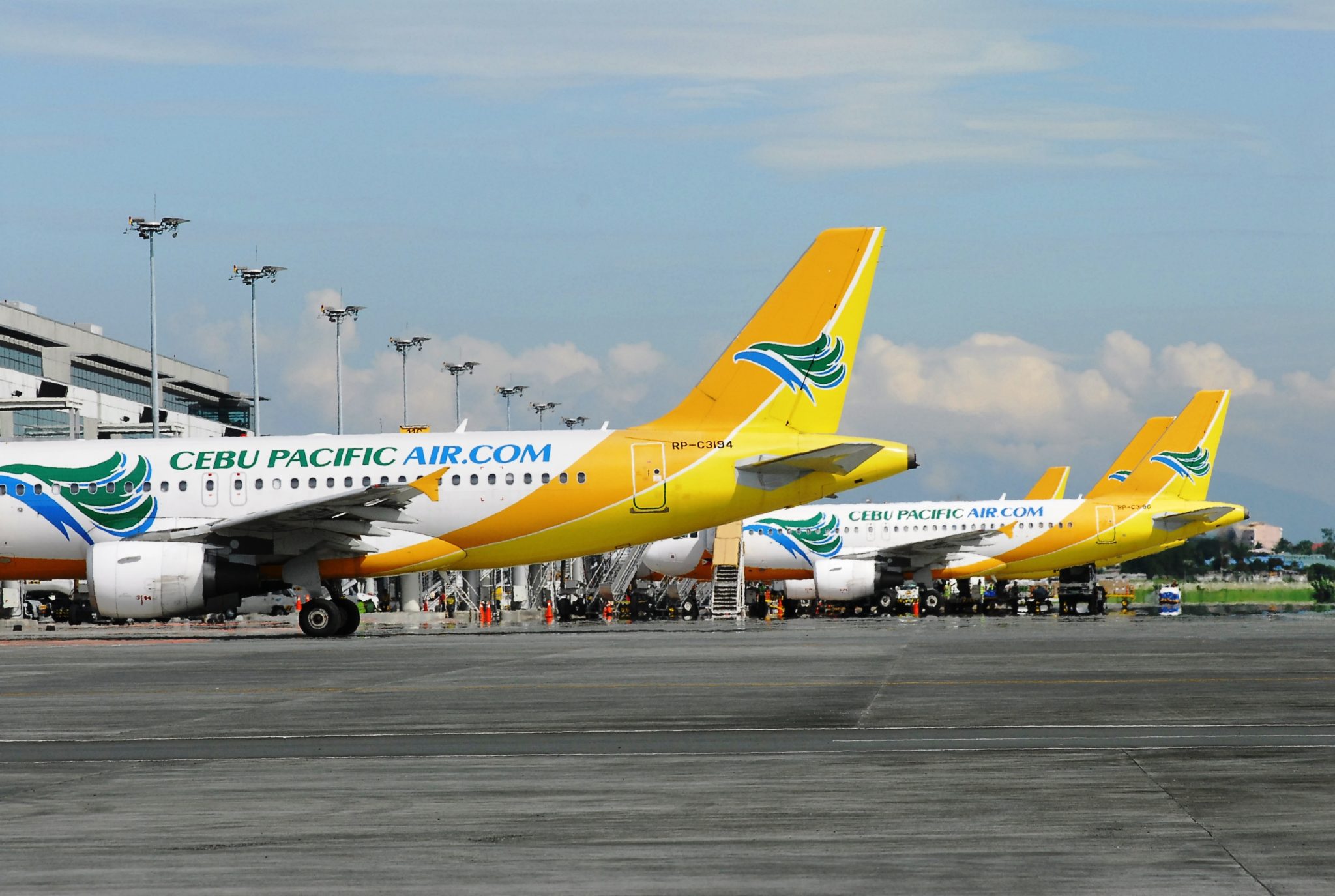
    Cebu Pacific says the month-long “community quarantine” imposed on Metropolitan Manila and the main Luzon island group recently will free up 90% of its total seat capacity, even as it maintains services from its hubs outside of Manila and the region.

    The 90% capacity figure is based on the suspension of domestic flights departing Manila, and previously suspended services to China, Hong Kong, Macau and South Korea, says Cebu Pacific in a Philippines Stock Exchange disclosure.

    During this period, the airline continues to operate flights from its other hubs that have not been affected by the quarantine order such as Cebu, and is maintaining connectivity “where operationally feasible”.

    Cirium schedules data show that in February, domestic routes accounted for 83% of Cebu Pacific and subsidiary Cebgo’s seat capacity.

    Although it expects a “significant revenue impact” during the quarantine period, operating expenses will fall in tandem, while lower fuel prices provide an additional cost benefit to its reduced fuel consumption.

    Cebu Pacific was unable to provide any earnings guidance for 2020, due to uncertainties caused by the coronavirus pandemic. However, it stressed that it has a strong balance sheet with “over Ps18 billion ($353 million) in cash and cash equivalents” at the end of 2019, and that a net debt to equity level of around 1.25x with a long maturity profile gives the airline room to seek short-term or long-term funding.

    It is also conserving cash and reducing expenses by freezing recruitment and consultancy work, implementing pay cuts for its top management, and suspending salary increases.

    Earlier in February, the carrier estimated that the outbreak will see a “Ps3-4 billion swing on profit” should the outbreak remain unabated over the next six months. The estimate was based on 2003’s Severe Acute Respiratory Syndrome outbreak, which curtailed demand for air travel for six months.

    Cebu Pacific is expected to release its 2019 financial results in the coming weeks.

  • AirAsia grounding most flights from March 28 to May 31

    AirAsia grounding most flights from March 28 to May 31

    AirAsia Group Berhad is suspending most of its flights from March 28 to May 31.

    In a statement on its website, the company said the Covid-19 pandemic had led to unforeseen extensive and increasing border restrictions by various countries.

    “This flight suspension is necessary to ensure the sustainability of the business and is the right thing to do to ensure the well-being of our guests and employees, which will remain the top priority of our business during this challenging time.

    “With governments imposing travel and movement restrictions including movement control order, AirAsia is also playing its part in helping to curb the spread of the virus in order to keep flying safe for everyone.

    “We will continue to evaluate the situation closely and we are prepared to reinstate our services as soon as the situation improves, subject to the necessary regulatory approvals, ” it said.

    All affected guests are being notified by email and SMS.

    They have the option of converting their flight booking into a credit account that is valid for future redemption for 365 days or moving their flights for an unlimited number of times without any charges to another date prior to Oct 31.

    According to the statement, short-haul flights of AirAsia will be suspended for all domestic and international flights from March 28 to April 21.

    As for the medium and long-haul flights, most AirAsia X Malaysia (D7) trips are suspended between March 28 and May 31.

    Meanwhile, the company also announced that both the management and senior employees of AirAsia Group have volunteered a salary sacrifice, ranging from 100% at the very top to 15% to further manage and contain costs.

    “This will help ensure that we can ride out this prolonged period of extremely low travel demand and at the same time minimize the impact on our employees, especially those in junior positions, ” the statement said.

  • AirAsia set to lose over RM1.1 billion

    AirAsia set to lose over RM1.1 billion

    AirAsia Group could report steeper losses in excess of RM1.1 billion in 2020, following its decision to ground its aircrafts worldwide due to the Covid-19 pandemic, according to Affin Hwang Capital.

    The research firm said in a note today that the drastic move highlights the dire operating environment faced by the airline industry.

    In tandem, it reiterated a “sell” on AirAsia’s shares with a lower 12-month price target to RM0.49.

    Meanwhile, Philippines AirAsia, Thai AirAsia, PT Indonesia AirAsia and AirAsia India have similarly reduced their flight frequencies.

    “To further manage and contain costs, the management and senior employees of AirAsia have volunteered for a salary cut, ranging from 100 percent at the very top to 15 percent,” it said.

    AirAsia yesterday announced it was temporarily suspending all international and domestic flights operated by AirAsia Malaysia from March 28 to April 21, 2020. Other airlines within the AirAsia Group will similarly reduce their flight frequencies.

    Affin Hwang Capital expects AirAsia to negotiate with its suppliers to reduce their operating costs, for instance operating leases, airport charges, fuel, operation and maintenance costs.

    “We now expect AirAsia to report larger losses in 2020-2021 after incorporating lower revenue in view of the temporary suspension of flights and dire industry outlook; and lower operating costs arising from savings in staff cost, operating leases, fuel and operations and maintenance expenses,” it said.