Category: General

Retail News Asia is committed to providing both local and global retailers with the latest General Retail news throughout the Asian market. This on a daily base.

  • Beta version of popular Google app gets Dark Mode for all Android users

    Beta version of popular Google app gets Dark Mode for all Android users

    Another reason to use Dark Mode is to preserve the battery life on handsets that sport an AMOLED display. That’s because such panels create the color black by turning off the pixels in the appropriate area of the screen. Pixels that are turned off do not draw on the phone’s battery, saving some power. Dark Mode has become so popular that both iOS and Android now allow users to enable it system-wide.
    To become a beta tester for the Google app, head over to this Google support page and follow the directions. You can only have one version of the Google app installed at one time, and if you’re unhappy being a beta tester you can always return to the public version of the app.
    Once you sign up as a beta tester for the Google app on your Android phone, you can turn on Dark Mode by going to Settings > General > Theme > select Dark or System Default. On phones running Android 10, this means that you can choose to have the Google app in Light Mode all of the time, Dark Mode all of the time, or have it match the system setting. On phones running an earlier version of Android, go to Settings > General > Theme > select Dark or Set by Battery Saver. On pre-Android 10 phones, this will give you the option of running the Google app in Light Mode, running the app in Dark Mode, or running the app in Dark Mode once the Battery Saver is turned on.
  • Vietnam winning greater share of US apparel imports

    Vietnam winning greater share of US apparel imports

    Vietnam’s share of US apparel imports has benefited as China’s share in the market is slipping in the wake of the Sino-US trade war.

    According to the US Department of Commerce’s Office of Textiles and Apparel, Vietnam’s share increased to 14.26 percent last year, up from just 7.72 percent in 2010.

    Michelle Russell, an apparel correspondent at GlobalData, says Vietnam’s garment sector has clearly benefited from the ongoing tit-for-tat trade spat between the US and China during the last two years as producers and buyers diversify their supply chains.

    Brands have chosen Vietnam and Bangladesh as its alternative sources as additional tariffs are imposed on most garments imported from China.

    China’s share of the market slipped from 41.9 percent in 2018 to 39.9 percent last year, on top of a year-on-year decline in the unit prices of apparel imported into the US.

    “Despite China remaining the cheapest of the top-10 garment supplier countries, the country’s share of US imports declined last year. Meanwhile, Vietnam is becoming something of a global manufacturing powerhouse and has clearly reaped the benefits thanks to its younger and lower-wage workforce, its preferential trade policies and its logistics – the country boasts 14 major ports,” said Russell.

    The EU-Vietnam Free Trade Agreement (EVFTA) between Vietnam and the European Union, which will remove most tariffs between the two parties over the next 10 years, has been approved by the European Parliament this week. However, Vietnam still faces challenges ahead that will require Vietnam to gradually change the structure of its economy.

  • Lotte Shopping closing 200 stores as losses mount

    Lotte Shopping closing 200 stores as losses mount

    Lotte Shopping plans to shut down as many as 200 department stores and large-format supermarkets in South Korea, marking one of the biggest retail network culls in the nation’s history.

    Lotte Group operates more than 700 stores under its Lotte Mart, Lotte Department Store, Lotte Super and drug-store chain LOHB banners, which means its closure plans will affect almost one in three stores.

    There are no reports that Lotte will scale back its international business, which is largely in Southeast Asia after it began withdrawing from China last year.

    “The focus of our business strategy in 2020 is a heavy downsizing to enhance efficiency and profit,” the company said in a statement.

    “The food sections at underperforming small- and mid-sized department stores will be changed into supermarkets selling fresh groceries.”

    The rationalization plan follows news that South Korean convenience stores are outperforming supermarkets and hypermarkets in financial terms.

    Lotte Shopping’s net loss grew by 83.6 percent year on year to US$721 million last year, on an operating profit down 28.3 percent to $361.7 million. Sales slipped 1.1 percent to $14.9 billion, largely driven by a 5.8-per-cent decline in supermarket sales. Department-store sales dropped by 3.1 percent.

    Kang Hee-tae, who heads Lotte Shopping, said its major stores were performing poorly and market conditions remain tough. He cited an increase in the minimum wage and falling Chinese tourist arrivals as contributors to the poor result. But analysts in Seoul say Lotte Shopping’s problems are in part caused by a shift to online shopping, where consumers can often pay less for goods.

    According to Yonhap, South Korean retail sales rose 4.8 percent last year, with online sales growing 14.2 percent based on a sample of 13 e-commerce players. Overnight fresh-food deliveries were a contributor to the online growth.

    “The top priority at Lotte Shopping is to resolve fundamental problems and deliver clearly positive results,” said Kang.

    Besides store closures, the company plans to restructure some of its operations. For example, the fashion zones at its Lotte Mart stores will in future feature stock curated from the company’s department stores and likely feature more branded apparel rather than discount garments.

    The company also plans to use big data to refine and personalize its services to customers instead of running hundreds of too many loss-making branches.

    Lotte Shopping is not alone with its challenges in a changing South Korean market. Last August, rival Emart posted its first-ever loss, of $24.7 million, for the June quarter, its worst result since it was spun off from Shinsegae Group in 2011. It reported a 53-per-cent drop in full-year net profit to $189 million.

    The company said it planned to raise $820 million by selling assets and will buy back stocks to boost shareholder value.

    Emart has since embarked on a plan to downsize its Electro Mart gadgets chain and its Boots drugstore franchise and it is closing all it’s discount Pierrot Shopping stores, which are modeled on the Don Don Quijote concept from Japan.

  • South Korea’s CU fined US$1.4 million for unfair trading

    South Korea’s CU fined US$1.4 million for unfair trading

    South Korean convenience-store operator BGF Retail has been fined for pushing exorbitant sales promotion costs onto its suppliers.

    The firm was ordered to pay KRW1.67 billion (US$1.4 million) for its breach of the Act on Fair Transactions in Large Retail Business, according to a report in The Korea Times.

    While the act forbids any retailer from forcing its supplier to shoulder more than half of any promotional cost, BGF was found to have run “two-for-one” promotional events from early 2014 to late 2016 at its CU-branded stores and passed on the majority of expenses.

    The firm pushed KRW2.39 billion ($2 million) in costs on 79 suppliers to pay for 338 promotions conducted during the period at more than 13,000 CU locations. It also failed to sign written agreements with suppliers prior to holding sales events in 76 cases.

    “This is the first time that the FTC has punished a company for forcing suppliers to shoulder more than 50 percent of the cost for two-for-one events,” said an official at Korea’s Fair Trade Commission. “The FTC will enhance monitoring and punishments for similar violations.”

    CU is currently in second place among Korea’s leading convenience store chains, with a 31.14 percent market share.

  • FTC to investigate Google’s purchase of Waze years after the deal closed

    FTC to investigate Google’s purchase of Waze years after the deal closed

    Just a few days ago we told you that the Federal Trade Commission (FTC) had requested information from Google parent Alphabet, Apple, Facebook, Amazon, and Microsoft. The regulatory agency is investigating acquisitions made by the five between Jan. 1, 2010 and Dec. 31, 2019. These are transactions that were small enough to escape scrutiny by antitrust agencies.
    In June 2013, Google acquired the Israeli company behind the crowdsourced navigation app Waze for $1.1 billion. While Google already offered its Google Maps app with turn-by-turn directions, Waze was different. Users exchanged traffic information about accidents, police speed traps, construction and inclement weather conditions that could cause a delay to fellow drivers motoring in the same vicinity. Some considered Waze to be a navigation app and a social media site where drivers could communicate with each other. Most of this still holds true today, although Google has been adding Wave’s best features to Maps. More on that below.
    At the time of Google’s announcement that it was buying Waze, the latter had very minimal U.S. revenue which is why the merger did not have to be reported under the Hart-Scott-Rodino (HSR) Act. The HSR Act requires that the DOJ and the FTC receive a pre-merger notification. The deal is not allowed to close for a period of 30 days while the regulatory agencies investigate. If the agencies don’t take any action after 30 days, the merger can then close.
    It appears that the U.K. gave a more thorough examination to Google’s acquisition of Waze than U.S. regulators did. While investigating the transaction, the U.K. asked Google to keep Waze separate from the rest of its operations. In December 2013, the final report from the Office of Fair Trading said that with the purchase, Google was eliminating the closest competition to Maps. Waze CEO Noam Bardin agreed; just two months before Google announced the deal to buy Waze, the executive said, “We’re the only reasonable competition to [Google] in this market of creating maps that are really geared for mobile, for real-time, for consumers — for the new world that we’re moving into.”
    At the time, many figured that Google would move over some of Waze’s features to Google Maps and shut down Waze since they seemed to compete with each other. Others figured that Google was simply buying Waze to keep it out of the hands of another company. When the deal was announced in 2013, RBC Capital Market analyst Mark Mahaney said that the “move eliminates Waze as a potential acquisition target for competitors who could use the app’s collection of data and 50 million users to bolster their own location-based products.”
    There was some truth to the idea that Google was buying Waze to keep it out of the hands of a competitor. Before Google came in with its bid, Waze was reportedly close to a deal to have its app pre-installed on phones made by an unnamed company. In addition, Waze could have worked out a deal with Facebook that would allow users to meet up at certain locations using Waze’s turn-by-turn directions. The U.K. regulator decided to approve the deal noting that with Apple Maps, there already was a strong competitor to Google Maps in the marketplace.
    Not everyone believes that the merger should have been allowed to go through. Sally Hubbard, director of the enforcement strategy at the Open Markets Institute says, “It was literally Google acquiring its number one competitor in maps. It was a bad deal that should have been blocked.” Google has kept Maps and Waze separate but it has used data collected from Waze to improve the delivery of its ads. As RBC’s Mahaney told clients last September, “New ad formats in Google Maps have clear similarities to existing formats in Waze (coincidence?). Google has now collected enough data through Waze to effectively roll out broader solutions for advertisers in Google Maps and provide them attractive returns on investment without severely impacting the user experience.”
    Google has moved over many of Waze’s best features to Google Maps. Users of the latter can now report accidents, detours and police speed traps with the press of a button. And with a feature taken straight from Waze, Google Maps will now warn you when you are exceeding the speed limit.
    Former Justice Department antitrust official and Yale University economist Fiona Scott Morton believes that the FTC might be interested in the Waze purchase years after the deal closed because the location data Waze collects makes Google’s search advertising more precise. The FTC does have the ability to examine acquisitions made years ago although it isn’t clear what kind of punishment it could impose on Google.
  • Convenience stores in South Korea outperform supermarkets

    Convenience stores in South Korea outperform supermarkets

    The slump in fortunes at large discount stores is continuing and the growth of convenience stores in South Korea is accelerating in line with social changes, including an increase in the number of single-person households and the rising popularity of online shopping.

    Amid such circumstances, convenience stores in South Korea made more money than large supermarkets last year.

    GS25 posted record operating profits of 256.5 billion won (US$217 million) last year, while CU also reported record-high operating profits of 196.6 billion won.

    The operating profit to sales ratio also rose to 3 percent for both GS25 and CUs, an increase on last year.

    On the other hand, Emart Inc, the operator of South Korea’s largest discount-store chain, saw its operating profit plunged 67.4 percent to 105.7 billion won last year, trailing behind GS25 and CU.

    In 2018 alone, GS25’s operating profit stood at 192.2 billion won, CU at 189.5 billion won and E-Mart at 462.8 billion won, an indication of how the retail landscape is changing.

    Homeplus Co, the second-largest retail giant in South Korea, is also struggling, though the company has yet to release its financial report from last year.

    Meanwhile, Lotte Mart, the country’s third-largest retailer, announced it was closing a number of stores last year and posted an operating loss of 24.8 billion won.

    The boom at convenience stores in South Korea is attributed to an increase in single-person households, growth of the simple meal market and the trend of convenience stores transforming into a lifestyle platform despite the overall decline in offline distribution.

    “Although there is still a big difference in sales volume, this is the first time that operating profit has caught up with Emart,” said a source from the convenience-store industry.

    The source further added that “it is a clear indicator that large discount stores are waning while convenience stores are flourishing.”

  • Hong Kong Customs arrest coronavirus profiteers

    Hong Kong Customs arrest coronavirus profiteers

    Two retailers have been arrested for trying to profit from the coronavirus crisis after spot checks by Hong Kong Customs staff.

    In a territory-wide enforcement campaign dubbed Guardian launched on January 27, customs officers have been inspecting retailers selling surgical masks and other items that consumers might buy to protect themselves from coronavirus transmission.

    After 18 days, the operation has seen more than 1900 officers mobilized to conduct more than 12,000 inspections at retail spots in various parts of Hong Kong to ensure protective items sold in the market comply with the TDO and the Consumer Goods Safety Ordinance (CGSO).

    Last week, officers made a test buy of normal saline solution at a Mong Kok pharmacy following suspicions that some pharmacies in the suburb were suspected of engaging in unfair trade practices. Subsequently, one salesman and a director of the company, both aged 30, were arrested on suspicion of engaging in unfair trade practices, in contravention of the Trade Descriptions Ordinance (TDO).

    The officer was sold normal saline in plastic bottles from a display where it was labeled as “0.9% sodium chloride” and “solution for irrigation”.

    “Each bottled in containers of 1000ml, the normal saline was sold at a price of $25 per bottle and five for $100,” said a customs official in a statement. “A self-added leaflet, claiming that the normal saline could be used for hand and floor cleaning, was put on the carton.”

    Given that the description on the leaflet was not in line with the product description on the bottle, it was suspected to be a violation of the TDO.

    Officers seized 23 bottles of normal saline with an estimated market value of about HK$575 (US$74). The product will be tested at the Government Laboratory to establish its composition and safety.

    Customs said it plans to continue Operation Guardian and will step up enforcement actions to combat activities that are in violation of the relevant ordinances.

    “Customs sternly reminds traders not to take advantage of the current situation and not to sell products using unfair trade practices,” an official said in a statement.

    “They must also not sell products with false origins or false trademarks, nor must they sell unsafe consumer goods. Immediate law enforcement actions will be taken and prosecutions will be made with sufficient evidence.”

    Offenders face a maximum penalty upon conviction of a $500,000 fine and up to five years in jail under TDO regulations.

    Under the CGSO, it is an offense to import, manufacture or supply consumer goods unless the goods comply with the general safety requirements for consumer goods. The maximum penalty for that is a fine of $100,000 and imprisonment for one year on fir

  • Pricerite closes stores, culls staff to weather downturn

    Pricerite closes stores, culls staff to weather downturn

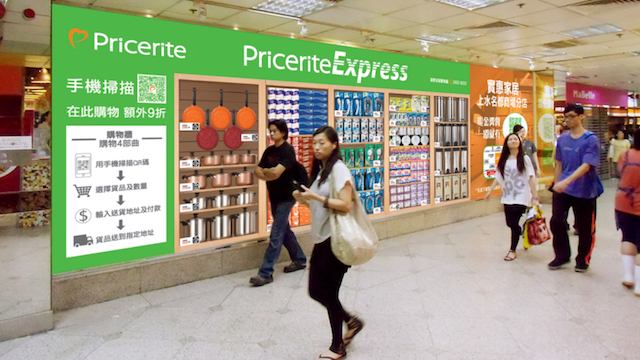
    Furniture and housewares retail Pricerite has closed four stores and will cut staff and executive salaries as it rides out the combined impact of the protests and now the coronavirus on sales.

    Four stores have been closed, the company said in a statement, without identifying their locations. The leases on another eight stores are due to expire this year and management is evaluating which of these will be renewed.

    Store staff numbers have been reduced by 10 percent, but the company said this has not resulted in any effect on service quality.

    Wages of senior management have been cut by 20 percent and directors’ salaries by 40 percent, from now until May and June respectively. Logistic employees have been asked to take unpaid vacations.

    “Under the current economic downturn, the sales of local consumer goods such as furniture have been under great pressure,” said the chairman of Pricerite’s parent, Cash Group, Guan Baihao.

    “The flow of customers has been reduced by 30 percent in the past nine months under the influence of epidemics and social movements. The new retail model is convenient for customers to enjoy online shopping and delivery services. However, the supply of major furniture and household goods has also been affected by the impact of the epidemic, and the supply chain is almost terminated,” he said in a statement translated from Chinese.

    “Under the situation of severely affected supply and demand, if the economic situation does not improve in the short term, the group will be forced to take other measures, including further reduction of branches and layoffs.”

    Meanwhile, the company is negotiating with landlords for temporary rent relief.

    Baiho said the current series of cost-saving measures have gone far beyond the Sars crisis of 2003.

    Along with declining retail sales since the social unrest commenced last June, Buildings Department data shows that only 12,923 private homes were completed in the first 11 months of last year, a decrease of nearly 18 percent over the previous year and the lowest figures in three years. That in turn impacts on the sale of furniture.

    As of December 31, Pricerite had 28 branches across Hong Kong and employed 800 full- and part-time employees.

  • Former Grab leader appointed CEO of VinID

    Former Grab leader appointed CEO of VinID

    Former CEO of Grab Financial Group Vietnam, Nguyen Tuan Anh, is the new general director of Vingroup’s loyalty program VinID.

    Tuan Anh, who had left the ride-hailing firm last month, confirmed his new appointment with VnExpress, saying he had taken over last Friday.

    The VINID Joint Stock Company (VinID) said that it expected Anh would help strengthen its apparatus to compete with other rivals and become an independent service company.

    Anh left Grab Vietnam last month after six years. He is credited being the person who laid the first bricks for the company’s operations in Vietnam in 2014 and paving the way for the successful deployment of its ride-hailing services, especially GrabBike.

    Born in 1982, Anh graduated in Information Technology from the National University of Singapore. Prior to joining Grab, he had worked with American web services provider Yahoo and several other startups.

    VinID JSC was established in July 2018. It has a chartered capital of VND3 trillion ($129.4 million) and is 80 percent owned by Vingroup, Vietnam’s biggest private conglomerate.

  • Vietnam Airlines loses up to $10.8 million a week to Covid-19

    Vietnam Airlines loses up to $10.8 million a week to Covid-19

    Vietnam Airlines has lost VND200-250 billion ($8.6-10.8 million) per week following flight suspension to China, the national carrier said in a statement.

    Vietnam Airlines has suspended all flights to and from mainland China since the end of January, directly affecting 70,000 visitors per month between both countries while air routes to China account for 10 percent of Vietnam Airlines’ market share, the airline said.

    “The epidemic has significantly reduced the demand for domestic and international travel among Vietnamese passengers,” the airline reported, adding the number of passengers on its domestic routes had fallen by 20-30 percent over the past two weeks.

    Vietnam welcomed around 5.8 million Chinese tourists last year, accounting for one-third of the 18 million foreign visitors to the country.

    The Civil Aviation Authority of Vietnam said Wednesday the deadly virus had cost Vietnamese airlines over VND10 trillion ($430.5 million) in revenue so far.

    Vietnam declared the Covid-19 outbreak an epidemic on February 1. The country has recorded 16 cases of infection with 11 in Vinh Phuc. Of the remaining five, three were found in Ho Chi Minh City, one in Khanh Hoa and another in Thanh Hoa.

    As of Friday the global death toll had climbed to 1,383 and confirmed infections topped 64,434.

  • How scandal-hit AirAsia could fall even further

    How scandal-hit AirAsia could fall even further

    According to Malaysia’s Prime Minister Mahathir Mohamad, who controversially chose to weigh in on a bribery scandal involving top executives at budget airline AirAsia amid ongoing official probes, a bribe is only a bribe when an inducement is pocketed for personal gain.

    “I hear there are allegations that AirAsia is involved in corruption. I am hesitant to comment, but usually, when governments buy equipment, we always ask for an offset,” Mahathir said on February 6.

    “If the money we obtain does not go into our own pocket, but instead is meant for a certain purpose, then it becomes an offset and this is not bribery. That’s my view,” he said.

    The premier’s remarks were widely seen as tacit approval of AirAsia business dealings that British prosecutors at the United Kingdom’s Serious Fraud Office (SFO) have deemed as fraudulent.

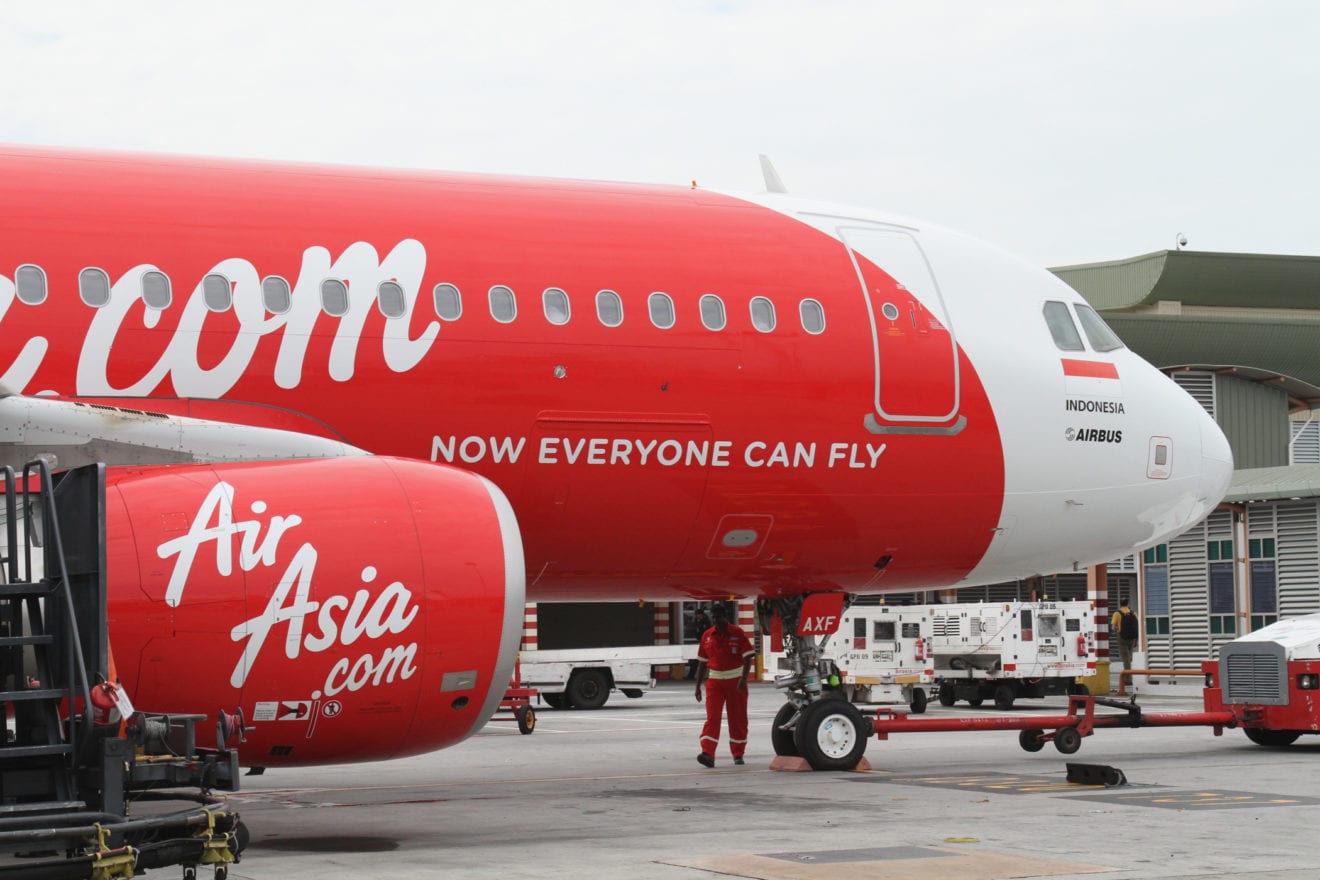
    Bribery claims involving two still-unnamed AirAsia executives came to light late last month after French airplane maker Airbus admitted to paying US$50 million to secure a large aircraft order with the budget carrier.

    Tony Fernandes, the low-cost airline’s charismatic chief executive, and his joint-venture partner, Kamarudin Meranun, have been implicated in the scandal.

    Both men stepped down from AirAsia temporarily last week after issuing a public statement categorically denying allegations of wrongdoing and vowing to work with investigators.

    The Malaysian Anti-Corruption Commission (MACC) and national aviation and securities regulators have since opened probes into the allegations, casting a cloud of uncertainty over one of the best-known brands in Asian aviation, one that has arguably put Kuala Lumpur on the global map as a regional travel hub.

    The Prime Minister’s Office chose to clarify Mahathir’s statement as some critics speculated that he had sought to influence ongoing official investigations.

    Legal experts and others said the government procurement contract practices he referred to are not applicable to transactions by private entities that are answerable to public shareholders.

    “In answer to questions by the press, he (Mahathir) pointed out that it is normal for the government to request for offset to benefit from big purchases. He did not say that AirAsia was benefiting from this normal practice,” read a statement from the Prime Minister’s Office. “It is up to the investigators to determine whether it is a bribe or not.”

    The SFO’s bribery complaint concerns a sponsorship deal involving the now-defunct Caterham Formula 1 racing team then-privately owned by Fernandes and Meranun in their personal capacities, which Airbus admitted was the recipient of a $50 million inducement.

    AirAsia maintains the sponsorship deal was a “branding exercise” supported by Airbus.

    “You cannot ‘offset’ a bribe or direct monies to be paid to others after inflating the value and calling it an ‘offset’. That is corruption,” said Dave Ananth, a former Malaysian magistrate.

    “Mahathir has his views [but] perhaps it is best not to comment whilst investigations are ongoing.”

    Other legal wheels are in motion, with at least one AirAsia shareholder maneuvering to take so-called statutory derivative action, a lawsuit against a director or officer of a company who allegedly committed wrongdoing.

    Mathew Thomas Philip, a lawyer representing the individual shareholder who asked not to be named, elaborated on the matter at a recent public event in the Malaysian capital.

    “The position that we are taking is that when the news broke out that a $50 million bribe was made, in my view, the board of directors had a requirement to disclose [whether] they have in their possession relevant material that this is not a bribe, that this was in fact something that was disclosed to the board,” said Philip.

    Section 221 of Malaysia’s Companies Act, he explained, requires directors with an interest in a contract or proposed contract to declare the nature of that interest at a meeting of the board of directors. In simple terms, if those interests are disclosed and approved by the board, they cannot be considered a bribe.

    “If this payment was made, at that particular time it would be incumbent on those directors who had an interest in that sports company to have declared it to the board meeting,” he continued. “Under our listing requirements, it was mandatory for them to have immediately made that announcement because it is price sensitive information.”

    Philip, founder and managing partner of law firm Thomas Philip, told Asia Times that his client would send a notice to AirAsia’s company’s directors on February 10 outlining his intention to take statutory derivative action. Malaysian law allows companies a 30-day period to initiate, intervene in or defend such a legal proceeding if it chooses to do so.

    “We don’t see any disclosure. The law is quite clear, you have to disclose this. Really, the rules are you don’t come and justify post-nondisclosure. The issue is about nondisclosure, which leads to the fact that technically, it is a secret profit,” said Philip. “There’s no such thing as ‘offset’ in the context of this case.”

    If AirAsia’s board of directors can substantiate that such a disclosure had been made and approved, which it has yet to do despite denials of impropriety, Philip said his client would withdraw their notice of statutory derivative action. “I think their response to the [notice] letter will say everything,” Philip remarked.

    When news of the bribery scandal emerged, AirAsia Group Bhd and its long-haul subsidiary AirAsia X Bhd’s shares went into free-fall.

    On February 5, AirAsia Group Bhd’s share price fell to 1.12 ringgit, a 52-week low, as a massive selldown saw its trading volume exceed the daily average by 430%. AirAsia X Bhd shares hit a record low of 11 sen on February 4.

    Though the carrier’s shares rebounded after Mahathir’s comments, market analysts expect further turbulence as separate bribery probes make headway.

    “AirAsia’s stock price is likely to fall further if the MACC or SFO brings successful charges against the two executives or the airline,” said Mark Pacitti, founder and managing director at investment firm Woozle Research.

    Both scenarios, he said, would be detrimental to the low-cost carriers and their subsidiaries’ future growth potential.

    “That level of uncertainty would likely bring forward a wave of analyst downgrades, sending the shares lower. An unfavorable result from either the SFO or MACC probes into the corruption scandal risks causing long-term financial, commercial, and reputation damage to the founder and airline that will take many years to reverse,” Pacitti said.

  • How Chieh Huang built a pureplay online warehouse giant

    How Chieh Huang built a pureplay online warehouse giant

    Started in a garage in Edison, New Jersey, Boxed – unlike its brick-and-mortar rivals – is membership-free. It offers direct delivery of bulk-sized packages, ordered online or via a mobile app.

    Huang, who shared his story on stage at the BrandLoyalty conference in Amsterdam, was inspired to create Boxed when living in Manhattan. Without a car or a wholesale club nearby he realized he didn’t have access to those types of retailers any longer, recognizing a blind spot in the wholesale market. So he returned to his roots in suburban New Jersey with a plan to change that.

    “It started off in my garage in tropical New Jersey, a very exotic place, home to the Jersey Shore and folks like Bon Jovi and Bruce Springsteen. I was sitting there, saying, okay, it’s time; I’m going to start my own business.”

    Things usually start off slow in business, but pushing the boulder up that proverbial hill didn’t take long. As Huang recalled: “When we started really growing we started hiring friends and family members, and by this time, trucks would drop off entire pallets on my driveway. And if you find my home address on Google Maps, you’d actually find a street view picture of like, a huge 40-foot container in my driveway, in the middle of a residential neighborhood with 20 people walking in and out of the house. So of course, my neighbors thought I was selling drugs.”

    But it was toilet paper being moved in bulk, not drugs, and Huang was soon nicknamed ‘The Toilet Paper Guy’. It wasn’t long before the business outgrew a suburban garage and the founding team needed to find a proper facility. “We had to get out of my garage, because at this point in time, like the neighbors, they were definitely going to call the cops,” he jokes. “So we moved into our first facility, our first warehouse.”

    Though it wasn’t the nicest of warehouses, it allowed Boxed the space to continue to expand, which it did, at a rapid pace, filling a niche in the wholesale market while generating millions in sales.

    Even Huang couldn’t believe it. “When you think about a retailer that went from $40,000 in sales to hundreds of millions in 60 short months, that sounds absolutely nuts. It’s even crazier because this type of service didn’t exist 10 years ago. It tells us that in the current economic climate that this rate of change is only going to get faster and faster and faster.”

    With such a rapid ascent there have been a lot of triumphs as well as a number of lessons. For one, Huang had to learn to stop micromanaging his employees. He referenced this in a recent Ted Talk he participated in when he said, “What is micromanaging? I posit that it’s actually taking great, wonderful, imaginative people, bringing them into an organization, and then crushing their souls by telling them which font size to use. Thankfully, there’s a cure to this management madness: trust. When we stop micromanaging the wonderfully creative people at our own companies, innovation will flourish.”

    Which is precisely what happened. Boxed has been innovative in its relationships with both producers and consumers alike. In regard to producers, just one example is how the company took a new approach to advertising.

    “We like to think of ourselves as not only retailers, but also as an advertising platform. A significant portion of the revenue that we generate is not from just selling potato chips online, but it’s also from selling ads for potato chips, which is actually an almost 100-per-cent gross-margin business.”

    Boxed works with those manufacturers, providing data on buying patterns. They agree on a performance benchmark for sales and if that is not met, the manufacturer receives a rebate. This serves as an alternative to catalogs and flyers and manufacturers compete with each other for promotional space as they would on Google or Facebook.

    Such strategies are clearly resonating with manufacturers just as consumers are embracing the convenience of shopping on Boxed in bulk, saving money and having goods delivered to their door. Huang says the company is turning inventory 12 to 15 times a year. In Boxed’s first year its turnover was about US$40,000. Six years on, it turns over hundreds of millions of dollars annually.

    While Boxed is selling products in bulk – 24-bottle slabs of water or 48-packet boxes of Oreo cookies – it is still personalizing its engagement with customers.

    “Even though we’re a new retailer, we use some old-school kind of things like handwritten notes. If you buy diapers from us the folks at the fulfillment centers will write a nice note that says, ‘say hi to the baby for us’. And then as time goes on and the diaper sizes increase, the next note will say, ‘wow, the baby is growing up so fast’. And so they start to kind of form that one-on-one connection.”

    Another hallmark of Huang’s business strategy for Boxed is the corporate concern the company shows towards social injustice. That’s not to say they are taking a stand on hot-button political issues.

    As Huang explains: “Treating our customers’ right with trusted brands and the best pricing, that’s just good customer service. But we’re actually helping them with social issues that feel unjust. For example, women are charged tax in numerous states for feminine care products like tampons and pads while items for men like condoms and Regaine are not charged.

    “We have to collect the tax by law, but then we rebated it back to customers, even though it hits our bottom line. But when you poll customers, especially the 60 percent who are female, one of the top reasons that they shop with us is because we take stands like this.”

  • Indonesian retail sales fell in December

    Indonesian retail sales fell in December

    Indonesian retail sales have witnessed a downturn despite the festive season.

    According to a survey conducted by Bank Indonesia, the retail sales fell 0.5 percent in December compared to year on year.

    The survey predicted January retail sales will stay weak. Key retail sectors, including fashion and food & beverage, will drop 3.1 percent on an annual basis.

    Indonesian retail sales in November rose by 1.3 percent, marking the fifth consecutive month of growth.

  • Singapore retail sales flat in December

    Singapore retail sales flat in December

    Singapore retail sales were flat in December, after motor vehicles were removed from the data, rising by a mere 0.1 percent.

    Including motor vehicles, a decrease of 3.4 percent was recorded, but this relates more to the scarcity of Certificates of Entitlement by which Singapore’s government restricts the number of vehicles on the roads. New vehicle sales were down by 24 percent year on year.

    Compared with November, and again excluding vehicles, retail sales slipped by 1.4 percent.

    Singapore retail sales totaled SG$4.2 billion (US$3.2 billion) for the month. Significantly, online shopping accounted for 6.8 percent of that figure, one of the highest rates yet.

    Aside from cars, the worst-performing retail categories were furniture & household equipment down 8.2 percent, and computer & telecommunications equipment, down 6.3 percent. Sales at department stores fell 5.6 percent, and optical goods & books recorded a 1.2 percent decline.

    Categories to post growth included watches & jewelry (up 8.9 percent). Retailers of petrol service stations, medical goods & toiletries, and mini-marts & convenience stores achieved growth rates between 3.1 percent and 5.4 percent.

    Compared to the same period last year, Sales of food & beverage services in December increased by 2.7 percent to an estimated SG$964 million, compared to $938 million in December 2018.

    Turnover of fast-food outlets, cafes, food courts & other eating places, and restaurants

    Increased by between 2 percent and 7.7 percent year on year.

  • Vietnam retail sales down

    Vietnam retail sales down

    Retail sales in Vietnam’s commercial capital Ho Chi Minh City surged 11.2 percent last month to an estimated US$4.8 billion.

    But celebrations may be short-lived with the coronavirus impacting spending patterns in February and the early timing of Lunar New Year boosting January’s figures.

    According to official government data, Ho Chi Minh City retail sales in key sectors including food & beverage, household appliances and apparel reached US$3.25 billion for the month, all spurred by increased demand during Lunar New Year (it is customary for Vietnamese to wear new clothes to mark the onset of a new year).

    And while shopping malls and convenience stores have suffered declining footfall due to the coronavirus crisis in February, supermarket sales have surged dramatically since reopening after the holiday, which officially ended on January 29.

    According to a spokesperson from the South Korean-owned Emart, the supermarket chain has since experienced double-digit daily sales growth, peaking at 40 percent one day. Most commonly purchased products are fresh food, dry food (such as instant noodles, sugar, rice), hand sanitizer and antiseptic water.

    “Sales of fast-moving consumer goods increased by more than 50 percent,” said the spokesperson. “While dry food increased 1.5 times, toilet paper sales nearly doubled.”

    Although the number of other retail sectors experienced declining sales, the average retail sales growth seemed to hold up, the spokesperson said.

    Supermarket and hypermarket operator Saigon Co.op also reported significant growth since the coronavirus outbreak. Fastest-moving items were essential consumer goods, especially sanitizing and consumer health products.

    Meanwhile, the coronavirus crisis has left major shopping malls and department stores such as Vincom and Takashimaya into what local media have described as “deserted” venues as people avoid going to public areas.

    For convenience stores, the circumstances are little better. Korean c-store chain GS25 has reported sales have dropped by 40 percent.

    Retail industry experts in Vietnam predict that consumption will shift from electronics products to health items and that supermarkets and e-commerce will replace traditional markets due to lower perceived risk of virus transmission.

    As of February 13, there have been only 15 confirmed cases of coronavirus infection recorded in Vietnam, of which six are listed as having fully recovered.