Category: General

Retail News Asia is committed to providing both local and global retailers with the latest General Retail news throughout the Asian market. This on a daily base.

  • Instagram’s next new feature has just been leaked

    Instagram’s next new feature has just been leaked

    Instagram is testing new features all the time, but we don’t hear about many of them until Facebook makes them available to everyone. This is one of those exceptions where we learn about a new feature that Instagram plans to add to its apps after thoroughly testing it.

    The next important addition to Instagram should be Reactions for Direct Messages. The information comes via Jane Wong, the reverse engineer who’s an ace when it comes to discovering unreleased features.

    But that’s not the only source of the information. Facebook’s Tech Communications Manager, Alex Voica, confirmed that the unreleased feature is being tested for a few days. At the moment, non-employees can only see the “love” reaction, but there are six more that should be available at launch.

    It’s impossible to give you an ETA for the new feature, but at least we know what Instagram is currently working on. Still, considering testing has only just begun, it will probably take a few weeks until they go public if nothing wrong happens.

  • Toranoana opens collaborative shop with Sanrio characters in Tokyo

    Toranoana opens collaborative shop with Sanrio characters in Tokyo

    Japanese manga-related retailer Toranoana has partnered with Sanrio to open a collaborative store selling Sanrio character merchandise, in Tokyo’s Akihabara district.

    A variety of Sanrio character merchandise, including the famous Hello Kitty, are displayed on the first floor of the store.

    Toranoana and Sanrio say they hope their partnership will strengthen their presence and help them continue to expand domestically and internationally.

  • Kadokawa targets foreigners with EJ Anime store online

    Kadokawa targets foreigners with EJ Anime store online

    Kadokawa Corporation has launched an EJ Anime store online where people living overseas can purchase official merchandise for Japanese anime, comics, light novels, and games.

    The EJ Anime store stands on a burgeoning anime market in Japan that has continued to increase for nine years, reaching sales of ¥2,180 billion (US$20.07 million). The rapid increase in the overseas market is contributing to this major growth, with more than ¥1 trillion ($9.2 billion) in sales and accounting for 46.3 percent of the market.

    The Kadokawa EJ Anime store aimed at the Japanese domestic market has also seen an increase in overseas traffic (increasing roughly 170 percent over four years since 2016), demonstrating a high level of interest in Kadokawa products among people living overseas, mainly in North America and Asia.

    Opening an EJ Anime Store online allows people living overseas to buy official merchandise and premium products that are difficult to obtain overseas.

    When the site opens, target areas for sales will include 17 countries and regions, including the US, France, Spain, the UK, Taiwan, Hong Kong, and Australia – with plans to expand to 80 areas, including China.

  • Body Shop Malaysia seeking for investment

    Body Shop Malaysia seeking for investment

    Body Shop Malaysia operator InNature Bhd is seeking to raise RM120.6 million (US$25.5 million) in funding from an IPO.

    The firm says some of the funds will be used to fund store network expansion in Vietnam and Cambodia.

    The Body Shop Malaysia business accounts for about 11 per cent of the country’s personal care & cosmetics market. It operates 89 locations in Peninsular Malaysia, Sabah and Labuan, as well as 34 outlets in Vietnam and one in Cambodia.

    “We will be focusing on an omnichannel strategy heavily focused on Natura’s business model of social commerce and e-commerce, which will be supported by a digital platform as well as physical stores for showrooming and raising awareness through customer experience,” the company said in a prospectus filed with Bursa Malaysia.

  • India’s duty-free purchase limits to be cut

    India’s duty-free purchase limits to be cut

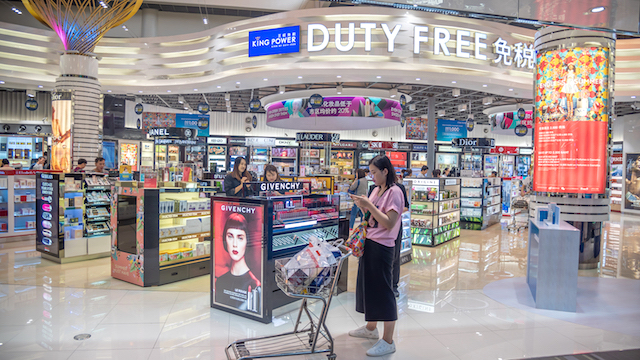
    Proposed changes to India’s duty-free purchase limits may dent the country’s duty-free market growth prospects, says GlobalData.

    The country’s Commerce and Industry Ministry plans to limit duty-free alcohol sales to inbound travelers to one bottle or one liter per person – half the current limit – and to ban all sales of tobacco products.

    The ministry also plans to reduce the value of goods and gifts that a passenger can get into the country without paying import duty which is currently capped at US$712.65 (INR50,000). The government says the move will bring duty-free limits into line with other countries such as the US, China, and South Korea.

    “The proposed changes, if implemented, will negatively impact the duty-free market in India as alcoholic beverages and cigarettes account for a significant share of total duty-free sales,” says Vijay Bhupathiraju, a retail analyst at GlobalData.

    “Drinks is the largest product category sold in the Indian duty-free market with category sales at US$695.7 million in 2018, accounting for 66.8 percent of overall duty-free sales. However, the proposed slashing of the limit on alcoholic drinks to half is forecast to reduce the category sales by nearly 25 percent.

    “On the other hand, tobacco is the fourth-largest product category with its sales at US$64.7 million (6.2 percent share) in 2018. If the proposed plan to completely prohibit inbound tourists from purchasing cigarette cartons at duty-free shops is to be believed, it results in a complete nullification of inbound spending on cigarettes, slashing the category sales by as high as 50 percent,” said Bhupathiraju.

    India is the world’s fastest-growing duty-free market globally, with sales growing at a compound annual growth rate (CAGR) of 23.1 percent during 2013-2018 to reach US$1 billion in 2018 and forecast to grow at a CAGR of 19.2 percent to reach US$2.5 million by 2023.

    Bhupathiraju says if the proposed changes are enacted, India’s duty-free retailers need to diversify their offerings to include essential product categories such as cosmetics and toiletries, food, and jewelry and watches to offset lost sales in liquor and cigarettes.

    “The move is also a jolt to non-aviation revenues for airports, impacting the overall growth of airport retail in an otherwise fast-growing airport retail market.”

  • Face masks in short supply as coronavirus threat grows

    Face masks in short supply as coronavirus threat grows

    Hanoi pharmacies are running out of masks as fears of the new coronavirus epidemic have caused demand to surge.

    Hoa of Ung Hoa District on Thursday managed to buy two boxes of masks after queueing for over an hour. For each box of 5,000, she paid VND5 million ($216), double the price she paid two weeks ago.”I was willing to pay the price since it could climb even higher in the coming days and there might be no stocks left,” she said. She retails them at the Hapulico Medicine Market in Thanh Xuan District, where masks are among the top-selling items now.

    The price of the N95 mask made by U.S. company 3M, which is said to have at least 95 percent filtration efficiency against certain non-oil based particles, has jumped almost five times from VND20,000 (86 cents) to VND90,000 ($3.88).

    Pharmacies in the capital are struggling to source more masks.Mai, a drugstore owner in Ha Dong District, said on Tuesday she did not have masks in stock. “I ordered 200 boxes [of 50 masks] on Thursday, but the manufacturer sent only 40.”She said she had never had so much difficulty buying masks and hand sanitizers as now since manufacturers are unable to keep pace with demand. She sells only one box to a customer, explaining to them it is to make sure more people can protect themselves.

  • Mavcom imposes fines on AirAsia, AirAsia X, MAHB

    Mavcom imposes fines on AirAsia, AirAsia X, MAHB

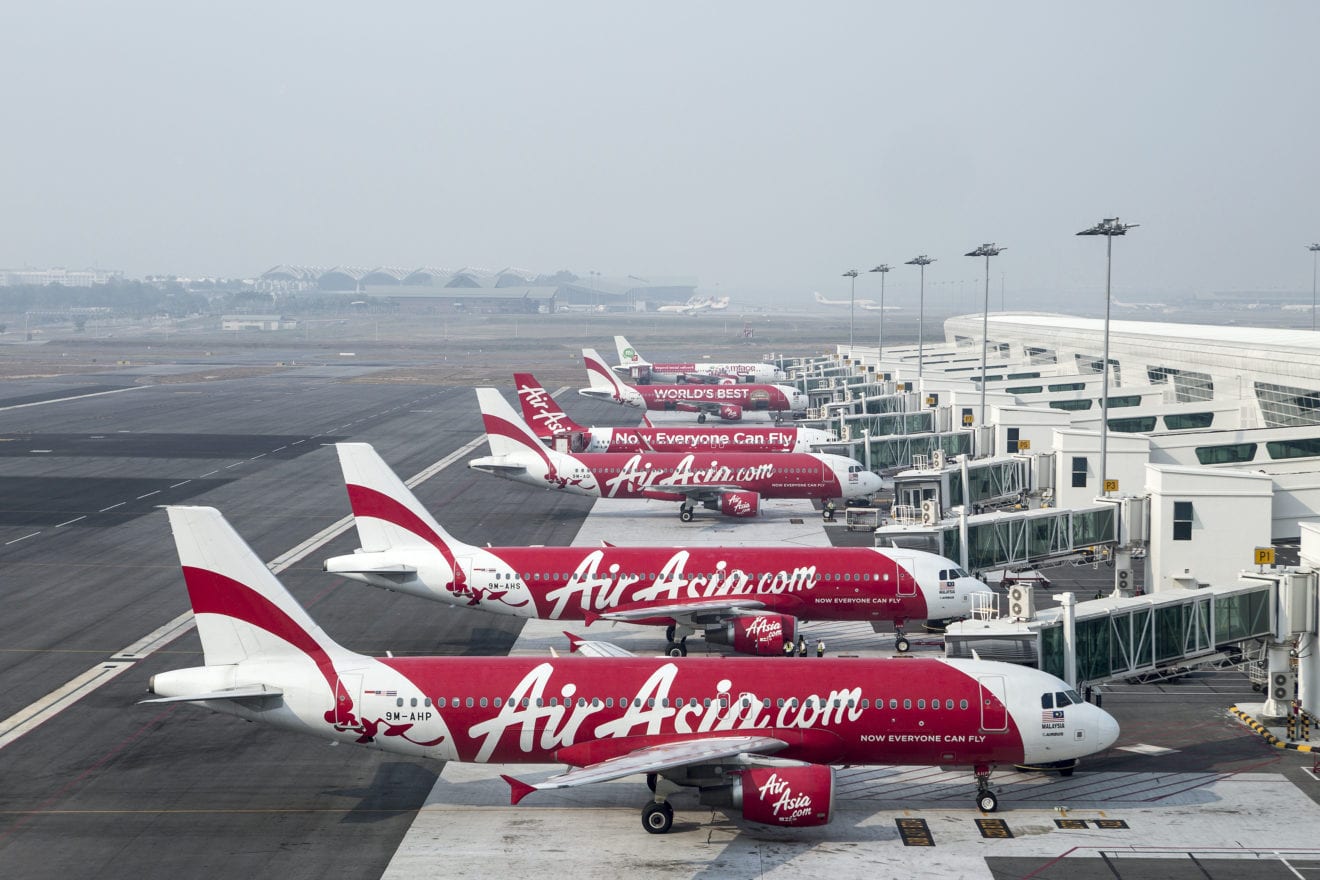
    he Malaysian Aviation Commission (MAVCOM) has imposed financial penalties on AirAsia (AK, Kuala Lumpur Int’l), AirAsia X (D7, Kuala Lumpur Int’l) and MA Sepang, a subsidiary of Malaysia Airports Holdings Berhad (MAHB), according to a press release issued by the commission. The airlines breached the consumer protection code, while the airport operator failed to meet the quality of service (QoS) standards.

    According to MAVCOM, the airlines contravened the Malaysian Aviation Consumer Protection Code 2016 (MACPC) in the period from August 10, 2019, to September 11, 2019, by charging credit card, debit card, and online banking processing fees separate from their base fares. Both were fined MYR2 million ringgit (USD490,000) for the breaches.

    The two airlines were charged with the same contravention in September 2019, this time in the period between June 1, 2019, to August 9, 2019. On that occasion, AirAsia and AirAsia X were fined MYR200,000 (USD49,000) each.

    According to the ch-aviation capacities module, AirAsia is the largest seat provider at Kuala Lumpur Int’l, with a weekly capacity of 270,000. AirAsia X is the third-biggest airline, with close to 74,000 weekly seats, behind Malaysia Airlines (MH, Kuala Lumpur Int’l) in second spot.

    MAVCOM imposed a MYR865,875 (USD210,000) fine on MA Sepang for failing to meet several requirements of the Airports QoS Framework during the period of April 1, 2019, to June 30, 2019. The framework, which came into effect at Terminal 1 and 2 at Kuala Lumpur on September 1, 2018, was introduced to ensure that air

  • Apple launches redesigned Maps app for users in the US

    Apple launches redesigned Maps app for users in the US

    Apple has just announced that Maps users in the United States now have access to a redesigned app that integrates a lot of social elements, but also important under-the-hood improvements. Apple’s new Maps app is faster and more accurate thanks to the many new features introduced by iOS 13 not long ago.

    In an attempt to compete with Google Maps, Apple’s own navigation app promises to offer extensive views of roads, buildings, parks, airports, and malls. Also, Maps now includes support for popular apps like Photos, Messages, Calendar, Weather and more.

    An important addition to the app is the new interactive street-level imagery with high-res, 3D photography that you can see above. This feature lets people from anywhere in the world virtually visit many US cities, including New York City, San Francisco, Los Angeles, Las Vegas, and Houston.

    As far as the social aspect goes, Maps now includes a new feature called Collections where users can share lists of their favorite restaurants, as well as places and locations they wish to visit. Furthermore, Maps lets commuters or users who frequently visit a certain location to add it to Favorites so that they bring it up on the screen with just one tap.

    It’s also worth noting that the app now includes indoor maps for airports and malls, along with an option to send an ETA to family or friends. More importantly, Apple Maps offers real-time information about transit schedules, live departure times, arrival times and so on. For the time being, real-time transit is not available in all US cities, but it’s up and running in San Franciso Bay Area, Washington D.C., New York, Los Angeles, and Miami.

    Apple says it will continue to improve Maps and that the newly redesigned app will be rolled out to customers in Europe in the coming months, so expect more news about it very soon.

  • Leading Southeast Asian online luxury fashionmarketplace BlinQ partners with global luxury fashion retailer YOOX

    Leading Southeast Asian online luxury fashionmarketplace BlinQ partners with global luxury fashion retailer YOOX

    Leading Southeast Asian luxury online fashion marketplace BlinQ today announced a commercial affiliation with the leading global online fashion retailer that revolutionized the luxury fashion industry, the YOOX Net-a-Porter group. This closely follows the launch of the BlinQ pre-loved segment and Asean Houz – a collection of high-end fashion brands from around the region.

    With operations all over the world from the United States to Japan, YOOX has over 3 million high-spending customers worldwide. This partnership with BlinQ will bring more of YOOX’s products into the Southeast Asian region. Fashion lovers looking to spend their red packet money on BlinQ will be spoilt for choice: they will now be able to access a catalog of more than 10,000 products from over 700 luxury brands, on top of the products already on the platform — all while enjoying better customer experience, with lower shipping costs and shorter fulfillment times.

    Bob Chua, founder and CEO of BlinQ, commented: “We are thrilled to work with YOOX to drive their unmatched selection of luxury products and designers into this part of the world. This will give Southeast Asian consumers easy access to thousands of new products from amazing high-end luxury brands. We have been growing quickly, and this partnership provides a greater depth of brands and products to our users in the Southeast Asian region.”

    BlinQ has over 30,000 users joining the platform every month, with luxury brands such as Kenzo, Prada and Off-White included on the platform.

    This partnership will provide YOOX with a strong Southeast Asian partner to expand their potential customer base in Southeast Asia. The global luxury fashion powerhouse is in a strong position to gain significant market share in a region that has a growing luxury market.

    A spokesperson from YOOX shared: “We’re extremely excited to work with BlinQ, and we can’t wait to expand our reach with them moving forward.”

  • AirAsia revenues boosted by tailored services

    AirAsia revenues boosted by tailored services

    On January 15, this journalist visited “Santan Restaurant” located inside the Mid Valley Megamall in Kuala Lumpur, the capital of Malaysia. Santan Restaurant, which is run by a Malaysian low-cost carrier (LCC), is the world’s first restaurant specializing in airplane food.

    Opened in December last year, the restaurant offers some 20 varieties of snacks and lunchbox as well as beverages and coffee that are actually served onboard. An in-flight meal with a beverage can be had for around 4,500 won. “We’re planning to franchise the brand to meet the increasing consumer demand to experience in-flight food on land,” said Catherine Ko, the senior manager at Santan Restaurant.

    AirAsia is building international reputation as a low-budget airliner posting additional revenues through such fringe services and businesses as Santan Restaurant. The company also became the first LCC to introduce a “Flatbed seat,” a premium seating comparable to business class of large-sized carriers. AirAsia also features a “silent zone” exclusive to passengers aged 10 or older, and it offers a special seat dedicated to couples.

    The LCC allows passengers to choose the amount of luggage transfer service from 20 to 40 kilograms. Flight fares are set according to the luggage weight and time of ticket purchase, providing an expanded scope of choice to meet the different needs of passengers. AirAsia is actively harnessing data to develop better services by identifying consumer needs. The airliner analyzes passengers’ information such as their patterns or preferences throughout the entire cycle from travel planning, tickets issuance to boarding.

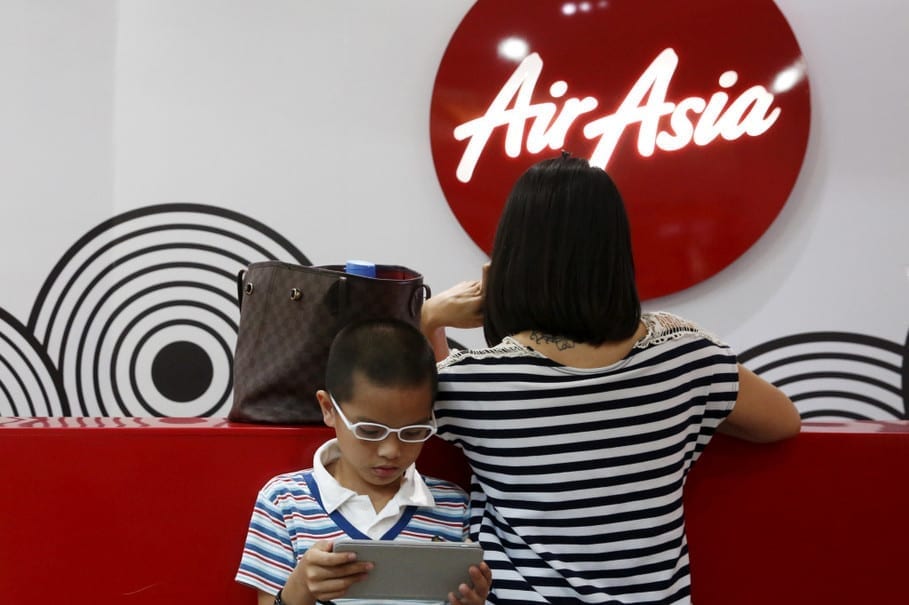
    While the seats come with no back-side monitors, AirAsia is providing their passengers with a rental service of tablet PCs containing video content, such as movies or dramas, as well as useful information on duty-free products, shopping, and tourist guide. Users are required to enter their information such as gender, age, and flight number. This gives the airliner access to the preferences and interests of its passengers.

    AirAsia.com, one of the company’s departments, developed a new service that allows passengers to choose what they want from various options such as hotels, leisure activities, Airtels, and traveler’s insurance. Passengers can purchase the flight tickets of other airliners on AirAsia’s homepage and enjoy shopping on its online shopping mall.

    “We’ve identified the trend where an increasing number of consumers are all pursuing different lifestyles in using airline services, so we’ve developed services that satisfy such varied needs,” said Tony Fernandes, the CEO of AirAsia.

  • AirAsia shaves carbon footprint

    AirAsia shaves carbon footprint

    AirAsia will implement digital solutions to improve fuel efficiency and reducing carbon emissions.

    Developed by the Paris-based Safety Line, OptiFlight-In-flight guidance is a unique suite of digital solutions that optimize all flight phases.

    Following extensive validation tests, AirAsia has implemented OptiClimb which will save up to 3%  of its climb fuel, potentially representing a fleetwide carbon footprint reduction of at least 73,000 tons of CO2 per year.

    By introducing new digital initiatives to its flight operations, AirAsia is not only offsetting its carbon emissions but also pro-actively reducing them at the source whilst also further reducing costs for the benefit of its customers.

    AirAsia Group chief operations officer Javed Malik said: “AirAsia is making every effort to improve its operational efficiency and become a digital airline in all aspects of our business including flight operations, and OptiFlight will allow us to leverage vast amounts of flight data with the aim of reducing CO2 emissions.”

    In addition to implementing OptiClimb, AirAsia joined the OptiFlight Innovation Partnership in September 2019, which provides further flight optimization opportunities that will be explored in all flight phases. The airline will be the first in Asia to trial OptiDirect, a solution that recommends some adjustments to pilots based on historical tracks flown and forecasted weather on the route.

  • The trend for personalisation in retail continues with much hype, but limited success

    The trend for personalisation in retail continues with much hype, but limited success

    This apparent failing owes much to a disconnect between the retailers view of personalisation, and what the individual customer perceives – and wants – as a personalised buying experience. It’s a balance that the retail sector has to redress, if the industry is to fully benefit from the potential gains of true personalisation – which can be quite considerable.

    According to research conducted by the Boston Consulting Group (BCG), personalisation is key to increasing the rate at which retail organisations can convert occasional shoppers into regular customers, and increasing the lifetime value of those customers.

    Many retailers assume that simply because an individual looks at an item, they automatically want it. Crude attempts at personalisation based on this kind of assumption include putting someone on a remarketing list, then pestering them with discount offers for goods they may have simply glanced at out of curiosity.

    Clearly, the fundamental principle of personalisation (as understood by customers) is being misinterpreted by many retailers. And the message that their marketing is giving to consumers is breeding frustration and a lack of respect – hardly the intended result.

    In a truly personalised journey, power resides with the customer, who can decide whether or not they receive personalised advertising, the nature of the content they see, and the products they are able to access.

    Some retailers do appreciate this distinction, and take steps to customise their buyer experience in a manner more appealing to their consumers. The tailoring brand Savitude for example, requests minimal data from its customers, yet uses this information to produce outfits cut to suit the customer’s body shape, their individual preferences, and even the occasion they plan to attend.

    The tailoring analogy extends to current trends in consumption, which look for sustainability in the form of minimal purchases of curated goods, designed for longevity. The price tags associated with commodities like this may be higher, but consumers are increasingly prepared to part with their money if the products and services they get are specifically attuned to their needs.

    This is the kind of personalisation that customers want: a personalised service on their terms, with responsible data gathering, their consent requested from the outset, transparency, and clarity over how their information is put to use.

    How do you then quantify personalisation and put observation into practice? There is a small percentage of organisations getting it right, though many retailers are unclear what steps to take and which capabilities to build, in order to generate and sustain a truly personalised experience for their customers. Find out about the methodology here.

    From a generic standpoint, top-level retail organisations use a variety of tactics, such as personalised merchandising, loyalty schemes, and reward programmes. They use mobile, paid display, and paid search marketing to frequently activate more channels.

    Their technology stack typically includes infrastructure that enables predictive algorithms (which help retailers to make personalised product recommendations and offers), and to access integrated customer data in real time (which helps in developing deep insights into how customers behave, and enables rapid response).

    Get access to some recommendations on personalisation in retail with a free case study here

    Day 2 at eTail Asia highlights an all-star panel discussion on “How can you improve, personalise and simplify the customer experience, adding value through each journey?”

    With powerhouses such as Adidas, Flipcart, and Luxasia representing the speaker line-up, audiences are guaranteed to not only learn from the best of their category, but also get the unique opportunity to cross-learn from relevant case studies, all in the convenience of a single location.


  • AirAsia celebrates 9% passenger growth in 4Q

    AirAsia celebrates 9% passenger growth in 4Q

    AirAsia Group has recorded a 9% increase year-on-year (y-o-y) in the number of passengers carried to 13.17 million for the fourth quarter ended December 2019 from 12.11 million passengers previously.

    In the same period, the carrier’s capacity expanded by 11% y-o-y to 16.02 million passengers from 14.38 million, driven by large increases in Indonesia and the Philippines.

    However, load factor, which is the number of passengers carried as a percentage of capacity, dipped slightly to 82% from 84% due to the increased capacity.

    This was particularly significant for AirAsia Indonesia whose capacity increase was 32% higher than in 4QFY18, while the total number of passengers carried by the carrier grew 30% y-o-y.

    “During the period, AirAsia Indonesia launched six new routes, which are Jakarta-Belitung, Jakarta-Sorong, Kuala Lumpur-Belitung, Kuala Lumpur-Pontianak, Jakarta-Johor Bahru and Surabaya-Lombok,” AirAsia said in a statement today.

    AirAsia Philippines also posted significant capacity growth during the quarter, up 27% y-o-y following the introduction of a new route, Manila-Bacolod, in addition to frequency increases across domestic and international routes such as Cagayan de Oro-Manila, Manila-Caticlan and Bangkok-Manila.

    The number of passengers carried by AirAsia Philippines grew by 21% y-o-y.

    AirAsia Malaysia also launched two new international routes, including a new route to Da-Lat in Vietnam from Kuala Lumpur.

    For the full financial year 2019 (FY19), AirAsia carried 12% more passengers y-o-y or a total of 83.5 million passengers.

    “Capacity expansion was significant during the year at 11% y-o-y on the back of taking 19 more aircraft, ending the year with a fleet size of 243 aircraft. AirAsia Group successfully achieved its target load factor of 85% for six AOCs (air operator’s certificate) in 2019,” AirAsia added.

    Shares of AirAsia closed down 2 sen or 1.33% at RM1.48, which translates to a market capitalisation of RM4.95 billion.

  • Retailers across Asia brace for Corona impact as death toll peaks

    Retailers across Asia brace for Corona impact as death toll peaks

    As health authorities across Asia struggle to assess the severity and impact of the deadly Coronavirus, hundreds of stores have closed in Mainland China and retailers and shopping-mall operators across the region are already implementing crisis-management programs.

    In the worst-affected area, the mainland province of Hubei where the virus originated in the city of Wuhan, major fast-food brands and other retailers have shuttered stores indefinitely.

    As at 9am ICT Thursday January 30, there were 7892 confirmed cases of infection, the vast majority in Mainland China. There have been 170 reported deaths, all on the mainland.

    Starbucks China advised on its official Weibo account that it has closed all stores in Hubei province until February 2 along with the giant Starbucks Reserve Roastery in Shanghai. The company subsequently shuttered more than half its store network in the country, 2000+ stores.

    “We are working closely with local health authorities, taking actions with the health of partners and customers top of mind, including closing stores in some locations,” a spokesperson told Business Insider, adding it would continue to monitor the situation and take further action as appropriate.

    Yum! Brands’ Pizza Hut and KFC stores in Wuhan have been closed since January 24 for the protection of staff and customers.  “We will continue to evaluate the need for additional actions and preventive health measures,” the company said in a statement emailed to Reuters.

    McDonald’s is distributing masks to staff in stores all across China after closing indefinitely all outlets in the cities of Wuhan, Xiantao, Qianjiang, Ezhou and Huanggang.

    Furniture giant Ikea closed its Wuhan store on January 23 until further notice and Dairy Queen closed all its stores in the city the previous day.

    Footage screened online and on international television news networks show deserted streets throughout Wuhan with rows of shops and public facilities shuttered. Foreigners – some awaiting evacuation by their governments – are reporting they are confined to home with few means of obtaining supplies.

    Japanese companies with stores trading in Wuhan have also taken action. Aeon, which has closed three malls in the city, says it expects its sales there to halve due to the virus. Five standalone grocery stores it operates there are continuing to trade on a “limited basis” selling food and daily essentials.

    Nitori, a furniture retailer, has closed seven stores in Wuhan, and introduced shorting trading hours in other cities, including Shanghai and Suzhou. Fast-fashion retailer Uniqlo has closed at least 50 of its 750-strong China network.

    Hong Kong readies for impact

    The impact of the Coronavirus on Hong Kong could severely affect an already fragile retail sector which has only just begun to see an easing in the monthly sales decline triggered by social unrest since last June.

    China’s Ministry of Culture and Tourism imposed a suspension of all tour groups and the sale of flight and hotel packages overseas from Monday.

    And there is growing pressure from opposition groups on the Hong Kong government to close the border with the mainland. Already, the territory has extended its Lunar New Year holiday period until February 2.

    The Hong Kong marathon has been cancelled and other major public events are expected to be suspended. Museums, libraries, sportsgrounds and other public facilities were closed from Tuesday. The Ocean Park and Disneyland theme parks had already been closed indefinitely.

    Flights into Hong Kong from Wuhan have been suspended, except for the evacuation of people returning home. Anyone who has been in Hubei within the last fortnight has been barred from entry, except Hongkongers who have been instructed to self-quarantine at home for 14 days and work remotely.

    Thailand reacts

    Thailand – which for now has reported the most number of confirmed cases of Coronavirus outside China – began scanning all incoming Chinese nationals on Tuesday after a family of seven were diagnosed, taking the tally to 14. Some of those have since been cleared to return home.

    In Bangkok, department stores, hypermarkets and shopping centers have launched various measures to cope with the coronavirus outbreak, according to the Bangkok Post.

    The Mall Group, which owns The Emporium and EmQuartier, has advised customers through social media and via signs throughout its centers to wear masks. Hand sanitizing stations have been set up in the malls at touchpoints like escalators.

    The Bangkok Post reports shopping baskets and trolleys are being sterilized regularly, all surfaces cleaned at 30-minute intervals and face masks are being distributed to both staff and customers, especially in tourist areas.

    At Central Phuket in the country’s south, a popular tourist spot, infrared thermometers have been installed at entrances to individually scan customers.

    With authorities throughout the region showing some reluctance to release detailed plans or assessments of the threat from the virus, reactions online, where social media is alive with comments, ranges from panic to cynicism.

    Markets open for trading over the Lunar New Year period have generally lost ground, with travel, hospitality and retail stocks the worst affected. China’s stock exchange is closed until February 2, but on its last day of trading on January 24, retail giant Sun Art and hotpot chain Haidilao saw their stock prices fall by between 5 percent and 6 percent.

    In Japan, the market dropped 1.6 percent on Monday, the biggest dip since October. Retailers and consumer-product companies were worst affected: Uniqlo parent Fast Retailing shed 5.7 percent of its value – its worst single-day decline in 18 months – while Shiseido was down 5.5 percent, according to Bloomberg. Ryohin Keikaku, parent of Muji, was also hit.

    “Are markets overreacting?,” asked Simon Powell, global head of Thematic Research at Jeffries. “Perhaps they were underacting before the confirmation of person-to-person spread of the virus and have been playing catch up over the [latest] trading days.”

    “The news that Wuhan pneumonia outbreak has widened to more than 200 people diagnosed with the new virus negatively impacted share prices of traffic-heavy sectors like travel and consumer,” said his colleague, equity analyst Anne Ling, referring to last Friday’s trading.

    “High-traffic areas or tourist-centric stores will be impacted – for example, cosmetic chains, shopping malls, and restaurants. Fast food and supermarket space are least affected in terms of sales, especially supermarkets. However, the share prices of these companies were still impacted as investors incorporated country risk to the price.”

    Ling says given Hong Kong is small and compact, any news will impact all consumers significantly and quickly. “China is very big, thus at this stage only consumer sentiment in the affected cities is negatively impacted.”

    “Should the current outbreak turn out to be as bad as Sars in Hong Kong, retail sales in affected cities will also be affected. But once the outbreak is under control, the recovery should be fast.”


  • VF Corporation sales lower in China

    VF Corporation sales lower in China

    Apparel manufacturing and retailing giant VF Corporation has reported a 30-per-cent increase in sales in China in its third quarter, to December 28.

    The huge increase helped fuel a global 6-per-cent rise in revenues to US$3.4 billion, excluding its troubled workwear business for which it has announced a strategic review, with its potential sale in the offing.

    The company’s activewear segment improved by 8 percent, with the Vans brand up by 12 percent; and the outdoor segment by 3 percent including 8-per-cent growth by The North Face.

    Group direct-to-consumer revenue rose by 7 per cent and digital revenue by 16 percent.

    Operating income from continuing operations increased 11 percent and adjusted operating income from continuing operations by 14 percent when the workwear business was excluded. “Our third-quarter performance was strong and our year-to-date results are at the high end of our long-term growth objectives,” said VF Corporation chairman Steve Rendle.

    “Despite a mixed holiday season in the US, we’re on track to deliver solid performance and are well-positioned for continued growth and value creation in the fiscal year 2021.”